
CAIRO — Egypt commands the largest military in the Arab world — 438,500 active troops, 218 F-16 fighters, 54 Dassault Rafale jets, and an air defense network anchored by Russian S-300VM batteries capable of intercepting ballistic missiles at 250 kilometres. None of these assets are deployed in defence of Saudi Arabia. Seventeen days into a war that has struck Saudi cities, shut the Strait of Hormuz, and redrawn the region’s security architecture, President Abdel Fattah el-Sisi has offered condemnation, condolences, and mediation — but not a single soldier. The decision is neither accidental nor passive. It is the product of an intervention calculus shaped by $35 billion in Saudi investment, an $8 billion IMF bailout, a Suez Canal haemorrhaging revenue, and the memory of what happened the last time Egyptian troops crossed into the Arabian Peninsula. Cairo’s refusal to fight is, paradoxically, one of the most consequential strategic decisions of the 2026 Iran war.
Table of Contents
- What Military Assets Does Egypt Bring to the Table?
- Why Did Sisi Condemn Iran’s Attacks Without Joining the Fight?
- The $35 Billion Debt Cairo Cannot Ignore
- Could Egypt’s Air Defenses Turn the Tide in the Gulf?
- When Egypt Last Fought for Saudi Arabia
- Can the Suez Canal Replace the Strait of Hormuz?
- The Egyptian Intervention Calculus
- What Does Egypt Lose If Saudi Arabia Loses?
- Egypt’s Iran Rapprochement Died in the Strait of Hormuz
- Three Scenarios for Egyptian Involvement
- Why Egypt’s Non-Intervention May Be Its Most Powerful Weapon
- Frequently Asked Questions
What Military Assets Does Egypt Bring to the Table?
Egypt ranks nineteenth globally and first in the Arab world for overall military strength, according to Global Firepower’s 2026 assessment. The gap between Egypt and the next Arab military is not marginal — it is structural, reflecting decades of American military aid, diversified arms procurement, and a conscription model that maintains nearly half a million active-duty personnel.
The Egyptian Air Force operates 218 F-16 Fighting Falcons across four variants, making it the fourth-largest F-16 fleet in the world. To this it has added 54 Dassault Rafale multirole fighters — 24 from an initial 2015 contract and 30 from a 2021 follow-on order worth 3.75 billion euros, according to Army Recognition. The second batch arrives in the advanced F3R configuration, equipped with Thales RBE2-AA AESA radar, SCALP-EG cruise missiles with a range exceeding 250 kilometres, and Meteor beyond-visual-range air-to-air missiles. Egypt is now the largest non-NATO Rafale operator and fields the second-largest Rafale fleet in the world after France, according to Defence Security Asia.
On the ground, Egypt has approximately 1,200 M1A1 Abrams main battle tanks, locally co-produced at the Egyptian Tank Plant near Cairo — the only facility outside the United States that manufactures the M1 Abrams. In January 2025, the US State Department approved an upgrade programme to bring 555 of these tanks to the M1A1 SA Situational Awareness standard, according to CENTCOM Citadel.
At sea, the Egyptian Navy has transitioned from a coastal defence force into a blue-water capability. It operates two Mistral-class helicopter carriers — the ENS Gamal Abdel Nasser and ENS Anwar El Sadat, each displacing 21,500 tonnes — three FREMM frigates, four Gowind 2500 corvettes (three built locally at Alexandria Shipyard), and Type 209/1400 submarines from Germany. Naval Group secured a five-year support contract for the Egyptian surface fleet in December 2025, according to Naval News.
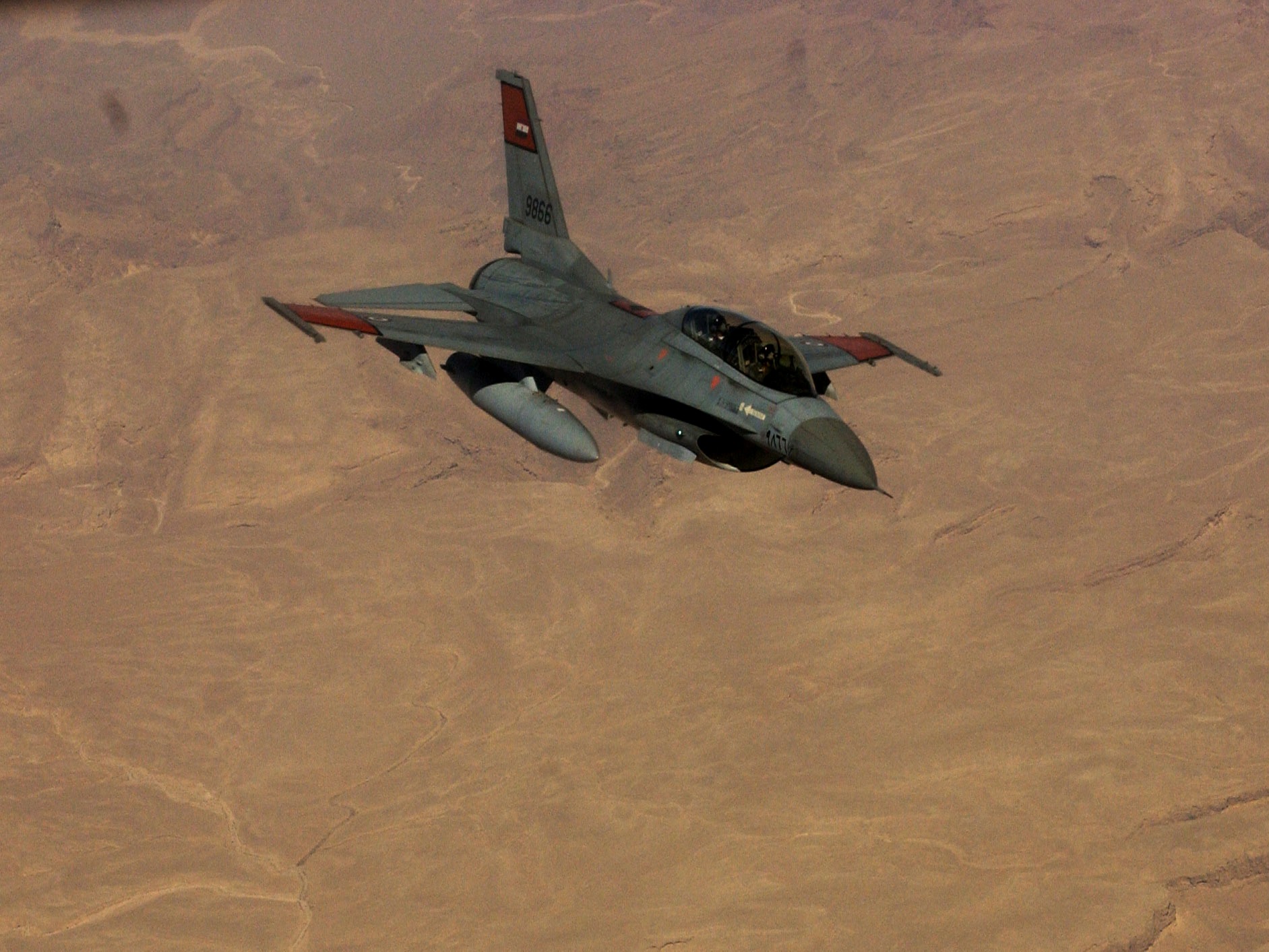
The Egyptian defence budget stands at approximately $5.8 billion, according to Defense Arabia — modest relative to its Gulf neighbours but supplemented by $1.3 billion in annual US military aid under the Camp David framework. Egypt’s military-industrial base is among the most developed in the Middle East, capable of manufacturing armoured vehicles, small arms, and naval vessels domestically.
| Category | Asset | Quantity |
|---|---|---|
| Active Personnel | All branches | 438,500 |
| Reserves | All branches | 479,000 |
| Fighter Aircraft | F-16 Fighting Falcon | 218 |
| Fighter Aircraft | Dassault Rafale | 54 |
| Main Battle Tanks | M1A1 Abrams | ~1,200 |
| Helicopter Carriers | Mistral-class LHD | 2 |
| Frigates | FREMM-class | 3 |
| Submarines | Type 209/1400 | 4 |
| Air Defence | S-300VM battalions | 4 |
Why Did Sisi Condemn Iran’s Attacks Without Joining the Fight?
Egypt’s response to the Iran war has been precisely calibrated to condemn without committing. Sisi addressed military leaders on March 1, stating that Iran “made a mistake in its calculations” and should not have attacked Arab states “under any reason,” according to Foreign Policy. The Egyptian Foreign Ministry condemned Tehran’s strikes on “brotherly Arab nations.” On March 5, Sisi announced Egypt was pursuing “honest and sincere” mediation, telling reporters: “Egypt had tried to prevent this escalation because it knows only too well from experience that wars only result in destruction, ruin and hurting the interests and destiny of the people.”
On March 17, Sisi called Crown Prince Mohammed bin Salman to reiterate Egypt’s rejection and condemnation of Iranian attacks on Saudi Arabia, according to Al Arabiya. The conversation was described by Egyptian state media as an affirmation of solidarity — but solidarity, notably, without a mutual defence commitment.
The Foundation for Defense of Democracies characterised Egypt’s messaging as “mixed” — condemning Iranian attacks on Arab states while carefully avoiding naming the United States or Israel as co-belligerents. The Horn Review went further, describing Cairo’s approach as “strategic duplicity” — pursuing opportunism rather than ideological consistency. The Arab League, headquartered in Cairo, issued a statement calling on “all parties to exercise restraint,” a formulation that Gulf commentators criticised as inadequate given that Iranian missiles were falling on Arab capitals.
The pattern is deliberate. Egypt is positioning itself as the Arab world’s peacemaker — the honest broker who maintained channels to both sides — rather than as a belligerent. This is not pacifism. It is a strategic bet that the war’s aftermath will reward mediators more generously than it rewards combatants.
The $35 Billion Debt Cairo Cannot Ignore
Saudi cumulative investment in Egypt has reached approximately $35 billion, according to the Arab Center for Washington DC. In October 2024, MBS signed deals worth an additional $15 billion during his Cairo visit with Sisi, according to AGBI. The Saudi Public Investment Fund announced a $5 billion first-phase investment in Egypt, and Riyadh agreed to convert $10 billion in Central Bank of Egypt deposits into productive investments.
Bilateral trade reached nearly $16 billion in 2024, a 29 percent increase over the previous year, according to Arab Center DC. The first phase of the Egyptian-Saudi electricity interconnection — 1.5 gigawatts of capacity — was expected operational by June 2025, with total capacity reaching 3 gigawatts. More symbolically, Saudi Arabia is financing the Moses Bridge, a 32-kilometre causeway linking the Saudi coast with Egypt’s Sinai Peninsula, according to the Atlantic Council.
The human dimension is equally significant. Some 1.47 million Egyptians live and work in Saudi Arabia, accounting for 11 percent of the Kingdom’s total foreign population, according to Ahram Online citing Saudi General Authority for Statistics data. These workers transferred $10.9 billion in remittances — the highest from any single host country — and their families across Egypt depend on that income stream continuing uninterrupted.
This financial architecture creates a gravitational pull that goes beyond traditional alliance politics. When Hosni Mubarak was overthrown in 2011 and the Muslim Brotherhood briefly governed Egypt, Saudi Arabia initially froze relations. When the military removed Mohamed Morsi in July 2013, Saudi Arabia responded within days with a $5 billion aid package — $1 billion in cash, $2 billion in petroleum products, and $2 billion in Central Bank deposits, according to Al Arabiya. Combined with UAE and Kuwait contributions, Gulf states pledged $12 billion to Egypt in 2013, according to Chatham House. Sisi has not forgotten who saved his government.
The relationship, however, is not one of simple client dependency. Egypt provides Saudi Arabia with strategic depth — a western flank that Iran cannot threaten, a population base that dwarfs any Gulf state, and a military establishment that has fought in every major Middle Eastern conflict since 1948. Riyadh invests in Egypt not out of charity but because Egyptian stability is a Saudi national security interest.
Could Egypt’s Air Defenses Turn the Tide in the Gulf?
Egypt operates the Air Defense Command as a separate branch of the armed forces — a distinction shared by few nations and one that reflects the outsized importance Cairo places on protecting its airspace. The system is layered, multi-origin, and among the most sophisticated in the Middle East.
At the long-range tier, Egypt fields four battalions of the Russian S-300VM Antey-2500, ordered in 2014 as part of a $1 billion arms deal and fully delivered by 2017, according to Military Africa. The S-300VM can engage ballistic missiles at 250 kilometres and aircraft at 200 kilometres — capabilities directly relevant to intercepting the Iranian medium-range ballistic missiles that have struck Saudi territory.
More recently, Egypt acquired Chinese HQ-9B long-range air defence systems, deployed in the Sinai by December 2025, according to Military Watch Magazine. The HQ-9B provides a secondary long-range layer independent of both American and Russian supply chains — a deliberate diversification strategy.
At medium range, Egypt operates Buk-M1-2 and Buk-M2 batteries — 10 and approximately 5 respectively — which fill the gap between the S-300VM’s strategic reach and the short-range point-defence systems. At the short-range tier, Tor-M1 and Tor-M2 systems provide terminal defence against cruise missiles and drones.
Could these systems make a difference in Saudi Arabia? The answer is unambiguously yes. Saudi Defence Minister Khalid bin Salman has managed a war effort that depends heavily on American Patriot systems for ballistic missile defence. The S-300VM batteries that Egypt possesses are designed specifically for the theatre ballistic missile threat that Iran poses — they were built to counter exactly this class of weapon. Deploying even two battalions to Saudi Arabia’s Eastern Province would significantly increase the density of the intercept layer protecting oil infrastructure and military bases.
The precedent exists. Pakistan deployed air defence systems and troops to Saudi Arabia within days of the war’s outbreak. Ukraine sent drone defence teams. The question of why Egypt — with a far larger and more capable air defence network — has not done the same is one that Gulf defence analysts have been asking since the first Iranian missiles struck Prince Sultan Air Base.
When Egypt Last Fought for Saudi Arabia
The last time Egyptian troops deployed to Saudi Arabia in force was August 1990, when Saddam Hussein’s invasion of Kuwait brought 35,000 to 40,000 Egyptian soldiers and 400 tanks to the Arabian Peninsula — the largest Arab contingent in the coalition, according to Britannica and CNN. Egyptian units participated in the ground offensive alongside US Marines and Saudi forces during Operation Desert Sabre, attacking into Kuwait as part of what Britannica described as the “broadest military alliance since World War II.”
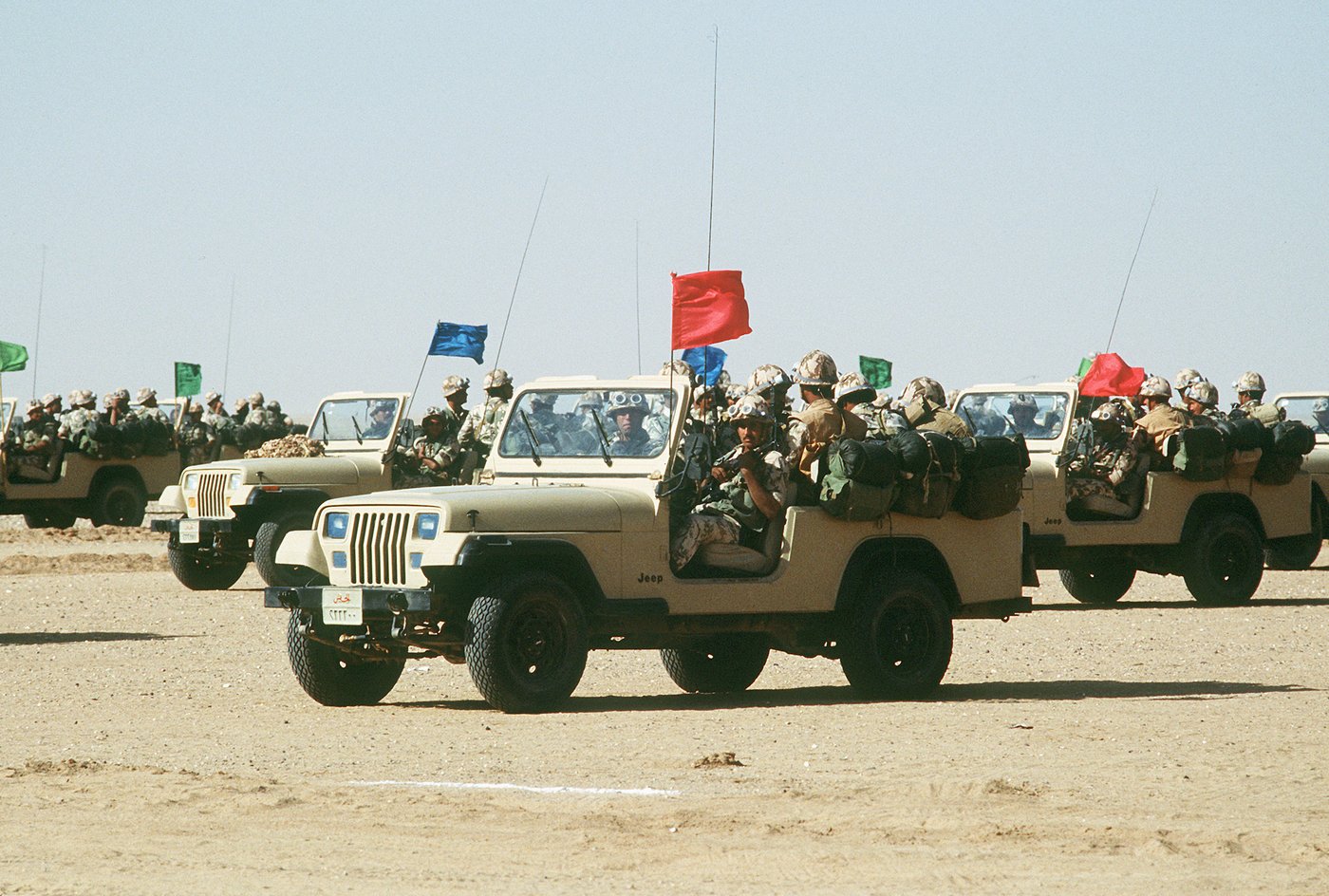
Nine Egyptian soldiers died during the six-month deployment, according to CNN. In return, Egypt received approximately $7 billion in debt forgiveness — a transaction that revealed the underlying economics of Arab coalition warfare. President Hosni Mubarak had initially attempted to mediate between Iraq and Kuwait before committing forces, a sequence that mirrors Sisi’s current approach: mediate first, signal willingness to act, but extract maximum concessions before deploying.
The 1990 parallel illuminates both the possibilities and the constraints of the current moment. Egypt sent troops because the threat was existential — Saddam’s army on the Saudi border represented an immediate danger to the regional order. Iran’s missile and drone strikes, while devastating, have not created an equivalent ground threat. There are no Iranian divisions massing on Saudi Arabia’s borders. The war is asymmetric, fought with ballistic missiles, cruise missiles, and one-way attack drones that Egyptian infantry and armour cannot intercept.
This distinction matters. Egypt’s army is designed for conventional territorial defence — holding the Sinai, projecting power in Libya, securing the Nile Valley. It is not designed for the kind of integrated air and missile defence operation that the Iran war demands. Egypt’s air defences could help. Its army cannot.
Can the Suez Canal Replace the Strait of Hormuz?
The Strait of Hormuz handles approximately 21 million barrels of oil per day — roughly 21 percent of global petroleum liquids consumption, according to the US Energy Information Administration. The Suez Canal, at peak capacity before the Houthi crisis, moved approximately 9.2 million barrels per day, according to the IEA. Even at full throughput, Suez handles less than half of Hormuz’s volume. The canal cannot substitute for the strait.
The reality is worse. Houthi attacks in the Red Sea — over 190 incidents by October 2024, according to the Atlas Institute — devastated Suez Canal traffic before the Iran war even began. Container ship traffic through Suez declined 90 percent in 2024, according to Coface. Total vessel traffic fell 50 percent, from 26,434 ships in 2023 to 13,213 in 2024. Canal revenue crashed 61 percent, from a record $10.25 billion in 2023 to $3.99 billion in 2024, according to Egypt Today.
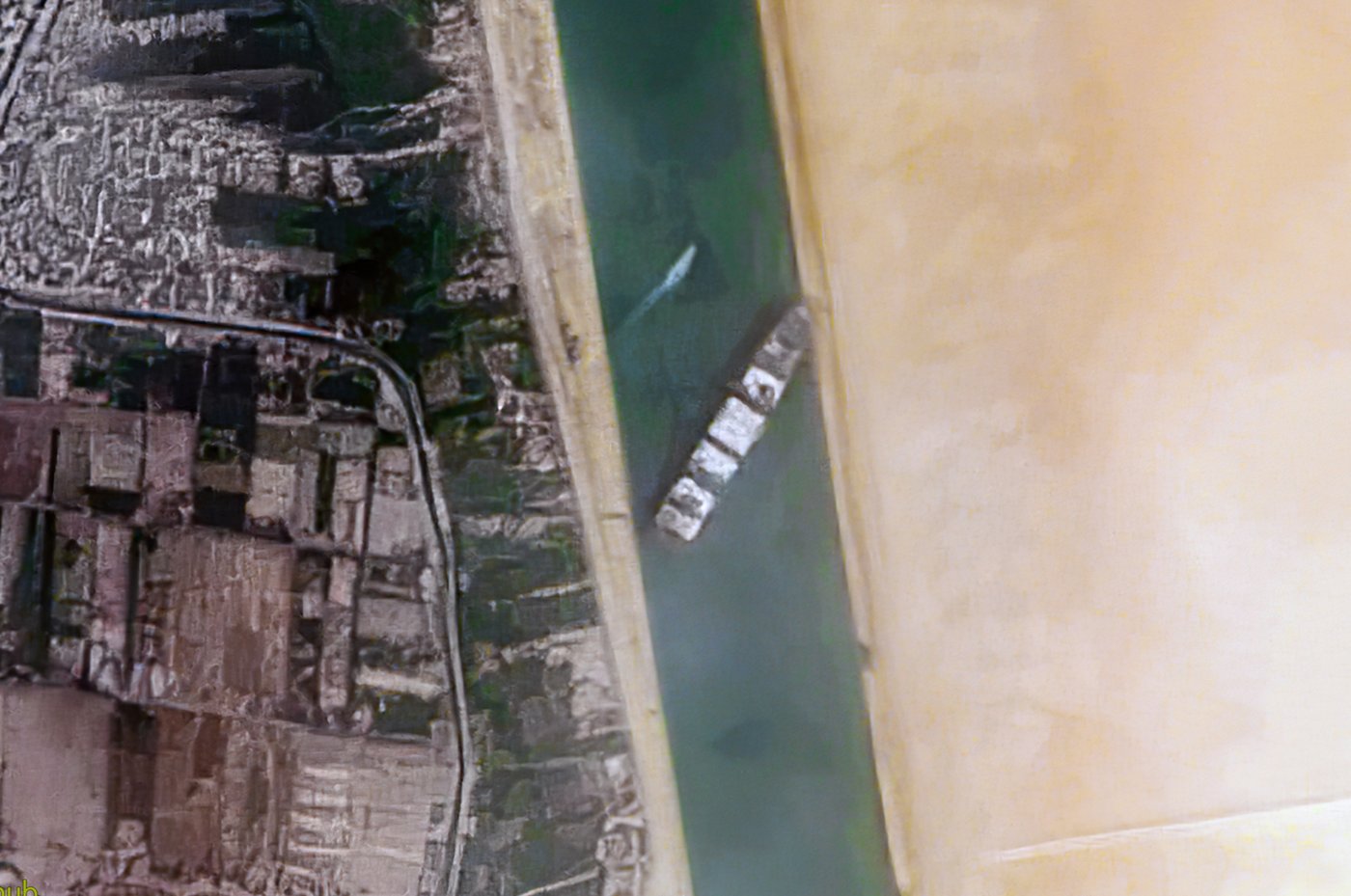
By March 2026, with the Iran war raging and Houthi forces declaring solidarity with Tehran, Suez Canal traffic has fallen further. Foreign Policy reported daily vessel numbers at approximately 32, down from 75 before the Red Sea crisis. Oil shipments averaged 4.9 million barrels per day through Suez in the first half of 2025, according to IEA data — barely half of pre-crisis levels.
The SUMED pipeline, which runs parallel to the canal from the Red Sea to the Mediterranean, provides an additional 2.5 million barrels per day of capacity based on EIA historical data. Combined with the canal’s reduced but ongoing oil flows, Egypt’s corridor can move roughly 7 to 8 million barrels per day under optimal conditions — significant, but still far short of replacing Hormuz.
| Metric | Strait of Hormuz | Suez Canal + SUMED |
|---|---|---|
| Oil flow (pre-crisis) | 21.0M bbl/day | 11.7M bbl/day |
| Oil flow (March 2026) | ~0 (blockaded) | ~7-8M bbl/day |
| Share of global trade | 21% | ~9% |
| Ships per day (pre-crisis) | ~60 | ~75 |
| Ships per day (March 2026) | ~0 | ~32 |
| LNG transit share | ~20% of global | ~8% of global |
The Suez Canal’s strategic significance to the Iran war, however, is not as a replacement for Hormuz but as the only functioning maritime corridor connecting the Gulf to Europe. Oil that Saudi Arabia can redirect through its East-West pipeline to Yanbu on the Red Sea — roughly 5 million barrels per day at maximum capacity — must still transit the Red Sea and Suez Canal to reach European markets. If Houthi attacks escalate further, even this alternative route is at risk. Egypt’s ability to secure the Suez approach is therefore a direct variable in global energy security — and a source of influence that Sisi has not yet chosen to exercise.
The Egyptian Intervention Calculus
The decision to intervene or abstain in a foreign conflict is rarely binary. It is a weighted calculation involving military capacity, economic exposure, domestic risk, and diplomatic opportunity. In Egypt’s case, seven variables dominate the calculus, and they point in contradictory directions.
| Variable | Pressure to Intervene | Pressure to Abstain | Net Weight |
|---|---|---|---|
| Saudi investment ($35B+) | Protecting the relationship | Investment continues regardless | Moderate (Intervene) |
| Egyptian workers (1.47M) | Protecting citizens abroad | Workers are not under direct threat | Low (Intervene) |
| Suez Canal revenue | Ending war restores traffic | Intervention does not fix Houthis | Moderate (Abstain) |
| IMF programme ($8B) | — | Military spending undermines reforms | High (Abstain) |
| Sinai deployment (40,000) | — | Forces already stretched | High (Abstain) |
| Air defence capability | Can contribute meaningfully | Depletes domestic coverage | Moderate (Intervene) |
| Post-war positioning | Combatants share the spoils | Mediators shape the peace | High (Abstain) |
The economic constraints are severe. Egypt agreed to an $8 billion IMF Extended Fund Facility in March 2024, expanded from an initial $3 billion in December 2022, according to Bloomberg. The Egyptian pound has lost roughly two-thirds of its value since early 2022, falling from 16 to approximately 49 per US dollar. Inflation peaked at 38 percent in September 2023 and has moderated to 13.4 percent by February 2026, according to Trading Economics — still painfully high for a population of 110 million that imports much of its food.
Military deployment would strain a budget already under IMF scrutiny. Sisi declared Egypt in a “state of near-emergency” as the Iran war threatens the economy, according to the Times of Israel. Power cuts and food price increases have created domestic political vulnerability. Diverting military resources to Saudi Arabia while Egyptian citizens face economic hardship would be politically explosive.
The Sinai commitment compounds the problem. Egypt has approximately 40,000 troops deployed in the Sinai Peninsula, according to the Jerusalem Institute for Strategy and Security. An ISIS attack in Rafah killed 15 Egyptian soldiers in July 2025, according to the Arab Reform Initiative. These forces cannot be redeployed without creating a security vacuum on the Israeli border — a risk Cairo is unwilling to take.
The intervention calculus produces a clear verdict: Egypt’s military is capable of contributing to Saudi Arabia’s defence, particularly through air defence assets. But the economic, political, and strategic costs of doing so outweigh the benefits — especially when abstention preserves Egypt’s most valuable asset of all: diplomatic credibility as a mediator.
What Does Egypt Lose If Saudi Arabia Loses?
The question is not hypothetical. If the Iran war inflicts lasting damage on Saudi Arabia’s economy, security infrastructure, or regional standing, Egypt faces cascading consequences that no amount of diplomatic positioning can avoid. The interconnection between the two economies has deepened to a degree that makes Egyptian prosperity structurally dependent on Saudi stability — a dependency that extends well beyond government-to-government transactions into the daily lives of millions of Egyptian families.
The most immediate risk is to the 1.47 million Egyptian workers in Saudi Arabia. Their $10.9 billion in annual remittances supports millions of Egyptian families, according to Ahram Online. A prolonged conflict that disrupts Saudi economic activity — construction freezes, project cancellations, labour force reductions — would reduce these flows. Total Egyptian remittances from all countries reached $29.4 billion in 2024, a 51.3 percent increase, according to the Central Bank of Egypt. Saudi Arabia alone accounts for more than a third.
The $35 billion Saudi investment portfolio in Egypt is similarly exposed. Projects under development require continued capital flows, and a Saudi economy diverting resources to wartime spending may deprioritise foreign investment. The $15 billion in deals signed in October 2024 included infrastructure, energy, and real estate projects with multi-year timelines that assume Saudi fiscal stability.
Beyond direct economics, a weakened Saudi Arabia reshapes the regional balance of power in ways that disadvantage Egypt. Cairo and Riyadh have aligned positions on nearly every major regional crisis — the containment of Iran, support for General al-Burhan in Sudan against UAE-backed RSF, Red Sea security, and opposition to political Islamism. A Saudi Arabia that emerges from the Iran war diminished would leave Egypt without its most important strategic partner in the Arab world.
Egypt’s governance model of trading authoritarian rule for stability and services is under unprecedented strain. Sisi faces simultaneous shocks to energy, revenues, and political confidence.
Foreign Policy, March 9, 2026
The energy dimension is particularly acute. Israel suspended natural gas exports to Egypt after the war began, depriving Cairo of supplies representing 15 to 20 percent of Egypt’s total gas consumption and up to 60 percent of its imports, according to Foreign Policy. Egyptian LNG export terminals — which had generated $8 billion in revenue in their peak year — are running below capacity. If Saudi Arabia’s ability to supply crude oil is further degraded, Egypt faces an energy crisis that compounds the one already underway.
Egypt’s Iran Rapprochement Died in the Strait of Hormuz
The conventional narrative positions Egypt as a longstanding adversary of Iran, aligned with Washington and Riyadh against Tehran since the 1979 revolution. The reality, as of early 2026, was considerably more nuanced — and this nuance is precisely what makes Egypt’s current position so uncomfortable.
Egypt and Iran severed diplomatic relations in 1980 after Cairo recognised Israel and gave asylum to the deposed Shah. For more than four decades, the two countries maintained only interests sections rather than full embassies. But rapprochement was underway. In November 2023, Sisi and Iranian President Ebrahim Raisi met on the sidelines of the Arab-Islamic summit in Riyadh — the first presidential meeting in over a decade. Iranian President Masoud Pezeshkian visited Egypt in December 2024.
By February 2026, Iran and Egypt had finalised a decision to exchange ambassadors and fully restore diplomatic relations. Mojtaba Ferdosipour, head of Iran’s Interests Section, told Press TV: “The decision to exchange ambassadors has effectively been made.” The two countries had reached, in his assessment, “approximately 70 percent alignment on regional issues” and held weekly foreign minister telephone contacts alongside more than 15 ministerial-level meetings.
Then on February 28, the US-Israeli strikes on Iran killed Ayatollah Khamenei and demolished the fragile diplomatic architecture that Egypt, Saudi Arabia, and China had spent three years constructing. Iran’s retaliatory missile and drone attacks on Gulf states — including the Saudi cities where 1.47 million Egyptians live and work — made continued rapprochement politically impossible.
This is the contrarian reality that most analysis of Egypt’s war posture ignores: Cairo was closer to a functioning relationship with Tehran in February 2026 than at any point since 1980. The war did not simply interrupt this process. It destroyed it. And the destruction was initiated not by Iran but by Washington and Tel Aviv — a fact that Sisi has been careful to acknowledge in private while avoiding in public.
The FDD’s assessment that Egypt offers “mixed messages” reflects this underlying tension. Egypt condemns Iran’s attacks on Arab states because Iranian missiles are falling on Saudi Arabia. Egypt does not condemn the strikes that provoked those attacks because Egypt had a diplomatic relationship with Iran that it did not want to lose. The result is a foreign policy that reads as incoherent from the outside but follows a ruthlessly pragmatic internal logic.
Three Scenarios for Egyptian Involvement
Military and diplomatic analysts in Cairo, Riyadh, and Washington are tracking three plausible scenarios for Egypt’s role as the war evolves. Each carries distinct implications for the conflict’s trajectory.
Scenario One: Sustained Diplomatic Neutrality (Probability: High)
Egypt maintains its current posture — condemning Iranian attacks, pursuing mediation, providing rhetorical solidarity to the Gulf without military commitments. This is the path of least resistance and the one that Sisi’s domestic political calculus overwhelmingly favours. It preserves Egypt’s mediator credibility, avoids straining the IMF programme, and keeps Egyptian forces focused on the Sinai and Libya.
The risk: Gulf states lose patience. If Turkey similarly refuses to commit and the burden of Gulf defence falls entirely on the United States, Pakistan, and the United Kingdom, Cairo’s neutrality may be remembered — and punished — in the post-war settlement. Saudi Arabia has shown with the UAE that it rewards allies who share risk and marginalises those who hedge.
Scenario Two: Limited Air Defence Deployment (Probability: Moderate)
Egypt deploys one or two S-300VM battalions to Saudi Arabia, possibly supplemented by Buk-M2 batteries and radar systems. This “air defence only” commitment mirrors what Pakistan has done and avoids the political toxicity of deploying ground combat troops. It signals solidarity, contributes materially to Saudi protection, and does not expose Egyptian soldiers to significant combat risk.
This scenario becomes more likely if Iran escalates strikes on Saudi population centres — particularly Riyadh, where Egyptian diplomats and businesspeople are concentrated. A strike that kills Egyptian nationals in the Kingdom would shift domestic opinion and give Sisi political cover for a limited deployment. The military logistics are straightforward: S-300VM batteries can be airlifted using Egyptian C-130 transport aircraft or shipped through the Red Sea to Yanbu within 72 hours. Integration with Saudi command-and-control networks would require coordination but not fundamental technical adaptation, given that both militaries have trained together in annual exercises for over a decade.
Scenario Three: Full Coalition Commitment (Probability: Low)
Egypt joins a formal coalition against Iran, committing air force assets, naval vessels to Red Sea security operations, and potentially ground troops to protect Saudi critical infrastructure. This scenario requires a dramatic escalation — an Iranian ground incursion through Iraq, a catastrophic strike on Saudi oil infrastructure, or a direct attack on Egyptian interests (Suez Canal shipping, for instance).
The 1990 precedent suggests that Egypt’s price for full commitment would be substantial: debt forgiveness, investment guarantees, and a permanent seat at the post-war negotiating table. As Moscow discovered, positioning for the post-war order often matters more than battlefield outcomes. Egyptian military planners are acutely aware that the 1991 coalition’s Arab participants — Egypt, Syria, and the Gulf states — received differential treatment in the post-war settlement. Those who contributed the most received the most. Cairo is calibrating its entry price accordingly.
| Scenario | Military Commitment | Probability | Trigger | Price Tag |
|---|---|---|---|---|
| Diplomatic Neutrality | None | 65-70% | Status quo | None (risk: post-war exclusion) |
| Limited Air Defence | S-300VM + radar | 20-25% | Escalation on Saudi cities | Debt conversion + investment pledges |
| Full Coalition | Air + naval + ground | 5-10% | Ground threat or Suez attack | Debt forgiveness ($7B+ precedent) |
Why Egypt’s Non-Intervention May Be Its Most Powerful Weapon
The instinct to measure a nation’s influence by its willingness to fight misses a crucial dimension of the 2026 war. Egypt’s abstention is not weakness. It is the preservation of a diplomatic asset that becomes more valuable as the conflict drags on and the demand for a credible mediator intensifies.
Sisi told reporters on March 5 that Egypt was pursuing “honest and sincere” mediation. The Stimson Center’s October 2025 analysis of the Egypt-Saudi naval axis noted that “concern over the reliability of U.S. security guarantees” had already facilitated a deeper strategic rapprochement between Cairo and Riyadh — one that does not require Egyptian boots on Saudi ground.
In September 2025, Egypt and Saudi Arabia agreed to form a joint naval force to protect the Red Sea, specifically structured to avoid association with Western security coalitions, according to Arab Center DC. This arrangement reflects both nations’ preference for regional solutions over American-led frameworks — a preference that the war has, if anything, reinforced. Saudi Arabia’s wartime security calculations increasingly favour partners who can provide sustained, long-term commitment over those who deploy expeditionary forces with political strings attached.
That calculation shifted dramatically in the war’s third week, when Sisi toured four Gulf capitals in 48 hours, pledging Egyptian support for Saudi Arabia and declaring Gulf security an extension of Egypt’s own national security — the most significant repositioning of Cairo’s stance since the conflict began.
Egypt’s January 2026 meeting between Saudi Foreign Minister Prince Faisal bin Farhan and his Egyptian counterpart confirmed “identical positions” on regional crises, according to Arab Center DC. The two nations back the same side in Sudan, coordinate on Red Sea security, and share an assessment of Iran’s intentions. Military alignment exists in everything but name — and the absence of the name is itself a strategic choice.
Consider the post-war architecture. When the ceasefire eventually comes — and the war’s endgame is approaching, though unevenly — someone must broker the terms. The United States, as a combatant, cannot. Israel cannot. Saudi Arabia, as a victim of Iranian strikes, has limited credibility with Tehran. Oman has historically played this role but lacks the weight to guarantee compliance. Egypt — with its military heft, diplomatic experience, and carefully preserved channel to what remains of Iran’s civilian government — is positioned to play the role that no other regional actor can fill.
This is the calculation that Sisi has made. It is cold, it is transactional, and it carries genuine risk if the war escalates beyond current parameters. But it is not passive. Egypt is not sitting out the war. It is waiting for the moment when its entry — diplomatic, military, or both — carries the highest return.
Frequently Asked Questions
How large is the Egyptian military compared to Saudi Arabia’s?
Egypt fields 438,500 active troops compared to Saudi Arabia’s approximately 227,000, according to Global Firepower’s 2026 data. Egypt’s reserve force of 479,000 further widens the gap. In fighter aircraft, Egypt operates 218 F-16s and 54 Rafales, while Saudi Arabia fields approximately 154 F-15s and 72 Eurofighter Typhoons. Egypt ranks first and Saudi Arabia second among Arab militaries.
Has Egypt sent any military aid to Saudi Arabia during the Iran war?
Egypt has not publicly deployed any military assets to Saudi Arabia as of March 17, 2026. Sisi has offered diplomatic support, condemnation of Iranian strikes, and mediation services, but no air defence systems, troops, or naval vessels. This contrasts with Pakistan, which deployed air defences and troops, and the United Kingdom, which sent RAF fighter jets to Gulf bases.
Why is the Suez Canal important to the Iran war?
With the Strait of Hormuz blockaded by Iran, Saudi oil exported westward through the East-West pipeline to Yanbu must transit the Red Sea and Suez Canal to reach Europe. The canal handled approximately 9.2 million barrels per day before the Houthi crisis, according to the IEA, making it the only functioning maritime corridor for Gulf-to-Europe energy flows during the Hormuz closure.
Could Egypt’s S-300VM air defences help protect Saudi Arabia?
Egypt’s four battalions of S-300VM Antey-2500 systems can intercept ballistic missiles at 250 kilometres, according to Military Africa. They were specifically designed to counter the class of theatre ballistic missiles that Iran has fired at Saudi Arabia. Deploying even two battalions to Saudi Arabia’s Eastern Province would significantly increase intercept density around oil infrastructure and military installations.
What happened when Egypt last deployed troops to Saudi Arabia?
During the 1990-1991 Gulf War, Egypt contributed 35,000 to 40,000 soldiers and 400 tanks — the largest Arab contingent in the US-led coalition, according to Britannica. Nine Egyptian soldiers were killed. In return, Egypt received approximately $7 billion in debt forgiveness. President Mubarak, like Sisi today, initially sought to mediate before committing forces.
What is Egypt’s relationship with Iran?
Egypt severed diplomatic relations with Iran in 1980 and maintained only interests sections for four decades. By February 2026, the two countries had agreed to exchange ambassadors and restore full relations, according to Press TV. The outbreak of the Iran war in late February destroyed this rapprochement, forcing Egypt back into alignment with Saudi Arabia and the Gulf states.