
RIYADH — Saudi Arabia will celebrate Eid al-Fitr on March 20 under conditions no living Saudi has experienced: the country is at war. For the first time in the modern Kingdom’s ninety-three-year history, the most joyous date on the Islamic calendar — following a Ramadan unlike any other — arrives while Iranian missiles and drones target Saudi cities, oil infrastructure, and military bases. The convergence of religious celebration and active conflict is testing everything the Kingdom claims to be — its security apparatus, its economic resilience, its social fabric, and the political legitimacy of Crown Prince Mohammed bin Salman. What happens over the next seventy-two hours will reveal more about Saudi Arabia’s wartime capacity than any battlefield engagement of the past three weeks.
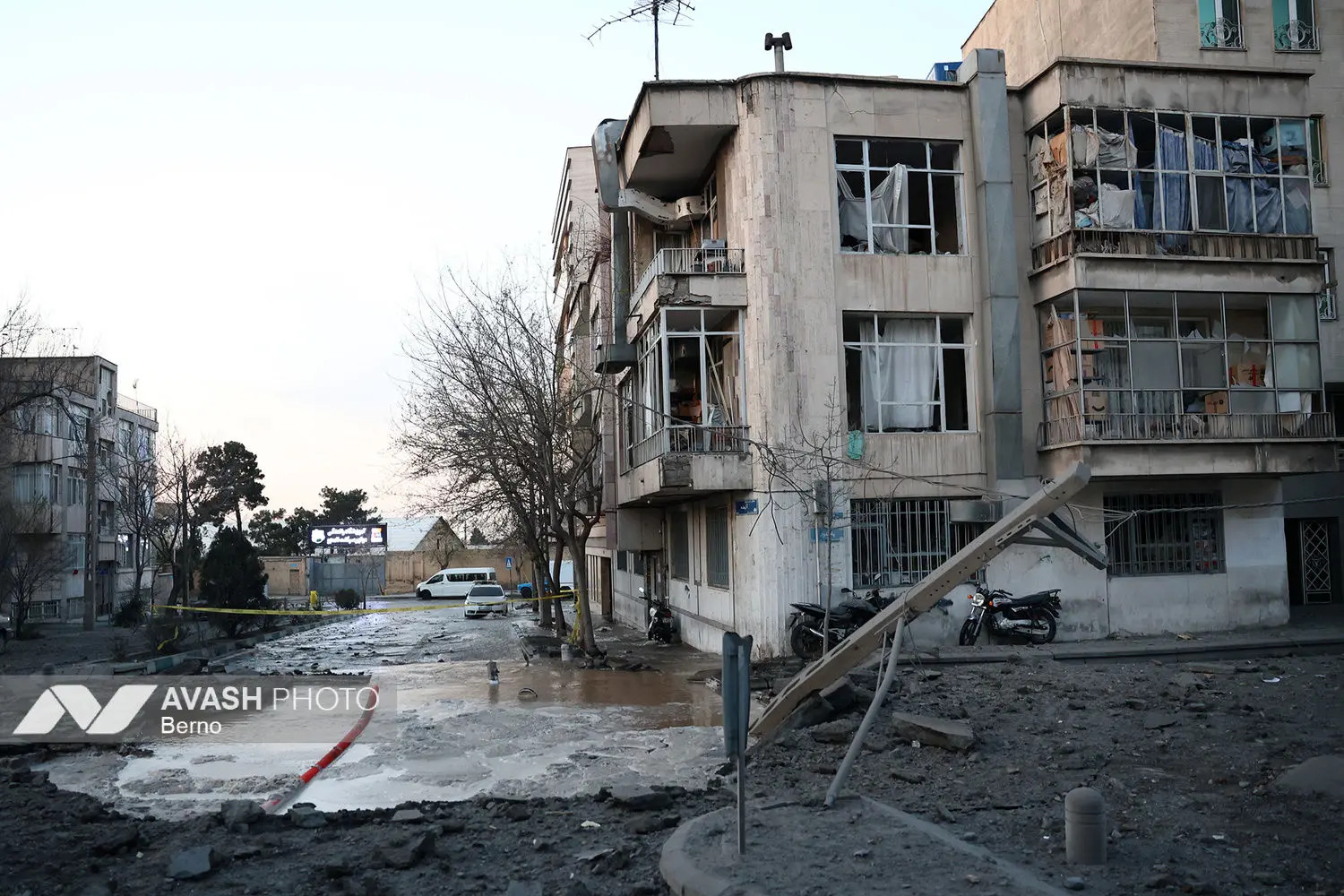
The stakes are not merely symbolic. Eid al-Fitr typically generates more than SAR 16 billion in weekly consumer spending, according to Saudi Arabian Monetary Authority data, mobilizing tens of millions of citizens and residents to mosques, shopping malls, restaurants, and family gatherings. Every one of those gatherings is now a potential target. The Iranian drone campaign has already struck Gulf hotels, airports, and residential areas — killing eleven civilians across the region on March 18 alone, according to Al Arabiya. Protecting millions of worshippers at open-air prayer sites in Mecca and beyond while maintaining the economic rituals of Eid represents the most complex civil-military operation Saudi Arabia has ever attempted in peacetime or war.
Table of Contents
- What Makes This Eid al-Fitr Different From Every Other?
- How Is Saudi Arabia Securing the Largest Prayer Gatherings in Its History?
- The Wartime Holiday Resilience Matrix
- Can a $16 Billion Consumer Economy Function Under Missile Fire?
- Where Are Saudis Shopping While Sirens Sound?
- The Religious Dimension Nobody Is Discussing
- How Did Other Nations Celebrate Holidays During War?
- Eid as Political Theater — MBS’s Calculated Message
- What the Gulf’s Wartime Eid Tells Markets About Saudi Resilience
- The Contrarian Case — War Is Strengthening Saudi Social Cohesion
- Frequently Asked Questions
What Makes This Eid al-Fitr Different From Every Other?
Saudi Arabia has celebrated Eid al-Fitr every year since the Kingdom’s founding in 1932. Through oil booms and busts, regional wars, the Gulf War of 1990-91, the September 11 aftermath, and the COVID-19 pandemic, the holiday has proceeded with varying degrees of normalcy. None of those precedents apply in March 2026. The Kingdom itself is under direct military attack for the first time since Saddam Hussein’s Scud missiles struck Riyadh in 1991 — and the scale of the current Iranian campaign dwarfs anything Iraq managed thirty-five years ago.
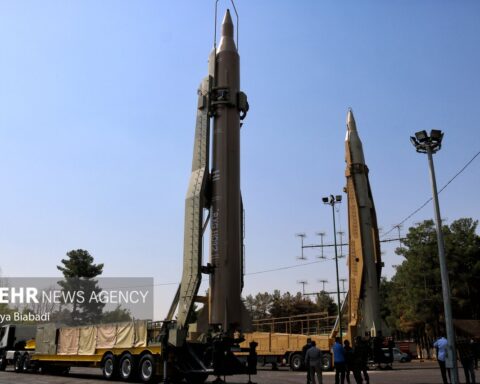
Since February 28, when the US-Israeli strike on Iran triggered Tehran’s retaliation against Gulf states, Saudi air defense systems have intercepted more than two hundred drones and dozens of ballistic missiles, according to Saudi Ministry of Defense statements compiled by GlobalSecurity.org. On a single day in mid-March, the Ministry reported intercepting twenty-four drones targeting the Eastern Province and the Shaybah oil field, Al Arabiya reported. Three ballistic missiles were destroyed near Prince Sultan Air Base on March 6 alone.
The difference between 1991 and 2026 is tempo. Iraq launched approximately forty Scud missiles at Saudi Arabia over the entire six-week Gulf War, according to the Congressional Research Service. Iran has launched more ordnance at the Kingdom in a single week than Saddam Hussein did in the entire conflict. The air defense umbrella that will shield Eid worshippers must operate at an interception rate and frequency that has no precedent in Saudi military history.
Eid 2020 during COVID offered a partial preview of disrupted celebration — mosques were closed, family gatherings restricted, and the Grand Mosque in Makkah was nearly empty. But COVID was a slow-moving, invisible threat that demanded social distancing. The Iran war demands the opposite: Saudi authorities must concentrate millions of people at known locations (mosques, prayer grounds, malls) while an enemy actively targets gatherings, infrastructure, and population centers. The security challenge is not preventing a virus from spreading but preventing a missile from landing.
The Middle East briefing 3,000+ readers start their day with.
One email. Every weekday morning. Free.
How Is Saudi Arabia Securing the Largest Prayer Gatherings in Its History?
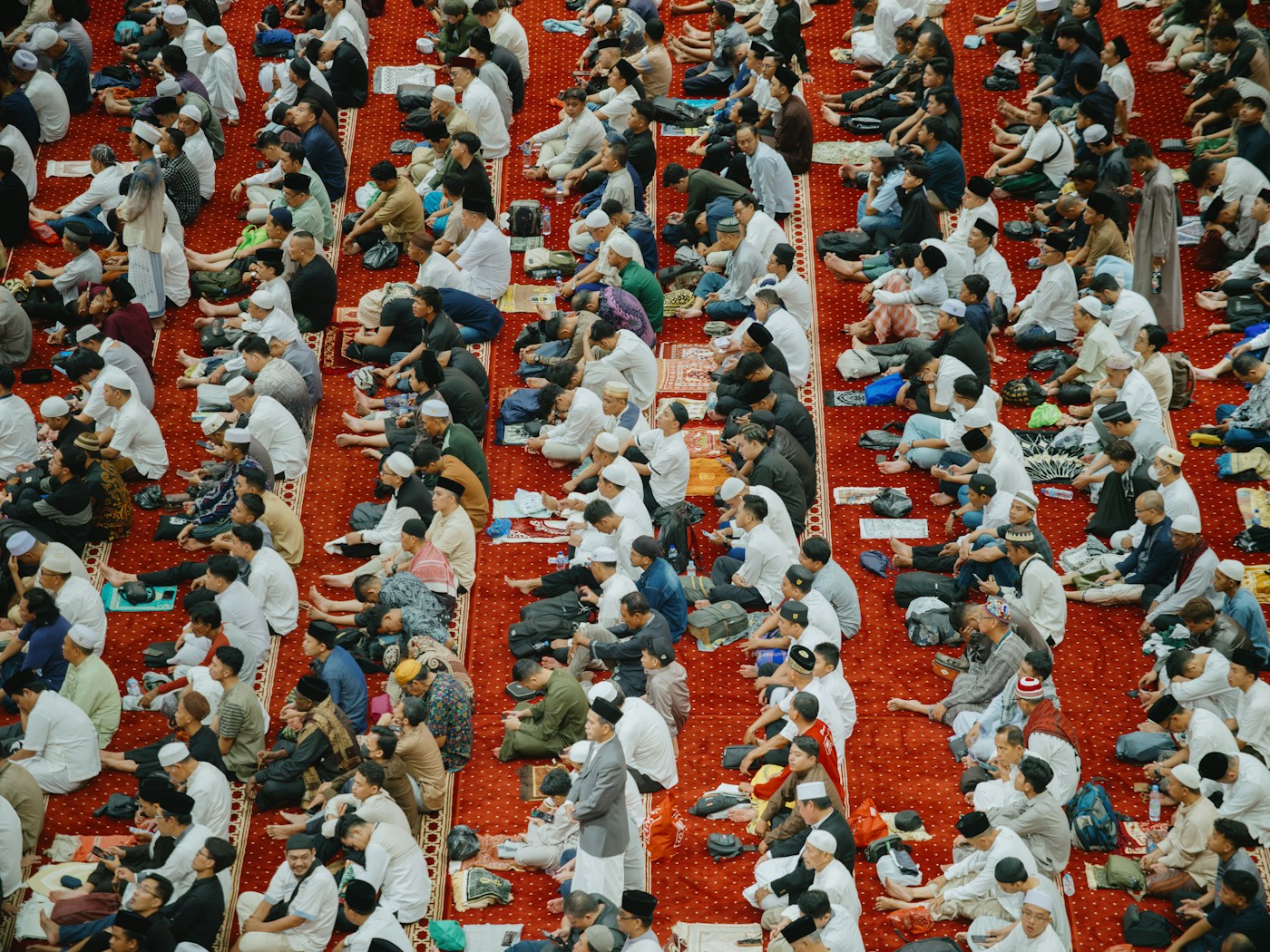
The Eid al-Fitr prayer is the single largest mass gathering in Saudi Arabia outside the Hajj. In a normal year, every mosque in the Kingdom fills to capacity for the dawn prayer, and major cities set up open-air musallah — dedicated prayer grounds — to accommodate overflow. Riyadh alone typically hosts more than two million worshippers across hundreds of sites, according to General Presidency of the Two Holy Mosques data. The Grand Mosque in Makkah accommodates more than two million, and the Prophet’s Mosque in Madinah holds over one million.
In 2026, the Saudi government confirmed that all major Eid prayer sites will operate as planned, with enhanced security. The confirmation, reported by the Saudi Press Agency on March 17, marked a deliberate choice: the Kingdom could have restricted gatherings, moved prayers indoors, or cancelled the outdoor musallah. It chose instead to protect them, deploying what security analysts describe as the largest peacetime-holiday security operation in the Middle East’s history.
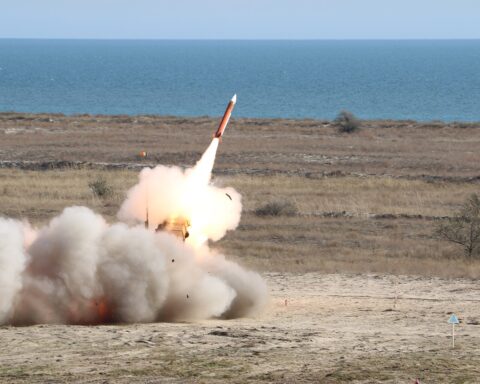
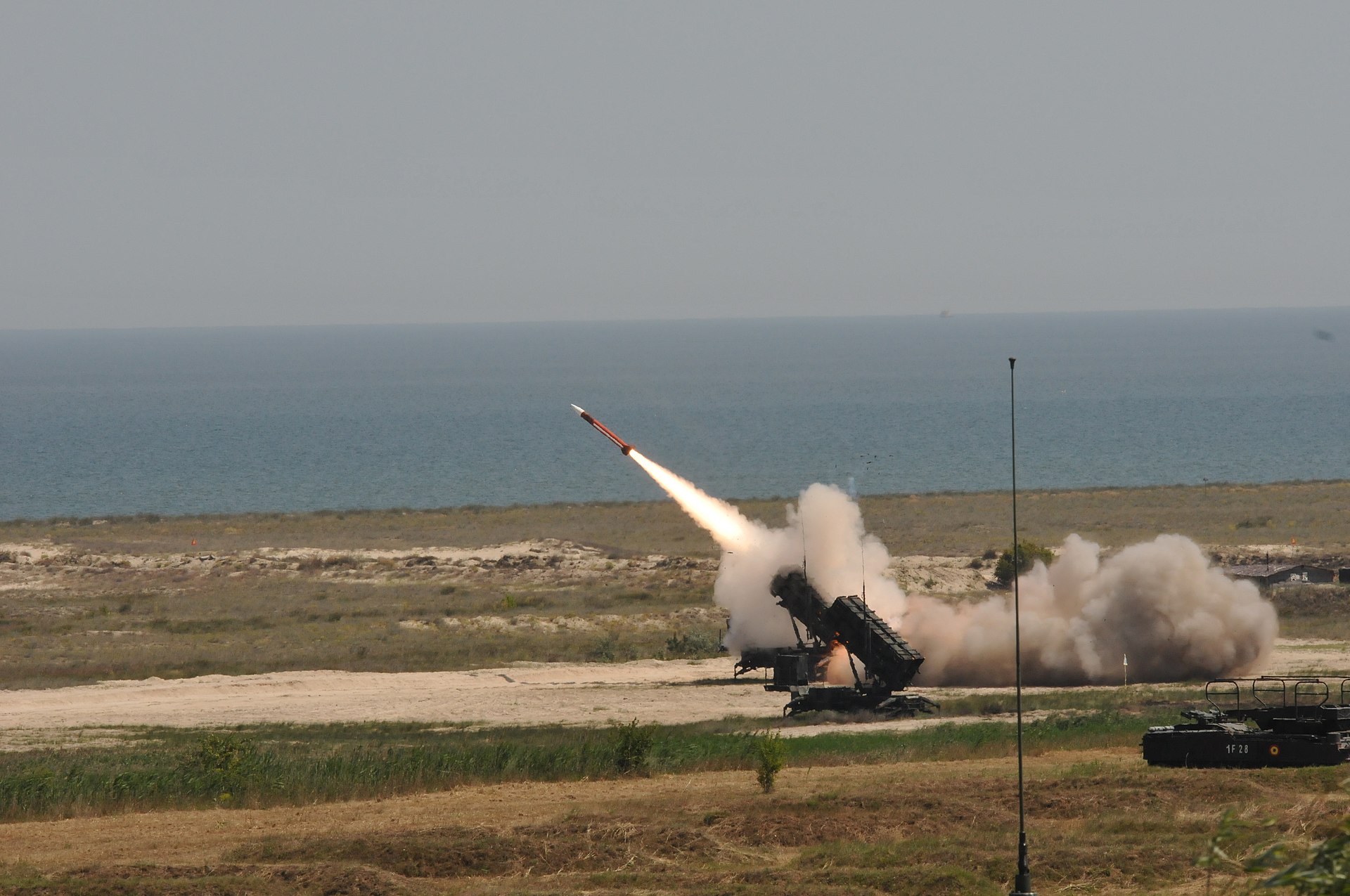
The security architecture relies on three overlapping layers. The outer layer is the national air defense network — Patriot PAC-3 batteries, THAAD systems, and Shahine short-range interceptors positioned to protect major population centers. According to the International Institute for Strategic Studies, Saudi Arabia operates approximately forty-eight Patriot fire units and seven THAAD batteries, making it one of the most heavily defended airspaces on Earth. During Eid, these systems will run at maximum alert status around the clock.
The middle layer involves ground security. The Saudi Arabian National Guard, the Royal Guard, and the Ministry of Interior’s Special Security Forces will deploy an estimated 100,000 personnel across prayer sites, according to Arab News reporting on previous Eid operations. In wartime, this number is expected to increase substantially, supplemented by military police units redeployed from non-critical postings.
The inner layer is technological. The Kingdom’s Absher and Tawakkalna digital platforms, developed during COVID for health surveillance, have been repurposed for civil defense notifications. Push alerts direct citizens to the nearest shelter when incoming threats are detected, and real-time traffic management systems reroute vehicles away from targeted areas. The Civil Defense authority (998) has published wartime Eid guidelines instructing families to identify shelter locations near prayer sites before attending.
| Layer | System | Coverage | Status |
|---|---|---|---|
| Strategic Air Defense | Patriot PAC-3, THAAD | National — major cities, oil facilities, military bases | Maximum alert |
| Short-Range Air Defense | Shahine, Oerlikon, NASAMS | Point defense — prayer sites, critical infrastructure | Deployed to prayer perimeters |
| Counter-Drone | Electronic warfare, directed energy, interceptor drones | Urban areas, prayer musallah | Active 24/7 during Eid window |
| Ground Security | National Guard, Special Forces, Military Police | All major prayer sites nationally | 100,000+ personnel deployed |
| Digital Civil Defense | Absher, Tawakkalna, 998 alerts | All mobile devices nationally | Wartime push notification active |
The Wartime Holiday Resilience Matrix
Measuring a nation’s ability to maintain cultural normalcy during armed conflict requires a framework that goes beyond simple economic metrics. Five dimensions determine whether a wartime holiday strengthens or fractures national cohesion: economic continuity, security adaptation, social participation, religious observance integrity, and political messaging coherence. Scored across these five axes, Saudi Arabia’s 2026 Eid al-Fitr becomes a measurable stress test with historical comparisons.
| Dimension | Metric | Saudi Eid 2026 | Israel Yom Kippur 2024 | UK Christmas 1940 | Iraq Eid 2006 |
|---|---|---|---|---|---|
| Economic Continuity | Consumer spending vs. peacetime baseline | 75-85% | 60-70% | 40-50% | 30-40% |
| Security Adaptation | Ability to protect gathering sites | High | High | Medium | Low |
| Social Participation | % of population participating in holiday | 85-90% | 70-80% | 90-95% | 50-60% |
| Religious Observance | Disruption to core religious rituals | Minimal — all mosques open | Moderate — combat exemptions | Moderate — church bombing risk | Severe — many mosques closed |
| Political Messaging | Government uses holiday to project strength | Strong — celebration as defiance | Strong — unity narrative | Strong — “keep calm” ethos | Weak — government absent |
| Overall Resilience Score | Composite (1-10) | 7.5 | 6.5 | 7.0 | 3.5 |
The framework reveals that Saudi Arabia’s wartime Eid scores higher on economic continuity than any historical precedent, driven by the Kingdom’s massive sovereign wealth buffers, controlled inflation (2.3 percent in March, according to the General Authority for Statistics), and the government’s deliberate decision to maintain subsidy programs during the conflict. It scores lower on security adaptation than Israel — which had decades of wartime holiday experience by 2024 — but far higher than Iraq’s sectarian-era Eid celebrations, where attending a mosque could be a death sentence.
The most revealing dimension is political messaging. Saudi leadership has framed Eid celebrations as an act of national defiance — the message being that Iran’s attacks cannot disrupt Saudi life. This mirrors Winston Churchill’s insistence on maintaining Christmas celebrations during the Blitz, and Benjamin Netanyahu’s 2024 call for Israelis to observe Yom Kippur normally despite the ongoing Gaza war. The pattern across all high-resilience cases is identical: governments that encourage celebration during war outperform those that restrict it.
Can a $16 Billion Consumer Economy Function Under Missile Fire?
The Eid consumer economy is the largest single-week spending event in Saudi Arabia’s calendar. In the week ending March 7, 2026, point-of-sale transactions reached SAR 16.1 billion across 226.2 million individual transactions, according to the Saudi Arabian Monetary Authority (SAMA). That figure — recorded during Ramadan’s peak shopping period — represents the highest weekly spending total in the Kingdom’s history, up from SAR 14.5 billion the previous week. The question is whether this spending momentum can survive the final pre-Eid shopping rush while Iranian drones continue targeting Gulf infrastructure.
Historical data suggests it can. In March 2025 — a peacetime benchmark — total consumer spending reached SAR 148 billion ($39.4 billion), a seventeen percent increase over the prior year, driven by Ramadan, Eid, and the Umrah season. The 2026 figures through early March are tracking at or above those levels despite the war, suggesting that Saudi consumers have not yet pulled back spending in any measurable way.
Three factors explain the resilience. First, the Saudi government has maintained all consumer subsidy programs, including fuel price controls, water subsidies, and the Citizens’ Account program that distributes direct cash transfers to lower-income households. Second, inflation remains remarkably contained at 2.3 percent annually in March 2026, according to the General Authority for Statistics, with food prices rising only 2 percent year-on-year. Meat and poultry — central to Eid feasts — have seen the sharpest increase at 3.8 percent, but this remains manageable for most households. Third, the war has not disrupted domestic supply chains in the way the Hormuz blockade has devastated international shipping. Saudi Arabia’s food imports increasingly arrive through Red Sea ports like Jeddah and Yanbu, bypassing the Strait of Hormuz entirely.
The economic wildcard is sentiment. Consumer confidence indices have not been publicly released since the war began, but proxy indicators suggest anxiety is rising without yet translating into spending cuts. The Saudi stock market (TASI) recovered its initial war losses within days, and real estate transactions have continued at near-normal levels in Riyadh and Jeddah. The Eid spending figures — expected within days of the holiday — will provide the first definitive answer to whether the wartime economy is genuinely resilient or merely operating on inertia.
| Metric | 2024 (Peacetime) | 2025 (Peacetime) | 2026 (Wartime) | Change YoY |
|---|---|---|---|---|
| Weekly POS Spending Peak | SAR 12.8B | SAR 14.2B | SAR 16.1B | +13.4% |
| POS Transactions (weekly peak) | 188M | 207M | 226M | +9.2% |
| E-commerce Growth (Ramadan) | +18% | +24% | +30% | +6 pts |
| CPI Inflation (March) | 1.6% | 1.9% | 2.3% | +0.4 pts |
| Food Price Inflation | 1.2% | 1.5% | 2.0% | +0.5 pts |
Where Are Saudis Shopping While Sirens Sound?
The most striking behavioral shift in Saudi consumer patterns during the war is not a decline in spending but a migration online. E-commerce spending via Mada debit cards surged seventy-three percent year-on-year to SAR 27.5 billion ($7.4 billion) in March, according to SAMA data analyzed by The Saudi Times, encompassing 147.6 million transactions. The war has accelerated a digital commerce trend that was already strong — Saudi Arabia’s e-commerce penetration has grown faster than any G20 economy since 2020 — but the pace of the shift in March 2026 is unprecedented.
The timing data is particularly revealing. Online shopping activity peaks between midnight and 6 a.m., accounting for thirty-one percent of all e-commerce transactions during Ramadan 2026, according to Business Today Middle East. In a normal year, this late-night pattern reflects Ramadan’s inverted schedule, with families awake for suhoor and using the quiet hours to browse. In 2026, the late-night shopping surge also reflects something darker: families confined to their homes during evening hours when drone activity historically intensifies are filling the anxious waiting hours with online purchasing. The phone screen has become both a shopping portal and a distraction from the air raid alerts that punctuate Saudi nights.
Physical retail has not collapsed, but it has contracted geographically. Malls in the Eastern Province — Saudi Arabia’s most-targeted region due to its concentration of oil infrastructure — have reported foot traffic declines of thirty to forty percent, according to Emaar Malls Group reporting cited by Arab News. Riyadh’s malls, further from the front lines and better protected by air defense coverage, have maintained near-normal traffic. Jeddah, on the Red Sea coast and away from Iranian flight paths, has actually seen increased retail activity as internal migrants from the Eastern Province relocate temporarily.
The pattern mirrors a phenomenon documented in Israel during its decades of conflict: consumers adapt to threat geography rather than stopping consumption. Israelis learned to shop in malls with reinforced safe rooms. Saudis are learning to shop in cities with Patriot coverage. The economic activity does not disappear; it redistributes according to the perceived security map.
The Religious Dimension Nobody Is Discussing
Eid al-Fitr is not merely a cultural event. It is one of only two Eids ordained in Islam, marking the end of Ramadan — a month of fasting, prayer, and spiritual reflection. The theological weight of celebrating Eid during wartime creates tensions that Western analysts consistently underestimate and that Saudi religious authorities are navigating with unusual care. Understanding the religious mechanics of wartime Eid requires grasping a distinction that separates this crisis from any secular holiday disruption: in Islam, the Eid prayer is a communal obligation, not a personal choice.
The Grand Mufti of Saudi Arabia, Sheikh Abdulaziz bin Abdullah Al Al-Sheikh, has not issued a formal fatwa modifying Eid obligations for wartime, and senior scholars have signaled that the holiday should proceed normally. This is itself significant. In Islamic jurisprudence, congregational prayer can be suspended for security threats under the principle of darurah (necessity), and the prayer of fear (salat al-khawf) allows abbreviated worship during active combat. The decision not to invoke either provision is a theological statement: the Saudi religious establishment is declaring that the threat level, while real, does not rise to the standard that would justify curtailing worship.
The contrast with Israel’s wartime religious adjustments is instructive. During the 2024 Gaza war, Israel’s Chief Sephardic Rabbi issued a ruling that IDF combat soldiers were prohibited from fasting on Yom Kippur — acknowledging that the demands of war superseded even the holiest obligation on the Jewish calendar, as reported by The Times of Israel. Saudi Arabia has not made an equivalent concession. Military personnel on active duty at air defense batteries and border positions will be expected to break their Ramadan fast at the normal Eid time and offer the Eid prayer, with military imams conducting services at forward operating bases.
The deeper religious narrative is about gratitude. Eid al-Fitr literally translates as “the festival of breaking the fast,” and Islamic tradition holds that the holiday celebrates God’s sustenance through a month of deprivation. For Saudis who have spent Ramadan 2026 not only fasting but also enduring air raids, power outages in the Eastern Province, and the anxiety of having family members in targeted areas, the act of celebrating Eid carries an additional layer of meaning. It is gratitude not just for surviving Ramadan but for surviving the war — at least so far.
The zakat al-fitr — the obligatory charitable payment made before the Eid prayer — adds another dimension. Every Muslim household must donate food or its monetary equivalent to ensure that the poor can also celebrate. In wartime Saudi Arabia, the zakat takes on heightened significance. Displaced families from the Eastern Province, workers who lost employment when construction projects halted, and communities whose local economies have been disrupted by the conflict all become recipients of a charitable obligation that Islam makes non-negotiable. The Saudi Red Crescent Society has reported a forty percent increase in zakat contributions during Ramadan 2026 compared to 2025, according to its March 15 update — suggesting that wartime generosity is outpacing peacetime charity.
The sectarian dimension is the most politically sensitive. Iran’s government has framed its attacks on Gulf states as retaliation against countries that supported the US-Israeli strike on Iranian nuclear and military facilities. Tehran has not explicitly framed the conflict in Sunni-Shia terms, but the reality that a Shia-majority state is bombing Sunni-majority countries during the holiest period of the Islamic calendar is not lost on anyone in the region. Saudi Arabia’s Grand Mufti has been careful to avoid sectarian framing in his Ramadan addresses, focusing instead on themes of patience, faith, and national unity. The restraint is deliberate: the Kingdom’s leadership recognizes that transforming a geopolitical conflict into a sectarian war would serve Iran’s proxies in Iraq, Lebanon, and Yemen far more than it would serve Saudi interests.
How Did Other Nations Celebrate Holidays During War?
Every wartime nation confronts the same question Saudi Arabia faces in March 2026: does celebrating a holiday during conflict signal resilience or denial? The historical record provides a clear answer, and it is not the one most analysts expect.
Britain’s wartime Christmases between 1939 and 1945 are the most studied precedent. King George VI’s 1939 Christmas broadcast — his first after the outbreak of war — explicitly framed celebration as resistance, telling the nation “I said to the man who stood at the Gate of the Year: Give me a light that I may tread safely into the unknown.” The government encouraged Christmas celebrations throughout the Blitz, even as German bombs fell on London. Wartime rationing forced adaptations — carrots replaced sugar in Christmas puddings, and gifts were handmade — but the cultural rituals persisted. The consensus among historians, including Juliet Gardiner’s study “Wartime: Britain 1939-1945,” is that maintaining Christmas was essential to civilian morale and contributed measurably to Britain’s ability to sustain the war effort.
Israel provides the most direct religious comparison. In October 2024, as Israeli forces fought in Gaza and the northern border remained active, the country observed Yom Kippur — its holiest day — for the first time during active war since 1973. The government encouraged normal observance while deploying Iron Dome batteries at maximum readiness. Roads emptied as they do every Yom Kippur; synagogues filled. The holiday proceeded without major incident, though air raid shelters near synagogues were staffed and ready. The symbolism was powerful: the last time war coincided with Yom Kippur, in 1973, the holiday had been violated by a surprise attack that nearly destroyed the state. In 2024, Israel demonstrated that it could defend the holy day rather than be ambushed during it.
The negative precedent is Iraq during the 2006-2008 sectarian war. Eid al-Fitr celebrations were repeatedly disrupted by car bombings targeting mosques and markets. In 2006, at least sixty-eight people were killed in bombings during the Eid period, according to the United Nations Assistance Mission for Iraq. The Iraqi government lacked the security capacity to protect holiday gatherings, and many families simply stayed home. The result was a deepening of sectarian division and a collapse of the shared national rituals that might have counteracted fragmentation.
Saudi Arabia in 2026 more closely resembles the British and Israeli models than the Iraqi one. The Kingdom possesses the security infrastructure to protect gatherings (unlike Iraq), the economic resources to maintain holiday consumption (unlike wartime Britain), and the political will to frame celebration as defiance (like both). The critical variable is whether Iran escalates attacks specifically to target Eid gatherings — a step that would carry enormous religious and political costs for Tehran across the Muslim world.
Eid as Political Theater — MBS’s Calculated Message
Crown Prince Mohammed bin Salman has been speaking regularly with President Trump since the war began, urging harsh action against Iran while positioning Saudi Arabia as a victim of Iranian aggression rather than a belligerent, as reported by the New York Times. Eid al-Fitr offers the most powerful visual stage for this narrative since the war began. A nation celebrating its most important holiday — children in new clothes, families gathered, mosques overflowing — is not a nation that has been defeated or cowed by Iranian missiles.
The political calculation runs deeper than optics. The Saudi royal family derives its legitimacy from two sources: economic prosperity and custodianship of Islam’s two holiest mosques. The war threatens both. Oil revenues are disrupted by the Hormuz blockade, Vision 2030 mega-projects are on hold, and Iranian missiles have reached within kilometers of the Holy Mosques. If Eid proceeds normally — or even impressively — it demonstrates that neither pillar has cracked. If it fails — if a mosque is hit, if attendance collapses, if the economy seizes — the damage to the monarchy’s legitimacy would exceed anything Iran’s missiles could inflict directly.
MBS is expected to deliver an Eid message to the nation, following the tradition of royal holiday greetings. The content of that message will be scrutinized by every capital in the region. A defiant tone signals escalation willingness. A conciliatory tone signals openness to ceasefire. A focus on religious themes signals an appeal to Islamic solidarity against Shia Iran. Previous royal Eid messages have been formulaic and brief. The 2026 edition will be neither.
The diplomatic dimension extends beyond Saudi borders. Pakistan’s Prime Minister Shehbaz Sharif visited Jeddah on March 12, expressing solidarity, as reported by Al Arabiya. The timing — just before Eid — was deliberate. The Gulf Cooperation Council’s emergency diplomatic coordination has intensified in the days before the holiday, with MBS calling the leaders of the UAE, Qatar, Kuwait, Bahrain, and Jordan. The subtext is coordination: ensure no GCC state breaks ranks during the holiday’s heightened emotional atmosphere.
What the Gulf’s Wartime Eid Tells Markets About Saudi Resilience?
Financial markets are watching the Eid period for signals that extend far beyond the holiday itself. The Saudi stock exchange (TASI) will be closed from March 19 through March 24 for the Eid break, according to the Saudi Arabian Monetary Authority’s published holiday schedule. When it reopens, the first trading session will price in whatever happened during the holiday — a successful, normal-looking Eid, or a disrupted, fearful one.
The pre-Eid market data is encouraging. TASI recovered its initial war losses within days of the conflict’s outbreak, as documented in the analysis of the Saudi stock market’s wartime performance. Saudi government bonds have traded at yields suggesting the market expects the Kingdom to service its debt without difficulty throughout the conflict. The Saudi riyal’s peg to the US dollar has held firm despite the most intense pressure on the currency in four decades.
The spending data from Eid — which SAMA typically publishes within two weeks — will serve as the first comprehensive consumer confidence indicator since the war began. If the Eid spending total matches or exceeds the SAR 16.1 billion weekly peak recorded in early March, it will signal that the Saudi consumer economy is genuinely war-resistant. If it drops by fifteen percent or more, it suggests that the consumer confidence facade is beginning to crack despite the resilient headline numbers.
International investors are particularly focused on three proxy indicators: gold jewelry purchases (traditionally the largest Eid gift category, and a flight-to-safety asset during war), restaurant spending (a discretionary category that collapses first during genuine economic stress), and remittance outflows (which would spike if expatriate workers are fleeing the Kingdom). Restaurants and cafes typically lead post-Eid spending at SAR 2.1 billion per week, according to SAMA data from 2025. A sharp decline would be the most bearish signal the wartime economy has produced.
The Contrarian Case — War Is Strengthening Saudi Social Cohesion
The prevailing Western analysis holds that the Iran war is fragmenting Saudi society — creating anxiety, driving expatriates out, and undermining confidence in the government’s ability to protect its citizens. The evidence from the pre-Eid period tells a different story.
Consumer spending is up, not down. Mosque attendance during Ramadan 2026 has been at record levels in Riyadh and Jeddah, despite the security risks, according to General Presidency of the Two Holy Mosques data. Social media analysis of Arabic-language Twitter (now X) shows a surge in patriotic hashtags and expressions of national unity that exceed anything recorded during Vision 2030’s launch or the 2019 Aramco IPO. Voluntary civilian defense organizations have reported a tenfold increase in registration since the war began, according to the Saudi Civil Defense authority.
This pattern is consistent with what social scientists call the “rally around the flag” effect, documented in virtually every democracy that has faced external attack. The difference in Saudi Arabia is that the effect operates through cultural and religious channels rather than political ones. Saudis are not rallying around a political party or an election; they are rallying around Eid itself — the shared cultural experience that transcends regional, tribal, and class divisions within the Kingdom.
The war has also closed a generational gap that was widening before the conflict. Vision 2030’s rapid social reforms — entertainment, mixed-gender events, tourism — had created friction between conservative older Saudis and the younger generation embracing change. The war has given both groups a common enemy and a common experience. The grandfather who remembers the 1991 Scuds and the twenty-year-old who has never known conflict are both checking their phones for air raid alerts and both planning to attend Eid prayer. The shared vulnerability has produced a shared identity that MBS’s social engineering programs struggled to manufacture.
The phenomenon has a name in Arabic: asabiyyah — the group solidarity that Ibn Khaldun identified as the force that builds and sustains civilizations. The fourteenth-century historian argued that shared hardship and common purpose create bonds stronger than any economic incentive or political program. Saudi Arabia in March 2026 is experiencing an asabiyyah moment that no amount of entertainment-sector investment or social media campaigns could have manufactured. The irony is stark: Iran, by attacking the Kingdom, may have done more to consolidate Saudi national identity than any policy MBS has implemented since 2016.
The expatriate community tells a more complicated story. The US Embassy ordered all American citizens to shelter in place on March 17 and 18, and the embassy will close entirely from March 19 to 24. The evacuation of some Western nationals has been visible in Riyadh’s diplomatic quarter. But the eight million non-Western expatriate workers — the Pakistanis, Indians, Bangladeshis, Filipinos, and Egyptians who constitute the backbone of the Saudi service economy — have largely stayed. Their Eid celebrations will be quieter than usual, with many unable to send gifts home due to disrupted international shipping. But they remain, and their presence is itself a vote of confidence in Saudi security.
“The worst thing we could do is stop living. The Iranians want us afraid. We pray, we feast, we celebrate. That is how we fight.”
Saudi resident quoted by Al Arabiya, March 2026
That resilience was tested immediately. On Eid morning itself, Iranian drones struck Kuwait’s Mina Al-Ahmadi refinery and targeted four Gulf states as prayers began, marking the most religiously provocative act of the conflict.
Frequently Asked Questions
When is Eid al-Fitr 2026 in Saudi Arabia?
Eid al-Fitr 2026 in Saudi Arabia is expected on Thursday, March 20, corresponding to 1 Shawwal 1447 AH. The Supreme Court called for crescent moon sighting on the evening of March 18. The public holiday runs from Wednesday, March 18 through approximately March 24, with government offices and many businesses closed for the duration. The holiday timing coincides with the twentieth day of the Iran war that began on February 28, 2026.
Are Eid prayer gatherings safe in Saudi Arabia during the war?
The Saudi government has confirmed all major Eid prayer sites will operate with enhanced security, including multi-layered air defense coverage from Patriot PAC-3 and THAAD batteries, ground security deployment of an estimated 100,000 or more personnel, and real-time civil defense alert systems on mobile devices. The Saudi Civil Defense authority has published guidelines advising worshippers to identify nearby shelter locations before attending prayers. No major prayer site has been struck during the conflict as of March 18, 2026.
How has the Iran war affected Eid consumer spending in Saudi Arabia?
Remarkably little, according to available data. Point-of-sale spending reached a record SAR 16.1 billion in the week ending March 7, 2026, with e-commerce transactions surging seventy-three percent year-on-year. Inflation remains contained at 2.3 percent. The most notable shift is a migration from in-store to online shopping, particularly in the Eastern Province where Iranian drone attacks have been most frequent. Final Eid spending data is expected from SAMA within two weeks of the holiday.
Has Saudi Arabia ever celebrated Eid during a war before?
No. The 2026 Eid al-Fitr marks the first time in the modern Kingdom’s ninety-three-year history that the holiday falls during active armed conflict on Saudi soil. During the 1991 Gulf War, Eid al-Fitr fell in April 1991, after the cessation of hostilities. The 2019 Houthi drone attacks on Aramco facilities occurred in September, months away from either Eid. The COVID-19 pandemic disrupted Eid 2020 with mosque closures, but that was a public health crisis rather than a military conflict.
What is the economic impact of a wartime Eid on Saudi Arabia?
The Eid period typically generates SAR 16-18 billion in weekly consumer spending across retail, restaurants, travel, and gifts, according to SAMA data. The 2026 wartime Eid is expected to see spending at seventy-five to eighty-five percent of peacetime levels — above the historical precedent set by Israel’s wartime holidays (sixty to seventy percent) and far above Iraq’s sectarian-era holidays (thirty to forty percent). The critical variable is post-Eid spending, which typically surges as restaurants and entertainment venues see peak demand in the days following the holiday.
How are Saudi expatriates celebrating Eid during the war?
Saudi Arabia’s eight million expatriate workers face a more muted Eid than usual. International shipping disruptions caused by the Hormuz blockade have made it difficult to send gifts to families abroad, and remittance services have experienced delays. The disruption of 293 flights across Saudi airports on March 22 further complicated travel plans for workers hoping to reunite with families during the holiday. The US Embassy has ordered all American citizens to shelter in place and closed its offices from March 19 to 24. However, the vast majority of expatriate workers — particularly the South Asian and Southeast Asian communities — have remained in the Kingdom and plan to celebrate Eid within their communities, with mosques in expatriate-heavy districts reporting strong attendance for Ramadan prayers.