
BRUSSELS — European Union foreign ministers meeting in Brussels on Monday rejected expanding the bloc’s naval mission to the Strait of Hormuz, dealing a decisive blow to President Donald Trump’s push for a multinational coalition to reopen the critical waterway. Germany, France, Italy, Japan, and the United Kingdom each confirmed within hours that they would not send warships to the strait, where Iranian military operations have disrupted oil shipments since the US-Israeli war on Iran began on February 28.
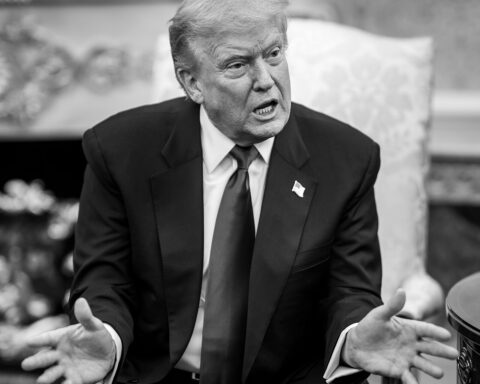
Trump had spent days demanding allied participation, warning of a “very bad future” for NATO nations that refused. By Monday afternoon, after every major allied government had publicly declined, the president reversed course in the Oval Office. “We don’t need any help, actually,” Trump told reporters during a meeting with Irish Prime Minister Micheál Martin, abandoning the coalition effort he had championed just 24 hours earlier.
The collapse has immediate consequences for Saudi Arabia, which routes approximately 6.2 million barrels per day of crude oil and petroleum products through the strait, according to the US Energy Information Administration. With no multinational naval force in prospect and Iranian drone attacks on Gulf energy infrastructure escalating to nearly 100 per day, Riyadh faces the possibility that its most important export route will remain contested for weeks or months to come.
Table of Contents
- What Did EU Foreign Ministers Decide on the Strait of Hormuz?
- Which Countries Refused to Send Warships?
- How Did Trump Respond to the Allied Rejection?
- Graham Questions the Value of Western Alliances
- Why Does the Strait of Hormuz Matter to Saudi Arabia?
- What Happens to Gulf Oil Without a Multinational Naval Force?
- Saudi Arabia Faces Hormuz Crisis Without Allied Cover
- Frequently Asked Questions
What Did EU Foreign Ministers Decide on the Strait of Hormuz?
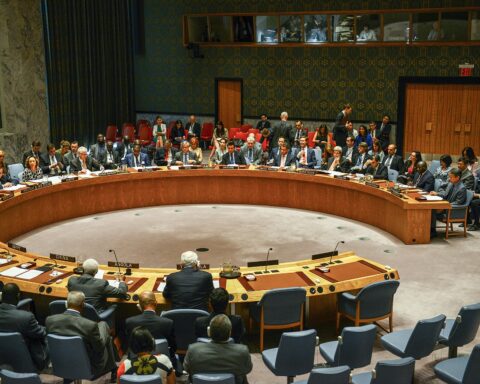
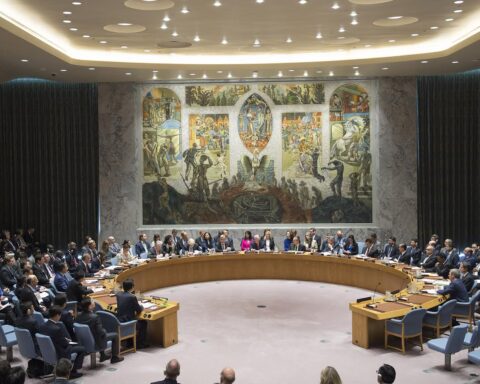
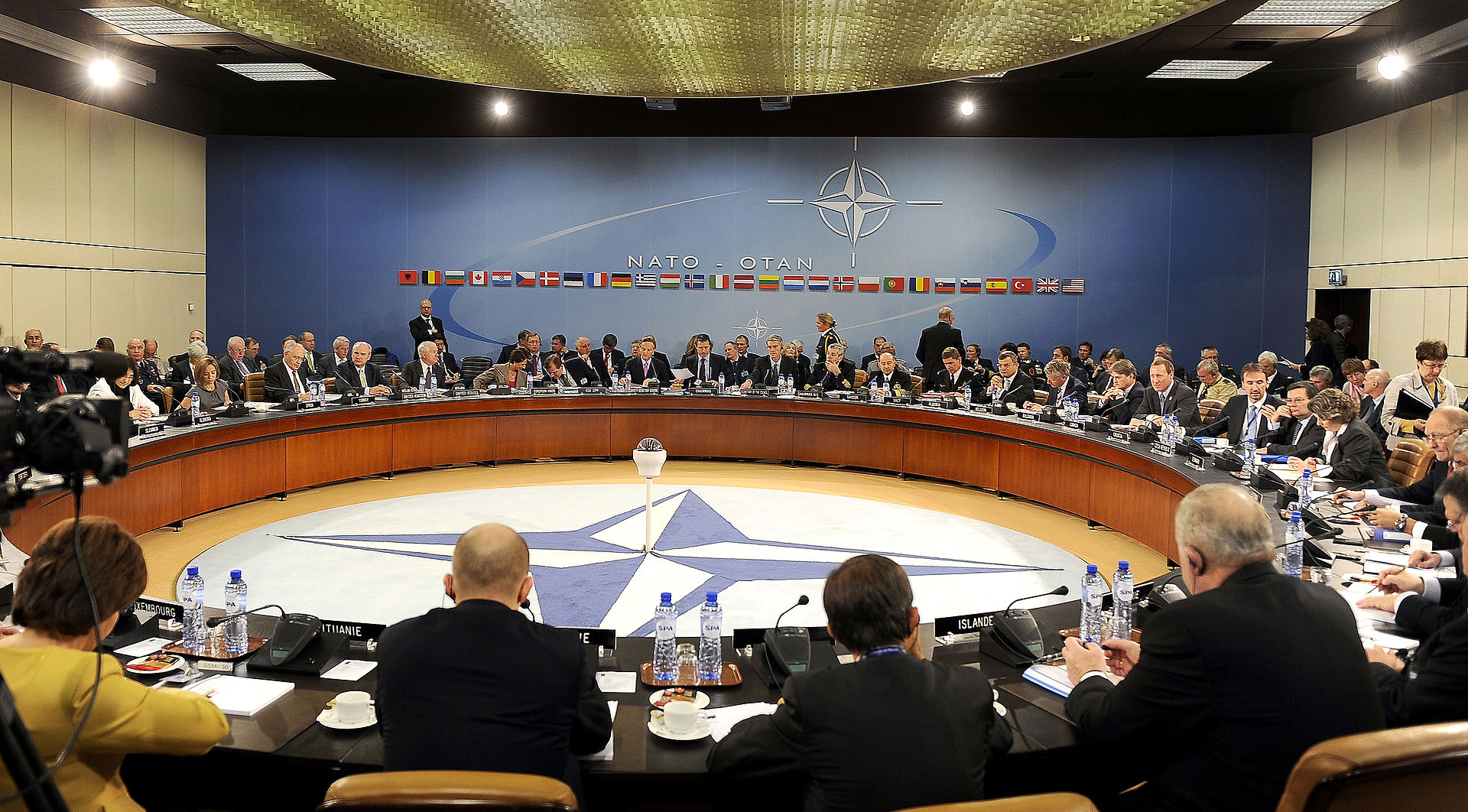
EU foreign policy chief Kaja Kallas told reporters on Monday that there was “no appetite” among the bloc’s foreign ministers to extend the mandate of Operation Aspides, the EU’s existing Red Sea naval mission, into the Strait of Hormuz. The decision came after an emergency session in Brussels called to address surging oil prices, which have risen more than 40 percent since the start of hostilities, according to Bloomberg data.
Kallas framed the decision in terms of the conflict’s origins. “This is a war started by the United States and Israel. The EU is not a party to this conflict,” she said at a press conference following the meeting, according to Reuters. The foreign ministers discussed expanding Aspides — which currently escorts commercial shipping through the Red Sea and Gulf of Aden against Houthi attacks — but concluded that repurposing the mission for Hormuz would risk drawing European naval forces into direct confrontation with Iran.
The EU’s position reflects a calculation that Europe’s energy vulnerability — roughly 20 percent of the bloc’s oil imports transit Hormuz, according to the International Energy Agency — does not justify the military risk of participating in operations alongside the United States during an active war with Iran. EU foreign ministers had already convened an emergency energy session the previous day as Brent crude pushed past $106 per barrel.
The Middle East briefing 3,000+ readers start their day with.
One email. Every weekday morning. Free.
Which Countries Refused to Send Warships?
At least eight nations publicly declined Trump’s demand for naval assets at Hormuz within a 48-hour window. The rejections came from governments spanning Europe and Asia, crossing traditional alliance lines and covering both NATO and non-NATO partners. Each nation offered distinct justifications, but the cumulative effect was the same: the United States will patrol the strait alone.
Germany’s rejection was the bluntest. Defense Minister Boris Pistorius told reporters in Berlin that “this is not our war; we have not started it,” according to the Financial Times. A spokesperson for Chancellor Friedrich Merz reinforced the message, stating that “as long as this war continues, there will be no involvement, not even in an option to keep the Strait of Hormuz open by military means.” Germany’s defense ministry added that Berlin’s primary military responsibility remained the defense of NATO’s eastern flank, particularly against Russian threats in northern Europe.
France’s position was equally categorical. President Emmanuel Macron said on Tuesday that Paris would “never” participate in operations to unblock the strait during the current conflict. “We are not party to the conflict, and therefore France will never take part in operations to open or liberate the Strait of Hormuz in the current context,” Macron stated, according to Reuters. France maintains a permanent naval base in Abu Dhabi but has kept those assets in a defensive posture since the war began.
| Country | Official | Position | Key Quote |
|---|---|---|---|
| Germany | Defense Min. Pistorius | No involvement | “This is not our war” |
| France | President Macron | Never participate | “France will never take part” |
| United Kingdom | PM Starmer | No NATO mission | “We will not be drawn into the wider war” |
| Italy | PM Meloni | No naval deployment | Will not participate in US-led operations |
| Japan | PM Takaichi | No escort ships | “No decisions whatsoever about dispatching” |
| Spain | Government statement | No participation | Ruled out military involvement |
| Luxembourg | Government statement | No involvement | Aligned with EU consensus |
| Romania | Government statement | No involvement | Aligned with EU consensus |
The United Kingdom’s refusal carried particular weight given Britain’s longstanding naval presence in the Persian Gulf. Prime Minister Keir Starmer said from London: “Let me be clear: that won’t be, and it’s never been envisioned to be, a NATO mission. We will not be drawn into the wider war.” The Royal Navy has already deployed assets to the region — RAF jets have been flying defensive sorties over Gulf skies — but Starmer drew a line between defensive operations and the offensive posture Trump had demanded.
Italy’s Prime Minister Giorgia Meloni confirmed that Rome would not send naval vessels, telling parliament that Italy was “not involved in any naval missions that could be extended to the area,” according to ANSA. Japan’s Prime Minister Sanae Takaichi cited constitutional constraints, stating: “We have not made any decisions whatsoever about dispatching escort ships. We are continuing to examine what Japan can do independently and what can be done within the legal framework.”
The stakes for Tokyo are existential. Japan imports roughly 70 percent of its oil through the Strait of Hormuz and has already released 80 million barrels from strategic reserves to offset supply disruptions. A full analysis of Japan and South Korea’s energy crisis reveals the extraordinary paradox: both nations refuse to defend the waterway on which their industrial economies depend.
Even Turkey, a NATO member that has already absorbed three Iranian missile strikes on its territory, declined to contribute warships. Ankara’s refusal underscored the depth of allied reluctance: nations that had themselves been hit by Iranian weapons still calculated that joining a US-led Hormuz force would escalate rather than contain the conflict.
The breadth of the refusals was historically unusual. During the 2019 Hormuz crisis, when Iran seized the British-flagged tanker Stena Impero, the UK assembled the International Maritime Security Construct within weeks, drawing patrol contributions from Albania, Saudi Arabia, and several other nations. In 2023-24, the EU launched Operation Aspides to protect Red Sea shipping from Houthi attacks with broad political support. The difference in 2026, allied officials said, was that the current Hormuz disruption stems directly from a US-Israeli military campaign that most allied governments had counseled against.
How Did Trump Respond to the Allied Rejection?
Trump’s response evolved rapidly over 24 hours, shifting from angry demands to an abrupt claim of self-sufficiency. On Sunday, March 16, the president had posted on Truth Social that allied nations must “get involved” so that oil tankers could safely navigate the strait, warning that NATO countries faced a “very bad future” if they did not assist, according to NBC News. He also demanded that China contribute naval forces, calling the Hormuz crisis “a test” for the international community.
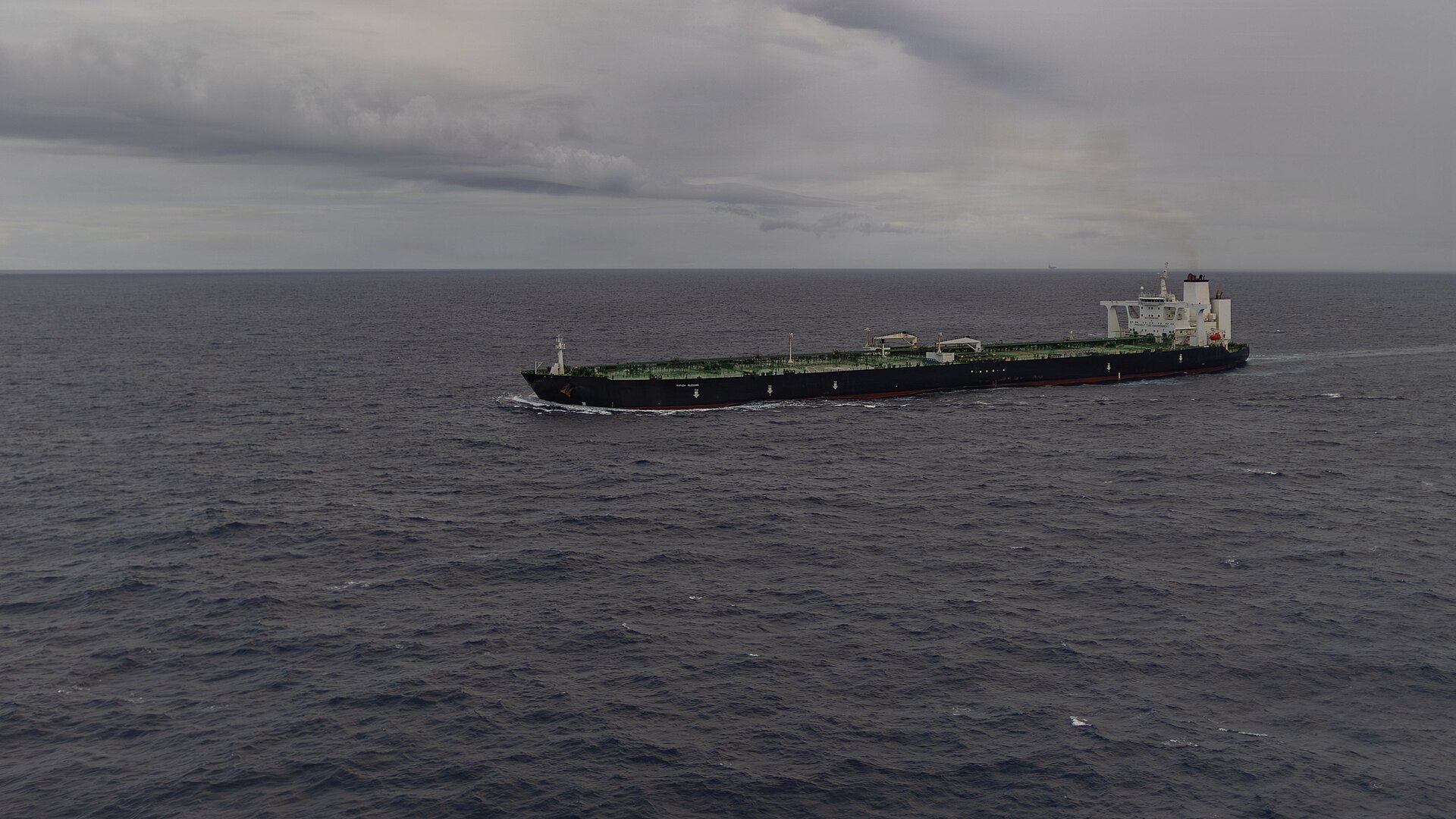
By Monday afternoon, after the string of public rejections, Trump reversed his position entirely. During an Oval Office meeting with Irish Prime Minister Micheál Martin, the president told reporters: “We don’t need any help, actually,” according to NBC News. The Washington Times reported that Trump added the United States could “clear the Strait of Hormuz on its own.”
The reversal marked a significant diplomatic setback. Just days earlier, Washington had been openly discussing a multinational coalition that would combine US naval power with allied escorts, mine-clearance vessels, and surveillance aircraft. NPR reported that Trump had asked both NATO nations and China to contribute, receiving refusals from across the board. Axios described the administration as “struggling to build” the coalition it had envisioned.
The War Zone, a defense publication, reported that the shift happened within hours. Its headline captured the speed of the reversal: “Trump No Longer Wants Allies To Send Warships To Open The Strait Of Hormuz.” Pentagon officials had not publicly commented on how the collapse of the coalition plan would affect US naval operations in the Gulf as of Monday evening.
Graham Questions the Value of Western Alliances
Senator Lindsey Graham, the South Carolina Republican and longtime foreign policy hawk, provided the most visceral account of the White House’s reaction. Graham told reporters that he had spoken to Trump shortly after the allied rejections became clear and that he had “never heard him so angry in my life,” according to multiple outlets including The Hill, NBC News, and Business Today.
Graham warned that the consequences of allied inaction would be “wide and deep for Europe and America.” His comments then took a more fundamental turn, questioning the structure of the post-Cold War alliance system itself. “I consider myself very forward-leaning on supporting alliances,” Graham said, according to Townhall. “However, at a time of real testing like this, it makes me second-guess the value of these alliances. I am certain I am not the only senator who feels this way.”
The remarks carry policy weight. Graham sits on the Senate Armed Services Committee and the Senate Appropriations Subcommittee on Defense, giving him direct influence over military budgets and basing agreements. His public questioning of alliance value echoes a broader shift in Republican foreign policy circles, where skepticism of European defense commitments has accelerated since the start of the Iran war. Trump had already signaled frustration with NATO earlier in the week, linking the Hormuz refusal to broader complaints about allied defense spending.
European officials pushed back. Germany’s foreign ministry responded through diplomatic channels that the Hormuz crisis was a direct consequence of the US-Israeli military campaign that European governments had not endorsed, according to the Financial Times. French diplomatic sources told Reuters that Macron’s position reflected “not a failure of solidarity but a refusal to be co-opted into a conflict we opposed from the start.”
Why Does the Strait of Hormuz Matter to Saudi Arabia?
The Strait of Hormuz is the most important energy chokepoint on Earth. Saudi Arabia accounts for the largest single share of crude oil and condensate exports transiting the waterway — approximately 37 percent of total Hormuz crude flows, or 5.43 million barrels per day of crude oil plus 800,000 barrels per day of petroleum products, totaling roughly 6.2 million barrels per day, according to the US Energy Information Administration’s 2025 data.
The strait connects the Persian Gulf to the Gulf of Oman and the Arabian Sea. At its narrowest point, it measures just 21 nautical miles wide, with shipping lanes for inbound and outbound traffic each only two miles wide, separated by a two-mile buffer zone. The IEA estimates that roughly 21 percent of global petroleum consumption transits the strait daily, making any disruption a systemic risk to the world economy.
Saudi Arabia has invested heavily in alternative routes, most notably the East-West Pipeline running from the Eastern Province to the Red Sea port of Yanbu. That pipeline can carry approximately 5 million barrels per day at maximum capacity. But the pipeline alone cannot replace Hormuz throughput, and Yanbu’s port infrastructure was not designed for the volume of tanker traffic that a permanent Hormuz closure would require. As one analysis noted, Gulf states have been pressing Washington to neutralize the Iranian threat precisely because no bypass can fully substitute for the strait.
| Country | Crude + Condensate (million bpd) | Share of Hormuz Total |
|---|---|---|
| Saudi Arabia | 5.43 | 37% |
| Iraq | 3.30 | 23% |
| UAE | 2.70 | 18% |
| Kuwait | 1.70 | 12% |
| Iran | 1.50 | 10% |
Iran’s ability to disrupt traffic through the strait has been central to the war’s economic impact. Since the conflict began on February 28, Iranian naval forces, drones, and mines have restricted commercial shipping, driving Brent crude above $106 per barrel at one point, according to Al Jazeera. The IRGC Navy has demanded that ships seek permission to transit, and multiple vessels have been struck by Iranian weapons. Insurance premiums for Gulf-bound tankers have surged to levels not seen since the 1980s Tanker War.
What Happens to Gulf Oil Without a Multinational Naval Force?
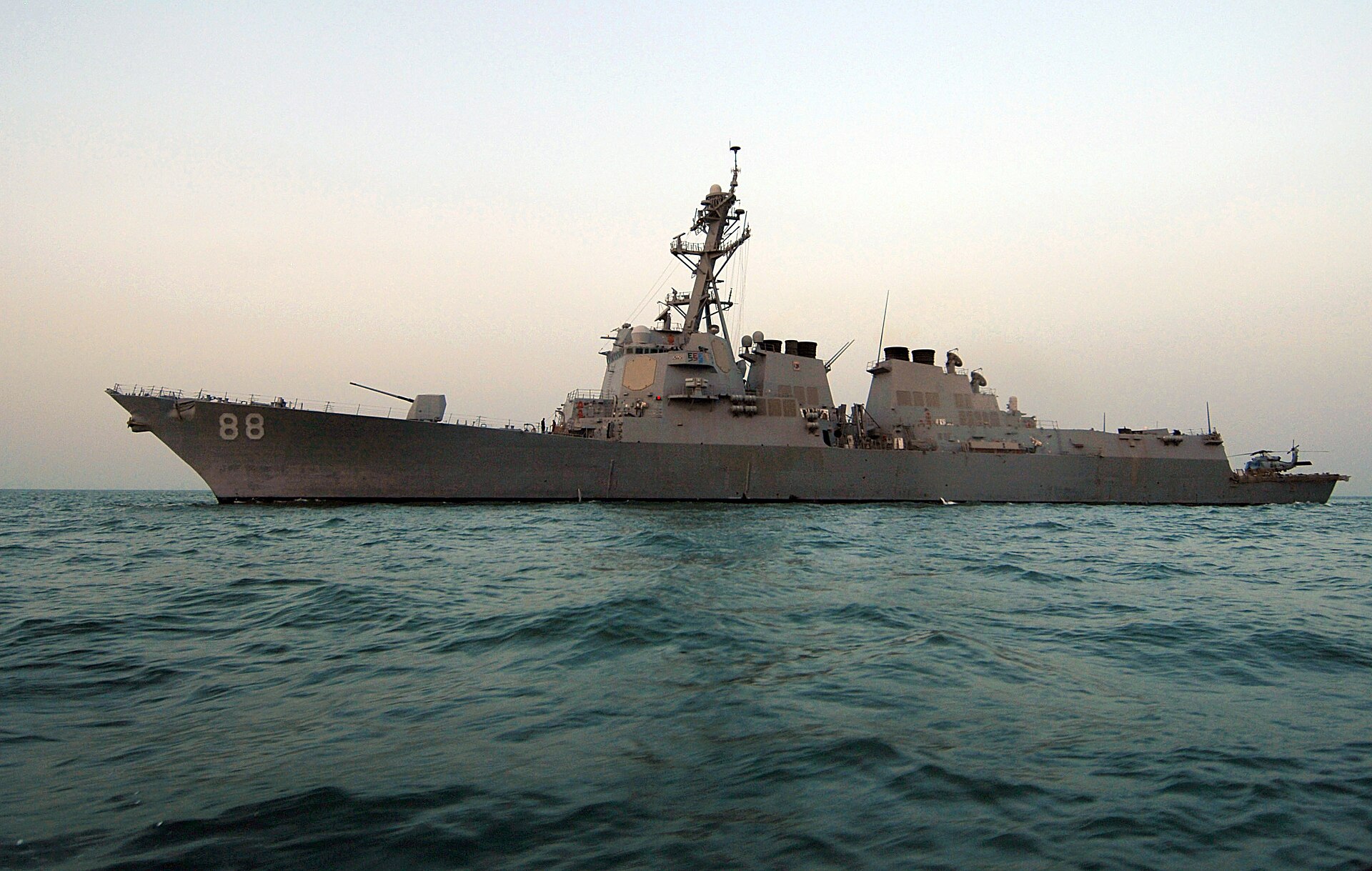
The collapse of Trump’s coalition effort means the US Navy’s Fifth Fleet, based in Bahrain, will bear sole responsibility for securing the strait. The Fifth Fleet currently operates with three carrier strike groups in the region — a historically unprecedented concentration of American naval power — but military analysts have noted that escort duty for commercial shipping requires a fundamentally different force posture than the strike operations Washington has been conducting against Iranian military targets.
The distinction matters. Mine clearance, convoy escort, and close-in protection of slow-moving tankers require patrol vessels, minesweepers, and helicopters operating around the clock. The US Navy has these assets but has been using them primarily for offensive operations since the war began. Redirecting them to escort duty would reduce the tempo of strikes against Iranian naval installations — a tradeoff the Pentagon has been reluctant to accept, according to defense analysts quoted by NPR.
Oil markets responded to the diplomatic failure with increased volatility. Brent crude, already elevated at $106 per barrel, spiked briefly above $108 on Monday before settling back as traders assessed Trump’s claim that the US could secure the strait unilaterally, Bloomberg reported. Goldman Sachs and other major banks have warned that sustained Hormuz disruption could trigger the worst recession in the Gulf region in a generation.
Saudi Energy Minister Prince Abdulaziz bin Salman has not publicly commented on the coalition’s collapse. But Saudi officials have privately expressed frustration that the United States launched a military campaign that directly endangered Gulf energy infrastructure without securing the multilateral framework needed to protect oil exports, according to Bloomberg’s reporting on Saudi diplomatic communications. The kingdom’s position has been one of calculated restraint throughout the conflict — absorbing Iranian drone strikes without retaliating directly — in part because Riyadh calculated that international pressure would eventually produce a protective coalition. That calculation now appears to have failed.
Saudi Arabia Faces Hormuz Crisis Without Allied Cover
The diplomatic collapse in Brussels leaves Saudi Arabia in an increasingly exposed position. The kingdom is simultaneously absorbing the largest sustained drone campaign in its history — Iran launched nearly 100 drones at Saudi territory on Monday alone, according to Bloomberg — while watching its primary export route remain contested and its expected international protection fail to materialize.
Crown Prince Mohammed bin Salman has been speaking regularly with Trump throughout the conflict, and reporting from the New York Times suggests MBS has urged the president to continue pressing Iran militarily. But the prince’s wider diplomatic strategy depended on the assumption that Western and Asian allies would rally to protect Gulf shipping lanes once the Hormuz crisis became severe enough. The EU’s explicit refusal to participate, combined with Japan’s constitutional objections and Britain’s categorical rejection, removes that assumption.
Saudi Arabia’s remaining options are narrowing. The kingdom can continue routing what oil it can through the East-West Pipeline to Yanbu on the Red Sea coast. It can lean on bilateral defense agreements — notably the Strategic Mutual Defense Agreement signed with Pakistan in September 2025, which has already brought Pakistani air defense assets to Saudi soil. And it can hope that US naval power alone proves sufficient to reopen commercial shipping through Hormuz.
The kingdom’s economic exposure extends beyond crude oil. Saudi Arabia’s petrochemical exports, liquefied petroleum gas shipments, and containerized trade all depend on Gulf port access. Jubail Industrial City, the world’s largest petrochemical complex, sits directly on the Persian Gulf coast. Every tanker loading at Ras Tanura, Ju’aymah, or Jubail must transit Hormuz to reach Asian markets, which absorbed roughly 75 percent of Saudi crude exports in 2025, according to Saudi Aramco’s annual report.
MBS has maintained what analysts describe as strategic patience — declining to strike Iran directly even as drones hit Saudi cities, calculating that restraint would generate international support. The EU’s refusal to extend that support to its logical conclusion — protecting the shipping lanes Saudi oil depends on — tests the viability of that patience.
None of these options fully replaces what a multinational naval force would have provided. As one European diplomat told the Financial Times: “The Americans started this war. The Gulf states supported it. Now both sides are asking us to fix the consequences. That is not how alliances work.” For Saudi Arabia, the consequences of that logic are measured in millions of barrels per day that cannot reach their markets.
Frequently Asked Questions
Why did European nations refuse to send warships to the Strait of Hormuz?
European governments argued they were not parties to the US-Israeli war on Iran and that deploying naval forces to Hormuz would risk drawing them into the conflict. EU foreign policy chief Kaja Kallas said there was “no appetite” for extending the existing Aspides naval mission. Germany’s defense minister stated directly: “This is not our war.”
How did Trump react when allies rejected his coalition proposal?
Trump initially warned of a “very bad future” for nations that refused to help. After every major ally publicly declined, he reversed course within hours, telling reporters in the Oval Office: “We don’t need any help, actually.” Senator Lindsey Graham said he had “never heard Trump so angry in my life” about the rejections.
How much oil does Saudi Arabia ship through the Strait of Hormuz?
Saudi Arabia exports approximately 6.2 million barrels per day of crude oil and petroleum products through the strait, according to the US Energy Information Administration. This represents roughly 37 percent of all crude oil transiting Hormuz, making the kingdom the single largest user of the waterway for oil exports.
What is Operation Aspides and why was it not extended to Hormuz?
Operation Aspides is the EU’s naval mission in the Red Sea, launched to escort commercial shipping past Houthi attacks in the Gulf of Aden. EU foreign ministers decided against extending its mandate to the Strait of Hormuz because doing so would risk direct engagement with Iranian naval forces during an active war that European nations did not join or endorse.
Can the US Navy secure the Strait of Hormuz without allied support?
The US Fifth Fleet has three carrier strike groups in the region, an unprecedented concentration. However, mine clearance, tanker escort, and round-the-clock convoy protection require different assets than offensive strike operations, and diverting resources to escort duty would reduce the pace of strikes against Iranian targets. Military analysts quoted by NPR and Axios have described the unilateral approach as operationally strained.