
BRUSSELS — Three European nations have soldiers, warplanes, and missile batteries in the Gulf. A French warrant officer is dead. A Greek Patriot system has intercepted Iranian ballistic missiles over Saudi territory. RAF Typhoons have shot down Iranian drones over Jordan. Yet the European Union insists, with remarkable consistency, that “this is not NATO’s war.” Twenty-one days into the most significant military conflict since the invasion of Iraq, Europe has contributed pilots, missiles, and a body bag to a war that its leaders refuse to name, let alone join.
The contradiction is not accidental. Across a continent that has spent four years rebuilding energy resilience after Russia’s invasion of Ukraine, the Iran war presents an impossible strategic equation. Europe depends on Gulf energy, benefits from Iran’s military degradation, needs the United States for its own security, and cannot afford to antagonise Tehran for fear of losing its last credible post-war diplomatic role. The result is a response that satisfies nobody — too much military involvement to claim neutrality, too little to earn a seat at the table when the ceasefire terms are written. With European natural gas prices already 60 percent above pre-war levels and petrol costs spiking from Madrid to Munich, the price of strategic indecision is being paid at the pump, the factory, and the ballot box. What follows is an analysis of how Europe arrived at this position, what each major European power is actually doing, and why the continent’s most dangerous gamble may be doing nothing at all.
Table of Contents
- How Many European Troops Are Actually Deployed in the Gulf?
- What Has the United Kingdom Actually Done in the Iran War?
- The Greek Patriot That Changed Everything at Yanbu
- Why Did France Lose a Soldier in a War It Didn’t Join?
- What Does the European Union Actually Want From This War?
- The War Europe Did Not Expect While Fighting the One It Did
- The Energy Crisis Europe Cannot Solve Without the Gulf
- Germany and Italy Refused to Send Warships and Then Changed Their Minds
- The European Strategic Coherence Matrix
- Is Europe’s Paralysis Actually a Calculated Bet?
- How Does Europe’s Response Compare to China, Russia, and Japan?
- What Happens to Europe If the War Lasts Three More Months?
- How Riyadh Sees Europe’s Performance
- Frequently Asked Questions
How Many European Troops Are Actually Deployed in the Gulf?
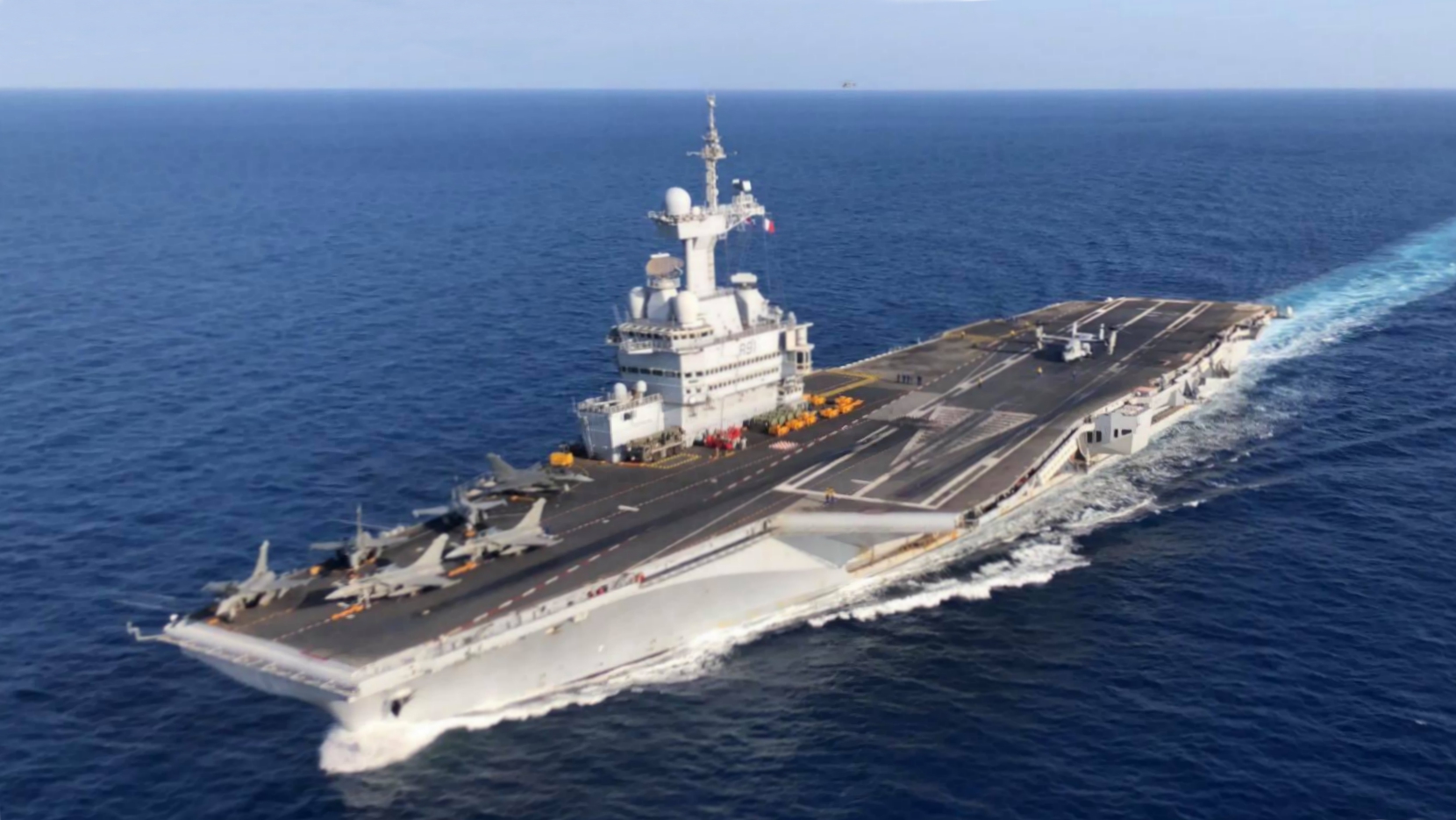
At least four European nations have military personnel actively engaged in defensive operations across the Gulf region, though none will describe their presence as participation in the Iran war. The United Kingdom has deployed Eurofighter Typhoons at Al Udeid Air Base in Qatar and at RAF Akrotiri in Cyprus, with F-35 Lightning II stealth fighters operating from both locations. France has positioned the nuclear-powered aircraft carrier Charles de Gaulle in the Eastern Mediterranean to defend Cyprus and maintains ground forces in northern Iraq under the anti-ISIS mandate. Greece operates a Patriot PAC-3 air defence battery in Saudi Arabia with between 120 and 130 Air Force personnel. Italy has deployed naval vessels and SAMP/T air defence systems to the region, focused on defending Cyprus and contributing to Gulf air patrols.
The total number of European military personnel involved is difficult to establish precisely, because each government uses different accounting methods and definitions of “involvement.” Estimates from the International Institute for Strategic Studies suggest between 3,000 and 5,000 European troops are operating in or adjacent to the Gulf theatre, compared with approximately 45,000 American military personnel in the region as of mid-March 2026, according to the Pentagon. The disparity is instructive. Europe’s contribution amounts to roughly seven percent of the Western military presence — enough to take casualties, not enough to shape outcomes.
The deployments fall into three categories. First, pre-existing forces that were already stationed in the region before the war began — primarily French troops in Iraq and the Greek Patriot battery in Saudi Arabia, both of which were operating under bilateral agreements unrelated to Iran. Second, reinforcements sent in the immediate aftermath of the February 28 strikes — including additional RAF fighters and Italian naval assets. Third, forces positioned defensively to protect European territory and citizens, such as the warships defending Cyprus from potential Iranian retaliation after Tehran struck targets on the island’s southern coast.
What Has the United Kingdom Actually Done in the Iran War?
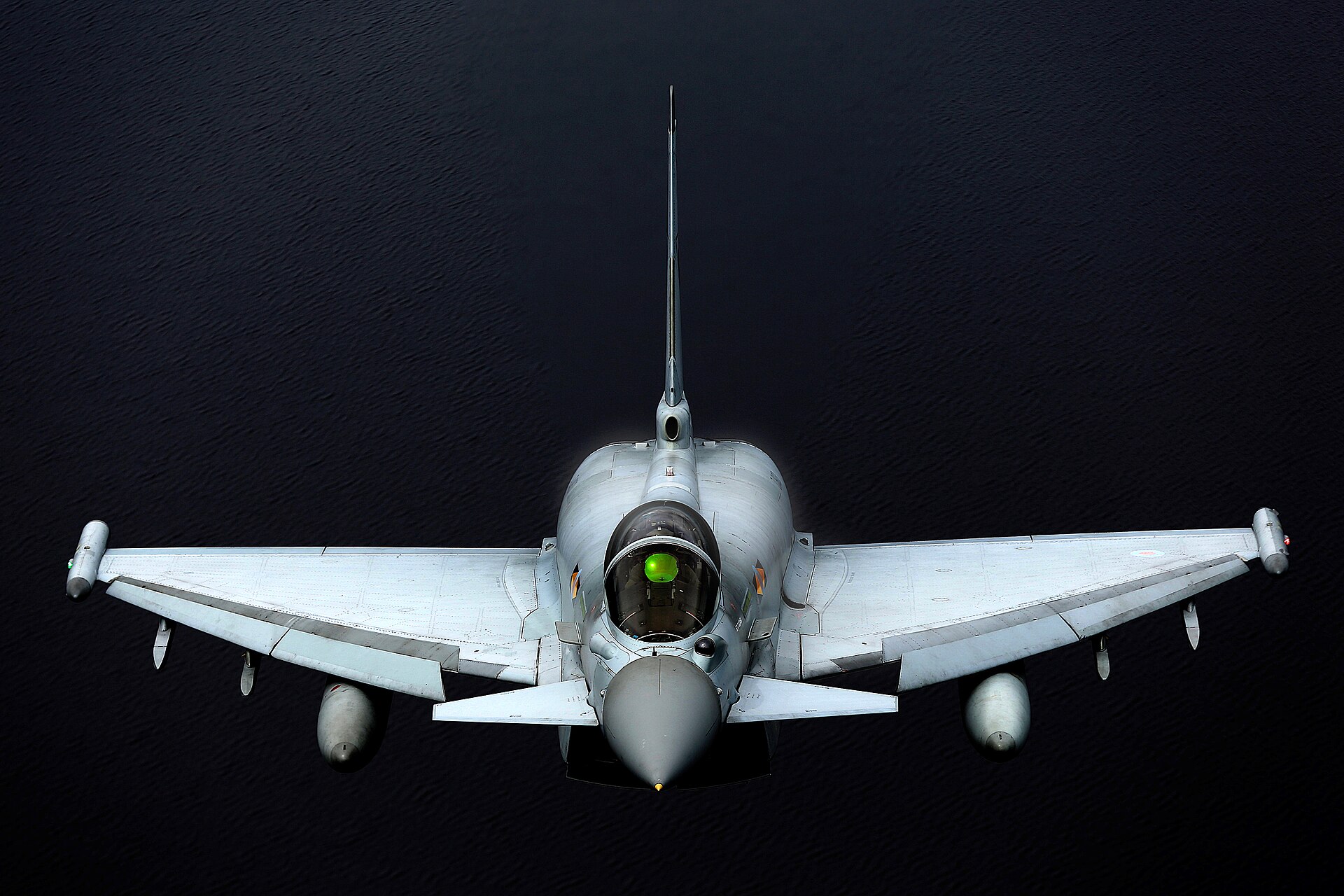
Britain has been the most active European participant in the conflict while simultaneously maintaining the most carefully worded non-commitment. RAF F-35s shot down Iranian Shahed-136 drones over Jordan on March 2 — just two days after the war began — using ASRAAM missiles, according to the UK Ministry of Defence. British Typhoons have intercepted drones in Iraqi airspace targeting Western forces, and RAF aircraft have participated in defensive patrols over Qatar, where a Typhoon shot down an Iranian drone directed at the emirate.
The Middle East briefing 3,000+ readers start their day with.
One email. Every weekday morning. Free.
Prime Minister Keir Starmer has threaded a rhetorical needle that would make a diplomat wince. He pledged that the UK would operate only on a “lawful basis” with a “viable, thought-through plan” and would “not join offensive action” while “protecting our people in the region and supporting the collective self-defence of our allies.” The distinction between offensive and defensive action becomes somewhat academic when RAF jets are shooting down Iranian weapons over the territory of five different countries.
On March 20, ITV News reported that the UK had agreed to allow the United States to use British military bases — specifically RAF Akrotiri in Cyprus and the British Indian Ocean Territory base at Diego Garcia — for strikes on Iranian positions targeting the Strait of Hormuz. Chatham House published an analysis the same week questioning whether the UK’s legal justification for permitting these operations “blurs the line between lawful self-defence and unlawful participation in war.” The UK Parliament’s House of Commons Library published a briefing paper noting that British forces have been “active” and involved in “defensive operations” without specifying the full scope of engagement.
Britain’s position is further complicated by its commercial relationship with Saudi Arabia. The UK is the second-largest arms exporter to the Kingdom after the United States, with defence contracts worth approximately £15 billion active in 2025, according to the Campaign Against Arms Trade. BAE Systems employs over 6,000 staff in Saudi Arabia supporting the Royal Saudi Air Force’s Typhoon fleet — the same aircraft type that British pilots are flying in the Gulf. The arms relationship creates an unacknowledged obligation: Britain cannot afford to be seen abandoning a client state under fire, but nor can it afford the domestic political cost of being seen as a co-belligerent in a war that the British public does not support.
Polling conducted by YouGov in March 2026 found that 67 percent of British adults opposed direct UK military involvement in the Iran conflict, while 58 percent supported “defensive assistance” to Gulf allies. The gap between those two numbers defines Starmer’s operating space — and the gap between rhetoric and reality defines Britain’s contribution to the accidental alliance defending Saudi Arabia from Iran.
The Greek Patriot That Changed Everything at Yanbu
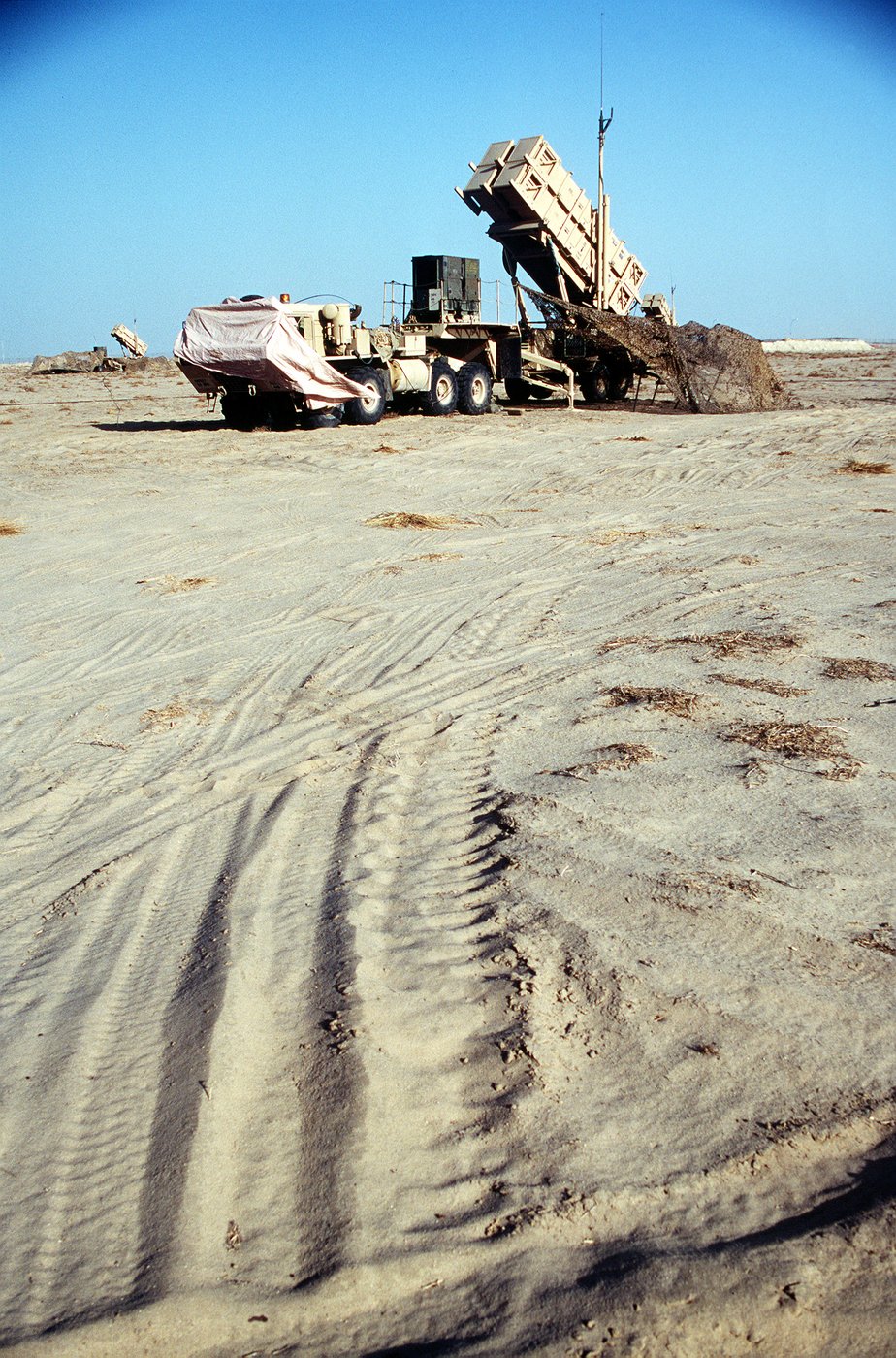
On March 19, the Greek Ministry of Defence confirmed what may be the most consequential European military action in the Gulf since the 2003 Iraq War. A Greek-operated Patriot PAC-3 battery in Saudi Arabia intercepted two Iranian ballistic missiles targeting the SAMREF refinery complex at Yanbu — the Kingdom’s critical Red Sea export terminal and the primary alternative to the Strait of Hormuz for Saudi oil shipments. The Greek Patriot intercept at Yanbu marked the first time a European military force had actively engaged Iranian weapons over Saudi territory.
The Greek deployment is not new. Athens has stationed a single Patriot battery in Saudi Arabia since 2021 under a bilateral agreement designed to protect energy infrastructure. The mission comprises 120 to 130 Greek Air Force personnel, and until March 19, the system had never been used in a live engagement. Defence Minister Nikos Dendias confirmed the intercepts, and Greek Prime Minister Kyriakos Mitsotakis stated that the Patriot battery “is used for defensive purposes” — a formulation that tracks precisely with the broader European line.
The intercept’s significance extends far beyond the two missiles destroyed. Yanbu is the terminal for the 1,200-kilometre East-West Pipeline, Saudi Arabia’s primary mechanism for bypassing the Strait of Hormuz. With Iranian forces effectively closing Hormuz to Western-aligned shipping, Yanbu has become the single most important oil export facility on earth. Had the Iranian missiles struck the refinery complex, the impact on global oil markets would have been immediate and severe. Greece — a NATO member with a population of 10.4 million and a defence budget of €8.3 billion — inadvertently became the last line of defence for the global energy supply chain.
The episode also exposed the contradiction at the heart of Europe’s position. Greece is a member of the European Union, which formally maintains that the Iran war is not Europe’s conflict. Yet a Greek military system, operated by Greek personnel, engaged and destroyed Iranian weapons in defence of Saudi Arabian energy infrastructure. Athens did not seek European Council approval for the engagement. The bilateral agreement with Riyadh predates the war and does not require EU authorisation. The EU’s carefully constructed posture of non-involvement was punctured by two missiles and a defensive reflex.
Why Did France Lose a Soldier in a War It Didn’t Join?
Chief Warrant Officer Arnaud Frion, a 21-year veteran of the French Armed Forces, was killed on March 12 when an Iranian-made drone struck a joint French-Peshmerga base near Erbil in the Kurdistan Region of Iraq. Six other French soldiers were wounded. President Emmanuel Macron stated that Frion “died for France” and condemned the attack as “unacceptable.” He was the first European soldier killed in the Iran war — a war that France maintains it has not joined.
French forces have been stationed in northern Iraq since 2015 as part of Operation Chammal, the French contribution to the international coalition against ISIS. Approximately 600 French troops remain in the country, operating from bases that have become targets for Iranian-backed militias and, since February 28, for Iranian conventional forces. France’s position is that its soldiers in Iraq are conducting counter-terrorism operations under existing mandates, not participating in the US-Israeli war on Iran. The Erbil drone strike made that distinction lethal.
France’s wider military response has centred on the aircraft carrier Charles de Gaulle, which deployed to the Eastern Mediterranean in late February with its Rafale fighter complement. The carrier group’s primary mission, according to the French Ministry of Armed Forces, is to “protect French citizens and prevent a broader regional conflict” — a framing that avoids any suggestion of offensive action against Iran while positioning significant naval firepower within range of the conflict zone. Italy, the Netherlands, and Spain sent warships to defend Cyprus after Iranian missiles landed near the British Sovereign Base Areas on the island, creating an unacknowledged European naval task force in the Eastern Mediterranean.
The Observer Research Foundation’s analysis of France’s position described it as a “Middle East balancing act under strain,” noting that Paris has historically maintained diplomatic channels with Tehran — including through the JCPOA nuclear negotiations — while simultaneously being one of the Gulf’s most important military partners. France is the third-largest arms exporter to the region, behind the US and UK, with contracts covering naval vessels, Rafale fighters, and air defence systems. The death of Frion did not change France’s policy, but it changed the conversation. A country that has lost a soldier to Iranian fire can no longer credibly claim to be a bystander.
What Does the European Union Actually Want From This War?
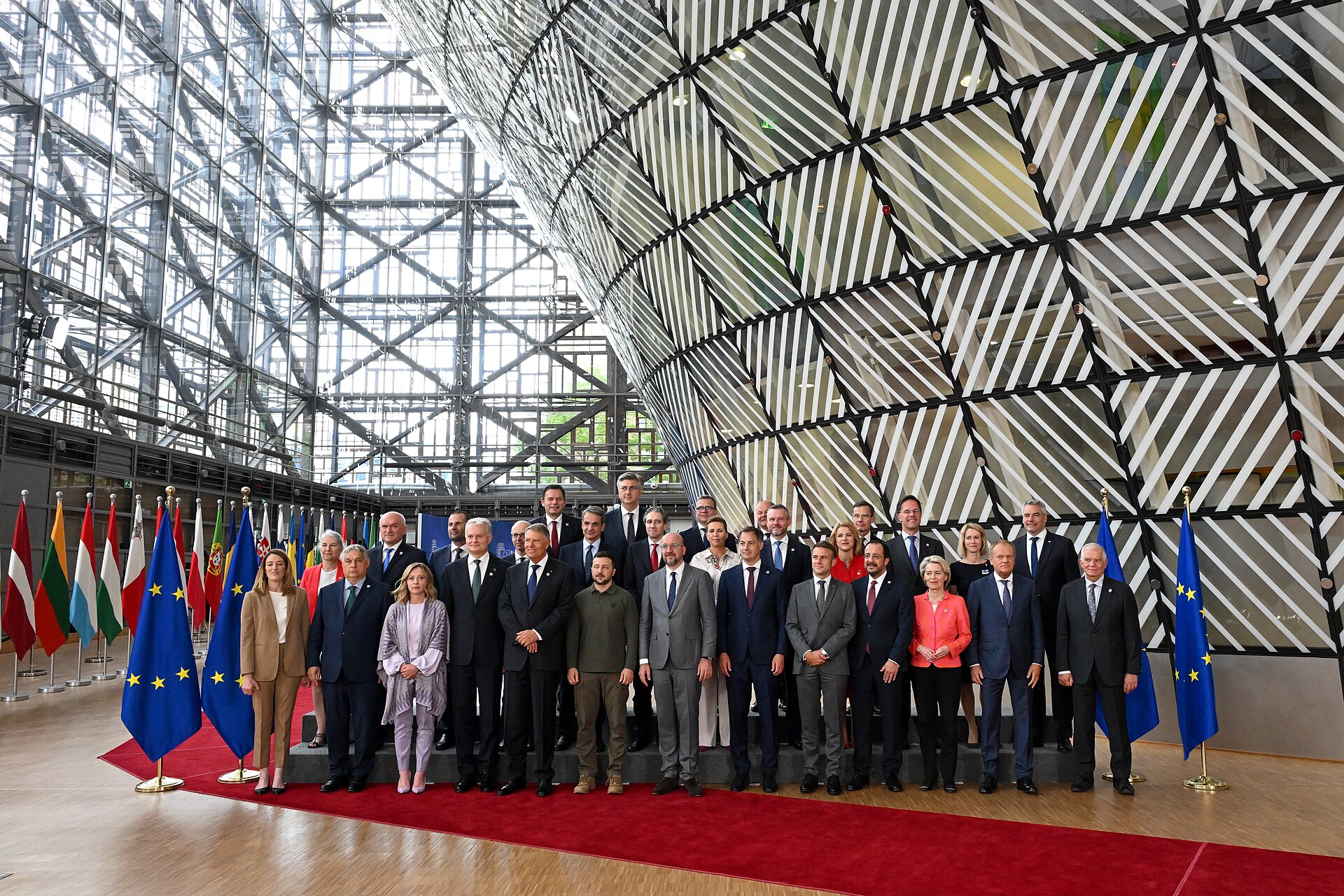
The European Council’s conclusions on the Middle East, adopted on March 19, provide the clearest articulation of the EU’s collective position — and its limitations. The 27-member bloc “strongly condemned Iran’s indiscriminate military strikes against countries in the region,” called for “a moratorium on strikes against energy and water facilities,” urged “de-escalation and maximum restraint,” and emphasised “the importance of concerted action to help partners strengthen counter-drone and air defence capabilities.” In a notable passage, the Council welcomed “Ukraine’s readiness to provide support and expertise in air defence and counter-drone systems to Gulf countries” — connecting Europe’s two concurrent security crises in a single sentence.
EU Foreign Affairs Commissioner Kaja Kallas stated bluntly: “No one wants to be actively drawn into this war.” The formulation is revealing. European leaders do not describe the war as something they oppose, support, or wish to influence. They describe it as something they wish to avoid. The framing is defensive, reactive, and conspicuously absent of any proposal for how the conflict should end.
The EU’s institutional response has progressed through three phases. In the first phase (March 1-5), the High Representative issued a statement expressing “deep concern” and the GCC-EU Ministers held a joint meeting condemning Iran’s attacks on Gulf states. In the second phase (March 6-16), individual member states began deploying military assets while the EU collectively rejected Trump’s call to contribute warships to reopen the Strait of Hormuz. Fortune reported the EU’s position as “the Iran war is not NATO’s war,” with Brussels explicitly refusing to frame the conflict as a collective defence obligation under either NATO’s Article 5 or the EU’s mutual defence clause in Article 42.7 of the Treaty on European Union.
The third phase (March 17-present) has seen a subtle but significant shift. On March 19, leaders from the UK, France, Germany, Italy, the Netherlands, and Japan stated they were “ready to contribute to appropriate efforts to ensure safe passage through the Strait of Hormuz.” However, Italy, Germany, and France clarified within hours that they were not proposing immediate military action but rather a potential multilateral initiative that would begin only “after a ceasefire,” according to Al-Monitor. The offer to help secure Hormuz after the crisis ends is not a security guarantee. It is a press release.
The War Europe Did Not Expect While Fighting the One It Did
Europe’s response to the Iran war cannot be understood without accounting for the war it is already fighting. Since February 2022, the European Union has committed approximately €130 billion in military, financial, and humanitarian support to Ukraine, according to the Kiel Institute’s Ukraine Support Tracker. European defence budgets have been restructured to meet NATO’s two percent of GDP spending guideline, ammunition production lines have been expanded, and military readiness across the eastern flank has been elevated to levels not seen since the Cold War. When Iranian missiles began striking the Gulf on February 28, 2026, Europe’s military capacity was already stretched.
The European Council’s March 19 conclusions acknowledged this strain in a single, carefully worded passage: it “welcomed Ukraine’s readiness to provide support and expertise in air defence and counter-drone systems to Gulf countries.” The sentence connects Europe’s two wars in a way that Brussels has not publicly articulated. Ukraine has become the world’s foremost operational laboratory for counter-drone warfare, having developed and deployed systems to neutralise the same Shahed-series drones that Iran is now launching at Gulf cities. Kyiv has offered to share this expertise with Gulf states — an offer that European governments have welcomed because it allows them to claim a contribution to Gulf security without deploying additional European forces.
The dual-war problem creates a zero-sum resource competition that no European government has solved. Patriot batteries deployed to the Gulf cannot simultaneously defend Poland’s eastern border. Typhoons flying over Qatar are not available for Baltic air policing. SAMP/T systems protecting Cyprus do not protect Italy’s eastern approaches. European defence planning assumed one major contingency at a time — a Russian threat in the east or a Gulf crisis in the south, not both simultaneously. The Iran war has exposed a planning assumption that was always optimistic and is now demonstrably false.
The Kiel Institute data shows that European defence aid to Ukraine has slowed since October 2025, partly due to fiscal constraints and partly due to political fatigue. Adding a second military commitment in the Gulf — even the limited, bilateral, ad hoc contributions currently underway — accelerates this depletion. European defence industrial capacity cannot simultaneously produce interceptors for Ukraine, maintain readiness for NATO’s eastern flank, and supply replacement missiles for Greek Patriot batteries firing in the Saudi desert. Something has to give, and the political dynamics of European defence suggest that Ukraine will be the casualty: the Gulf has oil, and oil has voters.
The Energy Crisis Europe Cannot Solve Without the Gulf
Europe’s strategic paralysis becomes more comprehensible when measured against its energy vulnerability. The Strait of Hormuz carried approximately 20 percent of global oil supply before the war, and its near-total closure has triggered consequences that extend far beyond headline oil prices. European natural gas prices have risen by 60 percent since the conflict began, according to the Bruegel think tank. Gas storage across the continent stood at 46 billion cubic metres at the end of February — compared with 60 bcm in 2025 and 77 bcm in 2024. Europe must inject nearly 60 bcm during the upcoming refill season to meet the EU requirement of 90 percent storage capacity by December, and much of that gas was expected to come from Qatar’s Ras Laffan facility, which has sustained damage from Iranian missile strikes.
Retail fuel prices have spiked across the continent. Petrol in Germany has risen from approximately €1.82 per litre to €2.07 — a 14 percent increase in three weeks, according to Euronews. Austria has seen a 13 percent rise to €1.71 per litre. Spain has experienced the largest proportional increase at 27 percent, reaching €1.79 per litre. Ireland has the highest absolute price at €2.30 per litre. CNBC analysis suggests that if the conflict extends beyond two months and Brent crude exceeds $150 per barrel, euro-zone GDP growth could slow to 0.5 percent year-on-year in the second half of 2026 — echoing the stagflation dynamics that followed Russia’s invasion of Ukraine.
The energy equation creates a paradox that shapes every European policy decision. Europe needs the Gulf’s oil and gas to flow. The Gulf’s oil and gas are under Iranian attack. The United States is defending Gulf energy infrastructure, but at a cost that Trump has made clear he expects allies to share. Yet Europe’s most practical contribution to Gulf energy security — Greek Patriots intercepting missiles over Saudi refineries, RAF jets shooting down drones targeting Qatari gas facilities — is conducted ad hoc, bilaterally, and without any coordinating strategy. Each European nation protects what it can reach with the forces it already has deployed, rather than what a unified command would prioritise.
The Atlantic Council warned that the war could “trigger a European energy crisis” comparable to the one that followed Russia’s gas cutoff in 2022, while the IDDRI policy institute in Paris asked whether the conflict represented a “turning point for European energy transition policies” — suggesting that the war might permanently accelerate Europe’s shift away from fossil fuels. Both assessments miss the more immediate problem: Europe is living through an energy shock that it cannot address without either joining the war effort or admitting that its energy security depends entirely on American military power.
Germany and Italy Refused to Send Warships and Then Changed Their Minds
Germany’s response to the Iran war has been the most instructive example of European strategic confusion. Foreign Minister Johann Wadephul initially stated that Berlin had “no intention of joining military operations” during the conflict. When Trump demanded that NATO allies contribute warships to reopen the Strait of Hormuz, Germany joined the collective EU rejection. Defence News reported that Germany formally declined the US request for naval deployments, citing “strategic priorities in Europe” — a reference to the ongoing commitment to NATO’s eastern flank and the war in Ukraine.
Yet by March 19, Germany was among the six nations that expressed readiness to “contribute to appropriate efforts” to secure Hormuz. The shift was not driven by strategic recalculation but by the escalating energy crisis. With German industrial output already under pressure from elevated natural gas prices — the Bundesverband der Deutschen Industrie warned of “renewed deindustrialisation risk” on March 15 — Berlin’s ability to maintain its non-involvement stance eroded with each percentage point rise in energy costs.
Italy followed a similar trajectory. Rome initially deployed naval vessels and SAMP/T air defence systems to the Gulf region while explicitly framing these deployments as defensive. When the US requested warships for a Hormuz convoy operation, Italy declined. The Defence News reported that both Germany and Italy rejected the American request on March 16. Three days later, Italy joined the six-nation statement on Hormuz readiness. Simultaneously, Italy, the Netherlands, and Spain confirmed they would send warships to defend Cyprus — an EU member state with British military bases that have been used for US operations, making the island a potential Iranian target. Italy simultaneously pursued a bilateral energy track: on April 3, Prime Minister Meloni’s visit to MBS in Jeddah confirmed that Rome’s wartime strategy separates military non-involvement from energy security, securing a EUR 10 billion deal framework and LNG commitments from Saudi Arabia as a hedge against Hormuz disruption.
Dutch Prime Minister Rob Jetten captured the mood of European ambivalence when he told the ANP news agency that it would be “very difficult to launch a successful mission there in the short term.” The statement was not a refusal. It was not an acceptance. It was a description of the problem, offered as a substitute for a policy. The Netherlands’ response is emblematic of a broader pattern: European leaders diagnose the crisis accurately and then describe the difficulty of solving it, as if diagnosis and policy were the same thing.
The European Strategic Coherence Matrix
To understand the full picture of Europe’s response, each major contributing nation can be assessed across four dimensions: military contribution to the Gulf theatre, diplomatic initiative toward a ceasefire, energy vulnerability to the conflict, and overall strategic coherence — the degree to which a country’s actions match its stated policy.
| Country | Military Contribution (1-5) | Diplomatic Initiative (1-5) | Energy Vulnerability (1-5) | Strategic Coherence (1-5) | Assessment |
|---|---|---|---|---|---|
| United Kingdom | 4 | 2 | 3 | 2 | High military involvement contradicts official “not at war” stance. Base-sharing with the US undermines neutrality claim. |
| France | 3 | 3 | 3 | 3 | Carrier deployed, soldier killed, maintains Iran diplomatic channels. Most balanced but most exposed to accusations of hypocrisy. |
| Greece | 3 | 1 | 2 | 4 | Clear bilateral mandate, executed defensive mission successfully. Most coherent because the mandate was narrowest. |
| Germany | 1 | 2 | 5 | 2 | Refused military contribution while being most energy-vulnerable. Changed position under economic pressure without changing policy. |
| Italy | 2 | 2 | 4 | 2 | Naval and air defence deployed but rejected Hormuz request. High energy exposure through North African gas dependence. |
| Netherlands | 1 | 1 | 4 | 3 | Minimal contribution, candid about limitations. Coherent precisely because expectations are low. |
| Spain | 1 | 1 | 3 | 3 | Warships to Cyprus only. Largest petrol price spike (27%) but lowest strategic ambition. |
| Poland | 0 | 1 | 2 | 4 | No Gulf deployment, focused entirely on eastern flank. Coherent strategy: let the US handle Iran, Poland handles Russia. |
The matrix reveals a pattern that no European leader has acknowledged publicly. The countries with the highest military contributions — the UK and France — have the lowest strategic coherence, because their actions in the Gulf directly contradict their stated positions. The countries with the highest coherence — Greece and Poland — achieved that coherence by having narrow mandates or no involvement at all. Germany, the EU’s largest economy and most energy-vulnerable member, scores highest on vulnerability and lowest on both military contribution and coherence: it is the country most affected by the war and least willing to act on its exposure.
Strategic coherence matters because it determines credibility. When the ceasefire comes — and the endgame scenarios for the Iran war all involve negotiation — Europe’s seat at the table will depend on whether it is seen as a contributor, a bystander, or a hypocrite. At present, none of these descriptions quite fits, which is precisely the problem.
Is Europe’s Paralysis Actually a Calculated Bet?
The conventional criticism of Europe’s response is that it reflects weakness, indecision, and strategic incoherence. The Council on Foreign Relations published an analysis titled “Europe’s Disjointed Response to the War With Iran,” and the characterisation is difficult to dispute on its surface. Yet there is a more generous interpretation that deserves examination, because it may explain why European leaders have resisted both American pressure and their own energy interests to avoid deeper involvement.
The argument runs as follows. The United States and Israel started a war that Europe neither planned, approved, nor wanted. Iran is retaliating against Gulf states that likewise did not choose this conflict. The war will end — either through Iranian military exhaustion, a negotiated ceasefire, or unilateral American withdrawal. When it does, someone will need to mediate the peace, rebuild diplomatic relationships with Tehran, and reconstruct the regional security architecture. That someone cannot be the United States, which assassinated the Supreme Leader. It cannot be Israel, which struck Iranian nuclear facilities. It cannot be China, whose Gulf peace deal collapsed with the opening salvo. It could be Europe — but only if Europe has not burned its bridges with Tehran by joining the war.
This interpretation reframes European paralysis as strategic patience. By contributing just enough to maintain alliance credibility — RAF jets, Greek Patriots, a carrier group — while collectively refusing to commit, Europe preserves optionality. It keeps its Iran diplomatic channels open (France has maintained back-channel contact with Tehran throughout the conflict, according to Le Monde). It avoids the political cost of joining an unpopular war. And it positions itself as the only Western bloc capable of engaging constructively with whatever government emerges in post-war Iran.
The problem with this interpretation is that it assumes Europe has the strategic discipline to execute a hedging strategy over months or years. The evidence from the Ukraine war suggests otherwise. Europe’s response to Russia’s invasion was also initially described as “cautious” and “measured” before economic reality — gas shortages, inflation, industrial pressure — forced a series of escalating commitments that no government had planned. The same pattern may already be emerging in the Gulf. Germany’s shift from rejecting Hormuz participation to expressing “readiness to contribute” took three days and was driven not by strategic calculation but by industrial lobbying and gas price data.
Foreign Policy published an analysis on March 20 arguing that Gulf states themselves expect “strategic continuity” from their Arab neighbours after the war — meaning that Iran’s Gulf neighbours will return to hedging between the US and Iran once the shooting stops. If that analysis is correct, Europe may find that its post-war mediator strategy faces competition from the very Gulf states it failed to defend during the conflict. Moscow, which has profited from the war without contributing a single soldier, may also claim a mediator role, backed by its relationship with Tehran and its influence over global energy markets.
How Does Europe’s Response Compare to China, Russia, and Japan?
Europe’s strategic uncertainty becomes starker when measured against how other major powers have responded to the same crisis. Each has adopted a coherent position — which is not the same as a commendable one, but is at least a position that external actors can interpret and respond to.
| Power | Position | Military Action | Diplomatic Action | Coherence |
|---|---|---|---|---|
| United States | Co-belligerent | 45,000+ troops, carrier groups, air strikes | Rejected ceasefire, Trump considering “winding down” | High (clear aggressor role) |
| Russia | Non-aligned beneficiary | None | Putin-Trump call (March 11), maintains Iran ties | High (profits from oil prices, arms demand) |
| China | Devastated bystander | None | 2023 peace deal destroyed, seeking post-war influence | Medium (energy dependency limits options) |
| Japan | Reluctant pragmatist | Ready to contribute to Hormuz security | Negotiated Iranian safe-passage deal | High (actions match energy dependency) |
| European Union | Undefined | 3,000-5,000 personnel across 4 countries | Statements, summits, no initiative | Low (actions contradict stated position) |
Japan’s response is particularly instructive as a contrast to Europe’s. Tokyo faces comparable energy vulnerability — Japan imported 90 percent of its oil from the Middle East in 2025, according to the Agency for Natural Resources and Energy — and lacks Europe’s military capabilities. Yet Japan has achieved two things Europe has not: it negotiated safe passage for Japanese tankers through the Strait of Hormuz directly with Iran, and it committed to the six-nation Hormuz security initiative without the equivocation that characterised European participation.
Russia’s position, while morally indefensible, is strategically coherent. Moscow has maintained its relationship with Tehran, profited from elevated oil and gas prices, positioned itself as a potential post-war mediator, and avoided any military exposure. Russia has achieved through inaction what Europe is attempting through confusion: strategic optionality without risk.
China’s position is the one most analogous to Europe’s, but Beijing has been more honest about its limitations. China’s 2023 Saudi-Iran peace deal — brokered in Beijing and celebrated as a diplomatic triumph — was destroyed when the US and Israeli strikes killed the Supreme Leader who had signed it. China has acknowledged that its Gulf influence has been diminished and is focusing on positioning for the post-war reconstruction, rather than pretending to shape outcomes during the fighting.
What Happens to Europe If the War Lasts Three More Months?
The economic modelling on extended conflict is unambiguous. Chatham House analysis published in March 2026 projects that a three-month war would reduce euro-zone GDP growth by 0.8 to 1.2 percentage points, trigger a return to ECB interest rate increases to combat energy-driven inflation, and force at least two EU member states into technical recession. The European Central Bank’s own stress tests, designed in 2024, did not model a scenario in which both the Strait of Hormuz and Qatar’s LNG facilities were simultaneously disrupted — because such a scenario was considered too extreme to be plausible.
Gas storage is the most immediate concern. Europe entered the conflict with 46 bcm of gas in storage — the lowest February level since 2022, when Russian gas cuts plunged the continent into an energy crisis that required $800 billion in government subsidies to manage, according to Bruegel estimates. Refilling storage to the mandated 90 percent level by December requires approximately 60 bcm of imports during the April-October refill season. With Qatari LNG exports disrupted by the Ras Laffan attacks and Hormuz closed to most shipping, Europe faces a supply gap that cannot be filled by existing pipeline gas from Norway, Algeria, and Azerbaijan alone.
The political consequences may be more significant than the economic ones. European voters have experienced two energy crises in four years — first from Russia, now from the Gulf — and the narrative that is forming is one of permanent vulnerability. Far-right parties across the continent have already incorporated the Gulf energy crisis into their messaging, with France’s Rassemblement National and Germany’s Alternative für Deutschland both arguing that the war demonstrates the failure of European energy policy and the subservience of European foreign policy to American military adventurism.
The International Road Transport Union reported that fuel prices remain “high and volatile” across European supply chains, with logistics costs up 18 to 22 percent since the war began. These costs flow through to consumer prices with a lag of four to eight weeks, meaning that the full inflationary impact of three weeks of war has not yet reached European households. If the war extends into the summer refill season, the 2022 energy crisis template suggests that European governments will face demands for energy subsidies, price caps, and windfall taxes on energy companies — fiscal measures that most governments have exhausted the political capital to implement a second time.
How Riyadh Sees Europe’s Performance
Saudi Arabia’s assessment of Europe’s contribution to the Gulf’s defence has not been stated publicly, but it can be inferred from actions. The Kingdom’s emergency summit on March 18, which resulted in twelve nations demanding Iran stop attacking the Gulf, included the United States, Gulf states, Pakistan, the UK, and France — but not the European Union as an institution. The omission was deliberate. Riyadh has dealt with individual European capitals bilaterally, because the EU as a collective has offered nothing worth negotiating over.
Crown Prince Mohammed bin Salman called UK Prime Minister Starmer on March 6, three days after receiving calls from President Trump and the Kuwaiti Crown Prince. The Saudi readout mentioned defensive cooperation and intelligence sharing. The UK readout mentioned “the importance of de-escalation.” The gap between the two readouts mirrors the gap between what the Gulf needs and what Europe offers: the Gulf needs interceptors, the UK offers vocabulary.
The Greek Patriot intercept at Yanbu is the exception that proves the rule. Greece did not contribute through the EU. It contributed through a bilateral defence agreement with Saudi Arabia that operates independently of any European institutional framework. When Saudi Arabia needed missiles shot down, a European country delivered — but the delivery mechanism was a bilateral pact, not European solidarity. The lesson Riyadh is drawing from the war is not that Europe is unreliable, but that individual European states can be useful while the EU as a strategic actor is irrelevant. A comprehensive assessment of how the war redrew every alliance MBS built confirms this pattern: the partnerships that proved durable were bilateral and operational, not institutional.
This assessment has implications beyond the current conflict. Saudi Arabia is the world’s second-largest arms importer, according to the Stockholm International Peace Research Institute, and its procurement pipeline for the next decade includes air defence systems, naval vessels, combat aircraft, and satellite capabilities worth an estimated $100 billion. Europe’s defence industry — BAE Systems, MBDA, Leonardo, Thales, Dassault — depends on Gulf contracts for a significant share of its revenue. The perception that Europe cannot be relied upon in a crisis will influence Saudi and Gulf procurement decisions for a generation. If Riyadh concludes that American systems come with American protection and European systems come with European equivocation, the commercial consequences will extend far beyond the current war. The military Saudi Arabia built for a war it didn’t want was largely European-designed. The military it builds for the next war may not be.
Frequently Asked Questions
Is the European Union officially involved in the Iran war?
The European Union has not declared involvement in the Iran war and has explicitly stated that “this is not NATO’s war.” However, individual EU member states — including France, Greece, and Italy — have deployed military personnel and weapons systems that have actively engaged Iranian targets. The UK, while no longer an EU member, is the most militarily active European participant. The gap between the EU’s collective position and its members’ individual actions is the defining contradiction of Europe’s response.
How many European soldiers have been killed in the Iran war?
As of March 21, 2026, one European soldier has been killed: French Chief Warrant Officer Arnaud Frion, who died on March 12 when an Iranian-made drone struck a joint French-Peshmerga base near Erbil, Iraq. Six other French soldiers were wounded in the same attack. Frion was stationed in Iraq under France’s anti-ISIS mandate, not as part of any Iran war deployment, though the drone that killed him was Iranian.
Why did Greece deploy a Patriot battery to Saudi Arabia?
Greece stationed a Patriot PAC-3 battery in Saudi Arabia in 2021 under a bilateral defence agreement designed to protect the Kingdom’s energy infrastructure. The deployment comprises 120 to 130 Greek Air Force personnel. On March 19, 2026, the battery intercepted two Iranian ballistic missiles targeting the Yanbu refinery complex on the Red Sea coast, marking the first time a European military force actively engaged Iranian weapons over Saudi territory.
How has the Iran war affected European energy prices?
European natural gas prices have risen by 60 percent since the war began on February 28. Petrol prices have increased by 14 percent in Germany, 13 percent in Austria, and 27 percent in Spain. The Strait of Hormuz closure has disrupted approximately 20 percent of global oil supply, while Iranian attacks on Qatar’s Ras Laffan LNG hub threaten Europe’s gas storage refill season. Economists warn that if the conflict lasts beyond two months, euro-zone GDP growth could slow to 0.5 percent.
Will European countries send warships to the Strait of Hormuz?
On March 19, 2026, the UK, France, Germany, Italy, the Netherlands, and Japan said they were ready to contribute to efforts to secure the Strait of Hormuz. However, France, Germany, and Italy clarified that they envisage a multilateral naval mission only after a ceasefire — not during the active fighting. The practical effect is that Europe has expressed willingness to secure shipping lanes that will already have reopened by the time its forces arrive. No European warships have entered the Strait of Hormuz since the war began.
What is the European Council’s position on the Iran war?
The European Council’s March 19 conclusions condemn Iran’s attacks on Gulf states, call for a moratorium on strikes against energy and water facilities, urge de-escalation, and welcome Ukraine’s offer to provide air defence expertise to Gulf countries. The Council has not proposed a ceasefire framework, offered mediation, or outlined conditions for European military involvement. Critics describe the EU’s position as a series of aspirations without mechanisms for implementation.