RIYADH — Oil prices plunged more than 17 percent on Tuesday after United States Energy Secretary Chris Wright posted and then deleted a false claim that the US Navy had successfully escorted an oil tanker through the Strait of Hormuz, exposing the extraordinary sensitivity of global energy markets to any signal — real or fabricated — about the resumption of Gulf shipping. The incident sent shockwaves through Riyadh, where Saudi officials had been monitoring American commitments to reopen the waterway that carries the vast majority of the Kingdom’s crude exports.
Wright’s post, published at approximately 1:02 p.m. Eastern time on his official X account, stated that “The U.S. Navy successfully escorted an oil tanker through the Strait of Hormuz to ensure oil remains flowing to global markets,” and added that “President Trump is maintaining stability of global energy during the military operations against Iran.” Within roughly 30 minutes, the post was deleted. White House Press Secretary Karoline Leavitt confirmed at a news briefing that “the U.S. Navy has not escorted a tanker or a vessel at this time.” The episode forced oil traders to recalibrate expectations about when Gulf shipping might resume — and raised pointed questions about the reliability of American statements during the most volatile energy crisis since the 1973 Arab oil embargo.
Table of Contents
- What Did the US Energy Secretary Claim About Hormuz?
- How Did Oil Markets React to Wright’s Deleted Post?
- Iran Accuses Washington of Market Manipulation
- What Does the Hormuz Shutdown Mean for Saudi Arabia?
- Why Has the US Navy Not Begun Tanker Escorts?
- Saudi Arabia’s Pipeline Alternative to the Strait
- American Consumers Feel the Hormuz Premium
- What Comes Next for Gulf Oil Shipping?
- Frequently Asked Questions
What Did the US Energy Secretary Claim About Hormuz?
At approximately 1:02 p.m. Eastern time (17:00 GMT) on Tuesday, March 10, Energy Secretary Chris Wright published a post on his official X account claiming that the United States Navy had successfully escorted an oil tanker through the Strait of Hormuz. The post, which included a video clip, stated in full: “The U.S. Navy successfully escorted an oil tanker through the Strait of Hormuz to ensure oil remains flowing to global markets. President Trump is maintaining stability of global energy during the military operations against Iran.”
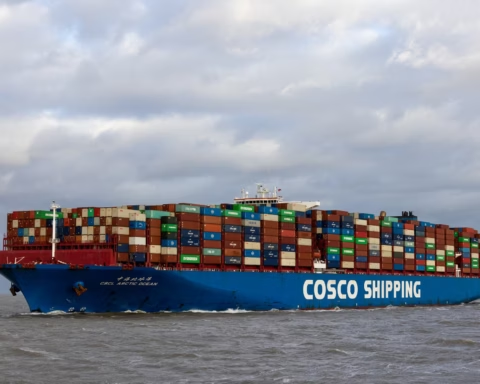
The claim was extraordinary. Since the US-Israeli strikes on Iran began on February 28, commercial shipping through the Strait of Hormuz has effectively ground to a halt. Iran’s Islamic Revolutionary Guard Corps Navy has deployed sea mines and launched anti-ship missiles at vessels in the waterway, and insurance premiums for tankers transiting the Strait have become prohibitively expensive. A successful escort operation would have represented the first tangible evidence that the US military could guarantee safe passage for oil tankers, potentially ending the de facto blockade that has removed roughly 17 million barrels per day of oil from global supply chains.
But the claim was false. Within approximately 30 minutes of publication, the post was deleted from Wright’s account. An Energy Department spokesperson told AFP that “a video clip was deleted from Secretary Wright’s official X account after it was determined to be incorrectly captioned by Department of Energy staff.” At the White House, Press Secretary Karoline Leavitt was forced to address the matter directly, telling reporters: “I can confirm that the US Navy has not escorted a tanker or a vessel at this time.” She added that the post had been “taken down pretty quickly” and that she had not yet spoken directly with Wright about the error.

General Dan Caine, chairman of the US Joint Chiefs of Staff, had indicated during an earlier Pentagon briefing the same day that the military had not begun escort operations. Defense Secretary Pete Hegseth had declared Tuesday “our most intense day of strikes inside Iran” but made no mention of convoy operations through the Strait. The disconnect between the Energy Department’s now-retracted claim and the Pentagon’s actual operational posture underscored what multiple analysts described as a communication breakdown within the Trump administration during a fast-moving wartime situation.
How Did Oil Markets React to Wright’s Deleted Post?
The market reaction was immediate and severe. Within minutes of Wright’s post appearing on X, oil futures dropped sharply as traders priced in the possibility that Hormuz shipping was resuming. West Texas Intermediate (WTI) crude fell by more than 17 percent from its intraday high, while Brent crude experienced a similarly violent sell-off. By the close of trading on Tuesday, WTI settled between $88 and $89 per barrel and Brent dropped to approximately $92 — a dramatic reversal from earlier in the week, when fears of a total and prolonged Hormuz shutdown had pushed prices toward $120 per barrel.
The whiplash was made worse by the correction. When the White House denied the claim and the post was deleted, oil prices did not fully recover. According to CNBC, “the prices of U.S. crude oil and Brent crude each fell by more than 17 percent after that erroneous tweet, and stayed far below their earlier prices even after the White House said that Wright had been wrong.” Traders appeared to interpret the incident as evidence of desperation within the administration to talk down oil prices — and the fact that the false claim briefly moved markets downward suggested that a real escort operation, if and when it materializes, would have an even larger deflationary effect on crude.
| Benchmark | Week High | Post-Tweet Drop | Close (March 10) | Decline From High |
|---|---|---|---|---|
| WTI Crude | ~$120/bbl | 17%+ | $88-89/bbl | ~26% |
| Brent Crude | ~$118/bbl | 17%+ | ~$92/bbl | ~22% |
The total decline from weekly highs to Tuesday’s close amounted to roughly $30 per barrel for WTI — one of the largest single-week drops in oil market history. For context, the oil price crash of April 2020, when WTI briefly went negative during the COVID-19 pandemic, unfolded over several days. The March 2026 rout compressed a comparable magnitude of price destruction into a matter of hours, driven first by Trump’s comments that the war was “very complete” and then amplified by Wright’s deleted post.
Iran Accuses Washington of Market Manipulation
Tehran seized on the episode immediately. Iranian Foreign Minister Abbas Araghchi accused US officials of posting “fake news to manipulate markets,” framing the incident as evidence that Washington was waging an information war alongside its military campaign. The accusation, while self-serving for a government under sustained aerial bombardment, resonated with some market analysts who noted the suspicious timing of Wright’s post relative to trading patterns.
Iranian state media amplified the accusation, with Press TV running the headline under its continuous war coverage. The Iranian government’s position — that the post constituted deliberate market manipulation rather than a staff error — gained traction among some commodity traders and geopolitical risk consultants in London and Singapore. Whether the post was an intentional attempt to calm markets or a genuine miscommunication, the damage to American credibility on Hormuz shipping matters was tangible. For Saudi Crown Prince Mohammed bin Salman and his government, the incident raised an uncomfortable question: if Washington cannot accurately communicate whether a single tanker has transited the Strait, how reliable are its broader security commitments to the Kingdom?
The episode came on the same day that the Pentagon declared it would execute “the most intense day of strikes inside Iran” since the war began. Defense Secretary Hegseth told reporters that the US military had struck more than 5,000 targets since operations began on February 28, and that the strikes had produced a 90 percent reduction in Iran’s missile launches against Israel and Gulf allies. Seven American service members have died in the conflict and approximately 140 have been wounded, according to Pentagon figures released Tuesday.

What Does the Hormuz Shutdown Mean for Saudi Arabia?
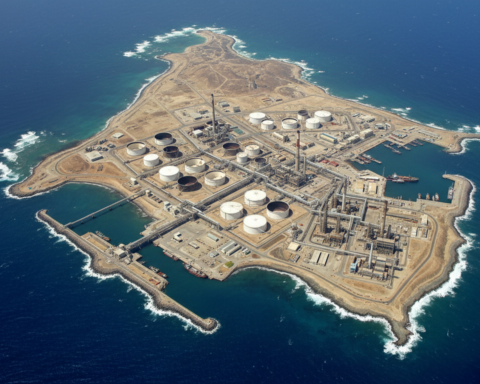
The Strait of Hormuz carries approximately 20 percent of the world’s oil supply on any given day. For Saudi Arabia, the stakes are even higher: the Kingdom’s primary export terminals at Ras Tanura and Ju’aymah on the Persian Gulf coast depend entirely on Hormuz for access to global markets. Before the war, roughly 6.3 million barrels per day of Saudi crude flowed through the narrow waterway between Iran and Oman. That flow has been reduced to a trickle since Iranian mines and anti-ship threats made the passage uninsurable.
The financial impact has been paradoxical. While the effective blockade of Hormuz has driven oil prices to their highest levels since 2022, Saudi Arabia has been largely unable to capitalize on those prices because it cannot ship the oil. Aramco has diverted what capacity it can through the East-West Pipeline to Yanbu on the Red Sea, but that pipeline has a maximum throughput of approximately 5 million barrels per day — well below the Kingdom’s full production capacity. Saudi Arabia announced last week that it was cutting oil output because Gulf storage capacity was filling up with crude that could not be shipped.
Wright’s false claim, and the subsequent market crash, illustrated the precarious position Saudi Arabia occupies. A genuine resumption of Hormuz shipping would allow the Kingdom to sell its oil, but at lower prices. The continued blockade keeps prices high but strands Saudi crude in storage. Either scenario presents challenges for a government that projected $306 billion in revenue for 2026 on the assumption of stable oil markets — an assumption that the war has shattered entirely.
Why Has the US Navy Not Begun Tanker Escorts?
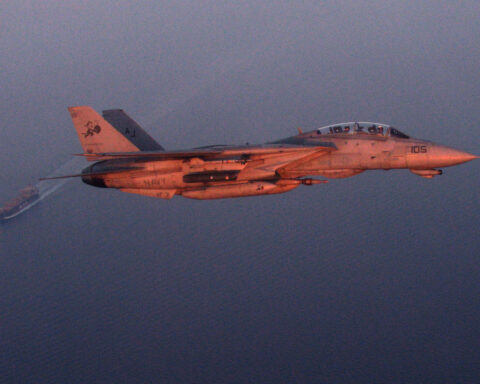
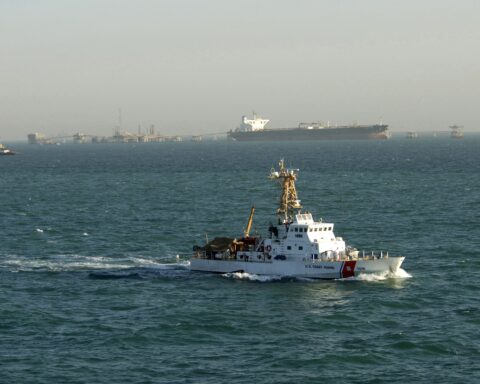
The question of why the US Navy — the world’s most powerful maritime force — has not yet escorted a single oil tanker through Hormuz is one of the war’s enduring puzzles. The US Fifth Fleet, headquartered in Bahrain, has three carrier strike groups deployed to the region, giving it overwhelming naval superiority over Iran’s IRGC Navy. American warships have already engaged Iranian forces directly, with the US Navy destroying 16 Iranian minelaying vessels on Monday to reduce the mine threat in the Strait.
Military analysts point to several factors complicating escort operations. First, the mine threat remains significant. Iran has laid hundreds of naval mines in the approaches to the Strait, and clearing operations take time. The USS Raven and other mine countermeasure vessels have been working to establish safe corridors, but the process is painstaking and dangerous. Second, Iran still possesses hundreds of fast attack craft armed with anti-ship missiles, and a convoy escort through the Strait would need to suppress these threats simultaneously. Third, any tanker escort would need to be coordinated with insurance companies, whose war-risk premiums currently make Hormuz transits economically unviable even with a military guarantee.
Pentagon officials have signaled that escort operations are being planned but have not committed to a timeline. Trump himself said on Monday that the US would “offer insurance for Gulf shipping and escort tankers,” according to CNBC, but no formal program has been announced. For Saudi Arabia, the gap between American rhetoric and operational reality has been a source of quiet frustration, according to regional diplomats who spoke to Bloomberg earlier this month.

Saudi Arabia’s Pipeline Alternative to the Strait
Saudi Arabia’s primary hedge against Hormuz disruption is the East-West Pipeline, formally known as the Petroline, which runs 1,200 kilometers from Abqaiq in the Eastern Province to the Red Sea port of Yanbu. The pipeline has a maximum capacity of approximately 5 million barrels per day, though it typically operates well below that level during normal conditions. Since the Hormuz crisis began, Aramco has reportedly pushed the Petroline to near-maximum throughput, rerouting crude exports to Yanbu for loading onto tankers bound for Europe, the Mediterranean, and Asia via the Suez Canal.
The pipeline provides a critical lifeline but cannot replace Hormuz entirely. Saudi Arabia’s total crude production capacity is approximately 12 million barrels per day, and even with the Petroline running at full capacity, roughly 7 million barrels per day of potential exports remain stranded. The Kingdom also exports refined products, natural gas liquids, and petrochemicals from Gulf coast facilities that have no pipeline alternative.
| Route | Pre-War Capacity | Current Status | Limitations |
|---|---|---|---|
| Strait of Hormuz (Ras Tanura, Ju’aymah) | ~7 million bpd | Effectively shut | Mines, insurance, IRGC Navy threats |
| East-West Pipeline (Yanbu) | ~5 million bpd | Near-maximum throughput | Cannot handle all crude grades; no NGL/refinery product capacity |
| Total export capacity available | ~12 million bpd | ~5 million bpd | 58% reduction in export capacity |
The vulnerability has not gone unnoticed in Riyadh. Saudi officials have discussed expanding pipeline capacity as a long-term strategic priority, and the war has lent urgency to proposals that were previously considered expensive contingency planning. But new pipeline infrastructure takes years to build, and the current crisis demands immediate solutions.
American Consumers Feel the Hormuz Premium
The Hormuz disruption has already reached American gas stations. By Tuesday, average US gasoline prices had jumped to $3.54 per gallon, a 43-cent increase from the previous week, according to AAA. The surge reflected not just the supply disruption but the uncertainty premium that Wright’s false claim briefly inflated and then popped. Diesel prices, which directly affect food and goods transportation costs, rose even more sharply, threatening a cascade of price increases across the American economy.
The political implications for the Trump administration are significant. The president had campaigned on a promise to keep energy prices low, and the Iran war — which his administration initiated alongside Israel — has produced the opposite result. Trump’s assertion on Monday that the war was “very complete” appeared designed in part to calm energy markets, and Wright’s retracted post, whether intentional or accidental, aligned with that messaging objective. The fact that it backfired, producing a 17 percent crash followed by questions about government credibility, underscored the risks of using public statements as market-management tools during an active conflict.
For Saudi Arabia, America’s domestic gasoline price sensitivity creates both leverage and risk. Higher US gas prices increase political pressure on the Trump administration to resolve the Hormuz crisis quickly — a priority shared by Riyadh. But they also increase the temptation for Washington to pressure Saudi Arabia to boost production or accept unfavorable terms in any ceasefire arrangement, given the Kingdom’s unique ability to influence global oil supply.
What Comes Next for Gulf Oil Shipping?
The Wright episode, for all its embarrassment, may have inadvertently previewed the market dynamics of a real Hormuz reopening. The 17 percent crash that followed the false claim demonstrated that a credible announcement of tanker escorts could collapse oil prices by $15 to $20 per barrel within hours. That price sensitivity creates complex incentives: Saudi Arabia needs Hormuz open to export its oil, but a price crash from $120 to the $80s would blow a hole in a national budget already strained by wartime costs.
Several diplomatic and military developments are converging that could determine the timeline. The Pentagon’s destruction of 16 Iranian minelaying vessels on Monday reduces future mine deployments, though existing mines must still be cleared. Trump’s threat of “military consequences at a level never seen before” if Iran continues to threaten Hormuz shipping suggests escalation pressure is building. And reports of a diplomatic “off-ramp” brokered by neutral regional powers — involving commitments to keep shipping lanes open — suggest that a de facto agreement on maritime passage could emerge before a full ceasefire is reached.
For Riyadh, the priority is clear: the Strait must reopen, and American military guarantees must be credible. Wright’s deleted tweet did not just crash oil prices — it eroded trust in Washington’s ability to deliver on its most important wartime promise to its most important Gulf ally. The next claim about a tanker transiting Hormuz will need to be verified before markets — and Saudi Arabia — take it seriously.
While the Wright episode produced a false signal, the underlying Hormuz crisis ultimately demanded a real institutional response. On March 11, the IEA authorized a record 400-million-barrel emergency oil release to address the supply disruption that continues to drive prices above $110 per barrel.
Frequently Asked Questions
What did US Energy Secretary Chris Wright claim about the Strait of Hormuz?
On March 10, 2026, Wright posted on X that the US Navy had successfully escorted an oil tanker through the Strait of Hormuz. The post was deleted within 30 minutes after the White House confirmed the claim was false. An Energy Department spokesperson attributed the error to an “incorrectly captioned” video by department staff.
How much did oil prices fall after the false Hormuz escort claim?
Oil prices fell more than 17 percent after Wright’s post appeared, with West Texas Intermediate crude settling between $88 and $89 per barrel and Brent crude dropping to approximately $92. The decline was part of a broader weekly sell-off that saw prices fall from near $120 per barrel, driven by a combination of the false claim, diplomatic signals, and Trump’s comments that the war was “very complete.”
Why is the Strait of Hormuz so important for Saudi Arabia?
The Strait of Hormuz carries approximately 20 percent of the world’s oil supply and is the primary export route for Saudi crude from its Persian Gulf terminals at Ras Tanura and Ju’aymah. Before the war, roughly 6.3 million barrels per day of Saudi oil transited the Strait. Since Iran began mining and attacking shipping in the waterway, Saudi Arabia has been forced to reroute exports through the East-West Pipeline to Yanbu on the Red Sea, which has a maximum capacity of approximately 5 million barrels per day.
Has the US Navy escorted any oil tankers through the Strait of Hormuz during the Iran war?
As of March 11, 2026, the US Navy has not escorted any commercial oil tankers through the Strait of Hormuz. While the Navy has three carrier strike groups in the region and has conducted mine-clearing operations, the Pentagon has not announced a formal tanker escort program. Trump has promised to “offer insurance for Gulf shipping and escort tankers,” but no timeline has been established.
What alternative does Saudi Arabia have to shipping oil through the Strait of Hormuz?
Saudi Arabia’s primary alternative is the East-West Pipeline (Petroline), which runs 1,200 kilometers from Abqaiq to the Red Sea port of Yanbu. The pipeline has a maximum capacity of approximately 5 million barrels per day. While it provides a critical lifeline, it cannot fully replace Hormuz — Saudi Arabia’s total export capacity exceeds 12 million barrels per day, meaning roughly 58 percent of potential exports remain stranded during the blockade.