
Update, March 14: Formula 1 confirmed the cancellation of both the Bahrain and Saudi Arabian Grands Prix, as the Iran war grounds Gulf motorsport in the sport’s first wartime cancellation of Middle Eastern races. The combined hosting fee loss exceeds $100 million.
There was a temptation, when the Associated Press reported on Sunday, March 8, that Formula 1 had delayed a decision over whether the Bahrain and Saudi Arabian Grands Prix would go ahead as scheduled in April, to treat the item as a secondary headline. The main story, after all, appeared to be somewhere else: drones intercepted over Riyadh, new warnings from Saudi Arabia to Tehran, commercial flights across parts of the Gulf interrupted — more than 27,000 flights cancelled in total, shipping rates rising, insurers recalculating risk, and the region once again learning what it means when strategic confrontation migrates from the military map to the economic one.
That reading is too narrow. The Formula 1 hesitation is not a side issue. It is the story, or at least the clearest possible sign of where the story is heading. When a premier global sporting brand pauses over Saudi Arabia’s race weekend, what is being questioned is not simply the safety of one event. What is being tested is the reliability of the Kingdom’s broader proposition to investors, tourists, airlines, sponsors, media companies, logistics firms, and international audiences: that Saudi Arabia is not merely opening up, but that it is open in a way that is durable, professional, predictable, and commercially defensible.
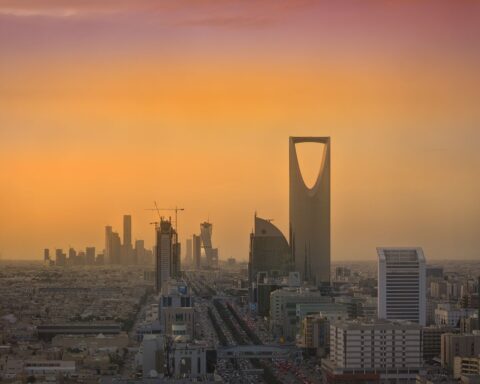
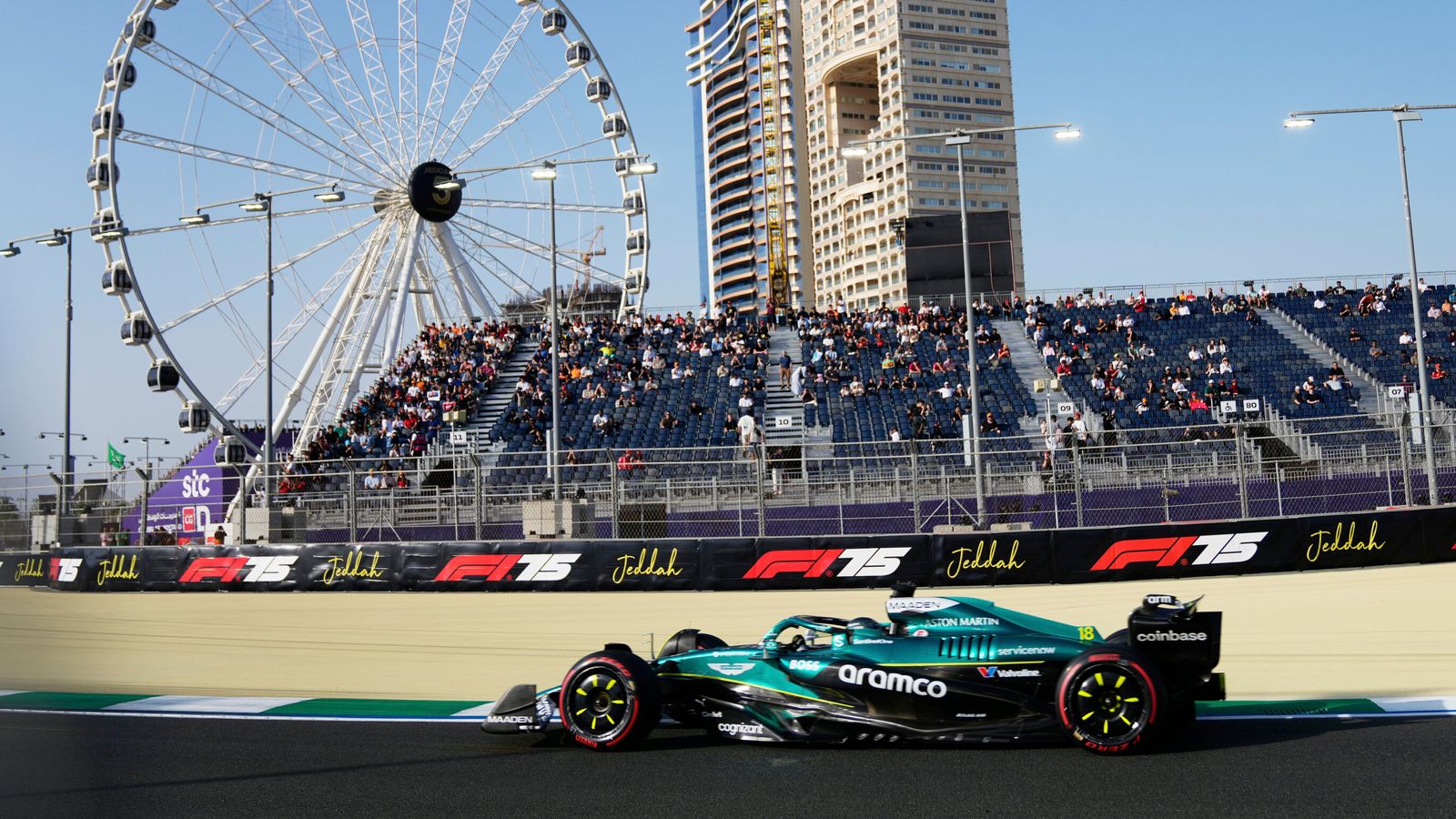
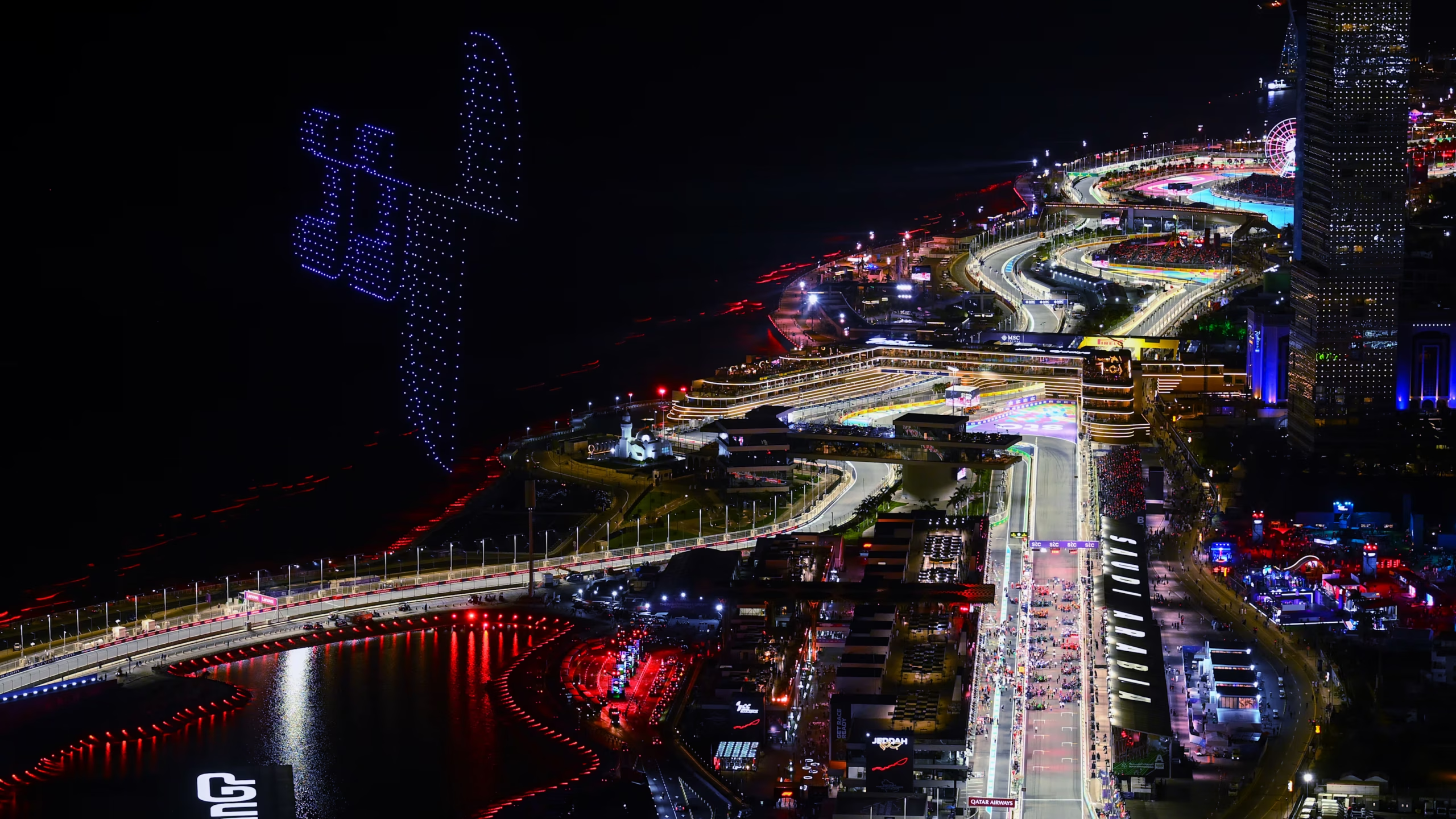
That proposition sits at the heart of Vision 2030. For years, Riyadh has worked to transform the Kingdom’s image from a market defined abroad largely by hydrocarbons, geopolitics, and state budgets into one associated with entertainment, sport, tourism, hospitality, technology, financial ambition, and event-led global relevance. Formula 1 in Jeddah is not a decorative flourish in that strategy. It is one of its most visible showcases. The point of hosting a grand prix is not only to fill a race calendar slot. It is to transmit a message about capacity, confidence, connectivity, and place. It says that Saudi Arabia can host a complex, internationally televised, sponsor-heavy, logistics-intensive event on a global timetable and do so as a matter of routine.
That is why the AP report matters so much. A delay in decision-making around the Saudi race is not simply about motorsport. It is a warning that Iran’s escalation, and the broader Gulf security crisis surrounding it, is beginning to threaten the commercial architecture Saudi Arabia has spent years and billions constructing. The issue is no longer only whether missiles can be intercepted or drones can be shot down. The issue is whether the Kingdom can keep its broader economic narrative intact while the region absorbs a real-time security shock.
A Security Crisis Is Becoming a Commercial One
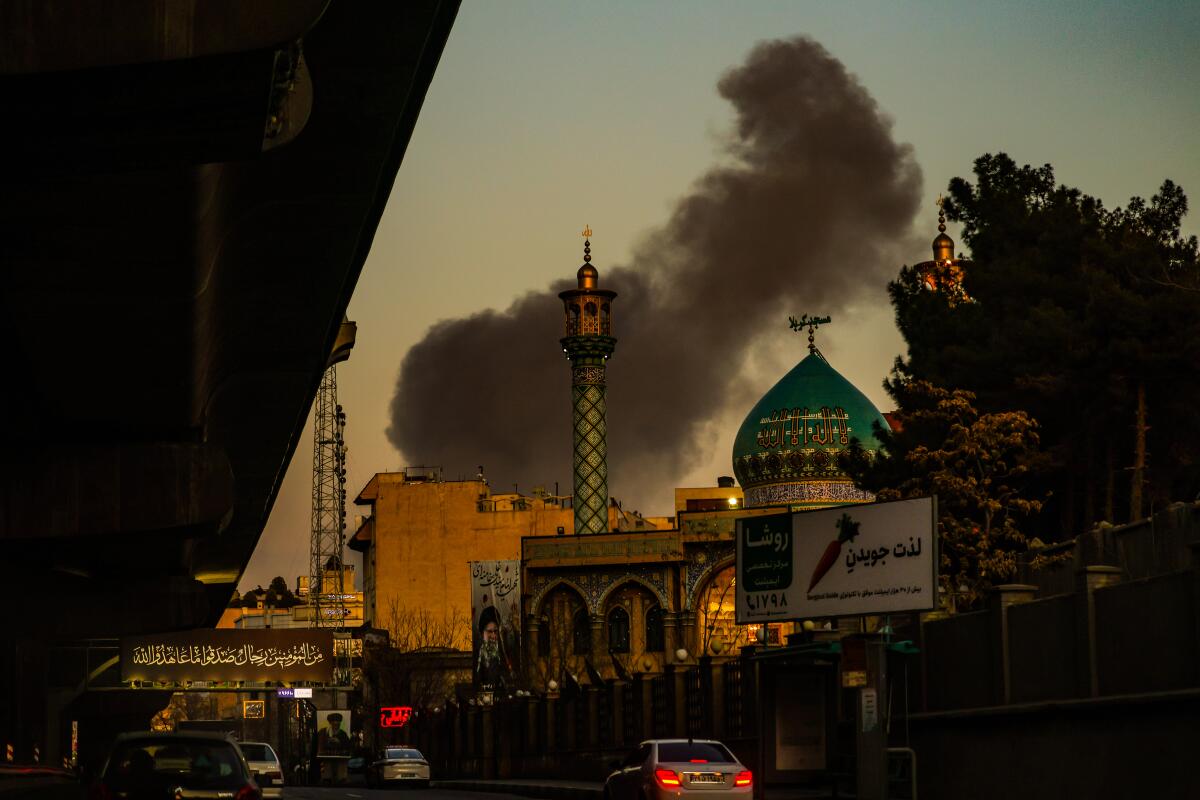
Saudi Arabia’s air defenses are still performing. That is the first point, and it matters. Fresh reporting on Sunday indicated that Saudi forces intercepted another wave of drones over Riyadh, including one headed toward the Diplomatic Quarter, while other reports described attempted strikes linked to the Shaybah area in the Eastern Province. Reuters, meanwhile, reported that Riyadh had warned Tehran not to attack Saudi territory or energy infrastructure again, and that the Kingdom viewed further escalation as potentially requiring retaliation. The military dimension remains serious, immediate, and central.
But modern Gulf crises are never contained to military facts alone. They migrate quickly into insurance markets, aviation schedules, shipping routes, event calendars, corporate travel decisions, hotel bookings, sponsorship confidence, and boardroom risk assessments. What AP captured in the Formula 1 delay was the moment when the conflict’s consequences became legible to the wider commercial world. Global investors do not need a refinery to burn or a racetrack to close in order to revise their assumptions. They only need to see uncertainty enter a system that was being sold on certainty.
That is the crucial distinction. Markets do not wait for catastrophe. They price hesitation. A sporting event may still take place, flights may resume, ports may stay open, and hotels may remain occupied. But once major international operators begin publicly reconsidering schedules, routes, or exposure, the commercial signal has already been sent. The risk premium does not emerge after disruption. It emerges the moment disruption becomes thinkable.
In that sense, the line from Shaybah to Jeddah is shorter than it first appears. Shaybah represents the Kingdom’s hard-security exposure: energy infrastructure, strategic geography, the vulnerability of national assets to a missile-and-drone campaign. Jeddah represents something different but no less important: Saudi Arabia’s external-facing economy, its premium events, its soft-power ambitions, and the credibility of its claim to be a safe and efficient host for global commerce and spectacle. The same crisis now touches both.
Why Formula 1 Is a Better Signal Than Oil
Oil prices are noisy indicators. They respond to multiple variables at once and often move on anticipation rather than direct damage. A sharp move in crude can suggest concern, but it does not tell us how international institutions, sponsors, travelers, or media partners are actually reading Saudi Arabia’s operational environment. Formula 1 does. F1 is a concentrated expression of globalization. It depends on aircraft movements, freight timing, hospitality operations, sponsor activation, broadcast planning, team security, insurance underwriting, and precise logistical choreography. When that machine hesitates, it reveals something more granular than commodity markets ever can.
That is why the Jeddah race is such a powerful economic barometer. It is not only expensive. It is high-visibility, deadline-driven, reputationally exposed, and globally syndicated. It is one of the clearest tests available of whether a country can promise international participants that it remains business-as-usual even under regional stress. If there is doubt around that proposition, it is not just Formula 1 that is affected. The question extends to conferences, concerts, investment summits, luxury tourism, sporting partnerships, live entertainment, and all the ancillary sectors Saudi Arabia wants to deepen as part of its diversification push.
For Riyadh, therefore, the issue is not whether an F1 race is intrinsically essential. It is whether a marquee international product is beginning to register the Gulf conflict as an operational risk. Once that happens, every other globally mobile business notices. Airlines ask harder questions. Corporate travel managers ask harder questions. Event insurers ask harder questions. Hospitality operators ask harder questions. Boards ask whether short-term caution is prudent even if the probability of disruption remains relatively low. The effect compounds because each layer of caution validates the next.
This is precisely why Saudi decision-makers cannot afford to dismiss the F1 story as Western overreaction or media theatre. It is not an isolated judgment. It is the leading edge of a wider commercial recalculation that could spread if the conflict persists. Saudi Arabia has built a large part of its post-oil narrative on the ability to host, convene, and scale. Any sustained doubt about that ability strikes at the operating logic of Vision 2030 more directly than a one-day oil spike does. The threat extends beyond physical events to digital ambitions: the Iran war is now jeopardising Saudi Arabia’s $38 billion gaming push, including the Esports World Cup and the Savvy Games Group’s global acquisition strategy, which depend on the same investor confidence and international connectivity that the conflict has undermined.
The Hidden Tax of Uncertainty: Aviation, Freight and Insurance
The broader indicators are already visible. Reuters reported Sunday that airlines across the region had suspended or rerouted flights after missile and drone attacks across Gulf airspace, with carriers and airports scrambling around closure notices and rolling security advisories. Even where Saudi airports remain functional, the wider network matters. Jeddah’s viability as an event hub does not depend only on what happens in Jeddah. It depends on the reliability of the regional air corridor through which teams, executives, media, sponsors, and fans move.
Aviation disruption imposes costs long before it causes outright cancellations. Aircraft rotations become harder to manage. Crew duty windows tighten. Insurance assumptions shift. Cargo timing weakens. Premium travelers postpone discretionary trips. Corporate risk teams prefer delay over explanation. For a grand prix, these pressures are particularly acute because so much of the value lies in synchronized arrival: race equipment, hospitality units, broadcasters, executives, luxury guests, technical personnel, and sponsor teams all need to show up on a narrow timeline. Any conflict that makes Gulf airspace feel unstable creates commercial friction far beyond the flight deck.
The same logic applies at sea. Reuters also reported that shipping rates from the Gulf were rising sharply as the conflict intensified, with owners and charterers reassessing what it meant to move cargo through a region shadowed by military escalation and uncertainty around the Strait of Hormuz. War-risk pricing is one of the least dramatic but most economically revealing metrics in any regional crisis. It captures how professional risk capital sees the situation after rhetoric has been stripped away. If insurers, shipowners, and underwriters start charging more, the market is telling you that insecurity has become a cost center.
That matters for Saudi Arabia because Vision 2030 depends on more than domestic spending. It depends on the Kingdom being legible to global capital as a place where complex operations can be priced, scheduled, insured, and executed with confidence — a proposition directly tested by the aviation crisis that has grounded the Gulf’s $100 billion hub model. Every additional basis point of perceived regional risk raises the cost of that proposition. Some of that cost is financial and explicit. Some is reputational and diffuse. A sponsor may not cancel a deal, but it may scale back hospitality activation. A conference may not move, but it may cut expected attendance. A multinational may not halt investment, but it may delay a board trip, postpone a signing, or raise demanded returns to reflect uncertainty.
This is what security analysts often miss when they talk about missile defense in purely tactical terms. Interception success is not the same as economic insulation. A drone shot down over Riyadh can still produce a commercial consequence in Jeddah if it changes the way foreign operators price the Kingdom. A missile that never lands can still affect the cost of insurance. A shipping lane that remains technically open can still become economically less efficient. In a country repositioning itself as a premium destination for capital, culture, and events, those second-order effects are not peripheral. They are the point.
Investor Confidence Is Built on Time, Not Slogans
Saudi Arabia’s recent international positioning has depended heavily on a simple but powerful claim: whatever geopolitical noise exists in the Middle East, the Kingdom is increasingly run like a dependable platform. Deals get done. Projects move. Events happen. Infrastructure works. Guests are received. Security is professionalized. The state can manage complexity. This has been one of the most important underpinnings of investor confidence in the Saudi story. Not that risks do not exist, but that the Kingdom has both the resources and the institutional will to contain them.
That confidence is cumulative. It is built over time through repetition. Each successful summit, sports tournament, cultural festival, tourism season, and international corporate partnership makes the next one easier to secure. Investors rarely fall in love with slogans. They fall in love with patterns. Formula 1 in Jeddah, boxing super-fights in Riyadh, major football deals, entertainment seasons, hospitality launches, and cross-border investment forums all serve the same commercial purpose: they show the world that Saudi Arabia can convert ambition into execution.
This is why interruptions matter disproportionately. They do not merely disrupt a schedule. They interrupt a pattern. And when patterns break, investors start distinguishing between ambition and resilience. It is one thing for Saudi Arabia to spend heavily on attraction. It is another for international capital to decide that the Kingdom can remain a stable operating environment even during a regional confrontation with Iran. That is a higher threshold, and it is the one now being tested.
No serious investor expects Saudi Arabia to be geopolitically insulated from a Gulf war. That is not the benchmark. The benchmark is whether the Kingdom can stop a regional conflict from infecting its premium economic sectors in a way that changes long-term pricing, attendance, insurance costs, event confidence, and partner behavior. The AP report suggests the answer is not yet settled. And once uncertainty is visible at the level of a flagship event, it becomes harder for promoters of the Saudi growth story to insist that the conflict is neatly containable.
Vision 2030 Was Always About Security as Well as Spectacle
There is a tendency abroad to treat Vision 2030 as if it were mainly a branding exercise attached to a set of giga-projects and event calendars. That misreads the strategy. Diversification was never only about constructing leisure districts, attracting tourists, or staging global spectacles. It was also about altering Saudi Arabia’s strategic position by making the Kingdom a more complex, more connected, and more indispensable economic actor. In other words, Vision 2030 has always had a national security dimension, even when it is presented in the language of entertainment, tourism, or investment.
The reason is straightforward. A country whose economy is broader, whose logistics are deeper, whose service sectors are larger, whose tourism flows are stronger, and whose soft-power reach is wider has more strategic options than one understood primarily through oil output alone. Diversification is therefore not separate from sovereignty. It is one of the ways sovereignty is strengthened. The more Saudi Arabia can anchor itself as a commercial, financial, cultural, and event hub, the more leverage it has in moments of geopolitical stress.
Iran’s current escalation presses directly against that logic. By threatening energy infrastructure and creating uncertainty around premium events and transport systems, Tehran is not merely challenging Saudi military defenses. It is probing the connective tissue of Saudi Arabia’s diversification model. It is testing whether the Kingdom’s soft-power economy can be made to look fragile from the outside, even if physical damage remains limited. That is a strategically intelligent form of pressure because it seeks to widen the consequences of conflict without needing to destroy the underlying assets outright.
Saudi policymakers understand this, which helps explain the sharpened tone reported by Reuters. Riyadh’s warning to Tehran was not simply about military pride. It reflected an awareness that every attack or attempted attack on Saudi soil now carries spillover risk into sectors far beyond oil and defense. The Kingdom is defending more than facilities. It is defending a story about itself, and stories of national transformation can be damaged by repeated doubt even when the infrastructure beneath them remains standing.
Defense Spending and Diplomacy Are Now Economic Policy
This is the clearest conclusion to draw from the last 24 hours. Saudi defense is no longer only defense. Saudi diplomacy is no longer only diplomacy. Both are now instruments of economic stabilization. Air-defense success protects airports, ports, business districts, hotels, and event venues as much as it protects military bases and industrial sites. Diplomatic signaling protects investor psychology as much as it protects state relations. When Riyadh tells Tehran not to strike Saudi territory or energy assets again, it is not just drawing a military red line. It is trying to preserve the commercial conditions in which its diversification agenda can continue.
This is also why Saudi Arabia’s balancing act matters so much. Reuters reported that Riyadh had simultaneously warned Iran while also maintaining communication channels and making clear it did not want a wider war. That posture can look contradictory if viewed through the lens of traditional hard power. It is not contradictory if viewed through the lens of economic statecraft. The Kingdom’s ideal outcome is not performative escalation. It is deterrence without systemic commercial damage. Saudi Arabia wants to show strength, maintain sovereignty, reassure markets, and avoid being dragged into a prolonged confrontation that would contaminate its own growth story.
The challenge is that markets can struggle to distinguish between calibrated deterrence and wider regional instability. Investors and global event operators do not parse every nuance of Gulf signaling. They respond to visible indicators: airspace warnings, shipping surcharges, altered schedules, delayed decisions, official travel advisories, and images of interceptions over major cities. That means Riyadh must not only manage the military threat. It must overperform in signaling control, continuity, and administrative competence if it wants to stop the conflict from bleeding into the commercial imagination.
In practical terms, that requires more than statements. It means rapid transparency around incidents, visible continuity planning, credible security coordination with event organizers, constant engagement with airlines and logistics providers, and a public demonstration that the Kingdom can protect not only critical infrastructure but also its premium commercial assets. This is not glamorous work. It is bureaucratic, operational, and repetitive. But it is exactly this sort of competence that distinguishes a country that merely hosts events from one that becomes a trusted node in the global event economy.
What Riyadh Must Protect Now
The immediate temptation in any regional crisis is to think first about the most obvious targets: oil fields, refineries, military bases, desalination plants, airports. Saudi Arabia still has to think that way, and the security burden remains immense. But the March 8 news cycle suggests the Kingdom must now think more broadly about what counts as strategic infrastructure. Jeddah’s race weekend is strategic infrastructure. International conference calendars are strategic infrastructure. Hotel occupancy in major cities is strategic infrastructure. Airline reliability, sponsor confidence, and insurability are all forms of strategic infrastructure when a state has chosen diversification as a central pillar of national strategy.
This is not rhetorical inflation. It is an accurate description of how the Saudi economy now works. The Kingdom has deliberately tied part of its future growth to external participation. It wants more visitors, more capital, more entertainment, more partnerships, more high-value service activity, and more globally resonant moments. That model can be extremely powerful, but it creates a wider perimeter to defend. Strategic harm no longer requires direct physical destruction. Sometimes it requires only enough uncertainty to make outsiders recalculate the convenience of engagement.
That does not mean Saudi Arabia is uniquely vulnerable. On the contrary, the Kingdom has deeper resources, stronger state capacity, and greater ability to sustain confidence than many of its regional peers. But it does mean the cost of repeated volatility is higher than it once was because the upside Saudi Arabia is pursuing is more ambitious than it once was. The bigger the transformation story, the more valuable predictability becomes.
That is why the Formula 1 hesitation should be read as an early warning rather than a one-off inconvenience. It tells us that the conflict has begun to touch sectors that live on confidence, precision timing, and global trust. Those sectors are central to the Saudi future the state is trying to build. If Riyadh can protect them through a combination of deterrence, de-escalation, and operational competence, the Kingdom will reinforce the credibility of its diversification model under stress. If not, Iran will have demonstrated that it can tax Saudi Arabia’s future-facing economy without needing to defeat Saudi Arabia militarily.
The Real Battlefield Is Credibility
There is a habit in regional coverage to divide hard power and soft power into separate conversations, as if missiles and motorsport belonged to different worlds. The events of the last 24 hours suggest that division has become obsolete. In today’s Gulf, a drone intercepted over Riyadh and an uncertain race weekend in Jeddah are part of the same strategic picture. One tests territorial defense. The other tests economic credibility. And for Saudi Arabia in 2026, credibility may be the more consequential battlefield.
The Kingdom can absorb oil volatility. It can fund air defenses. It can repair infrastructure. It can marshal diplomatic relationships. What is harder to rebuild quickly is the external assumption that Saudi Arabia is becoming the one place in the region where global capital, premium events, and large-scale logistics can proceed with confidence even when the wider environment is noisy. That assumption has taken years to build. It can be weakened much faster than it was created.
This is why the right Saudi response is not panic, nor theatrical rhetoric, nor denial that the commercial effects are real. It is disciplined seriousness. Protect the airspace. Protect the energy network. Protect the event calendar. Protect the logistics chain. Protect the insurance case. Protect the perception that Saudi Arabia remains administratively and strategically ahead of the crisis. If Riyadh succeeds, the AP headline will be remembered as a moment of temporary hesitation. If it fails, historians may look back on it as the point when Iran’s escalation first began to threaten not just Saudi territory, but Saudi transformation itself.
From Shaybah to Jeddah, the message is now clear. The Kingdom is not only defending land, skies, and infrastructure. It is defending the commercial future it has promised the world. And that future, no less than any oil facility or air base, is now part of the strategic map.