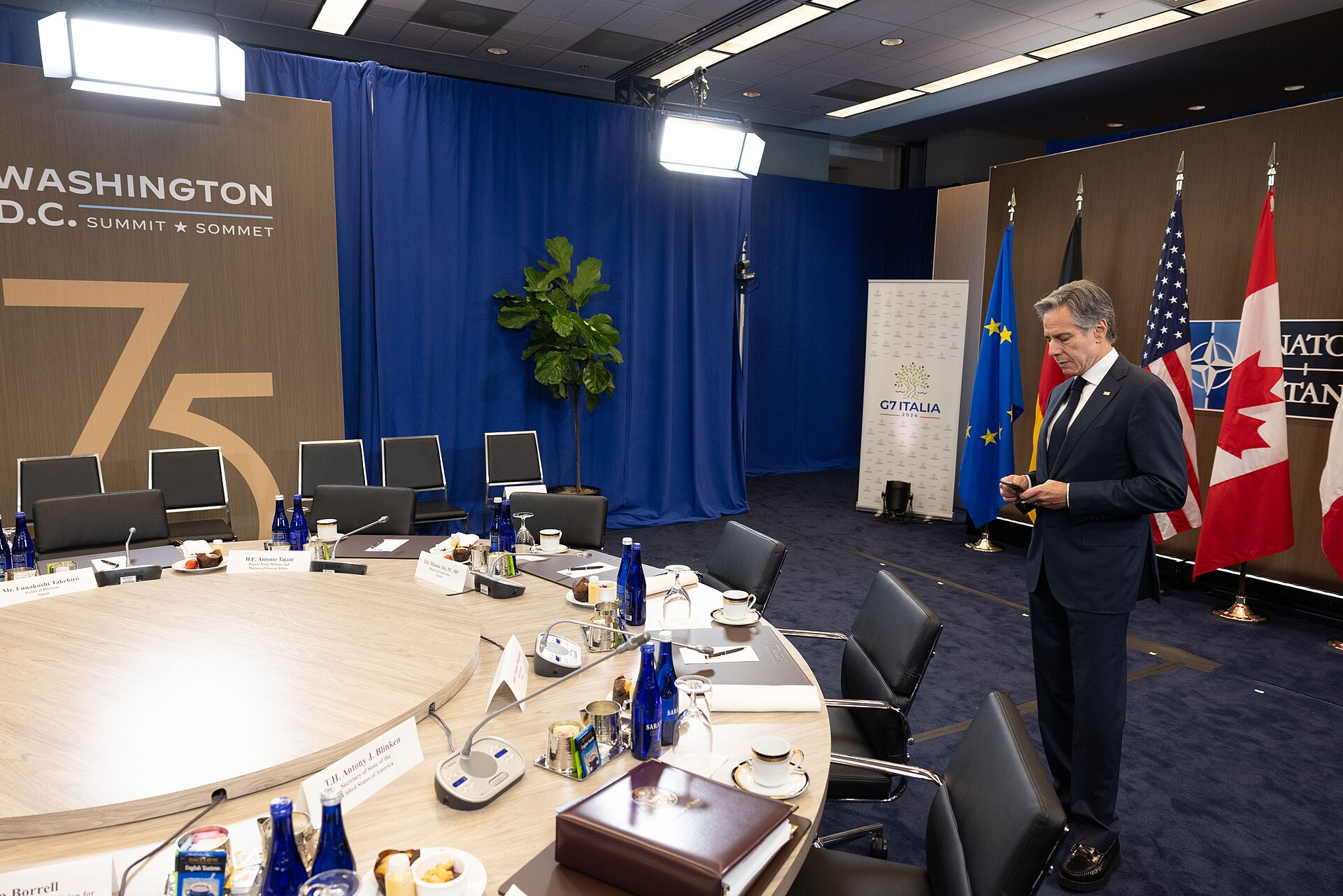

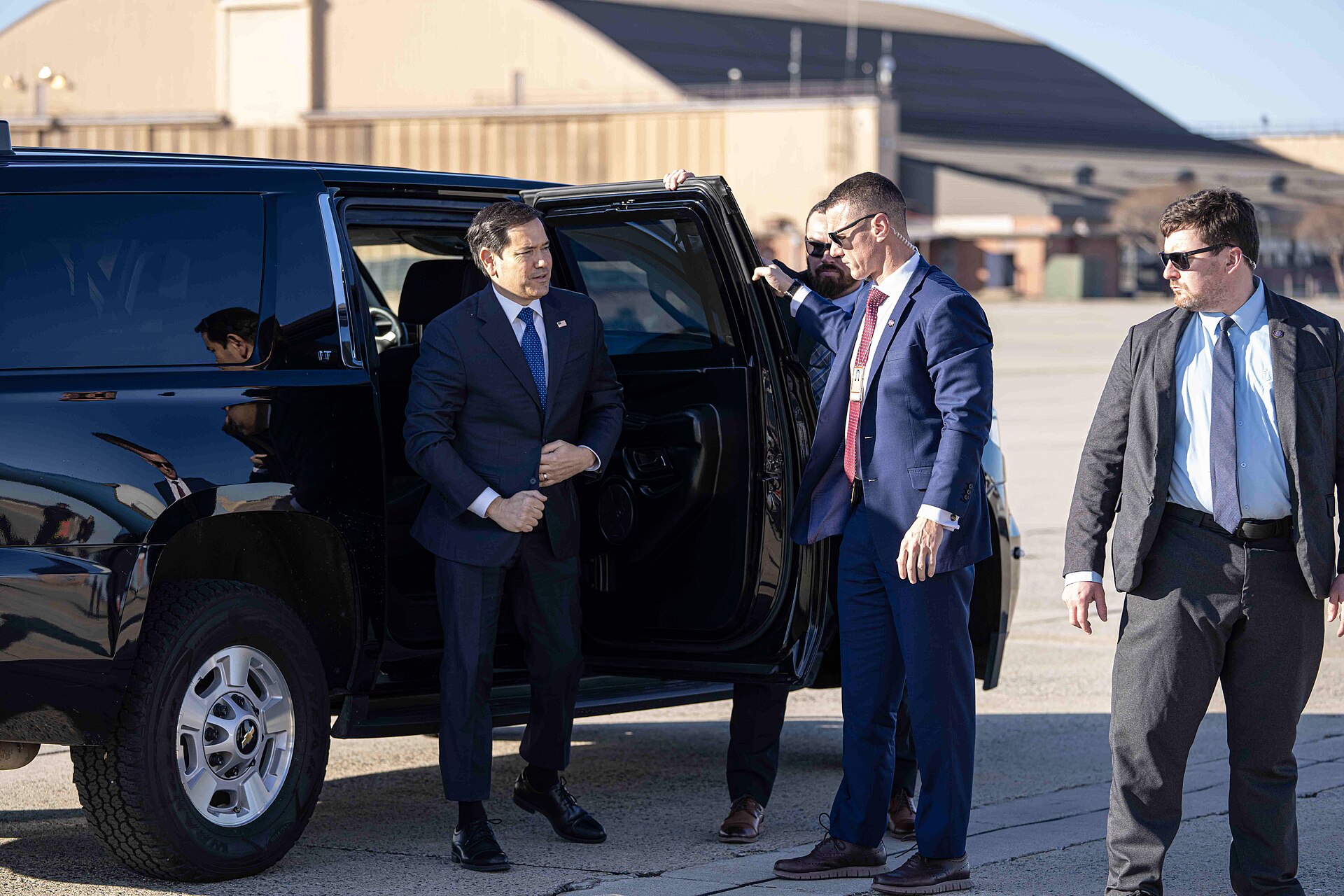
PARIS — Group of Seven foreign ministers issued a joint statement on March 27 demanding an immediate end to attacks on civilians and civilian infrastructure in the Iran war, even as deep divisions among Western allies over the conflict were laid bare during a two-day summit at a 12th-century abbey outside the French capital. US Secretary of State Marco Rubio arrived at the meeting facing open skepticism from European counterparts who refused to join offensive operations against Iran and criticized Washington for launching the campaign without consulting its closest partners.
The statement, released from the Abbaye des Vaux-de-Cernay in Yvelines, called for the restoration of “safe and toll-free freedom of navigation in the Strait of Hormuz” and urged coordination of humanitarian aid to the region. Yet its carefully negotiated language papered over a rift that has grown wider with every week of the month-long conflict. France’s chief of defense staff, General Fabien Mandon, told French media this week that allies had not been informed before US and Israeli strikes began on February 28, saying: “They have just decided to intervene in the Near and Middle East without notifying us.”
For Saudi Arabia, which sent Foreign Minister Prince Faisal bin Farhan Al Saud to the summit as an invited non-G7 participant, the meeting represented the latest in a series of diplomatic engagements aimed at securing concrete Western commitments to Gulf defense while the Kingdom absorbs daily Iranian drone and missile strikes on its territory.
Table of Contents
- What Did the G7 Joint Statement on Iran Say?
- How Did Rubio Respond to Allied Skepticism?
- Where Does Saudi Arabia Stand After the G7 Meeting?
- The Transatlantic Divide Over the Iran War
- What Are the Economic Stakes Driving the G7 Agenda?
- Iran Dismisses G7 Statement and Denies US Talks
- From Airstrikes to Abbey — How the Iran War Reached the G7
- Frequently Asked Questions
What Did the G7 Joint Statement on Iran Say?
The G7 foreign ministers of Canada, France, Germany, Italy, Japan, the United Kingdom, the United States, and the High Representative of the European Union issued a joint statement on the final day of their summit at the Abbaye des Vaux-de-Cernay. The document called for “an immediate cessation of attacks against civilians and civilian infrastructures,” stating that “there can be no justification for the deliberate targeting of civilians in situations of armed conflict as well as attacks on diplomatic facilities,” according to the text published simultaneously by the UK Foreign Office, the French Ministry for Europe and Foreign Affairs, and Canada’s Global Affairs department.
The ministers underscored “the importance of minimising the impact of the conflict on regional partners and civilian populations, critical infrastructure” and called for coordinated humanitarian aid, according to Reuters. They also pledged to support initiatives addressing “global economic shocks such as disruptions to economic, energy, fertiliser and commercial supply chains,” a reference to the severe trade disruption caused by Iran’s effective closure of the Strait of Hormuz to most international shipping since early March.
The statement “reiterated the absolute necessity to permanently restore safe and toll-free freedom of navigation in the Strait of Hormuz, consistent with UNSC Resolution 2817 and the Law of the Sea,” according to the text published by the European External Action Service (EEAS).
Notably absent from the joint statement was any explicit endorsement of the US-Israeli military campaign against Iran. The G7 did not characterize the offensive operations as legitimate or necessary, nor did it assign blame for the escalation to Tehran alone. This omission reflected the fundamental disagreement between Washington and its European allies over whether the war was justified in the first place. The G7’s reluctance mirrors China’s strategic paralysis, where Beijing has similarly refused to commit despite having far more at stake economically.
| Demand | Specific Language | Context |
|---|---|---|
| Civilian protection | “Immediate cessation of attacks against civilians and civilian infrastructures” | Addresses both Iranian strikes on Gulf states and US-Israeli strikes on Iran |
| Humanitarian aid | Coordinate aid efforts for “regional partners and civilian populations” | Iran facing severe humanitarian crisis after four weeks of strikes |
| Maritime freedom | “Permanently restore safe and toll-free freedom of navigation” in Hormuz | One-fifth of global oil transits through the strait, now largely closed |
| Economic stability | Mitigate “disruptions to economic, energy, fertiliser and commercial supply chains” | OECD warned war has erased a year of global growth |
How Did Rubio Respond to Allied Skepticism?
Secretary of State Rubio struck a combative tone before and during the summit, making clear that the United States was not seeking allied approval for its Iran strategy. “I’m not there to make them happy,” Rubio told reporters before departing for France, according to the Associated Press. “I get along with all of them on a personal level, and we work with those governments very carefully, but the people I’m interested in making happy are the people of the United States. That’s who I work for. I don’t work for France or Germany or Japan.”
The remarks came one day after President Donald Trump escalated his criticism of NATO allies on social media, writing: “We are very disappointed with NATO because NATO has done absolutely nothing. We’re there to protect NATO, to protect them from Russia. But they’re not there to protect us. I never thought we needed them. I was more doing a test,” according to the Washington Post.
Rubio drew a sharp contrast between allied support for Ukraine and their reluctance on Iran. “Ukraine isn’t our war, yet we’ve contributed more to that fight than anyone,” he said, according to NPR. He also argued that countries concerned about freedom of navigation “should step up and deal with” Iran’s blockade of the Strait of Hormuz, noting that “very little of our energy comes through the Strait of Hormuz. It’s the world that has a great interest in that, so they should step up and deal with it.”
The comments reflected a broader argument the Trump administration has made throughout the conflict: that the United States is bearing a disproportionate share of the military burden while allies who depend far more heavily on Gulf energy supplies contribute almost nothing to the war effort. Trump has repeatedly questioned whether America should continue bearing the costs of Gulf security without reciprocal commitments from partners.
Where Does Saudi Arabia Stand After the G7 Meeting?
Saudi Arabia’s Foreign Minister Prince Faisal bin Farhan Al Saud attended the summit as an invited participant alongside representatives from Brazil, South Korea, India, and Ukraine. His presence underlined Riyadh’s growing diplomatic weight and the centrality of the Gulf crisis to global politics, according to Asharq Al-Awsat.
Prince Faisal held bilateral meetings on the margins of the summit with France’s Foreign Minister Jean-Noel Barrot, India’s External Affairs Minister S. Jaishankar, and officials from multiple G7 delegations. The French Foreign Ministry said Barrot “reiterated France’s very strong condemnation of Iran’s attacks on its neighbours and signalled France’s wholehearted solidarity with the Kingdom of Saudi Arabia,” while emphasizing “France’s commitment to de-escalation and a diplomatic solution,” according to the ministry’s official readout.
Jaishankar described his meeting with Prince Faisal as “pleasing” and said the two ministers “reviewed bilateral relations and ways to strengthen them in various fields” while also discussing “the latest regional and international developments,” according to India’s Tribune newspaper. India, which depends heavily on Gulf oil imports and has deployed warships to escort tankers through the Indian Ocean, has a direct stake in the outcome of the G7 discussions on maritime security.
The G7 meeting followed a week of intensifying Saudi diplomatic activity. On March 26, six Gulf Cooperation Council member states issued a joint statement asserting their right to self-defense under Article 51 of the UN Charter. Prince Faisal told reporters earlier this month that “Saudi Arabia’s patience with Iranian attacks is not unlimited” and that “any belief that Gulf countries are incapable of responding is a miscalculation,” according to Al Arabiya.

The Transatlantic Divide Over the Iran War
The G7 summit exposed what analysts are calling the deepest transatlantic rift since the 2003 invasion of Iraq. Every major European ally has declined to participate in offensive operations against Iran, limiting their involvement to defensive maritime missions and, in some cases, the deployment of air defense systems to Gulf states.
France, as host, has been among the most vocal critics of the military campaign. Catherine Vautrin, France’s Minister for Relations with Parliament, said the war “is not ours” and that “the aim is truly this diplomatic approach, which is the only one that can guarantee a return to peace,” according to French media. General Mandon’s complaint that allies were not consulted before the campaign began has become a rallying point for European frustration.
Britain’s Foreign Secretary Yvette Cooper told journalists that the UK favors a diplomatic resolution. “We have taken the approach of supporting defensive action, but also we’ve taken a different approach on the offensive action,” Cooper said, according to ABC News. The United Kingdom has deployed air defense missiles to Saudi Arabia, Kuwait, and Bahrain but has stopped short of joining strikes on Iranian territory.
Germany’s Foreign Minister Johann Wadephul warned against allowing the Iran conflict to undermine Western unity on other fronts. “We must avoid further destabilization, secure our economic freedom and develop perspectives for an end of and the time after the hostilities,” Wadephul said, according to the Washington Post. “Our joint support for Ukraine must not crumble now. That would be a strategic mistake with a view to Euro-Atlantic security.”
European Commission Vice President Kaja Kallas, the EU’s foreign policy chief, was blunt in her assessment. “We need to exit from the war, not escalate this further, because the consequences for everybody around the world are quite severe,” Kallas told reporters, according to NPR. “It can only be a diplomatic solution. Sit down and negotiate to have a way out.”
| Country | Offensive Operations | Defensive Contributions | Diplomatic Position |
|---|---|---|---|
| United States | Leading airstrikes on Iran | Air defense, naval forces in Gulf | Seeks allied support for military campaign |
| United Kingdom | Declined | Air defense missiles to 3 Gulf states, mine-clearing coalition | Supports diplomatic resolution |
| France | Declined | Strictly defensive maritime posture | “This war is not ours” |
| Germany | Declined | Limited | Warns against undermining Ukraine unity |
| Italy | Declined | Limited | Supports de-escalation |
| Japan | Declined | None | Lifting coal plant restrictions to manage energy crisis |
| Canada | Declined | Limited | Supports diplomatic solution |
The refusal of all six non-US G7 members to join the offensive underscored an uncomfortable reality for Washington: it is waging a major Middle Eastern military campaign with Israel as its sole partner in offensive operations, even as it calls on the world to share the burden of reopening the Strait of Hormuz. Several nations have found economic opportunities in the conflict while declining military involvement.
What Are the Economic Stakes Driving the G7 Agenda?
The economic damage from the Iran war dominated much of the G7 agenda, according to multiple reports. The Organisation for Economic Co-operation and Development (OECD) raised its global inflation forecast to 4 percent annually, with US inflation projected at 4.2 percent, according to its March assessment. The UK’s GDP growth forecast was cut from 1.2 percent to 0.7 percent, according to NPR.
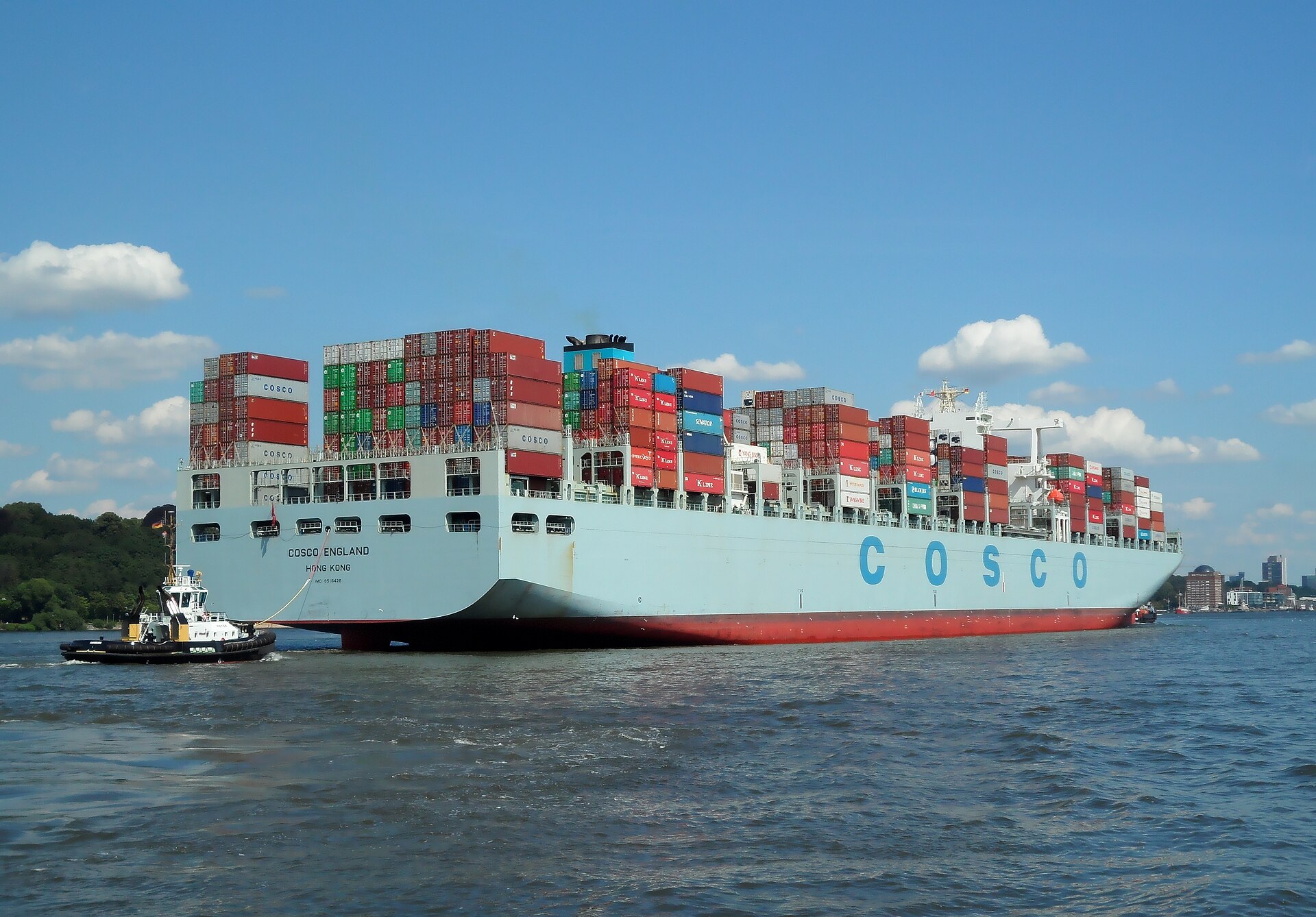
Approximately one-fifth of the world’s oil supply normally passes through the Strait of Hormuz, which Iran has effectively closed to most commercial shipping through a combination of naval mines, fast-attack boat patrols, and threats to vessels. Brent crude surged above $114 per barrel during the worst disruption in mid-March before falling to approximately $98 after Trump extended his pause on strikes against Iranian energy infrastructure to April 6, according to CNBC.
The energy shock has rippled across Asia and Europe. Japan has temporarily lifted restrictions on coal-fired power plants to manage shortages. Vietnam waived its environmental tax to reduce gasoline prices by more than 25 percent. The Philippines declared a national energy emergency, according to NPR. Finland’s President Alexander Stubb warned that the resulting recession “could exceed pandemic economic damage,” according to the same report.
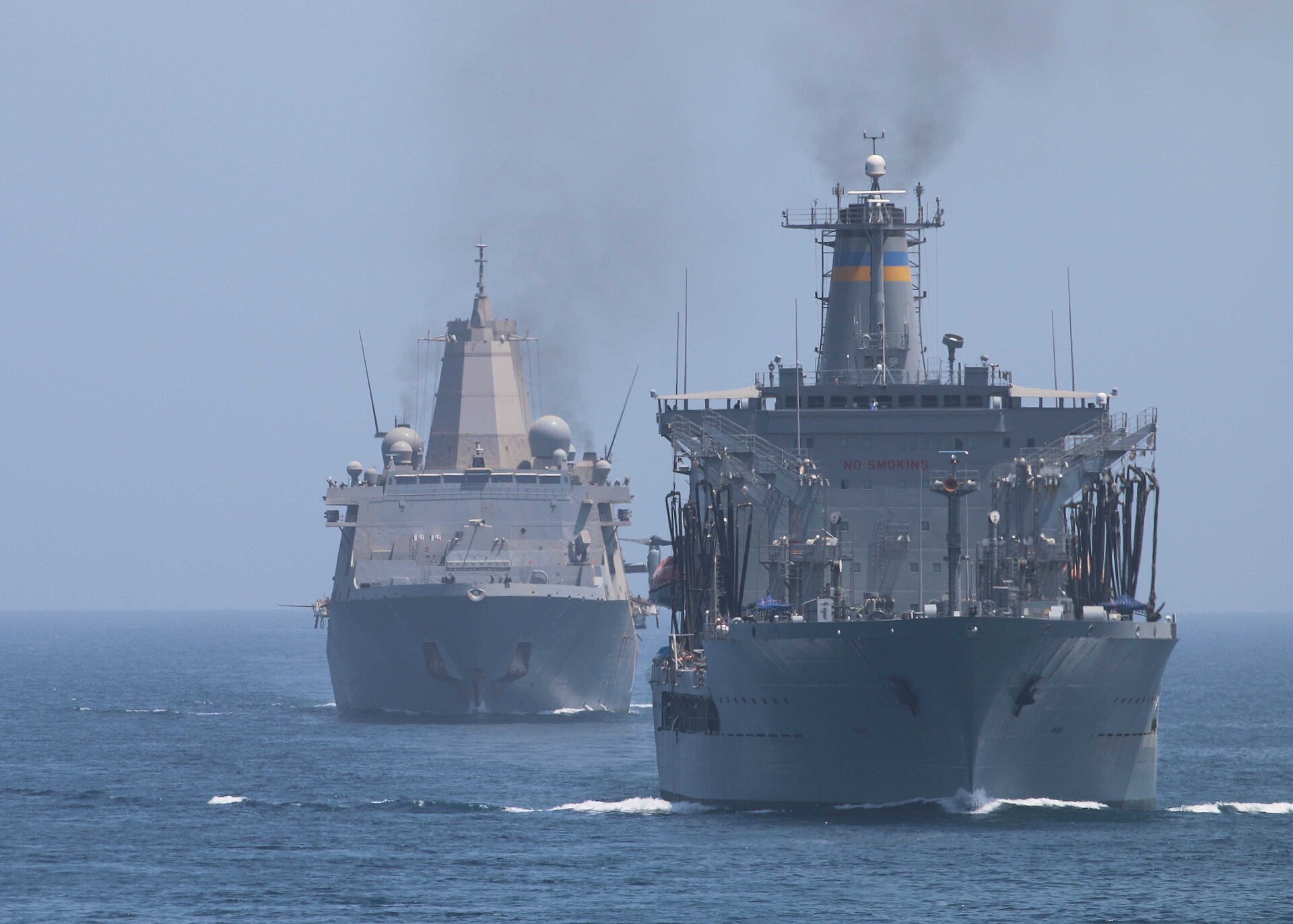
For Saudi Arabia, the economic stakes are equally severe. The Kingdom has been rerouting oil exports through its Red Sea Yanbu terminal to bypass the Hormuz blockade, but the alternative route adds cost and time. The Public Investment Fund has redirected capital from megaproject investments toward wartime priorities, and international contractors have slowed work across multiple Vision 2030 sites, according to Bloomberg.
Iran Dismisses G7 Statement and Denies US Talks
Tehran responded to the G7 statement and the broader diplomatic activity with defiance. Iranian Foreign Minister Abbas Araghchi told state media that officials were “reviewing the American proposal to end the war” but insisted that Tehran had no intention of direct talks with the United States, according to the Associated Press. An exchange of messages between the two countries through mediators “does not mean negotiations with the US,” Araghchi said.
Iran’s parliament speaker, Mohammad Bagher Ghalibaf, posted on X that intelligence suggested “Iran’s enemies” were planning to occupy “one of the Iranian islands” with support from an unnamed country in the region, a reference that analysts interpreted as directed at either Saudi Arabia or the UAE, according to the AP.
The Islamic Republic has maintained its position that the US-Israeli strikes constitute unprovoked aggression and that its retaliatory attacks on Gulf states — which it frames as targeting nations hosting American military assets — are legitimate acts of self-defense. Iran’s Revolutionary Guard Corps has continued launching drone and missile salvos at US bases in the UAE, Bahrain, and Kuwait, as well as at Saudi Arabian cities and energy infrastructure, according to Al Jazeera.
On March 27 alone, Saudi Arabia’s Defense Ministry announced the interception and destruction of two drones targeting the Riyadh region, the second aerial assault on the capital within a single hour. An additional 17 drones were intercepted over the Kingdom’s Eastern Province, while four unmanned aerial vehicles fell into the Arabian Gulf or landed in uninhabited areas, according to the Saudi Press Agency.
Pakistan has reportedly been acting as an intermediary between Washington and Tehran, with the US special envoy Steve Witkoff telling a cabinet meeting that the administration had presented Iran with a 15-point peace proposal, according to CBS News. Trump extended his deadline for attacks on Iranian energy infrastructure to April 6, saying talks were “going very well” — a characterization Tehran has explicitly rejected.
From Airstrikes to Abbey — How the Iran War Reached the G7
The conflict that dominated the G7 agenda began on February 28, 2026, when the United States and Israel launched coordinated airstrikes against Iranian nuclear, missile, and military targets. The strikes followed months of escalating tensions over Iran’s nuclear program and its support for regional proxy groups, according to extensive reporting on the conflict.
Iran retaliated within hours, launching ballistic missiles and drones at US military installations across the Gulf and at cities in Saudi Arabia, the UAE, Kuwait, Bahrain, and Qatar. The Revolutionary Guard Corps simultaneously moved to close the Strait of Hormuz, deploying naval mines and fast-attack boats to block commercial shipping through the 33-kilometre-wide passage.
The conflict rapidly expanded beyond the US-Israeli-Iranian triangle. Saudi Arabia, which hosts US forces at King Fahd Air Base, absorbed sustained bombardment from Iranian missiles and drones but initially limited its response to air defense operations. Crown Prince Mohammed bin Salman has weighed potential participation in offensive operations but no final decision has been publicly announced.
The war’s 28th day saw no sign of abating. Israel’s defense forces continued strikes on Iranian ballistic missile production facilities and air defense systems. The US maintained its campaign against military and infrastructure targets while Trump negotiated a series of deadlines and extensions around strikes on Iran’s energy sector. The humanitarian toll in Iran has mounted sharply, with the OECD warning that the conflict has already wiped out a full year of projected global economic growth.
The G7 meeting in France marked the highest-level multilateral diplomatic gathering since the war began. Whether its carefully worded statement translates into meaningful pressure for a ceasefire remains uncertain. The gap between Rubio’s insistence that allies “step up” and Europe’s determination to avoid another Middle Eastern military entanglement shows no sign of narrowing.
Frequently Asked Questions
What was the main outcome of the G7 foreign ministers meeting on the Iran war?
The G7 issued a joint statement on March 27 demanding an immediate cessation of attacks on civilians and civilian infrastructure, calling for restoration of freedom of navigation in the Strait of Hormuz, and pledging to coordinate humanitarian aid. The statement did not endorse the US-Israeli military campaign, reflecting deep divisions among allies over the conflict’s legitimacy and conduct.
Why did Rubio face criticism from G7 allies?
European G7 members criticized the United States for launching the Iran campaign without consulting allies, for expecting military contributions to a war they did not support, and for President Trump’s public insults toward NATO. France’s defense chief said allies “were not notified” before strikes began. All six non-US G7 members have declined to participate in offensive operations against Iran.
What role did Saudi Arabia play at the G7 summit?
Saudi Foreign Minister Prince Faisal bin Farhan Al Saud attended as an invited non-G7 participant and held bilateral meetings with the French, Indian, and other foreign ministers. His presence reflected Saudi Arabia’s central role in the conflict and Riyadh’s campaign to secure concrete Western commitments to Gulf defense against ongoing Iranian attacks.
How has the Iran war affected global energy markets?
Iran’s effective closure of the Strait of Hormuz has disrupted approximately one-fifth of global oil supply. Brent crude peaked above $114 per barrel before falling to around $98 after Trump extended a deadline on energy infrastructure strikes. Japan, the Philippines, Vietnam, and Finland have all implemented emergency measures, and the OECD raised its global inflation forecast to 4 percent.
Is Iran negotiating with the United States to end the war?
The situation is ambiguous. Trump says talks are “going very well” and extended his energy strike deadline to April 6. US envoy Steve Witkoff presented a 15-point peace proposal. However, Iran’s foreign minister insists Tehran is not in direct negotiations, saying an exchange of messages through mediators “does not mean negotiations with the US.” Pakistan is reportedly serving as an intermediary.