RIYADH — The Gulf Cooperation Council has spent more than $130 billion annually on defense across its six member states, yet four weeks into the most serious military crisis in the region since 1991, it still has no joint command, no shared air defense picture, and no common rules of engagement. The GCC’s collective defense architecture does not exist in any operationally meaningful sense — and the current war against Iran has exposed this failure as potentially fatal.
On February 28, 2026, Iranian ballistic missiles and drones struck all six GCC states within 24 hours for the first time in history. The response was not collective. Saudi Arabia opened King Fahd Air Base to American forces unilaterally. The UAE conducted independent interceptions. Kuwait activated its bilateral defense agreement with Washington. Qatar shut down LNG exports and declared force majeure. Bahrain absorbed strikes on its desalination infrastructure. Oman, whose Duqm port complex was hit by Iranian drones, continued pursuing mediation through its own back channel to Tehran.
Six armies. Six air forces. Six separate negotiations with Washington. Zero integration. What follows examines why 43 years of defense cooperation produced an alliance that cannot function as one, why the structural barriers to a genuine joint shield are deeper than equipment or budgets, and why the GCC’s disunity may not be a failure at all — but a rational choice by its smaller members.
Table of Contents
- February 28 Proved Six Separate Shields Are Not One Shield
- What Is the Peninsula Shield Force and Why Has It Never Fought?
- Why Can’t $130 Billion in GCC Weapons Talk to Each Other?
- Why Has the GCC Never Achieved Military Integration?
- The Oman Problem — Neutrality as Sabotage
- The Qatar Blockade Scar That Still Bleeds
- Why Smaller Gulf States Prefer Washington Over Riyadh
- How Does the GCC Compare to NATO on Defense Integration?
- Can the GCC Still Build a Joint Defense Shield?
- Frequently Asked Questions
February 28 Proved Six Separate Shields Are Not One Shield
The scale of Iran’s opening salvo against the GCC states on February 28, 2026, was unprecedented. According to Breaking Defense, the UAE alone intercepted 165 ballistic missiles, 2 cruise missiles, and 541 drones — but 35 drones still penetrated its defenses. Kuwait shot down 97 ballistic missiles and 283 drones. Bahrain downed 45 missiles and 9 drones. Qatar intercepted 18 ballistic missiles along with cruise missiles and drones. Saudi Arabia confirmed incoming fire but released no specific figures.
What these numbers reveal is not just the volume of Iran’s attack but the complete absence of coordination in the response. Each GCC state fought its own war in its own airspace with its own systems, under its own command authority, communicating with its own American liaison officers. There was no shared early warning. No joint air defense picture. No common operating procedures.
Sinem Cengiz, a researcher at Qatar University, described February 28 as the GCC’s “long-standing nightmare scenario” — the moment when “all the GCC states were targeted by the same actor within 24 hours.” Ali Bakir, also at Qatar University, was blunter: “Despite decades of heavy defense spending, Gulf states remain highly exposed to missile and drone warfare. Collective coordination among Gulf states remains limited at best.”
The economic damage compounded the military humiliation. QatarEnergy ceased LNG production on March 2 and declared force majeure on March 4, removing roughly 20 percent of the global LNG market from circulation, according to the Carnegie Endowment for International Peace. Bahrain’s desalination plant was hit. The UAE halted stock market trading for two days. Tanker traffic in the Strait of Hormuz fell sharply. As Kristian Coates Ulrichsen of the Arab Center Washington DC noted, the war affected all six GCC states simultaneously “albeit to varying degrees” — yet the response remained stubbornly bilateral.
The GCC Ministerial Council issued a statement declaring that “any attack against any member state constitutes a direct attack against all GCC countries, in accordance with the GCC Charter and the Joint Defence Agreement.” The language echoed NATO’s Article 5. The behavior did not. Each state continued to negotiate its own defense posture with Washington, and no joint military command was established.
What Is the Peninsula Shield Force and Why Has It Never Fought?
The Peninsula Shield Force is the GCC’s nominal joint military formation, established in 1982 during the Iran-Iraq War and headquartered at King Khalid Military City, 60 kilometres from Hafar al-Batin in northeastern Saudi Arabia. It is the institutional embodiment of Gulf collective defense — and it has never fought as an integrated unit against an external enemy.
The force’s peacetime strength is approximately 7,000 to 10,000 troops, according to the Washington Institute for Near East Policy, though the GCC has claimed it could expand to 40,000 or even 100,000 if all six member states fully participate. It is a land-heavy formation — primarily mechanized infantry and artillery — with national naval and air components theoretically available as enablers for joint operations. It has no permanent joint air defense command, no integrated radar picture, and no unified rules of engagement.
The Peninsula Shield’s only significant deployment came in March 2011, when approximately 1,500 troops entered Bahrain during the Arab Spring protests. That operation was not a joint GCC action. It was a Saudi-UAE intervention conducted under the Peninsula Shield banner for political legitimacy. Qatar and Oman did not participate. Kuwait’s contribution was token. The force operated under Saudi command, not GCC command.
GCC Secretary-General Jasem Albudaiwi declared in February 2025 that the Peninsula Shield Forces “have become a symbol of our Gulf destiny and a manifestation of our collective will to protect the security and stability of our nations.” By February 2026, when Iranian missiles began striking GCC territory, the Peninsula Shield Force played no visible role in the collective response. No joint deployment was announced. No unified command was activated.
| Attribute | Official Claim | Operational Reality |
|---|---|---|
| Troop Strength | 40,000 (expandable to 100,000) | 7,000-10,000 peacetime |
| Command Structure | Joint GCC command | Saudi-led when deployed |
| Air Defense | Unified air/naval centres planned | No integrated air defense picture |
| Combat Deployments | Bahrain 2011 | Saudi-UAE operation, not joint GCC |
| Response to Feb 28, 2026 | Joint Defence Agreement invoked | No joint deployment or command activated |
Why Can’t $130 Billion in GCC Weapons Talk to Each Other?
Because six Gulf states purchased weapons from at least nine different supplier nations — American, French, Russian, Chinese, Israeli, South Korean, Swedish, Italian, and German — creating an arsenal with radically different communications protocols, radar frequencies, and weapons integration standards that cannot share targeting data in real time.
Saudi Arabia alone allocated $74.76 billion for defense in 2026 according to IISS Military Balance data, followed by the UAE at $20.7 billion, Qatar at $9 billion, Kuwait at $7.8 billion, Oman at $6.5 billion, and Bahrain at $1.4 billion. The money bought quantity. It did not buy interoperability.
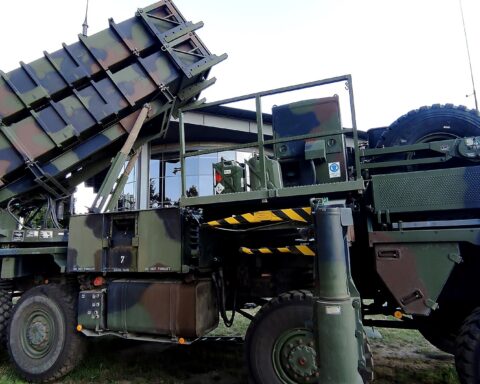
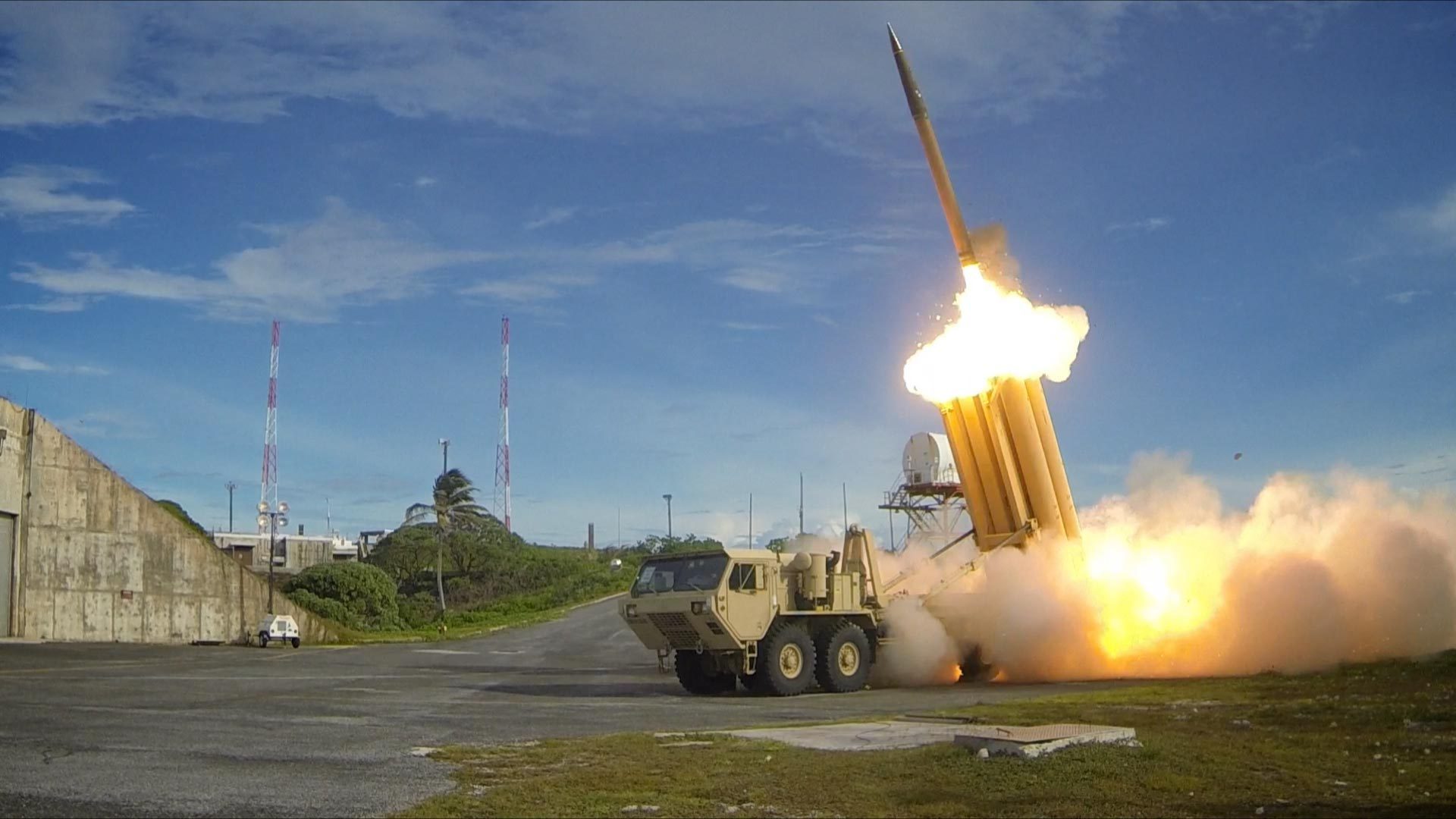
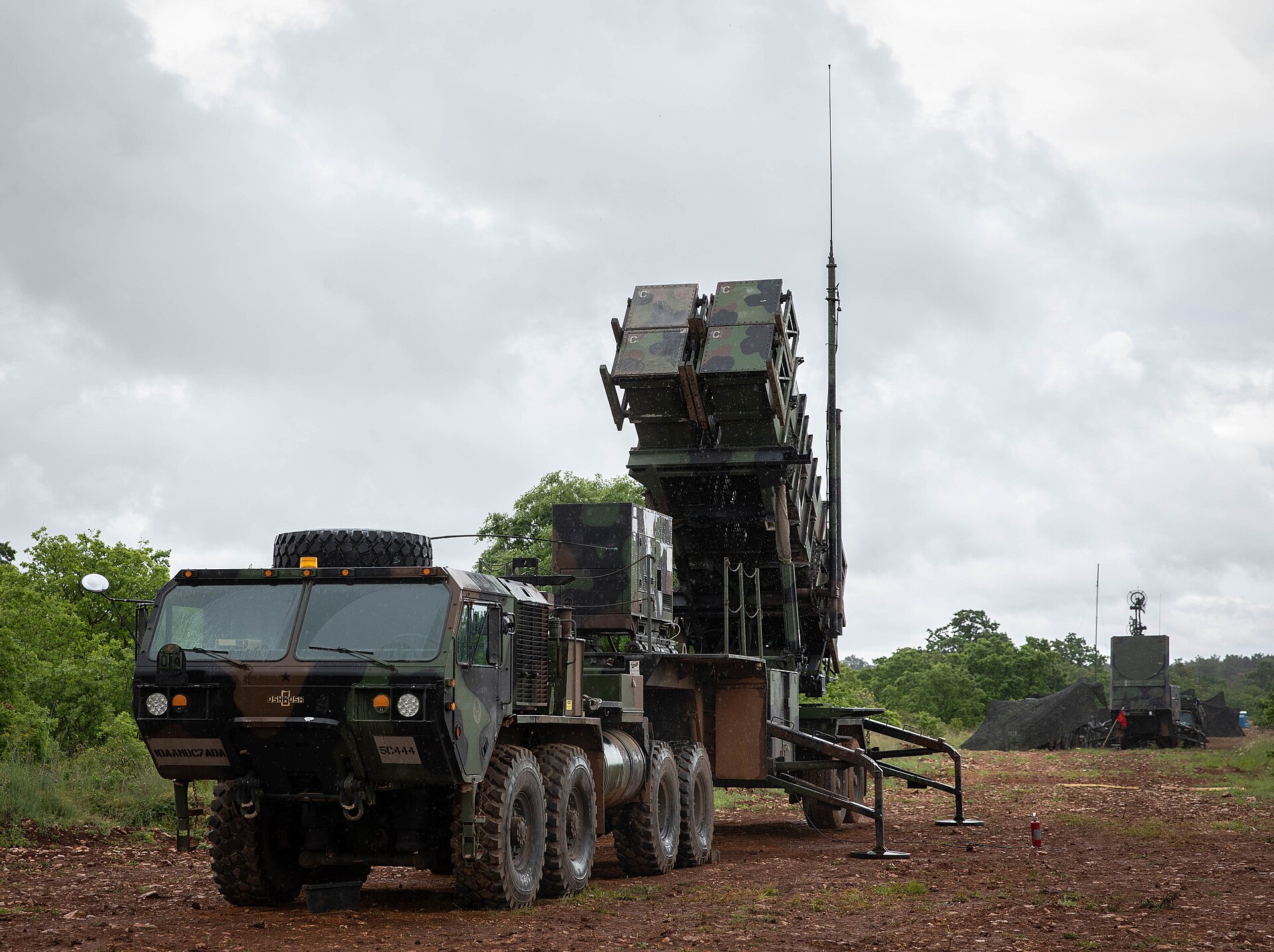
The air defense architecture illustrates the problem with particular clarity. Saudi Arabia operates US-made THAAD and Patriot PAC-3 batteries alongside French Crotale and Shahine systems and, uniquely among GCC states, the Chinese-made Silent Hunter laser system for drone defense, according to Al Jazeera’s September 2025 survey of Gulf air defense capabilities. The UAE fields US THAAD and Patriot systems alongside an Israeli-made Barak variant and South Korean Cheongung II medium-range systems, supplemented by Russian Pantsir-S1 point defense. Qatar operates US Patriot and Norwegian-American NASAMS III alongside Russian Igla, Chinese FN-6, and German Gepard systems.
Kuwait relies on US Patriot PAC-3 with Italian Aspide launchers. Bahrain recently acquired Patriot PAC-3 MSE, supplementing French Crotale, Russian Igla, and Swedish RBS-70 systems. Oman fields the most limited network — Norwegian-American NASAMS for short-range defense alongside French Mistral and Russian Strela-2 missiles.
The consequence is not merely aesthetic. These systems cannot talk to each other. A Saudi Patriot battery cannot share targeting data with a Qatari NASAMS launcher in real time. The UAE’s Pantsir-S1 operates on Russian communications protocols incompatible with the American Link 16 data network that connects Saudi and Emirati THAAD systems to US Central Command. As Nafja Alkuwari, an assistant professor at Qatar University’s Department of International Affairs, wrote for the Middle East Council on Global Affairs: even where GCC states operate similar platforms, “differences in software, command structures, and engagement protocols continue to limit full interoperability.”
| Country | Annual Defense Budget | Long-Range Systems | Medium/Short-Range Systems | Supplier Nations |
|---|---|---|---|---|
| Saudi Arabia | $74.8B | THAAD, Patriot PAC-3 | Crotale, Shahine, Silent Hunter (laser) | US, France, China |
| UAE | $20.7B | THAAD, Patriot | Barak (Israeli variant), Cheongung II, Pantsir-S1 | US, Israel, South Korea, Russia, France |
| Qatar | $9.0B | Patriot, NASAMS III | Igla, FN-6, Gepard, Skynex | US, Norway, Russia, China, Germany |
| Kuwait | $7.8B | Patriot PAC-3 | Aspide/Skyguard, Oerlikon GDF | US, Italy, Germany |
| Bahrain | $1.4B | Patriot PAC-3 MSE | I-Hawk, Crotale, Igla, RBS-70 | US, France, Russia, Sweden |
| Oman | $6.5B | None | NASAMS, Mistral, Strela-2, Javelin | Norway/US, France, Russia |
The GCC launched a program called the Belt of Cooperation (Hizam Al-Taawun) to build joint aircraft tracking and coordinate air defense systems across member states. The December 2025 GCC summit in Bahrain focused on finalizing a joint air and missile defense shield with integrated early-warning and command systems. Neither initiative produced an operational capability before the war began.
Why Has the GCC Never Achieved Military Integration?
The GCC has failed to achieve military integration because its members have never agreed on who the enemy is, who should command a joint force, or whether collective defense is even desirable. These are not technical problems. They are structural and political, and they have persisted across four decades of declared intent.
The first barrier is threat perception divergence. Saudi Arabia has consistently treated Iran as an existential threat. The UAE, while hostile to Tehran, prioritizes maritime and commercial security and has at times maintained pragmatic economic ties across the Gulf. Qatar hosted the Taliban’s political office, maintains an open channel to Iran, and expanded its relationship with Tehran during the 2017-2021 blockade. Oman has maintained diplomatic ties with Iran since 1979 and served as a mediator in US-Iran nuclear negotiations. Kuwait fears both Iran and Iraq. Bahrain, with its Shia-majority population, views Iranian influence as an internal security threat as much as an external military one.
The second barrier is command authority. No GCC state is willing to subordinate its armed forces to another state’s command. Saudi Arabia, as the largest military power, expects to lead any joint formation — but Qatar, the UAE, and Oman resist Saudi dominance. Crown Prince Abdullah, then Saudi Arabia’s de facto leader, acknowledged this problem in 2000 when he stated that “it was absurd to talk about a unified military front in the absence of a unified and cohesive political front,” according to the Washington Institute for Near East Policy.
The third barrier is intelligence sharing. Deep mutual distrust pervades the GCC’s intelligence community. Saudi-Qatari intelligence relations remain fractured after the 2017 blockade. The UAE runs independent intelligence operations that sometimes conflict with Saudi objectives. Oman’s intelligence services maintain their own relationship with Iranian counterparts. No GCC state trusts the others enough to share real-time targeting data, early warning information, or threat assessments — the basic requirements of integrated air defense.
Previous attempts at deeper integration have all failed. The Middle East Strategic Alliance (MESA), proposed during Trump’s first term, collapsed because of the Qatar blockade, disagreements over scope, and Egypt’s withdrawal in 2019. Post-1990 efforts to build on the coalition that liberated Kuwait produced no lasting institutional framework. The 2003 Iraq invasion found GCC states unable to agree on a common response. The 2019 Abqaiq-Khurais attack on Saudi Aramco facilities — the single most destructive drone and missile strike on energy infrastructure in history — produced no collective GCC military response.
The Oman Problem — Neutrality as Sabotage
Oman is the GCC’s permanent dissenter on collective defense, and its neutrality undermines any unified military posture by guaranteeing that one member state will always maintain an open channel to the adversary. Muscat possesses the bloc’s most limited air defense network — no long-range systems at all — yet it resists both the purchase of interoperable equipment and participation in joint defense planning.
Oman’s diplomatic identity is built on mediation, not confrontation. The Muscat channel to Tehran has facilitated back-channel negotiations between Washington and Iran for decades, including the preliminary talks that led to the 2015 Joint Comprehensive Plan of Action. When the current war began on February 28, Oman’s foreign minister made a last-minute appeal for diplomacy on American television. Oman was then struck at Duqm — attacked by the very government it was trying to protect through diplomacy.
The Foundation for Defense of Democracies described Oman’s position as “flipflopping” that would leave it isolated in the Gulf. The characterization was predictable from a hawkish Washington think tank. The reality is more complex. As one analysis from SpecialEurasia noted, “The Muscat channel exists precisely because Oman is trusted by both Iran and the United States.” But that same neutrality is corrosive to collective defense. A military alliance in which one member maintains diplomatic and intelligence ties with the enemy is not an alliance in any conventional sense.
Oman has boycotted GCC meetings on collective defense and resisted efforts to establish integrated radar coverage across its territory — coverage that would fill a critical gap in the southeastern approach to the Gulf. Its absence from the air defense network creates a blind spot that Iran has already demonstrated it can exploit. When Egypt and Pakistan joined Oman in March 2026 to mediate an end to the war, according to the Washington Times, Muscat’s mediator role was reinforced — but so was its refusal to participate in the military response that might give mediation leverage.
The Qatar Blockade Scar That Still Bleeds
Between June 2017 and January 2021, Saudi Arabia, the UAE, Bahrain, and Egypt severed diplomatic relations with Qatar, closed its only land border, banned Qatari aircraft from their airspace, and expelled Qatari citizens — splitting families during Ramadan. The blockade was not an external attack. It was an act of economic warfare by alliance partners against a fellow GCC member.
The damage to collective defense trust was catastrophic and remains unrepaired. The blockade forced Qatar to strengthen its ties with Iran — the exact opposite of the blockading countries’ stated objective. It brought Turkish military forces into the Gulf for the first time, as Qatar invited Ankara to establish a permanent base on its territory for protection. It shattered the assumption, fundamental to any military alliance, that member states would not turn their weapons against each other.
The 2021 Al-Ula Declaration formally ended the blockade, but Nafja Alkuwari noted for MECOUNCIL that the crisis “crystallized the challenges of coming together even if tensions have greatly eased.” Intelligence sharing between Doha and Riyadh remains limited. Qatar’s military procurement has increasingly diverged from Saudi preferences, with Doha purchasing French Rafale fighters, German Leopard tanks, and Italian warships — a deliberate diversification away from the US-centric supply chain that Saudi Arabia and the UAE favor.
When Iranian missiles struck Qatar’s Ras Laffan gas complex on February 28, 2026, shutting down the largest LNG facility on earth and triggering force majeure declarations that disrupted global fertilizer and food supply chains, Qatar’s air defense operated independently. No Saudi or Emirati air defense assets were redirected to protect Qatari infrastructure. No joint interception was attempted. The alliance that had besieged Qatar five years earlier offered solidarity in a communique — and nothing on the battlefield.
Why Smaller Gulf States Prefer Washington Over Riyadh
The GCC’s failure to integrate is not merely a failure of will or competence. It reflects a rational calculation by the smaller member states — Qatar, Kuwait, Bahrain, and Oman — that bilateral security guarantees from the United States offer better protection than collective dependence on Saudi Arabia. A truly integrated GCC military would require subordinating command authority to Riyadh. The smaller states consider that cure worse than the disease.
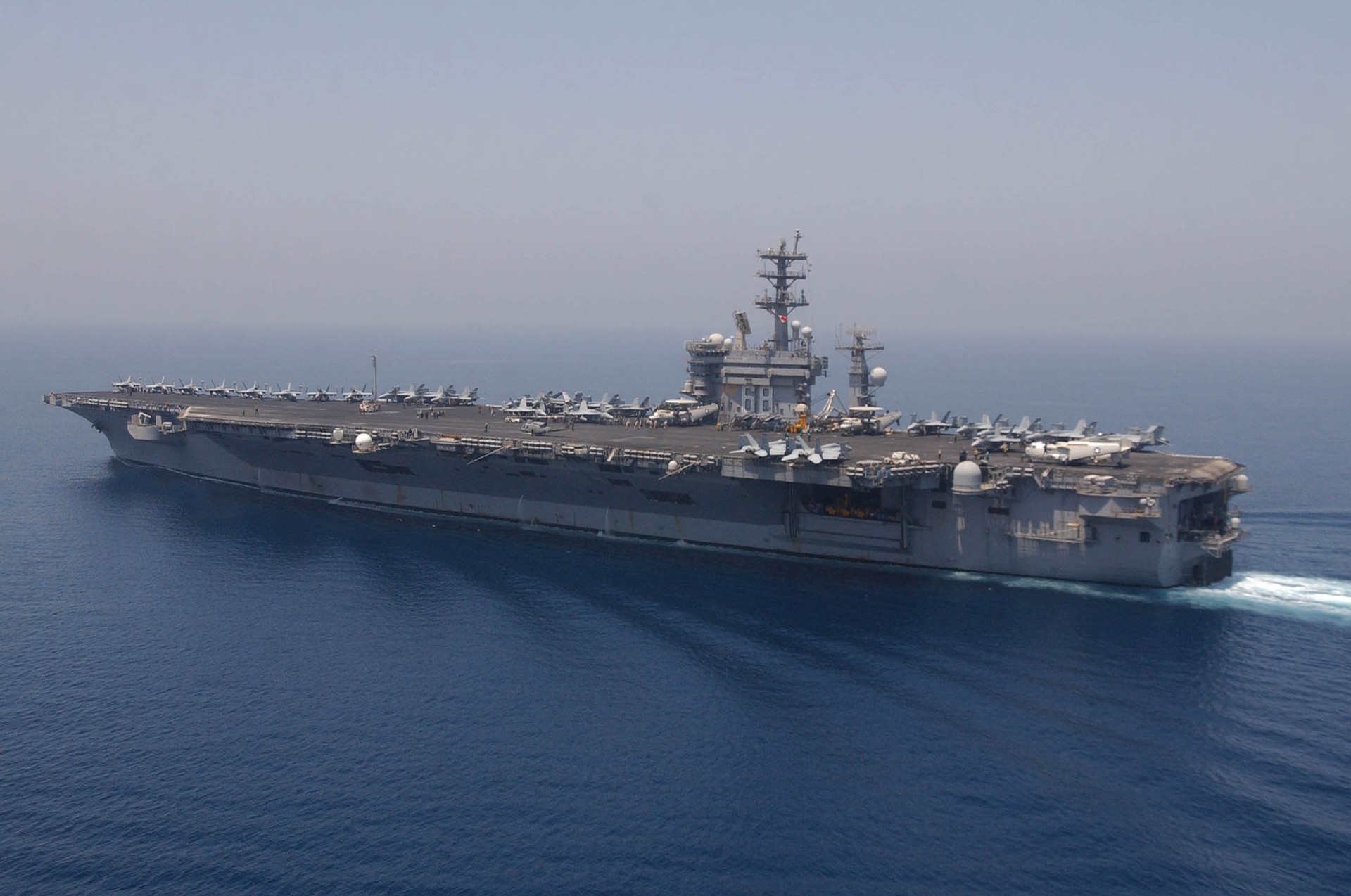
Each GCC state hosts American military forces under separate bilateral agreements. Kuwait hosts Camp Arifjan and Camp Buehring. Qatar hosts Al Udeid Air Base, the largest US military facility in the Middle East. Bahrain is home to the US Fifth Fleet. The UAE hosts forces at Al Dhafra Air Base. Saudi Arabia reopened Prince Sultan Air Base to American forces in the current crisis. Oman provides port access at Duqm. These bilateral arrangements give each state a direct relationship with the American security guarantor — a relationship that would be diluted, not strengthened, by routing it through a GCC joint command under Saudi leadership.
Dr. Dania Thafer, Executive Director of the Gulf International Forum, identified this dynamic as the GCC’s core strategic dilemma: the states are “bound to Washington” while simultaneously “exposed to Iran’s cost imposition strategy.” But being bound to Washington individually is preferable, from the smaller states’ perspective, to being bound to both Washington and Riyadh collectively. The bilateral model gives Qatar, for instance, leverage that disappears the moment Doha accepts a GCC command structure dominated by its larger neighbor.
Andrew Leber, a nonresident scholar at Carnegie’s Middle East Program, observed that GCC states have tried “spending their way to influence at the White House” — purchasing arms, investing in American real estate, and funding think tanks — rather than building collective capacity. The strategy has obvious limitations, as the current war demonstrates. But Leber also noted that “only collective action among the GCC states is likely to get them out of this dilemma,” quoting Kuwaiti political scientist Bader Al Saif from fall 2025.
The GCC has functioned most effectively in times of external pressure.
Kristian Coates Ulrichsen, Arab Center Washington DC
The paradox is that the external pressure of February 28, 2026 — the most intense the GCC has ever experienced — still has not produced collective action. It has produced collective rhetoric and individual responses. Former Qatari Prime Minister Hamad bin Jassim Al Thani called on March 13, 2026, for a “NATO-style military and security alliance” among Gulf states. The call went unheeded. NATO took 75 years to build integrated command structures, common technical standards (known as STANAGs), and a genuine Article 5 commitment. The GCC has had 43 years and produced none of these.
How Does the GCC Compare to NATO on Defense Integration?
The comparison between the GCC and NATO is instructive precisely because it reveals the depth of the Gulf’s institutional deficit. NATO achieved its current level of integration through sustained political commitment, standardized equipment protocols, integrated command structures, and decades of joint exercises that created genuine interoperability. The GCC has attempted none of these at scale.
| Integration Element | NATO | GCC |
|---|---|---|
| Joint Command | Supreme Allied Commander Europe (SACEUR) since 1951 | No permanent joint operational command |
| Equipment Standards | STANAG interoperability protocols (1,300+ standards) | No common equipment standards |
| Air Defense | Integrated Air and Missile Defence System (NATINAMDS) | Belt of Cooperation (Hizam Al-Taawun) — not operational |
| Intelligence Sharing | NATO Intelligence Fusion Centre, classified networks | No institutional intelligence sharing mechanism |
| Collective Defense Clause | Article 5 — invoked after 9/11, binding commitment | Joint Defence Agreement — invoked rhetorically, never operationalized |
| Joint Exercises | Thousands annually across all domains | Integration 1 (December 2023, Kuwait) — intermittent |
| Years of Existence | 77 years (1949-2026) | 43 years (1981-2026, PSF since 1982) |
NATO’s Article 5 was invoked once, after September 11, 2001, and produced a genuine collective military response in Afghanistan. The GCC’s Joint Defence Agreement was invoked rhetorically on March 1, 2026, and produced a joint statement. The disparity is not about age or resources. GCC states collectively spend more on defense than any NATO member except the United States. The disparity is about political will.
NATO succeeded because its members faced a shared existential threat — the Soviet Union — and accepted, however grudgingly, the leadership of the United States within the alliance structure. The GCC’s members do not share a common threat perception, do not accept Saudi leadership, and rely on the United States as an external guarantor rather than an internal alliance leader. The result is that GCC exercise Integration 1, held at Kuwait’s Udari range in December 2023, remains the exception rather than the norm — an episodic demonstration of cooperation rather than a building block of genuine interoperability.
Can the GCC Still Build a Joint Defense Shield?
The honest answer is almost certainly not — at least not in any timeframe relevant to the current war, and probably not in any configuration that would satisfy all six member states. The structural barriers identified above are not engineering problems awaiting a technical solution. They are political choices that each state has made and remade over four decades.
Recent developments suggest movement toward coordination, if not integration. Saudi and Emirati air defense networks are reportedly sharing threat data in real time during the current crisis. Kuwaiti and Bahraini forces have coordinated patrol schedules. US-GCC meetings in Riyadh have focused on building a common air picture and expanding joint exercises for missile and drone defense. Alkuwari described these as steps toward a recognition that “the distinction between national and regional security is no longer sustainable.”
But coordination under fire is not integration by design. The ad hoc data sharing between Riyadh and Abu Dhabi works because both capitals operate US-made THAAD systems connected to American battle management networks. It does not extend to Qatar’s NASAMS, Oman’s minimal network, or Bahrain’s recently acquired Patriot batteries. And it depends entirely on American technical infrastructure — the very dependency that a genuine GCC shield would need to reduce.
The concept of a “GCC-Israel kill web,” floated by the Second Line of Defense publication, would integrate Gulf air defense with Israeli systems that have proven effective against Iranian ballistic missiles. The idea is technically feasible. Politically, it requires GCC states to formalize military ties with Israel that several members — Qatar, Oman, Kuwait — refuse to acknowledge. It also makes the alliance dependent on yet another external partner rather than building indigenous capacity.
Iran, for its part, benefits from GCC disunity and has no incentive to wait while the Gulf states resolve their differences. Tehran’s strategy of cost imposition — targeting critical infrastructure, civilian areas, and airports across all six states — is specifically designed to exploit the gap between collective rhetoric and individual response. As Dania Thafer observed, the GCC states are trapped in “a conflict they did not choose but can no longer avoid,” yet they continue to respond as six separate actors rather than one bloc.
A unified air defense system would mark a significant step toward a more autonomous regional security framework.
Nafja Alkuwari, Qatar University / Middle East Council on Global Affairs
The Stimson Center noted that GCC countries “gave repeated and public assurances to Iran and to the world that their territories would not be used to launch attacks against the Islamic Republic.” Those assurances are now void. Saudi Arabia has opened its bases to American strike aircraft. The UAE is conducting independent operations. The Gulf states that pledged neutrality have been attacked anyway. The question is whether this shared experience of betrayed neutrality and shared vulnerability can accomplish what four decades of summits, declarations, and arms purchases could not: forging a genuine collective will.
The evidence from the first four weeks of war suggests it cannot. The GCC states are moving toward deeper bilateral ties with Washington, not toward each other. Each state is negotiating its own war aims and its own postwar security architecture. International coalitions promise future protection while the current fight is left to bilateral arrangements. The GCC’s collective defense remains what it has always been: a statement of aspiration dressed in the language of commitment, awaiting a test that arrived on February 28 and found it absent.
Frequently Asked Questions
What is the GCC Joint Defence Agreement and has it ever been activated?
The GCC Joint Defence Agreement, signed in December 2000, stipulates that an attack on one member state is considered an attack on all — mirroring NATO’s Article 5. The agreement’s full text was never publicly released, contributing to ambiguity about its binding obligations. It was invoked rhetorically on March 1, 2026, after Iranian strikes hit all six member states, but no joint military command was activated and no collective military response was coordinated. Kuwait’s elected National Assembly has historically resisted ratification of defense agreements that it views as encroaching on national sovereignty, according to the Washington Institute for Near East Policy.
How much does the Peninsula Shield Force cost and who pays for it?
The Peninsula Shield Force’s specific budget is not publicly disclosed by the GCC Secretariat. Saudi Arabia is the largest financial contributor, followed by Kuwait. Oman and Bahrain have received approximately $1.8 billion from other member states to strengthen their military capabilities and secure their maritime borders, according to GCC reporting. The force’s operational costs are minimal because it represents a fraction of the nearly 600,000 active-duty military personnel that the six states maintain collectively across their national armed forces.
Could Turkey or Pakistan replace the United States as the GCC’s external security guarantor?
Turkey established a military base in Qatar during the 2017 blockade and Pakistan has historical defense ties with Saudi Arabia, including unconfirmed reports of a nuclear security umbrella understanding. Neither country can replace the United States as a security guarantor. Turkey lacks the power-projection capability, naval assets, and satellite intelligence infrastructure that underpin American defense commitments. Pakistan’s military is consumed by its own border security challenges and domestic instability. Both states could supplement US capabilities in niche roles — Turkey in drone warfare, Pakistan in ground force training — but neither possesses the integrated air and missile defense architecture that makes American protection qualitatively different from any alternative.
Has Iran ever commented on GCC defense integration efforts?
Iranian state media and officials have consistently framed GCC defense integration as an aggressive posture directed at Tehran. Iran’s Foreign Ministry has historically objected to any Gulf security arrangement that excludes Iran, proposing instead a regional security framework with Iranian participation — a proposal the GCC has rejected. During the current war, the IRGC’s wartime leadership has treated GCC disunity as a strategic advantage, targeting all six states simultaneously to prevent any single state from acting as a shield for the others. Tehran’s doctrine of cost imposition is premised on the correct assessment that the GCC cannot mount a unified response.
What role does the Ukraine-Saudi defense deal play in Gulf air defense?
Ukraine and Saudi Arabia signed a defense cooperation agreement amid the Gulf drone war, driven by Ukraine’s combat-tested expertise in counter-drone warfare. Ukrainian forces have developed low-cost, field-proven techniques for defeating Iranian-made drones — the same Shahed and Mohajer variants now striking Gulf infrastructure. The deal focuses on sharing Ukrainian operational experience with Saudi air defense crews, sensor fusion techniques, and electronic warfare countermeasures. It does not address GCC-wide integration and represents another bilateral arrangement layered atop the existing patchwork.