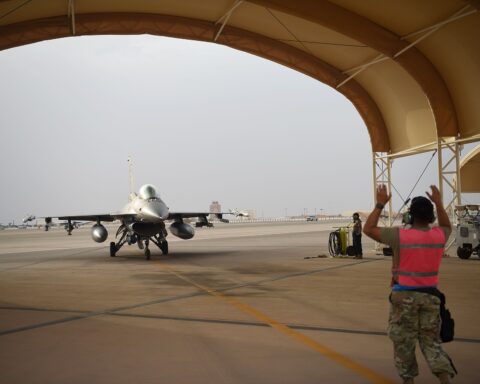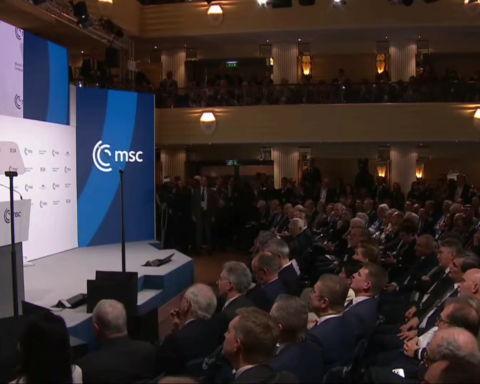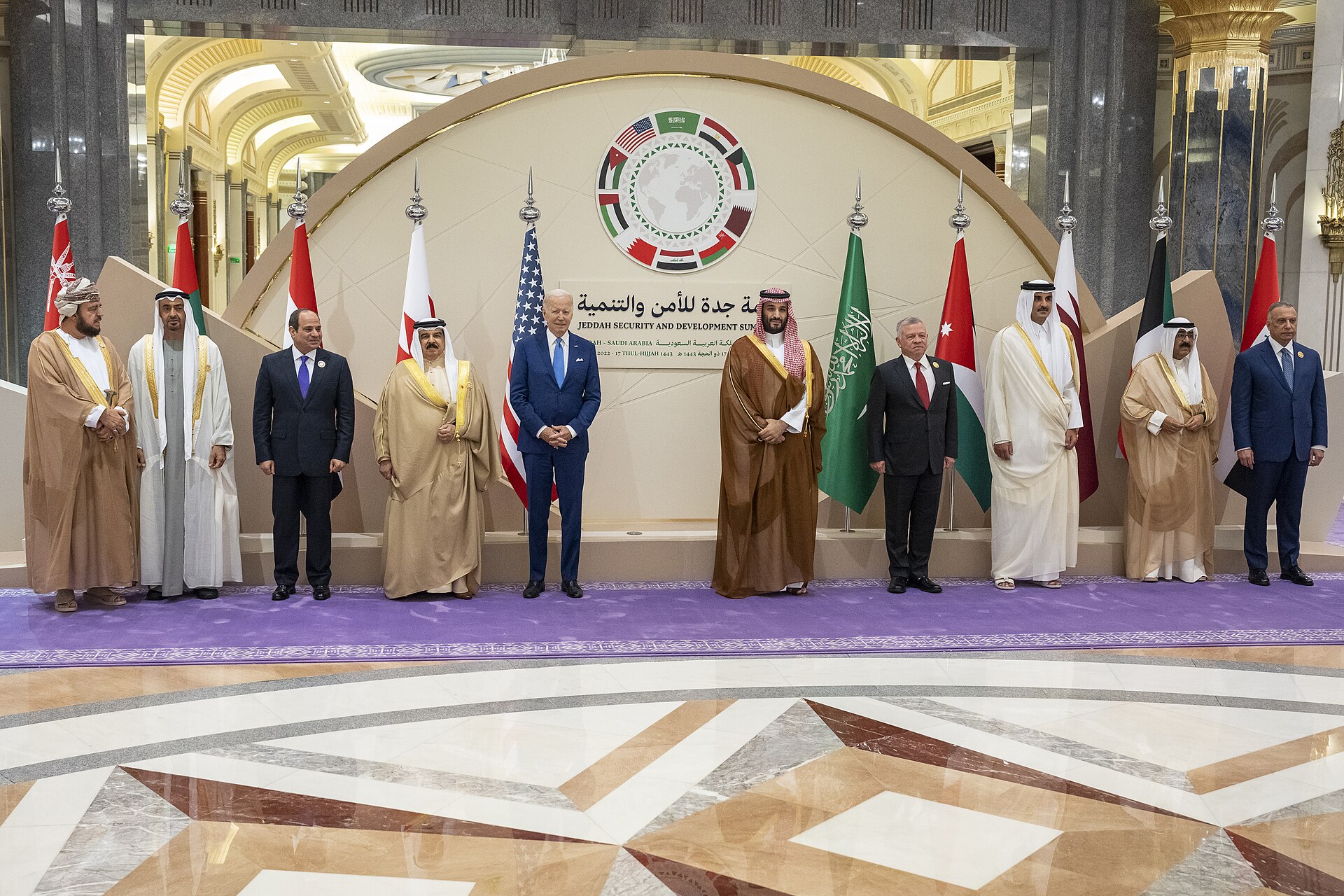

RIYADH — Iran’s simultaneous missile and drone attacks on all six Gulf Cooperation Council states in late February 2026 accomplished something that four decades of summits, treaties, and joint communiqués never could: a genuine military alliance in the Persian Gulf. For forty-five years, the GCC’s collective defense infrastructure existed almost entirely on paper — a web of agreements, command structures, and joint exercises that fell apart the moment political rivalries intervened. The resulting wartime alliance architecture stretching across fifteen countries reveals how shallow most of those commitments remain. Eleven days of Iranian fire changed the equation. Saudi and Emirati air defense networks now share threat data in real time. Kuwaiti and Bahraini patrol schedules are coordinated from a single operations room. Qatari surveillance assets feed directly into the Saudi military’s targeting chain. These ad hoc arrangements, born of absolute necessity during the most intense aerial bombardment the Arabian Peninsula has ever experienced, are hardening into permanent structures that could transform the region’s security architecture for a generation.
Table of Contents
- Why Did Iran Attack All Six GCC States Simultaneously?
- The Paper Alliance — A 45-Year History of Failed Gulf Defense Integration
- What Changed in the First 48 Hours of War?
- How Are Saudi and Emirati Air Defenses Sharing Data in Real Time?
- The Peninsula Shield Force Awakens
- Can a $126 Billion Defense Budget Fight as One Force?
- The Qatar Paradox — From Blockade Target to Defense Partner
- The Gulf Collective Defense Maturity Index
- What Makes This Different From Every Previous GCC Defense Push?
- NATO Took 52 Years to Invoke Article 5 — The GCC Needed 11 Days
- Three Structural Weaknesses That Could Still Break the Alliance
- What Does Gulf Security Look Like After the War Ends?
- Frequently Asked Questions
Why Did Iran Attack All Six GCC States Simultaneously?
Iran’s decision to strike all six GCC member states — Bahrain, Kuwait, Oman, Qatar, Saudi Arabia, and the United Arab Emirates — within twenty-four hours of the US-Israeli strikes on February 28, 2026, shattered four decades of Iranian strategic doctrine that carefully distinguished between Arab Gulf states based on their individual relationships with Tehran. The attacks marked the first time in history that a single adversary targeted every member of the Gulf Cooperation Council in a coordinated military operation.
Tehran’s calculus rested on a flawed premise. Iranian military planners, according to analysis from the Middle East Council on Global Affairs, believed that striking US military installations across the Gulf would coerce host nations into pressuring Washington for restraint. Instead, the attacks achieved the opposite. By hitting Qatari LNG facilities, Bahraini naval installations, Kuwaiti airfields, Omani ports, Saudi oil infrastructure, and Emirati cities simultaneously, Iran eliminated the political space for any GCC state to maintain neutrality.
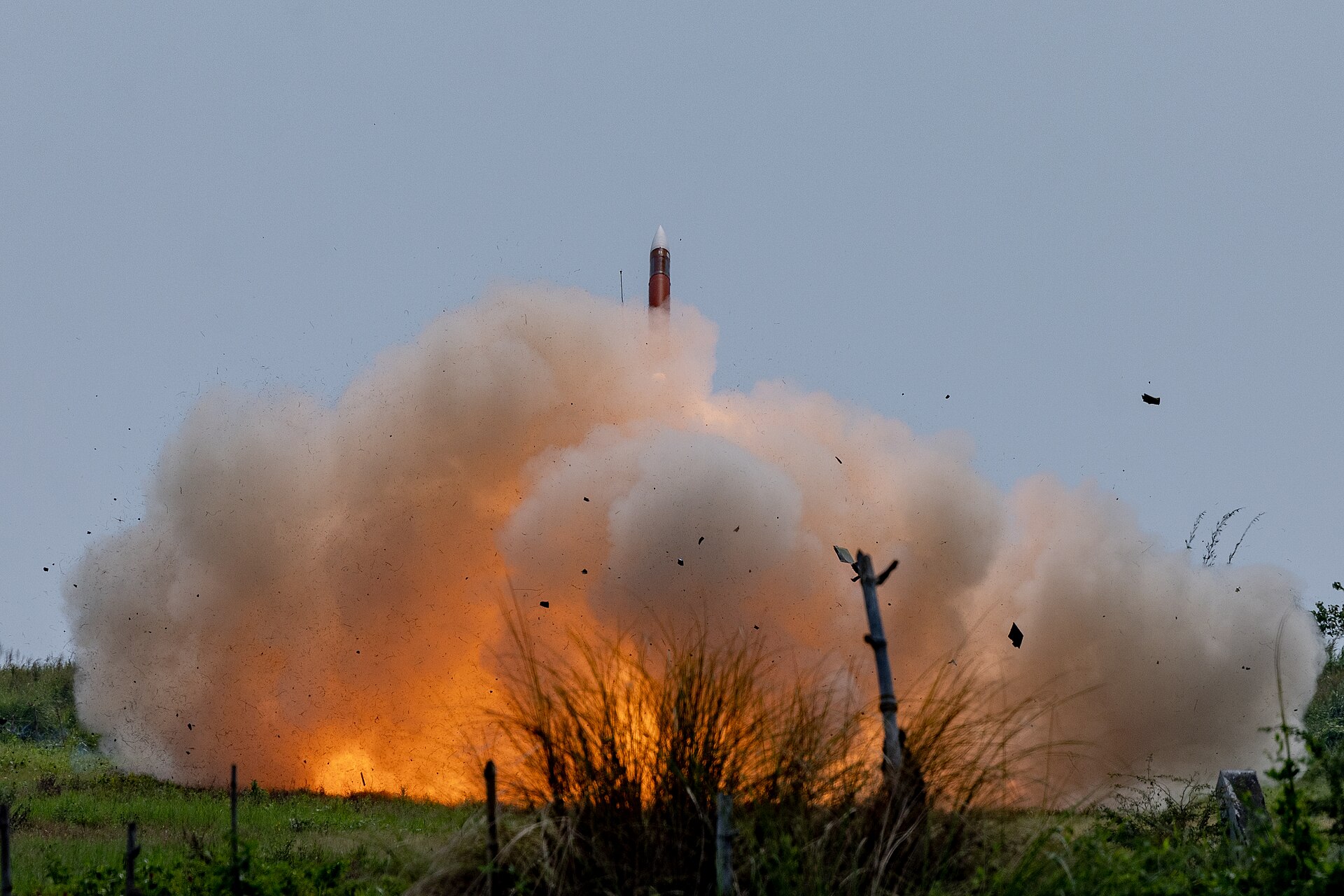
The scope was staggering. The UAE Ministry of Defense reported intercepting 165 ballistic missiles, 2 cruise missiles, and 541 drones in the first week alone. Saudi air defenses neutralized multiple waves targeting Ras Tanura, Prince Sultan Air Base, and the Shaybah oil field — including a swarm of nine drones heading toward one of the kingdom’s largest energy installations, which produces approximately one million barrels per day. Kuwait’s international airport suffered direct damage. Bahrain, home to the US Fifth Fleet, absorbed persistent strikes against its naval facilities.
Sinem Cengiz, a researcher at Qatar University’s Gulf Studies Center, described the situation to Breaking Defense in terms that captured the historic nature of the moment. The GCC states’ long-standing nightmare scenario — a simultaneous attack on all members by a single adversary — had become reality. The distinction between states that hosted US bases and those that maintained diplomatic backchannel relationships with Tehran collapsed in a single night of fire.
The strategic error was compounded by Iran’s targeting choices. Rather than limiting strikes to US military installations — which would have maintained a sliver of plausible distinction between attacking American assets and attacking Arab sovereignty — Tehran hit civilian airports, hotels, oil infrastructure, and residential areas. Two foreign nationals, one Indian and one Bangladeshi, were killed in Saudi Arabia’s Al-Kharj governorate on March 8, marking the first civilian casualties on Saudi soil since the war began. Qatar’s prime minister described the attacks as a “big sense of betrayal” by Iranian leadership — remarkable language from a country that had served as a primary mediator between Tehran and the West for over a decade.
The Paper Alliance — A 45-Year History of Failed Gulf Defense Integration
The Gulf Cooperation Council was born in 1981 during an earlier Iranian threat — the Iran-Iraq War — with collective security as a founding purpose. Yet for forty-five years, every attempt to translate that purpose into operational military capability ended in the same place: a communiqué promising deeper integration, followed by quiet retreat into bilateral arrangements and national priorities.
The Peninsula Shield Force, established in 1982 and headquartered at King Khalid Military City near Hafar al-Batin in northeastern Saudi Arabia, was the first attempt at a joint military formation. Its permanent strength never exceeded 10,000 troops — a fraction of the 100,000-strong force envisioned by planners. It deployed during the 1991 liberation of Kuwait with approximately 3,000 personnel and again in 2003 ahead of the Iraq War with 10,000 troops. In 2011, Saudi Arabia sent Peninsula Shield units into Bahrain during the Arab Spring, but that deployment was widely viewed as a Saudi unilateral action with GCC branding rather than a genuine collective operation.
The Joint Defence Agreement of December 2000 was supposed to change everything. Modelled explicitly on NATO’s Article 5, it established the principle that an attack on any member state constituted an attack on all. It created a Joint Military Committee to supervise cooperation, promote joint exercises, and coordinate military industrial development. The Washington Institute for Near East Policy, in a detailed analysis, described the agreement as “an exercise in ambiguity” — grand in principle, deliberately vague in obligation.
The Unified Military Command, announced at the 2013 GCC summit and renamed in January 2021 at the Al-Ula summit following the Qatar reconciliation, represented the most ambitious structural reform. It aimed for a centralized command structure coordinating the armed forces of all six states. By 2025, according to the Observer Research Foundation, the command remained largely aspirational. A lack of interoperability between GCC militaries persisted, driven by procurement decisions that produced weapons systems with, as analysts noted, “subtle but significant” differences in hardware and software that prevented seamless integration.
The 2017 Qatar blockade laid bare the fundamental contradiction. Saudi Arabia, the UAE, Bahrain, and Egypt severed diplomatic relations with Qatar and imposed a land, sea, and air blockade on a fellow GCC member — the very state they were treaty-bound to defend. The blockade lasted three and a half years, until the January 2021 Al-Ula Declaration restored relations. But the damage to institutional trust was profound. If the GCC could not prevent its own members from imposing a military-style blockade on each other, what hope was there for collective defense against an external threat?
That question answered itself on the night of February 28, 2026.
What Changed in the First 48 Hours of War?
The transformation began with practical necessity, not political will. When Iranian missiles and drones began striking targets across the Arabian Peninsula at approximately 11:00 PM local time on February 28, 2026, individual national air defense systems faced an immediate capacity problem. No single GCC state — not even Saudi Arabia with its $75 billion defense establishment — possessed enough radar coverage, interceptor inventory, and command bandwidth to simultaneously track and engage the volume of incoming threats.
Within the first six hours, according to reporting from Breaking Defense, ad hoc coordination channels opened between national air defense operations centers. Saudi Arabia’s air defense command, operating from its primary operations center, began receiving radar track data from UAE systems covering the southern Gulf approaches. Qatari early warning assets, including the AN/FPS-132 radar system at Al Udeid Air Base, extended detection range for threats approaching from the northeast — a critical blind spot in Saudi Arabia’s own sensor coverage.
The GCC’s 50th Extraordinary Ministerial Council convened on March 1, barely twenty-four hours after the first strikes. The speed was itself extraordinary — previous emergency GCC sessions had taken days or weeks to organize. The council invoked Article 51 of the United Nations Charter, affirming the right of all targeted states to self-defense individually or collectively. That same legal framework underpins the GCC draft resolution now before the UN Security Council, which demands Iran cease all attacks immediately. The ministerial statement declared that the security of member states was “indivisible” and that an attack on one constituted an attack on all — language drawn directly from the 2000 Joint Defence Agreement that had never before been operationalized.
By March 2, the GCC states had activated missile defense batteries across the region, dispersed military aircraft to secondary bases, hardened critical infrastructure, activated alternate command-and-control nodes, and implemented civil defense measures including shelter-in-place alerts, school closures, and controlled public movement. These were not the responses of six independent nations acting in parallel. They reflected, however imperfectly, the beginnings of coordinated military planning.
The Arab League emergency meeting on March 8 expanded the framework further. Arab foreign ministers issued a sixteen-point statement denouncing what they described as “illegal Iranian aggressions” and calling on Iran to immediately cease hostile military operations. The meeting, requested jointly by Kuwait, Saudi Arabia, Qatar, Oman, Jordan, and Egypt, cited the Joint Arab Defense and Economic Cooperation Treaty — invoking a broader Arab collective defense obligation that extended beyond the Gulf to include the entire Arab League membership.
How Are Saudi and Emirati Air Defenses Sharing Data in Real Time?
The most consequential military development of the Iran war may not be any single interception but the unprecedented sharing of air defense data between Saudi Arabia and the United Arab Emirates — two countries whose strategic rivalry had intensified sharply in the years preceding the conflict.
Before February 28, Saudi and Emirati air defense networks operated as entirely separate systems. Saudi Arabia’s integrated air defense relies primarily on Patriot PAC-3 batteries, THAAD systems at critical installations — systems whose radar sensors Iran has since systematically targeted and destroyed — and the indigenous HAWK-based Saudi Air Defense Forces. The UAE operates its own Patriot and THAAD systems alongside the South Korean Cheongung II medium-range system. The two countries procured similar but not identical systems with different software configurations, sensor fusion architectures, and command protocols — a problem that defense analysts had flagged for years as a critical interoperability gap.
The war forced a workaround. According to reporting from multiple defense outlets, CENTCOM’s newly established air and missile defense coordination cell at Al Udeid Air Base in Qatar — opened in January 2026 under the command of Admiral Brad Cooper with the explicit mission of strengthening “regional defense cooperation” — served as the initial bridge. American liaison officers, already embedded in both Saudi and Emirati defense operations centers, began relaying track data between the two systems using US military communications channels as an intermediary.
Within days, this relay arrangement evolved into something more direct. Saudi and Emirati operators established dedicated data links allowing real-time sharing of radar tracks, interceptor status, and engagement assignments. The arrangement addressed a critical tactical problem: Iranian ballistic missiles launched from western Iran followed trajectories that crossed UAE airspace before reaching Saudi targets in the Eastern Province, and vice versa. Without shared tracking data, interceptor batteries in both countries risked wasting ammunition on threats bound for the other’s territory — or worse, failing to engage threats that fell between the seams of their respective coverage zones.
The technical integration remains far from seamless. Different radar systems use different track identification protocols. Engagement authority — who decides to fire at which incoming missile — still runs through national chains of command rather than a unified structure. The American intermediary role, while effective, introduces a dependency that both Riyadh and Abu Dhabi would prefer to eliminate over time. But the precedent is historic. For the first time, two GCC states that were unable to agree on a common petroleum policy twelve months earlier are operating their most sensitive military systems in concert.
The Peninsula Shield Force Awakens
The Peninsula Shield Force — or more precisely, the Unified Military Command it became after the 2021 Al-Ula summit — had spent its entire existence preparing for a scenario that most regional analysts assumed would never materialize: a conventional military attack requiring collective Gulf defense. Its headquarters at King Khalid Military City, a sprawling installation in the desert sixty kilometers from Hafar al-Batin, had functioned primarily as a training facility and symbolic statement of unity rather than an operational command center.
The Iran war changed its function overnight. While detailed operational information remains classified, GCC officials have confirmed that the Unified Military Command activated contingency plans for the first time in its history during the opening hours of the conflict. The command structure, such as it exists, began coordinating the deployment of mobile air defense assets to cover gaps in national coverage — moving Patriot batteries from interior positions to coastal zones where the threat from low-flying cruise missiles and drones proved most acute.
The force’s limitations were immediately apparent. Its permanent strength of approximately 7,000-10,000 troops — drawn from all six member states — was insufficient for the scale of the defensive operation required. National forces, numbering in the hundreds of thousands across the GCC, dwarfed the joint formation. Command relationships between Peninsula Shield units and national military chains of command remained ambiguous. Logistics, always the weakest element of multinational military operations, depended on national supply chains that had never been tested under simultaneous wartime conditions.
Yet the activation itself mattered. For the first time, the institutional infrastructure of GCC collective defense — however inadequate — was tested against real operational requirements rather than scripted exercises. Every shortcoming identified during those first chaotic days now feeds into concrete reform proposals that carry the political weight of wartime experience rather than peacetime theory.
Can a $126 Billion Defense Budget Fight as One Force?
The six GCC states collectively spend approximately $126 billion annually on defense — more than any single European NATO member and roughly equivalent to the combined defense budgets of France, Germany, and Italy. Saudi Arabia alone accounts for $75 billion of that total, making it the fifth-largest military spender globally. The UAE contributes approximately $22 billion, Qatar $14 billion, Kuwait $8 billion, Oman $6.5 billion, and Bahrain $1.4 billion.
| Country | Defense Budget (USD) | % of GDP | Primary Systems | Air Defense Assets |
|---|---|---|---|---|
| Saudi Arabia | $75 billion | 6.8% | Patriot PAC-3, THAAD, F-15SA, Typhoon | Patriot, THAAD, Shahine |
| UAE | $22 billion | 4.5% | Patriot PAC-3, THAAD, F-16E/F, Mirage 2000 | Patriot, THAAD, Cheongung II |
| Qatar | $14 billion | 6.2% | Patriot PAC-3, Rafale, Typhoon, F-15QA | Patriot, NASAMS |
| Kuwait | $8 billion | 5.1% | Patriot PAC-2/3, F/A-18C/D, Typhoon (ordered) | Patriot, HAWK |
| Oman | $6.5 billion | 7.0% | F-16, Typhoon, Javelin | Rapier, S-125 |
| Bahrain | $1.4 billion | 3.5% | F-16V, Patriot, AH-1Z | Patriot, HAWK |
The numbers are impressive in aggregate but misleading in practice. Money has not bought interoperability. Saudi Arabia operates American Patriot and THAAD systems alongside European Typhoon fighters and French-made naval vessels. The UAE fields a hybrid force incorporating American, South Korean, and European platforms. Qatar purchased both French Rafales and American F-15QAs — fighters that use different avionics, different munitions, and different maintenance ecosystems. Kuwait, Oman, and Bahrain each made independent procurement decisions optimized for national requirements rather than collective compatibility.
The result, as a 2024 Observer Research Foundation study documented, is a region awash in military hardware that cannot seamlessly communicate, coordinate, or share logistics. A Saudi Patriot battery and a UAE Patriot battery, despite bearing the same name, run different software versions with different engagement protocols. An Emirati F-16 pilot cannot communicate on the same encrypted frequency as a Saudi F-15 pilot without routing through American relay systems. Spare parts, maintenance schedules, and ammunition types differ across nominally identical platforms.
The Iran war has exposed these interoperability gaps in the starkest possible terms. But it has also demonstrated that the raw capability exists. GCC air defenses, operating with American support and improvised coordination mechanisms, intercepted the vast majority of Iranian projectiles targeting critical infrastructure. The military capacity is present — what was missing was the political will and institutional framework to employ it collectively. That framework is now being built under fire.
The Qatar Paradox — From Blockade Target to Defense Partner
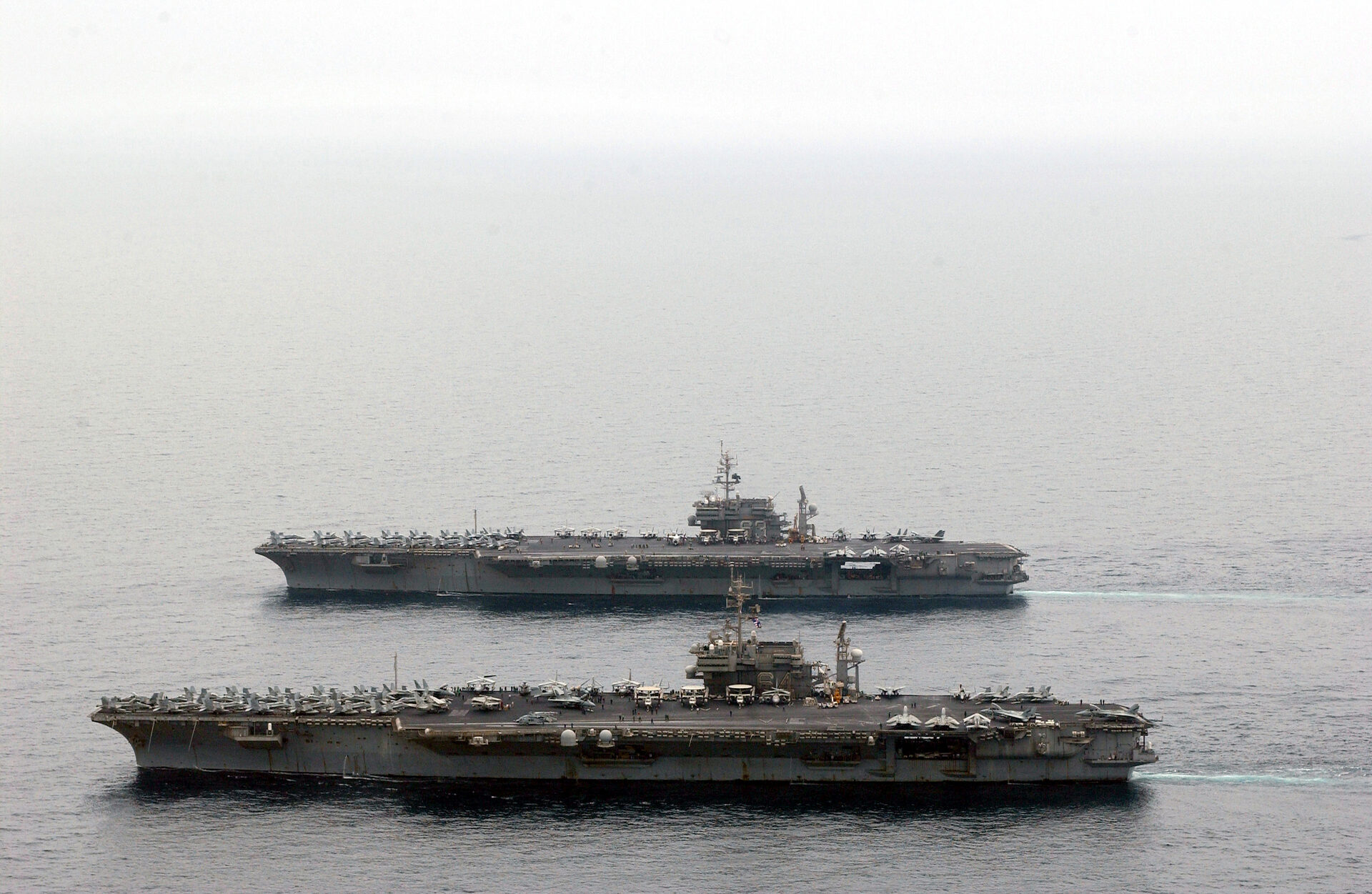
No element of the emerging Gulf alliance is more improbable than Qatar’s role within it. In June 2017, Saudi Arabia, the UAE, Bahrain, and Egypt severed diplomatic relations with Qatar, imposed a comprehensive land, sea, and air blockade, and issued a list of thirteen demands that Doha rejected as infringements on its sovereignty. The blockade lasted until January 2021, when the Al-Ula Declaration formally restored relations. Less than five years later, Qatari surveillance assets are feeding intelligence directly to the Saudi military.
The reconciliation was always understood to be incomplete. Chatham House analysis at the time noted that ties between Qatar and both Bahrain and the UAE “will probably take more time to improve, if they do at all.” The Al-Ula Declaration addressed the symptoms of the crisis — closed borders, severed flights, diplomatic absence — without resolving the underlying causes: competing visions for regional order, rival media ecosystems (Al Jazeera versus Sky News Arabia), and fundamentally different approaches to relationships with Iran and Turkey.
The Iran war made those differences temporarily irrelevant. When Iranian drones struck Qatari LNG facilities and the area surrounding Al Udeid Air Base, Qatar’s strategic positioning as a neutral mediator between Iran and the West collapsed in a single night. Qatar shut down LNG exports — representing twenty percent of the global LNG market — as a direct consequence of Iranian attacks on its infrastructure. The country that had hosted the Iranian embassy throughout the blockade, facilitated the 2015 nuclear deal backchannel, and served as the primary diplomatic conduit between Tehran and Washington found itself on the receiving end of Iranian missiles.
Qatar’s military contribution to the emerging alliance is disproportionate to its size. Al Udeid Air Base, the largest US military installation in the Middle East, hosts CENTCOM’s Combined Air Operations Center and the newly established air and missile defense coordination cell. Qatar’s advanced early warning radar systems provide critical detection coverage for threats approaching the Gulf from the northeast. Its fleet of C-17 Globemaster transport aircraft — one of the largest outside NATO — offers strategic airlift capability that smaller GCC states lack entirely.
The political significance may outweigh the military contribution. If Qatar and Saudi Arabia can operate in genuine military partnership barely five years after a blockade that nearly led to armed confrontation, the foundational political obstacle to GCC defense integration — mutual distrust between member states — may be weaker than analysts assumed.
The Gulf Collective Defense Maturity Index
Measuring the reality of an emerging military alliance requires more than counting summits or reading communiqués. The following assessment framework evaluates GCC collective defense across seven dimensions, scoring each on a scale from one (non-existent) to five (fully operational). The scores reflect the situation as of Day 11 of the Iran war — a snapshot of an alliance under construction.
| Dimension | Pre-War Score (Feb 2026) | Current Score (Day 11) | NATO Benchmark | Assessment |
|---|---|---|---|---|
| Political Commitment | 2 / 5 | 4 / 5 | 5 / 5 | Article 51 invoked; all states committed publicly. Untested beyond rhetoric. |
| Unified Command Structure | 1 / 5 | 2 / 5 | 5 / 5 | CENTCOM serves as de facto coordinator. No indigenous unified command operational. |
| Air Defense Integration | 1 / 5 | 3 / 5 | 4 / 5 | Real-time data sharing between Saudi-UAE. Still US-dependent. Other states peripheral. |
| Interoperability | 1 / 5 | 2 / 5 | 4 / 5 | Different systems, different protocols. Improvised workarounds under fire. |
| Intelligence Sharing | 2 / 5 | 3 / 5 | 4 / 5 | Qatari and Emirati ISR assets feeding Saudi operations. Bilateral, not multilateral. |
| Joint Logistics | 1 / 5 | 1 / 5 | 4 / 5 | Each state maintains independent supply chains. No joint ammunition reserves. |
| Institutional Trust | 2 / 5 | 3 / 5 | 5 / 5 | War forced cooperation. Qatar-Saudi trust improving. UAE-Qatar still fragile. |
The aggregate pre-war score of 10 out of 35 reflected an alliance that existed almost entirely on paper. The current score of 18 out of 35 represents a significant improvement driven entirely by wartime necessity, but it still falls far short of NATO’s benchmark score of approximately 31 out of 35. The largest gaps — unified command, interoperability, and joint logistics — are precisely the dimensions that require years of institutional development rather than weeks of improvisation.
Three patterns emerge from the assessment. First, political commitment has surged dramatically, from a lukewarm 2 to a wartime 4 — but political commitment without institutional infrastructure is a promissory note, not a capability. Second, air defense integration has seen the most concrete operational improvement, driven by the immediate life-or-death need to coordinate interceptor employment against a common threat. Third, joint logistics — the foundation upon which sustained military operations depend — has not improved at all, reflecting the deeper structural challenge of merging six independent military supply chains.
What Makes This Different From Every Previous GCC Defense Push?
The Gulf region has produced defense integration initiatives roughly once per decade since 1981. The Peninsula Shield Force (1982), the Joint Defence Agreement (2000), the Unified Military Command proposal (2013), and the post-Al-Ula Unified Military Command restructuring (2021) all promised transformation and delivered incrementalism. The question of whether the 2026 moment is genuinely different deserves rigorous analysis rather than wartime optimism.
Four factors distinguish the current environment from every predecessor. First, for the first time, all six GCC states experienced direct military attack simultaneously. Previous threats — the Iran-Iraq War, the 1990 Iraqi invasion of Kuwait, the 2019 Aramco strikes — affected one or two members while others observed from safety. Collective defense is an abstract concept when only one partner faces the threat. It becomes visceral when every capital has heard air raid sirens.
Second, the attacks destroyed the neutrality option. Before February 28, several GCC states — notably Qatar and Oman — maintained carefully cultivated positions of diplomatic neutrality vis-à-vis Iran. Those positions were strategic assets that facilitated mediation, attracted investment, and preserved diplomatic flexibility. Iran’s decision to strike all six states eliminated the possibility of neutrality as a viable security strategy. The Foreign Policy assessment noted that Gulf states’ traditional emphasis on mediation and balanced relationships was “shattered” by Iran’s indiscriminate targeting.
Third, the 2017 Qatar blockade — paradoxically — may have strengthened the current alliance by exhausting the appetite for intra-GCC conflict. The blockade demonstrated the costs of internal division and produced no meaningful strategic gains for any party. The Al-Ula reconciliation, while incomplete, established a political baseline from which the wartime alliance could build. States that blockaded each other five years ago now share defense data because they learned that division is more expensive than cooperation.
Fourth, the American factor has shifted. Previous GCC defense initiatives operated in the shadow of absolute US security guarantees. Washington’s bilateral defense relationships with each GCC state individually were so comprehensive that collective Gulf defense seemed redundant. The 2026 war has disrupted that assumption. The strains in the US-Gulf alliance, the State Department’s ordered departure of diplomats from Saudi Arabia on March 8, and the growing awareness that American military presence is both shield and target have created — for the first time — a genuine strategic incentive for Gulf states to develop indigenous collective defense capabilities that do not depend entirely on Washington.
NATO Took 52 Years to Invoke Article 5 — The GCC Needed 11 Days
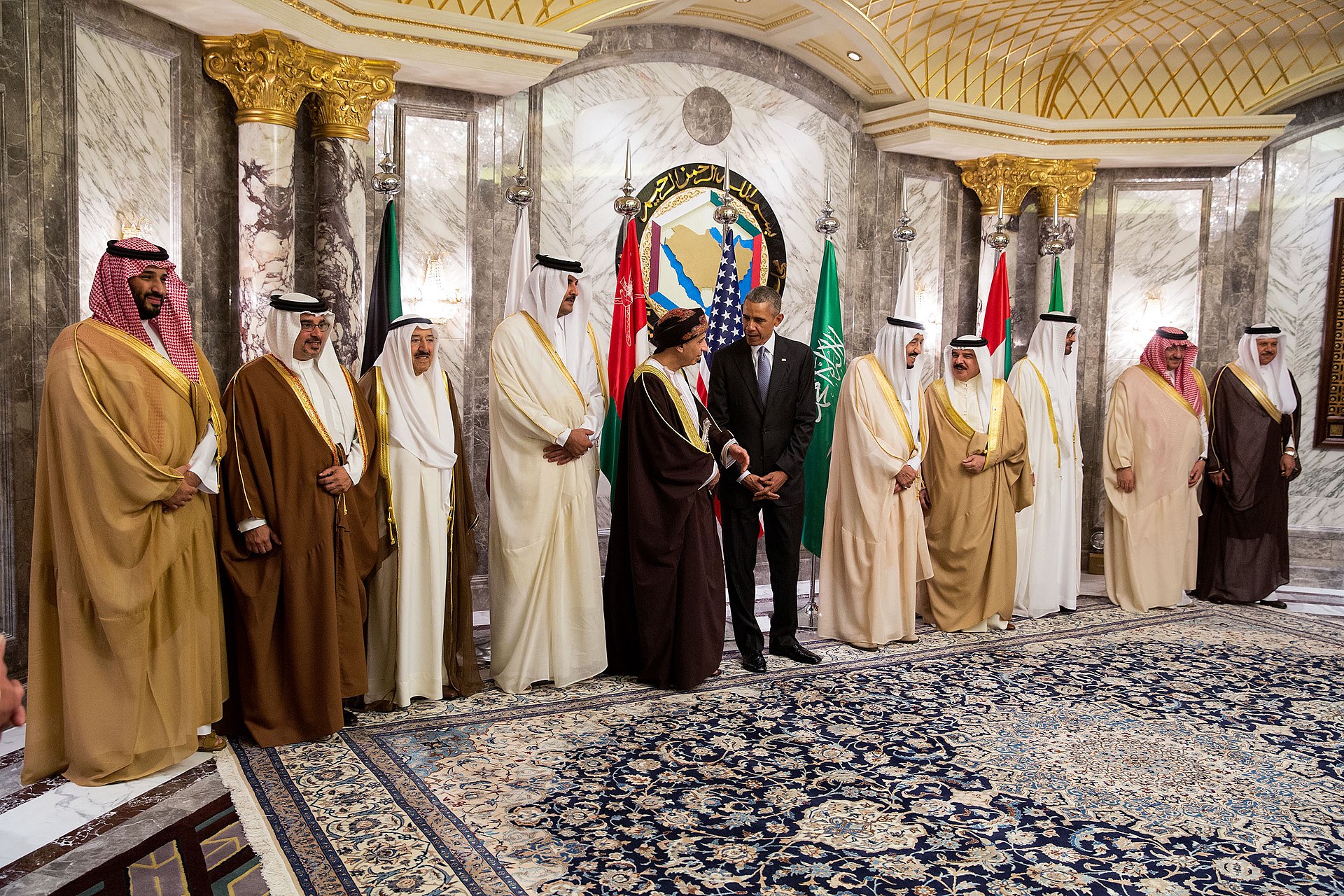
The North Atlantic Treaty Organization was founded on April 4, 1949, with twelve member states signing a treaty whose core purpose was collective defense against the Soviet Union. Article 5 — the provision declaring that an armed attack against one member is an attack against all — was not invoked until September 12, 2001, fifty-two years and five months after the treaty was signed. The GCC’s equivalent provision, established in the 2000 Joint Defence Agreement, was effectively invoked within hours of the first Iranian strike, twenty-six years after its creation.
The comparison illuminates both the speed of the Gulf’s transformation and its limitations. NATO spent its first four decades building the institutional infrastructure that made Article 5 credible: integrated military commands (SHAPE, established 1951), standardized equipment and doctrine (STANAG agreements), joint exercises at every scale from platoon to corps, shared nuclear deterrence arrangements, and an institutional bureaucracy employing thousands of international civil servants. When Article 5 was finally invoked after the September 11 attacks, NATO’s military infrastructure could translate political commitment into coordinated military action within days.
The GCC possesses no equivalent institutional depth. Its invocation of collective defense on March 1 was politically significant but operationally aspirational. There is no Gulf equivalent of SHAPE — the Supreme Headquarters Allied Powers Europe that serves as NATO’s operational command. There is no standardization agreement regime ensuring that ammunition, fuel, and communications equipment are interoperable across member forces. There is no integrated air defense architecture comparable to NATO’s NADGE (NATO Air Defence Ground Environment) system, which tracked Soviet aircraft across the entire European theater from a unified command structure throughout the Cold War.
The comparison, however, favors the GCC in one critical respect: geographic concentration. NATO’s Article 5 alliance spans an ocean and a continent, encompassing climate zones from the Arctic to the Mediterranean and member states whose threat perceptions range from the Baltic to the Aegean. The GCC occupies a compact geographic space roughly equivalent to Western Europe alone. Its members share a common language, cultural frame, and — as of February 28, 2026 — an identical threat. The logistical and political challenges of integrating six neighboring Arab monarchies with similar military establishments are orders of magnitude simpler than integrating thirty-two democracies spanning North America and Europe.
The NATO precedent also reveals a warning. Alliance cohesion is highest during periods of acute threat and erodes during periods of relative security. NATO’s internal tensions — burden-sharing disputes, divergent threat perceptions, periodic calls for withdrawal — have been a recurring feature of the alliance’s seventy-seven-year history. The GCC’s newfound cohesion is a product of Iranian fire. When that fire stops, the political dynamics that prevented defense integration for four decades will reassert themselves.
Three Structural Weaknesses That Could Still Break the Alliance
The emerging Gulf alliance faces three structural vulnerabilities that predate the Iran war and will persist after it ends. Understanding these weaknesses is essential for assessing whether the wartime transformation will endure.
The first is the Saudi-UAE rivalry. Despite the unprecedented cooperation in air defense data sharing, the strategic competition between Riyadh and Abu Dhabi has intensified significantly over the past five years. The Bloomsbury Intelligence and Security Institute characterized the relationship in 2025 as a “cold war” driven by competing economic visions, rival port and logistics infrastructure, divergent approaches to the Yemen conflict, and a fundamental struggle for regional primacy. Carnegie Endowment analysis noted that the rivalry has “directly undermined GCC military coordination” through duplicative procurement, competing logistics networks, and an inability to agree on command hierarchies. Sudan represents another fault line: Riyadh backs the SAF while Abu Dhabi supports the RSF, and Washington’s designation of the Sudanese Muslim Brotherhood as a terrorist group has further complicated the dynamics.
The war has papered over these tensions, not resolved them. Both Riyadh and Abu Dhabi aspire to lead any post-war Gulf security architecture. Saudi Arabia, as the largest and most populous GCC state with the biggest defense budget, claims natural leadership. The UAE, with its more technologically sophisticated military, extensive combat experience in Yemen, and deeper relationships with Western defense industries, considers itself the more operationally capable partner. Any permanent alliance structure will require a command hierarchy, and the question of who commands whom will reactivate the rivalry the moment the immediate threat recedes.
The second structural weakness is American dependency. The wartime air defense coordination that represents the alliance’s most significant achievement runs through US military communications infrastructure and is facilitated by American liaison officers embedded in national operations centers. CENTCOM’s coordination cell at Al Udeid serves as the de facto hub of Gulf air defense integration. Remove the American intermediary, and the technical architecture of cooperation collapses.
This dependency creates a paradox. The emerging Gulf alliance is partly motivated by a desire for strategic autonomy from the United States — a hedge against the possibility that Washington may not always be willing or able to defend its Gulf partners. Yet the operational foundation of the alliance depends entirely on American systems, American training, and American command-and-control infrastructure. Building an indigenous Gulf defense integration capability that does not require American participation is a project measured in decades, not months.
The third vulnerability is the absence of a common strategic culture. NATO’s cohesion rests not merely on shared interests but on shared democratic values, institutional norms, and strategic traditions developed over three generations. GCC states share language, religion, and monarchical governance, but their strategic cultures differ markedly. Saudi Arabia thinks in terms of regional hegemony and Islamic leadership. The UAE prioritizes technological superiority and commercial advantage. Qatar values diplomatic leverage and information influence. Kuwait, scarred by the 1990 Iraqi invasion, prizes formal alliance guarantees above all. Oman maintains a tradition of non-alignment that even Iranian missiles have not entirely shattered. Bahrain’s security calculations are dominated by internal sectarian dynamics and absolute dependence on Saudi military support.
A genuine military alliance requires more than shared enemies. It requires shared assumptions about how military force should be used, under what circumstances, and toward what political ends. Those shared assumptions do not yet exist among the GCC states and cannot be manufactured by decree.
What Does Gulf Security Look Like After the War Ends?
The Gulf that emerges from the Iran war will face a transformed security environment regardless of whether the wartime alliance endures. The Atlantic Council has assessed that the post-war Gulf “will be very different” — a region in which the old assumptions about deterrence, neutrality, and American protection have been tested and found inadequate.
Three scenarios present themselves for the future of Gulf collective defense. The first and most optimistic is institutionalization — transforming the ad hoc wartime arrangements into permanent alliance structures with a unified command, standardized equipment procurement, joint logistics infrastructure, and integrated training programs. This would require sustained political commitment from all six heads of state, massive investment in institutional development, and a willingness to subordinate national military sovereignty to collective decision-making. The NATO analogy suggests this process took approximately fifteen years (1949-1964) under conditions of extreme Cold War threat. In the Gulf context, where the external threat may diminish rapidly if Iran’s military capacity has been sufficiently degraded, the timeline could be longer.
The second scenario is selective integration — maintaining and deepening the most valuable wartime cooperation channels (primarily air defense data sharing and intelligence) while allowing other dimensions of integration to atrophy. This is the most likely outcome. It would produce a Gulf security architecture that is meaningfully stronger than the pre-war status quo but far short of a genuine collective defense capability. Air defense integration, which has the strongest wartime justification and the most manageable technical requirements, would become the core of a permanent arrangement. Joint logistics, unified command, and standardized procurement — requiring deeper institutional transformation and more contentious political negotiations — would remain aspirational.
The third scenario is reversion — a return to the pre-war pattern of bilateral relationships, national self-reliance, and rhetorical commitment to collective defense without operational substance. This outcome becomes more likely if the Saudi-UAE rivalry intensifies in the post-war period, if Iran’s military capacity is sufficiently degraded to eliminate the immediate threat, or if the United States provides security guarantees so comprehensive that indigenous Gulf defense integration seems unnecessary.
The Middle East Council on Global Affairs has argued that Iran’s “regional gamble” — attacking all GCC states simultaneously — has permanently altered the calculus. Gulf states that invested heavily in diplomatic relationships with Tehran now confront the reality that diplomacy did not prevent military attack. The value they place on neutrality and mediation has been eroded, replaced by a harder-edged assessment of security requirements. Whether that assessment translates into lasting institutional change depends on decisions that the six GCC heads of state have not yet made — and may not make until the missiles stop falling.
Collective coordination among Gulf states remains limited at best and operationally non-existent beyond the public statement.
Ali Bakir, Professor of Political Science, Qatar University, March 2026
Professor Bakir’s assessment, delivered in the first days of the war, captured the gap between political rhetoric and operational reality. Eleven days later, the gap has narrowed but not closed. The GCC’s response to the Iran war represents the most significant evolution in Gulf defense cooperation since the organization’s founding in 1981. It falls well short of a functioning military alliance. The question is whether the memory of Iranian missiles will prove a stronger motivator for institutional reform than four decades of committee meetings, joint communiqués, and broken promises. History suggests that wartime alliances forged by necessity have a better survival rate than peacetime alliances designed by committee. The Gulf’s emerging defense architecture has, at minimum, a foundation that its predecessors lacked: the shared experience of being under fire together.
Frequently Asked Questions
Does the GCC have a mutual defense pact similar to NATO’s Article 5?
The GCC Joint Defence Agreement, signed in December 2000, establishes the principle that an armed attack against any member state constitutes an attack against all members. The agreement was modelled explicitly on NATO’s Article 5 and creates a legal obligation for collective defense. However, unlike NATO, the GCC has historically lacked the institutional infrastructure — unified command structures, standardized equipment, and joint military planning — to translate this political commitment into coordinated military action. The 2026 Iran war represents the first operational test of the agreement.
Whether that alliance will include binding American commitments remains uncertain. Senator Lindsey Graham’s public threat to withdraw support for a US-Saudi defense pact unless Riyadh joins the Iran campaign has injected Congressional politics into what was supposed to be a straightforward security architecture discussion.
What is the Peninsula Shield Force and has it been activated during the Iran war?
The Peninsula Shield Force is the GCC’s joint military formation, established in 1982 during the Iran-Iraq War and headquartered at King Khalid Military City in northeastern Saudi Arabia. Now renamed the Unified Military Command following the 2021 Al-Ula summit, the force has a permanent strength of approximately 7,000-10,000 troops drawn from all six member states. The command activated contingency plans for the first time in its history during the opening hours of the 2026 Iran war, coordinating the deployment of mobile air defense assets to cover gaps in national coverage.
How much do GCC states spend on defense collectively?
The six GCC states spend approximately $126 billion annually on defense. Saudi Arabia accounts for the largest share at $75 billion, followed by the UAE at $22 billion, Qatar at $14 billion, Kuwait at $8 billion, Oman at $6.5 billion, and Bahrain at $1.4 billion. This combined spending exceeds that of any single European NATO member and roughly equals the combined defense budgets of France, Germany, and Italy. Despite this substantial investment, interoperability between GCC military forces remains a persistent challenge.
How did the 2017 Qatar blockade affect GCC defense cooperation?
The June 2017 blockade of Qatar by Saudi Arabia, the UAE, Bahrain, and Egypt represented the most severe internal crisis in GCC history. The three-and-a-half-year diplomatic rupture shattered institutional trust and exposed the fundamental contradiction of a collective defense organization whose members could impose military-style blockades on each other. The January 2021 Al-Ula reconciliation restored relations but did not resolve underlying tensions. Paradoxically, the blockade may have strengthened the current wartime alliance by exhausting the appetite for intra-GCC conflict.
Will the wartime GCC military cooperation become permanent?
The most likely outcome is selective integration rather than full institutionalization. Air defense data sharing and intelligence cooperation — the most valuable and technically manageable wartime innovations — are expected to become permanent arrangements. Deeper integration in areas like unified command structures, standardized procurement, and joint logistics faces structural obstacles including Saudi-UAE strategic rivalry, the absence of a common strategic culture, and continued dependence on American military infrastructure. Historical precedent suggests that wartime alliances born of necessity have better survival rates than peacetime alliances designed by committee, but the GCC’s internal rivalries remain a significant risk factor.
What role does the United States play in GCC defense coordination?
The United States serves as the de facto facilitator of GCC defense coordination through CENTCOM’s Combined Air Operations Center and its newly established air and missile defense coordination cell at Al Udeid Air Base in Qatar. American liaison officers embedded in Saudi and Emirati defense operations centers relay threat data between national air defense systems. This role makes the US both the enabler and the single point of failure for the emerging Gulf alliance — a dependency that GCC states recognize as strategically unsustainable but cannot eliminate in the short term. The military alliance Iran forced into existence now operates against the backdrop of a complete collapse of the Gulf-Iran rapprochement that Gulf states had spent three years building.