ABU DHABI — Iran is not trying to overwhelm Saudi Arabia, the UAE, or Kuwait individually — it is trying to drain all three at once, forcing each node of the Gulf’s shared missile defence network to burn through Patriot interceptors so fast that none can spare rounds for its neighbours. The strategy has already consumed the overwhelming bulk of the combined GCC Patriot stockpile in barely five weeks, and the resupply timeline is measured in years, not months.
The April 1 drone strikes on Kuwait International Airport’s fuel depots, a Bahraini industrial facility, and a farm in Fujairah that killed a Bangladeshi worker were not random acts of escalation — they were the latest proof that Tehran is prosecuting a deliberate war of interceptor attrition across the entire Gulf Cooperation Council simultaneously, a campaign that treats the region’s air defence as a single, depletable resource rather than six separate national shields. The question is no longer whether the shield holds, but how many weeks of holding it has left.
Table of Contents
- Three Fronts, One Stockpile
- How Many Interceptors Does the GCC Actually Have Left?
- Kuwait and the Neutrality That Died on the Runway
- Why Is Iran Hitting All Six GCC States Simultaneously?
- The Resupply Math That Keeps Riyadh Awake
- The Collective Defence Fiction
- Can the GCC’s Air Defence Survive a Three-Month War?
- Washington’s Stonewall
- What Happens When the Interceptors Run Out?
- Frequently Asked Questions
Three Fronts, One Stockpile
The conventional reading of Iran’s Gulf campaign — that Tehran is lashing out at American bases hosted by reluctant Arab partners — misses what the operational pattern actually reveals. Since February 28, Iran has struck all six GCC member states within 24 hours, the first time a single actor has targeted the entire bloc simultaneously, according to Sinem Cengiz of Qatar University’s Gulf Studies Center, who told Breaking Defense: “For the first time in history, all the GCC states were targeted by the same actor within 24 hours. Their long-standing nightmare scenario has happened.”
But the nightmare’s architecture is more precise than sheer volume suggests. Iran launched more than 1,200 missiles and drones at GCC member states in the first seven days alone; across the full conflict theatre — encompassing GCC states, Israel, and Iraq — the Foreign Policy Research Institute counted over 5,000 munitions fired in the first 96 hours. The targeting, however, was not concentrated on the militarily strongest node — Saudi Arabia — or the most economically valuable one — the UAE — but distributed across all three major Patriot-equipped defence clusters simultaneously: the Saudi eastern and western batteries, the UAE’s THAAD-Patriot layered network, and Kuwait’s American-operated Patriot positions at Ali Al Salem.
The effect is that each node is forced to defend itself. A Patriot battery protecting Saudi Arabia’s eastern province cannot lend its interceptors to a battery in Kuwait that is running dry, because both are under simultaneous attack. The distributed pressure prevents the kind of reserve-sharing that would extend the life of the collective stockpile, and it accelerates aggregate depletion at a rate Iran’s strategists appear to have calculated with uncomfortable precision.
How Many Interceptors Does the GCC Actually Have Left?
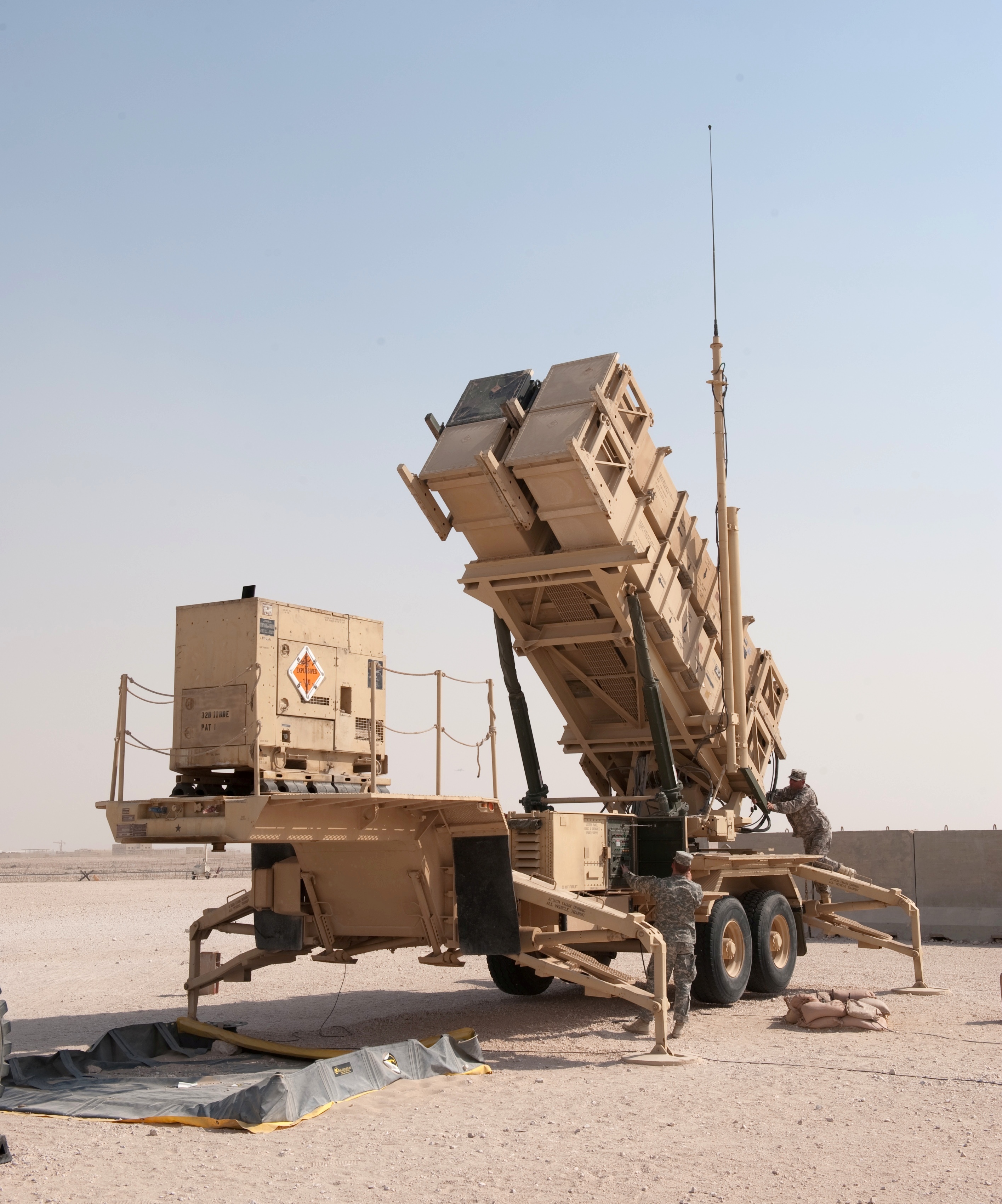
The numbers are not classified — they are simply alarming. According to The Defense News, citing industry and defence sources, GCC partner nations have expended approximately 2,400 Patriot-family interceptors — a category that includes both the advanced PAC-3 MSE and the older GEM-T variants — since February 28. The combined GCC Patriot-family stockpile before the conflict stood at just under 2,800 units, meaning the coalition has burned through roughly 86 per cent of its pre-war inventory.
The depletion is not evenly distributed. The Jewish Institute for National Security of America estimated in late March that Bahrain had expended approximately 87 per cent of its Patriot stocks, with the UAE and Kuwait each at roughly 75 per cent and Qatar at around 40 per cent. Bahrain’s exposure is particularly acute given that it hosts the US Fifth Fleet headquarters, which has drawn sustained Iranian targeting — 174 missiles and 391 drones intercepted since the war began, according to official Bahraini figures.
The UAE’s numbers tell their own story. As of March 31, Abu Dhabi reported intercepting 433 ballistic missiles, 1,977 drone attacks, and 19 cruise missiles, achieving a 94 per cent drone interception rate and 92 per cent for ballistic and cruise missiles. Those are impressive percentages, but each interception costs an interceptor, and the absolute volume — nearly 2,500 engagements against a single GCC state — has consumed hardware at a pace that no production line on earth was designed to replace.
| GCC State | Estimated Pre-War Patriot Stock | Estimated Expenditure Rate | Key Threat Volume |
|---|---|---|---|
| Bahrain | ~280 | ~87% | 174 missiles, 391 drones intercepted |
| UAE | ~750 | ~75% | 433 BMs, 1,977 drones, 19 CMs intercepted |
| Kuwait | ~400 | ~75% | 97 BMs, 283 drones intercepted |
| Qatar | ~350 | ~40% | Lower volume; deploying PAC-2 reserves |
| Saudi Arabia | ~700 | High (exact % undisclosed) | Heaviest single-target volume |
| Oman | ~100 | Low-moderate | 5 injuries reported; limited targeting |
Sources: The Defense News, JINSA, Breaking Defense, official government statements. Pre-war stock estimates are derived from CSIS data and industry reporting; exact national inventories are classified. Qatar’s PAC-2 deployment was reported by Defence Talks, citing US officials. Note: The Defense News aggregate figure (86% depletion, ~2,800 pre-war stockpile) and JINSA per-country estimates are derived from separate analyses and may reflect different inventory baselines. The UAE and Qatar have formally denied reports of critically low stockpiles; see Andrew Leber, Carnegie Middle East Program, March 2026.
Kuwait and the Neutrality That Died on the Runway
Kuwait tried harder than any GCC state to stay out of this war, and the wreckage of its international airport’s fuel depots is the measure of how completely that effort failed. The Kuwaiti Emir explicitly barred the United States from using Kuwaiti bases, airspace, or territorial waters to launch offensive strikes against Iran — a posture rooted in the country’s post-1990 institutional memory of invasion and its geographic reality as the GCC state closest to Iranian launch sites, with roughly 13,500 American troops stationed on its soil at Ali Al Salem and Camp Arifjan.
“We did not allow the use of our land, airspace, or waters for any military action against it,” the Emir stated, referring to Iran, in a declaration that amounted to a formal claim of non-belligerent status. Iran’s response was to strike Kuwait anyway — starting on February 28, alongside every other GCC state — and to continue striking it with increasing precision in the weeks that followed.
The targeting progression tells the story of escalation. In the first days, Iranian strikes hit military-adjacent infrastructure and drew Kuwaiti Patriot fire to deplete interceptor stocks. By mid-March, drones struck the Mina Abdullah refinery complex — a 454,000-barrel-per-day facility on Kuwait’s Gulf coast — sparking fires that Kuwait’s emergency services contained but could not prevent. On March 30, a Kuwaiti power and desalination plant was hit. Then on April 1, drones penetrated the perimeter of Kuwait International Airport and struck fuel storage facilities operated by the Kuwait Aviation Fueling Company, igniting a blaze that sent black smoke over the capital and forced the airport to remain closed.
The pattern is not random. Kuwait declared neutrality; Iran punished it anyway, methodically escalating from military-adjacent targets to energy infrastructure to civilian aviation — a progression that reduces any future Kuwaiti government’s political space to maintain neutrality to approximately zero. Two Kuwaiti Ministry of Interior personnel were killed on duty during the strikes, the kind of casualties that transform diplomatic postures into domestic political imperatives.
Why Is Iran Hitting All Six GCC States Simultaneously?
Iran’s official position, delivered in writing to Human Rights Watch, insists that its “defensive operations — targeting United States military bases and facilities in the region — are in no way directed against the sovereignty or territorial integrity of any regional country.” President Masoud Pezeshkian reinforced this line by apologising to Gulf states and pledging restraint on social media — then, as Arab Center DC documented, “mere hours later, Iran resumed its strikes,” a sequence that analysts at the centre interpreted as evidence of “limited control of the political leadership over the Islamic Revolutionary Guard Corps.”
The IRGC’s own messaging demolished the presidential line with mechanical efficiency. The Corps warned that “all military bases and interests of criminal America and the fake Zionist regime on land, at sea, and in the air across the region will be considered primary targets” — a definition elastic enough to encompass every airport, port, and power station in a GCC state that hosts any American presence, which is all of them. When the IRGC declared US-Israeli “economic and banking interests” in the region as legitimate targets on March 11, per Al Jazeera, it effectively designated the entire Gulf commercial infrastructure as a target-rich environment.
The gap between Pezeshkian’s public appeals for restraint and the IRGC’s battlefield orders is not coincidental — it reflects a structural seizure of power. New reporting confirms that the IRGC military council has cut President Pezeshkian off from Supreme Leader Mojtaba Khamenei entirely, vetoing civilian appointments and controlling all war decisions from a parallel command structure that bypasses the presidency altogether.
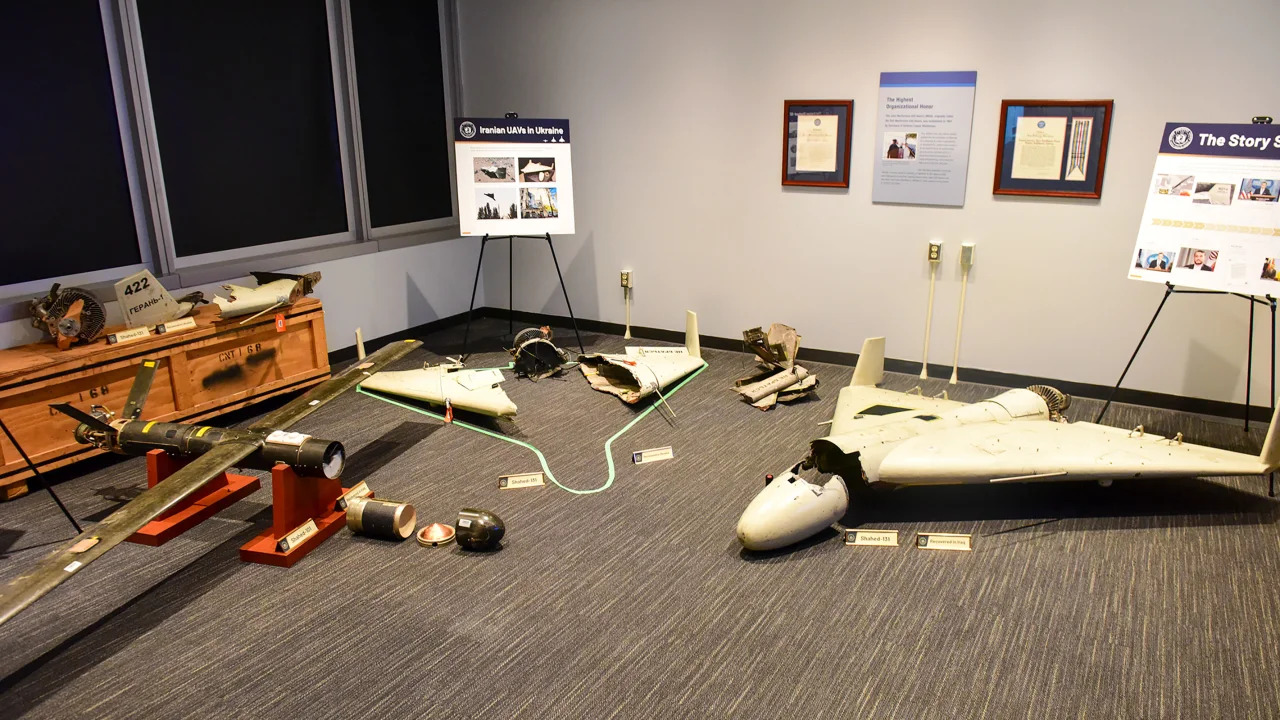
But the strategic logic extends beyond target selection to interceptor mathematics. Ali Bakir, a defence professor at Qatar University, told Breaking Defense that “air defense systems can intercept, but not at scale or at low cost — saturation attacks remain a serious concern.” The concern is precise: Iran’s Shahed drones cost between $20,000 and $50,000 each, while each PAC-3 MSE interceptor costs approximately $4.1 million. A single attack wave of 50 Shaheds that forces 50 Patriot engagements costs Iran roughly $2.5 million and costs the defender $205 million in interceptor expenditure — on those unit costs, an 82:1 cost ratio that makes the attritional logic devastating even when 94 per cent of incoming threats are destroyed.
The simultaneity is the force multiplier. By hitting Saudi Arabia, the UAE, and Kuwait in the same attack windows, Iran ensures that the daily interceptor consumption is multiplied across three independent defence nodes, none of which can redistribute stocks to the others during active engagement. The coalition’s total burn rate reaches levels that make the already dire stockpile arithmetic functionally irreversible without a production miracle that Lockheed Martin has explicitly said is years away.
The Resupply Math That Keeps Riyadh Awake
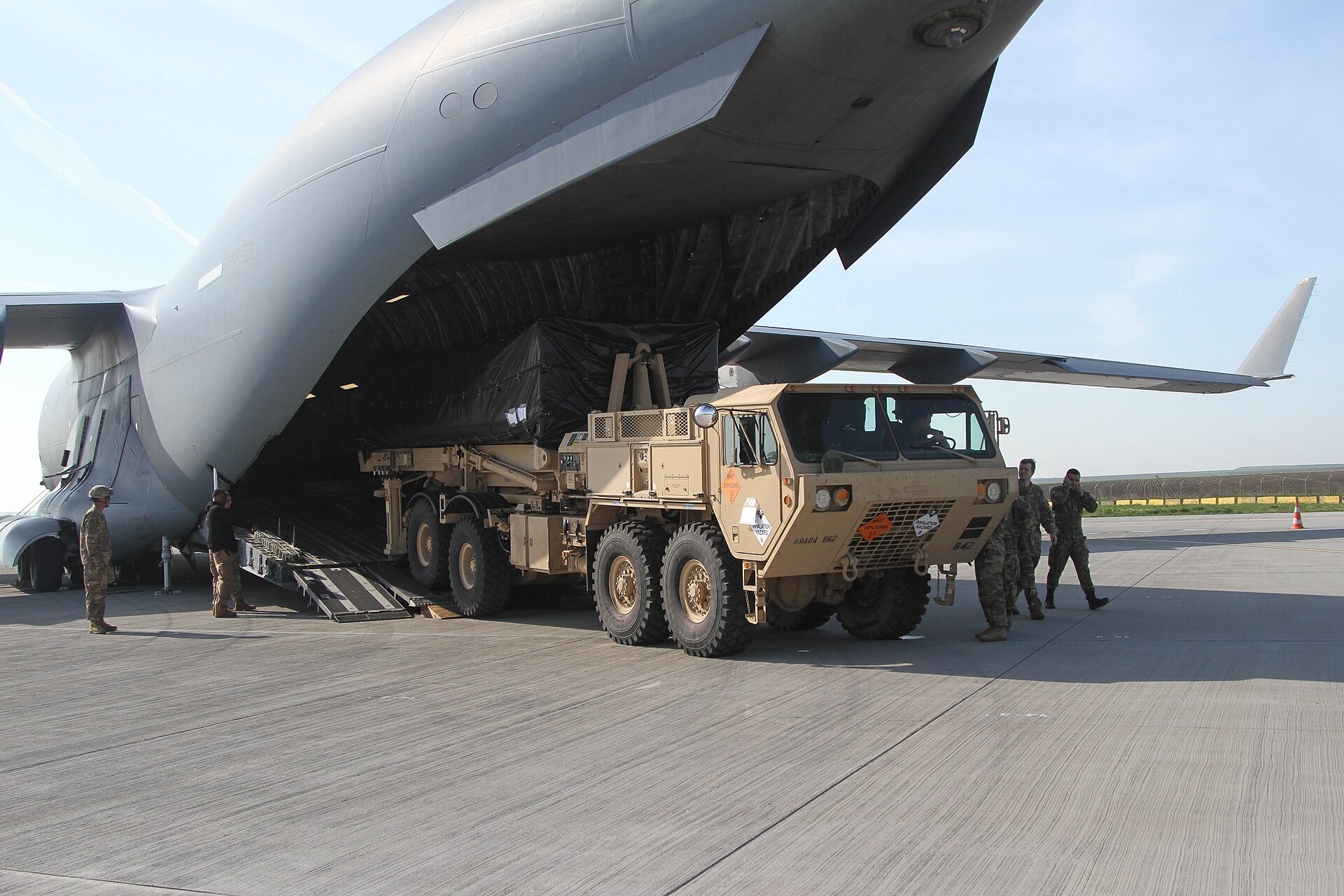
In the first 96 hours of the war, US and GCC Patriot batteries combined fired 943 rounds — a figure that the Foreign Policy Research Institute calculated as equivalent to approximately 18 months of production from the Lockheed Martin and Boeing production lines. Lockheed Martin delivered 620 PAC-3 MSE interceptors in all of 2025, a record year that represented a 60 per cent increase over two years of ramped-up manufacturing. The war consumed more than that record annual output in under four days.
A framework agreement signed on January 6, 2026, targets annual PAC-3 production of 2,000 units — but Breaking Defense reported that this capacity will not be achieved until the end of 2030. At that production rate, it would take nearly four years at maximum current output to replace the 2,400 interceptors already expended, assuming zero additional consumption — an assumption that the daily Iranian strike tempo makes absurd.
The THAAD picture is worse. The total US THAAD interceptor inventory stood at 534 units as of December 2025, according to CSIS, with no new deliveries since July 2023. A backlog of 100 THAAD missiles was not slated for delivery until April 2027, according to Congressional Research Service figures cited by Breaking Defense. Military Times reported that more than 150 THAAD interceptors had been expended by early March — approximately 30 per cent of the total global stockpile — and that at early-war consumption rates, the United States could exhaust available THAAD stocks within roughly one month. Production stands at 96 per year according to CSIS, with a framework agreement to reach 400 per year that Lockheed Martin’s new Munitions Acceleration Center in Camden, Arkansas is being built to fulfil, but which remains years from operational capacity.
| System | Annual Production (current) | Target Production | Target Date | War Consumption (5 weeks) | Replacement Timeline at Current Rate |
|---|---|---|---|---|---|
| PAC-3 MSE | ~620/year | 2,000/year | End of 2030 | ~2,400 | ~3.9 years |
| THAAD | ~96/year | 400/year | 2028-2029 (est.) | ~150+ | ~1.6 years |
Sources: Lockheed Martin, CSIS, FPRI, Breaking Defense. PAC-3 MSE figures include all Patriot-family interceptor variants. THAAD target date is estimated from Lockheed Martin’s Camden facility construction timeline.
The Pentagon announced coordinated surge agreements on March 25 with Lockheed Martin, BAE Systems, and Honeywell Aerospace, spanning more than 20 facilities across five US states. On April 1, the Pentagon and Boeing agreed to triple PAC-3 seeker production — a critical bottleneck component. These are real investments, but they are investments in future capacity. The interceptors they will eventually produce do not exist yet, and the Gulf states burning through their stocks today cannot defend their cities with congressional appropriations and factory blueprints.
The Collective Defence Fiction
The GCC Joint Defence Agreement, signed in December 2000, stipulates that an attack on any member state constitutes an attack on all — language deliberately modelled on NATO’s Article 5. The Washington Institute, reviewing the agreement shortly after its signing, described it as “an exercise in ambiguity,” noting that the treaty text was never publicly released and contained no specific definition of what constitutes an actionable attack, no ratification mechanism, and no operational command structure.
Twenty-six years later, the ambiguity has been tested under fire, and the result is what Ali Bakir, the Qatar University defence professor, described to Breaking Defense as coordination that “remains limited at best and operationally non-existent beyond public statements.” The GCC activated its Joint Defense Council in an extraordinary session after the February 28 strikes, but the activation was rhetorical rather than operational.
Saudi Arabia opened King Fahd Air Base to American forces unilaterally. The UAE conducted independent interceptions. Kuwait activated its bilateral defence agreement with Washington, not the GCC pact.
The structural failure matters for the interceptor crisis because it means there is no mechanism for pooling defensive resources across the coalition. When Bahrain’s Patriot stocks approach exhaustion — and at 87 per cent expenditure, they are functionally there — no GCC protocol exists to transfer interceptors from a less-depleted member. When Qatar’s stocks, at 40 per cent expenditure, represent the coalition’s largest remaining Patriot reserve, there is no agreement under which Qatar can or would redistribute those rounds to Kuwait or the UAE. Each nation defends itself, and each nation’s defence degrades independently, which is precisely the condition Iran’s multi-front strategy is designed to create.
Andrew Leber, a nonresident scholar at the Carnegie Middle East Program, wrote in March that “only collective action among the GCC states is likely to get them out of this dilemma.” He also noted that the UAE and Qatar “vehemently denounced reporting that suggested their interceptor stockpiles were running low” — a response that prioritised narrative management over the operational coordination that might actually slow the depletion.
Gulf states were “bound to Washington while simultaneously exposed to Iran’s cost imposition strategy in a conflict they did not choose but can no longer avoid.”
Dr Dania Thafer, Executive Director, Gulf International Forum
Thafer’s assessment captures the structural bind: decades of GCC security doctrine, built on the assumption that American deterrence would prevent a regional war and American production would sustain one if it came, have become what she described as “no longer tenable.” The interceptor crisis is the physical manifestation of that doctrinal failure — a stockpile built for peacetime deterrence being consumed at wartime rates, with no mechanism to bridge the gap.
Can the GCC’s Air Defence Survive a Three-Month War?
At current consumption rates, the answer is almost certainly no — at least not in its current form. The combined GCC Patriot stockpile has fallen from roughly 2,800 to approximately 400 rounds in five weeks. If Iranian strike tempo remains at the levels observed in late March, when Gulf defence systems recorded up to 40 missile launches per day according to The Defense News — roughly double the daily average from the war’s first fortnight — the remaining Patriot inventory could be functionally exhausted within two to three weeks, absent resupply.
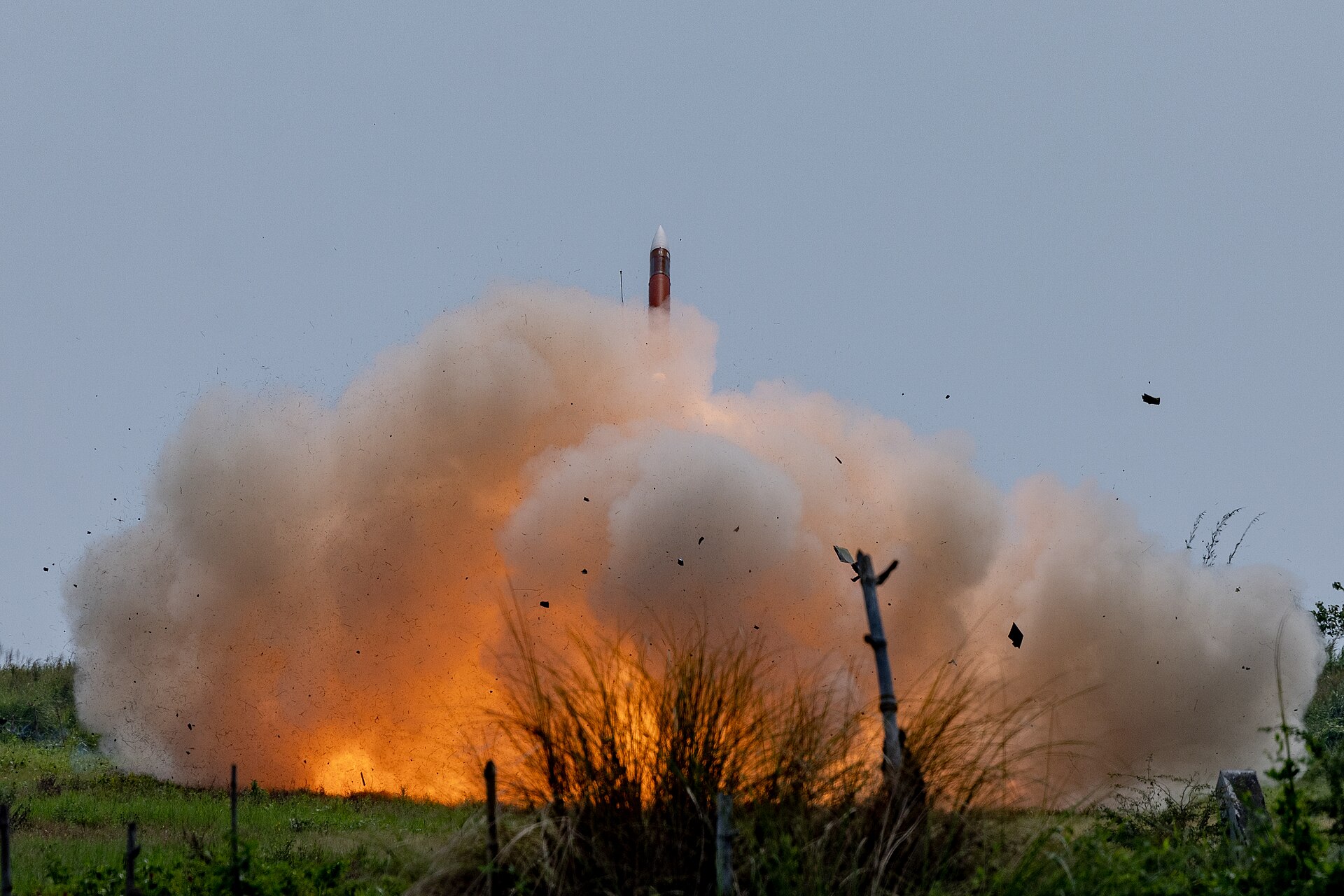
The Gulf states are already adapting through degradation. Defence Talks reported that American-operated Patriot batteries in Qatar have begun firing PAC-2 interceptors manufactured around the year 2000 — an older variant that relies on a proximity fragmentation warhead rather than the PAC-3’s direct kinetic impact — because PAC-3 stocks have been significantly depleted. The PAC-2 can still engage certain threats, but it is substantially less effective against the medium-range ballistic missiles that constitute Iran’s most dangerous delivery systems, and its use signals that the bottom of the modern interceptor barrel is already visible.
The UAE and Qatar have also requested 7,000 interceptor drones from Ukraine’s TAF Industries — expendable drone-on-drone systems designed to engage Shahed swarms at a fraction of the Patriot’s cost per engagement. These are sensible improvisation, but they address only the cheapest tier of the Iranian threat. Against ballistic missiles, there is no substitute for Patriot and THAAD, and no alternative source of supply outside the American production lines that are running at a fraction of wartime demand.
Ryan Bohl, a senior MENA analyst at RANE Network, told Breaking Defense in early March that “if Iranian attacks continue throughout this week, I would expect the Gulf Arab states to eventually participate in counter-attacks on Iran.” A month later, the attacks have not only continued but intensified, and the question Bohl raised — whether the GCC states would shift from defensive absorption to offensive participation in the broader coalition — has become inseparable from the interceptor question. A state that cannot defend its airports and refineries with Patriot batteries has a narrowing set of options, and most of them involve shooting back.
Washington’s Stonewall
Middle East Eye reported in early March, citing a Western official and a former US official, that Washington was “stonewalling” Gulf state requests to replenish air defence interceptors. Neither source described formal denials, but rather a pattern in which Gulf states were “discouraged from asking for refills” — a distinction without much practical difference for a Kuwaiti air defence battery watching its remaining PAC-3 count tick toward single digits.
The former US official’s framing was blunt: “Whatever munitions were produced in the last couple of months, we have shot several years’ worth of production in the last few days.” The statement captures the core of the resupply crisis. The United States cannot give what it does not have, and the competition for what does exist extends far beyond the Gulf — Ukraine’s ongoing Patriot consumption, the Indo-Pacific theatre’s requirements against a potential Chinese contingency, Israel’s own interceptor needs, and the US military’s homeland defence obligations all draw from the same production lines that are now being asked to refill six GCC states simultaneously.
The Pentagon’s $800 million Patriot sustainment package for Kuwait, approved in January 2026, was designed for peacetime maintenance, not wartime replenishment. The distinction matters: sustainment keeps existing batteries operational, but it does not add interceptors to the magazines. Kuwait’s batteries are maintained and functional — they simply have fewer and fewer rounds to fire, a condition that $800 million in maintenance contracts cannot address and that the Trump administration’s war calculus has not publicly accounted for.
The stonewalling also has a coercive dimension. Gulf states that have resisted joining offensive operations against Iran — Kuwait most visibly, but Qatar and Oman as well — face an implicit message: defensive resupply may flow more freely to states that demonstrate offensive commitment. Whether this is deliberate policy or structural consequence is debatable. The effect is the same either way.
What Happens When the Interceptors Run Out?
The UAE’s 94 per cent drone interception rate and 92 per cent ballistic missile interception rate are, by any historical standard, extraordinary performances under extraordinary pressure. But interception rates are percentage metrics, and percentage metrics obscure the absolute numbers that pass through. Eight per cent of 433 ballistic missiles is approximately 35 warheads reaching their targets — enough to destroy refineries, desalination plants, and airport fuel depots, as the past five weeks have demonstrated. The damage from the missiles that got through has already reshaped daily life across the Gulf.
As stockpiles thin, interception rates will fall, because operators will be forced to make triage decisions — choosing which incoming threats to engage and which to let through based on the criticality of the target and the remaining magazine depth. A Patriot battery defending Jebel Ali Port with 20 remaining interceptors and 30 incoming drones must decide which 20 to shoot at and accept that 10 will arrive, a calculus that becomes more frequent and more consequential with each passing week. The UNDP estimated that Arab world GDP could contract between 3.7 and 6 per cent after one month of war — between $120 billion and $194 billion — and those projections assumed functioning air defence, not degraded coverage.
The economic exposure compounds the military vulnerability. The UAE’s pre-war bilateral trade with Iran stood at approximately $28 billion in 2024, and according to NOMINIS data, the UAE facilitated $21 billion of imports into Iran that year — roughly one-third of Iran’s total foreign purchases. That trade is now severed. Jebel Ali Port, historically the largest Iranian import gateway outside China and simultaneously the US Navy’s largest Middle East port of call, has become both an economic casualty and a structurally inevitable Iranian target — a dual identity that no amount of interceptors can resolve, because the port’s value to both sides ensures it will remain in the crosshairs.
Stars and Stripes reported approximately $800 million in damage to US bases in the first two weeks alone. Ali Al Salem Air Base in Kuwait — which houses Italian forces and the Canadian contingent at Camp Canada alongside American personnel — has been struck repeatedly, and the American troops stationed in Kuwait operate under the same thinning missile defence umbrella as the Kuwaiti civilians whose airport now sits closed and fire-damaged.
Frequently Asked Questions
How does the PAC-2 interceptor differ from the PAC-3 MSE that Gulf states are running out of?
The PAC-2, which US forces in Qatar have begun deploying as PAC-3 stocks dwindle, uses a proximity fragmentation warhead that detonates near the target and relies on shrapnel to destroy it — an approach developed in the 1990s that is effective against aircraft and some cruise missiles but substantially less reliable against the fast-moving ballistic missile warheads that constitute Iran’s most lethal delivery system. The PAC-3 MSE uses kinetic hit-to-kill technology, physically colliding with the incoming warhead at closing speeds exceeding Mach 10, and is the only Patriot variant the US Army considers fully effective against advanced ballistic threats. Firing PAC-2s at ballistic missiles is not a tactical choice — it is a signal that the preferred ammunition is running out.
Why can’t the United States simply transfer interceptors from its own stocks to the Gulf?
The US military maintains its own Patriot and THAAD inventories to defend bases in Japan, South Korea, Guam, and the continental United States against the North Korean and Chinese ballistic missile threat — a mission set that the Pentagon considers existential and that the Indo-Pacific Command has repeatedly warned is already underfunded relative to the threat. Transferring interceptors to the Gulf would require the Secretary of Defense to accept increased risk in the Pacific theatre, a trade-off that becomes politically toxic if North Korea or China tests a missile while American Pacific batteries are under-loaded because their rounds were shipped to Riyadh. The Ukraine war already drew down Patriot stocks before the Iran conflict began, leaving less slack in the system than at any point since the Gulf War.
Could Iran actually collapse the GCC’s air defence network entirely?
Total collapse would require Iran to sustain its current strike tempo for several more weeks while maintaining its own missile and drone production — a condition that faces its own constraints, including US and Israeli strikes on Iranian manufacturing sites and launch infrastructure. But functional degradation short of total collapse is already underway: when a Patriot battery in Bahrain has expended 87 per cent of its interceptors, it has not collapsed, but its ability to defend against a concentrated salvo has been reduced to the point where a determined Iranian strike package could saturate whatever remains. The gap between “functioning” and “effective” is where Iranian strategy lives, and it is widening daily.
What role does the Hizam Al-Taawun radar-sharing network play in this crisis?
Hizam Al-Taawun connects radar systems across all six GCC states, allowing them to share tracking data and maintain a common air picture — meaning a Saudi radar that detects a missile launch from southwestern Iran can pass that data to a Kuwaiti Patriot battery in time to prepare an interception. The network works, and CENTCOM’s Combined Defence Operations Cell at Al-Udeid in Qatar integrates it with radar feeds from 17 partner nations. But shared radar data does not solve the interceptor shortage. Seeing the threat coming and having the ammunition to stop it are different problems, and the Gulf’s crisis is the second one: detection is functioning; attrition is overwhelming the response capacity that detection enables.
Are there any non-American air defence systems that could fill the gap?
South Korea’s L-SAM and Cheongung II, France’s Aster 30, and Israel’s David’s Sling are all theoretically capable of contributing to Gulf air defence, but none are interoperable with the Patriot fire control architecture that the entire GCC network is built around, and none exist in sufficient quantity to matter at the scale of current consumption. The UAE and Qatar have ordered 7,000 Ukrainian TAF Industries interceptor drones for anti-drone duty, which could reduce the number of Patriot rounds wasted on cheap Shaheds, but these address only the bottom tier of the threat spectrum. Against ballistic missiles — the weapons that destroy refineries and kill people on the ground — the world has exactly one supplier, and its factory is running at one-third of wartime demand.