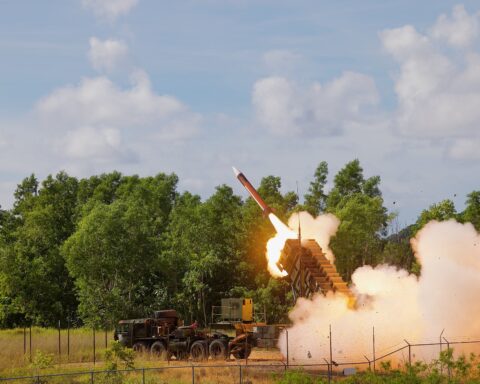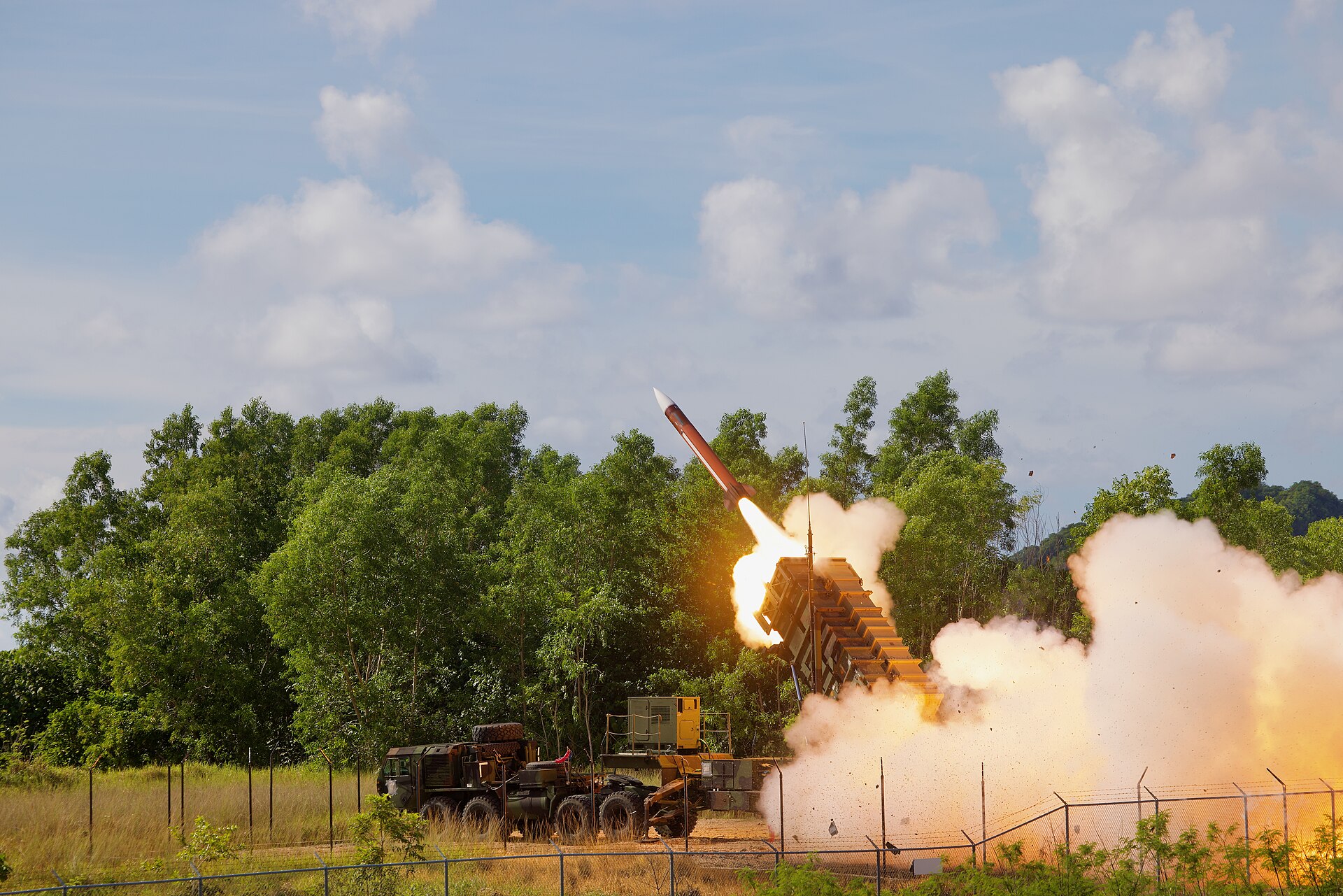

ATHENS — On March 17, 2026, Greek Prime Minister Kyriakos Mitsotakis stood at a Bloomberg event in Athens and told the audience, with the practised confidence of a man who had rehearsed the line, that “the simple answer is no, Greece is not going to participate in any operation around the theater of current operations.” Two days later, Hellenic Air Force specialists operating a PAC-3 Patriot battery at Yanbu on Saudi Arabia’s Red Sea coast fired interceptor missiles at incoming Iranian ballistic missiles — the first combat engagement in the four-and-a-half-year history of the ELDYSA deployment, and the first time Greek weapons have been fired against a sovereign state’s ordnance since the Cyprus crisis of 1974.
That two-day gap between categorical denial and kinetic reality is not a failure of Greek communications, nor a case of a politician caught out by events moving faster than his talking points. It is the architecture functioning exactly as Mohammed bin Salman designed it — a bilateral air defense network in which every participating country has been given enough private incentive to act and enough public ambiguity to deny, and in which the political cost of collective disclosure is higher than the political cost of individual contradiction.
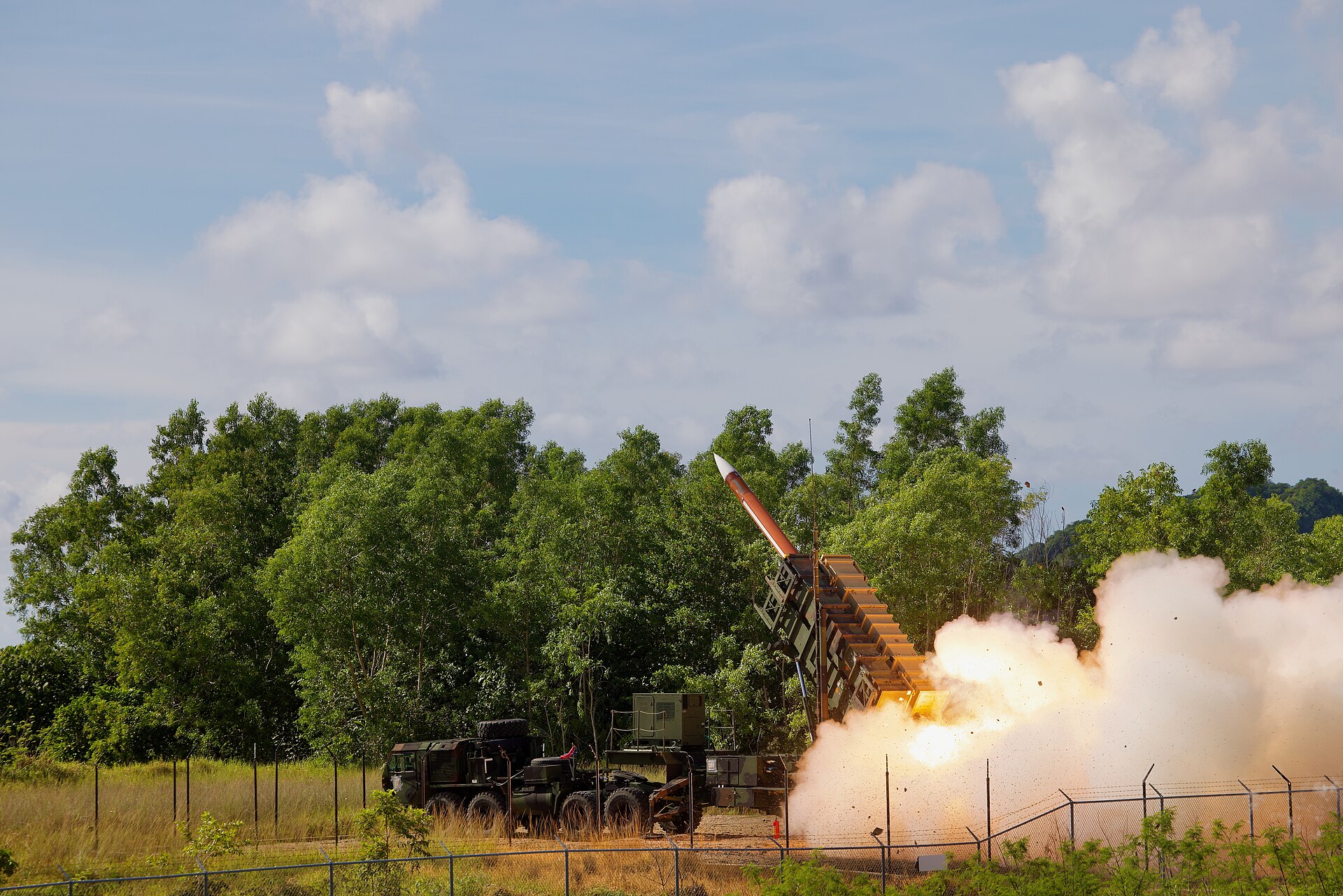
Table of Contents
- The Mitsotakis Denial and What Followed
- What Is the ELDYSA Mission and How Did Greece End Up Defending Saudi Oil?
- The Investment Architecture Behind the Intercept
- Why Did Greek Troops Fire Without a Parliamentary Combat Mandate?
- Athens as the Gulf’s Bilateral Munitions Hub
- How Did MBS Build an Alliance Without Calling It One?
- Iran’s Calculated Silence on Greece
- Does the Yanbu Deployment Expose NATO to Article 5 Liability?
- The Domestic Reckoning in Athens
- The Architecture That Cannot Be Named
- Frequently Asked Questions
The Mitsotakis Denial and What Followed
The Bloomberg event on March 17 was supposed to be about investment climate, about Greece’s post-crisis reinvention as a gateway economy between Europe and the eastern Mediterranean, and Mitsotakis delivered the performance with the smoothness of a prime minister who has spent years cultivating exactly that narrative. When asked whether Greece would be drawn into the widening Iran conflict, he did not equivocate or hedge — he gave the flattest possible denial, the kind that leaves no interpretive room and therefore no retreat.
“The simple answer is no,” he said, and the audience moved on to sovereign debt metrics. Forty-eight hours later, Greek Defense Minister Nikos Dendias confirmed to reporters that the Hellenic Air Force’s Patriot battery at Yanbu had intercepted two Iranian ballistic missiles targeting Saudi refineries as part of what Iran launched as its broadest simultaneous attack on Gulf energy infrastructure — striking Saudi Arabia, Qatar, the UAE, and Kuwait within a twelve-hour window.
Dendias, who has been the most forward-leaning member of the Greek cabinet on the Saudi relationship since his tenure as foreign minister, framed the intercepts as routine and defensive. “What we are doing in the Kingdom of Saudi Arabia is protecting every EU and global citizen,” he said, “as the price of oil is very important for our livelihood.” He called the engagement “a strictly defensive action under our 2021 agreement with Saudi Arabia,” a formulation that does precisely enough legal work to satisfy a headline and precisely too little to survive cross-examination.
The opposition was faster than the government expected. The PASOK spokesperson, with the kind of rhetorical economy that opposition parties deploy when they know the facts are doing the work for them, noted that Greece was “now an active participant in the conflict” and that “the government’s narrative of non-involvement — direct or indirect — of Greece in the war was also shot down.” It was, by any measure, the sharpest line of domestic Greek political commentary in weeks, and it landed because it was accurate.
What Is the ELDYSA Mission and How Did Greece End Up Defending Saudi Oil?
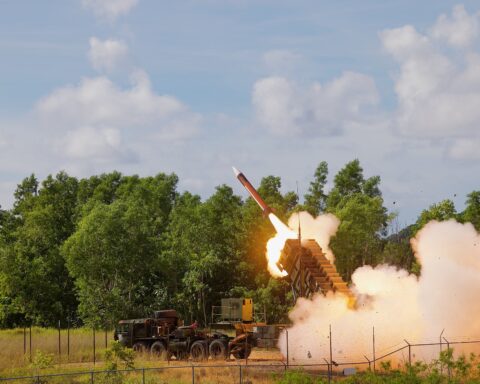
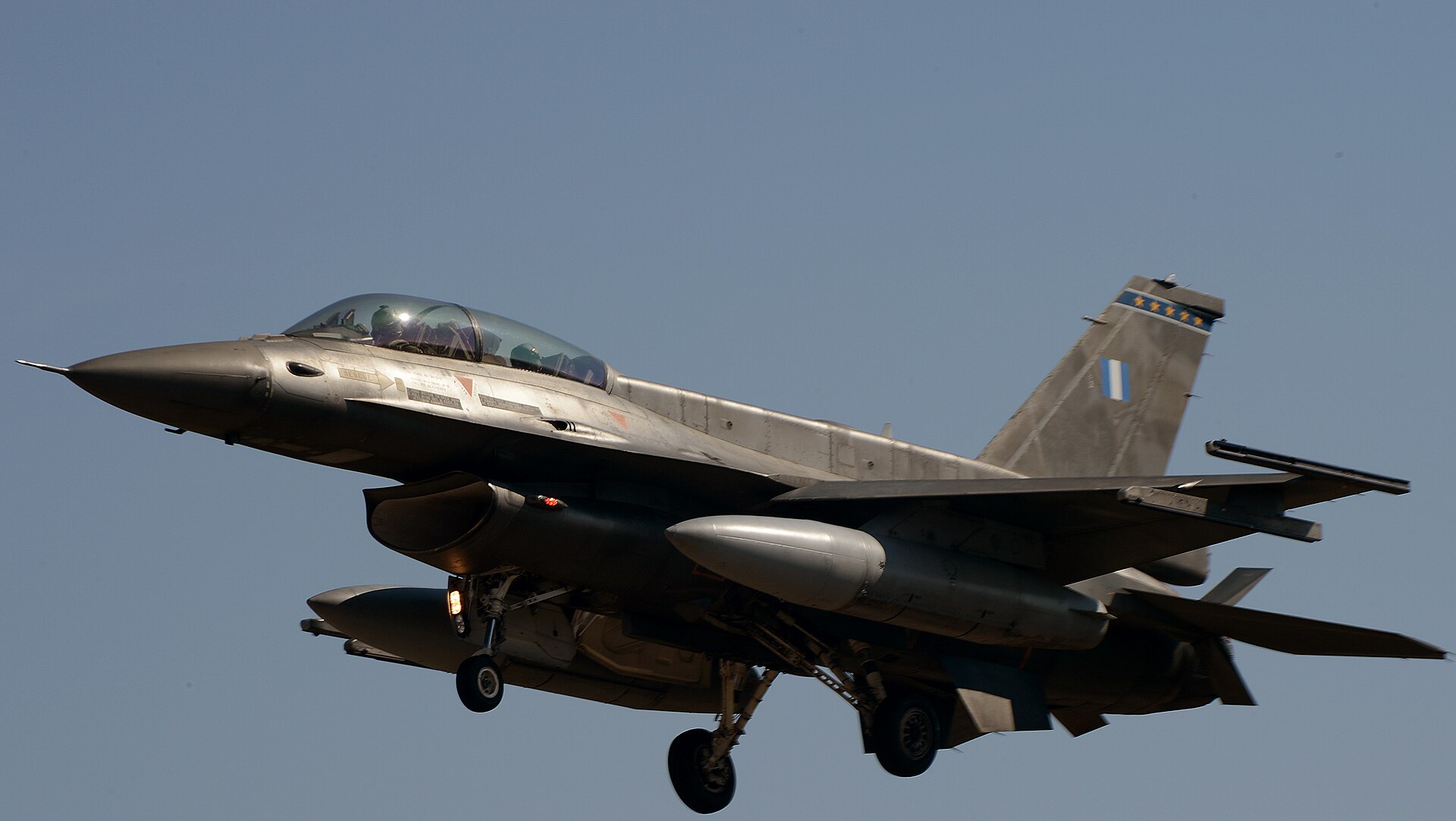
The Hellenic Armed Forces Detachment in Saudi Arabia — ELDYSA, its Greek acronym — is a deployment of approximately 120 to 130 Hellenic Air Force specialists drawn from the 114th Combat Wing at Tanagra Air Base, operating a single PAC-3 Patriot battery near Yanbu on Saudi Arabia’s Red Sea coast. It was established under a bilateral defense cooperation agreement signed in Riyadh on April 20, 2021, supplemented by a Status of Forces Agreement, and it was initially described as a response to the Houthi missile and drone threat that had been hammering Saudi infrastructure since 2019.
Yanbu is not an arbitrary location. It is the western terminal of the East-West pipeline — Saudi Aramco’s strategic bypass route that allows crude to reach Red Sea tankers without transiting the Strait of Hormuz. With Iran’s naval posture effectively threatening Hormuz passage, Yanbu has become the single most important energy chokepoint in the Kingdom, the facility that determines whether Saudi Arabia can export oil at all under wartime conditions. The Greek battery is not protecting a random stretch of coastline; it is protecting the arterial route that keeps global oil markets functional.
Saudi Arabia covers all operational costs for the deployment and — critically — funded the upgrade of Greece’s Patriot systems from the PAC-2 to the PAC-3 configuration, a modernization that would have cost Athens hundreds of millions of euros from its own strained defense budget. The ELDYSA mission has been extended four times at Riyadh’s formal request; the current mandate runs through November 2026. Each extension has been treated, in Greek domestic politics, as a routine administrative renewal rather than a strategic escalation — a framing that held perfectly until the missiles started flying.
The Investment Architecture Behind the Intercept
To understand why 130 Greek air defense specialists are shooting down Iranian missiles over Saudi Arabia, you need to look not at the defense cooperation agreement but at everything that surrounds it — the investment flows, energy deals, and institutional mechanisms that have made Greece’s Saudi relationship the most economically consequential bilateral partnership Athens has built in the Middle East. The defense cooperation is the visible tip; the economic architecture beneath it is what makes the arrangement structurally irreversible.
Bilateral trade between Greece and Saudi Arabia reached $3.713 billion in 2023, of which Greek exports accounted for $2.715 billion. In 2020, Greek exports to Saudi Arabia stood at $339 million — meaning Greece’s exports to the kingdom grew more than eight-fold in three years, a trajectory that maps almost exactly onto the timeline of ELDYSA’s deployment and extension. Correlation is not causation, but when the correlation is this tight and the private diplomatic channels this active, the burden of proof shifts to anyone arguing the two tracks are unrelated.
In January 2025, Mitsotakis and Mohammed bin Salman co-chaired the inaugural Greece-Saudi Arabia High Level Strategic Cooperation Council at Al Ula — Greece’s first such mechanism with any Middle Eastern state. The HLSCC is not a photo-opportunity framework; it comprises seven committees spanning defense, energy, trade, tourism, culture, technology, and maritime affairs, and its inaugural session produced 46 joint initiatives. Ioannis E. Kotoulas, writing for the China-CEE Institute, described it as a shift from “cordial diplomacy to structured strategy,” and the structure itself tells you what is being exchanged for what — defense sits inside the same institutional architecture as energy and investment, and the committees report to the same principals.
The centrepiece of the energy relationship is the Saudi-Greek Interconnection — a joint venture between Greece’s IPTO and Saudi Arabia’s National Grid, formalized on September 27, 2023, planning a 3 GW electricity link from the Arabian Peninsula to Europe, scalable to 9 GW, at an estimated cost exceeding €1.5 billion. For Greece, the project cements its position as the EU’s southeastern energy gateway, a strategic identity that Athens has been cultivating since the Eastern Mediterranean gas discoveries and that now has a physical infrastructure commitment behind it. For Saudi Arabia, it creates a direct energy export channel to Europe that bypasses every transit country and every existing pipeline politics, and it gives Greece a material stake in Saudi energy security that goes well beyond oil prices.
| Date | Event | Significance |
|---|---|---|
| April 2021 | Bilateral defense agreement signed in Riyadh | Legal foundation for ELDYSA deployment |
| September 2021 | ELDYSA deployed to Yanbu | First Greek military deployment in Gulf |
| July 2022 | MBS visits Athens; 21 investment agreements signed | HLSCC framework established |
| September 2023 | Saudi-Greek Interconnection JV formalized | 3 GW (scalable to 9 GW) electricity link, €1.5B+ |
| July 2024 | Greek Parliament ratifies SOFA and defense agreement | Legal basis formalized — nearly 3 years after deployment began |
| January 2025 | Inaugural HLSCC at Al Ula; 46 joint initiatives signed | Greece’s first strategic cooperation council with a Middle Eastern state |
| March 17, 2026 | Mitsotakis denies Greek participation in conflict | “The simple answer is no” |
| March 19, 2026 | ELDYSA fires PAC-3 at Iranian ballistic missiles | First combat engagement in deployment history |
| April 1, 2026 | Greece announces munitions supply to UAE | Reveals Gulf-wide bilateral defense network |
Why Did Greek Troops Fire Without a Parliamentary Combat Mandate?
The legal architecture of ELDYSA contains an ambiguity that was, until March 19, theoretical — and is now the most politically consequential gap in Greek defense law since the Cyprus intervention. The bilateral defense cooperation agreement and SOFA were ratified by the Greek Parliament in July 2024, with support from New Democracy, SYRIZA, and PASOK and opposition from several smaller parties. The mandate authorized deployment and the operation of air defense systems in a defensive capacity, but it did not — because no one in the chamber wanted to force the question — explicitly authorize combat engagement against a sovereign state’s military assets.
Deputy National Defense Minister Yiannis Kefalogiannis, during the July 2024 parliamentary debate, framed Greece’s role through geography rather than combat — highlighting Greece’s “strategic position linking Southeastern Europe, the Black Sea, the Middle East, and Northeastern Africa.” It was the language of positioning, not of warfighting, crafted to secure the broadest possible parliamentary majority. The one question that would have split that majority — what happens when someone fires at the thing we’re supposed to be defending — was the one question nobody in the chamber asked.
The answer arrived at 3 a.m. Gulf time on March 19, when Iranian ballistic missiles streaked toward the SAMREF refinery complex at Yanbu and the Hellenic Air Force specialists did what they were trained to do — they engaged. The PAC-3 system is not a weapon that requires political authorization for each firing; its entire doctrine is built around autonomous engagement within pre-set parameters, because the flight time of a ballistic missile does not accommodate a phone call to Athens. The troops acted within their rules of engagement, which means those rules of engagement already contemplated this scenario, which means someone in the Greek defense establishment had already decided that firing at Iranian missiles was within the deployment mandate — even if no one had told the parliament that was the case.
The Centre for Mediterranean, Middle East and Islamic Studies — CEMMIS, the Greek think tank that has produced the most careful analysis of the legal exposure — concluded that while Greece frames the interceptions as “defensive,” the political significance of Greek weapons fired against Iranian missiles “cannot be fully contained” by that legal framing. The cross-party consensus that emerged after the intercept was not on whether the firing was right or wrong but on “the need to clarify where the threshold lies, beyond which Greece’s defensive presence becomes operational involvement.” That consensus, notably, has not yet produced a threshold.
Athens as the Gulf’s Bilateral Munitions Hub
The Yanbu intercept would be significant on its own, but it is not on its own. On April 1, 2026 — less than two weeks after the ELDYSA engagement — the Greek government announced it would supply anti-aircraft and anti-ballistic munitions to the United Arab Emirates, a decision that arrived with minimal parliamentary debate and maximum speed. Separately, Greece had already sent approximately 24 PAC-3 interceptor missiles to Qatar’s Al Udeid Air Base, the massive facility that also hosts the forward headquarters of US Central Command.
The pattern is no longer deniable: Greece has become the hub of a bilateral munitions-sharing network across the Gulf, supplying PAC-3 interceptors and anti-aircraft systems to Saudi Arabia, Qatar, and the UAE through separate bilateral channels that share no common command structure, no collective disclosure mechanism, and no unified political accountability. Each arrangement is technically independent, technically defensive, and technically consistent with the Greek government’s position that it is not participating in offensive operations — because the missiles Greece supplies and operates are, by doctrinal definition, defensive weapons.
This is where the architecture MBS has constructed becomes visible not as a single bilateral deal but as a system. Saudi Arabia does not need a multilateral air defense alliance — with its treaty obligations, its disclosure requirements, its collective decision-making structures — because it has assembled something that delivers the same operational output through entirely different political plumbing. Greece provides the interceptors and the trained crews. Saudi Arabia provides the funding, the basing, and the economic incentives. And the bilateral format ensures that each participating country’s exposure remains a matter between two capitals, not a matter for Brussels, NATO headquarters, or the European Parliament.
How Did MBS Build an Alliance Without Calling It One?
The conventional analysis of Saudi Arabia’s air defense arrangements focuses on capability — how many Patriot batteries, how many THAAD systems, what the intercept rate looks like against Iranian ballistic missiles. That analysis matters, and it is covered elsewhere in detail. What matters more, and what has received almost no serious attention, is the political engineering that makes the capability deployable.
Mohammed bin Salman’s approach to air defense is not a military strategy with political features; it is a political strategy with military outputs. Each participating country — Greece, the United Kingdom, France, and others whose involvement remains at varying levels of acknowledgment — has been given a private bilateral incentive structure calibrated to its specific vulnerabilities and ambitions. For Greece, the incentive is economic transformation: the trade explosion, the energy interconnection, the HLSCC institutional architecture, the PAC-3 upgrade funding. For each partner, the incentive is different, but the structural logic is identical — create enough bilateral value that the participating government cannot afford to withdraw, and enough bilateral confidentiality that it does not have to explain.
The result is something that functions like a collective defense arrangement — multiple countries contributing air defense assets to protect Saudi territory — but that is legally structured as a collection of unrelated bilateral agreements, each with its own legal basis, its own SOFA, its own financial terms, and its own political cover story. The ambiguity is not a communications failure; it is the system’s primary design feature. The moment any participating government publicly describes the arrangement as collective, every other participating government faces domestic pressure to explain its role, and the entire architecture becomes subject to the kind of parliamentary and media scrutiny that collective security arrangements attract.
“None of us will shed a single tear over the blow to the cruel regime of Iran. But we should shed a river of tears over the way it was done.”
Harry Tzimitras, Director, PRIO Cyprus Centre
The Mitsotakis denial on March 17 — “the simple answer is no” — was not hypocrisy, or at least not only hypocrisy. It was a statement that is technically defensible within the bilateral framework: Greece is not participating in “any operation,” because ELDYSA is not an operation in the sense that NATO or EU military missions are operations. It is a bilateral deployment under a bilateral agreement, and the Greek government’s position is that bilateral deployments in a defensive capacity do not constitute participation in a conflict, even when the thing being defended is under active attack by a state with which the conflict is being waged. The logic is circular, but the circle is load-bearing.
Iran’s Calculated Silence on Greece
Among the more revealing details in the aftermath of the Yanbu interceptions is what Tehran did not say. IRGC General Sardar Jabbari issued threats against Cyprus — warning that Iran would “launch missiles at Cyprus with such intensity that the Americans will be forced to leave the island” — but Iran has not, as of April 4, issued a formal statement naming Greece for retaliation over the Yanbu engagement. Greek weapons shot down Iranian missiles, and Iran’s public response has been to threaten a different country entirely.
This silence is not an oversight. Iran’s strategic calculus with respect to Greece is constrained by a factor that does not apply to its calculus with respect to non-aligned states: Greece is a NATO member. An Iranian strike on Greek forces — whether at Yanbu or on Greek territory — would create the conditions for a potential Article 5 invocation, and while the legal applicability of Article 5 to forces deployed bilaterally in a non-NATO theater is genuinely indeterminate, the political dynamics of an attack on a NATO member’s troops would generate pressure for collective response that Iran cannot afford to trigger while it is simultaneously engaged across the Gulf.
This is, from MBS’s perspective, the most elegant feature of the bilateral architecture. By recruiting NATO members as bilateral air defense partners, Saudi Arabia has imported a layer of deterrence that it does not pay for and did not negotiate — the implicit NATO umbrella that follows any member state’s forces wherever they deploy. Iran cannot strike Greek troops at Yanbu without risking a confrontation with NATO, cannot hit the Patriot battery without hitting the soldiers who operate it, and cannot calculate the consequences without factoring in the unpredictable response of an entire military alliance.
The Greek soldiers are there because Saudi Arabia made it economically irrational for them not to be, and because the deterrence their NATO membership provides is real even when the alliance obligation is ambiguous. The Saudi funding makes the question academic for Athens — which is, in strategic terms, the definition of a successful architecture.
Does the Yanbu Deployment Expose NATO to Article 5 Liability?
NATO’s Article 5 — the collective defense clause that treats an attack on one member as an attack on all — covers attacks on a member state’s “forces, vessels or aircraft” in specific geographic areas defined by the treaty, and the jurisprudence around its application to forces deployed bilaterally in non-NATO theaters is, to put it diplomatically, underdeveloped. The North Atlantic Treaty was written for a European and North Atlantic context, and its framers did not contemplate a scenario in which a member state’s air defense specialists would be shooting down ballistic missiles over the Arabian Peninsula under a bilateral agreement with a Gulf monarchy.
The legal position is genuinely indeterminate. If Iran were to strike the Greek Patriot battery at Yanbu — killing or wounding Hellenic Air Force personnel — Greece could invoke Article 5, and the question of whether the Alliance would treat a bilateral deployment in Saudi Arabia as equivalent to an attack on Greek territory would become the most consequential legal debate in NATO’s history. There is no precedent, no advisory opinion, and no agreed interpretation, which means the answer would be political rather than legal, determined by the willingness of 31 other member states to accept that Greece’s private commercial-military arrangement with Saudi Arabia creates a collective obligation.
The major non-NATO ally designation that Saudi Arabia received from Washington adds another layer of complexity, because it creates a legal pathway for defense cooperation that sits adjacent to but outside the NATO framework, blurring the already unclear boundary between bilateral and collective arrangements. What is clear is that the current situation — NATO members operating air defense systems in combat against a state adversary, under bilateral agreements that NATO headquarters has no role in authorizing or overseeing — is precisely the kind of grey zone that the Alliance’s legal framework was never designed to accommodate.
The Domestic Reckoning in Athens
The Greek domestic political response to the Yanbu intercepts has been sharp but, so far, contained — and the containment itself is instructive, because it reveals the degree to which the Saudi relationship has become cross-party infrastructure in Athens rather than a partisan position. New Democracy, SYRIZA, and PASOK all voted for the SOFA ratification in July 2024. All three parties have, in various configurations, supported the trade expansion, the energy interconnection, and the HLSCC. The opposition’s attack is not that the Saudi relationship is wrong but that the government failed to be honest about what it entailed.
PASOK’s line — that “the government’s narrative of non-involvement of Greece in the war was also shot down” — is effective precisely because it does not call for withdrawal. It calls for honesty, which is a much safer political position in a country where the economic benefits of the Saudi relationship are tangible and growing, and where the defense establishment views the PAC-3 upgrade funding as a transformative capability gain that Greece could not have afforded on its own. The smaller parties that opposed the SOFA ratification — the Communist Party (KKE) and Hellenic Solution — have called for withdrawal, but they represent a parliamentary minority that cannot force the question to a vote.
Harry Tzimitras, director of the PRIO Cyprus Centre, captured the paradox with unusual precision: that Greece could celebrate the blow against the Iranian regime while mourning the legal architecture through which it was delivered. His argument — that circumventing international law frameworks is “particularly dangerous for countries like Greece that depend on international law frameworks” — strikes at the structural vulnerability that the Saudi bilateral arrangement creates. Greece’s entire strategic position in the Eastern Mediterranean, from its maritime boundary disputes with Turkey to its claims in the Aegean, rests on the primacy of international law. Every time Athens acts outside multilateral legal frameworks, it weakens the very architecture that protects it from a much larger and more assertive neighbour.
The reason no party has proposed where that threshold sits is obvious: defining it would require either constraining the deployment or publicly acknowledging that the current deployment already exceeds it, and neither outcome serves any major party’s interests.

The Architecture That Cannot Be Named
What Mohammed bin Salman has built is not a military alliance in any conventional sense — it has no treaty, no secretariat, no collective command structure, no shared rules of engagement, and no mutual defense obligation. It is something newer and, in its own way, more sophisticated: a network of bilateral defense relationships in which the participating countries are bound not by legal obligation but by economic incentive, in which operational coordination happens through parallel bilateral channels rather than a common headquarters, and in which the political cover for each participant is maintained by the absence of any public acknowledgment that the network exists as a network.
Greece provides interceptors and crews at Yanbu, sends PAC-3 missiles to Qatar, and supplies munitions to the UAE — three separate bilateral arrangements that, taken together, constitute a Gulf-wide air defense contribution of a kind that would normally require a NATO deployment decision or an EU Common Security and Defence Policy mission. Instead, it requires nothing more than a series of bilateral signatures, each backed by its own economic package, each deniable on its own terms, each visible only when someone fires a missile and the debris falls where reporters can find it. What Iran has since refined into a systematic approach — firing salvos precisely calibrated to ensure intercept debris falls on Al-Kharj’s residential neighborhoods near Prince Sultan Air Base — is the subject of the analysis on how Iran generates civilian impact through intercept physics.
The January 2025 HLSCC — with its seven committees and its institutional permanence — is the mechanism that locks the arrangement in place. It is not a defense pact; it is something more durable than a defense pact. It is an economic interdependence deep enough that the defense component becomes impossible to extract without collapsing the trade, energy, and investment architecture that has been built around it. Deputy National Defense Minister Kefalogiannis was right, during the July 2024 debate, to describe Greece’s role in geographic terms — “linking Southeastern Europe, the Black Sea, the Middle East, and Northeastern Africa” — because that is exactly the role Saudi investment is funding, and it is exactly the role that makes withdrawal from ELDYSA not merely a military decision but an economic and strategic one.
Dendias, defending the intercepts, said Greece was “protecting every EU and global citizen” through oil price stability — a framing that makes ELDYSA sound like a public service rather than a bilateral military commitment to a Gulf monarchy engaged in an active shooting war. The framing is cynical, but it is not wrong: Yanbu’s refineries are, in the current configuration of global energy markets, systemically important, and their destruction would produce an oil price shock that would hit European economies hardest. The question is not whether the protection is valuable but whether the political architecture through which it is delivered — bilateral, unaccountable, deniable, and now combat-proven — is sustainable when the contradictions become this visible. What that protection cannot address is Iran’s simultaneous pressure on Bab el-Mandeb, where Tehran’s proxy forces can threaten Saudi crude exits at zero cost to Iran’s own export revenue.
On March 17, Mitsotakis said the simple answer was no. On March 19, Greek missiles destroyed Iranian missiles over Saudi Arabia. On April 1, Greece announced it was arming the UAE. The simple answer was never the real answer, and in the architecture MBS has constructed, it was never supposed to be.
Frequently Asked Questions
What weapons system does Greece operate in Saudi Arabia?
Greece operates a single Raytheon MIM-104 Patriot battery in the PAC-3 configuration, which is the most advanced variant capable of hit-to-kill interception of ballistic missiles. The system was upgraded from PAC-2 to PAC-3 at Saudi expense, a modernization that enhanced not only the Yanbu-deployed battery but Greece’s overall Patriot capability, since crew rotations mean that all Hellenic Air Force Patriot operators eventually cycle through the PAC-3-equipped deployment. The PAC-3’s engagement envelope covers ballistic missiles at ranges up to 35 kilometres and altitudes up to 25 kilometres, making it the appropriate system for the medium-range ballistic missiles Iran has been firing at Gulf energy infrastructure.
Has Greece faced any direct threats from Iran over the Yanbu intercepts?
Iran has not publicly threatened Greece by name in response to the Yanbu interceptions, a significant omission given that IRGC General Sardar Jabbari explicitly threatened Cyprus — warning of missile strikes intense enough to “force the Americans to leave the island.” The absence of a direct threat to Athens is widely interpreted as reflecting Iran’s reluctance to escalate against a NATO member state, since any Iranian strike on Greek forces could trigger an Article 5 discussion within the Alliance. That reluctance persists regardless of the legal ambiguities around bilateral deployments in non-NATO theaters — the political risk of striking a NATO country’s troops is a deterrent that operates independently of the treaty’s formal geographic scope.
How much has Saudi Arabia invested in Greece since the defense cooperation began?
Beyond the direct ELDYSA operational cost coverage and PAC-3 upgrade funding, the Saudi-Greek economic relationship encompasses the €1.5 billion-plus Saudi-Greek Interconnection electricity project, the 21 investment agreements signed during MBS’s July 2022 Athens visit, and the 46 joint initiatives launched at the January 2025 HLSCC summit at Al Ula. Total Saudi investment commitments in Greece across all sectors have not been publicly disclosed as a single figure — itself a feature of the bilateral architecture’s opacity — and that opacity is structural rather than administrative: no single disclosure event could occur without triggering parallel disclosures across all participating bilateral partners, which the architecture is explicitly designed to prevent.
Could Greece withdraw from ELDYSA without diplomatic consequences?
Technically, Greece could decline to extend the ELDYSA mandate when the current authorization expires in November 2026, but the deployment is now embedded within the HLSCC institutional framework, the energy interconnection project, and the broader trade expansion — meaning withdrawal would signal a rupture across the entire bilateral relationship, not merely the end of a military deployment. The Greek defense establishment views the PAC-3 upgrade funding and the operational experience gained at Yanbu as irreplaceable capability investments, and the energy ministry views the interconnection project as central to Greece’s southeastern energy gateway strategy, creating multiple domestic constituencies with material interests in the deployment’s continuation.
Are other NATO countries participating in similar bilateral air defense arrangements with Saudi Arabia?
The United Kingdom has acknowledged a bilateral defense presence in the Gulf that includes air defense components, and France maintains defense cooperation agreements with several Gulf states that encompass integrated air and missile defense elements. The full scope of NATO member participation in bilateral Gulf air defense arrangements remains deliberately opaque, but Greece’s role as a munitions supplier to Qatar and the UAE — in addition to its direct Yanbu deployment — suggests a pattern in which multiple Alliance members are contributing to Gulf air defense through bilateral channels that bypass NATO’s collective decision-making structures. The combined effect is an air defense network that draws on NATO-standard equipment, NATO-trained personnel, and NATO-interoperable systems without NATO authorization or oversight.