
RIYADH — Ukraine’s four-year war against Russian-operated Iranian Shahed drones has produced exactly what the Gulf states now need most: interceptor drones that cost less than a used car and destroy the same weapons Iran is firing at Saudi oil fields, Emirati ports, and Kuwaiti airports every day. On March 18, President Volodymyr Zelenskyy confirmed to the British Parliament that 201 Ukrainian counter-drone specialists are already deployed across Saudi Arabia, the UAE, Qatar, and Kuwait, with another 34 ready to follow. Gulf states have submitted requests for more than 7,000 Ukrainian interceptor drones from a single manufacturer, TAF Industries, while the Pentagon has rushed 10,000 Ukraine-proven Merops interceptors to the region. The transfer is reshaping air defense economics across the Middle East and turning Kyiv into an unlikely arms superpower.
Table of Contents
- Why Are Gulf States Turning to Ukraine for Air Defense?
- What Is the Wild Hornets Sting and How Does It Work?
- The Cost Revolution That Made Patriot Obsolete Against Drones
- How Many Interceptors Have Gulf States Requested?
- The 201 Ukrainian Experts Defending the Gulf Right Now
- Can Ukraine Produce Enough Interceptors for Both Wars?
- What Does the Merops Deployment Tell Us About Pentagon Thinking?
- The Drone Defense Hierarchy
- A Country at War Became an Arms Exporter
- What Does Kyiv Want in Return?
- The Contrarian Case Against Cheap Interceptors
- Saudi Arabia’s New Layered Defense Architecture
- Frequently Asked Questions
Why Are Gulf States Turning to Ukraine for Air Defense?
Every Gulf Cooperation Council member state is now either purchasing Ukrainian counter-drone technology or negotiating to do so, a development that would have seemed absurd twelve months ago. The answer is brutally simple arithmetic: Iran’s drone campaign against the Gulf has exposed a gap between the threats these nations face and the tools they possess to stop them. On March 26, Zelenskyy arrived in Saudi Arabia to deepen this defence partnership, bringing 228 Ukrainian specialists already deployed across five Gulf states.
Since the US-Israeli strikes on Iran began on February 28, Tehran has launched an estimated 1,800 or more drones and missiles at targets across Saudi Arabia, the UAE, Kuwait, Bahrain, Qatar, and Oman, according to data compiled by the Armed Conflict Location and Event Data Project. Saudi Arabia alone intercepted more than 60 drones overnight on March 17, with the daily rate reaching 100 for the first time since the war began. The Kingdom’s Ministry of Defense confirmed 37 drone interceptions over the Eastern Province in a single Tuesday morning. Beyond the military and energy targets, the strikes have exacted a mounting civilian toll across six Gulf states, with eleven dead and 268 wounded in attacks on hotels, airports, and homes, according to a Human Rights Watch investigation.
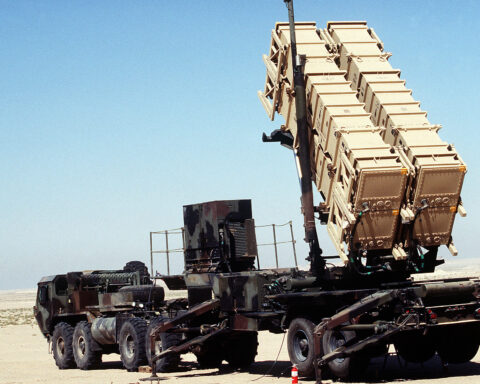
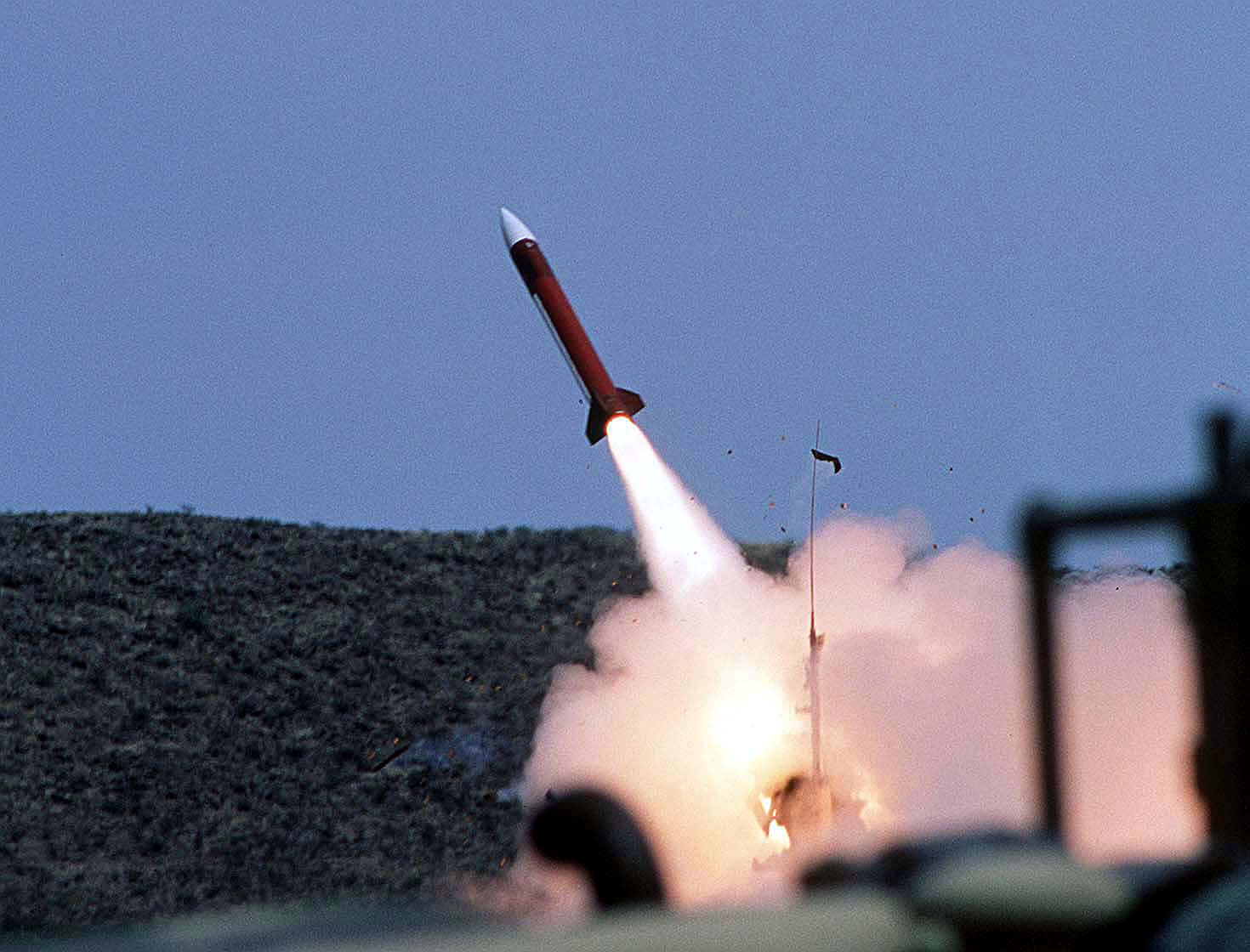
Traditional air defense systems were designed to counter ballistic missiles and manned aircraft, not swarms of expendable drones costing between $20,000 and $50,000 each. A single PAC-3 Missile Segment Enhancement interceptor, the backbone of Saudi Arabia’s air defense, costs between $3.9 million and $12 million depending on the contract structure, according to Defense Security Cooperation Agency filings. The United States burned through an estimated $2.4 billion worth of Patriot interceptors in just the first five days of the Iran war, according to Military Watch Magazine. The cost debate took on new urgency after a Greek Patriot battery at Yanbu scored its first combat intercept against two Iranian ballistic missiles on March 19, validating the system’s ballistic missile defense role even as its drone-fighting economics remain unsustainable.
Ukraine, by contrast, has spent four years developing, testing, and refining interceptor drones specifically designed to destroy Iranian-made Shaheds. These systems have accumulated thousands of confirmed kills in real combat conditions. No laboratory test, no military exercise, no defense contractor simulation can replicate that record. The Gulf states are not buying Ukrainian technology because it is cheap. They are buying it because it works against the exact weapon system that is hitting them right now. The deeper reason is that Russia and Ukraine are now fighting their war inside the Gulf, with Moscow providing Iran the same upgraded drones and satellite intelligence that Ukraine has spent four years learning to defeat.
What Is the Wild Hornets Sting and How Does It Work?
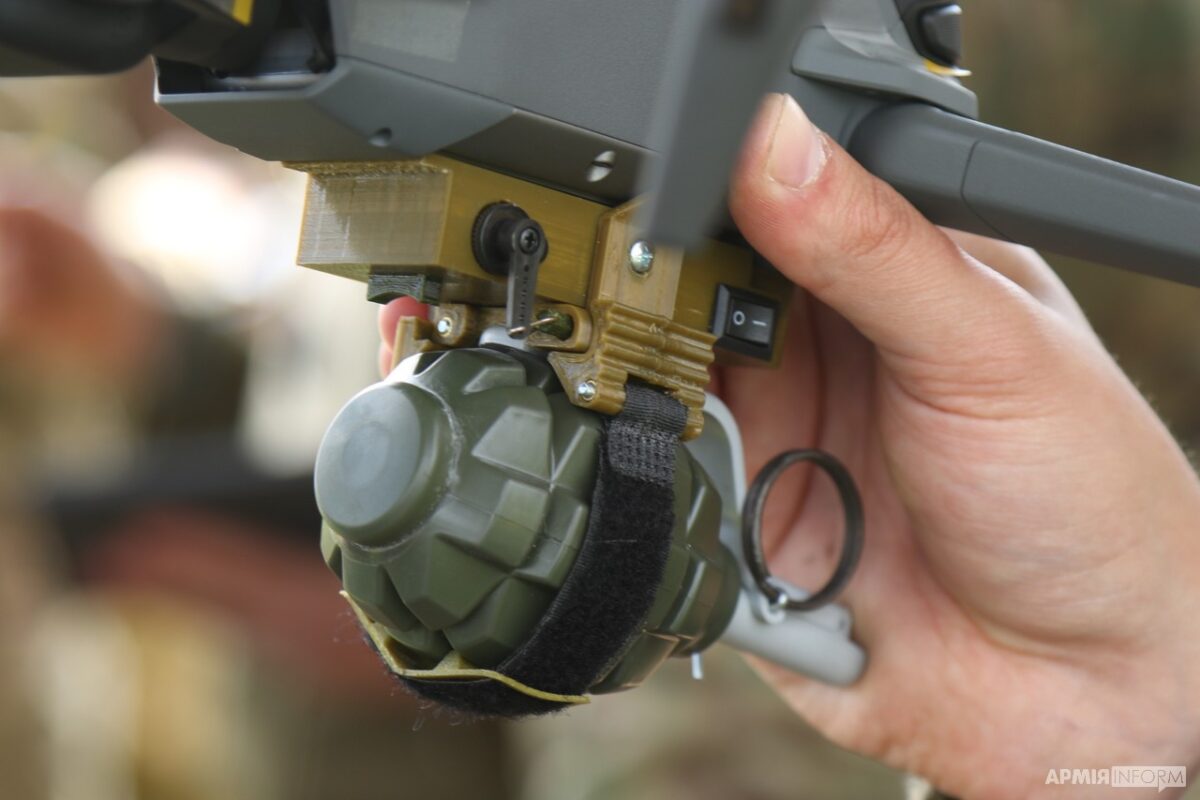
The Sting interceptor drone, developed by the Ukrainian volunteer group Wild Hornets, has become the symbol of Kyiv’s counter-drone revolution. Built with a 3D-printed, aerodynamic, bullet-shaped airframe and powered by four rotors, the Sting reaches flight speeds of 343 kilometers per hour (213 miles per hour) and can cruise at altitudes up to 3,000 meters (10,000 feet). Its engagement range extends to 25 kilometers from the launch point, according to specifications published by the manufacturer.
The Middle East briefing 3,000+ readers start their day with.
One email. Every weekday morning. Free.
The interceptor uses Kurbas thermal imaging cameras produced by the Ukrainian firm Odd Systems, paired with AI-assisted targeting software that enables operators to lock onto an incoming drone and guide the Sting to a direct collision. Assembly takes approximately two minutes per unit. A Sting can be deployed from any flat surface in 15 minutes, requiring no launch catapult, no dedicated runway, and no specialized ground equipment.
The Sting’s combat record is formidable. As of early March 2026, Wild Hornets confirmed more than 3,900 Geran-type drone kills, the designation Russia uses for its license-produced variants of the Iranian Shahed-136. Each kill cost approximately $2,100 to $2,500 in hardware, according to manufacturer estimates, against a target valued at $20,000 to $50,000.
TAF Industries, another Ukrainian defense firm, produces two higher-end interceptor systems now being evaluated by Gulf states. The Octopus-100 features an automatic terminal guidance module that enables engagement with minimal operator input, making it suitable for defending fixed installations such as oil refineries and desalination plants. The TAF I-10, a lighter variant, is designed for mobile convoy protection and forward operating base defense.
The distinction matters for Gulf buyers. Saudi Aramco’s sprawling Eastern Province infrastructure, spanning Ras Tanura, Abqaiq, Shaybah, and dozens of smaller facilities, requires fixed-point automated defense. The UAE’s distributed port infrastructure at Fujairah, Jebel Ali, and Ruwais demands a different configuration. Ukrainian manufacturers are offering customized packages rather than single-product solutions, a flexibility that Western defense primes have historically failed to match.
The Cost Revolution That Made Patriot Obsolete Against Drones
The economics of drone defense have been inverted. For forty years, the assumption underlying Gulf air defense spending was that interceptors would always be more expensive than the munitions they stopped, but that the value of the protected target would justify the expense. A $4 million PAC-3 missile protecting a $10 billion oil processing facility was rational. A $4 million PAC-3 missile destroying a $20,000 drone is not.
Saudi Arabia’s January 2026 purchase of 730 PAC-3 MSE interceptors for $9 billion, approved by the US State Department, illustrates the scale of the problem. At approximately $12.3 million per round (including support equipment, training, and integration costs), Saudi Arabia’s missile defense architecture faces a fatal sustainability gap. If Iran sustains its current rate of 100 drone launches per day against the Kingdom, and Saudi forces intercept 80 percent using Patriot systems, the daily interception cost exceeds $960 million. The entire $9 billion PAC-3 order would be exhausted in fewer than ten days of sustained combat.
| System | Origin | Unit Cost | Target Type | Cost Ratio vs. Shahed | Combat Kills |
|---|---|---|---|---|---|
| PAC-3 MSE | United States | $3.9M–$12M | Ballistic missiles, aircraft | 195:1 to 600:1 | Classified |
| THAAD | United States | $12M–$15M | Ballistic missiles | 600:1 to 750:1 | Limited |
| Cheongung II (KM-SAM) | South Korea | $2M–$3M | Aircraft, cruise missiles | 100:1 to 150:1 | None (new deployment) |
| Merops | US / Ukraine-developed | $14,000–$15,000 | Drones | 0.7:1 | 1,900+ (Ukraine) |
| Wild Hornets Sting | Ukraine | $2,100–$2,500 | Drones | 0.1:1 | 3,900+ (Ukraine) |
| TAF Octopus-100 | Ukraine | $5,000–$8,000 (est.) | Drones, loitering munitions | 0.25:1 to 0.4:1 | In testing |
The table reveals a structural shift in defense economics. Traditional missile systems cost 100 to 750 times more than the drones they intercept. Ukrainian systems cost less than the drone itself. For the first time in the history of air defense, the interceptor is cheaper than the weapon it destroys. This inversion has consequences that extend far beyond the Gulf.
Iran’s cheapest weapons were winning the most expensive war precisely because the cost asymmetry favored the attacker. Ukrainian interceptor technology flips that equation. An attacking force that can produce Shaheds at $20,000 each loses its economic advantage when the defender can destroy them for $2,100.
How Many Interceptors Have Gulf States Requested?
At least three Gulf Cooperation Council members have approached TAF Industries directly with formal requests for interceptor drones, according to reporting by Army Recognition, Militarnyi, and the Kyiv Independent. The numbers are significant: the UAE has requested approximately 5,000 units, Qatar has requested 2,000, and Kuwait has expressed strong interest without confirming a specific quantity. Combined, the confirmed requests exceed 7,000 interceptors from a single Ukrainian manufacturer.
| Country | Manufacturer | Quantity Requested | Status | Primary Threat |
|---|---|---|---|---|
| United Arab Emirates | TAF Industries | 5,000 | Inquiry stage | Port/infrastructure defense |
| Qatar | TAF Industries | 2,000 | Inquiry stage | LNG facility protection |
| Kuwait | TAF Industries | Unspecified | Expression of interest | Airport/oil field defense |
| Saudi Arabia | Multiple (incl. interceptor missile deal) | Undisclosed | Deal signed (interceptor missiles); broader negotiations ongoing | Oil infrastructure, cities |
Saudi Arabia’s procurement path has been more complex. A Saudi arms company signed a deal for Ukrainian-made interceptor missiles, with sources in Ukraine’s defense industry telling the Kyiv Independent that Riyadh and Kyiv are negotiating a separate, larger agreement that could be finalized imminently. The bilateral Saudi-Ukrainian defense relationship has deepened rapidly since the war began, driven by the recognition that American supply chains cannot deliver Patriot interceptors fast enough to match Iran’s daily launch rate. The broader pattern — in which Korean, Chinese, Turkish, and Ukrainian suppliers are all challenging American dominance of Gulf arms procurement — reflects a structural market shift driven by battlefield economics.
The requests remain at the inquiry stage in most cases, with discussions ongoing regarding system integration, operator training, delivery timelines, and interoperability with existing air defense networks. The speed of these negotiations is itself significant. Defense procurement cycles in the Gulf typically span years. These inquiries are being processed in days.
The 201 Ukrainian Experts Defending the Gulf Right Now
Zelenskyy’s March 18 confirmation to the British Parliament puts a precise number on what had previously been reported in fragments: 201 Ukrainian anti-drone specialists are currently deployed across the Gulf region, with an additional 34 prepared to deploy. These are military experts who have spent years defending Ukrainian cities, power plants, and military positions against the same Iranian-designed Shahed drones that are now hitting the Gulf.
Ukrainian teams are confirmed in the Emirates, Qatar, and Saudi Arabia, according to Zelenskyy’s statement, with deployments to Kuwait underway. Al Jazeera reported that more than ten European and Middle Eastern countries had reached out to Ukraine requesting support for their defensive capabilities, indicating that the Gulf deployments represent only part of a broader Ukrainian security assistance program.
The experts serve multiple functions. First, they train local military and security personnel on interceptor drone operations, including launch procedures, thermal-camera targeting, and post-engagement assessment. Second, they advise on defensive positioning, drawing on lessons learned from protecting Ukrainian power stations and urban centers against nightly Shahed barrages. Third, they integrate Ukrainian technology with existing command-and-control networks, ensuring that interceptor drones operate within the deconfliction zones established for Patriot and THAAD batteries. Fourth, they provide real-time tactical guidance during live Iranian drone attacks, a capability that cannot be taught in a classroom.
Their presence represents a form of security cooperation that did not exist before the Iran war. Saudi Defense Minister Khalid bin Salman has overseen a rapid expansion of the Kingdom’s defense partnerships since the conflict began, and the Ukrainian deployment fits a pattern of pragmatic, threat-driven procurement that prioritizes operational effectiveness over traditional alliance structures. The speed of the deployment is itself instructive. Traditional defense cooperation agreements between Gulf states and Western allies involve months of negotiation, memoranda of understanding, and end-user certificates. The Ukrainian deployments were arranged in days, driven by the urgency of incoming fire rather than the pace of bureaucratic process.
The deployment also carries symbolic weight. A country fighting for its own survival against Russian aggression is simultaneously exporting security expertise to the wealthiest nations on earth. Ukraine has framed this capability transfer as evidence that Kyiv is not merely a consumer of Western military aid but a producer of genuine security value. The message resonates in Gulf capitals, where leaders are acutely aware that aid dependency is a position of weakness and that partners who bring capabilities to the table earn more influence than those who arrive with requests.
Can Ukraine Produce Enough Interceptors for Both Wars?
Ukraine’s drone industry has scaled at a pace that has no peacetime precedent. The country manufactured between 2.5 million and 4 million drones of all types in 2025, according to official Ukrainian government data, and aims to produce approximately 7 million in 2026. The defense sector now includes more than 1,000 companies, with roughly 450 dedicated drone producers, many of which emerged from scratch after Russia’s full-scale invasion in February 2022.
The production math suggests that export capacity exists. Ukraine currently produces approximately 2,000 interceptor-class drones per day, according to the National Security and Defense Council of Ukraine. Half of that output is consumed domestically. The remaining 1,000 units per day, or 30,000 per month, are theoretically available for export. Skyfall, another Ukrainian drone manufacturer, has stated publicly that it could produce 50,000 interceptors per month with sufficient orders and financing.
The defense-industrial base has a total annual production capacity exceeding $55 billion, with drone and missile production alone projected to reach $35 billion in 2026, according to estimates cited by the Kyiv Independent. Ukraine has also opened ten weapons export centers across Europe, signaling a strategic pivot from aid recipient to arms supplier.
The Gulf orders, even at the combined level of 7,000 or more units, represent a fraction of Ukraine’s monthly capacity. The constraint is not production but logistics: establishing supply chains, training Gulf operators, and ensuring that export deliveries do not compromise Ukraine’s own defensive requirements. Zelenskyy has been explicit that Ukraine will not shortchange its own defense to arm Gulf clients. The export strategy is designed to generate revenue, secure political allies, and demonstrate Ukrainian defense capabilities without degrading domestic readiness.
What Does the Merops Deployment Tell Us About Pentagon Thinking?
The US Army shipped 10,000 Merops AI-powered interceptor drones to the Middle East within five days of the February 28 strikes on Iran, as confirmed by Army Secretary Dan Driscoll on March 13. The Merops system, developed by US-backed defense firm Perennial Autonomy, was first deployed by Ukrainian forces in approximately June 2024 and had destroyed more than 1,900 incoming Russian drones by November 2025.
Each Merops unit costs approximately $15,000, a fraction of the PAC-3’s price tag but significantly more expensive than the Wild Hornets Sting. The system launches from a truck-mounted platform, uses artificial intelligence to navigate when satellite and electronic communications are jammed, and measures approximately three feet in length. It can identify drones and close in on them autonomously, a capability that the Sting’s more operator-dependent guidance system lacks.
The Pentagon’s decision to deploy a Ukraine-proven system to the Gulf, rather than relying solely on existing American platforms, is an implicit acknowledgment that the traditional air defense paradigm has failed against drone swarms. CNN reported that the US response to the Iranian drone threat echoes the scramble to counter improvised explosive devices in Iraq and Afghanistan, a comparison that highlights the degree to which military planners were unprepared for the scale of the drone threat despite years of warning from the Ukrainian battlefield.
The Merops deployment also reveals a procurement pipeline that runs through Kyiv. Perennial Autonomy developed the system in partnership with Ukrainian operators who provided real-world feedback on interception tactics, drone flight patterns, and electronic warfare countermeasures. Without Ukraine’s war, the Merops would not exist in its current form. The Pentagon is effectively deploying a Ukrainian-American co-production to defend Saudi and Emirati airspace.
The Drone Defense Hierarchy
The Iran war has produced an empirical ranking of counter-drone approaches, measured by cost-effectiveness, operational speed, and scalability. This hierarchy did not exist in defense doctrine before February 2026. It has emerged from combat data rather than theoretical modeling.
| Tier | Approach | Cost per Engagement | Response Time | Scalability | Combat Record |
|---|---|---|---|---|---|
| Tier 1 | Interceptor drones (Sting, Octopus) | $2,100–$8,000 | 15 minutes from alert | Extremely high (mass producible) | 3,900+ kills (Sting alone) |
| Tier 2 | AI-guided interceptors (Merops) | $14,000–$15,000 | Under 5 minutes | High (US industrial base) | 1,900+ kills (Ukraine) |
| Tier 3 | Electronic warfare / jamming | $500–$5,000 per engagement | Near-instant | Moderate (spectrum dependent) | Variable; Iran adapts GPS guidance |
| Tier 4 | Directed energy / lasers | $1–$10 per shot | Near-instant | Low (prototype stage, power dependent) | No confirmed combat use at scale |
| Tier 5 | Traditional SAM systems (Patriot, THAAD) | $3.9M–$15M | Under 10 seconds | Very low (limited production, long lead times) | Proven against ballistic missiles |
The hierarchy reveals a paradox. The most expensive systems (Tier 5) are the most mature and have the fastest reaction times, but they are economically unsustainable against mass drone attacks. The cheapest systems (Tier 1) are the most cost-effective and scalable, but require more time to deploy and depend on operator skill. Tier 4 technologies, particularly directed-energy weapons, offer the theoretical ideal of near-zero marginal cost per engagement, but remain at the prototype stage and face power-supply constraints in desert environments.
Gulf states are now building layered architectures that combine multiple tiers. Saudi Arabia retains Patriot and THAAD for ballistic missile defense, has deployed South Korean Cheongung II systems for medium-altitude threats, and is integrating Ukrainian interceptor drones for the lowest-cost, highest-volume layer. The approach mirrors the layered defense concept that Israel has employed with Iron Dome, David’s Sling, and Arrow, but substitutes Ukrainian drone technology for Iron Dome’s role at the bottom of the stack. Israel’s own interceptor shortage — part of a global interceptor crisis draining stockpiles from NATO to the Pacific — has made this substitution not merely attractive but necessary.
A Country at War Became an Arms Exporter
The geopolitical implications of Ukraine’s emergence as a defense exporter extend well beyond the Gulf. In the twelve months before the Iran war, Ukraine’s defense industry was primarily an instrument of national survival, producing weapons for domestic consumption and importing far more than it exported. The Iran war has changed the calculus overnight.
Ukraine’s defense-industrial base, valued at approximately $50 billion in total capacity according to the Council on Foreign Relations, now represents the world’s most combat-tested drone production ecosystem. No other country has manufactured, deployed, and iteratively improved drone interceptors at this scale under sustained combat conditions. American defense firms have deep engineering capability but lack the operational feedback loop that Ukrainian manufacturers maintain with frontline units. Chinese drone producers have scale but no comparable combat record. Israeli firms have Iron Dome experience but face their own supply constraints.
The Iran war broke America’s monopoly on Saudi arms by exposing the limitations of a supply chain designed for peacetime procurement rather than wartime urgency. Ukraine’s entry into the Gulf defense market represents the most significant new entrant since South Korea began competing for Saudi contracts with the Cheongung II system.
The broader pattern is one of defense democratization. Technologies that were once the exclusive preserve of major powers, AI-assisted targeting, autonomous navigation, thermal imaging, precision interception, are now produced by small Ukrainian firms operating from dispersed factories to avoid Russian strikes. A company like Wild Hornets, founded by volunteers, is supplying defensive capability that Lockheed Martin and Raytheon cannot deliver at comparable speed, cost, or operational relevance.
What Does Kyiv Want in Return?
Zelenskyy has been transparent about Ukraine’s expectations. In a March 15 statement reported by Al Jazeera, the Ukrainian president described money and technology as the most important returns for Middle Eastern support. The Gulf states possess both in abundance, and Ukraine needs both desperately.
Financial returns are the most immediate priority. Ukraine’s defense budget is heavily subsidized by Western allies, a dependency that Kyiv is eager to reduce. Arms exports to wealthy Gulf states at commercially viable prices would generate revenue that offsets Western aid reliance. Even a modest order of 7,000 interceptors at $5,000 to $8,000 each would yield $35 million to $56 million, a small sum by Gulf standards but meaningful for Ukrainian manufacturers operating on wartime margins.
Technology transfer moves in the other direction. Gulf states possess advanced sensor systems, satellite communications infrastructure, and electronic warfare capabilities that Ukrainian forces currently lack or operate in limited quantities. Saudi Arabia’s experience with large-scale radar networks, a consequence of decades of Patriot and THAAD deployment, offers technical knowledge that Ukrainian engineers could apply to improve interceptor guidance systems.
Political alignment may prove the most valuable currency. Gulf states carry significant weight in international forums, commodity markets, and bilateral relationships with both Washington and Moscow. Ukrainian strategists calculate that defense cooperation with the GCC will make it politically harder for Gulf states to maintain neutral or Moscow-leaning positions on the Russia-Ukraine conflict. A Saudi Arabia that depends on Ukrainian interceptor technology to protect its oil infrastructure has a material interest in Ukrainian industrial survival.
Our hands are on the trigger whenever developments require it.
Abdul-Malik al-Houthi, Houthi leader, March 5, 2026 — signaling the persistent threat that makes Gulf demand for affordable air defense acute
The Contrarian Case Against Cheap Interceptors
The enthusiasm for Ukrainian interceptor drones risks obscuring a set of operational limitations that Gulf defense planners must confront. Cheap does not automatically mean effective at the scale and speed the Gulf requires, and several factors complicate the narrative of a Ukrainian silver bullet. The most important question is not whether these interceptors work — four years of combat data proves they do — but whether they can be deployed, integrated, and sustained at the scale the Gulf’s threat environment demands.
The Sting’s 25-kilometer engagement range means that launch positions must be prepositioned within that radius of potential targets. Saudi Aramco’s Eastern Province infrastructure spans thousands of square kilometers. Defending Ras Tanura, Abqaiq, Shaybah, Khurais, and the dozens of gathering stations, pump stations, and pipeline junctions between them would require hundreds of Sting launch teams with constant crew rotation. The manpower requirements are significant and cannot be met by 201 Ukrainian advisors alone.
Electronic warfare presents a second challenge. Iran has adapted its drone guidance systems in response to Ukrainian countermeasures, introducing inertial navigation fallbacks that reduce vulnerability to GPS jamming. Interceptor drones that rely on radio-frequency communication links between the operator and the interceptor are themselves vulnerable to electronic warfare countermeasures. A sophisticated adversary, and Iran’s electronic warfare capabilities are not trivial, could potentially jam the interceptor’s command link while the incoming Shahed continues on a pre-programmed inertial course.
Weather and environmental conditions matter. Desert dust storms can degrade thermal imaging sensors, reduce visibility for optical guidance, and ground drone operations entirely. The Gulf’s summer temperatures, which regularly exceed 50 degrees Celsius, impose thermal stress on battery-powered systems designed for Ukraine’s temperate climate. Saudi defense planners who have operated Patriot systems in desert conditions for decades understand these constraints intimately.
Supply chain resilience is a fourth concern. Ukraine’s drone production infrastructure, while impressive in scale, operates under active Russian bombardment. Factories are dispersed and concealed, but Russian intelligence services continuously target production facilities with cruise missiles and glide bombs. A Gulf client dependent on Ukrainian supply chains inherits this vulnerability. If Russian strikes degrade Ukrainian production capacity, Gulf orders would be among the first to be deferred in favor of domestic requirements.
The most important limitation may be institutional. Integrating a new layer of air defense into an existing command-and-control architecture, one built around American systems using American datalinks and American operational procedures, requires more than purchasing hardware. It requires rewriting the rules of engagement, establishing deconfliction protocols to prevent friendly fire between Patriot batteries and interceptor drone operators, and training a new cadre of personnel who can operate in the gap between traditional and asymmetric air defense. The failure to establish clear deconfliction procedures could result in a Patriot battery shooting down a friendly interceptor drone, or an interceptor operator holding fire because the target falls within a Patriot engagement zone. These coordination challenges are solvable, but they demand time that the current conflict is not providing.
Saudi Arabia’s New Layered Defense Architecture
The Kingdom’s air defense posture has undergone more change in eighteen days of war than in the preceding eighteen years of procurement planning. Before February 28, Saudi Arabia’s air defense relied on a two-tier structure: Patriot batteries for point defense of critical infrastructure and THAAD for theater ballistic missile defense. The Iran war has exposed the need for at least four additional layers.
| Layer | System | Supplier | Target Set | Status |
|---|---|---|---|---|
| Upper tier (exo-atmospheric) | THAAD | United States | Ballistic missiles | Operational |
| Upper-mid tier | Patriot PAC-3 MSE | United States | Ballistic missiles, aircraft | Operational (730 additional on order) |
| Mid tier | Cheongung II (KM-SAM) | South Korea | Aircraft, cruise missiles | Deploying |
| Lower-mid tier | Merops | United States (Ukraine-developed) | Drones, loitering munitions | 10,000 deployed |
| Lower tier | Sting / TAF interceptors | Ukraine | Drones, slow-moving UAVs | Negotiations ongoing |
| Point defense | C-RAM / autocannon | Various | Close-in drone threats | Deploying at critical sites |
This six-layer architecture represents a fundamental departure from Saudi defense doctrine. The Kingdom has traditionally relied on a small number of expensive, high-capability systems operated by a limited number of highly trained crews. The new model demands mass: thousands of interceptors, hundreds of launch teams, and a logistics chain that can resupply daily expenditures measured in the hundreds of units.
The shift underscores a deeper failure: Gulf defense planners spent a decade and more than $100 billion preparing for the wrong war, optimising for ballistic missile salvos rather than the cheap drone swarms that have defined the actual conflict.
The $1,000 drone killer Saudi Arabia desperately needed has arrived, but deploying it at scale requires institutional transformation. The Kingdom’s defense establishment, under the leadership of Crown Prince Mohammed bin Salman and Defense Minister Khalid bin Salman, has demonstrated a willingness to break with procurement orthodoxy when survival demands it. The Chinese combat drone factory in Jeddah, the South Korean air defense systems, the Ukrainian interceptors, and the American Merops deployment collectively represent a defense architecture that no single alliance partner could provide alone.
The transformation is not complete. Integrating six layers of air defense from five different countries, each with different datalinks, different training requirements, and different operational doctrines, is an engineering and organizational challenge that will take months if not years to resolve fully. The war, however, is happening now. Saudi Arabia is building the airplane while flying it, and the Ukrainian components are among the most critical parts being bolted on mid-flight.
The long-term trajectory points toward indigenous production. Saudi Arabia’s General Authority for Military Industries has set a target of localizing 50 percent of defense spending by 2030, and Crown Prince Mohammed bin Salman has already signed a $5 billion agreement for Chinese combat drone production in Jeddah. Ukrainian interceptor technology represents a candidate for similar localization: licensing the designs, establishing assembly lines in the Kingdom, and eventually developing Saudi-modified variants optimized for desert conditions. The Wild Hornets Sting, assembled from 3D-printed components in two minutes, is precisely the kind of system that lends itself to distributed manufacturing. A Saudi factory producing Sting-type interceptors at scale would reduce supply chain vulnerability, create defense-sector jobs, and align with Vision 2030’s industrial diversification objectives.
For the moment, however, the priority is survival. The urgency of that defensive challenge was underscored when Saudi Arabia convened an emergency Arab-Islamic summit on March 18 as Iran launched its broadest retaliatory wave yet. Saudi Arabia faces an adversary that can manufacture and launch drones faster than any single defense system can destroy them. The answer is not a single system but a network of systems, sourced from wherever they are available, integrated as quickly as possible, and deployed under fire. Ukraine, a country that has lived this reality for four years, is the partner that understands the problem most intimately. The Gulf’s next air defense shield was not designed in a Raytheon laboratory or a Lockheed Martin clean room. It was forged in the skies above Kyiv, Kharkiv, and Odesa, tested against the same weapons it now faces over Riyadh, Abu Dhabi, and Kuwait City.
Ukraine’s interceptor technology is only one strand of the multinational web now shielding the Gulf. For the full picture of how NATO members, Asian allies, and regional partners have been drawn into the ad-hoc alliance defending Saudi Arabia from Iran — and what it means for the post-war security order — see our dedicated analysis.
Frequently Asked Questions
How much does a Ukrainian interceptor drone cost compared to a Patriot missile?
The Wild Hornets Sting interceptor costs approximately $2,100 to $2,500 per unit, while a PAC-3 MSE Patriot interceptor costs between $3.9 million and $12 million depending on the contract. This means a single Patriot round costs as much as 1,800 to 5,700 Ukrainian interceptors. The Merops system, a Ukrainian-American co-development deployed by the Pentagon, costs approximately $15,000 per unit, still less than one percent of a Patriot interceptor’s price.
Which Gulf states have requested Ukrainian interceptor drones?
The UAE has requested approximately 5,000 interceptor drones from TAF Industries, Qatar has requested 2,000, and Kuwait has expressed strong interest without confirming a specific quantity. Saudi Arabia has signed a deal for Ukrainian interceptor missiles and is negotiating a broader weapons agreement. Ukrainian military experts are currently deployed in the UAE, Qatar, Saudi Arabia, and are en route to Kuwait, according to President Zelenskyy’s March 18, 2026 statement to the British Parliament.
What is the Wild Hornets Sting drone’s combat record?
As of early March 2026, the Sting has destroyed more than 3,900 Geran-type drones, the Russian-operated variant of the Iranian Shahed-136, in combat over Ukraine. The interceptor uses thermal imaging cameras and AI-assisted targeting to reach speeds of 343 kilometers per hour and engage targets at ranges up to 25 kilometers. Each unit can be assembled in approximately two minutes and deployed from any flat surface within 15 minutes.
How many Ukrainian drone experts are deployed in the Gulf?
President Zelenskyy confirmed on March 18, 2026 that 201 Ukrainian counter-drone specialists are deployed across the Gulf region, with 34 additional experts prepared to deploy. The specialists are providing training, tactical guidance, and system integration support to local defense forces in Saudi Arabia, the UAE, Qatar, and Kuwait. More than ten European and Middle Eastern countries have also requested Ukrainian drone defense assistance.
Can Ukrainian drone factories produce enough interceptors for both Ukraine and the Gulf?
Ukraine currently produces approximately 2,000 interceptor-class drones per day, with half consumed domestically and the remainder available for export, according to Ukraine’s National Security and Defense Council. The country manufactured between 2.5 million and 4 million drones of all types in 2025 and aims to produce 7 million in 2026. The Gulf’s combined requests of 7,000 or more units represent less than one week of Ukraine’s exportable production capacity.
Why did the Pentagon deploy Ukraine-developed Merops drones to the Middle East?
The US Army shipped 10,000 Merops AI-powered interceptor drones to the Middle East within five days of the Iran war’s start because traditional air defense systems proved economically unsustainable against massed drone attacks. The Merops system was developed by US-backed firm Perennial Autonomy in partnership with Ukrainian operators and had destroyed more than 1,900 Russian drones before being deployed to the Gulf. At $15,000 per unit, Merops costs less than one percent of a Patriot interceptor.