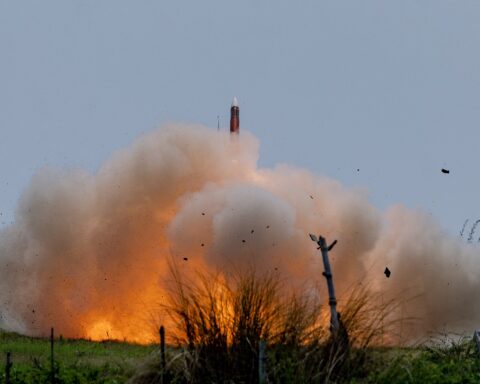

ABU DHABI — Iran’s missile and drone strikes on aluminium smelters in Abu Dhabi and Bahrain on 29 March mark a deliberate escalation from military retaliation to economic warfare, targeting the industrial base that underpins Gulf economic diversification and raising the cost of Gulf participation in the U.S.-led campaign against Tehran. The Islamic Revolutionary Guard Corps destroyed more than production lines at Emirates Global Aluminium and Aluminium Bahrain. It destroyed the assumption that Gulf industrial infrastructure sits outside the conflict’s blast radius.
The IRGC’s stated justification — that the facilities were “linked to the United States military” — is a legal fiction elastic enough to cover virtually any export-oriented or dual-use industrial site in the Gulf Cooperation Council. Saudi Arabia’s Jubail Industrial City, the Ma’aden aluminium complex at Ras Al Khair, and the SABIC petrochemical corridor host precisely the same target profile as the sites struck in Abu Dhabi and Bahrain. What happened on Saturday was not an isolated act of destruction. It was a proof of concept for a permanent coercive capability that will outlast any ceasefire.
Table of Contents
- What Did the IRGC Strike on 29 March?
- The Dual-Use Doctrine and Its Infinite Elasticity
- How Much Aluminium Capacity Has the War Removed?
- From Military Bases to Smelters: The Targeting Evolution
- Why Is Saudi Industrial Infrastructure Equally Exposed?
- The Air Defense Gap That Cannot Be Closed
- Vision 2030’s Concentration Paradox
- Iran’s Permanent Coercive Capability
- What Can Gulf States Do About Industrial Vulnerability?
- Frequently Asked Questions
What Did the IRGC Strike on 29 March?
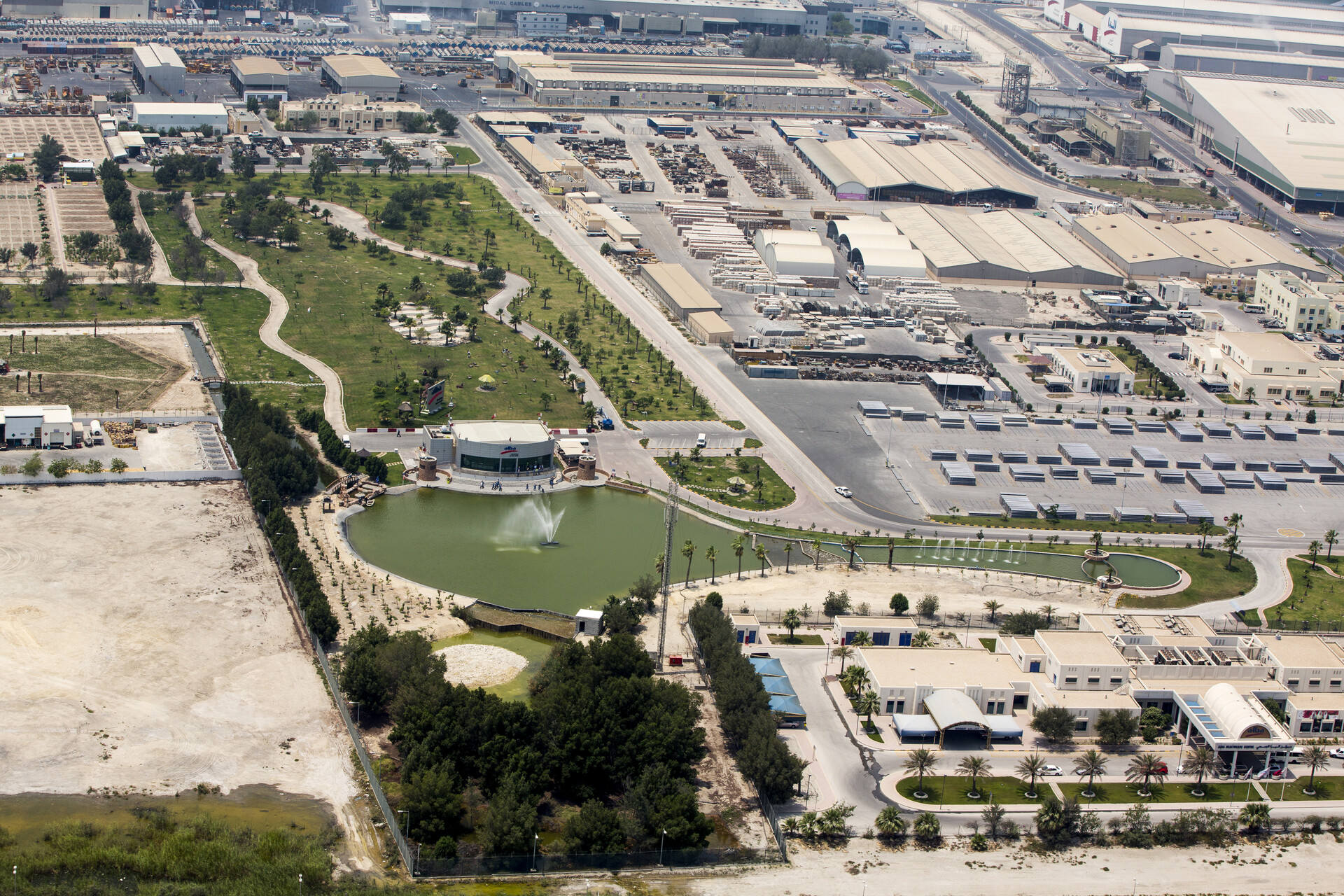
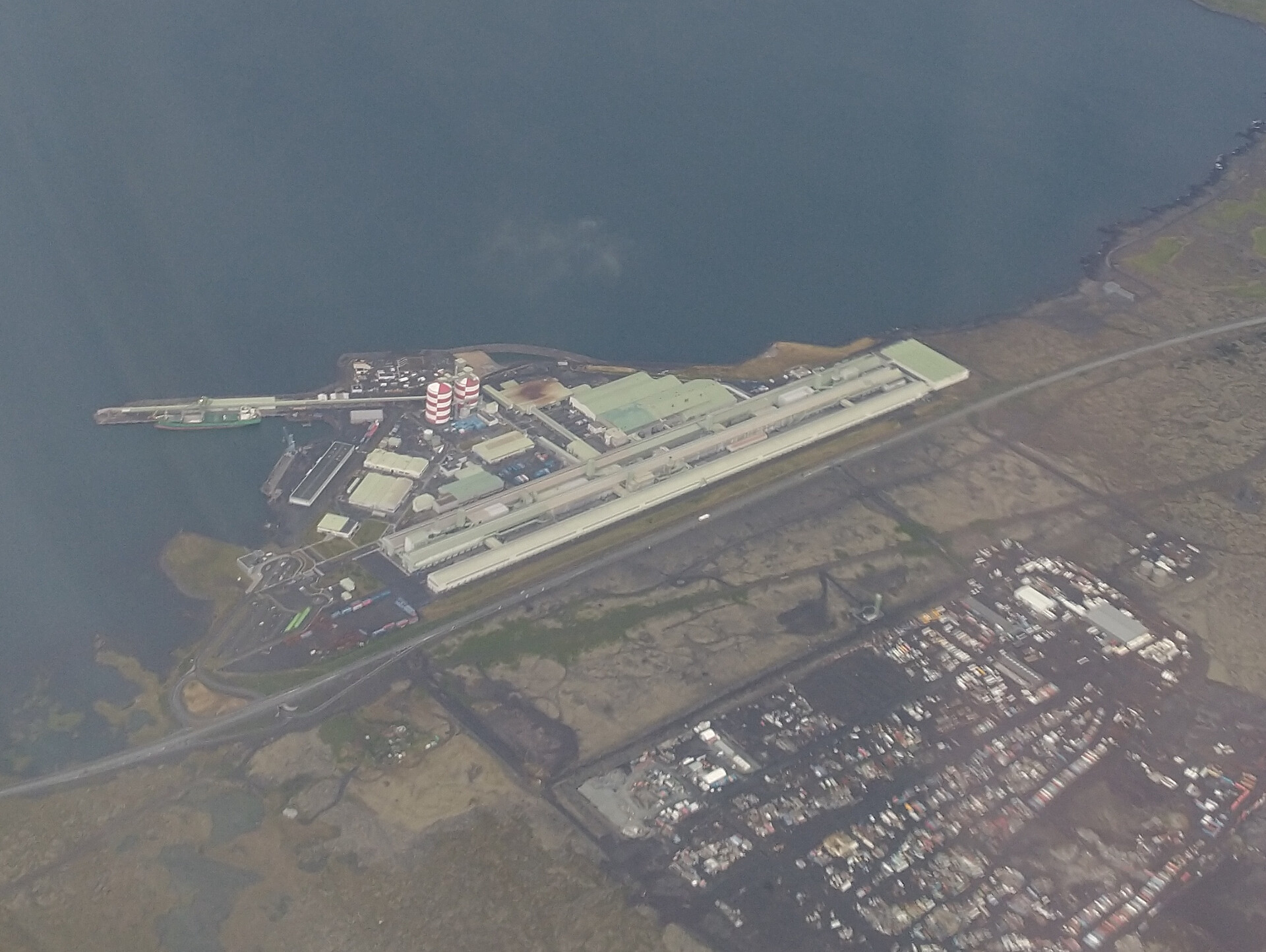
The IRGC launched coordinated missile and drone attacks against two of the Gulf’s largest aluminium producers: Emirates Global Aluminium’s Al Taweelah smelter in Abu Dhabi’s Khalifa Economic Zone, and Aluminium Bahrain’s six-line smelter complex. EGA reported “significant damage” to its facility and six employees injured; Alba confirmed two employees were injured and its operations disrupted, according to statements carried by The National and CNBC on 29 March.
The scale of the targets is significant. EGA’s Al Taweelah facility houses what PressTV described as “the world’s longest aluminum production line,” with a combined smelting capacity across its Abu Dhabi and Dubai operations of 2.4 million tonnes per annum — roughly four percent of global production, according to EGA’s corporate disclosures. Alba produced a record 1.62 million tonnes in 2025, according to a Zawya report from January 2026. Together, the two companies account for nearly half of all aluminium produced in the Gulf.
The IRGC’s statement, carried by Iran’s state broadcaster IRIB, claimed the targets were “linked to the United States military” and framed the strikes as retaliation for U.S.-Israeli attacks on Iranian industrial infrastructure, including the Khuzestan Steel Company, which had been hit by coalition airstrikes earlier that week. Brigadier General Seyyed Majid Mousavi, commander of the IRGC Aerospace Force, was unambiguous about what comes next: “These painful attacks will continue,” he told PressTV on 29 March, adding that “chemical industries of the occupied territories, a refinery, two steel complexes, and two aluminum super complexes have been attacked.”
The Dual-Use Doctrine and Its Infinite Elasticity
The IRGC’s targeting rationale deserves close examination, not because it is legally sound — it is not — but because it reveals the strategic logic Iran intends to apply going forward. By claiming EGA and Alba were “linked to the United States military,” Tehran established a doctrinal framework that can justify strikes against essentially any industrial facility in the GCC.
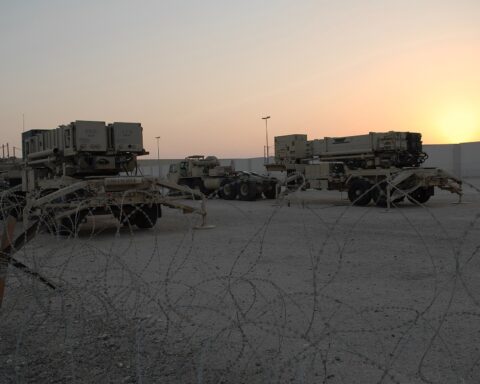
The logic runs as follows: Gulf states host U.S. military bases. Those bases protect industrial facilities. Therefore the facilities are “linked” to the U.S. military. By this reasoning, every refinery within range of a Patriot battery, every port that has ever received a U.S. Navy vessel, every power station that feeds a base becomes a legitimate target. The doctrine is not designed to be precise. It is designed to be all-encompassing.
Iranian state media had telegraphed this expansion well before the 29 March strikes. On 27 March, PressTV reported that the IRGC Aerospace Force commander had ordered employees at industrial sites “linked to the Americans” to evacuate, warning residents within one kilometre to leave. This was not a threat against one or two sites. It was a blanket declaration that the entire Gulf industrial economy sits within Iran’s target set.
Iranian media subsequently published a list of specific industrial facilities across six countries: Saudi Iron and Steel Company (Hadeed), Emirates Steel Arkan, Qatar Steel, Foulath Holding in Bahrain, the United Steel Industrial Company in Kuwait, and Yehuda Steel in Israel, according to reporting by Anadolu Agency and the Express Tribune. The list was not exhaustive. It was exemplary — a sample menu of what Tehran could hit next.
The IRGC’s declared doctrine of operating “beyond eye for an eye,” as Mousavi phrased it to PressTV, signals that Iran no longer calibrates its responses to match the military significance of coalition strikes. Industrial infrastructure is now a target category in its own right, selected not for its military relevance but for its economic pain.
How Much Aluminium Capacity Has the War Removed?
The 29 March strikes accelerated an aluminium supply crisis that has been building since the war began on 28 February. Gulf states produce approximately eight percent of global primary aluminium, according to the International Aluminium Institute. Exclude China and Russia from the denominator — as Western supply chains effectively must — and that share exceeds twenty percent. The Gulf is not a marginal supplier. It is a critical node in the non-Chinese, non-Russian aluminium market.
Even before the IRGC struck EGA and Alba directly, the war had already begun choking Gulf aluminium output. Qatar’s Qatalum announced a controlled production shutdown on 3 March due to natural gas shortages caused by the Hormuz disruption that severed metals supply chains alongside oil. Alba declared force majeure on its deliveries because of transit disruptions through the Strait. Together, Alba and Qatalum were powering down approximately 570,000 tonnes of annual smelting capacity, according to The National.
| Facility | Country | Annual Capacity | Status (30 March) | Impact |
|---|---|---|---|---|
| EGA (Al Taweelah + Dubai) | UAE | 2.4M tonnes | Significant damage from IRGC strike | Partial shutdown; output uncertain |
| Alba | Bahrain | 1.62M tonnes | Struck by IRGC; force majeure declared | Production disrupted |
| Qatalum | Qatar | ~640,000 tonnes | Controlled shutdown (gas shortage) | Full shutdown since 3 March |
| Ma’aden (Ras Al Khair) | Saudi Arabia | 740,000 tonnes | Operational but in IRGC target set | Heightened risk |
The market response has been severe. LME aluminium prices surged past $3,500 per tonne by late March 2026, up from roughly $2,500 before the war, according to Bloomberg and Barchart. LME warehouse inventories had declined to 432,725 metric tonnes as of 20 March, according to CNBC. Analysts warn that prices could push toward $4,000 per tonne before summer if Gulf production remains disrupted, according to Gulf Times. Aluminium — sometimes called “solidified electricity” because smelting consumes vast quantities of power — has become a barometer of the war’s industrial reach.
From Military Bases to Smelters: The Targeting Evolution
Iran’s targeting has moved through three distinct phases since the war began, each representing a calculated escalation in the scope of legitimate targets.
Phase one was military-on-military. Iran struck U.S. and coalition bases across the Gulf in the war’s opening days. The most consequential strike hit Prince Sultan Air Base on 27 March, wounding fifteen U.S. soldiers — five seriously — and destroying an E-3 Sentry AWACS aircraft while damaging KC-135 tanker aircraft, according to NPR and Air & Space Forces Magazine. This was conventional retaliation: military assets for military assets, painful but doctrinally unremarkable.
Phase two targeted energy infrastructure. The Ras Tanura refinery attack on 2 March — Saudi Arabia’s largest facility at 550,000 barrels per day — forced Aramco to shut down operations after debris from intercepted Iranian drones caused a fire, according to Bloomberg and the Saudi Press Agency. The refinery eventually reopened after approximately a week, but the shutdown forced Aramco to reroute exports through Yanbu, whose port ceiling already caps Saudi pipeline throughput. Across the Middle East, the IEA’s March 2026 report documented more than three million barrels per day of refining capacity shut in.
Phase three — the aluminium strikes — represents something different. Refineries are energy infrastructure, and energy infrastructure has been a target in every Middle Eastern war since the 1980 Iran-Iraq War. The escalation is not one-sided: Trump has threatened to seize Iran’s Kharg Island oil terminal entirely, moving beyond airstrikes to the prospect of permanent occupation of Iranian economic infrastructure. Aluminium smelters are industrial infrastructure. They produce materials for construction, automotive, aerospace, and packaging — civilian goods with no direct military application. The IRGC is not hitting military targets or even energy chokepoints. It is attacking the diversified economy that Gulf states have spent decades building.
The escalation ladder is directional. Over 300 U.S. service members have been wounded and 13 killed in Operation Epic Fury, according to Air & Space Forces Magazine. The human cost is real. But the strategic cost of industrial targeting is different in kind: it threatens not the war’s combatants but the economic future of states that are not even formal belligerents.
Why Is Saudi Industrial Infrastructure Equally Exposed?
Saudi Arabia’s industrial heartland presents the same target profile as the facilities struck in Abu Dhabi and Bahrain — in many cases, a more consequential one. Three coastal industrial concentrations stand out.
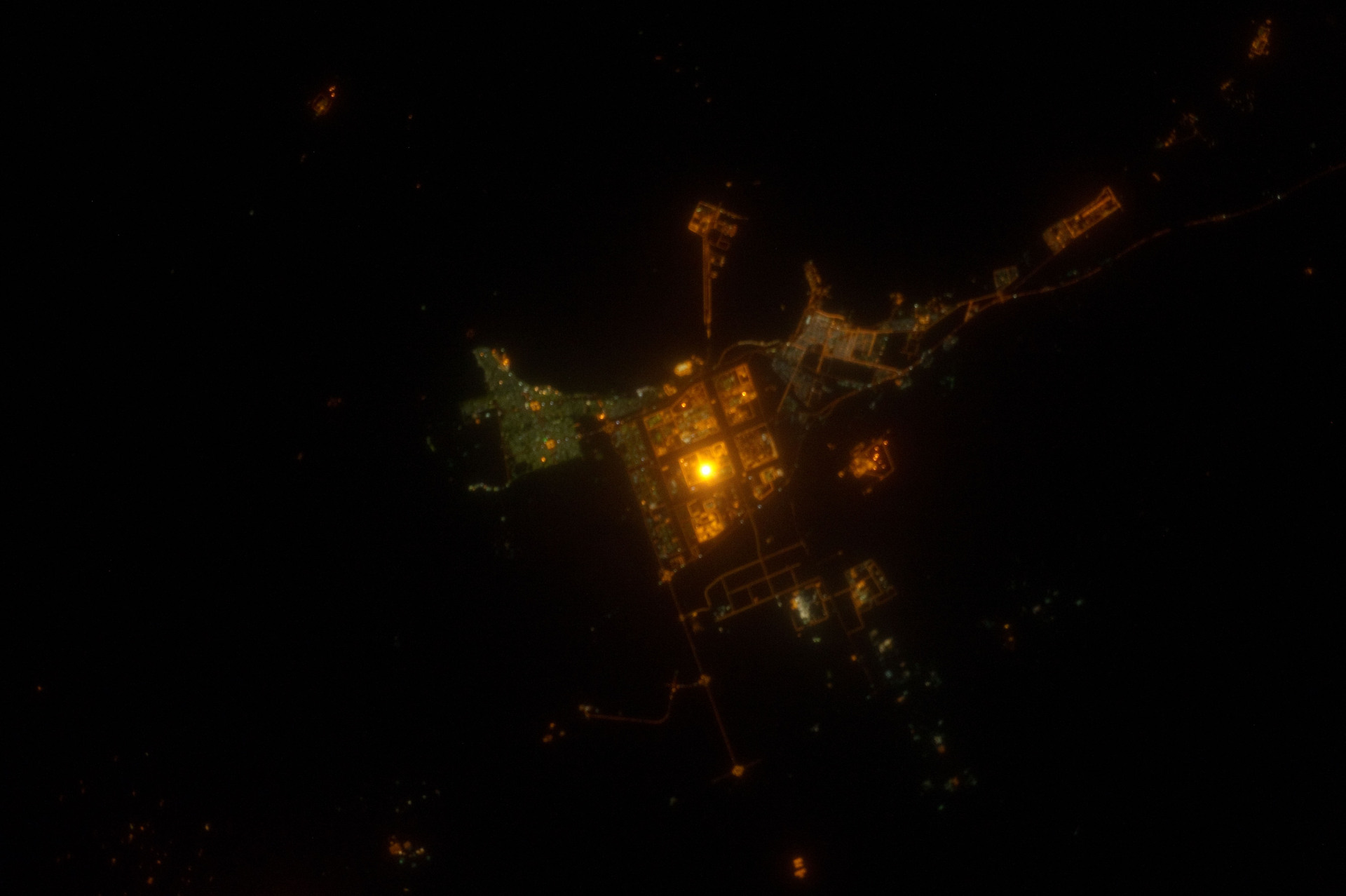
Jubail Industrial City on the Persian Gulf coast is one of the world’s largest petrochemical complexes, covering 1,016 square kilometres. It hosts most of SABIC’s eighteen Saudi affiliates, including Saudi Kayan’s petrochemical complex with its two-million-tonne-per-year ethane and butane cracker, according to corporate disclosures. SABIC is the Middle East’s largest and the world’s fourth-largest petrochemical company. Jubail also hosts downstream Aramco operations and multiple metals facilities. Iran has already demonstrated it can reach the area: the IRGC targeted Jubail after Israel struck the South Pars gas field earlier in March.
Ras Al Khair, approximately 80 kilometres north of Jubail, houses Ma’aden’s $10.8 billion aluminium complex — the world’s largest vertically integrated aluminium production facility, according to Bechtel. The smelter produces 740,000 tonnes per year; the adjacent refinery processes 1.8 million tonnes per year of alumina. A rolling mill adds 380,000 tonnes of finished sheet. The complex is a joint venture between Ma’aden (74.9 percent) and Alcoa (25.1 percent) — a detail that, under the IRGC’s doctrine of targeting “companies linked to the Americans,” makes it an explicitly named target category. The same site houses a major desalination plant that supplies drinking water to Riyadh.
Yanbu, on the Red Sea coast, hosts major refining and petrochemical operations. It has become Saudi Arabia’s primary export alternative since the Hormuz disruption forced the East-West pipeline to carry seven million barrels per day. Striking Yanbu would simultaneously hit both the Kingdom’s petrochemical output and its workaround for the Hormuz closure.
The published target list already named Saudi facilities. But the list is a floor, not a ceiling. Any facility in the GCC with American investment, American technology, or American customers now falls within the IRGC’s self-declared doctrine.
The Air Defense Gap That Cannot Be Closed
Defending industrial infrastructure against missile and drone attack requires a fundamentally different approach than defending military bases or population centres — and the Gulf states do not have the capacity for both.
Saudi Arabia’s air defense architecture has performed better than many expected in the current war, achieving intercept rates between 85 and 90 percent against Iranian ballistic missiles, a significant improvement over the catastrophic failure during the 2019 Abqaiq-Khurais attack, according to IISS assessments from March 2026. The Kingdom operates 108 Patriot M902 launchers organised into six battalions, with a mix of PAC-2 GEM-T and PAC-3 interceptors. Its first THAAD battery became operational in July 2025, with a full acquisition package covering seven batteries, 44 launchers, and 360 interceptor missiles, according to Army Recognition.
The problem is allocation. Those batteries are currently tasked with defending military installations — Prince Sultan Air Base, King Abdulaziz Air Base, Al Udeid — and population centres such as Riyadh, Jeddah, and Dhahran. Industrial facilities sit lower on the priority list, and the geometry of the problem is unforgiving. Jubail, Ras Al Khair, and Yanbu are sprawling, open-air complexes stretched along hundreds of kilometres of coastline. They cannot be hardened like bunkers or dispersed like mobile missile launchers. Each one requires dedicated area air defense coverage.
Even at current deployment levels, the coalition defending Saudi Arabia knows its interceptor supply has a timer. The IISS’s March 2026 analysis warned that sixteen days into the war, “the two largest consumers of American-made interceptors are burning through munitions faster than the U.S. defense industrial base can replace them.” The rate problem is structural: a single Patriot PAC-3 interceptor costs approximately $4 million; an Iranian Shahed-136 drone costs an estimated $20,000. The economics of attrition favour the attacker. Extending air defense coverage to industrial zones — which would require deploying additional batteries away from military and population priorities — would accelerate interceptor consumption without solving the resupply constraint.
“Employees of industrial companies linked to the Americans and the Zionist regime must immediately leave their workplaces so their lives are not endangered.”
— IRGC Aerospace Force statement, 27 March 2026, via PressTV
The 2019 Abqaiq-Khurais attack demonstrated the fundamental vulnerability. Eighteen drones and seven cruise missiles knocked 5.7 million barrels per day offline in a single strike — roughly five percent of global supply — temporarily bypassing Saudi air defenses entirely, according to multiple investigations including Congressional Research Service reporting. That was a single incident. The 2026 campaign is sustained, escalating, and now explicitly targeting non-energy industrial infrastructure that was never part of the defensive calculus.
Vision 2030’s Concentration Paradox
Saudi Arabia’s economic transformation programme has inadvertently created a strategic vulnerability. Vision 2030’s industrial strategy concentrates high-value, non-oil assets in a small number of coastal industrial zones — precisely the kind of targets Iran has now demonstrated it can strike.
The diversification numbers tell a genuine success story. Non-oil sectors reached 55.6 percent of real GDP in the first half of 2025, up from 45.4 percent in 2016, according to Saudi government data. The Kingdom had 40 industrial cities and more than 12,000 factories as of late 2024, with plans to reach 36,000 by 2035, according to the Ministry of Industry and Mineral Resources. These facilities are concentrated in specialised clusters connected by rail, pipeline, and port infrastructure — efficient for production, vulnerable to disruption.
The paradox is structural. Petrochemical production requires feedstock pipelines, which require coastal terminals. Aluminium smelting requires massive power generation, which is most efficient at scale. Desalination plants — Saudi Arabia depends on desalinated water for roughly 70 percent of its supply, according to CSIS — must sit on the coast. These are not facilities that can be relocated inland or dispersed across multiple sites without prohibitive cost. Economic logic demands concentration. Strategic logic demands dispersal. Iran has made this contradiction operational. On March 30, an Iranian drone struck a Kuwait desalination plant and killed a worker, demonstrating that water infrastructure is now an active target — not a theoretical vulnerability.
The war has already imposed visible costs on Vision 2030’s broader ambitions. Public Investment Fund construction contracts fell from $71 billion to approximately $30 billion — a 60 percent reduction — according to AGBI reporting. NEOM has been broken into five or more separate entities, with The Line paused. These adjustments reflect fiscal pressure and supply-chain disruption. The industrial targeting campaign adds a new dimension: the risk that foreign investors — who were already reassessing Gulf exposure — will treat concentrated industrial assets as uninsurable in a region where Iran has demonstrated the ability to strike at will.
Consider the Ras Al Khair complex through an investor’s lens. A $10.8 billion facility, jointly owned with an American company, producing a commodity whose price spikes every time Iran fires a missile, located on a coastline within range of IRGC ballistic missiles and drones, in a country that is not formally at war but absorbs strikes weekly. The facility is simultaneously more valuable (because the supply shock drives aluminium prices higher) and more fragile (because Iran has now established the precedent of striking identical facilities elsewhere). That contradiction will shape capital allocation decisions for years.
Iran’s Permanent Coercive Capability
The deeper strategic significance of the 29 March strikes lies not in the damage inflicted but in the capability demonstrated. Iran has established a credible threat against Gulf industrial infrastructure that will persist regardless of how the current war ends.
Consider the post-ceasefire scenario. The fighting stops. The IRGC retains its drone and missile production capacity — which operates from dispersed, often underground facilities that coalition airstrikes have damaged but not destroyed, according to IISS assessments. Tehran has now demonstrated the targeting intelligence, strike coordination, and political willingness to hit Gulf industrial assets. Every future diplomatic negotiation between Iran and the GCC will take place with that demonstrated capability as background context. The aluminium strikes also accelerated the unprecedented GCC political unity that transformed Gulf war aims from ceasefire to permanent Iranian military degradation.
This is the difference between a military threat and a coercive capability. Military threats require active hostilities. Coercive capability works through the threat of action — the implicit understanding that Tehran can impose catastrophic costs on Gulf economies without launching a formal war. Insurance markets, foreign direct investment flows, and infrastructure financing all operate on risk assessment. Iran has permanently altered that assessment.
The Chatham House analysis published on 19 March and updated on 23 March framed the calculus: the chances of Gulf Arab states going on the offensive remain “low,” but IRGC industrial targeting “may change” that calculation. The report noted that Saudi Arabia and the UAE possess formidable air power — the Royal Saudi Air Force operates 449 aircraft including F-15SAs, Eurofighter Typhoons, and Tornados — and that their aerial arsenal is “superior to Iran’s in terms of modernity, flexibility, and lethality.” Yet Riyadh has absorbed over 600 strikes and still not fired back.
The restraint is rational. Joining the war as a formal belligerent would remove the ambiguity that currently limits Iranian targeting — Saudi industrial facilities would become unambiguously legitimate targets under the laws of armed conflict. But the restraint also creates a paradox: by absorbing strikes without retaliating, Saudi Arabia signals that the cost of attacking its infrastructure is low. Iran can hit and Riyadh will not hit back. That signal, once established, is difficult to reverse.
The UAE’s response to the 29 March strikes — shutting down the Iranian Hospital and Iranian Club in Dubai and warning it could freeze billions in Iranian assets, according to Middle East Eye — represents the diplomatic and economic counterpunch available to Gulf states short of military action. But freezing assets is not an equivalent deterrent to the demonstrated ability to destroy industrial infrastructure. The asymmetry remains.
What Can Gulf States Do About Industrial Vulnerability?
The options available to Gulf states fall into three categories — none sufficient alone, all expensive, and all arriving too late for the current crisis.
The first is active defense: extending air defense coverage to industrial zones. This means deploying additional Patriot and THAAD batteries away from military and population priorities, acquiring new systems, and solving the interceptor resupply problem. The U.S. has deployed additional THAAD and Patriot PAC-3 systems to the Middle East since the war began, according to Army Recognition. The Pentagon has weighed diverting air defenses from Ukraine to Gulf states. But the fundamental constraint is production capacity: Lockheed Martin produces roughly 500 PAC-3 interceptors per year against a consumption rate that, extrapolated from the current conflict, would exhaust available stocks in months.
The second is passive defense: hardening industrial facilities, dispersing critical production, and building redundancy into supply chains. Saudi Arabia has already begun diversifying export routes — rerouting oil through Yanbu after the Ras Tanura shutdown, activating the East-West pipeline at seven million barrels per day. But dispersal of petrochemical and metals production is a multi-year, multi-billion-dollar undertaking. Aluminium smelters cannot be moved. Desalination plants cannot be relocated inland.
The third is deterrence: establishing credible retaliatory capability against Iranian infrastructure. Gulf states have demanded that Iran’s military be permanently degraded before any ceasefire deal — a negotiating position that reflects the recognition that Iran’s coercive capability must be addressed structurally, not just paused diplomatically. The IISS has assessed that Saudi and Emirati air power could conduct offensive operations against Iran, but the political and strategic risks of formal belligerency remain prohibitive.
The Houthis’ entry into the war on 28 March — launching cruise missiles and drones at Israel and declaring “fingers are on the trigger” regarding Bab al-Mandeb, according to Al Jazeera and the Sunday Guardian Live — adds a southern threat axis. Houthi threats to close Bab al-Mandab would cut the Red Sea export route that Saudi Arabia has used as its Hormuz alternative, creating a pincer on the Kingdom’s oil and industrial exports.
The uncomfortable conclusion is that Gulf industrial vulnerability cannot be resolved within the current conflict’s timeframe. It is a structural condition that will require years of investment in air defense, infrastructure dispersal, and — most difficult of all — a regional security architecture that either degrades Iran’s strike capability or establishes mutual deterrence. Until then, the aluminium smelters, petrochemical plants, and desalination facilities that represent the Gulf’s economic future will remain, in military terms, soft targets in a hardening war.
Frequently Asked Questions
Has Iran attacked Saudi industrial facilities directly during the 2026 war?
Iran struck the Jubail area earlier in March 2026 after Israel hit the South Pars gas field, and the Ras Tanura refinery was shut down on 2 March after debris from intercepted Iranian drones caused a fire. However, the 29 March aluminium strikes in Abu Dhabi and Bahrain represent the first deliberate targeting of non-energy industrial manufacturing in the current war. Iranian media’s published target list explicitly names Saudi Iron and Steel Company (Hadeed), signalling that direct strikes on Saudi non-energy industry could follow.
What percentage of global aluminium supply is at risk from the Iran war?
Gulf aluminium facilities with a combined capacity exceeding 5.4 million tonnes per annum are either damaged, shut down, or in the IRGC’s declared target set. That figure represents approximately seven percent of global primary aluminium production of roughly 70 million tonnes, according to the International Aluminium Institute. Within the non-Chinese, non-Russian market — the supply pool that Western manufacturers actually draw from — the concentration is significantly higher, approaching 15 to 20 percent of available supply.
Could Iran target Gulf desalination plants?
The CSIS warned in March 2026 that more than 90 percent of the Gulf’s desalinated water comes from just 56 plants, all concentrated along the coastline within 350 kilometres of Iran. Saudi Arabia depends on desalinated water for roughly 70 percent of its drinking supply. A successful strike on Ras Al Khair’s desalination plant — which shares a site with the Ma’aden aluminium smelter — could simultaneously disrupt aluminium production and water supply to Riyadh, creating a humanitarian crisis that would dwarf the economic impact of shuttered smelters.
Why haven’t Gulf states retaliated against Iran’s industrial attacks?
Formal belligerency would remove the legal and political ambiguity that currently constrains Iranian targeting, potentially exposing the full range of Gulf economic infrastructure to attack. Gulf states calculate that absorbing limited strikes while maintaining non-belligerent status keeps the overall damage within manageable bounds. The Bloomberg report from 24 March noted that Gulf states are weighing military options to counter Iran’s escalation, but the Chatham House assessment rates the probability of offensive action as low absent a catastrophic escalation — such as a mass-casualty strike on a populated industrial zone or a successful hit on critical water infrastructure.
Will aluminium prices stay elevated after the war ends?
Even an immediate ceasefire would not restore Gulf aluminium output quickly. Aluminium smelters that have been powered down require weeks to months to restart — the electrolytic reduction process cannot be simply switched back on. Cells that cool below operating temperature must be rebuilt entirely, a process that can take six to twelve months per potline. The physical damage at EGA and Alba will compound restart timelines. Market analysts at Barchart and Financial Content suggest that a structural supply deficit of 500,000 to 800,000 tonnes could persist through 2027 even under optimistic recovery scenarios, supporting prices well above pre-war levels.