
DHAHRAN — Kuwait, Qatar, and Saudi Arabia collectively supply roughly a quarter of the world’s oil and a fifth of its liquefied natural gas. As of March 13, all three are simultaneously impaired — each for a different reason, each with a different ceiling on recovery, and none with a clear path back to full capacity. Kuwait declared force majeure on all crude exports on March 7 and has zero alternative export routes. Qatar shut down the world’s largest LNG complex after Iranian drone strikes on March 2 and cannot restart until the war ends. Saudi Arabia, the only Gulf producer with a functioning bypass pipeline, hit the physical limit of that workaround within days. The arithmetic of the crisis is unforgiving: the Gulf’s three workarounds — Yanbu, Fujairah, and strategic reserves — can replace at most a third of what the Strait of Hormuz carried before the war began.
The gap between what has been lost and what can be replaced defines the next phase of the global energy crisis. Even under the most optimistic assumptions — full Yanbu throughput, maximum Fujairah flow, and the IEA’s record 400-million-barrel reserve release arriving on schedule — the world still faces a sustained shortfall measured in millions of barrels per day. Brent crude touched $100 a barrel on March 13. European wholesale gas prices have doubled. And the three Gulf states that hold the keys to recovery are each constrained by factors that no amount of diplomatic pressure or emergency coordination can quickly resolve.
What makes this moment different from previous Gulf crises — the 1990 Iraqi invasion of Kuwait, the 2019 Abqaiq drone strikes, the 1987-88 Tanker War — is the simultaneous nature of the disruption. In every prior crisis, at least two of the three major producers continued exporting at or near full capacity. For the first time in the modern era, the entire Gulf energy complex is degraded at once, and the workarounds have ceilings that the world is about to hit.
Table of Contents
- Why Did Kuwait Declare Force Majeure on All Oil Exports?
- Kuwait’s Geography Problem
- What Happens When 20 Percent of Global LNG Goes Offline?
- How Long Until Qatar Can Restart LNG Production?
- Can Saudi Arabia’s Yanbu Pipeline Save the Oil Market?
- The UAE’s Fujairah Card and Its Limits
- The Second Chokepoint Nobody Is Talking About
- The Supply Gap That Emergency Reserves Cannot Close
- Gulf Producer Status Matrix
- How Are Oil and Gas Prices Responding?
- Europe’s Energy Vulnerability Exposed
- The Leverage Paradox for MBS
- Vision 2030’s Bitter Irony
- Why the Market’s Optimism Is Misplaced
- How Does This Compare to Previous Energy Crises?
- Frequently Asked Questions
Why Did Kuwait Declare Force Majeure on All Oil Exports?
Kuwait Petroleum Corporation declared force majeure on all crude oil and refined product exports on March 7, 2026, citing the total breakdown of maritime security in the Persian Gulf and direct threats to coastal infrastructure. The declaration — the most sweeping in Kuwait’s modern history — effectively withdrew 2.6 million barrels per day of production from the global market overnight.
Force majeure is a legal mechanism that allows a company to suspend contractual obligations due to extraordinary circumstances beyond its control. In Kuwait’s case, the trigger was twofold: the IRGC Navy’s imposition of a de facto permit system on all vessels transiting the Strait of Hormuz, and the near-total absence of commercial tankers willing to enter the Arabian Gulf under those conditions. The failure of Washington to deliver its promised tanker escorts has compounded the crisis. According to Bloomberg, KPC began precautionary production cuts of approximately 100,000 barrels per day on March 7, with the expectation that cuts would nearly triple as domestic storage capacity filled.
The scale of Kuwait’s production cuts reflected a cascading problem. With export terminals unable to load tankers, crude and refined products backed up through the entire chain — from the Al Ahmadi and Mina Abdullah refineries to the Shuaiba industrial zone to the wellheads themselves. Kuwait’s domestic oil storage capacity, designed for operational buffers rather than prolonged shutdowns, began approaching limits within days. The Taipei Times reported that production curtailments were expected to reach approximately 300,000 barrels per day by March 9 as storage filled.
The force majeure remains active as of March 13. No reports indicate it has been lifted, and the conditions that prompted it — Iranian naval dominance of the Strait and the collapse of the Gulf shipping insurance market — have, if anything, worsened. Tanker traffic through Hormuz has dropped from pre-war levels of roughly 20 million barrels per day to less than 10 percent of that figure, according to the IEA. Major underwriters including Chubb have withdrawn war-risk coverage for vessels in the Gulf, effectively pricing commercial shipping out of the region.
Kuwait’s Geography Problem
Of the three major Gulf producers caught in the Hormuz crisis, Kuwait is the most structurally exposed. The country has no pipeline bypass to circumvent the Strait. Unlike Saudi Arabia, which built the 1,200-kilometre East-West Pipeline to the Red Sea in the 1980s — a decision rooted in the lessons of the Iran-Iraq War — and unlike the UAE, which completed the Habshan-Fujairah pipeline to the Gulf of Oman in 2012, Kuwait’s entire export infrastructure flows through the Persian Gulf and out the Hormuz bottleneck.
This is not an oversight of planning. Kuwait’s geography makes alternatives extraordinarily difficult. The country occupies a narrow strip of coastline at the head of the Gulf, bordered by Iraq to the north and Saudi Arabia to the south. A pipeline to the Red Sea would need to cross approximately 1,000 kilometres of Saudi territory — a feasible engineering proposition but a diplomatically complex one that was never pursued during decades of cheap oil and open shipping lanes. A pipeline northward through Iraq to the Mediterranean was discussed intermittently during the 2000s, but Iraq’s own instability made it impractical.
Kuwait’s vulnerability was not a secret. Energy security analysts had flagged the country’s Hormuz dependence for years. A 2019 IEA report on oil security explicitly noted that Kuwait, along with Qatar and Iraq, had no Hormuz bypass capability. But the political calculus always favoured the status quo: the Strait had remained open through the Iran-Iraq War, through two Gulf Wars, through the 2019 tanker attacks, and through the Houthi Red Sea crisis of 2024-2025. The implicit assumption was that Hormuz would never actually close. That assumption has now been proven catastrophically wrong.
| Producer | Pre-War Output (Feb 2026) | Hormuz Bypass Pipeline | Bypass Capacity | Current Export Status |
|---|---|---|---|---|
| Kuwait | 2.6M bpd | None | 0 bpd | Force majeure — all exports halted |
| Qatar | ~1.8M bpd oil equiv. + 77 Mtpa LNG | None | 0 bpd | Production shut down — Ras Laffan offline |
| Saudi Arabia | ~9M bpd | East-West Pipeline to Yanbu | ~5M bpd (net exportable) | Pipeline at full capacity — partial exports via Red Sea |
| UAE | ~3.2M bpd | Habshan-Fujairah (ADCOP) | ~1.5-1.8M bpd | Partial exports via Fujairah — ~1.1M bpd flowing |
| Iraq | ~4.4M bpd | Ceyhan pipeline (limited) | ~0.9M bpd (nominal) | Exports suspended after drone strikes near Basra |
The result is that Kuwait’s 2.6 million barrels per day have been removed from global supply with no mechanism for partial recovery. The country’s oil sits in the ground or in rapidly filling domestic storage tanks. Even if the Strait were reopened tomorrow, restarting a national oil export system that has been shut down for over a week requires days of logistics — loading schedules, tanker repositioning, insurance reactivation, port clearances — before the first barrel moves. The gap between “ceasefire announced” and “Kuwaiti oil reaches the market” could easily stretch to two weeks or more.
What Happens When 20 Percent of Global LNG Goes Offline?
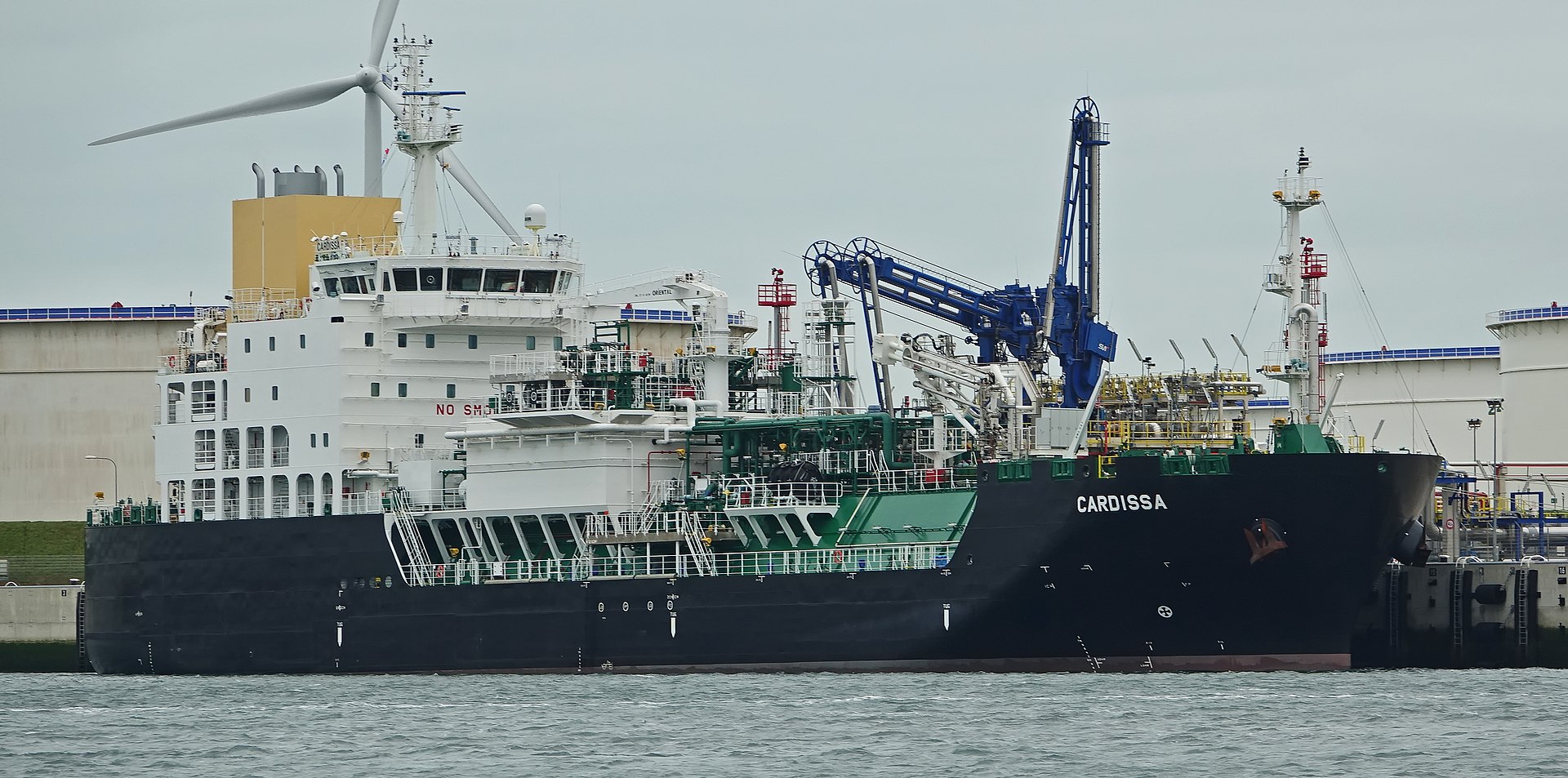
QatarEnergy, the world’s largest LNG producer, halted all production at its Ras Laffan and Mesaieed industrial complexes on March 2 after Iranian drone strikes hit both facilities. The attacks — two drones launched from Iran, according to Qatar’s Ministry of Defence — struck a water tank at a power plant in Mesaieed and an energy facility at Ras Laffan. No casualties were reported, but the damage to the world’s energy supply chain was immediate and structural.
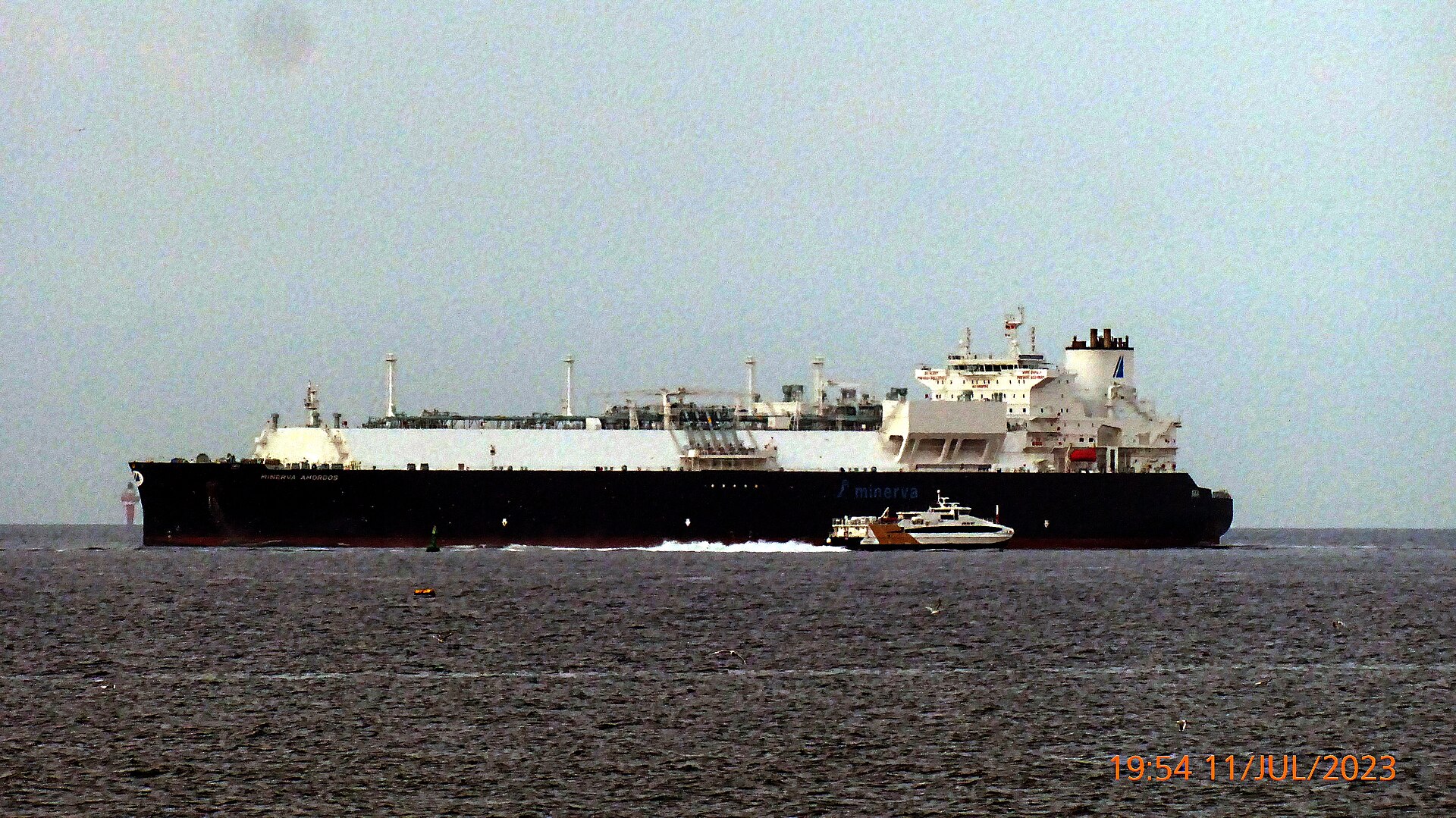
Qatar supplies approximately 20 percent of the world’s LNG — roughly 77 million tonnes per annum, or approximately 10.1 billion cubic feet per day of natural gas, according to the EIA. By March 4, QatarEnergy had taken the extraordinary step of declaring force majeure on all global LNG shipments, according to Al Jazeera, legally suspending delivery obligations on contracts spanning dozens of countries and worth tens of billions of dollars annually. The scale of the global LNG crisis triggered by the Hormuz shutdown has, by several measures, exceeded the oil shock itself — a dimension of the conflict that energy markets were unprepared for.
The shutdown’s impact rippled through global gas markets within hours. Benchmark Dutch TTF front-month gas contracts surged as much as 54 percent in a single trading session, according to Bloomberg. Asian LNG spot prices jumped nearly 39 percent. The price response was more violent than the oil price spike because LNG markets have a structural vulnerability that oil markets do not: there is no strategic reserve system for natural gas. Countries maintain strategic petroleum reserves, but no equivalent exists for LNG. When supply disappears, the only recourse is to bid up the price of whatever remains available. For major Asian importers like India, the crisis is existential — New Delhi faces its worst energy crisis since 1973 as half its crude supply and 90 per cent of its LPG imports have been severed.
QatarEnergy CEO Saad Al-Kaabi stated publicly on March 2 that the company could not restart LNG production at Ras Laffan until the conflict in the Middle East ends completely, and that even after hostilities cease, a full restart would take “weeks to months,” according to CNBC. The statement reflects the technical complexity of LNG production: the cryogenic cooling trains that liquefy natural gas to minus 162 degrees Celsius operate under extreme pressures and temperatures. Each train requires a carefully sequenced startup process, with multiple safety checks at each stage. Any damage to the cooling infrastructure — even damage not visible to initial inspections — compounds the timeline exponentially.
Bloomberg reported on March 6 that Qatar had loaded one LNG cargo aboard the vessel Al Ghashamiya. Energy analysts interpreted this as the movement of stored inventory rather than evidence of resumed production. LNG can be stored in cryogenic tanks for limited periods, and Ras Laffan maintained buffer stocks at the time of the attack. The loading of a single cargo is the equivalent of emptying a warehouse, not reopening a factory.
How Long Until Qatar Can Restart LNG Production?
The honest answer, based on available evidence, is that nobody knows — including QatarEnergy. The restart timeline depends on three sequential conditions, each of which is currently unfulfilled: the war must end, the Ras Laffan and Mesaieed facilities must be assessed for structural damage, and the multi-train LNG complexes must be brought back online in a controlled sequence that can take weeks even when nothing is damaged.
The damage assessment alone could take weeks. Ras Laffan is not a single plant but an entire industrial city spanning approximately 290 square kilometres, housing 14 LNG trains across multiple joint ventures (Qatargas and RasGas), condensate refineries, helium extraction facilities, gas-to-liquids plants, and extensive associated infrastructure. Iranian drone strikes targeted the complex from the air, and the full extent of collateral damage to piping, electrical systems, control instrumentation, and cryogenic equipment may not become apparent until production restart is attempted. LNG facilities contain thousands of kilometres of piping operating at extreme temperatures; a single undetected crack could cause a catastrophic failure during restart.
Even under the most optimistic scenario — a ceasefire tomorrow and no hidden structural damage — industry precedent suggests a minimum 4-6 week ramp-up period to bring the first LNG trains back to full production. The Freeport LNG facility in Texas, which experienced an explosion in June 2022, took nearly eight months to return to full capacity despite suffering far less damage than what Ras Laffan appears to have sustained. The full 77 Mtpa capacity would likely take 3-6 months to restore under favourable conditions.
| Metric | Value | Source |
|---|---|---|
| Pre-war LNG capacity | 77 Mtpa (~10.1 Bcf/day) | EIA / QatarEnergy |
| Share of global LNG supply | ~20% | Al Jazeera |
| Date of production halt | March 2, 2026 | CNBC |
| Force majeure declared | March 4, 2026 | Al Jazeera |
| European gas price spike (single session) | +54% | Bloomberg |
| Asian LNG spot price increase | +39% | CNBC |
| North Field East expansion (32 Mtpa) | Delayed to at least 2027 | Bloomberg |
| Minimum restart timeline (post-ceasefire) | 4-6 weeks partial; 3-6 months full | Industry precedent |
Meanwhile, Qatar’s $28.75 billion North Field East expansion, which was scheduled to add 32 Mtpa of capacity and make Qatar the undisputed global LNG leader, has been pushed to at least 2027, according to Bloomberg. The expansion required active construction at Ras Laffan — construction that is now impossible in a war zone. The delay means that even after the existing capacity is restored, the growth pipeline is pushed back by a year or more, with cascading implications for European energy security planning that assumed additional Qatari supply would be available by late 2026.
Can Saudi Arabia’s Yanbu Pipeline Save the Oil Market?
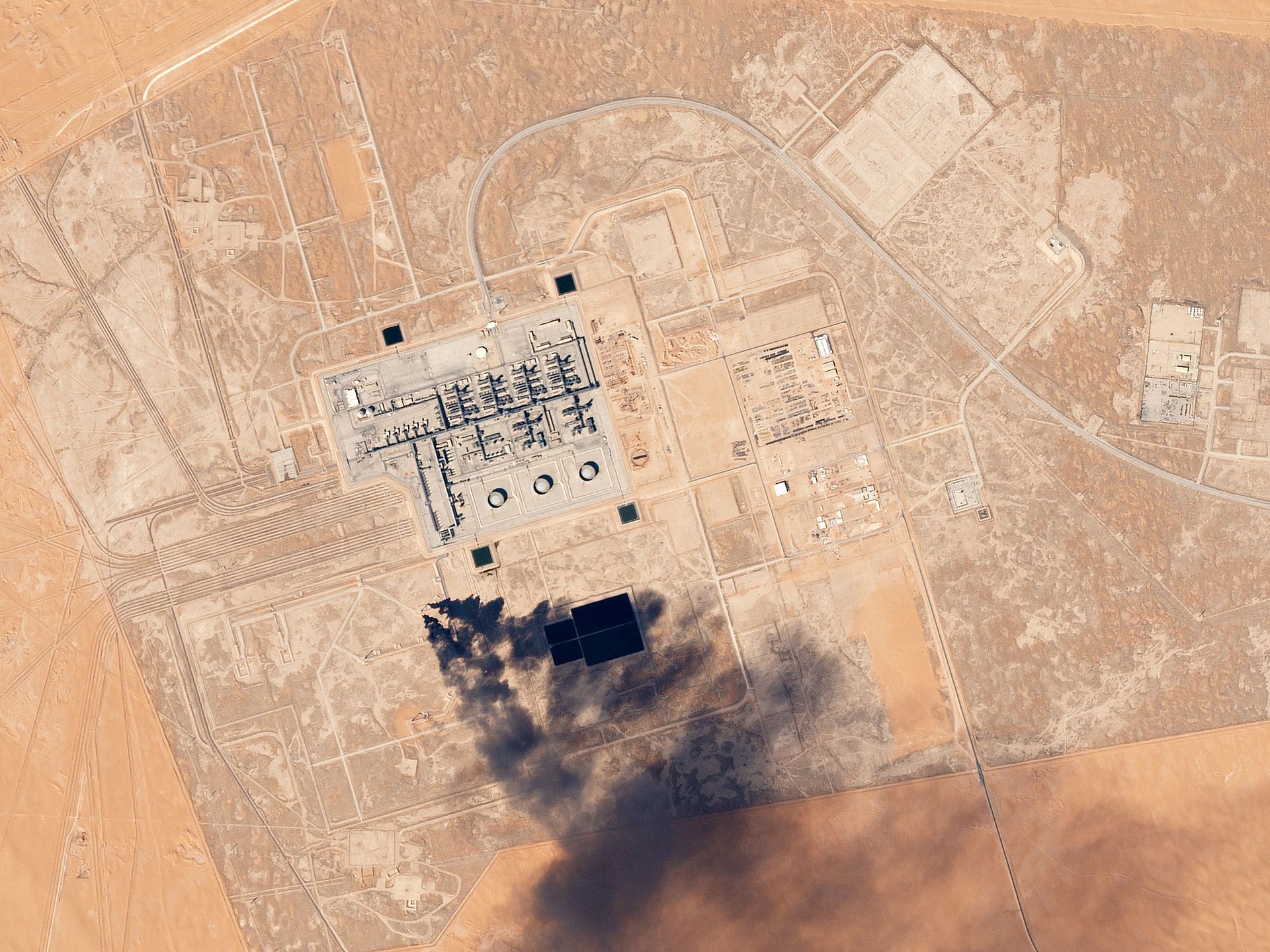
Saudi Aramco’s East-West Pipeline — the 1,200-kilometre conduit connecting the eastern oil fields to the Red Sea port of Yanbu — is the only major functioning Hormuz bypass among Gulf producers. On March 10, Aramco CEO Amin Nasser confirmed on the company’s earnings call that the pipeline would reach full capacity “in the next couple of days,” according to S&P Global. By March 11, the system had been converted to maximum throughput, with companion NGL pipelines repurposed to carry crude.
The pipeline’s nameplate capacity is 7 million barrels per day when the accompanying natural gas liquids lines are converted to carry crude, according to Aramco. That figure sounds enormous — nearly half of Saudi Arabia’s 12-million-bpd maximum sustained production capacity — until it is placed in the context of what Yanbu must replace. Approximately 2 million bpd of pipeline throughput feeds western domestic refineries along the route, according to Nasser’s own statements. That leaves roughly 5 million bpd available for export through the Yanbu terminal complex on the Red Sea coast.
Yanbu itself has two loading terminals: Yanbu North, with a capacity of approximately 1.5 million barrels per day, and Yanbu South, capable of handling roughly 3 million barrels per day, for a combined nominal loading capacity of approximately 4.5 million bpd, according to Argus Media. In practice, loading capacity is the binding constraint — not pipeline throughput. Even if the pipeline delivers 5 million bpd to the coast, the terminals can only load tankers at roughly 4.5 million bpd under ideal conditions. And conditions at Yanbu have been far from ideal.
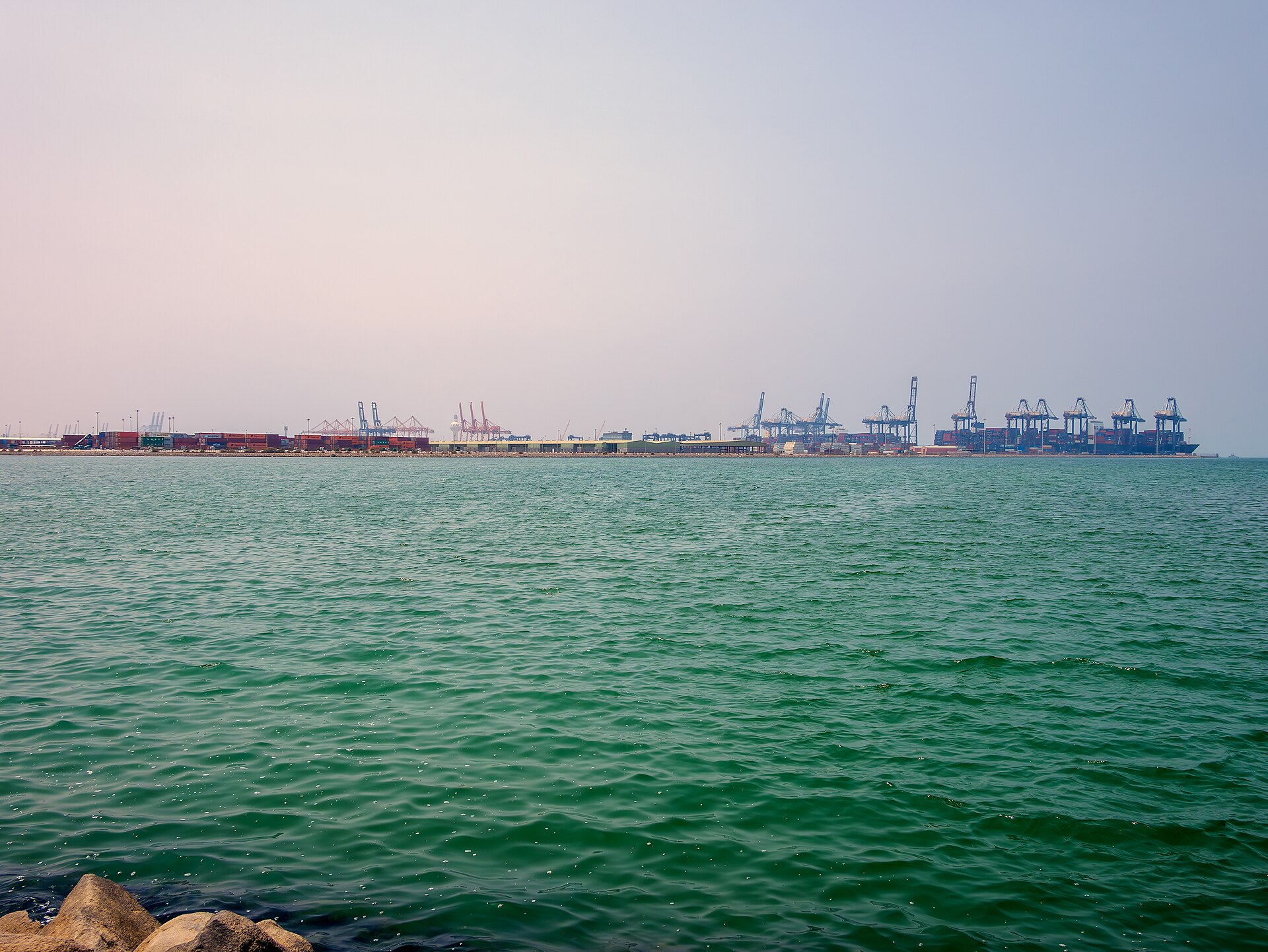
The surge in traffic has created unprecedented port congestion. Yanbu’s two terminals were designed to handle a fraction of Saudi Arabia’s total exports under normal conditions. The sudden redirection of the Kingdom’s entire export flow to a single coast has overwhelmed berth capacity, tugboat availability, and pilot services. Exports from Yanbu surged to record levels in the week ending March 10, according to S&P Global Commodities at Sea shipping data. But even record Yanbu volumes cannot compensate for the 20 million barrels per day that Hormuz carried pre-war. At absolute maximum, Yanbu replaces roughly a quarter of the lost flow. The bottleneck extends beyond crude oil: with Gulf container shipping paralyzed, Riyadh on March 12 launched emergency Red Sea cargo corridors to redirect commercial freight through Jeddah Islamic Port, adding non-oil logistics pressure to an already strained Red Sea coast.
“We have 12 million barrels per day of maximum sustained capacity. That gives us a lot of optionality in terms of where we concentrate our production.”
Amin Nasser, Saudi Aramco CEO, March 10, 2026 (S&P Global)
Nasser’s statement captures both capability and constraint. Aramco can produce 12 million bpd and direct production to different blends and grades to optimize pipeline throughput. What it cannot do is move more than about 5 million bpd through to Yanbu, load more than about 4.5 million bpd onto tankers, or guarantee those tankers safe passage through the Red Sea. There is also a crude-quality issue: the East-West Pipeline was designed to carry Arab Light and Arab Extra Light grades. Some of Saudi Arabia’s heavier crude grades, which certain Asian refineries are configured to process, do not move through the pipeline as efficiently, creating a mismatch between what Yanbu can offer and what some buyers need.
The UAE’s Fujairah Card and Its Limits
The UAE holds the Gulf’s other Hormuz bypass: the Abu Dhabi Crude Oil Pipeline (ADCOP), also known as the Habshan-Fujairah pipeline. The 370-kilometre pipeline connects onshore oil fields at Habshan in Abu Dhabi’s western desert to the port of Fujairah on the Gulf of Oman, entirely outside the Strait of Hormuz. Completed in 2012 at a cost of approximately $3.3 billion, the pipeline was built explicitly as a strategic hedge against Hormuz disruption.
ADCOP’s total capacity is approximately 1.5 to 1.8 million barrels per day, according to CNBC and Global Energy Monitor. As of early March, the pipeline was operating at approximately 71 percent utilization, moving around 1.1 million bpd — a level that had been relatively consistent through 2025 and into 2026, according to shipping data cited by Invezz. That leaves roughly 440,000 to 700,000 barrels per day of spare capacity that can be brought online.
The UAE faces its own strategic calculations about how aggressively to ramp up exports. Abu Dhabi has increased Fujairah loadings since the crisis began, but the additional volumes — perhaps 500,000-700,000 bpd above pre-crisis levels — represent a meaningful but ultimately modest contribution to the global shortfall. At full capacity, Fujairah can export roughly 1.8 million bpd. That is less than one-tenth of pre-war Hormuz volumes.
Fujairah also has a geographic vulnerability that is less appreciated: while it sits outside Hormuz, it remains within range of Iranian ballistic missiles and long-range drones. The port city is approximately 300 kilometres from the Iranian coast — well within the range of Shahab-3 missiles and Shahed-series drones that Iran has deployed throughout the conflict. If Iran chose to escalate by targeting bypass infrastructure, Fujairah would be an obvious target. This risk helps explain why the UAE has been cautious about publicly advertising its Fujairah ramp-up — doing so would invite targeting.
The Second Chokepoint Nobody Is Talking About
Even if every barrel that Yanbu and Fujairah can handle reaches open water, the journey to Asian buyers — the destination for the majority of Gulf crude — runs through another chokepoint. Tankers loaded at Yanbu that are bound for China, Japan, South Korea, or India must either transit the Bab el-Mandeb Strait and the Suez Canal, or take the vastly longer route around the Cape of Good Hope, adding approximately 14 days and 40 percent more fuel consumption to each voyage, according to Container Magazine.
The Bab el-Mandeb situation has deteriorated sharply since the war began. Houthi forces, aligned with Tehran, paused large-scale maritime attacks from approximately November 2025 following a tacit agreement with the Trump administration, according to the Washington Institute. That pause ended on February 28 — the day the Iran war began. Two senior Ansar Allah officials told the Associated Press that the movement would resume missile and drone attacks on Red Sea shipping immediately.
A senior Iranian military official explicitly warned on March 13 that the Bab el-Mandeb could face “the same fate” as Hormuz, according to the Times of Islamabad. CMA CGM, one of the world’s largest shipping lines, suspended Suez Canal transits indefinitely and rerouted services via the Cape of Good Hope, according to Container Magazine. If the Houthi threat materialises at scale, the Yanbu bypass — Saudi Arabia’s last functioning export route — becomes dramatically less useful. Tankers would need to sail south around Africa to reach Asia, extending delivery times by weeks and effectively reducing the volume of oil that can reach the market in any given month.
The dual chokepoint scenario — Hormuz closed by Iran, Bab el-Mandeb threatened by Houthis — was considered a worst-case scenario by energy security planners. It is now the operating reality. The world’s two most important maritime energy corridors are simultaneously compromised, and the land-based bypasses that were supposed to provide resilience have ceilings that are already being reached.
The Supply Gap That Emergency Reserves Cannot Close
The mathematics of the crisis are stark and unforgiving. Before the war, the Strait of Hormuz carried approximately 20 million barrels per day of crude oil and refined products — roughly 20 percent of global petroleum consumption, according to the EIA. The IEA has described the disruption as the largest to global energy supply since the 1970s oil crises, with Gulf countries cutting production by at least 10 million bpd and total export disruption significantly higher.
Against that loss, the world’s replacement options each have hard ceilings that compound rather than complement each other.
| Replacement Source | Maximum Capacity | Current Estimated Flow | Shortfall vs. 20M bpd Hormuz |
|---|---|---|---|
| Saudi Yanbu (net export) | ~4.5M bpd | ~4-4.5M bpd | -15.5M bpd |
| UAE Fujairah (ADCOP) | ~1.5-1.8M bpd | ~1.1-1.5M bpd | -14M bpd (cumulative) |
| IEA Strategic Reserves (over 120 days) | ~3.3M bpd rate | Not yet flowing | -10.7M bpd (cumulative) |
| Non-Gulf spare capacity (OPEC+ and US) | ~1-2M bpd | Ramping | -8.7M bpd (cumulative) |
| Kuwait bypass | 0 | 0 | Unchanged |
| Qatar bypass | 0 | 0 | Unchanged |
On March 11, the IEA announced a record coordinated release of 400 million barrels of strategic reserves — the largest in the organisation’s 50-year history, dwarfing the 182 million barrels released during the Russia-Ukraine crisis in 2022, according to CNBC. The United States would contribute 172 million barrels from the Strategic Petroleum Reserve, starting the following week, according to the Department of Energy. But the DOE also noted that delivery would take “approximately 120 days based on planned discharge rates,” according to NPR. Spread over four months, even 400 million barrels translates to roughly 3.3 million barrels per day — significant, but less than half the Gulf shortfall.
The IEA itself declined to provide a specific timetable for when the oil would reach the market, noting only that reserves would be released “according to conditions facing each of its 32 member states.” This vagueness is not accidental. Several IEA member states have limited reserve infrastructure, and the logistics of converting stored crude to refined products and distributing them through domestic supply chains take time — time that the market may not have.
Adding the maximum theoretical output from all available replacement sources — Yanbu at 4.5M bpd, Fujairah at 1.8M bpd, IEA reserves at 3.3M bpd, and perhaps 1-2M bpd of non-Gulf spare capacity from OPEC+ members and U.S. producers — yields approximately 10-11 million barrels per day. That still leaves a gap of roughly 9-10 million barrels per day against the pre-war Hormuz flow. In practice, the gap is likely larger, because these maximum figures assume perfect execution with zero disruption — an assumption that the past two weeks have thoroughly discredited.
Gulf Producer Status Matrix
The following assessment captures the operational status of every major Gulf energy producer as of March 13. Each faces a distinct constraint, and the constraints are not interchangeable — solving one producer’s problem does not help the others. This is what makes the current crisis unique: it is not a single failure that cascades, but multiple independent failures occurring simultaneously.
| Factor | Kuwait | Qatar | Saudi Arabia | UAE |
|---|---|---|---|---|
| Primary commodity | Crude oil | LNG + condensate | Crude oil | Crude oil |
| Pre-war production | 2.6M bpd | 77 Mtpa LNG | ~9M bpd | ~3.2M bpd |
| Export route | Hormuz only | Hormuz only | Hormuz + Yanbu | Hormuz + Fujairah |
| Bypass capacity | 0 | 0 | ~5M bpd pipeline | ~1.5-1.8M bpd |
| Current status | Force majeure since Mar 7 | Production halted Mar 2 | Exporting via Yanbu at max | Partial Fujairah exports |
| Binding constraint | No export route exists | Physical damage to infrastructure | Terminal loading capacity | Pipeline utilisation ceiling |
| Recovery trigger | Hormuz reopening + insurance | Ceasefire + months of restart | Already at maximum | Can add ~500-700K bpd |
| Escalation risk | High — coastal sites exposed | High — already struck | Medium — IRGC threats to eastern facilities | Medium — Fujairah within missile range |
The matrix reveals a critical asymmetry that the market has not yet fully priced. Kuwait and Qatar are binary — fully offline with no partial recovery possible until the underlying conditions change fundamentally. Saudi Arabia and the UAE are constrained — operating, but at a fraction of their pre-war export capacity, with no mechanism to expand further. The crisis has exposed a structural truth about Gulf energy infrastructure that decades of investment obscured: production capacity without secure export routes is stranded capacity, worth nothing to the global market regardless of what the wellhead can deliver.
How Are Oil and Gas Prices Responding?
The price response has been violent but not yet reflecting the full severity of the supply disruption — a gap that says more about the market’s faith in diplomatic resolution than about the underlying fundamentals. Brent crude futures traded at approximately $100.84 per barrel on March 13, according to Investing.com, after briefly spiking to $108.20 on March 9 when the Hormuz blockade solidified. WTI crude was trading around $96.11, down from a swing high near $110. The 50 percent rise from pre-war levels of roughly $67 (Brent) is dramatic, but energy traders note that a genuine 10-million-bpd supply disruption would historically command a significantly higher risk premium.
The more alarming signal is in natural gas, where markets lack the cushion of strategic reserves. European benchmark Dutch TTF front-month contracts surged as much as 54 percent in a single session on March 2 when Qatar’s LNG shutdown was announced, according to Bloomberg. By March 6, European wholesale gas prices had risen approximately 40 percent from pre-crisis levels, according to Euronews. The UK wholesale gas market nearly doubled within a week. Asian LNG spot prices jumped nearly 39 percent. The oil-gas divergence reflects a simple reality: oil has partial substitutes, alternative producers, and strategic reserves that can be drawn down. LNG is infrastructure-dependent, contract-heavy, and cannot be conjured from underground storage caverns.
| Commodity / Indicator | Pre-War Level | March 13 Level | Change | Peak During Crisis |
|---|---|---|---|---|
| Brent crude | ~$67/bbl | ~$100.84/bbl | +~50% | $108.20 (Mar 9) |
| WTI crude | ~$64/bbl | ~$96.11/bbl | +~50% | ~$110 (Mar 9) |
| Dutch TTF gas (Europe) | Baseline | +40-54% | +40-54% | +54% (single session, Mar 2) |
| Asian LNG spot | Baseline | +39% | +39% | +39% (Mar 2) |
| US gasoline (national avg) | ~$2.90/gal | $3.48-$3.58/gal | +~20% | $5.20/gal (California) |
Two factors have kept oil prices from spiking even higher. First, the IEA reserve announcement on March 11 created a psychological ceiling — the signal that governments would intervene. Major multi-country oil releases have historically dampened price spikes in the short term even before physical oil reaches the market. Second, Iran itself continues to export crude via a shadow fleet through the very Strait it has blockaded, dampening the perception of a total closure. Iranian exports to China, moving on sanctioned tankers with transponders turned off, have continued at reduced but non-zero levels, according to multiple shipping intelligence services.
But these are temporary brakes, not solutions. Reserves are finite. Shadow fleet volumes are modest. The longer the crisis persists, the more the market will price in the reality that the supply gap is structural, not transient — and that the path to restoring Gulf exports runs through a ceasefire that no one can currently deliver. A third factor emerged on March 13 when Washington lifted sanctions on Russian oil exports, an extraordinary concession aimed at bringing additional non-Gulf crude onto the market as Brent pushed past $100 a barrel.
Europe’s Energy Vulnerability Exposed
Europe is the most exposed major economic bloc. The continent’s gas storage levels stood below 30 percent of capacity as of early March — compared with approximately 40 percent at the same point in 2025, according to IndexBox. The Qatar LNG shutdown removed a supply source providing roughly 12-14 percent of Europe’s LNG imports, according to Al Jazeera, at precisely the moment when post-winter storage replenishment should be beginning.
The European price response has been more severe than global averages suggest. Dutch TTF gas prices — the benchmark for continental gas trading — have driven the sharpest energy cost increase since the initial weeks of Russia’s invasion of Ukraine in 2022. The parallel is instructive but also misleading: in 2022, European gas supply was disrupted gradually over months, giving governments and utilities time to secure alternative contracts, build LNG import terminals, and negotiate with alternative suppliers. In 2026, Qatar’s output disappeared overnight, with no substitute available at comparable scale.
France and Germany, which diversified away from Russian gas toward LNG after 2022, now face the consequences of that pivot. LNG was supposed to be the secure alternative. Qatar was supposed to be the reliable supplier. The assumption that diversifying from Russia to Qatar constituted genuine energy security has been shattered in the space of two weeks. The next wave of diversification is already underway, with European buyers turning to African oil producers whose Atlantic export routes bypass every contested chokepoint. Europe’s new LNG import terminals — built at enormous cost in Germany, the Netherlands, France, and Italy after 2022 — are now operating below capacity because the gas to fill them is not available at any price.
In the United States, the impact has been less severe but politically significant. The national gasoline average surged from below $3.00 — where it had sat for thirteen consecutive weeks, the longest such streak since 2021, according to AAA — to $3.48, with AAA reporting a 48-cent weekly increase and projecting further rises. California drivers were paying $5.20 per gallon, and Washington state had reached $4.63, according to CBS News. The contrast between the $2.90 stability of recent months and the $3.58 average reported by some trackers creates a sticker-shock effect that disproportionately affects consumer confidence and political sentiment.
The Leverage Paradox for MBS
Saudi Arabia occupies a unique position in the crisis. It is the only Gulf producer still exporting meaningful oil volumes, which gives Crown Prince Mohammed bin Salman enormous leverage — and enormous responsibility. Every barrel that flows through Yanbu reinforces Saudi Arabia’s centrality to global energy security. Every barrel that cannot flow reinforces the limits of that centrality. The paradox is real and has no clean resolution.
The strategic calculus is multilayered. Saudi Arabia could use its position as the last Gulf producer standing to extract diplomatic concessions — from Washington, from Beijing, from European capitals desperate for supply. The Kingdom’s willingness to maximize Yanbu throughput could be conditioned on security guarantees, arms packages, or favourable positioning in eventual post-war negotiations. The war has already vindicated Saudi Arabia’s long-standing argument that the global energy transition was moving too fast and that hydrocarbon investment needed to increase, not decrease.
But leverage without delivery is just a threat. If Riyadh is perceived as withholding supply for strategic advantage while global consumers suffer, the diplomatic backlash could undermine decades of carefully cultivated relationships. The 1973 oil embargo remains seared into Western institutional memory — Saudi Arabia spent fifty years rebuilding the reputation that a few months of oil weaponization destroyed. MBS has shown no interest in repeating that mistake, and Aramco’s rapid pipeline ramp-up suggests the opposite: a genuine effort to maximize exports within physical constraints.
The deeper issue is that physical constraints are immovable in the short term. Yanbu’s terminals can load approximately 4.5 million barrels per day, full stop. No amount of political will, emergency coordination, or diplomatic pressure changes the number of berths, the rate at which Very Large Crude Carriers can be loaded, or the speed at which tugs can manoeuvre in a congested port. The eleven-day pivot that rewrote Saudi Arabia’s energy map was an impressive feat of industrial logistics. It was not a miracle that can be repeated at double the scale.
Vision 2030’s Bitter Irony
The crisis presents a profound irony for Saudi Arabia’s flagship economic diversification programme. Vision 2030 was designed to reduce the Kingdom’s dependence on oil revenue — to build tourism, entertainment, technology, and financial services as alternative economic pillars. The logic was that oil’s dominance made Saudi Arabia vulnerable to price swings and demand shifts. Diversify away from oil, and the Kingdom would be more resilient.
The war has exposed a different kind of vulnerability. The very infrastructure that Vision 2030 was meant to make less important — pipelines, terminals, tanker routes — has become the most strategically valuable asset in the global economy. Saudi Arabia’s relevance to the world in March 2026 is not about NEOM or the entertainment sector or the PIF’s technology investments. It is about the 1,200-kilometre pipeline from Abqaiq to Yanbu, built in 1981, and whether it can push enough crude through 45-year-old infrastructure to keep the global economy from seizing up.
The PIF’s trillion-dollar investment portfolio is under strain from the war itself — construction delays, capital flight, supply chain disruption. But the underlying message of the crisis is one that MBS may find uncomfortable: the world does not need Saudi Arabia to be a tourism hub or a tech investor. The world needs Saudi Arabia to be the reliable oil supplier it has always been. The crisis that threatens diversification also proves, with brutal clarity, why oil still matters more than anything else the Kingdom produces.
This does not mean Vision 2030 is dead or even paused. But it does mean that the programme’s central thesis — that Saudi Arabia can gradually step away from its role as the world’s oil backstop — has been fundamentally challenged by events. The Yanbu pipeline, not the Diriyah Gate or the Red Sea tourism zone, is what keeps the lights on in Europe and the factories running in Asia. That reality may reshape how the Kingdom allocates resources for years after the war ends.
Why the Market’s Optimism Is Misplaced
The conventional wisdom in energy markets — reflected in Brent stabilizing near $100 rather than spiking to $130 or $150 — rests on three assumptions: that the IEA reserves will bridge the gap, that a ceasefire is imminent, and that production can resume quickly once hostilities end. The evidence supporting each assumption is thin.
The reserve assumption is the most concrete and also the most limited. The IEA’s 400 million barrels represent the largest coordinated release in history, but the IEA itself acknowledged that the timeline for physical delivery is uncertain. The U.S. contribution of 172 million barrels would take approximately 120 days to discharge at planned rates, according to the Department of Energy. Four months. The crisis is two weeks old. Even if every barrel flows on schedule, reserves provide approximately 3.3 million bpd against a shortfall three times that size. And reserves, by definition, are finite — once drawn, they must be replenished, creating future demand pressure even after the crisis resolves.
The ceasefire assumption is even more fragile. Mojtaba Khamenei, Iran’s new Supreme Leader, has publicly vowed to keep Hormuz closed, according to Euronews. The U.S. military has acknowledged it is “not ready” to escort oil ships through Hormuz, according to Al Jazeera — a striking admission that the world’s largest navy does not currently have the operational posture to break the blockade. No credible diplomatic channel for a ceasefire has been publicly identified. The Trump administration has focused on kinetic operations rather than negotiation.
The quick-restart assumption may be the most dangerous illusion. Kuwait can restart relatively quickly once ships are available, insured, and willing to enter the Gulf — but that sequence itself could take weeks after a ceasefire. Qatar cannot restart quickly under any scenario; LNG infrastructure requires months even under perfect conditions. The mining of the Strait by IRGC forces means that even a ceasefire would not immediately reopen commercial shipping; demining operations are slow, dangerous, and weather-dependent. During the Iran-Iraq War, clearing mines from the Gulf took years after hostilities ended.
The most plausible near-term scenario is not resolution but adaptation — a prolonged period of constrained supply, sustained high prices, and ad hoc workarounds that cover some of the gap but not all of it. The market has priced in hope. It has not yet priced in duration. And duration is the variable that turns a crisis into a structural shift.
How Does This Compare to Previous Energy Crises?
The 2026 Gulf energy disruption has no precise historical parallel, though elements of several past crises are present. The 1973 Arab oil embargo removed approximately 4.4 million bpd from the market and triggered a quadrupling of oil prices. The 1990 Iraqi invasion of Kuwait took approximately 4.3 million bpd offline. The 2019 Abqaiq drone attacks briefly removed 5.7 million bpd of Saudi processing capacity, though production was restored within weeks. None of these events simultaneously impaired multiple major producers or closed the Strait of Hormuz.
| Crisis | Year | Supply Removed | Duration | Hormuz Status | Price Impact |
|---|---|---|---|---|---|
| Arab oil embargo | 1973-74 | ~4.4M bpd | ~6 months | Open | +300% (oil price quadrupled) |
| Iranian Revolution | 1978-79 | ~3.9M bpd | ~12 months | Open | +150% |
| Iraq invasion of Kuwait | 1990 | ~4.3M bpd | ~9 months | Open | +80% (brief) |
| Abqaiq drone strikes | 2019 | ~5.7M bpd | ~2 weeks | Open | +15% (brief) |
| Russia-Ukraine (sanctions) | 2022 | ~1-2M bpd (net) | Ongoing | Open | +60% |
| 2026 Iran War / Hormuz closure | 2026 | ~10M+ bpd | Ongoing (Day 13) | Closed | +50% (so far) |
The 2026 disruption is larger than any previous crisis by a significant margin. At 10+ million bpd of effective supply removal, it exceeds the 1973 embargo by more than double. It is the first crisis to simultaneously shut down multiple producers and close the world’s most important maritime chokepoint. And unlike the 2019 Abqaiq attack, which was resolved in weeks because the damage was repairable, the 2026 crisis involves structural barriers — a closed strait, a damaged LNG complex, an absent insurance market — that cannot be fixed by emergency repair crews.
The closest analogies are not from the oil market but from military history: the naval blockades of World War I and World War II, where denial of maritime access created supply crises that reshaped economies and political alignments over years, not weeks. The difference is that in 2026, the global economy is orders of magnitude more integrated and energy-dependent than it was in 1940. A sustained Gulf energy blockade does not just raise fuel prices; it disrupts fertilizer production, petrochemical supply chains, electricity generation, industrial manufacturing, and food distribution systems worldwide.
The crisis that began on February 28 is thirteen days old. If history is any guide, the market’s current pricing — a 50 percent increase — would be appropriate for a disruption lasting 2-4 weeks. If it lasts 2-4 months, the price trajectory will look very different. And if it lasts longer than that, the comparison that matters will not be 1973 or 1990, but something the modern oil market has never experienced.
Frequently Asked Questions
Why can’t Kuwait just build a pipeline to bypass Hormuz?
A pipeline from Kuwait to the Red Sea or Gulf of Oman would need to cross approximately 1,000 kilometres of Saudi territory, requiring bilateral agreements, environmental assessments, and years of construction. The concept was never pursued because the Strait of Hormuz had remained open through every previous crisis, including two Gulf Wars. Even if construction began tomorrow, a pipeline of this scale would take 3-5 years to complete — far too late for the current crisis.
How much of the world’s oil passes through the Strait of Hormuz?
Approximately 20 million barrels per day transited Hormuz before the 2026 war, representing roughly 20 percent of global petroleum consumption, according to the EIA. The strait also carried approximately 25 percent of global LNG trade. The current conflict has reduced oil flows to less than 10 percent of pre-war levels, with most remaining traffic consisting of Iranian shadow fleet tankers.
Can the IEA strategic reserve release replace the lost Gulf oil?
Not fully and not quickly. The record 400-million-barrel release translates to roughly 3.3 million barrels per day if discharged over 120 days, according to the U.S. Department of Energy. The Gulf shortfall is estimated at 10+ million bpd. Even combined with Yanbu and Fujairah bypass flows, a gap of several million barrels per day remains. And reserves must eventually be replenished, creating additional demand pressure once the crisis eases.
What would happen to oil prices if the crisis lasts three months?
Strategic reserves would be significantly depleted, with the U.S. SPR alone losing 172 million barrels. Energy analysts have warned that a sustained three-month disruption could push Brent well above $120 per barrel. European gas prices could more than double from current elevated levels as storage draws accelerate heading into summer refill season. The economic impact would resemble a global recession trigger rather than a mere price spike.
Is Saudi Arabia profiting from the crisis?
Saudi Arabia is receiving higher prices for the oil it can export via Yanbu, but it is producing well below its 12-million-bpd capacity because it cannot physically move more oil to market. The net fiscal impact depends on crisis duration and how much production remains stranded. The broader economic damage — disrupted trade, construction delays at megaprojects, capital flight, military expenditure — may offset revenue gains from higher prices.
Why hasn’t the U.S. Navy cleared the Strait of Hormuz?
A senior U.S. military official acknowledged to Al Jazeera on March 12 that American forces are “not ready” to escort oil ships through Hormuz. The Strait has been mined by IRGC forces, and clearing those mines requires specialised minesweeping capabilities that take time to deploy and execute. Iran’s coastal anti-ship missiles and fast attack boats further complicate any escort operation, making Hormuz reopening a military operation rather than a simple naval patrol.
Could Iran target the Yanbu or Fujairah bypass infrastructure?
Both facilities are within range of Iranian ballistic missiles, though targeting them would represent a significant escalation. Fujairah is approximately 300 kilometres from the Iranian coast. Yanbu is further away but still theoretically within range of Iran’s longer-range Shahab-3 missiles. Striking bypass infrastructure would remove the last remaining Gulf export capacity and could trigger a far more aggressive international military response. Iran has not yet targeted either facility, suggesting a calculation that the current level of disruption serves its purposes without crossing that line.