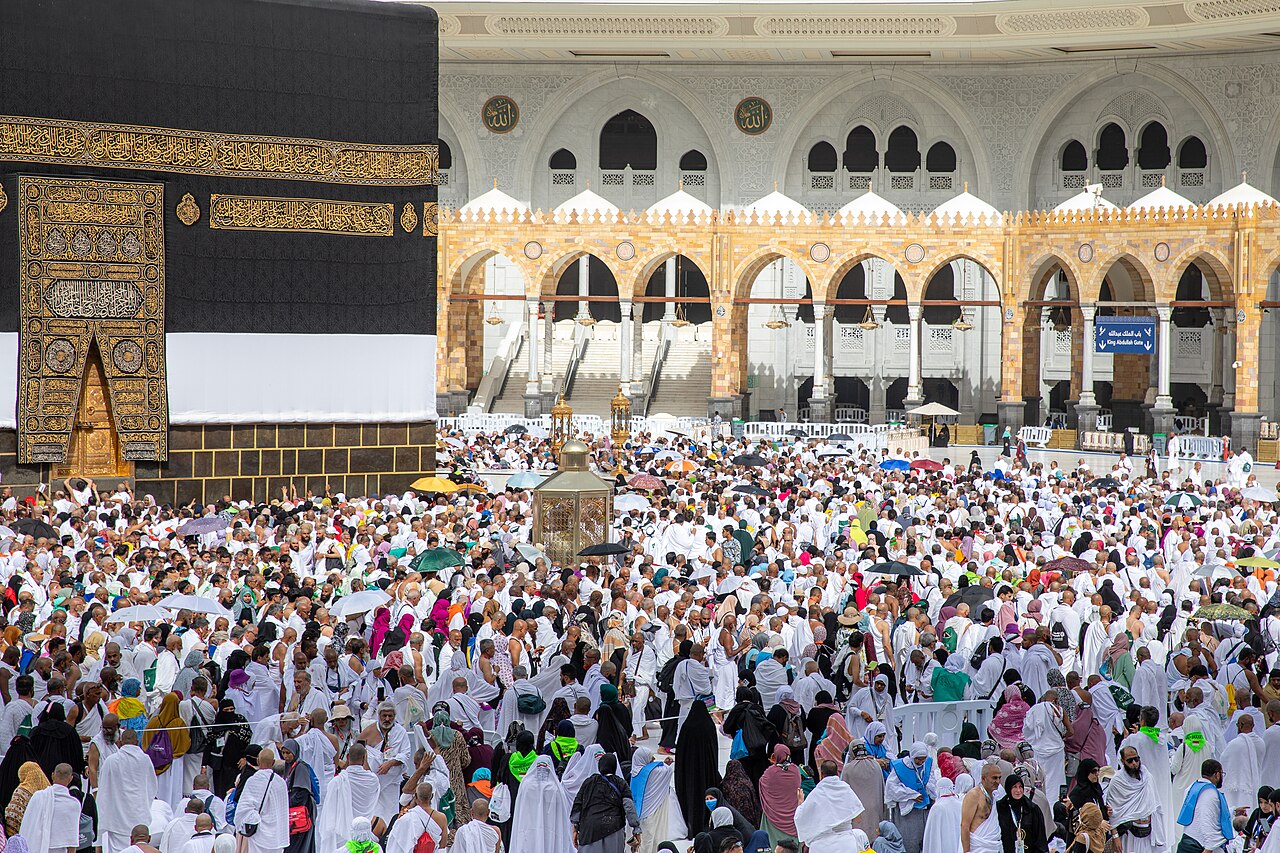

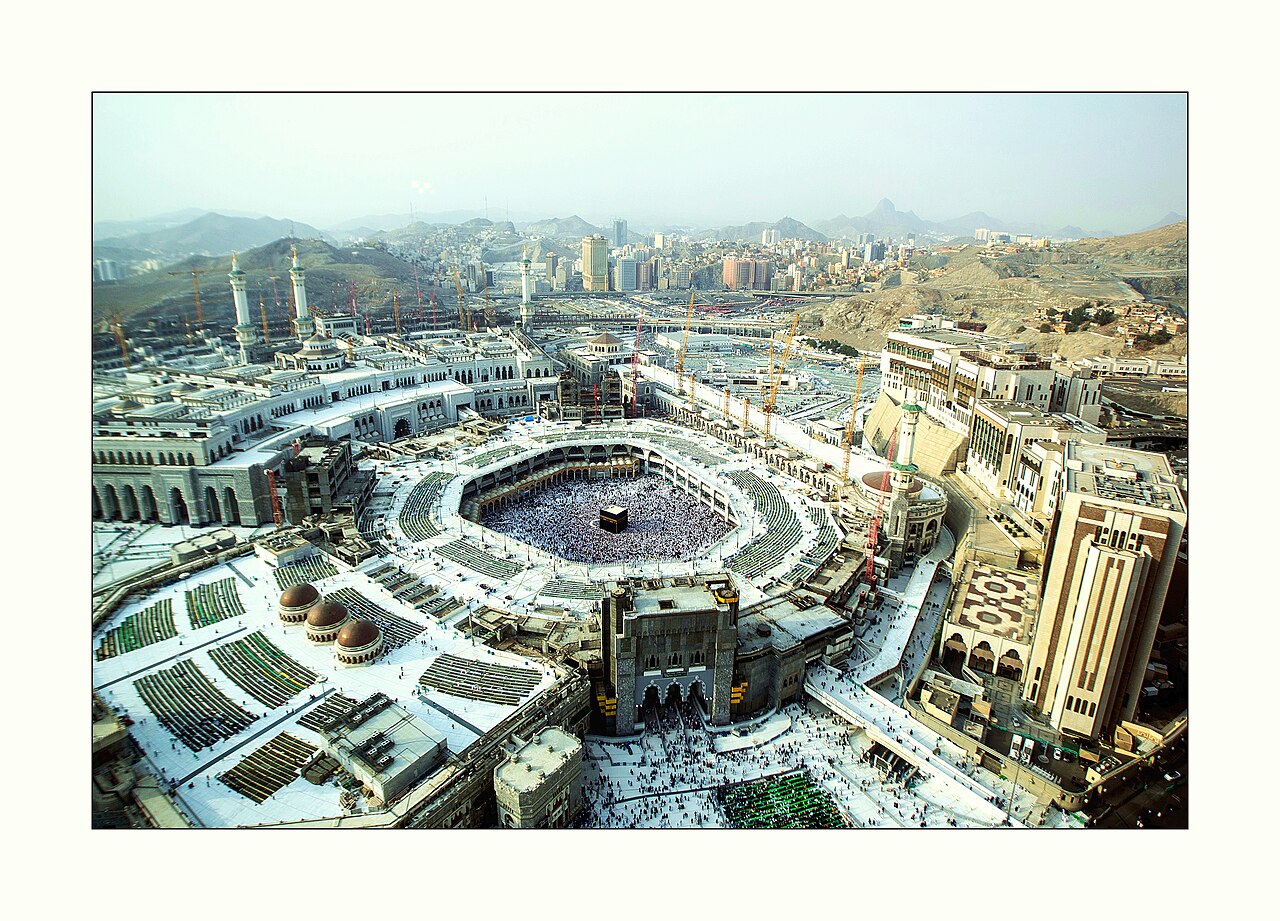
JEDDAH — The 750,000 pilgrims now inside Saudi Arabia for Hajj 2026 have become the only functioning constraint on military escalation between Iran and the United States — and the constraint binds Riyadh, not Tehran. With the Islamabad talks collapsed after 21 hours on April 12 and the ceasefire set to expire on or around April 22, the Kingdom faces a strategic paradox that no amount of air defense procurement can resolve: the human shield around the Two Holy Mosques was supposed to deter Iran, but Iran has no pilgrims inside Saudi Arabia, no diplomatic presence in the Hejaz, and no constituency whose safety would impose political costs on the IRGC. The deterrence runs in one direction only — and it runs against the Custodian.
This is the inversion that the 1987 precedent, universally cited in Western policy circles as evidence that Hajj constrains Iran, fails to account for. In 1987, 150,000 Iranian pilgrims were inside Mecca. In 2026, there are zero. The political mathematics have flipped entirely, and 1.8 million pilgrims from Indonesia, Pakistan, India, and Bangladesh are arriving into a theater where the ceasefire has no enforcement mechanism and the IRGC operates under decentralized autonomous command.
Table of Contents
- The Islamabad Collapse and What It Left Behind
- Why Does the 1987 Precedent Fail in 2026?
- Iran’s Zero-Pilgrim Asymmetry
- Can Tehran Enforce Restraint on Its Own Forces?
- The Air Defense Triage Problem
- Who Is Arriving and When?
- How Does Hajj Constrain Saudi Arabia’s Own Escalation Options?
- The April 22 Gap
- Frequently Asked Questions
The Islamabad Collapse and What It Left Behind
Vice President JD Vance departed Islamabad on April 12 after 21 hours of talks that produced nothing resembling an agreement. “We leave here with a very simple proposal, a method of understanding that is our final and best offer,” Vance told reporters. “We’ll see if the Iranians accept it.” The phrasing was telling — not “we have reached,” but “we’ll see if.” The Iranians had already answered. Mohammad Bagher Ghalibaf, the parliamentary speaker who doubled as lead negotiator and former IRGC Aerospace Force commander, had declared before the talks opened that “neither a bilateral ceasefire nor negotiations have any meaning” (IRNA, April 8). He arrived in Islamabad to perform a rejection, not negotiate one.
The collapse leaves the April 8 ceasefire — announced by Pakistani Prime Minister Shehbaz Sharif as an “immediate ceasefire everywhere” — as the only operative instrument between the two sides. That instrument has no enforcement clause, no verification mechanism, no automatic renewal, and a 15-to-20-day shelf life that places its expiry on or around April 22. Pakistan was cast as the sole enforcer, but Islamabad has no capacity to adjudicate the three violations Ghalibaf pre-declared before talks began — continued Israeli airstrikes in Lebanon, drone activity over Lar, and the enrichment ban — none of which fall within Pakistan’s operational reach. Within hours of the talks collapsing, Israeli airstrikes in southern Lebanon killed 11 civilians in Maaroub and Qana, stripping Saudi Arabia’s Lebanon ceasefire demand of any remaining mechanism or guarantor.
What the collapse did produce is a calendar collision. The ceasefire expires the same day Indonesia’s first Hajj charter departs for Madinah. Pakistan’s 468 flights begin six days earlier, on April 18. By the time the ceasefire lapses, somewhere between 100,000 and 200,000 additional pilgrims will have entered Saudi airspace, joining the 750,000 already registered and present. No second round of talks has been scheduled.
Why Does the 1987 Precedent Fail in 2026?
The 1987 precedent fails because it assumes Iran has pilgrims at risk inside Saudi Arabia. In 1987, 150,000 Iranian pilgrims were physically present in Mecca; their safety imposed real political costs on Khomeini. In 2026, Saudi Arabia has suspended all Iranian Hajj visas. Tehran has zero pilgrims in the Kingdom and therefore zero constituency risk in the Hejaz.
The Middle East briefing 3,000+ readers start their day with.
One email. Every weekday morning. Free.
Every Western and Gulf policy paper on Hajj and regional conflict cites the same event: July 31, 1987, when 402 people died in Mecca after Saudi National Guard forces sealed a route during Iranian pilgrim demonstrations mandated by Ayatollah Khomeini. The standard lesson drawn is that violence near the holy sites carries catastrophic political costs for all parties involved, and that this mutual vulnerability functions as a deterrent against military escalation during the pilgrimage season.
The lesson is correct on its own terms. But its application to 2026 requires a condition that no longer holds: Iranian skin in the game. Khomeini cared — or was forced to care — about those pilgrims’ fate. The aftermath confirmed the political price: Iran attacked Saudi, Kuwaiti, and French embassies in Tehran; Khomeini called the Al Saud “a bunch of savages”; Iran boycotted Hajj for three years; Saudi Arabia cut Iran’s quota by 87 percent, from 150,000 to approximately 45,000. Diplomatic relations were not restored until 1991. The historian Martin Kramer, writing at the Washington Institute for Near East Policy, found that “no evidence has been produced by Saudi Arabia or Iran to establish that the other side acted deliberately or with premeditation in order to provoke violence.” The violence produced consequences precisely because both sides had constituencies on the ground.
In 2026, Saudi Arabia suspended Iranian Hajj visas. Direct flights are cancelled. Iran’s diplomatic infrastructure in the Kingdom has collapsed entirely. Tehran has zero pilgrims inside Saudi Arabia and therefore zero constituency risk in the Hejaz. The deterrent architecture that 1987 supposedly established has been unilaterally dismantled — by Riyadh itself, as an understandable security measure that nonetheless carries a strategic cost no one in the Saudi defense establishment appears to have weighed against its benefits.
Iran’s Zero-Pilgrim Asymmetry
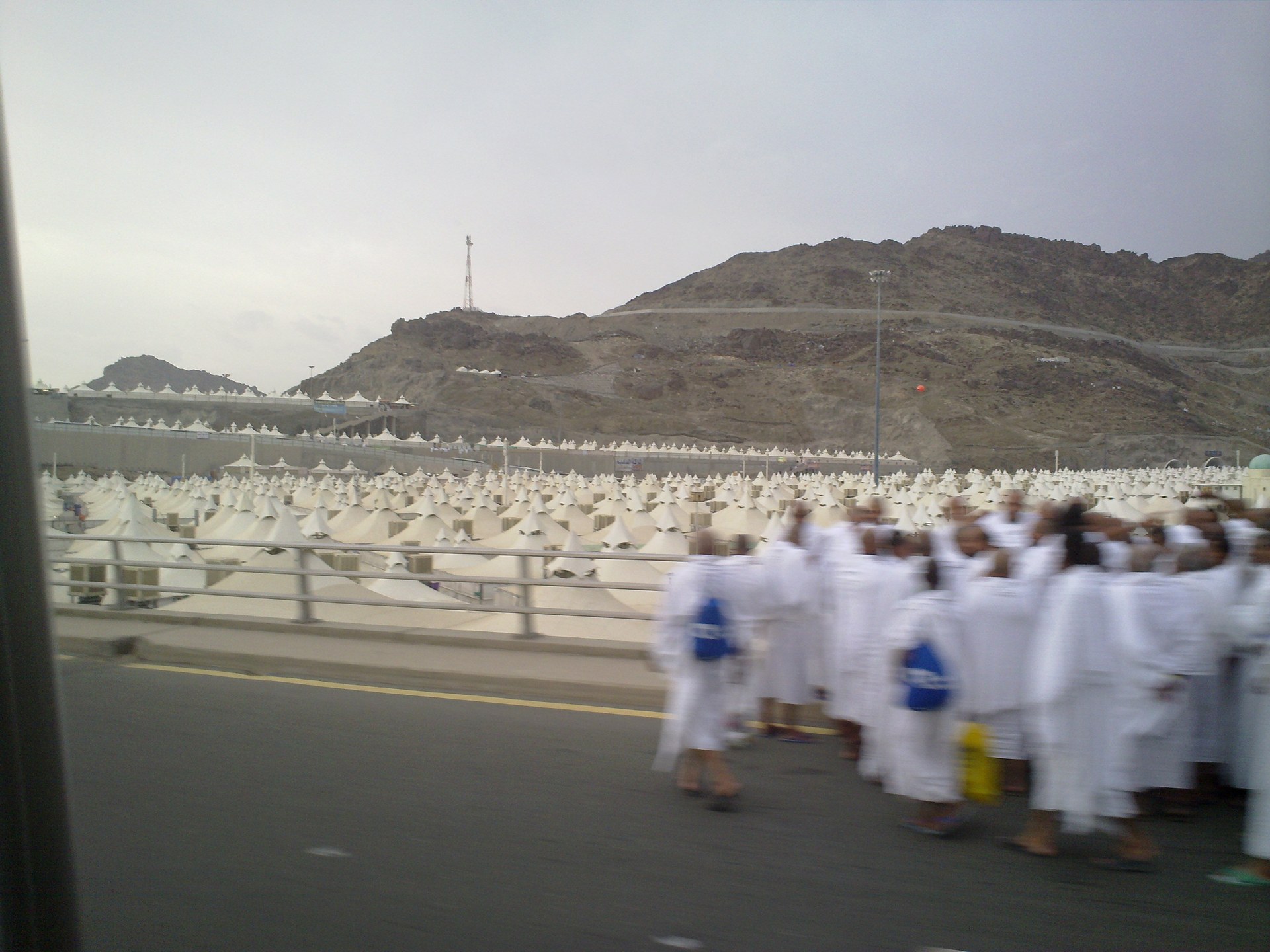
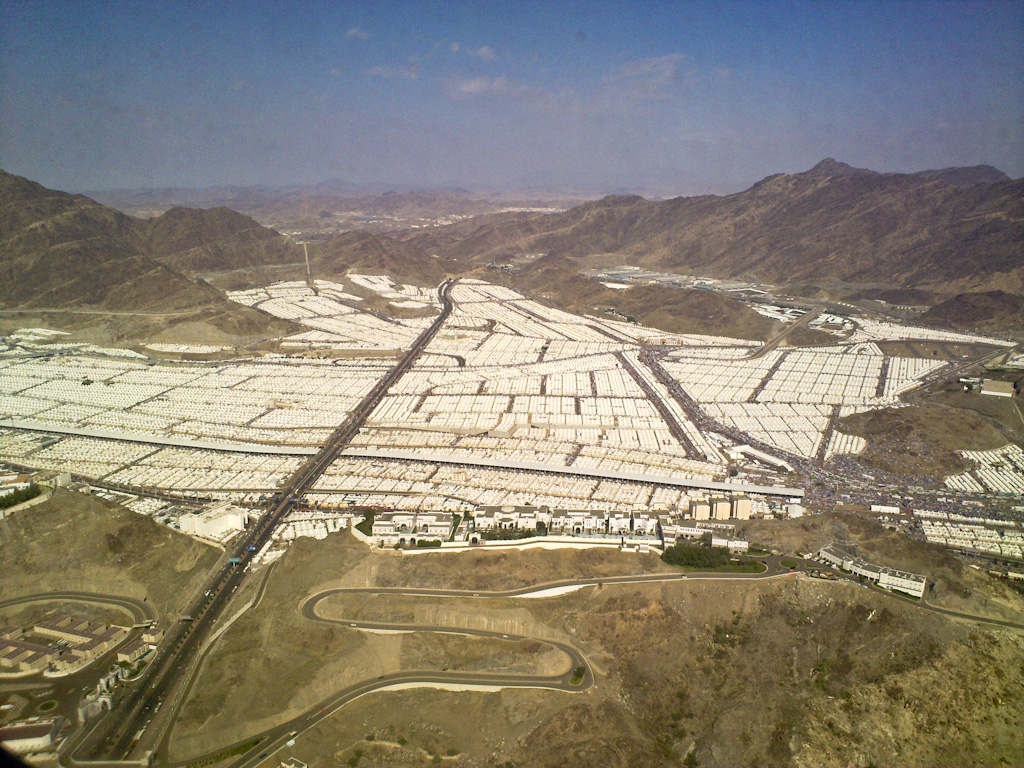
The arithmetic is simple and uncomfortable. If an IRGC ballistic missile — or missile debris from a successful intercept — strikes a pilgrim encampment in Mina or along the route to Arafat, the dead will be Indonesian, Pakistani, Bangladeshi, Indian, Nigerian, Egyptian. They will not be Iranian. Tehran will face condemnation from the Organization of Islamic Cooperation and editorial fury in Al Jazeera and Al Arabiya. It will not face grieving families demanding answers from their own government, the political force that actually constrains state behavior.
Saudi Arabia, by contrast, faces the full weight of the Custodian of the Two Holy Mosques title. Every Saudi king since Fahd has governed under a title that explicitly advertises stewardship of the global Muslim pilgrimage. If that pilgrimage produces mass casualties, the failure attaches not to the attackers but to the protectors. Jakarta, Islamabad, and Dhaka will not ask why Iran struck; they will ask why the Kingdom could not prevent it.
Indonesia has prepared for this. The Ministry of Hajj and Umrah has developed three contingency scenarios, with Scenario 3 — full Hajj suspension by Saudi Arabia, full cancellation of all Indonesian departures — sitting in a filing cabinet in Jakarta. Minister Irfan Yusuf told Tempo.co in April that “until today, the 2026 Hajj pilgrimage plan is still on track,” the kind of qualified reassurance that confirms contingency planning is active. Indonesia’s 221,000 pilgrims represent the single largest national contingent: 203,320 regular and 17,680 special, arriving on 548 flights from 16 embarkation points across the archipelago. A mass casualty event among Indonesian pilgrims would produce a political crisis in Jakarta that no amount of Saudi diplomatic capital could contain.
Can Tehran Enforce Restraint on Its Own Forces?
Tehran cannot enforce restraint on the IRGC. The president has no constitutional authority over IRGC operations. The corps’ mosaic doctrine distributes command across 31 provincial units designed to act without authorization from the center — a feature that prevented ceasefire compliance within hours of the April 8 announcement, when IRGC drones struck Kuwaiti infrastructure despite the nominal halt order.
Even if the Iranian government — meaning Pezeshkian’s civilian administration — wished to enforce restraint during the Hajj window, the structural question is whether it can. The evidence from the past six weeks suggests it cannot. On April 4, Pezeshkian directly confronted former intelligence chief Hossein Taeb, naming Ahmad Vahidi and Ali Abdollahi as commanders “acting unilaterally and driving escalation through attacks on regional countries” and “destroying any remaining chance of a ceasefire” (IBTimes, Ynet News). Under Article 110 of Iran’s constitution, the president has no authority over the IRGC. Pezeshkian’s confrontation was a performance of frustration, not an exercise of command.
The IRGC’s mosaic defense doctrine — defā’-e mozā’iki, formalized in September 2008 — distributes operational authority across 31 autonomous provincial corps, each with independent headquarters, communications networks, weapons stockpiles, intelligence units, and Basij forces. The doctrine was designed for regime survival under decapitation: if Tehran falls, the provinces fight on. But the architecture that makes Iran resilient against American strikes is the same architecture that makes ceasefire compliance unenforceable from the center. The IRGC Navy declared “full authority to manage the Strait of Hormuz” on April 5 and again on April 10 — while Araghchi was negotiating in Islamabad. Hours after the April 8 ceasefire, IRGC drones struck Kuwaiti infrastructure, the first confirmed evidence that the authorization ceiling produces outcomes Tehran cannot reverse even when it wants to.
Suzanne Maloney of the Brookings Institution has documented this structural reality in Foreign Affairs, describing Iran’s evolution into what she calls “The Third Islamic Republic” — a military-dominated state where civilian institutions retain the appearance of authority without the mechanisms to exercise it. Khamenei, who has been directing the war apparatus by audio relay rather than public appearance for over 39 days, represents the only figure with constitutional authority to override IRGC operational decisions under Article 176. His physical condition remains uncertain. The Times of London reported a memo describing him as “unconscious in Qom”; subsequent audio statements attributed to his office have been carried by IRIB but without video confirmation.
The operational implication for Hajj is direct: even a genuine order from Tehran to avoid targeting the Hejaz region would need to propagate through those 31 autonomous corps, each with its own threat assessment, its own weapons, and its own interpretation of what “ceasefire” means when its leadership has publicly declared that “negotiations are continuation of battlefield” (SNSC full text, April 8). The April 8 post-ceasefire drone strikes on Kuwait suggest that propagation failed within hours of the ceasefire announcement — and the Hajj window stretches for six weeks.
The Air Defense Triage Problem
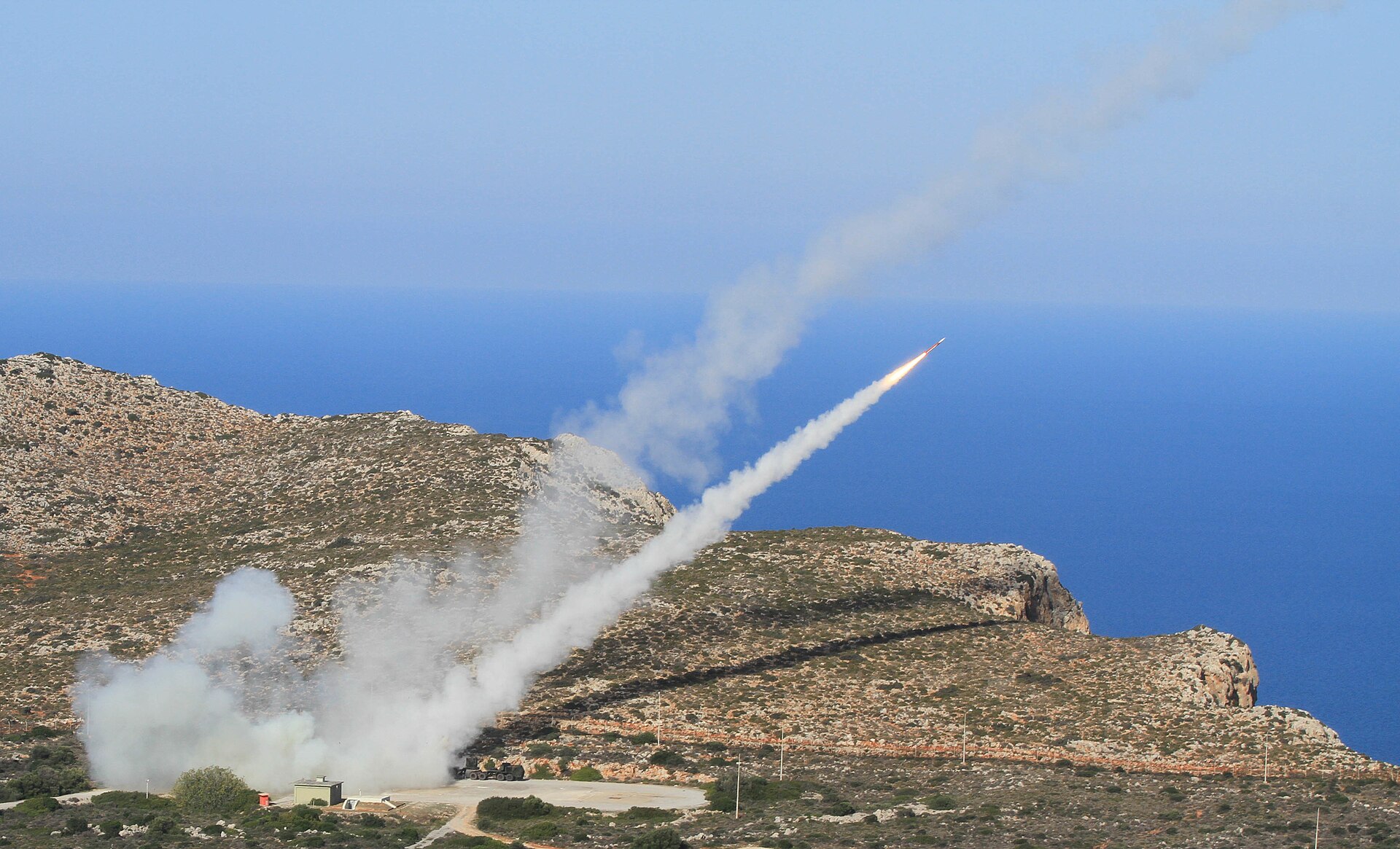
Saudi Arabia has deployed five intercept layers around Mecca: THAAD at the outermost ring, PAC-3 MSE at medium altitude, the South Korean KM-SAM Block II, a Chinese 30-kilowatt laser system, and Skyguard cannon for terminal defense. The Saudi Ministry of Defense has released imagery of the deployment with the statement: “Air defense forces… an eye that never sleeps, its mission is the safety of Muslim pilgrims.” The layering is impressive on paper. The mathematics behind it are less reassuring.
The Kingdom’s PAC-3 MSE stockpile has been depleted to approximately 400 rounds from a pre-war inventory of roughly 2,800 — an 86 percent reduction over 44 days of conflict. By April 7, Saudi forces had intercepted 799 drones and 95 ballistic missiles, a cumulative total of 894 threats at an implied expenditure of $3.49 billion at $3.9 million per PAC-3 round. A $9 billion DSCA-approved sale of 730 PAC-3 MSE rounds, approved January 30, 2026, has not been delivered. The Lockheed Martin facility in Camden, Arkansas produces a maximum of 620 rounds per year. The rounds cannot arrive before the Day of Arafah on approximately May 26.
| Defense Layer | System | Role | Estimated Availability |
|---|---|---|---|
| Outer (150+ km) | THAAD | High-altitude ballistic missile intercept | Operational — limited battery count |
| Medium (40-100 km) | PAC-3 MSE | Ballistic and cruise missile intercept | ~400 rounds remaining (86% depleted) |
| Medium (40 km) | KM-SAM Block II | Medium-altitude intercept | Operational — South Korean supplied |
| Close (5-10 km) | 30-kW laser | Drone and slow-mover intercept | Operational — Chinese supplied |
| Terminal (<5 km) | Skyguard | Last-ditch cannon defense | Operational |
The triage problem is geographic, not technological. Mecca sits approximately 1,720 to 1,950 kilometers from Iran by air — within the confirmed strike envelope of Iran’s Shahab-3, Emad variants, and the Fattah-2 hypersonic (1,500 km range for Fattah-2; up to 2,000 km for Shahab-3/Emad). Madinah is closer, at roughly 1,417 kilometers. But Saudi air defense must simultaneously cover Ras Tanura and the Eastern Province oil infrastructure, the East-West Pipeline pumping stations (one of which was struck on April 8, hours after the ceasefire), the Yanbu export terminal on the Red Sea coast, military installations across the Kingdom, and the Two Holy Mosques. With 400 PAC-3 rounds, the coverage problem is not whether the technology works — the Jubail SABIC incident on April 7 demonstrated that even successful intercepts produce debris capable of starting industrial fires — but whether the inventory can sustain simultaneous defense of oil infrastructure, military assets, and 1.8 million civilians concentrated in a 20-square-kilometer area around Mina, Arafat, and the Grand Mosque.
Who Is Arriving and When?
The pilgrim arrival schedule maps directly onto the ceasefire’s remaining lifespan. The window of escalating vulnerability opens April 18 and does not close until after the Day of Arafah on approximately May 26.
| Country | Pilgrims | Flights | Departure Begins | Notes |
|---|---|---|---|---|
| Pakistan | 119,000–180,000 | 468 | April 18 | Karachi, Lahore, Sialkot, Multan to Madinah; new Lahore route added 2026 |
| Indonesia | 221,000 | 548 | April 22 | 16 embarkation points; largest national contingent; Madinah-bound through May 6 |
| Total expected | ~1.8 million | — | Through May | 750,000 already registered/present as of mid-April |
Pakistan’s departures begin April 18 (Geo.tv, Pakistan Today, April 5). Indonesia’s first charter departs April 22 — the same day the ceasefire nominally expires. The overlap is not a coincidence of scheduling but a consequence of the Hajj calendar: the April 18 Umrah cordon seals Mecca to non-Hajj visitors, and the pilgrimage logistics chain activates on a fixed rhythm that cannot be accelerated or delayed without cascading failures across 16 Indonesian embarkation points and dozens of charter airlines.
The arrival schedule means that the period of greatest vulnerability — the days immediately following ceasefire expiry, when escalation risk peaks — coincides with the period of maximum pilgrim density in Saudi airspace. Commercial aircraft carrying pilgrims will be landing at Jeddah’s King Abdulaziz International Airport and Madinah’s Prince Mohammad bin Abdulaziz Airport while the legal framework preventing renewed hostilities dissolves. Bahraini airspace has been closed since February 28. Saudi commercial aviation has continued operating, but the King Fahd Causeway closure on April 7 — triggered by seven Iranian ballistic missiles targeting the Eastern Province — demonstrated how rapidly civilian infrastructure enters the threat matrix.
How Does Hajj Constrain Saudi Arabia’s Own Escalation Options?
Any Saudi military escalation that triggers an Iranian strike on pilgrims attaches the failure to Riyadh, not Tehran. The Custodian of the Two Holy Mosques title — Saudi Arabia’s foundational claim to Islamic authority — means the Kingdom cannot initiate or expand hostilities during Hajj season without accepting unlimited liability for whatever retaliation follows.
The conventional framing positions Hajj as an Iranian constraint — the assumption being that Tehran would not risk the Muslim world’s fury by attacking during the pilgrimage. The inversion is less discussed but arguably more operative: Hajj constrains MBS at least as much as it constrains the IRGC, and possibly more, because Saudi Arabia’s constraint is structural and reputational while Iran’s is merely rhetorical.
The Custodian of the Two Holy Mosques title is not ceremonial. King Fahd adopted it in 1986, replacing “His Majesty,” as a direct institutional response to the dual legitimacy crises of 1979 — Khomeini’s revolution and Juhayman’s seizure of the Grand Mosque. The title positions the Saudi monarch as steward of Sunni Islam’s most sacred obligation. MBS governs under it while simultaneously pursuing a modernization agenda that has, at times, strained relations with conservative religious constituencies. If a military escalation by Saudi Arabia — a retaliatory strike, an expanded campaign against Iranian proxies, acceptance of an American request for basing rights expansion — triggers an Iranian response that kills pilgrims, the political cost falls on the Crown Prince, not on Tehran.
This creates what Yasmine Farouk of the Carnegie Endowment for International Peace has framed as “uncontrolled escalation” risk — but the phrase understates the bind. It is not merely that escalation might spiral; it is that Saudi Arabia cannot initiate escalation during Hajj season without accepting that any Iranian retaliation, however disproportionate or illegitimate under international law, will produce civilian casualties among pilgrims that are attributed to Saudi Arabia’s failure to protect. Reports that MBS privately urged Trump toward regime change — sourced to the New York Times via “people briefed by US officials” and the Washington Post’s four-source February 28 report — take on a different character when the Kingdom is hosting 1.8 million guests whose governments did not sign up for a war zone.
The bind extends to air defense posture. Every PAC-3 round fired at an incoming Iranian missile over the Eastern Province is a round unavailable for the Mecca defensive perimeter. Every triage decision about whether to protect Ras Tanura’s oil loading facilities or the tent city at Mina is a decision that, if it goes wrong, ends the House of Saud’s claim to custodianship in the eyes of two billion Muslims. The Saudi defense establishment was not designed to solve this problem because the problem was not supposed to exist: Hajj was the ultimate insurance policy, the one thing no Muslim-majority adversary would risk disrupting. That insurance was priced on the assumption that the adversary’s leadership could control its own forces.
The April 22 Gap
The ceasefire announced April 8 was structured as a 15-to-20-day framework with no extension mechanism. The Soufan Center has noted the absence of any automatic renewal clause. If the ceasefire expires on April 22 — within the announced 15-to-20-day window — it lapses the same day Indonesia begins airlifting 221,000 pilgrims. No successor agreement is in negotiation. Vance’s “final and best offer” formulation on April 12 was not diplomatic positioning; it was a statement of exhaustion. The American negotiating team flew to Islamabad, sat for 21 hours, and left without a framework for continued talks.
Iran’s negotiating position made continuation structurally impossible. The four Iranian conditions included nuclear sovereignty (rejection of the enrichment ban), Hormuz sovereignty recognition, and IRGC “coordination” authority over the Strait — Point 7 of Iran’s 10-point plan, which embeds ongoing IRGC operational presence in the Strait as a treaty requirement. These are not opening positions to be bargained down; they are constitutional commitments that Araghchi, as a civilian diplomat, lacks the authority to modify and that Vahidi, who demanded Zolghadr’s inclusion on the Islamabad delegation, would not permit to be modified even if Araghchi could.
The gap between April 22 and the Day of Arafah on approximately May 26 is 34 days. During those 34 days, pilgrim density inside the Kingdom rises from roughly 750,000 toward 1.8 million, air defense inventories continue to deplete against ongoing drone and missile harassment (the ceasefire has not stopped all attacks — Kuwait intercepted 28 drones and Bahrain intercepted 31 drones plus 6 missiles after the April 8 ceasefire), and no diplomatic channel exists to manage escalation. Pakistan remains the nominal interlocutor, but Army Chief General Munir’s 27th Constitutional Amendment has made ceasefire diplomacy his personal operation, not the elected government’s — a structural arrangement that concentrates authority without expanding capability.
Mohammad Hassan Rahimian, the Supreme Leader’s representative, told Tasnim on April 8 that the ceasefire agreement showed “the historical and unique greatness of Iran.” The triumphalist framing matters: any concession during the Hajj window — voluntary restraint around the holy sites, a de facto extension of the ceasefire, even a private assurance to Pakistan — would contradict the narrative of Iranian victory that the IRGC has invested in. Restraint, in this framing, looks like retreat.
Frequently Asked Questions
What is the range of Iranian missiles capable of reaching Mecca and Madinah?
Both cities fall within the strike envelope of Iran’s Shahab-3 and Emad variants (up to 2,000 km range). The more operationally consequential factor is not range from Iranian soil but the proxy-launch problem: Iran has demonstrated the ability to fire from forward positions in Iraq and Yemen, reducing effective distance to the Hejaz by several hundred kilometers. Saudi air defense layering around Mecca is oriented against direct Iranian trajectories from the east and northeast; it is not configured to address simultaneous multi-axis launches from Iraq-based positions to the north and Red Sea-adjacent positions from Yemen to the west. The Fattah-2 hypersonic (1,500 km range) reaches Madinah from Iran directly but falls short of Mecca from Iranian soil, making proxy launch infrastructure the decisive range variable for the Hejaz as a whole.
Has Saudi Arabia ever cancelled or suspended Hajj for security reasons?
Saudi Arabia has never unilaterally cancelled Hajj for military or security reasons, though the pilgrimage was severely restricted in 2020 and 2021 due to COVID-19, with approximately 10,000 domestic-only pilgrims permitted in 2020 and 58,745 in 2021. Historical disruptions to Hajj include the 930 CE Qarmatian massacre (in which the Black Stone was stolen and held for 22 years), various plague outbreaks in the Ottoman period, and the 1979 Grand Mosque seizure — but none of these resulted in pre-emptive cancellation. The political cost of cancellation under the Custodian title would be existential: it would amount to an admission that the Kingdom cannot fulfill its foundational obligation, a concession no Saudi monarch has been willing to make in the modern era.
What happens to the ceasefire if no extension is negotiated before April 22?
The ceasefire framework announced April 8 contains no sunset clause language beyond the 15-to-20-day window, no automatic renewal mechanism, and no penalty for non-compliance. In the absence of a successor agreement, the legal status of hostilities reverts to the pre-ceasefire condition — meaning both sides would be operating under the same rules of engagement that applied before April 8. The Hague Convention and customary international humanitarian law provide protections for civilian and religious sites, but Iran is not a signatory to Additional Protocol I of the Geneva Conventions, and enforcement of such protections in the absence of a UN Security Council resolution (vetoed by Russia and China) is effectively nonexistent. The practical restraint, if any, would be political rather than legal.
Could Iran face consequences from the Muslim world for striking near Mecca?
The OIC’s 57 member states passed a non-binding resolution in March 2026 calling for protection of holy sites, but the organization has no enforcement mechanism and Iran’s membership remains active. The more consequential pressure would come bilaterally: Turkey, which has maintained a mediating position and whose 90,000 Hajj pilgrims represent a large constituency, has warned privately that any attack on the Hejaz would trigger a rupture in Ankara-Tehran relations that predates the current conflict. Malaysia and Bangladesh, both with substantial pilgrim contingents, have made similar private representations through Pakistani channels. The effectiveness of these warnings depends on whether the relevant Iranian decision-makers — the 31 autonomous IRGC corps commanders, not Pezeshkian or Araghchi — receive, acknowledge, and comply with them.
What is Saudi Arabia’s contingency for pilgrim evacuation if hostilities resume?
Saudi civil defense protocols for Hajj are designed around crowd management, fire, and structural collapse — the 2015 Mina stampede (2,411 dead by AP count, 769 by Saudi official count) drove a major overhaul of crowd-flow infrastructure. Military evacuation under missile attack is a different category of problem. Jeddah’s King Abdulaziz International Airport, the primary Hajj transit hub, handled 1.8 million pilgrims in 2024 but has no hardened facilities for operations under ballistic missile threat. The airport sits approximately 80 kilometers from Mecca — close enough to share the same theater-level air defense umbrella but far enough that simultaneous defense of both locations would strain the depleted PAC-3 inventory further. No public evacuation protocol for wartime Hajj has been disclosed by Saudi authorities. The ten-day interval before ceasefire expiry on April 22 — with no talks scheduled and no enforcement architecture — makes that gap considerably more dangerous. The structural dimension of this exposure was formalized on April 9, when the Pentagon’s $4.76 billion PAC-3 MSE contract confirmed delivery timelines running to June 2030: Washington’s own procurement schedule is the clearest official admission that Saudi air defence will not recover before Hajj. The blockade launched April 13 sharpens that exposure: the coalition that does not exist means Saudi Arabia absorbs the deterrence cost of a unilateral US operation while holding no formal position on it.