JEDDAH — Saudi Arabia will host between 750,000 and two million Muslim pilgrims for Hajj 2026 while Iranian ballistic missiles and drones are actively striking targets across the kingdom, making this the first wartime Hajj in the modern history of the Saudi state. The first pilgrims land in thirteen days, on April 18, and by the time they stand together on the plain of Arafat on May 26, the Iran-Saudi war will be in its eighty-seventh day — and Mohammed bin Salman will have staked the foundational claim of his dynasty, custody of the two holiest sites in Islam, on a five-layer air defense shield that did not exist in its current form six months ago.
The stakes are not abstract. The title “Custodian of the Two Holy Mosques” is not honorific decoration — it is the political instrument through which the House of Saud justifies its rule to 1.8 billion Sunni Muslims. King Fahd formalized the title in 1986, but the claim stretches back to 1924, when Saudi forces captured Mecca from the Hashemites. Every Saudi king since has understood that if the holy cities are compromised, the dynasty’s contract with the Islamic world is void. No previous king has had to defend that contract against an active state adversary firing cruise missiles at Saudi refineries 900 kilometers away.
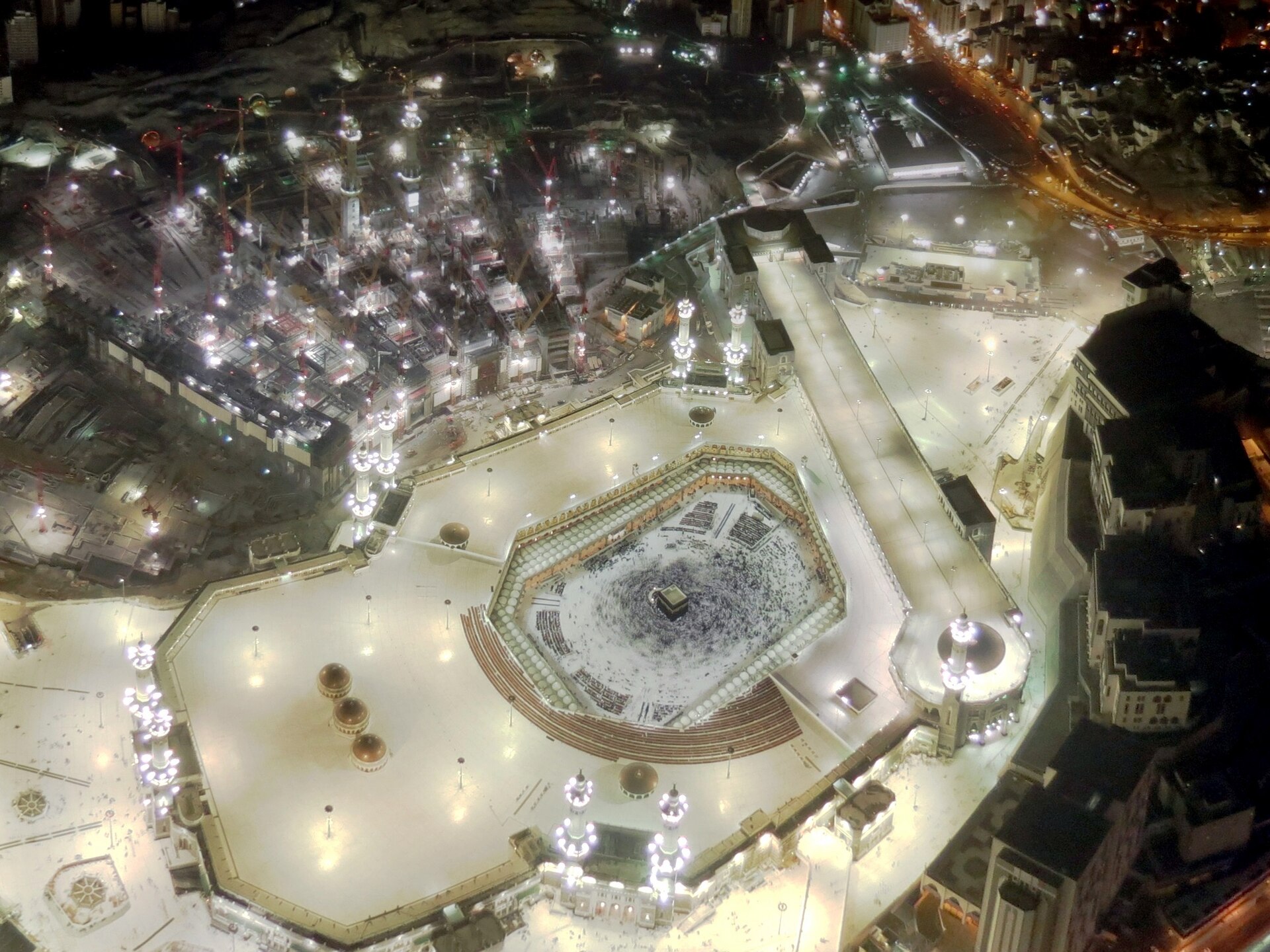
Table of Contents
- What It Means to Host the World’s Hajj Under Ballistic Missile Fire
- The Timeline: Thirteen Days Before the First Pilgrims Land
- How Is Saudi Arabia Defending Mecca and Medina?
- What Would Iran Risk by Striking During Hajj?
- The Dynastic Stakes: Why This Is Different From Every Previous Crisis
- The 87,500 Pilgrims Who Will Not Come
- How Are Muslim Governments Planning for the Worst?
- The Arithmetic of Religious Tourism in Wartime
- What Happens If Something Goes Wrong?
- Frequently Asked Questions
What It Means to Host the World’s Hajj Under Ballistic Missile Fire
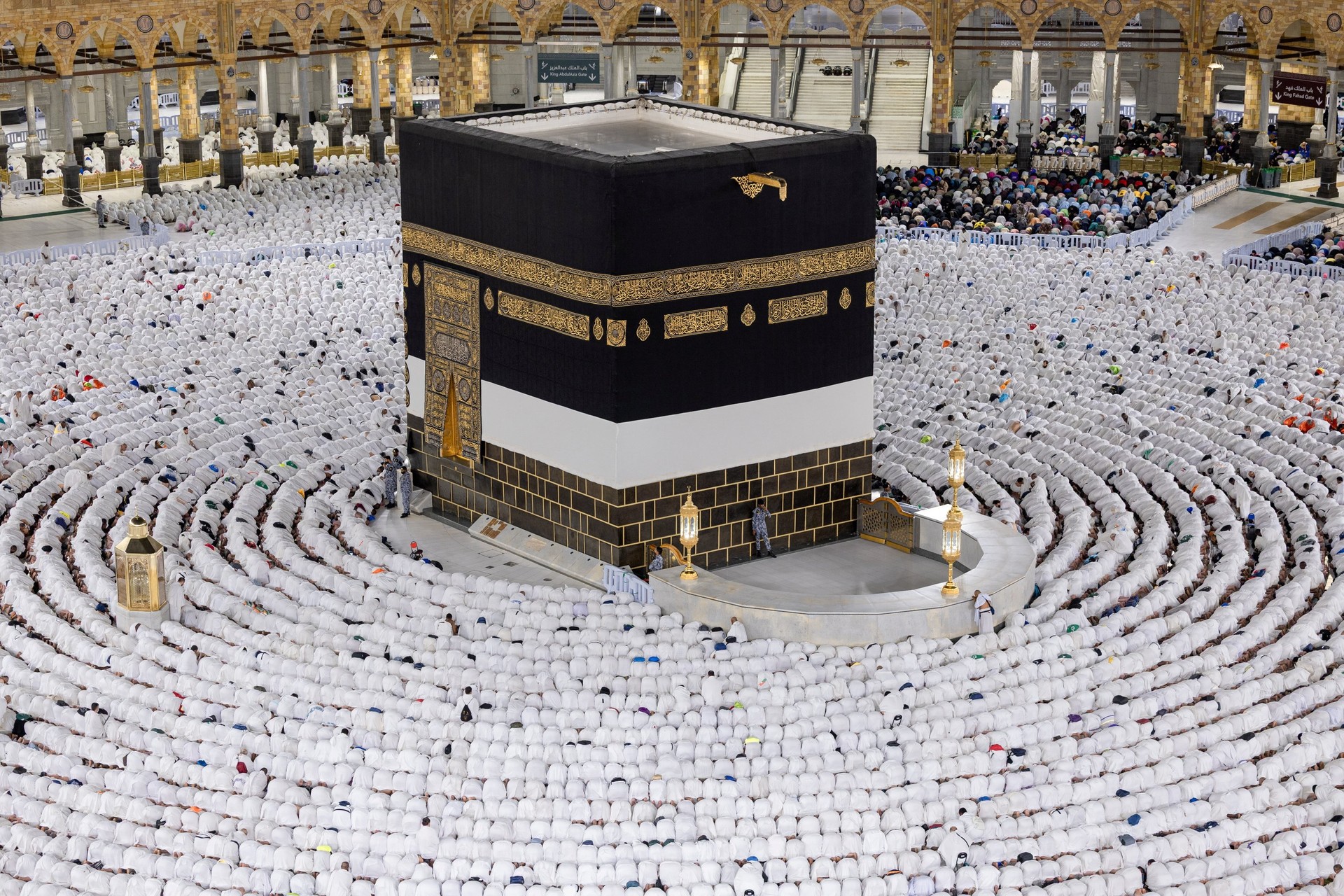
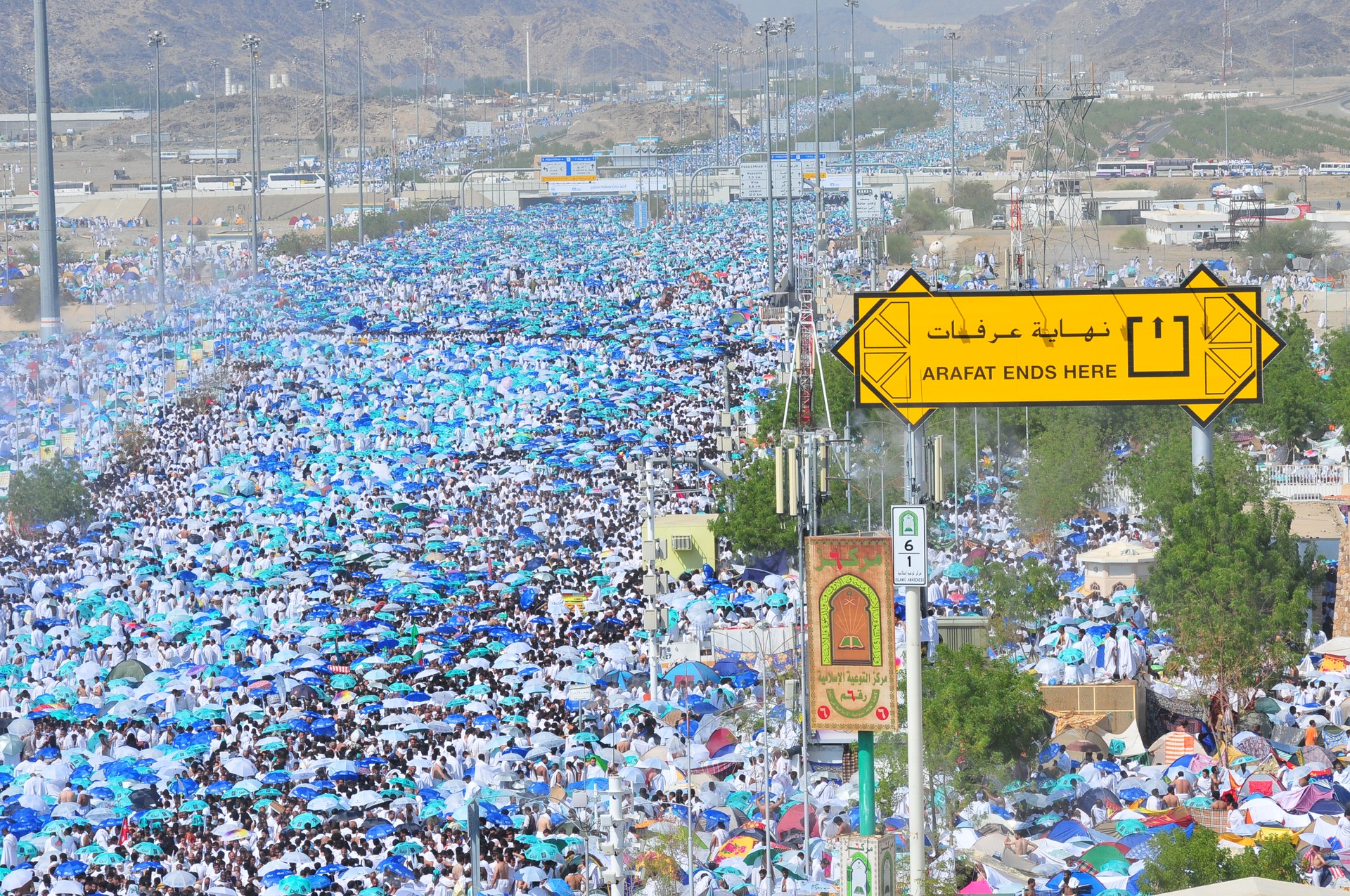
The Hajj is the only event on earth where two million people converge on a single city, at a fixed time, for a fixed purpose, and cannot reschedule. It is the fifth pillar of Islam — obligatory for every Muslim who is physically and financially able — and its dates are set by the lunar calendar, not by the convenience of geopolitics. In 2026, the lunar calendar has placed Hajj squarely inside a shooting war, and the Saudi government has made the decision to proceed.
That decision was not automatic. Indonesia’s Minister of Hajj and Umrah, Mochamad Irfan Yusuf, outlined three operational scenarios in March 2026: proceed with rerouted flights, delay Indonesian departures while Saudi Arabia continues to issue permits, or respond to a full Saudi suspension. The fact that Jakarta prepared three contingency plans tells you what the world’s largest Muslim-majority country thinks about the risk. Indonesia’s Hajj quota is 221,000 pilgrims — nearly a third of the total foreign allocation. Its first Hajj flight departs April 22.
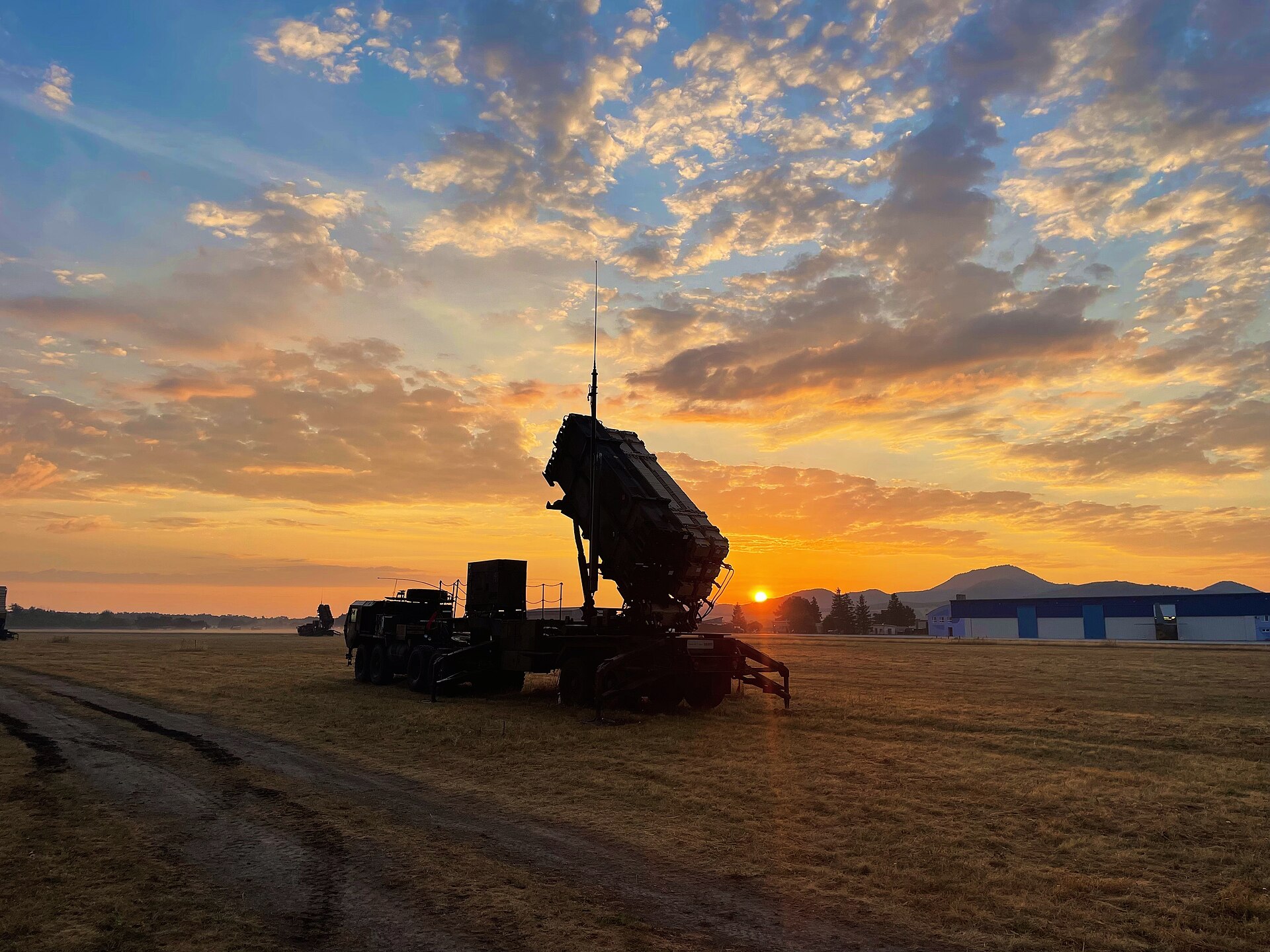
Saudi Arabia’s answer has been to treat the Hajj as a military operation. Prince Saud bin Mishaal bin Abdulaziz led a high-level preparedness review in early April and declared readiness at 95 percent completion, according to Asharq al-Awsat. The Saudi Ministry of Defense released images of Patriot missile batteries positioned around the holy sites with a message calibrated for both domestic and international Muslim audiences: “Air defense forces — an eye that never sleeps, its mission is the safety of Muslim pilgrims.”
The framing is deliberate. Saudi Arabia is not merely defending territory; it is defending the one function that no other nation on earth can perform. If the kingdom cannot guarantee the safety of Hajj, the Custodianship title becomes a liability rather than an asset — and every rival claimant to Islamic leadership, from Tehran to Ankara to Islamabad, gains leverage that did not previously exist.
The Timeline: Thirteen Days Before the First Pilgrims Land
The clock is running on a fixed schedule. Saudi Arabia confirmed Hajj 2026 would proceed and began issuing visas on February 8, 2026, through the Nusuk digital platform — one month before Iran’s war with the coalition began in earnest. Approximately 750,000 pilgrims had registered by early April, according to Wego Travel Blog’s compilation of Saudi ministry data. The historical baseline for total Hajj attendance is 1.7 to 1.9 million; in 2025, the last pre-war Hajj, 1,673,230 pilgrims attended according to GASTAT data published by the Saudi Gazette.
The operational timeline unfolds in three phases. Phase one begins April 18, when the first Hajj charter flights arrive from Pakistan. Indonesia’s first flight follows on April 22. By April 21, pilgrims begin entering Mecca dormitories. Phase two is the pilgrimage itself: the Day of Arafah falls approximately on May 26, Eid al-Adha on May 27, and the rites conclude around May 30. Phase three — the one nobody in Riyadh wants to think about publicly — is the departure window, when hundreds of thousands of pilgrims must be moved out of Mecca through an airspace that has seen over 130 commercial flights cancelled due to regional security concerns.
By the time pilgrims stand on the plain of Arafat, the war will have been running for roughly 87 days. Iranian retaliatory strikes have already hit the US Embassy in Riyadh, Aramco’s Ras Tanura facility, radar installations near Prince Sultan Air Base, and the SAMREF refinery at Yanbu. No confirmed strikes have targeted Mecca or Medina — but the SAMREF refinery is connected to Yanbu, terminus of the East-West crude bypass pipeline, and Yanbu sits just 340 kilometers north of Medina.
| Date | Event | War Day |
|---|---|---|
| Feb 8, 2026 | Hajj visa issuance begins via Nusuk platform | Pre-war |
| Mar 1, 2026 | Iran-coalition war begins | Day 1 |
| Mar 19, 2026 | Greek ELDYSA battery intercepts two Iranian ballistic missiles at Yanbu | Day 19 |
| Apr 5, 2026 | Saudi readiness declared at 95% (Asharq al-Awsat) | Day 36 |
| Apr 18, 2026 | First Hajj pilgrims arrive (Pakistan charter flights) | Day 49 |
| Apr 22, 2026 | Indonesia’s first Hajj flight departs | Day 53 |
| May 26, 2026 | Day of Arafah — all pilgrims on the plain of Arafat | ~Day 87 |
| May 27, 2026 | Eid al-Adha | ~Day 88 |
| May 30, 2026 | Pilgrimage concludes | ~Day 91 |
How Is Saudi Arabia Defending Mecca and Medina?
The Saudi air defense architecture over the holy cities is the most layered point-defense system ever deployed for a civilian mass gathering. According to reporting by News24Online and The Daily Jagran, Saudi Arabia has erected five distinct intercept layers around Mecca and Medina, each designed to catch what the layer above it misses.
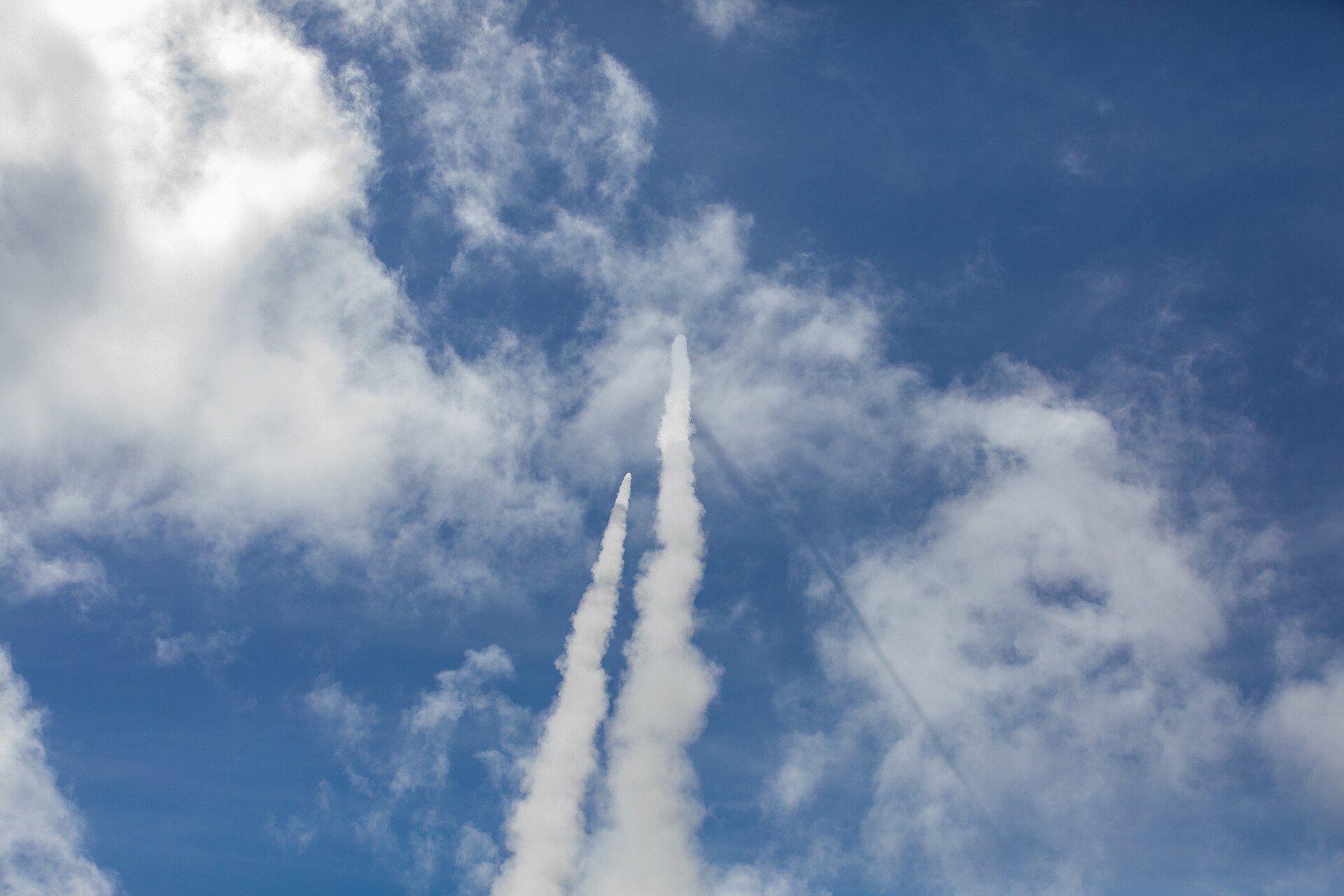
The outermost layer is the Terminal High Altitude Area Defense system — THAAD — designed to intercept ballistic missiles in their descent phase at altitudes above 150 kilometers, well outside the atmosphere. Below that, Patriot PAC-3 Missile Segment Enhanced interceptors provide the primary mid-altitude intercept capability. The United States approved a $9 billion sale of 730 PAC-3 MSE interceptors to Saudi Arabia in early February 2026, weeks before the war started — a deal reported by The Defense Post and Militarnyi that now looks less like routine procurement and more like advance preparation. The third layer is South Korea’s KM-SAM Block II, a mobile precision system that fills the gap between Patriot’s engagement envelope and closer-range threats.
The fourth and fifth layers address the threat that keeps Saudi air defense planners awake: drones. A Chinese-manufactured 30-kilowatt fiber-optic laser system provides counter-drone capability at medium range, while Oerlikon Skyguard 35mm cannons serve as the terminal layer — the last line of defense against anything that penetrates the upper four tiers. Mecca sits 1,720 to 1,950 kilometers from the nearest Iranian launch sites, which gives Saudi radar networks meaningful detection time against ballistic missiles. Drones launched from Houthi-held territory in Yemen are a different problem entirely: slower, lower, harder to detect on radar, and launchable from positions far closer to the holy cities.
The system has already been tested in combat, though not directly over Mecca. On March 19, 2026, a Greek ELDYSA Patriot PAC-3 battery stationed at Yanbu executed its first confirmed combat intercept, destroying two Iranian ballistic missiles targeting the SAMREF refinery — the Aramco-ExxonMobil joint venture that processes crude arriving through the East-West pipeline. That intercept confirmed the system works. Whether it works flawlessly over six weeks, with two million civilians concentrated beneath it, is the question no one can answer in advance.
“Air defense forces — an eye that never sleeps, its mission is the safety of Muslim pilgrims.”
Saudi Ministry of Defense official statement, published by Newsweek
The deployment is not just about hardware. Saudi Arabia has suspended visitor visas for 14 countries including Iran, according to NCRI and Newsweek reporting. Saudi GACA — the General Authority of Civil Aviation — has not reduced the official Hajj flight schedule, but airlines are making their own calculations. Emirates, Etihad, Qatar Airways, British Airways, Air France, Turkish Airlines, Lufthansa, and Air India have all cancelled or rerouted Middle East services. The 130-plus cancelled flights reported by AerospaceGlobalNews and the Sunday Guardian represent a rolling disruption to the airlift capacity that Hajj requires.
What Would Iran Risk by Striking During Hajj?
No confirmed Iranian threat to Mecca or Medina has appeared in open sources as of April 5, 2026. Iran has publicly framed its strikes as targeting US military installations and coalition energy infrastructure — a framing that deliberately excludes the holy cities. The reason is straightforward: a deliberate strike on the Grand Mosque or the Prophet’s Mosque would unite 1.8 billion Sunni Muslims against Tehran in a way that nothing else could, and would destroy the Islamic Republic’s foundational claim to represent the interests of the global Muslim ummah.
That constraint is real but not absolute. Under the new Supreme Leader, Mojtaba Khamenei — elected March 8, 2026, following his father’s death — the IRGC has consolidated dominance over Iranian governance in ways that Suzanne Maloney of Brookings documented in her Foreign Affairs analysis, “The Third Islamic Republic.” Maloney’s assessment is that Iran is becoming a military-dominated state. Mojtaba has no prior track record of constraint on targeting decisions, and under his watch the IRGC attacked all six GCC states simultaneously in a single engagement — the first time that had happened in the conflict, according to ACLED’s March 2026 special issue.
The deliberate scenario is not what keeps Saudi defense planners up at night. The accidental scenario is. Interceptor debris from a Patriot engagement rains down — it has to land somewhere. A drone that was aimed at a military target 200 kilometers away malfunctions and drifts off course. Fragments from a successful intercept fall into a crowd of 100,000 pilgrims performing tawaf around the Kaaba. None of these scenarios require Iranian intent to strike the holy sites. All of them produce the same footage on Al Jazeera.
There is also the question of what Iran’s allies do independently. The Houthis in Yemen have launched drones and missiles at Saudi territory throughout the conflict, and their launch sites are significantly closer to Mecca than anything in Iran. A Houthi drone does not need to be aimed at Mecca to reach it — Yemen’s southwestern border is close enough that navigation errors or electronic warfare interference could push a weapon off its intended trajectory and into the Hajj security perimeter.
Najeeb Ghanem, a Yemeni academic and former Health Minister, wrote in Al Jazeera Opinion on March 19, 2026, that Khomeini left three directives for Khamenei: eliminate Saddam Hussein, acquire nuclear weapons, and “occupy Mecca and Medina.” Ghanem’s framing — that the Iranian project “is not an Islamic project, even if it employs Islam to serve it — it is a new imperial project, driven by Persian ambitions, using religion as both cover and driving force” — reflects how the war is being read inside the Arab Muslim world. Whether or not that reading is accurate, it shapes the political environment in which a stray missile fragment landing near the Grand Mosque would be interpreted.
The Dynastic Stakes: Why This Is Different From Every Previous Crisis
The House of Saud has faced threats to the holy cities before. In November 1979, Juhayman al-Otaybi and up to 600 militants seized the Grand Mosque of Mecca, denouncing the royals as corrupt and accusing them of alliances with “Christian infidels.” The siege lasted two weeks and required French GIGN special forces to help resolve it. Sixty-three rebels were publicly beheaded. King Khalid’s response was to hand the ulama more power over social policy — a concession whose consequences shaped Saudi religious and cultural life for the next three decades.
In July 1987, Iranian Shia pilgrims staged political demonstrations during Hajj. Saudi police sealed part of the planned route; the confrontation escalated into clashes and a stampede that killed 402 people — 275 Iranian pilgrims, 85 Saudi police and citizens, 42 others. Ayatollah Khomeini called on Saudis to overthrow the House of Saud the same day. Saudi Arabia cut diplomatic relations with Iran and slashed Iran’s Hajj quota from 150,000 to 45,000. Iran boycotted Hajj entirely for three years, from 1988 to 1990.
In 1990, the Hajj proceeded with approximately 1.48 million pilgrims even as Operation Desert Shield deployed hundreds of thousands of US troops to Saudi soil — the same deployment that Osama bin Laden would later cite as his primary grievance against the House of Saud. That same Hajj saw the Al-Ma’aisim tunnel stampede that killed 1,426 pilgrims, the deadliest crowd disaster in Hajj history until the 2015 Mina crush.
Each of these crises was contained. The 1979 siege was an internal insurgency, not a state adversary. The 1987 riots were a crowd-control failure, not a military attack. The 1990 Hajj ran alongside a military buildup, but Iraq never fired at Mecca. What Mohammed bin Salman faces in 2026 is categorically different: a state adversary that has already demonstrated the capability and willingness to strike Saudi territory with ballistic missiles, combined with the physical presence of up to two million foreign civilians whose governments are watching in real time.
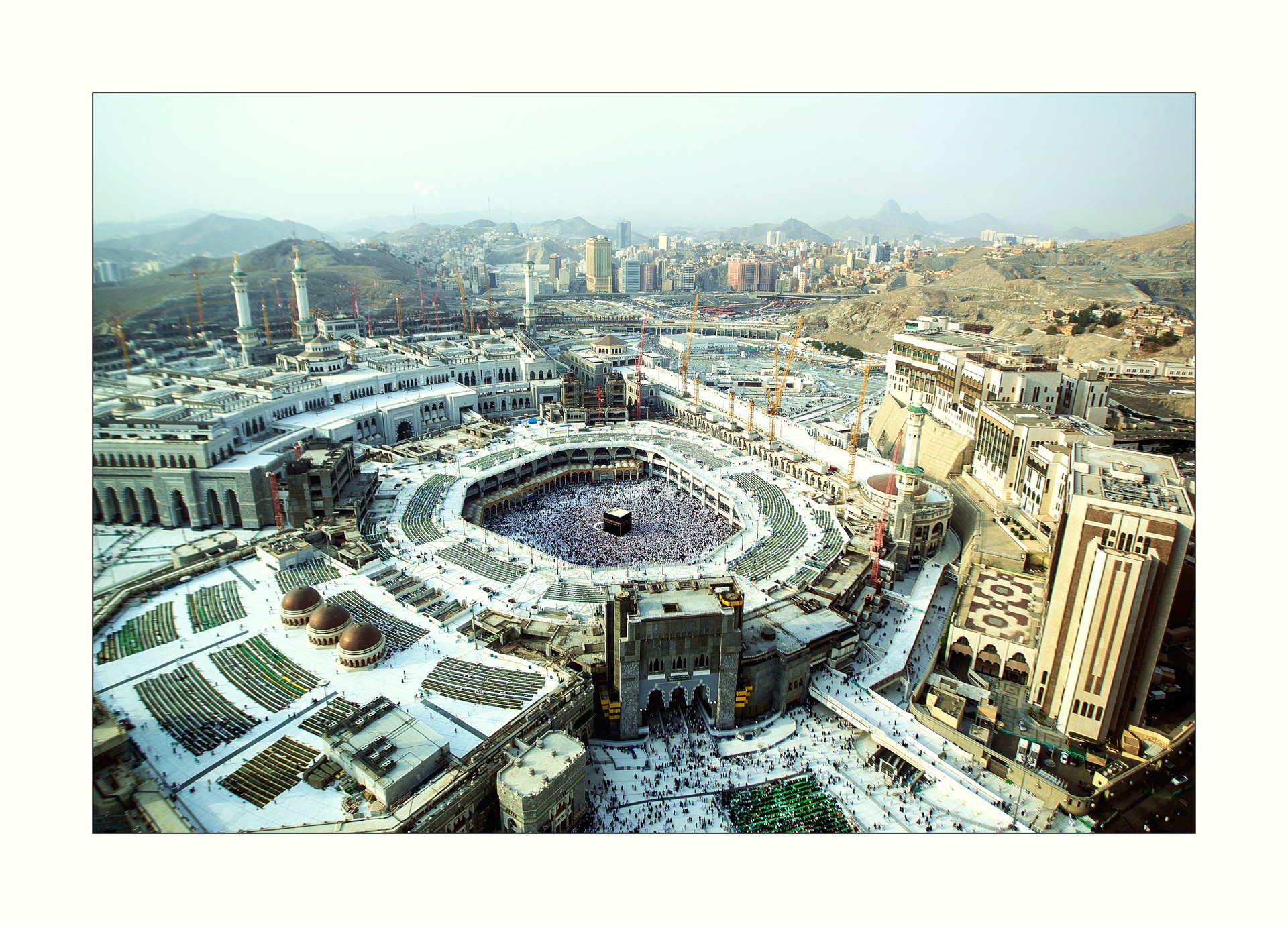
The Custodianship title carries weight precisely because it has never been tested this way. Saladin held it, the Mamluks held it, the Ottomans held it after Selim I’s conquest in 1517, and the Hashemites held it until Saudi forces took Mecca in October 1924 and Medina in December 1925. King Fahd revived the formal title in 1986, deliberately replacing “His Majesty” with “Custodian of the Two Holy Mosques” to emphasize Islamic stewardship over royal prerogative. If MBS successfully shepherds two million pilgrims through a wartime Hajj without a single casualty from military action, the Custodianship claim will be stronger than at any point since 1924. If a single interceptor fragment kills a pilgrim on live television, the political damage will outlast the war itself.
The 87,500 Pilgrims Who Will Not Come
Before the war, Iran and Saudi Arabia were on surprisingly good terms regarding the Hajj. In November 2025, Alireza Rashidian, head of Iran’s Hajj and Pilgrimage Organization, described serving pilgrims of the House of God as “a shared honor” for Iranian and Saudi officials, and formally requested an increase in Iran’s quota to match its population of approximately 91 million people. The request was made through channels established after the 2023 rapprochement brokered by China. Saudi Minister Tawfiq bin Fawzan Al-Rabiah’s office engaged in negotiations. An agreement on expanded quota and improved consular arrangements was reached, according to Mehr News Agency and ABNA24.
That agreement is now functionally void. Saudi Arabia has suspended consular services with Iran. Direct flights between the two countries have been cancelled. Saudi Arabia has not formally excluded Iranian pilgrims holding official Hajj permits — the kingdom has been careful to avoid creating a precedent of barring Muslims from Hajj on the basis of nationality — but in practice, Iranian attendance is impossible. The pre-war Iranian quota was approximately 87,500 pilgrims.
The absence echoes 1988 to 1990, when Iran boycotted Hajj for three years following the 1987 riots. The difference is that in 1988, Iran chose to stay away. In 2026, Iran’s pilgrims cannot come even if they wanted to — the infrastructure of travel between the two countries has been dismantled by war. For Mojtaba Khamenei, this creates a propaganda problem and an opportunity simultaneously: 87,500 Iranians denied the fifth pillar of Islam can be framed as Saudi aggression against Iranian Muslims, while the absence of Iranian pilgrims also removes the risk that Iranian casualties during Hajj would force Tehran into an escalation it may not want.
Mehdi Khalaji, a Qom-trained Shiite theologian at the Washington Institute for Near East Policy, has documented how Iran deployed the Hajj as an ideological instrument from 1979 onward. The Office of the Supreme Leader’s Representative operated what Khalaji described as a “colossal bureaucracy” within the Hajj — vetted clerics, missionary networks, and Khamenei’s annual Hajj message distributed in nine languages. In 2014, approximately 100,000 Iranian pilgrims participated in over 7,700 “effective missionary meetings,” including what Khalaji documented as Sunni-to-Shia conversion operations. The elder Khamenei declared the 2024 Hajj a “Hajj of repudiation.” In 2026, for the first time in decades, that entire apparatus will be absent from Mecca.
How Are Muslim Governments Planning for the Worst?
Indonesia’s three-scenario framework, outlined by Minister Mochamad Irfan Yusuf and reported by Antara News in March 2026, is the most granular public document available on how major Muslim governments are preparing for potential Hajj disruption. The three scenarios are: proceed as planned with rerouted flights avoiding contested airspace; Indonesia delays its departures while Saudi Arabia continues to accept pilgrims from other countries; and Saudi Arabia suspends Hajj entirely. Each scenario has its own logistics chain, insurance framework, and diplomatic protocol. The fact that Indonesia — which sends 221,000 pilgrims, the single largest national contingent — built a full operational plan for each scenario tells you how seriously governments are taking the risk.
Pakistan, the second-largest source country with a quota between 119,000 and 179,210 pilgrims, has its first Hajj flight departing April 18 — the earliest of any country. India, with a quota of 175,025, faces additional complexity: its pilgrims must transit through airspace that multiple carriers have already abandoned. The top three source countries alone account for over 500,000 pilgrims, all of whom must be moved through a region where Emirates, Etihad, Qatar Airways, British Airways, Air France, Turkish Airlines, Lufthansa, and Air India have cancelled or rerouted services.
| Country | Quota (Pilgrims) | First Hajj Flight | Key Risk Factor |
|---|---|---|---|
| Indonesia | 221,000 | April 22 | Three-scenario contingency plan prepared |
| Pakistan | 119,000–179,210 | April 18 | Earliest departure; airspace routing concerns |
| India | 175,025 | TBC | Air India among carriers rerouting Middle East flights |
| Iran | ~87,500 (pre-war) | Cancelled | Consular services suspended; attendance impossible |
Saudi GACA has not reduced the official Hajj flight schedule, which is itself a statement of intent — Riyadh is signaling to every Muslim-majority government that the kingdom will not flinch. But airlines operate on commercial risk calculations, not on dynastic imperatives. That gap — between Saudi Arabia’s political commitment and the aviation industry’s willingness to fly into an active conflict zone — is already measured in hundreds of grounded seats. How that gap is bridged — whether through Saudi-flagged charter operations, military transport corridors, or bilateral agreements with source-country carriers — will determine whether the 750,000 registered pilgrims all make it to Mecca, or whether some are stranded by the logistics of war before they ever reach the holy city.
The Trump April 6 deadline adds another variable. If the US posture in the Gulf shifts in the coming days, the risk equation for every airline and every government changes with it. Indonesia did not build three scenarios because Jakarta enjoys contingency planning — it built them because the ground is moving under every assumption the Hajj logistics chain was built on.
The Arithmetic of Religious Tourism in Wartime
Religious tourism contributes $12 billion annually to the Saudi economy, representing 20 percent of non-oil GDP and 7 percent of total GDP, according to data compiled by Salaam Gateway. Under Vision 2030, Saudi Arabia targets 30 million religious visitors per year by the end of the decade. In 2024, 18.5 million visited — a trajectory that was on track before the war began. The Hajj is the centerpiece of that trajectory, but Umrah — the lesser pilgrimage, which can be performed year-round — generates the bulk of the revenue through hotel bookings, retail spending, and transport services in Mecca and Medina.
The war has not yet shut down Umrah, but it has disrupted the visitor pipeline. The 14-country visa suspension, the cancelled flights, and the simple fear of traveling to a country under ballistic missile attack have depressed arrivals. The economic damage extends beyond the revenue headline: Mecca’s hotel industry, Medina’s retail sector, the ground transport networks connecting Jeddah’s airport to the holy cities, and the food service operations that feed millions of visitors annually all depend on a volume of pilgrims that war makes uncertain.
For MBS and the broader economic strategy, the Hajj is a test case for whether Vision 2030’s diversification targets can survive contact with geopolitical reality. The kingdom has spent tens of billions developing religious tourism infrastructure — the Haramain high-speed railway connecting Mecca, Medina, and Jeddah; the expansion of the Grand Mosque; the Jabal Omar and Abraj Al-Bait tower complexes around the Haram. All of that investment assumes a world where millions of Muslims travel to Saudi Arabia safely every year. A wartime Hajj that proceeds without incident validates the investment. A Hajj that is disrupted or reduced by half raises questions about whether the non-oil economy can function as a hedge against exactly the kind of geopolitical shock it was designed to survive.
| Metric | Value | Source |
|---|---|---|
| Annual religious tourism revenue | $12 billion | Salaam Gateway |
| Share of non-oil GDP | 20% | Salaam Gateway |
| Share of total GDP | 7% | Salaam Gateway |
| Vision 2030 annual target | 30 million religious visitors | Vision2030.ai |
| 2024 religious visitors | 18.5 million | Salaam Gateway |
| 2025 Hajj attendance | 1,673,230 pilgrims | GASTAT / Saudi Gazette |
| 2026 Hajj registrations (early April) | ~750,000 | Wego Travel Blog / Saudi ministry data |
The 750,000 registered pilgrims — against a pre-war baseline of roughly 1.7 to 1.9 million — represent a registration rate that could be read two ways. Optimistically, registrations are still open and the number could climb. Pessimistically, three-quarters of a million people have committed despite active warfare, and the registration shortfall represents real demand destruction that will take years to recover. The religious tourism targets in Vision 2030 assumed peace. They did not model for Iranian ballistic missiles hitting Yanbu, 340 kilometers from Medina, while MBS builds air defense on the fly.
What Happens If Something Goes Wrong?
The worst-case scenarios fall into three categories, and only one of them involves Iranian intent. The first is a deliberate Iranian strike on or near the holy cities — the scenario that Saudi air defense is configured to prevent and that Iran has every strategic reason to avoid. A missile hitting the Grand Mosque would be the single most consequential military strike in modern Islamic history, and Tehran knows it. This scenario is the least likely but would be the most catastrophic, potentially triggering a civilizational response that would dwarf the current conflict.
The second category is accidental contamination of the Hajj security zone. Interceptor debris from successful Patriot engagements falls to earth — that is physics, not speculation. A drone aimed at Yanbu or King Abdulaziz Naval Base in Jeddah that malfunctions and drifts south. Fragments from a mid-altitude intercept 50 kilometers from Mecca that are carried by wind into the pilgrim camps at Mina. The Bushehr fallout scenario — where nuclear contamination from a strike on Iran’s reactor complex drifts across the Gulf toward GCC capitals — adds a radiological dimension that no previous Hajj has ever had to consider.
The third category is a crowd disaster triggered not by military action but by military fear. A false alarm — a sonic boom misidentified as an incoming missile, a civil defense siren triggered by error — during a moment when hundreds of thousands of pilgrims are packed into the confined spaces of Mina or moving through the Jamarat bridge complex could produce a stampede. The 2015 Mina crush killed over 2,400 people by some estimates; the 1990 Al-Ma’aisim tunnel stampede killed 1,426. Both occurred during peacetime. Add the psychological pressure of an active war, pilgrims who have been watching missile intercept footage on their phones for weeks, and the density of Hajj crowds in the ritual spaces — the stampede risk may be higher than the missile risk.
“The project introduced by Khomeini is not an Islamic project, even if it employs Islam to serve it — it is a new imperial project, driven by Persian ambitions, using religion as both cover and driving force.”
Najeeb Ghanem, Yemeni academic and former Health Minister, Al Jazeera Opinion, March 19, 2026
Saudi Arabia’s response to any of these scenarios would define the kingdom for a generation — not just in the Islamic world but in the broader geopolitical order. A pilgrim death from military-related causes during Hajj would be broadcast to every Muslim household on earth within minutes. The political aftershock would be felt not in Riyadh’s relationship with Washington or Tehran, but in its relationship with Jakarta, Islamabad, Ankara, Dhaka, Cairo, and every other capital whose citizens the kingdom invited to pray under its protection. The House of Saud captured Mecca in 1924. The next 55 days will determine whether that century-old claim survives its most dangerous test.
Frequently Asked Questions
Has Saudi Arabia ever cancelled or postponed the Hajj?
Yes, but not in the modern Saudi state’s history. The Hajj has been cancelled or severely restricted approximately 40 times over 14 centuries, most recently during the COVID-19 pandemic in 2020 when Saudi Arabia limited attendance to just 1,000 domestic residents — a 99.9 percent reduction from the 2.5 million who attended in 2019. Before that, the Hajj was suspended during various plagues, the Qaramita sack of Mecca in 930 CE (when the Black Stone was stolen and held for 22 years), and multiple periods of political instability under the Fatimids and Mamluks. The 2026 Hajj is the first time the Saudi government has chosen to proceed at full scale during an active war involving direct strikes on Saudi territory.
What insurance coverage exists for Hajj pilgrims in a wartime environment?
Standard Hajj travel insurance packages, which are mandatory for all international pilgrims under Saudi regulations, typically exclude “acts of war” and “military conflict” from their coverage. Several countries — notably Indonesia, Malaysia, and Turkey — have negotiated supplemental coverage through their national Hajj authorities, but the terms have not been publicly disclosed. The Indonesian government’s three-scenario contingency plan includes provisions for repatriation of pilgrims in the event of Hajj suspension, but it is unclear whether this extends to medical evacuation during active hostilities. The Saudi government has not announced any special wartime insurance framework for Hajj 2026, though its public messaging has emphasized that the kingdom accepts full responsibility for pilgrim safety.
Could Iran use the Hajj period to launch a major offensive, knowing Saudi attention is divided?
This is a scenario that regional military analysts have flagged but that cuts both ways. Saudi Arabia’s air defense assets will be concentrated around the holy cities during Hajj, potentially creating gaps in coverage over other strategic targets — the Eastern Province oil facilities, the Yanbu pipeline terminus, or naval installations in Jeddah. However, any Iranian escalation during Hajj would be seen across the Muslim world as a deliberate attack on Islam’s holiest event, regardless of the actual target. The IRGC under Mojtaba Khamenei has shown a pattern of simultaneous multi-target attacks — hitting all six GCC states in a single engagement in March 2026 — but even the most aggressive faction in Tehran would have to weigh the operational advantage of attacking during Hajj against the civilizational backlash of being seen as the power that disrupted the fifth pillar of Islam.
What is the status of the Haramain high-speed railway, and can it serve as an alternative to air transport?
The Haramain high-speed railway connecting Mecca, Medina, and Jeddah remains operational and is expected to play an expanded role in Hajj 2026 logistics, particularly if commercial air disruptions worsen. The railway can move approximately 60 million passengers per year at full capacity and reduces the Jeddah-to-Mecca journey to roughly 50 minutes. For pilgrims arriving at King Abdulaziz International Airport in Jeddah, the rail link provides an alternative to the highway convoy system that has historically created severe congestion during peak Hajj arrival and departure windows. The railway does not, however, solve the international airlift problem — pilgrims still need to reach Jeddah first, and that requires flights through airspace that multiple carriers have abandoned.
How does the 2026 situation compare to the 1990 Hajj during Operation Desert Shield?
The 1990 Hajj is the closest historical parallel, but the differences are more significant than the similarities. In 1990, approximately 1.48 million pilgrims attended while half a million US troops deployed to Saudi Arabia. However, Iraq had not attacked Saudi territory directly — Saddam Hussein’s Scud missiles targeting Saudi cities did not begin until January 1991, during Desert Storm, six months after the Hajj concluded. In 2026, Saudi territory is already under active ballistic missile and drone attack. The 1990 Hajj also predated 24-hour satellite news and social media — a disaster in 1990 would have taken hours or days to reach global audiences. In 2026, any incident would be live-streamed by pilgrims themselves to billions of viewers within seconds, compressing the political response time for every government involved to near zero.
A successful Patriot intercept scatters debris across an area of several square kilometers. During Hajj, every square kilometer within 20 kilometers of the Grand Mosque will contain pilgrims. That is the arithmetic no press release from the Saudi Ministry of Defense addresses — and the one fact that every government sending citizens to Mecca in May already knows.