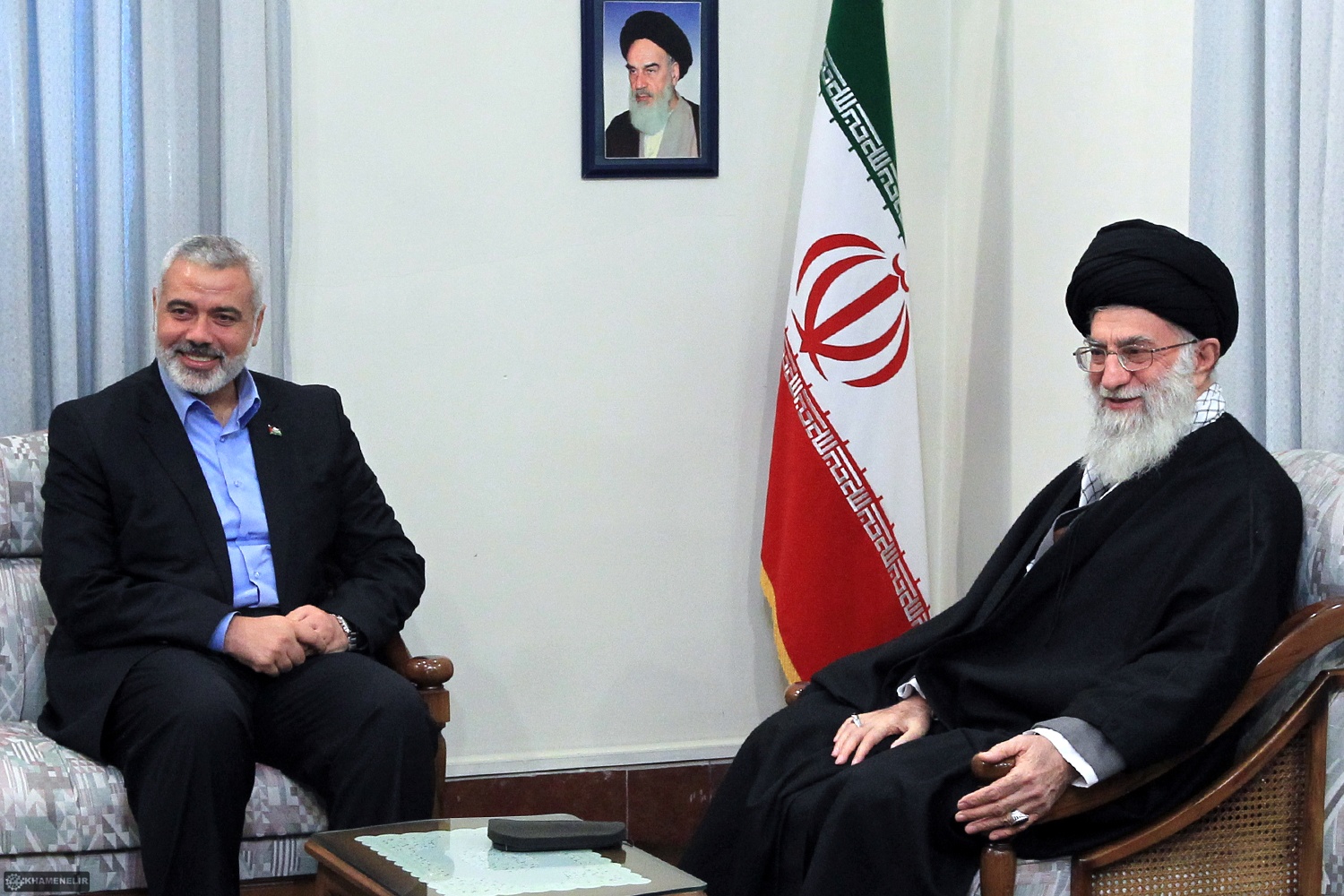

DOHA — Hamas called on Iran to stop attacking Gulf Arab states on Saturday, issuing a formal statement that urged its “brothers in Iran” to cease targeting neighbouring countries even as the group affirmed Tehran’s right to defend itself against the United States and Israel. The statement, released on day fifteen of the war that has engulfed the Middle East since Operation Epic Fury began on 28 February, marked the first time a member of Iran’s so-called axis of resistance has publicly broken ranks to demand an end to Iranian strikes on the Gulf Cooperation Council nations that have provided Hamas with diplomatic cover, humanitarian aid, and billions of dollars in reconstruction pledges.
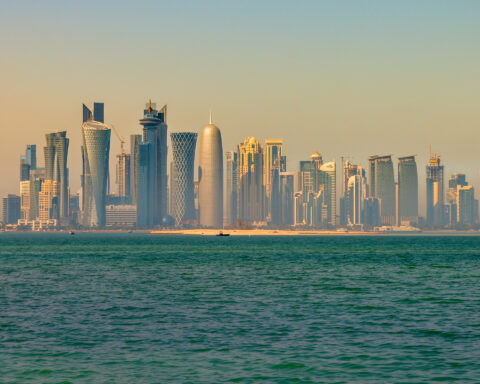
The intervention lands at a moment of acute vulnerability for every actor in the region. Iran has struck all six GCC member states with drones and ballistic missiles, killing 19 people across the Gulf according to Al Jazeera’s running tally. Qatar, which hosts Hamas’s political bureau in Doha, has reportedly informed Washington that it intends to expel Hamas’s leadership after the group initially refused to condemn Iran’s missile barrages, according to The Defense News. Riyadh, which severed ties with Hamas a decade ago over the group’s Muslim Brotherhood affiliation, now finds an unlikely advocate in the very organisation it once designated as a threat. The contradictions could not be sharper — or more consequential for Saudi Arabia’s postwar positioning.
Table of Contents
- What Did Hamas Say About Iran’s Gulf Attacks?
- Why Did Hamas Break With Iran Now?
- Qatar Threatens to Expel Hamas Over Iran Silence
- How Is Iran’s Axis of Resistance Fracturing?
- Why Have the Houthis Stayed on the Sidelines?
- Hezbollah Chose War. Hamas Chose Words.
- Saudi Arabia and Hamas — From Funding to Blacklisting
- What Has Iran’s Campaign Cost the Gulf States?
- What Hamas’s Statement Means for Saudi Arabia
- Frequently Asked Questions
What Did Hamas Say About Iran’s Gulf Attacks?
Hamas released its statement on Saturday 14 March 2026, calling for a halt to Iranian strikes on Gulf Arab nations while simultaneously affirming Tehran’s right to respond to the American-Israeli campaign that killed Supreme Leader Ali Khamenei and devastated Iran’s military infrastructure. The group said it condemned “American-Zionist aggression” against Iran and declared that Tehran had the right to respond “by all available means in accordance with international norms and laws,” according to Al Jazeera.
The critical passage, however, addressed the Gulf states directly. Hamas urged its “brothers in Iran” to “avoid targeting neighbouring countries” and called on all countries in the region to “cooperate to halt this aggression and preserve the bonds of fraternity among them,” as reported by Asharq Al-Awsat. The language was deliberately calibrated — deferential toward Tehran, protective of the Gulf states, and framed as a call for Islamic solidarity rather than a condemnation of Iranian behaviour.
The statement also called on the “international community to work toward halting” the conflict immediately, according to Arab News. Notably absent from the statement was any pledge of military solidarity with Iran, any commitment to open a new front against Israel or the United States, or any operational coordination with Tehran’s retaliatory campaign. Hamas positioned itself as a mediator urging restraint rather than a proxy offering support.
Why Did Hamas Break With Iran Now?
Hamas’s decision to publicly distance itself from Iran’s Gulf campaign reflects a cold calculation about organisational survival rather than a principled stand on international law. The group is fighting on three fronts simultaneously — none of them military.
The first is financial. Gulf states, particularly Qatar and Saudi Arabia, pledged more than $4 billion in combined financial support to the Trump administration’s postwar reconstruction board in early 2026, with Qatar and Saudi Arabia each committing $1 billion, according to reports from the Al Jazeera coverage of the ceasefire framework. Hamas needs Gulf reconstruction money far more than it needs Iranian weapons. Gaza’s infrastructure has been devastated by more than two years of conflict that began after 7 October 2023 and has killed more than 72,000 people, according to the Al Jazeera death toll tracker. Without Gulf funding, there is no reconstruction — and without reconstruction, Hamas loses whatever residual political legitimacy it retains among Palestinians.
The second front is diplomatic. Under the October 2025 ceasefire agreement, Hamas committed to a framework that includes eventual disarmament, though the group has refused to confirm this condition, citing Israel’s continued presence and the absence of progress on Palestinian statehood. Any perception that Hamas is actively supporting Iranian aggression against the very states mediating its future would collapse the diplomatic architecture that allows the group to exist as a political entity rather than a purely military one.
The third is existential. The fractures within Iran’s own military establishment have revealed that Tehran’s ability to sustain its proxy network is degrading rapidly. With Ali Khamenei dead and his son Mojtaba installed as the new supreme leader amid reports of serious injuries sustained during the opening strikes, Iran’s patronage of Hamas is no longer a guarantee of survival. It may be a liability.
Qatar Threatens to Expel Hamas Over Iran Silence
Behind the public statement lies a far more urgent crisis. Qatar informed the United States in March 2026 that it intends to expel Hamas’s political leadership from Doha after the group initially declined to publicly condemn Iranian missile attacks targeting Qatari territory, according to The Defense News. The threat represents the most significant rupture in the Qatar-Hamas relationship since Doha first hosted the group’s political bureau in 2012.
The timing is devastating for Hamas. On 3 March, an Iranian ballistic missile struck Al Udeid Air Base, the largest American military installation in the Middle East, located just outside Doha. Qatar, which had positioned itself as a neutral mediator throughout the Gaza conflict and the broader axis of resistance’s confrontation with Israel, suddenly found itself under direct Iranian fire. The attack on Al Udeid shattered Qatar’s carefully maintained neutrality and forced Doha to choose between its role as Hamas’s diplomatic host and its security partnership with Washington.
Hamas’s initial silence after the Al Udeid strike — neither condemning nor endorsing Iran’s attack on its own host country — was interpreted in Doha as a betrayal of the hospitality Qatar had extended for more than a decade. The subsequent 14 March statement, with its carefully worded appeal to Iran to stop targeting “neighbouring countries,” appears designed to walk back that silence without fully alienating Tehran.
If Qatar follows through on the expulsion threat, Hamas would lose its most important diplomatic platform outside the Palestinian territories. Turkey remains a potential alternative host, but Ankara’s own relationship with Tehran has grown complicated since the war began, and Turkish President Erdogan has been reluctant to absorb additional political risk during Ramadan.
How Is Iran’s Axis of Resistance Fracturing?
Hamas’s statement is the clearest evidence yet that Iran’s so-called axis of resistance — the informal coalition of Hezbollah, Hamas, Palestinian Islamic Jihad, the Houthis, and various Iraqi Shiite militias that Tehran has cultivated for decades — is splintering under the pressure of an actual war. Each member is calculating differently, and those calculations are diverging.
| Group | Position | Military Action Taken | Key Statement |
|---|---|---|---|
| Hezbollah | Active belligerent | 269 attack waves against Israel since 2 March; 150 rockets on 11 March alone | Claimed strikes were retaliation for Khamenei’s assassination |
| Hamas | Non-belligerent, urging restraint | None — explicitly refused to open a support front | “We call on our brothers in Iran to avoid targeting neighbouring countries” |
| Palestinian Islamic Jihad | Non-belligerent | None — cited Gaza devastation | Refused to open a support front due to damage from Gaza war |
| Houthis (Ansar Allah) | Rhetorical solidarity, operational pause | No confirmed attacks since February 2026 | “Our hands are on the trigger whenever developments require it” |
| Iraqi Shiite Militias | Limited engagement | UAV strikes on US bases in Kurdistan and Baghdad | Claimed responsibility for retaliatory drone attacks |
The pattern reveals an axis divided by geography, capability, and calculation. Hezbollah, the most militarily capable and ideologically committed member, launched coordinated strikes with Iran within days of Khamenei’s assassination. But Hezbollah’s situation is unique — the group faces a renewed Israeli ground campaign in southern Lebanon and has little to lose from escalation, according to CNN reporting on the Lebanon front. Hamas and Palestinian Islamic Jihad, by contrast, have everything to lose. Both groups stated they would not open a support front for Iran “because of the damage done in the Gaza Strip War,” according to the Meir Amit Intelligence and Terrorism Information Center.
The ideological fissure runs deeper than tactical disagreement. Hamas is a Sunni Islamist movement operating in a predominantly Sunni Arab environment. Iran is a Shiite theocracy. The relationship was always one of convenience rather than conviction — united by opposition to Israel, not by shared theology. When Iran began striking Sunni Arab states, that marriage of convenience became untenable. Hamas cannot credibly claim to represent Palestinian national aspirations while supporting the bombardment of Arab countries that provide Palestinians with employment, remittances, and political cover.
Why Have the Houthis Stayed on the Sidelines?
The Houthis’ calculated silence is perhaps the most strategically significant development within the axis of resistance, and Sanaa’s restraint has puzzled analysts who expected Yemen’s Iranian-backed movement to escalate immediately. Despite Abdul-Malik al-Houthi’s recorded address declaring that his group “stood with Iran” and was “prepared to take action if developments required it,” the Houthis have not resumed large-scale attacks on Red Sea shipping or launched strikes against Saudi Arabia.
The Houthis had effectively paused their maritime campaign in mid-November 2025 following a regional de-escalation linked to the Gaza ceasefire, according to the Foreign Affairs Forum’s analysis of Houthi strategy. From approximately 11 November 2025 until late February 2026, there were no sustained, confirmed missile or drone attacks against merchant vessels attributable to the group. The resumption of such attacks would forfeit the political gains the Houthis made during their maritime campaign — including de facto international recognition as a force capable of disrupting global trade — and invite renewed American and Saudi military strikes on Yemen.
The Stimson Center’s analysis framed the Houthi dilemma bluntly: “Join Iran’s war against the US and Israel or abandon Iran.” The Houthis appear to have chosen a third option — maintaining rhetorical solidarity while withholding operational support. Their leadership concluded that participating in Iran’s war would jeopardize their most important objective: consolidating long-term power in Yemen.
For Riyadh, the Houthi pause is an unexpected dividend. Saudi Arabia fought a nine-year war in Yemen against the Houthis from 2015 to 2024. Saudi Arabia’s own policy of armed non-belligerence in the Iran war depends in part on the Houthis not reopening a southern front that would force the Kingdom to fight on two axes simultaneously.
Hezbollah Chose War. Hamas Chose Words.
The divergence between Hezbollah and Hamas illustrates the difference between a proxy that functions as an extension of the Islamic Revolutionary Guard Corps and an ally that maintains independent political calculus. Hezbollah launched its first strikes against Israel on the night of 1 March, claiming retaliation for Khamenei’s assassination, according to the Times of Israel. By 13 March, Hezbollah had carried out 269 attack waves against Israeli territory — 159 rocket and missile salvoes, 86 UAV attacks, nine anti-tank missile engagements, and one explosive device attack, according to the Alma Research and Education Center’s daily tracking.
The scale of Hezbollah’s engagement made the Iran-Israel dimension of the conflict effectively a two-front war for Jerusalem. On 11 March, the IRGC announced a coordinated joint operation with Hezbollah involving five hours of sustained fire that struck more than 50 targets across Israel, according to the Jerusalem Post. Israeli strikes on Lebanon have killed at least 634 people since the war began, according to Lebanese authorities cited by CNN.
Hamas’s refusal to participate militarily stands in stark contrast. The group explicitly stated it would not open a support front, and its 14 March statement contained no military dimensions whatsoever. The explanation lies partly in capability — Hamas’s military infrastructure in Gaza has been devastated — and partly in political calculation. Hamas is negotiating its postwar future. Hezbollah is fighting for its survival.
The contrast has implications for how Gulf states, including Saudi Arabia, assess the threat from Iran’s proxy network after the war ends. A diminished axis of resistance, with Hamas distanced from Tehran and the Houthis unwilling to commit, leaves Hezbollah as the only proxy willing and able to fight alongside Iran — a significant reduction in the strategic depth that made the axis dangerous.
Saudi Arabia and Hamas — From Funding to Blacklisting
The irony of Hamas’s intervention on behalf of Gulf security is sharpened by the history of the Saudi-Hamas relationship, which has swung between patronage, indifference, and hostility over three decades.
In the early 2000s, Saudi Arabia supplied roughly half of Hamas’s budget, channelling funds through Islamic charities and private donor networks, according to the Council on Foreign Relations and the Institute for National Security Studies in Tel Aviv. Gulf states collectively provided approximately 50 percent of Hamas’s total funding during this period. The relationship was built on shared opposition to Israeli occupation and Saudi Arabia’s role as the leading Sunni patron of Palestinian causes.
The rupture came in two stages. Under American pressure following the September 11 attacks, Saudi Arabia cracked down on Islamic charities and private donor transfers beginning in 2004, drastically reducing the flow of funds to Hamas by 2006. When Hamas won the Palestinian legislative elections that year and subsequently seized control of Gaza in 2007, the funding vacuum was filled by Iran and Syria, which stepped in to provide the financial and military support the Gulf had withdrawn.
The second stage was ideological. In 2014, Saudi Arabia designated the Muslim Brotherhood — Hamas’s parent organisation — as a terrorist group. Hamas leaders were imprisoned in Saudi Arabia, and formal relations between the Kingdom and the Palestinian movement were effectively severed. For Riyadh, Hamas represented the intersection of two threats: the Muslim Brotherhood’s challenge to monarchical legitimacy and Iran’s penetration of Sunni political movements.
The 2026 war has scrambled those calculations. Hamas is now publicly advocating for the security of Gulf states that blacklisted it. Saudi Arabia is receiving rhetorical support from an organisation it designated as a threat. The realignment reflects a broader truth about the Middle East’s conflict dynamics: shared enemies create strange bedfellows, and no alignment in the region survives contact with an actual war without being fundamentally reshaped.
What Has Iran’s Campaign Cost the Gulf States?
For the first time in history, Iran has attacked all six GCC member states — Bahrain, Kuwait, Oman, Qatar, Saudi Arabia, and the UAE — with a combination of ballistic missiles, cruise missiles, and Shahed-series drones. The human and material toll across the Gulf provides the context for Hamas’s intervention.
| Country | Confirmed Deaths | Injuries | Key Targets Hit | Major Incidents |
|---|---|---|---|---|
| UAE | 6 | 131 | Abu Dhabi, military facilities | Highest number of strikes in first 4 days |
| Saudi Arabia | 2 | 12 | Al-Kharj, Shaybah, Riyadh Diplomatic Quarter, Prince Sultan Air Base | 5 US KC-135 tanker aircraft damaged at PSAB |
| Bahrain | 1 | 8 | Manama residential building, fuel depot | 29-year-old woman killed in residential strike |
| Kuwait | — | Multiple | Kuwait International Airport | Airspace closed, oil exports suspended |
| Qatar | — | Multiple | Al Udeid Air Base | Largest US military installation in Middle East struck |
| Oman | 2 | Multiple | Salalah port, Omani facilities | Drones killed 2 in Gulf’s last neutral state |
The total of 19 dead across Gulf states, while modest compared to the 1,444 killed in Iran according to Iran’s Health Ministry figures cited by Al Jazeera, represents an unprecedented escalation. Iran had never previously conducted direct military strikes against GCC territory — the 2019 Aramco attacks at Abqaiq and Khurais were attributed to Iran but launched from Yemen by Houthi proxies, allowing Tehran to maintain plausible deniability. That deniability is gone.
Saudi air defenses have intercepted hundreds of incoming projectiles since the war began, including 31 drones and three ballistic missiles in a single engagement on 13 March. Prince Sultan Air Base in al-Kharj, 80 kilometres southeast of Riyadh, has been targeted repeatedly, with at least one missile penetrating defences and damaging five US Air Force KC-135 refuelling aircraft on 14 March, according to the Times of Islamabad and confirmed by Asharq Al-Awsat.
It is this sustained campaign of strikes against Arab and Muslim-majority nations during Ramadan that Hamas’s statement addressed. The religious dimension is significant. Ramadan 2026 began on 18 February, ten days before Operation Epic Fury launched the war. Iran is striking fellow Muslim countries during Islam’s holiest month — a fact that Hamas’s appeal to “bonds of fraternity” explicitly invoked.
What Hamas’s Statement Means for Saudi Arabia
For Crown Prince Mohammed bin Salman, Hamas’s intervention creates both opportunities and risks. The opportunity is clear: a member of Iran’s own alliance structure is publicly calling for an end to attacks on Saudi Arabia and its neighbours. This validates Riyadh’s strategy of armed non-belligerence — by absorbing Iranian strikes without retaliating offensively, Saudi Arabia has secured sympathy from actors across the political spectrum, including groups it has historically opposed.
The Arab foreign ministers who invoked collective defence provisions after Iran struck eight states used Riyadh’s restraint as the GCC’s unifying principle. Hamas’s statement adds another voice to that chorus, one that carries particular weight because it comes from inside the Iranian orbit.
The risk is more subtle. If Hamas successfully repositions itself as a defender of Arab security — and if Qatar follows through on its expulsion threat, pushing Hamas’s political bureau toward countries more amenable to Saudi influence — Riyadh may face pressure to reconsider its own relationship with the group. Saudi Arabia designated the Muslim Brotherhood as a terrorist organisation in 2014 and has shown no inclination to reverse that decision. But the postwar landscape will demand new calculations. A Hamas that has broken with Iran and advocated for Gulf security is a different entity from the Hamas that served as Tehran’s Palestinian arm.
The more immediate implication is for ceasefire diplomacy. Gulf states have been pressing for an end to the war through multiple channels — Oman’s Sultan Haitham bin Tariq has spoken directly with Iran’s President Masoud Pezeshkian, China has dispatched a special envoy, and the GCC rallied 135 nations at the United Nations to condemn Iran’s retaliatory strikes. Hamas’s statement adds political cover for these efforts. When even Tehran’s allies are calling for restraint, the pressure on Iran to accept some form of de-escalation increases — though Iran has so far ruled out an immediate ceasefire while strikes continue.
Frequently Asked Questions
What exactly did Hamas say about Iran’s attacks on Gulf states?
Hamas issued a statement on 14 March 2026 calling upon its “brothers in Iran” to “avoid targeting neighbouring countries.” The group affirmed Iran’s right to defend itself against the US-Israeli campaign but urged all regional countries to “cooperate to halt this aggression and preserve the bonds of fraternity among them.” Hamas also called on the international community to work toward ending the conflict immediately.
Is Hamas still part of Iran’s axis of resistance?
Formally, Hamas remains associated with Iran’s network of allied groups. However, the 14 March statement represents a significant public divergence. Hamas refused to open a military support front for Iran, citing the devastation from the Gaza war, and its call for Iran to stop attacking Gulf states directly contradicts Tehran’s retaliatory strategy. The group’s position is closer to non-aligned than allied.
Why is Qatar threatening to expel Hamas leadership?
Qatar reportedly informed the United States that it plans to expel Hamas’s political bureau from Doha after the group initially refused to condemn Iranian missile strikes that targeted Qatari territory, including the Al Udeid Air Base on 3 March. Hamas’s subsequent 14 March statement appears designed to repair this relationship, but the damage may already be done.
How have other Iranian proxy groups responded to the 2026 war?
Responses have varied dramatically. Hezbollah joined the war immediately, launching 269 attack waves against Israel by 13 March. The Houthis expressed solidarity but have not resumed Red Sea shipping attacks or launched strikes against Gulf states. Iraqi Shiite militias carried out limited UAV strikes on US bases. Hamas and Palestinian Islamic Jihad refused to open support fronts. The axis of resistance is fracturing along lines of geography, capability, and strategic calculation.
What does Hamas’s statement mean for the Iran war ceasefire effort?
The statement strengthens the diplomatic case for de-escalation by demonstrating that even actors within Iran’s alliance structure oppose the Gulf strikes. Combined with Oman and Qatar’s mediation efforts and China’s dispatch of a special envoy, it adds political pressure on Tehran. However, Iran has so far rejected an immediate ceasefire while American and Israeli strikes continue, and the war shows no signs of ending in the near term.