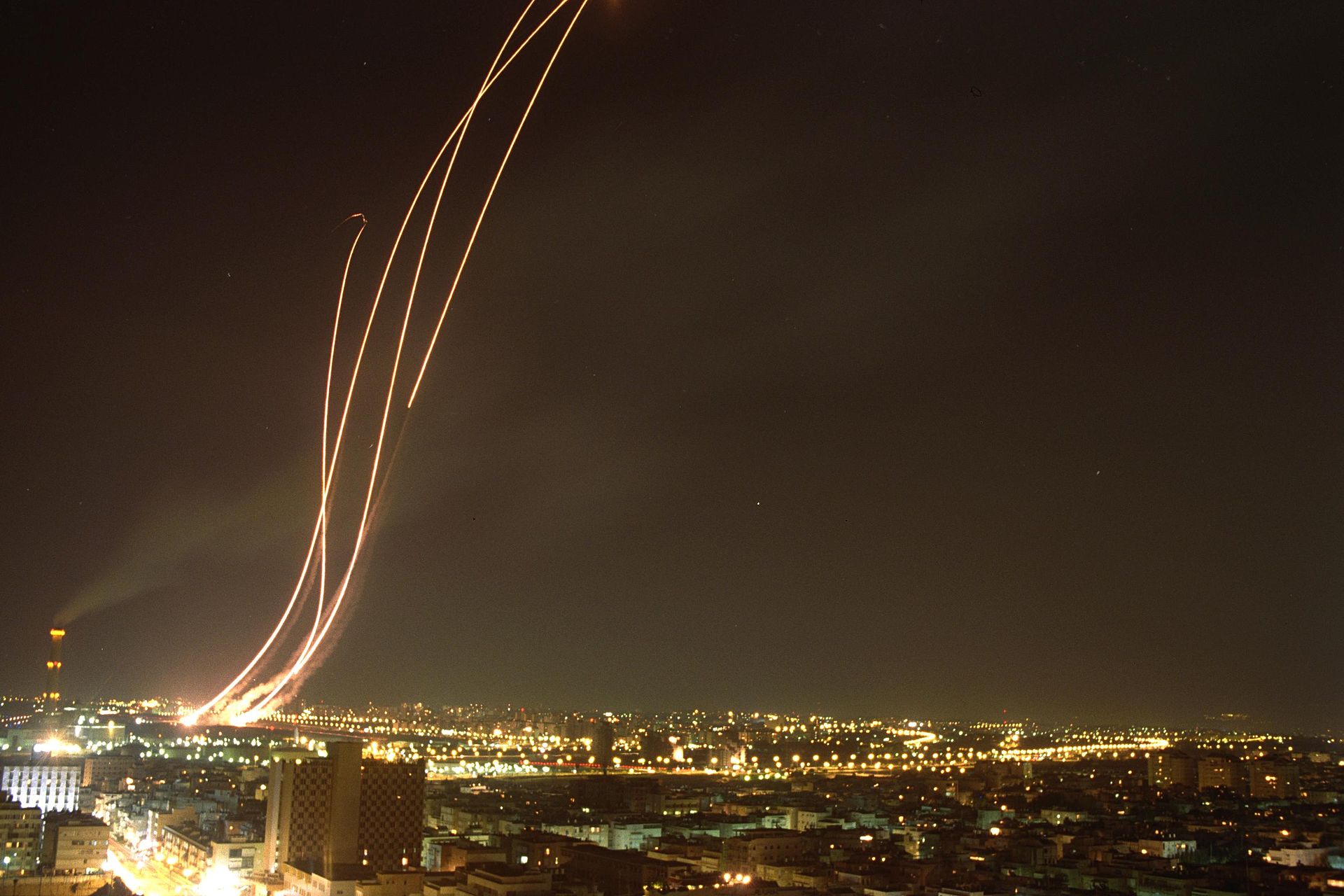

BEIRUT — Hezbollah fired approximately 200 rockets and 20 drones at northern Israel on Wednesday evening in what the Israeli military described as the group’s biggest barrage since the Iran war began on 28 February, according to the Israel Defense Forces. The attack, which Iran’s Islamic Revolutionary Guard Corps called a “joint and integrated operation,” marks the most significant escalation on the Lebanese front since the conflict erupted two weeks ago and raises urgent questions about the war’s trajectory for Saudi Arabia and the wider Gulf.
The barrage sent hundreds of thousands of Israeli civilians into bomb shelters across the north and triggered air raid sirens as far south as Tel Aviv, Reuters reported. Long-range rockets fired from southern Lebanon reached deeper into Israeli territory than at any point since Hezbollah re-entered the conflict on 2 March, according to Israeli military officials. Five people were wounded and a house in Moshav Haniel, in central Israel, was destroyed by a direct hit, the IDF confirmed.
For Crown Prince Mohammed bin Salman and the Saudi leadership, the coordinated attack represents the clearest evidence yet that the Iran war cannot be contained to a single theatre. Every front that opens draws Western military assets away from the Gulf, where Saudi Arabia’s own cities and oil infrastructure remain under daily drone and missile attack from Iran.
On March 16, Israel escalated further by sending ground forces into southern Lebanon in what the IDF described as limited and targeted operations against Hezbollah strongholds around Khiam.
Table of Contents
- What Did Hezbollah Fire at Israel?
- How Did Iran and Hezbollah Coordinate the Attack?
- Israel Responds With Strikes Across Lebanon
- Why Does the Hezbollah Front Matter for Saudi Arabia?
- Hezbollah’s Remaining Arsenal and the Long-Range Threat
- Lebanon Caught Between Hezbollah and Israeli Retaliation
- What Does the Integrated Operation Mean for the Wider War?
- Frequently Asked Questions
What Did Hezbollah Fire at Israel?
Hezbollah launched approximately 200 rockets and 20 armed drones at targets across northern Israel beginning around 8 p.m. local time on Wednesday, 12 March, according to the Israel Defense Forces. The IDF described the assault as the “biggest barrage” from Lebanon since the Iran war began on 28 February 2026.
The rockets targeted more than 50 locations across Israel, according to statements from both Hezbollah and the IRGC. Among the named targets were the northern Israeli cities of Nahariya and Haifa, the Meron settlement, and the Atlit naval base south of Haifa, where Hezbollah claimed to have struck the headquarters of Israel’s Shayetet 13 naval commando unit with “advanced rockets,” the Jerusalem Post reported.
Long-range rockets set off air raid sirens in Tel Aviv and surrounding towns for the first time since Hezbollah joined the war, indicating the group deployed weapons with a range exceeding 100 kilometres. The IDF confirmed that Iranian ballistic missiles were launched simultaneously, triggering alerts in central Israel, the Jerusalem area, and parts of the south, the Times of Israel reported.
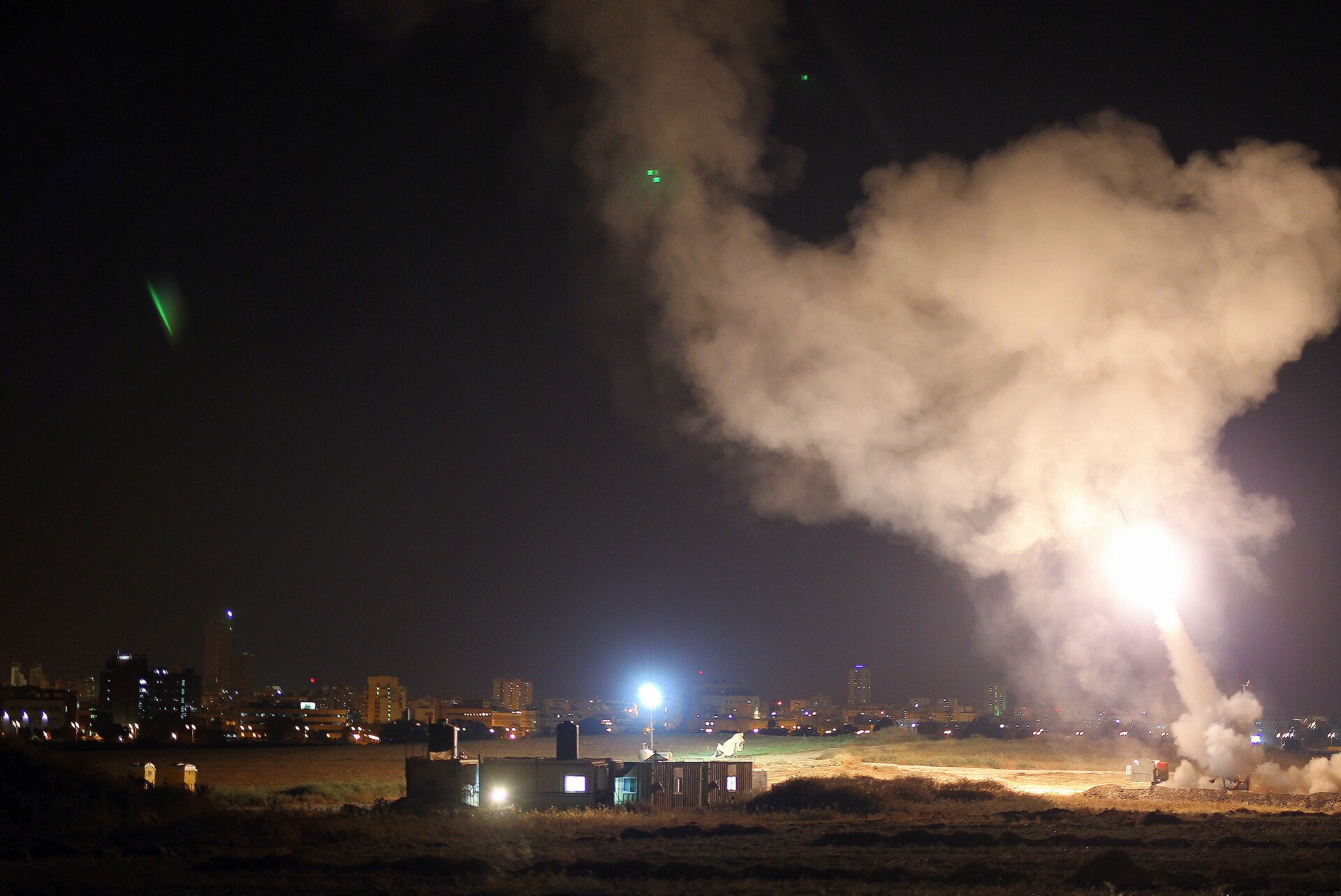
Five people were wounded in the attack, according to Israeli emergency services. A home in Moshav Haniel was destroyed by a direct missile strike, the IDF confirmed. Several additional impacts caused fires in the Galilee region, though the Iron Dome and David’s Sling systems intercepted the majority of incoming projectiles, the Israeli military said.
Hezbollah’s military media wing published statements claiming hits on multiple Israeli military installations. The group said it struck a military intelligence facility at Glilot, near Tel Aviv, as well as the Beit Lid military complex in central Israel. Israel has not confirmed strikes on either installation.
| Target | Location | Weapon Type | Claimed By |
|---|---|---|---|
| Nahariya | Western Galilee | Short-range rockets | Hezbollah |
| Shayetet 13 HQ, Atlit | South of Haifa | Advanced long-range rockets | Hezbollah |
| Meron | Upper Galilee | Rockets and drones | Hezbollah |
| Glilot intelligence facility | Near Tel Aviv | Long-range rockets | Hezbollah |
| Beit Lid military complex | Central Israel | Long-range rockets | Hezbollah |
| Central and southern Israel | Multiple locations | Ballistic missiles | Iran (IRGC) |
How Did Iran and Hezbollah Coordinate the Attack?
Iran’s IRGC described Wednesday’s barrage as a “joint and integrated operation” with Hezbollah, the first time Tehran has publicly acknowledged real-time military coordination with its Lebanese proxy during the current conflict, the Times of Israel reported. The coordination stands in stark contrast to the Houthis’ calculated silence in Yemen, where Iran’s most heavily armed proxy has chosen not to fire a single shot. The synchronised timing — with Iranian ballistic missiles targeting central Israel at the same moment Hezbollah launched its rocket salvo from Lebanon — suggests a level of operational planning that goes beyond the loose coordination seen in previous Hezbollah-Iran actions.
The IRGC said it launched “several ballistic missiles” at Israeli targets simultaneously with the Hezbollah barrage, according to statements carried by Iranian state media. The dual-axis attack forced Israel’s air defences to engage threats from two directions simultaneously — a tactic military analysts have long feared but that had not materialised at this scale during the current war.
Andrea Stricker, deputy director of the nonproliferation and biodefense programme at the Foundation for Defense of Democracies, told Fox News that the integrated operation demonstrated Iran’s ability to activate its proxy network in concert with its own conventional forces. “This is exactly the multi-front scenario that Gulf defence planners have been preparing for,” she said.
The IDF admitted a warning failure in the hours before the barrage. The Jerusalem Post reported that senior military officials acknowledged the military did not provide adequate warning to northern communities before the scale of the attack became clear, and that Israel is “holding off” on a ground invasion of Lebanon despite earlier preparations described in Israeli media as imminent.
The coordination between Tehran and Hezbollah carries implications far beyond the Israel-Lebanon front. Saudi Arabia faces daily Iranian drone and missile attacks on its own territory. If Iran can direct Hezbollah to open a major front on command, it can theoretically do the same with the Houthis in Yemen, Iraqi militias targeting Gulf shipping lanes, or other proxies across the region.
Israel Responds With Strikes Across Lebanon
Israel launched what the IDF called an “extensive wave” of retaliatory strikes against Hezbollah targets across Lebanon within hours of the barrage, Al Jazeera reported. The strikes targeted rocket launchers, weapons storage facilities, and command infrastructure in southern Lebanon and Beirut’s southern suburbs.
In central Beirut, Israeli warplanes struck the Bashoura neighbourhood on Thursday, 12 March, marking an escalation in the targeting of the Lebanese capital’s urban core, Al Jazeera reported. At least 12 people were killed in a separate Israeli “double-tap” strike in the seafront area of Ramlet al-Baida, where displaced families were sleeping in tents, according to Lebanese civil defence officials.
A drone strike on a Lebanese University building in Hadath, near Beirut, killed two academics, the Washington Post reported. Israel has not commented on the specific Beirut strikes but said it was targeting “Hezbollah terror infrastructure embedded in civilian areas.”
Since the Iran war triggered renewed hostilities between Israel and Hezbollah on 2 March, Israeli strikes have killed at least 687 people in Lebanon and wounded more than 1,500, according to the Lebanese Ministry of Public Health. More than 800,000 people have been displaced, the ministry said.
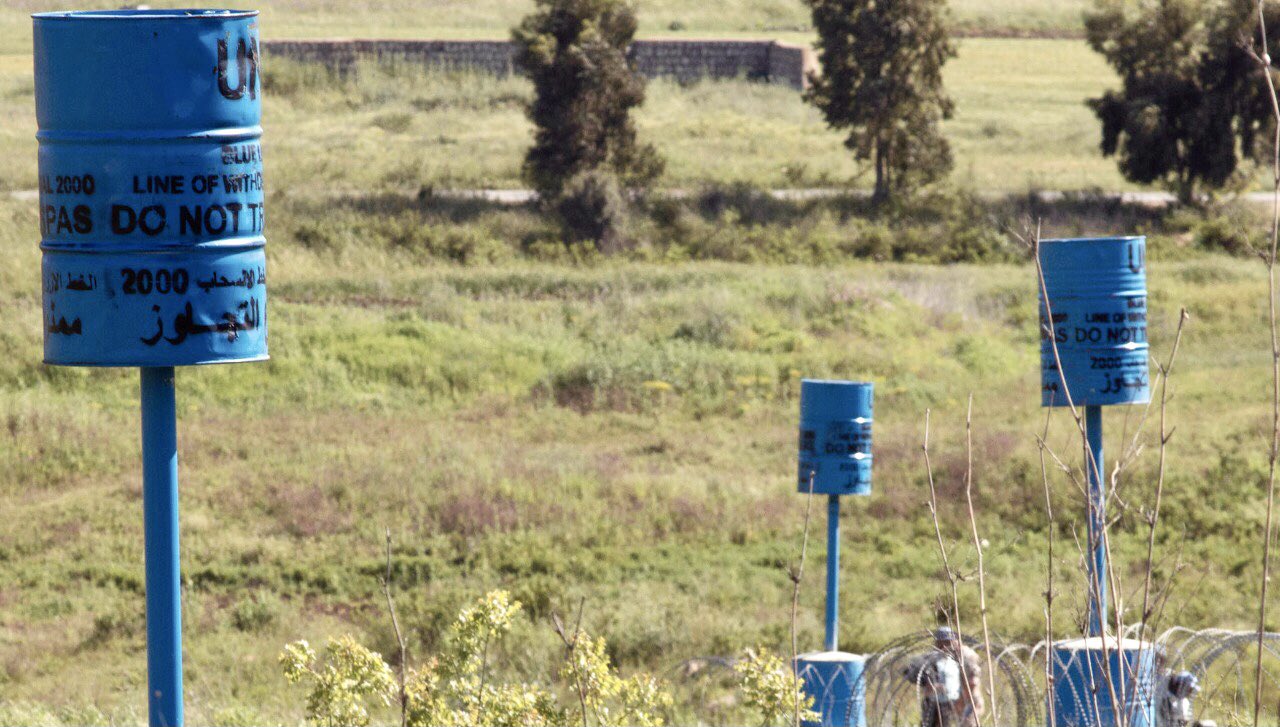
The Lebanese Armed Forces, which maintain a fragile neutrality in the Hezbollah-Israel conflict, have not engaged Israeli forces. UNIFIL peacekeepers stationed along the Blue Line border have reported damage to their positions from both Israeli and Hezbollah fire, a UNIFIL spokesperson told reporters on Thursday.
Why Does the Hezbollah Front Matter for Saudi Arabia?
Saudi Arabia designated Hezbollah as a terrorist organisation in March 2016, and the Gulf Cooperation Council and the Arab League followed with similar designations the same year, according to the Wilson Center. Riyadh has long viewed the group as Iran’s most capable and dangerous proxy — more sophisticated than the Houthis, better armed than Iraqi militias, and embedded in a state, Lebanon, that Saudi Arabia has historically sought to influence.
The escalation on the Lebanese front matters to Riyadh for three immediate reasons. First, every Israeli military asset diverted to the northern border is one fewer asset available for the air defence mission over the Gulf. The United States and Israel are already operating at the limits of their missile defence capacity, as reporting on the degradation of the American missile shield over Saudi Arabia has documented. A sustained two-front war against both Iran’s conventional forces and Hezbollah’s rocket arsenal will stretch those resources further.
Second, the coordinated Iran-Hezbollah operation demonstrates Tehran’s willingness to activate its entire proxy network when under existential pressure. Saudi defence officials have long warned that Iran’s arsenal extends far beyond its own borders. The “integrated operation” confirms that Iran can order a mass barrage from Lebanon at a time of its choosing, raising the question of whether similar orders could activate the Houthis against Saudi targets in an escalated capacity.
Third, Saudi Arabia’s post-war calculations for Lebanon depend on the degree to which Hezbollah emerges from the conflict weakened or emboldened. A degraded Hezbollah would open space for Riyadh to re-engage with Lebanon’s political system after years of frustrated diplomacy. An intact Hezbollah — one that survived coordinated warfare against both Israel and the United States — would be a more dangerous adversary than before.
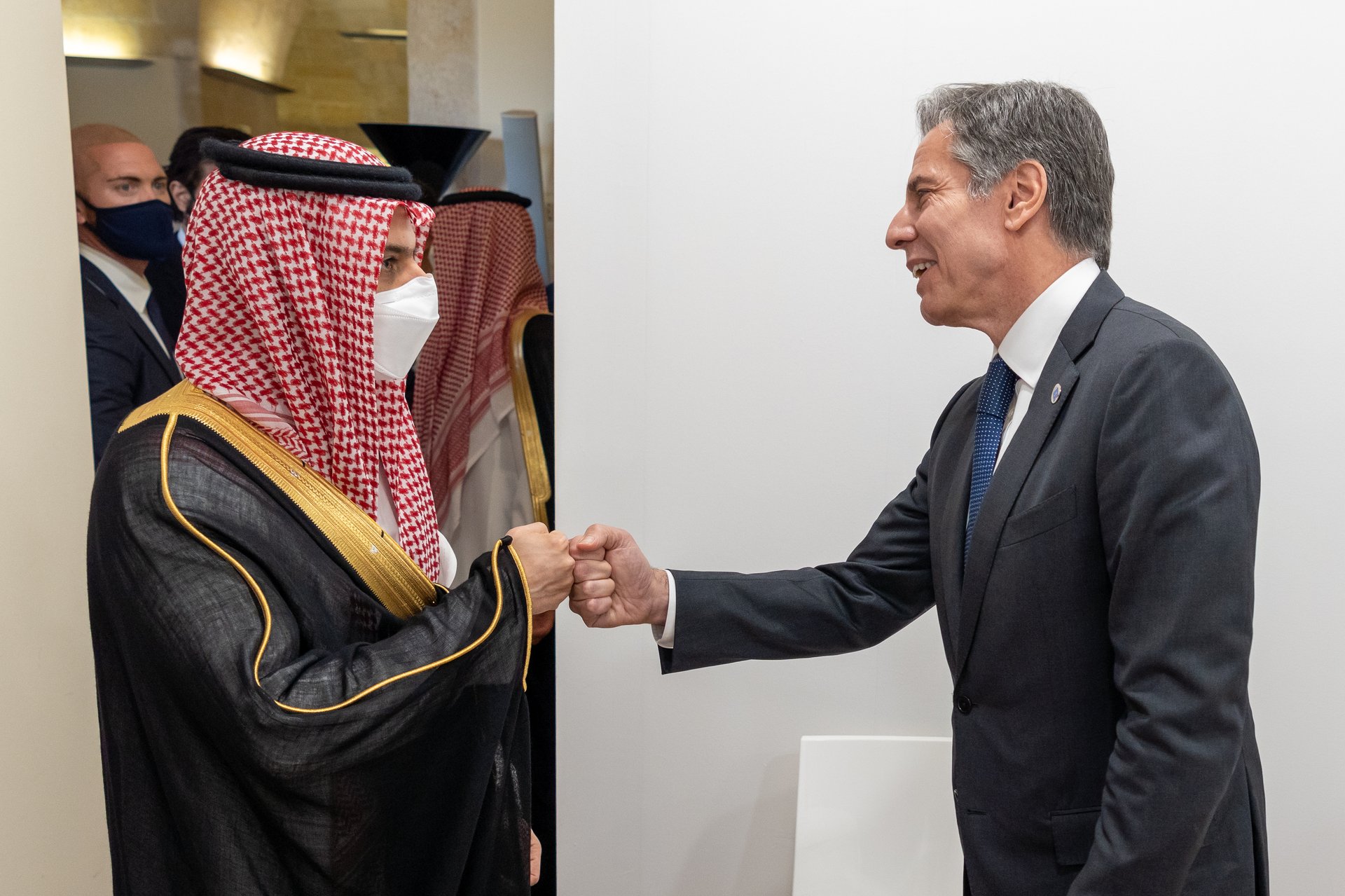
In February 2016, Saudi Arabia cut $4 billion in military and security aid to Lebanon over what it called “hostile Lebanese positions resulting from the stranglehold of Hezbollah on the state,” according to Reuters. The Kingdom has not restored full relations. Saudi Foreign Minister Prince Faisal bin Farhan has not publicly commented on the renewed Hezbollah-Israel fighting, though Riyadh has focused its diplomatic energy on the UN Security Council resolution condemning Iran’s attacks on Gulf states.
Hezbollah’s Remaining Arsenal and the Long-Range Threat
Despite Wednesday’s massive barrage, Hezbollah retains a substantial weapons stockpile. The Alma Research and Education Center, an Israeli think tank focused on Hezbollah, estimated in January 2026 that the group possesses approximately 25,000 rockets and missiles, the majority of them short- and medium-range projectiles. This represents a dramatic reduction from the estimated 150,000 rockets Hezbollah held before the 2024 conflict with Israel, according to the same assessment.
The IDF estimated that 70 to 80 per cent of Hezbollah’s rocket and missile capabilities were destroyed during the open fighting in the autumn of 2024, as well as in near-daily Israeli strikes after the November 2024 ceasefire took effect, the Times of Israel reported. Hezbollah lost its longtime leader, Hassan Nasrallah, in an Israeli airstrike in September 2024, along with much of its senior military command structure.
Yet the group spent months rearming before the current war, according to Modern Diplomacy. Advanced Iranian-manufactured missiles were transferred to Hezbollah through Syria in late 2024 and early 2025, circumventing the ceasefire’s weapons restrictions, Western intelligence officials told the publication. The long-range rockets that triggered sirens in Tel Aviv on Wednesday — weapons capable of reaching 100 kilometres or more — are believed to be among these newer deliveries.
| Period | Estimated Arsenal | Long-Range Capability | Source |
|---|---|---|---|
| Pre-October 2023 | ~150,000 rockets and missiles | Significant | IDF, CSIS |
| Post-2024 ceasefire | ~30,000-40,000 (est.) | Degraded | IDF assessments |
| January 2026 | ~25,000 | Partial recovery | Alma Research Center |
| Post-12 March barrage | ~24,800 (est.) | Active deployment | IDF, media reports |
The American Jewish Committee noted in a March 2026 analysis that Hezbollah possesses “more firepower than most NATO militaries.” While that assessment referred to the group’s pre-2024 stockpile, even the reduced arsenal of 25,000 projectiles exceeds the entire missile inventory of most European armies, the AJC said. The group’s ability to fire 200 rockets in a single night demonstrates it retains the capacity for sustained bombardment campaigns.
For Saudi Arabia, the Hezbollah arsenal data carries a specific lesson. The Kingdom faces a similar asymmetric challenge from Iran’s own conventional missile force, which has been firing directly at Saudi cities and oil infrastructure since the war began. The new Iranian supreme leader Mojtaba Khamenei has vowed to maintain attacks on all Gulf states. If Iran can arm Hezbollah with long-range weapons despite a ceasefire and active Israeli surveillance, the challenge of stopping Iranian arms transfers to other proxies — particularly the Houthis — appears even more daunting.
Lebanon Caught Between Hezbollah and Israeli Retaliation
Lebanese Prime Minister Nawaf Salam condemned Hezbollah’s rocket and drone strikes from southern Lebanon on 2 March, calling them “irresponsible acts outside the authority of the Lebanese state that endanger national security,” according to Lebanese state media. Salam has not moved to formally outlaw Hezbollah, instead focusing on preventing what he called “unauthorised armed operations” from Lebanese territory.
Lebanon’s government, which spent years attempting to negotiate a fragile political balance between Hezbollah and its opponents, has been effectively sidelined since the war began. The Lebanese Armed Forces control neither the south of the country, where Hezbollah maintains its military infrastructure, nor the Bekaa Valley, through which Iranian arms shipments transit.
The human cost on Lebanon’s civilian population continues to mount. The Lebanese Ministry of Public Health reported 687 killed and more than 1,500 wounded since 2 March, with 800,000 people displaced. Many of those displaced fled Beirut’s southern suburbs, where Israel’s strikes have been concentrated, to central Beirut — where they were hit again in the Ramlet al-Baida double-tap strike on Thursday.
Saudi Arabia has not offered Lebanon humanitarian aid since the current hostilities began. The Kingdom’s 2016 decision to cut $4 billion in aid over Hezbollah’s political dominance remains a point of tension between Riyadh and Beirut. Several Gulf states have evacuated their nationals from Lebanon in recent days, according to Al Arabiya.
The collapse of the November 2024 ceasefire, which was brokered by the United States and France, has eliminated the diplomatic framework that was meant to keep Hezbollah’s military capability north of the Litani River and UNIFIL-monitored. The 200-rocket barrage demonstrated that the ceasefire’s weapons restrictions were never meaningfully enforced.
What Does the Integrated Operation Mean for the Wider War?
The IRGC’s public acknowledgement of a “joint and integrated operation” with Hezbollah represents a strategic shift. In previous conflicts — including the 2006 Lebanon War and the 2024 Israel-Hezbollah escalation — Iran maintained the fiction that Hezbollah operated independently, making its own military decisions without direct orders from Tehran. That pretence has now been abandoned.
The admission carries several implications for the Gulf. First, it confirms that Iran’s war strategy is not limited to its own conventional military. Tehran is fighting a coalition war, deploying assets across Lebanon, Iraq, Yemen, and the Persian Gulf simultaneously. The Mojtaba Khamenei statement vowing to keep the Strait of Hormuz closed while maintaining attacks on Gulf states is consistent with this multi-front approach.
Second, the integrated operation places additional pressure on the US-led coalition defending Saudi Arabia and other Gulf states. American THAAD batteries and Patriot systems deployed to Saudi Arabia are already under strain from daily Iranian attacks. If the Lebanon front demands additional Iron Dome and David’s Sling batteries from Israel’s inventory — systems that share supply chains with Gulf-deployed American air defences — the competition for interceptor missiles will intensify.
Third, the coordinated attack may accelerate diplomatic efforts to end the conflict. Pakistan’s Prime Minister Shehbaz Sharif visited MBS in Jeddah on Wednesday, the same day as the Hezbollah barrage, in what officials described as shuttle diplomacy between Riyadh and Tehran. The expansion of the war to include coordinated multi-front attacks strengthens the case for an immediate ceasefire, though Iran has so far rejected any pause in hostilities while its territory remains under bombardment.
For Saudi Arabia, the calculus is straightforward. Every day the war continues, the risk of a catastrophic escalation increases. The Hezbollah barrage is not a sideshow. It is a demonstration of exactly how Iran intends to fight — on every front simultaneously, with every proxy at its disposal.
Frequently Asked Questions
How many rockets did Hezbollah fire at Israel on 12 March 2026?
Hezbollah fired approximately 200 rockets and 20 armed drones at targets across northern Israel on the evening of 12 March 2026, according to the Israel Defense Forces. The IDF described it as the biggest barrage from Lebanon since the Iran war began on 28 February. Long-range rockets triggered sirens as far south as Tel Aviv.
Did Iran coordinate the attack with Hezbollah?
Iran’s Islamic Revolutionary Guard Corps publicly described the barrage as a “joint and integrated operation” with Hezbollah, according to the Times of Israel. Iranian ballistic missiles were launched at central Israel simultaneously with Hezbollah’s rocket salvo from Lebanon, forcing Israeli air defences to engage threats from two directions at once.
How does the Hezbollah attack affect Saudi Arabia?
Saudi Arabia designated Hezbollah as a terrorist organisation in 2016. The coordinated attack diverts Western and Israeli military resources away from Gulf defence, demonstrates Iran’s ability to activate its entire proxy network on command, and raises questions about whether similar orders could escalate Houthi attacks against Saudi Arabia.
How many rockets does Hezbollah still have?
The Alma Research and Education Center estimated in January 2026 that Hezbollah retains approximately 25,000 rockets and missiles, down from an estimated 150,000 before the 2024 conflict with Israel. The majority are short- and medium-range weapons, but the group also holds several hundred advanced long-range missiles capable of reaching Tel Aviv and beyond.
What has been the civilian toll in Lebanon since the war began?
The Lebanese Ministry of Public Health reported 687 killed and more than 1,500 wounded in Lebanon since Israeli strikes resumed on 2 March 2026. More than 800,000 people have been displaced, with many fleeing Beirut’s southern suburbs. Israel’s strikes have included central Beirut, where displaced families were killed in a double-tap airstrike on 12 March.