BEIRUT — Hezbollah fired missiles at the Israeli naval base in the port of Ashdod on April 10, 2026, striking approximately 90 miles south of the Lebanese border in one of the deepest attacks the group has attempted during the current war. The strike targeted the Israeli Defense Forces’ primary southern Mediterranean hub — the command center for the Gaza maritime blockade since 2007 — and came 48 hours after Israel’s Operation Eternal Darkness dropped 160 bombs on 100 Hezbollah targets in 10 minutes.
The timing converts the Ashdod strike from a battlefield escalation into a structural problem for the Islamabad ceasefire talks on which Saudi Arabia’s oil recovery depends. Iran has made Lebanon’s inclusion in any settlement a precondition for negotiations. Hezbollah’s selection of a naval base — not a border town, not a civilian neighborhood, but Israeli maritime infrastructure — mirrors Iran’s simultaneous coercion of Gulf sea lanes through Hormuz. Two chokepoints, one argument: maritime infrastructure is under threat on both ends of the Iranian alliance network.
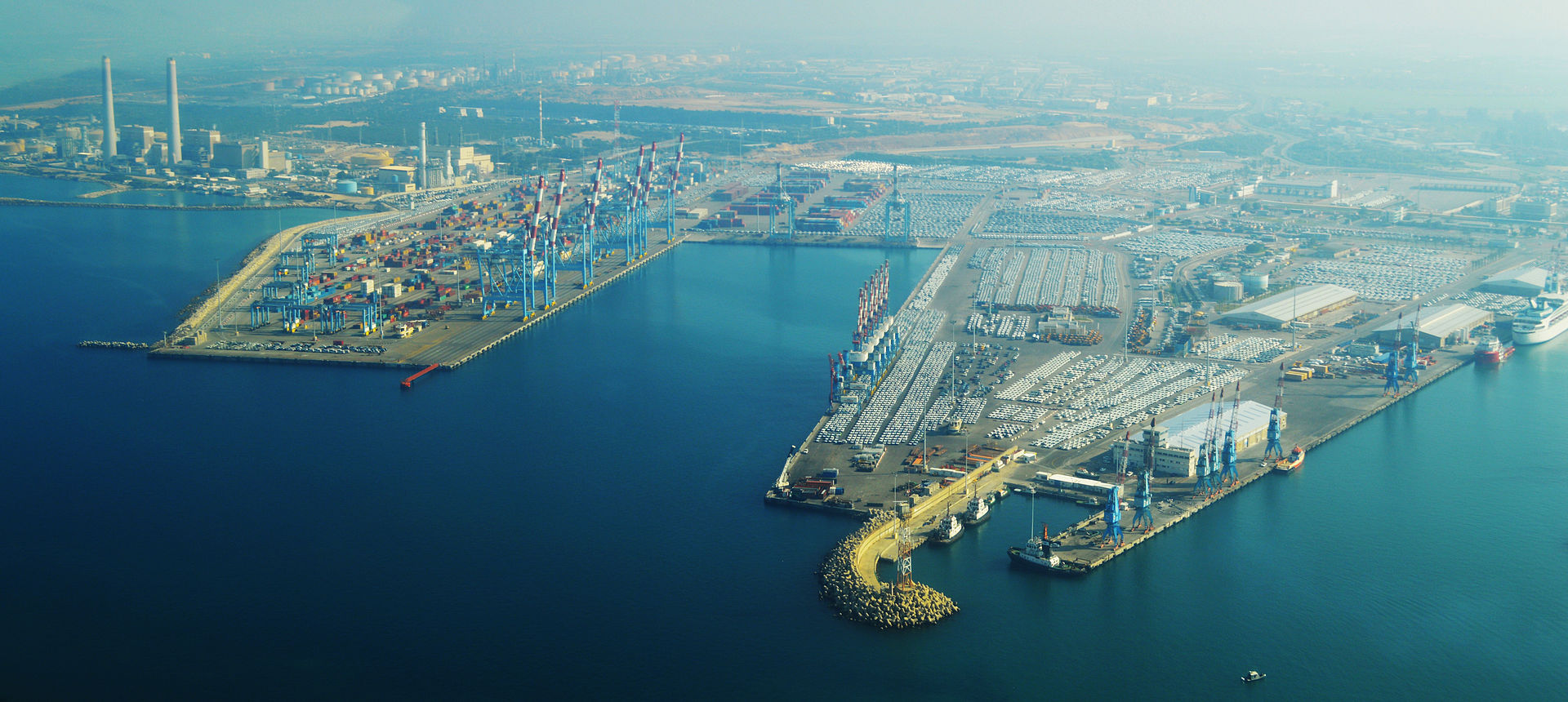
Table of Contents
What Hezbollah Struck and Why It Matters
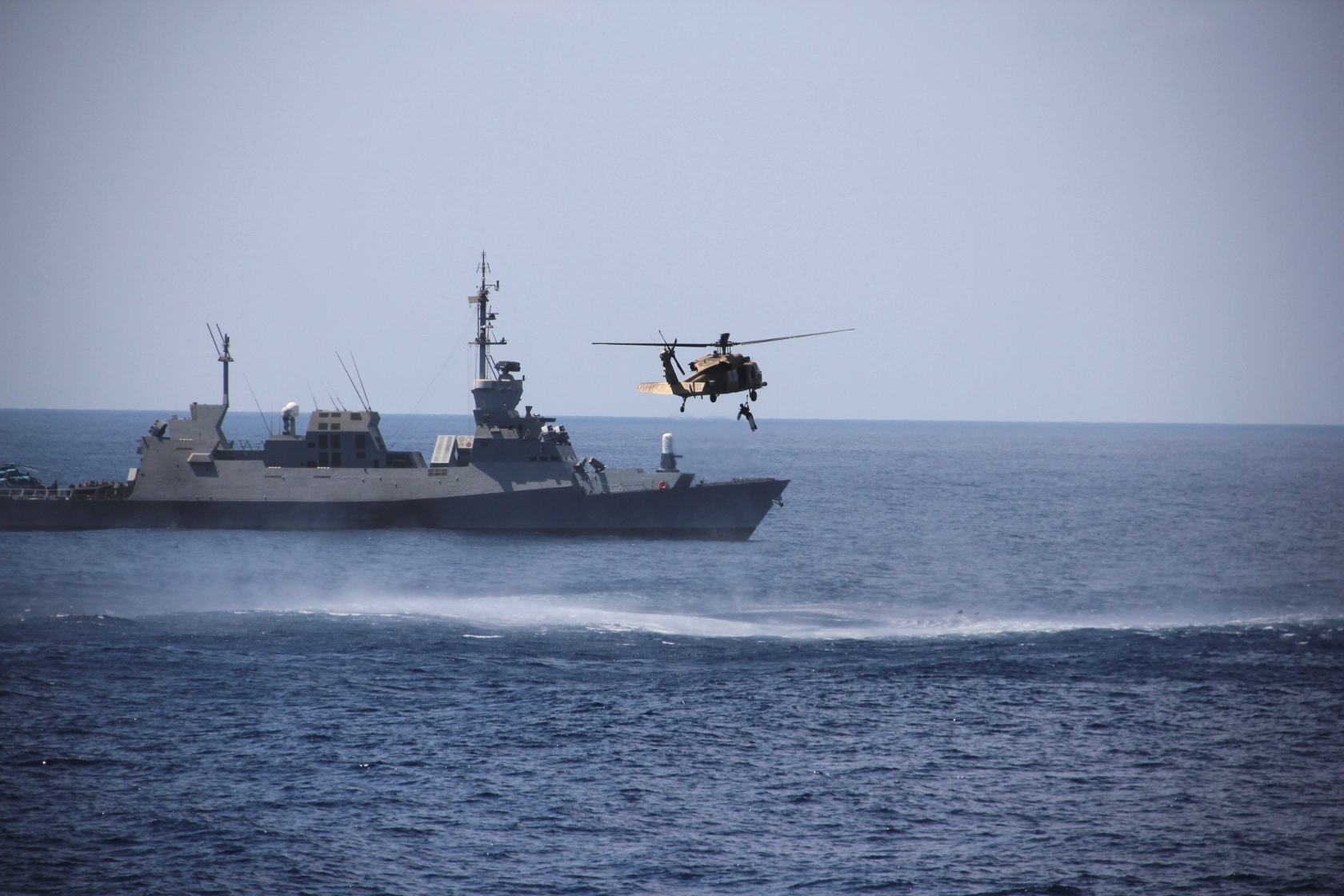
Ashdod Naval Base, established in 1965, houses Patrol Boat Squadron 916 — operating Super Dvora Mk II and Shaldag patrol craft along with unmanned surface vehicles — the Shayetet 11 amphibious flotilla, and the Snapir harbor security unit. During the 2014 Gaza War, the base coordinated IDF naval operations that fired 3,494 shells. It has served as the operational backbone of Israel’s Gaza maritime blockade for nearly two decades.
Hezbollah’s statement framed the attack as retaliation: “In response to the enemy’s violation of the ceasefire and its repeated attacks on Beirut, and after the Resistance adhered to the ceasefire while the enemy did not, the fighters of the Islamic Resistance targeted the naval base in the port of Ashdod with missiles,” the group said in a statement carried by Naharnet. “Such operations would continue until what it called Israeli and US ‘aggression’ against Lebanon and its people ceases.”
This is at minimum the second confirmed Hezbollah strike on Ashdod naval base. On November 24, 2024, Hezbollah described targeting the installation “for the first time” with “advanced missiles and strike drones” as part of a 340-missile barrage, according to Al Jazeera and Kayhan reporting from that date.
The target selection carries a distinct logic. Hezbollah did not fire at Haifa’s civilian port or at border settlements in the Galilee. It fired at the facility that enforces Israeli naval sovereignty over the southern Mediterranean and the Gaza coastline. The distinction matters: Hezbollah Secretary-General Naim Qassem, speaking on April 10, urged the Lebanese government to stop giving “free concessions” to Israel ahead of Lebanon-Israel talks scheduled in Washington, according to the Washington Times.
The Middle East briefing 3,000+ readers start their day with.
One email. Every weekday morning. Free.
Does the Ashdod Strike Mirror Iran’s Hormuz Strategy?
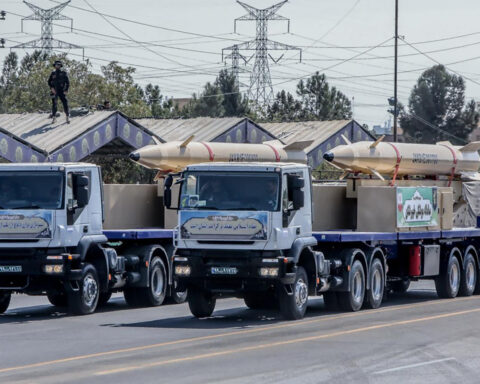
Five days before the Ashdod strike, on April 5, Hezbollah claimed it fired a naval cruise missile at an Israeli warship 68 nautical miles off the Lebanese coast — most likely an Iranian-made Noor missile, the C-802 variant with a range of 120 to 220 kilometers, according to CGTN and Al Arabiya. The IDF denied the claim. But the weapon type matters regardless of the outcome: Hezbollah’s confirmed arsenal includes Noor anti-ship missiles, the C-802 (used against INS Hanit in 2006), and the Russian-origin Yakhount/P-800 Oniks — a supersonic missile traveling at Mach 2.6 with a 300-kilometer range, according to the Alma Research and Education Center. Every Israeli naval vessel operating in the southern Mediterranean falls within potential range of at least one of these systems.
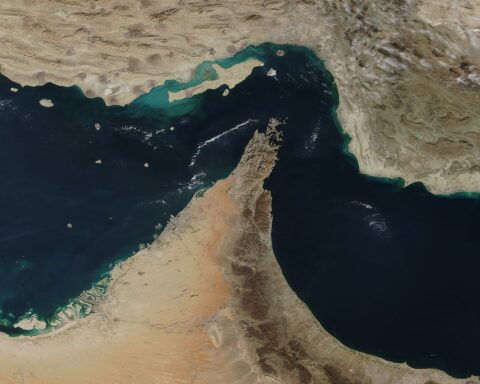
The parallel with Iran’s Gulf strategy is structural, not incidental. Iran’s 10-point peace proposal, presented ahead of the Islamabad talks, includes as Point 7 a demand for IRGC “coordination” over Hormuz as a treaty requirement — converting military coercion of a sea lane into a permanent legal claim. Hezbollah’s strike on a naval base responsible for blockade enforcement performs an analogous function on the Mediterranean end: it demonstrates that Israel’s maritime infrastructure is vulnerable to the same kind of pressure Iran applies at Hormuz.
Post-ceasefire Hormuz throughput stands at 15-20 ships per 24 hours against a pre-war baseline of 138 per day, according to Windward data. Hezbollah holds at risk the infrastructure Israel uses to project naval power across the eastern Mediterranean. The two pressure points reinforce a single negotiating position: no settlement without Lebanon.
Operation Eternal Darkness and the Action-Reaction Sequence
The Ashdod strike did not occur in isolation. On April 8, two days prior, the IDF launched Operation Eternal Darkness — deploying 50 fighter jets to drop 160 bombs on 100 targets in Lebanon within 10 minutes. The Times of Israel reported that targets explicitly included “infrastructure of Hezbollah’s rocket and naval units.” Israel acknowledged, in targeting language, that Hezbollah possessed functional naval units worth destroying.
The Lebanese Health Ministry’s toll provides the scale of what preceded the Ashdod retaliation. Since March 2, 1,953 people have been killed in Lebanon and 6,303 wounded. On April 8 alone — the day of Operation Eternal Darkness — 357 died. On April 10, the day of the Ashdod strike, 14 more were killed in Israeli strikes, including 13 Lebanese State Security personnel in a single strike on a government building in Nabatieh, according to Al Jazeera. Lebanese Prime Minister Joseph Aoun declared a national day of mourning.
| Metric | Figure | Source |
|---|---|---|
| Total killed in Lebanon (since March 2) | 1,953 | Lebanese Health Ministry |
| Killed on April 8 alone | 357 | Lebanese Health Ministry |
| Total wounded | 6,303 | Lebanese Health Ministry |
| Killed on April 10 | 14 | Al Jazeera |
| State Security killed (Nabatieh) | 13 | Al Jazeera |
| IDF claim: Hezbollah fighters killed | 1,400 | Haaretz, April 10 |
| Hezbollah internal count | 400+ | Haaretz, April 10 |
| Op. Eternal Darkness: jets / bombs / targets | 50 / 160 / 100 | Times of Israel |
The sequence — Israel strikes Hezbollah naval infrastructure on April 8, Hezbollah strikes Israel’s naval base on April 10 — establishes a direct action-reaction cycle in which naval assets are now exchangeable targets on both sides. The 2006 war’s naval dimension was limited to the INS Hanit incident. The current conflict has produced sustained, reciprocal targeting of maritime military infrastructure.
How Does Lebanon Lock Into the Islamabad Talks?
Iran’s delegation to the Islamabad proximity talks arrived with Lebanon already framed as a precondition. Mohammad Bagher Ghalibaf, the Parliament Speaker leading the Iranian delegation, stated on April 9 that “a cease-fire in Lebanon and the release of Iran’s blocked assets…must be fulfilled before negotiations begin,” according to Haaretz and PressTV. He added: “time is running out.”
Ghalibaf enumerated three ceasefire violations before the Islamabad talks opened, according to Al Jazeera reporting on April 9-10. Iranian Foreign Minister Abbas Araghchi warned on April 10 that “Iran could abandon ceasefire if Israeli strikes on Lebanon continue,” and demanded the US “include Lebanon in the cease-fire and halt Israeli attacks,” per Haaretz.
The American position treats Lebanon as separable. Vice President JD Vance stated on April 8: “There was a legitimate misunderstanding. The Iranians thought the ceasefire included Lebanon, and it just didn’t. We never made that promise.” He added that Iran would be “dumb” to let talks collapse over Lebanon, and that “the Israelis have actually offered to check themselves a little bit in Lebanon because they want to make sure that our negotiation is successful,” according to The Hill, Times of Israel, and Axios.
The Ashdod strike undermines the separability thesis. Hezbollah’s demonstrated capacity to reach Israeli naval infrastructure 145 kilometers south of the border — and its stated intent to continue until Israeli and US “aggression” against Lebanon ceases — means the Lebanon front generates military costs that compound daily. Iran’s precondition gains force not from diplomatic posturing but from the battlefield: Lebanon functions as a live military argument that Israeli maritime security cannot be stabilized while the northern front burns.
The talks themselves are indirect. Pakistan shuttles messages between two rooms — Vance, Witkoff, and Kushner with a 30-member security team on one side; Ghalibaf and Araghchi on the other, according to Al Jazeera’s April 9 reporting. No face-to-face meeting has been confirmed. Masood Khalid, former Pakistani ambassador to China, told Al Jazeera that “the atmosphere had been poisoned before talks even began,” adding that “Israel is playing a spoiler to undermine the process” and “the key is in President Trump’s hands.”
Iran’s framing holds the United States responsible for Israeli actions in Lebanon — a position articulated by both Ghalibaf and Araghchi across multiple statements on April 9-10, according to CBS News, NBC News, Al Jazeera, Haaretz, and PressTV. This framing makes every Israeli strike in Lebanon a cost charged to the Islamabad process, regardless of whether Lebanon is formally included in the ceasefire text.
Sahar Khan of the Cato Institute told Al Jazeera that “lack of trust is the biggest obstacle,” and that demonstrating maximalist demands masks uncertainty about sustained commitment on both sides.
Saudi Arabia’s Absent Seat
Saudi Arabia is excluded from the Islamabad bilateral entirely. The kingdom’s foreign minister held a co-guarantor seat during the March 29-30 round but has no role in the April 10 format. Yet Saudi Arabia’s fiscal exposure to the outcome is total: Hormuz reopening depends on these talks, and Hormuz throughput determines whether Saudi oil exports recover from the war-era collapse.
The ceasefire expires April 22 — 12 days from the Ashdod strike. April 18 marks the first Hajj pilgrim arrivals, and there is no extension mechanism in the current framework, according to the Soufan Center.
The Ashdod strike introduces a variable Saudi Arabia cannot influence. If Lebanon’s inclusion becomes a binding precondition — and Hezbollah’s continued strikes on Israeli naval infrastructure make exclusion progressively harder to sustain — then the Islamabad framework must accommodate a front on which Saudi Arabia has no position, no interlocutor, and no military presence. Pakistan brokered the ceasefire but cannot enforce compliance on the Lebanon front. Israel’s willingness to “check themselves a little bit,” as Vance phrased it, is not a ceasefire — it is a rhetorical concession that Hezbollah’s missiles have already rendered insufficient.
Iran’s 10-point proposal demands IRGC “coordination” over Hormuz, halting Israeli strikes on all allied armed groups including Hezbollah, and UNSC codification. Each Hezbollah strike on Israeli naval infrastructure strengthens the argument that these demands are interconnected — that Hormuz and the eastern Mediterranean form a single coercive system. Saudi Arabia’s oil recovery runs through the resolution of both, and Riyadh has relied on Western allies to make the Lebanon-inclusion argument it cannot make publicly.
“There was a legitimate misunderstanding. The Iranians thought the ceasefire included Lebanon, and it just didn’t. We never made that promise.”
Vice President JD Vance, April 8, 2026, via The Hill / Axios
FAQ
What weapons does Hezbollah have that can reach Ashdod?
Hezbollah’s confirmed anti-ship and long-range strike arsenal includes the Iranian-made Noor missile (C-802 variant, 120-220 km range), the C-802 itself (used against INS Hanit in 2006), and the Russian-origin Yakhount/P-800 Oniks (Mach 2.6 supersonic, 300 km range), according to the Alma Research and Education Center. The November 24, 2024 barrage on Ashdod involved 340 missiles, indicating stockpile depth even after sustained Israeli degradation campaigns.
Why did Netanyahu announce Lebanon talks on the same day as the Ashdod strike?
Netanyahu’s announcement of Lebanon-Israel talks in Washington, reported by the Times of Israel on April 10, coincided with the Ashdod strike and Lebanese PM Aoun’s declaration of a national day of mourning after 13 State Security personnel were killed in Nabatieh. Hezbollah Secretary-General Naim Qassem’s April 10 warning against “free concessions” to Israel suggests the group views the Washington talks as a negotiating environment where military pressure must be maintained to prevent unfavorable terms, according to the Washington Times.
What happens to the Islamabad ceasefire if it expires on April 22 without renewal?
The ceasefire contains no extension mechanism, according to the Soufan Center. April 18 — four days before expiry — marks the first Hajj pilgrim arrivals, with Indonesia’s 221,000 pilgrims beginning departure on April 22 itself and Pakistan’s 119,000 arriving on April 18. Iran has zero Hajj stake — Iranian pilgrims have been barred — removing a traditional constraint on escalation timing.
Has Hezbollah successfully damaged Israeli naval vessels in the current conflict?
The IDF has not confirmed damage to any naval vessel from Hezbollah strikes during the current conflict. Hezbollah’s April 5 claim of firing a naval cruise missile at an Israeli warship 68 nautical miles offshore was denied by the IDF, according to CGTN and Al Arabiya. The November 2024 Ashdod barrage and the April 10 strike targeted the base itself rather than vessels at sea. The precedent remains the 2006 INS Hanit incident, when a C-802 missile struck an Israeli corvette off the Lebanese coast, killing four sailors — the only confirmed Hezbollah hit on an Israeli warship to date.
Could Iran walk away from the Islamabad talks over Lebanon?
Iran has laid explicit groundwork for departure. Araghchi stated on April 10 that “Iran could abandon ceasefire if Israeli strikes on Lebanon continue,” per Haaretz. Ghalibaf framed Lebanon and frozen assets as preconditions that “must be fulfilled before negotiations begin.” Iran enumerated three ceasefire violations before the talks opened. The structural question, as Sahar Khan told Al Jazeera, is whether Iran’s Lebanon precondition is a genuine red line or a negotiating position designed to extract concessions on Hormuz and sanctions relief.