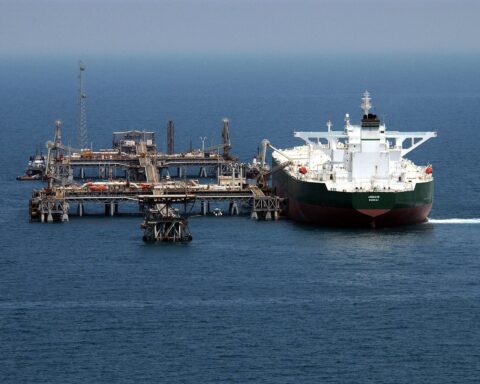
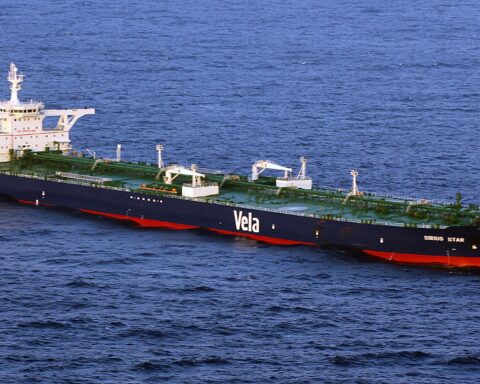
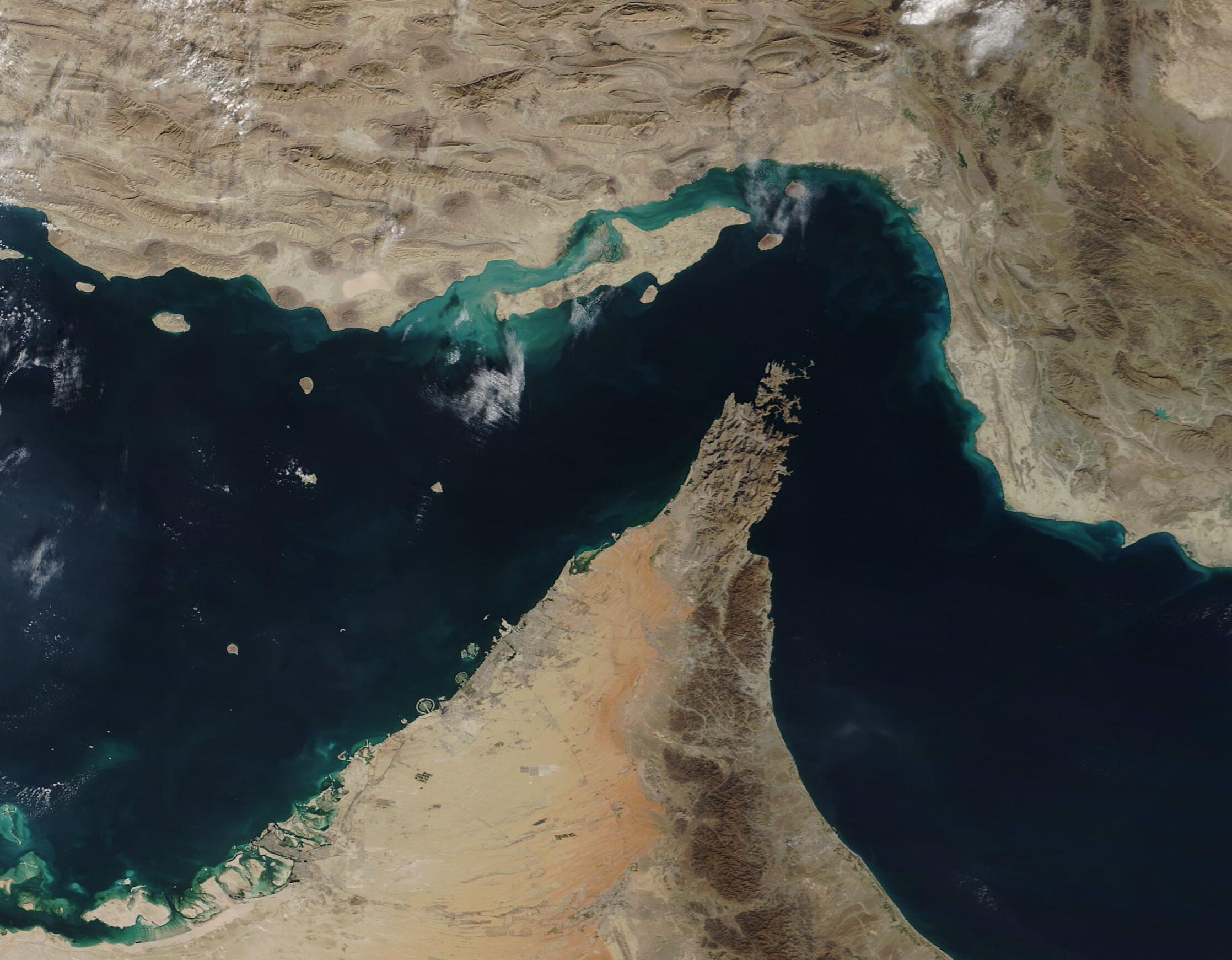
JEDDAH — Approximately 3,200 commercial vessels and 20,000 seafarers remain trapped in Gulf waters west of the Strait of Hormuz, caught inside a legal architecture that international maritime law was not designed to govern. Iran has engineered a selective transit-toll franchise — permitting Chinese, Russian, and Indian-affiliated vessels through for fees settled in yuan or cryptocurrency, while obstructing passage for ships linked to what Tehran designates “hostile nations” — that falls outside the formal definition of a naval blockade under the San Remo Manual, outside the distress provisions of SOLAS and SAR conventions, and outside any enforcement mechanism the IMO possesses. Daily transits through the strait have collapsed from roughly 150 vessels pre-war to four or five. Ten seafarers are dead. Eight are injured. The rest wait on decks at night, bags packed, watching for missiles they cannot outrun.
The IMO’s 36th Extraordinary Council Session in March condemned the attacks, directed Secretary-General Arsenio Dominguez to negotiate a humanitarian evacuation framework, and cited UN Security Council Resolution 2817 — a resolution already stripped of Chapter VII enforcement language before passage. No legal instrument was formally invoked to challenge the toll regime itself. The 20,000 seafarers exist in a space between war and commerce that no treaty anticipated and no institution can reach.
Table of Contents
- Who Are the 20,000 Seafarers Trapped in the Gulf?
- Why Does Iran’s Toll System Fall Outside Blockade Law?
- The Parliamentary Codification: Toll as Permanent Sovereignty Claim
- Why Can’t the IMO Compel Iran’s Compliance?
- The Bilateral Fracture: Philippines, India, and the Disaggregation of Solidarity
- Why Has No Navy Offered Convoy Escort?
- What Is Saudi Arabia’s Role in the Seafarer Crisis?
- Food Security and the Fertilizer Chokepoint
- Can a Black Sea Grain Initiative Model Work for Hormuz?
Who Are the 20,000 Seafarers Trapped in the Gulf?
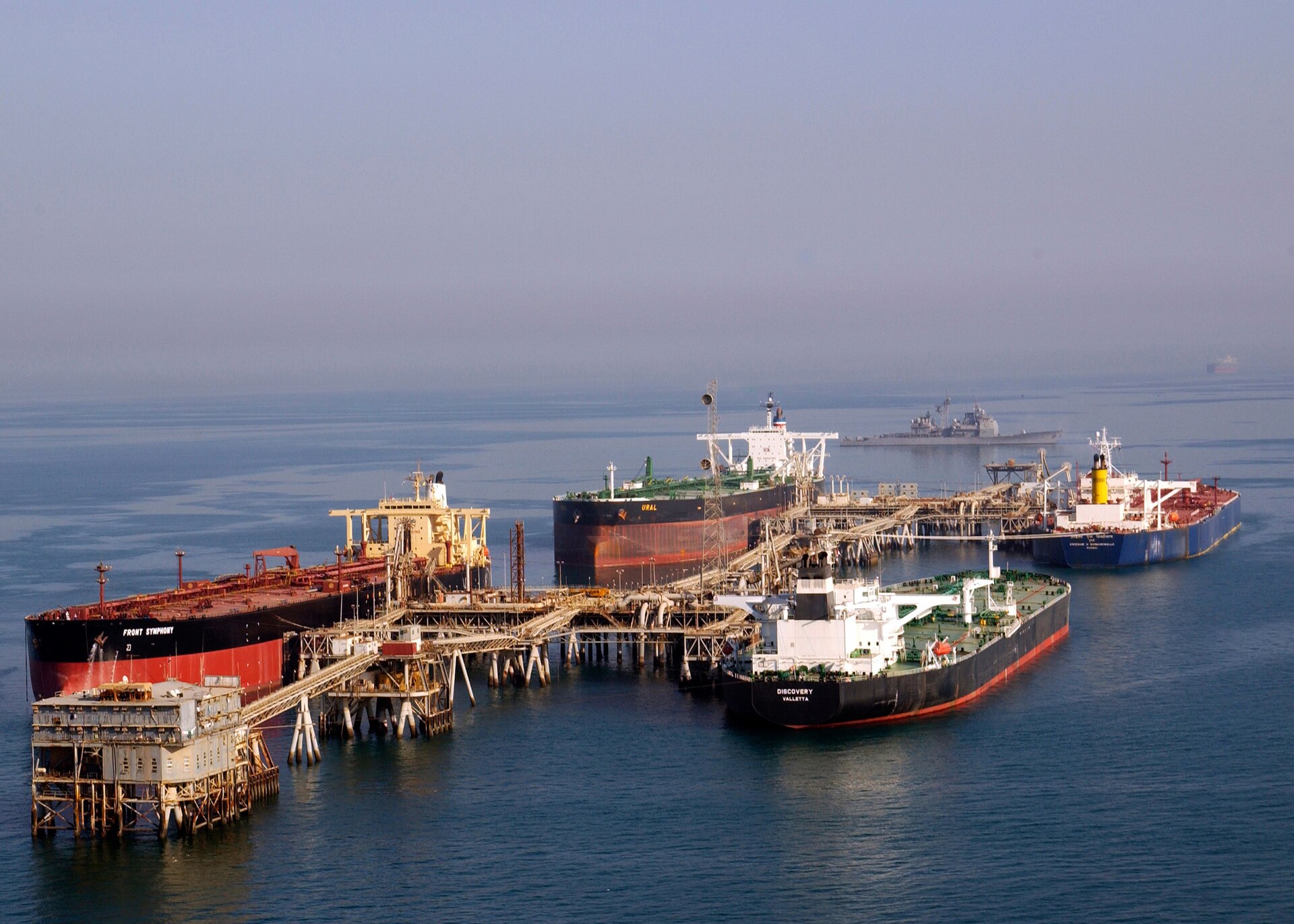
The nationality breakdown of the trapped seafarers maps almost precisely onto the global geography of maritime labor extraction. Roughly 35 percent are Filipino. Twenty-two percent are Indian. Twelve percent are Indonesian, 8 percent Myanmar nationals, 6 percent Bangladeshi — the remainder drawn from over 40 countries, including Chinese, Ukrainian, Russian, Turkish, and Egyptian citizens. These are the crews of oil tankers, LPG carriers, bulk freighters, and container ships that entered Gulf waters before February 28 and cannot leave.
More than 6,000 Filipino seafarers are in the conflict zone, making the Philippines the single largest national stakeholder in the crisis. India accounts for between 2,500 and 3,000 trapped crew members. Rakesh Ranjan of the Institute for Human Rights and Business has characterized Indians as “the most victimized group of workers” in the crisis — not because of numbers, but because of the flag-of-convenience system that renders them diplomatically invisible. Indian seafarers crewing foreign-flagged vessels fall outside the scope of India’s bilateral negotiations with Iran, which focus on Indian-flagged ships. The crew of a Liberian-flagged tanker staffed by Indian nationals has no state actor advocating for their extraction.
The human texture of the crisis is granular. A 28-year-old Indian sailor aboard a small oil tanker in Iraqi waters, stranded for a month, told NBC News: “We don’t sleep at night. We stay up on deck because you never know what might happen next.” His family, he said, “is panicking. We’ve packed all our bags and are ready the moment someone calls us.” The Thai-flagged bulk carrier Mayuree Naree was struck on March 11; 20 crew were rescued, three remain missing. Across the Gulf, 21 confirmed attacks on commercial vessels since February 28 have produced 10 dead and 8 injured — numbers that do not account for the psychological attrition of spending weeks on a stationary ship in an active war zone.
Damien Chevallier, Director of the IMO’s Maritime Safety Division, offered the institutional assessment on April 2: “There is no precedent for the stranding of so many seafarers in the modern age.” He added: “They have been working in an active war zone for a month. It is a very scary situation.” The word “working” is precise. These are not refugees. They are employees, contractually bound to vessels they cannot leave, anchored in waters they cannot cross, employed by companies that in many cases have no diplomatic channel to the state controlling the chokepoint.
| Nationality | Share of Global Seafarer Workforce | Estimated Number Trapped | Flag-State Coverage |
|---|---|---|---|
| Filipino | ~35% | 6,000+ | Bilateral deal secured (April 2) |
| Indian | ~22% | 2,500-3,000 | Partial — Indian-flagged only |
| Indonesian | ~12% | ~2,400 | No bilateral deal |
| Myanmar | ~8% | ~1,600 | No bilateral deal |
| Bangladeshi | ~6% | ~1,200 | No bilateral deal |
| Other (40+ countries) | ~17% | ~3,400 | Varies |
Why Does Iran’s Toll System Fall Outside Blockade Law?
Iran’s selective transit-toll franchise sits in a juridical void that is not accidental. Under the San Remo Manual on International Law Applicable to Armed Conflicts at Sea — the primary codification of naval blockade doctrine — a valid blockade requires three conditions: impartial and effective interdiction of all shipping, formal declaration notifying all belligerents and neutral states, and proportionality to the military objective. Iran’s system fails all three prongs. It is not impartial — Chinese, Russian, and Indian vessels transit while US, UK, and Israeli-affiliated vessels cannot. It is not a complete interdiction — by March 31, 292 vessels had transited since hostilities began, a 95 percent reduction but not a total closure. No formal declaration has been issued naming specific blockaded ports.
Alexander Lott, Research Professor at the Norwegian Centre for the Law of the Sea at UiT, has identified the core tension. “Creating a dangerous environment that deters passage by engaging in attacks, making threats, or using naval mines constitutes violation of the right of passage, even without an official declaration of closure,” he wrote in EJIL:Talk!. The San Remo Manual’s Rule 95 requirement for a legally valid blockade — “effective prevention of access” — is precisely what Iran has avoided by allowing selective transits. Lott notes a second structural problem: Iran, the United States, and Israel are all UNCLOS non-parties, creating conflicting legal positions where no state in the primary triad can invoke the treaty against another.
UNCLOS Articles 37 through 44 guarantee “continuous, expeditious, non-suspendable” transit passage through international straits. Article 26 prohibits any charge levied on foreign ships “by reason only of their passage.” Article 42 bars coastal state measures that hamper transit. Sanjeet Ruhal of the International Maritime Law Institute in Malta stated the textual position plainly: “A toll for mere passage, or a nationality-based condition for access, would be incompatible with the treaty regime.” But Iran signed UNCLOS in 1982 and never ratified it. The 168 states that have ratified the convention cannot compel compliance from a signatory that declined to join.
Mark P. Nevitt, Associate Professor of Law at Emory University and a former US Navy Commander in the Judge Advocate General’s Corps, has identified what he calls a “doctrinal gap” in the law of armed conflict. Proportionality doctrine under self-defense calculates harm only between belligerents — not against neutral economies or the 20,000 seafarers whose livelihoods and safety are collateral to a conflict between Iran and the United States. The seafarers are not parties to the war. They are not civilians in a combat zone in the conventional sense. They are workers on commercial vessels in international waters, subject to a toll imposed by a state that has structured its actions to evade every legal category that might compel their release.
The Parliamentary Codification: Toll as Permanent Sovereignty Claim
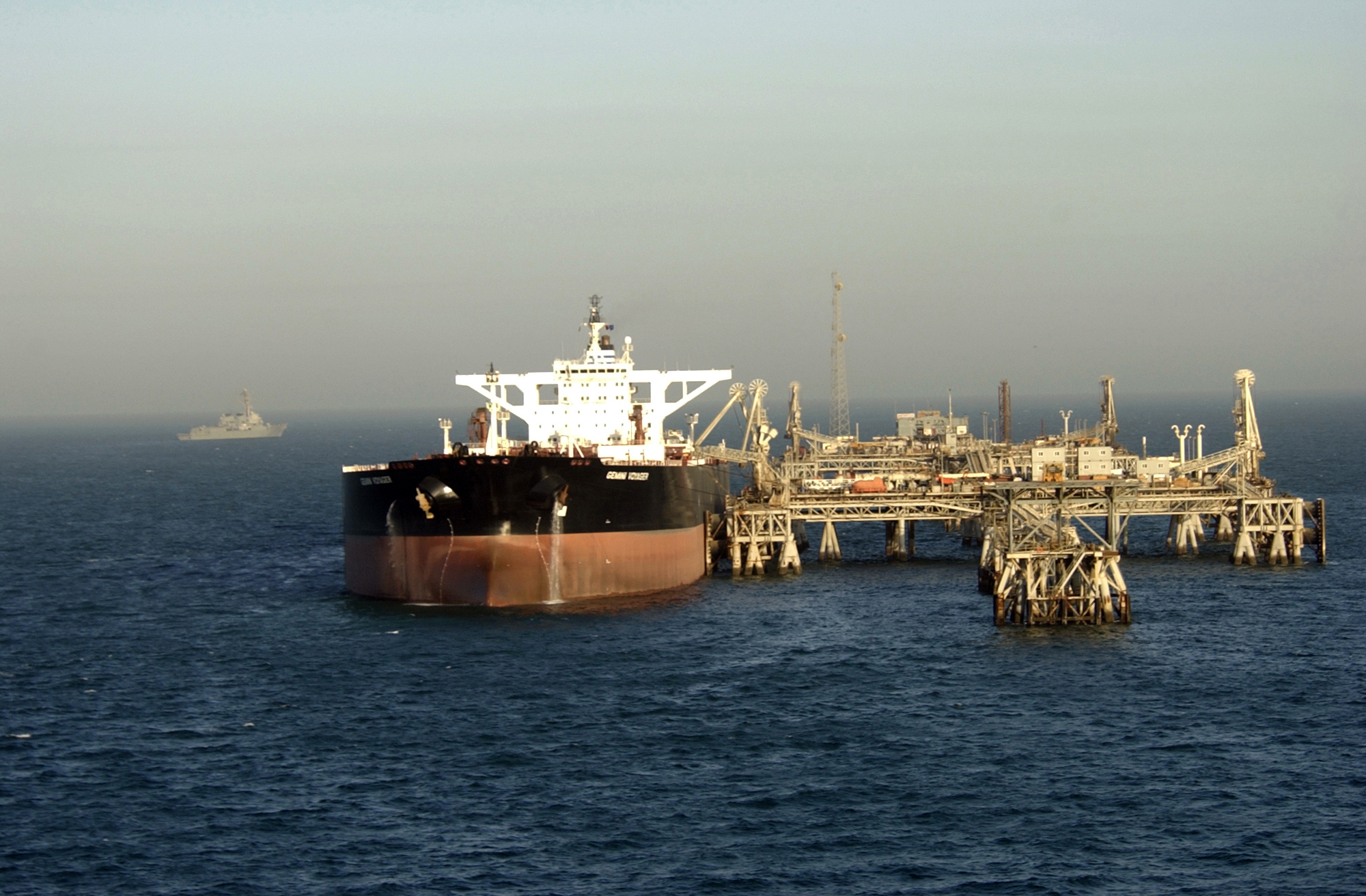
Iran’s parliament has moved to formalize the toll regime beyond wartime expediency. The Majlis passed legislation enshrining “sovereignty, control and oversight” over the Strait of Hormuz and authorizing denial of passage to ships linked to hostile nations. Iranian MP Mohammadreza Rezaei Kouchi articulated the framing directly: “Parliament is pursuing a plan to formally codify Iran’s sovereignty, control and oversight over the Strait of Hormuz, while also creating a source of revenue through the collection of fees.”
The legislative language is calibrated. By framing the toll as a permanent sovereignty exercise rather than a wartime emergency measure, Tehran is attempting to establish legal precedent that would survive any ceasefire. The toll rate — a baseline of $1 per barrel for oil tankers, scaling up to $2 million per voyage for larger vessels — is collected through channels designed to circumvent Western financial infrastructure. Payments are settled in Chinese yuan via Kunlun Bank or in USDT stablecoins on the Tron blockchain, outside SWIFT and outside dollar clearing. The IRGC-aligned Tasnim News Agency estimated that $2 million per vessel applied to pre-war traffic of roughly 140 daily transits would yield annual revenue exceeding $100 billion — between 20 and 25 percent of Iran’s nominal GDP.
Tasnim’s framing is instructive. The agency characterized the toll as equivalent to Suez and Panama Canal fees, deploying “transit coordination” language. The analogy is legally wrong — Suez and Panama are artificial waterways constructed and maintained by sovereign operators; Hormuz is a natural international strait governed by customary international law that prohibits exactly the fees Iran is charging. But the analogy is politically functional. It forces interlocutors to litigate the distinction between natural and artificial straits rather than respond operationally to the toll’s existence. Iran’s Deputy Foreign Minister Kazem Gharibabadi offered the broader frame: “Wartime conditions cannot be governed by peacetime rules.”
The GCC declared the fees “illegal” in a political statement. No arbitral proceedings have been initiated before the International Court of Justice, the International Tribunal for the Law of the Sea, or any other body. The Hill Dickinson analysis published through Lexology confirmed the gap: political condemnation without juridical challenge. Reza Khanzadeh of George Mason University condensed the structural reality: enforcement of maritime law “depends on political will and military capability, not just legal frameworks.”
Why Can’t the IMO Compel Iran’s Compliance?
The IMO’s 36th Extraordinary Council Session on March 18-19 produced three outcomes: a condemnation of attacks on commercial vessels, a directive to Secretary-General Dominguez to establish a humanitarian framework for evacuation, and a citation of UN Security Council Resolution 2817. None of these outcomes carries enforcement authority. The IMO is a technical regulatory body. It sets standards for vessel construction, navigation, pollution prevention, and crew welfare. It does not command navies. It cannot impose sanctions. It has no Chapter VII authority — and the UN Security Council resolution it cited had already been stripped of Chapter VII language under threat of Russian, Chinese, and French vetoes before passage.
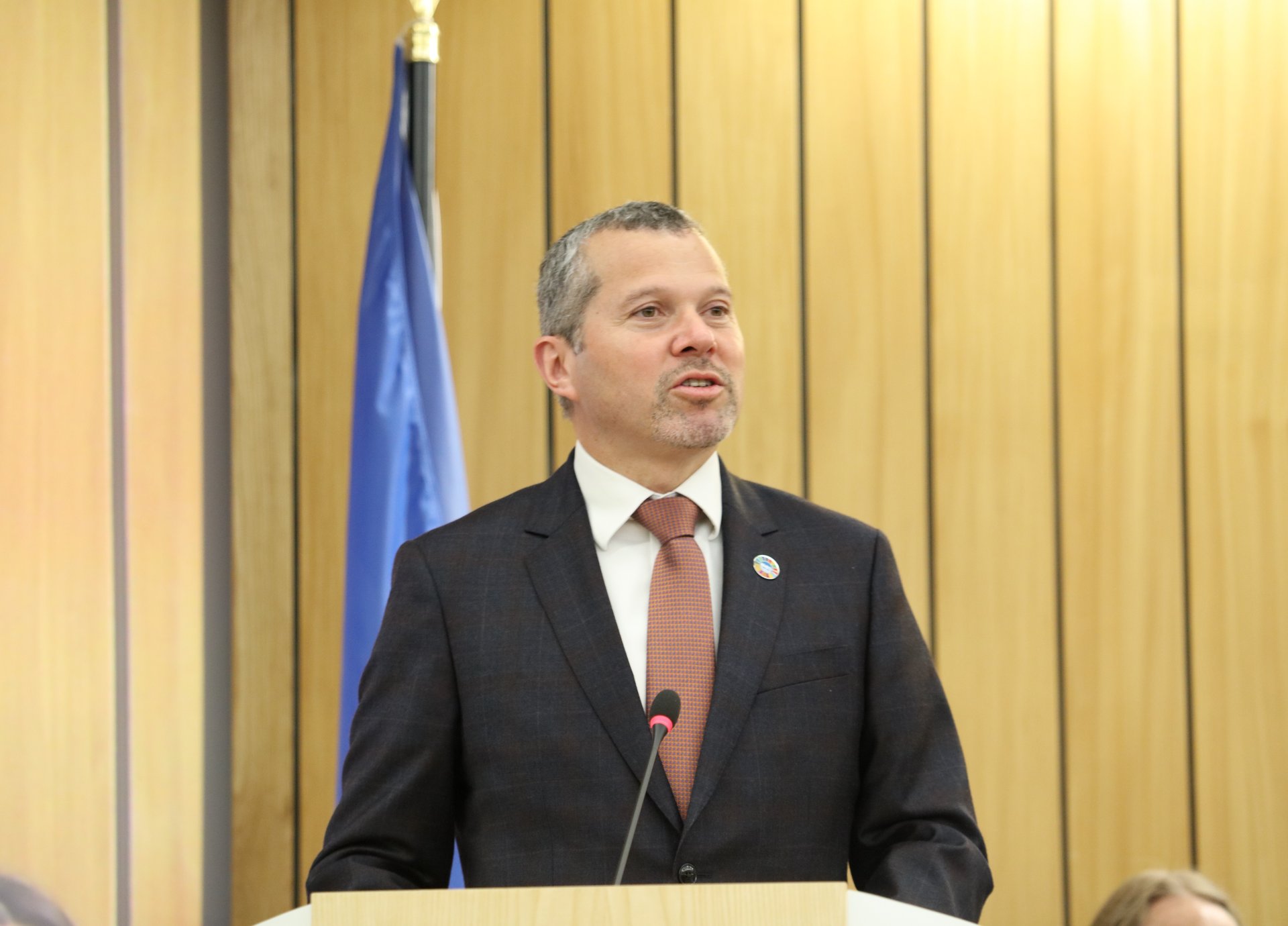
Dominguez himself acknowledged the structural limitation and the moral urgency simultaneously: “Let it be the responsibility of each and every one of us to demonstrate that inaction is not an option.” And: “I am ready to start working immediately in negotiations to establish a humanitarian framework to evacuate all vessels and seafarers trapped.” The gap between “ready to start working” and possessing the legal instruments to compel compliance is the gap the 20,000 seafarers inhabit.
The conventions governing maritime safety and rescue were not built for this scenario. SOLAS, adopted in 1974, addresses vessels in distress — capsizing, fire, structural failure. The International Convention on Maritime Search and Rescue of 1979 governs coordination of rescue operations for ships in danger. Neither convention contemplates a situation where thousands of vessels are systematically prevented from completing a transit by a state-actor toll system that is not technically a blockade, not technically a closure, and not technically an act of piracy. The 2006 Maritime Labour Convention establishes minimum welfare standards for seafarers — nutrition, rest hours, medical care, repatriation rights — but has no enforcement mechanism against a sovereign state conducting what it characterizes as a transit-coordination operation.
The institutional architecture of maritime governance assumes that the threat to seafarers comes from the sea — storms, mechanical failure, navigational error, piracy by non-state actors. It does not contemplate a sovereign state simultaneously attacking some vessels, charging others for passage, and exempting a third category on the basis of bilateral diplomatic relationships. The 20,000 trapped seafarers are not in distress in the SOLAS sense. Their ships are intact. Their engines run. They have food and fuel — for now. They simply cannot move.
The Bilateral Fracture: Philippines, India, and the Disaggregation of Solidarity
Iran’s “friendly nations” exemption list — announced March 26 by Foreign Minister Araghchi and initially comprising China, Russia, India, Iraq, and Pakistan — has since expanded through bilateral deals to include Malaysia, Egypt, South Korea, Thailand, and the Philippines. Each bilateral agreement disaggregates the collective pressure that a unified international response might generate. Each deal concedes, in practice, the toll framework’s legitimacy — even when the negotiating state formally denies it.
The Philippines case is the sharpest illustration. On April 2, Manila secured toll-free, safe passage for Philippines-flagged vessels — the only US treaty ally to negotiate bilaterally with Iran. The Philippines is bound to Washington by the 1951 Mutual Defense Treaty. It is also home to the world’s largest seafarer labor force, with more than 6,000 Filipino crew members in the conflict zone. Judy Domingo, President of the United Filipino Seafarers union — representing 50,000 members — framed the operational constraint: “We cannot get them out immediately — we must consider their location and a safe port for disembarkation.” Manila’s bilateral deal was a labor-protection decision, not a geopolitical defection. But its structural effect was to validate the franchise model: Iran demonstrated that its transit system is negotiable, not a blockade, and that even US allies will engage it on its own terms when their citizens are at stake.
India’s position is more contorted. New Delhi publicly asserted that “no permission is required” to transit the Strait of Hormuz — a formal rejection of the toll framework’s legal premise. In practice, India negotiated bilaterally to secure passage for eight LPG tankers. Amitabh Kumar, India’s former Shipping Director General, conceded the practical reality to Foreign Policy: “Safe passage requires bilateral agreements with Iranian authorities, not unilateral transit decisions.” The gap between India’s declaratory position and its operational behavior is the gap between UNCLOS Article 37 and the Gulf of Oman in April 2026.
The flag-of-convenience system magnifies the fracture. An Indian seafarer aboard a Liberian-flagged tanker owned by a Greek shipping company and insured by a Norwegian P&I club has no single state actor responsible for his extraction. Liberia is the flag state, but Monrovia maintains no bilateral channel with Tehran. Greece is the beneficial owner’s domicile, but Athens has no diplomatic pressure point against the IRGC. India is the seafarer’s nationality state, but its bilateral deal covers Indian-flagged vessels, not Indian nationals on foreign flags. The Maritime Labour Convention places repatriation obligations on the shipowner and the flag state — neither of which may have the diplomatic access to negotiate transit through a war zone governed by a selective-toll franchise.
Why Has No Navy Offered Convoy Escort?
In July 1987, the United States Navy launched Operation Earnest Will — reflagging eleven Kuwaiti oil tankers under the American flag and escorting more than 100 transits through the Strait of Hormuz during the Iran-Iraq Tanker War. The operation was grounded in UN Security Council Resolution 598, which demanded a ceasefire and provided the legal framework for protective action. The 1984-1988 Tanker War saw roughly 540 ships attacked, with 25 sailors killed and 25 injured in 1984 alone. The international community’s response, while delayed, was operationally coherent: a willing convoy operator, a clear legal hook, and a military commitment to ensure passage.
In 2026, none of these elements exist. The US Navy has explicitly declined all merchant escort requests, citing “high risk” given the 21-mile width of the strait and the density of Iranian mine and missile capabilities. No convoy operation has been attempted. The legal hook — UNSCR 2817 — lacks the enforcement authority that UNSCR 598 provided. The 20,000 troops the Soufan Center estimates are in the Gulf theater are configured for strike operations against Iranian military targets, not for the slow, repetitive, exposure-intensive work of merchant escort through mined waters.
The Tanker War precedent illuminates through contrast. In 1987, Iran’s threat was kinetic but indiscriminate — mines and missiles targeting any vessel transiting the strait. The legal and operational response was correspondingly direct: escort the ships, sweep the mines, shoot back when fired upon. In 2026, Iran’s threat is selective and bureaucratic. Some ships transit freely. Others pay. Others cannot pass at any price. A convoy escort operation against a selective-toll system would require deciding which ships to escort, which flag states to protect, and whether forcing passage constitutes an act of war against a state that has not formally closed the waterway. The IRGC’s decentralized command structure compounds the problem — a negotiated passage agreement with Tehran may not bind IRGC naval units operating under autonomous local authority.
What Is Saudi Arabia’s Role in the Seafarer Crisis?
Riyadh occupies a unique structural position in the crisis. Saudi Arabia is simultaneously an IMO Council member, the operator of the only functional Hormuz bypass corridor — the East-West Pipeline carrying 7 million barrels per day to Yanbu on the Red Sea — a Red Sea littoral state with legal standing to propose IMO navigational corridor measures, and a co-drafter of the UNSC Hormuz resolution that was stripped of enforcement teeth. Saudi Arabia has assisted with IMO resupply operations coordinated through its ports. It has not proposed a formal humanitarian corridor framework.
The passivity is not incoherence. Formally anchoring an alternative humanitarian corridor through the Red Sea — using Saudi Arabia’s littoral standing and Yanbu’s export capacity as the foundation — would implicitly concede that Hormuz is closed for the foreseeable future. That concession reduces Saudi bargaining power in ceasefire negotiations where the reopening of the Strait is a central prize. As long as Hormuz’s status remains contested — not formally closed, not freely open, governed by a toll regime that no international body has the tools to challenge — Riyadh retains the ability to condition its cooperation on terms that serve its broader war objectives. The 20,000 seafarers are not irrelevant to Saudi calculations. They are simply not the primary variable.
Saudi Arabia’s own defensive position provides additional context. With PAC-3 MSE stockpiles depleted by roughly 86 percent after intercepting 894 drones and missiles since March 3, Riyadh’s immediate security priority is ammunition resupply and air defense coverage, not maritime corridor diplomacy. The kingdom is fighting a war of attrition against Iranian missile and drone campaigns targeting Eastern Province infrastructure — Ras Tanura, Jubail, SABIC facilities. Proposing a humanitarian maritime framework while absorbing daily strikes would require a diplomatic bandwidth that Riyadh is currently directing toward ceasefire terms and coalition management.
Food Security and the Fertilizer Chokepoint
One-third of the world’s seaborne fertilizer trade passes through the Strait of Hormuz, according to the International Crisis Group, which has identified this dependency as a direct threat to food security across the Global South — a second-order consequence of the transit disruption that has received less attention than oil price volatility but carries potentially greater humanitarian weight. Fertilizer supply disruptions translate into reduced crop yields on a 6-to-12-month delay, meaning the agricultural consequences of the current Hormuz obstruction will manifest in the 2026-2027 planting seasons across South and Southeast Asia, sub-Saharan Africa, and Latin America.
The fertilizer chokepoint operates on different economics than crude oil. Oil has a visible price signal — WTI and Brent benchmarks move in real time, and Iran’s selective lane management between gas and crude creates daily market-moving events. Fertilizer disruptions are quieter. Urea, diammonium phosphate, and potash move on term contracts with delivery windows measured in weeks. When those deliveries fail, importing nations do not face an immediate price spike — they face an absence. Fields go unplanted or under-fertilized. Yields decline. The price signal arrives at harvest, months after the chokepoint obstruction that caused it. The 3,200 trapped vessels include bulk carriers loaded with fertilizer feedstocks that have been stationary for over a month.
The humanitarian framing of the seafarer crisis — 20,000 workers trapped on ships — is immediate and visceral. The fertilizer dimension extends the crisis’s reach to populations that will never see the Strait of Hormuz, will never know the name of the ship that was supposed to deliver their country’s urea supply, and will experience the disruption only as a food price increase or a crop shortfall that their governments may attribute to weather, logistics, or domestic policy failure.
Can a Black Sea Grain Initiative Model Work for Hormuz?
EU High Representative for Foreign Affairs Kaja Kallas proposed in late March a diplomatic corridor modeled on the Black Sea Grain Initiative — the 2022-2023 arrangement that allowed 32 million metric tonnes of Ukrainian grain to exit Black Sea ports under a Joint Coordination Centre in Istanbul. Christian Bueger, Professor of International Relations at the University of Copenhagen, has advocated for a UN-mandated maritime peacekeeping operation built on the same architecture, arguing that military solutions alone cannot reopen the strait. The ICG has endorsed the general framework. Kallas acknowledged that the model would require “strong incentives for Iran to participate.”
The structural asymmetry between the Black Sea and Hormuz models is severe. The Black Sea Grain Initiative worked — imperfectly, and only until Russia withdrew in July 2023 — because all parties had identifiable incentives. Russia faced global diplomatic pressure over food security, Turkey provided a neutral venue and naval inspection capacity, Ukraine needed export revenue, and the UN provided institutional cover. At Hormuz, the incentive structure is inverted. Iran’s toll franchise IS the economic incentive. Tehran is earning revenue from the selective passage system — up to $2 million per transit, settled outside Western financial channels. Agreeing to a free-passage humanitarian corridor would require Iran to surrender a revenue stream that its own parliament has legislated into permanent law.
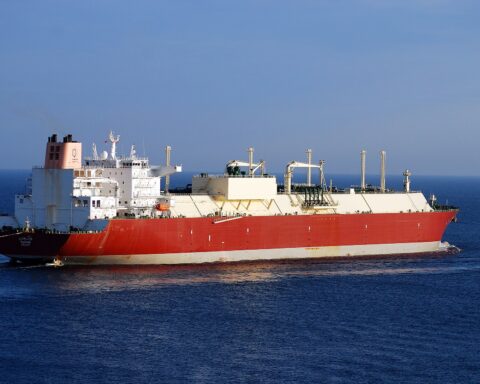
The Chinese-intermediated transit of the Qatari LNG carrier Al Daayen on April 6 — moving at 8.8 knots toward China, with cargo valued at $65-70 million — demonstrates that Iran already has a functioning alternative to any multilateral framework. Beijing brokers individual transits. The IRGC collects fees. Exempt nations send their ships through. The system operates without the IMO, without the UN, without UNCLOS, and without any institutional framework that might impose transparency, equity, or accountability. A Black Sea Grain Initiative model would require Iran to replace a profitable bilateral franchise with a multilateral arrangement that constrains its discretion. No one involved in the proposal has identified the mechanism by which Tehran would be induced to accept that trade.
Frequently Asked Questions
What legal recourse do individual seafarers have for repatriation?
Under the 2006 Maritime Labour Convention, the shipowner bears primary responsibility for repatriation, with the flag state as guarantor. In practice, when the flag state is a convenience registry — Liberia, Panama, the Marshall Islands — repatriation capacity depends on the registry’s diplomatic relationship with Iran, which most do not maintain. The ITF (International Transport Workers’ Federation) has activated its emergency fund for stranded seafarers, but disbursement requires port-state access that the toll regime obstructs. Seafarers on vessels in Iraqi or Kuwaiti waters may be able to disembark in those countries; seafarers on vessels anchored in international waters west of Hormuz have no disembarkation option without transiting the strait or securing helicopter evacuation — which no military has offered for commercial crew.
Has Iran attacked vessels that paid the toll?
Of the 21 confirmed attacks on commercial vessels since February 28, all targeted ships that had not engaged the toll framework or that flew flags of states Iran designates as hostile. No vessel that paid the transit fee or sailed under a “friendly nation” exemption has been reported attacked — a pattern that reinforces the franchise model’s internal logic. The distinction is operationally consistent: the IRGC treats payment or diplomatic alignment as a transit credential, and its naval forces have respected those credentials even as they continue kinetic operations against non-compliant vessels. This consistency is itself a legal problem, because it demonstrates that Iran exercises precise discriminatory control over passage — the opposite of the indiscriminate threat that might trigger universal self-defense claims under Article 51 of the UN Charter.
What happens to the trapped vessels’ insurance coverage?
Most marine war-risk policies contain 7-day or 14-day automatic termination clauses for vessels entering designated war zones. The Joint War Committee of Lloyd’s Market Association added the Persian Gulf, Strait of Hormuz, Gulf of Oman, and adjacent waters to its Listed Areas on February 28. Vessels that entered before that date and cannot exit face coverage gaps — their war-risk premiums have been retroactively repriced, and some underwriters have declined renewal for stationary vessels in the zone. P&I clubs (mutual insurers covering third-party liability) have issued force majeure guidance but have not withdrawn coverage. The commercial consequence is that shipowners are accumulating daily costs — crew wages, insurance, port fees, fuel for onboard generators — with no revenue, no timeline for transit, and diminishing insurer willingness to extend coverage in a zone where 10 seafarers have already died.
Could the 1949 Corfu Channel Case provide a legal basis for action?
The ICJ’s Corfu Channel judgment established that international straits must remain open and that coastal states bear responsibility for ensuring safe passage — but the ruling assumed peacetime conditions and addressed a specific incident (Albanian mines damaging British warships). Extending Corfu Channel to the Hormuz toll regime would require arguing that Iran’s selective-fee system constitutes an obstruction equivalent to mine-laying — a plausible argument, but one that has not been tested before any tribunal. The procedural barrier is jurisdictional: Iran has not accepted the ICJ’s compulsory jurisdiction, and no state has initiated proceedings. The Corfu Channel precedent exists in legal scholarship and policy briefs. It does not exist as an active instrument of relief for the 3,200 ships currently at anchor.
What is the estimated economic cost of the vessel stranding?
A conservative estimate of daily costs for 3,200 stationary vessels — covering crew wages, fuel for onboard power generation, insurance premiums, and opportunity cost of idle cargo — ranges between $150 million and $250 million per day, depending on vessel type and cargo value. Over the 38 days since February 28, cumulative costs likely exceed $6 billion. This figure does not include the value of stranded cargo (crude oil, LNG, fertilizer, manufactured goods), which runs into the tens of billions, or the downstream economic impact on importers awaiting delivery. The fertilizer disruption alone — one-third of global seaborne trade — will generate agricultural losses that the ICG has described as a direct food security threat to the Global South, with effects extending well beyond any resolution of the Hormuz crisis itself.