
RIYADH — Twenty-seven days into the Iran war, the most dangerous military force in the Middle East has not fired a single shot. Yemen’s Houthi movement — the same insurgency that paralysed Red Sea shipping for eighteen months, shot down more than twenty American Reaper drones, and struck targets inside Saudi Arabia with ballistic missiles — has remained conspicuously silent since the first American bombs fell on Iran on 28 February 2026. That silence is not evidence of restraint. It is a loaded weapon. If the Houthis resume Red Sea attacks, Saudi Arabia loses its last functioning oil export route, the Yanbu terminals on the Red Sea coast, and with it the single lifeline keeping world energy markets from total collapse. Every barrel of Saudi crude now reaches international buyers through the Bab el-Mandeb strait. The Houthis control the coastline that overlooks it.
The Iran war has generated more than five hundred headlines about the Strait of Hormuz blockade, drone interceptions over the Eastern Province, and ceasefire arithmetic. Yet the conflict’s most consequential variable sits in Sanaa, where a Houthi leadership council weighs a calculation that could reshape the global economy overnight. This analysis examines why the Houthis have stayed silent, what would trigger them to act, and why their decision — not Tehran’s, not Washington’s, not Riyadh’s — may ultimately determine the outcome of the war.
Table of Contents
- Who Are the Houthis and Why Do They Matter in the Iran War?
- Why Have the Houthis Stayed Silent for Twenty-Seven Days?
- The Saudi-Houthi Détente That Changed Everything
- What Makes the Bab el-Mandeb the War’s Real Chokepoint?
- Saudi Arabia’s Yanbu Lifeline and Its Single Point of Failure
- How Powerful Is the Houthi Arsenal in 2026?
- The Houthi Escalation Matrix
- What Would Trigger a Houthi Attack?
- Can Saudi Arabia Defend the Red Sea and the Eastern Province Simultaneously?
- The Iran-Houthi Relationship Is Not What Most Analysts Think
- Could the Houthis Become the War’s Peacemakers?
- Frequently Asked Questions
Who Are the Houthis and Why Do They Matter in the Iran War?
The Houthi movement, formally known as Ansar Allah, is a Zaydi Shia political and military organisation that controls most of northern Yemen, including the capital Sanaa and the strategic Red Sea coastline stretching from Hodeidah to the Bab el-Mandeb strait. The group emerged in the 1990s as a revivalist movement in the Saada province and has fought six wars against the Yemeni government and a devastating nine-year campaign against a Saudi-led military coalition that killed an estimated 377,000 people, according to United Nations data published in 2023.
The Houthis matter in the Iran war for one reason above all others: geography. Their territory sits astride the Bab el-Mandeb strait, a twenty-mile-wide chokepoint through which approximately 12 per cent of global seaborne oil trade and 8 per cent of liquefied natural gas shipments pass, according to the U.S. Energy Information Administration. Since Iran’s closure of the Strait of Hormuz on 2 March 2026, Saudi Arabia has diverted virtually all of its crude oil exports through the East-West pipeline to the Red Sea port of Yanbu. Those exports must then transit the Bab el-Mandeb to reach international markets. The Houthis demonstrated their ability to disrupt this passage during the 2023-2025 Red Sea crisis, when they launched more than 130 attacks on commercial vessels, forcing global shipping reroutes that added $2 million per voyage in insurance costs and reduced Red Sea traffic by more than 50 per cent.
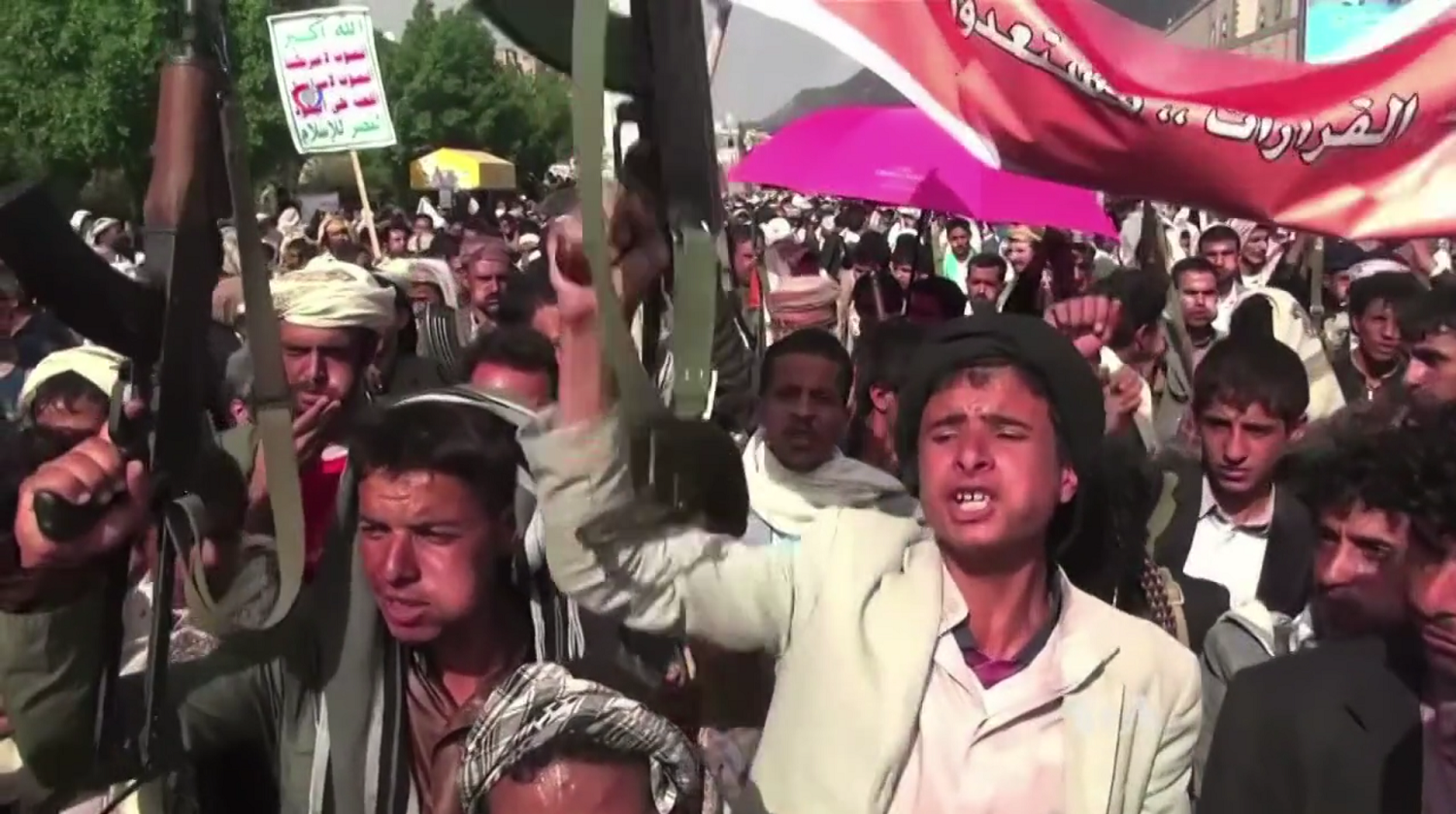
The group commands an estimated 20,000 to 30,000 trained fighters, according to the International Institute for Strategic Studies, with a broader tribal militia network exceeding 100,000. Their arsenal, detailed later in this analysis, includes anti-ship ballistic missiles, land-attack cruise missiles with ranges exceeding 1,400 kilometres, and drone swarms capable of reaching targets across the Gulf. The U.S. Defense Intelligence Agency assessed in a 2025 report that the Houthis maintain indigenous production capabilities in Yemen, with key components supplied by Iran and assembled locally — making their supply chain significantly harder to sever than Iran’s direct arsenals.
Why Have the Houthis Stayed Silent for Twenty-Seven Days?
The Houthis’ decision not to attack Red Sea shipping or launch strikes against Saudi Arabia since 28 February represents one of the most consequential strategic calculations of the war. Analysts cite at least four overlapping reasons for the restraint, and the balance between them reveals more about the conflict’s trajectory than any ceasefire negotiation.
The Middle East briefing 3,000+ readers start their day with.
One email. Every weekday morning. Free.
The first explanation is strategic coordination with Tehran. The Houthis may be holding their fire on Iranian instructions, preserving Red Sea disruption as a card to play at maximum leverage — either to force a ceasefire on favourable terms or to escalate if Iran’s position deteriorates further. Al-Monitor reported on 26 March 2026 that Houthi officials confirmed they are “ready to join the war if needed,” suggesting the restraint is deliberate rather than involuntary. The Stimson Center assessed that the Houthis “await an Iranian signal to resume attacks if U.S. military actions weaken Iran’s control of the Strait of Hormuz,” effectively positioning Yemen as Tehran’s reserve front.
Update, March 28: That signal appears to have arrived. On March 28, the Houthis launched a ballistic missile barrage against Israel and threatened to close the Bab al-Mandab strait, formally entering the Iran war as a belligerent and imperiling Saudi Arabia’s last functioning oil export route.
The second factor is self-preservation. The Houthis survived eighteen months of American airstrikes during the Red Sea crisis and learned a critical lesson: attacking international shipping invites overwhelming conventional retaliation. With the United States already operating a massive naval presence in the region for the Iran war, a Houthi resumption of attacks would bring immediate and devastating strikes on their territory. The U.S. Navy’s carrier strike groups currently deployed to the region carry more ordnance than the entire combined air campaigns launched against Yemen in 2024 and early 2025.
The third and most underappreciated reason is the Saudi-Houthi détente. Beginning in April 2022 and deepening through 2023, Saudi Arabia and the Houthis constructed a fragile but remarkably durable informal ceasefire that has held for nearly four years. This détente represents the single most important diplomatic achievement in Yemen since the civil war began in 2014. Breaking it would plunge Yemen back into active conflict with Saudi Arabia — a prospect the Houthis have no strategic interest in pursuing while they consolidate governance over northern Yemen.
The fourth factor is domestic politics. The Houthis are not merely a militia; they govern territory containing approximately 21 million people. Resuming attacks on Saudi Arabia or international shipping would invite retaliation that endangers the civilian population they administer, damages infrastructure they have painstakingly rebuilt since the 2022 truce, and undermines their legitimacy as a governing authority. The Houthi leadership under Abdul-Malik al-Houthi has invested heavily in state-building since the ceasefire, and a return to war threatens that project.
The Saudi-Houthi Détente That Changed Everything
The fragile peace between Saudi Arabia and Yemen’s Houthis is arguably the most important and least discussed element of MBS’s strategic position in the Iran war. Understanding its origins explains why both sides have powerful incentives to preserve it — and why its collapse would transform the conflict overnight.
The détente began with a UN-mediated truce in April 2022, brokered after years of escalating Houthi drone and missile attacks on Saudi territory, including strikes on Aramco facilities at Abqaiq and Khurais in 2019 that briefly halved Saudi oil production. The truce was renewed twice before formally expiring in October 2022, but both sides continued to honour its terms. By early 2023, Omani-mediated back-channel talks produced a direct communication line between Riyadh and Sanaa. Saudi Arabia’s ambassador to Yemen, Mohammed Al-Jaber, made a landmark visit to the Houthi-controlled capital in April 2023, meeting senior leaders and signalling Saudi willingness to negotiate a permanent settlement.
The March 2023 Iran-Saudi rapprochement, brokered by China, accelerated the Yemen track. For Riyadh, normalising relations with Tehran served partly as insurance against resumed Houthi attacks — the theory being that Iran’s influence over the movement would help guarantee compliance with any ceasefire. A Houthi delegation visited Riyadh in September 2023 and met with Defence Minister Prince Khalid bin Salman, though no formal agreement materialised. The peace talks stalled over Houthi demands for salary payments to their civil servants and a permanent end to the Saudi-led coalition’s air and sea blockade.
Despite the absence of a signed agreement, the de facto ceasefire has held for nearly four years — an extraordinary achievement given the preceding nine years of brutal warfare. Cross-border attacks ceased almost entirely after October 2022. Saudi Arabia eased restrictions on fuel shipments and flights to Sanaa. The Houthis reduced provocative rhetoric and focused on governance. By the time the Iran war erupted on 28 February 2026, the Saudi-Houthi relationship was in its most stable period since the civil war began.
This stability is now the invisible pillar supporting Saudi Arabia’s entire wartime strategy. Without it, Riyadh would face a two-front conflict — Iranian drones from the east and Houthi missiles from the south — while simultaneously trying to export oil through a Red Sea corridor that the Houthis could close at will.
The northern dimension of that two-front scenario is already materialising. Iraq’s authorization of militia retaliation has exposed 814 kilometres of undefended Saudi-Iraqi border to drone and rocket attacks that Patriot batteries positioned for eastern threats cannot intercept.
What Makes the Bab el-Mandeb the War’s Real Chokepoint?
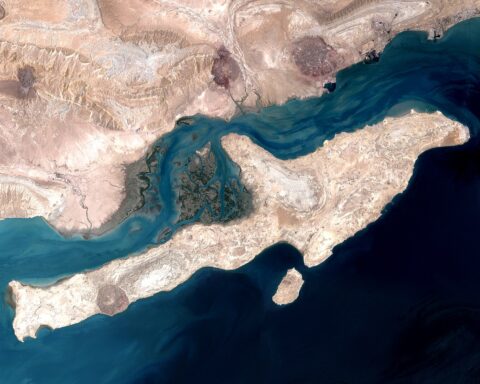
The global conversation about the Iran war has fixated on the Strait of Hormuz, where Iran’s navy and Revolutionary Guard Corps have imposed a de facto blockade since 2 March 2026. Hormuz deserves the attention: approximately 20 per cent of global oil demand flows through the strait under normal conditions, according to the EIA. But the war’s real chokepoint — the one that determines whether Saudi Arabia can continue functioning as a petro-state — is the Bab el-Mandeb, the “Gate of Tears” at the southern entrance to the Red Sea.
| Factor | Strait of Hormuz | Bab el-Mandeb |
|---|---|---|
| Width | 33 km | 32 km |
| Pre-war oil flow (2023) | 20.5 million bpd | 8.6 million bpd |
| Current oil flow (March 2026) | ~0.3 million bpd | ~6-7 million bpd (est.) |
| Blocked by | Iran (IRGC Navy) | Potentially Houthis |
| Threat status | Actively blockaded | Open but vulnerable |
| Coalition naval presence | Significant | Reduced (assets diverted to Hormuz) |
| Saudi dependency | Bypassed via pipeline | Only remaining export route |
Before the war, the Bab el-Mandeb carried approximately 8.6 million barrels per day, according to EIA 2023 data. That figure has likely increased since the Hormuz closure as Saudi Arabia, the UAE, and other Gulf producers divert exports westward. The strait connects the Red Sea to the Gulf of Aden and the Indian Ocean — the only maritime route for Saudi oil exported from Yanbu to reach Asian, European, and American markets. Bloomberg reported on 18 March 2026 that Saudi Arabia had revived approximately half its pre-war oil exports through the Yanbu bypass, with loadings averaging 3.66 million barrels per day. Every single barrel must pass through the Bab el-Mandeb.
The Houthis demonstrated precisely what they could do to this chokepoint during the Red Sea crisis. Between November 2023 and mid-2025, they launched over 130 attacks on commercial shipping, sinking or damaging multiple vessels, and forcing the world’s largest shipping companies — Maersk, MSC, and CMA CGM — to reroute around the Cape of Good Hope, adding ten to fourteen days to Asia-Europe voyages and driving container freight rates up by 300 per cent, according to Drewry Shipping Consultants. If the Houthis executed a similar campaign now, with Hormuz already closed, the global energy system would face simultaneous blockades at both of the Middle East’s maritime chokepoints — an event without precedent in the history of oil markets.
Saudi Arabia’s Yanbu Lifeline and Its Single Point of Failure
Saudi Arabia’s ability to continue exporting oil during the Hormuz blockade depends entirely on the 1,200-kilometre East-West pipeline, known as Petroline, which connects the Abqaiq processing hub in the Eastern Province to the Red Sea terminals at Yanbu. This pipeline, originally built in 1981 at a cost of $2.4 billion in response to fears about the Strait of Hormuz during the Iran-Iraq war, has a nominal capacity of 7 million barrels per day. However, approximately 2 million barrels are consumed by refineries in Riyadh and along the Red Sea coast, leaving an effective export capacity of roughly 5 million barrels per day, according to World Oil’s reporting on 25 March 2026.
Even at full capacity, the Yanbu route cannot replace Saudi Arabia’s pre-war export levels. Before the Hormuz closure, Saudi Arabia exported approximately 7.3 million barrels per day from its eastern terminals. The Yanbu bypass leaves the Kingdom roughly 2 million barrels per day short of pre-war exports — a deficit that translates to approximately $160 million in lost daily revenue at current prices, according to analysis of Saudi Arabia’s wartime economic position.
The vulnerability extends beyond volume. The Yanbu port complex consists of two terminals — Yanbu North and Yanbu South — with a combined loading capacity of approximately 4.5 million barrels per day. The Engineering News-Record reported that “Hormuz bypass infrastructure was sized for a short disruption. This is not that.” The port’s storage, loading berths, and anchorage capacity are all being pushed to maximum utilisation. More than 30 tankers were present at Yanbu port and anchorage as of mid-March, with 64 additional crude oil tankers signalling Yanbu as their destination — a level of congestion that itself creates operational bottlenecks and delays.
This concentration of Saudi Arabia’s entire oil export capacity in a single corridor creates what military planners call a “single point of failure.” If Houthi anti-ship missiles or drone swarms targeted tankers loading at Yanbu, transiting the Red Sea, or passing through the Bab el-Mandeb, the disruption would be immediate and total. Insurance underwriters, who already cancelled Gulf war risk coverage within 48 hours of the first American strikes on Iran, would likely extend those cancellations to the Red Sea — effectively shutting down Saudi oil exports entirely without a single barrel being physically blocked.
How Powerful Is the Houthi Arsenal in 2026?
The Houthi military has evolved from a tribal insurgency into one of the most capable non-state armed forces in the world. The U.S. Defense Intelligence Agency noted in 2025 that “the Houthis maintain a large arsenal” despite sustained American airstrikes, and that Washington does not have a “clear idea of how many standoff weapons they possess.”
| System | Type | Range | Capability |
|---|---|---|---|
| Burkan-2H | Short-range ballistic | 800-1,000 km | Previously used against Riyadh; warhead accuracy improved |
| Quds-2 | Land-attack cruise | 1,400 km | Low-altitude radar evasion; precision strike capability |
| Zulfiqar | Ballistic (Fateh-110 derivative) | 1,400 km | Solid-fueled; rapid launch cycles |
| Palestine-2 | Hypersonic ballistic | 2,000+ km | Claimed hypersonic capability; used against Israel |
| Toofan (Samad-series) | Attack drone | 1,500-2,500 km | One-way attack; GPS-guided with terminal seekers |
| Anti-ship ballistic missiles | ASBM | ~300 km | Specifically designed to target vessels; used in Red Sea |
| Thaqib-1/2/3 | Surface-to-air | Various | Repurposed Russian AAMs; destroyed 22+ US Reaper drones |
The arsenal’s anti-shipping capability is particularly relevant. During the Red Sea crisis, the Houthis demonstrated the ability to strike vessels with a combination of anti-ship ballistic missiles, anti-ship cruise missiles, drone swarms, and sea mines. The Wilson Center’s assessment of the Houthi arsenal concluded that the movement possesses “medium-range ballistic missiles and anti-ship ballistic missiles” capable of targeting vessels throughout the Red Sea and the Gulf of Aden. The Washington Institute for Near East Policy, in its analysis titled “Under Fire in the Bab al-Mandab,” warned that Houthi capabilities pose a “credible threat to commercial and military shipping across a wide operational area.”
Perhaps most concerning, the Houthis have demonstrated indigenous manufacturing capability. U.S. intelligence officials assessed that while key components come from Iran, significant assembly and production occurs inside Yemen — meaning that even a complete interdiction of Iranian weapons transfers would not immediately neutralise the Houthi threat. The Houthis also possess a growing air defence network built from repurposed Soviet-era and Russian-made air-to-air missiles, which they designate as the Thaqib series. These systems claimed the destruction of at least 22 American MQ-9 Reaper drones during the Red Sea campaign — a kill ratio that forced the Pentagon to reassess its intelligence, surveillance, and reconnaissance operations over Yemen.
The Houthi Escalation Matrix
The decision tree facing the Houthi leadership can be mapped across four escalation levels, each with distinct triggers, consequences, and probabilities. This framework — the Houthi Escalation Matrix — provides a structured assessment of how the movement might respond to evolving war dynamics.
| Level | Action | Trigger | Consequence for Saudi Arabia | Probability (est.) |
|---|---|---|---|---|
| Level 0 | Continued silence | Status quo; détente holds | Yanbu remains open; Saudi exports continue | 55% |
| Level 1 | Rhetorical escalation + Red Sea posturing | Iran publicly requests solidarity; Houthi hardliners gain influence | Insurance premiums spike; some tankers diverted | 20% |
| Level 2 | Selective attacks on non-Saudi shipping | US strikes on Yemen; Iran’s position collapses | Red Sea insurance cancelled; Saudi exports disrupted indirectly | 15% |
| Level 3 | Direct attacks on Saudi territory/tankers | Saudi Arabia enters Iran war directly; Houthi territory bombed | Yanbu shut down; global oil emergency; dual-chokepoint crisis | 10% |
At Level 0, the current equilibrium holds. The Houthis maintain their silence, the Saudi-Houthi détente survives the stress of the Iran war, and Yanbu continues to function as Saudi Arabia’s sole oil export route. This scenario reflects the Houthi leadership’s calculation that the costs of intervention outweigh the benefits — a calculation that holds as long as three conditions persist: Iran does not issue a direct order to attack, Saudi Arabia does not bomb Yemen, and the United States does not expand its strikes to Houthi territory.
Level 1 represents the first stage of escalation — public statements of solidarity with Iran, positioning of anti-ship assets near the Red Sea coast, and veiled threats against commercial shipping. This level would not constitute an act of war but would be sufficient to rattle insurance markets. Given that Lloyd’s Joint War Committee already redesignated the entire Arabian Gulf as a conflict zone within 48 hours of the first strikes on Iran, similar warnings about the Red Sea could trigger an insurance collapse that disrupts Saudi exports without a single missile being fired. The precedent of insurance markets shutting down shipping lanes before military forces do is well established in this conflict.
Level 2 escalation involves selective attacks on non-Saudi shipping — targeting vessels flagged by countries aligned with the US-Israeli campaign while avoiding Saudi-flagged tankers and Yanbu-bound cargo. This approach would allow the Houthis to demonstrate solidarity with Iran and impose costs on the coalition without directly breaking the Saudi-Houthi ceasefire. It would, however, almost certainly trigger US military retaliation and could spiral into a broader conflict.
Level 3 — direct attacks on Saudi Arabia or Saudi-bound tankers — represents the catastrophic scenario. It would simultaneously destroy the Saudi-Houthi détente, close the Red Sea to commercial traffic, and create a dual-chokepoint crisis in which both Hormuz and Bab el-Mandeb are effectively blockaded. Oil prices under this scenario could exceed $200 per barrel, according to worst-case modelling by the Dallas Federal Reserve, and global GDP would contract by an estimated 2.5 per cent in the first quarter alone.
What Would Trigger a Houthi Attack?
The Houthi leadership’s restraint is conditional, not unconditional. Several plausible triggers could shift the calculus from silence to action, and the probability of each changes daily as the war evolves.
The most likely trigger is a US or Saudi military strike on Houthi territory. If Washington decides to neutralise the Houthi threat pre-emptively — a scenario that Pentagon planners have reportedly discussed, according to the Atlantic Council — the resulting strikes would immediately destroy the rationale for restraint. The Houthis would have nothing left to preserve and every incentive to inflict maximum damage on the coalition’s most vulnerable asset: Red Sea shipping. This trigger has a self-fulfilling quality that makes it particularly dangerous. The more the United States worries about the Houthi threat, the more tempting pre-emptive strikes become — and the more likely those strikes are to produce the very outcome they were designed to prevent.
A second trigger would be Iran’s explicit request for military solidarity. The Stimson Center’s analysis noted that “the Houthis must decide: join Iran’s war against the US and Israel or abandon Iran.” So far, the Houthi leadership has chosen a middle path — expressing verbal solidarity while maintaining operational independence. But if Iran’s regime faces an existential threat, the pressure to act would intensify dramatically. Al-Monitor’s March 26 reporting quoted Houthi officials saying they stand “ready to join the war if needed,” suggesting this trigger has a lower threshold than many analysts assume.
A third trigger is the collapse of ceasefire prospects. As long as there is a plausible path to a negotiated end to the Iran war, the Houthis have an incentive to stay out — their restraint gives them political capital that they can spend at the negotiating table. But if ceasefire talks collapse entirely and the conflict appears headed toward a prolonged war of attrition, the Houthis’ leverage evaporates unless they use it. The longer the war continues without resolution, the more the Houthi silence looks like impotence rather than strategy — and the more internal pressure builds to demonstrate relevance through action.
A fourth and often overlooked trigger is internal Houthi politics. The movement is not monolithic. Hawks within the military council favour immediate action in solidarity with Iran, while pragmatists around the governing authority prefer continued restraint. If the internal balance shifts — through leadership changes, pressure from mid-ranking commanders, or grassroots mobilisation by hardline clerics — the restraint could end without any external trigger. The Washington Post reported on 16 March 2026 that the Houthis were “awaiting an opportune moment to enter the conflict, in coordination with Iran, in order to exert maximum pressure” — a formulation that suggests active debate rather than settled policy.
Can Saudi Arabia Defend the Red Sea and the Eastern Province Simultaneously?
Saudi Arabia’s air defence network is already operating at maximum capacity. The Kingdom has intercepted more than 575 drones and 49 missiles from Iran’s eastern strikes in the first four weeks of the war, according to Saudi Defence Ministry statements and coalition intelligence reports. Each Patriot interceptor missile costs approximately $4 million, and Saudi Arabia deploys seven Patriot batteries alongside two THAAD systems — all of which are concentrated around the Eastern Province oil infrastructure, Riyadh, and key military installations.
A simultaneous Houthi threat from the south would force an impossible reallocation. The Saudi military would need to defend three distinct threat axes: Iranian drones and missiles from the east, Houthi missiles and drones from the south, and potential anti-ship attacks on Red Sea shipping from the west. The geometry of this challenge is punishing. Saudi Arabia’s territory spans approximately 2.15 million square kilometres — an area larger than Western Europe — and its coastline stretches more than 2,600 kilometres across both the Persian Gulf and the Red Sea.
| Threat Axis | Primary Systems Required | Current Status | Adequacy |
|---|---|---|---|
| Eastern Province (Iran) | Patriot PAC-3, THAAD | Deployed and active | Stretched but functional |
| Riyadh | Patriot PAC-2/3 | Deployed | Adequate for current threat |
| Yanbu / Red Sea coast | Short-range air defence | Limited deployment | Insufficient for sustained attack |
| Southern border (Yemen) | Patriot, Shahine SHORAD | Reduced since détente | Degraded; would need reinforcement |
| Red Sea naval corridor | Naval air defence (frigates) | Minimal | Critically insufficient |
The Royal Saudi Naval Forces operate approximately 50 major surface combatants, including four Al Riyadh-class frigates, four Al Madinah-class frigates, and a number of corvettes and patrol vessels, according to the IISS Military Balance 2025-2026. However, the Western Fleet based at Jeddah would face a fundamentally different challenge in protecting Red Sea shipping than the coalition’s experience in the Gulf of Aden during the Red Sea crisis. During that campaign, the US Navy deployed multiple carrier strike groups, Aegis-equipped destroyers, and dedicated anti-ballistic missile platforms — assets that are now concentrated in the Persian Gulf and Gulf of Oman for the Iran war. The Saudi Navy would be defending without the American protective umbrella that made Red Sea operations manageable in 2024-2025.
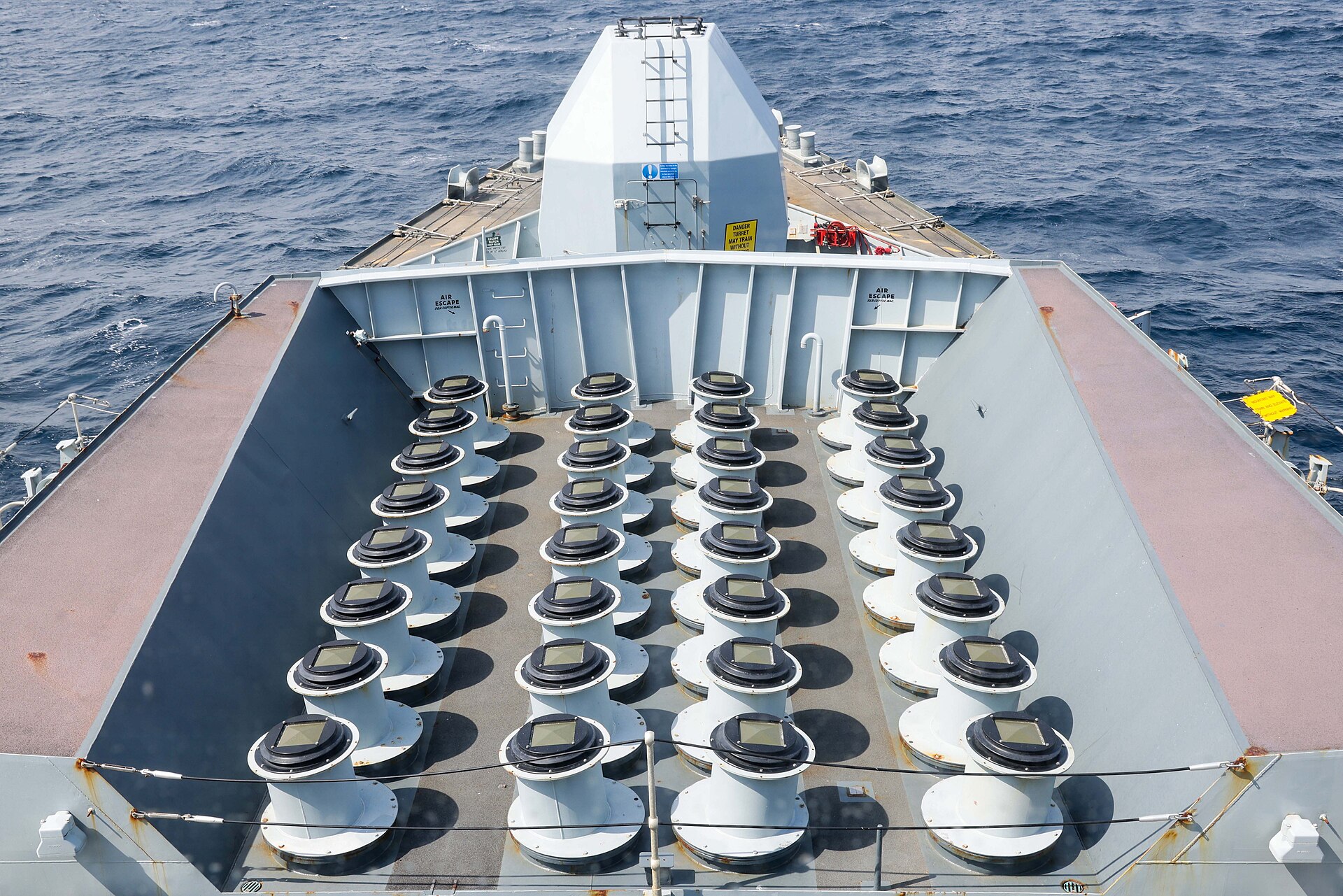
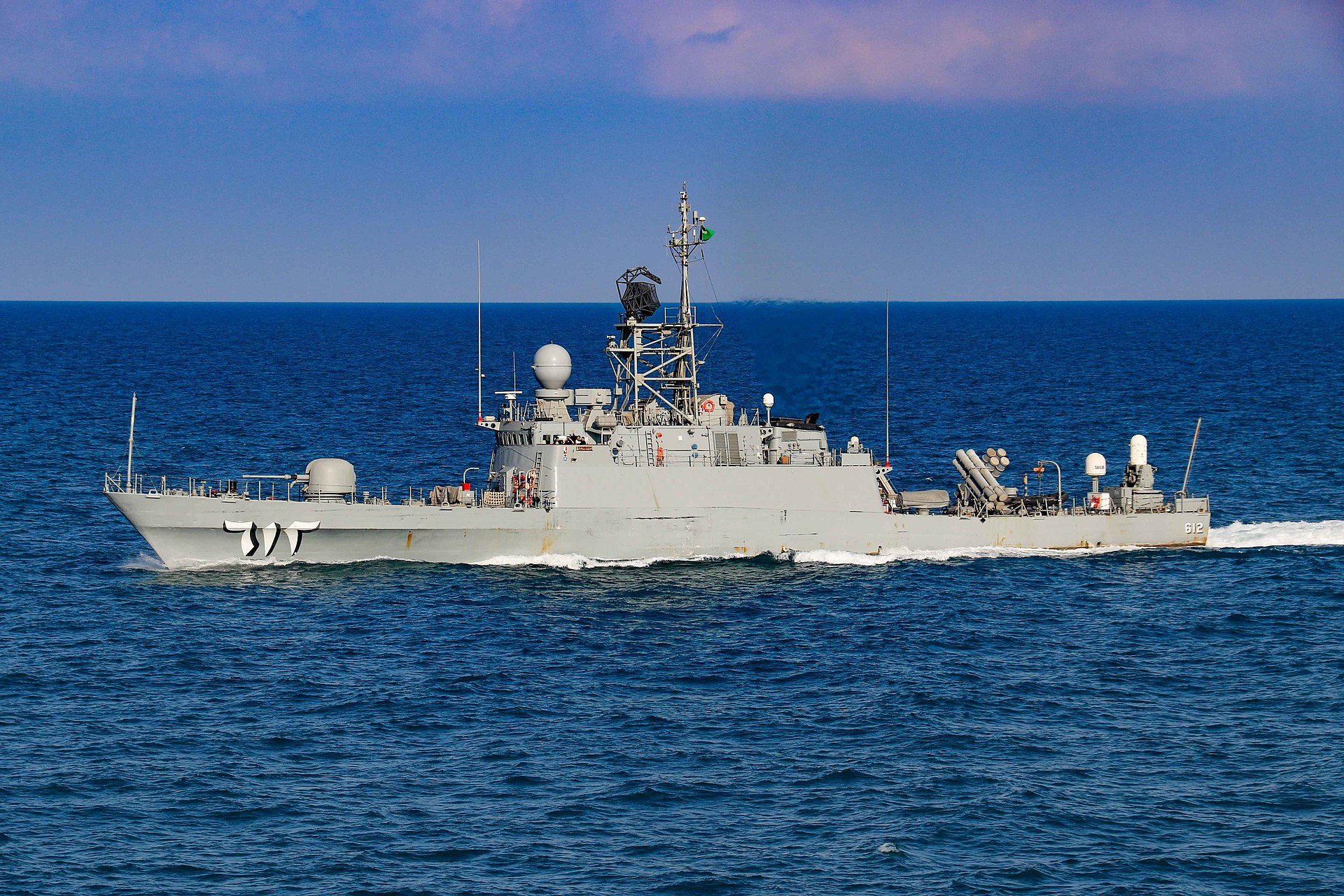
Coalition allies are aware of this gap. Britain deployed HMS Richmond — whose Sea Ceptor missile defence system is visible in the Red Sea patrols — specifically to maintain a presence in the southern approaches. France and Greece have contributed vessels to the combined maritime task force operating across the region. But these forces are spread across an enormous theatre and cannot provide the dense defensive coverage that a sustained Houthi anti-shipping campaign would require.
The Iran-Houthi Relationship Is Not What Most Analysts Think
Western media frequently describe the Houthis as an “Iranian proxy,” implying a chain of command in which Tehran issues orders and Sanaa obeys. The reality is more complex, more interesting, and more dangerous for Saudi Arabia.
The Houthis are better understood as an Iranian partner with significant operational autonomy. Iran provides weapons, technical expertise, financial support, and strategic guidance, but it does not exercise command authority over Houthi military operations. The distinction matters because it means Iran cannot simply order the Houthis to attack or to stand down. The movement’s leadership makes independent decisions based on its own assessment of Yemeni interests — which sometimes align with Iranian interests and sometimes do not.
The Red Sea campaign of 2023-2025 illustrates the point. The Houthis launched attacks ostensibly in solidarity with Palestinians during the Gaza war, but the campaign also served distinctly Yemeni objectives: demonstrating military capability, building international profile, and acquiring leverage for future negotiations with Saudi Arabia. When the Biden administration attempted to deter Houthi attacks through direct military strikes, the movement escalated rather than retreated — a response that appeared to catch both Washington and Tehran off guard.
“The Houthis have agency. They are not puppets on a string, and treating them as merely an extension of Iran leads to catastrophic policy errors.”
International Crisis Group, Yemen Analysis, March 2026
This autonomy creates a paradox for Saudi Arabia. On one hand, it means the Houthis might choose restraint even if Iran demands action — preserving the détente that Riyadh values enormously. On the other hand, it means the Houthis might choose escalation even if Iran counsels caution — if, for example, the Houthi military council concludes that attacking Saudi shipping would enhance their negotiating position in a post-war settlement. Saudi strategists cannot predict Houthi behaviour by analysing Iranian intentions alone. They must understand Yemeni politics, Houthi internal dynamics, and the movement’s own strategic calculus — a task for which Riyadh’s intelligence apparatus, oriented primarily toward Iranian threats, may not be fully equipped.
Could the Houthis Become the War’s Peacemakers?
The most counterintuitive scenario — and one that merits serious consideration — is that the Houthis leverage their strategic position not to escalate the war but to help end it. The movement possesses something that no other party to the conflict currently holds: a credible threat that both sides fear, combined with relationships to both sides that remain functional.
The Houthis maintain their diplomatic channel with Saudi Arabia through Omani intermediaries. They also maintain their relationship with Iran, which has publicly praised Houthi restraint. And they control a chokepoint whose closure would impose costs so severe that it could force all parties back to the negotiating table. In theory, the Houthis could offer their continued silence as a contribution to peace — conditioning their restraint on progress toward a ceasefire — while simultaneously threatening escalation if talks collapse.
This would represent a remarkable evolution for a movement that the international community has largely treated as a spoiler. But the Houthis have demonstrated diplomatic sophistication before — most notably in the 2022-2023 peace process, when they engaged constructively with Saudi interlocutors while maintaining their military posture. The Gulf International Forum’s analysis of “The Yemeni Front” noted that the Houthis’ “wild card” status gives them disproportionate influence over the war’s trajectory — precisely because their decision to attack or not attack has consequences that dwarf their actual military capabilities.
For Saudi Arabia, this possibility suggests that the Kingdom’s investment in the Houthi détente may prove to be its most valuable strategic asset of the entire Iran war. Crown Prince Mohammed bin Salman’s decision to pursue rapprochement with both Iran and the Houthis in 2022-2023 — decisions that drew criticism from hawks in Washington and Riyadh alike — may now be the single factor preventing a dual-chokepoint catastrophe that would devastate the global economy.
The irony is striking. The nine-year Saudi-Houthi war, which cost hundreds of thousands of lives and inflicted massive damage on both countries, produced a relationship of mutual understanding that is now shielding Saudi Arabia from the consequences of a far larger conflict. The very adversary that MBS spent years trying to defeat may be the one keeping his kingdom afloat.
Frequently Asked Questions
Why haven’t the Houthis attacked Saudi Arabia during the Iran war?
The Houthis have maintained their silence due to a combination of strategic coordination with Tehran, self-preservation instincts against overwhelming US military retaliation, the valuable Saudi-Houthi détente established since 2022, and domestic governance priorities. Their restraint is deliberate and conditional rather than permanent, with officials confirming they remain “ready to join the war if needed.”
What would happen to oil prices if the Houthis attacked Red Sea shipping?
A sustained Houthi campaign against Red Sea shipping would create a dual-chokepoint crisis, with both Hormuz and the Bab el-Mandeb effectively blockaded. Oil prices could exceed $200 per barrel under worst-case scenarios, according to Dallas Federal Reserve modelling. Saudi Arabia would lose its last functioning export route, and the global economy could contract by approximately 2.5 per cent in the first quarter of disruption alone.
Can the Houthis actually shut down the Bab el-Mandeb strait?
The Houthis demonstrated precisely this capability during the 2023-2025 Red Sea crisis, when they launched over 130 attacks that reduced strait traffic by more than 50 per cent and forced global shipping reroutes around the Cape of Good Hope. Their arsenal includes anti-ship ballistic missiles, land-attack cruise missiles with ranges exceeding 1,400 kilometres, and drone swarms — all of which have been proven effective against commercial vessels. They cannot physically close the strait, but they can impose costs so severe that insurers and shipping companies refuse to transit it.
How much oil flows through the Bab el-Mandeb strait?
Under normal conditions, approximately 8.6 million barrels per day of crude oil, condensates, and refined petroleum products flow through the Bab el-Mandeb strait, representing approximately 12 per cent of global seaborne oil trade, according to the U.S. Energy Information Administration. Since the Hormuz blockade, this volume has likely increased as Gulf producers divert exports through the Red Sea.
Are the Houthis controlled by Iran?
The Houthis are better understood as an Iranian partner with significant operational autonomy rather than a direct proxy. Iran provides weapons, financial support, and strategic guidance, but does not exercise command authority over Houthi military operations. The movement’s leadership makes independent decisions based on its own assessment of Yemeni interests, which sometimes diverge from Iran’s. This autonomy means Iran cannot simply order the Houthis to attack or stand down — making the Houthi calculus an independent variable in the war, not merely a function of Iranian strategy.