
ADEN — The most consequential military decision in the Middle East right now is not being made in Washington, Tehran, or Jerusalem. It is being made in Sanaa, behind the closed doors of a movement that most Western policymakers still dismiss as a ragtag militia. As the Iran war enters its second week, the Houthis — Ansar Allah, the Zaydi Shia movement that controls northern Yemen and commands an arsenal capable of striking targets 2,600 kilometres away — are engaged in what the Stimson Center has called the single most important strategic decision facing any non-state actor in the current conflict. Their choice to enter or abstain from Iran’s war will determine whether the world faces an unprecedented dual-chokepoint crisis, whether Saudi Arabia’s $500 billion NEOM megaproject becomes a frontline target, and whether the global economy tips from disruption into recession.
On February 28, Houthi leader Abdulmalik al-Houthi declared that his forces had their “fingers on the trigger, ready to respond at any moment should developments warrant it.” One week later, those fingers have not yet squeezed. But the trigger remains cocked — and the weapon behind it is far more formidable than most analysts appreciate.
Table of Contents
- Why Is the Houthi Decision More Dangerous Than the Iran War Itself?
- What Is Driving the Houthi Internal Debate?
- The Arsenal That Changed the Rules
- The Dual-Chokepoint Nightmare
- What Did the 2024 Red Sea Crisis Prove About Houthi Capabilities?
- NEOM in the Crosshairs
- Saudi Arabia’s Unhealed Southern Wound
- Is the Trump-Houthi Deal Dead?
- Iran’s Proxy Network and the Burden-Sharing Problem
- What Are the Three Scenarios for What Happens Next?
- What Economic Fallout Is the Market Not Pricing In?
- Saudi Arabia’s Exposure Assessment
- Frequently Asked Questions
Why Is the Houthi Decision More Dangerous Than the Iran War Itself?
Operation Epic Fury, the joint US-Israeli strike campaign that began on February 28, 2026, has already reshaped the Middle Eastern security order. The killing of Supreme Leader Ali Khamenei, the destruction of nuclear facilities at Isfahan and Natanz, and the subsequent Iranian retaliatory missile and drone strikes across the Gulf have created the most acute regional crisis since the 1991 Gulf War, leaving the Gulf states facing their most dangerous decision since that conflict. Iran has effectively closed the Strait of Hormuz, with tanker traffic dropping to near zero and over 150 vessels anchoring outside the strait to avoid IRGC threats. Brent crude has surged past $82 per barrel and analysts at Capital Economics warn it could cross $100 if the closure persists.
Yet for all its severity, the Hormuz crisis has a ceiling. The US Fifth Fleet and allied naval forces are actively working to reopen the strait. Iran’s conventional military, degraded by days of precision strikes, has limited capacity to sustain a full blockade against determined naval escorts. The crisis, in isolation, is containable.
What makes it uncontainable is Yemen. If the Houthis resume large-scale attacks on Red Sea shipping — as they did throughout 2024 before pausing in November 2025 — the world will face something that has never happened in the history of global trade: the simultaneous closure of both the Strait of Hormuz and the Bab el-Mandeb Strait. Container Magazine, in a March 1 analysis, called this a “dual chokepoint crisis without precedent in modern container shipping.” There would be no maritime workaround. Every vessel that would normally transit either corridor would be funnelled around the Cape of Good Hope, adding 3,500 nautical miles and 10-14 days to Asia-Europe voyages. Former White House energy adviser Bob McNally told Bloomberg that a sustained dual closure would constitute “a guaranteed global recession.”
The Houthis must decide: join Iran’s war against the US and Israel, or abandon Iran. There is no middle ground. Their choice will determine whether this conflict remains a Gulf crisis or becomes a global economic catastrophe.
Stimson Center, March 2026
What Is Driving the Houthi Internal Debate?
Abdulmalik al-Houthi’s February 28 speech, delivered hours after Operation Epic Fury began, was carefully calibrated. He condemned the US-Israeli strikes as “an unjustified attack on a Muslim country — a blatant, criminal, and barbaric act targeting the Muslim Iranian people,” and declared “complete solidarity” with Tehran. He called for mass demonstrations and media activity in support of Iran. But critically, he did not announce military operations.
This deliberate ambiguity reflects what Middle East Eye, citing sources within the movement, described as “sharp disagreements” between Houthi factions over how to respond. The internal debate breaks down along three axes.
The hardline faction, led by senior military commanders with close operational ties to Iran’s Islamic Revolutionary Guard Corps, is pressing for immediate escalation. Their argument is ideological and reputational: the Houthis built their regional standing on 18 months of Red Sea attacks that paralysed global shipping and evaded the combined naval power of the United States, United Kingdom, and a multinational coalition. To sit out Iran’s moment of existential crisis would be an unforgivable betrayal — both of Tehran and of the “Axis of Resistance” brand that elevated the Houthis from a Yemeni insurgency to a household name across the Arab world.
The restraint faction, which includes political operatives focused on Houthi governance in northern Yemen, emphasises survivability. The movement controls territory housing roughly 21 million people. US and Israeli strikes in 2024 and early 2025 already inflicted significant damage on Houthi military infrastructure and civilian areas alike. Reopening hostilities against the United States risks bringing that punishment back — at a time when the humanitarian situation in Yemen is deteriorating sharply, with the United Nations warning that funding cuts will leave millions without aid in 2026.
The third group — pragmatists focused on the Trump-Houthi ceasefire signed in May 2025 — argues that the movement gained more from diplomacy than from war. The ceasefire effectively granted the Houthis de facto recognition as a negotiating partner of the world’s superpower. Throwing that away to join a war on behalf of a patron whose supreme leader is dead and whose regime may be collapsing would be, in this view, strategic suicide.
There is a fourth factor that cuts across all three camps: the question of what Iran can actually compel. The death of Khamenei has created a power vacuum in Tehran that may leave the IRGC unable to issue coherent directives to its proxy network. The Quds Force, which traditionally managed the Houthi relationship, has been degraded by targeted strikes. If no credible order comes from Tehran, the Houthis’ decision defaults to their own internal logic — which, for the first time since the movement became part of the Axis of Resistance, may point toward independence rather than obedience.
Houthi media shared photographs of a so-called “million-strong” march in Sanaa on March 1, billed as a demonstration of “solidarity with the Iranian people.” The imagery served dual purposes: it signalled popular readiness for war to Tehran and to the movement’s hardliners, while also providing the leadership with a non-military escalation step that deferred the ultimate decision. The march bought time. But time is running out. Each day that the Houthis remain on the sidelines while Iran absorbs punishment erodes the movement’s credibility within the Axis and strengthens the hardliners’ argument that hesitation equals abandonment.
The Arsenal That Changed the Rules
Whatever the Houthis decide, the decision will be backed by military capabilities that have fundamentally altered the calculus of non-state warfare. The movement that Saudi Arabia’s coalition spent nine years trying to bomb into submission now possesses one of the most sophisticated missile and drone arsenals of any non-state actor in history.
| System | Type | Est. Range (km) | Notes |
|---|---|---|---|
| Palestine-2 | Ballistic missile | 1,500 | Long-range, Iranian/North Korean derivative |
| Toufan (Typhoon) | Ballistic missile | 1,350-1,900 | Derived from Iran’s Ghadr series |
| Burkan-2H | Ballistic missile | 800-1,000 | Frequently deployed against Saudi targets |
| Zulfiqar | Ballistic missile | 1,400 | Solid-fueled, faster launch cycle |
| Quds-2 | Cruise missile | 1,400 | Low-altitude flight, radar evasion |
| Quds-4 / Quds Z-0 | Cruise missile | 1,000+ | Land and naval target capability |
| Asef | Anti-ship missile | 200 | Comparable to Iran’s Khalij-e Fars |
| Falaq | Anti-ship missile | 300 | Sea denial system |
| Samad-series | Attack drone | 1,500-2,500 | Long-range one-way attack UAV |
| Qasef-series | Attack drone | 120 | 30kg warhead, tactical use |
| Hypersonic variant | Ballistic missile | 2,150 | Claimed Mach 16 speed, hit Ben Gurion Airport May 2025 |
The Ben Gurion Airport strike on May 4, 2025, was the inflection point that forced Western defence establishments to recalibrate their assessment of Houthi reach. A missile fired from Yemen — 2,000 kilometres from Tel Aviv — evaded Israeli air defences and struck near the main terminal, leaving a crater, damaging a road, and injuring eight people. Multiple airlines including British Airways, Lufthansa, Air France, and Ryanair cancelled flights for days. The Israel Defense Forces acknowledged a “technical issue” with the interceptor launched against the missile. It was the first time a non-state actor had successfully struck an international airport of a nuclear-armed state.
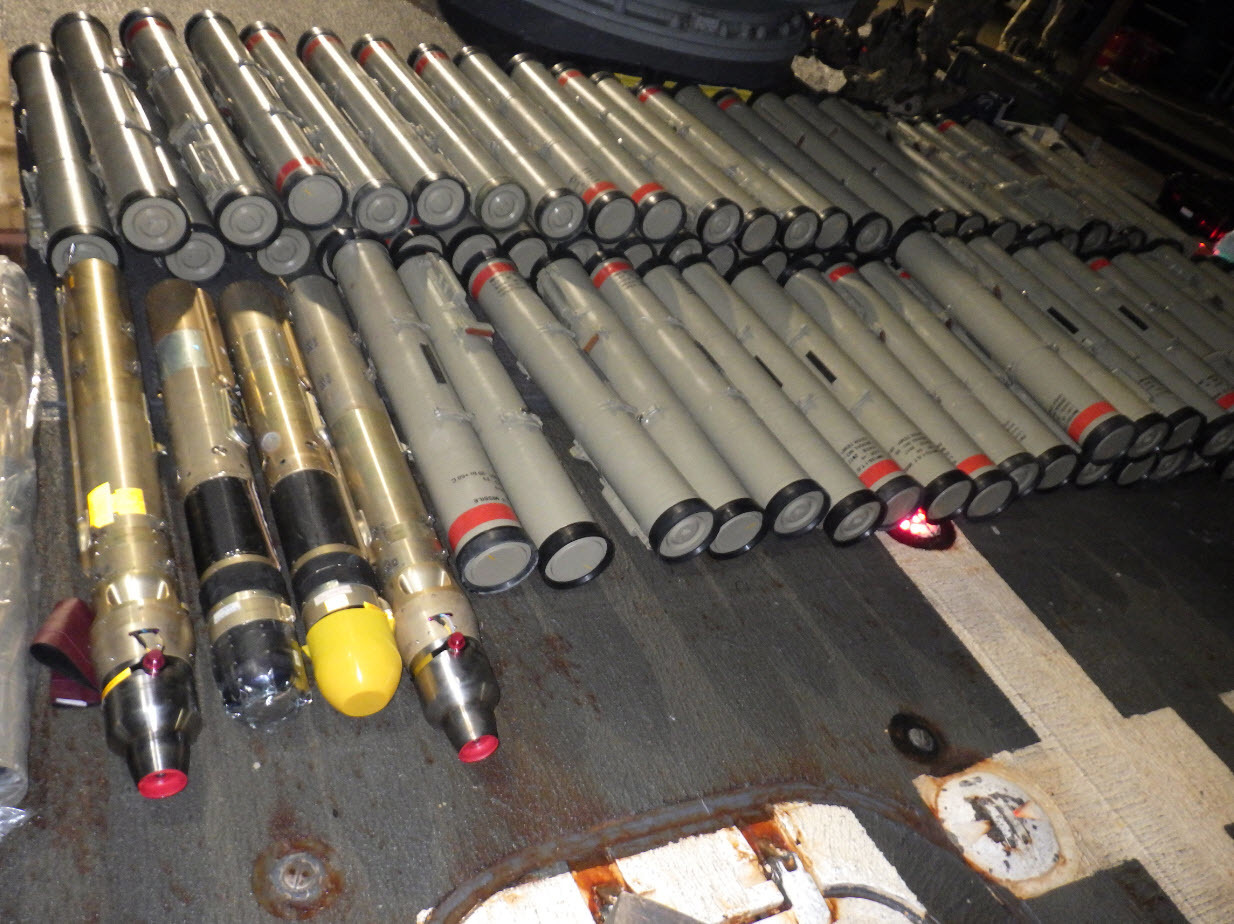
The International Institute for Strategic Studies published an assessment in April 2025 noting that the Houthis had begun assembling and manufacturing arms domestically in Yemen, reducing their dependence on Iranian supply lines. A February 2025 weapons seizure in the Arabian Sea — captured by the USS Normandy — contained jet engine technology and first-person view drone systems, suggesting the Houthis were receiving components for a new generation of precision-guided weapons.
Between October 2023 and October 2025, the Houthis launched more than 115 complex attacks on commercial and naval shipping in the Red Sea and Indian Ocean. They became the first non-state actor to fire anti-ship ballistic missiles at commercial vessels. They struck targets in Israel 2,600 kilometres from Yemen’s borders. The US Defense Intelligence Agency, in a declassified assessment, concluded that Iran had been “enabling Houthi attacks across the Middle East” through a systematic transfer of increasingly sophisticated weapons systems.
The Dual-Chokepoint Nightmare
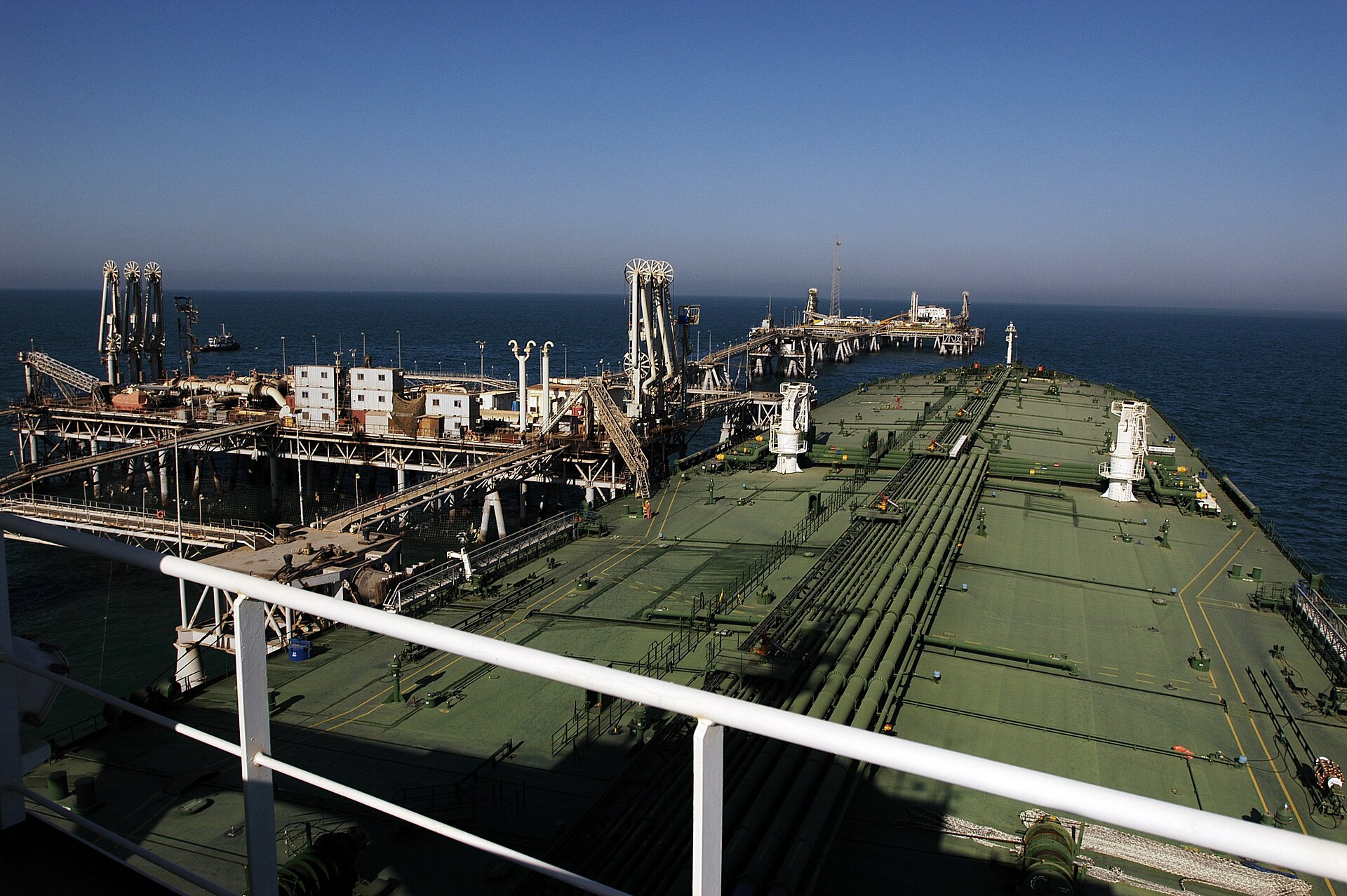
The geography that makes the Houthi decision so consequential is simple and unforgiving. The global maritime system depends on two narrow waterways at the entrance to the Arabian Peninsula: the Strait of Hormuz at the eastern end, connecting the Persian Gulf to the Indian Ocean, and the Bab el-Mandeb Strait at the western end, connecting the Red Sea to the Gulf of Aden. Together, these chokepoints carry approximately one-third of all seaborne oil trade and a significant share of global containerised commerce.
As of March 6, 2026, the Strait of Hormuz is effectively closed. The IRGC confirmed the blockade on March 2. Approximately 170 containerships with a combined capacity of around 450,000 TEU — roughly 1.4 percent of the global fleet — are trapped inside the Persian Gulf. Tracking data shows 63 Very Large Crude Carriers carrying approximately 126 million barrels of crude oil locked behind the Iranian blockade, representing more than a day’s total global oil consumption. Insurance companies have cancelled coverage for vessels attempting transit.
| Factor | Strait of Hormuz | Bab el-Mandeb Strait |
|---|---|---|
| Width at narrowest point | 33 km | 26 km |
| Daily oil transit (pre-crisis) | ~20 million bpd | ~8.6 million bpd |
| Share of global seaborne oil | ~20% | ~12% |
| LNG transit | ~80 million tons/year | ~8% of global LNG |
| Current status (March 6) | Closed by IRGC blockade | Threatened; Houthi decision pending |
| Blocking actor | Iranian state military | Houthi non-state forces |
| Alternative route if closed | None for Gulf exports | Cape of Good Hope (+10-14 days) |
The Bab el-Mandeb remains open — for now. But if the Houthis resume their Red Sea campaign, the consequences would compound exponentially rather than additively. During the 2024 Red Sea crisis, when only the Bab el-Mandeb was disrupted, container ship transits through the Suez Canal plummeted by 90 percent. Shipping rates on Asia-Europe routes surged nearly five-fold. The International Transport Forum estimated the annual cost to global trade at $15-20 billion. J.P. Morgan Research found the disruptions added 0.7 percentage points to global core goods inflation.
Now imagine that crisis layered on top of the Hormuz closure. CMA CGM, the world’s third-largest container line, has already suspended Suez Canal transits indefinitely and rerouted services via the Cape of Good Hope. The port of Salalah in Oman — the last accessible container port in the Middle East if both chokepoints close — is already approaching capacity limits.
What Did the 2024 Red Sea Crisis Prove About Houthi Capabilities?
The Houthi Red Sea campaign of 2024 was, by any measure, the most successful maritime disruption campaign by a non-state actor in modern history. From November 2023 through November 2025, when the group paused operations following the Gaza ceasefire and the Trump-brokered deal, the Houthis fundamentally altered the economics of global shipping.
The numbers speak for themselves. The volume of trade passing through the Suez Canal dropped by 50 percent year-over-year in the first two months of 2024. Container ship transits fell by 90 percent between December 2023 and March 2024. The share of global maritime traffic through the Suez Canal fell from 12 percent to below 9 percent. Oil and petroleum product flows through the Bab el-Mandeb fell from 8.6 million barrels per day to 4.0 million barrels per day — a decline of more than half.
The rerouting around the Cape of Good Hope added 4,000 miles to each journey, and the volume of trade transiting the southern African route surged 74 percent above the previous year’s level. Freight costs on the Shanghai-Rotterdam route increased by 80 percent between 2023 and 2025. The price of a 40-foot container from North Asia to Europe surged more than 600 percent to $6,000 at the crisis peak.
The United States responded with Operation Prosperity Guardian, a multinational naval task force, and launched direct strikes on Houthi targets in Yemen in January 2024. The campaign continued through May 2025. It failed. The administration itself acknowledged, according to the New York Times, that “the airstrikes were not achieving their objectives and the United States failed to achieve air superiority against the Houthis.” The $35,000 Houthi drone forced US Navy destroyers to burn through multi-million-dollar interceptors, creating what defence economists call a catastrophic cost-exchange ratio.
If the Houthis could sustain an 18-month campaign against the combined naval power of the United States, United Kingdom, France, and a multinational coalition — in conditions where they faced active strikes on their own territory — their capacity to resume such operations in the current environment, when US forces are stretched across multiple theatres, is not in question.
The tactical innovation that the Houthis introduced to naval warfare deserves closer examination, because it explains why traditional military responses failed. The movement pioneered the use of anti-ship ballistic missiles against commercial vessels — a capability no non-state actor had previously demonstrated. They combined this with cruise missiles flying at low altitude to evade ship-based radar, explosive-laden drone boats approaching vessels at water level, naval mines laid in shipping channels, and swarm drone attacks that overwhelmed point-defence systems. The diversity of the threat meant that defenders could not optimise for any single attack vector without creating vulnerabilities to the others.
The cost asymmetry compounded the tactical problem. A single Arleigh Burke-class destroyer expends approximately $4 million in SM-2 interceptors to defeat a $35,000 drone. Over an 18-month deployment in the Red Sea, the US Navy burned through hundreds of millions of dollars in defensive munitions. The Houthis, meanwhile, received a steady resupply of Iranian-manufactured drones and missile components at a fraction of the cost. The Foundation for Defense of Democracies noted in a March 2026 analysis that the Houthis had recently begun assembling and manufacturing arms in Yemen itself, reducing their dependence on the Iranian supply chain that the US Navy had been trying to interdict for years.
The operational tempo of the Houthi campaign was relentless. In peak months, the group launched multiple attacks per week — sometimes several per day — targeting everything from massive container ships to mid-sized tankers to naval warships. They attacked vessels flying the flags of dozens of countries, regardless of cargo or destination, imposing a blanket risk premium on Red Sea transit that ultimately proved more damaging than the physical destruction of any single ship. The psychological and economic impact of uncertainty — the question of whether the next ship through the Bab el-Mandeb would be the one that gets hit — drove the rerouting decisions that cost the global economy billions.
NEOM in the Crosshairs
NEOM, Crown Prince Mohammed bin Salman’s $500 billion flagship megaproject, sits on Saudi Arabia’s Red Sea coast in the Tabuk region of the country’s northwest — approximately 300 kilometres from Houthi-controlled territory at its nearest point. The project spans 26,500 square kilometres and represents the centrepiece of Vision 2030’s diversification strategy. The Line, Oxagon, Trojena, Sindalah, and NEOM Bay collectively constitute the largest construction programme in human history.
The Houthis have already demonstrated the ability to strike targets far beyond NEOM’s distance from their launch sites. The Ben Gurion Airport strike travelled over 2,000 kilometres. Riyadh, which has been targeted by Houthi ballistic missiles since 2017, is roughly 1,100 kilometres from Houthi positions. NEOM, at 300 kilometres, is essentially a next-door target.
The implications extend beyond the physical threat of missile strikes. NEOM’s economic model depends on attracting foreign investment, international tourism, and global technology firms. Construction sites, resort developments, and industrial zones cannot function in an active missile threat environment. Insurance premiums would become prohibitive. International workers — NEOM’s construction workforce is estimated at over 100,000 — would evacuate. The project’s already battered timeline, with The Line’s construction suspended since September 2025 and population targets slashed from 1.5 million to fewer than 300,000, would face further delay.
Attracting tourists, building data centres, and sustaining logistical hubs is difficult in the middle of an active war zone. The Gulf states have banked heavily on connectivity as a bridge to a post-oil future — but that future requires peace.
Carnegie Endowment for International Peace, March 2026
The Red Sea Project and Amaala, two other luxury tourism developments on the Saudi Red Sea coast south of NEOM, face identical exposure. Saudi Arabia is spending hundreds of billions of dollars building luxury resorts for tourists along a coastline that sits within easy range of a movement with a proven track record of hitting maritime and land targets at far greater distances.
The strategic contradiction is stark. Vision 2030 was designed to wean Saudi Arabia off oil dependence by building a services-based economy centred on tourism, entertainment, logistics, and technology. Every pillar of that strategy requires security and stability — a reality now threatening to unravel the $3.3 trillion economic dream. Tourism requires that visitors feel safe. Logistics hubs require that shipping lanes remain open. Technology investment requires that data centres and research facilities are not at risk of physical destruction. The Houthi threat does not need to materialise as actual strikes on NEOM to damage the project — the mere credible threat of strikes is sufficient to deter the foreign investment, international talent, and tourist traffic on which NEOM’s business model depends.
Crown Prince Mohammed bin Salman has been characteristically silent on the Houthi dimension of the current crisis, focusing his public statements on Iran’s direct attacks. But Saudi defence planners are acutely aware of the southern vulnerability. The Kingdom’s Patriot and THAAD batteries are currently oriented primarily toward the Iranian threat from the east and northeast. Redeploying air defence assets to cover the southern and western approaches — where Houthi missiles would originate — would create gaps in eastern coverage at precisely the moment when Iranian strikes are ongoing. This geometric dilemma is the nightmare scenario that Saudi military planners have gamed for years. If both threats activate simultaneously, there may not be enough interceptors to cover both axes.
Saudi Arabia’s Unhealed Southern Wound
The Houthi threat to Saudi Arabia is not theoretical. It is historical, documented, and never fully resolved. The Saudi-led intervention in Yemen, launched in March 2015 under the banner of Operation Decisive Storm, was supposed to take weeks. It lasted nine years and became the most expensive and least successful military campaign in Saudi Arabia’s modern history.
The 1,700-kilometre Saudi-Yemeni border runs through mountainous terrain across the provinces of Jizan, Asir, and Najran — all of which have been repeatedly attacked by Houthi forces. According to Saudi authorities, more than 500 civilians were killed in the southwestern border areas between March 2015 and 2022. Najran city alone was hit by over 10,000 rockets and artillery rounds. All civilian airports in Jizan, Asir, and Najran have been closed since July 2015 due to the risk of missile strikes — a closure that, as of March 2026, remains in effect.
The Houthis did not limit themselves to the border. In September 2019, Houthi drones and cruise missiles struck Saudi Aramco’s Abqaiq processing facility and Khurais oil field, temporarily knocking out half of Saudi Arabia’s oil production — approximately 5.7 million barrels per day. The attack originated from roughly 1,200 kilometres away and penetrated Saudi air defences that included American-supplied Patriot missile batteries. It was the single most consequential attack on global energy infrastructure since the 1990 Iraqi invasion of Kuwait.
The current Iranian strikes on Saudi Arabia — confirmed hits on Riyadh and the Eastern Province, drone attacks on the US Embassy, and the Ras Tanura refinery shutdown — are coming from Iran directly. But they follow the same playbook that the Houthis perfected over nearly a decade. If the Houthis rejoin the fight, Saudi Arabia faces the prospect of simultaneous attacks from two directions: Iranian missiles and drones from the east, and Houthi missiles, drones, and cross-border operations from the south.
The ground threat is equally concerning. The Saudi-led coalition spent years trying to establish a buffer zone along the Yemeni border, but the effort produced mixed results. Houthi fighters, operating in familiar mountainous terrain, conducted cross-border raids that penetrated Saudi territory in Jizan and Najran provinces. In September 2019 — the same month as the Abqaiq attack — the Houthis released footage claiming to show the capture of over 2,000 coalition soldiers in a single operation on the Najran front. While Saudi Arabia disputed the casualty figures, the operation demonstrated a level of conventional military capability that went far beyond what Western analysts had attributed to the group.
The December 2025-January 2026 Saudi military intervention against the Southern Transitional Council in Yemen added another layer of complexity. Saudi Arabia deployed forces to reverse the STC’s seizure of Aden and eastern governorates, accusing the United Arab Emirates of backing the separatists. This intervention consumed military resources and attention at precisely the moment when the Iran confrontation was building. The Saudi military is now simultaneously managing a direct Iranian threat, a potential Houthi re-escalation, and an ongoing stabilisation operation in southern Yemen — a three-front burden that stretches even well-resourced armed forces.
The Saudi military has invested heavily in air defence since the 2019 Abqaiq attack, deploying additional Patriot batteries and the THAAD system in what amounts to an $80 billion air defence shield. But the cost-exchange problem remains unsolved. A single Patriot interceptor costs roughly $4 million. A Houthi Samad drone costs approximately $35,000. No air defence budget, however large, can sustain that ratio indefinitely against an adversary with a deep magazine of expendable weapons.
Is the Trump-Houthi Deal Dead?
On May 6, 2025, a ceasefire between the United States and the Houthi movement — brokered by Oman — ended months of mutual strikes. The Houthis agreed to stop attacking US-flagged or US-associated vessels. The United States agreed to stop bombing Yemen. President Trump declared that the Houthis had “capitulated,” while the Houthis maintained it was the US that had “backed down.” The truth lay somewhere between: both sides achieved partial objectives, and the deal left major questions unanswered.
Critically, the ceasefire applied only to US targets. The Houthis explicitly stated that the agreement “did not in any way, shape, or form” apply to Israel. And it said nothing about what would happen if Iran — the Houthis’ patron and weapons supplier — came under direct attack.
That scenario has now materialised. The Soufan Center, in a May 2025 analysis of the deal, warned that it left key ambiguities that could unravel in a broader regional escalation. Among them: would the Houthis consider US strikes on Iran as a violation of the bilateral ceasefire? Would resumed Houthi attacks on Israeli or non-US shipping constitute a breach? The deal’s text, which was never made public in full, reportedly contained no provisions for these contingencies.
As of March 6, the deal is in a state of legal and strategic limbo. The Houthis have not formally abrogated it. But Associated Press reported on February 28 that the group is planning to resume attacks on Israel and on shipping in the Red Sea. Abdulmalik al-Houthi’s “finger on the trigger” speech stopped short of declaring the ceasefire dead — but also stopped short of affirming its survival.
The pragmatist faction within the movement is arguing that the deal remains the Houthis’ most valuable diplomatic asset. No non-state actor in the Middle East has ever secured a bilateral ceasefire with the United States. Walking away from that — to fight on behalf of a regime whose supreme leader is dead and whose survival is uncertain — would be reckless.
The hardliners counter that the deal was always a tactical pause, not a strategic settlement. They point out that Israel continued striking Yemen throughout the ceasefire period and that the United States has now attacked Iran, the Houthis’ primary ally. In their view, the deal died the moment the first American bomb hit Tehran.
Iran’s Proxy Network and the Burden-Sharing Problem
The Houthis do not make their decision in isolation. They are one node in a network of Iranian-aligned armed groups stretching from Lebanon to Iraq to Yemen — what Tehran calls the “Axis of Resistance” and what its adversaries call Iran’s proxy network. The behaviour of the other nodes shapes the Houthi calculus, and vice versa.
Foreign Policy reported on March 2 that Iran’s proxies in Lebanon, Iraq, and Yemen were “out for themselves — for now.” Hezbollah launched rocket attacks against Israel over the weekend of March 1-2, drawing Israeli retaliation in Lebanon. Two Iran-backed groups in Iraq expressed readiness to defend Iran, with one describing it as a “holy undertaking.” A pro-Iranian Iraqi militia claimed responsibility for drone attacks on US troops at Baghdad airport and a US base in Erbil.
But none of these actions approach the scale of full-scale entry into the war. The Critical Threats Project at the American Enterprise Institute published an analysis on March 5 warning that the Yemeni Houthis and Iran could target Emirati, Israeli, or US positions in the Horn of Africa as part of a broader retaliatory campaign. The Houthis have established operational ties with al-Shabaab since 2024, cooperating on weapons smuggling, technical training, and drone technology — opening a potential new front in East Africa.
The burden-sharing dynamic within the Axis of Resistance creates a specific pressure on the Houthis. Hezbollah, the network’s most capable member, was severely degraded by the 2024 Israeli campaign in Lebanon. The Iraqi militias face domestic political constraints and the risk of US retaliation against Baghdad. That leaves the Houthis as the axis member with the most intact military capability and the greatest freedom of action. If the Axis is going to respond to the destruction of its patron, the Houthis are the ones best positioned to deliver.
The Stimson Center’s analysis framed this directly: if Iran orders the Houthis to formally enter the war, “the hardline faction within the movement will almost certainly comply, regardless of the costs.” The question is not whether the Houthis can fight — it is whether Tehran’s disintegrating command structure can still issue orders, and whether the moderates within the movement can resist the pressure to act.
What Are the Three Scenarios for What Happens Next?
The range of possible outcomes from the Houthi decision can be distilled into three scenarios, each with distinct implications for Saudi Arabia’s impossible position in the Iran war and for the global economy.
Scenario 1 — Full Escalation, Houthis Enter the War
In this scenario, the Houthis resume large-scale attacks on Red Sea shipping, launch ballistic missiles at Israeli cities, and potentially target Saudi infrastructure and US military positions in the Gulf. The Stimson Center assessed this as the highest-probability outcome if the hardline faction prevails, with likely targets including Israeli ports and airports (assessed as “highly likely”), US and UK ships in the Red Sea (“moderately likely”), nearby US bases and interests in the Gulf (“possible”), and a full re-imposition of the Bab el-Mandeb maritime blockade (“possible”).
The consequences would be severe. The dual-chokepoint crisis would materialise in full, with oil potentially surging above $100 per barrel. Saudi Arabia would face simultaneous threats from Iran to the east and the Houthis to the south. NEOM and Red Sea tourism projects would be effectively suspended. The global economy, already strained by the Hormuz closure, would tip toward recession.
Scenario 2 — Calibrated Strikes, Houthis Attack Israel but Spare Shipping
In this scenario, the Houthis launch missile and drone attacks against Israeli targets — following the precedent of their 2024-2025 campaign — but avoid targeting commercial shipping or US interests. This allows them to demonstrate solidarity with Iran and maintain their Axis of Resistance credentials without triggering a full US military response or collapsing the Trump ceasefire entirely.
This is the option that satisfies the greatest number of internal factions. The hardliners get their war. The pragmatists preserve the ceasefire’s framework. The restraint faction avoids the worst-case scenario of US strikes on Yemeni cities. Saudi Arabia would still face indirect risks — Houthi missiles transiting Saudi airspace or falling short — but would not be directly targeted.
Scenario 3 — Strategic Abstention, Houthis Sit This One Out
In this scenario, the Houthis maintain their current posture of rhetorical solidarity without military action, effectively choosing domestic survival over alliance obligations. This would be the most rational choice for the movement’s long-term governance interests in Yemen but the most damaging for its reputation within the Axis of Resistance.
The probability of full abstention decreases with each day that the Iran war continues. A Houthi military official was quoted on March 5 stating that “the leader has decided — we will intervene on behalf of Iran. The battlefield will speak in the coming hours.” Whether this represents actual operational intent or psychological warfare remains unclear.
The Contrarian Case — Why the Houthis Might Break Free From Iran
Conventional analysis treats the Houthi decision as a binary: join Iran or betray Iran. But the death of Khamenei creates a third possibility that most analysts are underweighting — the Houthis use this moment to complete their evolution from Iranian proxy to independent regional power.
The evidence for this trajectory has been accumulating for years. The Houthis have progressively developed domestic arms manufacturing, reducing their dependence on Iranian supply lines. They negotiated directly with the United States in May 2025, bypassing Iran entirely. They govern a territory of 21 million people with their own taxation, judicial, and administrative systems. They have established independent relationships with al-Shabaab in East Africa that have nothing to do with Iranian strategic interests.
If the Iranian regime collapses or fractures in the aftermath of Operation Epic Fury, the Houthis lose their patron but gain their freedom. A movement that no longer owes its survival to Tehran can make purely self-interested calculations about when, where, and whether to fight. The most self-interested calculation may be that the Houthis’ greatest power comes not from launching missiles but from the threat of launching missiles — a threat that gives them bargaining advantage with the United States, Saudi Arabia, and the international community that actual warfare would diminish.
The Trump administration, which invested significant diplomatic capital in the May 2025 ceasefire, has a strong incentive to keep the Houthis out of the Iran war. Backchannel communications through Oman — the same channel that produced the 2025 deal — may already be underway. If Washington can offer the Houthis something more valuable than Iranian patronage — sanctions relief, international recognition, economic development aid for northern Yemen — the movement’s pragmatists may prevail over the hardliners.
This scenario is speculative. But it is the one that the consensus is most likely to miss.
| Scenario | Est. Probability | Oil Price Impact | Saudi Risk Level | Global Economic Impact |
|---|---|---|---|---|
| Full Escalation | 40-50% | $100+ per barrel | Extreme | Recession likely |
| Calibrated Strikes | 30-35% | $85-95 | High | Elevated inflation |
| Strategic Abstention | 15-25% | $80-85 | Moderate | Manageable disruption |
What Economic Fallout Is the Market Not Pricing In?
Global markets have priced in the Hormuz crisis. They have not priced in the Houthis. Brent crude at $82 per barrel reflects a single-chokepoint disruption with expectations of eventual naval reopening. A dual-chokepoint scenario — in which both Hormuz and the Bab el-Mandeb are simultaneously denied to commercial shipping — would trigger a repricing that current models do not capture.
The arithmetic is straightforward. Approximately 20 million barrels per day of crude oil transited the Strait of Hormuz before the crisis. Another 8.6 million barrels per day transited the Bab el-Mandeb. Together, these chokepoints handle roughly 28 percent of global seaborne oil trade. Adding LNG, containerised goods, and bulk commodities, the combined throughput represents approximately 30-35 percent of all global maritime commerce.
The Kpler market intelligence platform reported on March 1 that the Hormuz crisis alone had already reshaped global oil flows, with Asian buyers scrambling to secure alternative supplies from West Africa and the Americas. German diesel prices have surged past $2.33 per litre — the highest since the 2022 energy crisis. If Red Sea shipping collapses simultaneously, the International Transport Forum’s estimate of $15-20 billion in annual shipping costs from the 2024 crisis would be a floor, not a ceiling.
The Aramco East-West Pipeline, which can reroute approximately 5 million barrels per day from the Persian Gulf to the Red Sea terminal at Yanbu, was supposed to be Saudi Arabia’s insurance policy against a Hormuz closure. But if the Red Sea itself becomes a conflict zone, that insurance policy is void. Oil rerouted to escape Hormuz would arrive at a coastline threatened by Houthi missiles.
The economic implications extend beyond energy. The Suez Canal generated $9.4 billion in revenue for Egypt in the fiscal year before the 2024 crisis. When traffic plummeted, Egypt lost a critical foreign currency lifeline at a time of acute economic stress. A renewed Red Sea disruption would hammer the Egyptian economy again, with cascading effects on the country’s IMF programme, its currency stability, and its capacity to manage a population of 110 million people.
European manufacturers, already struggling with energy costs from the Hormuz disruption, would face additional weeks of delay on Asian imports. Just-in-time supply chains, which never fully recovered from the 2024 disruption, would break again. Inflation, which central banks had spent two years fighting back toward target levels, would reignite.
The agricultural implications are equally severe. The Middle East and North Africa region imports approximately 50 percent of its food, much of it through the Red Sea corridor. A renewed Houthi blockade would disrupt food supply chains to Saudi Arabia, Egypt, Jordan, and other regional importers at a time when global wheat prices are already elevated. Yemen itself, where 21 million people depend on international food assistance, would face catastrophic shortages if shipping through the Bab el-Mandeb collapses — creating the paradox of a Houthi military campaign that starves the population the Houthis claim to govern.
Container shipping lines, which absorbed billions in losses during the 2024 crisis, have already begun implementing dual-chokepoint contingency plans. Maersk, the world’s second-largest container line, announced that it was pre-positioning vessels on long-haul Cape routes. Mediterranean Shipping Company pulled its latest fleet deployment schedule, citing uncertainty about Red Sea passage. The cascading effect on port congestion is predictable: when the 2024 rerouting sent hundreds of additional vessels around the Cape, ports in South Africa, the Mediterranean, and Northern Europe experienced weeks of backlogs. Doubling that surge — adding Hormuz-displaced traffic to Bab el-Mandeb-displaced traffic — would create bottlenecks that take months to clear.
The insurance market is already responding. War risk premiums for Red Sea transit, which had returned to near-normal levels after the November 2025 ceasefire, began climbing again on February 28. Lloyd’s of London syndicates are reportedly quoting premiums of 1-2 percent of hull value for Red Sea passage — up from a baseline of 0.01-0.05 percent — with some underwriters refusing to quote at all until the Houthi situation resolves. For a vessel worth $150 million, that translates to $1.5-3 million per transit, a cost that is passed directly to shippers and ultimately to consumers.
Saudi Arabia’s Exposure Assessment
For the Kingdom of Saudi Arabia, the Houthi decision is not an abstract strategic question. It is an immediate, concrete threat to physical infrastructure, economic strategy, and national security. The Washington Post reported on February 28 that Crown Prince Mohammed bin Salman placed multiple private phone calls to Trump in the weeks preceding Operation Epic Fury, advocating military action against Iran’s nuclear programme. MBS lobbied for war, got war, and is now trying to contain the consequences of a conflict that has already breached Saudi airspace, struck Saudi infrastructure, and threatens to reopen a front that cost the Kingdom billions of dollars and thousands of casualties over nine years.
The Iranian retaliatory strikes have already hit Saudi Arabia directly. On February 28, Iran launched missiles and drones at Riyadh and the Eastern Province, which Saudi air defences intercepted. On March 2, Iranian Shahed-series drones struck the Ras Tanura refinery, forcing a precautionary shutdown of a facility that processes 550,000 barrels per day. On March 3, two Iranian drones hit the US Embassy in Riyadh. On March 4, Saudi forces intercepted nine drones, one drone over Eastern Province, and two cruise missiles near Al Kharj, close to Prince Sultan Air Base.
These attacks are coming from Iran. If the Houthis enter the war, Saudi Arabia faces a two-front aerial assault with no modern precedent for a Gulf state. The Saudi military would need to defend simultaneously against Iranian missiles from the northeast and Houthi missiles from the southwest — an air defence geometry that stretches coverage and multiplies the probability of penetration.
| Asset | Location | Distance from Houthi Territory (km) | Significance |
|---|---|---|---|
| NEOM | Tabuk Province (Red Sea coast) | ~300 | $500B megaproject, Vision 2030 flagship |
| Red Sea Project / Amaala | Red Sea coast | ~400-500 | Luxury tourism, $15B+ investment |
| Yanbu Industrial City | Red Sea coast | ~600 | Aramco refinery, petrochemical complex |
| Jizan Economic City | Jizan Province | ~50 | Industrial zone, 600MW power plant |
| King Khalid Air Base | Asir Province | ~100 | Major military airfield |
| Abqaiq Processing Facility | Eastern Province | ~1,200 | World’s largest oil processing; struck 2019 |
| Riyadh | Central | ~1,100 | Capital, government, financial centre |
| Jeddah | Western Province | ~700 | Commercial capital, Hajj gateway |
The Carnegie Endowment for International Peace, in a March 2026 analysis, warned that the economic fallout for the Gulf monarchies would be “considerable” regardless of whether the Houthis enter the war. Direct Iranian attacks on the Gulf states’ sovereignty “erode trust and reinforce the logic of alliances with the United States over regional frameworks.” The Gulf’s post-oil economic strategy — built on tourism, logistics, data centres, and connectivity — requires a security environment that the current crisis has shattered. Every day the war continues, every missile that breaches Saudi airspace, every refinery that shuts down pushes Vision 2030’s timeline further into uncertainty.
The proximity of Houthi-controlled territory to Mecca — fewer than 400 kilometres — raises particular concern for the upcoming Hajj 2026 pilgrimage, when nearly two million pilgrims will gather at open-air sites within potential drone range.
Frequently Asked Questions
The coming days will determine which direction the Houthi decision falls. The signals are contradictory: the March 5 statement from a military official suggesting intervention is imminent sits alongside the continued absence of any actual military operations. The movement may be waiting for a specific trigger — a direct strike on Houthi territory, a formal request from Iran’s surviving leadership, or a tipping point in the war that makes abstention impossible to justify. It may also be waiting for a counteroffer from Washington that makes restraint more attractive than war.
What is not in question is the magnitude of the consequences. A non-state actor in one of the world’s poorest countries holds the balance of the global economy in its hands. That fact alone tells you everything you need to know about how fundamentally the rules of geopolitics have changed.
Have the Houthis officially entered the Iran war?
As of March 6, 2026, the Houthis have not formally entered the war. Leader Abdulmalik al-Houthi declared solidarity with Iran and stated that Houthi forces have their “fingers on the trigger,” but no retaliatory military operations have been launched. Internal debate within the movement between hardliners favouring escalation and moderates urging restraint is ongoing, with reports suggesting a decision may be imminent.
What weapons can the Houthis use against Saudi Arabia?
The Houthis possess ballistic missiles with ranges exceeding 1,500 kilometres (Palestine-2, Toufan), cruise missiles with 1,400-kilometre range (Quds-2), anti-ship missiles (Asef, Falaq), and attack drones with claimed ranges of up to 2,500 kilometres. They have demonstrated the ability to strike targets in Riyadh (1,100 km), the Eastern Province (1,200 km), and as far as Tel Aviv (2,000+ km). Every major Saudi city and critical infrastructure site falls within their demonstrated operational range.
What is the dual-chokepoint crisis?
The dual-chokepoint crisis refers to the potential simultaneous closure of the Strait of Hormuz (currently blocked by Iran’s IRGC) and the Bab el-Mandeb Strait (threatened by possible Houthi resumption of Red Sea attacks). Together, these waterways carry approximately 28 percent of global seaborne oil trade and 30-35 percent of maritime commerce. Their simultaneous denial would be unprecedented in modern history and would leave no viable maritime workaround for Gulf-bound or Red Sea cargo.
Is the Trump-Houthi ceasefire from May 2025 still in effect?
The ceasefire’s status is legally ambiguous. The Houthis have not formally abrogated the agreement, but reports from the Associated Press indicate the group is planning to resume attacks on Israel and Red Sea shipping. The ceasefire applied only to US targets and explicitly excluded Israel. It contained no provisions for a scenario in which the US attacked Iran, creating a critical gap that the current conflict has exposed.
How vulnerable is NEOM to Houthi attacks?
NEOM sits approximately 300 kilometres from Houthi-controlled territory on Yemen’s northern border — well within the range of Houthi ballistic missiles, cruise missiles, and drones that have struck targets over 2,000 kilometres away. Beyond physical missile damage, the threat environment would undermine NEOM’s economic viability by deterring foreign investment, raising insurance costs, and forcing evacuation of its international construction workforce estimated at over 100,000 workers.
What would happen to oil prices if both chokepoints close?
Analysts estimate oil prices could surge above $100 per barrel if the Houthis resume Red Sea attacks alongside the existing Hormuz closure. Former White House energy adviser Bob McNally has warned that a sustained dual closure would constitute a “guaranteed global recession.” Capital Economics estimates that oil at $100 per barrel would add 0.6 to 0.7 percentage points to global inflation, while the International Transport Forum projects shipping cost increases in the tens of billions of dollars annually.
Could the Houthis survive a renewed US military campaign?
The 2024-2025 US bombing campaign against the Houthis failed to suppress their military capabilities. The Pentagon acknowledged that airstrikes were “not achieving their objectives.” The Houthis have developed domestic arms manufacturing capability, reducing dependence on Iranian supply chains. They also benefit from mountainous terrain in northern Yemen that limits the effectiveness of air power and would require a ground campaign that no external actor is willing to undertake. Their survival is likely regardless of the level of external military pressure.