
RIYADH — The Iran war will most likely end not with a grand diplomatic ceremony or a decisive military victory but with a gradual, grinding fade into an armed stalemate that leaves Saudi Arabia as the permanent military guarantor of Gulf security. Three weeks into a conflict that has reshaped the Middle East more rapidly than any event since the 2003 invasion of Iraq, the question consuming capitals from Washington to Riyadh to Tehran is no longer whether this war will end, but how — and what the region looks like when it does. Five distinct scenarios have emerged from the wreckage, each with radically different implications for Saudi Arabia’s strategic future, oil markets, and the balance of power across the Persian Gulf.
The war, triggered by a surprise U.S.-Israeli strike on February 28 that killed Supreme Leader Ali Khamenei and devastated Iran’s military infrastructure in its opening twelve hours, has entered a new and unpredictable phase. Iran’s ballistic missile launch rate has collapsed 92 percent from its first-day peak, according to analysis by the Jewish Institute for National Security of America (JINSA). Its naval and air forces are functionally destroyed. Yet Tehran continues to fire drones across the Gulf at a rate that outpaces the defensive interceptor supply chain, targeting oil infrastructure from Ras Tanura to Yanbu. President Trump declared on March 20 that the United States is “getting very close to meeting our objectives” and is considering “winding down” military operations. Iran’s foreign minister responded the same day that Tehran “never asked for a ceasefire.” Between those two positions lies every plausible future for the Gulf.
Table of Contents
- Where Does the Iran War Stand After Three Weeks?
- How Long Can Iran Sustain This War?
- Scenario One: Total U.S. Military Victory
- Scenario Two: Negotiated Ceasefire Through Oman’s Back Channel
- Scenario Three: Mutual Exhaustion and the Quiet Fade
- What Happens If Saudi Arabia Enters the War?
- Scenario Five: Regional Escalation and the Lebanon Front
- The Conflict Termination Matrix
- What Does Each Scenario Mean for Oil Prices?
- Why Most Predictions About This War Are Wrong
- Who Controls the Gulf After Iran?
- Frequently Asked Questions
Where Does the Iran War Stand After Three Weeks?
The Iran war at day twenty-one occupies a strategic paradox: the United States has achieved most of its stated military objectives while failing to end the conflict. Iran’s ballistic missile arsenal has been reduced from an estimated 2,500 warheads to fewer than 100, its launcher force degraded by 75 percent, and its navy and air force effectively eliminated, according to Pentagon briefings and JINSA’s missile tracking analysis. The approximately 900 strikes launched in the war’s opening twelve hours destroyed Iran’s nuclear enrichment facilities at Fordow and Natanz, killed the Supreme Leader, and eliminated much of the Iranian military’s command-and-control architecture.
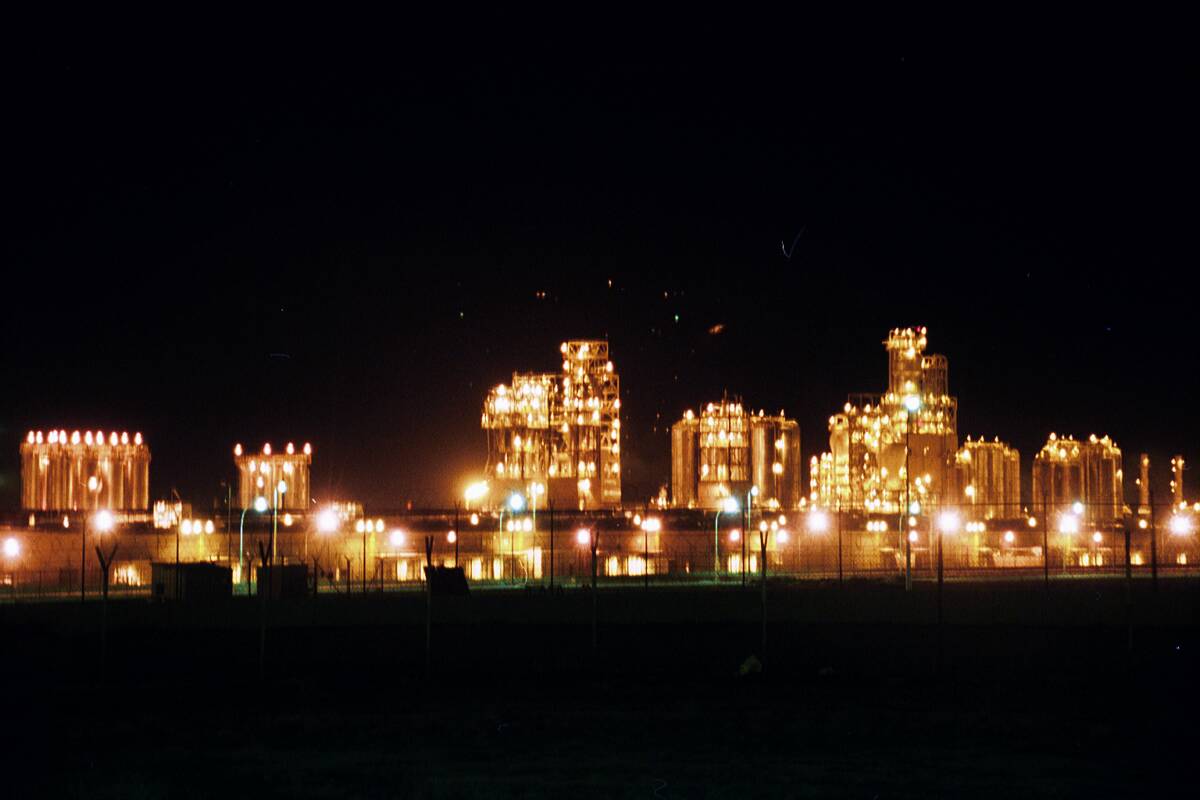
Yet the war is not over. Iran has pivoted from ballistic missiles to a drone-based attrition campaign targeting Gulf energy infrastructure, launching as many as 100 drones per day against Saudi, Emirati, Qatari, Kuwaiti, Bahraini, and Omani targets. These attacks have caused an estimated $47 billion in direct infrastructure damage across the Gulf Cooperation Council states, according to Goldman Sachs analysis published on March 17. Brent crude has surged past $113 per barrel, up from $71 a year earlier, and 150 freight ships, including dozens of oil tankers, remain stalled at the Strait of Hormuz.
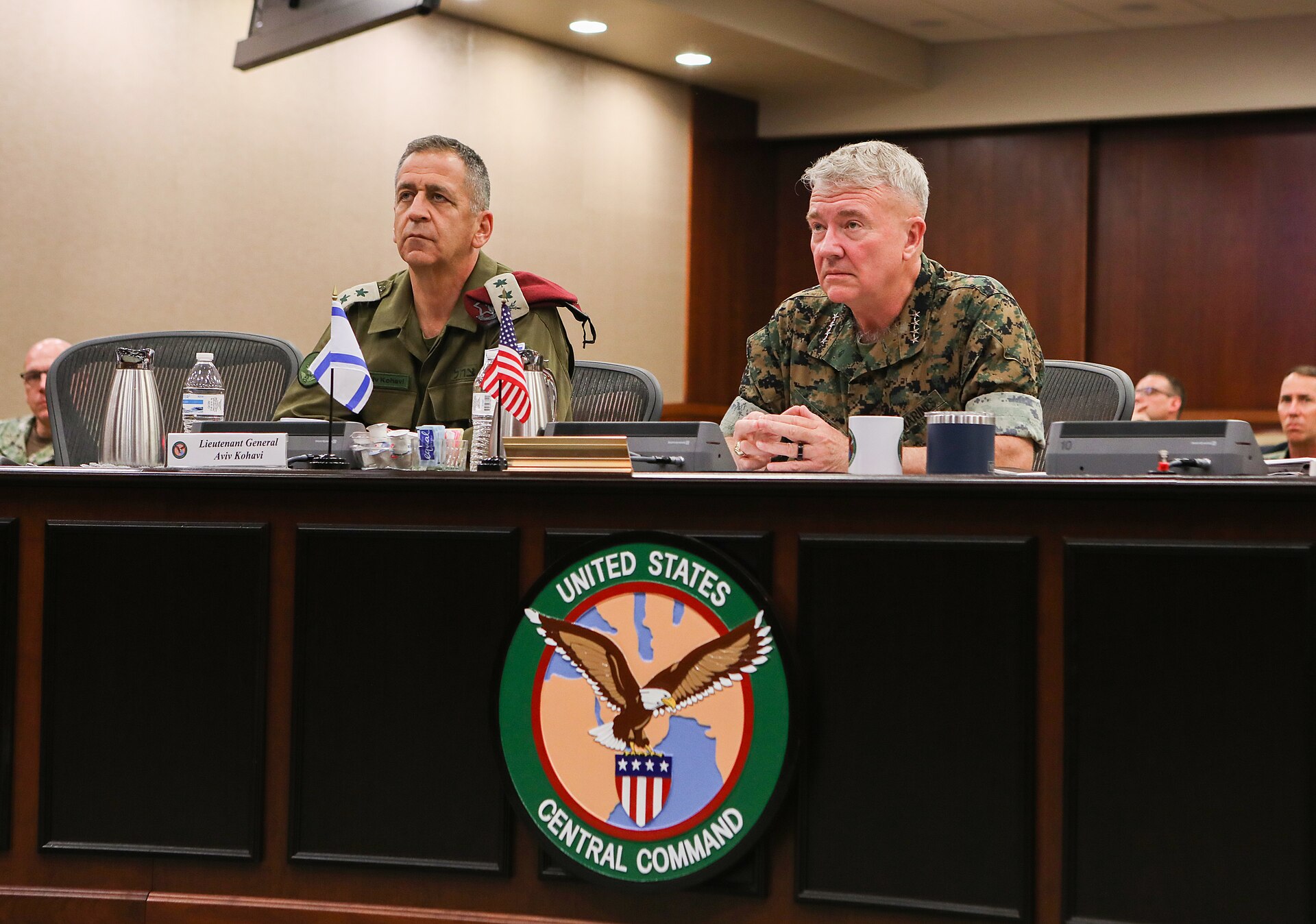
The diplomatic landscape is equally fractured. Saudi Foreign Minister Prince Faisal bin Farhan warned on March 19 that Gulf states’ patience is “not unlimited” and that Saudi Arabia “reserves the right to take military action if deemed necessary.” The multinational coalition defending Saudi Arabia now includes forces from Pakistan, France, the United Kingdom, and Greece, but none of these allies have committed to offensive operations against Iran. Oman, Egypt, Pakistan, and Turkey have attempted to mediate behind the scenes, but Tehran has refused to enter negotiations, according to reporting by the Jerusalem Post and Al Jazeera.
The war’s most dangerous asymmetry is temporal. The White House has indicated that the Pentagon’s operational timeline envisions four to six weeks to achieve the mission’s core objectives. “Tomorrow marks week three,” White House Press Secretary Karoline Leavitt stated on March 20. Iran’s leadership, by contrast, appears to believe that time is on its side — that sustained drone harassment will exhaust Gulf air defense interceptor stocks faster than Western factories can replenish them. Secretary of State Marco Rubio acknowledged the arithmetic: Iran produces approximately 100 missiles per month, compared to six or seven interceptors.
The Middle East briefing 3,000+ readers start their day with.
One email. Every weekday morning. Free.
How Long Can Iran Sustain This War?
Iran can sustain low-intensity drone and proxy warfare for six to twelve months but has lost the capacity for the kind of concentrated ballistic missile barrages that characterized the war’s first week. Its conventional military capability has been functionally destroyed, but its asymmetric toolkit — cheap drones, naval mines, proxy militias, and cyber operations — remains largely intact. The question is not whether Iran can keep fighting but whether what it can do is enough to achieve any strategic objective beyond inflicting pain.
The missile mathematics tell the story of Iran’s rapid decline. On February 28, Iran launched 480 ballistic missiles in a single day. By March 9, that number had fallen to 40 — a 92 percent collapse, according to JINSA’s tracking data. Iran entered the war with an estimated 2,500 ballistic missiles and between 410 and 440 mobile launchers. After three weeks, it has fired approximately 2,410 missiles, and Israel has destroyed up to 290 launchers. The remaining arsenal consists primarily of shorter-range tactical weapons with limited accuracy.
| Capability | Pre-War Estimate | Current Status | Attrition Rate |
|---|---|---|---|
| Ballistic missiles | ~2,500 | <100 | 96% |
| Mobile launchers | 410-440 | ~120-150 | ~66-71% |
| Daily missile fire rate | 480 (Day 1) | ~40 (Day 10) | 92% |
| Naval vessels | ~400 | Functionally eliminated | ~90%+ |
| Air force (combat aircraft) | ~340 | Grounded/destroyed | ~85%+ |
| Drone production (monthly) | ~500-800 | ~300-500 | ~40% |
Drone production, however, has proven more resilient than missile manufacturing. Iran’s drone factories, many of them dispersed across small workshops and civilian facilities, are harder to target than centralized missile production lines. CNN reported on March 19 that a weakened Iran is deliberately prolonging the war precisely because its cheap-drone strategy imposes disproportionate costs on Gulf defenders. A single Shahed-136 drone costs Iran an estimated $20,000 to produce; the Patriot interceptor used to shoot it down costs $4 million. The Center for Strategic and International Studies (CSIS) characterized Iran’s approach as “don’t calibrate — escalate,” noting that Tehran views asymmetric attrition as its only remaining strategic weapon.
Proxy activity represents Iran’s second lifeline. Hezbollah fired 200 rockets at Israel in a coordinated strike on March 13, and Houthi forces in Yemen have threatened Saudi Arabia’s last functioning shipping route through the Red Sea. The IRGC’s network across Iraq, Syria, Lebanon, and Yemen remains operational, though its coordination with Tehran has been disrupted by the killing of intelligence chief Ali Shamkhani’s successor in an Israeli airstrike on March 18. Iran’s total war-fighting capacity has not been eliminated — it has been transformed from a conventional military threat into a distributed asymmetric harassment network.
Scenario One: Total U.S. Military Victory
The Pentagon’s preferred scenario envisions completing the destruction of Iran’s military-industrial capacity within four to six weeks, reopening the Strait of Hormuz by force, and presenting Tehran with a fait accompli that compels regime survival negotiations. This is the scenario Trump appeared to endorse on March 20 when he wrote on Truth Social that the United States is “getting very close to meeting our objectives.” By March 22, Trump had escalated further with a 48-hour ultimatum to destroy Iranian power plants if the Strait of Hormuz was not reopened, signalling that the American victory scenario now carries an explicit deadline.
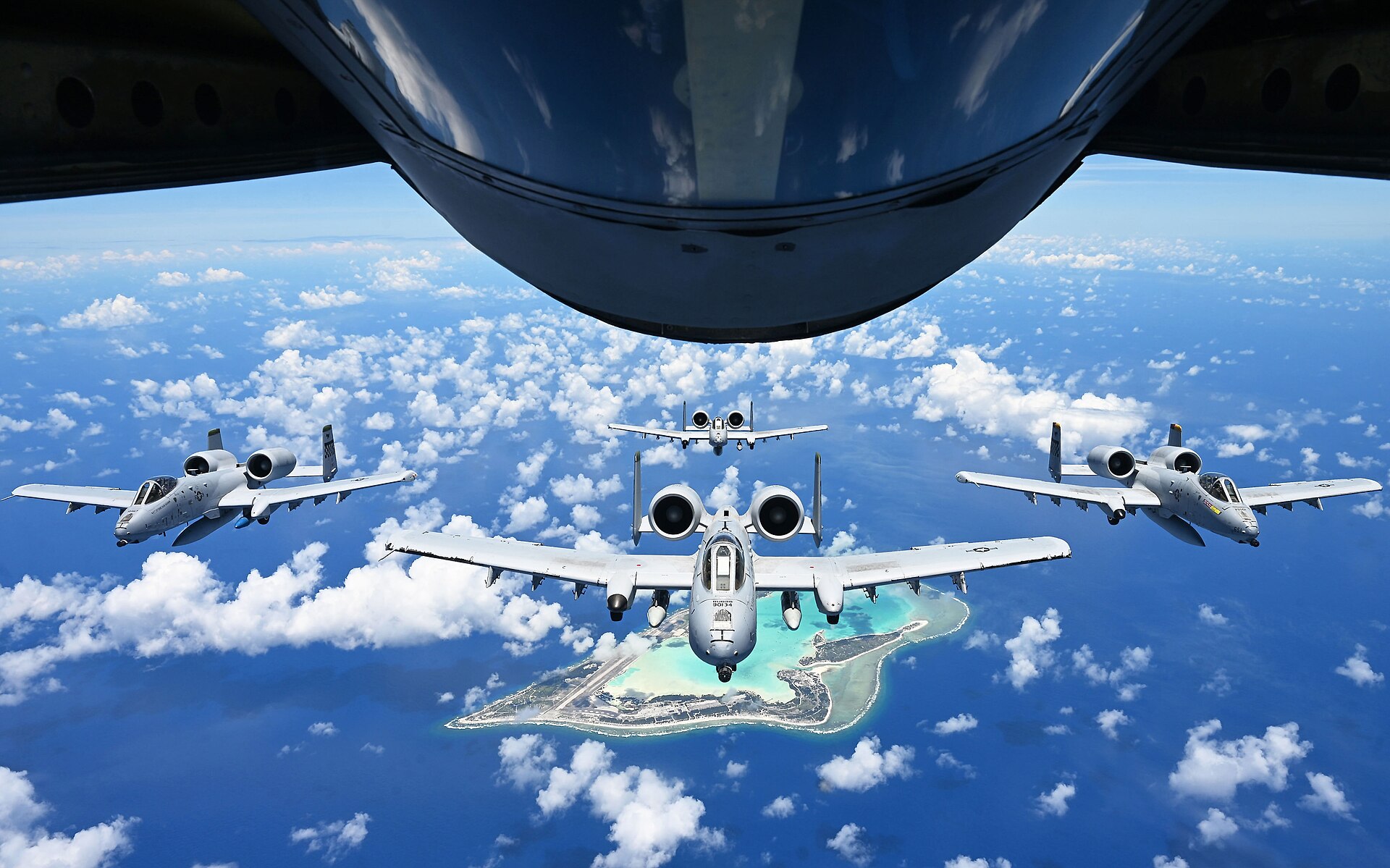
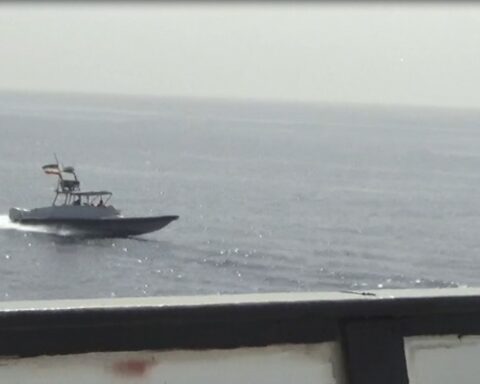
The operational logic is straightforward. American forces have already destroyed an estimated 90 percent of Iran’s strategic military assets, and CENTCOM announced Saturday that it had destroyed a key underground anti-ship missile facility on Iran’s coast. The remaining objectives include seizing or neutralizing Iran’s Kharg Island oil terminal, which handles 90 percent of Iranian crude exports; clearing mines from the Strait of Hormuz; and degrading Iran’s remaining drone production capacity. A-10 Warthog ground-attack aircraft and Apache helicopters are already hunting Iranian fast boats across the strait, while the U.S. Navy has destroyed sixteen Iranian minelaying vessels.
The probability of this scenario producing a clean, decisive outcome is low — perhaps 15 to 20 percent. The fundamental problem is that military victory does not automatically translate into political resolution. The United States destroyed Iraq’s military in 2003 in three weeks; the resulting political vacuum lasted a decade. Iran is four times Iraq’s population, has deeper institutional resilience, and — critically — its asymmetric capability does not require a functioning conventional military to inflict ongoing damage on Gulf states. Even if every Iranian military base were reduced to rubble, a single drone factory in a Tehran basement could continue launching Shaheds at Saudi oil refineries.
The scenario’s second weakness is the absence of a postwar governance framework. Mojtaba Khamenei, elected Supreme Leader on March 8 to replace his assassinated father, has shown no inclination toward negotiation. The IRGC, which controls Iran’s economic as well as military apparatus, has no institutional incentive to surrender. And the Trump administration has publicly stated it does not seek regime change — which raises the question of what, exactly, “total victory” means against an adversary that retains sovereign governance and a population of 88 million.
Scenario Two: Negotiated Ceasefire Through Oman’s Back Channel
Oman’s Foreign Minister Badr al-Busaidi has been the war’s most active mediator, maintaining contact with both Tehran and Washington through the back channel that facilitated pre-war U.S.-Iran negotiations in 2025. He has been joined by senior officials from Egypt, Pakistan, and Turkey, who are collectively attempting to persuade Iran to open dialogue with the Trump administration. China engaged diplomatically on March 3, urging an immediate ceasefire in conversations with foreign ministers from Iran, France, Oman, and Israel. Europe’s potential mediator role is complicated by the fact that European soldiers are already fighting in the Gulf while the EU collectively insists the war is not its concern.
The negotiated ceasefire scenario requires three preconditions that do not currently exist. First, Iran must be willing to talk. As of March 21, Tehran has categorically refused. Iran’s Foreign Minister Abbas Araghchi told NPR on March 15, “We never asked for a ceasefire,” and insisted that “the United States started it and is responsible for all the consequences of this war.” A Time magazine report on March 18 confirmed that Iran is presenting preconditions — including reparations and security guarantees — as non-negotiable starting points. Second, the United States must be willing to offer something beyond military de-escalation. Trump’s refusal to use the word “ceasefire,” preferring “winding down,” suggests Washington views any formal agreement as politically costly. Third, both sides must agree on the Strait of Hormuz, which Iran currently controls through mines, fast boats, and the threat of shore-based anti-ship missiles.
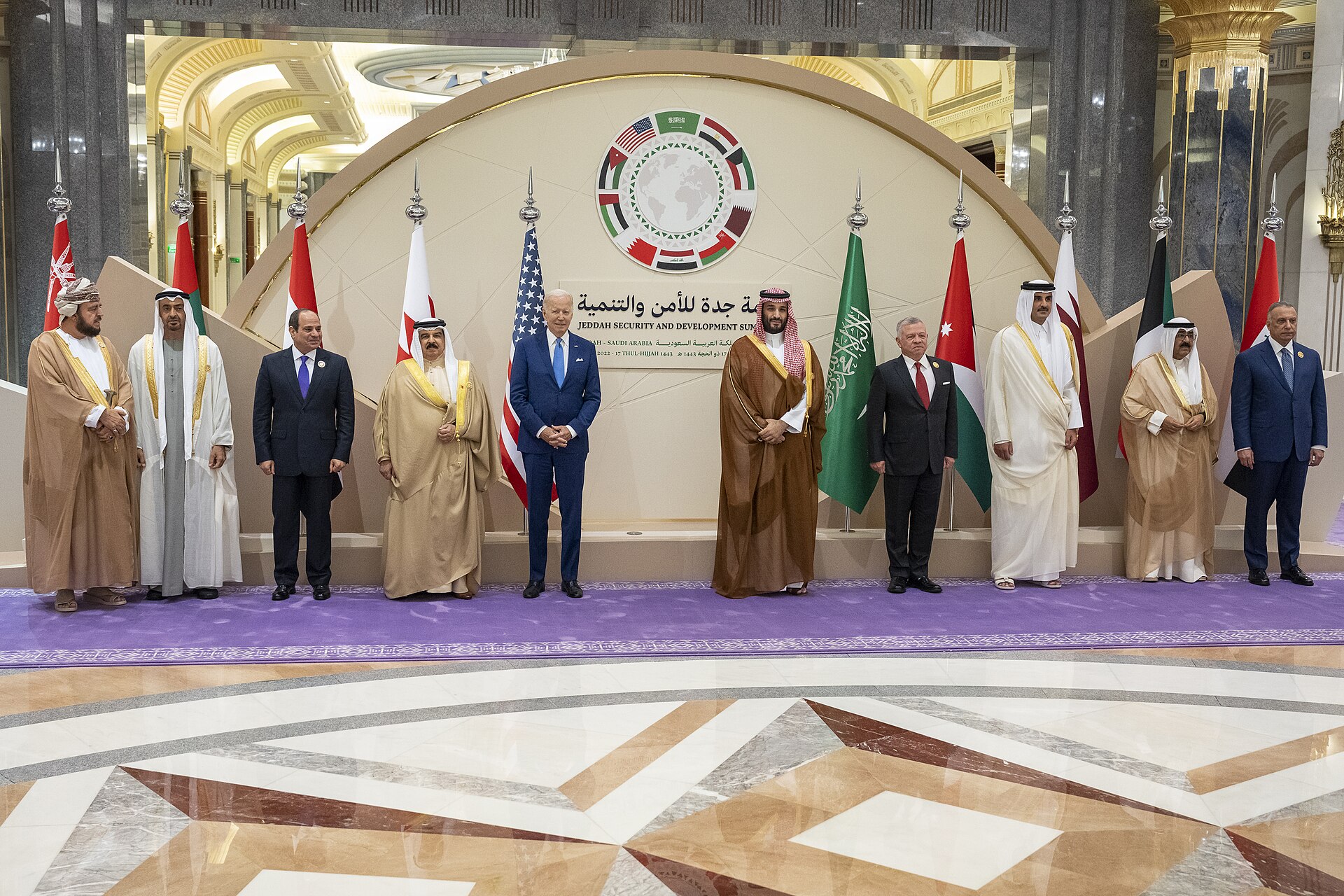
The probability of a negotiated ceasefire within the next thirty days is approximately 10 percent. Within ninety days, it rises to perhaps 25 percent, but only if Iran’s drone attrition campaign proves unsustainable or if a major escalatory event — such as significant Saudi civilian casualties — creates irresistible pressure for a halt. Saudi Arabia’s diplomatic position complicates the picture: Riyadh did not start this war, does not control its prosecution, and yet bears a disproportionate share of its consequences. Prince Faisal bin Farhan’s public warning on March 19 was directed as much at Washington as at Tehran — a signal that Saudi patience with being a passive target is finite.
Oman’s mediation role is further complicated by its anomalous position within the GCC. Unlike every other Gulf state, Oman officially congratulated Mojtaba Khamenei on his elevation to Supreme Leader, according to Foreign Policy reporting on March 20. No other GCC member followed suit. This diplomatic independence gives Oman credibility with Tehran but strains its relationships with Riyadh and Abu Dhabi, which have been absorbing the overwhelming majority of Iranian strikes.
Scenario Three: Mutual Exhaustion and the Quiet Fade
The most probable outcome — and the one least discussed by analysts — is that the Iran war does not end at all in any formal sense. Instead, it gradually degrades into a low-intensity conflict characterized by sporadic drone strikes, occasional proxy attacks, and a permanently militarized Gulf, similar to the final years of the Iran-Iraq war or the Korean armistice. This scenario has a probability of approximately 35 to 40 percent, making it the single most likely outcome.
The historical precedent is instructive. The Iran-Iraq war lasted eight years (1980-1988) not because either side lacked motivation to stop but because neither could accept the political cost of formal concession. The war ended with UN Security Council Resolution 598, which Iran’s Supreme Leader Ayatollah Khomeini described as “more deadly than taking poison.” The current war shares structural similarities: a revolutionary regime in Tehran that views concession as existential betrayal, an American president who conflates compromise with weakness, and a regional order in which multiple stakeholders have irreconcilable interests.
In this scenario, the trajectory follows a predictable arc. American strikes continue to degrade Iranian capacity through April, reaching the Pentagon’s four-to-six-week milestone. Trump declares victory — “the greatest military operation ever conducted,” or words to that effect — and begins withdrawing carrier strike groups. Iran’s drone attacks decrease from 100 per day to 10 to 20, not because Tehran chooses restraint but because production bottlenecks and supply chain disruption reduce output. The Strait of Hormuz partially reopens, with military escorts for commercial shipping. Oil prices settle between $90 and $100 per barrel — elevated but no longer at crisis levels. No ceasefire is signed. No peace treaty is negotiated. The war simply becomes the permanent background noise of Gulf geopolitics.
The Brookings Institution’s post-strike analysis warned precisely about this outcome, noting that “the danger of war in Iran” is not the initial military operation but the “long, open-ended commitment” required to manage its aftermath. The RAND Corporation’s expert panel reached a similar conclusion, arguing that the war’s most likely legacy is a “persistent low-grade conflict” that requires permanent American military presence in the Gulf — the exact outcome Trump’s “winding down” rhetoric is designed to avoid.
What Happens If Saudi Arabia Enters the War?
Saudi Arabia’s entry into offensive operations against Iran would represent the most consequential strategic decision in the Kingdom’s modern history and would fundamentally alter every endgame scenario. As of March 21, Riyadh has maintained a defensive posture — intercepting missiles, absorbing drone strikes, and restraining from retaliation. But Prince Faisal bin Farhan’s March 19 warning that Saudi Arabia has “very significant capacities and capabilities” that could be deployed marks a significant shift in rhetoric that should not be dismissed as bluster.
Chatham House published a detailed assessment on March 20 evaluating this possibility. The analysis concluded that the chances of Gulf Arab states going on the offensive remain low but “could go up should Iran escalate its attacks against critical infrastructure and civilian areas, causing casualties and more serious economic damage.” The Royal Saudi Air Force operates more than 200 advanced combat aircraft, including F-15SA Strike Eagles and Eurofighter Typhoons — platforms that Chatham House assessed as “superior to Iran’s in terms of modernity, flexibility, and lethality.”
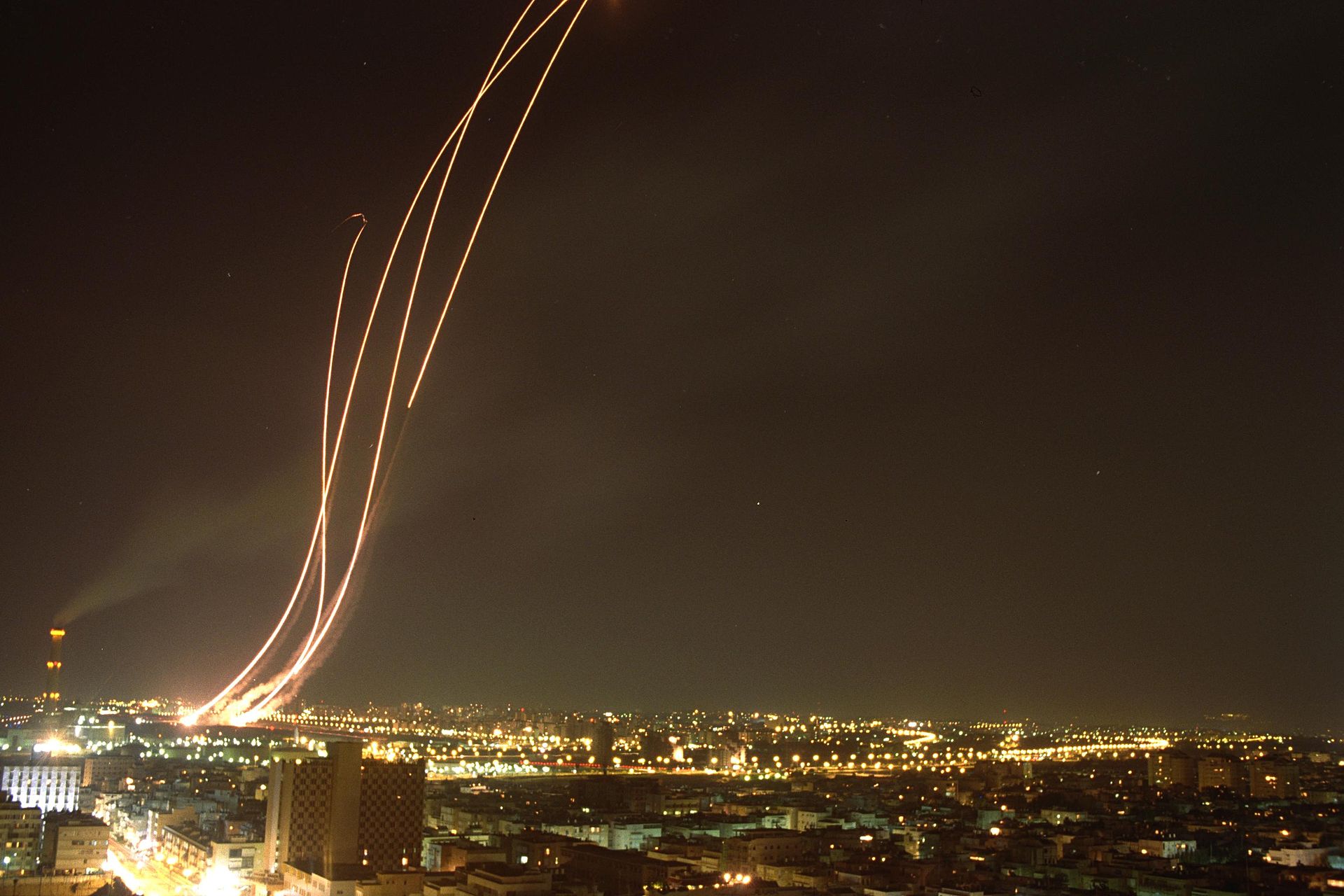
Two triggers could push Saudi Arabia from defense to offense. The first is a catastrophic civilian casualty event — a missile or drone striking a populated area with significant loss of life. Iran’s attacks have so far killed eleven people across the Gulf, according to confirmed reports, but a single incident with dozens of casualties would transform the political calculus in Riyadh overnight. The second trigger is the failure of American defensive guarantees. If the U.S. missile shield over Saudi Arabia demonstrably fails — if a ballistic missile penetrates to a major population center or critical Aramco facility — Riyadh may conclude that passive defense is no longer viable.
Senator Lindsey Graham has already threatened to block the U.S.-Saudi defense pact over Riyadh’s refusal to strike Iran, adding American domestic political pressure to the military calculus. Conversely, the Carnegie Endowment for International Peace assessed on March 20 that “Iran is pushing its neighbors toward the United States,” suggesting that Tehran’s aggression is accelerating precisely the kind of Gulf-American military integration that Iranian grand strategy has spent decades trying to prevent.
The probability of Saudi Arabia launching offensive strikes against Iran before the war ends is approximately 15 percent. The probability increases to 30 percent if Iran achieves a significant civilian casualty event or successfully targets a major Aramco processing facility. Saudi Arabia’s preference is clear: let the United States and Israel bear the military costs while Riyadh positions itself as the region’s responsible, restrained power. But restraint has limits, and every drone that strikes Saudi territory erodes them.
Scenario Five: Regional Escalation and the Lebanon Front
The worst-case scenario involves the conflict expanding beyond its current boundaries into a multi-front regional war. The preconditions for escalation are already partially present: Hezbollah has fired 200 rockets at Israel, Houthi forces have threatened Red Sea shipping, Iranian-backed militias have struck targets in Iraq and Jordan, and Iran itself has fired missiles at Diego Garcia — a target 3,000 kilometers from Iranian territory that demonstrates a reach far beyond the Gulf theater.
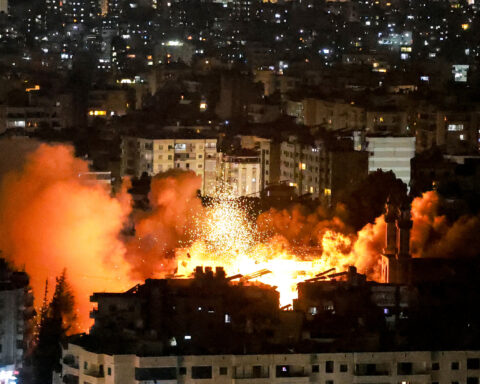
Regional escalation would most likely be triggered by one of three events. First, an Israeli ground operation in southern Lebanon, which IDF forces briefly entered on March 16. A sustained Israeli campaign in Lebanon would activate Hezbollah’s full arsenal of an estimated 150,000 rockets and missiles, drawing in Syria and potentially Turkey. Second, a direct Iranian strike on Israeli population centers that causes mass casualties, triggering Israeli nuclear deliberation — the scenario that defense planners consider the most dangerous escalatory pathway. Third, an attack on a U.S. naval vessel in the Persian Gulf or Arabian Sea that kills significant numbers of American servicemembers, creating irresistible domestic pressure for expanded operations.
The probability of full regional escalation is approximately 10 to 15 percent — low but not negligible. The ACLED special issue on the Middle East published in March 2026 documented armed conflict events across eleven countries connected to the Iran war, a geographic spread that has no precedent since the 1973 Arab-Israeli war. Every additional front increases the complexity of any ceasefire negotiation, because each party — Hezbollah, the Houthis, Iraqi militias, Palestinian factions — has its own demands and red lines that cannot be resolved in a bilateral U.S.-Iran framework.
For Saudi Arabia, regional escalation is the nightmare scenario. Riyadh would face simultaneous threats from Iranian drones from the north and east, Houthi missiles and drones from the south, and potential disruption to both its Persian Gulf and Red Sea shipping corridors. The Kingdom’s strategic depth — the vast deserts separating its population centers from potential adversaries — provides some geographic protection, but its concentrated energy infrastructure at Ras Tanura, Jubail, and the Eastern Province remains vulnerable to saturation attacks from multiple vectors simultaneously.
The Conflict Termination Matrix
The five scenarios described above can be evaluated systematically across six dimensions that matter most to Saudi Arabia’s strategic planners: probability, timeline, Saudi strategic position, Iran deterrence level, oil market impact, and regional order outcome. Scoring each scenario across these dimensions produces a Conflict Termination Matrix that reveals which outcomes serve Saudi interests and which represent strategic failure.
| Scenario | Probability | Timeline | Saudi Position | Iran Deterrence | Oil Impact | Regional Order |
|---|---|---|---|---|---|---|
| 1. Total U.S. Victory | 15-20% | 4-8 weeks | Stronger — vindicated as ally | Maximum — Iran neutralized | Bullish short-term, stabilizing | U.S. hegemony restored |
| 2. Negotiated Ceasefire | 10-25% | 1-3 months | Mixed — risks concessions to Iran | Moderate — Iran retains capacity | Rapid stabilization | Multipolar Gulf |
| 3. Mutual Exhaustion | 35-40% | 3-12 months | Strongest — emerges as guarantor | Moderate — degraded but persistent | Elevated plateau ($90-100) | Saudi-led Gulf order |
| 4. Saudi Enters War | 15-30% | Weeks (trigger event) | High risk, high reward | High — direct Gulf deterrent | Extreme volatility | Gulf military bloc |
| 5. Regional Escalation | 10-15% | Months to years | Severely weakened | Minimal — conflict metastasizes | Crisis ($130-150+) | Failed state belt |
The matrix reveals a counterintuitive finding: the scenario that most analysts assume Saudi Arabia prefers — a quick, decisive American victory — is actually the Kingdom’s second-best outcome. Saudi Arabia’s optimal result is Scenario Three, mutual exhaustion, because it positions the Kingdom as the indispensable regional power without requiring Riyadh to fire a single offensive shot. In this scenario, Iran is degraded enough to lose its ability to threaten Gulf states with concentrated military force, the United States gradually reduces its presence, and Saudi Arabia fills the resulting vacuum as the Gulf’s security anchor — backed by its $8.8 billion in new defense contracts signed at the World Defense Show in February, its $5 billion Chinese drone production deal, and its expanding defense partnerships with Pakistan, France, and the United Kingdom.
The worst outcome for Saudi Arabia is Scenario Five, regional escalation, which would destroy the carefully constructed economic diversification program that has been the centerpiece of MBS’s domestic agenda. The second-worst is a negotiated ceasefire that leaves Iran’s asymmetric capabilities intact and positions Tehran as a party with legitimate grievances — an outcome that would validate Iran’s strategy of attacking Gulf states as a pressure tool.
The patience that is being exhibited is not unlimited. We have very significant capacities and capabilities that we can draw on should we choose to do so.
Prince Faisal bin Farhan Al Saud, Saudi Foreign Minister, March 19, 2026
What Does Each Scenario Mean for Oil Prices?
Oil markets have absorbed a $42-per-barrel risk premium since the war began, with Brent crude reaching $113.71 on March 19 — up from $71 one year earlier. Each endgame scenario produces a distinct price trajectory that extends well beyond the war’s immediate conclusion. The International Energy Agency has already released a record 400 million barrels from strategic reserves, and OPEC+ has agreed to add 206,000 barrels per day in April, but neither intervention has been sufficient to offset the loss of approximately 8 million barrels per day caused by the Hormuz shutdown.
| Scenario | 30-Day Price | 90-Day Price | 12-Month Price | Key Driver |
|---|---|---|---|---|
| 1. Total U.S. Victory | $95-105 | $80-90 | $75-85 | Hormuz reopens, supply normalizes |
| 2. Negotiated Ceasefire | $90-100 | $82-92 | $78-88 | Gradual Hormuz reopening |
| 3. Mutual Exhaustion | $100-115 | $90-105 | $85-95 | Partial Hormuz, risk premium persists |
| 4. Saudi Enters War | $120-140 | $110-130 | Highly uncertain | Supply disruption deepens |
| 5. Regional Escalation | $130-150+ | $120-140+ | $100-120+ | Multiple supply disruptions |
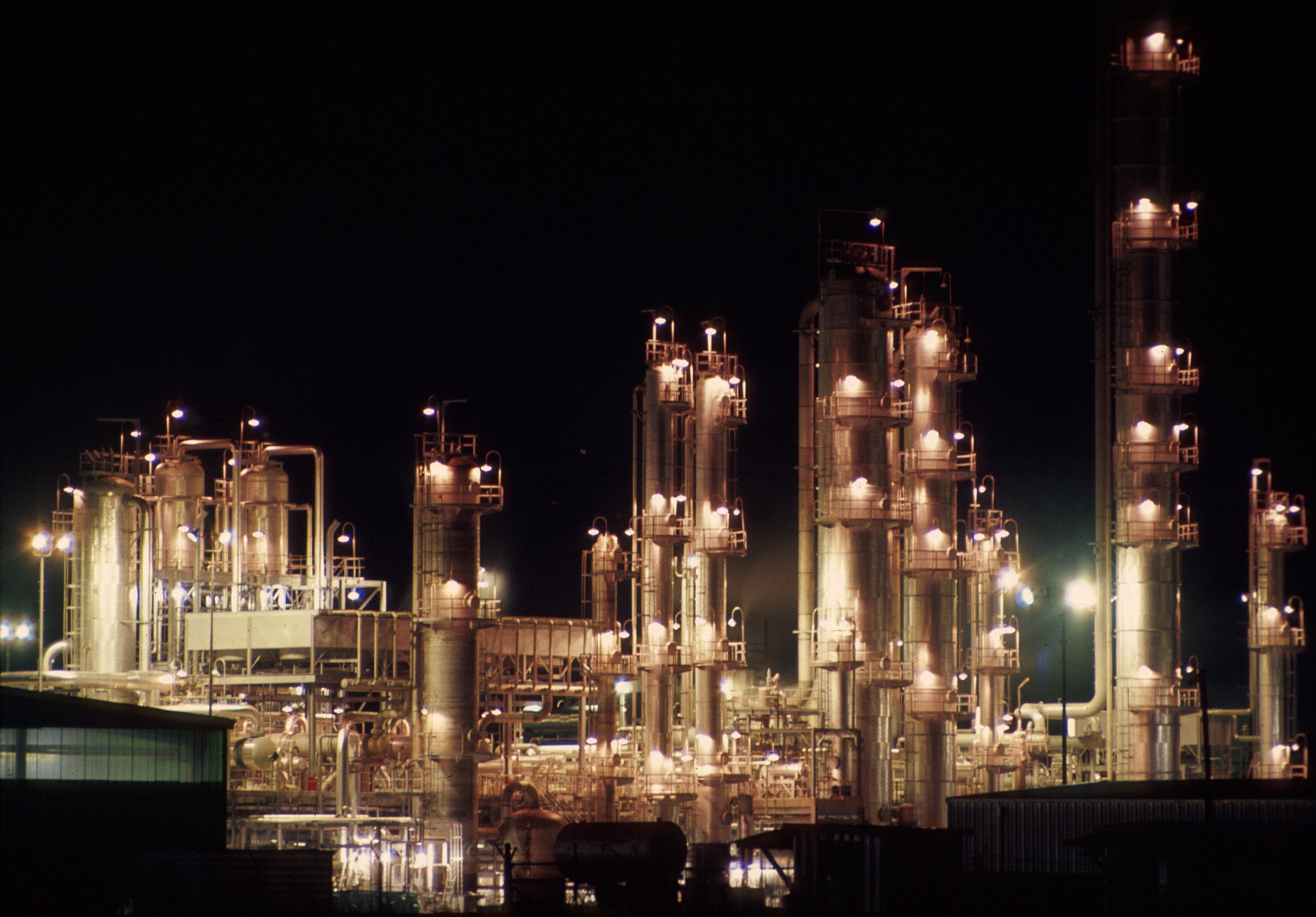
The most significant long-term oil market consequence is not the price level itself but the permanent recalculation of geopolitical risk premiums. Before the Iran war, Gulf energy infrastructure was priced by markets as essentially safe — the September 2019 Aramco Abqaiq attack was treated as an anomaly. That assumption has been permanently destroyed. Insurance rates for Gulf shipping have increased by approximately 400 percent since the war began, according to Lloyd’s of London market data. Even in Scenario One, the most favorable outcome, insurers and traders will maintain elevated risk premiums for years. Saudi Arabia’s oil revenue benefits from higher prices in the short term, but the Kingdom’s long-term interest lies in stable, predictable energy markets that attract sustained foreign investment in its downstream and petrochemical industries.
The EU called an emergency energy meeting on March 16 as oil surpassed $106, and the IEA’s 400-million-barrel strategic release was the largest coordinated intervention in the agency’s fifty-year history. These measures have prevented a full-blown energy crisis but have not eliminated the underlying supply disruption. Goldman Sachs warned on March 17 that the Gulf faces its worst recession in a generation if the Hormuz shutdown persists beyond sixty days — a threshold that is now only five weeks away.
Why Most Predictions About This War Are Wrong
The dominant analytical frameworks being applied to the Iran war suffer from a common flaw: they assume the war will end in a manner that resembles previous conflicts. The three most common predictions — quick American victory, negotiated settlement, or prolonged quagmire — each imports assumptions from conflicts with fundamentally different structures. The Iran war is unprecedented in several respects that make historical analogies misleading.
The first distinctive feature is the drone-versus-interceptor cost asymmetry. No previous war has featured a sustained campaign in which one side’s primary weapon costs $20,000 per unit and the other side’s primary defense costs $4 million per unit. This 200:1 cost ratio means that Iran can impose economically ruinous defense costs on the Gulf even as its own military capability degrades. The conventional assumption that a weaker military power will eventually capitulate to a stronger one breaks down when the weaker power possesses a weapon system that is cheaper to produce than to defend against.
The second distinctive feature is the absence of territory. Unlike the Iraq war, the Afghan war, or even the Iran-Iraq war, the 2026 Iran war involves no ground campaign, no territorial occupation, and no frontlines. The United States is conducting an air campaign from bases in the Gulf, the Arabian Sea, and Diego Garcia. Iran is conducting a drone campaign from dispersed production facilities across its own territory. Neither side is trying to take or hold land. This makes the war uniquely difficult to “win” in any conventional sense — there is no flag to plant, no capital to capture, no territory to trade in negotiations.
The third distinctive feature, and the one most analysts are missing, is that the war’s center of gravity is not military but economic. Iran’s objective is not to defeat the United States militarily — an impossibility — but to impose sufficient economic damage on the Gulf states that they pressure Washington to stop fighting. The targeted destruction of oil infrastructure, the Hormuz shutdown, the insurance market collapse, and the shipping disruption are all instruments of economic warfare directed at Riyadh, Abu Dhabi, and Doha, not at the Pentagon. Analyzing this war through a military lens alone is like analyzing the 1973 Arab oil embargo through a naval warfare lens. The weapon is economic; the battlefield is global markets.
Iran has doubled down on its rejection of cease-fire talks, insisting that the United States is responsible and demanding reparations and security guarantees as preconditions for any dialogue.
Time Magazine, March 18, 2026
This is why Scenario Three — mutual exhaustion — is the most probable outcome. The war ends not because one side achieves its objectives but because the cost-benefit calculation for continued fighting shifts for both sides simultaneously. For the United States, the shift occurs when domestic political pressure to “bring the troops home” exceeds the strategic value of continued strikes. For Iran, the shift occurs when the economic isolation caused by the war — sanctions, Hormuz revenue loss, infrastructure destruction — threatens regime survival more than continued resistance. For Saudi Arabia, the shift occurs when the Kingdom determines that its defensive posture has extracted the maximum strategic benefit: an exhausted Iran, a grateful United States, and a regional order in which Riyadh is the indispensable power.
Who Controls the Gulf After Iran?
The post-war Gulf will be shaped less by how the war ends than by who emerges from it with the most durable strategic advantages. Three powers are competing for that position: the United States, Saudi Arabia, and — paradoxically — a diminished but undefeated Iran. The Atlantic Council assessed on March 20 that “the Gulf that emerges from the Iran war will be very different,” while Foreign Policy argued the same day for “strategic continuity.” Both are partially correct, but neither captures the most significant transformation: the emergence of Saudi Arabia as an autonomous military power rather than a dependent American client.
Before the war, Saudi Arabia’s security architecture was fundamentally parasitic — it depended on American military guarantees that were never formalized in a mutual defense treaty, purchased American weapons that it could not maintain without American contractors, and relied on American intelligence for strategic warning. The war has exposed both the strengths and the limitations of this model. American Patriot batteries and THAAD systems have intercepted hundreds of Iranian projectiles. But American priorities have not always aligned with Saudi ones — Washington’s primary objective is destroying Iran’s nuclear and military capacity, while Riyadh’s primary objective is protecting its own infrastructure and population.
The Kingdom’s response has been a rapid diversification of its defense partnerships. The multinational coalition defending Saudi Arabia now includes Pakistani troops (1,500 to 2,000 deployed), French naval assets, British RAF Typhoon fighters, and a Greek Patriot battery that intercepted Iranian missiles over Saudi territory on March 19. Saudi Arabian Military Industries (SAMI) signed $8.8 billion in defense contracts at the World Defense Show in February — two weeks before the war began — and has since signed a $5 billion deal to produce Chinese combat drones at a new facility in Jeddah. Ukraine’s President Zelenskyy has offered Saudi Arabia weapons that Washington cannot deliver quickly enough.
| Partner | Contribution | Strategic Significance |
|---|---|---|
| United States | Patriot, THAAD, F-15SA, naval assets | Primary but no longer exclusive guarantor |
| Pakistan | 1,500-2,000 troops, air defense systems | Muslim-majority nuclear power ally |
| United Kingdom | RAF Typhoons, naval patrols | European security anchor |
| France | Naval assets, intelligence sharing | Alternative European supplier |
| China | $5B drone production deal (Jeddah) | Domestic production independence |
| South Korea | KM-SAM air defense systems | Advanced interceptor supply diversification |
| Ukraine | Weapons offers, battlefield intelligence | Proven combat systems supplier |
| Greece | Patriot battery deployment | NATO interoperability without NATO commitment |
This diversification is not a temporary wartime expedient — it represents a permanent structural shift in the Gulf security order. The Foreign Affairs article on “The Stunning Failure of Iranian Deterrence” argued that Iran’s strategy of threatening Gulf states to prevent them from supporting American operations has backfired catastrophically: rather than deterring Gulf cooperation with Washington, Iran’s attacks have pushed every GCC state closer to the United States and simultaneously motivated them to build independent defense capabilities that reduce their dependence on any single external guarantor.
The Iran war has demonstrated that Saudi Arabia can absorb sustained military punishment, maintain social cohesion, keep its economy functioning, and emerge with a stronger, more diversified defense establishment than it possessed before the fighting began. Whether the war ends in four weeks or four months, this transformation will define the Gulf’s strategic landscape for a generation. The Iran that eventually stops shooting — diminished, isolated, its nuclear program destroyed, its conventional military in ruins — will confront a Saudi Arabia that is richer, better-armed, more regionally connected, and less dependent on American protection than at any point in the Kingdom’s ninety-four-year history.
Frequently Asked Questions
When will the Iran war end?
The most probable outcome is a gradual de-escalation over three to twelve months rather than a definitive end date. The White House has indicated a four-to-six-week timeline for achieving core military objectives, but converting military success into political resolution will likely take significantly longer. Iran has refused to enter ceasefire negotiations, and no diplomatic framework currently exists for a formal war termination agreement.
Will Saudi Arabia attack Iran directly?
Saudi Arabia has maintained a defensive posture but Foreign Minister Prince Faisal bin Farhan warned on March 19 that the Kingdom’s patience is “not unlimited” and that it “reserves the right to take military action.” Chatham House assessed that Saudi Arabia possesses aerial capabilities superior to Iran’s. The probability of Saudi offensive action increases significantly if Iran causes major civilian casualties or successfully strikes critical Aramco infrastructure.
What happens to oil prices when the Iran war ends?
Oil prices are likely to remain elevated above pre-war levels for twelve to eighteen months regardless of which endgame scenario materializes. Brent crude, currently above $113 per barrel, would likely settle between $85 and $95 in the most favorable scenario (mutual exhaustion) and could spike above $140 if Saudi Arabia enters the war or the conflict escalates regionally. The permanent destruction of the Gulf’s reputation as a “safe” energy source will maintain elevated risk premiums for years.
Who is mediating the Iran war?
Oman has led mediation efforts through its Foreign Minister Badr al-Busaidi, supported by senior officials from Egypt, Pakistan, and Turkey. China engaged diplomatically on March 3, though Beijing’s restraint reflects a calculated post-war positioning strategy rather than disengagement. However, Iran has categorically refused to enter negotiations, demanding reparations and security guarantees as preconditions. The absence of a willing negotiating partner on the Iranian side has stalled all mediation efforts as of late March 2026.
Is the Iran war going to become a world war?
Full global escalation remains unlikely, with a probability of approximately 10 to 15 percent. The conflict has already spread beyond the Gulf to involve Hezbollah in Lebanon, Houthi forces in Yemen, militias in Iraq and Syria, and Iranian strikes on Diego Garcia in the Indian Ocean. However, no major power other than the United States and Israel is engaged in offensive operations, and both Russia and China have called for de-escalation rather than intervening militarily on Iran’s behalf.
What is the Strait of Hormuz situation?
The Strait of Hormuz remains effectively closed to commercial shipping, with approximately 150 freight ships stalled. Trump’s 48-hour ultimatum to destroy Iran’s power grid has raised the stakes, though analysis suggests targeting civilian infrastructure will not force Iran to reopen the waterway. U.S. naval forces are conducting mine-clearing and anti-boat operations, and the Pentagon has destroyed sixteen Iranian minelaying vessels. Partial reopening with military escorts is the most likely near-term outcome, but full commercial normalization will require either Iran’s complete naval neutralization or a negotiated agreement on freedom of navigation that Tehran has shown no willingness to accept.