PARIS — The International Energy Agency on Wednesday announced the largest emergency oil release in its 52-year history, ordering 32 member nations to collectively tap 400 million barrels of strategic petroleum reserves as the Iran war chokes off roughly a fifth of global crude supply through the Strait of Hormuz. The unanimous decision, taken at an emergency ministerial session in Paris, more than doubles the previous record set in 2022 after Russia invaded Ukraine and represents a direct acknowledgment by the world’s wealthiest energy-consuming nations that the current disruption has no near-term military or diplomatic solution.
Brent crude fell from nearly $120 a barrel earlier in the week to approximately $91 after the announcement, though analysts warned the reprieve would be measured in weeks rather than months. With an estimated 15 million barrels of crude and 5 million barrels of refined products choked off from global markets every day, according to the IEA, the 400-million-barrel release buys the global economy roughly 26 days of breathing room before reserves are exhausted. For Saudi Arabia, the world’s largest oil exporter and the nation most directly affected by the Hormuz closure, the IEA decision creates both a lifeline and a paradox — moderating the price spike that has simultaneously inflated Aramco revenues while threatening the Kingdom’s core customers with energy rationing.
The reserve release also underscored an uncomfortable dependency: Russian crude flowing to China and India is the only large-scale alternative supply keeping global markets from total collapse. The dynamics of the Russia-Saudi oil partnership that neither side can afford to break explain why Riyadh has remained silent on Moscow’s war windfall.
Table of Contents
- What Did the IEA Announce on March 11?
- Which Countries Are Contributing the Most Oil?
- Why Is This the Largest Reserve Release in IEA History?
- The Strait of Hormuz Disruption Behind the Decision
- How Does the IEA Release Affect Saudi Arabia?
- Crude Prices After the Announcement
- Why Analysts Say 400 Million Barrels May Not Be Enough
- How This Compares to Previous IEA Emergency Releases
- Frequently Asked Questions
What Did the IEA Announce on March 11?
The International Energy Agency confirmed on Wednesday that all 32 of its member governments had unanimously voted to release up to 400 million barrels of crude oil and petroleum products from national strategic stockpiles. The Paris-based agency, founded in 1974 in direct response to the Arab oil embargo, described the action as the sixth collective release in its history and the first triggered by a military conflict directly targeting global oil transit infrastructure.
IEA Executive Director Fatih Birol framed the decision as an emergency measure designed to prevent what he called a “severe economic dislocation” across importing nations, according to remarks reported by CNBC. The agency said it would coordinate the release over a 180-day window, with the first barrels expected to reach markets by late March, according to NPR. Each member state will draw down stocks proportionate to its net oil imports, a formula established under the IEA’s founding treaty.
The decision followed two days of intensive consultations among G7 energy ministers, who had signalled earlier in the week that a coordinated release was under active consideration. Germany and Austria announced unilateral drawdowns on Tuesday ahead of the formal IEA vote, and Japan’s Prime Minister Sanae Takaichi said Tokyo would begin releasing private and state reserves by late March, according to Euronews.

Which Countries Are Contributing the Most Oil?
The United States, as the IEA’s largest member and holder of the world’s biggest strategic petroleum reserve, is expected to shoulder the largest share of the release. The U.S. Strategic Petroleum Reserve held approximately 400 million barrels as of late February 2026, according to the Department of Energy — down from its peak of 727 million barrels in 2009 but still the world’s largest government-controlled stockpile. Washington had not publicly confirmed its specific contribution as of Wednesday evening.
Several nations moved ahead of the formal IEA announcement:
| Country | Contribution | Timeline | Source |
|---|---|---|---|
| South Korea | 22.46 million barrels | Immediate | South Korean Ministry of Trade |
| United Kingdom | 13.5 million barrels | Immediate | UK Government |
| Germany | 2.64 million tonnes (~19.3M barrels) | Began March 10 | German Federal Government |
| Japan | Private and state reserves | Starting late March | PM Takaichi announcement |
| Austria | Unspecified | Began March 10 | Austrian Ministry of Climate |
| United States | Expected largest share | Pending announcement | IEA formula allocation |
The IEA’s burden-sharing formula, established under the 1974 Agreement on an International Energy Program, allocates drawdown obligations based on each member’s net oil imports from the previous year. That formula places the heaviest burden on large importers such as the United States, Japan, South Korea, Germany, and France. India and China, both massive oil importers, are not IEA members and are not bound by the agreement — though both participate in the IEA’s associate programme and have released reserves during previous crises, according to the agency. Days after the IEA release, EU energy ministers convened an emergency meeting on March 16 to discuss further reserve coordination and demand reduction as oil prices climbed back above $106 per barrel despite the historic stockpile drawdown.
Why Is This the Largest Reserve Release in IEA History?
At 400 million barrels, the March 2026 release more than doubles the previous record of 182.7 million barrels set in 2022, when IEA members coordinated an unprecedented drawdown in response to the energy shock triggered by Russia’s full-scale invasion of Ukraine, according to PBS News. The scale reflects the severity of the current disruption, which the IEA itself described as “the largest single oil supply loss in modern history,” according to Fortune.
The arithmetic is stark. An estimated 15 million barrels of crude oil and 5 million barrels of other petroleum products transit the Strait of Hormuz daily under normal conditions, according to the U.S. Energy Information Administration. With tanker traffic through the waterway at near-zero since late February, the 400-million-barrel release would be absorbed in approximately 26 days if no other supply is restored, according to Fortune. That narrow window underscores the difference between this crisis and the 2022 Ukraine disruption, when Russian oil found alternative buyers and the actual supply shortfall was far smaller than the headline risk.
| Year | Trigger | Volume (million barrels) | Duration | Price Impact |
|---|---|---|---|---|
| 1991 | Gulf War (Iraq invasion of Kuwait) | 17.0 | 30 days | Brent fell ~33% |
| 2005 | Hurricane Katrina (US Gulf Coast) | 60.0 | 30 days | Temporary stabilisation |
| 2011 | Libyan Civil War | 60.0 | 30 days | Brent fell ~8% |
| 2022 | Russia-Ukraine War | 182.7 | 180 days | Brent fell from $120 to $80 |
| 2026 | Iran War / Hormuz Closure | 400.0 | 180 days | Brent fell from $119 to ~$91 |
The Strait of Hormuz Disruption Behind the Decision
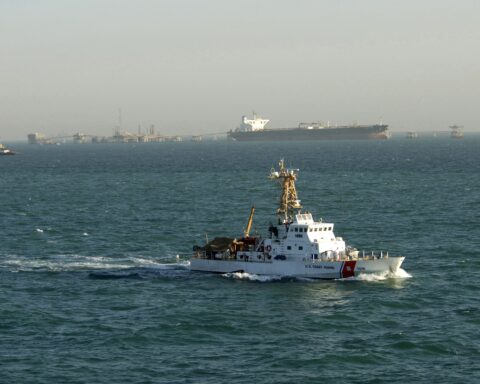
The IEA release was triggered by the effective closure of the Strait of Hormuz, the 21-mile-wide waterway between Iran and Oman through which approximately one-fifth of all globally traded crude oil and one-quarter of global liquefied natural gas passes under normal conditions. Since the outbreak of the US-Israeli military operation against Iran on February 28, 2026, Iran’s Islamic Revolutionary Guard Corps has declared the strait a military exclusion zone, firing on commercial vessels and laying naval mines.
CNN reported on March 10 that Iran had begun laying mines in the strait, though the initial deployment was described as limited — “a few dozen” rather than a full minefield. The IRGC retains 80 to 90 percent of its fast-attack boats and minelaying vessels, according to U.S. intelligence assessments cited by CNN, meaning Tehran could dramatically escalate the mining campaign at any time. The U.S. Navy destroyed 16 Iranian minelaying vessels on March 10 in the largest single naval engagement of the conflict, according to CNBC.
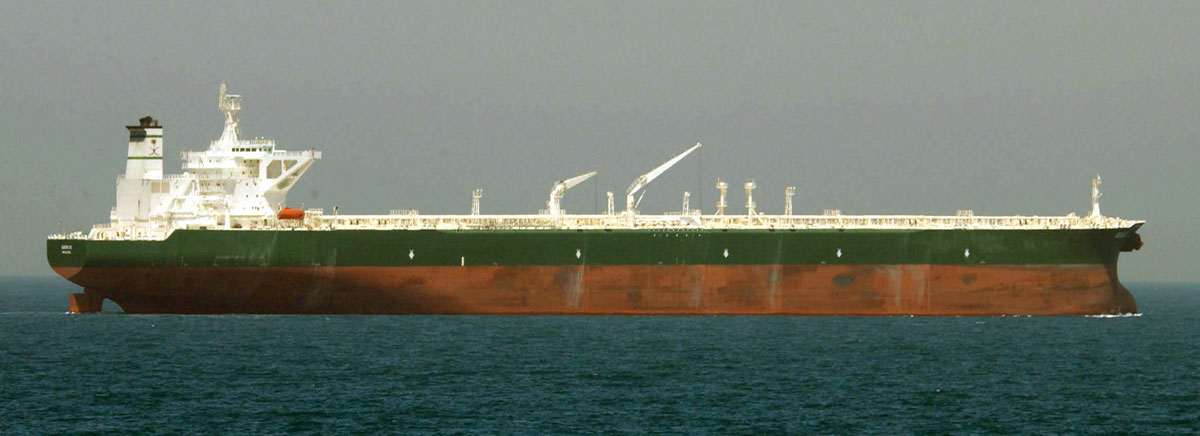
Maritime security agencies reported that at least 14 commercial vessels had been struck by Iranian projectiles in or near the strait since the war began, according to Al Jazeera. The Thai-flagged bulk carrier Mayuree Naree was fired upon on Wednesday after what the IRGC described as “disregarding warnings and insistently attempting to illegally pass through” the waterway — rhetoric consistent with the IRGC Navy’s declared permit system requiring ships to obtain Iranian authorization before transiting the Strait of Hormuz. Three crew members remain unaccounted for. The Mayuree Naree was one of three cargo ships hit by IRGC projectiles in the Strait of Hormuz on March 11, alongside the container vessel One Majesty and the bulk carrier Star Gwyneth — the single deadliest day for commercial shipping since the war began.
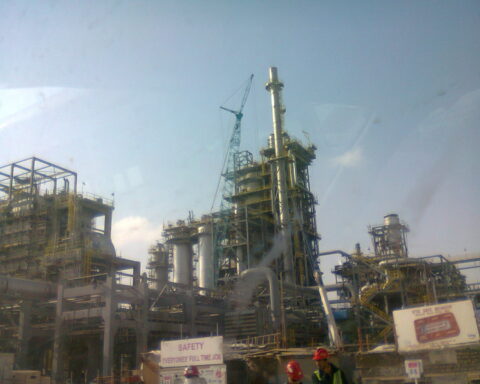
The effective blockade has forced Gulf producers to slash output dramatically. Saudi Aramco reduced production from its pre-war level of approximately 10.1 million barrels per day to between 8 and 9 million barrels daily, according to Business Standard, as onshore storage fills up with nowhere to export crude from eastern terminals. Aramco has rerouted exports through the East-West pipeline to Yanbu on the Red Sea coast, which CEO Amin Nasser said would reach its full capacity of 7 million barrels per day “in the next couple of days,” according to S&P Global.
How Does the IEA Release Affect Saudi Arabia?
The 400-million-barrel release creates a complex equation for Saudi Arabia. The Kingdom is simultaneously an oil producer struggling to export, a price beneficiary of the supply crisis, a strategic ally of major IEA members, and a nation whose own economic stability depends on how long the Hormuz disruption persists.
On one hand, the IEA release moderates the price spike that has sent Brent crude from roughly $70 per barrel before the war to a peak near $120 earlier in the week. Lower prices reduce the revenue premium Saudi Arabia earns on whatever barrels it can export through the Red Sea pipeline route. Aramco raised the price of its Arab Light crude for March deliveries by $2.40 per barrel, the largest increase since August 2022, according to Reuters. Every dollar removed from the barrel price reduces Saudi revenue on its current Yanbu throughput of approximately 2.2 million barrels per day by roughly $2.2 million daily.
On the other hand, the IEA release directly serves Saudi strategic interests. The Kingdom’s largest oil customers — China, Japan, South Korea, and India — are the nations most acutely threatened by the Hormuz closure. A global recession triggered by $120-plus oil prices would destroy demand for Saudi crude long after the war ends. The $6 trillion in market losses already inflicted by the conflict threaten the investment flows that underpin Vision 2030.
Saudi Arabia itself holds significant strategic petroleum reserves, though the exact volume is a closely guarded state secret. The Kingdom built a 12.5-million-barrel storage facility on Okinawa, Japan, and maintains additional reserves in Rotterdam, the Netherlands, and Sidi Kerir, Egypt, according to energy consultancy Rapidan Energy Group. These reserves give Aramco a logistics advantage in serving Asian and European customers even during the Hormuz disruption, though the volumes are a fraction of what the East-West pipeline can deliver.
Crude Prices After the Announcement
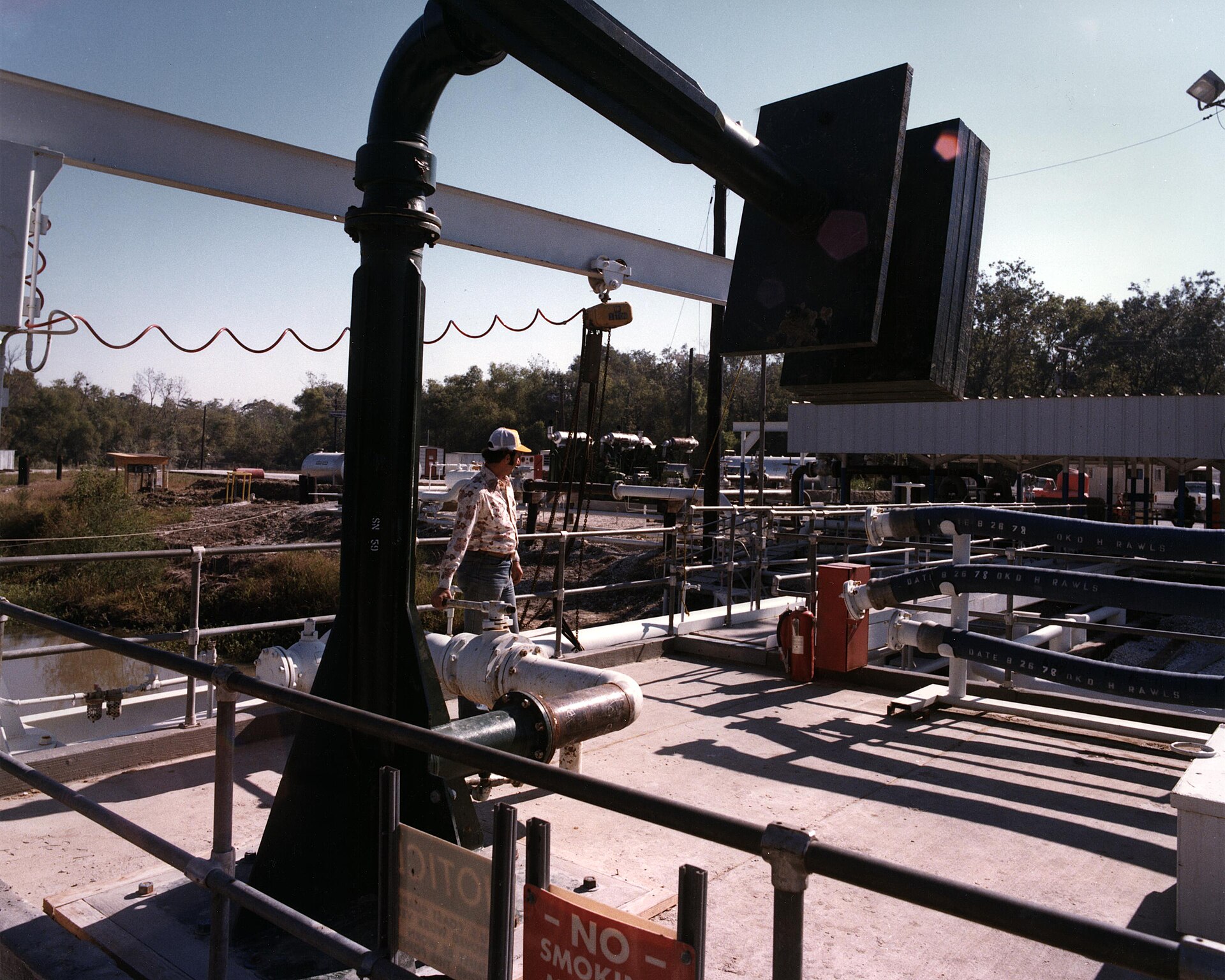
Brent crude futures traded at approximately $90.77 per barrel as of mid-morning Eastern Time on Wednesday, a 3.4 percent gain from the previous session’s close but well below the near-$120 peak reached earlier in the week, according to CNBC. West Texas Intermediate crude tracked at roughly $87 per barrel. The initial market reaction was paradoxically bullish — prices rose on the day of the announcement, as traders interpreted the scale of the release as confirmation of the severity of the supply shock, a pattern that echoed the first days of the 2022 Ukraine release.
The U.S. Energy Information Administration forecast that Brent would average approximately $91 per barrel in the second quarter of 2026, reflecting the offsetting effects of the reserve release against ongoing Hormuz disruption. The $35-per-barrel intraday crash that followed a now-deleted post by U.S. Energy Secretary Chris Wright claiming the Navy had escorted a tanker through Hormuz demonstrated the extreme sensitivity of crude markets to any signal that the strait might reopen.
Energy analysts offered a mixed verdict on the announcement’s staying power:
These releases of the IEA’s stocks really buy us a few days. The critical factor is the conflict’s duration — if this conflict needs to end by the end of the week. Otherwise, we’ll see oil prices spike back up over $100.
Sasha Foss, energy market analyst, quoted by Fortune, March 11, 2026
Rapidan Energy Group and Wood Mackenzie both described the Hormuz closure as the “biggest oil supply disruption in history,” according to CNBC. The IEA’s own modelling suggested that even with the full 400-million-barrel release, prices would remain elevated above $85 per barrel as long as the strait remained closed to tanker traffic.
Why Analysts Say 400 Million Barrels May Not Be Enough
The central problem facing the IEA is one of arithmetic. The Hormuz closure removes roughly 20 million barrels per day from global transit — 15 million barrels of crude and 5 million of refined products, according to the EIA. The 400-million-barrel release translates to approximately 2.2 million barrels per day over the 180-day release window, filling barely 11 percent of the daily shortfall.
The remaining gap is partially offset by three factors: Saudi Arabia’s Red Sea exports via the East-West pipeline (approximately 7 million barrels per day at full capacity, according to Aramco), increased production from non-Gulf producers such as the United States, Brazil, and Guyana, and the estimated 2 to 3 million barrels per day of Gulf crude that never transited Hormuz because it was loaded at terminals on the Red Sea or exported via pipeline to the Mediterranean.
Even with these offsets, energy consultancy Rystad Energy estimated a net global supply shortfall of 3 to 5 million barrels per day, according to Fortune. At that rate, the 400-million-barrel reserve release extends the world’s buffer by 80 to 133 days — a meaningful but finite lifeline.
The IEA confirmed those fears in its March Oil Market Report released one day later, declaring the crisis the largest oil supply disruption in the history of the global oil market, with total output falling by 8 million barrels per day.
| Category | Volume (million bpd) | Notes |
|---|---|---|
| Pre-war Hormuz transit volume | ~20.0 | 15M crude + 5M products (EIA) |
| Saudi East-West pipeline (Yanbu) | ~7.0 | At full capacity (Aramco CEO) |
| IEA reserve release (daily rate) | ~2.2 | 400M barrels over 180 days |
| Non-Hormuz Gulf exports | ~2.5 | Red Sea/Mediterranean routes |
| Increased non-Gulf production | ~1.0 | US, Brazil, Guyana (estimated) |
| Estimated net shortfall | 3.0 – 5.0 | Rystad Energy estimate |
The shortfall has direct implications for Saudi Arabia’s wartime economic calculations. The Kingdom’s fiscal breakeven oil price — the price needed to balance the government budget — was approximately $96 per barrel for 2026, according to the International Monetary Fund. With Brent hovering near $91 and export volumes sharply reduced, the combination of lower prices and lower volumes risks opening a significant budget deficit during the most expensive military deployment in Saudi history.
How This Compares to Previous IEA Emergency Releases
The IEA has now released emergency stockpiles six times in its history, each triggered by a distinct supply disruption. The trajectory of these interventions reveals a pattern of escalating severity and diminishing effectiveness, as the crises provoking them have grown larger while the reserves available to counter them have not expanded proportionately.
The first release, during the 1991 Gulf War, totalled just 17 million barrels — less than one day’s current global consumption. It was nonetheless effective because the supply disruption from the Iraqi invasion of Kuwait was partially offset by increased Saudi production, and the war ended quickly. The 2005 release after Hurricane Katrina (60 million barrels) and the 2011 Libya release (also 60 million barrels) were similarly modest, targeting disruptions that removed 1 to 2 million barrels per day from global supply.
The 2022 Ukraine release marked a step change. At 182.7 million barrels, it was three times larger than any previous intervention. But the actual supply disruption was far smaller than feared — Russian oil continued to flow to China, India, and Turkey, and the real shortfall was estimated at 1 to 2 million barrels per day at its peak. The 2026 Hormuz crisis dwarfs it in every dimension: the disruption is three to five times larger, the release is twice as big, and the uncertainty about duration is far greater. Diplomatic efforts to resolve the supply crisis are intensifying: Trump and Putin discussed ending the Iran war on the same day the IEA announced the release, with Trump signalling he would lift certain oil sanctions to stabilise prices.
The Aramco earnings call on March 10 offered the starkest assessment. CEO Amin Nasser warned of “catastrophic consequences” for the oil market and the global economy if the halt to Strait of Hormuz traffic continued, according to Bloomberg. Nasser declined to estimate when normal shipping might resume, saying only that Aramco was “doing everything technically possible” to maximise exports through the Red Sea route.
The sheer scale of the IEA response underscores a deeper tension at the heart of global energy policy: strategic reserves exist precisely because the world remains structurally dependent on fossil fuels. As an analysis of the Iran war’s impact on the energy transition debate reveals, the conflict has strengthened Saudi Arabia’s argument that the world cannot safely reduce oil supply before alternatives operate at sufficient scale.
A deeper analysis of the reserve depletion mathematics reveals that the 400-million-barrel release provides approximately fifty days of coverage against the Hormuz shortfall — far less than required if the war continues through April and May.
Frequently Asked Questions
How much oil is the IEA releasing?
The IEA is releasing up to 400 million barrels from the strategic reserves of its 32 member nations. This is the largest emergency release in the agency’s 52-year history, more than doubling the 182.7 million barrels released in 2022 following Russia’s invasion of Ukraine. The release will be coordinated over a 180-day window, with the first barrels expected to reach markets by late March 2026.
Why was the emergency release triggered?
The release was triggered by the effective closure of the Strait of Hormuz following the outbreak of the US-Israeli military operation against Iran on February 28, 2026. Iran’s IRGC declared the strait a military exclusion zone, firing on commercial vessels and laying naval mines. Approximately 20 million barrels per day of crude and refined products normally transit the waterway, making the disruption the largest single oil supply loss in modern history according to the IEA.
Will the reserve release be enough to prevent an oil price crisis?
Analysts are sceptical. At 400 million barrels spread over 180 days, the release adds approximately 2.2 million barrels per day to global supply — filling about 11 percent of the estimated 20 million barrel daily shortfall. Energy analyst Sasha Foss told Fortune the reserves “buy us a few days” and that prices could spike back above $100 if the conflict continues. The EIA forecasts Brent averaging $91 per barrel in Q2 2026.
How does this affect Saudi Arabia’s oil exports?
Saudi Aramco has cut production from 10.1 million barrels per day to between 8 and 9 million bpd as onshore storage fills. The Kingdom has rerouted exports through its East-West pipeline to Yanbu on the Red Sea, which is approaching its full capacity of 7 million barrels per day. The IEA release moderates global prices, reducing the premium Saudi Arabia earns on exported barrels, but also helps stabilise the economies of Saudi Arabia’s largest customers in Asia and Europe.
Have IEA reserve releases worked in the past?
Results have been mixed. The 2022 release after the Ukraine invasion helped push Brent crude from approximately $120 to $80 per barrel over several months. The 2011 Libya release had a more modest impact, reducing prices by about 8 percent. In each case, however, the release bought time for supply adjustments and diplomatic solutions to take effect. The 2026 crisis is fundamentally different because the supply disruption is far larger and the timeline for resolution remains unknown. Iraq’s subsequent decision to suspend all oil port operations after drone boat strikes near Basra further underscored the inadequacy of the reserve release against a rapidly expanding supply crisis.