
NEW DELHI — The Iran war has placed India in the most precarious strategic position of the twenty-first century. With 9 million citizens scattered across Gulf states now under Iranian missile fire, an economy that imports 88 percent of its crude oil, and a $51 billion annual remittance pipeline from the Persian Gulf suddenly at risk, the world’s most populous democracy faces a crisis that no amount of diplomatic ambiguity can resolve. Prime Minister Narendra Modi’s decision to visit Israel and address the Knesset just two days before American and Israeli forces struck Iran has collapsed the carefully constructed illusion of Indian neutrality, leaving New Delhi exposed on every front — strategic, economic, and humanitarian — precisely when it can afford exposure least.
The numbers alone are staggering. India’s crude oil import bill, already running at $157 billion annually, faces a potential $14 billion increase for every sustained $10 rise in the barrel price. The rupee has cratered to a record 92 against the dollar. Qatar, which supplies nearly half of India’s liquefied natural gas, has already cut industrial deliveries by 40 percent. And in the construction camps and office towers of Riyadh, Dubai, and Doha, millions of Indian workers — the human infrastructure that built the modern Gulf — are weighing whether to stay and earn or flee and survive. This is the anatomy of India’s Gulf crisis, and it threatens to reshape the country’s foreign policy, its economy, and its relationship with Saudi Arabia for a generation.
Table of Contents
- How Dependent Is India on Gulf Oil and Why Does the Hormuz Closure Matter?
- The $51 Billion Pipeline — India’s Remittance Lifeline Under Threat
- What Happens to 9 Million Indian Workers if the Gulf War Escalates?
- Modi’s Israel Visit — The Two Days That Defined India’s War Position
- Why Did India Freeze the Chabahar Port Deal with Iran?
- The Oil Tanker Problem — How Saudi Crude Reaches Indian Refineries
- How Is India Evacuating Citizens from the Gulf War Zone?
- How Is the Iran War Reshaping Indian Domestic Politics?
- The Rupee’s Record Collapse and What It Means for 1.4 Billion People
- India’s Gulf Exposure Matrix — Measuring the True Cost of the Crisis
- India’s Russian Oil Lifeline — Washington’s 30-Day Gamble
- Will the $100 Billion Saudi Investment Promise Survive the War?
- Can India Maintain Neutrality Between Saudi Arabia and Iran?
- Frequently Asked Questions
How Dependent Is India on Gulf Oil and Why Does the Hormuz Closure Matter?
India imports approximately 87.7 percent of its total crude oil consumption from overseas, making it the world’s third-largest oil importer behind China and the United States. Of this, Persian Gulf producers — Iraq, Saudi Arabia, the UAE, Kuwait, Qatar, and Oman — collectively supply around 46 percent of India’s crude imports, according to India’s Petroleum Planning and Analysis Cell data for fiscal year 2025. The effective closure of the Strait of Hormuz since early March 2026 has therefore severed nearly half of India’s primary oil supply channel.
The geographic mathematics are unforgiving. Approximately 84 percent of all crude oil transiting the Strait of Hormuz is destined for Asian markets, with India among the top three recipients. While New Delhi has worked to diversify its supply base — Russian crude’s share surged from 1 percent in 2017 to 36 percent by 2024 — the Gulf remains irreplaceable for several structural reasons. Middle Eastern crude grades match Indian refinery configurations. Transportation times from the Gulf to western Indian ports average 5-7 days, compared to 35-40 days from alternative suppliers. And the sheer volume required — India consumed 5.4 million barrels per day in 2025, according to the International Energy Agency — means that no single alternative source can replace Gulf supplies at scale.
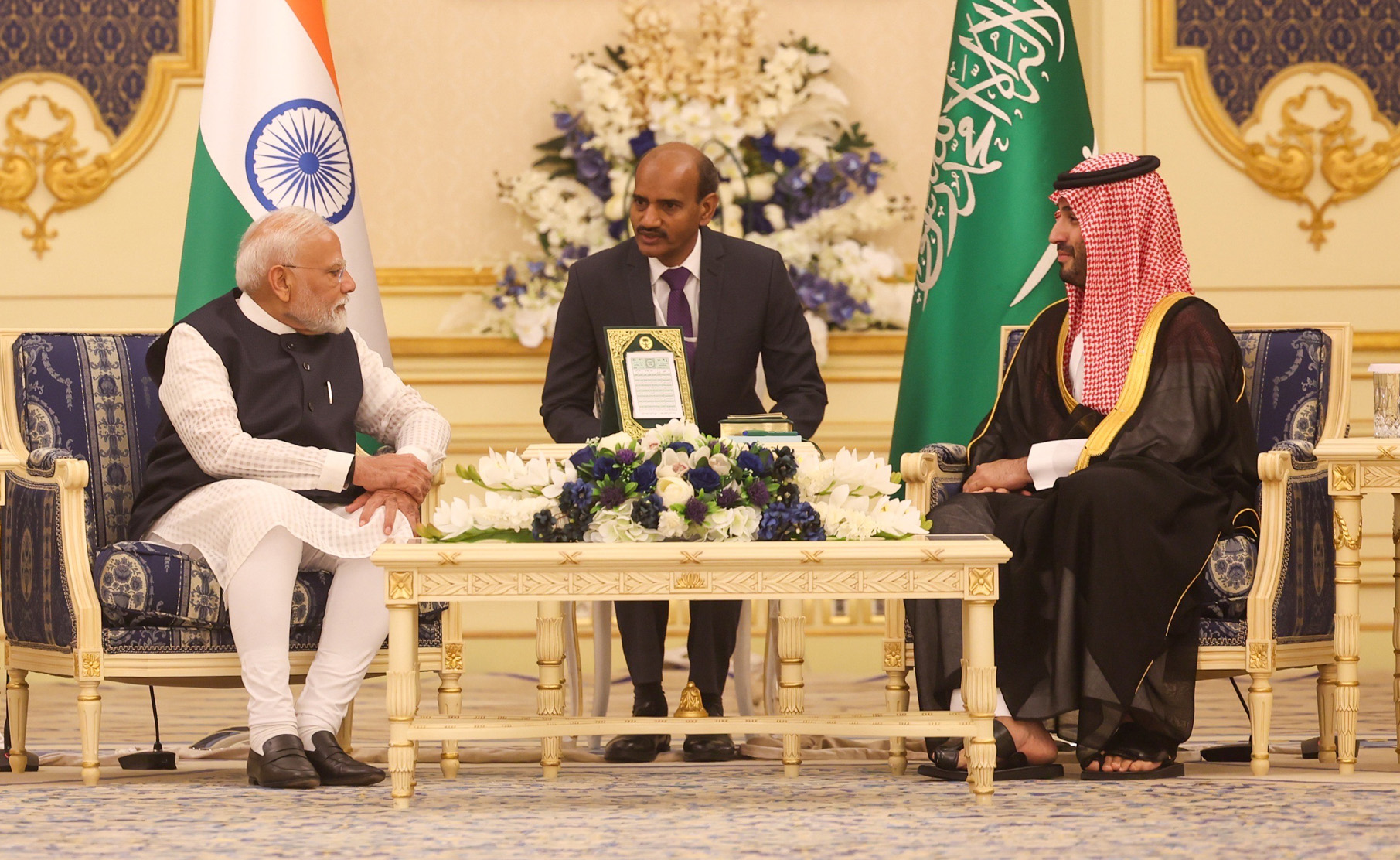
Saudi Arabia specifically has been India’s second or third-largest crude supplier in recent years, providing between 11 and 20 percent of total imports depending on market conditions. But this headline figure understates the Kingdom’s importance. Saudi Aramco holds equity stakes in Indian refining capacity through its $44 billion partnership with Reliance Industries at the Jamnagar complex — the world’s largest refining hub — and committed an additional $50 billion in energy-related investments during Crown Prince Mohammed bin Salman’s meeting with Modi in Jeddah in April 2025. Two new joint oil refineries, each with 9-million-ton annual capacity, were announced at that summit. Every one of those plans now faces an indefinite freeze.
The Hormuz chokepoint carries additional significance beyond crude. Qatar supplies approximately 50 percent of India’s liquefied natural gas imports, and since the Strait’s effective closure, LNG deliveries have been cut by up to 40 percent for Indian industrial users and city gas distribution companies, according to the Petroleum and Natural Gas Regulatory Board. Fertilizer feedstock, petrochemical inputs, and cooking gas supplies all depend on the same waterway. India’s energy vulnerability is not merely a crude oil problem — it is a full-spectrum dependency that touches every household and factory in the country.
The $51 Billion Pipeline — India’s Remittance Lifeline Under Threat
India is the world’s largest recipient of international remittances, receiving $135.4 billion in fiscal year 2025, according to the Reserve Bank of India. Of this, $51.4 billion — roughly 38 percent — flowed from the six Gulf Cooperation Council countries. The UAE alone contributed 19.2 percent of total remittances, Saudi Arabia 6.7 percent, and Qatar 4.1 percent. These are not abstract financial flows. They are monthly wire transfers that pay school fees in Kerala, fund home construction in Bihar, and keep small businesses alive in Tamil Nadu.
The architecture of this remittance pipeline explains why the Iran war poses a systemic risk. The typical Indian Gulf worker — a construction labourer, taxi driver, nurse, or IT professional — earns between $500 and $3,000 per month and sends 40-60 percent home. The 9 million Indians in the Gulf collectively support an estimated 30-40 million dependents in India. When conflict disrupts employment, closes businesses, or triggers evacuations, the financial consequences cascade through entire Indian states. Kerala, which receives the single largest share of Gulf remittances relative to its economy, could face a localized recession if the crisis persists beyond three months.
CNBC reported on March 5, 2026, that the remittance pipeline faces a “triple threat” from the conflict: physical disruption as banking and transfer services face operational challenges in war-affected areas; employment loss as construction and hospitality projects halt; and currency effects as the weakening rupee paradoxically increases the rupee value of remittances but signals broader economic distress that could undermine the purchasing power of those receipts.
The Indian government has not yet published official estimates of the remittance impact. But extrapolating from the 2020 COVID disruption — when Gulf remittances fell approximately 17 percent year-on-year — a sustained three-month conflict could reduce Gulf remittance flows by $8-12 billion annualized. For context, this exceeds the entire annual budget allocation for India’s rural employment guarantee scheme, the largest social safety net programme in human history.
What Happens to 9 Million Indian Workers if the Gulf War Escalates?
Approximately 9 million Indian citizens live and work across the Gulf states, making the Indian diaspora the largest foreign workforce in the region. Their distribution, according to India’s Ministry of External Affairs, follows the Gulf’s economic geography: 3.9 million in the UAE, 2.75 million in Saudi Arabia, over 1 million in Kuwait, 830,000 in Qatar, 662,000 in Oman, and 347,000 in Bahrain. The majority are male, working in construction, retail, hospitality, healthcare, and professional services. Most are either unmarried or have families waiting in India.
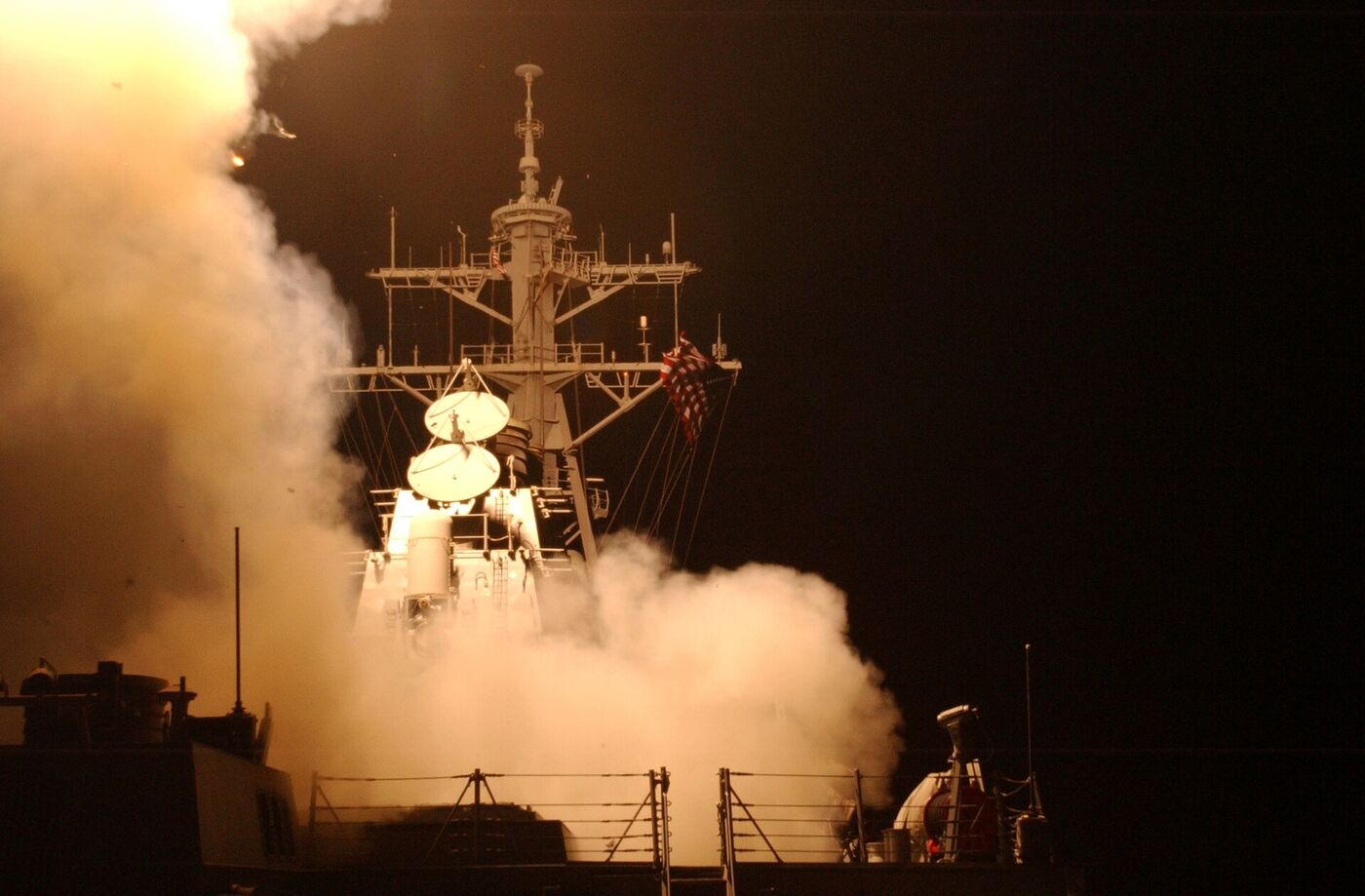
The Iranian missile and drone campaign that began on February 28, 2026, transformed these workers from economic assets into a humanitarian liability almost overnight. As the war enters its third week, migrant workers across the Gulf bear a disproportionate share of civilian casualties, with at least eight of fourteen confirmed deaths being foreign nationals. Iranian strikes have hit targets across every GCC member state. Saudi Arabia has intercepted dozens of missiles and drones over its major cities. The UAE has faced attacks on critical infrastructure. Workers in the Eastern Province of Saudi Arabia — the heart of the oil industry and home to large Indian communities — found themselves within range of ballistic missiles for the first time since the 1991 Gulf War.
India’s historical experience with Gulf evacuations provides both reassurance and warning. In 1990, India airlifted 111,711 citizens from Kuwait in what remains the largest civilian airlift in history, a feat recognised by the Guinness World Records. In 2015, Operation Raahat evacuated 4,640 Indians from Yemen. But neither operation approached the scale of what a full Gulf evacuation would require. Moving even 10 percent of the 9 million diaspora — 900,000 people — would dwarf any previous effort and require sustained airlift capacity that India does not currently possess, particularly with Gulf airspace restrictions in effect.
The scale of civilian exposure is without modern precedent for India. During the 1990 Kuwait invasion, approximately 172,000 Indians required evacuation. During the 2006 Lebanon war, India evacuated 2,280 citizens. The current crisis places not thousands but millions of Indian nationals within range of ballistic missiles and kamikaze drones, across six sovereign territories simultaneously, with no clear end date and no guarantee of airspace safety for evacuation flights. India’s National Disaster Management Authority, which coordinates overseas crisis response, has activated its highest alert level — a status previously reserved for domestic catastrophes like the 2004 tsunami and the 2015 Nepal earthquake.
The risk to South Asian workers in Saudi Arabia is no longer abstract. A projectile strike on a residential compound in Al-Kharj killed two Bangladeshi nationals, marking the first civilian deaths on Saudi soil since the war began. Al-Kharj sits near Prince Sultan Air Base, and the victims were the very category of construction-sector workers whose vulnerability Indian officials have privately cited as their worst-case scenario.
The professional composition of the diaspora adds complexity. India cannot simply evacuate and absorb millions of returning workers without economic consequences at both ends. The loss of Indian labour would cripple Gulf construction projects, hospital staffing, and IT operations. The sudden arrival of millions of unemployed workers in India would strain housing, social services, and an already tight job market. The interdependence runs both ways, creating a situation where neither departure nor continued presence is without significant cost.
Modi’s Israel Visit — The Two Days That Defined India’s War Position
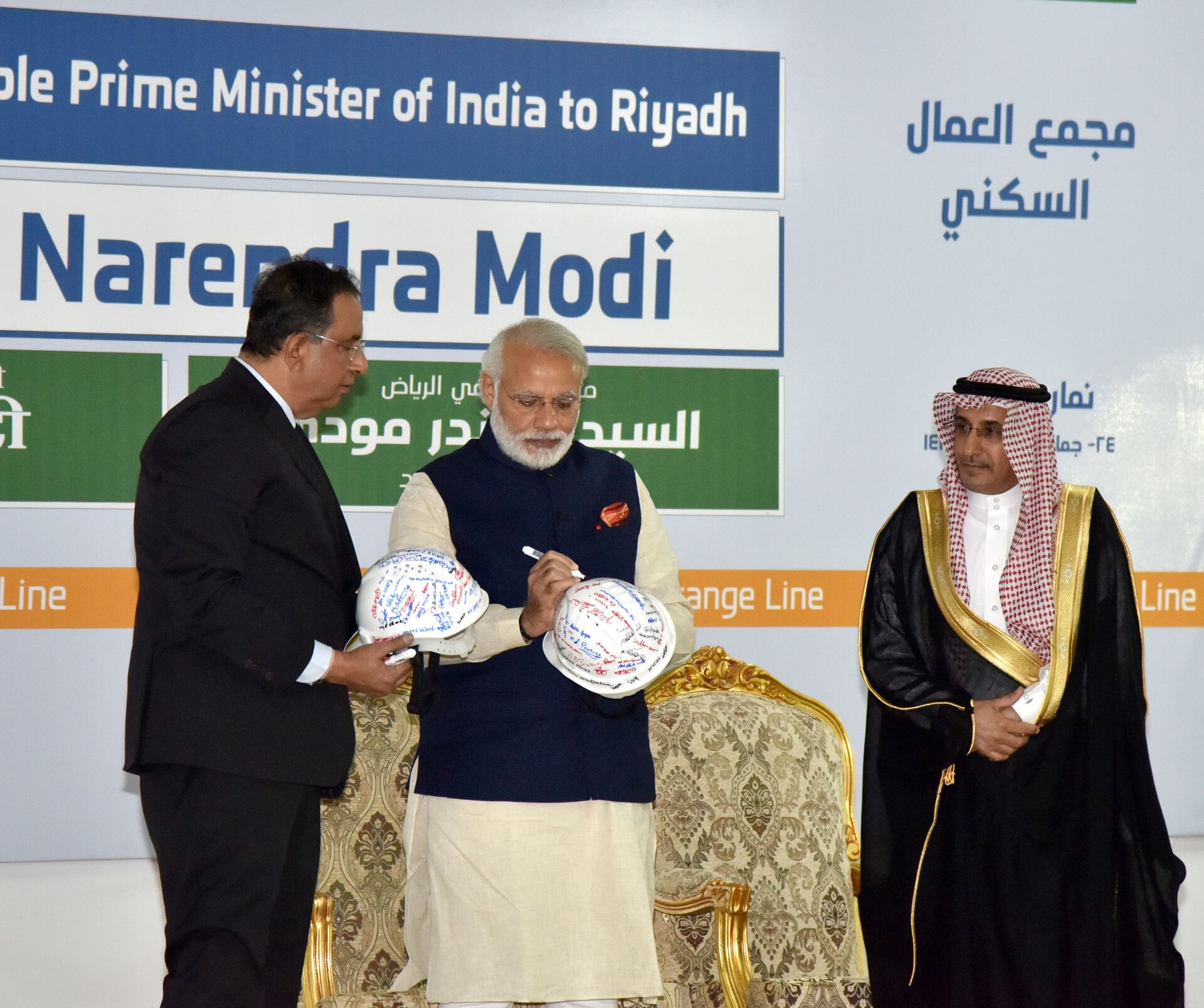
On February 26, 2026 — exactly 48 hours before American and Israeli warplanes struck Iranian nuclear facilities and military installations — Prime Minister Narendra Modi stood in the Knesset in Jerusalem and declared: “India stands with Israel, firmly, with full conviction, in this moment, and beyond.” The statement, widely broadcast across global media, was accompanied by Modi’s characteristic embrace of Israeli Prime Minister Benjamin Netanyahu, a visual that would become one of the most consequential images of the crisis.
Whether Modi knew about the impending strikes remains a matter of fierce debate in New Delhi. Indian opposition leaders insist that the timing was either spectacularly reckless or quietly complicit. Bloomberg reported on March 1 that Modi faced immediate “backlash over Israel trip days before Iran attacks.” The Diplomat went further, arguing that the visit placed “India firmly in the Israel-US camp” — a position that decades of Indian foreign policy had carefully avoided.
The contrast with India’s response to the actual strikes was jarring. When Iran retaliated against American bases and Gulf state infrastructure, Modi swiftly condemned the attacks on social media. But when asked to comment on the US-Israeli strikes that killed Supreme Leader Ayatollah Khamenei and devastated Iran’s military infrastructure, the Ministry of External Affairs issued only a measured statement expressing “deep concern” and noting that the situation “evokes great anxiety.” The asymmetry was not lost on Tehran, or on India’s domestic opposition.
Asia Times published an analysis on March 3 headlined “Modi’s silence on Iran lost India’s voice in the Middle East,” arguing that decades of carefully calibrated non-alignment had been sacrificed in a single week. Opposition leader Sonia Gandhi described the government’s posture not as neutrality but as “abdication” and a “grave betrayal” of India’s traditional balanced approach to Middle Eastern politics. The Wire noted that Modi’s silence was “at odds with the roots of India’s foreign policy” — a reference to the non-aligned movement that Jawaharlal Nehru helped found.
For Saudi Arabia, India’s positioning matters enormously. The Kingdom itself is navigating an impossible position — having quietly encouraged the weakening of Iran while now absorbing the retaliatory consequences. An India that aligns openly with the US-Israeli axis could complicate Riyadh’s own delicate diplomatic positioning, particularly as MBS privately tells Gulf allies to avoid escalatory steps that could widen the conflict. Saudi Arabia needs partners who can talk to all sides. India just demonstrated that it may no longer be one of them.
Why Did India Freeze the Chabahar Port Deal with Iran?
India’s decade-long investment in Iran’s Chabahar port — a strategic gateway to Afghanistan and Central Asia that bypasses Pakistan entirely — has been one of New Delhi’s most ambitious geopolitical infrastructure projects. In May 2024, India signed a landmark 10-year agreement to operate the Shahid Beheshti terminal, securing a foothold on the Arabian Sea’s Iranian coast. By January 2026, that agreement was effectively dead.
India allocated zero funding for Chabahar development in its 2026 financial year budget, according to Caspian Post. The freeze was driven by a convergence of pressures. President Trump’s January 12, 2026, executive order warned that any country doing business with Iran would face a 25 percent tariff on all trade with the United States. For India, whose bilateral trade with the US exceeded $190 billion in 2025, the mathematics were straightforward: Chabahar’s strategic value, however real, could not justify a 25 percent tariff on a trade relationship forty times larger.
India reportedly informed the US Treasury’s Office of Foreign Assets Control that it intended to “wind down all activities” at the port, including operations at the Shahid Beheshti terminal, according to Foreign Policy. However, the Indian government publicly denied a full exit, stating it was “in talks with the US for extension of the waiver.” A six-month conditional sanctions waiver, valid until April 26, 2026, provides a narrow window for diplomatic manoeuvring. But the onset of war has made any renewal virtually impossible.
The Chabahar freeze carries implications far beyond port operations. It signals the effective end of India’s strategy of maintaining equidistant relationships with both Saudi Arabia and Iran — a balancing act that has underpinned Indian Middle East policy since the 1990s. Iran viewed the port deal as evidence of India’s strategic commitment. Its abandonment, combined with Modi’s Knesset address, has demolished whatever remained of the India-Iran strategic partnership at precisely the moment when Iran is most desperate for international support.
The threat to Chabahar escalated further on 16 March 2026 when US fighter jets struck IRGC military facilities within kilometres of the Indian-operated Shahid Beheshti terminal, placing India’s $370 million port investment directly in the crosshairs of the American air campaign.
The Oil Tanker Problem — How Saudi Crude Reaches Indian Refineries
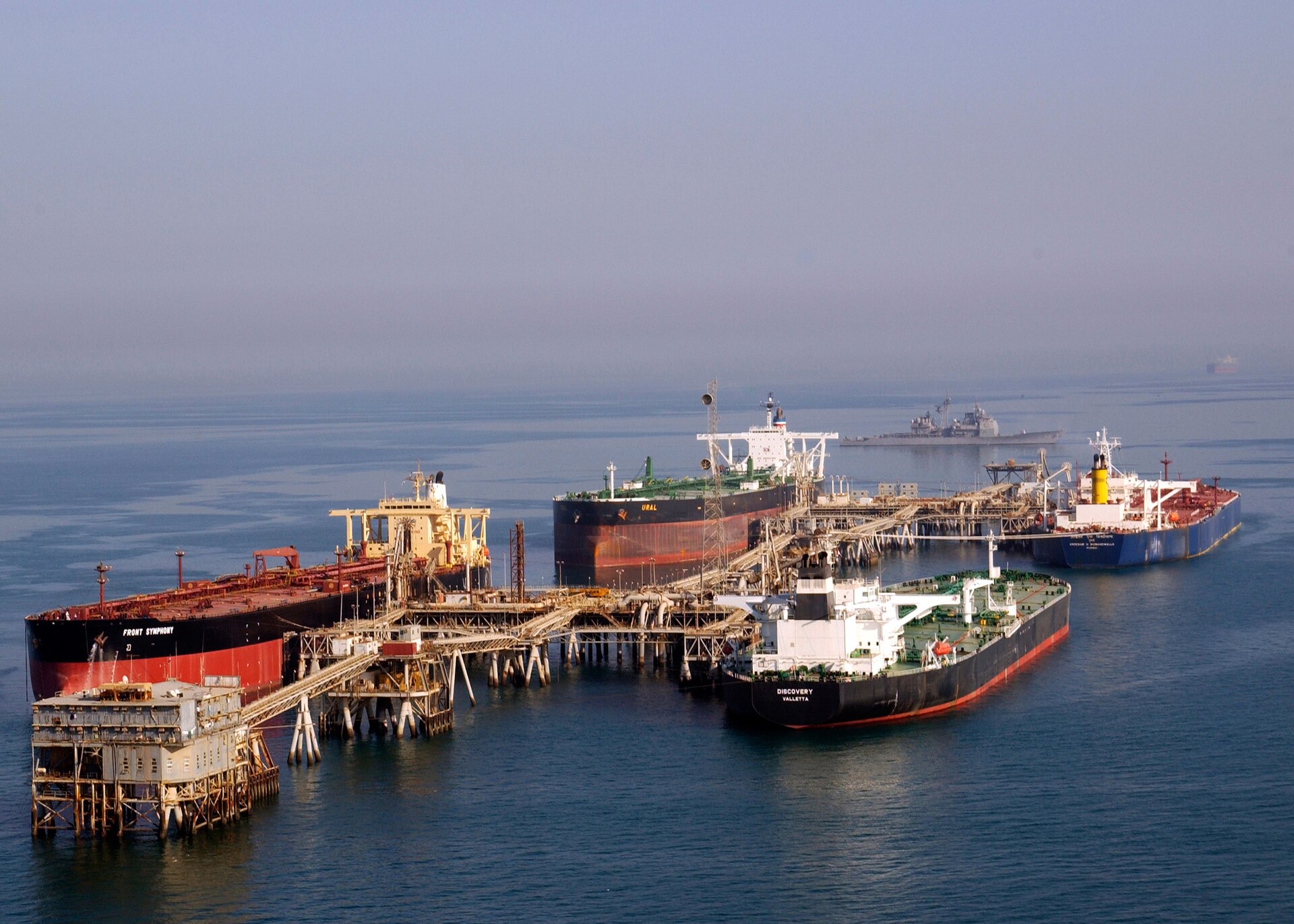
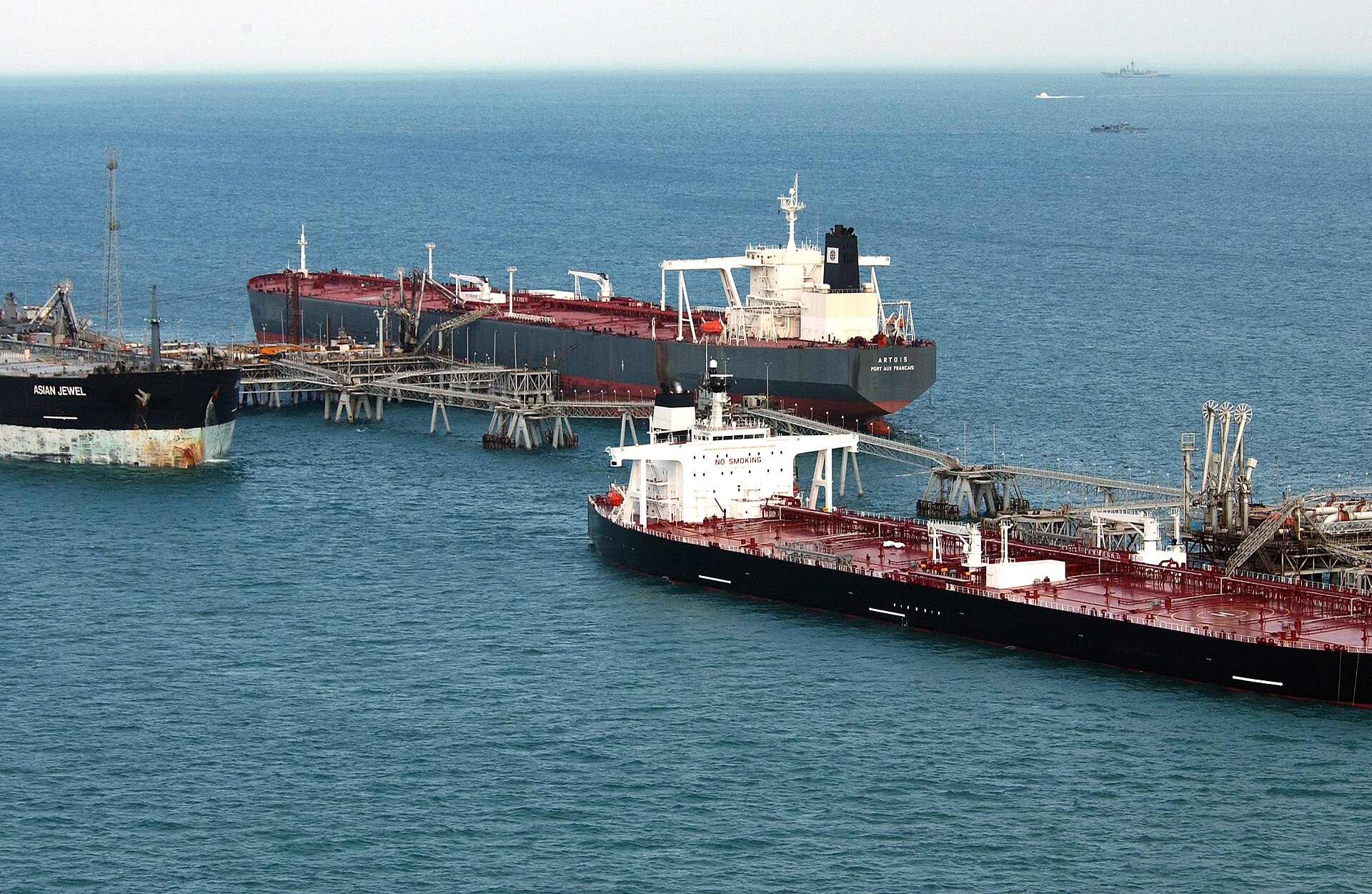
The physical infrastructure of India’s oil supply from Saudi Arabia reveals vulnerabilities that no amount of diplomatic manoeuvring can address. Under normal conditions, Saudi crude travels from Ras Tanura — the world’s largest offshore oil loading facility — through the Strait of Hormuz and across the Arabian Sea to Indian refining hubs at Jamnagar (Gujarat), Mangalore (Karnataka), and Chennai (Tamil Nadu). The journey takes 5-7 days. Since February 28, 2026, this route has been effectively severed.
The Ras Tanura facility itself has been hit by Iranian drones, forcing Aramco to shut down the refinery complex and reroute exports through the East-West Pipeline to the Red Sea port of Yanbu. But Yanbu’s loading capacity is a fraction of Ras Tanura’s, and the pipeline’s maximum throughput of 5 million barrels per day must serve all of Saudi Arabia’s export commitments, not just India’s allocation. Aramco is now rationing Red Sea export slots among its largest customers, and India — despite being the third-largest buyer — competes with Japan, South Korea, and China for limited capacity.
Indian refineries are not interchangeable components. Each is configured for specific crude grades. The Jamnagar complex, jointly operated by Reliance Industries and Saudi Aramco, processes Arab Light and Arab Extra Light grades. Switching to alternative crudes — West African Bonny Light, American West Texas Intermediate, or Russian Urals — requires recalibration that takes weeks and reduces efficiency. India’s Petroleum Ministry instructed refiners on March 6 to “maximise LPG output” from available feedstock, a tacit acknowledgment that crude supply diversification is proceeding slowly.
The financial dimension compounds the physical challenge. Saudi crude sold to India under long-term contracts has historically been priced $2-4 below spot market rates, reflecting the strategic relationship between the two countries. Replacement crude purchased on the spot market in March 2026 carries a war premium that Bloomberg estimated at $8-12 per barrel above pre-crisis levels. For India’s three major public-sector oil marketing companies — Indian Oil Corporation, Bharat Petroleum, and Hindustan Petroleum — the combined additional cost could exceed $1 billion per month, a burden that will ultimately be passed to Indian consumers through higher fuel and cooking gas prices.
How Is India Evacuating Citizens from the Gulf War Zone?
India’s Civil Aviation Ministry green-lit 58 special evacuation flights on March 4, 2026, split between national carrier Air India and budget giant IndiGo, according to official government releases. IndiGo deployed 10 dedicated relief aircraft to Jeddah specifically to ferry home Umrah pilgrims and stranded workers who had been living in airport terminals for days after the cancellation of over 12,000 flights globally. An initial cohort of 200 Indians rescued from Jeddah arrived at Ahmedabad’s Sardar Vallabhbhai Patel International Airport on a special IndiGo relief flight in what was described as an “emotional homecoming.”
The evacuation effort, while significant, faces structural limitations that distinguish it from India’s celebrated 1990 Kuwait airlift. Gulf airspace remains contested, with Iranian missiles and drones transiting routes normally used by commercial aviation. Saudi Arabia’s General Authority of Civil Aviation has restricted flight corridors, and several airports in the Eastern Province — home to large Indian communities — have experienced operational disruptions. Unlike the 1990 operation, where Iraq had no capacity to threaten civilian aircraft, the current conflict involves a state actor with long-range precision strike capability that has already penetrated Saudi air defenses.
The Indian government has activated its crisis management framework, with Indian embassies across the Gulf operating 24-hour helplines and coordinating with local authorities. But the sheer geographic dispersal of the diaspora — spread across six countries, dozens of cities, and thousands of work sites — makes centralised coordination extraordinarily difficult. Workers on remote construction sites in Saudi Arabia’s northern regions or at NEOM-related projects have limited access to consular services. Small business owners in Dubai’s commercial districts face a different set of challenges: evacuating means abandoning enterprises that represent their life savings.
The economic calculus of evacuation is also deeply personal. A construction worker earning $800 per month in Riyadh supports a family of six in Uttar Pradesh. Returning to India means zero income and fierce competition for domestic jobs. Staying means exposure to a war zone where missile interceptions occur overhead nightly. For many, the decision is not whether to leave but whether they can afford to. This dynamic helps explain why, despite government evacuation offers, the vast majority of the Indian diaspora has so far chosen to remain — a calculation that could change instantly if the conflict escalates further or if a missile strike causes mass civilian casualties in a Gulf city.
How Is the Iran War Reshaping Indian Domestic Politics?
The Iran war has opened a domestic political fault line in India that cuts across traditional party boundaries and threatens Modi’s carefully cultivated image as a strong leader on the international stage. The opposition Congress Party, led by Sonia Gandhi and Rahul Gandhi, has seized on the government’s handling of the crisis with an intensity not seen since the 2020 Chinese border standoff. Gandhi’s characterisation of Modi’s posture as “abdication” rather than neutrality — and her description of the Knesset visit as a “grave betrayal” of India’s non-aligned heritage — has resonated with segments of Indian public opinion that instinctively distrust alignment with any military bloc.
The left parties, including the Communist Party of India (Marxist), have gone further, framing the crisis as evidence of a fundamental reorientation of Indian foreign policy away from its founding principles. The Wire published an analysis arguing that Modi’s silence on the US-Israeli strikes was “at odds with the roots of India’s foreign policy,” invoking Jawaharlal Nehru’s non-aligned movement as a benchmark against which the current government’s choices fall short. For India’s Muslim population of approximately 200 million — the world’s third-largest Muslim community — the perception that New Delhi endorsed an attack that killed the Supreme Leader of a Muslim-majority country carries particular domestic sensitivity.
Modi’s supporters counter that neutrality is a luxury India cannot afford when its citizens are under fire and its energy supplies are at risk. The ruling BJP has pointed to the evacuation operations, the Russian oil waiver negotiations, and the government’s diplomatic contacts with all parties as evidence of pragmatic crisis management rather than ideological alignment. External Affairs Minister S. Jaishankar has publicly maintained that India’s position is determined by “national interest, not alignment,” though critics note the widening gap between this rhetoric and the government’s visible actions.
The political dimension matters for Saudi Arabia because it affects the durability of India’s strategic choices. If the war contributes to a weakening of Modi’s domestic position — or if opposition parties gain traction on the “abandonment of neutrality” narrative — a future Indian government might attempt to rebalance toward Tehran, complicating whatever post-war order Saudi Arabia helps construct. Democratic countries, unlike monarchies, cannot guarantee the continuity of strategic choices across electoral cycles. This structural uncertainty is one reason why Gulf states have historically diversified their Asian partnerships rather than relying exclusively on any single democracy.
The Rupee’s Record Collapse and What It Means for 1.4 Billion People
The Indian rupee slid to approximately 92 against the US dollar in early March 2026, its weakest level in history, according to Bloomberg. The Reserve Bank of India intervened aggressively through state-run banks, selling dollars to stabilise the currency at around 91.5. But the underlying pressure — driven by soaring oil import costs and capital flight from emerging markets — has not abated. The average price of India’s crude oil basket rose from $63.08 per barrel in January to $85.43 in March, a 35 percent increase in eight weeks.
For an economy of 1.4 billion people, currency depreciation combined with energy inflation creates a compound effect that reaches every household. India’s petroleum products are partially price-controlled — the government absorbs some of the increase through reduced excise duties and marketing margin compression. But this fiscal cushion has limits. BusinessToday reported on March 6 that the “falling rupee and rising crude oil prices could change Budget math,” suggesting that India’s fiscal deficit target of 4.5 percent of GDP for 2026-27 may be breached.
The transmission mechanism is well-understood. Higher crude prices raise the cost of diesel, which in turn increases transportation costs for every commodity in India’s supply chain. Food prices, already sensitive to monsoon variability, face additional upward pressure from fertiliser costs — 33 percent of the world’s fertiliser supply transits the Strait of Hormuz, with exports from Qatar, Saudi Arabia, and the UAE all disrupted. Analysts at Nomura estimated that a sustained $10 per barrel increase could add 0.3-0.5 percentage points to India’s headline inflation rate, pushing it above the RBI’s 6 percent upper target band and forcing tighter monetary policy at exactly the wrong moment for growth.
The hundred-dollar barrel scenario that some analysts now consider plausible would constitute an economic emergency for India. At $100 per barrel, India’s annual oil import bill would exceed $200 billion — roughly 6 percent of GDP — consuming the entirety of the current account surplus and forcing either a drawdown of foreign exchange reserves (currently $630 billion) or a further depreciation of the rupee. For comparison, India’s 2013 “taper tantrum” currency crisis was triggered by an oil price of $108 per barrel with a smaller economy and lower import dependency. The structural vulnerabilities that created that crisis have, if anything, deepened.
India’s Gulf Exposure Matrix — Measuring the True Cost of the Crisis
Standard analyses of India’s Iran war vulnerability tend to focus on a single variable — oil prices. But the crisis operates across at least seven distinct channels simultaneously, each with its own dynamics and feedback loops. Mapping these channels reveals why India’s Gulf exposure is far greater than any single metric suggests.
| Channel | Pre-War Baseline | Current Status (March 6, 2026) | Worst-Case Scenario | Recovery Timeline |
|---|---|---|---|---|
| Crude Oil Supply | 46% from Gulf | Disrupted; Hormuz closed | 6-month supply deficit | 6-12 months post-ceasefire |
| LNG Supply | 50% from Qatar via Hormuz | 40% cut to industrial users | Full suspension | 3-6 months post-reopening |
| Remittances | $51.4B annually from GCC | Disrupted; banking strained | $8-12B annual decline | 12-18 months |
| Diaspora Safety | 9M citizens in Gulf | 58 flights; 200+ evacuated | Mass evacuation required | 2-5 years for normalisation |
| Currency | ~87 INR/USD | ~92 INR/USD (record low) | 100+ INR/USD | Dependent on oil prices |
| Bilateral Investment | $100B Saudi commitment | Frozen indefinitely | Cancelled or restructured | 2-3 years post-war |
| Fertiliser Supply | 33% transits Hormuz | Severely disrupted | Crop yield decline late 2026 | Next growing season |
The matrix reveals that India’s vulnerability is not merely economic — it is structural and self-reinforcing. A sustained disruption in crude oil supply weakens the rupee, which increases the cost of oil imports, which further weakens the rupee. Reduced remittances lower household spending power in states that are major consumption centres, dampening GDP growth. Fertiliser shortages threaten food production, which feeds inflation, which forces monetary tightening, which slows the economy further. Each channel amplifies the others.
The severity scoring also highlights an under-appreciated vulnerability: the investment channel. Saudi Arabia’s $100 billion investment commitment — announced with considerable fanfare at the Modi-MBS summit in April 2025 — included $50 billion in energy projects, two new refineries, and significant PIF-backed investments in Indian technology and infrastructure. Every dollar of that commitment is now contingent on post-war conditions that may not materialise for years. The two refineries alone would have added 18 million tons of annual processing capacity, reducing India’s reliance on imported refined products. Their indefinite postponement extends India’s refining capacity gap at precisely the moment it is most exposed.
The feedback loop between the diaspora safety channel and the remittance channel deserves particular attention. If India is forced to mount a large-scale evacuation, the immediate humanitarian success would trigger a medium-term economic crisis as remittance flows collapse and millions of returning workers flood the domestic labour market. Conversely, if India chooses not to evacuate — gambling that the conflict remains limited — a single catastrophic strike on a Gulf city with a large Indian population would create a political crisis of the first order, with comparisons to the government’s handling of COVID-era migrant worker distress inevitable.
India’s Russian Oil Lifeline — Washington’s 30-Day Gamble
On March 6, 2026, CNBC reported that the United States had offered India a 30-day waiver to resume purchasing Russian oil — a dramatic reversal of Washington’s years-long campaign to restrict Russian energy revenues. The waiver acknowledges what sanctions architects had long resisted admitting: with Gulf supply disrupted, the global oil market cannot function without Russian barrels, and India cannot function without affordable oil.
Russia’s share of Indian crude imports tells the story of one of the most remarkable energy supply pivots in recent history. In 2017, Russian crude accounted for just 1 percent of India’s oil imports. By 2024, that share had surged to 36 percent, making Russia India’s single largest supplier — ahead of both Saudi Arabia and Iraq. The shift was driven by deep discounts on Russian Urals crude following Western sanctions over the Ukraine invasion, with Indian refiners purchasing at $10-20 below Brent benchmarks. Indian Oil Corporation, Bharat Petroleum, and Hindustan Petroleum all restructured their procurement portfolios to take advantage of the arbitrage.
The 30-day waiver creates a narrow window of opportunity but also a diplomatic trap. If India increases Russian oil purchases to compensate for lost Gulf supply, it deepens a dependency that gives Moscow significant leverage. Russia has already demonstrated willingness to use energy as a political tool, and a wartime India desperate for crude would have minimal negotiating power. Conversely, if India restricts Russian purchases to comply with the spirit (if not the letter) of broader sanctions policy, it faces a supply shortfall that no combination of African, Latin American, and Central Asian sources can fill at the required volume and speed.
The Trump administration’s calculation is transparent: it needs Indian cooperation on Iran (or at least Indian silence) and is willing to offer energy concessions to secure it. For Modi, the waiver provides temporary relief but no structural solution. Thirty days is insufficient to reconfigure refinery operations, negotiate long-term supply contracts, or build the strategic petroleum reserves that India has been accumulating too slowly for a decade. India’s Strategic Petroleum Reserve currently holds approximately 39 million barrels — less than 10 days of import cover, compared to the 90 days recommended by the IEA for its member countries. The inadequacy of this buffer has been a known vulnerability for years, flagged repeatedly by parliamentary committees and energy security analysts. The Visakhapatnam, Mangalore, and Padur underground storage facilities were designed to hold 36.87 million barrels at full capacity, with a second phase planned to add another 48 million barrels. The second phase remains unbuilt. India is confronting a wartime oil crisis with peacetime reserves.
The Russian oil channel itself faces logistical constraints that limit its effectiveness as a Gulf substitute. Russian crude must travel from Baltic, Black Sea, or Pacific ports to Indian refineries — journeys of 25-40 days compared to 5-7 days from the Gulf. Russian export infrastructure, already stretched by European sanctions-driven rerouting, cannot ramp up Indian deliveries overnight. Shipping costs have surged as war-risk insurance premiums escalate across the broader region. And the geopolitical signal of India deepening its Russian energy dependency while nominally supporting the US position creates diplomatic incoherence that neither Washington nor Moscow will fail to exploit.
Will the $100 Billion Saudi Investment Promise Survive the War?
The April 2025 Modi-MBS summit in Jeddah produced the most ambitious bilateral economic agenda in India-Saudi history. Saudi Arabia committed $100 billion in investments across energy, petrochemicals, infrastructure, technology, fintech, telecommunications, pharmaceuticals, and manufacturing. The Public Investment Fund earmarked India as a priority market. Two 9-million-ton-per-year oil refineries were announced. A bilateral trade target of $50 billion was set for fiscal year 2027.
Seven months later, the war has frozen every significant element of this agenda. The two refinery projects — which would have been located in Maharashtra and Andhra Pradesh, creating an estimated 50,000 direct and indirect jobs — require stable crude supply commitments that Aramco cannot currently guarantee. PIF investment decisions, which were already moving slowly through due diligence, have been suspended pending war outcome assessments. Bilateral trade, which stood at $41.87 billion in fiscal year 2025, faces disruption on every major line item: oil, petrochemicals, and agricultural exports.
The deeper question is whether the war will fundamentally alter Saudi Arabia’s investment calculus toward India. The Kingdom’s investment commitments were premised on a stable bilateral relationship and a growing Indian economy. Modi’s Knesset address, the Chabahar port freeze, and India’s perceived alignment with the US-Israeli axis all complicate the political context for Saudi investment decisions. Crown Prince Mohammed bin Salman’s vision for Saudi Arabia’s post-oil future includes diversified international partnerships, and India was positioned as a centrepiece. Whether that positioning survives India’s wartime choices remains an open question.
The war has also disrupted less visible dimensions of the Saudi-India economic relationship. Saudi agricultural imports from India — worth approximately $1.8 billion annually, including basmati rice, spices, and processed foods — face shipping disruptions as commercial vessels avoid Gulf waters. Indian IT services companies with Saudi contracts, including TCS, Infosys, and Wipro, have had to evacuate or relocate staff. Saudi Arabia’s planned participation in Indian startup funding through PIF’s venture capital arm has been paused pending conflict resolution. Each of these disruptions is individually manageable. Collectively, they represent a systemic degradation of a bilateral economic relationship that both countries have spent years building.
There are precedents for rapid recovery. Saudi-Indian economic ties weathered the 2019 Aramco drone attacks, the COVID pandemic, and multiple oil price cycles. The structural complementarity between the two economies — Saudi capital and energy meeting Indian labour and consumption — creates a gravitational pull that transcends individual diplomatic episodes. But the current crisis is of a different order. It involves direct military conflict, disrupted supply chains, and political positioning choices that cannot be easily walked back. The $100 billion promise may ultimately be honoured, but the timeline, terms, and trust environment will be fundamentally different from what was envisioned in the ornate reception rooms of Jeddah eleven months ago.
Can India Maintain Neutrality Between Saudi Arabia and Iran?
The conventional analysis of India’s Middle East policy holds that New Delhi successfully maintained strategic equidistance between Riyadh and Tehran for three decades — buying oil from both, maintaining diplomatic channels with both, and avoiding entanglement in their rivalry. The Iran war has exposed this framework as less a strategy than a circumstance. India did not maintain neutrality through sophisticated diplomacy; it maintained neutrality because the region’s architecture allowed it. That architecture no longer exists.
India’s relationship with Iran was always more transactional than strategic. Chabahar served as a Pakistan bypass route to Afghanistan. Iranian crude provided procurement diversification. Cultural and historical ties — Persian influences on Indian civilisation, shared linguistic heritage — provided diplomatic vocabulary. But India never invested in the relationship at a level comparable to its Gulf partnerships. Total Indian investment in Iran remained below $2 billion over two decades, while Saudi Arabia alone committed $100 billion in a single summit meeting.
The contrarian reading of India’s predicament is that Modi’s Knesset speech, far from being a strategic error, was a calculated bet that the post-war order will be dominated by the US-Israeli-Saudi axis — and that India’s interests are better served by aligning with the likely winners than by clinging to a neutrality that satisfies no one. This interpretation has adherents in New Delhi’s strategic establishment. If Iran emerges from the war weakened, isolated, and potentially regime-changed, India’s Chabahar investment was a depreciating asset anyway. If Saudi Arabia and the US emerge as the architects of a new regional security order, early alignment positions India for preferential treatment in the reconstruction and rebalancing that follows.
The risk of this bet is equally clear. Iran may not be defeated quickly or cleanly. The Houthi dimension in Yemen, Hezbollah’s residual capability, and Iran’s own internal resilience could extend the conflict beyond the “five weeks” that the Trump administration has publicly projected. In a prolonged war, India’s alignment with one side deprives it of the mediating role that its size, location, and relationships could otherwise enable. China and Russia, playing both sides, may capture the diplomatic space that India voluntarily abandoned.
For Saudi Arabia, India’s positioning creates both opportunity and complication. An India firmly aligned with the US-Israeli axis validates Saudi Arabia’s own strategic choices but reduces the Kingdom’s diplomatic flexibility. Riyadh has carefully avoided calling the current conflict a war, preferring “Iranian aggression” framing that preserves the possibility of future de-escalation. An India that has burned its bridges with Tehran makes Saudi de-escalation harder, not easier — because it removes one of the few major powers that could theoretically communicate with both sides.
| Dimension | Pre-War Position | Current Wartime Position | Post-War Trajectory |
|---|---|---|---|
| Saudi Arabia | Strategic partner; $100B investment; top oil supplier | Strained by war disruption; investment frozen | Recovery likely; terms renegotiated |
| Iran | Transactional partner; Chabahar; cultural ties | Effectively adversarial; Chabahar frozen; Knesset speech | Relationship may not recover for a decade |
| United States | Quad partner; growing defence ties | Aligned on Iran; 30-day oil waiver | Deepened alignment; dependency risk |
| Israel | Defence/tech partner; growing openly | Public alignment via Knesset speech | Formalised strategic partnership likely |
| Russia | Major oil supplier; defence partner | Opportunistic oil buyer; diplomatic distance | Transactional but politically constrained |
| China | Rival; border tensions; competing Gulf influence | Both positioned as Gulf mediators | Competition for post-war Gulf influence |
The matrix reveals that India’s wartime choices have simplified its strategic positioning in ways that may prove irreversible. The era of maintaining equidistant relationships across the Middle East’s fault lines is over. India has chosen a side. Whether that choice proves prescient or catastrophic depends on how the war ends, how quickly Gulf energy flows resume, and whether the 9 million Indians in the Gulf survive the period of maximum danger that lies immediately ahead.
The historical parallel that New Delhi’s strategic community quietly invokes is Japan in 1973. When OPEC imposed its oil embargo, Japan — then almost entirely dependent on Middle Eastern crude — discovered that economic prowess without energy security is a form of structural vulnerability that no amount of diplomatic skill can fully mitigate. Japan’s response over the following decades was to diversify supply, build massive strategic reserves, invest in nuclear energy, and develop the world’s most energy-efficient economy. India, facing a similar reckoning fifty-three years later, must decide whether this crisis catalyses a comparable transformation or merely passes as a painful episode to be forgotten when prices normalise and the flights resume.
For the House of Saud, India’s crisis is both a risk and an opportunity. A permanently energy-insecure India is a permanently dependent customer — one that will return to Saudi crude the moment the Strait of Hormuz reopens, regardless of whatever diversification rhetoric New Delhi adopts during the crisis. Saudi Arabia has weathered enough oil crises to know that markets have short memories and customers have shorter ones. The question is whether the collateral damage to bilateral trust — inflicted not by Saudi choices but by Iran’s retaliation and America’s war — can be repaired at the same pace as the physical infrastructure. Steel and concrete rebuild faster than diplomatic confidence, and both Riyadh and New Delhi know it.
Frequently Asked Questions
How many Indian citizens are currently in Saudi Arabia and the broader Gulf region?
Approximately 2.75 million Indian nationals live and work in Saudi Arabia, and roughly 9 million Indians reside across the six GCC countries combined. The UAE hosts the largest Indian diaspora at 3.9 million, followed by Saudi Arabia, Kuwait (1 million), Qatar (830,000), Oman (662,000), and Bahrain (347,000). These workers form the backbone of Gulf construction, healthcare, hospitality, and professional services sectors.
How much oil does India import from Saudi Arabia and the Gulf?
India imports approximately 87.7 percent of its crude oil from overseas. Gulf producers collectively supply around 46 percent of India’s total crude imports, with Saudi Arabia providing between 11 and 20 percent depending on market conditions. The effective closure of the Strait of Hormuz has disrupted these supply flows, forcing India to seek alternative sources including increased Russian crude purchases.
What is the economic impact of the Iran war on India’s currency and inflation?
The Indian rupee fell to a record low of approximately 92 against the US dollar in early March 2026. Crude oil prices rose from $63 per barrel in January to over $85 in March. Analysts estimate that a sustained $10 per barrel increase adds $13-14 billion to India’s annual import bill and could push inflation 0.3-0.5 percentage points above the Reserve Bank of India’s target range.
Is India evacuating its citizens from the Gulf?
India launched evacuation operations beginning March 4, 2026, with 58 special flights approved by the Civil Aviation Ministry. IndiGo deployed 10 relief aircraft to Jeddah for stranded Umrah pilgrims and workers. However, the vast majority of the 9 million Indian diaspora has so far chosen to remain, weighing physical safety risks against the economic consequences of abandoning livelihoods and returning to a tight domestic job market.
What happened to the India-Iran Chabahar port deal?
India effectively froze Chabahar port development by allocating zero funding in its 2026 budget. The freeze was driven by US pressure, including President Trump’s January 2026 executive order imposing 25 percent tariffs on countries doing business with Iran. India’s OFAC sanctions waiver expires April 26, 2026, and the war has made renewal virtually impossible, signalling the likely end of India’s strategic investment in Iranian port infrastructure.
How do Gulf remittances affect the Indian economy?
Indian workers in the six GCC countries sent home $51.4 billion in fiscal year 2025, representing approximately 38 percent of India’s total remittance inflows of $135.4 billion. These transfers directly support an estimated 30-40 million dependents in India. The conflict threatens to reduce Gulf remittances by $8-12 billion annually, with Kerala, Tamil Nadu, and Uttar Pradesh facing the greatest impact on household incomes.
Will Saudi Arabia’s $100 billion investment commitment to India survive the war?
The $100 billion investment package announced at the April 2025 Modi-MBS summit has been frozen indefinitely. Two planned 9-million-ton-per-year oil refineries, PIF technology investments, and energy infrastructure projects all depend on stable crude supply commitments and a favourable bilateral political environment. The structural complementarity between the two economies suggests eventual recovery, but the timeline, terms, and political context will be fundamentally different from the pre-war agreement.