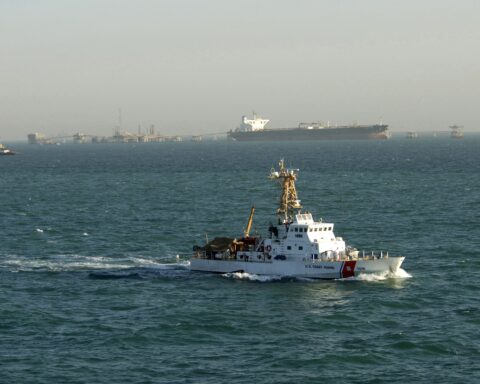
LONDON — The Strait of Hormuz did not close because Iran mined it. The strait closed because five insurance companies in London, Oslo, and New York decided, within seventy-two hours of the first missile strikes on Iran, that the risk of sending a ship through the world’s most important waterway had become unquantifiable — and therefore uninsurable. On March 2, 2026, major Protection and Indemnity clubs including Gard, Skuld, NorthStandard, the London P&I Club, and the American Club issued cancellation notices for war risk coverage in the Persian Gulf, effective March 5. Within days, tanker traffic through the strait collapsed by seventy percent. By March 8, it had fallen to near zero. No fleet of warships accomplished what a handful of actuaries achieved with a single calculation: the effective shutdown of twenty percent of the world’s daily oil supply.
The insurance market’s withdrawal from the Persian Gulf represents the most consequential financial decision of the 2026 Iran war — more significant, in immediate economic terms, than any single military strike. While governments debated naval escorts and the Pentagon tracked Iranian minelaying vessels, it was the underwriters at Lloyd’s of London who held the real power over global energy flows. Understanding how insurance markets function as an invisible blockade mechanism — and why traditional military responses cannot overcome a financial barrier — is essential to grasping why the Hormuz crisis has proven so resistant to resolution, and why Saudi Arabia’s economic future now depends as much on reinsurance treaties as on Patriot missile batteries.
Table of Contents
- How Did Insurance Markets Close the Strait of Hormuz?
- What Do War Risk Premiums Actually Cost for a Single Tanker Transit?
- Why Did P&I Clubs Cancel Coverage Before a Single Tanker Was Sunk?
- One Hundred and Fifty Ships Stranded — The Anatomy of a Shipping Paralysis
- The Blockade Effectiveness Matrix — Military Force Versus Financial Denial
- Can Trump’s $20 Billion Insurance Program Break the Blockade?
- Ghost Ships and Dark Transits — The Desperate Gamble to Move Oil Without Insurance
- What Does the 1987 Tanker War Teach About Today’s Insurance Crisis?
- How Does the Insurance Blockade Threaten Saudi Arabia’s Economic Survival?
- Beyond Oil — The Container Shipping Crisis Nobody Is Discussing
- The Contrarian Case — Why the Insurance Market May End This War Faster Than Any Ceasefire
- Frequently Asked Questions
How Did Insurance Markets Close the Strait of Hormuz?
The mechanism by which insurance markets shut down the Persian Gulf shipping lanes is both elegant and brutal. Every commercial vessel that transits international waters carries multiple layers of insurance: hull and machinery coverage protecting the physical ship, cargo insurance protecting the goods aboard, and Protection and Indemnity coverage — the most critical layer — which covers third-party liabilities including crew injury, pollution, and wreck removal. On top of these sits war risk insurance, a specialized product that covers damage from armed conflict, mines, torpedoes, drones, and missiles.
War risk coverage is not optional in any practical sense. Without it, a vessel cannot obtain letters of credit from banks to finance its cargo. Port authorities in most developed nations will not grant entry to uninsured vessels. Charterers will not hire them. Cargo owners will not book space aboard them. The entire commercial infrastructure of global maritime trade depends on a continuous chain of insurance coverage — and the moment that chain breaks, ships stop moving regardless of whether any physical threat exists in the water.
The chain broke on March 2, 2026, less than forty-eight hours after U.S. and Israeli forces launched strikes on Iran. The Islamic Revolutionary Guard Corps had declared the Strait of Hormuz closed and fired missiles at targets across the Gulf region. According to Bloomberg, major P&I clubs issued cancellation notices covering Iran and Iranian waters, including twelve nautical miles offshore, as well as the entire Persian Gulf, the Gulf of Oman, and all waters west of a defined boundary line running from Oman’s Cape al-Hadd to the Iran-Pakistan border. The cancellations took effect on March 5, giving shipowners just seventy-two hours to complete any ongoing transits or face sailing without coverage.
Lloyd’s of London, which underwrites between seventy and eighty percent of the world’s war risk business, saw premiums spike by over one thousand percent in a matter of days. Before the strikes, war risk premiums for Hormuz transits stood at approximately 0.125 percent of a vessel’s insured value. By March 3, rates had risen to between 1.5 and 3 percent — a twenty-four-fold increase at the upper end. For context, a Very Large Crude Carrier worth $120 million would see its war risk premium for a single transit jump from roughly $150,000 to $3.6 million, according to insurance industry data reported by the Insurance Journal.

What Do War Risk Premiums Actually Cost for a Single Tanker Transit?
The mathematics of war risk insurance reveal why no amount of military reassurance can overcome the financial barrier to Hormuz transits. Before the Iran war began on February 28, 2026, the cost structure for a typical VLCC transit through the Strait of Hormuz was manageable. War risk premiums added approximately two dollars per barrel to the delivered cost of crude oil — a marginal expense that shipowners absorbed within their freight rates.
The March 2026 premium explosion transformed this calculation entirely. Analysis of insurance market data from Lloyd’s List, Bloomberg, and S&P Global Market Intelligence reveals the following cost escalation:
| Period | Premium Rate (% of Hull Value) | Cost per VLCC Transit ($120M vessel) | Cost per Barrel (2M barrel cargo) |
|---|---|---|---|
| Pre-war (before Feb 28) | 0.125% | $150,000 | $0.08 |
| Feb 28 – Mar 1 | 0.2% – 0.4% | $240,000 – $480,000 | $0.12 – $0.24 |
| Mar 2 – Mar 4 | 0.5% – 1.0% | $600,000 – $1,200,000 | $0.30 – $0.60 |
| Mar 5 onward (post-cancellation) | 1.5% – 3.0% | $1,800,000 – $3,600,000 | $0.90 – $1.80 |
| US/UK/Israeli-flagged vessels | 3.0% – 5.0%+ | $3,600,000 – $6,000,000+ | $1.80 – $3.00+ |
According to Lloyd’s List, vessels associated with American, British, or Israeli interests faced premiums three times higher than other flags — a surcharge reflecting Iran’s explicit targeting of these nations’ commercial interests. A Greek-flagged VLCC might pay 1.5 percent of hull value; an American-flagged tanker would pay 5 percent or more, if coverage could be obtained at all. The disparity in insurance access has created a two-tier strait, where Iranian shadow fleet tankers continue moving crude to China under conditions that remain commercially impossible for Saudi-flagged or Western-insured vessels.
The per-barrel cost increase appears modest in isolation — even at three dollars per barrel, it represents less than three percent of the prevailing crude oil price above $100. The problem is not the insurance cost alone but its interaction with the broader risk calculus. Insurance premiums reflect the probability of total loss. A war risk premium of 3 percent implies the market believes there is roughly a one-in-thirty-three chance that the vessel will be destroyed during a single transit. No rational shipowner accepts those odds, regardless of the premium charged. The insurance price signal is simultaneously a probability assessment — and that assessment says the Strait of Hormuz is a war zone.
Why Did P&I Clubs Cancel Coverage Before a Single Tanker Was Sunk?
The decision by major P&I clubs to cancel war risk coverage in the Persian Gulf was not a reaction to the destruction of a tanker. It was a preemptive response to a risk environment that had, in the judgment of professional underwriters, crossed the threshold from manageable to catastrophic. The distinction matters enormously: the insurance market did not wait for a disaster to pull coverage. It anticipated one.
Five specific triggers drove the cancellation decisions, according to analysis of public statements from the clubs and reporting by Lloyd’s List and S&P Global. First, the IRGC’s declaration that the Strait of Hormuz was closed constituted, in insurance terms, a sovereign threat of force against all transiting vessels — transforming the strait from a high-risk area into an active war zone. Second, at least five tankers had been damaged by Iranian strikes within the first four days of the conflict, including the Malta-flagged Safeen Prestige and the oil tankers Prima and Louise P., with two crew members killed. Third, Iran’s demonstrated willingness to strike commercial vessels — not just military targets — crossed a red line for underwriters who model risk based on the specificity of targeting. Fourth, Iranian minelaying activity in the strait introduced the possibility of indiscriminate damage to any vessel, regardless of flag state or cargo — a risk that is essentially impossible to price individually. Fifth, the geographical concentration of assets meant that a single escalatory incident could generate simultaneous claims worth tens of billions of dollars, threatening the solvency of the clubs themselves.
Lloyd’s List was careful to note that P&I clubs had not, technically, “cancelled war risk cover” in the sense of withdrawing all protection from members. The clubs instead triggered automatic war risk exclusion clauses that exist in their standard policies — clauses that activate when a region is designated as a war zone. Members could theoretically obtain buy-back coverage at additional premiums, but the prices quoted for these buy-backs were, as one senior Lloyd’s broker described to Bloomberg, “functionally prohibitive.”
The reinsurance layer added another dimension to the crisis. P&I clubs do not bear all the risk themselves; they purchase reinsurance from specialist firms that absorb the tail risk of catastrophic claims. According to gCaptain, Gulf war risk reinsurers began exiting the market even before the clubs issued their cancellation notices. When the reinsurance market retreats, the primary insurers have no choice but to follow — they cannot accept risks they cannot lay off. The cascade from reinsurer withdrawal to club cancellation to shipowner paralysis took less than a week.

One Hundred and Fifty Ships Stranded — The Anatomy of a Shipping Paralysis
The practical consequences of the insurance withdrawal materialized with devastating speed. By March 5, when the P&I club cancellations took effect, over one hundred and fifty commercial vessels had anchored outside the Strait of Hormuz, according to maritime tracking data cited by CNBC and the Wikipedia entry on the 2026 Strait of Hormuz crisis. Tanker traffic dropped first by approximately seventy percent and within days approached zero. The strait, which normally handles around fourteen million barrels per day of crude oil shipments plus significant volumes of liquefied natural gas, was effectively sealed — not by a naval blockade but by the refusal of insurers to cover the voyage.
The three major container shipping lines — Maersk, CMA CGM, and Hapag-Lloyd — suspended all transits through the strait and related routes, according to Freightos and Anadolu Agency. CMA CGM imposed an emergency surcharge of $3,000 per forty-foot equivalent unit container for any cargo destined for Gulf ports. Maersk added emergency freight rates ranging from $1,800 to $3,800 per container, depending on the origin and destination. Container rates from Shanghai to Jebel Ali — a benchmark route for Gulf-bound Asian manufactured goods — spiked from $1,800 per FEU on March 1 to more than $4,000 by March 3, according to Freightos data.
The freight rate explosion for Very Large Crude Carriers reached historically unprecedented levels. The benchmark VLCC rate hit $423,736 per day, an all-time record, according to CNBC — a figure driven not by normal supply-and-demand dynamics but by the collapse in available tonnage willing to transit the Gulf. Vessels already inside the Persian Gulf when the cancellations took effect faced a cruel dilemma: attempt an uninsured exit through the strait or remain anchored indefinitely, accumulating demurrage costs while their cargo depreciated.
One Greek-flagged oil tanker chose the riskiest option available, exiting the Strait of Hormuz with its Automatic Identification System switched off — a so-called “dark transit” that stripped the vessel of its electronic visibility to avoid Iranian targeting. The Insurance Journal and gCaptain both reported the incident, which highlighted the extreme lengths to which some operators were willing to go to escape the insurance trap. A dark transit is itself a violation of International Maritime Organization regulations and typically invalidates whatever residual insurance coverage a vessel might carry — meaning the ship and its cargo were effectively unprotected against any loss.
The Blockade Effectiveness Matrix — Military Force Versus Financial Denial
The 2026 Hormuz crisis offers the first real-world test case for what might be called the Financial Denial Doctrine — the principle that economic instruments can achieve blockade objectives more effectively than military force. A comparative analysis of traditional naval blockade methods against the insurance-driven shutdown reveals a stark asymmetry in effectiveness, cost, and reversibility.
| Blockade Method | Effectiveness (% Traffic Reduction) | Cost to Blockading Party | Time to Achieve Full Effect | Reversibility | Legal Exposure |
|---|---|---|---|---|---|
| Naval mining (IRGC) | 40-60% | $50-200M in mines | 1-3 weeks | Months (mine clearance) | Violation of international law |
| Anti-ship missile strikes | 50-70% | $500M+ in munitions | Days | Immediate once firing stops | Acts of war |
| Insurance market withdrawal | 95-100% | Zero direct cost | 72 hours | Weeks to months | None — commercial decision |
| Combined (military threat + insurance response) | 100% | Shared military/market | 48-72 hours | Months | Complex |
The matrix illustrates a counterintuitive reality: the insurance withdrawal achieved a more complete blockade than any military action could accomplish alone. Iran’s naval mines forced the U.S. Navy to deploy minesweeping vessels — destroying sixteen Iranian minelaying vessels in a single operation — but even with the mine threat reduced, shipping did not resume because the insurance market remained closed. The military threat created the conditions for the financial blockade, but the financial blockade then became self-sustaining regardless of changes in the military situation.
This self-sustaining quality is the most strategically significant characteristic of an insurance-driven blockade. A naval mine can be swept. A missile battery can be destroyed. An insurance cancellation exists in the actuarial models and risk committees of institutions that no military force can compel to change their assessments. The U.S. Navy can clear every mine from the strait and shoot down every Iranian drone, but it cannot force a Lloyd’s syndicate to underwrite a policy it considers unprofitable.
The fragility of the Hormuz situation was further exposed when U.S. Energy Secretary Chris Wright’s false claim about tanker escorts through the strait triggered a 17 percent oil price crash that wiped billions from Saudi revenue in minutes. The episode demonstrated that even unverified statements about Hormuz shipping can move markets more violently than actual military operations — precisely because the insurance-driven blockade has made the waterway’s status the single most price-sensitive variable in global energy markets.
The framework suggests that future maritime conflicts will increasingly feature this hybrid dynamic: limited military action designed not to destroy shipping directly but to trigger insurance market responses that achieve the same result at zero cost to the aggressor. Iran’s strategic planners may or may not have anticipated the insurance cascade, but the result is clear — a few dozen missile strikes and the declaration of a closed strait achieved what a full naval blockade would have required hundreds of warships to enforce.
Can Trump’s $20 Billion Insurance Program Break the Blockade?
The Trump administration’s response to the insurance crisis acknowledged, implicitly, that the blockade was financial rather than purely military. On March 3, President Trump announced that the U.S. International Development Finance Corporation would provide political risk insurance and guarantees for maritime trade in the Persian Gulf. The DFC subsequently formalized a $20 billion reinsurance program, according to CNBC and the DFC’s own press release, designed to backstop commercial insurers and encourage the resumption of tanker traffic.
The program’s structure reveals both its ambition and its limitations. The DFC facility will insure losses of up to approximately $20 billion on a rolling basis, initially focusing on hull and machinery coverage as well as cargo insurance, according to Reinsurance News. Trump stated on Truth Social that the insurance would be offered at a “reasonable price,” though the administration has not specified a premium rate. Businesses seeking coverage were directed to contact DFC at [email protected].
Several structural problems undermine the program’s likely effectiveness. First, the DFC — originally created to fund development projects in emerging markets — has no institutional expertise in maritime war risk underwriting. Its staff includes development economists and political risk analysts, not marine insurance actuaries. The agency must either develop this expertise from scratch or outsource the underwriting to commercial firms, which raises the question of why those firms withdrew coverage in the first place.
Second, a $20 billion facility sounds enormous but is small relative to the value of assets transiting the Gulf. A single fully loaded VLCC carries approximately $200 million worth of crude oil at current prices, plus the $120 million hull value — meaning a single total loss could consume roughly 1.6 percent of the entire facility. If ten tankers were damaged or destroyed in a single Iranian strike, the facility would face claims approaching $3 billion, consuming fifteen percent of its capacity. The Gulf saw five tanker incidents in the first four days of the war alone.
Third, the program does not address the P&I club withdrawal. Political risk insurance and cargo insurance are necessary but not sufficient conditions for a vessel to trade commercially. Without P&I coverage — which handles crew liability, pollution, and port-state requirements — a tanker cannot lawfully enter most international ports. The DFC program, as currently structured, leaves this critical gap unfilled.
Lloyd’s of London signaled its willingness to work with the U.S. government on Hormuz transit coverage, according to the Maritime Executive. But willingness and ability are different things. Lloyd’s syndicates operate as independent commercial entities that must satisfy their own capital requirements and regulatory obligations. Even with a U.S. government reinsurance backstop, individual syndicates may conclude that the reputational and regulatory risks of underwriting Gulf war risk coverage outweigh the premium income — particularly if an underwritten vessel is subsequently destroyed, triggering congressional scrutiny of how taxpayer money was used to subsidize a losing bet.
Ghost Ships and Dark Transits — The Desperate Gamble to Move Oil Without Insurance
As the formal insurance market seized up, a shadow market emerged. Greek, Chinese, and Indian shipowners — operators with high risk tolerance and powerful economic incentives to keep oil flowing — began evaluating the possibility of transiting the Strait of Hormuz without conventional war risk coverage. These so-called dark transits involve switching off the vessel’s Automatic Identification System to avoid detection by Iranian forces, a practice that is both illegal under International Maritime Organization regulations and commercially perilous.
The case of the Greek oil tanker that exited Hormuz with its AIS disabled in early March illustrated the phenomenon. The vessel’s transponder went dark as it approached the strait and reactivated only after it had cleared into the Gulf of Oman, according to the Insurance Journal. The transit was successful in the narrow sense that the ship was not attacked, but it established a dangerous precedent. A vessel running dark has no insurance coverage for any incident — collision, grounding, mechanical failure, or military attack — and its crew has no emergency communication capability with maritime rescue coordination centers.
The dark transit phenomenon represents a reversion to the pre-modern era of maritime commerce, when ships sailed at the owner’s risk with no financial protection against loss. The Lloyd’s market was founded in 1688 precisely to eliminate this uncertainty and enable the growth of global trade. That its withdrawal from the Persian Gulf has recreated conditions last seen in the seventeenth century is a measure of how profound the 2026 insurance crisis has become.
Chinese and Indian operators face particular pressure to maintain Gulf oil flows. China imports approximately 2.5 million barrels per day through the Strait of Hormuz, while India depends on the Gulf for nearly seventy percent of its crude oil supplies. According to the ISM World report on the conflict’s supply chain impacts, both nations are reportedly exploring state-backed insurance mechanisms that would allow their national-flag tankers to resume transits — effectively creating parallel insurance systems outside the Western-dominated Lloyd’s market. If successful, this fragmentation of the global maritime insurance architecture would represent a structural shift in how the world’s shipping is governed, with geopolitical alignment replacing actuarial assessment as the primary determinant of coverage availability.
What Does the 1987 Tanker War Teach About Today’s Insurance Crisis?
The current Hormuz shipping crisis invites direct comparison with Operation Earnest Will, the U.S. Navy’s escort of reflagged Kuwaiti tankers through the Persian Gulf from July 1987 to September 1988. The operation — the largest naval convoy operation since World War II — was itself a response to an insurance crisis. Between 1984 and 1987, more than four hundred ships were attacked during the Iran-Iraq Tanker War. Lloyd’s of London increased its premium rates on Gulf shipping repeatedly, and by 1987, some operators could not obtain coverage at any price.
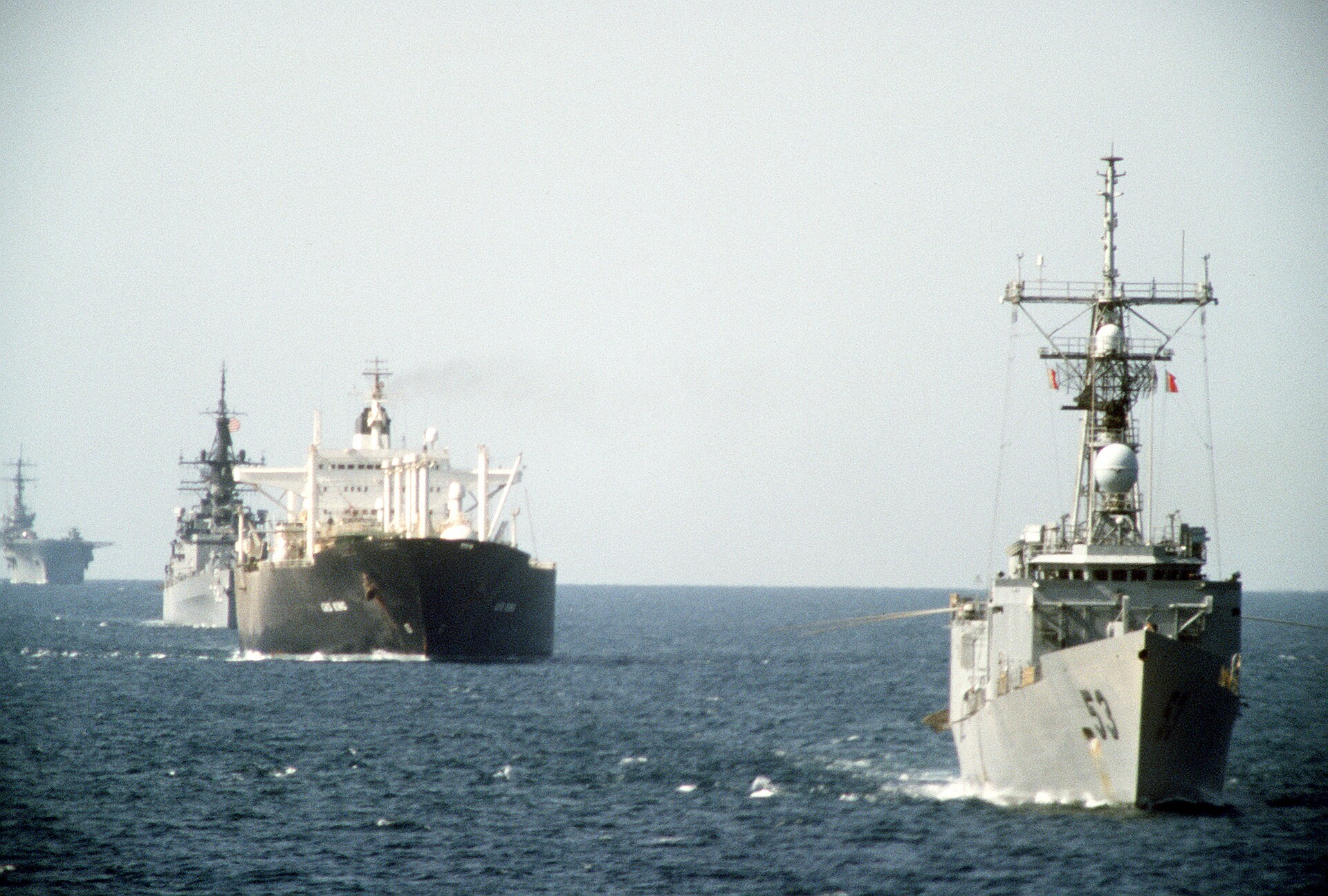
The parallels are instructive, but the differences are more revealing. In 1987, the insurance crisis developed over three years of escalating attacks on commercial shipping. In 2026, it took seventy-two hours. In 1987, the U.S. resolved the crisis by reflagging Kuwaiti tankers under the American flag and providing direct naval escort — an arrangement that effectively replaced private insurance with sovereign military guarantee. The escorted convoys reduced insurance premiums because underwriters could model the probability of loss differently when U.S. Navy warships flanked each tanker.
| Dimension | 1987 Tanker War | 2026 Hormuz Crisis |
|---|---|---|
| Time from first attack to insurance crisis | 3 years (1984-1987) | 72 hours |
| Ships attacked before insurance withdrew | 400+ | 5 |
| Peak war risk premium | ~0.5% of hull value | 3-5% of hull value |
| Daily oil flow through Hormuz | ~8 million bpd | ~14 million bpd |
| U.S. military response | Reflagging + escort (Earnest Will) | $20B DFC insurance program + escort promise |
| Resolution timeline | 14 months | Ongoing |
| Threat type | Mines, small boats, Silkworm missiles | Ballistic missiles, cruise missiles, drones, mines |
The 2026 threat environment is categorically more severe. In 1987, the primary dangers were contact mines and anti-ship missiles with limited range. A U.S. Navy frigate could position itself between the threat and the tanker and provide effective protection. In 2026, Iran’s arsenal includes ballistic missiles that descend vertically at hypersonic speeds, cruise missiles that fly at terrain-hugging altitudes, and swarms of Shahed-type drones that can overwhelm point defenses through sheer numbers. No escort vessel can guarantee protection against all three threat vectors simultaneously. This is why CNBC’s analysis concluded that the Trump administration’s escort proposal “may not work” — the physics of modern anti-ship warfare have outpaced the defensive capabilities of conventional naval escorts.
The insurance market understands this asymmetry better than the politicians promising escorts. An underwriter assessing the risk of a U.S. Navy-escorted transit in 2026 must model the probability that a ballistic missile descending at Mach 5 will evade the escort’s air defense systems, the probability that a drone swarm will saturate the escort’s close-in weapon systems, and the probability that a mine will detonate beneath the tanker despite minesweeping operations. In 1987, these probabilities were low enough to insure. In 2026, they are not.
How Does the Insurance Blockade Threaten Saudi Arabia’s Economic Survival?
Saudi Arabia sits at the epicenter of the insurance-driven blockade, and its economic vulnerability extends far beyond the obvious loss of oil export revenue. Before the war, approximately seventy-five percent of Saudi crude oil exports transited the Strait of Hormuz via terminals at Ras Tanura, Ju’aymah, and Ras al-Khair on the kingdom’s eastern coast. The Hormuz shutdown immediately severed this export route, forcing Aramco to redirect flows through the 1,200-kilometer East-West Pipeline to the Red Sea port of Yanbu.
Aramco’s CEO Amin Nasser stated that the company would operate the East-West Pipeline at its full capacity of seven million barrels per day, according to Argus Media. But Yanbu’s loading capacity is a binding constraint: the port’s two terminals can handle a combined 4 to 4.5 million barrels per day at best, according to Bloomberg. This creates a bottleneck that has forced Saudi Arabia to cut oil production — not because of damaged infrastructure, but because there is physically nowhere to load the oil onto ships.
The production cuts have cascading economic consequences. Saudi Arabia’s 2026 budget was built on an assumption of approximately nine million barrels per day in production and a Brent crude price of $80. With production capped at roughly four million barrels per day through Yanbu and prices spiking above $126 per barrel at their peak, the revenue arithmetic is complex. Higher prices partially offset lower volumes, but the net effect, according to analysis by the Financial Times and IIF, is a significant fiscal deficit that will force the kingdom to draw on its foreign reserves or issue additional sovereign debt.
The insurance crisis also affects Saudi Arabia as an importer. The kingdom imports approximately eighty percent of its food, much of it arriving through the Persian Gulf and Red Sea shipping lanes. The global stagflation shock triggered by the war has already driven up food prices worldwide, and the additional freight surcharges — CMA CGM’s $3,000 per container, Maersk’s $1,800-$3,800 range — fall disproportionately on Gulf-state importers who depend on containerized goods from Asia and Europe.
Saudi Arabia’s economic planners face a grim paradox: the kingdom is simultaneously the world’s largest oil exporter and one of the nations most harmed by the closure of oil shipping lanes. The insurance blockade has revealed a structural vulnerability that no amount of Vision 2030 diversification has yet addressed — Saudi Arabia’s economic model depends on the uninterrupted flow of maritime commerce through chokepoints that private-sector insurers, not sovereign governments, ultimately control.
Beyond Oil — The Container Shipping Crisis Nobody Is Discussing
The public discourse around the Hormuz blockade has focused almost exclusively on oil. This is understandable — crude prices above $100 per barrel command headlines. But the container shipping disruption may ultimately prove more economically damaging to Saudi Arabia and the Gulf states than the oil export bottleneck.
The Persian Gulf is not merely an oil export corridor. It is the primary import gateway for six Gulf Cooperation Council nations with a combined population of over sixty million people and a collective GDP exceeding $2 trillion. Everything from food and medicine to construction materials and consumer electronics arrives by container ship through ports like Jebel Ali (Dubai), Khalifa Port (Abu Dhabi), Hamad Port (Qatar), and King Abdulaziz Port (Dammam). When Maersk, CMA CGM, and Hapag-Lloyd suspended Gulf transits, they did not merely inconvenience oil traders — they severed the supply chain that sustains daily life across the Arabian Peninsula. For Saudi Arabia’s construction sector, the insurance-driven blockade has compounded an already precarious situation, as the rising cost of insuring materials shipments feeds directly into the disruption to Saudi Arabia’s $2.1 trillion construction pipeline.
The Freightos data paints a comprehensive picture of the disruption. Air freight rates from Southeast Asia to Europe climbed more than six percent to $3.82 per kilogram. Middle East-to-Europe air freight rose eight percent to $1.62 per kilogram. China-to-U.S. air rates increased fifteen percent to $6.90 per kilogram. These air freight increases reflect the desperation of shippers rerouting urgent cargo away from sea lanes, but air freight can handle only a fraction of the volume that container ships carry. The ISM World assessment concluded that if the disruption extends beyond four weeks, Gulf states will begin experiencing physical shortages of essential goods.
The rerouting option is theoretically available but practically limited. Container ships diverted around the Cape of Good Hope add approximately fifteen days to the Europe-Gulf voyage and twenty-two days to the Asia-Gulf voyage, according to Anadolu Agency’s analysis. This adds roughly $2,000 to $4,000 per container in fuel and operating costs alone, before insurance surcharges. For Saudi Arabia’s construction sector — which depends on a continuous flow of steel, cement additives, and heavy equipment from China and India — extended delivery times translate directly into project delays. NEOM, the Red Sea Project, and other Vision 2030 megaprojects all depend on just-in-time delivery of specialized components that cannot be sourced domestically.
| Route | Pre-War Rate (per FEU) | Post-War Rate (per FEU) | Increase | Carrier Surcharge |
|---|---|---|---|---|
| Shanghai – Jebel Ali | $1,800 | $4,000+ | 122% | CMA CGM: $3,000/FEU |
| Rotterdam – Dammam | $2,200 | $5,500+ | 150% | Maersk: $1,800-$3,800 |
| Mumbai – Jeddah (Red Sea) | $1,200 | $2,800 | 133% | Various surcharges |
| Air freight: SE Asia – Europe | $3.60/kg | $3.82/kg | 6% | N/A |
| Air freight: China – US | $6.00/kg | $6.90/kg | 15% | N/A |
The Contrarian Case — Why the Insurance Market May End This War Faster Than Any Ceasefire
The conventional analysis of the 2026 Iran war focuses on military escalation ladders, diplomatic mediation, and ceasefire frameworks. Oman’s backchannel to Tehran, Beijing’s peace envoy to Riyadh, and France’s proposed escort mission all operate within this traditional paradigm. What they miss is the possibility that the insurance market itself may generate the conditions for de-escalation more effectively than any diplomatic initiative.
The logic runs as follows. The insurance-driven blockade imposes costs not only on Iran’s adversaries but on Iran itself. Iran’s own oil exports — already under sanctions — depend on a functioning Gulf shipping infrastructure. More critically, Iran’s allies and trading partners, including China, India, and Turkey, are suffering severe economic consequences from the Hormuz shutdown. The higher oil prices benefit Russia, but they devastate the manufacturing economies of East and South Asia that Iran needs as diplomatic supporters. According to the Financial Times, China’s daily oil import bill has increased by approximately $120 million since the war began, with the insurance-driven Hormuz closure responsible for roughly half that increase through freight and premium surcharges.
This economic pressure creates a constituency for de-escalation that traditional military pressure does not. A U.S. bombing campaign in Iran can be framed domestically as American aggression. An insurance premium increase cannot be framed as anything — it is an impersonal market force that no propaganda can deflect. When Chinese refineries cannot get crude oil and Indian factories cannot get Gulf-sourced petrochemical feedstocks, the pressure on their governments to demand an end to the Hormuz disruption is immediate, concrete, and politically unavoidable.
The insurance market also provides a natural de-escalation mechanism that military operations lack. Warfare has no built-in off switch — once forces are committed, withdrawal carries its own risks and costs. Insurance markets, by contrast, are inherently responsive to changed conditions. If Iran were to credibly guarantee safe passage through the strait — by, for example, withdrawing its mine-laying vessels and missile batteries from the coastline — the insurance market would reprice risk downward within days. Premiums would fall, coverage would resume, and shipping would restart. The market provides a clear, quantifiable benchmark for what “de-escalation” actually means in practice: it means reduced insurance premiums.
The insurance market has achieved what no naval blockade could: a perfect, self-enforcing embargo on Persian Gulf shipping that costs the aggressor nothing, cannot be defeated by military force, and will persist until the risk environment fundamentally changes.
Analysis based on Lloyd’s List and Bloomberg data, March 2026
This contrarian perspective suggests that the most productive diplomatic efforts should focus not on military de-escalation directly but on creating the conditions under which the insurance market will voluntarily resume coverage. A ceasefire that leaves Iranian missile batteries aimed at the strait will not reopen the insurance market. A disarmament agreement that removes the physical threat to commercial shipping will. The insurance companies have inadvertently defined the war’s real end condition: not a signed document in a Geneva conference room, but a recalculation in a London underwriting box.
The insurance crisis took on new urgency on March 11 when Iran threatened to block all Gulf oil exports as the United States launched its heaviest day of strikes. Hours later, the IRGC backed up its words with action, firing on three cargo ships in the Strait of Hormuz — the Thai-flagged Mayuree Naree, the container vessel One Majesty, and the bulk carrier Star Gwyneth — in the deadliest single-day attack on commercial shipping since the war began. The IRGC’s ultimatum to halt “not one liter of oil” from reaching Western markets, now backed by the physical destruction of merchant vessels, raised the stakes for insurers already withdrawing from the region.
The insurance market’s response to the Iran war is one dimension of a broader reckoning with global energy vulnerability. The conflict has also reignited the debate over whether the energy transition can protect economies from fossil fuel supply shocks — and the evidence suggests that Saudi Arabia’s dual investment strategy may be the only approach that works.
The insurance crisis extends far beyond the active conflict period. Even after a ceasefire, the post-war recovery timeline for maritime insurance normalization is estimated at twelve to twenty-four months of sustained incident-free operations before underwriters restore pre-war rates.
Frequently Asked Questions
What is war risk insurance and why does it matter for the Strait of Hormuz?
War risk insurance is a specialized maritime insurance product that covers damage to ships and cargo from armed conflict, mines, missiles, and other military threats. It matters because without war risk coverage, commercial vessels cannot obtain letters of credit, enter most international ports, or attract charterers. When major insurers cancelled war risk coverage for the Persian Gulf on March 5, 2026, they effectively shut down shipping through the Strait of Hormuz — a waterway that handles twenty percent of global daily oil supply and significant volumes of liquefied natural gas.
How much did war risk insurance premiums increase during the 2026 Iran war?
War risk premiums for Strait of Hormuz transits rose from approximately 0.125 percent of a vessel’s insured value before the war to between 1.5 and 3 percent afterward — an increase of twelve to twenty-four times. For vessels associated with American, British, or Israeli interests, premiums reached 3 to 5 percent or higher. For a Very Large Crude Carrier valued at $120 million, a single transit now costs between $1.8 million and $3.6 million in war risk insurance alone, compared to roughly $150,000 before the conflict began on February 28, 2026.
What is Trump’s $20 billion DFC insurance program?
The Trump administration directed the U.S. International Development Finance Corporation to provide up to $20 billion in political risk insurance and financial guarantees for maritime trade in the Persian Gulf. The program focuses on hull, machinery, and cargo coverage to encourage tanker operators to resume Hormuz transits. Critics note the DFC lacks marine insurance expertise, the facility is small relative to the value of Gulf shipping, and the program does not replace the P&I club coverage that remains suspended — leaving significant gaps in the protection that commercial vessels require. On March 11, the DFC named Chubb as the lead underwriter for the $20 billion reinsurance program, providing front-end insurance directly to shippers.
How does the 2026 insurance crisis compare to Operation Earnest Will in 1987?
The 2026 crisis has surpassed the 1987 precedent in every dimension. The insurance market collapsed in seventy-two hours compared to three years of escalation in the 1980s. War risk premiums are six to ten times higher than their 1987 peak. The Strait of Hormuz now carries fourteen million barrels per day of oil compared to eight million in 1987. The threat environment includes ballistic missiles, cruise missiles, and drone swarms — weapons that make the 1987 Tanker War’s Silkworm missiles and contact mines look primitive by comparison.
Can Saudi Arabia export oil without the Strait of Hormuz?
Partially. Saudi Arabia’s 1,200-kilometer East-West Pipeline can transport up to seven million barrels per day to the Red Sea port of Yanbu. However, Yanbu’s loading capacity is limited to approximately 4 to 4.5 million barrels per day, creating a bottleneck that has forced Aramco to cut production. Before the war, Saudi Arabia produced approximately nine million barrels per day. The insurance-driven Hormuz closure means the kingdom can export less than half its pre-war volume, resulting in significant fiscal revenue losses despite elevated oil prices. Aramco’s Red Sea lifeline is a partial solution, not a full replacement for Hormuz.