
TEHRAN/RIYADH — Iran rejected a US proposal for a 48-hour ceasefire on Day 36 of the war, communicating its refusal not through diplomatic channels or a written response but through what Fars News Agency described as “continuation of attacks in the battlefield,” a formulation that points to military command — not civilian government — as the author of the decision.
The rejection, reported by Iran’s semi-official Fars News on April 3-4, collapses the last active diplomatic track before President Donald Trump’s April 6 deadline to resume strikes on Iran’s energy infrastructure. It also bypasses Saudi Arabia’s parallel mediation efforts, which have involved simultaneous contacts with Russia, China, Japan, Kuwait, and the United Nations over the past week. The message from Tehran was directed at Washington — but its method of delivery carried a second message to Riyadh: the IRGC Military Council, not the foreign ministry, is deciding whether Iran fights or talks.
Table of Contents
- The Rejection Came in Battlefield Language
- Who Actually Rejected the Ceasefire?
- Pezeshkian’s Warning and the Invisible Supreme Leader
- The April 6 Deadline Becomes a Live Military Trigger
- Has Iran Bypassed Saudi Arabia’s Mediation?
- Why No Ceasefire Formula Can Bridge the Hormuz Gap
- Frequently Asked Questions
The Rejection Came in Battlefield Language
The 48-hour ceasefire proposal was delivered to Tehran through what Fars News described as a “friendly country.” It was distinct from the broader 15-point plan the US had submitted through Pakistan and Egypt in late March, which included sanctions relief, nuclear rollback, missile limitations, the reopening of the Strait of Hormuz, and restrictions on Iran’s armed proxies. The April 3 proposal was narrower — a tactical pause, not a comprehensive settlement.
Iran did not respond on paper. Fars News reported that the rejection was communicated through “continuation of attacks in the battlefield.” Al Jazeera’s Day 36 summary confirmed the proposal was separate from the Pakistan-mediated 15-point framework. The US did not confirm or comment on the proposal’s existence.
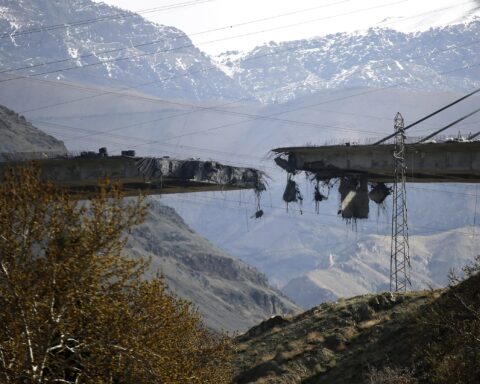
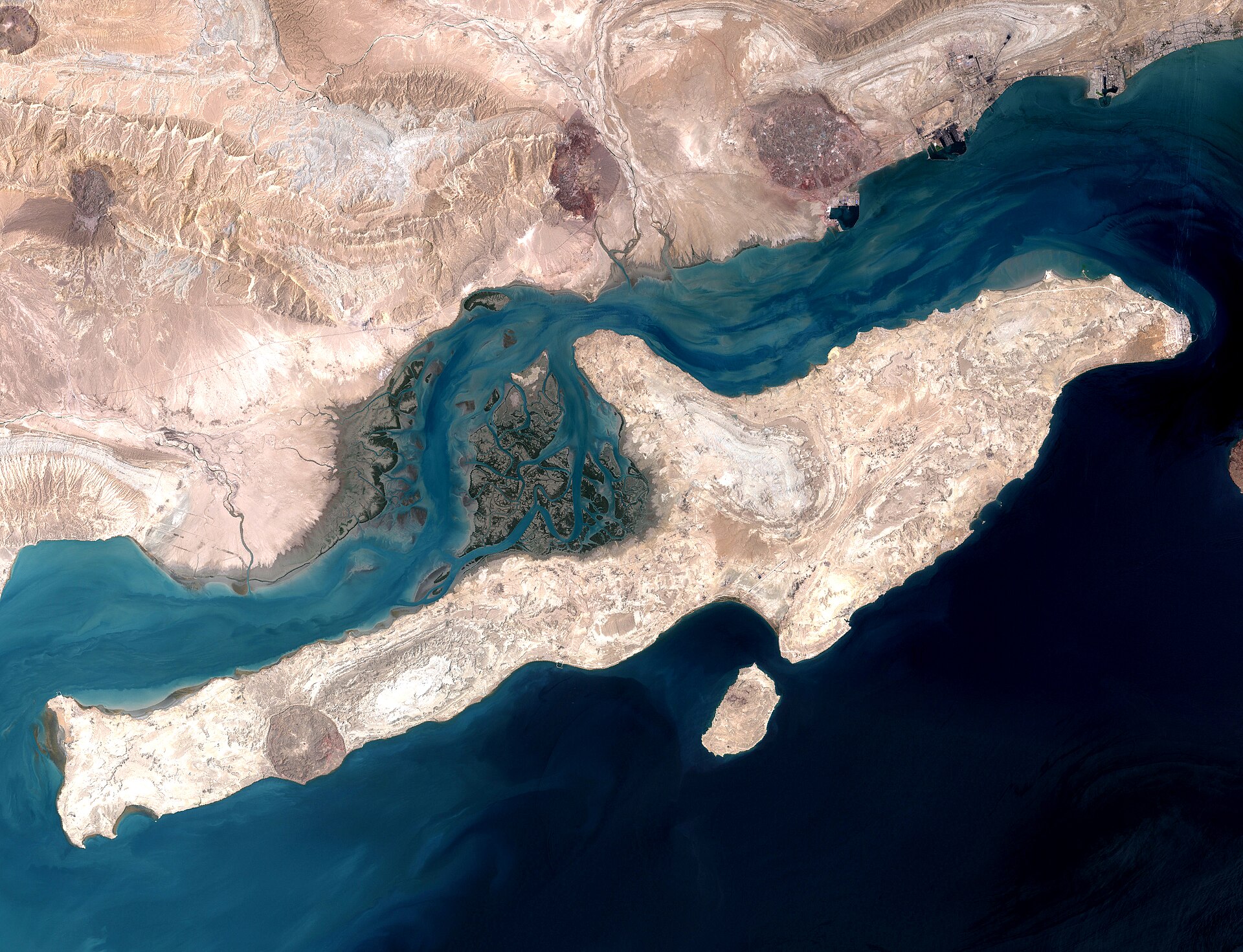
The trigger for the US proposal, according to Fars News, was Iran’s strike on a US “military forces depot” on Kuwait’s Bubiyan Island. That strike, which hit a logistics facility supporting US operations in the Persian Gulf, appears to have prompted Washington to seek a short-term pause — and Tehran to demonstrate that it would answer military pressure with military action, not negotiation.
On the same day, the Pakistan-led mediation effort formally collapsed. Iran told the Pakistani-led committee it was “unwilling to meet US officials in Islamabad in the coming days” and that US demands were “unacceptable,” according to reporting by the Wall Street Journal. The collapse of the Islamabad track removed the last structured negotiating forum between Washington and Tehran before the April 6 deadline.
Iran has conducted 89 waves of retaliatory strikes since the war began on February 28, according to Iranian authorities and PressTV tallies. Hormuz shipping traffic has dropped from approximately 150 daily vessel transits to between 10 and 20, according to Al Jazeera. The US has carried out more than 11,000 targeted strikes on Iranian territory and lost 13 service members, according to Michael Froman, president of the Council on Foreign Relations. Iran’s navy has been largely destroyed, Froman assessed on April 3.
Who Actually Rejected the Ceasefire?
The language of the rejection — battlefield action rather than diplomatic communiqué — is consistent with a decision made by the IRGC Military Council rather than President Masoud Pezeshkian’s civilian government. This is structural inference, not confirmed by direct documentation, but the pattern has been visible for weeks.
A council of senior IRGC officers has assumed de facto decision-making authority in Tehran since Mojtaba Khamenei’s election as Supreme Leader on March 8. According to reporting by Iran International, IRGC Chief Ahmad Vahidi rejected all of Pezeshkian’s nominees for intelligence minister. The council has enforced a security perimeter around Khamenei that blocks presidential briefings. The IRGC’s seizure of operational control has left the elected government unable to influence the war’s trajectory.
The voice of rejection throughout the conflict has been the IRGC’s Khatam al-Anbiya Construction Headquarters — the IRGC’s operational command. Its spokesman, Lt. Col. Ebrahim Zolfaghari, delivered the clearest statement of Iran’s posture in a prerecorded video broadcast on state television on March 25: “Don’t dress up your defeat as an agreement. The strategic power you used to talk about has turned into a strategic failure.”
Zolfaghari’s second statement was more direct: “Someone like us will never come to terms with someone like you. Not now, not ever.”
His third framing captured the IRGC’s view of US diplomatic outreach: “The U.S. has reached the point of negotiating with itself.”
The foreign ministry, by contrast, has been limited to denial and damage control. Spokesman Esmaeil Baghaei responded to Trump’s April 1 claim that Pezeshkian “just asked for a ceasefire” by calling it “false and baseless.” Foreign Minister Abbas Araghchi, who appeared on NBC’s Meet the Press on March 8, stated: “We need to continue fighting for the sake of our people. There needs to be a permanent end to the war. No negotiations will be held prior to that.” He later characterized the US 15-point plan as “extremely maximalist and unreasonable” and “not beautiful, even on paper.”
But Araghchi’s statements, while hard-line in substance, were delivered in diplomatic language through conventional media channels. The April 3-4 rejection was different. It came through the barrel of a gun.
Pezeshkian’s Warning and the Invisible Supreme Leader
President Pezeshkian has grown increasingly critical of the IRGC’s strategy. According to Iran International reporting cited by the Jerusalem Post on April 2, Pezeshkian warned that Iran’s economy could face “total collapse” within three to four weeks without a ceasefire. He has been unable to secure a meeting with Supreme Leader Mojtaba Khamenei.
Khamenei has not appeared publicly since his election on March 8 — 27 days without a photograph, video, or audio recording as of April 4. His only confirmed communications have been text messages read on live television, according to Iran International via The Week India. No foreign leader, including the presidents of Russia and China, has held a verified voice or video call with him.
The 27-day absence is unprecedented in the Islamic Republic’s history. Ayatollah Ruhollah Khomeini, even during the Iran-Iraq war’s most intense periods, appeared on camera regularly. Ayatollah Ali Khamenei maintained a visible public presence throughout his 35-year tenure, including during the Green Movement protests and the Stuxnet crisis. Mojtaba Khamenei’s invisibility has created a vacuum that the IRGC Military Council has filled.
Pezeshkian’s inability to reach the Supreme Leader means the civilian government cannot present an alternative to the IRGC’s war-continuation strategy. The economic argument — that Iran’s thermal power grid, which provides 95% of the country’s electricity from approximately 130 plants with 78,000 MW of total capacity, cannot survive a sustained US targeting campaign — has no path to the decision-maker. The IRGC controls both access to Khamenei and the operational tempo of the war.
An anonymous Iranian diplomatic source told Reuters on April 1: “Iran demands a guaranteed ceasefire to end war permanently. No talks have taken place via mediators for a temporary ceasefire.” The distinction between a “permanent end” and a “temporary ceasefire” is the IRGC’s framing — no tactical pause, only unconditional cessation of hostilities.
The April 6 Deadline Becomes a Live Military Trigger
Trump announced the April 6 deadline on Truth Social on March 26, “pausing the period of Energy Plant destruction by 10 Days to Monday, April 6, 2026, at 8 P.M.” The deadline is conditioned on Iran’s failure to reopen the Strait of Hormuz to commercial traffic. With Iran’s rejection of even a 48-hour pause, the deadline now functions as an active military trigger rather than a diplomatic lever.
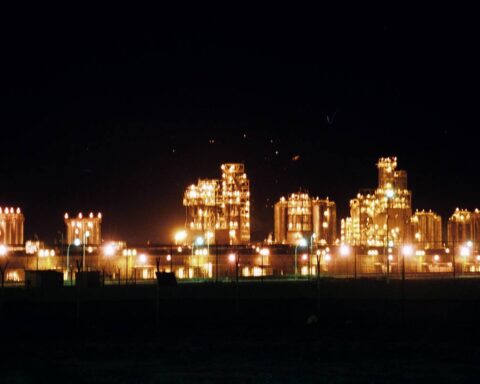
The threat to Iran’s energy infrastructure is specific and targetable. Iran’s three largest thermal power plants — Damavand (approximately 2,900 MW), Neka/Behshahr (approximately 2,200 MW), and Rajaei (approximately 2,000 MW) — represent a combined 7,100 MW of generation capacity. US targeting of 10 to 15 transmission nodes could produce a nationwide blackout extending through summer 2026 and into 2027, according to Iran International’s March 22 analysis.
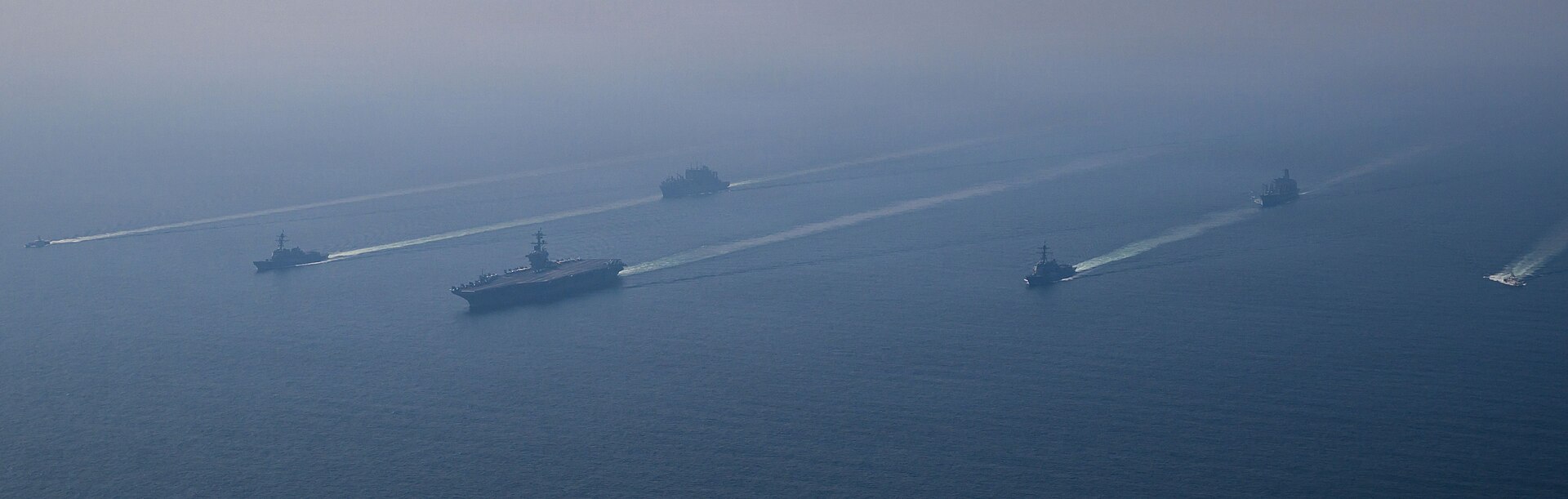
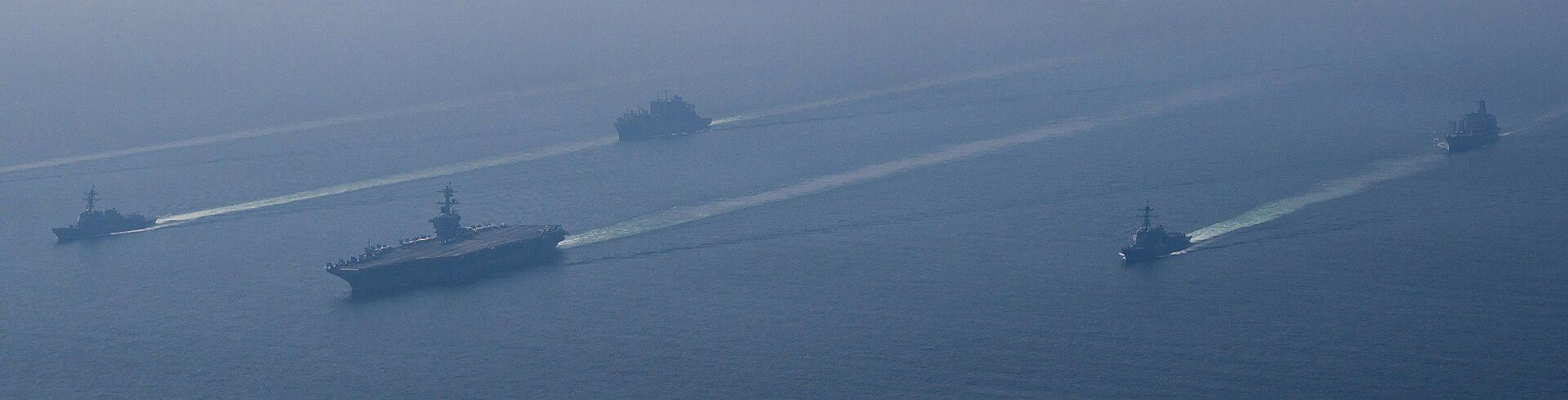
Three US carrier strike groups are positioned in theater: the USS Gerald R. Ford in the Red Sea, the USS Abraham Lincoln, and the USS George H.W. Bush. The US has the operational capacity to execute a coordinated strike on Iran’s power grid within hours of the deadline’s expiration.
On April 3, Iran demonstrated its own air defense capabilities. Two US aircraft were shot down: an F-15E Strike Eagle and an A-10 Warthog. One airman remained missing as of April 4. Iran claimed a “new advanced defence system” was responsible. The shootdowns — the first confirmed US fixed-wing losses of the conflict — came hours before Iran’s ceasefire rejection, a sequence that suggests the IRGC viewed military success as validation of its refusal to negotiate.
Michael Froman, president of the Council on Foreign Relations, observed on April 3 that the “Venn diagram between the United States’ fifteen-point proposal and Iran’s five-point response has scant overlap.” The 15-point plan demands nuclear rollback, missile limits, and Hormuz reopening. Iran’s five-point counterproposal demands a halt to the killing of Iranian officials, war guarantees, reparations, end of hostilities, and — the structural deadlock — Iranian sovereignty over Hormuz.
James M. Lindsay, a senior fellow at CFR, posed the question Washington has not answered: “How will Trump square bombing Iran ‘back to the stone ages’ and letting others re-open the Strait of Hormuz with his promise not to let U.S. Gulf allies ‘get hurt or fail in any way?'”
That question is now operational, not rhetorical. Brent crude has risen to $112-$116 per barrel, up approximately 45% year-to-date. West Texas Intermediate sits at $103. US gasoline prices have hit $4.06 per gallon, the highest since 2022.
Has Iran Bypassed Saudi Arabia’s Mediation?
Saudi Arabia has invested heavily in diplomatic infrastructure since the war began. The kingdom co-endorsed the Islamabad quadrilateral initiative — a March 29 meeting of the foreign ministers of Pakistan, Saudi Arabia, Egypt, and Turkey that called for “restoration of normal maritime traffic through the Strait of Hormuz.” Saudi Foreign Minister Prince Faisal bin Farhan ran simultaneous calls on April 2 with Russian Foreign Minister Sergei Lavrov, Chinese Foreign Minister Wang Yi, Japanese Foreign Minister Motegi, and UN Secretary-General António Guterres.
Trump called Crown Prince Mohammed bin Salman on April 1 and, according to Axios, “briefed the crown prince on talks over a possible ceasefire.” Saudi Arabia has communicated with Iran’s ambassador in Riyadh on a “near daily basis,” according to Bloomberg.
None of it mattered on April 3. Iran’s rejection was delivered to the US through a third country — not Saudi Arabia — and communicated through military action. The IRGC did not consult, inform, or route its response through any of the channels Riyadh has built over the past five weeks. Saudi Arabia’s diplomatic bet — that sustained engagement across multiple capitals could produce a negotiating framework before the April 6 deadline — has been structurally bypassed by a military council that does not recognize mediation as a legitimate instrument.
The kingdom’s exposure is not limited to diplomatic frustration. Saudi Arabia has endured approximately 750 Iranian missile and drone attacks since the war began. A senior Saudi Foreign Ministry official told the Christian Science Monitor on April 1: “It is our right to defend ourselves, our territory, people, and residents against this daily aggression. If Iran continues to attack us, we will have to consider all options.”
Crown Prince Mohammed bin Salman has authorized military retaliation if desalination plants or electricity networks are targeted, according to the same report. The kingdom’s parallel investment in independent air defense capabilities reflects awareness that the energy infrastructure strike template Trump threatens against Iran could be turned against Saudi Arabia in retaliation.
Abdulaziz Sager, chairman of the Gulf Research Center, offered a blunt assessment: “The lesson of this war is that dialogue on its own is not enough if it is not backed by credible deterrence.”
Mohammed Alhamed, a Saudi geopolitical analyst, framed the stakes differently: “Everyone should pray that Saudi Arabia does not join the war.”
Why No Ceasefire Formula Can Bridge the Hormuz Gap
The structural obstacle to any ceasefire — whether 48 hours or permanent — is the Strait of Hormuz. The US demands that Iran reopen the strait to commercial traffic. Iran demands legal recognition of its sovereignty over the waterway. These positions are not adjacent on a negotiating spectrum. They are mutually exclusive claims about the legal status of a 21-mile-wide chokepoint through which 20% of the world’s oil supply passed before the war.
Iran’s state broadcaster PressTV articulated the position on March 25: “Iran’s exercise of sovereignty over the Strait of Hormuz is and will remain Iran’s natural and legal right.” There is no overlap.
The 48-hour proposal attempted to sidestep this deadlock by proposing a tactical pause without addressing the underlying sovereignty question. Iran’s response — military action rather than diplomatic engagement — suggests the IRGC views any pause as a concession that weakens its negotiating position on the permanent settlement it demands but cannot articulate through civilian channels.
The 970 pounds of near-weapons-grade uranium that the CFR’s Froman noted remains “unaccounted for” adds a dimension that neither the 15-point plan nor the five-point counterproposal addresses. Any comprehensive agreement would need to account for this material. The IRGC has no incentive to bring it to the table while it controls the pace of war.
With 48 hours remaining before Trump’s deadline, no diplomatic channel between Washington and Tehran is active. The Pakistan track is dead. The third-country channel that delivered the 48-hour proposal received only artillery fire in response. Saudi Arabia’s quadrilateral initiative produced a joint statement but no interlocutor on the Iranian side with authority to negotiate. The IRGC Military Council has no phone number that rings in any foreign ministry.
The April 6 deadline is now a countdown with no off-ramp. Iran’s 89 waves of strikes continue. The US’s 11,000-plus sorties continue. And the decision about whether Iran fights or talks rests with a military council that has answered every diplomatic approach the same way: on the battlefield.
Frequently Asked Questions
What was the 48-hour ceasefire proposal and how did it differ from the 15-point plan?
The 48-hour proposal, delivered through a “friendly country” on approximately April 3, was a narrow request for a tactical military pause — a brief halt to fighting without addressing any underlying political or territorial disputes. The 15-point plan, submitted through Pakistan and Egypt in late March, was a comprehensive framework covering sanctions relief, nuclear rollback, missile limitations, Hormuz reopening, and restrictions on armed proxy groups. The 48-hour proposal appears to have been triggered specifically by Iran’s strike on Kuwait’s Bubiyan Island, suggesting the US sought an immediate de-escalation mechanism after that particular attack rather than a broader political settlement. Iran treated both proposals identically: the 15-point plan was called “extremely maximalist” by Foreign Minister Araghchi, and the 48-hour proposal received no response at all except continued military operations.
What is the Khatam al-Anbiya Construction Headquarters and why does it matter?
Khatam al-Anbiya is the IRGC’s largest contracting and engineering conglomerate, originally established for reconstruction after the Iran-Iraq war. It has evolved into a sprawling economic and military entity with interests in construction, energy, transportation, and defense infrastructure across Iran. Its headquarters doubles as an operational command node for the IRGC, and its spokespeople — including Lt. Col. Ebrahim Zolfaghari — have functioned as the primary public communicators of Iran’s military strategy during this conflict. The organization controls billions of dollars in Iranian government contracts and operates outside civilian governmental oversight. Its prominence in delivering Iran’s war messaging, rather than the defense ministry or the Supreme National Security Council, reflects the degree to which the IRGC’s institutional apparatus has displaced the formal state during wartime.
Has Saudi Arabia been directly attacked during the Iran-US war?
Yes. Saudi Arabia has sustained approximately 750 Iranian missile and drone attacks since hostilities began on February 28, according to a Christian Science Monitor report from April 1. The attacks have targeted Saudi territory despite the kingdom not being a formal combatant. Crown Prince Mohammed bin Salman has established a specific red line: military retaliation will follow any strike on desalination plants or electricity networks, which are the two infrastructure categories most essential to Saudi civilian life given the kingdom’s climate. Saudi Arabia has not disclosed specific damage assessments or casualty figures from the 750 attacks, but the volume suggests a sustained campaign of harassment rather than targeted strategic strikes. The kingdom’s daily diplomatic communication with Iran’s ambassador in Riyadh has continued throughout the attacks.
What happens if Trump’s April 6 deadline passes without a ceasefire?
Trump’s March 26 announcement specifically referenced “Energy Plant destruction” — strikes targeting Iran’s power generation and transmission infrastructure. Iran’s power grid is approximately 95% thermal, running on about 130 plants with a combined capacity of 78,000 MW. Iran International’s March 22 analysis identified 10 to 15 transmission nodes whose destruction could produce cascading blackouts across the country. Given that the deadline falls at 8 PM Eastern on April 6 — which is 4:30 AM on April 7 in Tehran — a strike campaign would likely begin during Iranian nighttime hours, when electrical demand from air conditioning is lower but when repair crews and civil defense responses would be most impaired. The economic consequences of a sustained grid failure during Iran’s approaching summer, when temperatures in southern provinces regularly exceed 50°C (122°F), would compound the “total collapse” Pezeshkian has warned about.
Why can’t President Pezeshkian overrule the IRGC on ceasefire negotiations?
Under Iran’s constitutional structure, the Supreme Leader holds authority over military affairs, foreign policy, and the IRGC’s chain of command. The president manages the civilian bureaucracy and economy but lacks command authority over the armed forces. With Mojtaba Khamenei invisible and unreachable for 27 days, the IRGC Military Council has filled the leadership vacuum by asserting its own interpretation of the Supreme Leader’s authority. IRGC Chief Ahmad Vahidi has vetoed Pezeshkian’s nominees for intelligence minister, demonstrating that the council can block presidential appointments in security-related portfolios. Pezeshkian’s only institutional tool is public pressure — his warnings about economic collapse are directed at an Iranian public audience, not at the IRGC commanders who have excluded him from the decision-making loop. Without access to Khamenei, Pezeshkian cannot invoke the one authority that could theoretically override the IRGC’s position.