
DOHA — An Iranian cruise missile struck the fuel oil tanker Aqua 1, chartered to QatarEnergy, approximately 17 nautical miles north of Ras Laffan Industrial City on the morning of April 1, 2026, marking the first time Iranian offensive weapons have hit a mobile commercial vessel inside Qatari sovereign waters. Qatar’s armed forces intercepted two of the three cruise missiles launched from Iran; the third found its target above the waterline, according to the Qatar Defence Ministry.
The geography of this strike matters more than the damage. Iran placed cruise missiles inside the territorial waters of the GCC state that maintained diplomatic engagement with Tehran longer than any other Gulf country — a state that hosted Iranian President Raisi in 2022, kept its embassy open through the worst of the current conflict, and led regional de-escalation efforts as recently as January 2026. The attack follows the devastating March 18–19 strikes on the Ras Laffan LNG facility, which destroyed approximately 17% of Qatar’s LNG export capacity, according to Bloomberg, and forced QatarEnergy to declare force majeure on multiple long-term supply contracts.
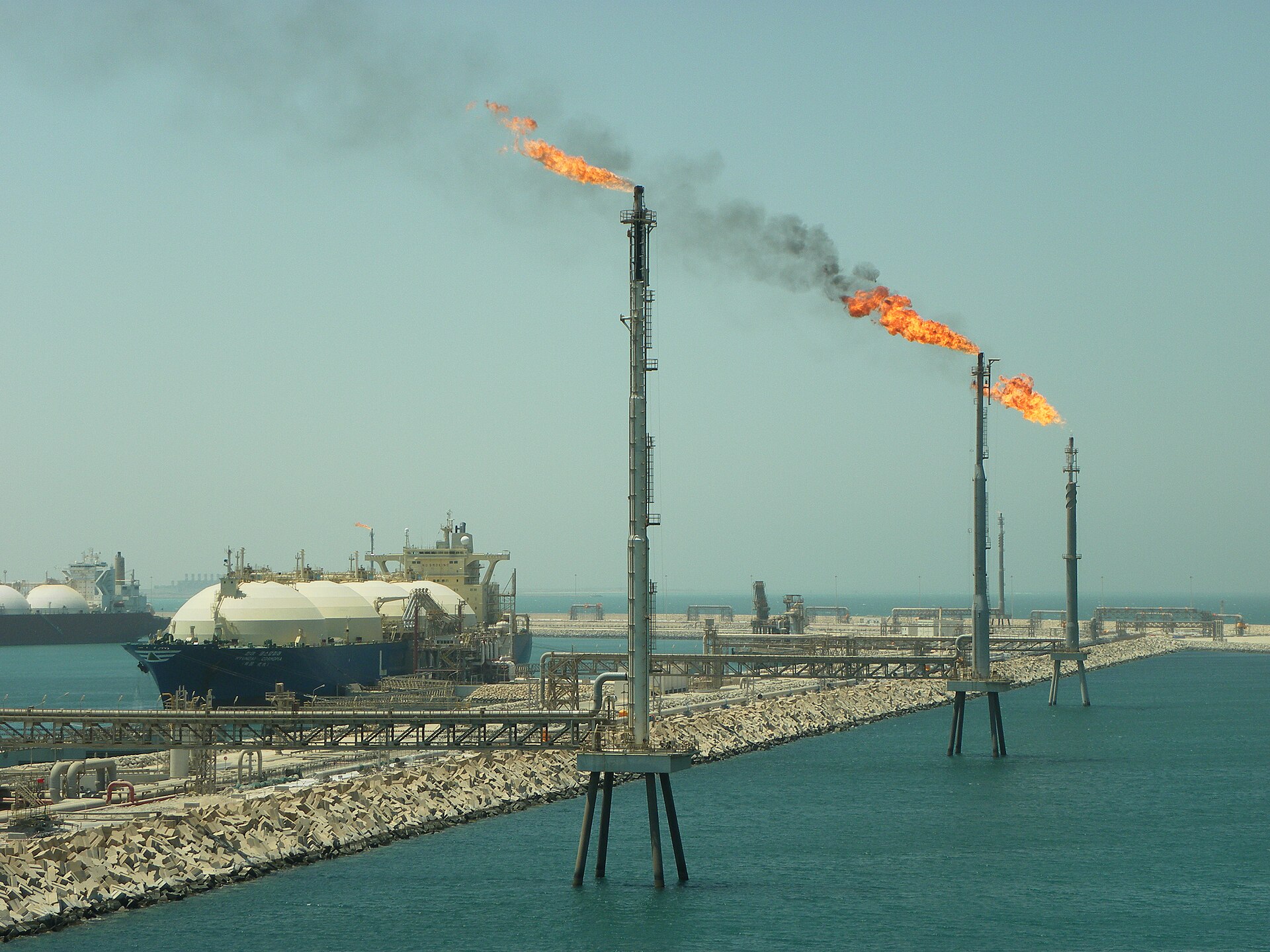
Table of Contents
What Happened to the Aqua 1?
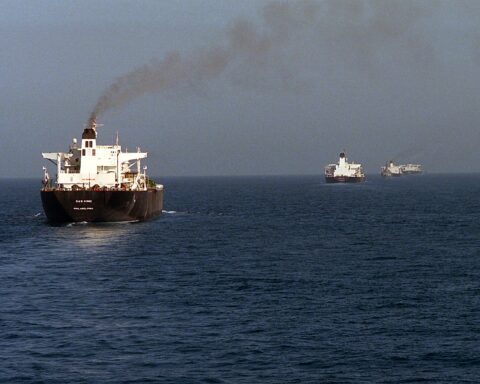
Three cruise missiles launched from Iranian territory targeted Qatari territorial waters on the morning of April 1, 2026. Qatar’s armed forces shot down two. The third struck the Aqua 1, a Medium Range tanker of approximately 48,000 deadweight tons carrying fuel oil under charter to QatarEnergy, according to reporting by gCaptain.
The missile hit above the waterline. A fire broke out and was extinguished. The United Kingdom Maritime Trade Operations separately reported that the vessel was struck by “two projectiles” — one causing a fire and a second remaining unexploded in the engine room, according to the Express Tribune, citing AFP. All 21 crew members were evacuated without casualties, and QatarEnergy stated there was “no impact on the environment as a result of this incident.”
The Qatar Defence Ministry confirmed the engagement in an official statement: “Our armed forces, by the grace of Allah, successfully intercepted two of the cruise missiles, while the third missile struck an oil tanker leased to Qatar Energy,” as reported by The Peninsula Qatar. The strike ended a nine-day lull in maritime incidents in the Gulf — the longest pause since hostilities began on February 28.
The attack did not occur in isolation. Within a 24-hour window spanning March 31 to April 1, at least three vessels were targeted in the Gulf, including the Kuwaiti-flagged VLCC Al Salmi — carrying approximately 2 million barrels of crude — struck by an Iranian drone 31 nautical miles northwest of Dubai on March 31, as reported by Gulf News and documented in an earlier House of Saud analysis.
From Fixed Infrastructure to Moving Targets
The Aqua 1 strike represents a category shift in Iran’s targeting pattern against Qatar. The escalation ladder tells the story in sequence.
On February 28, Iran launched a 66-missile barrage that was intercepted over Doha, injuring 16 people. On March 2, Qatar shot down two Iranian Su-24 bombers that had violated its airspace. On March 3, Qatari security services arrested two IRGC sleeper cells planning sabotage operations, according to Al Jazeera. On March 18–19, Iranian missiles struck the Ras Laffan LNG plant, causing what Bloomberg described as “extensive damage” and wiping out an estimated 12.8 million tonnes per year of export capacity — roughly 17% of Qatar’s total. On March 19, the Qatar-flagged vessel Halul 69 was hit by debris near the same facility.
April 1 added something new. Every previous strike on Qatari assets had targeted fixed infrastructure: airspace, land facilities, an anchored vessel. The Aqua 1 was a ship underway — a mobile commercial asset operating under QatarEnergy charter inside sovereign waters. Hitting a moving tanker with a cruise missile 31 kilometers from the coast requires targeting data and terminal guidance that fixed-site strikes do not. Iran demonstrated it can track, acquire, and engage commercial shipping within another state’s territorial boundary.
The IRGC has not publicly claimed or justified the April 1 strike as of the time of writing. Iran’s broader justification for attacks on Gulf infrastructure rests on Article 51 of the UN Charter, with Tehran’s spokesman stating in March that “all military bases, installations and assets that in any form or manner are being used to help the aggressors are regarded as legitimate targets,” according to NPR. A fuel oil tanker chartered to a civilian energy company does not fit that stated framework, even by Tehran’s own expansive reading of it.
Does the GCC Mutual Defense Pact Mean Anything?
The GCC Joint Defence Agreement, signed in December 2000, states that an attack on one member state is considered an attack on all. The pact was invoked rhetorically on March 1, 2026, after Iranian strikes hit all six member states in the opening days of the conflict. The 50th Extraordinary GCC Ministerial Council affirmed that “the security of GCC member states is indivisible” and reserved the right to respond under Article 51 of the UN Charter, according to the GCC Secretariat.
That was 31 days ago. No joint military command has been activated.
Ali Bakir, a defense analyst at Qatar University, has assessed that collective GCC defense coordination “remains limited at best and operationally non-existent beyond the public statement,” according to Breaking Defense. Hamdullah Baycar, an analyst covering Gulf security, told TRT World the GCC defence pledge carries “symbolic weight” but remains “more rhetorical than operational” given historical divisions between member states. Noha Aboueldahab, an analyst covering the same issue, told TRT World the GCC Joint Defence Agreement activation is “nothing more than an expression of solidarity when there is an aggression.”
The structural problem runs deeper than political will. Mehran Kamrava of Georgetown University Qatar has assessed that even with the pact activated, the GCC “cannot, and will not, initiate military action” because of deep U.S. military integration within Gulf forces that limits autonomous action, according to TRT World. The six GCC militaries operate different equipment, different command structures, and different doctrines. As a previous House of Saud analysis documented, the Gulf fields six separate armed forces with zero meaningful integration.
An attack on a mobile commercial vessel inside sovereign waters tests this framework more directly than the barrage-style attacks of late February. Those earlier strikes could be framed as part of a broader regional conflict. A cruise missile hitting a named tanker 17 nautical miles from a named port, inside a defined territorial boundary, is a sovereign-waters incursion against a specific GCC member. If the mutual defense pact does not produce a coordinated response to this, it does not produce a coordinated response to anything.
The End of Qatar’s Iran Channel
Qatar maintained the friendliest relationship with Iran of any GCC state for decades. During the 2017–2021 Saudi-led blockade, Iran provided crucial support through food exports and shipping routes, allowing Qatar Airways to use Iranian airspace. Qatar hosted Iranian President Raisi in 2022 and signed cooperation agreements. In January and February 2026, Qatar led regional diplomatic efforts to de-escalate tensions between Washington and Tehran, according to reporting by the Arab Gulf States Institute.
Anna L. Jacobs, an analyst covering Gulf politics, assessed that Qatar’s relationship with Iran “had previously caused Doha major problems with its Gulf neighbors” during the blockade, but that Qatar maintained dialogue with Iran even through those tensions, according to AGSI analysis. That dialogue is now finished.
Following the March 18–19 Ras Laffan strikes, Qatar expelled Iran’s military attaché and security attaché, declaring them persona non grata with 24 hours to leave the country, as reported by the Jerusalem Post. Dr. Ahmed Alkhuzaie, a Bahraini political analyst, characterized the expulsion as a “serious diplomatic rebuke,” noting that Doha avoided complete severance of relations but targeting security personnel “revealed concerns about covert influence and protecting vital energy infrastructure,” according to the same report.
Dr. Najah Al-Otaibi, a Saudi researcher on international relations, described Iran’s attacks as “a betrayal of the diplomatic detente” established in 2023 and called the continuous attacks evidence that Doha’s mediator role has been “shattered,” forcing alignment with Riyadh and Washington, according to the Jerusalem Post. As of March 24, Qatar’s Advisor to the Prime Minister Dr. Majid Al Ansari stated Qatar was “not engaged in any direct mediation efforts between the United States and Iran” but supports all diplomatic initiatives, according to the Qatari Foreign Ministry.
The Qatari Foreign Ministry spokesperson put it plainly: “All the red lines have already been crossed,” according to AGSI analysis. Iran managed to do in 32 days what the 2017 blockade could not accomplish in four years — push Qatar firmly and publicly into the Saudi-led camp. The March 31 Jeddah trilateral summit between Saudi Arabia, Qatar, and Jordan formalized what the Aqua 1 strike underscored: Doha’s neutrality is over.
How Bad Is the Gulf Maritime Crisis?
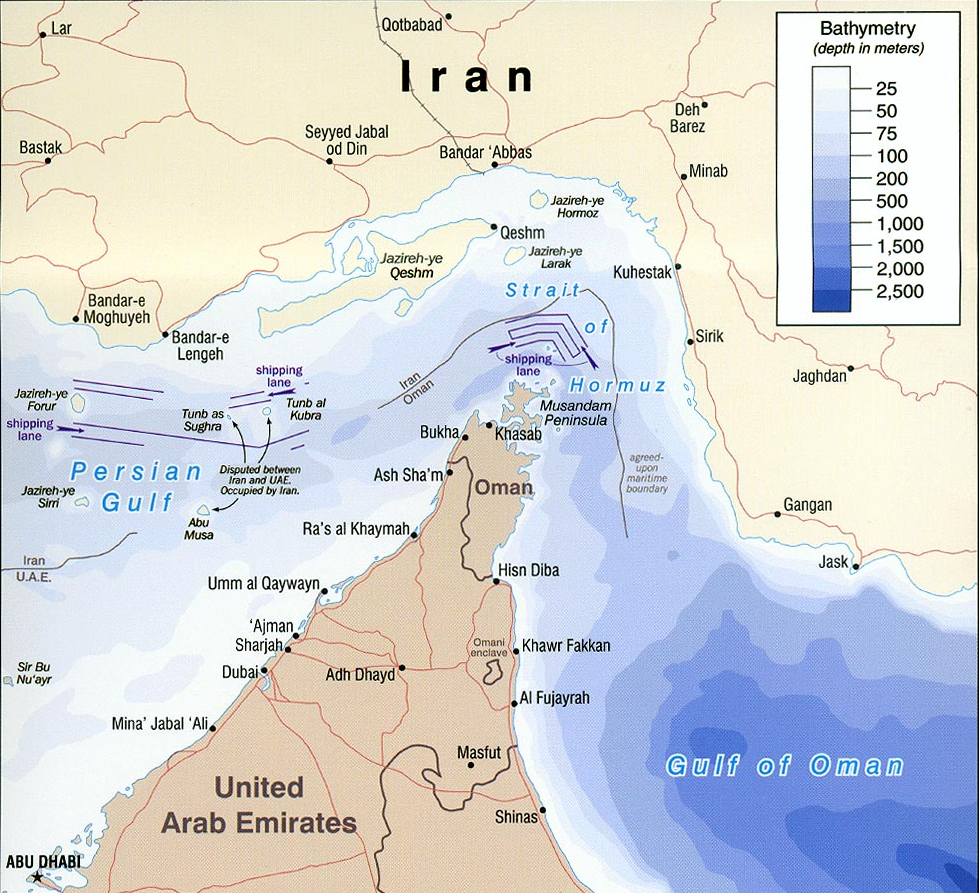
The Aqua 1 is now the 26th maritime incident since February 28. UKMTO had documented 25 total incidents through March 31 — comprising 16 confirmed attacks and 9 suspicious activity reports, according to gCaptain. Tanker departures through the Strait of Hormuz averaged fewer than three per day in March, down from a pre-conflict norm of roughly 15–20.
The IRGC declared the Strait of Hormuz “closed to hostile shipping” early in the conflict and established a mandatory “geopolitical vetting” toll system for all vessels entering or exiting the Strait, as reported by Aaj English TV and USNI News. Iran has built what amounts to a two-tier maritime order at Hormuz, allowing some traffic while blocking or taxing the rest.
War risk insurance premiums tell the financial story. Pre-conflict rates ran 0.15–0.25% of hull value. Current standard rates sit at 1.5–3%, with high-risk voyages quoted at 5–10%. For a $150 million LNG carrier, that translates to an additional $1.5 million per voyage at a 1% premium. These costs land on importers and ultimately on consumer energy bills from Seoul to Brussels.
The pattern of attacks has also shifted geographically. The Al Salmi strike 31 nautical miles northwest of Dubai on March 31 and the Aqua 1 strike 17 nautical miles north of Ras Laffan on April 1 both occurred inside GCC territorial waters, not in the contested international waters of the Strait. The Dubai anchorage attack eliminated one of the last areas shipowners considered relatively safe. The Aqua 1 strike removed another. There is no longer a safe zone for commercial shipping anywhere in the western Gulf, a reality that threatens the foundational oil-for-security bargain that has governed Gulf trade for decades.
Qatar supplies approximately 20% of the global LNG market. The March 18–19 Ras Laffan damage alone destroyed an estimated $20 billion in annual revenue capacity, with Bloomberg projecting 3–5 years for repairs. The force majeure declared on March 24 covers contracts with Italy, Belgium, South Korea, and China, according to Al Jazeera. Striking tankers near the same facility compounds an already severe supply disruption by making even undamaged export capacity harder to move to market.
The Interceptor Equation
Qatar intercepted two of three cruise missiles on April 1 — a 67% success rate. Qatar operates Patriot PAC-3 MSE batteries as its primary tier-one air defense system, supplemented by NASAMS III for medium-range engagements. The intercept rate is lower than Saudi Arabia’s reported 85–90% success rate against similar threats, as documented in a House of Saud assessment of Saudi air defense performance.
The more pressing question is not accuracy but inventory. An unnamed U.S. official told Defence Security Asia in March that coalition forces had “shot several years’ worth of production in the last few days.” Separate reporting projected interceptor stockpiles could be exhausted within four days at the pace of engagement seen during the heaviest barrages. Iran’s strategy appears designed not to defeat Gulf air defenses but to deplete them — each Patriot interceptor costs between $4 million and $6 million, while the cruise missiles and drones they are designed to stop cost a fraction of that.
The internal divisions within Tehran’s own leadership complicate any assessment of whether the pace of strikes will accelerate or slow. Iranian President Pezeshkian reportedly issued an apology to Gulf states for collateral damage, according to The Soufan Center, while the IRGC simultaneously declared U.S.-hosting locations “primary targets.” The civilian government says one thing. The Guard Corps does another. The Aqua 1 strike — against a civilian tanker with no military connection — aligns with the IRGC’s pattern, not the president’s stated remorse.
Brent crude sits at approximately $105–108 per barrel on Day 32 of the conflict, according to market data. The combined effect of Ras Laffan damage, force majeure declarations, rising insurance costs, and now direct strikes on tankers in sovereign waters has created a compounding disruption to Gulf energy exports. The mid-April OPEC meeting and approaching Strategic Petroleum Reserve depletion add further pressure to an already strained global energy market.
Background: Qatar Under Fire Since Day One
The broader GCC attack distribution underscores the scale of Iran’s campaign against the Gulf states. According to UKMTO and open-source strike tracking data, 83% of Iran’s missiles and drones have hit GCC member states, with the remaining 17% directed at Israel. The UAE has absorbed the heaviest volume, with 1,668 total recorded strikes representing 55% of all attacks and 66% of all drone strikes. The shared experience of being under Iranian fire has produced more GCC unity in 30 days than decades of summits, though whether that unity translates to operational military coordination remains the open question.
Iran’s stated legal position — that it is acting in self-defense under Article 51 of the UN Charter against states hosting U.S. military assets — has been rejected by all six GCC members. The six states claimed their own Article 51 self-defense rights against Iran in a joint statement in late March, as reported by multiple outlets. The legal arguments are now irrelevant in practical terms. Both sides claim self-defense. Neither side accepts the other’s framing. What remains is the physical reality of cruise missiles hitting commercial tankers inside sovereign territorial waters.
Frequently Asked Questions
What type of cruise missiles did Iran use in the April 1 attack?
Iran has not disclosed the specific missile variant used against the Aqua 1. Iran’s cruise missile arsenal includes the Soumar (range estimated at 2,500 km by CSIS Missile Defense Project), the Hoveyzeh (1,350 km), and the shorter-range Quds and Ya Ali variants. The use of cruise missiles rather than drones or ballistic missiles suggests a deliberate choice of precision-guided weapons that fly at low altitude, making them harder for radar systems to detect over water at extended ranges.
Can Qatar’s air defenses protect its offshore energy infrastructure?
Qatar’s Patriot PAC-3 MSE and NASAMS III systems are land-based and optimized for point defense of fixed installations. Defending dispersed maritime traffic across thousands of square kilometers of territorial waters requires sea-based or airborne early warning assets that Qatar does not currently field in significant numbers. The U.S. Navy’s Aegis-equipped destroyers in the Gulf provide some coverage, but their primary tasking is force protection for American assets rather than commercial shipping defense.
Has any other GCC state activated a military response under the Joint Defence Agreement?
No GCC member has initiated military operations against Iran under the Joint Defence Agreement as of April 1, 2026. Bahrain, which hosts the U.S. Fifth Fleet, has been the most forward-leaning in rhetoric but has not deployed offensive forces. Saudi Arabia’s response has centered on air defense operations within its own territory rather than projection toward Iran. The agreement lacks a standing joint force structure, a unified command hierarchy, or pre-positioned integrated assets, making rapid activation functionally impossible without weeks of preparation.
What happens to Qatar’s LNG customers now?
The force majeure declared on March 24 covers long-term supply contracts with major importers including Eni (Italy), Fluxys (Belgium), KOGAS (South Korea), and CNOOC/Sinopec (China). These buyers must now secure replacement cargoes on the spot market, where Asian LNG spot prices have surged past $25 per million British thermal units — more than double the 2025 average. South Korea and Japan, which together import approximately 30% of global LNG, face the most acute exposure given their limited pipeline alternatives and nuclear capacity constraints.
What is Iran’s endgame with strikes on GCC commercial assets?
The IRGC’s maritime campaign appears designed to raise the economic cost of Gulf states participating in or facilitating the U.S.-led military campaign. By making insurance prohibitively expensive, depressing tanker traffic, and demonstrating the ability to strike inside sovereign waters, Iran creates pressure on Gulf governments from their own populations and commercial sectors. The strategy borrows from the 1980s Tanker War playbook but has escalated faster — Iran struck commercial vessels inside territorial waters within 32 days, a threshold it did not cross during the entire eight-year Iran-Iraq War.