Iran Rejects Trump’s Hormuz Deadline Because No One Inside Tehran Can Accept It
TEHRAN — Iran’s rejection of the Trump administration’s Hormuz deadline, delivered through Foreign Minister Abbas Araghchi’s public defiance on April 6, is not a negotiating posture. It is the structural consequence of a command apparatus in which the person who could authorize a ceasefire — the Supreme Leader — has been absent from public view for nearly a month, the institution charged with war-ending decisions — the Supreme National Security Council — is now run by a sanctioned IRGC veteran legally unreachable by any Western intermediary, and the intelligence chief who would have coordinated any tactical stand-down was killed in a US-Israeli strike at dawn on the same morning the deadline arrived.
The killing of Majid Khademi, head of the IRGC’s Intelligence Organization, makes him the second IRGC intelligence chief assassinated in under a year. His predecessor, Gen. Mohammad Kazemi, was killed in an Israeli airstrike on Tehran on June 15, 2025. Khademi lasted less than ten months. The two competing ceasefire frameworks — Witkoff’s 45-day phased proposal and Pakistan’s overnight Islamabad Accord — are not rival offers between which Tehran can choose. They are parallel attempts by mediators who do not have a functioning channel to the decision-maker who actually controls the answer.
Table of Contents
- The Khademi Killing and the Intelligence Void
- Who Actually Decides Whether Iran Fights or Talks?
- Why Did Iran Refuse the Islamabad Accord?
- Can the Witkoff 45-Day Framework Survive Deadline Day?
- Iran’s Five Conditions and the Permanence Doctrine
- Is President Pezeshkian Even Part of the Decision?
- What Happens After the Deadline Expires?
- How Exposed Is Saudi Arabia If Escalation Follows?
- The Authorization Ceiling That Neither Mediator Can Breach
The Khademi Killing and the Intelligence Void
The IRGC confirmed on April 6 that Majid Khademi, head of the IRGC’s Intelligence Organization, was killed in US-Israeli strikes at dawn — the same morning Donald Trump’s Hormuz deadline began its final countdown. Iranian state media described him as “martyred in the criminal terrorist attack by the American-Zionist enemy.” Xinhua and Tasnim News Agency carried the confirmation within hours of the strike.
Khademi’s death is not an isolated operational loss. It is a systemic pattern. His predecessor, Gen. Mohammad Kazemi, was killed in an Israeli airstrike on Tehran on June 15, 2025. Khademi was appointed four days later, on June 19, 2025. He served less than ten months before his assassination — a tenure so abbreviated that institutional continuity within the IRGC’s internal security apparatus is now functionally impossible.
The IRGC’s Intelligence Organization, distinct from Iran’s civilian Ministry of Intelligence, is responsible for internal security, counter-espionage, and — most relevant to any ceasefire discussion — threat assessment regarding tactical military retreat. The intelligence chief is a gatekeeper to the authorization chain. Any ceasefire that involves standing down IRGC naval forces in the Strait of Hormuz or halting drone operations against Gulf infrastructure requires clearance through this office. That office now has no confirmed head for at least the second time in eleven months.
Before his intelligence role, Khademi had served as head of the IRGC’s Intelligence Protection Organization and as head of the Information Protection Organization of Iran’s Defence Ministry from 2018 to 2022, according to Anadolu Agency reporting. He was embedded in the IRGC’s counter-espionage architecture for years — a role that made him privy to the full scope of Iran’s covert operational network and simultaneously made him an assassination priority.
The Stimson Center’s Kaitlyn Hashem identified the broader trajectory in a March 26 assessment: Israel’s assassination campaign has elevated IRGC figures who are “more hardline, anti-U.S., and anti-Israel than those they replaced” and are “likely to adopt more confrontational stances toward the U.S. and prove less flexible in war-ending discussions.” Khademi’s death does not soften the IRGC command structure. It removes the person who would have operationalized any decision to stand down — and guarantees his replacement will be selected from the same hardline pipeline that produced every appointment since the war began on February 28.
Who Actually Decides Whether Iran Fights or Talks?
The formal answer is the Supreme National Security Council. The SNSC controls Iran’s nuclear and military strategy and is, in constitutional theory, the institution that issues authorization for war-ending decisions. Its secretary — the operational head — is now Mohammad Bagher Zolghadr, an IRGC veteran who co-founded the Ramezan Garrison, a precursor to the Quds Force. Zolghadr was installed on March 24, eight days after the assassination of Ali Larijani on March 16.
Zolghadr’s appointment was not Pezeshkian’s choice. IRGC Commander Ahmad Vahidi compelled the president to appoint him, according to reporting by The National on March 24. The Foundation for Defense of Democracies assessed the move as “entirely consistent with the pattern we have seen since February 28 — every vacancy created by the war has been filled by an IRGC veteran, every moderate voice has been replaced by a hardliner.”
Zolghadr is under both EU and US sanctions. This makes the SNSC secretary — the person who formally signs off on Iran’s war-and-peace decisions — legally inaccessible to American or European intermediaries. Neither Witkoff nor any EU envoy can conduct a direct negotiation, video call, or even a documented exchange with the man whose institutional signature a ceasefire would require.
You cannot speak to the people of Iran in the language of threats and deadlines… We do not set any deadline for defending ourselves.
Abbas Araghchi, Iranian Foreign Minister, April 6, 2026 — Al Jazeera
Above Zolghadr sits the Supreme Leader, Mojtaba Khamenei, installed on March 9 under IRGC pressure after his father’s death. Khamenei has been absent from public view for approximately 29 days. His only confirmed communications are text messages read on live television. No foreign leader has held a verified voice or video call with him. His last known position, from March 18: “not the right time for peace until the United States and Israel are brought to their knees, accept defeat, and pay compensation.”
The practical reality: two mediating frameworks — one American, one Pakistani — are attempting to reach a decision-maker who has not been publicly seen in a month, through an institution whose secretary cannot legally be contacted by the mediators, while the intelligence chief who would coordinate any stand-down order was killed hours before the deadline arrived.
Why Did Iran Refuse the Islamabad Accord?
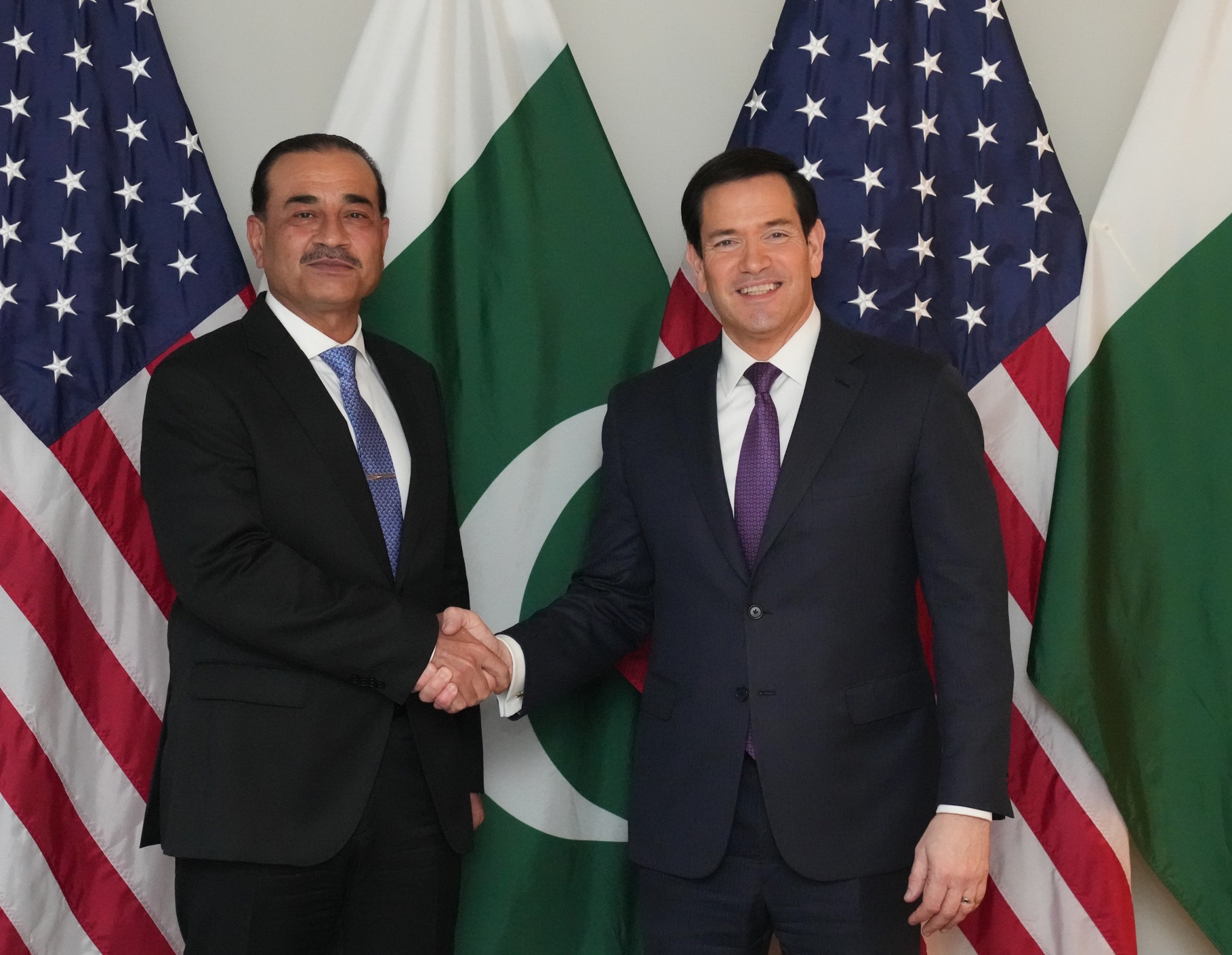
Pakistan’s Islamabad Accord was assembled overnight on April 5-6. Field Marshal Asim Munir, Pakistan’s Army Chief, was in contact “all night long” with US Vice President JD Vance, special envoy Steve Witkoff, and Iranian Foreign Minister Araghchi, according to Geo.tv. The framework proposed three steps: an immediate ceasefire, the reopening of the Strait of Hormuz, and a 15-to-20-day window to finalize a comprehensive settlement, structured as a memorandum of understanding transmitted electronically through Pakistan as the sole active channel.
Iran did not respond. “Iran has not responded yet,” a Pakistani source told Reuters, as reported by Al-Monitor on April 6. When Iran did speak, it was through rejection. An Iranian official told Reuters that Tehran will “not reopen” Hormuz for a “temporary ceasefire” and views Washington as lacking “readiness” for a permanent ceasefire, according to Kurdistan24 reporting.
The Islamabad Accord’s fatal structural flaw is one of addressee. Pakistan’s channel runs through Foreign Minister Araghchi. Araghchi is the civilian face of Iranian diplomacy — articulate, English-speaking, comfortable with Western press — but he cannot authorize the military dimensions of any ceasefire. IRGC field operations answer to Commander Vahidi and, nominally, to the IRGC Military Council. The Accord is a civilian-to-civilian channel attempting to resolve a decision that is controlled by a military council.
The collapse of the Pakistan mediation track was foreseeable because it replicated the same error of earlier attempts. Araghchi himself has been explicit about the limits of his role. In March, he told Time magazine: “We don’t see any reason why we should talk with Americans, because we were talking with them when they decided to attack us, and that was for the second time.” He told NPR the same month: “We do not want a ceasefire… We want the war to end in a way that it does not repeat, on our own terms. The damages to the people of Iran must also be compensated.”
Araghchi is not being evasive. He is being precise about the boundary of his authority. When he says Iran does not want a ceasefire, he means the IRGC does not want a ceasefire — and the IRGC, not the Foreign Ministry, is the institution that would have to order its naval forces out of the Strait of Hormuz and halt drone operations targeting Gulf infrastructure.
Can the Witkoff 45-Day Framework Survive Deadline Day?
The Witkoff 45-day ceasefire framework, reported by Axios and The National from four sources, proposed a phased structure: Phase 1 is a 45-day ceasefire, Phase 2 is a final deal. The framework deferred the two issues that matter most — the Strait of Hormuz and Iran’s highly enriched uranium stockpile — to Phase 2. Mediators assessed the chances as “slim.” The framework identified Pakistan, Egypt, and Turkey as potential mediators, and reporting confirmed that Witkoff and Araghchi exchanged direct text messages.
The framework’s survival past deadline day depends on a premise that no longer holds: that there exists within the Iranian system a person with both the authority to accept a 45-day pause and the willingness to do so. Zolghadr, the SNSC secretary, is unreachable through legal diplomatic channels. Khamenei has not surfaced in 29 days. Vahidi, who controls IRGC operations, has explicitly rejected civilian control over war decisions. Khademi, who would have coordinated the tactical logistics of a stand-down, was killed at dawn on the day the deadline arrived.
The Witkoff framework also collides with Iran’s stated position that temporary measures are unacceptable. Araghchi told the Jerusalem Post on March 25: “What we care about are the terms of a conclusive and lasting END to the illegal war that is imposed on us.” A 45-day pause is, by definition, temporary — exactly the category of agreement Iran has publicly ruled out.
The two frameworks — Witkoff’s 45-day phased proposal and Pakistan’s 15-to-20-day MOU — are not competing offers. They are parallel evidence that neither Washington nor Islamabad has identified, much less secured access to, the Iranian decision-maker who controls the answer. The frameworks compete with each other for diplomatic attention, but neither competes with the IRGC’s institutional veto.
Iran’s Five Conditions and the Permanence Doctrine
On March 25, Iran responded to Witkoff’s rejected 15-point plan with five conditions for ending the war. These were not opening bids subject to negotiation. They were structural demands designed to be unbridgeable on the timeline Trump has set. The conditions, as reported by NPR and The Hill: a complete halt to all military aggression including covert operations; verifiable guarantees against recurrence; reparations for war damages; a ceasefire across all fronts including allied resistance groups; and international recognition of Iranian sovereignty over the Strait of Hormuz.
Condition five — international recognition of Iranian sovereignty over the Strait of Hormuz — is a demand that no American administration, of either party, has ever conceded or could concede without dismantling the legal basis of US naval operations in the Persian Gulf. It is the condition that converts the other four from difficult into impossible within a 45-day or 15-day window.
The permanence doctrine — Iran’s insistence that only a conclusive and lasting end to hostilities is acceptable, rather than any temporary cessation — performs a dual function. Externally, it positions Iran as seeking a comprehensive peace rather than a tactical pause. Internally, it provides the IRGC with a structural veto over any deal: because no proposal within the American political calendar can meet the permanence standard, the IRGC can reject every framework without appearing to reject peace itself.
Araghchi framed this explicitly in March: “We never asked for a ceasefire, and we have never asked even for negotiation.” The semantic distinction between ceasefire and war-ending agreement is not rhetorical. It reflects the IRGC’s institutional requirement that any deal must include security guarantees enforceable against a future American administration — a condition that the American constitutional system cannot structurally provide, since no president can bind a successor’s use of military force.
Is President Pezeshkian Even Part of the Decision?
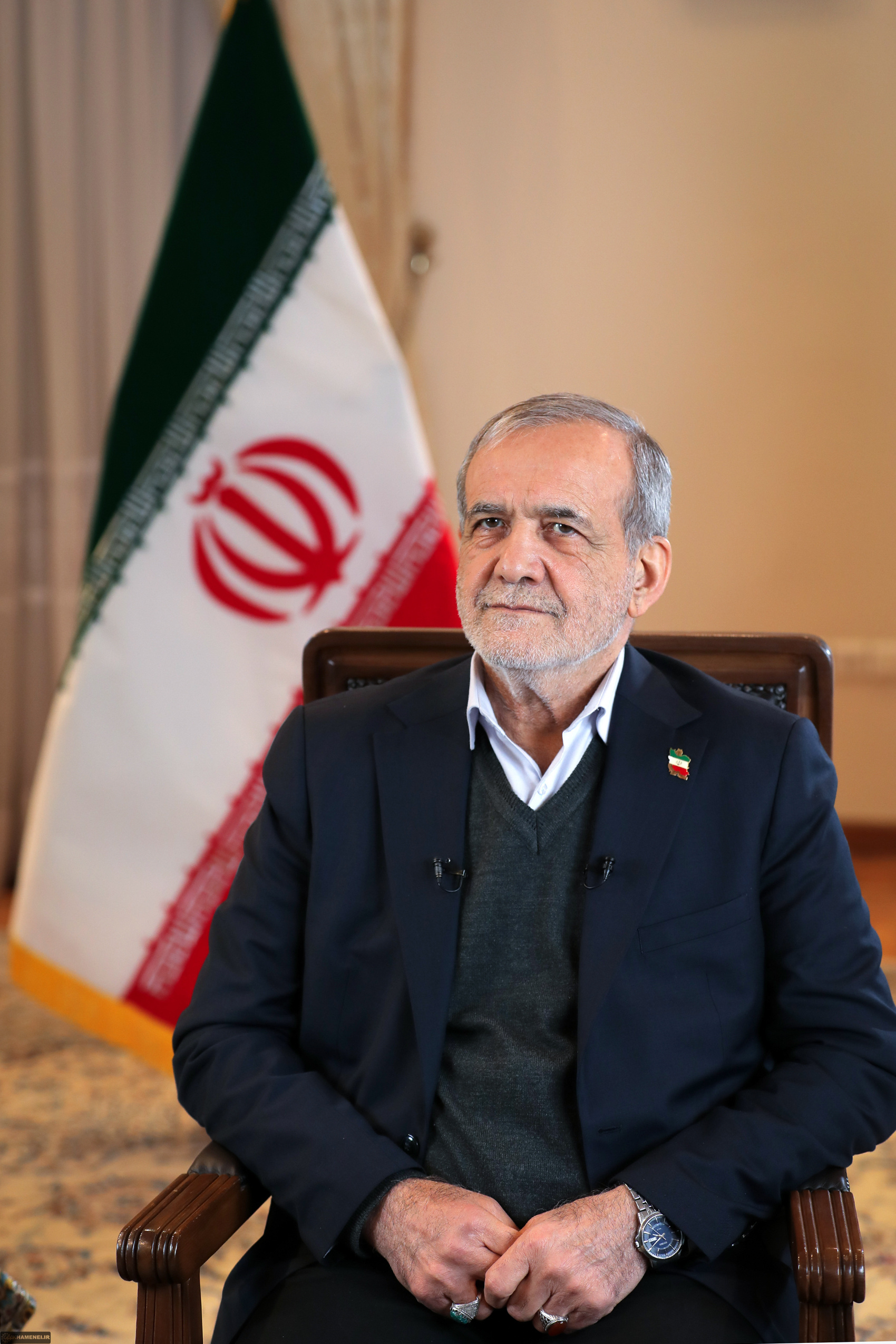
Masoud Pezeshkian, Iran’s reformist president, has been systematically stripped of authority over the war since it began. On March 7, he issued a public video apology — an extraordinary act for an Iranian president — and ordered the IRGC to stop “fire at will” attacks. IRGC attacks resumed within hours, as reported by i24News. The order was not merely ignored; it was publicly nullified, establishing that presidential directives do not constrain IRGC operations.
Pezeshkian warned the IRGC that Iran’s economy faces total collapse within three to four weeks without a ceasefire, according to Defense News reporting. That warning was issued in March. By April 6, the three-to-four-week window has nearly elapsed. The economic pressure Pezeshkian identified has not produced movement toward a deal; it has produced Zolghadr’s appointment and the further consolidation of IRGC control over the SNSC.
The IRGC’s response to Pezeshkian’s interventions has followed a consistent pattern. When Pezeshkian attempted to assert civilian control, Vahidi compelled him to appoint Zolghadr as SNSC secretary — replacing the moderate Larijani with a sanctioned IRGC co-founder of the Ramezan Garrison. When Pezeshkian ordered a halt to IRGC attacks, operations continued. When Pezeshkian warned of economic collapse, the IRGC expanded its operations to include strikes on Saudi infrastructure, including the Ras Tanura refinery hit with drone debris on April 3.
The Jerusalem Post characterized Vahidi as someone who “belongs to the hardline core that prefers to fight ‘whatever it takes’ rather than accept a ceasefire.” Vahidi has “rejected civilian control over war decisions” — a description that applies not only to his relationship with Pezeshkian but to his posture toward any mediator whose channel runs through civilian interlocutors. Neither the Witkoff framework nor the Islamabad Accord addresses this problem. Both assume a civilian pathway to a military decision.
What Happens After the Deadline Expires?
Trump’s Easter Sunday Truth Social post — “Power Plant Day, and Bridge Day, all wrapped up in one, in Iran,” posted at 8:03 AM EDT on April 6 — set an approximate deadline of 9 PM EDT on April 7. The targeting doctrine embedded in that statement has been analyzed in detail by this publication. Bridge targeting corresponds to Khuzestan battlefield isolation — a strategy of cutting supply lines to Iran’s southwestern oil province. The B1 bridge at Karaj was already struck on April 2, killing eight and wounding over 95.
Four post-deadline escalation paths are available to the administration. The first is the stated path: power plant and bridge strikes across Iran, expanding the target set from the 90-plus military targets struck on March 13 to civilian infrastructure. The second is a strike on Kharg Island, which handles approximately 90 percent of Iran’s crude oil exports — infrastructure the US deliberately spared in March but which Trump warned he would “immediately reconsider” if Iran continued disrupting shipping. The third, reported as operationally prepared, involves a ground seizure of Kharg Island, with the 82nd Airborne command element deployed to theater. The fourth is an extension or face-saving pause — possible only if Pakistan can deliver Iranian silence long enough to claim the Islamabad Accord as a framework in progress.
Trump told Axios, in a confirmed paraphrase, that if no deal materializes, “I am blowing up everything.” The formulation is consistent with the escalation ladder: infrastructure strikes first, oil infrastructure second, ground operations as the maximum option. But the deadline’s significance is not primarily military. It is diplomatic. The deadline’s expiration without a deal confirms publicly what the command structure analysis already demonstrated privately: there is no one on the Iranian side with both the authority and the willingness to say yes.
Iran’s Parliament Speaker issued a counter-threat on March 22, reported by PBS NewsHour and Al Jazeera: “vital infrastructure as well as energy and oil infrastructure across the entire region will be considered legitimate targets and will be irreversibly destroyed” if Iranian power plants are struck. The IRGC has already demonstrated the ability to reach Saudi infrastructure — Ras Tanura on April 3. Fars News published a counter-target list of eight Gulf and Jordanian bridges, including the King Fahd Causeway connecting Saudi Arabia to Bahrain.
How Exposed Is Saudi Arabia If Escalation Follows?
Saudi Arabia’s strategic position on deadline day is defined by a single infrastructure vulnerability. The East-West Pipeline bypass through Yanbu is the kingdom’s only active crude export route that avoids the Strait of Hormuz. A strike on Yanbu would eliminate Saudi Arabia’s sole bypass — the same facility that has allowed the kingdom to maintain exports while Hormuz transit remains contested.
The Ras Tanura refinery, Saudi Arabia’s largest, was already struck by drone debris after air defense intercepts on April 3. Operations shut down. The IRGC’s demonstrated reach to Ras Tanura — located on the Persian Gulf coast, directly exposed to Iranian launch positions — establishes the operational plausibility of strikes against other Gulf-facing Saudi facilities.
The King Fahd Causeway appeared on the Fars News counter-target list of eight bridges. A strike on the causeway would sever the land link between Saudi Arabia and Bahrain, where the US Navy’s Fifth Fleet is headquartered. The targeting logic is symmetrical to Trump’s bridge doctrine: if the US strikes Iranian bridges to isolate Khuzestan, Iran strikes Gulf bridges to isolate US naval basing.
Crown Prince Mohammed bin Salman has privately urged Trump to send ground troops into Iran, according to reporting sourced to US officials. But Saudi Arabia’s own military exposure — Ras Tanura offline, Yanbu as the only bypass, the King Fahd Causeway on a published target list — means that any escalation following the deadline expiration carries direct consequences for the kingdom’s export capacity and physical infrastructure. The Saudi role as co-guarantor of any ceasefire framework is further complicated by the fact that Riyadh is simultaneously a belligerent target and a would-be neutral broker.
The Oman-Iran back-channel on Hormuz transit rules has proceeded without Saudi participation, a diplomatic reality that defines Riyadh’s position: it bears the economic consequences of Hormuz closure and the military consequences of IRGC retaliation, but lacks a seat at the table where transit rules are being written.
The Authorization Ceiling That Neither Mediator Can Breach
The CSIS Middle East Program, led by Mona Yacoubian, documented the IRGC’s operational reality in a March 16 assessment: Iran’s military strategy responds to existential threats by choosing to “impose enormous costs on the region…to establish deterrence” through horizontal and vertical escalation. CSIS found IRGC units “operating on a regional and decentralized basis, engaging designated targets with considerable autonomy.”
That autonomy is the authorization ceiling. A ceasefire requires centralized command — a single authority ordering all IRGC units, across multiple theaters and operational commands, to stand down simultaneously. The intelligence chief who would have coordinated that order across the IRGC’s internal security apparatus was killed on the morning of April 6. The SNSC secretary who would formally authorize it is under sanctions that prohibit Western contact. The Supreme Leader who would provide the political cover for it has not been publicly seen in 29 days.
The decentralized structure CSIS described means that even a theoretical ceasefire order, if one were somehow issued, would face implementation risks that no mediator has addressed. An IRGC naval unit in the Strait of Hormuz operating with “considerable autonomy” is not the same as a conventional military force awaiting centralized orders. The stand-down problem is not just political; it is organizational. The IRGC is built for distributed escalation, not coordinated cessation. That decentralized autonomy found its clearest expression on April 6, when Iran launched simultaneous barrages against Saudi Arabia, Kuwait, and the UAE in a single operational window — Iran’s April 6 multi-state air barrage totaling more than 130 objects, the largest coordinated multi-country salvo of the war, executed without any single command authority that a ceasefire order could reach.
Vahidi’s position — described by the Jerusalem Post as “truly flesh of the regime’s flesh — a product of the IRGC’s foundational years who has climbed every rung of the ladder” — makes him the closest thing to a singular decision-maker on Iran’s military posture. But Vahidi has no interest in accepting either framework. He compelled the appointment of Zolghadr specifically to ensure the SNSC would not authorize a deal he opposed. He overrode Pezeshkian’s ceasefire order in March. He has positioned himself as the gatekeeper between Iran’s war machine and any diplomatic exit — and he has consistently chosen to keep the gate closed.
| Decision Node | Person / Institution | Status as of April 6 | Reachable by Mediators? |
|---|---|---|---|
| Supreme Leader | Mojtaba Khamenei | Absent 29+ days; last position: fight until US “brought to their knees” | No verified contact with any foreign leader |
| SNSC Secretary | Mohammad Bagher Zolghadr | Appointed March 24; co-founder of Ramezan Garrison | No — under EU and US sanctions |
| IRGC Commander | Ahmad Vahidi | Compelled Zolghadr appointment; overrode Pezeshkian ceasefire order | No — designated by US, EU |
| IRGC Intelligence Chief | Majid Khademi (killed April 6) | Assassinated at dawn on deadline day | N/A — position vacant |
| President | Masoud Pezeshkian | Orders overridden within hours; stripped of SNSC appointment authority | Yes — but lacks authority over military decisions |
| Foreign Minister | Abbas Araghchi | Active diplomatic channel to Pakistan, Witkoff | Yes — but cannot authorize military stand-down |
The table above is the reason the deadline will expire without a deal. Every node with authority is unreachable. Every node that is reachable lacks authority. This is not a bargaining failure. It is an institutional condition — one that the assassination campaign has deepened with each successive killing, each replacement drawn from the same IRGC pipeline, each new appointment more hardline than the last.
Every vacancy created by the war has been filled by an IRGC veteran, every moderate voice has been replaced by a hardliner.
Foundation for Defense of Democracies analysis, March 26, 2026
The non-obvious dimension of April 6 is that Iran’s rejection of both frameworks is not defiance. It is a description of the Iranian state’s actual decision-making capacity. Tehran cannot say yes because the people who would say yes cannot be reached, and the people who can be reached cannot say yes. The deadline arrives at a system that has been hollowed out by assassinations, hardline consolidation, and the absence of the one figure — the Supreme Leader — whose word might override the IRGC’s institutional veto. That figure has not spoken in 29 days. The deadline does not care.
Frequently Asked Questions
What was Majid Khademi’s specific role before leading IRGC intelligence?
Khademi served as head of the IRGC’s Intelligence Protection Organization and then as head of the Information Protection Organization of Iran’s Defence Ministry from 2018 to 2022. These roles placed him at the center of Iran’s counter-espionage architecture — the apparatus that detects and neutralizes infiltration of the IRGC’s own ranks. His Defence Ministry role gave him cross-institutional visibility into military intelligence workflows that few IRGC officers possess, which is precisely why his elimination removes irreplaceable institutional knowledge about the IRGC’s operational security posture during wartime.
How does the IRGC’s decentralized command structure affect ceasefire implementation even if a deal were reached?
CSIS documented IRGC units operating on a “regional and decentralized basis, engaging designated targets with considerable autonomy.” In practice, this means IRGC naval units in the Hormuz corridor, drone units launching from multiple dispersed sites, and proxy coordination cells across Iraq, Syria, Lebanon, and Yemen each maintain independent operational tempos. A ceasefire order from Tehran would need to reach, and be obeyed by, dozens of semi-autonomous commands simultaneously — a coordination problem that Iran’s own military structure was designed to prevent, not facilitate, as decentralization was built to ensure survivability against exactly the kind of decapitation strikes the US and Israel have been conducting.
Why is Pakistan, rather than Oman or Qatar, the active mediation channel?
Pakistan’s unique position derives from Field Marshal Asim Munir’s simultaneous relationships with both sides: as a military leader trusted by the US defense establishment and as head of a nuclear-armed Muslim-majority state with a 900-kilometer land border with Iran. Munir was in contact “all night long” with Vance, Witkoff, and Araghchi — a three-way communication thread that neither Oman nor Qatar could replicate. Oman maintains a back-channel on Hormuz transit rules but lacks the US military relationship. Qatar’s channel is complicated by Al Udeid Air Base hosting the very strikes Iran is absorbing.
What is the Ramezan Garrison and why does Zolghadr’s connection to it matter?
The Ramezan Garrison was a precursor to the Quds Force — the IRGC’s external operations arm responsible for projecting Iranian power across the Middle East through proxy networks. Zolghadr co-founded it, placing him in the IRGC’s foundational generation: the cohort that built Iran’s asymmetric warfare doctrine from the ground up during and after the Iran-Iraq War. His appointment as SNSC secretary means the institution formally authorizing war-and-peace decisions is now run by someone whose career was spent constructing the very proxy and expeditionary infrastructure that a ceasefire would require dismantling — a structural conflict of interest that no mediator has publicly acknowledged.
Could Trump extend the deadline without appearing to back down?
The Islamabad Accord provides a potential face-saving mechanism: if Pakistan can claim Iran is “reviewing” the MOU — which is technically accurate, since Iran’s official position is that it is “reviewing” the accord even as it has separately rejected its core premise — Trump could frame an extension as giving the Islamabad process time to work. This would require Pakistan to maintain the fiction of an active channel, which Munir has incentive to do given Pakistan’s own exposure to regional escalation. The precedent exists: Trump’s original deadline shifted by approximately 23 hours between initial announcement and final specification, from 8 PM to 9 PM EDT April 7, suggesting the timeline is more flexible than the rhetoric implies.