
RIYADH — Iran’s joint military command on Wednesday declared banks and financial institutions linked to the United States and Israel across the Middle East as legitimate military targets, marking a significant escalation in the 12-day-old conflict that now threatens Saudi Arabia’s $3 trillion financial sector and the Gulf’s status as a global banking hub. The statement from the Khatam al-Anbiya Headquarters came hours after US-Israeli airstrikes destroyed a digital security centre at Bank Sepah in Tehran, killing an unspecified number of staff members who were processing salary payments for military personnel.
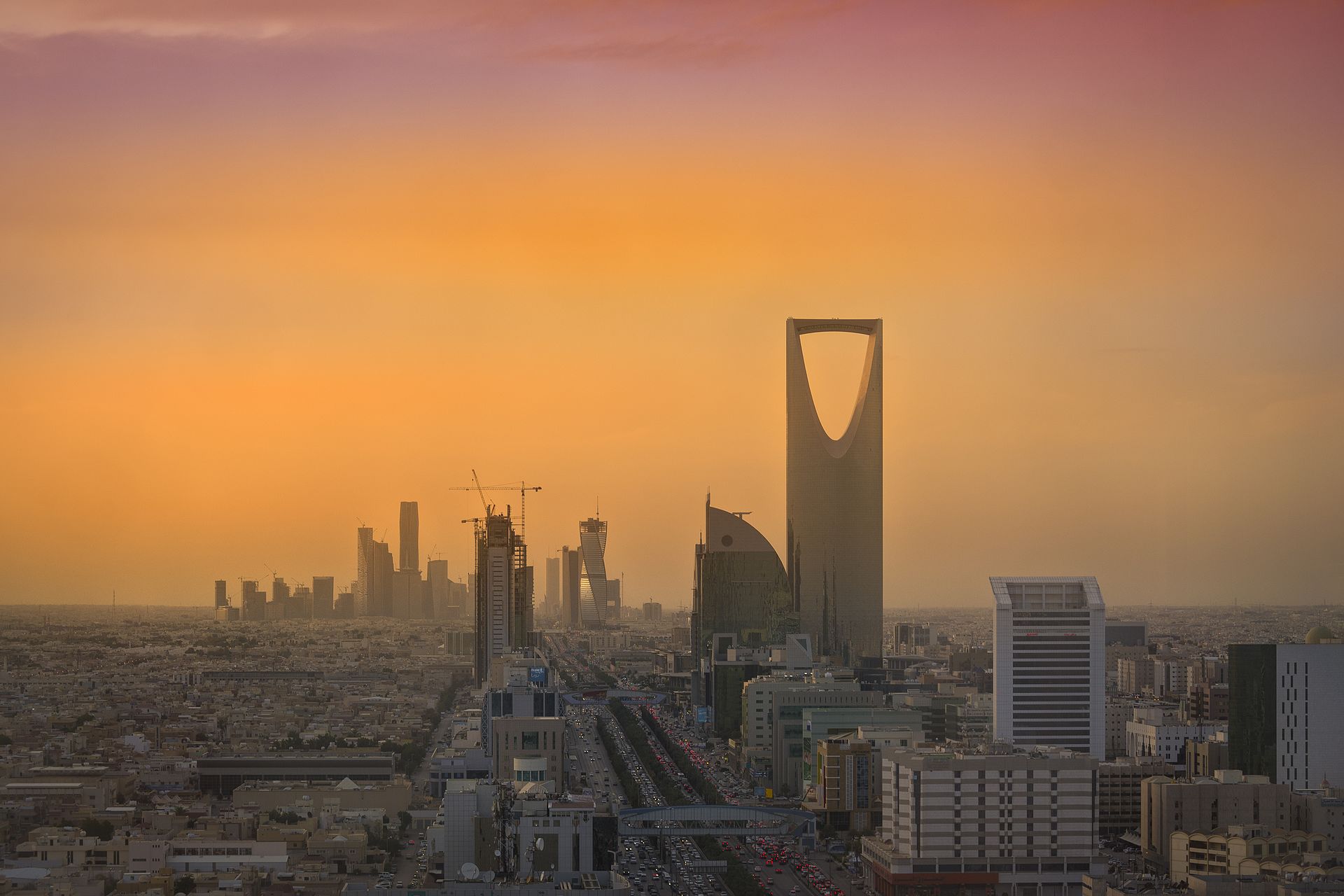
The threat directly imperils the King Abdullah Financial District in Riyadh, the Dubai International Financial Centre, and Bahrain’s banking cluster — collectively home to more than 500 international banks, 102 hedge funds, and thousands of wealth management firms that have spent two decades positioning the Gulf as a rival to London and Singapore. Within hours of the announcement, Bloomberg reported that Goldman Sachs, JPMorgan Chase, Citigroup, Commerzbank, and Nomura had instructed employees across Gulf offices to work from home, while the Saudi Exchange (Tadawul) activated emergency trading protocols.
Table of Contents
- What Did Iran’s Military Command Declare?
- The Bank Sepah Strike That Triggered the Threat
- Which Gulf Financial Centres Are Most Exposed?
- How Has Saudi Arabia’s Financial Sector Responded?
- International Banks Activate Gulf Contingency Plans
- The War’s Expanding Target List
- War Risk Insurance and Capital Flight
- Background — The Gulf’s $7 Trillion Financial Ecosystem
- Frequently Asked Questions
What Did Iran’s Military Command Declare?
Iran’s Khatam al-Anbiya Headquarters, the country’s highest operational military command, issued a statement on Wednesday, March 11, declaring that “the enemy left our hands open to targeting economic centres and banks belonging to the United States and the Zionist regime in the region.” The command warned civilians across the Gulf to “not be within a one-kilometre radius of banks,” according to Al Jazeera and the Associated Press.
Military spokesperson Ebrahim Zolfaqari accused what he described as the “terrorist U.S. army and the Zionist regime” of attacking Iranian financial infrastructure, calling the Bank Sepah strike a deliberate escalation that would invite retaliation in kind. The statement appeared on Iranian state media alongside footage of the destroyed Bank Sepah building on Haghani Street in central Tehran.
The declaration represents the first time since the conflict began on February 28 that Iran has explicitly named financial institutions as military targets. Previous waves of Iranian strikes — 37 in total as of Wednesday, according to the IRGC — have focused on military installations, oil infrastructure, and naval assets across the Gulf. The shift to economic targets signals a strategic recalculation by Tehran’s war planners as the conflict enters its second week with no ceasefire in sight.
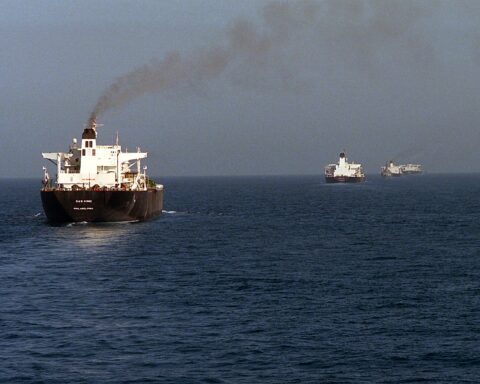
The Khatam al-Anbiya Headquarters also expanded its maritime threat, stating that “any vessel whose oil cargo or the vessel itself belongs to the United States, Israel, or their hostile allies will be considered legitimate targets” in the Strait of Hormuz, according to France 24. Three commercial vessels were struck by unknown projectiles in the strait on Wednesday morning, raising the total to 14 merchant ships hit since the war began.
The Bank Sepah Strike That Triggered the Threat
The immediate catalyst for Iran’s declaration was a US-Israeli airstrike that destroyed the digital security centre of Bank Sepah, one of Iran’s oldest and largest state-owned banks, in the early hours of Wednesday. The building on Haghani Street in north Tehran was struck while staff were processing electronic salary payments for military personnel, according to Iranian state media.
Bank Sepah, founded in 1925, serves as one of the primary financial channels for Iran’s armed forces. The United States Treasury sanctioned the bank in 2007 for providing financial services to entities linked to Iran’s ballistic missile programme, according to the Treasury Department’s Office of Foreign Assets Control. The bank holds approximately $28 billion in assets and operates 1,800 branches across Iran, according to its most recent financial disclosures.
Iranian officials accused Washington and Tel Aviv of deliberately targeting civilian financial infrastructure. “They struck a bank where ordinary employees were working to process salaries,” Iran’s Foreign Ministry said in a statement reported by the Arabian Stories News. “This is not a military target. This is economic terrorism.”
The Pentagon has not commented specifically on the Bank Sepah strike, though Defence Secretary Pete Hegseth said on Tuesday that the United States had launched its “most intense day of strikes inside Iran,” according to NPR. The broader campaign has hit more than 10,000 sites across Iran, killing at least 1,300 civilians, according to Iranian health officials cited by Al Jazeera.
State-affiliated media reported brief disruptions to Bank Melli and Bank Sepah’s digital services earlier in the week, but the physical destruction of the Haghani Street facility marked a new category of target in the US-Israeli campaign. Iran’s decision to frame the strike as an attack on civilian economic infrastructure — rather than on a sanctioned entity tied to the military — suggests Tehran intends to use it as justification for retaliatory strikes on financial targets in the Gulf.

Which Gulf Financial Centres Are Most Exposed?
The threat puts three major Gulf financial hubs in the crosshairs: Saudi Arabia’s King Abdullah Financial District in Riyadh, the Dubai International Financial Centre in the UAE, and Bahrain’s financial harbour district. Together, these centres host the regional headquarters of virtually every major Western bank operating in the Middle East.
Saudi Arabia’s financial sector represents the largest single target. The Kingdom’s banking system held 2,752 billion Saudi riyals ($733 billion) in private-sector credit at the end of 2024, with a capital adequacy ratio of 20 percent, according to the Saudi Central Bank’s most recent annual report. The Tadawul, the Arab world’s largest stock exchange by market capitalisation, processed $1.2 trillion in trades in 2024. The King Abdullah Financial District, a 1.6-million-square-metre complex in northern Riyadh, houses the Saudi Exchange, the Capital Market Authority, and regional offices of HSBC, JPMorgan, Goldman Sachs, and Citigroup.
The Dubai International Financial Centre, the Gulf’s largest financial free zone, hosted more than 290 banks, 102 hedge funds, 500 wealth management firms, and 1,289 family-related entities by the end of 2025, according to DIFC’s annual report. The centre generated $5.8 billion in revenue in 2024 and employs approximately 41,000 professionals. Two Iranian drones struck near Dubai International Airport on Wednesday, injuring four people, according to the UAE Defence Ministry — the closest projectiles have come to the DIFC’s towers.
Bahrain’s financial sector, which contributes approximately 17 percent of the island kingdom’s GDP, faces perhaps the most acute vulnerability. The country hosts the regional headquarters of Citibank, Standard Chartered, BNP Paribas, and HSBC, as well as the US Navy’s Fifth Fleet. Bahrain has been struck repeatedly by Iranian missiles and drones since the conflict began, and its air defences, while supplemented by US Patriot batteries, are the most limited of the major Gulf states.
| Financial Hub | Location | International Banks | Assets Under Management | Proximity to Strikes |
|---|---|---|---|---|
| King Abdullah Financial District | Riyadh, Saudi Arabia | 40+ | $733 billion (banking sector) | Al-Kharj strikes 85km south |
| Dubai International Financial Centre | Dubai, UAE | 290+ | $5.8 billion revenue (2024) | Airport drones 8km from DIFC |
| Bahrain Financial Harbour | Manama, Bahrain | 85+ | $220 billion (total sector) | Direct missile strikes on island |
| Qatar Financial Centre | Doha, Qatar | 60+ | $480 billion (QIA assets) | Missile intercepted over Doha |
How Has Saudi Arabia’s Financial Sector Responded?
The Saudi Central Bank, known as SAMA, has not issued a public statement in response to Iran’s declaration as of Wednesday evening. However, Reuters reported that SAMA convened an emergency session with the chief executives of the Kingdom’s 12 licensed commercial banks on Wednesday afternoon to review contingency protocols and ensure liquidity buffers remain adequate.
The Tadawul fell 3.8 percent in early trading on Wednesday before recovering to close down 2.1 percent, according to Bloomberg data. Banking stocks bore the heaviest losses, with Al Rajhi Bank, the world’s largest Islamic bank by market capitalisation, dropping 4.2 percent and Saudi National Bank, the Kingdom’s largest lender, falling 3.6 percent. The sell-off wiped approximately $38 billion from Saudi banking stocks in a single session.
Saudi Arabia’s Financial Sector Development Programme, a pillar of Crown Prince Mohammed bin Salman’s Vision 2030 economic reform agenda, has spent nearly a decade attracting international financial institutions to Riyadh. The programme’s 2024 annual report noted that the share of bank credit to the private sector had risen from 61 percent of GDP in 2023 to 69 percent in 2024 — a trajectory now threatened by the prospect of Gulf financial centres becoming military targets.
Industry sources told the Financial Times that several international banks with Riyadh offices had activated “crisis protocols” that include transferring critical data to backup facilities outside the Gulf, rotating senior staff to London or Singapore, and reducing the number of personnel physically present in Gulf offices to essential operations only.
International Banks Activate Gulf Contingency Plans
The response from international financial institutions was swift. Bloomberg reported that Goldman Sachs Group Inc., JPMorgan Chase and Co., Citigroup Inc., Commerzbank AG, and Nomura Holdings Inc. instructed Gulf-based employees to work from home on Wednesday, while others urged staff to shelter in place and avoid areas near embassies and military installations.
Several banks had already begun activating contingency plans in the first days of the conflict. Since March 1, when Iranian missiles first struck Gulf states, major banks have been moving critical operations to backup facilities. Standard Chartered activated its Singapore operations centre to handle Gulf client transactions, according to the Semafor report on Gulf financial vulnerabilities. HSBC’s Bahrain team relocated to its London hub, and Deutsche Bank shifted its Gulf trading desk to Frankfurt.
The Society for Worldwide Interbank Financial Telecommunication, known as SWIFT, said in a statement that its messaging system “continues to operate normally” across the Gulf region but acknowledged that participating institutions had “raised operational resilience levels in line with their internal protocols,” according to Reuters.
Insurance costs for financial infrastructure in the Gulf have surged. Marsh McLennan, the world’s largest insurance broker, reported that war risk premiums for commercial properties in Saudi Arabia, the UAE, and Bahrain had increased by 300 to 500 percent since the conflict began, with some insurers refusing to provide coverage altogether, according to Reinsurance News. The premium increases mirror the spike in maritime war risk insurance, which has risen from 0.25 percent to 3 percent of hull value for vessels transiting the Strait of Hormuz.
The War’s Expanding Target List
Iran’s declaration that banks are now military targets follows a pattern of escalating target categories throughout the 12-day conflict. The IRGC’s initial retaliatory strikes on February 28 focused narrowly on military installations, particularly US bases in the Gulf. By the end of the first week, Iran had expanded its target list to include oil infrastructure, civilian airports, and desalination plants.
The trajectory of Iran’s targeting choices, as tracked by the conflict monitoring site LiveUA Map and corroborated by Gulf defence ministry statements, reveals a deliberate pattern of escalation. The UN Security Council responded on March 11 by adopting a resolution condemning Iran’s attacks, with 13 votes in favour and abstentions from Russia and China.
| Date | Target Category | Notable Strikes |
|---|---|---|
| Feb 28 – Mar 2 | Military bases | Prince Sultan Air Base, US Fifth Fleet (Bahrain), Camp Arifjan (Kuwait) |
| Mar 3 – 5 | Oil and energy infrastructure | Ras Tanura, Shaybah, Aramco Eastern Province facilities |
| Mar 6 – 8 | Civilian infrastructure | Al-Kharj residential area (2 killed), Kuwait airport |
| Mar 9 – 10 | Maritime shipping | 11 merchant vessels hit, mine-laying in Hormuz |
| Mar 11 | Financial institutions | Declared banks as legitimate targets; Dubai airport struck |
The expansion to financial targets coincides with what the IRGC called its 37th wave of attacks on Wednesday, employing “super-heavy Khoramshahr missiles” alongside the Kheibar Shekan and Qadr ballistic missiles in multi-layered barrages lasting more than three hours, according to the Tribune India. The IRGC claimed to have struck targets in Erbil in Iraqi Kurdistan, the US Navy’s Fifth Fleet headquarters in Bahrain, and multiple locations in Israel.
Saudi Arabia’s Defence Ministry reported on Wednesday that it had destroyed five drones heading toward the Shaybah oilfield and intercepted two additional drones over the Eastern Province. The UAE said its air defences had intercepted 26 drones on Tuesday, though nine fell inside its territory, causing minor damage.
War Risk Insurance and Capital Flight
The financial threat arrives at a moment when Gulf insurance markets are already under severe stress. Maritime insurers began cancelling war risk coverage for vessels in the Persian Gulf within days of the conflict’s start, according to Al Jazeera’s economic reporting. War risk premiums for ships transiting the Strait of Hormuz surged from 0.25 percent of hull value to 1 percent, and subsequently to 3 percent for tankers valued between $200 million and $300 million — translating to premiums of approximately $7.5 million per transit, up from $625,000 before the conflict, according to Insurance Journal.
CMA CGM, one of the world’s largest shipping lines, imposed emergency conflict surcharges of $2,000 per 20-foot container, $3,000 per 40-foot container, and $4,000 per refrigerated unit for Gulf port destinations, including Saudi Arabia, according to supply chain industry sources.
The extension of military threats to onshore financial infrastructure could accelerate capital flight that analysts have already begun tracking. Semafor reported that the conflict “risks knocking the Gulf’s image as a financial hub,” with early data showing net outflows from Dubai-listed equities in the first week of March. The Tadawul’s foreign investor ownership, which had risen steadily from 4.9 percent in 2019 to 11.2 percent in late 2025, fell to 10.4 percent in the first ten days of March, according to Saudi Exchange data.
The Trump administration’s $20 billion reinsurance programme, announced on March 6 through the US Development Finance Corporation to encourage shipping through the Strait of Hormuz, has been met with scepticism by London insurers, according to Lloyd’s List. No equivalent programme exists for onshore commercial properties or financial infrastructure, leaving Gulf banks and their tenants to negotiate war risk coverage on the open market — where capacity is rapidly shrinking.
Background — The Gulf’s $7 Trillion Financial Ecosystem
The Gulf Cooperation Council states have spent more than two decades building a financial ecosystem designed to reduce dependence on oil revenue and position the region as a bridge between Asian and Western capital markets. Saudi Arabia’s Financial Sector Development Programme, one of 13 Vision 2030 realisation programmes, set explicit targets: increase the share of digital transactions to 70 percent by 2025 (achieved ahead of schedule), boost total banking assets, and attract international asset managers to Riyadh.
The Kingdom’s 12 commercial banks — led by Saudi National Bank, Al Rajhi Bank, Riyad Bank, and Banque Saudi Fransi — held combined assets exceeding 3.7 trillion riyals ($986 billion) as of the end of 2024, according to SAMA’s Financial Stability Report. The capital adequacy ratio of 20 percent provides a substantial buffer above the 10.5 percent minimum required by Basel III standards, a cushion that SAMA strengthened in advance of its countercyclical capital buffer increase to 1 percent scheduled for May 2026.
Riyadh’s push to attract international banks accelerated after the 2019 inclusion of Saudi equities in the MSCI Emerging Markets Index, which triggered billions in passive fund inflows. The Kingdom’s Capital Market Authority licensed 16 new foreign financial institutions between 2022 and 2025, including Goldman Sachs Saudi Arabia, Lazard Saudi Arabia, and Rothschild and Co.
Iran’s threat to this ecosystem carries implications beyond the immediate physical risk. The Gulf’s financial proposition has always rested on a combination of sovereign wealth capital, regulatory innovation, and perceived stability. The Bahrain Economic Development Board’s longstanding tagline — “Business Friendly Bahrain” — and Dubai’s marketing as a “safe haven” now face their most direct challenge since the formation of the GCC in 1981.
Whether Iran possesses the precision-strike capability to hit specific buildings in Gulf financial districts remains an open question. The IRGC’s Khoramshahr missiles carry warheads exceeding one metric tonne, according to Jane’s Defence Weekly, but have demonstrated limited accuracy in strikes on Gulf military targets. A single errant missile striking the King Abdullah Financial District or the DIFC would, however, cause damage far beyond the physical — it would shatter the narrative of Gulf invulnerability that underpins trillions of dollars in investment.
Frequently Asked Questions
Has Iran actually struck any banks in the Gulf?
As of March 11, Iran has not struck any banking or financial facilities in the Gulf states. The declaration from the Khatam al-Anbiya Headquarters identifies US and Israeli-linked banking interests as legitimate targets but has not yet been followed by an attack on such facilities. The closest strike to a financial centre was a pair of drones that hit near Dubai International Airport, approximately eight kilometres from the DIFC.
Which Saudi banks are most at risk?
Iran’s statement specifically names institutions “belonging to the United States and the Zionist regime.” In Saudi Arabia, this most directly implicates the Riyadh offices of US banks such as JPMorgan, Goldman Sachs, and Citigroup, as well as the broader King Abdullah Financial District complex. Saudi-owned banks such as Al Rajhi and Saudi National Bank are not explicitly named but could face collateral damage given their proximity to international bank offices.
What is the Khatam al-Anbiya Headquarters?
The Khatam al-Anbiya Central Headquarters is Iran’s highest military command structure, responsible for coordinating operations across the regular army (Artesh), the Islamic Revolutionary Guard Corps (IRGC), and law enforcement forces. During wartime, it functions as the equivalent of a joint chiefs of staff, issuing operational directives that all branches of the Iranian military are expected to follow.
How has the Tadawul stock exchange responded?
The Saudi Exchange (Tadawul) fell 3.8 percent in early trading on Wednesday before partially recovering to close down 2.1 percent. Banking stocks led the decline, with Al Rajhi Bank dropping 4.2 percent and Saudi National Bank falling 3.6 percent. The exchange activated emergency trading protocols, including circuit breakers designed to halt trading if indices fall beyond preset thresholds.
Are international banks evacuating the Gulf?
No major bank has announced a full evacuation of Gulf offices. Goldman Sachs, JPMorgan, Citigroup, Commerzbank, and Nomura instructed Gulf employees to work from home on Wednesday, according to Bloomberg. Several banks have relocated critical operations to backup facilities in London, Singapore, and Frankfurt, but client-facing operations continue remotely. Standard Chartered moved Gulf transaction processing to Singapore, and HSBC shifted its Bahrain team to London.
The immediate fallout from this targeting declaration is already reshaping Gulf financial geography. Within 48 hours, Citibank closed all but one UAE branch, Goldman Sachs and Standard Chartered evacuated DIFC offices, and HSBC shuttered all branches in Qatar. The full scope of the financial exodus now underway across the Gulf suggests that Riyadh may emerge as the primary beneficiary of the banking retreat.