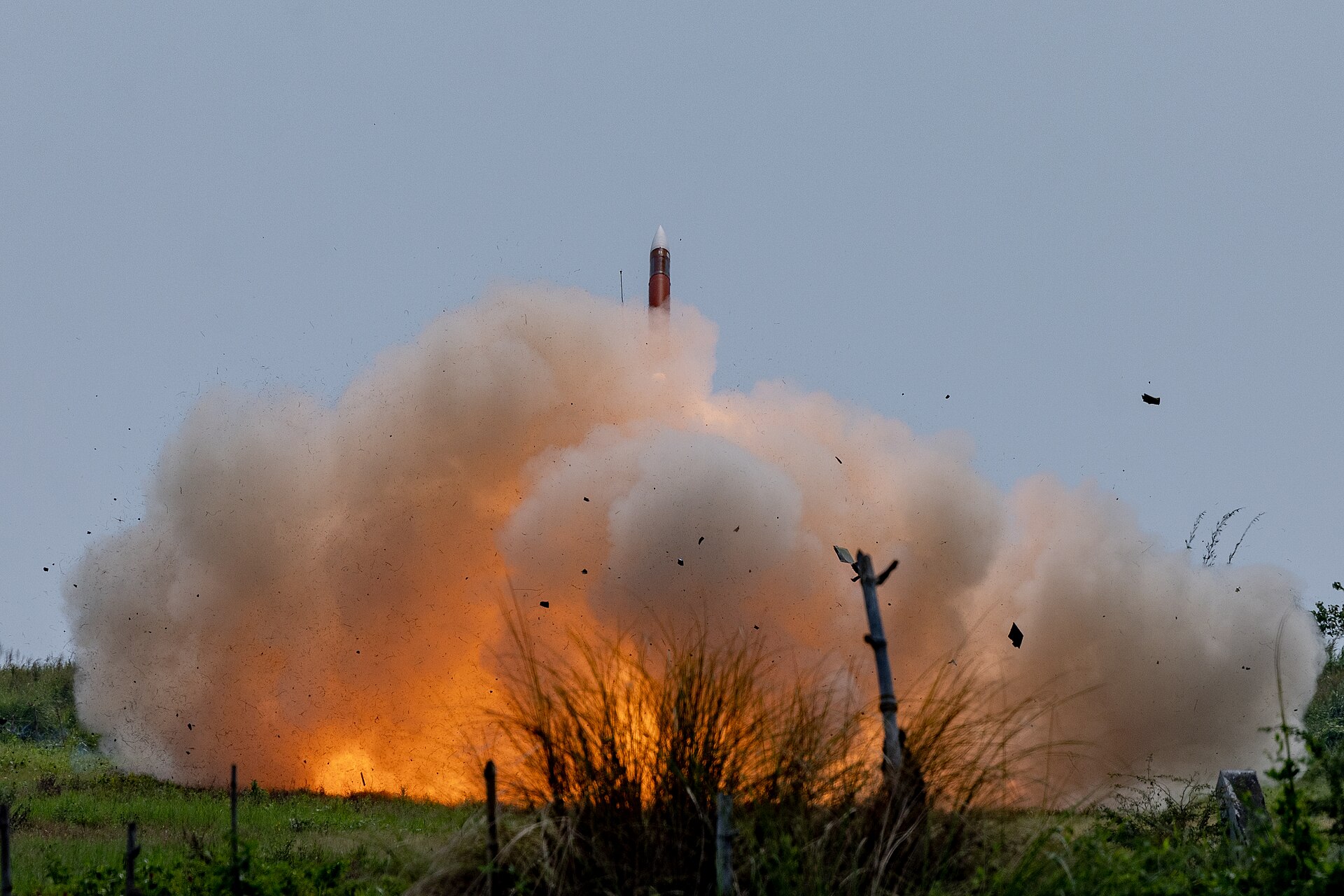

KUWAIT CITY — An Iranian drone struck a service building at a Kuwaiti power and water desalination plant on Sunday, killing one Indian worker and inflicting significant material damage in the second confirmed attack on Gulf desalination infrastructure since the war began on February 28.
The strike, confirmed by Kuwait’s Ministry of Electricity, Water and Renewable Energy, came hours after Saudi air defenses intercepted a barrage of missiles and drones over the Eastern Province — the same coastal corridor where the Kingdom’s largest desalination complexes sit exposed to Iranian weapons. Taken together, the day’s events sharpened a question that Gulf governments have avoided answering publicly: whether Iran has now adopted a deliberate strategy of targeting the civilian water supply on which approximately 60 million people depend.
Table of Contents
What Happened at the Kuwait Plant
Kuwait’s Ministry of Electricity said in a statement carried by state media that “a service building at a power and water desalination plant was attacked as part of the Iranian aggression against the State of Kuwait, resulting in the death of an Indian worker and significant material damage to the building,” according to Al Jazeera. Emergency and technical teams responded immediately, activating contingency plans to contain the impact and secure the site.
The Ministry confirmed that nationwide electricity and water operations remained stable and secure following the strike. Kuwait operates several combined power-desalination plants along its coastline, and the targeted facility’s core desalination units were not directly hit. The damage was confined to an auxiliary service building.
The attack occurred during a broader Iranian aerial assault on Kuwait. The previous evening, Kuwait’s Defence Ministry reported detecting 14 missiles and 12 drones entering Kuwaiti airspace, according to Al Jazeera correspondent Malik Traina. Several drones targeted a military camp, injuring 10 Kuwaiti servicemen.
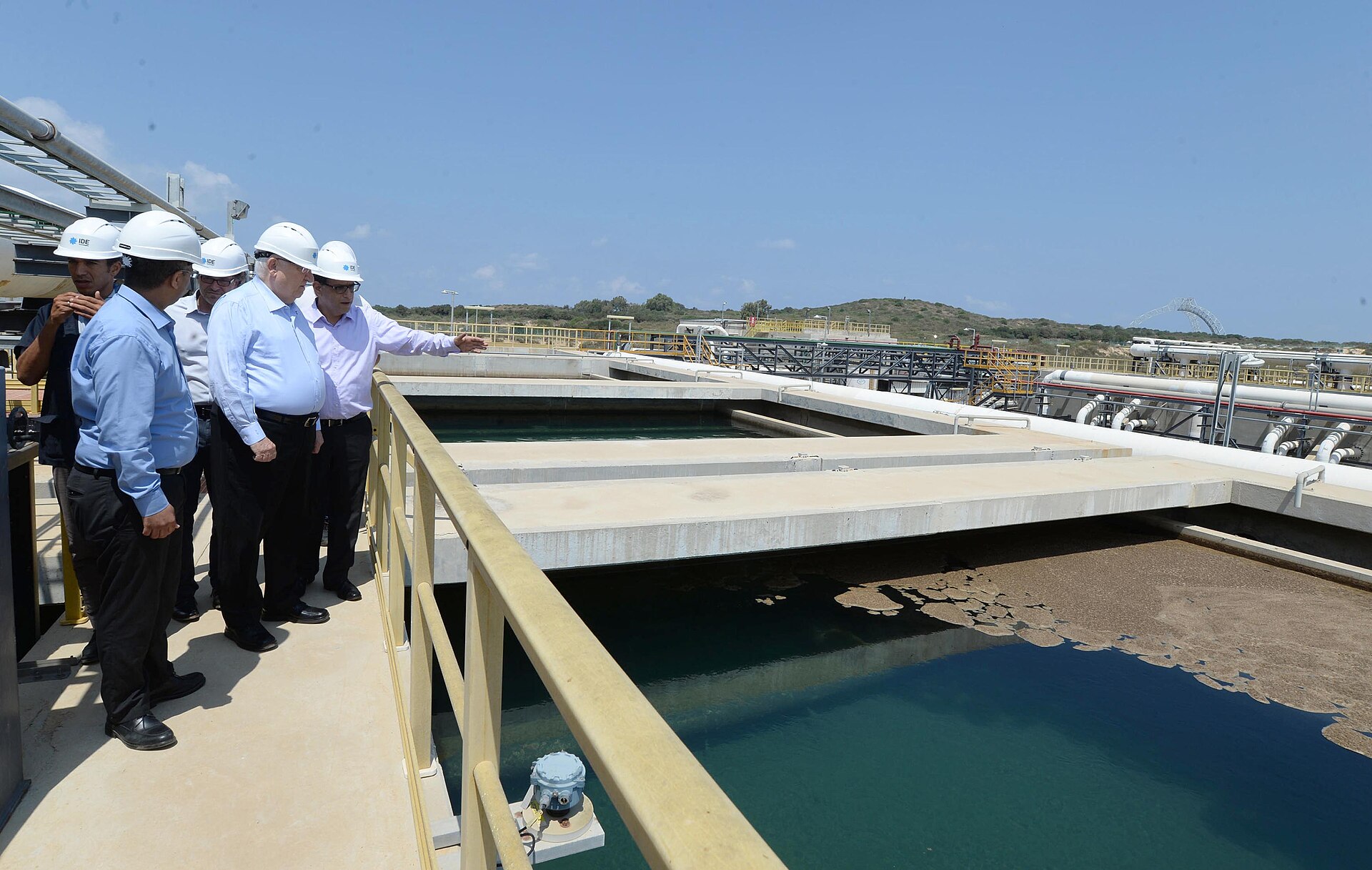
For Kuwait, where approximately 90 percent of drinking water comes from desalination according to Al Jazeera’s analysis of Gulf water dependency, the strike carried implications far beyond the physical damage. The 1990-1991 Gulf War, when Iraqi forces deliberately destroyed most of Kuwait’s desalination capacity, remains a national trauma. A 2010 CIA report, cited in Al Jazeera’s March 8 analysis, warned that disrupting Arab countries’ desalination facilities could have “more consequences than the loss of any industry or commodity.”
A Pattern Emerges From Bahrain to Kuwait
Sunday’s strike was not an isolated incident. It fits a pattern of Iranian attacks on Gulf water infrastructure that began on March 8, when an Iranian drone damaged a desalination plant in Bahrain — the first confirmed strike on such a facility in a GCC state during the war. Three people were injured in the Bahrain attack, according to the Bahraini Ministry of Interior, which accused Iran of “randomly bombing civilian targets.” Bahrain’s Electricity and Water Authority confirmed at the time that water and electricity services to residents were not affected.
Iran framed the Bahrain strike as retaliation. Tehran claimed the United States had attacked a freshwater desalination plant on Qeshm Island — an Iranian island in the Strait of Hormuz — on March 7, disrupting water supplies to 30 villages, according to Al Jazeera. Both the United States and Israel denied the allegation.
The escalation from Bahrain to Kuwait reveals a widening target set. Between those two desalination strikes, Iran also hit Kuwait’s international airport on March 8, the Mina Al-Ahmadi oil refinery on March 21, and aluminium and industrial facilities across the UAE and Bahrain on March 29 in attacks the IRGC said were directed at sites connected to US military operations, according to a statement carried by state broadcaster IRIB.
| Date | Target | Country | Casualties | Operational Impact |
|---|---|---|---|---|
| March 7 | Qeshm Island desalination plant (alleged US strike on Iran) | Iran | Not confirmed | Water to 30 villages disrupted (Iranian claim) |
| March 8 | Desalination plant | Bahrain | 3 injured | Services unaffected |
| March 30 | Power and water desalination plant (service building) | Kuwait | 1 killed (Indian worker) | Operations stable |
Neither the Bahrain nor Kuwait strikes disabled desalination operations. But the pattern — two GCC desalination facilities hit in 22 days — signals that water infrastructure has entered Iran’s active target set, regardless of whether individual strikes cause catastrophic damage.
How Exposed Is Saudi Arabia’s Desalination Network?
Saudi Arabia produces more desalinated water than any country on Earth. The Saline Water Conversion Corporation operates 30 desalination plants with a combined production capacity of approximately 7.5 million cubic metres per day, alongside 139 purification plants producing roughly 4 million cubic metres daily, according to Smart Water Magazine. That total output — over 11.5 million cubic metres — accounts for approximately 22 percent of all desalinated water produced globally and supplies around 70 percent of the Kingdom’s drinking water, according to Al Jazeera.
The concentration of this capacity along the Persian Gulf coast is the core vulnerability. The Ras Al-Khair plant, the world’s largest single desalination facility, produces nearly 3 million cubic metres of water per day from Saudi Arabia’s eastern coast, according to Blackridge Research. The Jubail complex, also on the Gulf coast, has an output capacity of 1.4 million cubic metres per day. Together, these two facilities alone serve millions of residents across the Eastern Province and beyond.
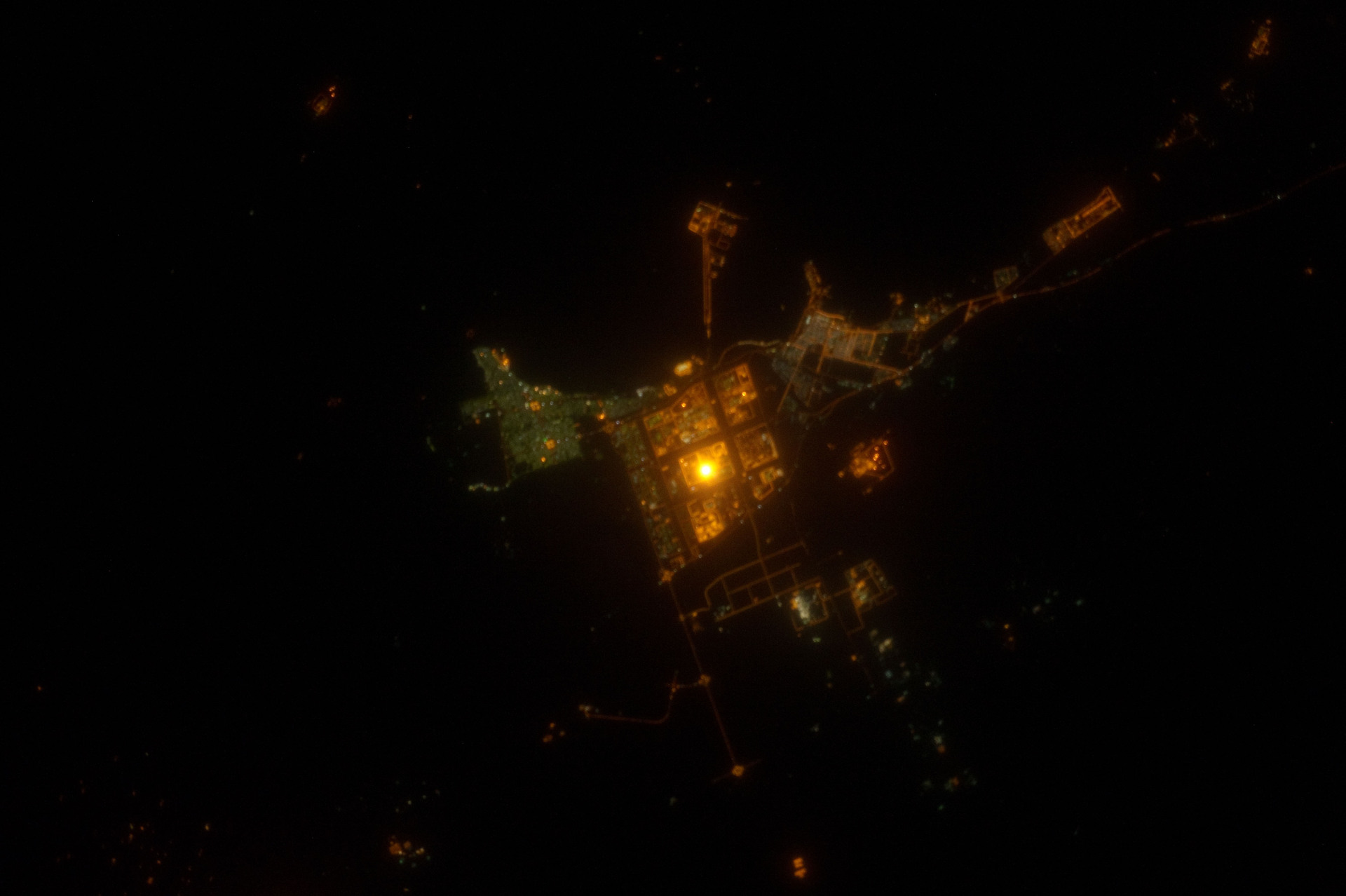
Both complexes sit within range of the same Iranian drones and ballistic missiles that struck Kuwait on Sunday. As previous HOS analysis has documented, the Jubail–Ras Al-Khair corridor contains the world’s largest concentration of desalination capacity and sits directly across the Persian Gulf from Iran.
The comparison with oil infrastructure is instructive. When Iran struck the Ras Tanura oil complex in early March, Saudi Arabia rerouted crude exports through the East-West Pipeline to Yanbu on the Red Sea — a 1,200-kilometre backup system built during the Iran-Iraq War. No equivalent backup exists for water.
Desalination plants must sit on the coast. There is no pipeline that moves seawater inland for processing. Strategic freshwater reserves in most Saudi cities amount to three to five days of supply in elevated tanks and reservoirs, according to industry estimates cited by Al Jazeera and Fanack Water. Water scarcity compounds an equally urgent food crisis, as the Kingdom attempts to feed 35 million through Jeddah port alone during Ramadan.
Any disruption lasting beyond that window without alternative sourcing would begin producing rationing, then shortages, then a humanitarian emergency. The UAE, by contrast, has invested in underground aquifer storage capable of sustaining 45 days of emergency supply under its 2036 Water Security Strategy, according to Al Jazeera’s Gulf water dependency analysis.
Can Saudi Air Defenses Protect Water Infrastructure?
Saudi Arabia’s air defense performance during the war has been strong by historical standards. The International Institute for Strategic Studies estimates that Saudi and coalition forces have achieved a 90 percent interception rate against ballistic missiles and roughly 85 percent against drones since February 28, according to HOS reporting on the Kingdom’s layered defense architecture.
Sunday’s intercepts illustrated the system under pressure. Major General Turki Al-Malki, the Saudi Ministry of Defense spokesman, confirmed that Saudi forces intercepted five ballistic missiles, one cruise missile, and destroyed ten drones over the Eastern Province on March 30, according to Al Arabiya. That makes it one of the heavier single-day tallies of the war, though below the record of 60 drones and three missiles intercepted on March 22.
But interception rates, even at 85-90 percent, offer limited comfort when the targets are desalination plants. An 85 percent drone interception rate means roughly one in seven drones reaches its target. Against a salvo of 20 drones — well within Iran’s demonstrated capacity — two or three would get through.
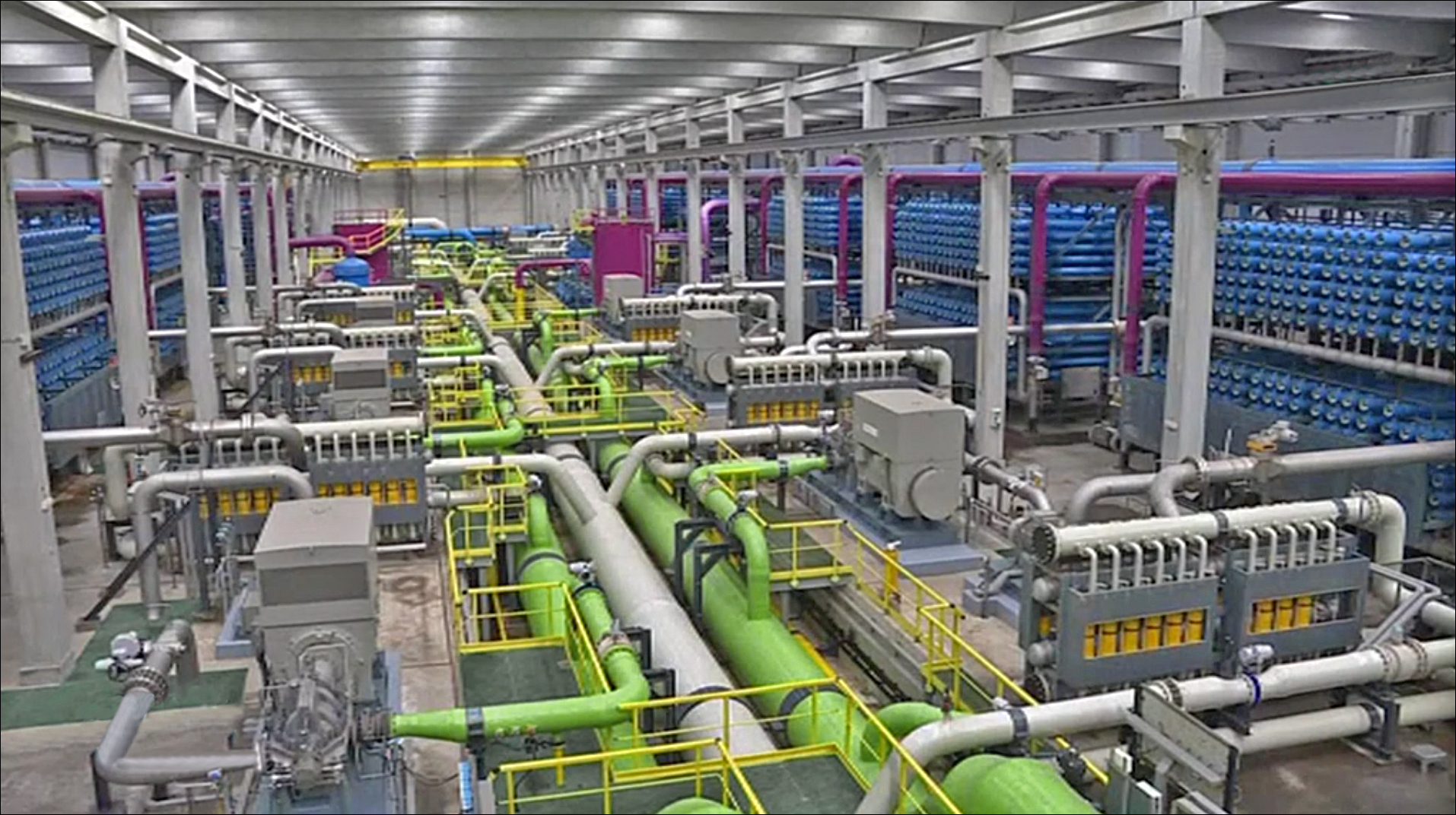
An oil refinery hit by a drone can be repaired in days or weeks, and crude can be rerouted. A desalination plant’s reverse-osmosis membranes, thermal distillation units, and chemical treatment systems are precision equipment. Damage to a single critical component can take months to replace, according to water security analysts cited by The Water Diplomat.
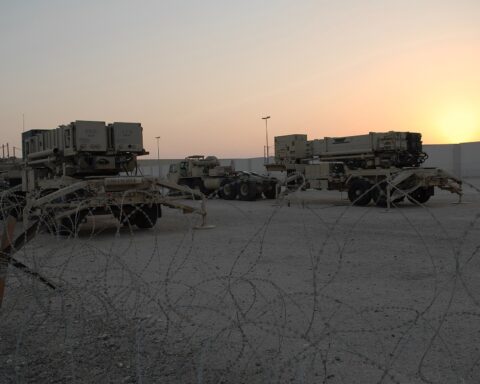
Geography compounds the problem. Saudi Arabia’s 33 desalination and purification plants are spread across thousands of kilometres of coastline on two seas. The Kingdom operates approximately 16 Patriot PAC-3 batteries and two THAAD batteries, as documented in HOS coverage of Saudi Arabia’s air defense kill chain. These systems have performed well defending concentrated targets such as Riyadh, Aramco’s Abqaiq processing complex, and military bases. Extending that same defensive umbrella simultaneously over every coastal desalination facility is a different mathematical problem — one that favours the attacker.
Iran’s Shifting Targeting Doctrine
Iran’s official position on civilian infrastructure strikes has been contradictory. The IRGC claimed in a statement carried by IRIB that strikes on Gulf states targeted sites “linked to the United States military,” according to Al Jazeera. But Human Rights Watch documented on March 17 that Iranian attacks had struck civilian residential buildings, hotels, civilian airports, and embassies, and had “unlawfully targeted civilian objects such as financial centres.”
On desalination specifically, the signals have been mixed. A Revolutionary Guard statement appeared to retract earlier threats against Gulf desalination plants. Yet the Bahrain and Kuwait strikes demonstrate that the retraction has not held in practice.

The IRGC’s broader escalation doctrine, articulated before the war, stated that if the United States targeted Iranian power plants, Iran would hit “power plants in all areas that supply electricity to US bases, as well as the economic, industrial and energy infrastructures in which Americans have shares,” according to an IRGC statement reported by The Jerusalem Post. Combined power-desalination plants — like the one struck in Kuwait — fall squarely within that declared target set.
Naser Alsayed, an environmental researcher specialising in Gulf states, told Al Jazeera on March 8 that “the perception of risk can cause fear and panic” even when a strike fails to disable operations. The psychological dimension is itself a strategic weapon: populations dependent on desalinated water do not need to lose supply to feel threatened. They need only see the strikes moving closer.
Background
The Iran war began on February 28, 2026, with US and Israeli strikes on Iranian military and nuclear facilities following the death of Supreme Leader Ali Khamenei. Iran retaliated with missile and drone salvos across the Gulf, striking energy infrastructure, military installations, and civilian targets in Saudi Arabia, Kuwait, Bahrain, the UAE, Qatar, and Oman.
Through 30 days of conflict, the war has driven Brent crude to $116.12 per barrel — a 55 percent increase in March alone, according to market data. Saudi Arabia’s fiscal breakeven sits at approximately $78-85 per barrel, meaning the Kingdom is running a substantial budget surplus even as its physical infrastructure faces unprecedented threat. The one-month balance sheet reveals a paradox: Saudi Arabia grows wealthier from oil revenue while its most critical civilian infrastructure — water — grows more exposed by the day.
GCC nations account for approximately 60 percent of global water desalination capacity and produce nearly 40 percent of total desalinated water worldwide, according to Al Jazeera. More than 400 desalination plants operate on Arabian Gulf shores from the UAE to Kuwait. Raha Hakimdavar, a hydrologist and senior advisor to deans at Georgetown University in Qatar, told Al Jazeera that there is “no replacement for desalination in the GCC in the near-term,” recommending instead strategic water storage and distributed renewable-powered plants as mitigation.
Diplomacy and Defiance on the Same Day
The Kuwait desalination strike occurred against a backdrop of duelling diplomatic and military signals. On March 29, a four-nation ministerial meeting in Islamabad — bringing together Saudi Arabia, Pakistan, Turkey, and Egypt — pushed for peace talks to end the conflict, according to NPR and PBS. Pakistan announced that US-Iran talks would take place “in coming days,” according to ABC News.
Hours later, US Vice President JD Vance said Washington would continue the war “a little while longer” to ensure Iran is “neutered” for “a very, very long time,” according to the Times of Israel. Vance characterised the conflict’s impact on oil prices as “a very temporary reaction to what is going to ultimately be a short term conflict.”
Iran’s Parliament Speaker Mohammad Bagher Ghalibaf dismissed the diplomatic overtures entirely. “The enemy, openly, sends messages of negotiation and dialogue, but secretly is planning a ground attack,” Ghalibaf said, according to state media outlets IRNA and Tasnim, as reported by NBC News. He warned that Iranian forces are “waiting for American soldiers to enter on the ground so they can set them ablaze.”
His statement followed a Washington Post report that the Pentagon had drawn up plans for weeks of ground operations in Iran, and the arrival of the USS Tripoli carrying 3,500 US Marines and sailors in the region on Friday, according to NBC News.
The juxtaposition is stark. Peace talks are being announced from Islamabad while Iranian drones hit Kuwaiti water plants and Saudi air defenses shoot down missiles over the Eastern Province. For Riyadh, the operational question is not whether diplomacy will succeed — it is whether Iran will strike Saudi desalination infrastructure before it does.
Frequently Asked Questions
Has Iran ever formally declared desalination plants as legitimate military targets?
Iran has not formally designated desalination plants as military targets. The IRGC issued and then appeared to retract a threat against Gulf desalination facilities earlier in March 2026. Iran’s stated doctrine targets infrastructure “linked to” US military operations, but combined power-desalination plants serve dual civilian and industrial purposes, placing them in a legal grey zone under international humanitarian law. The Geneva Conventions prohibit attacks on objects indispensable to civilian survival, including drinking water installations, under Article 54 of Additional Protocol I.
What alternatives does Saudi Arabia have if Gulf-coast desalination is disrupted?
Saudi Arabia’s non-renewable fossil aquifers — the Saq, Wajid, and Tabuk formations — hold substantial groundwater but have been severely depleted by decades of agricultural use. SWCC’s Red Sea-coast plants at Yanbu and Shoaiba offer partial backup, though connecting Red Sea desalination output to Gulf-coast population centres requires pumping water hundreds of kilometres inland through existing but limited pipeline networks. The Kingdom has also invested in smaller, geographically dispersed private desalination facilities that are harder to target but cannot replace the output of mega-plants like Ras Al-Khair.
How does the Kuwait strike affect insurance rates for Gulf water infrastructure?
War risk premiums for Gulf maritime and industrial insurance have surged since February 28, with Lloyd’s of London syndicates repricing coverage for all Gulf coastal infrastructure. Desalination plants, previously considered low-risk civilian assets, now face coverage costs comparable to oil refineries in conflict zones. Several insurers have excluded “acts of war” from standard policies covering Gulf water utilities, according to insurance industry reporting in March 2026, potentially leaving governments to self-insure critical water assets.
Could Iran strike Saudi desalination plants without triggering a direct Saudi military response?
Saudi Arabia has maintained a posture of strategic restraint throughout the war, absorbing Iranian strikes on oil infrastructure, military bases, and civilian areas without launching offensive operations against Iran. Crown Prince Mohammed bin Salman’s calculus, as examined in previous HOS analysis, weighs the costs of direct military engagement against the benefits of positioning Saudi Arabia as a responsible regional power. A strike on desalination infrastructure that caused mass civilian water shortages could shift that calculus, though Saudi officials have not publicly defined a red line.
What happened during the 1991 Gulf War when Kuwait’s desalination was destroyed?
Iraqi forces deliberately destroyed most of Kuwait’s desalination capacity during the 1990-1991 occupation, creating severe freshwater shortages that persisted for months after liberation. Kuwait was forced to import bottled and tanker water from neighbouring states while rebuilding its plants. The episode led Kuwait to invest heavily in redundant desalination capacity and emergency water storage, though the country still derives 90 percent of its drinking water from desalination — a dependency ratio that has increased, not decreased, since 1991.