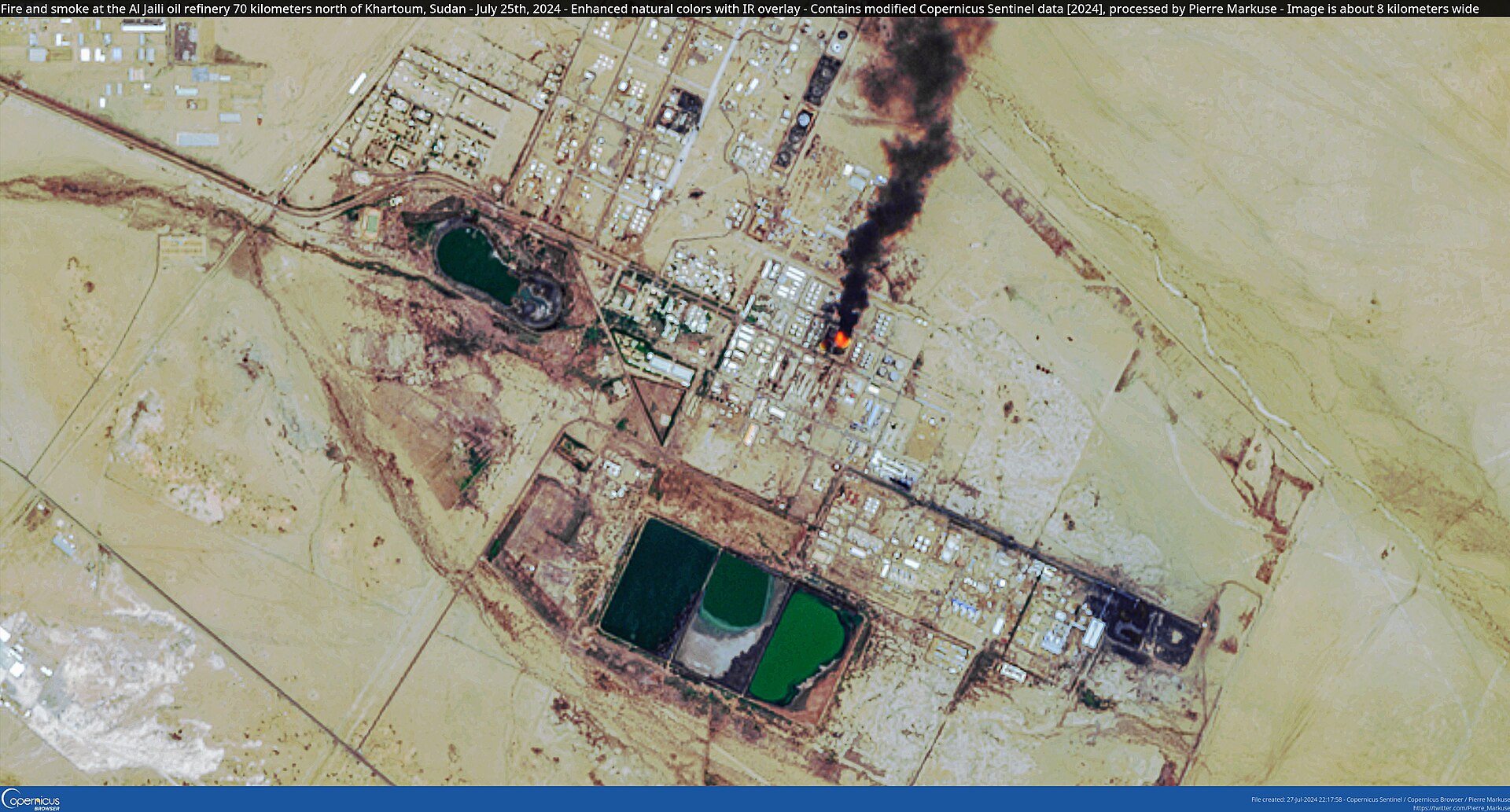

MUSCAT — Iranian drones struck fuel storage tanks at Oman’s Port of Salalah on Tuesday, setting at least three tanks ablaze and forcing the suspension of all port operations, according to Bloomberg and Omani state media. Shipping giant Maersk announced it was halting operations at the facility “until further notice.” The attack on Salalah — a major transshipment hub on the Arabian Sea that had emerged as the Gulf’s most important alternative to the Strait of Hormuz — effectively eliminates the last viable maritime bypass route for Saudi and Gulf oil exports, deepening a crisis that has already driven crude prices above $110 per barrel.
The strike marks the latest escalation in a systematic Iranian campaign against Omani ports and shipping infrastructure that began on March 1, just days after the United States and Israel launched Operation Epic Fury against Iranian military sites. Despite Oman’s decades-long role as a neutral mediator between Riyadh and Tehran — and Sultan Haitham bin Tariq’s active efforts to broker a ceasefire — Iran’s military has targeted Omani territory at least seven times in twelve days, killing one crew member on an oil tanker and injuring dozens more. For Saudi Arabia, the destruction of the Salalah bypass forces Aramco to rely almost entirely on the East-West pipeline to Yanbu on the Red Sea, a single artery now carrying the weight of the Kingdom’s entire export economy.
Table of Contents
- What Happened at Salalah Port on March 11?
- Why Is Iran Attacking Oman Despite Its Neutral Status?
- How Did Salalah Become the Gulf’s Emergency Hormuz Bypass?
- What Does the Salalah Attack Mean for Saudi Oil Exports?
- Maersk Suspends Operations as Shipping Lines Flee the Gulf
- Oman’s Mediation Role Under Fire
- The Full Pattern of Iranian Strikes on Oman
- Frequently Asked Questions
What Happened at Salalah Port on March 11?
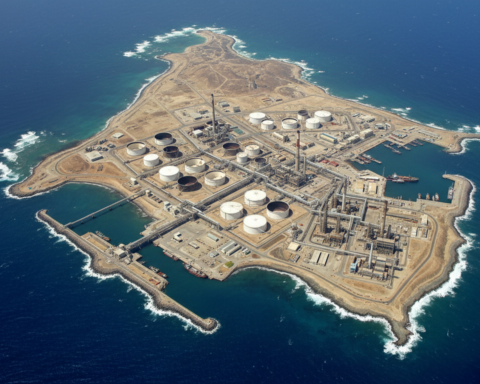
Multiple Iranian drones penetrated Omani airspace on Tuesday morning and struck the fuel storage section of the Port of Salalah, according to the maritime security firm Ambrey and confirmed by Omani state media. Several incoming drones were intercepted by Omani air defenses, but at least one penetrated the screen and hit fuel tanks in the port’s southern section, Bloomberg reported. Footage filmed by ship crew members and shared by Al Jazeera showed thick black smoke rising from the oil storage facility as fires spread across at least three tanks.
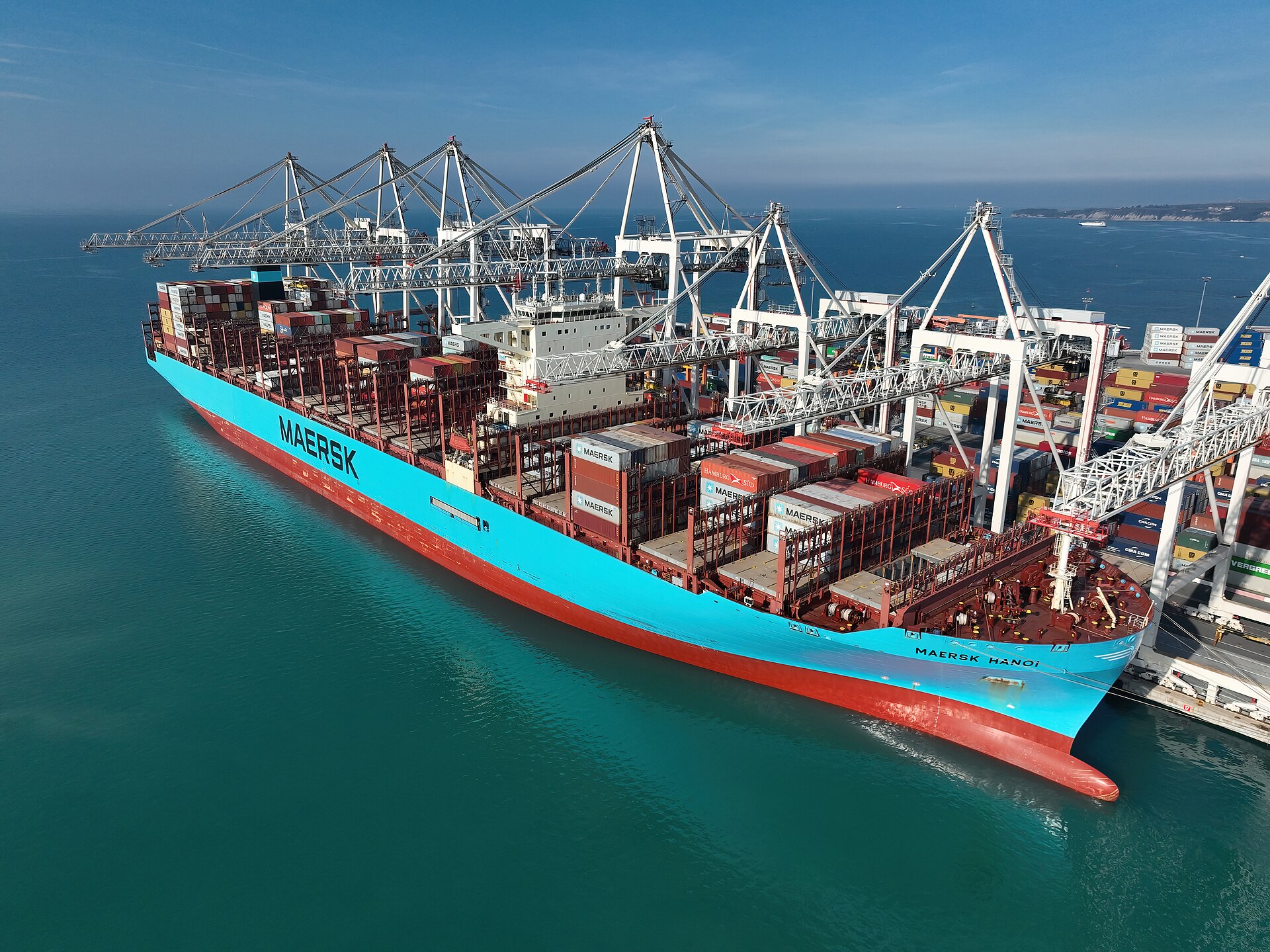
Omani authorities reported no casualties from the strike. The damage, however, was immediate and extensive. Private maritime security company Vanguard Tech confirmed the suspension of all port operations following the attack on the southern section of the facility. Within hours, Maersk — the world’s second-largest container shipping line and a major user of Salalah as a transshipment hub — announced on its website that it was suspending all operations at the port “until further notice,” citing an ongoing incident near the general cargo terminal.
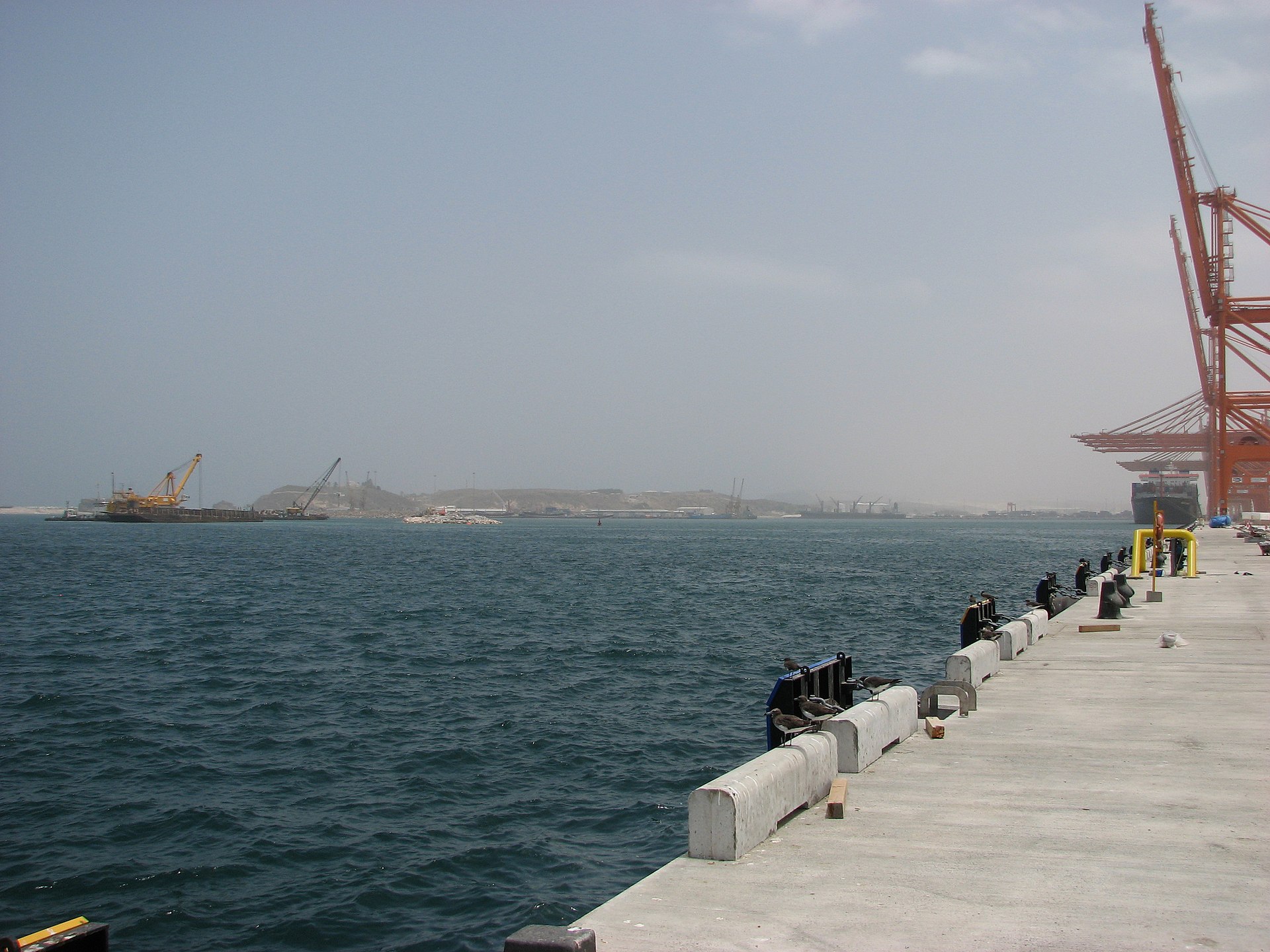
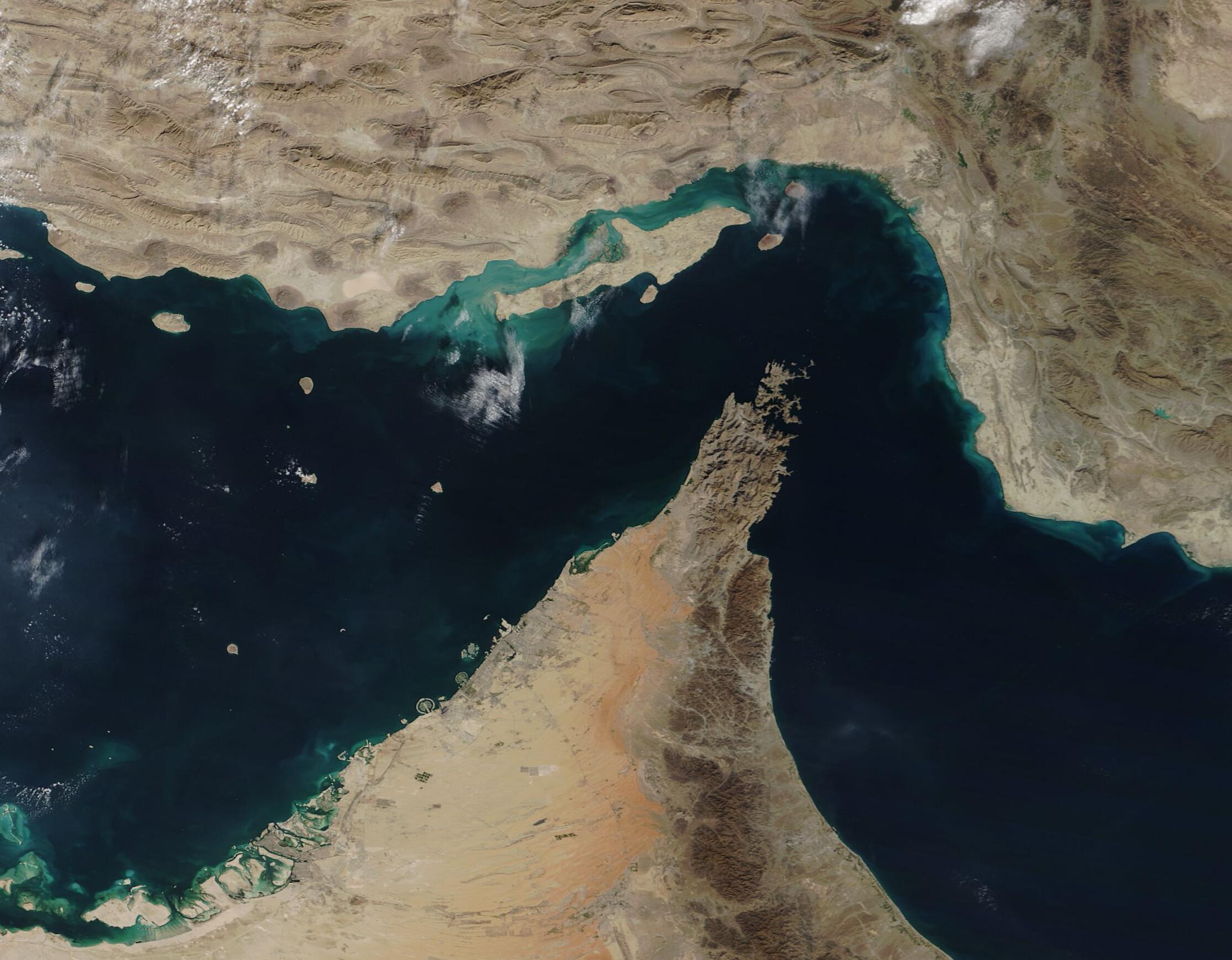
The Port of Salalah sits on Oman’s southern coast along the Arabian Sea, approximately 1,000 kilometres from the Strait of Hormuz. That geographic advantage — placing it beyond the narrow chokepoint that Iran has effectively closed to commercial traffic — had made it one of the most strategically important ports in the Middle East since the war began on February 28.
Why Is Iran Attacking Oman Despite Its Neutral Status?
Oman has maintained a unique position in Gulf politics for half a century, serving as a neutral intermediary between Iran and the Arab states. Sultan Qaboos bin Said, who ruled until his death in 2020, cultivated a special relationship with Tehran even during the Iran-Iraq War, when every other Gulf monarchy backed Baghdad. Oman hosted the secret back-channel negotiations that eventually led to the 2015 Joint Comprehensive Plan of Action limiting Iran’s nuclear programme. More recently, Muscat hosted the initial rounds of Saudi-Iranian normalization talks that produced the 2023 Beijing agreement restoring diplomatic relations.
Sultan Haitham bin Tariq, who succeeded Qaboos, has continued this tradition. Since the war began, Oman has served as the primary back channel between Tehran and the Gulf states, with Haitham speaking to Iranian leaders repeatedly in an effort to broker a ceasefire. That role makes the attacks on Omani territory particularly striking.
Iranian Foreign Minister Abbas Araghchi offered a partial explanation on March 2, stating that attacks on Oman “were not their choice” and were carried out by military units acting on general instructions rather than specific orders to strike Omani targets. The statement suggested a degree of command-and-control breakdown within the Iranian military, where operational commanders are selecting targets based on broad authorization to hit Gulf energy infrastructure rather than a curated target list that exempts neutral states.
Military analysts offered a less charitable interpretation. The Salalah port was becoming a critical node in the Gulf’s effort to reroute oil and cargo shipments around the Strait of Hormuz. Striking it served Iran’s strategic objective of maximizing economic pain on the Gulf states — and by extension on the United States — regardless of Oman’s diplomatic stance. According to the Soufan Center, Iran’s targeting logic since March 1 has followed a “maximum disruption” doctrine aimed at every piece of energy infrastructure within drone range, regardless of which flag flies over it.
How Did Salalah Become the Gulf’s Emergency Hormuz Bypass?
The Strait of Hormuz is the world’s most important oil chokepoint. Before the war, approximately 21 million barrels of crude oil and condensate passed through the narrow waterway daily — roughly 21 percent of global petroleum consumption, according to the U.S. Energy Information Administration. When Iranian mines, missiles, and fast boats effectively closed the strait to commercial traffic in the first days of March — a blockade the IRGC Navy later codified by demanding that all ships seek Iranian permission to transit the Strait of Hormuz — the global energy system needed alternatives immediately.
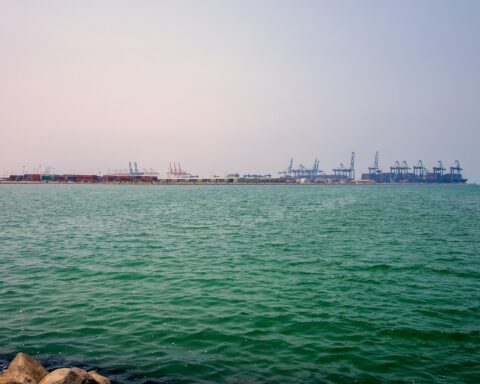
Oman’s deep-water ports — Salalah, Duqm, and Sohar — sit on the Arabian Sea outside the strait, allowing tankers to bypass the narrow waterway entirely. Salalah was the most capable of the three. In early 2025, the port completed a $300 million expansion that raised container capacity from 4.5 million to 6.5 million twenty-foot equivalent units (TEU), according to Omani port authorities. In 2025, the facility handled a record 26.4 million tonnes of general cargo, with container volumes reaching 4.3 million TEU — a 31 percent increase from the previous year, the Muscat Daily reported.
The port’s strategic value surged after the war began. Container Magazine reported on March 3 that Salalah had become “the Middle East’s only accessible container port” as both the Strait of Hormuz and the Bab el-Mandeb (still disrupted by Houthi activity) remained closed to most commercial shipping. The Gemini Cooperation between Maersk and Hapag-Lloyd had designated Salalah as a key hub within its global network, directing diverted cargo volumes to the facility as the primary routing alternative.
Drone attacks have now compromised that lifeline. With fuel storage tanks burning and operations suspended, shippers face a grim reality: there is no longer a major functioning port in the western Indian Ocean that can serve as a transshipment hub for Gulf energy exports without transiting a contested chokepoint.
What Does the Salalah Attack Mean for Saudi Oil Exports?
For Saudi Arabia, the destruction of the Salalah bypass narrows the Kingdom’s export options to a single corridor. Aramco had already activated its 1,200-kilometre East-West pipeline — known as the Petroline — which carries crude from the Abqaiq processing complex in the Eastern Province to the export terminal at Yanbu on the Red Sea coast. Aramco chief executive Amin Nasser said the pipeline would hit its full capacity of seven million barrels per day within days, according to S&P Global.
That capacity, however, faces constraints at the loading end. Argus Media reported that the nominal loading capacity at Yanbu’s two terminals — Yanbu North and Yanbu South — is approximately 4.5 million barrels per day, with market sources estimating effective throughput closer to four million. The gap between pipeline capacity and terminal capacity means Saudi Arabia cannot simply replace its full pre-war export volume by rerouting through the Red Sea.
| Route | Pre-War Capacity (BPD) | Current Status | Effective Capacity Now |
|---|---|---|---|
| Strait of Hormuz (Ras Tanura, Juaymah) | 7.5 million | Closed — Iranian mines and missiles | 0 |
| East-West Pipeline to Yanbu (Red Sea) | 7 million (max) | Active — ramping to full capacity | ~4 million |
| Salalah Port (Oman bypass) | N/A (transshipment) | Suspended — drone strikes | 0 |
| Duqm Port (Oman bypass) | N/A (limited) | Damaged — multiple drone strikes | Minimal |
Saudi Arabia pumped 10.882 million barrels per day in February, according to OPEC data released on March 11 by Bloomberg — a significant increase from 10.1 million barrels per day in January. That pre-war production ramp, which appears to have been planned before Operation Epic Fury began, has now collided with an export infrastructure that can handle barely a third of the output. Storage facilities across the Eastern Province are filling rapidly, as previously reported.
The Yanbu route itself carries risk. While the Red Sea is not under direct Iranian threat, the Houthi movement in Yemen — nominally an Iranian proxy — has not officially joined the conflict. Saudi officials have expressed concern that any expansion of Houthi targeting to include Saudi-flagged tankers in the Red Sea would close the last remaining export corridor entirely. War risk insurance premiums for vessels transiting the Red Sea have already climbed to 2.5 percent of hull value, according to Lloyd’s of London, up from 0.7 percent before the war.
Maersk Suspends Operations as Shipping Lines Flee the Gulf
Maersk’s decision to suspend Salalah operations compounds an already historic disruption to global shipping. Since the war began on February 28, more than 29,000 flights have been cancelled across the Middle East, according to Flightradar24. The maritime picture is equally dire.
The Strait of Hormuz, through which approximately 30 percent of global seaborne oil trade normally flows, has been effectively closed since the first week of March. The International Energy Agency responded on March 11 by agreeing to release a record 400 million barrels of crude oil from strategic reserves — a measure last taken at this scale during the 1991 Gulf War.
Insurance markets have responded with sharp premium increases. War risk premiums for vessels operating anywhere in the Persian Gulf reached record levels in the second week of March, according to the London insurance market. Several major underwriters have declared the entire Gulf region — including ports in Saudi Arabia, the UAE, Bahrain, Kuwait, and now Oman — within the expanded war risk zone, Lloyd’s reported. That designation raises the cost of every shipment and has led smaller carriers to avoid the region entirely.
The ripple effects extend to container shipping, not just oil. Salalah had processed 4.3 million TEU in 2025 and was the only major transshipment hub accessible without transiting the Hormuz or Bab el-Mandeb chokepoints. With it offline, cargo destined for the Gulf states must either wait for the security situation to improve or route through far longer alternatives — adding days and significant cost to global supply chains already strained by the conflict.
Oman’s Mediation Role Under Fire
The sustained campaign against Omani infrastructure threatens to destroy one of the few remaining diplomatic channels in the conflict. Oman has been described by scholars at the Middle East Council on Global Affairs as the “Switzerland of Arabia” — a state that has built its entire foreign policy around neutrality and quiet facilitation.
Sultan Haitham has spoken to Iranian President Masoud Pezeshkian multiple times since the war began, according to Omani state media. Muscat has also hosted consultations with Saudi Foreign Minister Prince Faisal bin Farhan and officials from the United States, Britain, and China. The goal has been to find a framework for de-escalation that could lead to a ceasefire — an effort that many diplomats regard as the war’s best remaining hope for a negotiated end.
Oman has mostly been a facilitator of talks aimed at reducing tension between states in the region and beyond, rather than functioning as a mediator. Building on its GCC membership and special relationship with Tehran, Oman has provided diplomatic spaces for fellow Arab states to engage the Iranians at sensitive times.
Middle East Council on Global Affairs, research paper on Omani mediation
The attacks place Sultan Haitham in an impossible position. Continuing to mediate while Iranian drones strike Omani ports and kill crew members on ships in Omani waters undermines his credibility with the Gulf states and his own public. Abandoning the mediation effort, however, would remove the only neutral party with functional relationships on both sides of the conflict. Oman’s back channel to Tehran has been described by diplomats as the war’s best hope for peace — a role now complicated by the very aggression it seeks to end.
The GCC issued a statement following its 50th Extraordinary Ministerial Meeting condemning what it called “Iranian aggression against GCC member states.” While Oman is a GCC member and has been attacked, Muscat has notably declined to join the stronger rhetoric coming from Riyadh, Abu Dhabi, and Manama — a sign that Haitham is still trying to preserve his mediation credentials even as his country absorbs drone strikes.
The Full Pattern of Iranian Strikes on Oman
The Salalah port attack is not an isolated incident. Iran has struck Omani territory at least seven times since March 1, according to reports compiled by Al Jazeera, Bloomberg, and Argus Media. The campaign has targeted both of Oman’s major deep-water ports, oil tankers in Omani waters, and at least one workers’ housing facility. By March 13, the campaign reached the northern city of Sohar, where two foreign workers were killed by drone impacts in an industrial zone adjacent to the SOHAR Port and Freezone complex.
| Date | Target | Weapon | Damage | Casualties |
|---|---|---|---|---|
| March 1 | Duqm Port, Al Wusta | 2 drones | Workers’ housing unit hit; second drone intercepted near fuel tanks | 0 |
| March 1 | Oil tanker off Muscat coast | Drone boat | Explosion in engine room, fire | 1 killed |
| March 2 | Oil tanker, Port of Khasab | Drone | Direct hit on tanker | 4 injured |
| March 3 | Duqm Port fuel tank | Multiple drones | Fuel tank hit, fire contained | 0 |
| March 11 | Salalah Port fuel storage | Multiple drones | 3+ fuel tanks ablaze, operations suspended | 0 |
The pattern reveals a deliberate escalation. Initial strikes hit the more remote Duqm Port in central Oman, then moved to oil tankers in the northern Strait of Hormuz approaches, and finally struck Salalah — the largest and most commercially important of the three facilities. Each successive attack has targeted higher-value infrastructure, suggesting a methodical campaign rather than accidental overshoot.
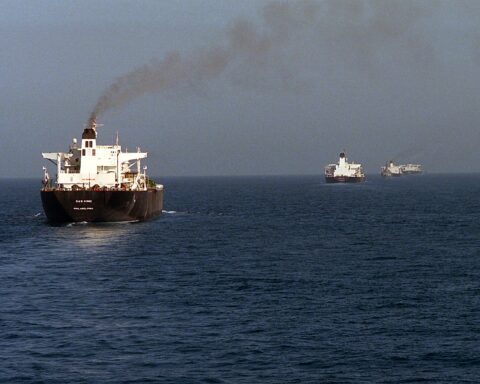
Iran’s targeting of oil tankers in Omani waters carries particular significance. The Marshall Islands-flagged tanker attacked by a drone boat 52 nautical miles off Muscat on March 2 resulted in one crew member killed and an engine room fire. The Palau-flagged tanker Skylight was struck five nautical miles from the Port of Khasab, injuring four. These attacks extend the war’s reach into waters that were previously considered safe — well outside the Strait of Hormuz itself — and raise the risk calculation for any vessel operating in the Arabian Sea.
The campaign against Omani targets parallels Iran’s attacks on shipping in the Strait of Hormuz and its strikes against Saudi energy infrastructure, including repeated drone assaults on the Shaybah oil field in the Empty Quarter and the Ras Tanura export terminal on the Persian Gulf coast. Together, they constitute the most extensive campaign against Gulf energy infrastructure since the 1980-88 Tanker War.
Frequently Asked Questions
What is the Port of Salalah and why is it important?
The Port of Salalah is a major deep-water shipping facility on Oman’s southern coast along the Arabian Sea. It handled 26.4 million tonnes of cargo and 4.3 million TEU of container traffic in 2025 after a $300 million expansion raised its capacity to 6.5 million TEU. Its location outside the Strait of Hormuz made it the Gulf’s most important alternative shipping route after Iran effectively closed the strait to commercial traffic in early March 2026.
Has Iran claimed responsibility for the Salalah attack?
Iran has not issued a specific statement claiming the Salalah port strike. Iranian Foreign Minister Abbas Araghchi stated on March 2 that attacks on Oman “were not their choice” and were carried out by military units acting on general instructions rather than orders to hit Omani targets specifically. Maritime security firms and Western intelligence assessments have attributed all strikes on Omani territory to Iranian drones based on flight pattern analysis and weapons identification.
How does this affect Saudi Arabia’s oil exports?
The Salalah attack eliminates the last major maritime bypass route for Saudi oil exports that avoids the Strait of Hormuz. Saudi Arabia is now almost entirely dependent on the East-West pipeline carrying crude to Yanbu on the Red Sea, which has a maximum pipeline capacity of seven million barrels per day but effective terminal loading capacity of approximately four million barrels per day — well below Saudi Arabia’s February production of 10.882 million barrels per day reported to OPEC.
Is Oman still acting as a mediator in the Iran war?
Sultan Haitham bin Tariq has continued diplomatic contacts with both Iranian and Gulf leaders since the war began, and Oman has hosted ceasefire consultations. The sustained attacks on Omani territory, however, place enormous pressure on Muscat’s neutrality and raise questions about whether Oman can continue to mediate while its own ports and shipping lanes are under fire. Oman has notably declined to adopt the stronger condemnatory rhetoric used by other GCC members against Iran.
What other Omani ports have been attacked?
Iran has struck Duqm Port at least twice — on March 1 and March 3 — hitting a workers’ housing unit and a fuel storage tank. Oil tankers have been attacked off the coast of Muscat and near the Port of Khasab. The Salalah strike on March 11 was the largest and most damaging, hitting fuel storage tanks and forcing the suspension of all port operations.