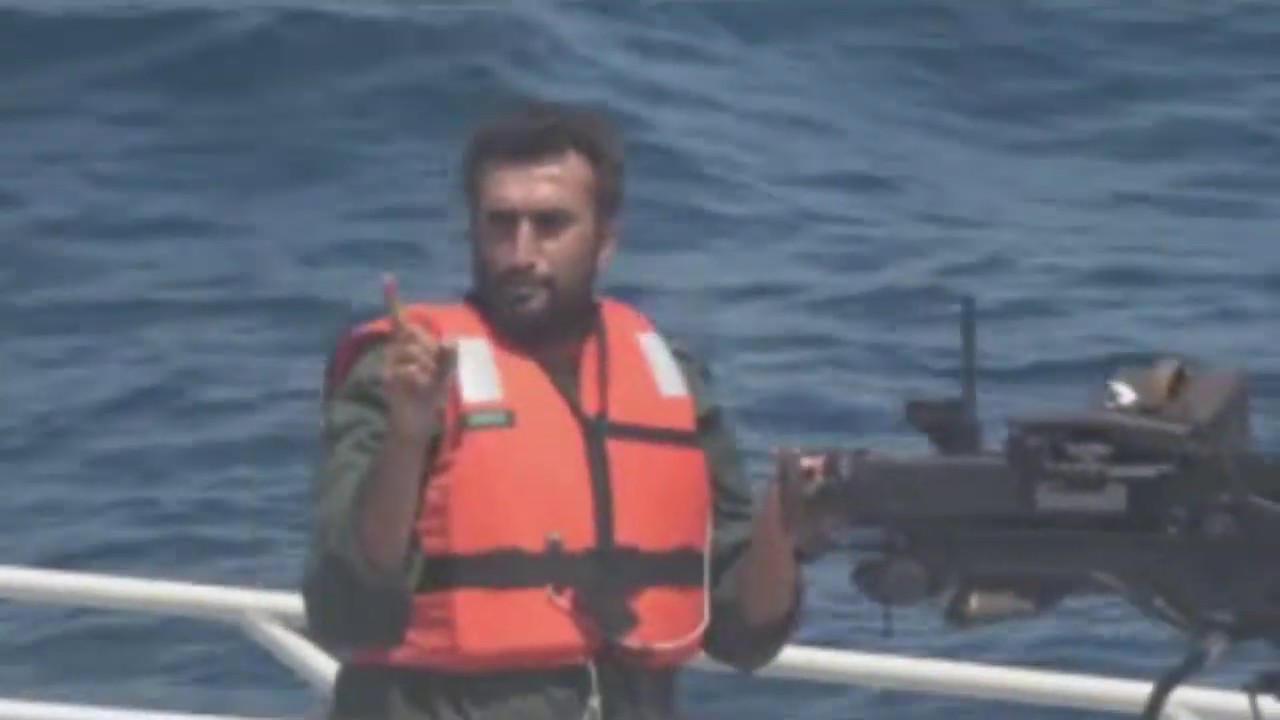

RIYADH — Israel announced on March 26 that it had killed Alireza Tangsiri, the commander of the Islamic Revolutionary Guard Corps Navy and the architect of the near-total blockade of the Strait of Hormuz. Within hours, oil markets dipped, Gulf capitals exhaled, and Western headlines declared a turning point. None of that optimism is warranted. The blockade Tangsiri built was designed from inception to operate without him, and the decentralised doctrine that sustains it ensures that killing one commander — or ten — will not reopen the waterway that carries a fifth of the world’s oil.
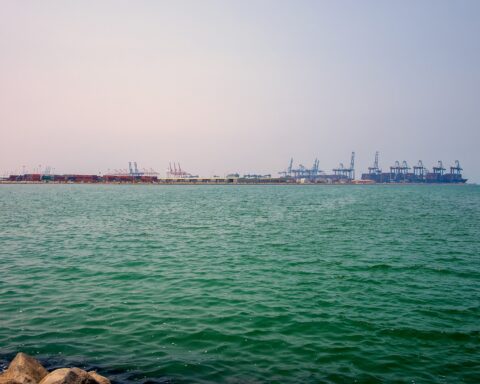
Twenty-six days into the conflict, the Strait of Hormuz remains effectively shut to commercial traffic. Before the war began on February 28, approximately 138 vessels transited the strait every day, according to S&P Global Market Intelligence. By March 22, that number had collapsed to as few as one ship per day with its Automatic Identification System active. Seventy-six crude oil tankers, 37 liquefied natural gas carriers, and 36 container ships sat motionless in the Persian Gulf on that date, unable or unwilling to run the gauntlet. Tangsiri’s death does not change any of these numbers. The mines remain in the water, the fast attack boats remain in their coves, and the pre-delegated authority that allows every IRGC coastal commander to fire without awaiting orders from Tehran remains in force.
Table of Contents
- Who Was Alireza Tangsiri?
- How Does the IRGC Navy Operate the Hormuz Blockade?
- What Is Iran’s Mosaic Defense Doctrine?
- Does Killing a Commander End a Blockade?
- The Blockade Resilience Matrix
- What Happens to IRGC Naval Operations Without Tangsiri?
- How Many Ships Are Still Trapped in the Persian Gulf?
- Can the US Military Reopen Hormuz by Force?
- What Does Tangsiri’s Death Mean for Saudi Oil Exports?
- The Contrarian Case — Why the Blockade Could Get More Dangerous
- Frequently Asked Questions
Who Was Alireza Tangsiri?
Alireza Tangsiri was not a politician who inherited a title or a diplomat who climbed through bureaucratic corridors. He was a combat officer forged in the defining conflict of modern Iranian military identity — the eight-year war with Iraq — and he spent four decades preparing the IRGC Navy for a confrontation with American and allied naval forces in the confined waters of the Persian Gulf.
Born in 1962 in the southern province of Hormozgan, the same coastline he would later command, Tangsiri served as a naval brigade commander during the Iran-Iraq War, where he witnessed firsthand the vulnerability of conventional naval assets to asymmetric tactics. That experience shaped every subsequent decision he made. Appointed commander of the IRGCN’s 1st Naval District in Bandar Abbas — the critical headquarters overlooking the strait — Tangsiri spent years developing the fast-attack doctrine that would define Iranian maritime strategy.
In August 2018, Supreme Leader Ali Khamenei personally elevated Tangsiri to overall command of the IRGC Navy, a role he held for nearly eight years. His appointment coincided with a period of escalating tensions over Iran’s nuclear programme, US sanctions, and repeated American carrier deployments into the Gulf. Under Tangsiri, the IRGCN expanded its inventory of fast attack craft, refined its mine-laying capabilities, integrated drone warfare into maritime operations, and conducted increasingly aggressive confrontations with US Navy vessels in the strait.
The Counter Extremism Project described Tangsiri as “one of the most consequential naval commanders in Iran’s post-revolutionary history.” His significance lay not in personal charisma or political influence but in the operational infrastructure he built — the network of coastal bases, hidden launch sites, underwater mine caches, and pre-delegated command authorities that allowed the IRGC Navy to wage asymmetric war without centralised direction.
How Does the IRGC Navy Operate the Hormuz Blockade?
The blockade of the Strait of Hormuz that Tangsiri oversaw is not a conventional naval blockade in any historical sense. Iran has not stationed a line of warships across the waterway, nor has it declared a formal exclusion zone backed by capital ships. Instead, the IRGCN has implemented what maritime analysts call an “insurance blockade” — a strategy so elegant in its asymmetry that it requires minimal kinetic force to achieve maximum economic disruption.
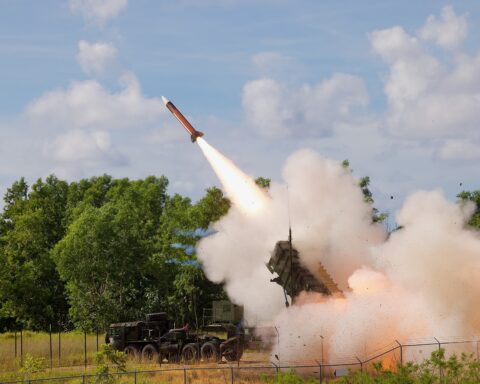
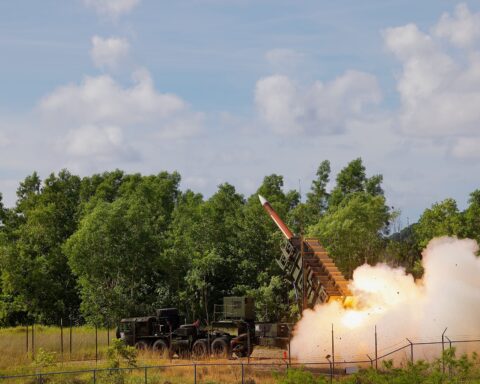
The mechanism works on three interlocking layers. The first is direct violence. Since the war began, Iran has conducted at least 21 confirmed attacks on merchant vessels transiting or approaching the strait, according to the United Against Nuclear Iran shipping tracker. These attacks have ranged from drone strikes on tanker superstructures to anti-ship cruise missiles fired from mobile coastal launchers hidden along Iran’s southern shoreline. Each attack reinforces the perception that any transit attempt carries lethal risk.
The second layer is mines. On March 10, US military intelligence confirmed that Iran had begun planting naval mines in the Strait of Hormuz. The US Navy subsequently destroyed 16 Iranian minelayers, but the damage was already done. Even a handful of mines in a shipping channel that is only 3.2 kilometres wide at its navigable point creates an intolerable risk for commercial vessels — and, more critically, for the insurers who underwrite those vessels. Lloyd’s of London and the International Group of P&I Clubs raised war-risk premiums for Hormuz transits to levels that made commercial voyages economically unviable, regardless of whether Iran fired another shot.
The third layer is electronic and psychological. Iran’s IRGCN broadcasts VHF radio warnings to approaching vessels, declaring the strait closed. It tracks commercial shipping using radar systems and drone surveillance, selectively allowing passage to ships from countries Tehran wishes to reward — Japan, India, and certain BRICS nations have received intermittent safe-passage permissions — while denying transit to vessels flagged by Western nations or their allies. This selective enforcement transforms the blockade from a military operation into a political instrument, dividing the international coalition that might otherwise unite to break it.
The crucial insight is that none of these three layers depends on a single commander giving real-time orders. The mines are already laid. The fast attack boats operate from pre-assigned stations under standing rules of engagement. The insurance market has already priced in the risk. Tangsiri designed a system that, once activated, sustains itself through structural momentum rather than centralised control.
What Is Iran’s Mosaic Defense Doctrine?
The doctrine that makes Tangsiri’s death operationally irrelevant has a name: Mosaic Defense. Developed by IRGC strategists in the mid-2000s and formally activated after the first US-Israeli strikes on February 28, 2026, Mosaic Defense represents a fundamental restructuring of Iranian military command-and-control designed to ensure continued combat operations even under conditions of total leadership decapitation.
The Soufan Center, in a March 9, 2026 analysis, described Mosaic Defense as “the most significant doctrinal innovation in Iranian military thinking since the revolution.” Under this framework, the IRGC has reorganised itself from a top-down hierarchical force into 31 largely autonomous provincial units — one dedicated to Tehran and 30 corresponding to the remaining provinces. Each unit functions as a self-contained military organisation with its own intelligence capabilities, weapons stockpiles, command-and-control infrastructure, and pre-delegated authority to launch strikes.
For the IRGC Navy specifically, the implications are profound. The coastline of Hormozgan, Bushehr, and Khuzestan provinces — the three provincial commands most relevant to the Hormuz blockade — each maintain their own flotillas of fast attack craft, their own stockpiles of anti-ship missiles, and their own coastal radar networks. Commanders at the provincial level do not need permission from Tehran, or from any national-level naval commander, to engage targets in their assigned sectors.
“These formations are given pre-assigned mission orders that ensure combat operations continue without the need for constant or direct communication with the central command chain, guaranteeing the sustainability of resistance even if communication networks or command structures are destroyed or compromised electronically.”
Soufan Center analysis of Iran’s Mosaic Defense, March 2026
The doctrine draws explicitly from the lessons of the 2003 Iraq War, when the rapid decapitation of Saddam Hussein’s Ba’athist command structure led to the collapse of conventional Iraqi military resistance within weeks. Iranian strategists studied that failure and concluded that the vulnerability lay not in the quality of Iraqi soldiers but in the centralisation of decision-making authority. Their solution was to distribute authority so widely that no single strike — no matter how precisely targeted — could paralyse the system.
Applied to the naval domain, Mosaic Defense means that the Hormuz blockade is maintained not by one navy under one commander but by dozens of semi-autonomous coastal cells, each capable of independent mine-laying, drone launches, fast-attack-craft sorties, and anti-ship missile engagement. Killing Tangsiri removes the figure who designed the architecture. It does not remove the architecture itself.
Does Killing a Commander End a Blockade?
Israel and the United States have now killed at least 14 senior Iranian military and political figures since the war began on February 28 — a decapitation campaign of a scale and speed unprecedented in modern warfare. Supreme Leader Ali Khamenei was killed in the opening strikes. IRGC Commander-in-Chief Mohammad Pakpour, Chief of Staff Abdolrahim Mousavi, Defence Minister Aziz Nasirzadeh, and adviser Ali Shamkhani followed within hours. The intelligence chief fell on March 18. Five Quds Force commanders were eliminated in a single strike on a Beirut hotel. IRGC spokesperson Ali-Mohammad Naeini, Basij intelligence deputy Esmail Ahmadi, and a senior Ministry of Intelligence commander died on March 20. Now Tangsiri.
And yet the IRGC continues to fight. Drones still launch from Iranian soil toward Gulf targets. Missiles still arc toward Saudi Arabia’s Eastern Province. The Hormuz blockade remains intact. The gap between the tactical success of these strikes and their strategic irrelevance is the defining paradox of the decapitation campaign.
The historical record on military decapitation is unambiguous: it rarely works as advertised. A comprehensive study published by the Belfer Center at Harvard found that decapitation strikes succeed in producing organisational collapse approximately 30 percent of the time. In the remaining 70 percent, the targeted organisation continues to function at some level of capacity — and in a significant subset of cases, the elimination of a leader actually intensifies operations as subordinates seek to prove their worth or avenge their commander.
The most relevant precedent is the Iran-Iraq War itself. During the Tanker War phase of that conflict (1984-1988), Iraq conducted 283 attacks on merchant shipping in the Persian Gulf, while Iran carried out 168. Iraqi air strikes repeatedly targeted Kharg Island — Iran’s primary oil export terminal, handling roughly 90 percent of crude shipments — destroying loading facilities, storage tanks, and pipeline infrastructure. Iran’s response was instructive: it repaired what it could, bypassed what it could not, and continued exporting oil through the entire eight years of war. No amount of kinetic destruction eliminated Iran’s capacity to operate in the Gulf.
The broader decapitation literature reinforces this point. The United States killed al-Qaeda’s Osama bin Laden in 2011, yet the organisation continued to operate through regional affiliates for more than a decade. Israel has killed multiple Hamas military commanders — Ahmed Jabari in 2012, Mohammed Deif’s deputies repeatedly thereafter — without halting rocket attacks from Gaza. The targeted killing of Qasem Soleimani in January 2020, arguably the most consequential military decapitation of the twenty-first century, did not degrade the IRGC Quds Force’s capacity to arm and direct proxy forces across the region.
The pattern is consistent: decapitation works against organisations that are young, small, hierarchical, and dependent on a single charismatic leader. It fails against organisations that are older, larger, decentralised, and driven by institutional doctrine rather than personal authority. The IRGC Navy, founded in 1985 and operating under a formally codified doctrine of decentralised command, falls squarely into the latter category.
The Blockade Resilience Matrix
Five structural factors determine whether a naval blockade can survive the loss of its commanding officer. Evaluating the Hormuz blockade against each factor reveals why Tangsiri’s death is unlikely to produce meaningful operational change.
| Factor | Description | Hormuz Assessment | Score (1-5) |
|---|---|---|---|
| Command Decentralisation | Are subordinate units authorised to act independently? | Yes — Mosaic Defense grants pre-delegated strike authority to 31 provincial commands | 5 |
| Geographic Advantage | Does the terrain or waterway favour the blockader? | The strait is 33 km wide but navigable shipping lanes are only 3.2 km — Iran’s coast provides ideal concealment for fast-attack and mine operations | 5 |
| Weapons Autonomy | Can blockade assets function without resupply or central logistics? | Mines already laid; fast-attack boats carry self-contained armament; coastal missile batteries hardened in tunnels with months of supply | 4 |
| Insurance Deterrence | Has the blockade created self-reinforcing economic barriers? | War-risk premiums at Lloyd’s have made commercial transit economically unviable regardless of military conditions | 5 |
| Successor Readiness | Are replacement commanders already in position? | IRGCN 1st Naval District (Bandar Abbas), 2nd Naval District (Bushehr), and 3rd Naval District (Mahshahr) all have standing commanders with operational authority | 4 |
A combined score of 23 out of 25 indicates a blockade with near-maximum structural resilience to leadership removal. For comparison, historical blockades that collapsed following commander deaths — most notably, the dissolution of Confederate commerce raiding after the killing of Raphael Semmes’s key captains — scored in the range of 8-12, reflecting highly centralised, personality-dependent operations with limited geographic advantage and fragile logistics.
The only factor where the Hormuz blockade scores below maximum is weapons autonomy, and this reflects a genuine vulnerability: the IRGCN’s mine inventory is finite, its anti-ship missile stocks are being depleted by US counter-strikes, and its fast-attack-craft fleet has sustained losses. But these are material constraints, not command constraints. Replacing Tangsiri with any competent naval officer — or with no replacement at all — does not change the inventory calculus.
What Happens to IRGC Naval Operations Without Tangsiri?
In the short term, very little changes operationally. The IRGCN’s three naval districts — headquartered in Bandar Abbas, Bushehr, and Mahshahr — each maintain their own operational command staff, fleet assets, and intelligence networks. These districts have been conducting blockade operations for 26 days without requiring daily guidance from Tangsiri, whose role since the war began has been primarily strategic coordination and external communication rather than tactical control of individual engagements.
The IRGC’s succession mechanism, while opaque, has demonstrated remarkable speed during this war. When the initial US-Israeli strikes on February 28 killed IRGC Commander-in-Chief Mohammad Pakpour, Chief of Staff Abdolrahim Mousavi, and Defence Minister Aziz Nasirzadeh in a single decapitation strike, the organisation named replacements and resumed operations within 48 hours. When Israel killed the intelligence chief on March 18, the IRGC appointed a veteran Zolghadr as successor within a day. The institutional capacity for rapid succession is itself a product of Mosaic Defense planning — the doctrine explicitly anticipates the loss of senior leaders and includes pre-designated chains of command.
The medium-term impact depends on Tangsiri’s successor. If the IRGC appoints a career naval officer from within the Hormuz district system — the most likely scenario — the new commander will inherit a fully functional blockade apparatus with experienced subordinates, established doctrine, and operational momentum. The learning curve will be measured in days, not weeks. If, however, the IRGC assigns a politically connected commander with limited maritime experience — a pattern that has occasionally afflicted the organisation — there could be a brief period of operational uncertainty as the new leader establishes credibility with his district commanders.
The long-term question is whether the loss of Tangsiri’s institutional knowledge degrades the IRGCN’s capacity for strategic innovation. Tangsiri was not merely executing a pre-written playbook; he was adapting the blockade strategy in real time, selectively granting passage to certain nations while maintaining pressure on others, calibrating the intensity of mine-laying to sustain deterrence without provoking a full-scale US amphibious response. His replacement may lack that strategic subtlety, which could paradoxically make the blockade more rigid — and therefore more difficult to negotiate around.
How Many Ships Are Still Trapped in the Persian Gulf?
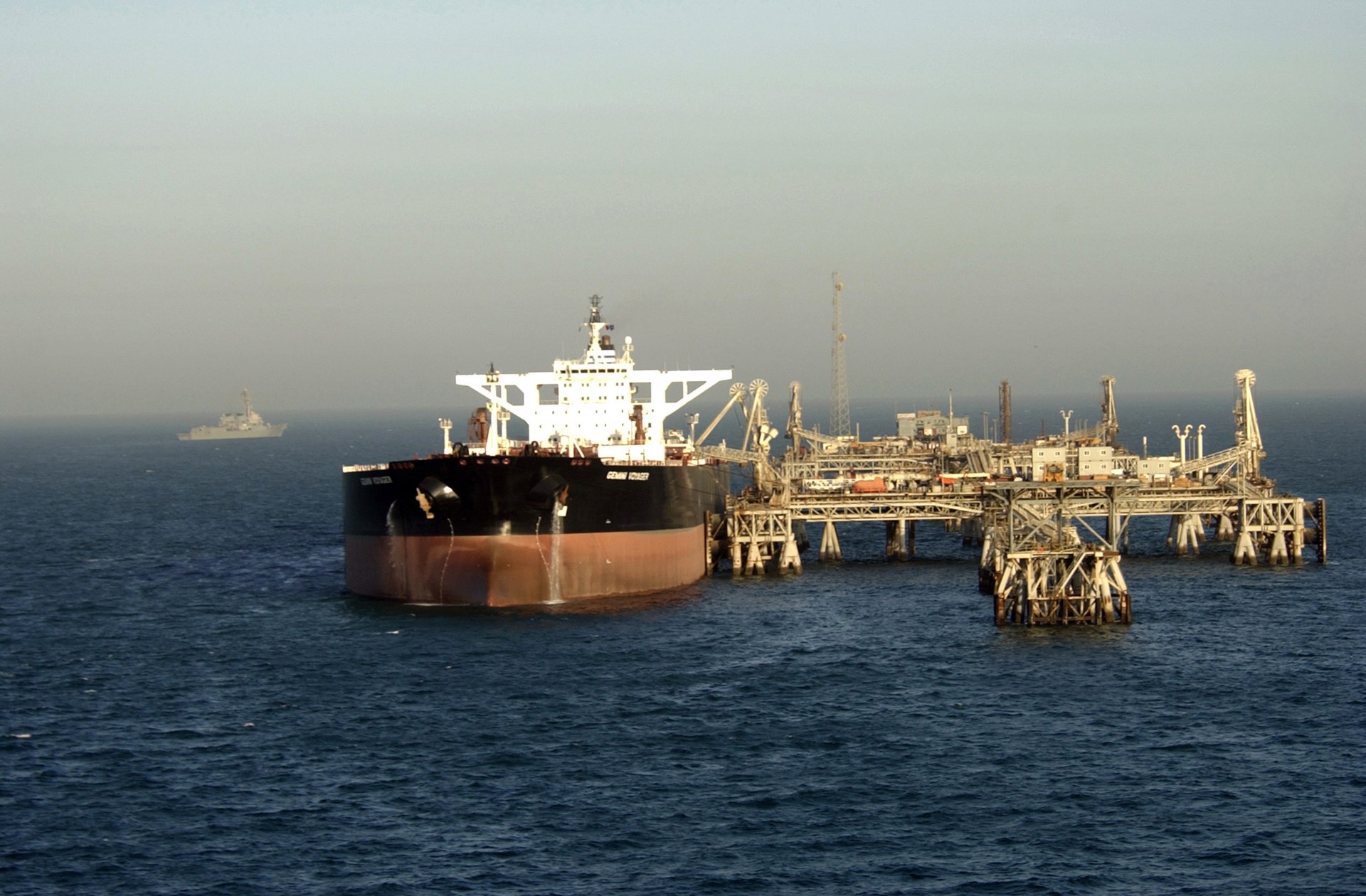
The scale of the maritime disruption is staggering, and it exists independently of any individual commander’s presence. As of March 24, according to S&P Global and the United Against Nuclear Iran shipping tracker, 149 commercial vessels remained anchored inside or just outside the Strait of Hormuz, unwilling to attempt transit. Of these, 76 were crude oil tankers — collectively carrying an estimated 150 million barrels of oil at full capacity — along with 37 LNG and LPG carriers and 36 container ships.
The daily transit count tells the story more vividly. Before the war, 138 vessels passed through Hormuz every 24 hours. On March 22, just one vessel transited with its AIS transponder active. On March 17, three. On March 24, six — a figure that media outlets described as a “recovery,” though it represents a 96 percent decline from the pre-war baseline.
| Date | Vessels Transiting (AIS active) | Vessels Anchored/Waiting | Status |
|---|---|---|---|
| Pre-war (avg.) | 138/day | ~10 | Normal operations |
| March 1 (Day 1) | ~40 | ~30 | Partial shutdown after first mine strike |
| March 10 | ~8 | ~95 | Mines confirmed; insurers pull coverage |
| March 17 | 3 | ~130 | Near-total closure |
| March 22 | 1 | 149 | Effective blockade |
| March 24 | 6 | ~145 | Selective passage for non-aligned states |
The ships that have transited since the blockade tightened have done so under Iranian sufferance, not in defiance of it. Iran has selectively granted safe passage to Indian-flagged gas carriers, Japanese tankers after granting Tokyo a diplomatic exemption, and certain Chinese vessels. Western-flagged ships, vessels bound for Saudi or Emirati ports, and tankers loading at Kharg Island for non-approved destinations have been consistently blocked or threatened.
This selective enforcement is itself a form of geopolitical coercion. It rewards countries that have declined to join the US-led coalition, punishes those that have supported it, and creates division within the international community at precisely the moment unity is needed to mount a mine-clearing and convoy-escort operation. It is a strategy that any competent IRGCN commander can continue to execute, with or without Tangsiri.
Can the US Military Reopen Hormuz by Force?
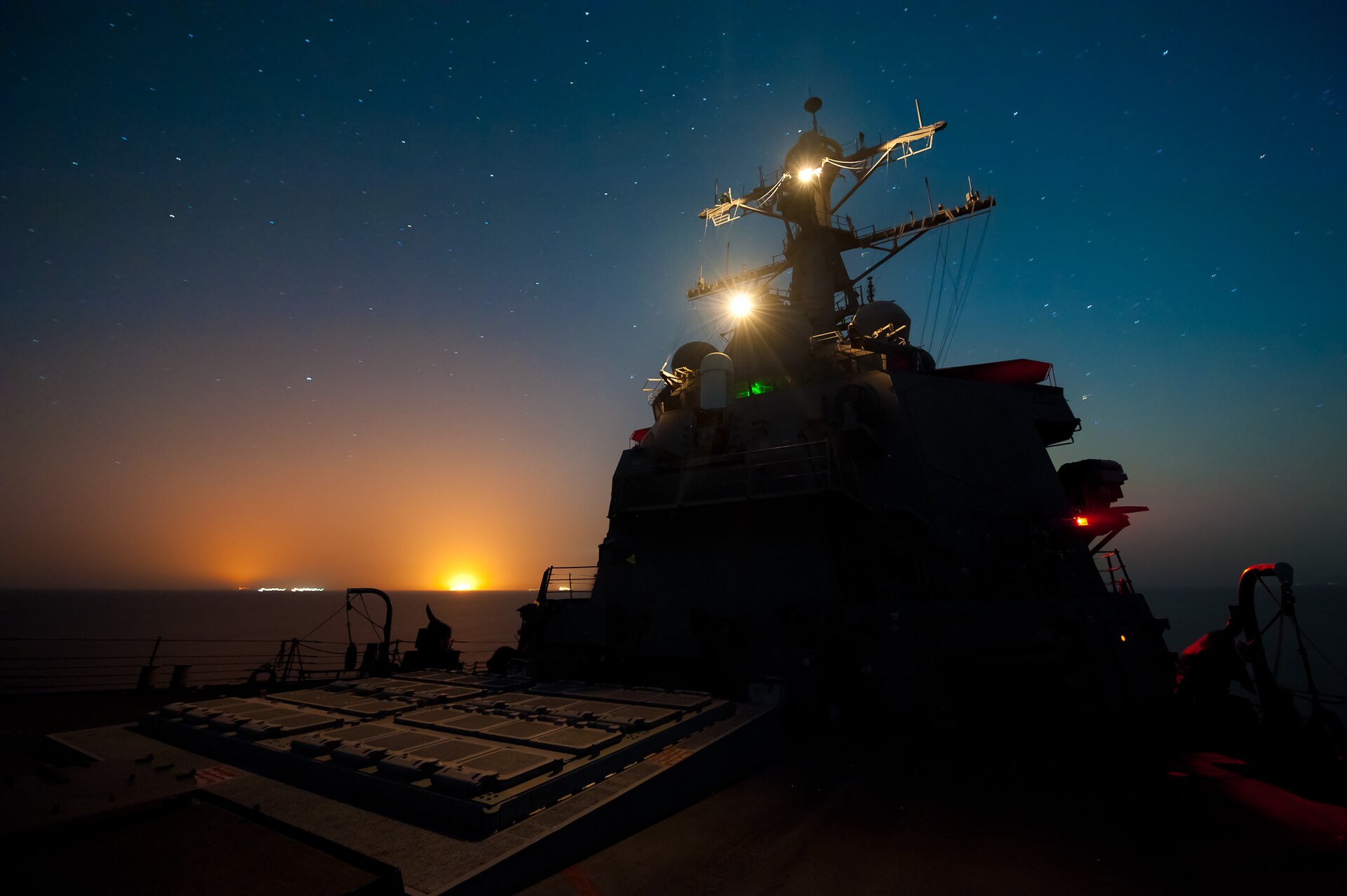
The United States possesses overwhelming naval superiority in the Persian Gulf, with two carrier strike groups, multiple guided-missile destroyers, and two Marine Expeditionary Units currently deployed to the region. Approximately 50,000 US military personnel are stationed across the Gulf, according to Pentagon figures from March 25. This force is theoretically capable of sweeping the mines, suppressing the coastal missile batteries, and escorting commercial convoys through the strait.
In practice, reopening Hormuz by force is a fundamentally different military problem from the air campaigns the US has waged over Iran’s interior. Mine clearance in the narrow, shallow waters of the strait is inherently slow. The US Navy’s mine countermeasures fleet has been chronically underfunded and undermanned for decades — a vulnerability the IRGCN specifically designed its mine-warfare strategy to exploit. Admiral Charles Richard, former commander of US Strategic Command, told the Senate Armed Services Committee in 2024 that the Navy’s mine-clearance capacity was “inadequate for a high-intensity scenario in confined waters.” That assessment has not materially changed.
Iran potentially has hundreds of smaller vessels — midget submarines, fast attack craft, and even civilian fishing boats — that can lay small numbers of mines from ports scattered along the 1,000-kilometre southern coastline. Many of these vessels are stored in tunnels carved into the coastline, invisible to satellite surveillance until they deploy. The US destroyed 16 Iranian minelayers on March 11, but CENTCOM acknowledged that “an unknown number” of additional mine-laying capable vessels remained operational.
The coastal missile threat compounds the challenge. Iran’s mobile anti-ship missile launchers — including the domestically produced Noor and Qader systems with ranges exceeding 200 kilometres — operate on a shoot-and-scoot doctrine, emerging from hardened positions to fire and withdrawing before counter-battery strikes can be directed. The IRGCN also deploys Khalij Fars anti-ship ballistic missiles, which target vessels from high-altitude trajectories that are significantly harder to intercept than cruise missiles.
A brute-force reopening would require weeks, not days. It would incur US casualties — both from mines and from the inevitable counter-strikes against escort vessels. And it would need to be sustained indefinitely, because Iran’s capacity to re-mine the strait persists as long as its coastal tunnel infrastructure remains intact. The Pentagon is aware of all of this, which is why the preferred US approach has been diplomatic pressure and selective strikes against IRGCN assets rather than a comprehensive mine-clearing campaign.
The alternative approach under active consideration — seizing Kharg Island, Iran’s primary oil export terminal, as a bargaining chip to coerce Tehran into reopening the strait — carries its own set of risks. CNN reported on March 25 that Iran has been reinforcing Kharg’s defences with additional MANPADS, anti-armour mines, anti-personnel mines, and portable surface-to-air missile systems. Two Marine Expeditionary Units and elements of the 82nd Airborne Division have deployed to the region, providing the amphibious and airborne capability needed for such an operation. But Gulf allies, including Saudi Arabia, are privately urging Washington against a ground operation that would risk high US casualties, provoke Iranian retaliatory strikes on Gulf energy infrastructure, and potentially prolong the conflict rather than ending it.
The uncomfortable truth is that the Hormuz blockade cannot be solved by killing commanders, and it may not be solvable by military force alone. It requires either a negotiated agreement — one that addresses Iran’s five stated conditions for peace, including recognition of its sovereignty over the strait — or a sustained, multi-month campaign to physically clear the waterway and maintain convoy escorts indefinitely. Neither option is quick, and neither is assured of success.
What Does Tangsiri’s Death Mean for Saudi Oil Exports?
For Saudi Arabia, the death of the IRGC Navy commander is emotionally satisfying but economically meaningless in the near term. The Kingdom’s oil export infrastructure remains under severe duress, and the removal of one Iranian commander does not alter any of the structural constraints that have squeezed Saudi output since the war began.
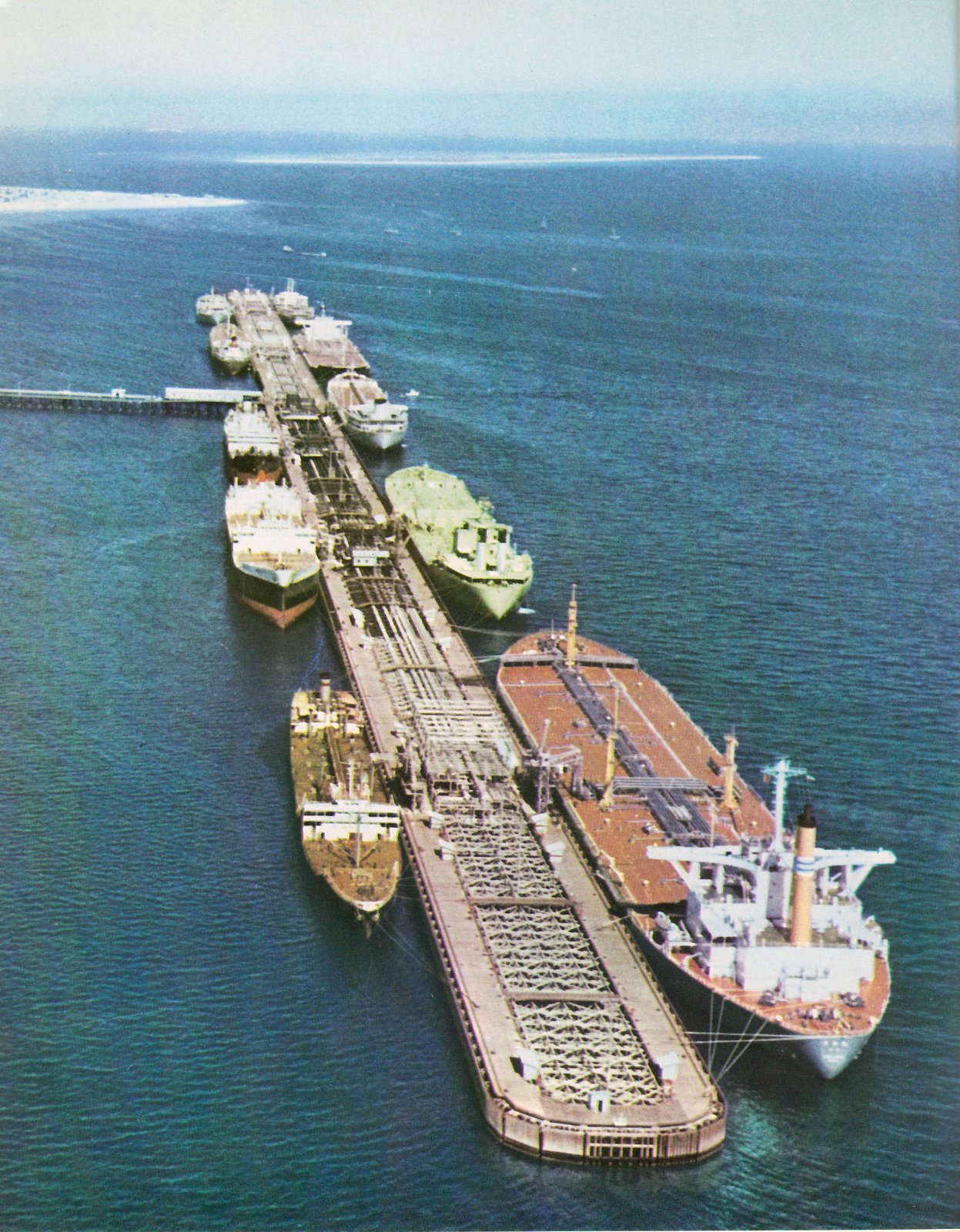
Saudi Arabia’s Eastern Province — home to the Ghawar, Safaniya, and Shaybah fields that produce the bulk of the Kingdom’s crude — ships oil through the Ras Tanura and Ju’aymah terminals, both of which lie on the Persian Gulf coast upstream of the Strait of Hormuz. Before the war, approximately 6.5 million barrels per day flowed through these terminals to Asian markets. That flow is now effectively blocked by the Hormuz closure.
The Kingdom’s primary workaround has been the East-West Pipeline (Petroline), which carries crude 1,200 kilometres across the Arabian Peninsula from the eastern oil fields to the Red Sea port of Yanbu. Aramco has diverted millions of barrels to this alternative route, but the pipeline’s maximum capacity of approximately 5 million barrels per day is insufficient to replace the full volume of Gulf-coast exports. Moreover, Iran has demonstrated its willingness to target Yanbu directly — on March 19, Saudi air defences intercepted a ballistic missile over the port, forcing a temporary suspension of loading operations.
Jeddah port has been absorbing additional import traffic as Gulf states reroute trade away from the strait, but the infrastructure was not designed for wartime volumes. OPEC+ agreed on March 1 to add 206,000 barrels per day of additional production in April, but the decision is largely symbolic when the physical route to market remains constricted.
The Kingdom’s economic exposure is compounded by the war’s impact on oil prices. Brent crude spiked above $119 per barrel on March 20 before retreating to $98 — below $100 for the first time since the war began — amid growing expectations of a ceasefire. But price volatility cuts both ways: Saudi Arabia needs stable, high prices to fund both its war expenditures and its Vision 2030 commitments, while also needing physical access to the market to convert high prices into actual revenue. Tangsiri’s death does not resolve either problem.
The Kingdom’s strategic calculation, articulated by Crown Prince Mohammed bin Salman in a March 24 call with UK Prime Minister Keir Starmer, is that the war’s resolution must include comprehensive security guarantees for Gulf energy infrastructure — a demand that may cost more than the war itself. Riyadh wants not just the reopening of Hormuz but a permanent multinational naval presence, underwritten by the United States and backed by NATO-standard mine-clearing capabilities, that ensures the strait can never again be weaponised against Gulf oil producers. That outcome requires a diplomatic framework that no Israeli airstrike can deliver.
In the interim, Saudi Arabia is adapting to a new geography of oil exports. The Kingdom’s Red Sea infrastructure, never designed as the primary export corridor, is being expanded under emergency protocols. Yanbu’s port capacity is being tested to its limits, and construction crews are reportedly beginning work on additional loading berths that will take months to complete. The East-West Pipeline, built in the 1980s during the first Tanker War for exactly this contingency, is operating at near-maximum throughput. But the mathematics remain unfavourable: Saudi Arabia can physically export significantly less oil through its Red Sea infrastructure than it produced before the war, creating a revenue gap that grows with every week the blockade persists.
The Contrarian Case — Why the Blockade Could Get More Dangerous
The conventional wisdom following Tangsiri’s killing is that the blockade weakens. The contrarian case — supported by both the Mosaic Defense doctrine and the historical record of decapitation operations — is that it could intensify.
Three dynamics point toward escalation rather than degradation. First, the elimination of central command does not eliminate aggression; it removes the restraints on aggression. Tangsiri, as overall IRGCN commander, had the authority and the strategic vision to calibrate the blockade — granting selective passage to certain nations, avoiding attacks that might trigger a full US mine-clearing operation, maintaining the blockade at a level that maximised economic pain while minimising military risk. Without that central calibration, individual district commanders may default to their standing rules of engagement, which authorise attacks on any hostile-flagged vessel entering their sector. The blockade becomes less strategic and more indiscriminate.
Second, successor commanders face an institutional pressure to demonstrate resolve. The IRGC’s internal culture places enormous value on martyrdom and defiance. A new IRGCN commander inherits a war in which his predecessor was killed by the enemy. The organisational incentive is not to de-escalate but to intensify operations, both to prove institutional continuity and to demonstrate that Israel’s strike achieved nothing of value. This dynamic has been observed repeatedly in the Israeli-Palestinian context, where the killing of Hamas military commanders has consistently been followed by spikes in rocket fire rather than reductions.
Third, the loss of Tangsiri’s personal relationships with non-military stakeholders could complicate de-escalation efforts. Tangsiri maintained informal back-channel communications with Omani intermediaries, Pakistani naval contacts, and certain Gulf Arab interlocutors who were exploring the terms under which limited commercial traffic might resume. These channels were personal, not institutional. His death severs them, leaving no obvious replacement for the diplomatic dimension of blockade management.
The precedent of the 1980s Tanker War supports this assessment. During that conflict, Iraq repeatedly struck Iranian naval assets and oil infrastructure, killing multiple senior officers. Iran’s response was not to retreat but to expand the scope of its own attacks on shipping, ultimately threatening all commercial traffic in the Gulf regardless of flag or destination. The second Tanker War of 2026 has already eclipsed the first in both scale and intensity. Removing Tangsiri could push it further.
| Target | Organisation | Year | Outcome | Operations After |
|---|---|---|---|---|
| Osama bin Laden | Al-Qaeda | 2011 | Killed in Abbottabad | Affiliates continued operations for 10+ years |
| Qasem Soleimani | IRGC Quds Force | 2020 | Killed by US drone strike | Proxy operations expanded across Iraq, Syria, Yemen |
| Ahmed Jabari | Hamas military wing | 2012 | Killed by Israeli airstrike | Rocket fire intensified within hours |
| Abu Bakr al-Baghdadi | ISIS | 2019 | Killed in US special forces raid | Insurgent attacks continued; successor named within days |
| Mohammad Pakpour | IRGC | 2026 | Killed in opening strikes | Mosaic Defense activated; operations continued without pause |
| Alireza Tangsiri | IRGC Navy | 2026 | Killed by Israeli strike | Blockade ongoing; no operational change observed |
Frequently Asked Questions
Will the Strait of Hormuz reopen now that Tangsiri is dead?
Almost certainly not in the near term. The blockade is sustained by mines already in the water, pre-delegated IRGC command authorities under the Mosaic Defense doctrine, and prohibitive insurance premiums that prevent commercial ships from attempting transit. None of these factors depends on Tangsiri’s personal involvement. The strait will reopen when Iran agrees to reopen it as part of a ceasefire deal, or when the US completes a comprehensive mine-clearing and convoy-escort operation — a process that would take weeks even under optimistic assumptions.
Who will replace Tangsiri as IRGC Navy commander?
Iran has not yet publicly named a successor, but the IRGC’s track record during this war suggests a replacement will be announced within 24-72 hours. The most likely candidates are the commanders of the IRGCN’s 1st Naval District in Bandar Abbas or the 2nd Naval District in Bushehr, both of whom have extensive operational experience in the strait and have been directing blockade operations at the tactical level throughout the conflict. The institutional knowledge resides at the district level, not at the top.
How does Iran’s Mosaic Defense work in the naval context?
Mosaic Defense divides the IRGC into 31 autonomous provincial commands, each with pre-delegated authority to conduct offensive and defensive operations without requiring approval from Tehran. In the naval context, this means the three coastal provincial commands most relevant to the Hormuz blockade — Hormozgan, Bushehr, and Khuzestan — each maintain their own fast-attack flotillas, coastal missile batteries, mine-laying assets, and intelligence networks. They operate under standing mission orders that specify targets, engagement rules, and escalation protocols, allowing sustained combat operations even if all national-level leadership is eliminated.
What percentage of Saudi oil is trapped by the Hormuz blockade?
Before the war, approximately 6.5 million barrels per day of Saudi crude flowed through terminals on the Persian Gulf coast that depend on the Strait of Hormuz for access to Asian markets. Saudi Arabia has diverted substantial volumes to the Red Sea port of Yanbu via the East-West Pipeline, but that pipeline’s maximum capacity of approximately 5 million barrels per day cannot replace the full Gulf-coast export volume. Roughly 20-30 percent of Saudi export capacity remains physically inaccessible as long as the blockade holds.
Has a military decapitation ever ended a naval blockade?
No confirmed historical case exists of a naval blockade collapsing solely because of the death of its commanding officer, according to a review of major blockade operations since the American Civil War. Blockades have ended through negotiated settlements, overwhelming military force that physically cleared the blockading assets, or the exhaustion of the blockading power’s military capacity. The death of individual commanders has occasionally disrupted coordination but has never been sufficient on its own to end a sustained maritime denial operation.
How long can Iran maintain the Hormuz blockade?
Iran’s capacity to maintain the blockade depends on three finite resources: anti-ship missiles, naval mines, and fast-attack craft. US strikes have degraded all three, but intelligence assessments suggest Iran entered the conflict with stockpiles sufficient for several months of sustained operations. The IRGCN also possesses the capacity to manufacture additional mines domestically, extending the blockade’s potential duration. The greater constraint may be diplomatic rather than military — Iran’s own economy depends on oil exports through Kharg Island, and a prolonged blockade that prevents its own trade will eventually become unsustainable.