
ISLAMABAD — Iran agreed on March 28 to grant 20 Pakistani-flagged vessels safe passage through the Strait of Hormuz at a rate of two per day, Pakistani Foreign Minister Ishaq Dar confirmed, in the clearest signal yet that Tehran is constructing a selective maritime access regime at the world’s most critical shipping chokepoint. The deal, struck alongside the Islamabad Quad diplomatic consultations, followed Iran’s decision one day earlier to turn back two Chinese COSCO container ships near Larak Island despite Beijing’s nominal exemption from the blockade.
The two events, separated by 24 hours, reveal the architecture of a new maritime order at Hormuz. Iran is no longer simply blocking the strait. It is sorting global shipping into tiers of access based on diplomatic alignment, cargo origin, and willingness to submit to IRGC vetting — a system that functions as a geopolitical filter with consequences that extend far beyond the waterway itself. For Saudi Arabia, which has rerouted crude oil through the East-West pipeline at full capacity, the selective access regime exposes a vulnerability the pipeline cannot fix: the kingdom’s petrochemical exports, food imports, and industrial supply chains still depend on Gulf-side ports that Iran now controls.
Table of Contents
The Pakistan Deal and What It Proves
Pakistan’s 20-ship safe passage agreement is not an act of Iranian generosity. It is a bilateral transaction that demonstrates how Tehran intends to manage the strait going forward: country by country, ship by ship, with each transit serving as both a commercial and diplomatic instrument.
Foreign Minister Dar described the arrangement as “a welcome and constructive gesture by Iran” that “deserves appreciation,” according to Pakistan Today on March 29. He added that “both Iran and the United States expressed confidence in Pakistan as a facilitator,” a statement he made during an interview with NPR the same day. The deal permits two Pakistani-flagged vessels per day to transit the strait, with Iran providing clearance codes and routing instructions through its IRGC-controlled corridor.
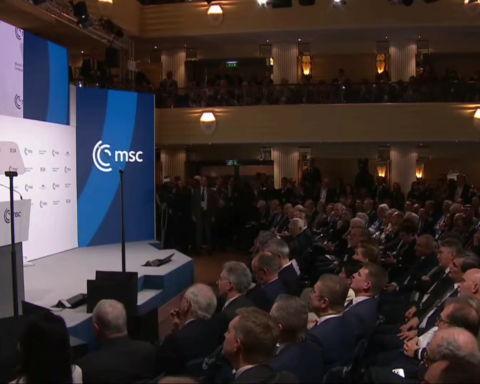
The timing is significant. The agreement came during the Islamabad Quad diplomatic consultations, where Pakistan hosted Saudi, Turkish, and Egyptian foreign ministers for Iran war talks. Islamabad has positioned itself as a neutral mediator, and Iran’s reward was swift: maritime access, granted within days of Pakistan’s diplomatic utility being demonstrated.
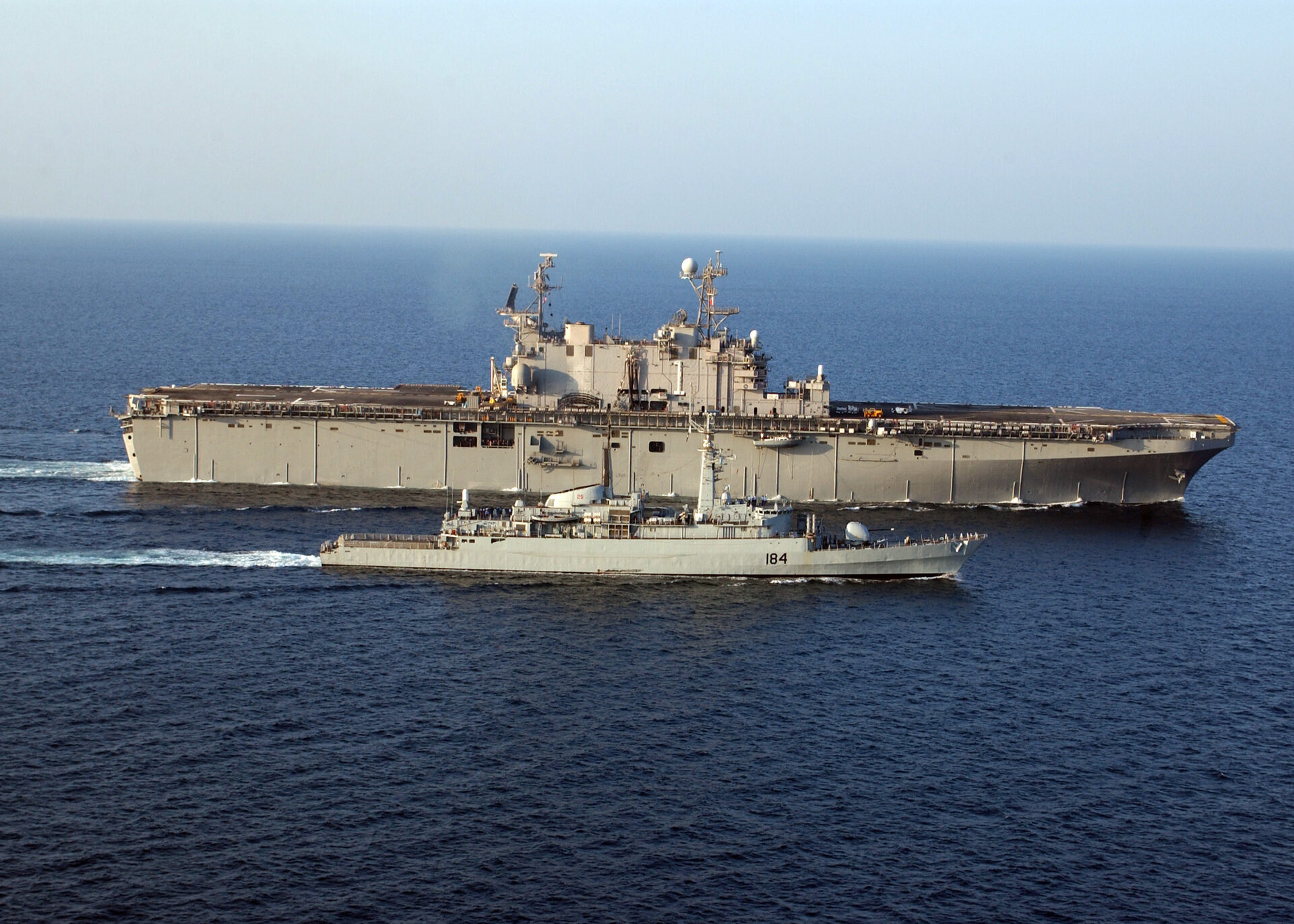
The deal also reveals the vetting infrastructure Iran has built. According to Al Jazeera’s March 26 reporting on Tehran’s toll booth system, vessel operators must submit cargo details, crew lists, IMO registration numbers, and final destinations to IRGC-connected intermediaries. The IRGC’s naval command then screens submissions and issues clearance codes with specific routing instructions. Pakistan’s 20-ship quota suggests the system now operates on pre-negotiated bilateral allotments — not ad hoc approvals.
Why Did Iran Turn Back Chinese COSCO Ships?
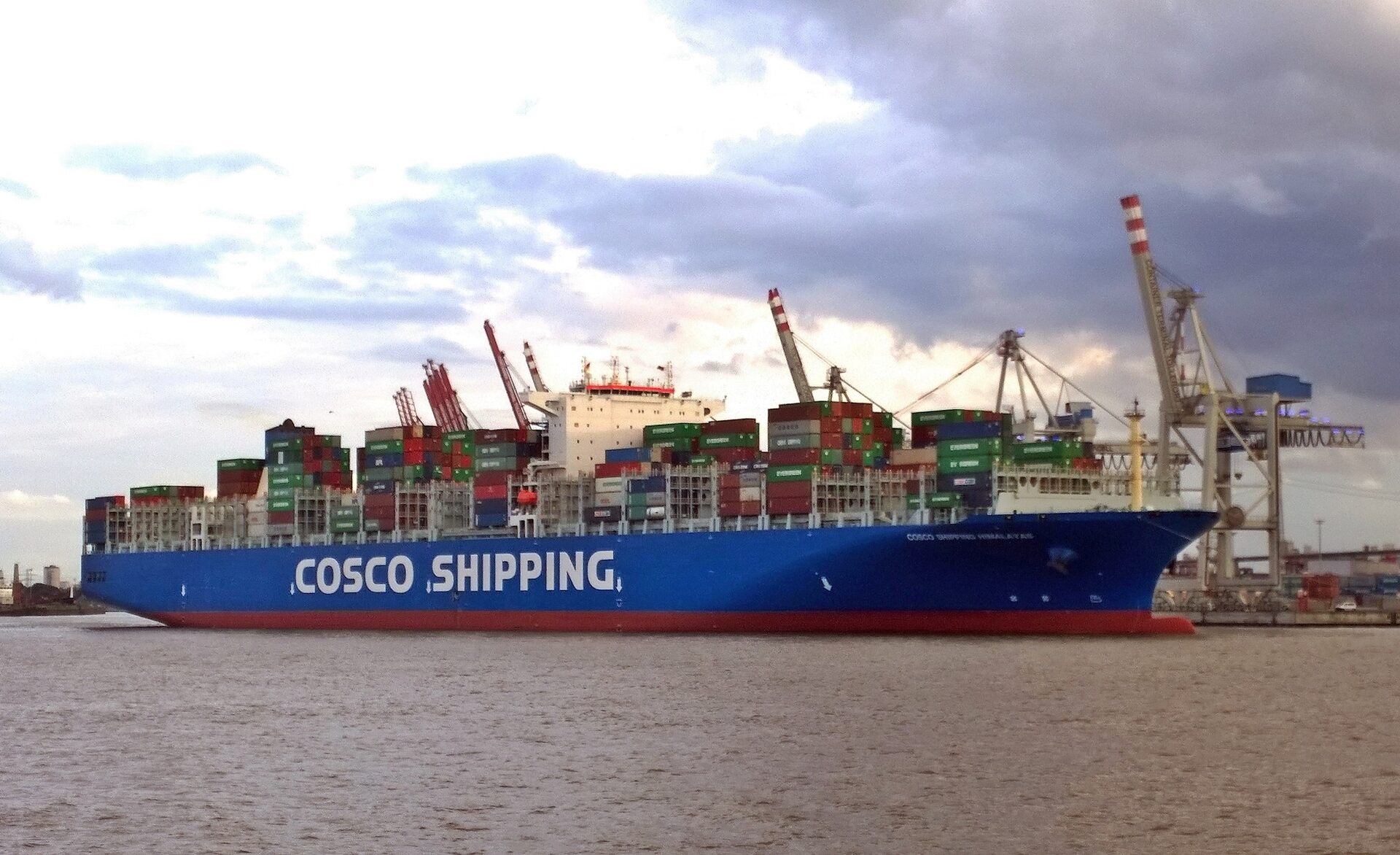
On March 27, two ultra-large COSCO container ships — the 19,100-TEU CSCL Indian Ocean and the 19,000-TEU CSCL Arctic Ocean — attempted to exit the Persian Gulf through the Strait of Hormuz. Both executed U-turns near the IRGC-approved Larak Island corridor at approximately 03:20 UTC, according to Lloyd’s List. A third vessel, the Marshall Islands-flagged Lotus Rising, also turned back. (Bloomberg reported on March 30 that the same two COSCO vessels attempted the crossing again and successfully exited the strait.)
The rejection was striking because China is formally on Iran’s safe passage list. Foreign Minister Abbas Araghchi announced on March 26 that vessels from China, Russia, India, Iraq, and Pakistan would be allowed to transit the strait, according to Al Jazeera. Yet the COSCO ships were stopped less than 24 hours later.
The reason, according to ship-tracking data analyzed by Lloyd’s List and The National, was that the COSCO vessels had recently called at Dubai, Abu Dhabi, and Dammam — ports in countries Iran considers part of the hostile coalition. Iran’s access regime does not filter solely by flag state. It filters by cargo origin, port history, and destination. A Chinese-flagged ship that has loaded containers at a Saudi port is, in Iran’s classification, a vessel serving the enemy supply chain.
This distinction is critical. It means that even nations nominally granted safe passage can have their ships rejected if they service ports in coalition countries. Lloyd’s List reported that China-linked Hormuz transits have “retreated to shipping’s opaque fringes,” with mainstream state-owned fleets rerouting crude carriers to Yanbu while smaller operators reflag and use intermediary shell companies to obtain clearance.
Who Gets Through Hormuz and Who Does Not?
Iran’s selective access regime has created a tiered system of maritime permissions that splits global shipping into three categories: approved, conditionally approved, and blocked. The system has evolved rapidly since Tehran issued its first transit guidelines in early March.
| Country | Access Status | Conditions | Source |
|---|---|---|---|
| Russia | Approved | Russian-flagged vessels transiting without reported interference | Al Jazeera, March 26 |
| India | Approved | Indian-flagged vessels granted passage; India denies paying fees | The Statesman, March 26 |
| Iraq | Approved | Iraqi oil tankers transiting under Iranian escort | Al Jazeera, March 16 |
| Pakistan | Approved (quota) | 20 ships, 2 per day, bilateral deal confirmed March 28 | Pakistan Today, March 29 |
| China | Conditional | Approved in principle; COSCO ships blocked for port history violations | Lloyd’s List, March 27 |
| Malaysia | Approved | Cleared after talks with Iran’s ambassador | Al Jazeera, March 16 |
| Thailand | Approved | Cleared after talks with President Pezeshkian | Al Jazeera, March 16 |
| Spain | Approved | Granted free passage after PM Sánchez called the war “illegal” | Euronews, March 26 |
| US / Israel / Coalition | Blocked | All vessels banned; IRGC warns of “harsh measures” | Times of Israel, March 2026 |
| Saudi Arabia / UAE | Blocked | Ports classified as hostile; ships calling at Dammam, Dubai blocked | Lloyd’s List, Fox Business |
The table reveals a pattern. Approved states are either formal Iranian allies (Russia, Iraq), declared neutrals (Pakistan, Malaysia, Thailand), or nations that have publicly opposed the war (Spain). Blocked states include not only direct belligerents but also Gulf monarchies that host coalition forces or infrastructure. The conditional category — exemplified by China — shows that even strategic partners face restrictions when their commercial operations intersect with coalition economies.
Spain’s inclusion is particularly revealing. The Iranian embassy in Madrid told Euronews on March 26 that Iran would be “receptive to any request from Spain related to the Strait of Hormuz” because Madrid “respects international law.” Prime Minister Pedro Sánchez had denied US forces permission to use the Rota and Morón military bases for operations against Iran. Tehran’s reward was immediate and transactional: free passage through the strait. Iran is using Hormuz access as a tool to fracture Western solidarity.
The Toll Booth at the World’s Chokepoint
Beyond the binary of access and denial, Iran has built a revenue-generating toll system that transforms the strait from a global commons into a controlled corridor. Iranian lawmaker Alaeddin Boroujerdi confirmed to Iran International that Tehran has been charging vessels up to $2 million per transit, stating: “Now, because war has costs, naturally, we must do this and take transit fees from ships passing through the Strait of Hormuz.”
The fees, settled in Chinese yuan rather than US dollars, have generated an estimated $20 million per day from oil tankers alone, according to CNN’s March 28 reporting. If LNG shipments are included, the figure could exceed $800 million per month — a revenue stream that, as previously reported, rivals the annual income of the Suez Canal.
A second Iranian lawmaker, Mohammadreza Rezaei Kouchi, told Fortune that “Parliament is pursuing a plan to formally codify Iran’s sovereignty, control and oversight over the Strait of Hormuz, while also creating a source of revenue through the collection of fees.” The bill, prepared by the Majlis Civil Affairs Committee, would recognize Tehran’s “sovereignty, dominance and supervision” over the waterway, with a parliamentary vote expected in late March or early April.
“Not only is this illegal, it’s unacceptable. It’s dangerous for the world.”US Secretary of State Marco Rubio, G7 Foreign Ministers’ meeting, March 27 (CNN)
The toll system has processed at least 26 vessel transits under the IRGC’s pre-approved routing system in recent weeks, according to USNI News on March 27. Each transit follows a single controlled corridor, with IRGC naval escorts accompanying cleared vessels through Iranian territorial waters. The vetting process — submission of vessel documentation, IMO numbers, cargo manifests, crew lists, and final destinations — gives Tehran granular intelligence on global shipping patterns while generating revenue under sanctions.
The scale of disruption underlines why some operators are willing to pay. Maritime traffic through the strait has dropped by approximately 90-95%, according to Kpler data. Only 138 ships crossed the strait in the first three weeks of March — roughly 5-6 per day, compared to the pre-war average of 138-140 daily crossings. Nearly 2,000 vessels remain stranded or rerouted, according to International Maritime Organisation estimates, and roughly 20,000 seafarers are trapped in the region.
Can Saudi Arabia Escape Hormuz?
Saudi Arabia’s activation of the East-West pipeline to its full 7 million barrels per day capacity, confirmed by Bloomberg on March 28, has been treated as a strategic triumph. Crude oil now flows from the Abqaiq processing center in the Eastern Province across 1,200 kilometers to the Red Sea port of Yanbu, bypassing Hormuz entirely. Of the 7 million bpd, approximately 5 million bpd reaches export markets, with 2 million bpd feeding Saudi refineries, according to S&P Global.
But the pipeline solves only one dimension of Saudi Arabia’s Hormuz dependency. The kingdom’s economic exposure to the Gulf coast extends far beyond crude oil, and Iran’s selective access regime threatens operations that no pipeline can reroute.
Jubail Industrial City, on Saudi Arabia’s Gulf coast, is one of the world’s largest industrial complexes. It serves as the primary hub for Saudi petrochemical exports — products that cannot be pumped through a crude oil pipeline. With Dammam and Jubail effectively blocked by the Hormuz closure, Saudi petrochemical exports face severe disruption. The Gulf fertilizer crisis triggered by the blockade has already constrained global supply, with roughly 80% of Asia’s seaborne naphtha imports dependent on Middle Eastern supply, according to IOM3.
Saudi Arabia’s desalination infrastructure compounds the vulnerability. The kingdom produces approximately 70% of its drinking water from desalination, with major plants at Ras Al-Khair and Jubail drawing seawater from the Gulf coast. As documented in analysis of Saudi desalination vulnerability, these facilities lie within range of Iranian drone and missile capabilities. The March drone strike on a Kuwaiti desalination plant demonstrated the threat is operational, not theoretical.
Food imports present a third exposure. Saudi Arabia imports more than 80% of its food by sea, and while Red Sea ports like Jeddah remain accessible, Gulf-side container traffic has been severed. The Yanbu port bottleneck further constrains alternatives: the port’s berth and handling capacity was built for crude tankers, not the containerized goods that normally flow through Dammam and Jubail.
Iran’s Geopolitical Sorting Machine
The selective access regime at Hormuz amounts to something unprecedented in modern maritime history: a wartime classification system for the global economy. Iran is not merely blocking a waterway. It is using control of the strait to reward neutrality, punish alignment with the US-led coalition, and generate revenue — all simultaneously.
The system creates powerful incentives for fence-sitting nations. Spain received free passage after Prime Minister Sánchez publicly condemned the war. Pakistan’s 20-ship deal came after Islamabad hosted mediation talks. The message to the rest of the world is explicit: oppose the war, or at least stay neutral, and your ships will transit. Support the coalition, and your maritime commerce stops.
For Saudi Arabia, the implications are severe even with the pipeline at full capacity. Brent crude has posted its largest monthly surge on record, reaching $115.35 per barrel as of March 30 — up from approximately $71-76 before the conflict, according to EIA data. Goldman Sachs estimates a $14-18 per barrel geopolitical risk premium embedded in current prices, according to CNBC. The price surge benefits Saudi revenue in the short term, but the broader economic disruption to Gulf-side industrial operations, petrochemical exports, and supply chain logistics offsets those gains.
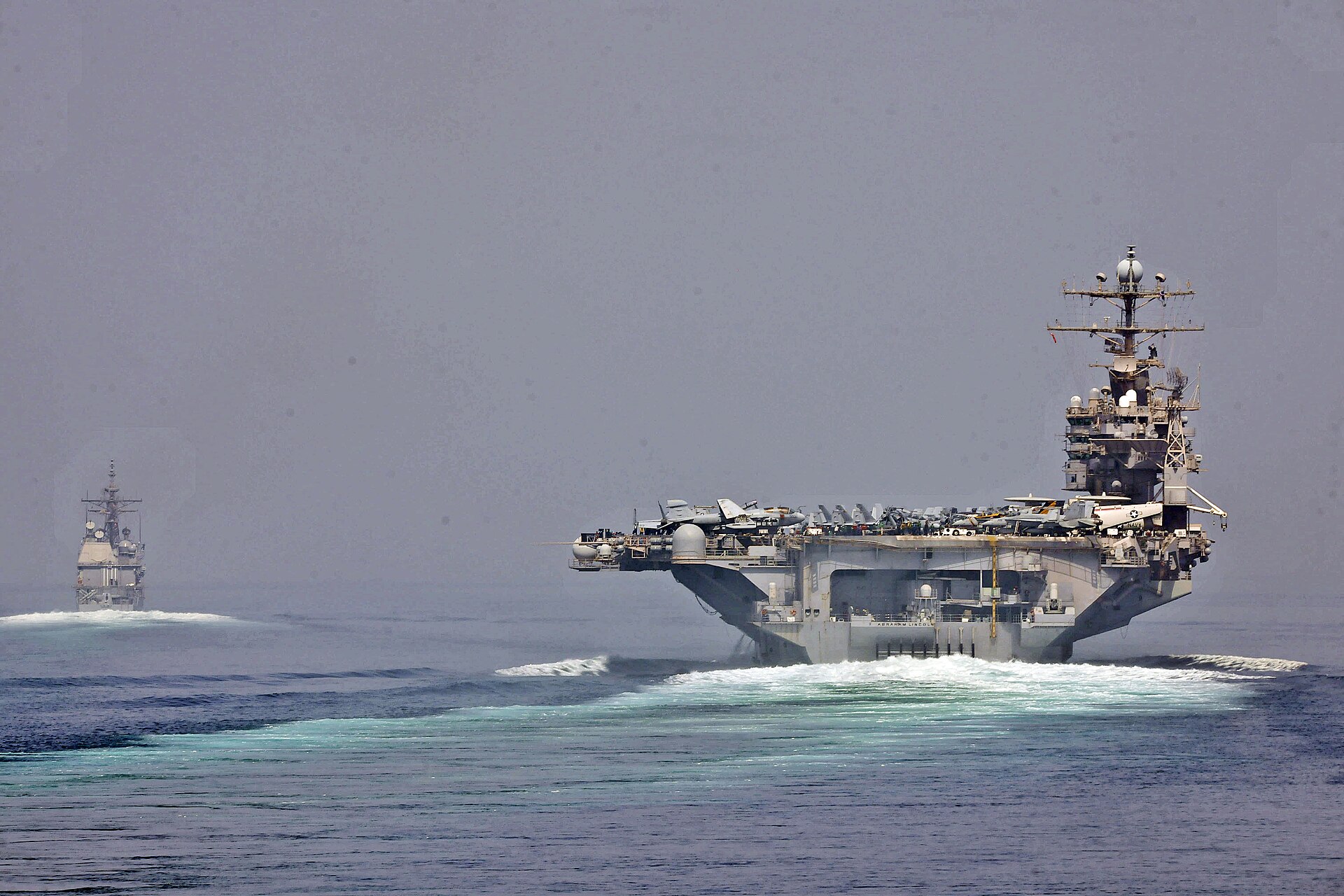
The G7’s pledge of a post-war Hormuz naval force has not materialized into wartime action. The US Navy is conducting limited escort operations, but no coalition has challenged Iran’s de facto control of the transit corridor. Lloyd’s of London war risk premiums have reached record levels, pricing many commercial operators out of the strait entirely.
The COSCO incident exposes a further complication. Even nations granted safe passage cannot guarantee their vessels will clear the IRGC screening if those ships have recently serviced Saudi, Emirati, or coalition-linked ports. This makes Saudi Arabia radioactive to global shipping: any vessel that calls at Dammam or Jubail risks being denied Hormuz transit on its next voyage, regardless of its flag state. The blockade’s effect on Saudi commerce therefore extends beyond the strait itself, deterring ships from entering Saudi Gulf ports at all.
Background
The Strait of Hormuz crisis began on February 28, 2026, following joint US-Israeli military strikes on Iran that killed Supreme Leader Ali Khamenei. Iran’s IRGC declared the strait closed to hostile shipping within hours. Before the conflict, approximately 17.8 million barrels per day of oil and significant volumes of LNG — primarily from Qatar — transited the 21-mile-wide waterway.
Iran’s position has evolved from a blanket closure to a selective access system over the course of March. The IRGC initially warned that all vessel passage would face “harsh measures.” By mid-March, Tehran began granting clearances to vessels from non-hostile states. The toll system emerged by late March, with Iranian lawmakers publicly acknowledging revenue collection and drafting legislation to make the system permanent.
The international legal framework is contested. Iran argues the strait falls within its territorial waters and sovereign control. The United States and most maritime nations maintain that the strait is subject to the right of transit passage under the United Nations Convention on the Law of the Sea (UNCLOS), which guarantees freedom of navigation through international straits. Iran has never ratified UNCLOS, though it signed the convention in 1982.
Saudi Arabia has responded by maximizing pipeline capacity and rerouting crude exports through Yanbu. But the kingdom’s broader economic architecture — built over decades around Gulf-side ports, industrial cities, and desalination infrastructure — cannot be relocated. The vulnerability of Gulf industrial infrastructure to IRGC economic warfare predates the current conflict but has become acute as Iran’s control of the strait solidifies.
FAQ
Has any country refused to pay Iran’s Hormuz transit fee?
India’s government has publicly asserted that “no permission is required” to transit the strait and has denied making payments, according to The Statesman on March 26. This contradicts Iran’s stated toll system and suggests that some approved states may transit without fees if their bilateral relationship with Tehran is strong enough — or that India is understating its compliance to avoid domestic criticism for paying a wartime toll to Iran.
Could Iran’s toll system become permanent after the war ends?
Iranian lawmakers are actively working to ensure it does. The Majlis Civil Affairs Committee bill would codify Iran’s “sovereignty, dominance and supervision” over the strait, according to Fortune. If passed and enforced post-war, the toll system could generate billions annually — comparable to Egypt’s Suez Canal revenues of $9.4 billion in fiscal year 2024. The precedent would fundamentally alter the legal status of international straits worldwide, potentially encouraging other nations to impose similar controls at chokepoints they border.
What happens to ships already inside the Gulf that cannot exit through Hormuz?
The International Maritime Organisation estimates approximately 2,000 vessels are stranded on both sides of the strait. Bloomberg’s March 2026 investigation found roughly 20,000 seafarers trapped in the region, with some crews running low on provisions and fuel. Humanitarian corridors have been discussed at the United Nations but not implemented. Vessels inside the Gulf that cannot obtain IRGC clearance face the choice of waiting indefinitely, paying the toll, or attempting to reroute through Iraq’s Al Faw port — itself operating at limited capacity.
Why does the COSCO rejection matter more than the Pakistan deal?
The Pakistan deal confirms that Iran’s system works for compliant states. The COSCO rejection proves that the system has enforcement teeth even against strategic partners. China is Iran’s largest oil customer and a permanent UN Security Council member, yet two of its largest container ships were turned back because their recent port calls included Dubai and Dammam. If China cannot guarantee passage for its own state-owned shipping line, no country’s commercial fleet is immune from Iranian vetting. This transforms the strait from a navigation chokepoint into a compliance chokepoint.
How does Iran enforce the blockade against ships that attempt to transit without clearance?
The IRGC Navy, commanded until his reported death on March 26 by Rear Admiral Alireza Tangsiri, operates fast-attack craft, naval mines, and anti-ship cruise missiles along the strait. Human Rights Watch reported on March 23 that Iran has conducted deliberate attacks on at least 20 civilian vessels since the conflict began, calling some incidents “apparent war crimes.” Ships that approach without clearance face interception by IRGC speedboats, GPS jamming, and in some cases direct fire, according to Bloomberg’s reporting on stranded vessels dodging missiles and electronic warfare in the strait.