
DUBAI — On April 3, 2026, France co-vetoed a United Nations Security Council resolution that would have authorised military force to reopen the Strait of Hormuz — and on the same day, the Malta-flagged CMA CGM Kribi, owned by the world’s third-largest container shipping line, completed its transit of the Strait after coordinating directly with Iranian maritime authorities and paying a $2 million toll in Chinese yuan. No major outlet has connected these two events, which is remarkable, because they are the same event viewed from different altitudes: Paris chose commerce over coalition, and Tehran designed the system to make that choice inevitable.
Iran is not blockading the Strait of Hormuz — it is operating the Strait as a sorting mechanism, letting politically useful vessels through while blocking US-aligned shipping, and the CMA CGM transit proves the model works exactly as intended. What follows is the strategic logic behind the sorting, the legal fiction sustaining it, the coalition fracture it manufactured on the same day France killed the resolution to stop it, and what all of this means for Saudi oil exports forty-eight hours before Trump’s April 6 escalation deadline.
Table of Contents
The April 3 Conjunction
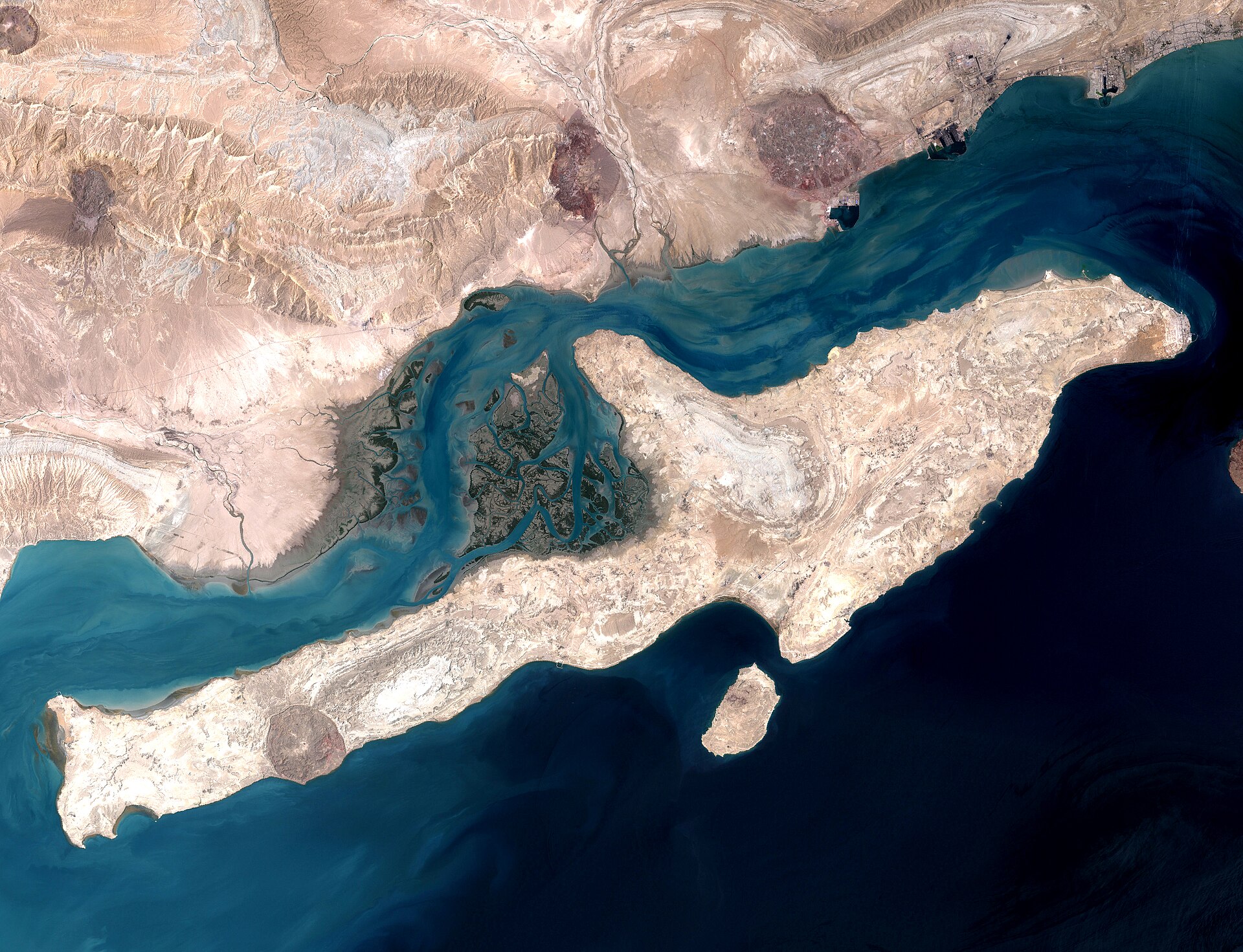
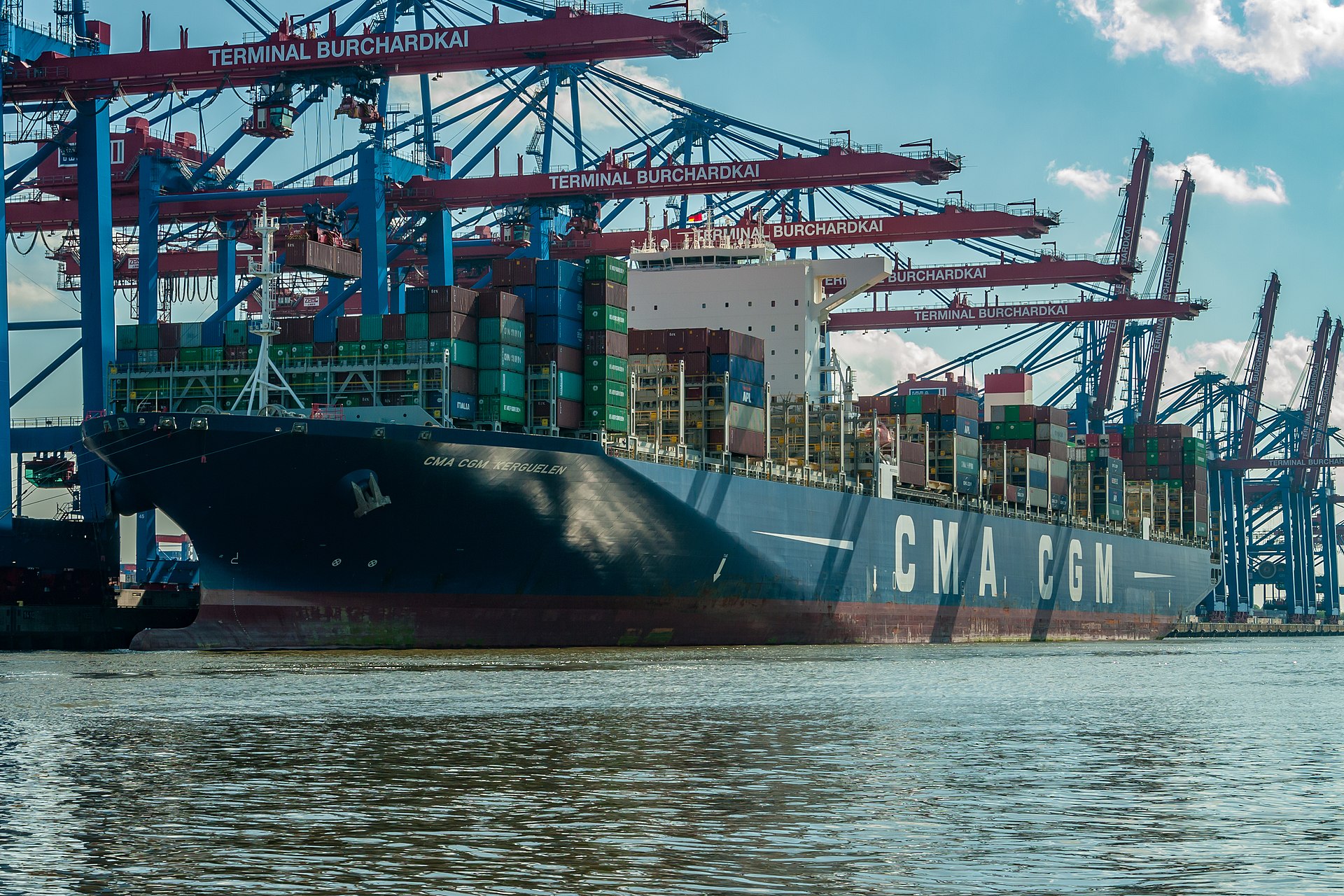
The sequence matters more than either event in isolation. Before entering Iranian territorial waters, the CMA CGM Kribi changed its AIS destination field to read “Owner France” — a deliberate signal to Iranian maritime authorities that the vessel belonged to a nation Tehran considered politically useful, according to Al Jazeera and FreightWaves reporting from April 3. The Kribi’s AIS transponder was then switched off entirely during the crossing, standard practice for all vessels using the IRGC-controlled Larak corridor, and the ship navigated the approved channel between the islands of Qeshm and Larak under what Euronews described as “coordination with Iranian maritime authorities.”
Neither CMA CGM nor Emmanuel Macron’s office responded to requests for comment on whether the French government brokered or was aware of the passage, according to Reuters and Al Monitor. That silence is its own kind of answer — plausible deniability preserved on both sides while the commercial fact was established on the water, making the Kribi the first Western European-owned vessel to transit Hormuz since the war began on February 28.
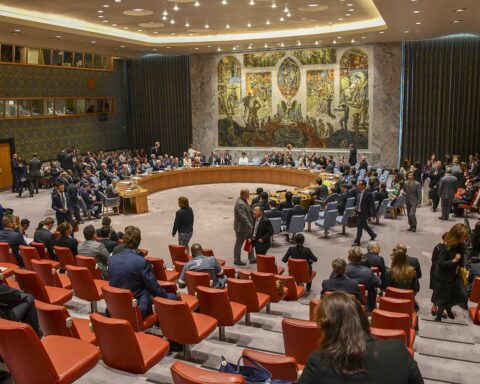
Hours later, at the Security Council in New York, France joined China and Russia in co-vetoing the US-backed Chapter VII resolution that would have authorised military force to reopen the Strait. Macron’s stated position — that a military operation would be “unrealistic” and would expose naval forces to IRGC attacks, and that Hormuz “can only be reopened in consultation with Iran” — reads very differently when a French-owned ship had already consulted with Iran that morning and found the terms acceptable. The consultation Macron described as a future diplomatic aspiration was, for CMA CGM, a completed commercial transaction settled before the Security Council had finished voting.
Japan’s Mitsui OSK Lines confirmed on the same day that the Sohar LNG had also crossed — the first Japan-linked vessel and first LNG carrier to make the passage since the conflict began, according to the Japan Times — alongside two Omani-linked VLCCs and one Oman Shipping Management LNG tanker. April 3 was the day Iran proved it could process selective traffic from multiple nations simultaneously while the Security Council debated whether to authorise force against the very system making those crossings possible, and the collapse of the Chapter VII vote ensured that the debate would remain theoretical.
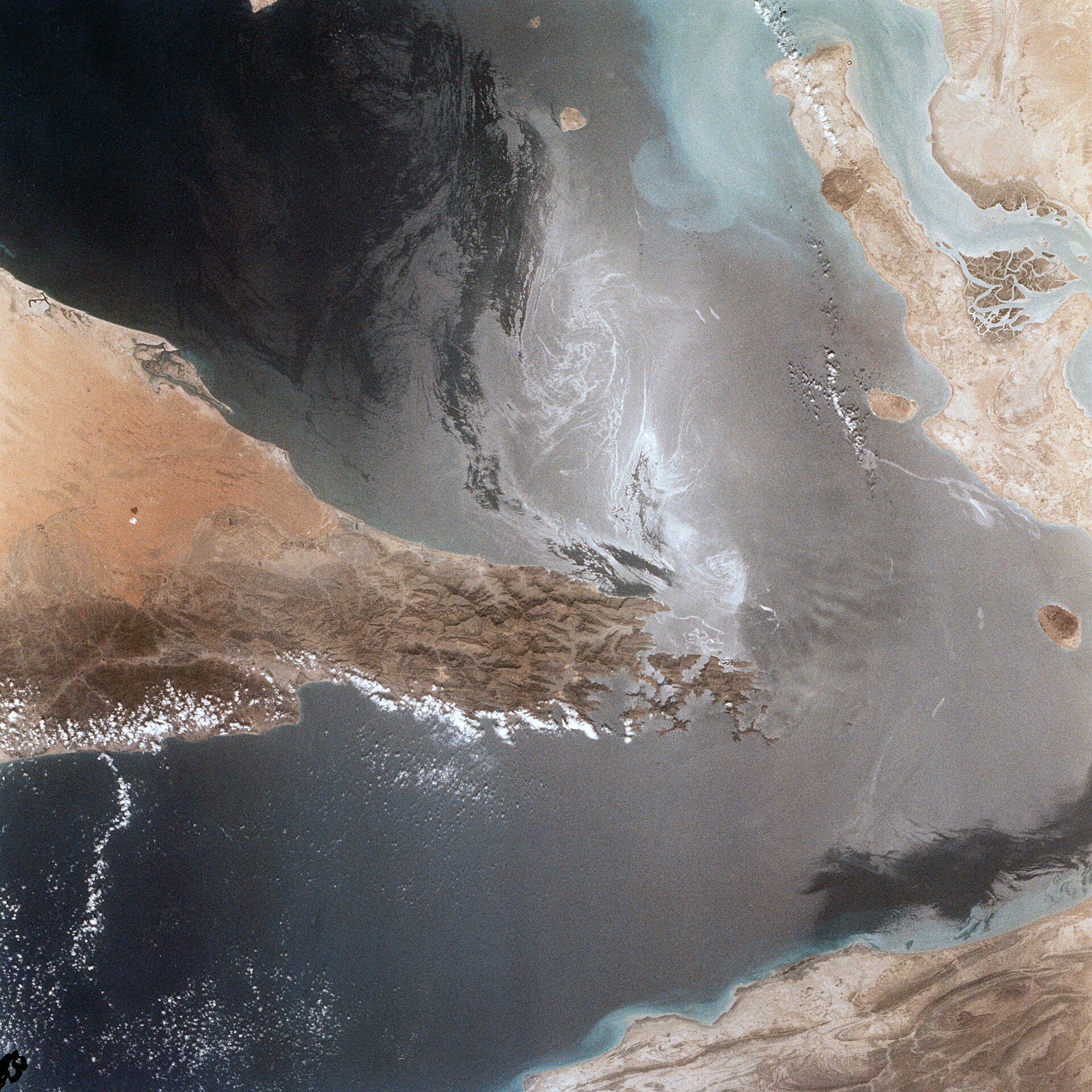
How Does Iran’s Hormuz Sorting Mechanism Work?
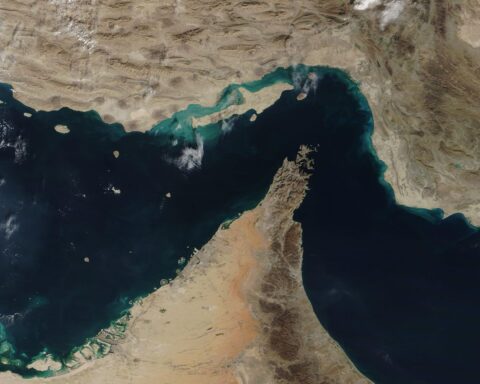
Iran operates a permanent IRGC Navy checkpoint at Larak Island — VHF radio checks, clearance codes, escort boats — that functions as a customs border rather than a military blockade. The system sorts vessels by nationality, charges a $2 million toll in Chinese yuan, and permits passage only to ships from nations Tehran considers politically or commercially useful while blocking US-aligned shipping entirely.
IRGC Navy Commander Alireza Tangsiri stated in late March that the sixty-two vessel transits tracked via the Larak corridor since March 13 represent genuine, selective, and increasingly routinised coordination. No vessels have used the Strait’s traditional navigation channel since March 15, according to Lloyd’s List Intelligence — traffic now flows exclusively through the narrow approved corridor under Iranian visual and radar surveillance, and only after obtaining IRGC clearance in advance.
“The passage of any vessel through this waterway requires full coordination with Iran’s maritime authority.”
— Alireza Tangsiri, IRGC Navy Commander, March 2026
Iran’s parliament Security Commission approved the “Strait of Hormuz Management Plan” on March 31, formalising the per-vessel transit fee at approximately $2 million per passage — a figure confirmed by Iranian lawmaker Alaeddin Boroujerdi, who told Al Jazeera that at least two vessels had paid, settling the fee in Chinese yuan through a Chinese maritime services intermediary. The plan is now advancing toward a full parliamentary vote, with Oman co-drafting the enforcement protocol, transforming a wartime improvisation into permanent legislative infrastructure.
The system’s power lies not in what it blocks but in what it allows. Vessels from nations Iran considers commercially useful — France, Japan, Oman, and those willing to pay in yuan — pass through after coordination. Vessels linked to the United States, United Kingdom, or Israel do not pass at all, and face war risk insurance premiums of approximately 3% of hull value compared to 1% for neutral-nation vessels, according to Lloyd’s List — for a five-year-old VLCC, that translates to insurance costs between $10 million and $14 million per voyage, up from roughly $800,000 before the crisis. The differential creates a commercial barrier that achieves what a traditional blockade would achieve without the legal exposure or military risk of openly declaring one.
Why Did France Break Ranks?
France calculated that a military operation to reopen Hormuz would close it permanently by turning a managed checkpoint into an active combat zone. Bilateral commercial negotiation with Tehran — demonstrated by CMA CGM’s same-day transit — proved it could secure fuel supplies more reliably than a naval campaign the Security Council could not authorise and NATO would not support.
Europe depends on the Middle East for approximately 30% of its diesel imports and roughly half of its jet fuel imports, according to MercoPress and CNBC, and France understood before most European capitals that the commercial arithmetic pointed toward accommodation rather than confrontation. CMA CGM, headquartered in Marseille, operates more than 600 vessels — the disruption costs of a Hormuz closure, even a partial one, dwarf the $2 million transit fee and the reputational cost of being seen to coordinate with Tehran. German Chancellor Friedrich Merz’s complaint that “to this day, there is no convincing plan for how this operation could succeed” and that “Washington has not consulted us” reflected the same calculation from Berlin, albeit without the commercial transit to prove it. Italy chose a third path: on April 3 — the same day France co-vetoed the Security Council resolution and CMA CGM paid Iran to cross the strait — Italian Prime Minister Giorgia Meloni flew to Jeddah to lock in Saudi Arabia’s wartime energy leverage over European buyers, arriving with a EUR 10 billion deal architecture and a ten-cargo LNG shortfall that made Rome the first EU capital to formally price Gulf access through Riyadh rather than Tehran.
The veto itself killed the resolution’s Chapter VII authorisation — the legal instrument that would have permitted member states to use force under international law. Without Chapter VII, any naval operation to clear the Strait would lack Security Council backing and would depend entirely on a US-led coalition of the willing, a coalition that, as of April 2, numbered forty-one nations willing to participate but did not include Saudi Arabia or the United States in its operational framework. France did not merely block one resolution. It established a precedent that European commercial access to the Gulf can be negotiated bilaterally with Tehran, bypassing both Washington and the multilateral system that Washington built.
That precedent is what Tehran wanted more than the $2 million, more than the yuan settlement, more than any single transit. Each nation that negotiates separately with the IRGC checkpoint validates Iran’s de facto sovereignty claim over the Strait and weakens the legal and political basis for a multilateral response. The Iranian sovereignty demand that appeared structurally unacceptable two weeks ago now has a reference transaction — a P5 member’s commercial fleet, crossing under IRGC escort, after the same P5 member vetoed the resolution to clear the checkpoint by force.
Is Iran’s Hormuz Toll Legal Under International Law?
Iran’s Hormuz toll violates UNCLOS Article 38, which guarantees unimpeded transit passage through international straits and explicitly bars transit fees. Iran never ratified UNCLOS, the Security Council cannot pass enforcement, and the precedent of Egypt’s twenty-year illegal Suez blockade suggests selective access can outlast international law indefinitely.
UNCLOS Article 38 grants all ships “the right of transit passage” through international straits, a right that “shall not be impeded” and “shall not be suspended.” Iran signed but never ratified the convention, which is the kind of legal detail that matters in academic journals and matters not at all when the IRGC has escort boats in the water and the Security Council has just failed to pass a resolution to do anything about it. Pnina Sharvit Baruch, a senior researcher at Israel’s Institute for National Security Studies, has argued that Iran’s conditional passage regime violates transit passage rights representing customary international law accepted by the overwhelming majority of world states — meaning the obligations apply to Iran regardless of ratification status.
Richard Haass, the former Council on Foreign Relations president, wrote that “Iran cannot pick and choose who gets the region’s oil and who does not.” Both Sharvit Baruch’s assessment and Haass’s formulation are legally correct and operationally irrelevant, because the precedent that should concern Western legal scholars is not hypothetical — it lasted two decades and ended only through military conquest. Egypt blocked Israeli vessels from the Suez Canal from 1948 to 1967, in open violation of international law. UN Security Council Resolution 95 condemned the practice in 1951. Enforcement failed completely. The blockade ended when Israel captured the Sinai Peninsula by force in the Six-Day War, not through any legal or diplomatic mechanism, and twenty years of international condemnation achieved nothing at all.
Iranian lawmaker Saeed Rahmatzadeh framed the toll as “a sovereign right, just like the fees charged by the Suez Canal or the Panama Canal” — a comparison deployed with deliberate legal imprecision, because the Suez and Panama are artificial waterways through sovereign territory while Hormuz is a natural international strait where transit fees are explicitly prohibited. The comparison is indefensible in a courtroom and devastatingly effective in a parliament, because it positions Iran not as a state violating international maritime law but as a state exercising the same revenue rights every canal-operating nation exercises. Tehran has never won the legal argument, and it does not need to — it is winning the political one by making the legal argument academic while the physical infrastructure at Larak becomes permanent.
What Does the Traffic Data Reveal?
Lloyd’s List tracked 211 total Strait transits between March 1 and April 1, 2026 — against a peacetime baseline of approximately 3,100 transits in any given thirty-day period, a 93% reduction. Seventy-two percent of remaining traffic had an Iran nexus, and 76 transits were conducted with AIS transponders off, rendering them commercially untraceable.
The composition of the traffic that does pass through tells the story of Iran’s sorting priorities more clearly than any official statement from Tehran. That Iran-nexus figure includes Iranian-flagged vessels, Iranian-owned cargo, and vessels carrying Iranian crude through the shadow fleet that predates the current crisis. The dark transits — commercially invisible, their presence in the data suggesting a parallel system of pre-arranged passages that bypasses even the nominal transparency of AIS tracking — amount to more than a third of all movement through the Strait.
The remaining non-Iranian traffic is almost exclusively composed of vessels from nations Iran considers strategically useful or commercially cooperative: Oman, which is co-drafting the Strait’s enforcement protocol with Tehran; China, whose maritime intermediaries process the yuan toll payments; and now, as of April 3, France and Japan. An unnamed Iranian official told Al Jazeera in late March that “just as in other corridors, when goods pass through a country, duties are paid — the Strait of Hormuz is also a corridor, and it is natural for ships and tankers to pay us duties.” Breakwave Advisors described the emerging system as “a more fragmented and politically mediated trading environment where relationships and strategic positioning rival traditional competitive advantages,” which is the polite consultancy version of what is actually happening — the replacement of a rules-based maritime order with an Iranian permission system priced in yuan and administered by the IRGC.
| Metric | Figure | Context |
|---|---|---|
| Total transits | 211 | vs. ~3,100 peacetime baseline |
| Iran-nexus traffic | 72% | Iranian-flagged, owned, or cargo |
| Dark transits (AIS off) | 76 | 36% of total, commercially untraceable |
| Immobilised tankers in Gulf | 329 | Including 72 VLCCs (~8% of global supply) |
| War risk premium (US/UK/Israel-linked) | ~3% of hull | $10–14M per VLCC voyage |
| War risk premium (neutral vessels) | ~1% of hull | Differential creates commercial sorting |
| VLCC earnings peak | $424,000–$436,000/day | 430% surge since January 2026 |
Three hundred and twenty-nine crude and product tankers remain immobilised in the Middle East Gulf, including seventy-two VLCCs — approximately 8% of global VLCC supply, according to Seatrade Maritime. These are not ships blocked by naval mines or military cordons but ships whose owners have not negotiated passage, whose flag states have not coordinated with the IRGC, or whose insurance underwriters have priced the transit beyond commercial viability — and the distinction between a military blockade and a commercially enforced one is immaterial to the tanker captain sitting at anchor in the Gulf with nowhere to go.
What Happens to Saudi Oil Exports?
Saudi Arabia’s East-West pipeline — the only alternative to Hormuz for Gulf crude exports — has an effective capacity of approximately 3 million barrels per day under wartime conditions, according to Vortexa estimates cited by Argus Media, less than half the Kingdom’s normal export volume. Iran’s recent strikes on Yanbu infrastructure demonstrate that the Red Sea bypass is itself a target, leaving Riyadh trapped between a Strait it cannot use and a pipeline it cannot fully protect.
The double compression facing Saudi oil revenues — volume constrained by Hormuz, price destabilised by global tariff fears — is visible in the spot-futures spread. Brent crude hit $141.36 per barrel on April 2 before futures dropped to $112.42 the following day, a contango structure that reflects panic buying for immediate delivery and scepticism about sustained supply disruption in the medium term. For a petrostate that needs roughly $80-90 per barrel to balance its budget, $141 sounds comfortable until you account for the volume that cannot reach market through Hormuz and the pipeline capacity that falls short of replacing it.
Iran’s sorting mechanism is specifically designed to exempt its own crude from the disruption it imposes on competitors. The 72% Iran-nexus traffic figure means that Iranian oil continues to flow while Saudi, Emirati, and Kuwaiti exports are constrained — a competitive advantage manufactured through military control of shared infrastructure. Every barrel of Iranian crude that reaches market through the Larak corridor while a Saudi barrel sits in a tank at Ras Tanura is a direct wealth transfer from Riyadh to Tehran, funded by the same war that Washington launched in part to protect Gulf energy security, and the strikes on the Yanbu bypass suggest Tehran intends to close the pipeline alternative as well.
Mojtaba Khamenei, in his first public address as Supreme Leader, stated that the Hormuz leverage “must continue to be used,” according to CNN — a formulation that frames the sorting mechanism not as a temporary wartime measure but as a permanent feature of Iran’s post-war negotiating position. The sovereignty demand attached to any ceasefire negotiation now includes a toll system that has, as of April 3, been validated by a permanent member of the Security Council, and the distance between wartime expediency and permanent institutional control narrows with every vessel that pays the fee and passes through. Meanwhile, the spot-futures spread is already pricing the war’s end — Brent at $112.42 in forward contracts against $141.36 spot — leaving Saudi Arabia holding spare capacity it cannot monetise regardless of what OPEC+ votes on April 5.
The Wedge Before April 6
Trump’s April 6 deadline — the point at which the administration has threatened escalation if Iran does not agree to terms — arrives with the Western coalition in worse shape than at any point since Operation Epic Fury began. France has demonstrated that bilateral negotiation with Iran produces commercial results, the UNSC Chapter VII path is dead, the Starmer-convened 35-nation Hormuz summit produced diplomatic momentum without military teeth, and the only nations that have actually achieved transit access are those willing to pay Tehran in yuan and coordinate with the IRGC checkpoint that Washington is bombing.
The timing was not accidental. Iran’s parliament finalised the Hormuz Management Plan on March 31 — four days before the veto, six days before the deadline. The CMA CGM coordination would have required days or weeks of back-channel negotiation between French commercial interests, Iranian maritime authorities, and the Chinese intermediary handling the yuan settlement. The April 3 date was selected to produce maximum diplomatic impact at the precise moment the Security Council was debating force authorisation, and it worked — France co-vetoed, its ship crossed, and the legal basis for multilateral military action collapsed in a single session.
What Tehran has constructed is not a blockade but an alternative order — a system in which Strait access is determined by bilateral relationship with Iran, priced in a currency outside the dollar system, and enforced by a military infrastructure that the world’s largest navy has spent five weeks bombing without dislodging from the water at Larak. Each nation that negotiates separately reinforces the system. Each transit paid in yuan reduces the dollar’s role in Gulf energy settlement. Each vessel that passes through the corridor under IRGC escort normalises the checkpoint’s existence and makes its eventual removal — whether by force or by negotiation — politically and commercially costlier than the last one.
Trump told allies to “just TAKE” the Strait of Hormuz without American help, and France responded by taking it on Iran’s terms instead. On the morning of April 3, the CMA CGM Kribi entered the Larak corridor with its AIS transponder dark, its destination field reading “Owner France,” and $2 million in Chinese yuan debited to an intermediary account — and in New York, France’s ambassador raised his hand to veto the resolution that would have sent warships to clear the corridor the Kribi was quietly using. Forty-eight hours before Trump’s deadline, the only Western nation that had successfully moved cargo through the Strait of Hormuz was the one that ensured no one would be authorised to open it by force.
Frequently Asked Questions
Could the US Navy forcibly clear the IRGC checkpoint at Larak Island?
Military clearance would require sustained minesweeping of the corridor — Iran has an estimated 5,000-plus naval mines in its inventory — while simultaneously suppressing IRGC anti-ship cruise missile batteries on the Iranian coastline and Gulf islands. The Fifth Fleet’s current posture is defensive, protecting carrier strike groups rather than conducting offensive strait-clearing operations, and no US naval commander has publicly advocated a clearance mission since the war began, suggesting the Pentagon’s internal assessment of the operational risk is considerably more pessimistic than Washington’s public rhetoric.
How does China benefit from yuan-denominated Hormuz tolls?
Every yuan transaction through the Strait reduces dollar dependency in Gulf energy trade and routes payments through China’s Cross-Border Interbank Payment System rather than SWIFT, giving Beijing real-time visibility into traffic volumes, vessel identities, and commercial relationships that American sanctions enforcement currently monitors through dollar-denominated settlement. The Hormuz toll also establishes a precedent for yuan-priced transit fees at other chokepoints where Chinese naval or commercial influence is growing, including the Malacca Strait and the approaches to the South China Sea.
Has any nation publicly refused to pay Iran’s Hormuz toll on legal grounds?
No neutral nation has refused on principle. The United States, United Kingdom, and Israel are blocked by IRGC policy regardless of willingness to pay, while nations like India and South Korea have neither paid nor been offered clear passage terms, occupying a grey zone where commercial interest exceeds political willingness to coordinate openly with Tehran. The absence of principled legal objections from transiting nations effectively validates the toll system through acquiescence, a pattern that mirrors how Egypt’s Suez blockade gained de facto legitimacy over two decades despite consistent UN condemnation.
What would happen to European fuel prices if Iran revoked selective access entirely?
European diesel prices would spike 40-60% within weeks, according to energy trading analysts, because the continent’s 30% dependency on Gulf diesel and roughly 50% dependency on Gulf jet fuel have no short-term substitutes — North Sea production is in structural decline, US refinery exports are constrained by domestic capacity commitments, and Europe’s strategic petroleum reserves contain crude oil rather than the refined products its transport and aviation sectors actually consume. A full closure, as distinct from the current selective system, would trigger emergency IEA coordinated stock releases within days.