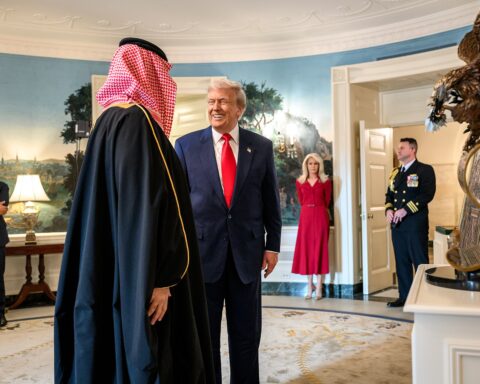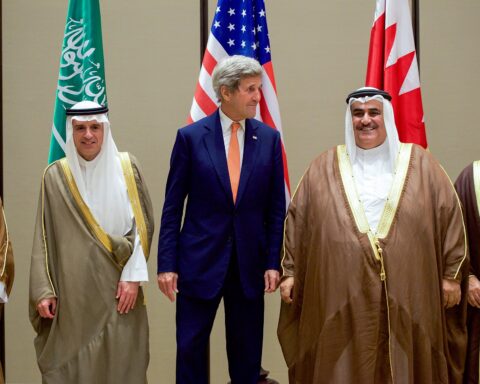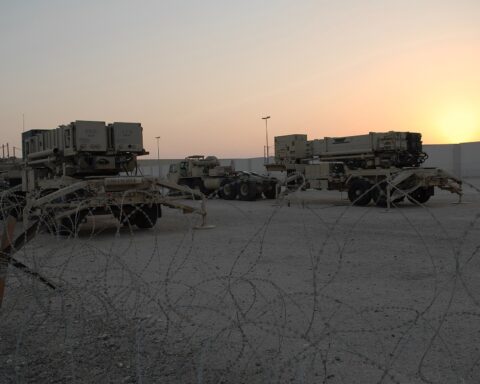

WASHINGTON — President Donald Trump on Tuesday threatened Iran with “death, fire, and fury” if Tehran continues to block oil shipments through the Strait of Hormuz, escalating a war of words over the world’s most important energy chokepoint as the 11-day-old conflict between the United States, Israel, and Iran showed no signs of abating. Iran’s Islamic Revolutionary Guard Corps responded within hours, with a senior IRGC naval commander vowing to “set fire to any ship” that attempts to transit the strait without Tehran’s permission, and reiterating that “not one liter of oil” would leave the Persian Gulf until American and Israeli attacks on Iranian territory cease.
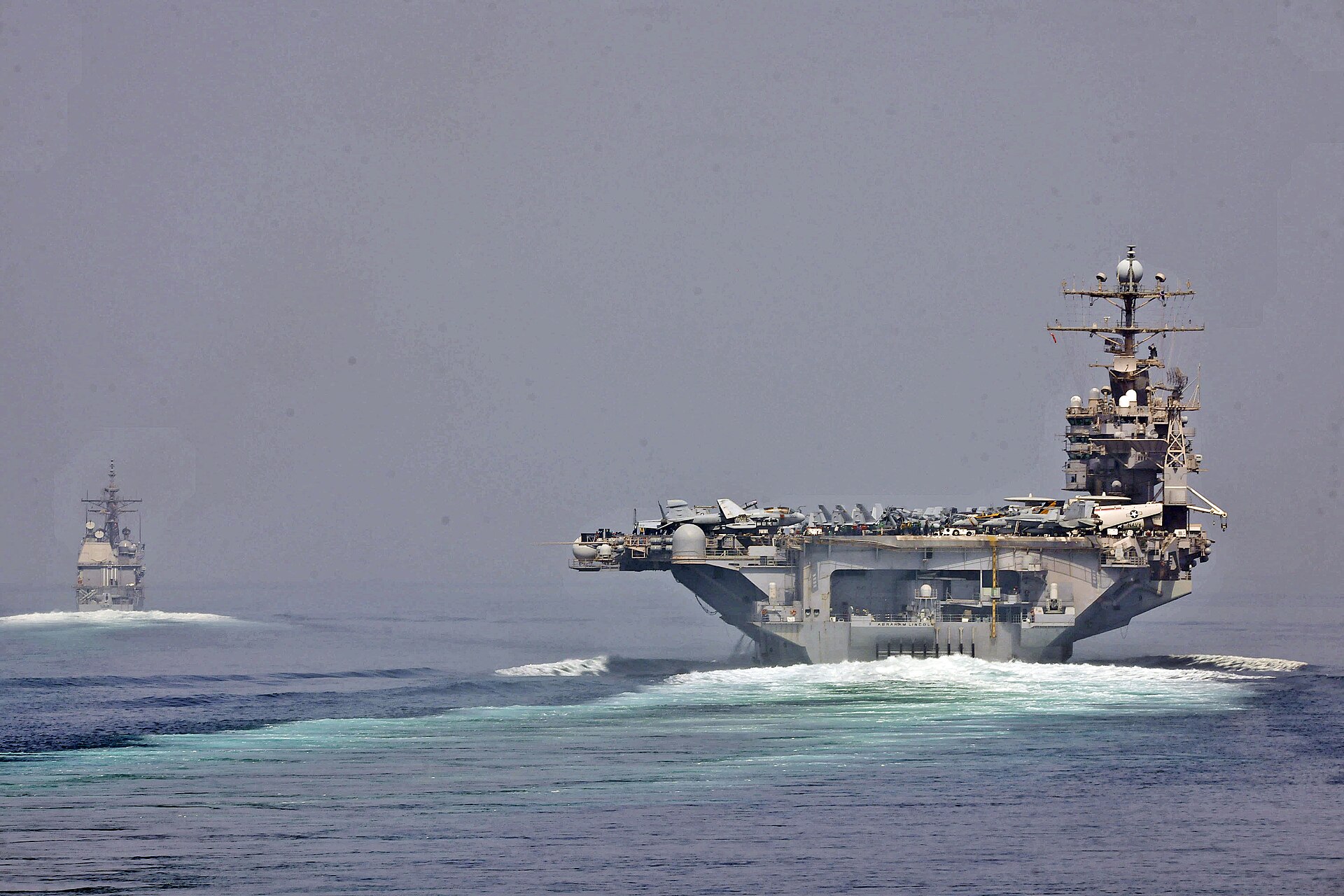
The exchange marks the most dangerous moment in a standoff that has already shut down approximately 20 million barrels per day in seaborne oil trade, sent crude prices above $110 a barrel, and forced Saudi Arabia — the world’s largest oil exporter — to slash production because it cannot move its crude to market. With three U.S. carrier strike groups now positioned in the region and the IRGC claiming “complete control” of the strait, the confrontation has moved from economic disruption to a potential direct military clash between American and Iranian naval forces in waters barely 21 nautical miles wide at their narrowest point.
Table of Contents
- What Did Trump Say About Taking Over the Strait of Hormuz?
- How Did Iran Respond to Trump’s Hormuz Threat?
- The $20 Billion Insurance Gamble
- Can the U.S. Navy Actually Escort Tankers Through Hormuz?
- What Does International Law Say About the Strait?
- Saudi Arabia’s Oil Export Crisis
- Why the East-West Pipeline Cannot Replace Hormuz
- What Happens Next at the Strait of Hormuz?
- Frequently Asked Questions
What Did Trump Say About Taking Over the Strait of Hormuz?
In an interview with CBS News that aired on Monday, Trump said he was “thinking about taking over” the Strait of Hormuz to ensure it remains open for commercial shipping. The president did not elaborate on what a “takeover” would entail, but his language represented a significant escalation from previous statements in which he had limited his comments to offering insurance and potential naval escorts.
On Tuesday, Trump went further. In remarks reported by Time magazine, the president warned Iran of “death, fire, and fury” if it continued to prevent oil from flowing through the strait. The language deliberately echoed his 2017 warning to North Korea, when he threatened Pyongyang with “fire and fury like the world has never seen” during the nuclear standoff on the Korean peninsula.
“If Iran blocks oil, there will be death, fire, and fury the likes of which they have never experienced,” Trump said, according to Time. The statement came on the same day that Defense Secretary Pete Hegseth announced what he described as “the most intense day of strikes inside Iran” since Operation Epic Fury began on February 28.
Trump has also not ruled out a full military seizure of the waterway. When pressed on the feasibility of such a move, the president told reporters at the White House: “We’re looking at lots of options. We have the most powerful Navy in the world. That strait should be open.” He added that the war was “very complete” and that the United States was winning decisively, a characterization that defense analysts and his own military advisers have questioned given Iran’s continued capacity to launch missiles and drones at Gulf states.
How Did Iran Respond to Trump’s Hormuz Threat?
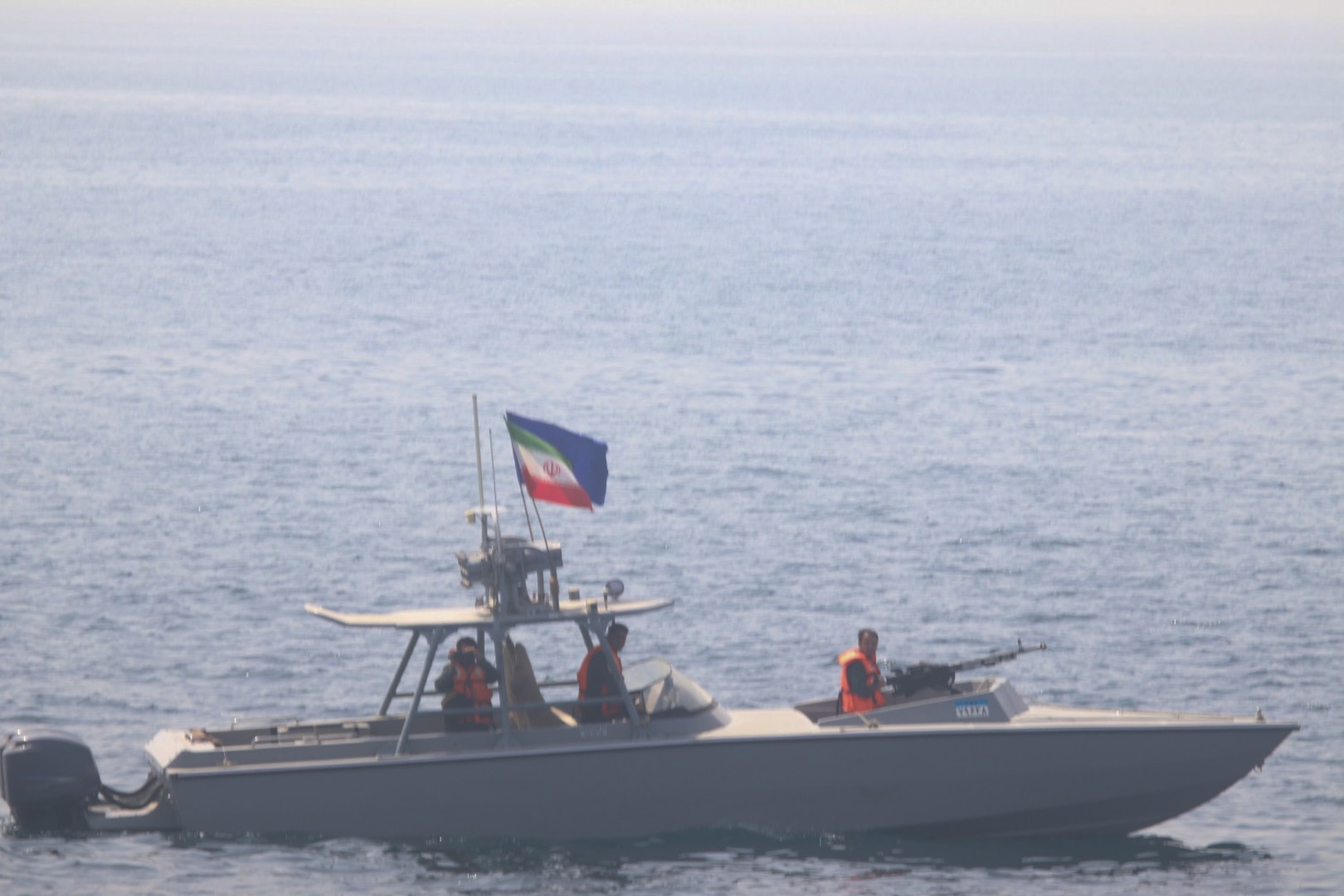
Iran’s response was immediate and unambiguous. A senior IRGC Navy official, identified as an adviser to the IRGC commander, told Iranian state media that he would “set fire to any ship coming through the Strait of Hormuz” and that no oil would leave the region, according to a report in The Times of Israel. The IRGC Navy’s overall commander separately stated that “the Strait of Hormuz is under the complete control of the Islamic Republic’s Navy,” a claim that U.S. Central Command has disputed.
Iran’s parliament speaker, Mohammad Bagher Qalibaf, reinforced the position, telling reporters that Tehran was “definitely not looking for a ceasefire” while attacks on Iranian soil continued. A foreign ministry spokesperson added that as long as American and Israeli strikes persisted, there was “no point to talk about anything but defense and retaliation against enemies,” according to CNBC.
The Iranian government has framed its blockade of the strait as a proportional response to what it calls an unprovoked war of aggression. Tehran’s position, articulated across multiple official statements since March 1, amounts to a straightforward conditional: the strait remains closed until the bombs stop falling. Iran has made no distinction between American military vessels, commercial tankers, or ships flagged to neutral nations. All traffic has been warned away.
The hardening of Iran’s stance coincides with a change in leadership. On March 8, Mojtaba Khamenei — the son of the late Supreme Leader Ali Khamenei, who was killed in the initial American-Israeli strikes — was named Iran’s new supreme leader. Within hours of assuming the title, the younger Khamenei authorized the first wave of missile launches under his command, signaling that the new leadership would continue — and potentially escalate — the retaliatory campaign against Gulf states and Western targets in the region.
The $20 Billion Insurance Gamble
Before threatening a military takeover, Trump attempted to reopen the strait through financial incentives. On March 3, the president ordered the U.S. Development Finance Corporation to provide “political risk insurance and guarantees” for maritime trade in the Persian Gulf. The Insurance Journal reported on March 9 that the DFC had formalized a $20 billion reinsurance program designed to cover losses from the Hormuz disruption.
The program, the largest of its kind ever attempted by the DFC, would insure “losses up to approximately $20 billion on a rolling basis” and work in coordination with the Department of Defense, according to the agency’s implementation plan. Trump described it as insurance offered “at a very reasonable price” meant to ensure the flow of energy and commercial trade.
The practical challenge is that insurance alone does not solve the physical problem. War-risk premiums for Gulf shipping had already soared past 10 percent of hull value by March 5, according to Lloyd’s of London data, making most voyages commercially unviable even before Iran’s explicit threat to burn any ship that entered the strait. Marine insurers in London and Singapore have effectively suspended coverage for Hormuz transits, Bloomberg reported, leaving the DFC program as the only option for shipowners willing to take the risk. The insurance market withdrawal from the Persian Gulf represents a new form of economic warfare that may prove more effective than any naval blockade.
But willingness among tanker operators has been minimal. The International Maritime Organization reported on March 7 that commercial shipping through the Strait of Hormuz had dropped to near zero, with only a handful of Iranian-flagged vessels and Chinese tankers operating under bilateral security arrangements still making the passage. No major Western-flagged tanker has transited the strait since March 2, according to vessel-tracking data from MarineTraffic.
| Metric | Pre-War (Feb 27) | Current (Mar 10) | Change |
|---|---|---|---|
| Daily transits | ~60-70 tankers | ~3-5 tankers | -93% |
| Oil flow (mb/d) | ~20 | <1 | -95% |
| War-risk premium | 0.3% hull value | 10%+ hull value | +3,200% |
| Brent crude price | $73/bbl | $110+/bbl | +51% |
| Marine insurance | Available | Suspended (most insurers) | — |
Can the U.S. Navy Actually Escort Tankers Through Hormuz?
Trump stated on March 3 that “if necessary, the United States Navy will begin escorting tankers through the Strait of Hormuz, as soon as possible.” The announcement evoked memories of Operation Earnest Will, the 1987-1988 reflagging and escort operation during the Iran-Iraq War when U.S. warships accompanied Kuwaiti tankers through the same waters.
The reality, however, is considerably more complicated than the rhetoric suggests. Behind closed doors, U.S. Navy officials have told tanker executives that there is “presently no availability for an escort mission” and have provided “no guarantees that there will be in the future,” according to reporting by the Maritime Executive. The gap between the president’s public assurances and the Navy’s private communications has alarmed shipping industry leaders, according to multiple reports.
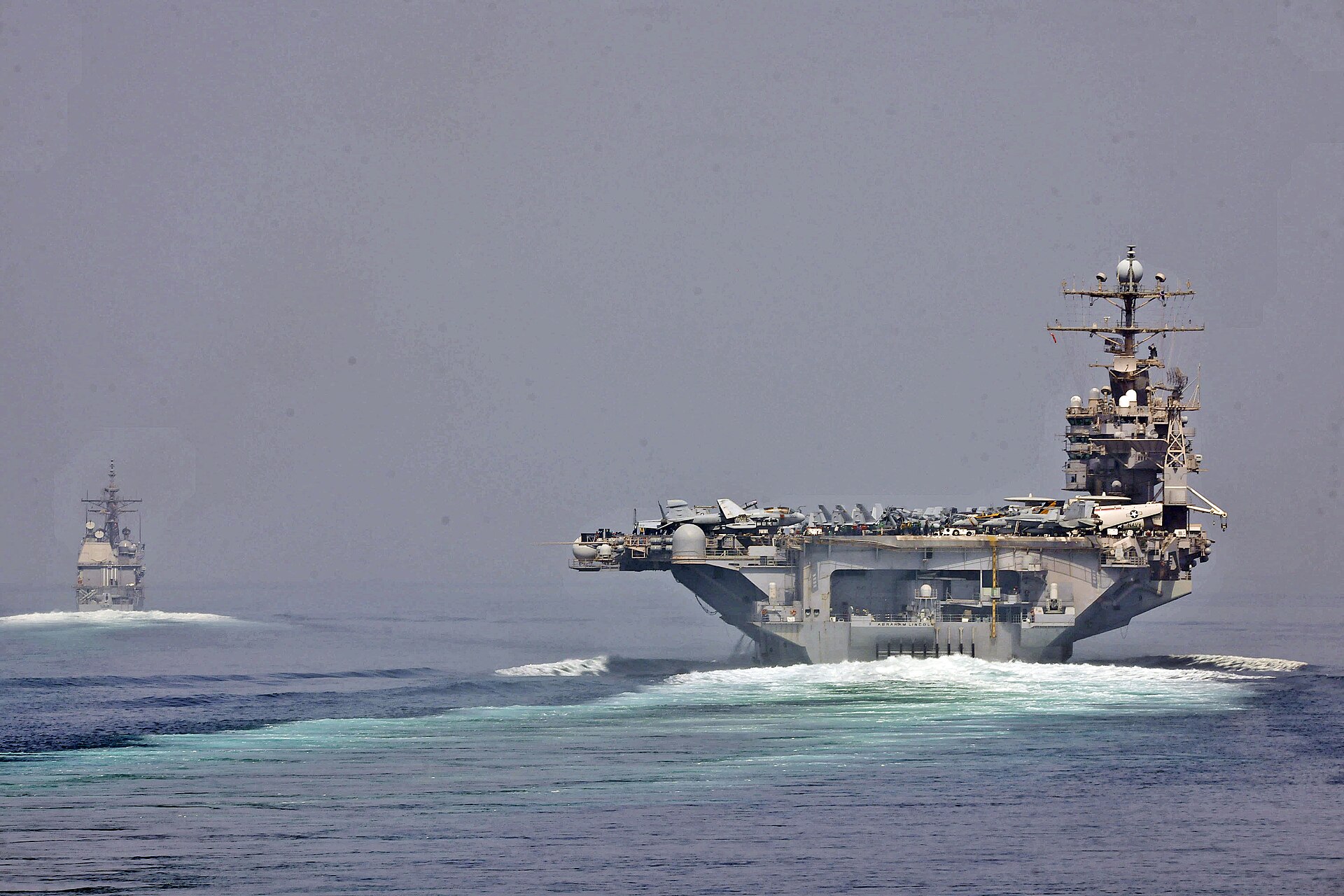
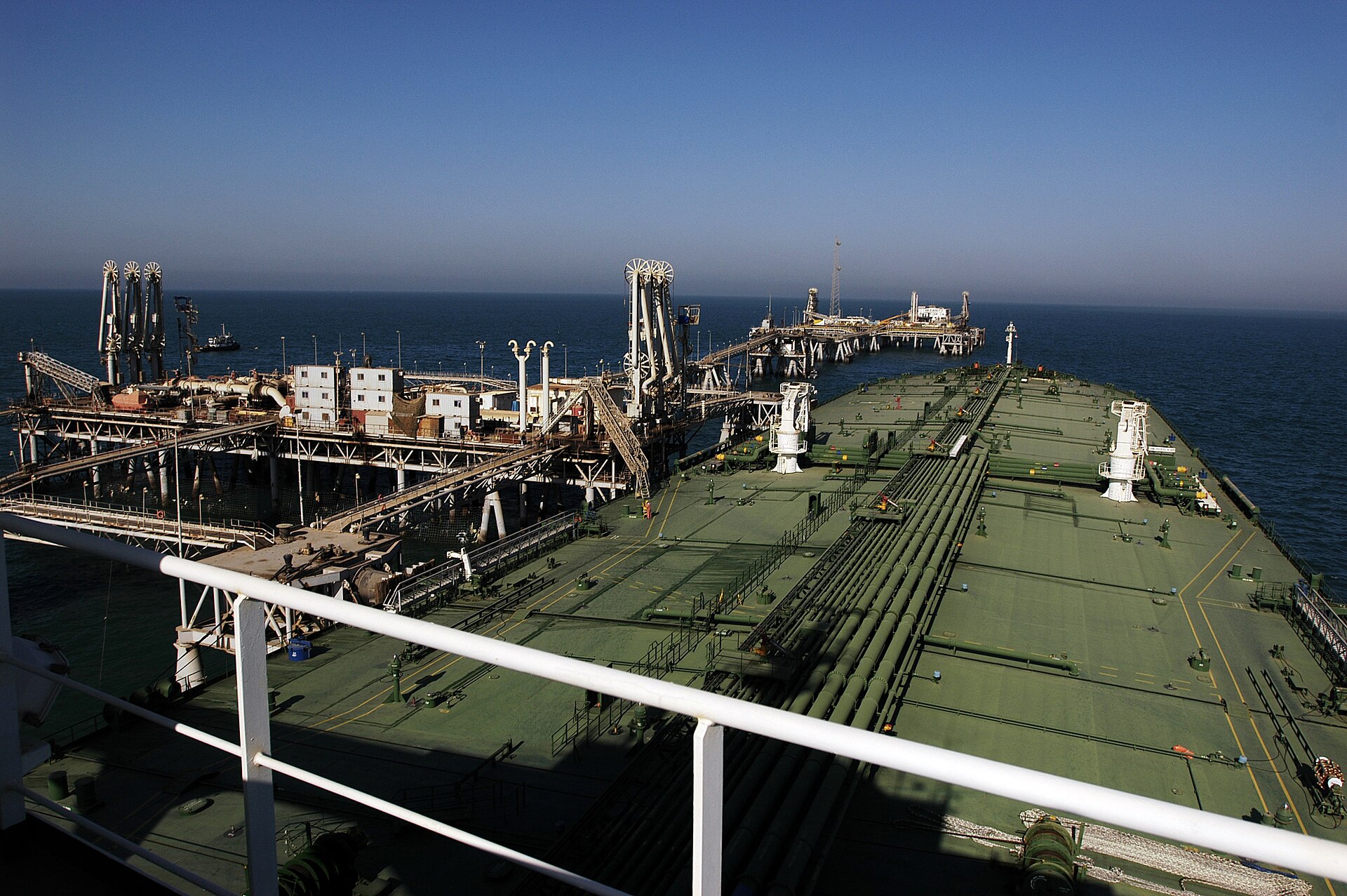
The military math explains the caution. The U.S. Fifth Fleet, headquartered in Bahrain, currently operates alongside three carrier strike groups deployed to the region — the most concentrated naval presence in the Persian Gulf since the 2003 invasion of Iraq. But those assets are primarily engaged in offensive operations against Iranian military targets, not in defensive convoy duty. Reassigning destroyers and cruisers to escort tankers would require pulling them from strike missions, a trade-off that the Pentagon has been reluctant to make while Hegseth continues to promise “the most intense” bombing campaign.
An escort operation would also face threats that did not exist during the 1980s Tanker War. Iran’s current arsenal includes anti-ship ballistic missiles, advanced sea mines, submarine-launched torpedoes, and swarms of explosive-laden drone boats operated by the IRGC Navy. The strait’s geography — 21 nautical miles wide at its narrowest, with two one-mile-wide shipping lanes separated by a two-mile buffer zone — makes it an ideal chokepoint for asymmetric warfare.
Retired Admiral James Stavridis, former NATO Supreme Allied Commander Europe, told CNN on March 6 that an escort mission through the Strait of Hormuz under current conditions would be “one of the most dangerous naval operations since World War II.” He added that even with escort, a single Iranian anti-ship missile striking a fully loaded supertanker could create an environmental and economic catastrophe.
What Does International Law Say About the Strait?
The legal status of the Strait of Hormuz sits at the center of the standoff between Washington and Tehran, and neither side’s position is as straightforward as its rhetoric suggests. The strait’s waters are divided between Iran to the north and Oman to the south, with both nations’ territorial seas overlapping the navigable channel.
Under the United Nations Convention on the Law of the Sea, the strait qualifies as an international waterway subject to “transit passage” rights. Article 38 of UNCLOS grants all ships and aircraft the right of “continuous and expeditious” transit through straits used for international navigation. Article 44 explicitly states that countries bordering such straits “shall not hamper transit passage,” and crucially, this right cannot be suspended — not even during wartime, according to the American Society of International Law.
Iran’s legal position, however, complicates matters. While Tehran signed UNCLOS in 1982, it has never ratified the convention, meaning it is not formally bound by its provisions. In 1993, Iran enacted a comprehensive maritime law that requires foreign warships, submarines, and nuclear-powered vessels to obtain prior permission before entering Iranian territorial waters — a requirement that directly contradicts UNCLOS transit passage rights, according to analysis published by the Regional Security and Defense Institute in Abu Dhabi.
Oman, by contrast, has both signed and ratified UNCLOS, and has historically supported the principle of free navigation through the strait. But Muscat has been careful to avoid being drawn into the current confrontation, offering its territory as a neutral venue for mediation rather than taking sides on the legal dispute.
Trump’s suggestion that the United States could “take over” the strait raises its own legal problems. International law experts at Al Jazeera noted on March 10 that the United States “has no jurisdiction over the Strait of Hormuz” and that without the consent of both Iran and Oman, any American attempt to assert control would “amount to an incursion on Iran and Oman’s jurisdiction.” The U.S. is not a party to UNCLOS either, having signed but not ratified the convention, though Washington has long maintained that it considers the treaty’s navigational provisions to reflect customary international law.
Saudi Arabia’s Oil Export Crisis
No country has more at stake in the Hormuz standoff than Saudi Arabia. According to the U.S. Energy Information Administration, Saudi crude oil and condensate exports through the Strait of Hormuz accounted for approximately 5.5 million barrels per day in 2024, representing 38 percent of all crude flows through the waterway — more than any other nation.
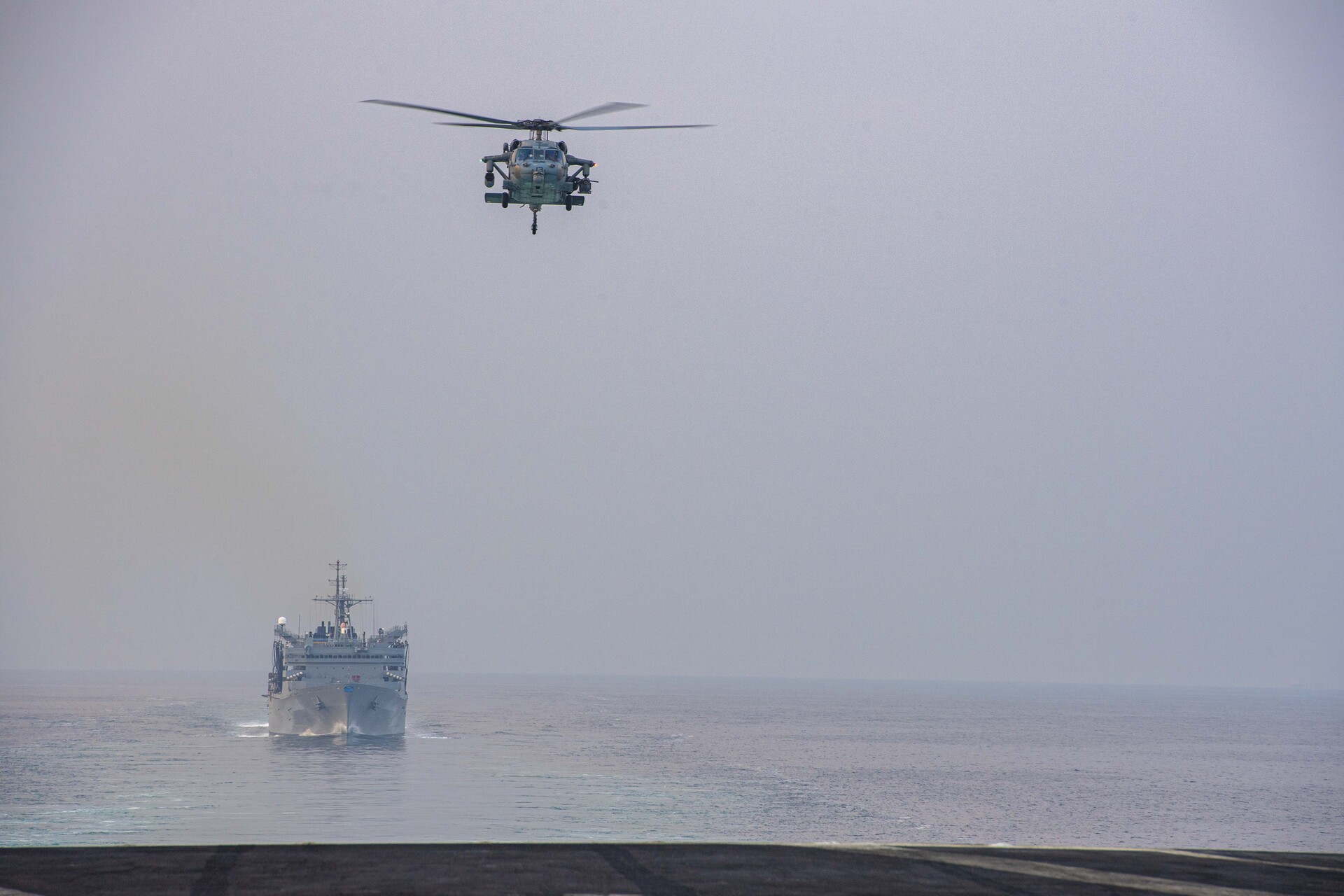
The closure of the strait has forced Saudi Aramco to slash production because the Kingdom’s onshore storage facilities have begun to fill. The company’s massive Ras Tanura terminal on the Persian Gulf coast, which normally handles the majority of Saudi oil exports, has been operating at a fraction of its capacity. Aramco has rerouted some crude through its East-West Pipeline to the Red Sea port of Yanbu, but that system cannot handle the full volume of Saudi exports.
The financial impact is paradoxical. While oil prices have surged above $110 a barrel — generating higher revenue per barrel for crude that does make it to market — the dramatic reduction in export volumes means that Saudi Arabia’s total oil revenue has actually declined since the war began. The broader economic costs of the conflict, including damage to non-oil sectors, disrupted supply chains, and the cost of military operations, have compounded the strain on the Kingdom’s finances.
Crown Prince Mohammed bin Salman has maintained what analysts describe as a calibrated position: condemning Iran’s attacks on Saudi territory and infrastructure while stopping short of joining U.S. offensive operations against Iran. The Saudi cabinet, meeting via videoconference chaired by MBS on March 10, condemned “blatant and cowardly Iranian aggression” and affirmed the Kingdom’s right to take “all necessary measures to defend its security, territory, citizens, and residents,” according to Arab News.
But Riyadh’s restraint has drawn criticism from Washington. Senator Lindsey Graham on Tuesday threatened to kill a proposed U.S.-Saudi defense pact unless Riyadh agreed to participate in offensive strikes against Iran, adding a political dimension to the already complex Hormuz standoff.
Why the East-West Pipeline Cannot Replace Hormuz
Saudi Aramco’s East-West crude oil pipeline — known formally as the Petroline — runs 1,200 kilometers from the Abqaiq oil processing center near the Persian Gulf coast to the port of Yanbu on the Red Sea. With a nominal capacity of 5 million barrels per day, and a temporary expanded capacity of up to 7 million barrels per day achieved in 2019 by converting some natural gas liquids pipelines to carry crude, the Petroline is the only significant alternative export route available to the Kingdom.
The pipeline’s capacity, however, falls well short of what would be needed to replace Hormuz-dependent exports entirely. Saudi Arabia’s total crude production before the war was approximately 9 million barrels per day, and even at the expanded 7 million barrels per day, the pipeline cannot carry the full load — especially when factoring in refined products, natural gas liquids, and other petroleum exports that normally move by tanker through the strait.
The G7 emergency meeting on March 9 discussed the largest coordinated strategic petroleum reserve release in history as a stopgap measure. But analysts at the International Energy Agency have warned that even the full 1.2 billion barrels held in IEA member-country reserves would last only approximately 60 days at the current rate of supply disruption — a timeline that assumes the Hormuz crisis resolves within two months, an assumption that few in the energy industry consider realistic.
| Route | Capacity (mb/d) | Current Status | Notes |
|---|---|---|---|
| Strait of Hormuz (tanker) | ~7.0 | Closed | Iran blockade since March 1 |
| East-West Pipeline (Yanbu) | 5.0-7.0 | Operating at max | NGL lines converted to crude |
| Total alternative bypass (Saudi + UAE) | 3.5-5.5 | Active | EIA estimate of available capacity |
| Gap (unmet export need) | ~2.0-4.0 | — | Oil stranded in storage |
What Happens Next at the Strait of Hormuz?
Three scenarios are now in play, according to defense and energy analysts monitoring the crisis.
The first and most optimistic scenario involves a diplomatic off-ramp. Oman’s Sultan Haitham bin Tariq has offered Muscat as a venue for back-channel negotiations, and Bloomberg reported on March 6 that Saudi Arabia had intensified its own direct diplomatic line to Tehran. If the United States agrees to some form of de-escalation — whether a pause in airstrikes or a formal ceasefire — Iran has signaled that it would consider reopening the strait. This scenario depends entirely on Washington’s willingness to negotiate, something Trump’s “death, fire, and fury” rhetoric makes less likely with each passing day.
The second scenario involves the implementation of Trump’s escort plan. If the U.S. Navy begins accompanying tankers through the strait, it would force Iran to choose between allowing the convoys to pass — effectively conceding defeat on the blockade — or attacking American warships, which would represent a massive escalation. Navy officials’ private skepticism about the feasibility of such an operation suggests this option remains theoretical for now, but the deployment of three carrier strike groups provides the assets necessary if the political will materializes.
The third and most dangerous scenario is a direct naval confrontation. The IRGC’s fast-attack craft, numbering in the hundreds, are designed specifically for swarming operations in the confined waters of the strait. A miscalculation by either side — an IRGC speedboat approaching a U.S. destroyer too aggressively, or an American ship misidentifying a civilian vessel as a threat — could trigger an engagement that neither Washington nor Tehran intended. The 1988 incident in which the USS Vincennes shot down Iran Air Flight 655, killing 290 civilians, remains a cautionary precedent for how quickly situations in the strait can spiral beyond control.
For Saudi Arabia, all three scenarios carry risk. A negotiated de-escalation that leaves Iran’s missile and drone capabilities intact would validate Tehran’s strategy of using the strait as a weapon. A contested escort operation would put Saudi oil infrastructure in the crossfire. And a direct naval battle would devastate the waters on which the Kingdom’s economic future depends.
The Trump-MBS alliance faces its most consequential test. The Kingdom needs the strait reopened to survive economically, but it cannot reopen it alone. Washington has the military power to force the passage but appears reluctant to commit to the mission. And Iran, battered by 11 days of the most intensive aerial bombardment in the Middle East since 2003, has signaled that the strait’s closure is the one card it will not surrender voluntarily.
The Hormuz standoff reached a new peak on March 11 when Iran’s IRGC threatened to halt all Gulf oil exports entirely while the Pentagon declared its heaviest day of strikes on Iranian territory. Saudi Arabia intercepted six ballistic missiles and seven drones in a single day. That same day, the IRGC made good on its threat to “set fire to any ship,” firing projectiles at three cargo ships in the Strait of Hormuz — the Mayuree Naree, One Majesty, and Star Gwyneth — leaving multiple crew members missing and reinforcing Iran’s total stranglehold on the waterway.
Frequently Asked Questions
How wide is the Strait of Hormuz?
The Strait of Hormuz is approximately 21 nautical miles (39 kilometers) wide at its narrowest point between Iran and Oman. Navigable shipping channels are even narrower, consisting of two one-mile-wide lanes separated by a two-mile buffer zone. The confined geography makes the strait exceptionally vulnerable to military disruption and has allowed Iran to effectively halt commercial shipping since the war began on February 28, 2026.
How much oil flows through the Strait of Hormuz?
Before the current conflict, approximately 20 million barrels per day of crude oil, condensate, and petroleum products transited the Strait of Hormuz, according to the U.S. Energy Information Administration. This volume represents roughly 20 percent of global seaborne oil trade and includes exports from Saudi Arabia (5.5 million b/d), Iraq, Kuwait, the UAE, and Qatar. Since the Iranian blockade began, daily flows have dropped by more than 95 percent.
Can Trump legally take over the Strait of Hormuz?
International law experts say a unilateral U.S. “takeover” of the Strait of Hormuz would face significant legal barriers. The strait’s waters fall within the territorial seas of Iran and Oman, and neither country has consented to American control. While UNCLOS guarantees transit passage rights through international straits, the convention does not authorize any nation to seize sovereign territory. The United States itself has not ratified UNCLOS, complicating its legal standing to invoke the treaty’s provisions.
What is the DFC insurance plan for Gulf shipping?
The U.S. Development Finance Corporation announced a $20 billion reinsurance program on March 9, 2026, designed to cover war-risk losses for vessels transiting the Persian Gulf. The program offers to insure “losses up to approximately $20 billion on a rolling basis” and works in coordination with the Department of Defense. However, the plan has not yet persuaded major tanker operators to resume Hormuz transits, as insurance cannot eliminate the physical threat posed by Iranian mines, missiles, and drone boats.
What alternatives does Saudi Arabia have to the Strait of Hormuz?
Saudi Arabia’s primary alternative is the East-West Pipeline (Petroline), which runs from the Abqaiq processing center to the Red Sea port of Yanbu with a capacity of 5-7 million barrels per day. The UAE operates a separate pipeline to the port of Fujairah on the Gulf of Oman. Combined, these alternative routes can handle an estimated 3.5 to 5.5 million barrels per day, according to the EIA — significantly less than the 20 million barrels per day that normally flows through Hormuz from all Gulf producers.
Hours after Trump issued these threats, the U.S. Navy acted on them directly, destroying 16 Iranian minelaying vessels after intelligence confirmed that Iran had begun deploying sea mines in the Strait.