TEHRAN — Iran is converting the Strait of Hormuz from an international waterway into a sovereign toll road, complete with formal legislation, set fees denominated in Chinese yuan, IRGC-controlled shipping corridors, and a two-tier access system that grants free passage to geopolitical allies while charging hostile nations approximately $2 million per transit. This is not a wartime blockade. It is the construction of a permanent maritime regime — the first new toll imposed on an international strait in more than 160 years — and its implications extend far beyond the Persian Gulf.
Since the war began on February 28, vessel traffic through Hormuz has collapsed by 95 percent, according to Lloyd’s List Intelligence (USNI News, March 27). But the story is no longer about what Iran is blocking. It is about what Iran is building: a formalized system of vetting, routing, pricing, and legislative codification that could survive any ceasefire. The sections below examine the operational mechanics of Tehran’s toll regime, its legal foundations, its geopolitical architecture, and the precedent it sets for every chokepoint on earth.
- How Does Iran’s Hormuz Toll System Work?
- A 95 Percent Traffic Collapse in 28 Days
- From Wartime Measure to Permanent Law
- Which Countries Get Free Passage Through the Strait of Hormuz?
- Does Iran’s Toll Violate International Law?
- The Last Time a Nation Charged a Toll on a Strait
- Why Are Hormuz Tolls Paid in Chinese Yuan?
- What Does the Toll Regime Mean for Saudi Arabia?
- The Global Chokepoint Precedent
- Frequently Asked Questions
How Does Iran’s Hormuz Toll System Work?
Iran’s IRGC has established a structured transit regime in the Strait of Hormuz that functions less like a military blockade and more like a customs checkpoint. Ships seeking passage must submit their IMO number, cargo manifest, full crew list, ownership details, and destination port to approved IRGC intermediaries before any transit is authorized, according to Lloyd’s List Intelligence (Foreign Policy, March 26). Approved vessels receive a clearance code and are escorted through the strait by an IRGC naval vessel.
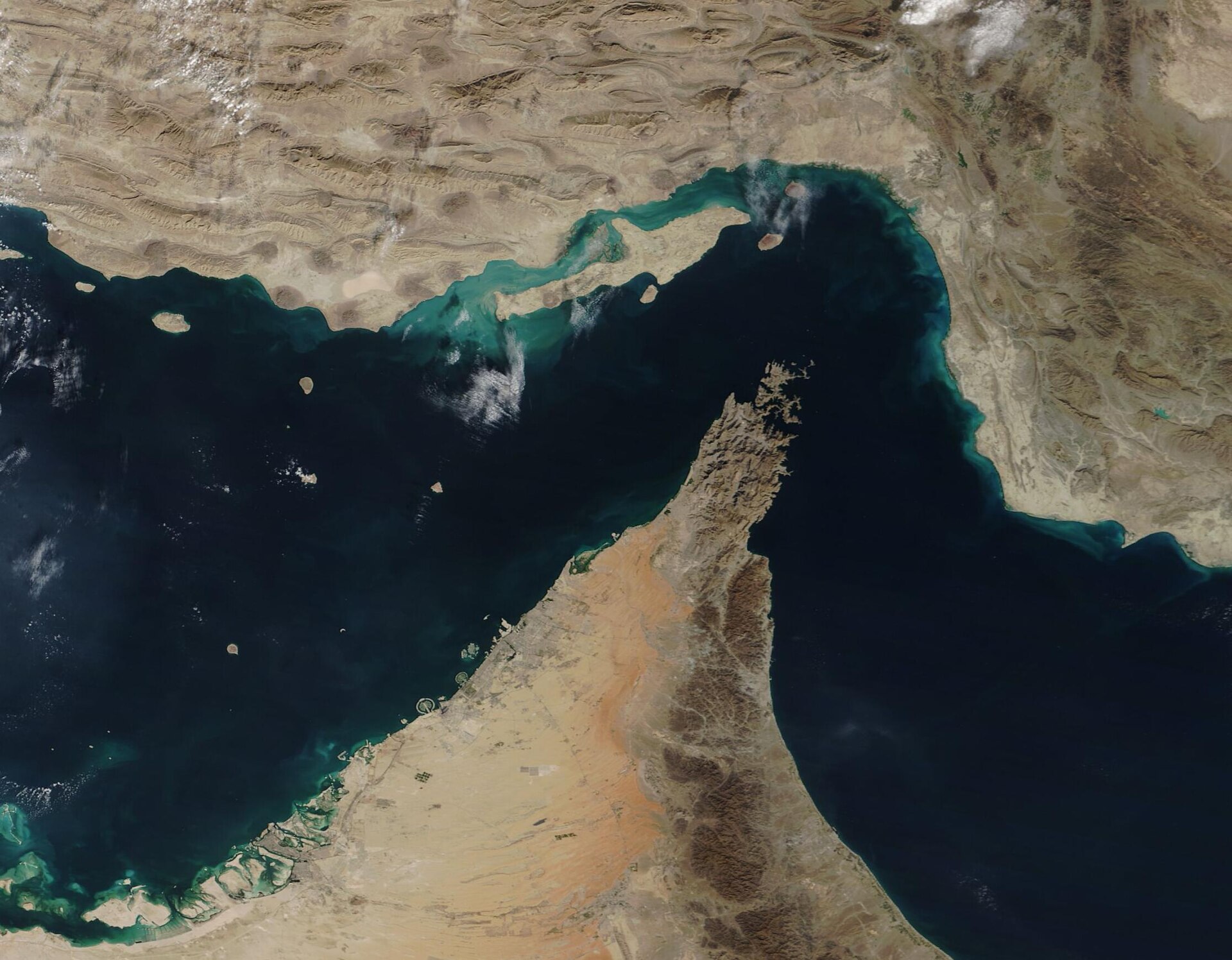
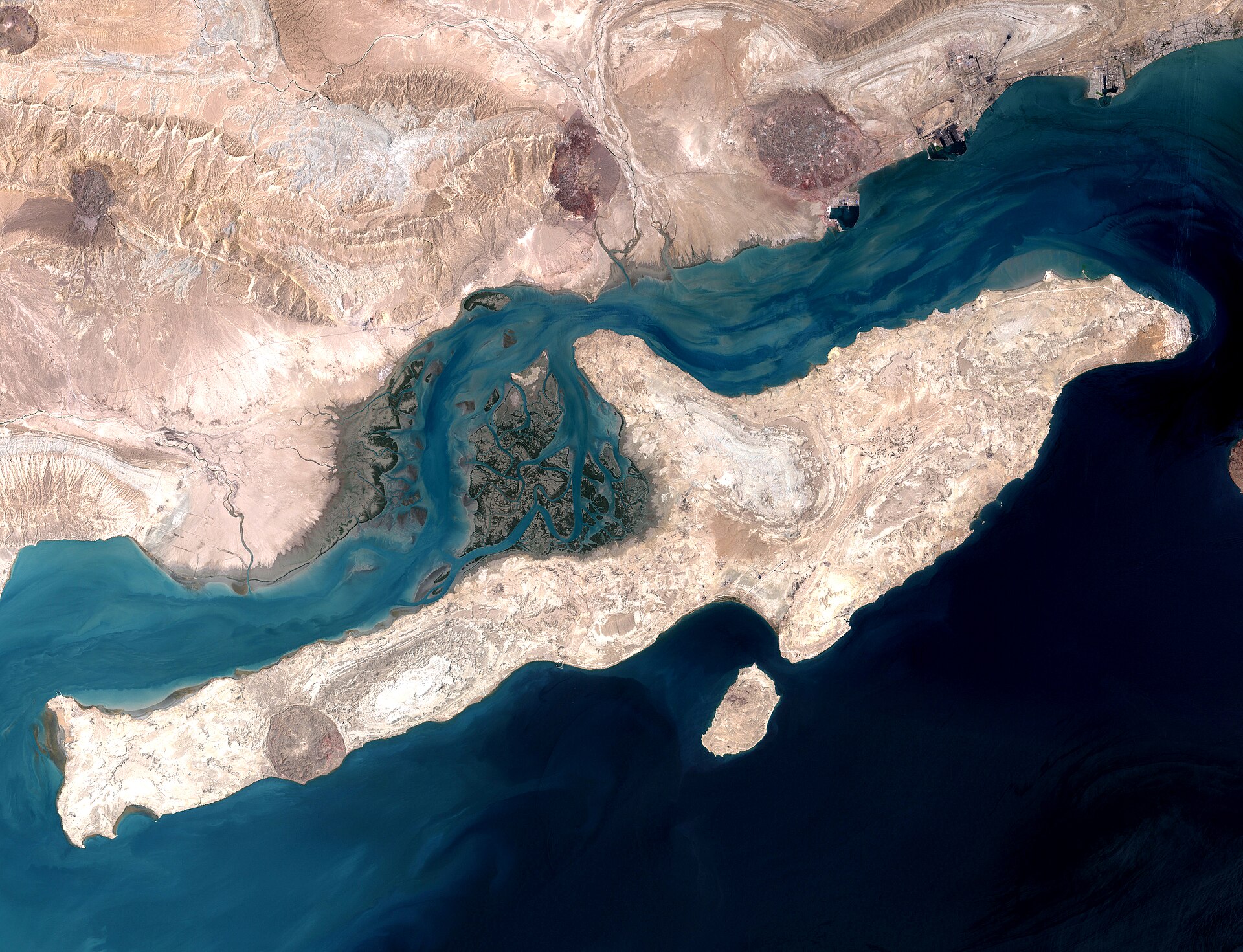
The route itself has changed. Instead of following the internationally recognized Traffic Separation Scheme — two well-marked lanes running through the center of the strait between Iranian and Omani waters — approved vessels are diverted north around Larak Island and through a corridor between Qeshm Island and Larak Island, hugging the Iranian coastline. This is the operational core of Iran’s strategy. By rerouting traffic between two Iranian islands, Tehran forces transiting vessels into waters it considers unambiguously sovereign, removing any legal ambiguity about jurisdiction.
At least two vessels have paid tolls of approximately $2 million each, settled in Chinese yuan, according to Lloyd’s List Intelligence (Al Jazeera, March 26). Oil tankers are prioritized in the vetting process, and every vessel is subject to what Lloyd’s describes as “geopolitical vetting” — meaning the flag state, ownership chain, and cargo destination are assessed against Iran’s political alignment criteria before passage is granted.
Twenty-six ships have used this IRGC-controlled corridor since mid-March, according to USNI News tracking data published on March 27. That number is growing. The system is operational, replicable, and — critically — being formalized in law.
A 95 Percent Traffic Collapse in 28 Days
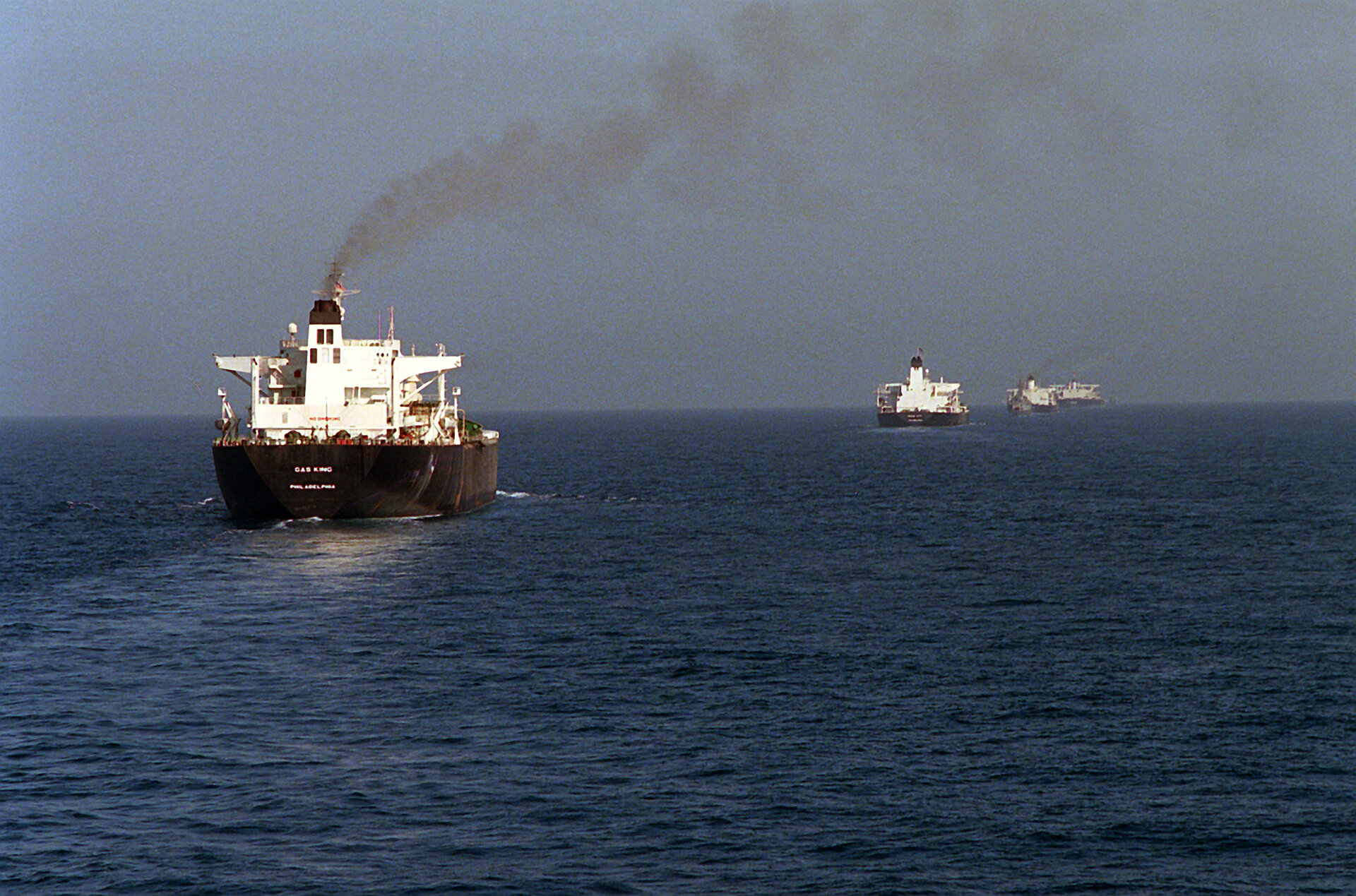
The scale of disruption has no modern parallel. The 142 vessel transits recorded by Lloyd’s List Intelligence between March 1 and 25, against 2,652 in the same 2025 window, represent a 94.6 percent decline in commercial traffic through the world’s most critical oil chokepoint (USNI News, March 27). To put that in context: the strait’s historical average is approximately 138 transits in a single 24-hour period. March 2026’s entire 25-day total barely exceeds a normal day.
Before the war, approximately 100 or more vessels transited Hormuz daily, carrying roughly 20 million barrels of oil per day — about one-fifth of global seaborne crude. The strait’s closure has pushed Brent crude above $105 per barrel, a 40 percent increase from the pre-war price of approximately $73 (CNBC, March 26). The combined bypass pipeline capacity available to Saudi Arabia and the UAE — including the East-West Pipeline to Yanbu and the Abu Dhabi Crude Oil Pipeline to Fujairah — totals roughly 3.5 to 5.5 million barrels per day, a fraction of the 20 million barrels that normally flow through Hormuz.
Saudi Aramco has shut four supergiant offshore oil fields whose output depended on Gulf shipping access. Yanbu, the Red Sea port at the western terminus of the East-West Pipeline, has surged from 770,000 barrels per day in January and February to 2.9 million barrels per day by late March — but the terminal’s infrastructure was never designed for this throughput, and Houthi threats at Bab el-Mandeb place that alternative route under pressure as well.
| Metric | Pre-War (Feb 2026) | Current (Late March 2026) | Change |
|---|---|---|---|
| Daily vessel transits | ~100+ | ~5-6 | -95% |
| Total transits, March 1-25 | 2,652 (2025 baseline) | 142 | -94.6% |
| Brent crude price | ~$73/barrel | ~$105-115/barrel | +40-57% |
| Yanbu export volume | 770,000 bpd | 2.9 million bpd | +276% |
| Gulf oil production loss | Baseline | -10+ million bpd | Massive contraction |
Gulf oil production has collectively dropped by more than 10 million barrels per day since March 12, according to industry estimates. The strait is not merely blocked. It is functioning at a trickle, and that trickle is controlled entirely by the IRGC.
From Wartime Measure to Permanent Law
The most consequential development is not the toll itself but Iran’s effort to make it permanent. Iranian lawmaker Mohammadreza Rezaei Kouchi told the Fars and Tasnim news agencies — both closely aligned with the IRGC — that “parliament is pursuing a plan to formally codify Iran’s sovereignty, control and oversight over the Strait of Hormuz, while also creating a source of revenue through the collection of fees” (Bloomberg, March 26; The National, March 26).
This is the pivot point. A military blockade is a temporary wartime act. Legislation is permanent. If the Iranian Majlis passes a domestic law asserting sovereign control over the strait and establishing a legal framework for fee collection, Tehran will have transformed a military operation into a statutory regime. A future ceasefire or peace agreement would not automatically undo a domestic law. Repealing it would require separate political action — a concession Iran could refuse to make or trade away in negotiations.
The legislation reportedly under draft this week would formalize everything the IRGC is already doing operationally: mandatory vessel registration, cargo vetting, routing through Iranian sovereign waters, and fee collection. It would also provide a legal basis for Iran to deny passage entirely to vessels from nations it deems hostile — a power Tehran is already exercising but currently lacks statutory authority to sustain beyond wartime.
Iran’s diplomatic positioning reinforces the permanence thesis. Foreign Minister Abbas Araghchi stated on March 26 that exchanges through mediators “does not mean negotiations” (Al Jazeera, March 26), signalling that Tehran sees no path to a diplomatic settlement that would require dismantling the toll regime. Gulf states have demanded Iran’s military capacity be permanently degraded as a condition of any deal — a demand that makes Iranian concessions on Hormuz even less likely.
Which Countries Get Free Passage Through the Strait of Hormuz?
Iran has created a two-tier system that divides the world’s merchant fleets along geopolitical lines. Foreign Minister Araghchi announced on March 26 that ships from China, Russia, India, Iraq, and Pakistan will be granted free passage through the Strait of Hormuz (Al Jazeera, March 26). Ships from nations aligned with the United States and Israel must either pay the approximately $2 million toll or be denied transit entirely.
The selectivity is precise and deliberate. Chinese vessels have been the primary beneficiaries, sailing through on routes that remain closed to Western-flagged ships. Indian tankers carrying cooking gas have been granted free passage as a diplomatic gesture aimed at New Delhi, which Iran is courting as a counterbalance to the American-led coalition. Pakistan’s inclusion reflects its role as a diplomatic intermediary in ceasefire negotiations.
The tiered access system transforms a shipping lane into a geopolitical sorting mechanism. Nations that align with Tehran’s interests sail free. Nations that do not either pay tribute or lose access to 20 percent of the world’s seaborne oil. This creates a powerful incentive structure: smaller maritime nations with no stake in the Iran conflict face a choice between maintaining alignment with Washington and maintaining access to affordable energy imports.
Iraq’s inclusion is particularly notable. Baghdad depends on Gulf shipping access for its own oil exports, and granting Iraqi vessels free passage effectively forces Iraq into closer economic dependence on Tehran — a dynamic that reinforces Iran’s regional influence even as its military capacity degrades under American and Israeli strikes.
Does Iran’s Toll Violate International Law?
Iran’s toll regime sits in direct violation of the international legal framework governing straits used for international navigation. UNCLOS Part III, Articles 37 through 44, establishes the right of “transit passage” — the principle that all ships and aircraft may pass through international straits without prior authorization, notification, or fee. Article 38(1) states explicitly that transit passage “shall not be impeded.” Article 44 prohibits coastal states from suspending transit passage for any purpose.
Iran’s legal counterargument rests on a single fact: Tehran signed UNCLOS in 1982 but never ratified it. Iran’s position, maintained consistently for four decades, is that the Strait of Hormuz is not an “international strait” under UNCLOS because Iran is not a party to the convention and claims full sovereignty over its territorial waters. The strait at its narrowest point spans approximately 21 nautical miles; the internationally recognized shipping lanes are each two miles wide, separated by a two-mile buffer zone.
GCC Secretary General Jasem Mohamed al-Budaiwi publicly rejected Iran’s position on March 26, calling the toll collection “an aggression and a violation of the United Nations Convention on the Law of the Sea” (Argus Media, March 26). The distinction between Hormuz and toll-charging waterways like the Suez and Panama canals is critical: those are artificial, man-made channels maintained by sovereign states, which have long been recognized as legally distinct from natural international straits.
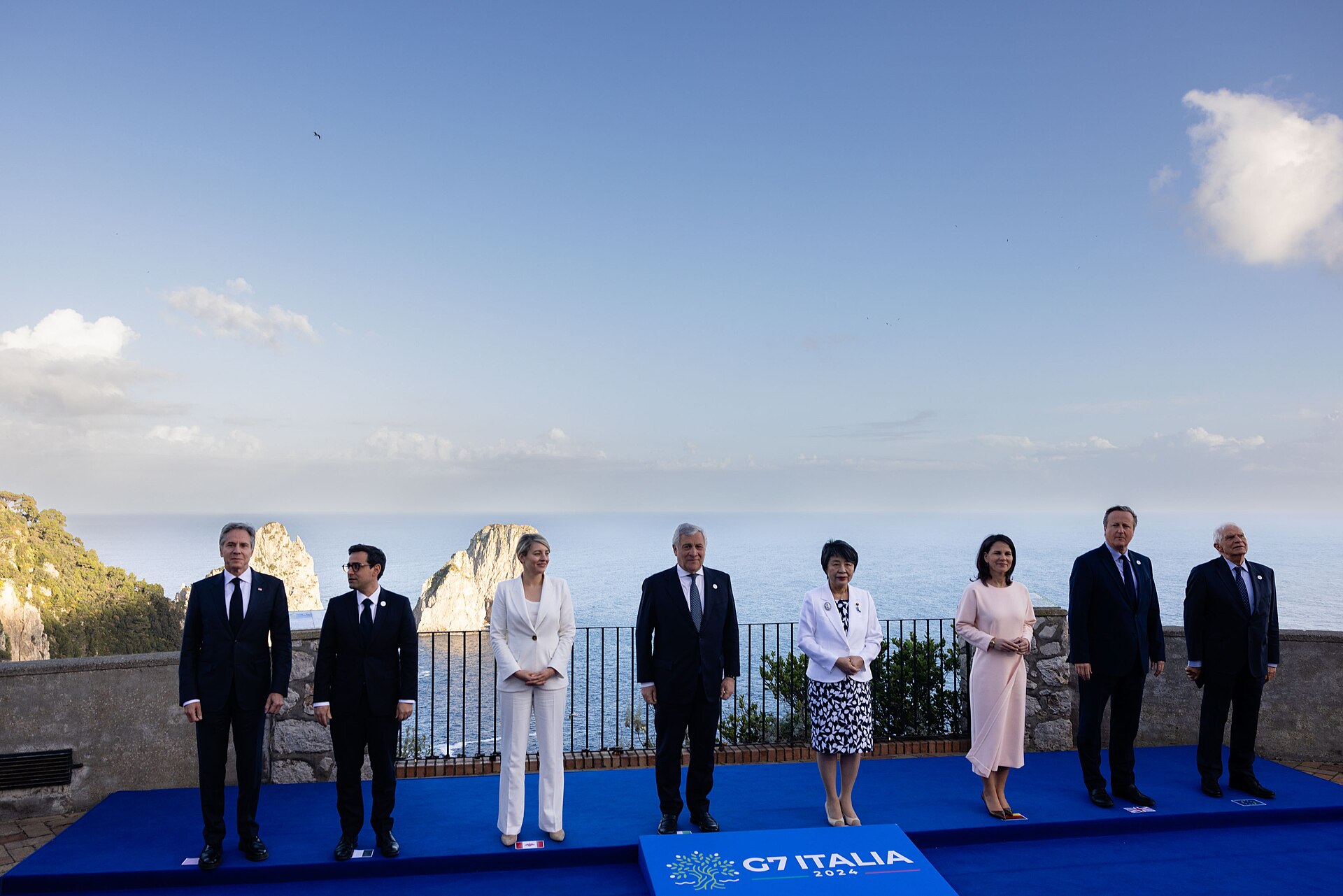
The diplomatic pressure intensified on March 27 when G7 foreign ministers issued a joint statement demanding “safe and toll-free freedom of navigation” in Hormuz and agreed in principle to a post-war multinational naval escort force — though every commitment was contingent on hostilities ending first, leaving the toll regime unchallenged for the duration of the war.
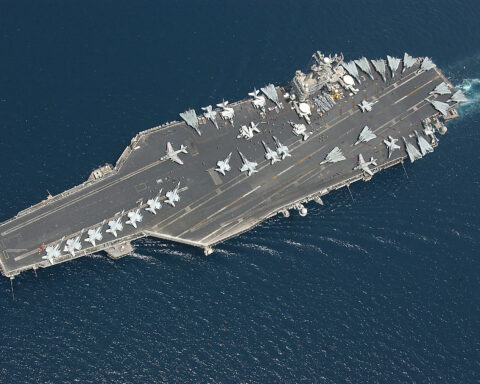
The legal debate, however, is largely academic while the IRGC controls the water. International law provides no enforcement mechanism short of naval intervention, and the U.S. Fifth Fleet — while maintaining carrier presence in the region — has not attempted to force open the strait. President Trump extended his strike deadline to April 6, leaving the toll regime to mature operationally in the interim. Every day the system operates unchallenged is a day it becomes harder to reverse.
The Last Time a Nation Charged a Toll on a Strait
Iran’s toll regime at Hormuz has no direct precedent in modern maritime history, but two historical analogues illuminate what is at stake. Both ended the same way: with international coalitions forcing the toll’s abolition.
Denmark’s Sound Dues, imposed on the Oresund Strait from 1429 to 1857, required every foreign vessel passing between the North Sea and the Baltic to stop at Helsingor and pay a tax to the Danish Crown. At their peak, the dues constituted up to two-thirds of Denmark’s state revenue. Ships that refused to stop faced cannon fire from fortifications on both shores. The toll was abolished by the Copenhagen Convention of March 14, 1857, after major trading powers — led by Britain, Russia, and Prussia — collectively paid Denmark a lump-sum buyout of 35 million rigsdaler, roughly equivalent to one year of Danish state expenditure.
The Ottoman Empire’s control of the Bosphorus and Dardanelles followed a different trajectory. Constantinople’s capture in 1453 gave the Ottomans a chokehold on trade between the Mediterranean and the Black Sea. Russia won commercial access through the straits in 1774, and subsequent treaties gradually eroded Ottoman control. The 1936 Montreux Convention established the modern regime: complete freedom of transit for civilian vessels, with restrictions only on military warships.
| Strait Toll Regime | Duration | Collecting State | How It Ended | Revenue Significance |
|---|---|---|---|---|
| Denmark’s Sound Dues (Oresund) | 1429-1857 (428 years) | Denmark | Copenhagen Convention; buyout of 35 million rigsdaler by Britain, Russia, Prussia | Up to two-thirds of Danish state revenue at peak |
| Ottoman Bosphorus/Dardanelles | 1453-1936 (483 years) | Ottoman Empire / Turkey | Montreux Convention; free civilian transit guaranteed | Commercial control over Black Sea-Mediterranean trade |
| Iran’s Hormuz Toll | March 2026-present | Iran (IRGC) | Ongoing; parliamentary codification in draft | ~$2 million per transit; yuan-denominated |
Both precedents share a common lesson. Strait tolls generate enormous revenue and geopolitical power for the collecting state, but they also generate enormous resentment from every nation whose trade depends on that waterway. The Sound Dues lasted 428 years. The Ottoman regime lasted 483 years. Both were eventually dismantled by collective international action. Iran’s toll is 28 days old. The question is not whether international pressure will build, but whether it will build fast enough to prevent the regime from entrenching itself in Iranian domestic law.
Why Are Hormuz Tolls Paid in Chinese Yuan?
The denomination of Hormuz tolls in Chinese yuan rather than U.S. dollars is not incidental. It is architecturally deliberate, converting a shipping chokepoint into an instrument of currency competition. Every transaction settled in yuan at Hormuz is a transaction that does not flow through the dollar-denominated global financial system.
The logic is reinforcing. China’s vessels sail free through the strait, giving Chinese shipping a structural cost advantage over every Western competitor. Non-Chinese vessels that pay the toll settle in yuan, creating demand for the Chinese currency in a context where dollar liquidity is irrelevant. Beijing’s broader Iran strategy has produced mixed results, but the yuan-denominated toll represents a tangible gain: a real-world mechanism that channels maritime commerce through Chinese financial infrastructure.
For Iran, accepting yuan solves a practical problem. Tehran’s access to dollar-denominated financial systems has been severed by decades of sanctions. Yuan-settled transactions operate outside the reach of U.S. Treasury enforcement, allowing Iran to collect revenue without exposure to sanctions interdiction. The arrangement is mutually beneficial: China gains a wedge in the global currency system; Iran gains a sanctions-proof revenue stream.
The precedent extends beyond Hormuz. If a toll denominated in yuan becomes an established feature of the world’s most important oil chokepoint, it normalizes non-dollar settlement in maritime commerce. Combined with existing yuan-denominated crude oil contracts on the Shanghai International Energy Exchange, the Hormuz toll adds a physical enforcement layer to what has previously been a voluntary financial arrangement. Ships do not choose to pay in yuan. They are compelled to.
What Does the Toll Regime Mean for Saudi Arabia?
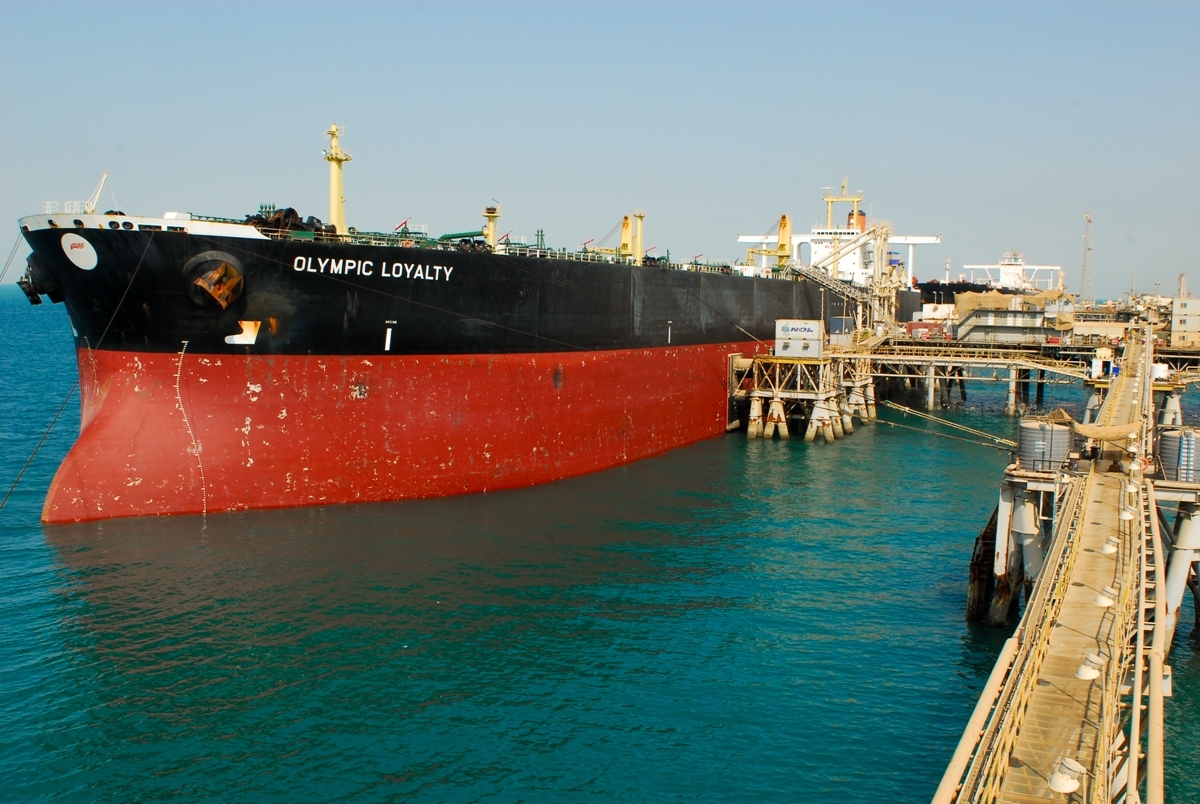
Iran’s Hormuz toll regime threatens Saudi Arabia’s economic foundations more than the blockade itself because a legislated toll survives a ceasefire while a military blockade does not. Saudi eastern oil terminals at Ras Tanura and Ju’aymah would be subject to permanent Iranian vetting, routing, and fees, and the kingdom’s bypass pipeline to Yanbu can handle only 3 to 4 million barrels per day — roughly half the pre-war Hormuz export volume.
The distinction between blockade and toll is existential for Gulf producers. A blockade, by definition, is temporary — it ends when hostilities cease or when superior naval force breaks it. A domestic law asserting sovereignty over the strait persists regardless of the military situation. If Iran codifies the toll and a ceasefire follows, Riyadh would face the extraordinary scenario of paying IRGC intermediaries in yuan for the right to ship its own oil through waters that were freely navigable for decades.
Saudi Arabia’s entire economic model depends on unimpeded maritime access. The East-West Pipeline’s theoretical maximum capacity to Yanbu is 7 million barrels per day, but as the traffic data above shows, actual throughput has not come close. The gap between pipeline theory and terminal reality means the kingdom cannot replace Hormuz by building westward.
The toll regime also creates a permanent coercive lever. Iran could adjust fees, tighten vetting criteria, or restrict routing at any time, converting the strait into an instrument of economic pressure that operates below the threshold of military confrontation. A toll increase from $2 million to $5 million per transit would add roughly $1.50 per barrel to oil shipped through Hormuz — a cost ultimately borne by consumers in importing nations and by the competitiveness of Gulf crude relative to alternative suppliers.
The GCC’s response has been rhetorically forceful but operationally limited. Secretary General al-Budaiwi’s condemnation frames the toll as illegal under UNCLOS, but the GCC possesses no independent naval capacity to challenge IRGC control of the strait. Twenty-eight days of war have already redrawn the region’s strategic map, and the toll regime threatens to make those changes permanent.
The Global Chokepoint Precedent
The most dangerous dimension of Iran’s toll regime is not its immediate economic impact but its precedential value. If a state can unilaterally claim sovereignty over an international strait, impose fees on transiting vessels, route traffic through its territorial waters, and enshrine the arrangement in domestic law — and face no effective challenge — the model becomes available to any nation that controls a chokepoint.
Bab el-Mandeb, the strait connecting the Red Sea to the Gulf of Aden, carries approximately 6 to 7 million barrels of oil per day and a significant share of Europe-Asia container traffic. Yemen’s Houthis — armed and directed by Iran — have already demonstrated the capacity to disrupt shipping in the strait. Iran has explicitly threatened to extend its Hormuz model to Bab el-Mandeb, with an Iranian military official telling state media that “another strait vital to world oil supplies could be targeted” (CBS News, March 26). Iran’s decentralized naval operations model makes replication straightforward.
The Malacca Strait, through which approximately 25 percent of global trade passes, sits between Malaysia, Indonesia, and Singapore — three nations that have cooperated to maintain free transit. But the Hormuz precedent introduces a new variable. If Iran’s toll faces no meaningful consequence, any coastal state with naval capacity and political motivation could attempt a similar claim. Turkey, which already maintains significant control over the Bosphorus under the Montreux Convention, could reinterpret its authority to include fee collection. Egypt, which charges tolls on the Suez Canal, could extend claims to the Strait of Tiran.
A Fortune shipping analyst described the toll regime as “Trump’s big accomplishment in Iran” — not a military victory, but the inadvertent creation of a system that monetizes maritime control (Fortune, March 27). The characterization captures the irony. The war was meant to degrade Iran’s military capacity. Instead, it has produced an institutional innovation in maritime coercion that did not exist before February 28.
The international legal order governing the seas rests on voluntary compliance. No global navy polices UNCLOS. The system works because nations accept that free transit benefits everyone. Iran’s toll regime tests whether that consensus holds when a single state decides the benefit of controlling a chokepoint outweighs the cost of defying the international order. If the answer is yes — if the toll survives the war — the age of free transit through international straits may be ending.
Frequently Asked Questions
How many ships have used Iran’s toll corridor so far?
Lloyd’s List Intelligence tracked 26 vessels transiting the IRGC-controlled corridor between Qeshm and Larak islands from mid-March through March 27, 2026 (USNI News, March 27). This number reflects only ships using the new approved route; it excludes vessels that transited before the toll system was formalized or those that crossed during the chaotic first two weeks of the conflict when IRGC enforcement was inconsistent. At least nine of these ships exited via the alternate corridor around Larak Island, and additional vessels have been observed queuing in the Gulf of Oman awaiting clearance codes.
Can the U.S. Navy force the Strait of Hormuz open?
The U.S. Fifth Fleet maintains carrier strike group presence in the region and has the theoretical capability to escort convoys through the strait. However, Operation Epic Escort — the Pentagon’s contingency for forced Hormuz transit — involves significant escalation risks, including direct engagement with IRGC fast-attack craft, shore-based anti-ship missiles stationed on Qeshm and Abu Musa islands, and Iranian submarine forces. The April 6 deadline extension suggests Washington currently prefers diplomatic resolution over naval confrontation, though military planners at CENTCOM have prepared convoy escort options that could be activated within 48 to 72 hours of a presidential order.
What happens to the toll if a ceasefire is reached?
A ceasefire would end active hostilities but would not automatically dismantle the toll infrastructure. If the Iranian parliament passes the sovereignty legislation currently being drafted, the toll would have domestic legal authority independent of the war. Removing it would require either a separate diplomatic agreement specifically addressing Hormuz, Iranian legislative repeal, or a binding ruling from the International Court of Justice or International Tribunal for the Law of the Sea — a process that could take years. Iran’s negotiating position suggests it would demand recognition of its sovereignty claim over the strait as a precondition for any concessions, making the toll a bargaining chip rather than a war measure.
Has any international body taken action against the toll?
The International Maritime Organization, headquartered in London, has issued navigational advisories but lacks enforcement authority. The GCC condemned the toll as illegal under UNCLOS on March 26, and several maritime industry bodies — including BIMCO and the International Chamber of Shipping — have called for collective diplomatic action. No state has filed a formal case at the International Tribunal for the Law of the Sea, partly because Iran’s non-ratification of UNCLOS complicates jurisdictional arguments. The UN Security Council has not addressed the toll specifically, with China and Russia likely to veto any resolution challenging Iran’s sovereignty claims.
Could insurance companies undermine the toll regime?
Marine war-risk insurers have already withdrawn coverage for Hormuz transit, which effectively shut the strait to commercial traffic before the IRGC formally closed it. Ironically, the toll regime could partially restore insurability for approved vessels, since IRGC escort and controlled routing reduce the risk of random interdiction. Lloyd’s of London syndicates are reportedly evaluating whether to offer conditional war-risk policies for toll-paying vessels, which would further institutionalize the system by integrating it into the global insurance market’s risk calculus.