
JEDDAH — Iran’s parliament is converting the Strait of Hormuz from a contested chokepoint into a toll road. The National Security and Foreign Policy Committee approved the “Strait of Hormuz Management Plan” on March 31, advancing the bill to a full parliamentary vote, with Guardian Council review and a presidential signature still required. The legislation is designed to codify what the IRGC Navy has already been doing since mid-March: charging vessels approximately $2 million each to transit a northern corridor around Larak Island, collecting payment in Chinese yuan and cryptocurrency, and barring any ship linked to the United States or Israel from passage at any price. Iran and Oman are simultaneously co-drafting a bilateral monitoring protocol that would give the two states — whose territorial waters together span the entire 21-nautical-mile width of the strait — joint administrative control over every vessel entering or leaving the Persian Gulf. If the toll regime hardens into statute before a ceasefire, it becomes the legal baseline for any negotiated settlement. Every Saudi, Emirati, and Kuwaiti hydrocarbon export would require Iranian authorization.
Table of Contents
- How the IRGC Toll System Actually Works
- Why Oman? The Geographic Bargain at the Narrowest Point
- What Does International Law Say About Iran’s Hormuz Toll?
- The Two-Track Architecture: Rial on Paper, Yuan in Practice
- How Much Revenue Could Iran Earn from the Hormuz Toll?
- The Danish Sound Dues: The Last Time a State Did This
- What Are Saudi Arabia’s Options if the Toll Survives the War?
- The Ceasefire Freeze: Writing Post-War Law During Wartime
- Frequently Asked Questions
How the IRGC Toll System Actually Works
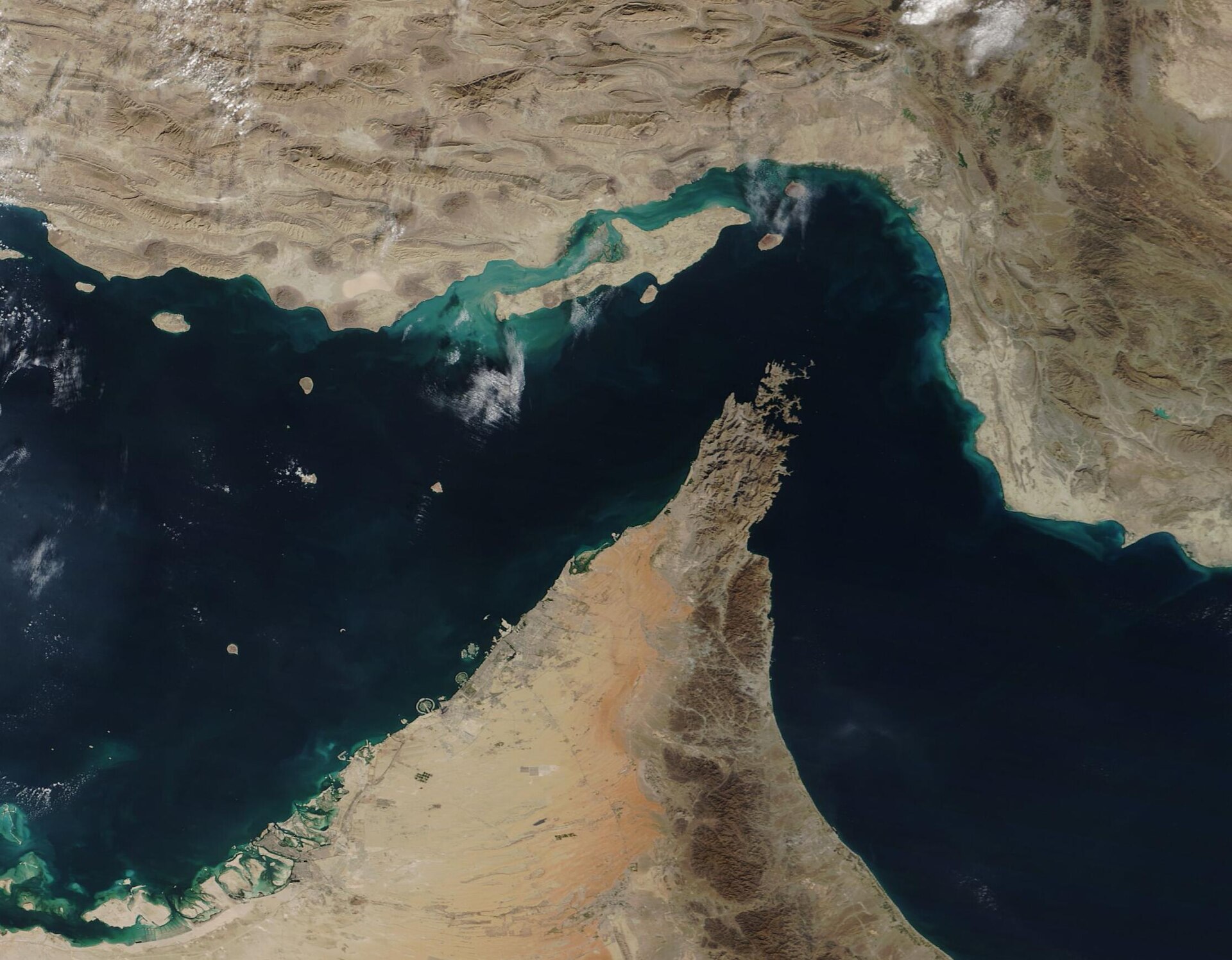
The collecting authority is not a civil maritime ministry. It is the IRGC Navy. Vessels submit documentation — IMO registration number, full cargo manifest, crew nationality list, beneficial ownership chain, and destination port — to IRGC-connected intermediaries 72 to 96 hours before reaching the strait. If approved, the vessel receives a clearance code and is escorted by IRGC patrol boats through a northern corridor around Larak Island, according to Lloyd’s List reporting from late March. The route displaces ships from the internationally recognized Traffic Separation Scheme — the standard two-lane system in use since the 1970s — into Iranian territorial waters.
The fee structure has operated on two tracks. Bloomberg reported a per-cargo rate of approximately $0.50 to $1.20 per barrel, while Iranian MP Alaeddin Boroujerdi confirmed on state television that some vessels had been charged a flat $2 million. For a fully loaded VLCC carrying two million barrels of crude, both calculations converge at roughly the same figure. Al Jazeera reported that the IRGC vetting system assigns each nation a “friendliness ranking” from one to five based on geopolitical alignment, differentiating access and pricing by nationality.
As of late March, Lloyd’s List Intelligence tracked 26 vessels through the IRGC-controlled Larak corridor since March 13. Of 142 total vessels passing through the strait area since March 1, 67 percent carried direct Iranian affiliation. No vessels were recorded using the standard AIS route after March 15. “We have two instances where we know there’s been payments,” said Bridget Diakun of Lloyd’s List Intelligence, speaking to NPR on April 3 — confirming the toll had moved from threat to documented practice. IMO Secretary-General Arsenio Dominguez told Al Jazeera that nearly 2,000 ships were awaiting passage through the strait.
The bill explicitly bars all US-linked and Israeli-linked vessels from any transit option. No fee, no corridor, no passage. Countries that imposed unilateral sanctions on Iran face the same prohibition, according to reporting by The Week India and Anadolu Agency. “Friendly nation” exemptions have been extended diplomatically to China, Russia, India, Iraq, Pakistan, Malaysia, Egypt, and South Korea. India’s government has publicly disputed having made any payments, stating that “no permission is required” for transit through an international strait.
Why Oman? The Geographic Bargain at the Narrowest Point
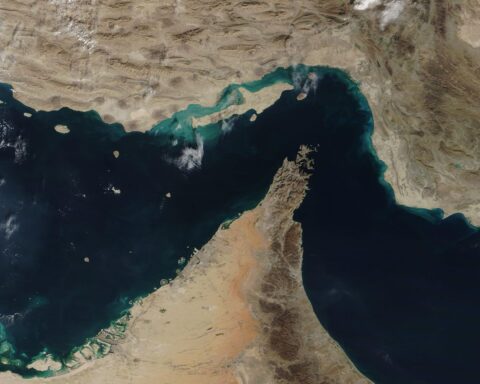
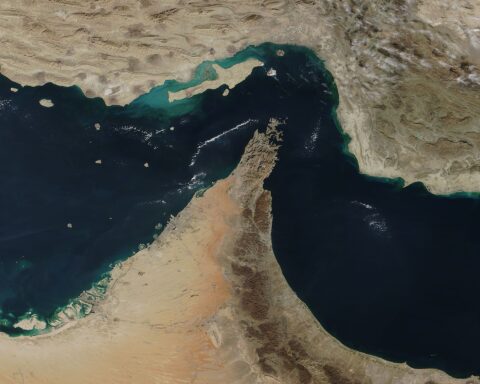
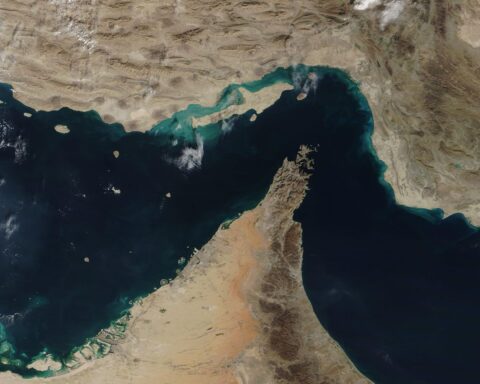
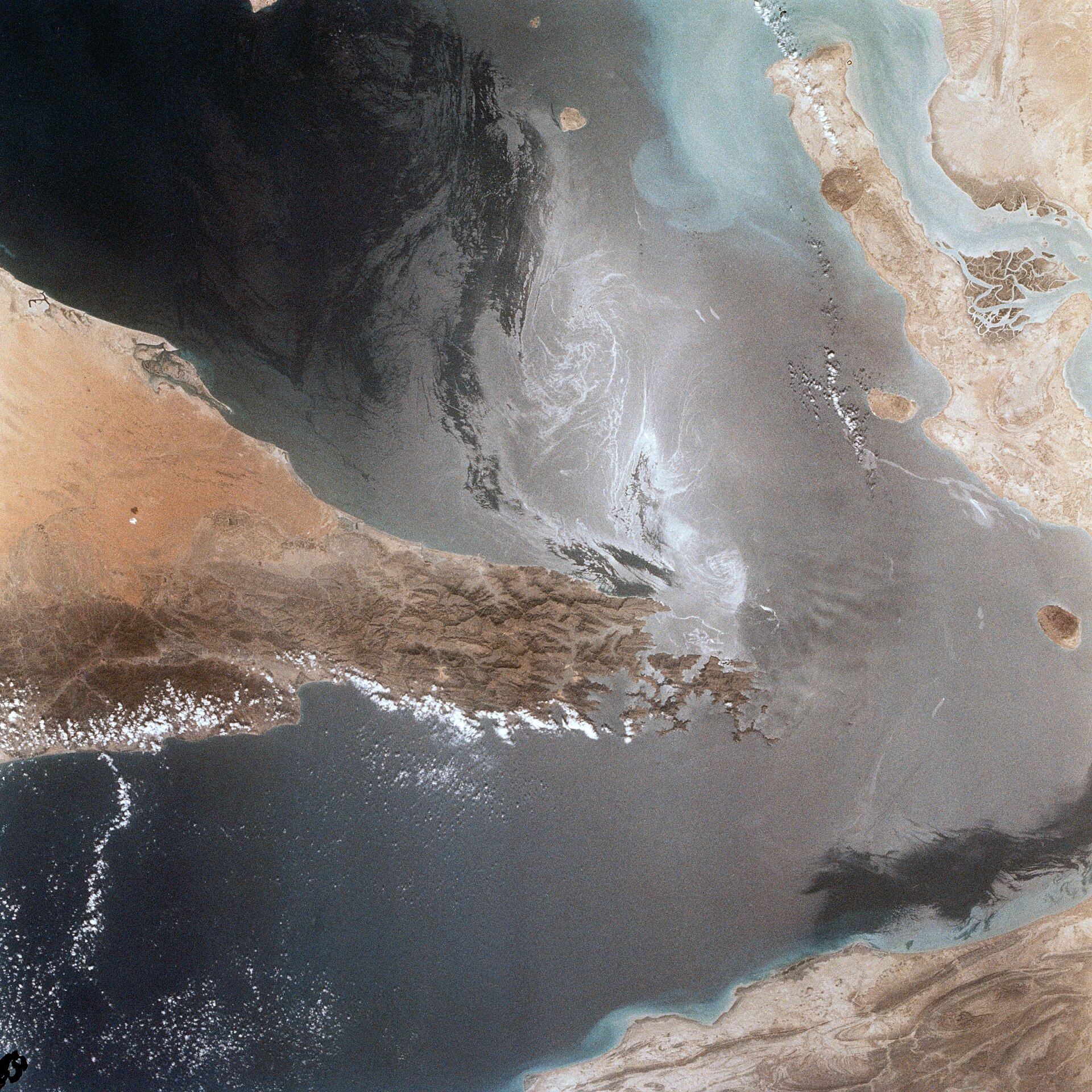
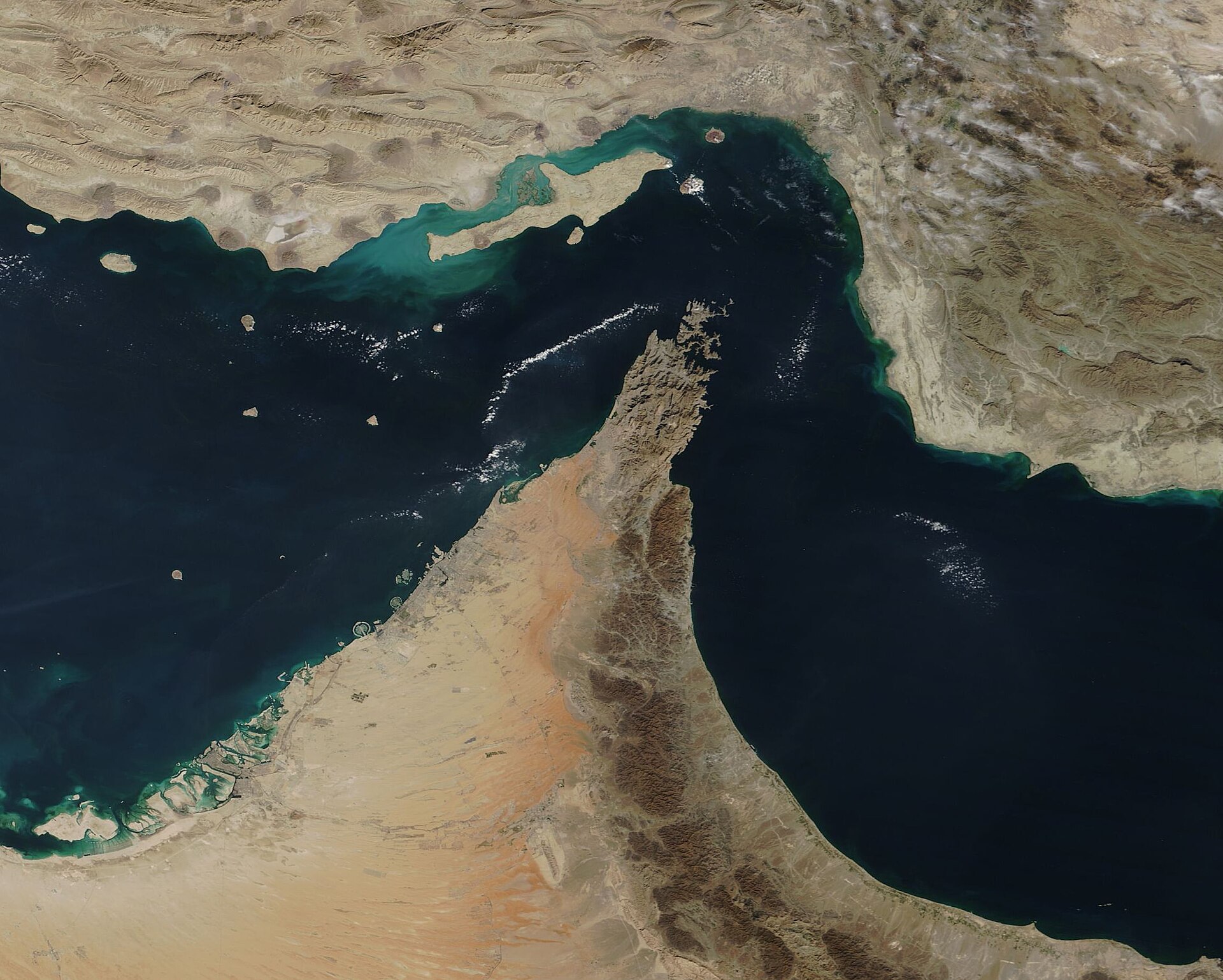
The Strait of Hormuz at its narrowest measures 21 nautical miles. Iran claims a 12-nautical-mile territorial sea from its northern shore. Oman claims 12 nautical miles from the Musandam Peninsula, its exclave on the Arabian side. The arithmetic leaves no gap — there is no corridor of high seas between the two claims. The inbound shipping lane passes through Iranian territorial waters. The outbound lane passes through Omani waters. Together, the two states physically control 100 percent of the navigable channel.
This is the geographic logic behind the bilateral “Strait of Hormuz Maritime Monitoring Protocol” that Iranian Deputy Foreign Minister Kazem Gharibabadi confirmed the two countries are co-drafting. “We are drafting a protocol for Iran and Oman to supervise transit in the Strait of Hormuz,” Gharibabadi told IRNA on April 2. “These requirements do not mean restrictions, but rather aim to facilitate and ensure safe passage and provide better services to ships.” He added a caveat that framed the entire enterprise: “We are now in a state of war, and wartime conditions cannot be governed by peacetime rules.”
Oman’s participation is neither surprising nor improvised. Muscat maintained diplomatic relations with Tehran throughout every prior sanctions regime. The two countries signed a gas pipeline deal in 2015 — 10 billion cubic meters per year for 25 years, valued at $60 billion — that binds their economic interests across a generational timeline. Oman has served as Iran’s legitimate interlocutor in the Gulf for decades, mediating back-channel communications during the Obama-era nuclear negotiations and hosting direct US-Iran talks. The monitoring protocol adds territorial logic to a diplomatic relationship that already existed. A joint coordination center, as described by CNBC and TRT World, would give both states institutional standing to regulate every ship entering or leaving the Persian Gulf — a prospect that has already complicated multinational coalition-building efforts to reopen the strait.
What Does International Law Say About Iran’s Hormuz Toll?
UNCLOS Article 38 grants all ships and aircraft — commercial and military — the right of transit passage through international straits. Article 26 prohibits charges “by reason only of their passage.” The transit passage regime was created precisely for straits like Hormuz, where coastal state territorial waters overlap and eliminate any high-seas corridor. The question is whether these provisions bind Iran, which signed UNCLOS in 1982 but never ratified it.
Iran’s legal argument rests on three pillars. First, as a non-party to UNCLOS, Iran claims it is not bound by treaty obligations it never accepted. Second, Iran asserts “persistent objector” status on the question of whether transit passage constitutes customary international law — arguing that the transit passage regime was an innovation of the 1982 convention, not a codification of pre-existing custom. Third, Gharibabadi’s wartime exception: the claim that active hostilities create a separate legal framework superseding peacetime maritime norms.
Commander Mark P. Nevitt, JAGC (ret.), now an associate professor of law at Emory University, has argued in Just Security that the transit passage regime “is widely regarded as customary international law and binding on all States” regardless of UNCLOS ratification — meaning Iran’s non-party status would not exempt it. Sanjeet Ruhal, a professor of international maritime security law at the International Maritime Law Institute in Malta, told TRT World that under established law, “No charge may be levied upon foreign ships by reason only of their passage.” Apurva Mehta of ANB Legal told Al Jazeera that distinguishing between vessels by nationality — the “friendliness ranking” system — “would be discriminatory” under international maritime law.
Iran’s parliamentary framing attempts to exploit a narrow exception. UNCLOS Article 26 permits charges for “specific services rendered to the ship.” Iranian legislators have characterized the toll as payment for “security and environmental services” — escort through a safe corridor, environmental monitoring, navigational assistance. Tasnim News Agency, aligned with the IRGC, framed the toll as equivalent to Suez and Panama Canal fees, using the language of “transit coordination” and “safe passage services” rather than blockade.
The analogy does not hold under scrutiny. The Suez and Panama canals are artificial waterways built and maintained by states at enormous expense. Hormuz is a natural strait. No international tribunal has accepted the principle that a coastal state may charge for transit through a natural international strait on the basis of services rendered — services the transiting vessel did not request and does not need absent the threat created by the coastal state itself. But as of April 3, 2026, neither the International Court of Justice, the International Tribunal for the Law of the Sea, nor the IMO has formally challenged Iran’s toll regime. The GCC declared the fees “illegal” in a political statement. No arbitral proceedings have been initiated.
The Two-Track Architecture: Rial on Paper, Yuan in Practice
The legislative text of the Hormuz Management Plan denominates fees in Iranian rial, according to Anadolu Agency reporting on the bill’s provisions. The operational system already running under IRGC management accepts payment in Chinese yuan, processed through Kunlun Bank — the Chinese state-affiliated financial institution that has handled Iran-China transactions outside the SWIFT system for years. Bloomberg reported that stablecoins — dollar-pegged cryptocurrency — are also accepted, making Iran the first state in recorded history to demand crypto payment for maritime transit rights.
The two-track design is not a contradiction. It is an architecture built for durability. The rial-denominated statute creates a sovereign legal instrument — domestic legislation that can be defended in any future negotiation as an internal Iranian law, no different from customs or port regulations. The yuan-and-crypto operational layer creates a payment channel that functions entirely outside Western financial infrastructure. If sanctions tighten, the yuan channel survives. If a ceasefire agreement attempts to dismantle the toll, Iran can point to a duly enacted parliamentary statute. If the international community pressures China to close the Kunlun Bank channel, the cryptocurrency option persists without any state intermediary at all.
Bloomberg Economics analyst Dina Esfandiary summarized the strategic logic: “The lesson Iran learned from the war is that holding the global economy hostage is cheaper and easier than expected.”
The financial infrastructure also creates facts on the ground for the Western shipping companies that have already paid. Each yuan-denominated payment to the IRGC through Kunlun Bank represents a transaction that may violate existing US secondary sanctions — binding the paying party to Iran’s system through the logic of sunk compliance costs. A shipping company that has already paid once has less incentive to support dismantling the regime than one that has refused.
How Much Revenue Could Iran Earn from the Hormuz Toll?
At pre-war traffic levels of approximately 140 ships per day — carrying roughly 20 million barrels of oil, one-fifth of global supply — a $2 million per-vessel toll would generate approximately $102 billion annually, or 20 to 25 percent of Iran’s nominal GDP, according to projections from Tasnim News Agency based on pre-war traffic data.
That scenario assumes full traffic restoration at wartime pricing. Iranian parliamentary sources cited by Maritime Gateway projected near-term revenue of $600 to $800 million per month at current, severely reduced traffic levels — with roughly 80 percent of pre-war volume still blocked.
A more grounded comparator: Suez and Panama Canal transit fees average roughly $400,000 per vessel. Applied to Hormuz’s 140-ship daily volume, the result is $20 to $25 billion per year. That lower estimate still exceeds Iran’s total pre-war oil export revenue under sanctions, which ran between $15 and $20 billion annually. Even at a fraction of the projected toll rates, the Hormuz regime would represent Iran’s largest single revenue source.
The costs fall unevenly. Saudi Arabia’s fiscal position is already under pressure from the simultaneous compression of export volumes and prices. The Kingdom’s East-West Pipeline — the primary Hormuz bypass — is currently moving approximately 2 million barrels per day, a fraction of the 10 to 12 million barrels per day that normally transit the strait from all Gulf producers. The UAE and Kuwait have no comparable bypass infrastructure. Every barrel they export passes through Hormuz.
| Scenario | Per-Vessel Fee | Daily Traffic | Annual Revenue |
|---|---|---|---|
| IRGC wartime rate (current) | $2,000,000 | ~30 vessels | ~$22 billion |
| IRGC wartime rate (full restoration) | $2,000,000 | 140 vessels | ~$102 billion |
| Suez/Panama comparator | $400,000 | 140 vessels | $20–25 billion |
| Current monthly run rate (Maritime Gateway) | Mixed fee structure | $7–10 billion | |
War risk insurance has imposed its own toll. David Osler, finance editor at Lloyd’s List, reported that premiums have risen from 0.15 to 0.25 percent of hull value before the conflict to 5 to 10 percent — a 20-to-40-fold increase. For a $100 million VLCC, that means $5 to $10 million per transit in insurance alone, on top of any fee paid to the IRGC. Hapag-Lloyd imposed a $3,500 per container War Risk Surcharge on March 2. The cumulative cost of a single voyage through Hormuz — toll, insurance, surcharge — now exceeds the total cost of the same voyage six months ago by an order of magnitude.
The Danish Sound Dues: The Last Time a State Did This
From 1429 to 1857, Denmark charged transit fees on every vessel passing through the Oresund, the narrow strait connecting the North Sea to the Baltic. The Danish Sound Dues lasted 428 years. They ended not because Denmark was defeated militarily or because an international court struck them down, but because a coalition of European maritime powers — led by the United States, which was then the loudest advocate for freedom of navigation — negotiated the Copenhagen Convention of 1857. The deal: a one-time collective payment of 33.5 million rigsdalers to Denmark in exchange for the permanent abolition of all transit charges.
The parallel is instructive in what it reveals about how strait tolls end — and why Iran’s timing is calculated. Denmark’s dues survived for four centuries because no single state had sufficient incentive to bear the cost of eliminating them alone, while every state benefited marginally from the arrangement’s predictability. The dues were abolished only when a specific coalition formed with the political will and financial capacity to buy Denmark out. Reza Khanzadeh, a professor of Middle East politics at George Mason University, warned in TRT World that if countries begin imposing toll systems on strategic waterways, “it could fundamentally alter the global trading system.”
No equivalent coalition exists for Hormuz in April 2026. The United States — historically the enforcer of freedom of navigation in the Gulf — has set an April 6 deadline for Iran to reopen the strait, framing the issue in military rather than legal terms. China, which would bear the highest single-country cost of a permanent Hormuz toll given its dependence on Gulf oil imports, has been extended “friendly nation” exemptions and has no incentive to challenge a system that operates in its own currency. The 41-nation coalition that has expressed interest in reopening the strait has not coalesced around a legal strategy. A Copenhagen Convention for the Persian Gulf would require the same thing the 1857 version required: someone willing to pay Iran to stop. The question of who pays — and in what currency, literal or geopolitical — has no answer.
What Are Saudi Arabia’s Options if the Toll Survives the War?
If the Hormuz toll regime survives into a post-ceasefire environment — codified in Iranian statute, administered by the IRGC, co-managed with Oman through a bilateral protocol — Saudi Arabia faces a set of options that are all expensive and none complete. The Kingdom’s primary bypass is the East-West Pipeline (Petroline), running from Abqaiq to the Red Sea port of Yanbu. Its maximum throughput of 7 million barrels per day, if fully utilized, would still leave Saudi Arabia short of its total production capacity and would do nothing for the UAE, Kuwait, Qatar, or Iraq. The strategic importance of that Yanbu terminus sharpened on April 3 when Iran struck the SAMREF refinery at Yanbu with a drone and fired ballistic missiles intercepted by Greek PAC-3 operators, demonstrating that Tehran intends to contest the Red Sea bypass as actively as it controls Hormuz.
New pipeline capacity takes years. The MNNA designation from Washington provides a security framework but does not address the commercial reality that every tanker loading at Ras Tanura or Ju’aymah — Saudi Aramco’s primary Gulf terminals — must pass through Hormuz or not sail at all. Shifting export capacity to the Red Sea means investing in terminal infrastructure at Yanbu, expanding the pipeline network, and accepting that Red Sea shipping faces its own disruption risks from Houthi activity and the Bab el-Mandeb chokepoint.
The legal route is available but slow. Saudi Arabia could initiate proceedings at the International Court of Justice or seek an advisory opinion from the International Tribunal for the Law of the Sea. Neither body has ruled on whether transit passage is customary law binding on non-parties. Hamidreza Azizi, a visiting fellow at the German Institute for International and Security Affairs (SWP-Berlin), argued in a Carnegie Endowment analysis that “Hormuz has been central to Iran’s ability to convert geography into leverage and to widen the war beyond the military domain.” A legal ruling could take years. During that period, every payment made to the IRGC strengthens the precedent Iran is building.
Martin Kelly of EOS Risk Group told NPR on April 3 that Iran requires “government-to-government negotiations” for passage approval — not commercial transactions. Nations have been “sorting this out diplomatically” rather than at the per-vessel level. Iran, Kelly said, demands international recognition of its sovereignty over the strait as part of any negotiated settlement.
The Ceasefire Freeze: Writing Post-War Law During Wartime
Iran’s five-point ceasefire counterproposal, reported by NPR and The Hill on March 25, lists “exercise of sovereignty over the Strait of Hormuz” as its fifth condition. The Hormuz Management Plan moving through parliament is the institutional vehicle for that demand. The sequencing is deliberate: pass the law before the ceasefire, so that dismantling it requires Iran to repeal domestic legislation — a concession that no Iranian government could make without appearing to surrender sovereignty under pressure.
Mojtaba Khamenei, who succeeded his father as supreme leader, stated that the Hormuz leverage “must continue to be used,” according to Maritime Gateway — explicitly ruling out automatic restoration of pre-war commercial access even after a kinetic ceasefire. The distinction between a military ceasefire and a commercial reopening is the core of Iran’s strategy. Guns can stop. The toll does not.
Ceasefire negotiations in modern conflicts routinely freeze the legal status quo at the moment of agreement. The Korean War armistice froze the 38th parallel. The Minsk agreements froze contact lines in eastern Ukraine. If a ceasefire is reached with the Hormuz toll law on the books, the law becomes a starting point — the existing condition that any subsequent negotiation must address, rather than a new demand that Iran must justify. Every week the legislation advances without formal international legal challenge, the cost of reversal increases.
Khanzadeh of George Mason University framed Iran’s position in terms that apply equally to the toll regime: “The Strait of Hormuz represents one of Iran’s last remaining sources of leverage. With its proxies weakened, its nuclear and missile programmes degraded, and domestic pressures mounting, the Iranian government is trying to hold on to what may be its last bargaining chip.” The toll law is how you convert a bargaining chip into permanent revenue — by writing it into statute while the war still provides the justification, and daring the international community to challenge it after the fighting stops.
Iranian MP Mohammadreza Rezaei Kouchi stated the purpose plainly: “Parliament is pursuing a plan to formally codify Iran’s sovereignty, control and oversight over the Strait of Hormuz, while also creating a source of revenue through the collection of fees.” The word “codify” is doing the work. Not establish, not claim, not assert. Codify — as though the sovereignty already exists and merely requires administrative formalization. Iran’s simultaneous strikes on Gulf energy infrastructure ensure that the alternative to paying the toll remains vivid.
Frequently Asked Questions
Has any country formally paid Iran’s Hormuz transit toll?
Lloyd’s List Intelligence confirmed at least two documented payments as of early April 2026. Several nations — reportedly including South Korea and unnamed European flag states — have conducted government-to-government negotiations for passage rights, though the specific financial terms remain classified. India has publicly denied making any payments, insisting that transit through international straits requires no permission. The distinction between a direct toll payment and a diplomatic arrangement with financial components attached remains deliberately blurred by all parties involved.
Could the United States Navy simply escort ships through Hormuz without paying?
The US Fifth Fleet, headquartered in Bahrain, has the naval capacity to escort commercial vessels through the strait. However, doing so during active hostilities with Iran would constitute a military operation, not a freedom-of-navigation exercise. The US has historically conducted convoy escorts in the Gulf — Operation Earnest Will in 1987-1988 reflagged Kuwaiti tankers under the US flag and escorted them through the strait during the Iran-Iraq War. That operation resulted in direct naval engagements with Iran, including the destruction of Iranian oil platforms in Operation Praying Mantis.
What happens to LNG shipments from Qatar if the toll becomes permanent?
Qatar exports approximately 77 million tonnes of LNG annually, nearly all of it through Hormuz. Unlike Saudi Arabia, Qatar has no pipeline bypass option — LNG must be shipped by sea. Qatar’s North Field expansion, which aims to increase capacity to 126 million tonnes per year by 2027, would be entirely subject to whatever toll regime governs the strait. At $2 million per vessel, Qatar’s approximately 900 annual LNG carrier transits would cost $1.8 billion per year in tolls alone, before insurance surcharges.
Why hasn’t the International Maritime Organization taken enforcement action?
The IMO is a regulatory and standard-setting body, not an enforcement agency. It has no navy, no sanctions authority, and no binding dispute resolution mechanism for territorial sovereignty claims. IMO Secretary-General Arsenio Dominguez has publicly noted the backlog of nearly 2,000 vessels awaiting transit, but the organization’s mandate extends only to safety standards, pollution prevention, and navigational rules — not to adjudicating whether a coastal state’s territorial sovereignty claims are lawful. Enforcement would require either a UN Security Council resolution (subject to Russian and Chinese veto) or proceedings before the ICJ or ITLOS.
Is there a precedent for cryptocurrency being used in state-to-state maritime transactions?
No. Iran’s acceptance of stablecoins for Hormuz transit fees is the first documented instance of a sovereign state demanding cryptocurrency payment for passage rights through a maritime chokepoint. Venezuela experimented with the Petro cryptocurrency for oil sales in 2018, but it was never adopted for maritime transit fees and was widely considered non-functional. North Korea has used cryptocurrency to evade sanctions but not as a formal payment mechanism for state services. Iran’s innovation lies in creating a three-currency payment architecture — rial, yuan, stablecoin — that ensures at least one channel survives any conceivable sanctions configuration.