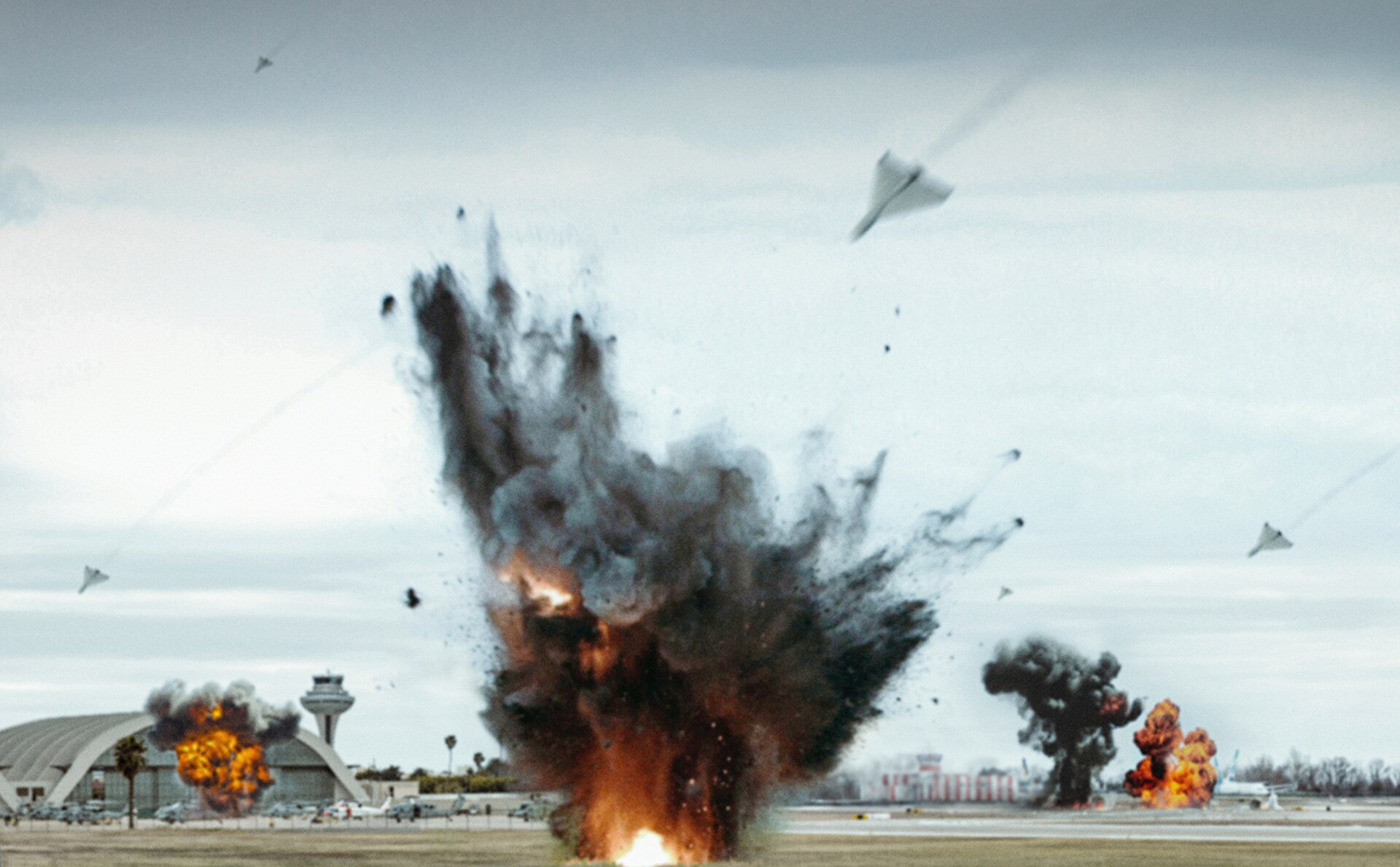

DHAHRAN — Iran launched nearly one hundred drones at Saudi Arabia on Monday, the largest single-day barrage since the war began eighteen days ago and a fourfold increase over the previous daily average. The attack concentrated on the Eastern Province, the stretch of desert and coastline that contains the majority of Saudi Arabia’s oil production capacity, the headquarters of Saudi Aramco, and several of the largest petroleum processing facilities on earth. The escalation was not random. It marked a deliberate strategic pivot by Tehran from military and political targets toward the economic infrastructure that underwrites both the Saudi state and the global energy market.
The shift matters far beyond the immediate damage. Iran’s drone campaign against Saudi oil infrastructure exposes a mathematical problem that no amount of Patriot batteries or diplomatic statements can solve: the attacker spends tens of thousands of dollars per drone while the defender spends millions per interceptor, and the attacker can manufacture replacements faster than the defender can restock. As the drone count climbs toward triple digits, the question is no longer whether Saudi Arabia can defend its oil fields but how long the defense can hold at this rate of expenditure and attrition. Eighteen days of data now provide enough evidence to model the trajectory, and the numbers point in a direction that should alarm Riyadh, Washington, and every oil-importing nation on earth.
Table of Contents
- What Happened on March 17? Iran’s Hundred-Drone Day
- Why Is Iran Targeting the Eastern Province?
- The Five Oil Facilities Iran Cannot Afford to Miss
- How Many Drones Can Saudi Arabia’s Air Defense Stop?
- The Cost Exchange Ratio That Keeps Tehran in the Fight
- What Did the 2019 Abqaiq Attack Prove?
- The Drone Escalation Curve — From Ten to One Hundred in Eighteen Days
- Can the East-West Pipeline Replace Hormuz?
- The Infrastructure Vulnerability Matrix
- Why Destroying Iran’s Drone Factories Has Not Stopped the Swarm
- What Comes After One Hundred Drones a Day?
- Frequently Asked Questions
What Happened on March 17? Iran’s Hundred-Drone Day
Iran launched almost one hundred drones at Saudi Arabia on Monday March 17, according to Bloomberg, far exceeding the previous daily average of fewer than twenty-five. The Saudi Ministry of Defense confirmed that a ballistic missile and twenty-four drones were intercepted in a single engagement window, with additional waves continuing throughout the day. By Tuesday morning, the ministry reported that thirty-seven more drones had been intercepted and destroyed over the Eastern Province since the early hours of March 18. The drone escalation coincided with Israel’s assassination of Iran’s intelligence minister Esmaeil Khatib, the third senior Iranian official killed in 48 hours, which analysts expect to trigger further retaliatory waves against Gulf targets.
The barrage represented a qualitative as well as quantitative shift. Previous Iranian drone strikes had been distributed across the Gulf — hitting Abu Dhabi’s Shah gas field, disrupting Dubai airport operations, and targeting US military installations in Kuwait, Qatar, and Bahrain. Monday’s attack concentrated firepower on a single geography: Saudi Arabia’s Eastern Province, and within it, the petroleum infrastructure that produces and processes the majority of the Kingdom’s crude oil.
WorldOil reported that the escalation raised immediate concerns about Gulf energy supply chains, noting that Iran had increasingly relied on drone strikes rather than ballistic missiles, enabling a higher sustained pace of attacks across multiple sites simultaneously. A Human Rights Watch investigation has already documented eleven civilian deaths and 268 injuries from Iranian strikes on hotels, airports, and residential areas across six Gulf states, underscoring that the damage extends well beyond oil infrastructure. The drone-heavy approach allows Tehran to preserve its diminishing stockpile of precision ballistic missiles — degraded by American and Israeli strikes since February 28 — while maintaining constant pressure on Saudi Arabia’s most valuable assets.
Why Is Iran Targeting the Eastern Province?
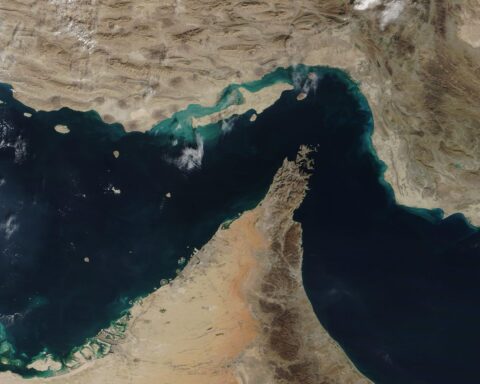
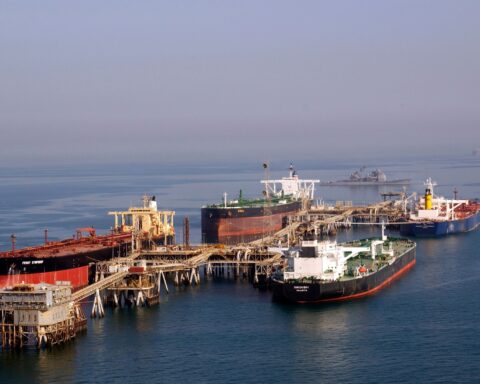
The Eastern Province contains a concentration of petroleum assets unmatched anywhere else on the planet. Within a roughly three-hundred-kilometre strip of coastline and desert, Saudi Aramco operates the world’s largest conventional oil field, the world’s largest crude oil processing facility, and the world’s largest offshore oil loading terminal. Disrupting this corridor does not merely inconvenience Saudi Arabia — it removes a significant fraction of global oil supply from the market.
The Middle East briefing 3,000+ readers start their day with.
One email. Every weekday morning. Free.
Iran’s shift toward the Eastern Province reflects a strategic calculation that emerged after the first two weeks of war. US and Israeli airstrikes had destroyed an estimated sixty to seventy percent of Iran’s nuclear enrichment infrastructure and significantly degraded its ballistic missile production capacity, according to Pentagon assessments. Iran could not win a conventional military contest. What it could do was impose economic costs so severe that the coalition’s political will to continue would erode.
The Eastern Province offers Tehran maximum economic impact per drone launched. A single successful strike on the Abqaiq processing facility, which handles roughly seven million barrels per day of crude oil stabilisation, could remove more oil from the market than any OPEC production cut in history. The vast geography of Saudi oil production makes comprehensive defence extraordinarily difficult: pipelines stretch for hundreds of kilometres across open desert, storage tanks cluster in exposed tank farms, and loading terminals sit on exposed coastline.
The threat to Eastern Province infrastructure became even more explicit on March 18, when the IRGC publicly named the Jubail Petrochemical Complex and Samref refinery as specific targets following the Israeli strike on Iran’s South Pars gas field. The declaration marked the moment when every Gulf oil facility became a legitimate military target under Iran’s stated doctrine of reciprocal energy destruction.
The province is also closer to Iran than any other major Saudi population centre, reducing the flight time of drones launched from Iranian territory to as little as two to three hours. The shorter flight path reduces the time available for early warning systems to detect and engage incoming threats, and it reduces the attrition rate that longer flights impose on cheap, unreliable drone airframes.
The Five Oil Facilities Iran Cannot Afford to Miss
Five installations in the Eastern Province represent what military planners call high-value targets — facilities whose disruption would immediately affect global oil supply and prices. Each has distinct vulnerabilities, and Iran’s drone campaign appears designed to probe all of them.
| Facility | Function | Capacity (bpd) | Vulnerability | Previous Attack |
|---|---|---|---|---|
| Abqaiq Processing Plant | Crude stabilisation, gas-oil separation | 7,000,000 | Single-point processing hub; fire in stabilisation towers shuts entire operation | September 2019 (Houthi/Iran drone-missile) |
| Ghawar Oil Field | Crude extraction | 3,800,000 | Dispersed wellheads across 280km; vulnerable to area-denial drone harassment | No direct hit (proximity strikes 2019) |
| Ras Tanura Refinery & Terminal | Refining, export loading | 550,000 | Coastal location, exposed loading jetties, fuel storage | March 2, 2026 (shutdown after fire) |
| Khurais Oil Field | Crude extraction | 1,500,000 | Automated facilities, limited on-site personnel | September 2019 (drones from Iraq) |
| Ju’aymah Terminal | Export loading, NGL processing | 3,000,000+ | Three sea islands for loading supertankers; fixed maritime infrastructure | No confirmed direct hit |
Together, these five facilities handle the production, processing, and export of more than ten million barrels per day of crude oil and petroleum products — approximately ten percent of global supply. The 2019 attack on Abqaiq and Khurais temporarily removed 5.7 million barrels per day from the market, the largest single supply disruption in history, and that strike involved just eighteen drones and seven cruise missiles. Iran is now launching that number of drones in a single morning.
The Ras Tanura complex, Saudi Aramco’s largest domestic refinery, has already demonstrated its vulnerability. On March 2, two Iranian drones were intercepted near the facility, but debris from the interception caused a fire that forced Aramco to shut down the entire refinery. Bloomberg reported that Aramco planned to keep the plant closed for several weeks, removing 550,000 barrels per day of refining capacity from an already strained system. Even a successful interception can cause operational shutdowns when the target is surrounded by flammable materials.
How Many Drones Can Saudi Arabia’s Air Defense Stop?
Saudi Arabia operates one of the most expensive and extensive air defense networks in the Middle East, built around American-supplied Patriot PAC-3 batteries supplemented by shorter-range systems. The Kingdom’s defense establishment under Prince Khalid bin Salman has positioned multiple batteries around critical infrastructure in the Eastern Province, and the Royal Saudi Air Defence Forces have demonstrated a high interception rate throughout the first eighteen days of war.
The numbers, however, tell a troubling story. Saudi Arabia intercepted thirty-one drones in a single day on March 13. It intercepted over fifty across multiple regions on the same day. On March 17, the system faced its greatest test with roughly one hundred inbound drones, and the Ministry of Defense confirmed twenty-four destroyed in one engagement plus a ballistic missile. The interception rate appears to remain above eighty percent based on available reporting, but the total number of intercept engagements is climbing at an unsustainable rate.
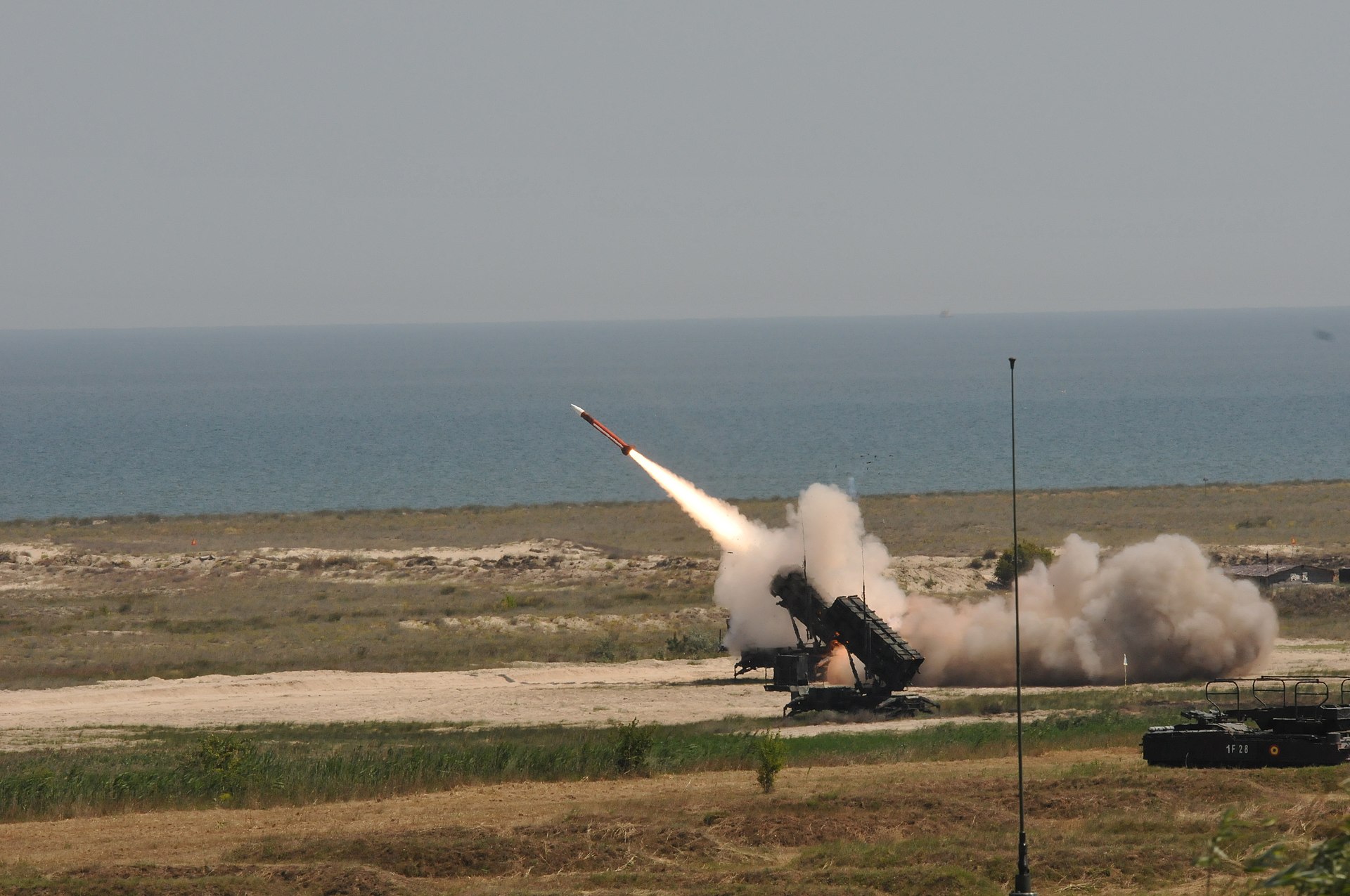
Each Patriot PAC-3 missile costs between $2 million and $4 million, according to the US Congressional Research Service. A THAAD interceptor costs approximately $12 million to $15 million. Against a Shahed-136 drone costing an estimated $20,000 to $50,000, every successful interception represents a cost ratio of roughly fifty-to-one in favour of the attacker. At one hundred drones per day, Saudi Arabia is spending between $200 million and $400 million daily on interceptors alone — a rate that would exhaust the pre-war Patriot missile inventory within weeks without emergency resupply.
The interceptor supply chain is already strained. Raytheon, the manufacturer of Patriot missiles, produces approximately 500 PAC-3 MSE interceptors per year at full capacity. The entire annual production run, at current engagement rates, would last Saudi Arabia less than a week. Washington has been urgently diversifying Saudi Arabia’s air defense supply chain, including South Korean Cheongung systems, but new systems require months of integration even on an emergency timeline.
The most promising alternative may come from the least expected source. Ukraine’s combat-tested interceptor drone manufacturers, whose systems have already destroyed thousands of Iranian-made Shaheds over Ukrainian skies, are now competing to supply Gulf states with counter-drone technology that could fundamentally alter the cost equation in Saudi Arabia’s favour.
The Cost Exchange Ratio That Keeps Tehran in the Fight
The defining arithmetic of this war is the cost exchange ratio between Iranian drones and Saudi interceptors. This ratio explains why Iran’s strategy is rational despite the apparent futility of launching cheap drones against the world’s most expensive air defense network.
| Iranian Weapon | Unit Cost | Saudi Interceptor | Unit Cost | Exchange Ratio |
|---|---|---|---|---|
| Shahed-136 drone | $20,000-$50,000 | Patriot PAC-3 MSE | $4,100,000 | 82:1 to 205:1 |
| Shahed-131 drone | $10,000-$20,000 | Patriot PAC-2 GEM+ | $2,000,000 | 100:1 to 200:1 |
| Shahed-136 drone | $20,000-$50,000 | THAAD interceptor | $12,000,000 | 240:1 to 600:1 |
| Mohajer-6 UCAV | $200,000-$500,000 | AIM-120 AMRAAM (fighter) | $1,100,000 | 2:1 to 5.5:1 |
At the lower end of estimates, Iran can launch one hundred Shahed-136 drones for approximately $2 million to $5 million in total expenditure. Intercepting all of them with Patriot missiles costs Saudi Arabia $200 million to $410 million. Over a month of sustained hundred-drone-per-day operations, Iran’s bill comes to $60 million to $150 million while Saudi Arabia’s defense expenditure on interceptors alone exceeds $6 billion. The asymmetry is not a flaw in Iran’s strategy — it is the strategy.
Defence analysts at the Centre for Strategic and International Studies described the drone cost asymmetry as the most significant tactical development of the 2026 conflict. Iran does not need its drones to penetrate air defenses to achieve its objectives. It needs them to force Saudi Arabia and the United States to expend interceptors at an unsustainable rate, creating windows of vulnerability that occasional precision strikes can exploit.
The same cost logic applies in cyberspace, where Iran has waged a parallel cyber war against Gulf infrastructure using $100 DDoS toolkits against banking systems, airports, and GPS navigation — attacks that cost almost nothing to launch but force expensive defensive responses across every GCC state.
Iran has turned the economics of air defense upside down. Every interceptor Saudi Arabia fires is a small victory for Tehran, regardless of whether it hits the drone.Defence Security Asia analysis, March 2026
What Did the 2019 Abqaiq Attack Prove?
The September 14, 2019 attack on Abqaiq and Khurais remains the most important precedent for understanding the current campaign. Eighteen drones and seven cruise missiles, launched from a direction that Saudi radar coverage did not adequately monitor, struck the Abqaiq processing plant and the Khurais oil field. The attack knocked out 5.7 million barrels per day of Saudi production capacity — roughly five percent of global supply — and demonstrated that even a limited strike could cause catastrophic disruption.
Three lessons from 2019 directly inform Iran’s 2026 strategy. First, oil processing facilities are extraordinarily fragile. The stabilisation towers at Abqaiq, which remove volatile gases from crude oil to make it safe for transport, are tall, thin, exposed structures surrounded by flammable materials. A single hit on one tower can trigger fires that force the shutdown of the entire facility, as happened in 2019 when the plant took weeks to restore to full capacity.
Second, the direction of attack matters as much as its scale. In 2019, drones approached from the north-northwest rather than from Yemen to the south, bypassing the Saudi radar arrays oriented toward the Houthi threat. In 2026, Iran is launching directly from its own territory, which Saudi defenses have reoriented to cover, but the sheer volume of simultaneous drones from multiple launch azimuths can still overwhelm fixed radar sectors.
Third, even partial damage causes disproportionate market disruption. Oil prices spiked fifteen percent in the hours after the 2019 attack, and the disruption to Saudi Aramco’s IPO timeline cost the company an estimated $100 billion in valuation adjustments. In March 2026, with the Strait of Hormuz already effectively closed and global oil markets in crisis, even a minor additional disruption to Saudi production would amplify the existing supply shock. The 2019 attack demonstrated that oil markets respond to the perceived vulnerability of Saudi infrastructure, not just actual production losses. The mere knowledge that Saudi Arabia is absorbing one hundred drones per day over its oil fields creates a risk premium in oil futures that persists regardless of interception success rates.
The Drone Escalation Curve — From Ten to One Hundred in Eighteen Days
The daily drone count directed at Saudi Arabia has followed an escalation curve that, when plotted, reveals Iran’s systematic approach to testing and overwhelming Saudi air defenses.
| Period | Days | Avg Daily Drones | Primary Targets | Apparent Strategy |
|---|---|---|---|---|
| Feb 28 – Mar 4 | Week 1 | 8-15 | US bases, Prince Sultan Air Base | Retaliatory strikes on military targets |
| Mar 5 – Mar 9 | Week 2 | 15-25 | Mixed military/civilian, Ras Tanura refinery | Expanding target set, probing oil infrastructure |
| Mar 10 – Mar 14 | Week 3a | 25-50 | Eastern Province oil, Riyadh diplomatic quarter, Abu Dhabi | Sustained multi-front campaign, saturation testing |
| Mar 15 – Mar 18 | Week 3b | 50-100 | Eastern Province oil infrastructure concentration | Focused economic warfare, defense attrition |
The escalation follows what military theorists call a “graduated pressure” model. The initial week targeted military installations — a predictable retaliatory pattern after the US-Israeli strikes of February 28. The second week introduced oil infrastructure as a secondary target, with the Ras Tanura refinery attack on March 2 serving as a proof-of-concept. By the third week, oil infrastructure had become the primary target, with drone volumes increasing to levels that test the physical limits of Saudi air defense engagement rates.
The jump from an average of fifty drones per day to nearly one hundred on March 17 may indicate that Iran has activated reserve production capacity or is drawing on pre-positioned stockpiles that survived the US-Israeli strikes on manufacturing facilities. Bloomberg reported that Iran had produced between 200 and 500 Shahed drones per month before the war, with some estimates suggesting Iran had stockpiled as many as 3,000 to 5,000 drones before hostilities began. At one hundred per day, that stockpile would last thirty to fifty days — enough to sustain the campaign through Eid al-Fitr and into April.
The escalation curve also reflects tactical learning. In the first week, Iran launched drones singly or in small groups of two to three, allowing Saudi air defenses to engage each threat individually with high success rates. By the second week, drones arrived in waves of eight to twelve at staggered intervals, forcing air defense operators to maintain continuous combat readiness. The third week brought simultaneous multi-axis approaches — drones arriving from different compass headings at the same time, splitting the attention of radar operators and fire control systems. Each phase tested the limits of Saudi air defense doctrine and created data that informs the next phase of escalation.
The pattern matches the progressive reconnaissance methodology that the IRGC Aerospace Force honed during years of drone operations in Iraq, Syria, and Yemen. Iran is not simply firing drones at Saudi Arabia — it is conducting a systematic campaign to map, test, and ultimately penetrate the Kingdom’s air defense architecture. The hundred-drone day was not a peak. It was a data point on a curve that has not yet plateaued.
Can the East-West Pipeline Replace Hormuz?
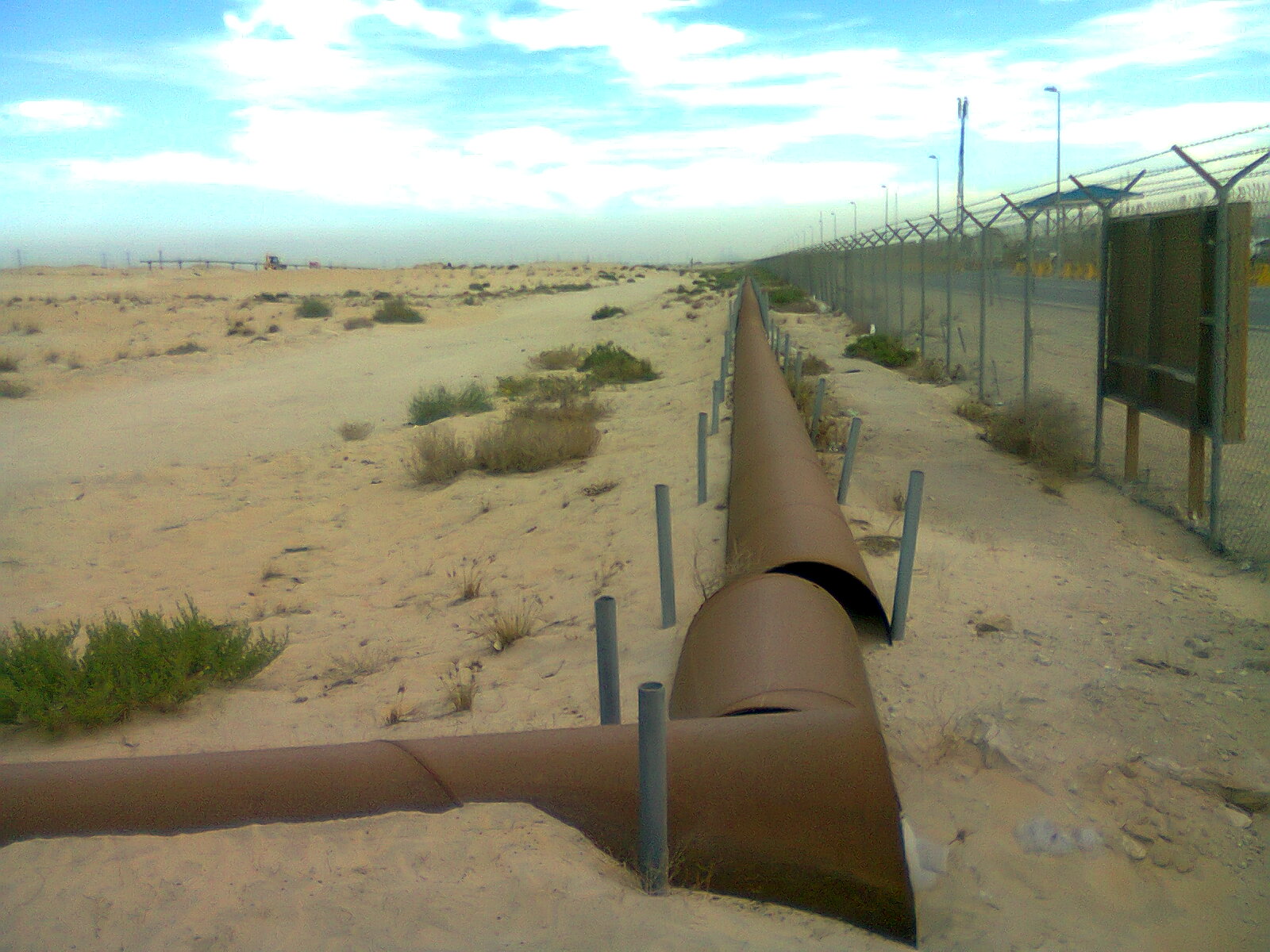
Saudi Arabia’s primary response to the Hormuz closure has been the East-West Crude Oil Pipeline, a 1,201-kilometre conduit running from the Abqaiq oil fields in the Eastern Province to the Red Sea port of Yanbu. On March 11, Aramco converted the pipeline’s parallel natural gas liquids lines to carry crude oil, raising total capacity to seven million barrels per day. The pipeline has become Saudi Arabia’s lifeline — its only way to export significant volumes of crude while the Strait of Hormuz remains closed to Gulf-state shipping.
The pipeline’s vulnerability to Iran’s drone campaign presents a strategic problem that has received insufficient attention. The pipeline runs above ground for much of its length across the Arabian desert, and while it is buried in some sections, the pumping stations that maintain flow pressure are exposed, fixed targets. There are nine pumping stations along the route, each representing a potential point of failure.
Iran has not yet targeted the East-West Pipeline directly, but the IRGC’s public threats against US-linked infrastructure across the Gulf suggest it is a matter of when, not whether. A single successful strike on a pumping station could reduce throughput for days or weeks, and a coordinated attack on multiple stations would threaten the only export route Saudi Arabia has left.
The pipeline also depends on the Eastern Province facilities it draws from. If Abqaiq is shut down — as it was for weeks after the 2019 attack — the pipeline has nothing to pump. Iran’s concentration of drone attacks on the Eastern Province therefore threatens the pipeline indirectly even without targeting it directly. Every barrel that cannot be processed at Abqaiq is a barrel that cannot reach Yanbu.
Iran soon proved the threat was not limited to the Eastern Province. On March 19, drones reached the Red Sea coast itself, striking the Yanbu refinery at the pipeline’s western terminus — demonstrating that the hundred-drone-a-day campaign could extend 1,200 kilometres beyond the Eastern Province to hit the export infrastructure that was supposed to be safely out of range.
The Infrastructure Vulnerability Matrix
Assessing the vulnerability of Saudi oil infrastructure to sustained drone attack requires evaluating four factors: the physical exposure of the target, its economic importance, the density of air defense coverage it receives, and the redundancy available if it is damaged. These four factors can be scored to produce a composite vulnerability rating.
| Facility | Physical Exposure (1-10) | Economic Impact (1-10) | Defense Density (1-10) | Redundancy (1-10) | Composite Risk |
|---|---|---|---|---|---|
| Abqaiq Processing Plant | 8 | 10 | 9 | 2 | Critical |
| Ghawar Field Wellheads | 9 | 9 | 4 | 5 | Critical |
| Ras Tanura Refinery/Terminal | 8 | 7 | 7 | 3 | High |
| East-West Pipeline Stations | 9 | 9 | 3 | 4 | Critical |
| Ju’aymah Terminal | 7 | 8 | 6 | 3 | High |
| Khurais Oil Field | 8 | 6 | 5 | 5 | Elevated |
| Jubail Industrial City | 7 | 7 | 6 | 4 | High |
| Dhahran/Aramco HQ | 6 | 5 | 8 | 7 | Moderate |
Three facilities score at the critical level. Abqaiq’s extreme vulnerability stems from its unique role as a single-point processing hub with no redundant facility anywhere in the Kingdom — all Saudi crude must pass through Abqaiq or its satellite plants before it can be exported. The Ghawar field’s dispersed wellheads are nearly impossible to defend comprehensively across 280 kilometres of desert. And the East-West Pipeline pumping stations, spread across more than a thousand kilometres of exposed terrain, receive minimal dedicated air defense coverage because the number of Patriot batteries required to protect all nine stations would exceed Saudi Arabia’s entire inventory.
The matrix reveals a fundamental asymmetry between attacker and defender. Iran can choose when and where to concentrate its hundred daily drones. Saudi Arabia must defend everything, everywhere, all the time. Military doctrine holds that a defender typically requires a three-to-one force advantage to hold against a determined attacker. In the drone domain, where the attacker has a hundred-to-one cost advantage, the defender needs a force ratio that no nation on earth currently possesses.
Why Destroying Iran’s Drone Factories Has Not Stopped the Swarm
The conventional expectation when the US-Israeli strikes began on February 28 was that destroying Iran’s drone manufacturing capacity would quickly reduce the threat to Gulf states. Two and a half weeks later, the opposite has happened. Drone volumes have increased fourfold, challenging the assumption that supply-side destruction translates to reduced operational capability.
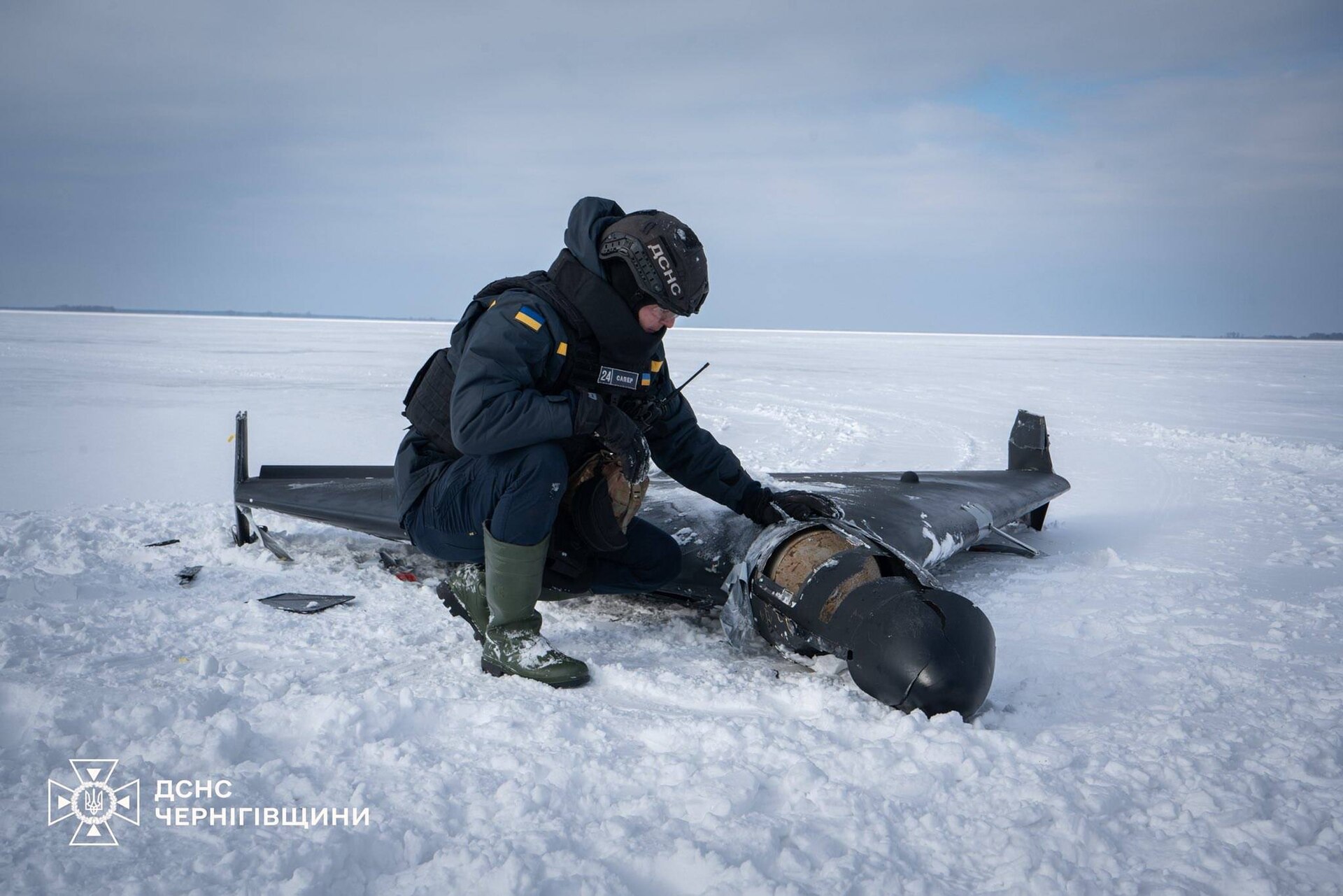
Three factors explain the paradox. First, Iran had spent years building a distributed and redundant drone manufacturing base. The Shahed-136 was designed from the outset for mass production using commercially available components — a small piston engine, composite airframe sections, basic GPS navigation, and a simple explosive warhead. Production does not require advanced machine tools or cleanroom facilities. Bloomberg reported that US intelligence assessed Iran’s drone production was distributed across dozens of small workshops rather than concentrated in a few large factories, making it resistant to the kind of precision strikes that disabled Iran’s nuclear centrifuge cascades.
Second, Iran had pre-positioned substantial drone stockpiles before the war. Intelligence estimates cited by NBC News suggested Iran maintained between 3,000 and 5,000 assembled Shahed drones in dispersed storage at the time of the first US-Israeli strikes, along with component kits for an unknown additional number. Even if no new drones were manufactured after February 28 — an unlikely scenario — the pre-war stockpile could sustain one hundred drones per day for thirty to fifty days.
Third, the Shahed production process is simple enough that alternative manufacturing sites can be activated within days. Iran’s defence industrial base had already demonstrated this capability during the Russia-Ukraine war, when Ukrainian strikes on known Shahed assembly facilities were followed by continued drone deliveries to Russia from previously unknown locations. The same resilience now manifests in the Gulf theatre: American strikes degrade the high-end of Iran’s military capability while leaving the low-end drone production base largely intact.
This finding challenges the dominant narrative that the US-Israeli military campaign has achieved its core objectives. If the strikes destroyed Iran’s nuclear capability and degraded its missile arsenal but left the drone production base functional, then they may have traded a contained strategic threat for an uncontained operational one. Iran’s nuclear program required concentration and specialisation. Its drone program requires neither.
The Council on Foreign Relations described the emergence of mass-produced drone warfare as a paradigm-defining development that conventional military doctrine has not yet absorbed. Unlike ballistic missiles, which require specialised propellants, guidance systems, and launch infrastructure that can be targeted and destroyed, a Shahed drone can be assembled in a converted automotive workshop using an engine designed for a lawnmower and navigation hardware available from consumer electronics suppliers. The US military destroyed Iran’s capacity to enrich uranium to weapons grade — a feat requiring billions of dollars in centrifuge cascades. It has not destroyed Iran’s capacity to attach explosives to a model aircraft engine and point it at an oil refinery, because that capacity exists in every country with a functioning industrial sector.
The implication for Saudi Arabia is uncomfortable: the air campaign that was supposed to defang Iran has instead channelled Iranian military energy into the one domain where Tehran holds a structural advantage. The more Iran’s conventional capabilities degrade, the more it relies on the cheap, expendable weapons that cost the most to defend against. This is not a failure of American strategy so much as a demonstration of a new kind of warfare that advanced militaries have not yet learned to counter.
What Comes After One Hundred Drones a Day?
If Iran sustains or increases the current trajectory, Saudi Arabia faces a series of escalating consequences that compound over time. Each day of hundred-drone operations depletes interceptor stocks, fatigues air defense crews, and increases the statistical probability of a drone penetrating the defense envelope and striking a critical facility.
The most likely near-term escalation is a shift from individual drone launches to coordinated swarm attacks. A swarm of twenty to thirty drones arriving simultaneously at a single facility from multiple approach vectors would overwhelm the engagement capacity of a standard Patriot battery, which can track and engage a limited number of targets concurrently. Iran demonstrated basic swarm coordination during the April 2024 strike on Israel, launching over 300 drones alongside cruise and ballistic missiles in a layered attack designed to saturate Israeli air defenses.
The counter-drone technologies that Saudi Arabia has been urgently acquiring — including Ukrainian electronic warfare systems and interceptor missiles from Kyiv — address the cost problem but not the volume problem. Even a $1,000 counter-drone round is economically sustainable, but the systems that fire them have limited engagement rates that could be overwhelmed by sufficiently large swarms.
The longer-term consequence is an accelerating deterioration of Saudi Arabia’s oil export capacity. The IEA has already classified the Hormuz closure as the largest supply disruption in the history of the global oil market, with crude production curtailed by at least eight million barrels per day across the Gulf. If sustained drone attacks further degrade Saudi Arabia’s ability to process and export oil through the Red Sea alternative route, the supply disruption would compound from severe to catastrophic.
Oil benchmark prices had already risen $20 per barrel to $92 since the war began, according to the IEA’s March report. Goldman Sachs warned that the Gulf faces its worst recession in a generation if the conflict extends beyond the first quarter. A major additional supply disruption caused by drone damage to Abqaiq or the East-West Pipeline could push crude past $150, triggering the kind of global demand destruction last seen in the 2008 financial crisis.
| Scenario | Additional Supply Loss | Estimated Price Impact | Duration |
|---|---|---|---|
| Pumping station hit (East-West Pipeline) | 1-2 million bpd | $10-$20 per barrel | 1-3 weeks repair |
| Abqaiq partial shutdown (stabilisation towers) | 3-4 million bpd | $25-$40 per barrel | 3-8 weeks repair |
| Abqaiq full shutdown (2019-scale attack) | 5-7 million bpd | $50+ per barrel | 4-12 weeks repair |
| Coordinated multi-facility strike | 7-10 million bpd | $80-$100+ per barrel | Months |
The question facing Crown Prince Mohammed bin Salman is whether defensive measures alone can prevent Iran from eventually achieving a catastrophic strike, or whether the Kingdom must consider an offensive response that would mark a dramatic departure from its posture of strategic restraint. The Gulf states’ public pressure on Washington to neutralize Iran decisively reflects a growing recognition that the current trajectory — absorbing ever-larger drone barrages while hoping the US campaign degrades Iran’s ability to launch them — may not be sustainable.
The hundred-drone day was a signal, and the Eastern Province’s oil fields are listening.
The drone campaign has only intensified. On Eid al-Fitr morning, March 20, Iranian drones struck Kuwait’s 730,000-barrel Mina Al-Ahmadi refinery while Saudi air defenses intercepted 11 more drones over the Eastern Province.
Frequently Asked Questions
How many drones did Iran launch at Saudi Arabia on March 17, 2026?
Iran launched nearly one hundred drones at Saudi Arabia on March 17, 2026, according to Bloomberg, the largest single-day barrage since the war began on February 28. The previous daily average had been fewer than twenty-five drones. The Saudi Ministry of Defense confirmed intercepting a ballistic missile and at least twenty-four drones in one engagement, with additional waves continuing throughout the day and into March 18.
Why is Iran targeting Saudi Arabia’s Eastern Province oil facilities?
Iran is targeting the Eastern Province because it contains the world’s largest concentration of petroleum infrastructure, including the Ghawar oil field (3.8 million barrels per day), the Abqaiq processing plant (7 million barrels per day capacity), and the Ras Tanura refinery and export terminal. Disrupting these facilities inflicts maximum economic damage per drone launched, and the province’s proximity to Iran reduces flight times to two to three hours, limiting the time available for Saudi air defenses to detect and engage incoming threats.
How much does it cost to intercept an Iranian drone with a Patriot missile?
A Patriot PAC-3 MSE interceptor costs approximately $4.1 million per missile, according to the US Congressional Research Service. Against a Shahed-136 drone costing an estimated $20,000 to $50,000, this creates a cost exchange ratio of roughly 80:1 to 200:1 in favour of the attacker. At one hundred drones per day, Saudi Arabia’s daily interceptor expenditure could reach $200 million to $400 million, a rate that depletes missile stocks far faster than manufacturers can replace them.
What happened during the 2019 Abqaiq attack and could it happen again?
On September 14, 2019, eighteen drones and seven cruise missiles struck the Abqaiq processing plant and Khurais oil field, temporarily removing 5.7 million barrels per day of Saudi production capacity. The attack bypassed Saudi radar coverage by approaching from the north-northwest rather than from Yemen. A repeat scenario is not only possible but more likely in 2026, as Iran is launching far higher numbers of drones (up to one hundred per day versus eighteen in the entire 2019 attack) and has demonstrated the ability to sustain operations for weeks.
Can Saudi Arabia’s East-West Pipeline bypass the Hormuz blockade?
The East-West Pipeline, running 1,201 kilometres from Abqaiq to the Red Sea port of Yanbu, has been Saudi Arabia’s primary export alternative since the Strait of Hormuz closure. Its capacity was raised to seven million barrels per day on March 11 by converting parallel natural gas liquids lines to carry crude. However, the pipeline’s nine exposed pumping stations across open desert are vulnerable to drone strikes, and its functionality depends on the Abqaiq facility — the same Eastern Province target Iran is concentrating its attacks on. The cumulative damage inflicted on energy facilities across Saudi Arabia, Qatar, and the UAE represents permanent infrastructure destruction that no ceasefire can undo.
How many Shahed drones does Iran have stockpiled?
Intelligence estimates vary, but NBC News reported that Iran maintained between 3,000 and 5,000 assembled Shahed drones at the time the war began on February 28, 2026, with component kits for additional production. Iran’s pre-war manufacturing capacity was estimated at 200 to 500 drones per month. At one hundred per day, the pre-war stockpile could sustain thirty to fifty days of operations even with zero new production — though US and Israeli strikes have likely degraded but not eliminated ongoing manufacturing.