TEHRAN — An IRGC “military council” of senior officers has seized de facto control of Iran’s government, cutting President Masoud Pezeshkian off from Supreme Leader Mojtaba Khamenei and vetoing civilian appointments, according to sources with knowledge of Iran’s internal power structure cited by Iran International on April 1 — a development that renders the diplomatic channels Saudi Arabia and the United States have spent weeks cultivating functionally irrelevant to the men actually running the war.
Pezeshkian has repeatedly sought urgent meetings with Mojtaba Khamenei in recent days, but every request has gone unanswered. IRGC Commander Ahmad Vahidi — subject of an Interpol red notice for the 1994 Buenos Aires bombing that killed 85 people — has personally blocked presidential appointments, compelled the installation of his preferred candidates to critical security posts, and rejected the president’s demand for civilian control over war decisions, according to Iran International. A Western intelligence assessment cited by Israel Hayom concluded that “what is taking shape in Iran is no longer an Islamic Republic in its original sense, but a military junta in every respect.”
Table of Contents
The Invisible Supreme Leader
Mojtaba Khamenei was selected as Supreme Leader by the Assembly of Experts on March 8, 2026. He has not appeared in public once since. As of April 1, that is 24 days without a single photograph, video, or audio recording of the man who holds constitutional authority over Iran’s armed forces, its nuclear programme, and its foreign policy.
His first statement as Supreme Leader — issued on March 12 — was read by a television presenter on state media. No audio or video of Mojtaba accompanied it. DNI Tulsi Gabbard testified that Mojtaba was “very seriously wounded” in the Israeli strike that killed his father on February 28, and a US official told media outlets, “We have no proof he is holding the wheel,” according to Israel Hayom. Russia’s ambassador to Iran said only that Mojtaba was in the country but “refraining from making public appearances for understandable reasons,” as reported by Al Arabiya on March 31.
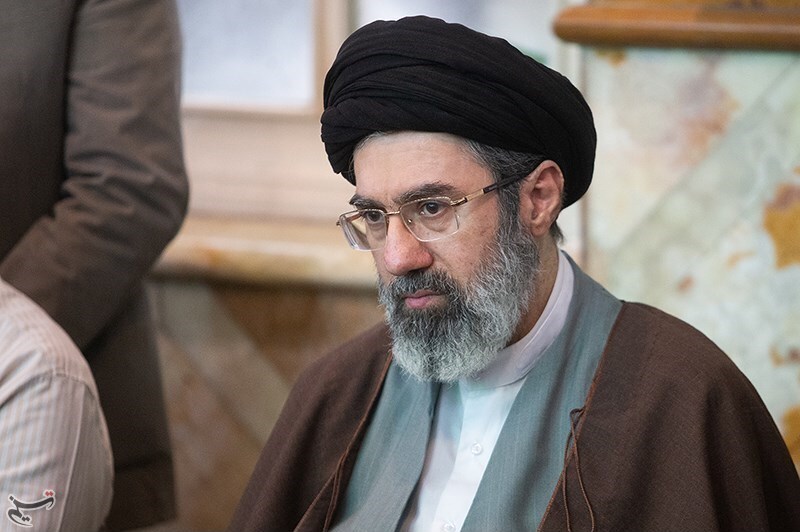
The vacuum at the top has produced a constitutional crisis that Iran’s state media refuses to acknowledge. Pezeshkian — the elected president — cannot reach the Supreme Leader. The Supreme Leader cannot or will not communicate with the civilian government. And the IRGC has filled that gap with a military council that controls access to Mojtaba, controls appointments, and controls war decisions, according to informed sources cited by Iran International.
Vahidi’s Wartime Takeover
Ahmad Vahidi was appointed IRGC Commander on March 1, 2026, after his predecessor Mohammad Pakpour was killed in the opening phase of the US-Israeli strikes — the third IRGC commander to die in less than a year, following Hossein Salami in June 2025. Vahidi’s career arc runs through the darkest chapters of Iran’s security apparatus: he commanded the Quds Force for nine years from 1988 to 1997, before handing command to Qassem Soleimani, according to an Al Jazeera profile published March 6. He served as Defence Minister under Ahmadinejad and Interior Minister under Raisi. Both the US and EU sanctioned him for the 2022 protest crackdowns. Argentina holds an international arrest warrant for his alleged role in the AMIA bombing.
“Vahidi is in charge of the country,” former Iranian parliamentarian Ali Akbar Mousavi Khoeini told NBC News. “The power is in the hands of the Revolutionary Guard and the most radical faction of the Revolutionary Guard.” Khoeini added bluntly: “Ghalibaf doesn’t have the strength to confront him.”
“Given wartime conditions, all critical and sensitive leadership positions must be selected and managed directly by the IRGC until further notice.”
Ahmad Vahidi, IRGC Commander, according to Iran International, March 2026
The evidence of Vahidi’s consolidation is specific and documented. When Pezeshkian attempted to appoint Hossein Dehghan as Intelligence Minister on March 28, Vahidi directly blocked the move, insisting that wartime conditions required IRGC control over all sensitive appointments, Iran International reported. Earlier, on March 24, Vahidi compelled Pezeshkian to appoint Mohammad Bagher Zolghadr as Secretary of the Supreme National Security Council — the body that controls Iran’s nuclear and military strategy — despite, as Iran International’s sources put it, “Pezeshkian’s own dissatisfaction.” The president issued the decree under duress.
On March 7, Pezeshkian released a video ordering “fire at will” attacks on neighbouring countries to cease. Military operations resumed shortly after, according to Iran International’s March 28 reporting. He warned that “without a ceasefire, Iran’s economy could face total collapse within three weeks.” Vahidi rejected the demand.
Who Is Actually Running Iran’s War?
The war effort is now managed by a diffuse committee structure, according to NBC News. Parliamentary Speaker Mohammad Bagher Ghalibaf handles strategic matters. Vahidi leads the tactical war effort. Pezeshkian manages day-to-day state functions — the administrative work that keeps the lights on, or tries to, while the military council makes the decisions that determine whether the war continues or ends. An insider confirmed to NBC that “Ghalibaf acts only with approval from Mojtaba Khamenei. Even if talks were to take place, Ghalibaf would not be able to commit Iran without broader approval.”
The men Mojtaba — or those acting in his name — have placed in the war council carry a specific pedigree. Mohsen Rezaei, appointed as the Supreme Leader’s military advisor in mid-March, was IRGC Commander-in-Chief for 16 years, appointed by Khomeini himself at age 27 in 1981, the longest command tenure in the organisation’s history. He oversaw the founding of Hezbollah in Lebanon. He is, like Vahidi, the subject of an Interpol red notice for the 1994 Buenos Aires AMIA bombing, as reported by The Spectator. Two of the three men at the centre of Iran’s war decision-making face international arrest warrants for the same attack that killed 85 people.
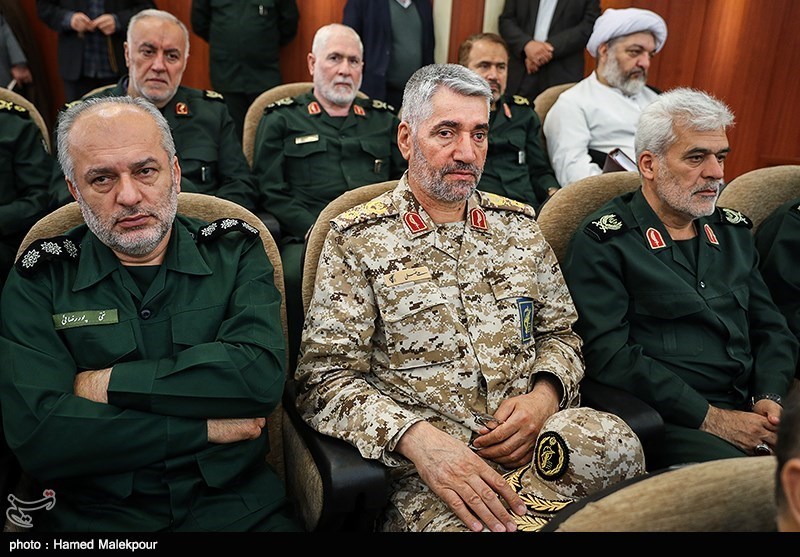
Zolghadr — the imposed SNSC Secretary — carries a biography that reads as a history of IRGC coercion. He was a founding member of the Mansouroun network before the revolution, was involved in the killing of American oil executive Paul Grimm in 1978, founded the Ramadan Headquarters in 1984 that became the precursor to today’s Quds Force, signed the 1999 letter threatening reformist President Khatami, and ran security suppression of the 2009 Green Movement, according to Farzin Nadimi at the Washington Institute for Near East Policy. He has zero diplomatic experience. He is UN-sanctioned.
Nadimi assessed that Zolghadr’s appointment signals the regime’s prioritisation of “system preservation through discipline, control, and hard-power coordination” rather than diplomatic flexibility. “The IRGC now occupies the visible centre of gravity,” he wrote, “with clerics notably less prominent as crisis managers.”
Why Does This Make Diplomacy a Dead End?
President Trump postponed US strikes on Iran’s power grid to April 6, 2026, claiming talks were going “very well,” according to Al Jazeera. The Islamabad Quartet — Saudi Arabia, Turkey, Egypt, and Pakistan — met on March 29, eight days before that deadline, to push for a direct US-Iran dialogue. Washington’s 15-point plan, transmitted through Pakistan, demands a one-month ceasefire, Iran’s handover of its highly enriched uranium, a halt to further enrichment, curbs on its ballistic programme, and an end to support for regional proxies. Iran’s counterproposal, reported by NPR on March 26, includes five conditions: halt to all attacks, mechanisms to prevent resumption, compensation for war damages, security guarantees, and international recognition of Iranian sovereignty over the Strait of Hormuz.
The problem is who sits across the table. Iran’s Foreign Minister Abbas Araqchi — Saudi FM Prince Faisal bin Farhan’s primary interlocutor — is himself an IRGC product. He joined the Guards as a teenager, served nine years including combat in the Iran-Iraq War, and joined the Foreign Ministry only in 1989, according to a UANI profile. He is the architect of “resistance diplomacy,” a doctrine that explicitly mirrors Soleimani’s legacy. But even Araqchi’s IRGC credentials do not give him a seat at the war council. As NBC’s insider source confirmed, even Ghalibaf — who outranks Araqchi in the power structure — cannot commit Iran to anything without approval from Mojtaba’s circle, a circle the IRGC military council now controls.
The IRGC’s own spokesman, Ebrahim Zolfaghari, provided the most candid assessment of the diplomatic situation. He dismissed Trump’s overtures and asked whether the United States had reached “the stage of you negotiating with yourself,” according to Al Jazeera’s March 26 report. The question was rhetorical, but it may have been more honest than he intended: if the military council vetoes any outcome that Araqchi or Pezeshkian might negotiate, then Washington is talking to itself — transmitting proposals through a civilian government that lacks the authority to accept them.
Kaitlyn Hashem of the Stimson Center framed the structural problem: Israel’s assassination campaign “has led to the promotion of IRGC old-timers who are likely to prove more hostile to the U.S. and less nimble in negotiating an end to the war.” The men elevated to replace those killed in strikes — Vahidi, Zolghadr, Rezaei — are not only more hardline than their predecessors but less practised in the kind of ambiguity that allows negotiations to succeed.
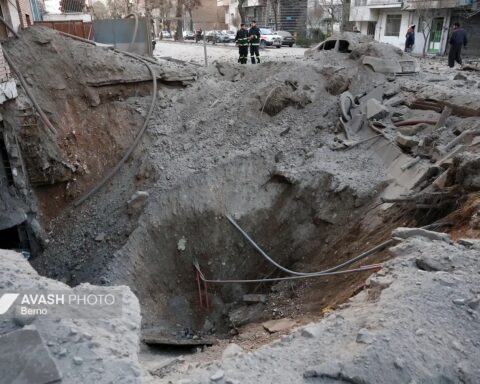
That structural thinning accelerated on April 1, when an airstrike on a residential Tehran neighborhood gravely wounded Kamal Kharazi — the 81-year-old former foreign minister who, according to two Iranian officials, was personally overseeing the back-channel to Washington through Pakistan. The airstrike on Kharazi incapacitated the man running Iran’s last diplomatic track and removed the official who carried institutional memory of every nuclear negotiation since 1997 from the field at the moment it mattered most.
The Saudi Problem
For Riyadh, the IRGC’s seizure of Iran’s governing apparatus collapses the theory that Saudi Arabia’s diplomatic bet — sustained engagement with Tehran’s Foreign Ministry — can produce a ceasefire before the April 6 deadline. Prince Faisal bin Farhan has maintained near-daily contact with Araqchi since the war began. Saudi Arabia expelled five Iranian diplomats on March 22, reducing the Iranian mission from six to one, but kept that single channel open — a signal, as a senior Saudi Foreign Ministry official told the Christian Science Monitor, that Riyadh still believed diplomacy had not been exhausted.
Abdulaziz Sager, chairman of the Gulf Research Center, was less sanguine. “Dialogue on its own is not enough if it is not backed by credible deterrence, stronger air and missile defence, and clearer consequences for attacks,” he told the Christian Science Monitor on April 1. The sentiment reflects a growing recognition in Riyadh that the person picking up the phone in Tehran cannot deliver the person making the decisions — and that Saudi Arabia’s depleting interceptor stocks make the cost of failed diplomacy measurable in hardware, not just time.
IRGC units have been described as operating “almost independent and according to a pre-prepared plan,” according to Israel Hayom’s March 25 report. That description matters for Saudi defence planning: even if a ceasefire were announced tomorrow, the question of whether field commanders embedded in Iran’s strategy against Saudi air defences would obey it is separate from whether Tehran’s civilian government endorsed it. The Gulf coalition fractures already visible between Riyadh and Abu Dhabi over war strategy add another layer of vulnerability: even a negotiated pause would need to be implemented by IRGC field units that answer to Vahidi, not Araqchi.
“It is our right to defend ourselves, our territory, people, and residents against this daily aggression, separate from the war.”
Senior Saudi Foreign Ministry official, to the Christian Science Monitor, April 1, 2026
How Does Tehran Present This?
Iranian state media has constructed an entirely different narrative. Press TV, on March 12, published a profile of “Ayatollah Seyyed Mojtaba Khamenei, the third Leader of the Islamic Revolution,” emphasising his scholarly qualifications and the Assembly of Experts’ supervisory mandate. The article rejected the characterisation of his selection as hereditary, calling it a “distortion of reality.” Tasnim, Fars, and ISNA covered the March 8 selection as a straightforward institutional succession, with no acknowledgement of Mojtaba’s inaccessibility, health status, or IRGC pressure on civilian appointments.
Ghalibaf, the parliamentary speaker, has adopted the public voice of defiance. “As long as the Americans seek Iran’s surrender, our answer is clear: ‘We will not submit,’” he told the Times of Israel and Iran International on March 29. He added: “Our men are waiting for the ground entry of American soldiers to set them ablaze.” Ali Alfoneh of the Arab Gulf States Institute characterised Ghalibaf’s posture as dual: “pragmatic when engaging pragmatic counterparts and hard-line when confronting hard-line adversaries,” he told NBC News — a flexibility that would matter if Ghalibaf held independent authority, but the NBC insider’s account suggests he does not.
The gap between Tehran’s public presentation and the reported reality is stark. State media portrays constitutional continuity and unified leadership. Sources inside the system describe a president who cannot reach the Supreme Leader, a war effort run by men with Interpol warrants, and a military council that has declared all sensitive positions its domain “until further notice.” US intelligence, as reported by the Washington Post on March 16, assesses that regime change is “unlikely” and that hardline IRGC elements will “almost certainly” drive Iran toward more anti-Western policies — a prediction that the April 1 Iran International report suggests has already materialised.
Background: The IRGC’s Forty-Year March
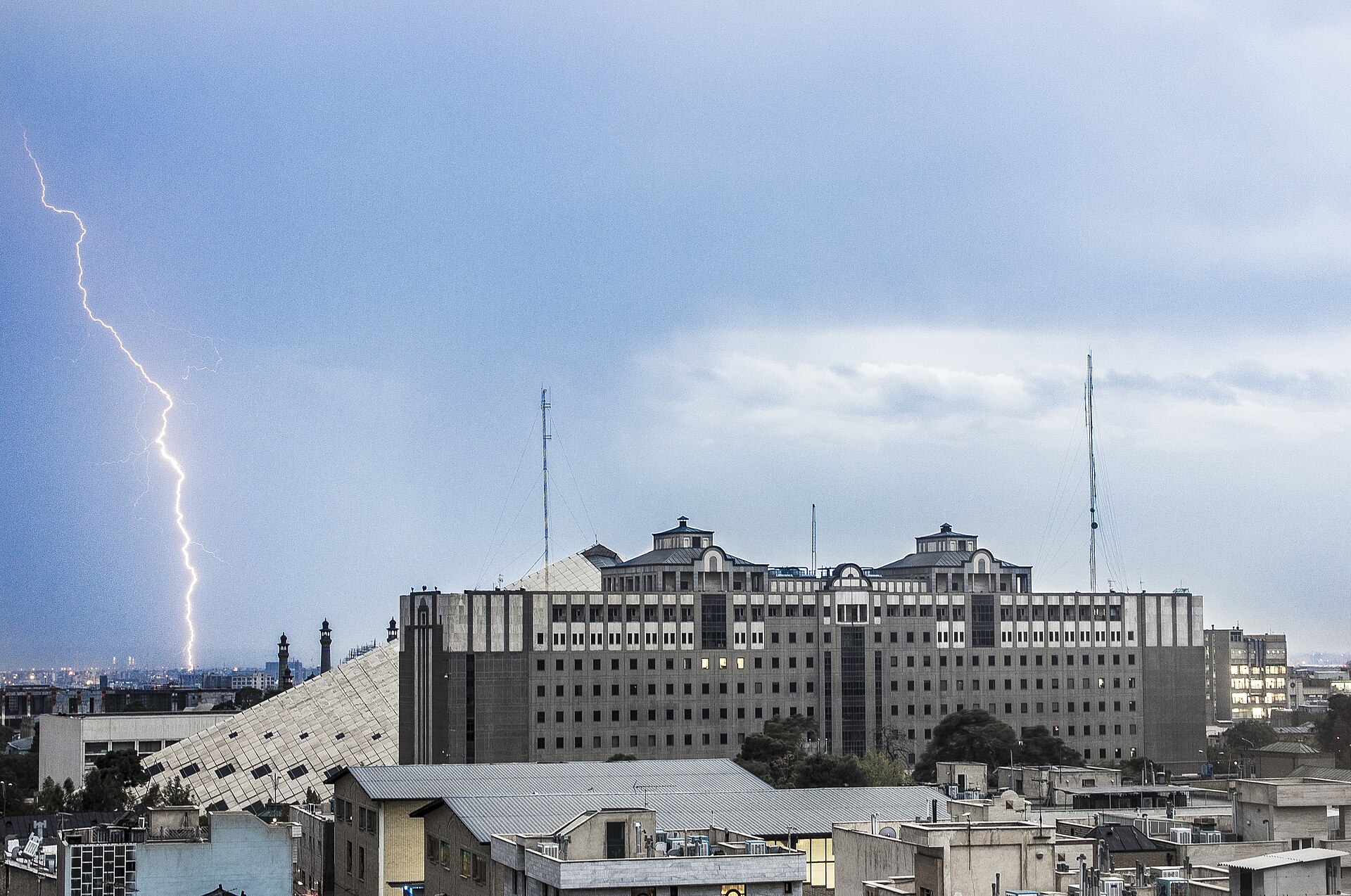
The IRGC’s dominance of Iran’s political structure did not begin with this war. The organisation founded Hezbollah in Lebanon in 1982, expanded its economic empire under Ahmadinejad’s presidency, suppressed the 2009 Green Movement through its Basij militia and commanders like Zolghadr, and controlled the infrastructure around nuclear negotiations during the Rouhani era. The Foundation for Defense of Democracies published an analysis on March 26 noting that the war has “compressed a 40-year creeping seizure into weeks” — an assessment that captures how the IRGC converted wartime chaos into a constitutional fait accompli.
The Soufan Center’s March 2026 brief on the post-Khamenei transition warned that the interim leadership council’s “markedly different orientations will make it difficult to reach consensus on any major decisions” — an institutional paralysis that enabled the IRGC to fill the vacuum rather than compete within it. The Assembly of Experts, the 88-member body that selected Mojtaba, lost an unknown number of members in the strikes that destroyed its Qom headquarters, raising unresolved questions about whether the selection even met its own quorum requirements.
Meanwhile, Iran’s economy is collapsing under the combined weight of sanctions and war. More than 40 percent of the population lives below the absolute poverty line, food prices have risen at least 50 percent compared to pre-war levels, and government employees have gone unpaid for three months, according to state-affiliated figures cited by the Jerusalem Post. Pezeshkian’s economic warning — his strongest argument for civilian control — was rejected. The IRGC has chosen military coherence over economic survival, a decision that falls on 90 million Iranians who had no say in it.
Frequently Asked Questions
What constitutional authority does the IRGC claim for overriding presidential decisions?
None explicitly. Iran’s constitution grants the Supreme Leader authority over the armed forces and the president authority over domestic governance. The IRGC’s argument — that “wartime conditions” require military control over appointments — has no formal legal basis in the Islamic Republic’s constitution. It rests on the practical reality that Mojtaba Khamenei is inaccessible, the president cannot enforce civilian authority without the Supreme Leader’s backing, and no institution exists with the power or willingness to challenge the Guards’ interpretation of their mandate during active hostilities.
Has Iran experienced military control of civilian government before?
Not in this form. The IRGC has exercised veto power over individual policies — most visibly during the Khatami reform era, when senior commanders including Zolghadr signed a threatening letter to the president in 1999 — but has never publicly assumed direct control over cabinet appointments and war-or-peace decisions simultaneously. The closest historical parallel is the period after the 2009 Green Movement, when the IRGC’s security apparatus effectively controlled internal security policy, but elected officials retained nominal authority over foreign affairs and economic management.
Can Araqchi negotiate independently given his own IRGC background?
Araqchi’s nine years in the IRGC, including Quds Force service, give him personal credibility within the security establishment but not institutional authority over it. The “resistance diplomacy” doctrine he designed explicitly subordinates diplomatic flexibility to military objectives. His own stated philosophy — “I consider myself a soldier of the Supreme Leader” — means his negotiating room is defined by whoever controls access to the Supreme Leader, which reporting now indicates is the IRGC military council rather than the civilian chain of command.
What is the Ramadan Headquarters that Zolghadr founded, and why does it matter?
The Ramadan Headquarters was established in 1984 during the Iran-Iraq War as the IRGC’s operational command for extraterritorial and unconventional warfare. It was the direct organisational precursor to the Quds Force, which Ayatollah Khamenei formally established in 1989. Zolghadr’s role in creating the original structure means the current SNSC Secretary built the institutional framework that produced both Soleimani’s regional proxy network and the current Quds Force operations. His appointment places the architect of Iran’s extraterritorial military doctrine at the centre of its national security decision-making.
What happens if the April 6 deadline passes without a deal?
Trump has threatened strikes on Iran’s power grid and, more recently, its desalination plants. Iran’s formal counterproposal — five conditions including Strait of Hormuz sovereignty recognition — contains demands Washington has publicly rejected. With the IRGC military council controlling Iran’s war decisions and Pezeshkian unable to deliver concessions even if he wanted to, the structural conditions for a pre-deadline agreement do not appear to exist. Pakistan’s Deputy PM Ishaq Dar confirmed after the March 29 Islamabad meeting that both sides expressed willingness for direct talks, but no date or format has been announced as of April 2.