
RIYADH — Iran’s Islamic Revolutionary Guard Corps pledged on Monday to launch only missiles carrying warheads weighing at least one ton, a dramatic escalation of firepower that came hours after Saudi Arabia issued its strongest public warning yet that Tehran would be “the biggest loser” if drone and missile attacks on Arab states continued. The IRGC Aerospace Force commander, Brigadier General Majid Mousavi, told Iranian state media that the corps would “increase the power and frequency of its missile launches and expand their range,” signalling that a battered but defiant Iran intends to trade volume for destructive force as it enters the second week of war against the United States and Israel.
The twin developments mark a dangerous new phase in the conflict for Saudi Arabia and the Gulf states. While joint US-Israeli strikes have destroyed approximately 75 percent of Iran’s missile launch capacity since February 28, the IRGC’s pivot toward fewer but heavier warheads poses a direct threat to Saudi civilian and energy infrastructure. On the same day Mousavi made his pledge, nine more drones targeted the Shaybah oil field in the Empty Quarter, according to the Saudi Ministry of Defense, despite repeated warnings from Riyadh that such attacks would carry severe consequences.
Table of Contents
- What Did the IRGC Commander Actually Pledge?
- How Much of Iran’s Missile Arsenal Remains?
- Saudi Arabia’s ‘Biggest Loser’ Warning
- Shaybah Under Fire Again Despite Warnings
- Can Saudi Air Defenses Stop One-Ton Warheads?
- Trump Threatens Iran ‘20 Times Harder’
- The Regional Toll After 10 Days of War
- Background and Context
- Frequently Asked Questions
What Did the IRGC Commander Actually Pledge?
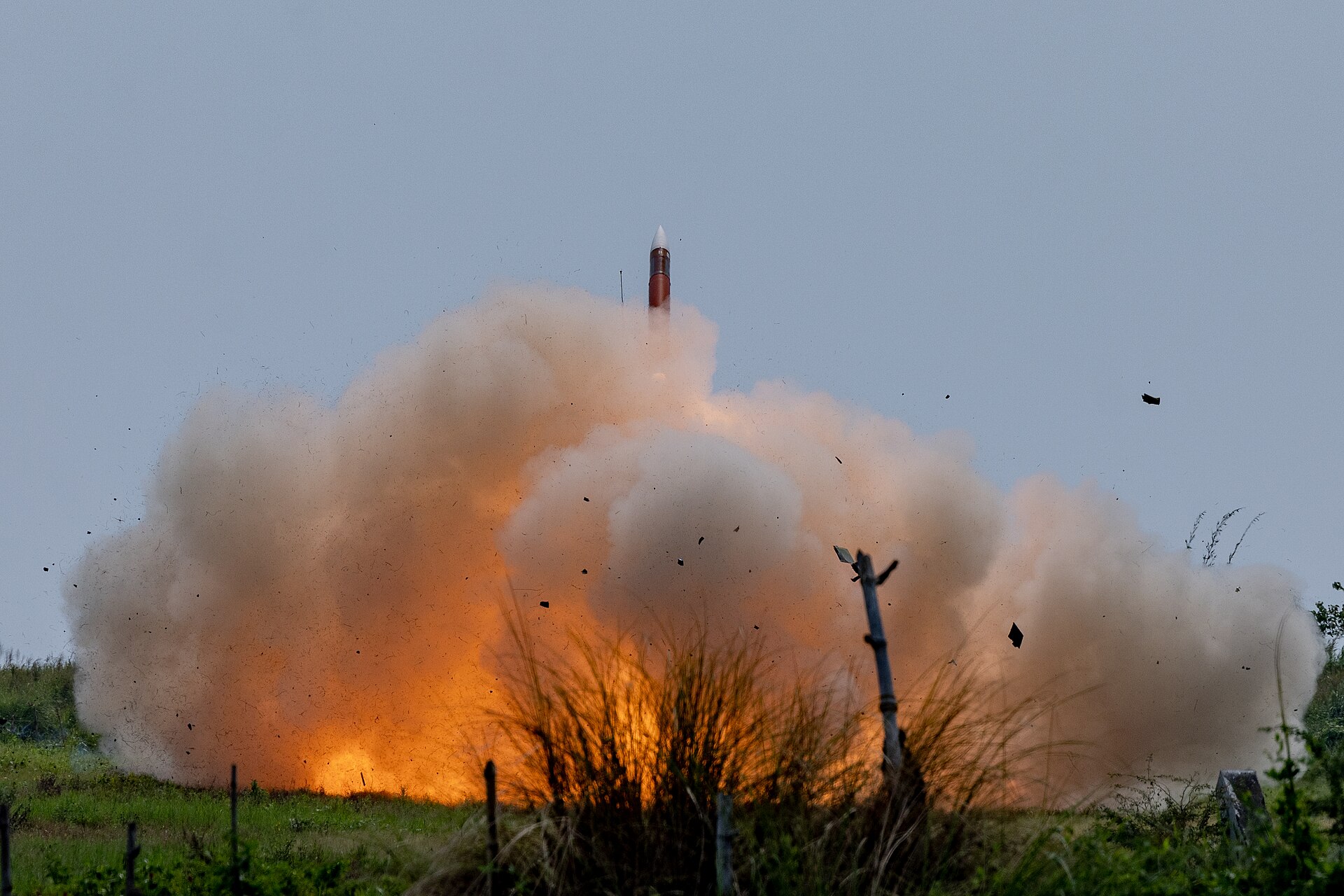
Brigadier General Majid Mousavi, commander of the IRGC Aerospace Force, stated on Monday that from this point forward, no missile with a warhead weighing less than one ton would be launched against US and Israeli targets. Iranian state television quoted Mousavi as saying that “Iran will increase the power and frequency of its missile launches and expand their range,” a statement that analysts interpreted as an acknowledgement that Tehran’s launch capacity has been degraded but that its remaining stockpile carries greater individual destructive potential.
The pledge came as the IRGC announced what it called the “33rd wave of Operation True Promise 4,” targeting Israeli and American positions with solid-fuel Khaibar Shekan missiles equipped with one-ton warheads. The Jerusalem Post reported that Mousavi did not clarify whether the heavier warheads would also contain cluster munitions, a weapons type Iran has already deployed in recent strikes against Israeli civilian areas, with each sub-munition carrying approximately two kilograms of explosives, according to Israeli defense officials.
The shift in strategy reflects a fundamental change in Iran’s approach to the conflict. Rather than saturating targets with large salvos of lighter missiles — the approach Tehran used during the opening hours of the war on February 28 — the IRGC appears to be conserving its diminished launcher fleet while maximizing the destructive impact of each individual launch. A single one-ton conventional warhead can destroy a multi-story building, rupture above-ground oil storage tanks, or create a blast crater large enough to disable a runway, according to assessments by the International Institute for Strategic Studies.
How Much of Iran’s Missile Arsenal Remains?
Despite the IRGC’s defiant rhetoric, Iran’s missile capability has been significantly degraded by 10 days of sustained US-Israeli strikes. A joint IDF-CENTCOM intelligence assessment, cited by the Jewish Institute for National Security of America, estimated that approximately 75 percent of Iran’s missile launch capacity has been destroyed since the conflict began.
Before the war, Western intelligence agencies estimated Iran possessed roughly 420 operational missile launchers. According to the JINSA analysis published on March 6, approximately 150 launchers were completely destroyed in precision strikes, while another 150 sustained damage in air attacks that rendered them temporarily unusable. That leaves approximately 100 to 120 launchers still operational, according to the assessment.
The missile stockpile itself, however, remains substantial. Iran entered the conflict with an estimated 2,000 medium-range ballistic missiles and between 6,000 and 8,000 short-range ballistic missiles, according to the Foundation for Defense of Democracies. While losses have accumulated, the critical bottleneck is not warheads but launchers. The FDD’s Long War Journal reported on March 4 that Iranian ballistic missile launches have fallen 90 percent from their initial rate, including an 88 percent drop in launches targeting Israel specifically. The Pentagon subsequently confirmed that figure in its Day 11 briefing, reporting that Operation Epic Fury had struck more than 5,000 targets across Iran, systematically dismantling the launch infrastructure behind those numbers.
| Category | Pre-War Estimate | Current Estimate (March 10) | Change |
|---|---|---|---|
| Operational launchers | ~420 | ~100–120 | –75% |
| Medium-range ballistic missiles | ~2,000 | Unknown (significant losses) | Declining |
| Short-range ballistic missiles | 6,000–8,000 | Unknown (faster depletion) | Declining |
| Daily missile launch rate | 100+ (Feb 28) | ~10 (March 10) | –90% |
| Drone launch capacity | Hundreds per day | Sustained (less degraded) | Lower but persistent |
The Center for European Policy Analysis noted in a March 7 analysis that Iran can no longer conduct the “sustained, large-volume barrages” that characterized the opening days of the conflict. The IRGC’s pivot to heavier warheads appears to be an attempt to extract maximum strategic impact from a shrinking operational capacity, trading quantity for destructive power in what the Asia Times described as a “significantly degraded” but still dangerous missile force.
Saudi Arabia’s ‘Biggest Loser’ Warning
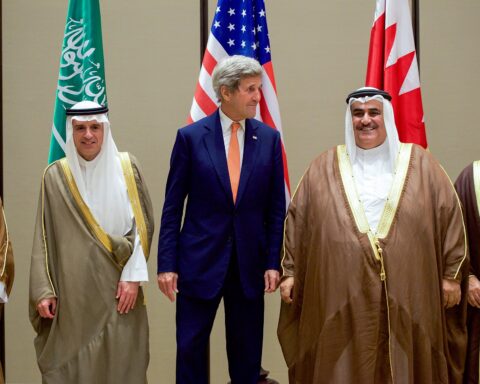
Saudi Arabia issued its most pointed public rebuke of Iran on Monday, warning that Tehran would be “the biggest loser” and would pay the “heaviest price” if attacks on Arab states continued. The statement, issued through the Saudi Foreign Ministry, marked a significant hardening of Riyadh’s public posture after days of diplomatic restraint during which Foreign Minister Faisal bin Farhan had pursued backchannel diplomacy aimed at de-escalation.
The warning also directly contradicted Iranian President Masoud Pezeshkian, who said on Saturday that Iran had halted its attacks on Gulf Arab states. The Saudi Foreign Ministry stated bluntly that “the Iranian side has not implemented this statement in practice, neither during the Iranian president’s speech nor afterward,” according to Fortune, which obtained the full text of the statement.
The disconnect between Pezeshkian’s peace overtures and the IRGC’s continued strikes underscored the widening split between Iran’s civilian government and its military command. While the president has signalled willingness to negotiate, the IRGC, which now effectively controls Iran’s wartime decision-making, has repeatedly escalated both the frequency and lethality of its attacks.
Saudi Arabia’s warning also noted that continued attacks would have a “significant impact on bilateral relations now as well as the future,” language that analysts at the Carnegie Endowment for International Peace interpreted as a signal that Riyadh is preparing to formally abandon the diplomatic normalization process with Tehran that began with the Chinese-brokered 2023 agreement. The statement was one of the sharpest Saudi public criticisms of Iran since the conflict began, a departure from the measured tone Crown Prince Mohammed bin Salman has maintained throughout the crisis.
Shaybah Under Fire Again Despite Warnings
The Saudi Ministry of Defense reported on Monday that nine drones targeting the Shaybah oil field were intercepted and destroyed in the Empty Quarter, the latest in a series of attacks on one of Saudi Arabia’s most valuable energy installations. Al Arabiya reported that the attacks came despite Riyadh’s explicit warnings to Tehran, raising questions about whether the IRGC is deliberately testing Saudi red lines or whether Iran’s military command simply does not answer to the diplomatic signals being sent through official channels.
Shaybah, located in the southeastern Rub’ al-Khali desert near the UAE border, produces approximately one million barrels of oil per day and is one of Aramco’s most remote major production facilities. Its isolation makes it particularly vulnerable to drone attacks, which can be launched from multiple directions across hundreds of kilometres of empty desert. The site has been targeted repeatedly since the war began, with the Saudi Defense Ministry reporting at least four separate drone salvos aimed at the facility in the past week alone.
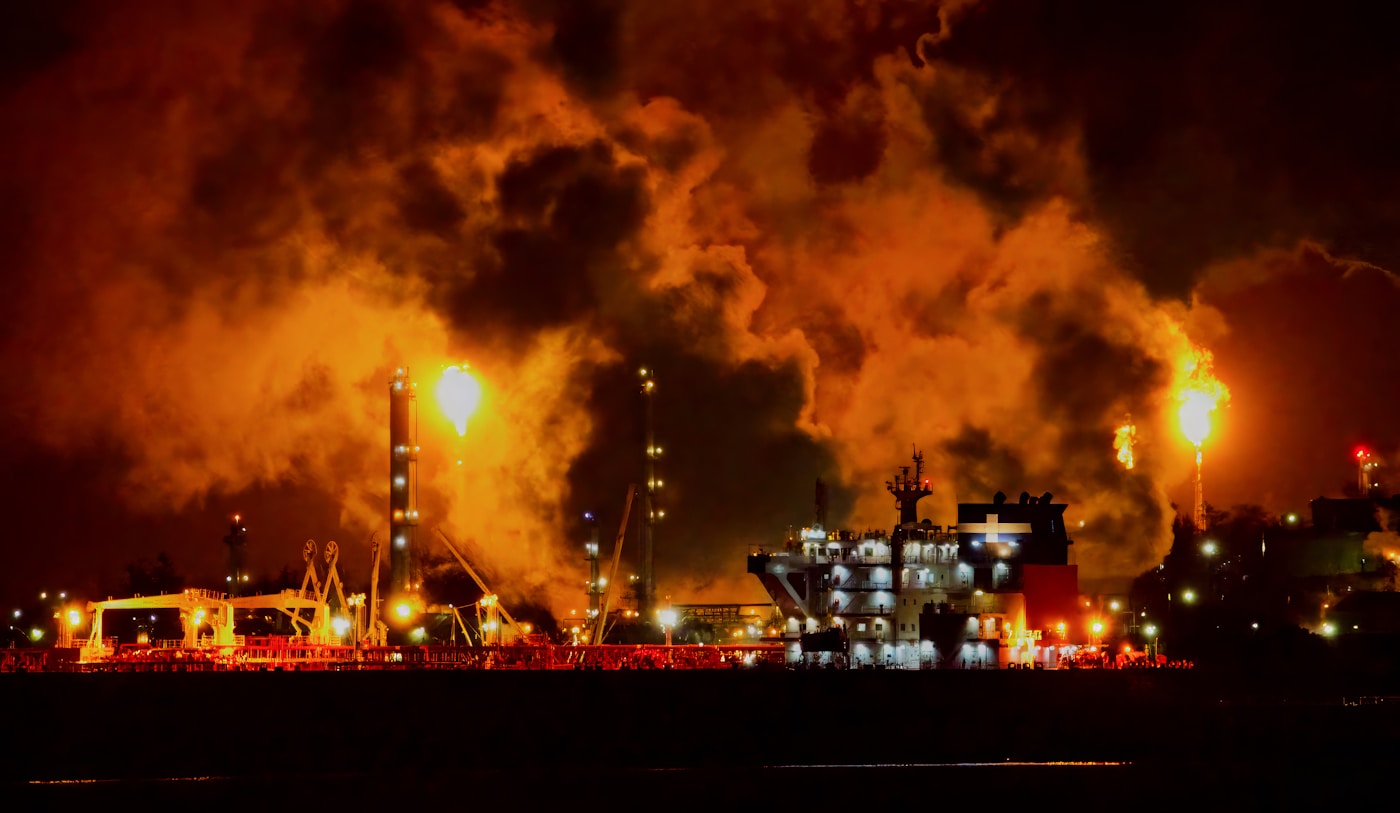
The continued targeting of Shaybah comes as Aramco has already been forced to cut oil output due to the Strait of Hormuz blockade, which has filled storage facilities to near capacity. Any successful strike on Shaybah’s processing facilities could knock a significant portion of Saudi production offline for weeks or months, compounding the supply crisis that has already driven Brent crude above $98 per barrel.
The Sunday attack on Shaybah followed a week in which Saudi air defenses also intercepted three ballistic missiles targeting Prince Sultan Air Base on March 6, six drones east of Riyadh on March 8, and a drone east of the Al-Jouf region on March 9, according to the Ministry of Defense. The Al-Kharj projectile strike that killed two foreign workers and wounded 12 others on March 8 demonstrated that not every incoming projectile is being intercepted successfully.
Can Saudi Air Defenses Stop One-Ton Warheads?
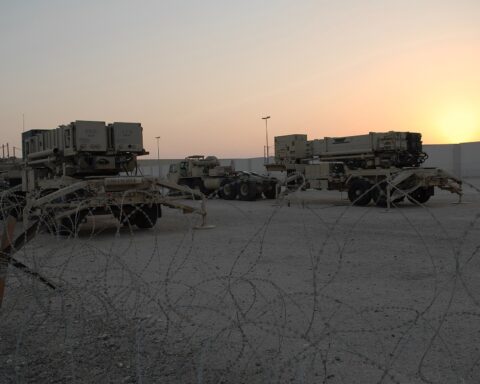
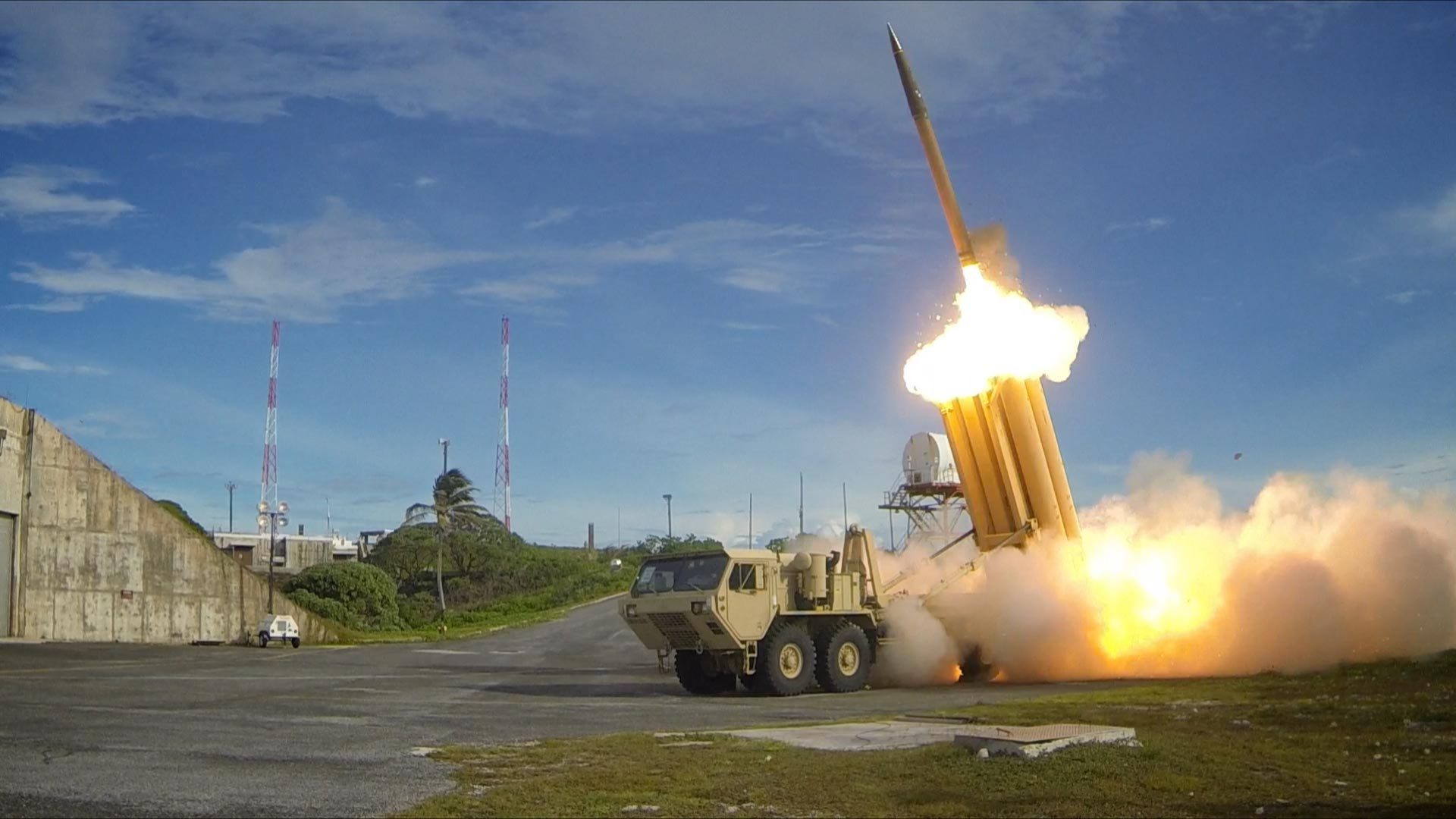
Saudi Arabia operates one of the most extensive integrated air defense networks in the Middle East, built around US-made Patriot PAC-3 and THAAD systems supported by a network of AN/TPY-2 radars. The Saudi air defense shield has performed well over the past 10 days, successfully intercepting hundreds of incoming missiles and drones, according to the Saudi Ministry of Defense. But analysts caution that the IRGC’s shift to heavier warheads changes the risk calculus significantly.
The Patriot PAC-3 interceptor is designed to destroy incoming ballistic missiles through kinetic impact — a hit-to-kill approach that relies on the interceptor’s own kinetic energy to shatter the incoming warhead. Against lighter warheads, a near-miss or partial intercept can still neutralize the threat. Against a one-ton warhead, the tolerances are tighter. A warhead fragment weighing several hundred kilograms, even after a partially successful intercept, can still cause significant damage on the ground, according to analysis by the International Institute for Strategic Studies.
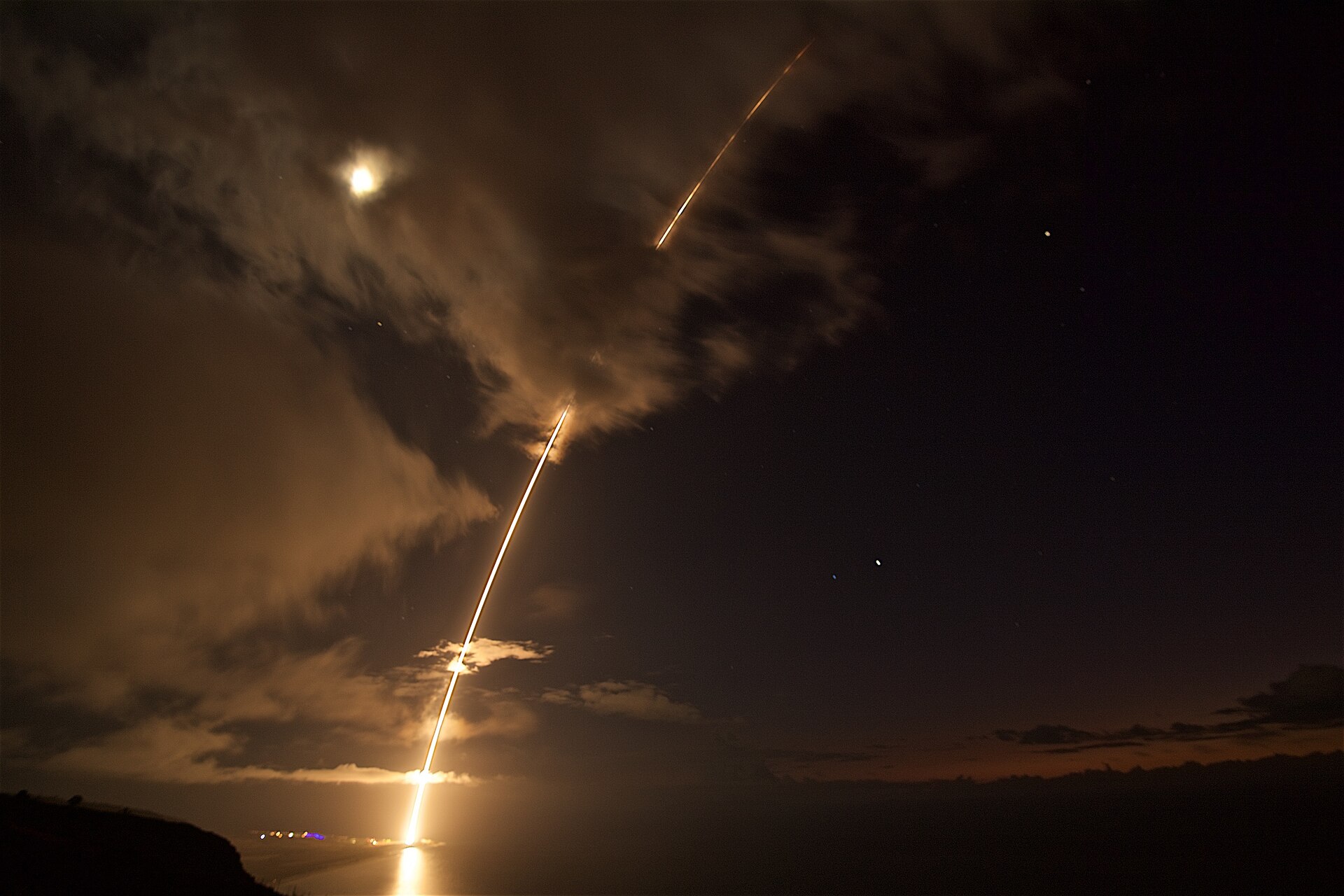
The THAAD system, which intercepts threats at higher altitudes and at greater ranges than the Patriot, provides an additional layer of protection. Saudi Arabia possesses at least seven THAAD batteries, purchased from the United States for approximately $15 billion, according to the Defense Security Cooperation Agency. The system’s track record in testing is strong, with a perfect 16-for-16 intercept record in flight tests, though the current conflict marks its first extended use against a state-level adversary firing missiles in large volumes.
The cost equation also matters. Each Patriot PAC-3 interceptor costs approximately $4 million, while each THAAD interceptor costs roughly $12 million, according to the Congressional Research Service. Iran’s one-ton warhead missiles, while more expensive than the smaller projectiles used earlier in the conflict, still cost a fraction of the interceptors required to stop them. That asymmetry — a dynamic already highlighted by Iran’s low-cost drone campaigns — grows more acute as the IRGC concentrates its remaining firepower into fewer, heavier strikes.
Trump Threatens Iran ‘20 Times Harder’
President Donald Trump responded to Iran’s escalatory posture on Monday by threatening to hit the country “20 times harder” if it continued to obstruct oil tankers in the Strait of Hormuz, hours after telling reporters at a press conference in Miami that the war could end “very soon.” The dual messaging — simultaneously claiming near-victory while threatening further escalation — reflected the tension at the heart of Washington’s war strategy, according to CBS News.
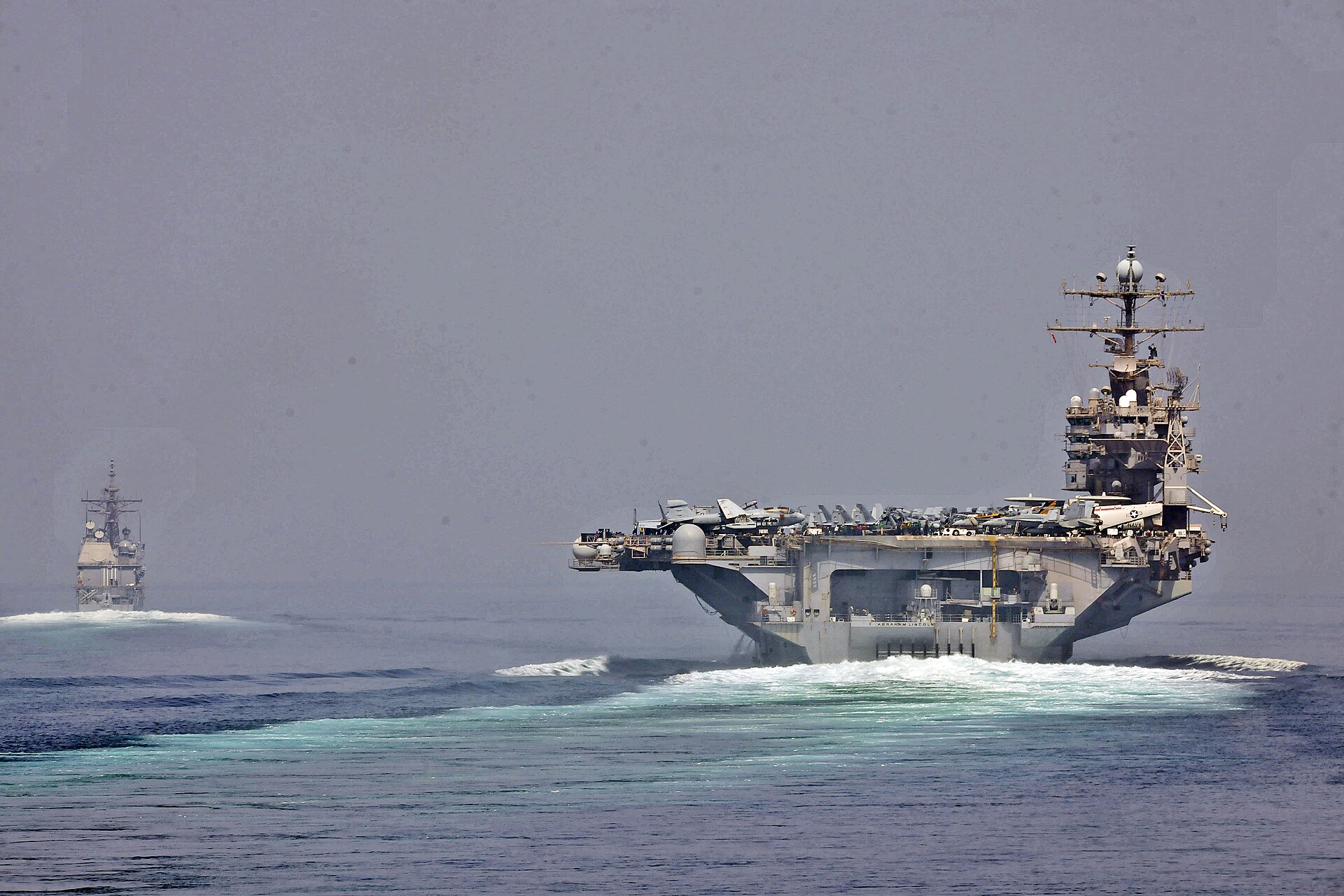
Trump told CBS News in a phone interview that he had been “thinking about taking over” the Strait of Hormuz, though he did not specify what a takeover would look like or whether it would require a permanent military presence. He said the United States “could do a lot” about the strait and reiterated that Washington was offering political risk insurance to tanker operators willing to transit the waterway. CNBC reported that the administration had also proposed US Navy escorts for commercial tankers, though Pentagon officials expressed scepticism about the plan’s feasibility while active mine-laying operations by the IRGC Navy continued.
The president’s comments came as oil prices extended their slide on Monday, with investors digesting Trump’s claims that the conflict was nearing its end alongside the IRGC’s declaration of continued escalation. Brent crude settled at $98.96 per barrel on Sunday, the highest since August 2022, before retreating on Monday as markets weighed the conflicting signals, according to CNBC.
For Saudi Arabia, Trump’s rhetoric poses a particular challenge. The Kingdom has relied heavily on American military technology to defend its territory, and any premature declaration of victory by Washington could reduce the political pressure on Iran to stop its attacks on Gulf states. At the same time, the US military’s eight confirmed service member deaths — including Sergeant Benjamin Pennington, a 26-year-old from Kentucky who died on Sunday from injuries sustained during a March 1 attack at a base in Saudi Arabia, according to NPR — are raising domestic political pressure on Trump to end the conflict quickly.
The Regional Toll After 10 Days of War
The IRGC’s one-ton warhead pledge comes against a backdrop of accelerating civilian harm across the Gulf. Beyond the two deaths and 12 injuries in Saudi Arabia’s Al-Kharj, an Iranian drone attack hit a residential area in Bahrain on Sunday and wounded 32 civilians, including children as young as two years old, according to Al Jazeera. Bahrain also reported that Iran struck a desalination plant vital to the island nation’s drinking water supply, a development that prompted Arab foreign ministers to invoke collective defense language at an emergency meeting on Monday.
Across the wider region, the cumulative toll has been substantial. Eight US service members have died from Iranian attacks on military bases in Saudi Arabia and other Gulf states, according to the Pentagon. The US Department of State ordered non-emergency government employees and their families to leave Saudi Arabia on March 8, raising the travel advisory to Level 3, according to the US Embassy in Riyadh. The UAE mourned two armed forces officers killed in Iranian strikes, according to Khaleej Times.
| Date | Target | Weapon Type | Outcome |
|---|---|---|---|
| March 5 | Al-Jouf region | Cruise missiles (2) | Intercepted and destroyed |
| March 6 | Prince Sultan Air Base | Ballistic missiles (3) | Intercepted and destroyed |
| March 7 | Shaybah oil field | Drones (4) | Intercepted in Empty Quarter |
| March 7 | Riyadh (east) | Drone (1) | Intercepted and destroyed |
| March 8 | Riyadh | Drones (3) | Thwarted |
| March 8 | Riyadh (east) | Drones (6) | Intercepted and destroyed |
| March 8 | Al-Kharj (residential) | Projectile (1) | Impact — 2 killed, 12 wounded |
| March 8 | Riyadh diplomatic quarter | Drones (15 total wave) | Intercepted |
| March 9 | Al-Jouf region | Drone (1) | Intercepted and destroyed |
| March 10 | Shaybah oil field | Drones (9) | Intercepted in Empty Quarter |
Iran has launched a total of 2,034 missiles and drones at US military bases and other facilities across Gulf state territory since February 28, according to an Al Jazeera tally. The IRGC’s Operation True Promise 4 has now reached at least 33 separate attack waves, targeting nine countries simultaneously — Saudi Arabia, the UAE, Bahrain, Kuwait, Qatar, Oman, Iraq, Jordan, and Azerbaijan — in the broadest Iranian military operation since the 1980–88 war with Iraq.
Background and Context
The current conflict began on February 28 when the United States and Israel launched joint airstrikes against military and government sites across Iran, including strikes that killed Supreme Leader Ali Khamenei. Iran responded with a massive wave of retaliatory missile and drone attacks against Israel, US bases throughout the Middle East, and Gulf Arab states that host American military facilities.
Saudi Arabia, which was not a combatant in the initial US-Israeli strikes, found itself targeted by Iranian attacks within hours of the conflict’s start. The Kingdom’s position has been complicated throughout — Riyadh has publicly condemned Iran’s attacks while simultaneously attempting to maintain diplomatic channels with Tehran, an approach that Foreign Minister Faisal bin Farhan has described as necessary to prevent the conflict from expanding further.
The IRGC’s latest missile pledge must be understood in the context of Iran’s broader strategic situation. With the death of Ali Khamenei and the appointment of his son Mojtaba Khamenei as the new Supreme Leader, Iran’s military establishment has consolidated control over wartime decision-making. The IRGC’s vast but diminishing arsenal is being deployed under a strategy that prioritizes symbolic deterrence and maximum damage per strike, even as the corps’ overall launch rate continues to decline.
For Saudi Arabia, the next 48 hours are critical. The Kingdom has signalled through its “biggest loser” warning that its patience is running out. Whether that warning translates into direct Saudi military action against Iranian targets — a step Riyadh has avoided throughout the conflict — or remains at the level of diplomatic pressure will depend in large part on whether the IRGC tests Saudi red lines with another attack on critical infrastructure.
Frequently Asked Questions
What is a one-ton warhead and how much damage can it cause?
A one-ton (1,000-kilogram) conventional warhead is among the largest warhead classes used on medium-range ballistic missiles. A single strike can demolish a multi-story building, penetrate hardened bunkers, rupture above-ground oil storage tanks, or create a crater large enough to disable a runway. The destructive radius extends approximately 50 to 100 metres depending on the warhead type and detonation altitude, according to International Institute for Strategic Studies assessments.
Can Saudi Arabia’s air defenses intercept one-ton warhead missiles?
Saudi Arabia’s Patriot PAC-3 and THAAD systems are designed to intercept ballistic missiles carrying warheads of this size. Both systems use hit-to-kill technology that destroys the incoming warhead through kinetic impact. The THAAD system has a perfect 16-for-16 record in flight tests. The risk with one-ton warheads is that even a partial interception failure — where fragments of the heavy warhead survive — can still cause significant ground damage, unlike lighter warheads that are largely neutralized by near-miss intercepts.
Why is Iran shifting to heavier warheads instead of more launches?
Iran has lost approximately 75 percent of its missile launch capacity due to US-Israeli strikes, reducing its operational launchers from roughly 420 to approximately 100 to 120. With fewer launchers available, the IRGC cannot sustain the high-volume salvos it used during the opening days of the war. The shift to heavier warheads represents an attempt to maintain strategic deterrence and inflict maximum damage with each remaining launch, trading quantity for destructive power.
What does Saudi Arabia’s “biggest loser” warning mean in practice?
The warning signals that Riyadh is reaching the limits of its diplomatic restraint. Saudi Arabia has so far avoided direct military action against Iran, relying instead on defensive interceptions and diplomatic pressure. The language about Iran being the “biggest loser” and facing “significant impact on bilateral relations” suggests Saudi Arabia may be preparing to abandon the 2023 Chinese-brokered normalization agreement with Tehran and could potentially consider more active measures if attacks on Saudi infrastructure continue.
How many US soldiers have died in the Iran war?
As of March 10, 2026, eight US service members have been killed in the conflict. The most recent confirmed death was Sergeant Benjamin Pennington, 26, from Kentucky, who died on Sunday from injuries sustained during a March 1 Iranian attack on a military base in Saudi Arabia, according to NPR. The rising US casualty count is increasing domestic political pressure on the Trump administration to bring the conflict to a rapid conclusion. Yet Iran’s foreign minister has explicitly rejected ceasefire talks, and Trump himself has demanded “unconditional surrender,” leaving no clear path to an early end.