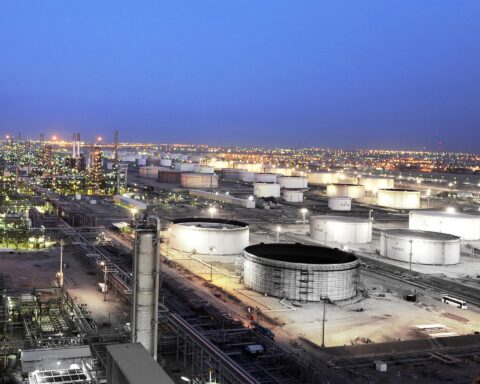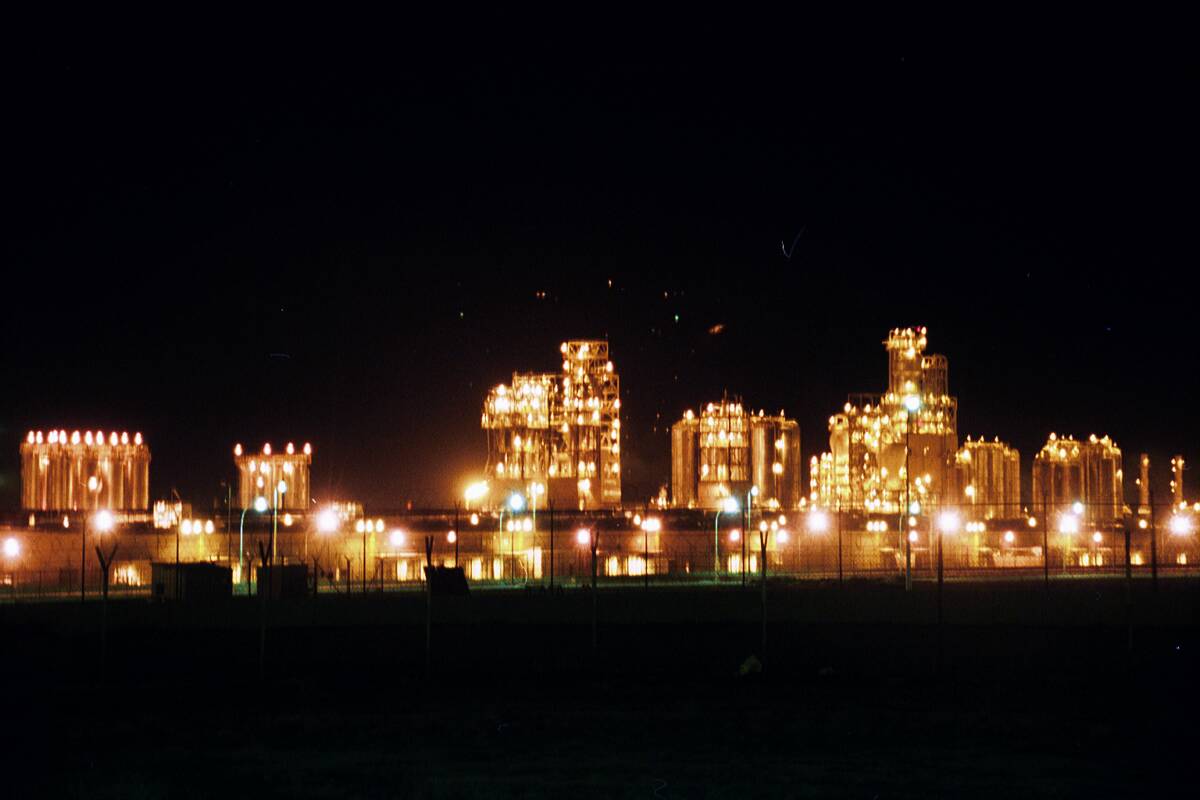

KUWAIT CITY — Iranian drone and missile strikes hit Kuwait’s Mina al-Ahmadi oil refinery and a power-and-water desalination plant on April 3, marking the second attack on Kuwaiti water infrastructure in four days and the first time both energy and civilian water systems were struck simultaneously during the five-week-old conflict.
Kuwait Petroleum Corporation confirmed the refinery — one of the largest in the Middle East, with a refining capacity of approximately 466,000 barrels per day — sustained fires but no employee casualties. Hours later, the Ministry of Electricity, Water and Renewable Energy reported “material damage” at a desalination facility. Ministry spokesperson Fatima Abbas Jawhar Hayat said response teams were “immediately deployed under approved response plans to manage the impact and maintain operational efficiency,” according to Gulf News.
Kuwait derives roughly 90 percent of its drinking water from coastal desalination, according to Fanack Water. A March 30 Iranian strike on a separate Kuwaiti power-and-desalination facility killed one Indian worker — making April 3 the second confirmed hit on the country’s water network within a week, in a country that has not joined the US-led military coalition against Iran.
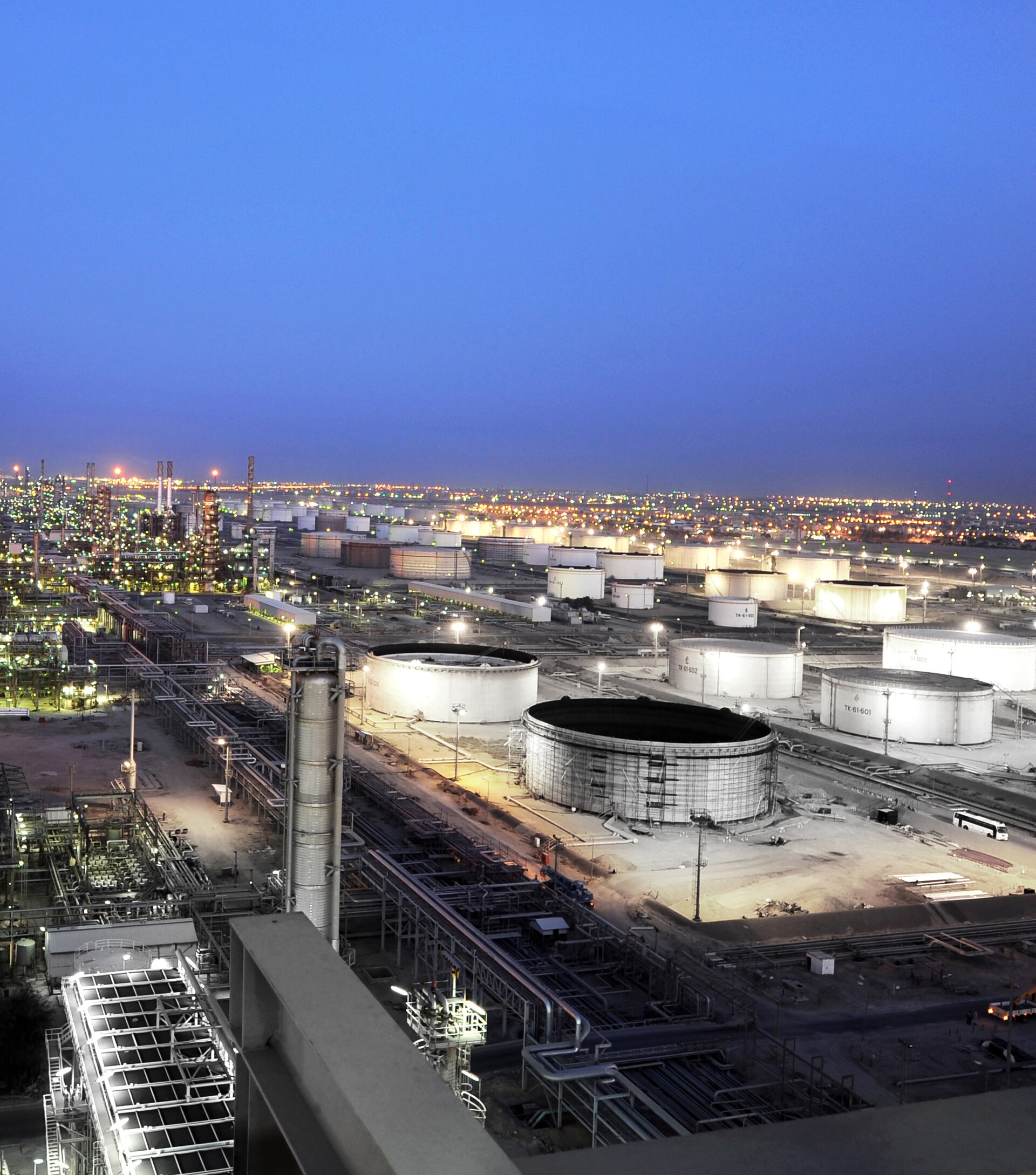
Table of Contents
- Refinery and Water Plant Hit Hours Apart
- Why Did Iran Strike a Non-Combatant’s Water Supply?
- Four Days, Two Desalination Strikes
- How Dependent Is the Gulf on Desalination?
- All Six GCC States Now Under Fire
- Can Gulf States Defend Their Water Infrastructure?
- International Law and the Targeting of Water
- Background
- Frequently Asked Questions
Refinery and Water Plant Hit Hours Apart
The strikes on April 3 followed a pattern established in earlier attacks on Kuwait. The refinery was hit first. Mina al-Ahmadi, operated by Kuwait National Petroleum Company, is the country’s largest refining complex, processing crude from the Burgan field and feeding both domestic fuel supply and Kuwait’s export-oriented petrochemical industry. April 3 was the third confirmed attack on the facility since the conflict began on February 28, according to Al Jazeera.
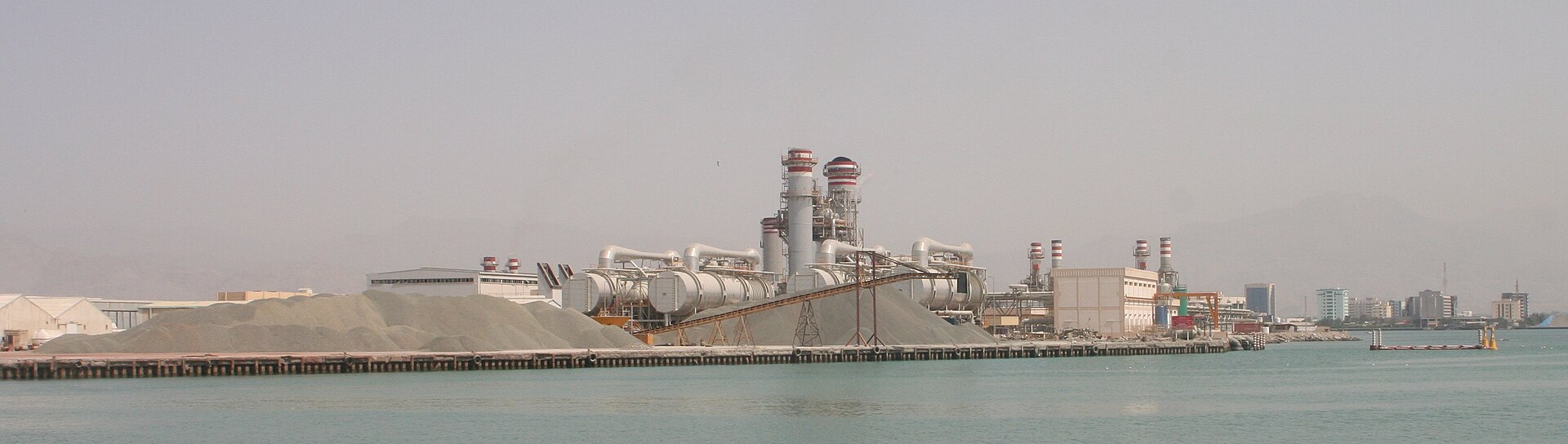
The desalination strike followed within hours. Kuwait’s water infrastructure relies on power-and-water co-production: facilities that generate electricity and desalinate seawater simultaneously. The country operates eight coastal desalination plants along its Persian Gulf shoreline. One facility alone — the Az-Zour North complex — produces 545 million liters of drinking water daily alongside 2,700 megawatts of electricity, according to Veolia, which operates desalination facilities across the Gulf region.
The ministry did not identify which specific plant was hit. Kuwait’s eight desalination facilities are clustered along a coastline that stretches just 80 kilometers — the shortest of any GCC member state and the closest to Iranian territory, as Al Jazeera reported. Nationwide electricity and water services remained stable, the ministry said.
Why Did Iran Strike a Non-Combatant’s Water Supply?
Kuwait has not joined the US-led military coalition. It hosts no publicly acknowledged offensive operations from its soil. Its political posture since February 28 has been one of non-engagement — a position that has not spared it from four confirmed Iranian strikes on civilian infrastructure in six days.
Iranian Foreign Minister Abbas Araghchi offered a blanket justification in early April. “Perhaps sometimes collateral damage occurs, but our target is American targets,” he told Al Jazeera. “No one can deny that America uses the territory and airspace of these countries to attack Iran.”
The targeting record contradicts the collateral-damage framing. Iran has struck airports, oil refineries, desalination plants, fuel depots, ports, and residential areas across all six GCC member states since the war began, according to data compiled by the Armed Conflict Location and Event Data Project (ACLED) through Day 35 of the conflict.
David Michel, a senior associate in the CSIS Water Security program, has described the strategic logic as indirect. Iran views strikes on water infrastructure as asymmetric pressure, he wrote, where “the real weapon is not the drone…it is the insurance cancellation, the rerouted tanker, and the investor who pauses.”
“The real weapon is not the drone…it is the insurance cancellation, the rerouted tanker, and the investor who pauses.”David Michel, Senior Associate, CSIS Water Security
Iran has not claimed responsibility for the April 3 desalination strike. After the March 30 attack that killed an Indian worker at a different Kuwaiti desalination facility, the IRGC’s Khatam al-Anbiya headquarters blamed Israel — calling it “the brutal aggression by the Israeli regime against Kuwait’s desalination plant, carried out in recent hours under the pretext of accusing the Islamic Republic of Iran.” No evidence was provided, the Times of Israel reported.
Four Days, Two Desalination Strikes
April 3 was not the first time Iranian ordnance hit a Kuwaiti water facility during this conflict. On March 30, a strike on a separate power-and-desalination plant killed one Indian national working at the facility, according to Al Jazeera and The National.
The death of the Indian worker on March 30 added a diplomatic dimension. Kuwait’s desalination and power sectors employ thousands of expatriate workers from South and Southeast Asia who operate the technical systems that keep the country’s water flowing. Strikes on these facilities endanger a workforce that has no connection to the military conflict and no ability to evacuate during an active bombardment.
The two strikes within four days sit inside a wider trajectory. On March 8, an Iranian drone struck a desalination plant in Bahrain — the first water infrastructure attack of the entire conflict, injuring three people, Al Jazeera reported. By the end of March, Iranian strikes had damaged desalination or power facilities in at least three GCC countries.
Zane Swanson, deputy director of the Global Food and Water Security Program at CSIS, told CNN on March 11 that the Gulf states’ reliance on desalination made even limited damage to water plants an existential matter. “Their loss can very easily become existential,” Swanson said.
“Their loss can very easily become existential.”Zane Swanson, Deputy Director, Global Food and Water Security Program, CSIS
How Dependent Is the Gulf on Desalination?
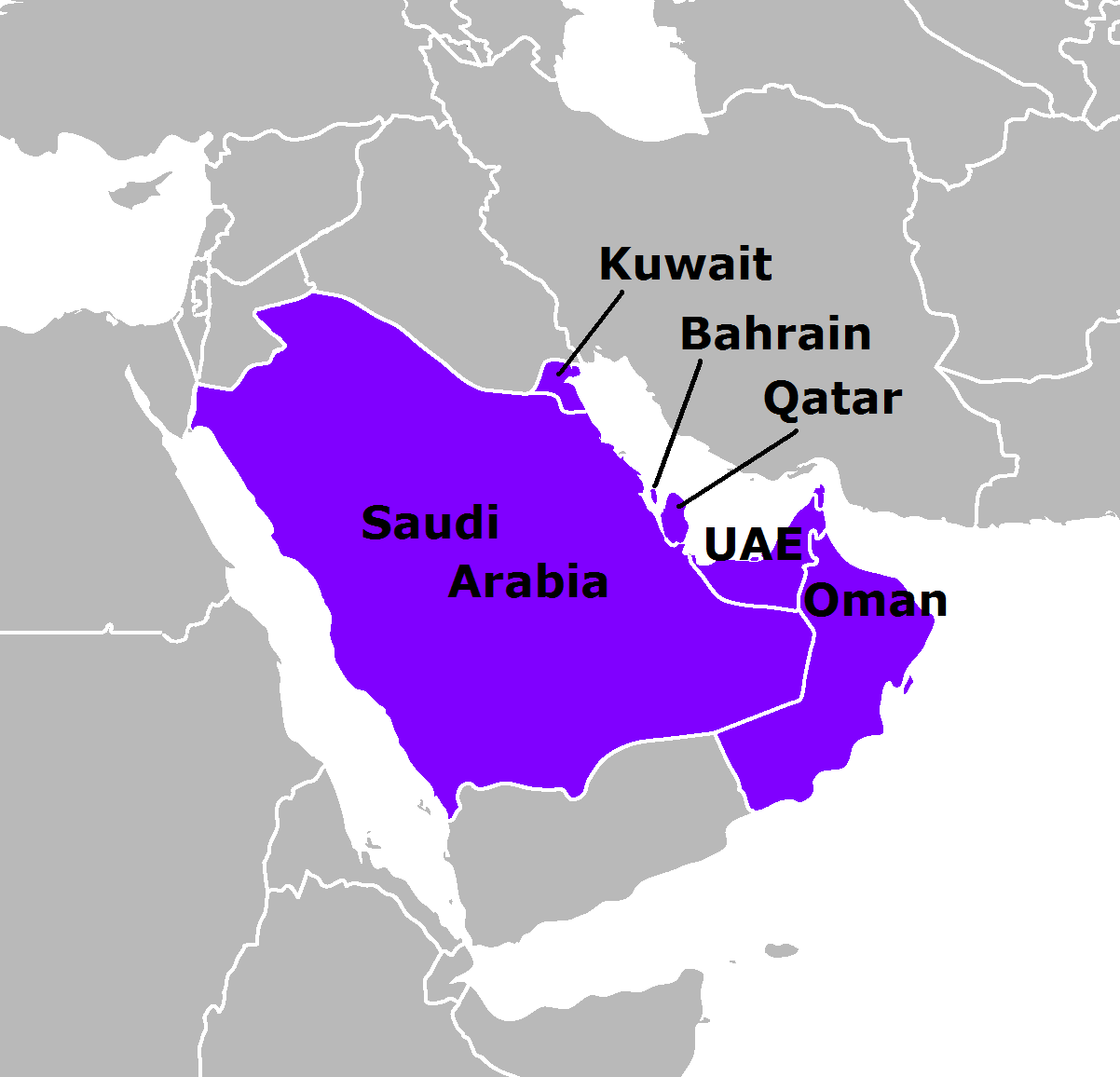
The Gulf states’ reliance on desalinated seawater varies by country, but in every case the percentages are high enough that sustained damage to production capacity would create a humanitarian emergency.
| Country | Desalination Dependency | Key Infrastructure | Struck in Conflict |
|---|---|---|---|
| Qatar | 99% | Multiple coastal plants | Yes |
| Kuwait | 90% | 8 plants, 3.11 MCM/day total | Yes — March 30, April 3 |
| Bahrain | 90% | Multiple coastal plants | Yes — March 8 |
| Oman | 86% | Veolia-operated facilities | Yes |
| Saudi Arabia | 70% | 30 plants, 7.5–11.5 MCM/day | Oil/industrial targets hit |
| UAE | 42% | Multiple coastal plants | Yes — airports, fuel depots |
Sources: CSIS, Project Syndicate, Fanack Water, SWCC, Arab News
Qatar’s 99 percent dependency is the most extreme. Saudi Arabia’s dependency is lower in percentage terms but enormous in absolute volume: the Saudi Water Conversion Corporation operates 30 desalination plants producing between 7.5 and 11.5 million cubic meters per day — the world’s largest desalination system, according to SWCC data cited by Arab News.
CSIS analysis has found that more than 90 percent of the Gulf’s desalinated water comes from just 56 plants, all located within 350 kilometers of Iran’s coastline. The concentration of production in a small number of coastal facilities turns the region’s water supply into a set of fixed, identifiable targets.
Saudi Arabia’s Ras al-Khair plant, the world’s largest hybrid desalination facility, produces roughly 3 million cubic meters per day and cost more than $7.2 billion to build. It sits less than 80 kilometers from the Ras Tanura refinery complex — a geographic clustering that compounds Saudi Arabia’s coastal exposure.
All Six GCC States Now Under Fire
By Day 35 of the conflict, Iran had struck targets in all six GCC member states, according to ACLED — a scope that includes countries both inside and outside the US-led coalition. The targeting has hit military and civilian infrastructure alike: airports in the UAE, fuel reservoirs in Oman, a cruise missile inside Qatari sovereign waters, desalination plants in Bahrain and Kuwait, and oil facilities across the region.
ACLED data through mid-March documented casualties from Iranian strikes in every GCC state. Kuwait had recorded eight deaths — four soldiers and four civilians. The UAE reported eight, Bahrain three, Oman three, and Saudi Arabia two.
The geographic spread of targets complicates diplomatic framing. Iran’s stated position — that it strikes only US military assets hosted by GCC countries — would confine attacks to coalition bases and logistics hubs. The documented target list includes desalination plants in Bahrain and Kuwait, neither of which hosts US offensive operations. It includes fuel depots and residential neighborhoods in countries that have maintained varying degrees of neutrality.
The industrial damage extends beyond water. Iran’s multi-front campaign through Day 34 included strikes on petrochemical facilities, with Saudi Arabia’s $20 billion Sadara chemical complex going dark after a direct hit. The documented targeting pattern — military installations first, then energy infrastructure, then civilian survival systems — tracks a three-phase escalation catalogued by both CSIS and ACLED.
Can Gulf States Defend Their Water Infrastructure?
Geography works against the defenders. Kuwait’s coastline puts its desalination plants within range of Iran’s short-range ballistic missiles, cruise missiles, and one-way attack drones. Flight times from Iranian launch sites to Kuwaiti coastal infrastructure are measured in minutes.
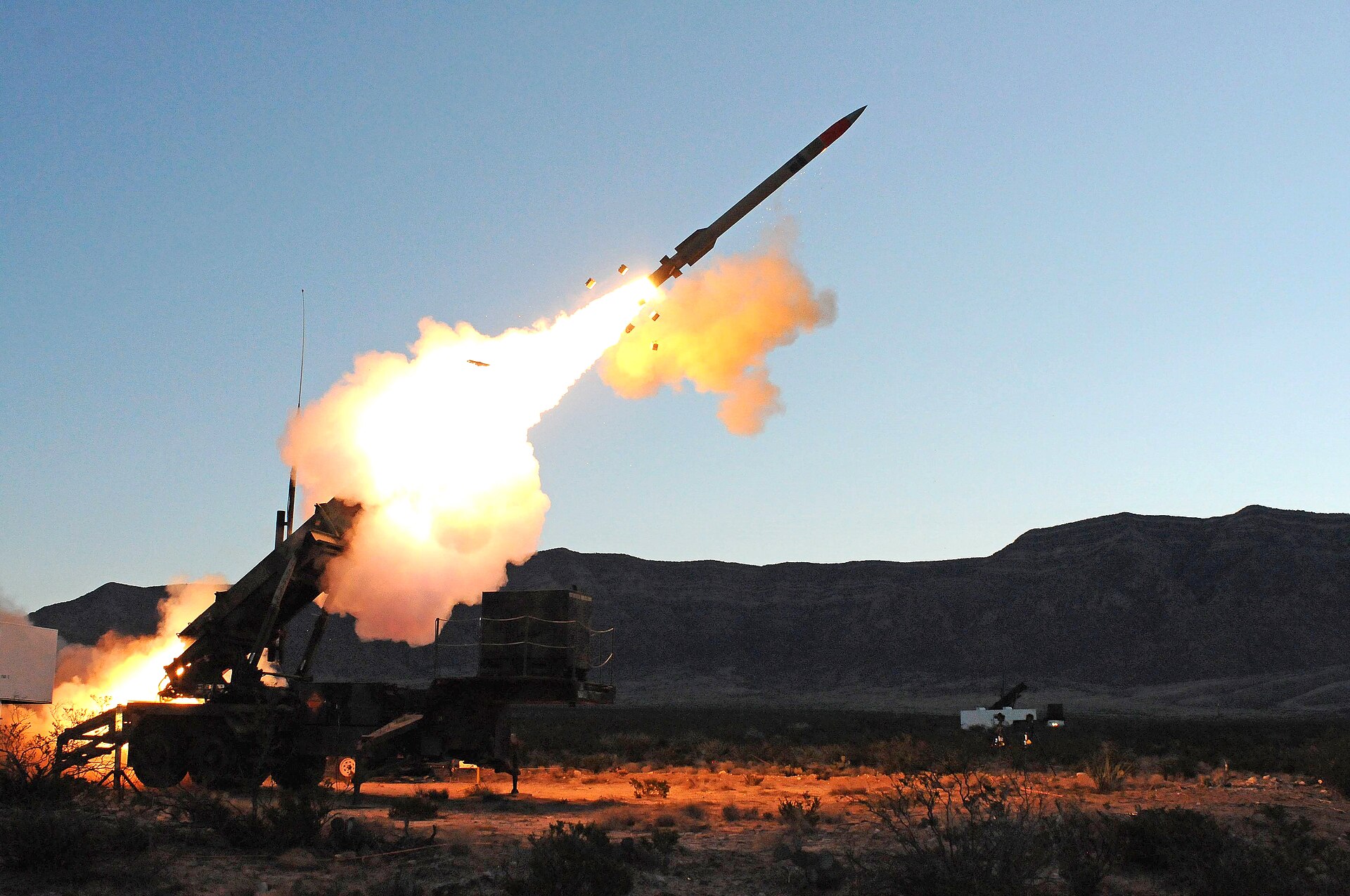
The GCC’s air defense networks — designed primarily to protect military installations and major urban centers — face a resource allocation problem when the target set expands to include civilian infrastructure. PAC-3 interceptor stocks across the GCC had fallen to approximately 400 rounds by early April, according to House of Saud reporting. Each interceptor costs between $4 million and $6 million. An Iranian Shahed-series drone costs a fraction of that.
Philippe Bourdeaux, Veolia’s regional director for Africa and the Middle East, told Arab News that the company — which operates desalination plants in Saudi Arabia’s Jubail and in Oman — had “strengthened access security and controls in the immediate vicinity of the plants.” He added: “The recent events are of course prompting us to be extremely vigilant.”
Access controls and perimeter security address ground-level threats. They do not stop incoming missiles or drones. The co-production model that defines most Gulf water-power plants adds a second layer of vulnerability: a strike aimed at the electrical generation side of a facility can knock out desalination capacity as a byproduct, even if the water treatment equipment itself is undamaged. Kuwait’s Az-Zour North, which couples 2,700 megawatts of power generation with water production, is one integrated system — not two separate ones.
According to CSIS, damage to “high-pressure pumps or membrane buildings” at a seawater reverse osmosis plant “could disable production entirely, potentially requiring weeks to repair.”
International Law and the Targeting of Water
Article 54 of Additional Protocol I to the Geneva Conventions prohibits attacking, destroying, or rendering useless “objects indispensable to the survival of the civilian population,” explicitly listing drinking water installations and supplies. The prohibition is recognized under customary international humanitarian law regardless of treaty ratification.
The International Committee of the Red Cross has addressed the Gulf conflict directly. “All parties to an armed conflict have non-negotiable legal obligations to ensure water remains accessible during war,” the ICRC president stated in a policy declaration cited by the ICRC’s Law and Policy Blog.
Iran has offered two responses to allegations of targeting civilian water infrastructure: denial — the March 30 IRGC statement blaming Israel without evidence — and the collateral-damage defense articulated by Araghchi in April. Neither accounts for the documented record of three confirmed desalination strikes across two countries in 26 days.
Background
The conflict between Iran and the US-led coalition began on February 28, 2026, after escalating tensions over Iran’s nuclear program and regional proxy operations reached a breaking point. Iran’s targeting of GCC infrastructure has followed a documented three-phase escalation: military installations in the first week, energy infrastructure — refineries, pipelines, petrochemical plants — in weeks two and three, and civilian survival systems including desalination plants and power grids from early March onward.
Kuwait, the GCC state nearest to Iranian territory across the Persian Gulf, has maintained a non-combatant posture throughout. It has neither joined the US-led military coalition nor authorized offensive operations from its territory. The April 3 double strike on the Mina al-Ahmadi refinery and a desalination facility extends Kuwait’s exposure to both energy and water disruption simultaneously. The IRGC subsequently denied the desalination attack and blamed Israel — with no evidence — in an information operation whose true audience was not Kuwait but Riyadh and Abu Dhabi, as documented in Iran’s denial of the Kuwait desalination attack.
Frequently Asked Questions
Has Kuwait’s drinking water supply been disrupted?
The Ministry of Electricity, Water and Renewable Energy said nationwide water and electricity operations remained stable after the April 3 strike. However, Kuwait’s emergency fallback — a northern aquifer reserve — has historically been insufficient to replace desalination output at scale. During the 1990-91 Gulf War, when Iraqi forces destroyed Kuwait’s desalination capacity, the country required water imports from Saudi Arabia for years to sustain its population. Kuwait’s total groundwater reserves cannot support the current population beyond a short-term emergency period.
Has Saudi Arabia’s desalination infrastructure been targeted in this conflict?
Iranian strikes have not confirmed hits on Saudi desalination plants during the current war, though Saudi oil and petrochemical infrastructure has sustained repeated damage. A precedent exists from the Yemen front: Houthi forces — backed by Iran — targeted Saudi Arabia’s Al-Shuqaiq desalination plant in both 2019 and 2022. A leaked 2008 US diplomatic cable, published by WikiLeaks, warned that the Saudi capital “would have to evacuate within a week” if the Jubail desalination plant were destroyed, and that “the current structure of the Saudi government could not exist without the Jubail Desalinization Plant.”
Has Iran claimed its own water infrastructure was attacked?
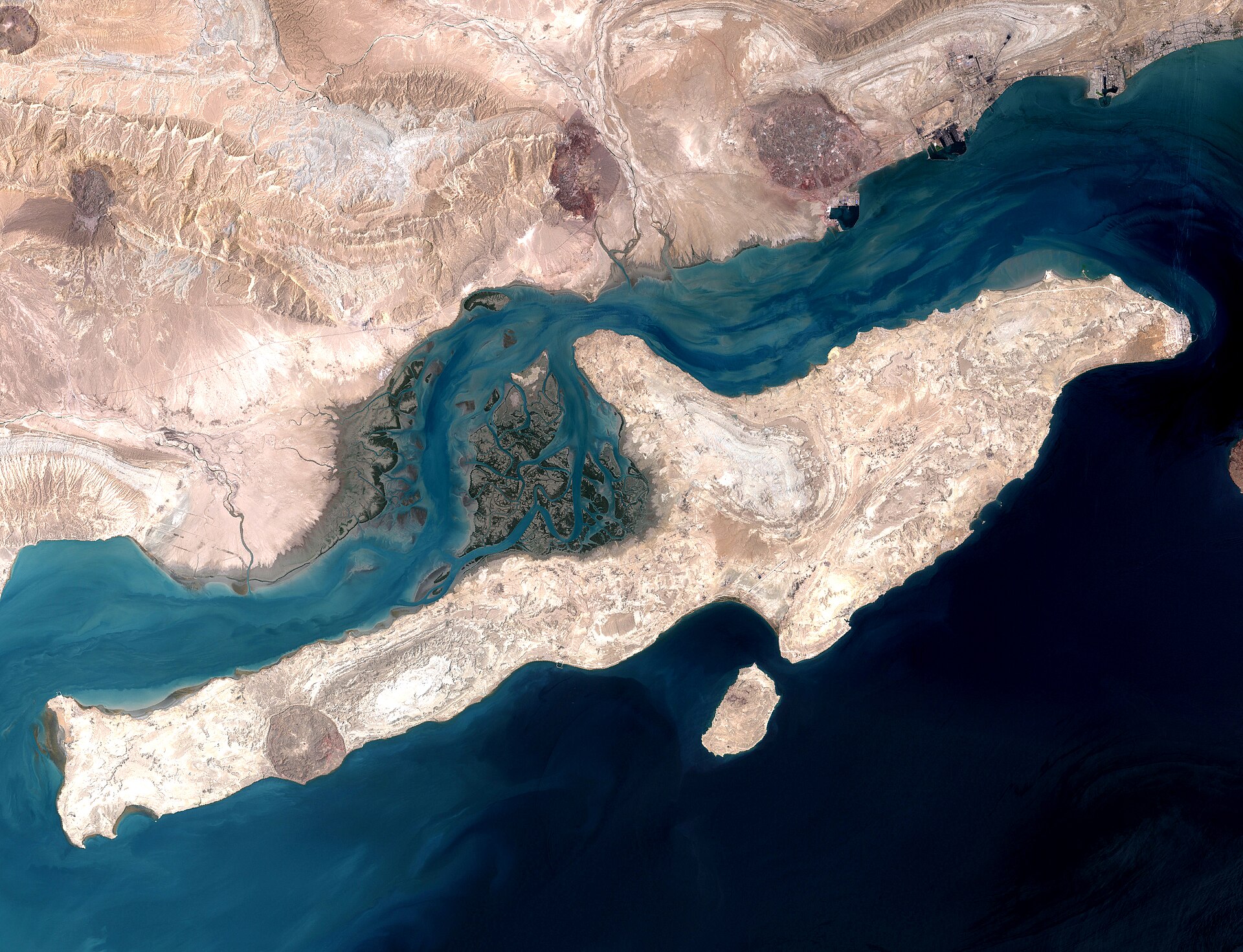
On March 7, 2026, Iran accused the United States of striking a freshwater desalination plant on Qeshm Island in the Strait of Hormuz, claiming the attack disrupted water supply to 30 villages. Both the US and Israel denied responsibility. Iranian state media cited the alleged Qeshm strike as justification for subsequent attacks on GCC desalination infrastructure — framing it as reciprocal targeting of water systems.
How long would it take to repair a destroyed desalination plant?
Recovery timelines depend on the type of damage. Strikes that damage intake systems or external piping may allow partial production to resume within days. Destruction of core components at a seawater reverse osmosis plant — high-pressure pumps, membrane arrays, or energy recovery devices — can shut down the entire facility for weeks, according to CSIS. Older multi-stage flash distillation plants, which use heat instead of membranes, face different vulnerabilities. Full reconstruction of a major facility like Az-Zour North, which represents billions of dollars in installed infrastructure, would take years.