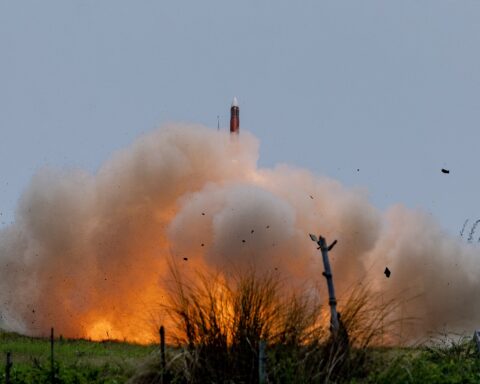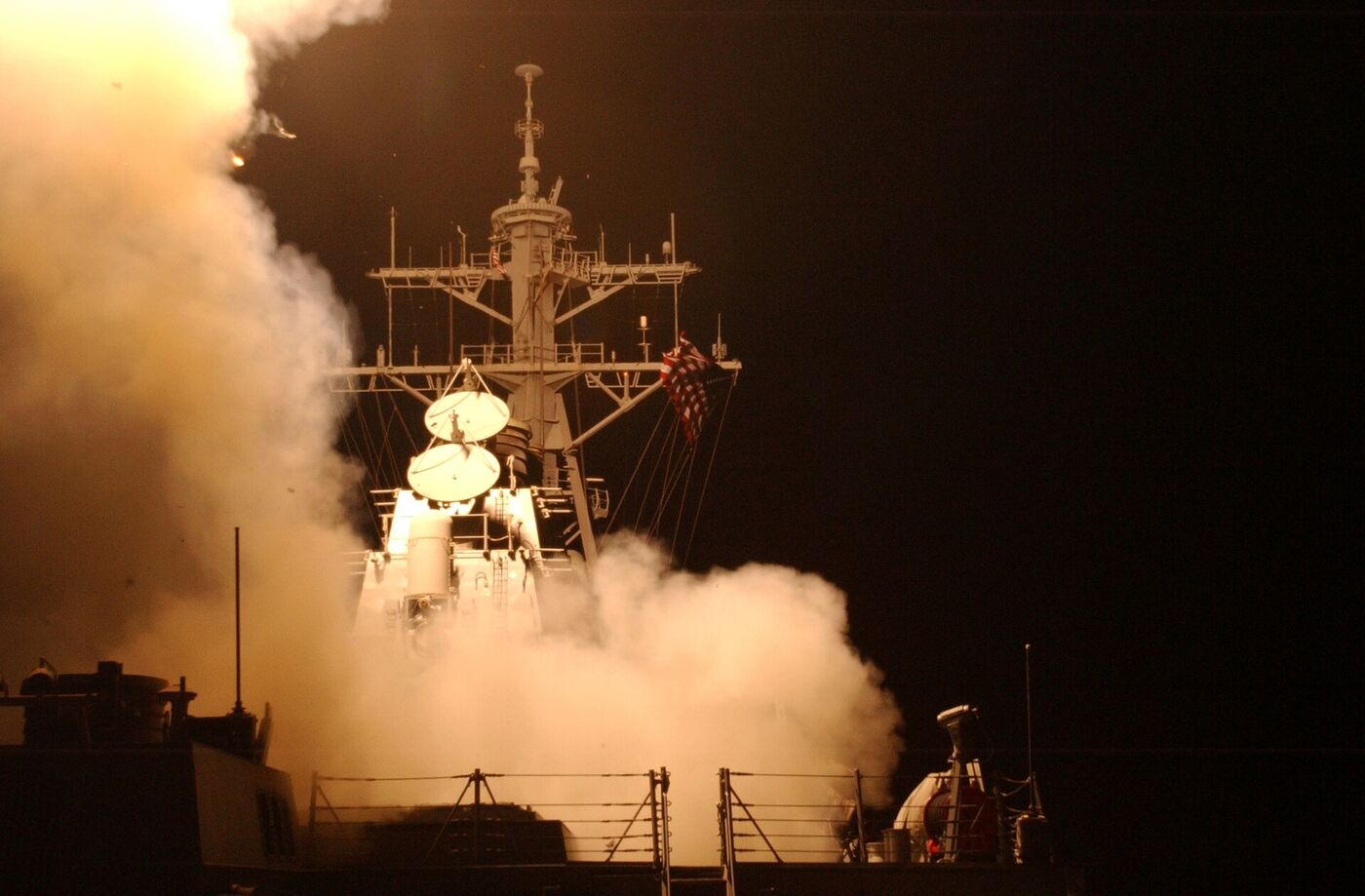

RIYADH — Seven days into the most devastating aerial campaign in Middle Eastern history, Iran’s conventional military has been shattered beyond any reasonable timeline for recovery. Ballistic missile launches from Iranian territory have dropped 90 percent since February 28. Drone attacks have fallen 83 percent. The Pentagon claims to have destroyed the Iranian navy entirely and killed all of its senior military leadership. Yet Iran has already reconstituted its political command: the Assembly of Experts named Mojtaba Khamenei as the new supreme leader on March 8, signalling regime continuity rather than collapse. For Saudi Arabia, the strategic rival that has shaped its defense posture, foreign policy, and regional calculations for four decades is being dismantled in real time — and the implications will define the Kingdom’s trajectory for a generation.
The destruction of Iran’s military capability represents the most significant shift in the Middle Eastern balance of power since the fall of the Ottoman Empire. Saudi Arabia stands to gain enormously from a defanged Tehran: the proxy threat diminishes, the nuclear menace recedes, and Riyadh’s path to undisputed regional primacy clears. Yet the very completeness of Iran’s defeat introduces dangers that no Saudi strategic planner anticipated — a failed state on the Gulf’s eastern shore, autonomous proxy militias unmoored from central command, a nuclear knowledge base that survives the bombing, and the evaporation of the one external threat that kept the Gulf Cooperation Council unified. The day after Tehran falls may prove more perilous than the war itself.
Table of Contents
- How Much of Iran’s Military Has Actually Been Destroyed?
- What Does Iran’s Military Collapse Mean for Saudi Arabia?
- Will Saudi Arabia Become the Middle East’s Dominant Military Power?
- How Does Iran’s Destruction Reshape Gulf Security Architecture?
- Can Iran Rebuild Its Military — and How Long Would It Take?
- What Happens to Iran’s Proxy Network Without Tehran’s Support?
- Is a Defanged Iran More Dangerous Than a Strong One?
- How Does the War Reshape the Saudi-Israeli Normalization Calculus?
- What Does Iran’s Nuclear Program Look Like After the Strikes?
- How Will Saudi Arabia’s Defense Spending Change After the War?
- The Post-Iran Threat Matrix — Saudi Arabia’s New Strategic Landscape
- Frequently Asked Questions
How Much of Iran’s Military Has Actually Been Destroyed?
The scale of Iran’s military degradation in just seven days is historically unprecedented for a nation-state of its size. According to US Central Command reporting through March 6, the combined US-Israeli air campaign — designated Operation Epic Fury — has achieved what Pentagon planners describe as “near-complete suppression” of Iran’s offensive military capability.
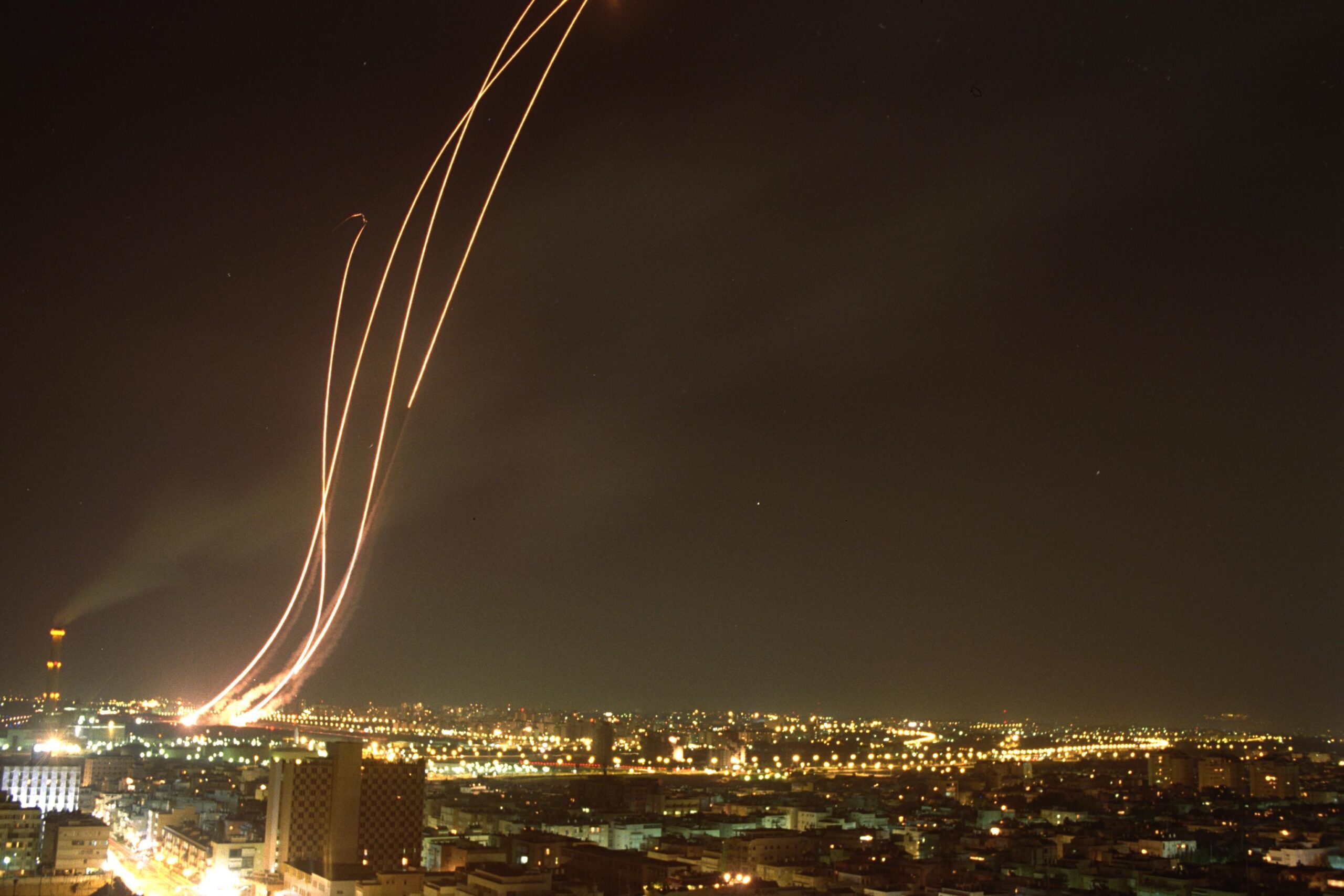
The Israeli military claims to have carried out 2,500 strikes across Iranian territory and destroyed 80 percent of Iran’s air defense systems, according to IDF spokesperson briefings on March 5. Israeli aircraft destroyed over 300 ballistic missile launchers, consistent with a 70 percent drop in Iranian missile fire toward Israel reported by Israeli media. The Pentagon separately confirmed on March 4 that it had destroyed the Iranian navy and killed all of Iran’s senior military leaders, according to NPR.
Even before the war ends, Saudi Arabia has already begun exploring what this new architecture might look like. The Kingdom’s secret diplomatic backchannel to Tehran, intensified since early March 2026, represents the first attempt to negotiate a post-war security framework that gives both Riyadh and whatever government emerges in Tehran a stake in regional stability.
| Capability | Pre-War Status | Current Status (Day 7) | Degradation |
|---|---|---|---|
| Ballistic missile launches | Baseline capacity | Down 90% from Day 1 | 90% |
| Drone attacks | Hundreds per day | Down 83% from Day 1 | 83% |
| Air defense systems | Operational across territory | 80% destroyed (IDF claim) | 80% |
| Ballistic missile launchers | ~430 mobile/fixed launchers | 300+ destroyed | ~70% |
| Naval capability | IRIN + IRGC Navy | “Destroyed” (Pentagon) | ~100% |
| Senior military leadership | IRGC + Artesh command | “All killed” (Pentagon) | ~100% |
| Nuclear facilities | Natanz, Fordow, Isfahan | Natanz entrance damaged, access blocked | Partial |
The numbers tell a story of systematic dismantlement. Iran entered the conflict with an estimated 3,000 ballistic missiles across multiple variants — Shahab-3, Emad, Sejjil, and the newer Kheibar Shekan. According to CNN’s munitions analysis published March 4, Iran expended a significant portion of its missile inventory in the retaliatory barrages against GCC states, while US and Israeli strikes destroyed the launchers and storage facilities needed to fire those that remained. The combination of expenditure and destruction has effectively eliminated Iran’s ability to conduct sustained missile operations.
The drone picture follows a similar trajectory. Iran launched Shahed-136 kamikaze drones, larger Shahed-149 variants, and cruise missiles against targets across the Gulf in the first 72 hours. Kuwait’s air defense forces alone intercepted 97 ballistic missiles and 283 drones, according to the Kuwaiti government. The UAE Ministry of Defense reported dealing with 165 ballistic missiles, 2 cruise missiles, and 541 Iranian drones. Yet as production facilities and launch sites were systematically targeted, Iran’s capacity to sustain these operations collapsed. By Day 7, the drone threat had fallen to a fraction of its opening-day intensity.
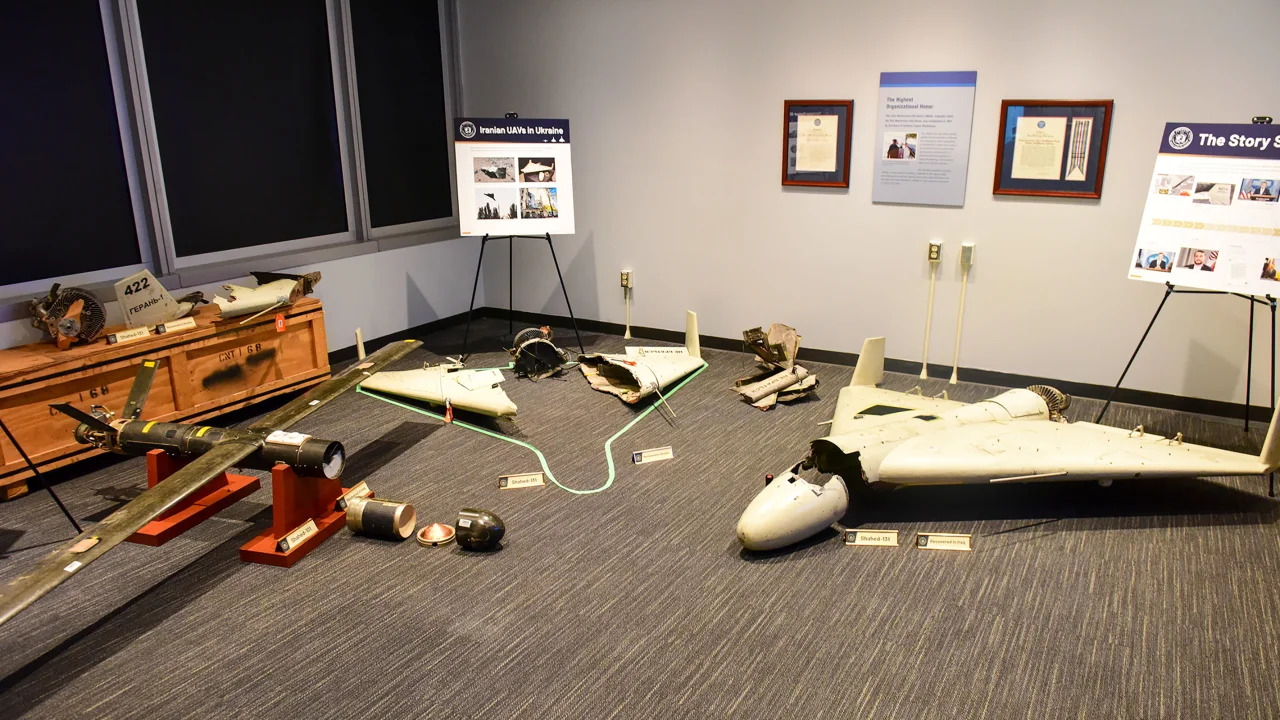
The air defense destruction deserves particular attention. Iran’s integrated air defense network — built around Russian-supplied S-300PMU2 systems, indigenous Bavar-373 batteries, and older Hawk and Rapier systems — was the shield behind which all other military operations took place. With 80 percent of that shield destroyed, Iranian territory is effectively undefended against further air attack. This means any future Iranian attempt to rebuild military capability — reconstituting missile production, restoring naval bases, establishing new drone factories — can be interdicted at will by US or Israeli air power. The destruction of air defense creates a compounding effect: it prevents not just current military operations but future military recovery.
The critical question is not whether Iran has been degraded — that is beyond dispute. The question is whether the degradation is temporary or structural. The destruction of manufacturing facilities, command-and-control infrastructure, and trained personnel suggests the damage will take years, possibly decades, to reverse. Iran is not merely running low on ammunition. The factories, the engineers, the command structure, and the institutional knowledge required to rebuild have all been targeted.
What Does Iran’s Military Collapse Mean for Saudi Arabia?
Iran’s military destruction removes the single greatest constraint on Saudi Arabia’s regional ambitions. For forty-five years — since the Islamic Revolution of 1979 — the Iranian threat has been the organizing principle of Saudi foreign policy, defense procurement, and alliance management. Every major Saudi strategic decision, from the intervention in Yemen to the pursuit of a US security guarantee, from the $80 billion annual defense budget to the quiet security coordination with Israel, has been shaped by the need to counter Tehran.
The Atlantic Council’s analysis published March 4 stated directly: “Saudi Arabia arguably stands to benefit the most from a weakened Iran, as Iran has consistently posed the greatest threat to Saudi Arabia’s goal of becoming the dominant power in the Middle East.” Crown Prince Mohammed bin Salman appears prepared to seize the opportunity, according to the same assessment. The question is what form that opportunity takes.
The immediate strategic gains are substantial. The Houthi insurgency in Yemen — which has cost Saudi Arabia an estimated $100 billion since 2015 and remains the Kingdom’s most persistent security drain — loses its primary weapons supplier, training pipeline, and strategic patron. Hezbollah, already weakened by Israel’s 2024 campaign that killed its leader Hassan Nasrallah and decimated its command structure, loses the resupply chain from Tehran that allowed it to rebuild after every previous conflict. Iraqi Shia militias that threatened Saudi border security and carried out attacks on Saudi oil infrastructure lose their strategic coordination with Iranian intelligence.
The longer-term implications are equally profound. Saudi Arabia’s $78 billion defense budget — representing 7.3 percent of GDP in 2026, according to Breaking Defense — was built around the Iranian threat. Without that threat, Riyadh faces a question that no Saudi leader has confronted since the Kingdom’s founding: what does Saudi defense policy look like when the primary adversary has been effectively neutralized?
Will Saudi Arabia Become the Middle East’s Dominant Military Power?
Saudi Arabia was already the region’s largest military spender before a single bomb fell on Iran. Defense expenditure rose from $53.9 billion in 2021 to $72.5 billion in 2025, reflecting a compound annual growth rate of 7.7 percent, according to a January 2026 industry report by ResearchAndMarkets. The 2026 budget allocates approximately $78-80 billion, making the Saudi military budget larger than those of Iran, Iraq, Israel, Egypt, and the UAE combined.
With Iran’s military infrastructure destroyed, the regional balance of power tilts decisively toward Riyadh. No remaining Middle Eastern state can match Saudi Arabia’s combination of financial resources, advanced Western weaponry, and strategic depth. Turkey, the only potential peer competitor, is constrained by NATO obligations, economic difficulties, and geographic distance from the Gulf.
| Country | Defense Budget | % of GDP | Primary Threat Environment |
|---|---|---|---|
| Saudi Arabia | $78-80B | 7.3% | Iran (now degraded), Yemen, terrorism |
| Israel | $27.5B | 5.3% | Iran, Hamas, Hezbollah |
| Turkey | $22.4B | 1.9% | PKK/YPG, Syria instability |
| UAE | $19.8B | 4.2% | Iran (now degraded), Yemen |
| Egypt | $12.3B | 1.4% | Sinai terrorism, Libya |
| Iran (pre-war) | $9.7B | 2.4% | US/Israel, internal unrest |
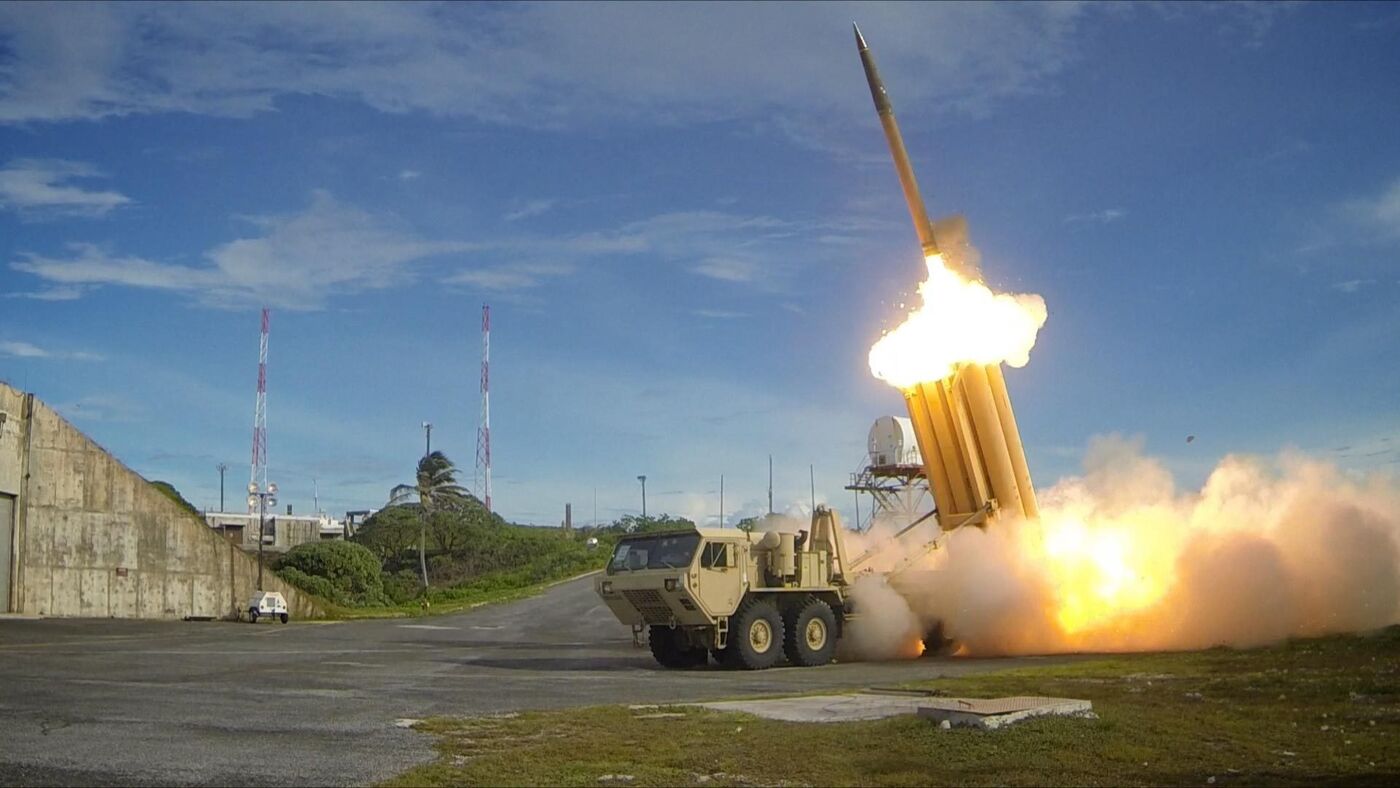
Yet raw spending does not automatically translate to regional dominance. Saudi Arabia’s military has never fought a conventional war independently. The Kingdom’s $80 billion air defense shield performed well against Iranian missiles and drones, but those batteries were integrated with US Central Command’s sensor networks and often operated with American technical support. The Yemen intervention exposed significant gaps in Saudi expeditionary capability, logistics, and ground force effectiveness.
Defense Minister Prince Khalid bin Salman has overseen a modernization program focused precisely on these weaknesses. Under Vision 2030, Saudi Arabia aims to localize 50 percent of military spending by the end of the decade — up from approximately 19 percent as of 2025. The Saudi Arabian Military Industries (SAMI) corporation has signed joint ventures with Lockheed Martin, Boeing, and Raytheon. The question is whether the post-Iran strategic environment accelerates or decelerates this transformation.
The answer may be counterintuitive. Without an existential Iranian threat, the political urgency behind massive defense budgets weakens. Every riyal spent on Patriot interceptors is a riyal not spent on NEOM, entertainment cities, or the tourism infrastructure that Vision 2030 demands. The removal of the Iranian threat could paradoxically slow Saudi military modernization by reducing the political willingness to sustain defense spending at 7 percent of GDP when the primary adversary no longer exists.
How Does Iran’s Destruction Reshape Gulf Security Architecture?
The Iranian attacks of February 28 through March 6 achieved something that decades of GCC summits, defense pacts, and joint exercises never managed: genuine operational coordination among all six Gulf monarchies under fire. For the first time in the GCC’s 45-year history, all member states were targeted by the same adversary within 24 hours. Breaking Defense described it as the Gulf states’ “long-standing nightmare scenario” finally realized.
The collective response was impressive by historical standards. GCC air forces collectively operate over 700 combat aircraft, and the coordinated air defense performance against Iranian barrages demonstrated integration that did not exist even five years ago. A US Central Command air and missile defense coordination cell opened at Al Udeid Air Base in Qatar in January 2026 — weeks before the war — specifically to improve how regional forces coordinate defense responsibilities. That investment paid dividends when hundreds of Iranian missiles and drones arrived simultaneously across multiple GCC states.
The Peninsula Shield Force, the GCC’s joint military arm, has a peacetime strength of approximately 10,000 troops and a theoretical wartime capacity of 100,000. It has never fought a conventional war. HSToday’s analysis of the Gulf’s military transformation concluded that the 2026 battlefield test demonstrated that Gulf states had “passed a key milestone” — their defenses operated at scale repeatedly. The Gulf is “no longer defined solely by wealth purchasing security,” the assessment stated, “but increasingly shaped by the ability to organize, integrate, and sustain complex defensive systems.”
Paradoxically, the very success of this coordination may prove temporary. Iran was the glue that held GCC defense cooperation together. With Tehran’s military shattered, the centrifugal forces that have always pulled Gulf states in different directions — Saudi-Emirati competition in Yemen, Qatari independence in foreign policy, Kuwaiti and Omani neutralism — will reassert themselves. The GCC’s decision-making during the crisis was unified by existential necessity. Remove the existential threat, and the unity fractures.
The Carnegie Endowment’s March analysis framed the dilemma precisely: “Gulf stability has traditionally leaned on US dominance as security guarantor and managed rivalry with Iran.” Both pillars are now unstable. The US has demonstrated that it will use Gulf bases and Gulf airspace to wage wars that draw retaliatory strikes against Gulf cities — without necessarily consulting Gulf leaders first. Iran, the managed rival, is being destroyed, removing the shared threat that made US protection desirable.
The January 2026 opening of a US Central Command air and missile defense coordination cell at Al Udeid Air Base in Qatar — just weeks before the conflict erupted — illustrates both the promise and the fragility of integrated Gulf defense. The cell improved real-time coordination between GCC national air defense systems, contributing directly to the high interception rates achieved against Iranian barrages. Kuwait’s interception of 97 ballistic missiles and 283 drones, and the UAE’s neutralization of 165 ballistic missiles and 541 drones, reflected not just individual national capability but genuine networked defense.
Yet the architecture depends on American technical backbone. The radars, command links, and battle management systems that stitched national defenses together were built on US infrastructure and operated with US technical support. Without the Iranian threat to justify that American presence, the political basis for US force posture in the Gulf erodes. The GCC states face a choice: build sovereign defense integration capability — an enormously expensive and technically demanding proposition — or accept continued dependence on a US partner whose strategic attention may be shifting toward the Indo-Pacific.
The Washington Institute’s “War Comes to the Gulf” analysis noted that the crisis revealed both the maturity and the limits of Gulf defense cooperation. Air defense coordination worked because it had been rehearsed for years in exercises and gradually integrated through bilateral agreements with Washington. Ground force coordination, intelligence sharing between GCC member states, and joint naval operations remained significantly weaker. These gaps matter less when the primary threat is airborne — missiles and drones — but they would prove critical in a post-Iran scenario where the threats are more diverse: border security, counter-terrorism, maritime patrol, and failed-state stabilization operations that require the military capabilities the GCC has invested least in developing.
Can Iran Rebuild Its Military — and How Long Would It Take?
Military reconstruction after systematic aerial destruction is historically a long and uncertain process. Iraq’s military, devastated in the 1991 Gulf War, never fully recovered — even under a government determined to rebuild. Libya’s military, shattered by NATO air power in 2011, remains fragmented fifteen years later. Iran’s case presents both parallels and differences that bear close examination.
The scale of destruction is the first factor. Iran’s ballistic missile program was the product of three decades of development, beginning with technology transfers from North Korea in the 1990s and progressing through indigenous variants. The production facilities at Isfahan, Parchin, and Semnan were not commercial factories that could be rebuilt in months. They required specialized tooling, clean-room environments, and engineering talent that takes years to cultivate. The same applies to drone production — the Shahed factories in Isfahan and elsewhere required precision manufacturing capabilities that cannot be reconstituted overnight.
The human capital dimension is equally critical. The Pentagon’s claim to have killed “all of Iran’s senior military leaders” — while likely an overstatement — points to a decapitation of institutional knowledge. The engineers who designed the Sejjil solid-fuel missile, the systems integrators who built the integrated air defense network, the naval architects who maintained the IRGC’s fast-attack boat fleet — these individuals represent decades of accumulated expertise. Many are dead. Others will flee a collapsing state.
International sanctions add another constraint. Even before the 2026 war, Iran was subject to some of the most comprehensive sanctions regimes in modern history. Post-war, those sanctions will intensify. Russia and China, which supplied critical components for Iran’s air defense systems (including the Russian S-300 and Chinese-derived radar systems), may be unwilling to resupply a radioactive client state that has just demonstrated it cannot protect their equipment.
| Country | Conflict | Capability Destroyed | Reconstruction Time | Outcome |
|---|---|---|---|---|
| Iraq | Gulf War (1991) | Air force, armor, infrastructure | 12+ years | Never fully recovered |
| Libya | NATO intervention (2011) | Air force, command structure | 15+ years | Still fragmented |
| Serbia | NATO bombing (1999) | Air defense, military industry | 10+ years | Partial recovery |
| Syria | Civil war (2011-present) | Most conventional capability | 15+ years | Failed state |
| Iran | Operation Epic Fury (2026) | Navy, missile, air defense, drones | 10-20 years (est.) | Unknown |
A conservative estimate suggests Iran would need 10 to 20 years to reconstitute meaningful military capability — assuming stable governance, access to foreign technology, and sustained investment. None of those preconditions currently exist. The Israel Alma Center’s February 2026 assessment of Iran’s post-12-Day-War situation warned that “resources directed toward military-industrial reconstruction are resources unavailable for economic stabilization or social relief.” Iran’s rulers face a choice between rebuilding weapons and preventing societal collapse. They may not be able to do both.
The economic baseline makes reconstruction even more improbable. As of January 2026 — before the current war — Iran was already experiencing what economists described as its deepest and longest economic crisis in modern history, according to Iran International. Rampant inflation, currency collapse, international sanctions, and structural mismanagement had eroded the state’s fiscal capacity to near breaking point. Military reconstruction of the scale required would demand tens of billions of dollars over a decade — resources that a war-damaged, sanctions-strangled economy simply cannot generate.
What Happens to Iran’s Proxy Network Without Tehran’s Support?
Iran’s proxy network — the constellation of armed groups across the Middle East that Tehran has funded, trained, and directed — represents the Islamic Republic’s most successful strategic innovation. Hezbollah in Lebanon, the Houthis in Yemen, Shia militias in Iraq, and Hamas in Gaza collectively gave Iran the ability to project power far beyond its borders at relatively low cost. The network’s future without a functioning Iranian patron state is the single most consequential variable for Saudi security planning.
The Foreign Policy analysis published March 2 provided the blunt assessment: “Iran’s proxies in Lebanon, Iraq, and Yemen are out for themselves for now.” The Stimson Center’s post-Khamenei analysis went further, warning that Iran’s proxies are “bruised and fragmented, but they are also more decentralized, more ideological, and less responsive to Iranian control.”
Each proxy operates under different constraints. Hezbollah, already devastated by Israel’s 2024 campaign that killed Secretary-General Hassan Nasrallah, faces a Lebanese government that has banned its military operations and ordered the group to surrender its weapons to the state. Without Iranian resupply — which requires functioning logistics chains through Syria or by air — Hezbollah’s capacity to threaten Saudi Arabia or Israel diminishes sharply.
Hamas and Palestinian Islamic Jihad emerged from the Gaza war “with shattered leadership and minimal offensive capacity,” according to the Stimson Center’s assessment. They remain symbolically important to Tehran but operationally diminished. Their ability to threaten Saudi interests was always limited.
The Houthis present the most dangerous exception. Ansar Allah controls large swaths of Yemen, has survived US, British, and Israeli strikes, and continues to disrupt Red Sea shipping. Their long-range attacks on Israel during the 2025 Twelve-Day War showcased both capability and intent. Unlike Hezbollah, the Houthis combine Iranian technology with their own ideological zeal and operational autonomy. They have demonstrated the ability to manufacture weapons domestically, reducing their dependence on Iranian supply chains.
Iraqi Shia militias retain significant influence. Groups like Kataib Hezbollah are embedded in Iraq’s political and security institutions to a degree that makes their elimination practically impossible without dismantling the Iraqi state itself. These groups will lose Iranian funding and strategic direction, but their local power base remains intact.
“Iran’s proxy network is weaker than at any point in the past decade — yet more volatile, more fragmented, and more likely to turn a ‘limited strike’ into a regional firestorm.”The Hill, March 2026
For Saudi Arabia, the paradox is clear. A coordinated proxy network directed by a rational state actor in Tehran was, in a perverse sense, predictable. Saudi intelligence could track Iranian weapons shipments, monitor IRGC Quds Force communications, and anticipate the escalation patterns of a centrally controlled network. Autonomous proxy groups — acting on their own ideological imperatives without restraint from Tehran — may prove harder to deter, harder to negotiate with, and harder to predict.
The financial dimension compounds the uncertainty. Iran spent an estimated $700 million to $1 billion annually on its proxy network, according to US State Department estimates from 2023. That funding sustained weapons procurement, fighter salaries, social services, and political operations across four countries. The abrupt cessation of Iranian funding will not cause immediate collapse — these groups have developed alternative revenue sources, from smuggling networks to taxation in controlled territories — but it will force restructuring. Weaker groups will wither. Stronger ones, particularly the Houthis and Iraqi militias, will adapt by deepening ties with other patrons or expanding illicit revenue generation.
The Saudi response to this fragmented proxy landscape will require a fundamentally different approach from the one Riyadh has pursued for the past decade. The Yemen intervention — a conventional military campaign against an irregular adversary — demonstrated the limits of Saudi military power against determined proxy forces. A post-Iran proxy environment demands intelligence-led counter-network operations, economic engagement to undercut proxy recruitment, and diplomatic initiatives to reintegrate armed groups into state structures. These are capabilities that Saudi Arabia has been developing but has not yet mastered.
Is a Defanged Iran More Dangerous Than a Strong One?
The conventional wisdom — expressed in celebratory terms across Riyadh’s political establishment and echoed by Western commentators — holds that Iran’s military destruction is an unqualified strategic gain for Saudi Arabia. The logic appears self-evident: remove the threat, remove the problem. This analysis is dangerously incomplete.
The Middle East Forum’s analysis of failed-state dynamics, published before the current war, warned that “state failure does not begin only when regimes collapse, but rather, when governments lose the ability to protect infrastructure, raise revenue, keep trade moving, coordinate institutions, and deliver basic services.” Iran, with its economy already in crisis before the bombing began, now faces the compounding pressures of infrastructure destruction, leadership decapitation, and international isolation.
A strong Iran — one with functioning institutions, a rational leadership calculating costs and benefits, and centralized control over proxy forces — was dangerous but manageable. Saudi Arabia built an entire security architecture around managing that threat. A failing Iran introduces at least five risks that the existing architecture is not designed to address.
The first is a refugee crisis. Iran has a population of 88 million. Even a modest displacement of 5 percent — well within the range of Middle Eastern conflict scenarios — would produce 4.4 million refugees, dwarfing the Syrian refugee crisis that destabilized Turkey, Lebanon, and Jordan. Gulf states, particularly those with coastlines facing Iran, would face enormous pressure to accept or manage displaced populations. Kuwait and Bahrain, with their large Shia populations and geographic proximity, are especially vulnerable.
The second is nuclear proliferation. Iran’s last verified stockpile included 440 kilograms of uranium enriched to 60 percent purity — sufficient for as many as ten nuclear weapons if further enriched — stored in a tunnel complex at Isfahan that the June 2025 strikes left structurally unaffected, according to the IAEA. A collapsing state with nuclear material and unemployed nuclear scientists creates proliferation risks that dwarf anything the current Iranian government ever posed.
The third is GCC fragmentation. As noted above, the Iranian threat was the primary force holding GCC cooperation together. Remove it, and the latent rivalries between Saudi Arabia and the UAE — already visible in Yemen and economic competition — reassert themselves. Qatar’s independent foreign policy, tolerated during wartime, becomes a source of renewed tension. Oman’s neutralism, which proved useful for back-channel diplomacy with Tehran, loses its strategic rationale.
The fourth is autonomous proxy escalation. Without Tehran’s restraining hand — and however cynical Iran’s proxy management was, it did include calculations about escalation control — groups like the Houthis may pursue more aggressive strategies, including expanded attacks on Saudi oil infrastructure or civilian targets, without the moderating influence of a patron state concerned about retaliation.
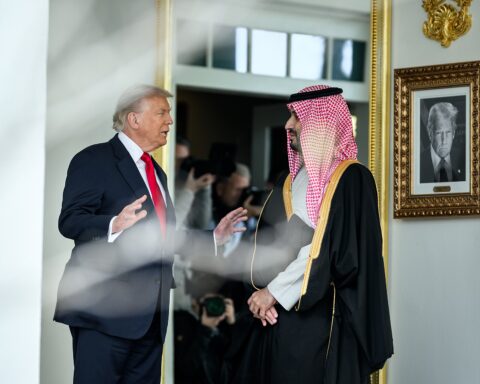
The fifth is the loss of the US security guarantee’s value proposition. Saudi Arabia has paid an enormous price — in arms purchases, oil pricing cooperation, and diplomatic alignment — for the US security umbrella. That umbrella’s value was predicated on the existence of a credible threat from Iran. Without that threat, the transactional logic of the Trump-MBS alliance shifts. Washington may feel less obligated to provide premium security guarantees to a region whose primary threat has been eliminated — precisely the moment when new, less manageable threats emerge from Iran’s wreckage.
How Does the War Reshape the Saudi-Israeli Normalization Calculus?
The Abraham Accords normalization framework was built on a strategic bargain: Gulf states and Israel shared a common threat in Iran, and normalization formalized the security cooperation that had been developing quietly for years. The destruction of Iran’s military removes the primary driver of that convergence — while simultaneously introducing new complications that make normalization both more and less likely.
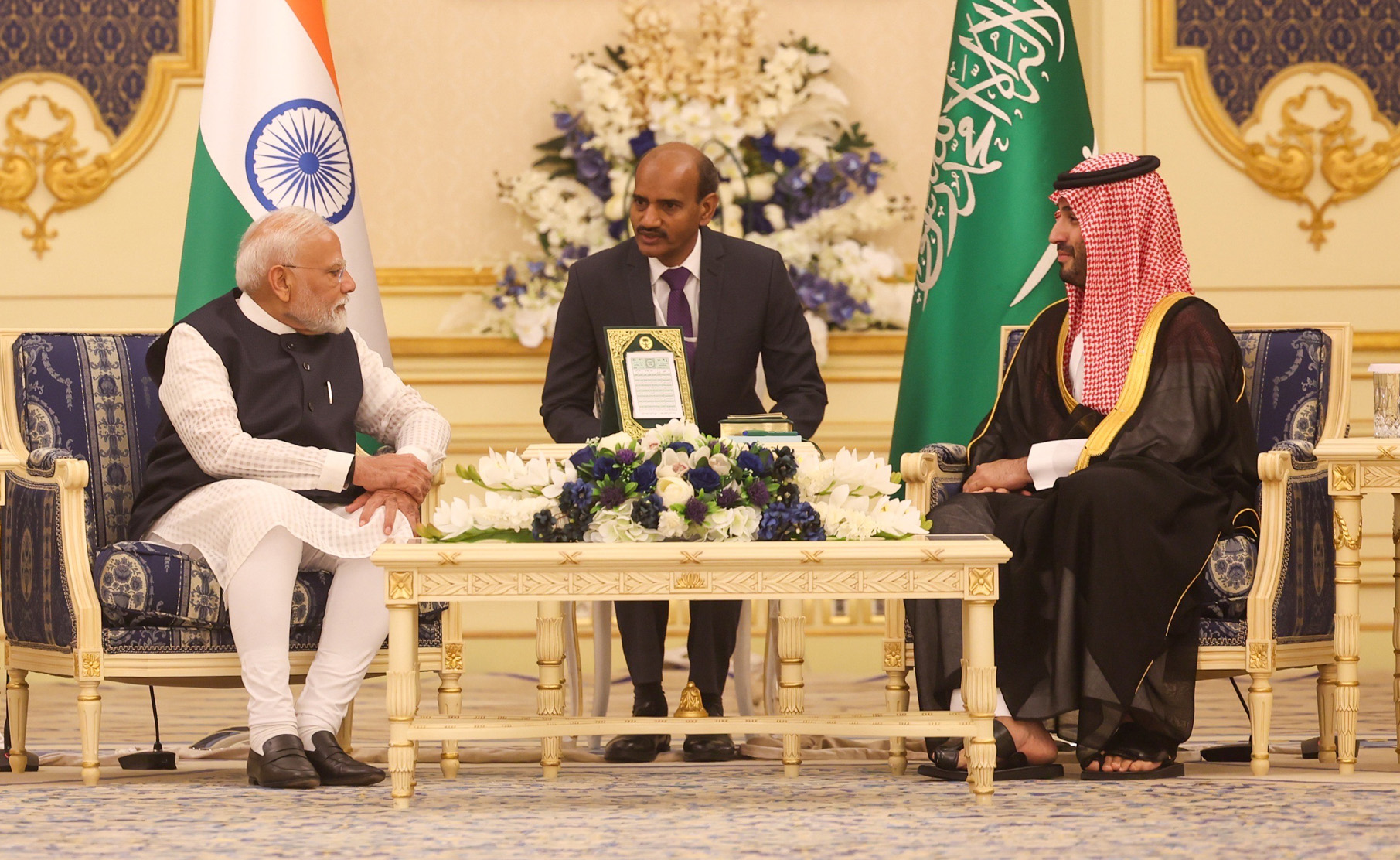
Senator Lindsey Graham stated publicly that “Saudi Arabia will join the Abraham Accords” following regime change in Iran. The logic is straightforward: with the Iranian threat eliminated, the domestic political cost of normalization drops, and the strategic benefits of an open relationship with Israel become more attractive. The Institute for National Security Studies (INSS) in Tel Aviv published an analysis in early 2026 titled “Saudi Arabia’s New Approach to Israel and the Normalization Process” that explored precisely this scenario.
The counter-argument is equally compelling. A 2025 survey found that 99 percent of Saudi respondents said establishing normal relations with Israel would be a negative step. Support for normalization plummeted from 41 percent in 2020 to 13 percent in 2025, according to polling data cited by the Anti-Defamation League. The Gaza war and the ongoing Israeli military campaign have made Israel deeply unpopular across the Arab world — including in Saudi Arabia, where Crown Prince Mohammed bin Salman must balance geopolitical calculation against domestic opinion.
The Manara Magazine’s February 2026 analysis of the “reconfiguration of the Abraham Accords after the regional war” argued that the conflict has fundamentally altered the terms of any normalization deal. Saudi Arabia’s conditions — concrete steps toward a Palestinian state — have not changed. Israel’s willingness to meet those conditions has, if anything, diminished under the current government. The shared Iranian threat that made compromise possible on both sides has evaporated.
The most likely outcome is continued quiet security cooperation between Riyadh and Tel Aviv — the intelligence sharing and operational coordination detailed in reporting about the secret Saudi-Israeli alliance — without formal diplomatic normalization. This unofficial partnership, conducted beneath the surface of public rhetoric, may prove more durable and more operationally useful than a public peace treaty that would generate domestic backlash in both countries.
The regional dimension of normalization also shifts. The existing Abraham Accords signatories — the UAE, Bahrain, Morocco, and Sudan — entered agreements partly under the umbrella of shared Iranian concerns. A post-Iran Middle East may weaken the strategic rationale for these existing agreements, though the economic ties that have developed — particularly between the UAE and Israel — have created their own momentum. For Saudi Arabia, the calculation remains what it has always been: normalization must deliver sufficient strategic value to justify the domestic political cost. Without Iran, the strategic value proposition changes, but whether it weakens or strengthens depends on what Washington offers in exchange.
The wildcard is the Palestinian issue. MBS has consistently maintained that normalization requires a credible pathway to Palestinian statehood. The current Israeli government has shown no interest in providing one. If Iran’s destruction emboldens Israel to pursue even more aggressive policies in the West Bank and Gaza — freed from the constraint of a powerful regional adversary — the Palestinian issue could become a more formidable obstacle to normalization, not less. Saudi public opinion, already overwhelmingly opposed to ties with Israel, would harden further.
What Does Iran’s Nuclear Program Look Like After the Strikes?
The nuclear dimension of Iran’s strategic threat has been partially but not decisively addressed by the military campaign. The IAEA confirmed on March 3 that buildings at Iran’s Natanz nuclear enrichment facility suffered damage during the current strikes, with entrance buildings to the underground Fuel Enrichment Plant (FEP) damaged sufficiently to make the facility inaccessible. The IAEA stated that “no radiological consequence expected and no additional impact detected at FEP itself.”
This represents the third wave of military action against Iranian nuclear sites. Natanz was first struck by Israeli airstrikes on June 13, 2025, during the Twelve-Day War. It was then bombed by the United States on June 22, 2025. The March 2026 strikes added further damage to the entrance infrastructure — but the underground enrichment halls, buried beneath meters of reinforced concrete and natural rock, remain structurally intact.
The critical concern is Iran’s enriched uranium stockpile. The IAEA’s last verified assessment placed the stockpile at 440 kilograms of uranium enriched to 60 percent purity — sufficient for as many as ten nuclear weapons if further enriched to weapons grade. This material is stored in a tunnel complex at Isfahan that previous strikes left structurally unaffected. The War on the Rocks analysis, published in February 2026, was titled “Twice Bombed, Still Nuclear: The Limits of Force Against Iran’s Atomic Program” — a title that captures the dilemma precisely.
The CSIS analysis of “Operation Epic Fury and the Remnants of Iran’s Nuclear Program” examined what survives the bombing. While centrifuge cascades at Natanz may be inaccessible, the knowledge base — the nuclear physicists, the enrichment engineers, the weapons design theorists — cannot be bombed out of existence. Some will be killed. Many will survive, and their expertise becomes a proliferation risk in a collapsing state.
For Saudi Arabia, the nuclear calculus shifts but does not disappear. The Kingdom’s own nuclear ambitions were partly driven by the need to match Iran’s capability. A defanged Iran reduces the immediate justification for Saudi enrichment but does not eliminate the long-term desire for nuclear hedging. If anything, the demonstrated willingness of the US to use military force to destroy nuclear programs may accelerate Saudi interest in acquiring nuclear capability before it can be similarly targeted.
The Arms Control Association published a pointed analysis in March 2026 questioning whether Iran’s nuclear and missile programs actually posed an imminent threat — the stated justification for the strikes. This debate matters for Saudi Arabia because it shapes the international norm around pre-emptive strikes on nuclear facilities. If the international community accepts that the US and Israel can bomb nuclear sites they deem threatening, the same logic could theoretically apply to any future Saudi enrichment program. Riyadh must navigate between wanting Iran’s nuclear capability destroyed and not wanting to establish a precedent that constrains its own nuclear options.
The IAEA’s role becomes critical in the post-war environment. With Iran’s government weakened and its nuclear facilities partially destroyed but not eliminated, the inspection regime that previously provided some transparency into Iranian activities may collapse entirely. A state that has lost effective governance cannot maintain safeguards agreements. Enriched uranium in unsecured facilities, in a country experiencing political upheaval, represents a proliferation scenario that should alarm Riyadh at least as much as a functioning Iranian weapons program under state control.
How Will Saudi Arabia’s Defense Spending Change After the War?
Saudi Arabia’s defense budget has been on an upward trajectory for two decades, driven primarily by the Iranian threat and secondarily by the Yemen intervention. Defense expenditure increased from $53.9 billion in 2021 to $72.5 billion in 2025, a compound annual growth rate of 7.7 percent, according to ResearchAndMarkets data. The 2026 budget allocates $78-80 billion, approximately 7.3 percent of GDP.
The elimination of Iran as a conventional military threat creates pressure from multiple directions. Vision 2030’s economic diversification agenda competes directly with defense spending for government resources. Every riyal allocated to Patriot interceptors is a riyal not available for tourism infrastructure, entertainment cities, or the industrial development that MBS has made the centrepiece of his domestic agenda. The tension between MBS’s war legacy and his economic vision will intensify once the shooting stops.
In late January 2026 — weeks before the war — the US Defense Security Cooperation Agency notified Congress of a potential sale to Saudi Arabia of 730 Patriot PAC-3 MSE interceptors for an estimated $9 billion. The cost asymmetry between cheap Iranian drones and expensive Western interceptors was already a source of strategic concern. The war’s consumption of interceptor inventories will necessitate massive restocking — ironically increasing defense spending in the short term even as the threat that justified it diminishes.
| Period | Estimated Budget | % of GDP | Primary Driver |
|---|---|---|---|
| 2021 | $53.9B | 6.2% | Iran threat + Yemen |
| 2023 | $64.8B | 6.8% | Iran threat + modernization |
| 2025 | $72.5B | 7.1% | Iran escalation + procurement |
| 2026 | $78-80B | 7.3% | Active conflict + restocking |
| 2027 (projected — Iran threat removed) | $65-70B | 5.8-6.2% | Restocking + reduced threat |
| 2030 (projected — post-Iran baseline) | $55-65B | 4.5-5.5% | Residual threats + localization |
The defense localization agenda adds another dimension. Under Vision 2030, Saudi Arabia aims to source 50 percent of military spending domestically by 2030 — up from approximately 19 percent currently. The Saudi Arabian Military Industries (SAMI) corporation and the General Authority for Military Industries (GAMI) have signed joint ventures with major Western defense firms. A post-Iran environment could accelerate localization by shifting procurement priorities from urgent foreign purchases to longer-term domestic industrial development.
The most likely trajectory involves a short-term spike in defense spending (to restock depleted interceptor inventories and fund enhanced force readiness) followed by a gradual decline over three to five years as the absence of the Iranian threat reduces the political justification for defense budgets exceeding 7 percent of GDP. By 2030, Saudi defense spending may settle in the $55-65 billion range — still enormous by global standards, but representing a significant reallocation of resources toward the economic diversification agenda.
The Post-Iran Threat Matrix — Saudi Arabia’s New Strategic Landscape
The destruction of Iran’s conventional military does not eliminate threats to Saudi Arabia. It transforms them. A structured assessment of six key threat dimensions — military, proxy, nuclear, economic, cyber, and political — reveals that while the aggregate threat level drops, the threat character shifts from concentrated and predictable to diffuse and volatile.
| Threat Dimension | Pre-War Threat Level | Post-War Threat Level | Threat Character Change | Saudi Preparedness |
|---|---|---|---|---|
| Conventional Military | HIGH — Iranian missiles, navy, drones | LOW — Destroyed capability | Concentrated → Eliminated | Strong (over-built for reduced threat) |
| Proxy Forces | HIGH — Centrally directed network | MEDIUM — Autonomous fragments | Coordinated → Unpredictable | Moderate (Yemen experience helps) |
| Nuclear | CRITICAL — Active enrichment program | MEDIUM — Stockpile survives, facilities damaged | State program → Proliferation risk | Weak (no counter-proliferation capability) |
| Economic Disruption | HIGH — Hormuz chokepoint vulnerability | LOW-MEDIUM — Reduced naval threat | State-directed → Market volatility | Improving (East-West pipeline activated) |
| Cyber Operations | MEDIUM — Iranian state cyber units | MEDIUM — Surviving capability + non-state actors | State-directed → Hybrid | Developing (NEOM tech investments) |
| Political Instability | MEDIUM — Iran-backed opposition | MEDIUM-HIGH — Failed state spillover, refugees | Covert influence → Chaotic spillover | Weak (no institutional preparation) |
The matrix reveals a critical insight: Saudi Arabia’s security architecture was optimized for the top row — conventional military threats from a state adversary. Billions were invested in Patriot batteries, THAAD systems, fighter aircraft, and naval vessels designed to counter Iranian state military capability. That investment has proved its value in the current conflict. But the post-war threat landscape shifts emphasis to the lower rows — proxy fragmentation, nuclear proliferation, economic volatility, and political instability — where Saudi capabilities are less developed and the threats are less amenable to military solutions.
Three structural shifts define the post-Iran strategic landscape for Riyadh. The first is the transition from threat management to vacuum management. For forty-five years, Saudi foreign policy involved managing a defined adversary with known capabilities and rational decision-making processes. The post-war environment requires managing an absence — the vacuum left by Iran’s collapse — which is inherently harder because it involves anticipating multiple, simultaneous, unpredictable threat vectors rather than countering a single, known one.
The second is the shift from alliance necessity to alliance choice. Saudi Arabia’s relationship with the United States, its arms procurement from Western suppliers, and its quiet coordination with Israel were all driven by the Iranian threat. Without that threat, Riyadh has greater freedom to choose its alignment — but also less leverage to extract concessions from partners who no longer view Saudi security as urgently threatened.
The third is the transition from military primacy to institutional primacy. The post-Iran Middle East will be shaped less by who has the most missiles and more by who has the most effective governance, the most resilient economy, and the most attractive development model. This plays to Saudi Arabia’s strengths under Vision 2030 — but only if Riyadh makes the strategic pivot from defense investment to institutional development before the window of opportunity closes.
The matrix also reveals a temporal dimension that warrants attention. The conventional military threat reduction is immediate — it has already happened. The proxy fragmentation risk is near-term, developing over the next six to eighteen months as Iranian funding dries up and individual groups adapt. The nuclear proliferation risk is medium-term, materializing over two to five years as state control over nuclear materials weakens. The political instability risk — refugee flows, failed-state dynamics, sectarian spillover — is long-term, potentially unfolding over a decade or more.
Saudi Arabia’s strategic planning apparatus must therefore operate on multiple timelines simultaneously. The immediate priority is restocking depleted air defense inventories and consolidating the wartime coordination mechanisms with GCC partners and the United States. The near-term priority is restructuring intelligence and counter-proxy operations for a fragmented, decentralized threat environment. The medium-term priority is developing counter-proliferation capabilities and pursuing nuclear security cooperation with international partners. The long-term priority is building the institutional resilience — border management, refugee processing, economic buffer capacity — needed to absorb the shocks of Iranian state failure.
No Saudi government has ever attempted to pursue all four priorities simultaneously. The financial resources exist — the Kingdom’s sovereign wealth, managed through the Public Investment Fund, exceeds $900 billion. The institutional capacity is the constraint. Vision 2030 was designed as a domestic transformation program. The post-Iran strategic landscape demands that it become, simultaneously, a regional stabilization framework. Whether Mohammed bin Salman’s government can manage that dual mandate will determine whether the destruction of Iran’s military becomes the foundation of a Saudi-led regional order — or the prelude to a decade of unpredictable instability across the Gulf.
The historical parallel that Saudi strategists should study is not the Gulf War of 1991 but the fall of the Soviet Union in 1991. The United States “won” the Cold War — and then spent the next three decades managing the consequences of victory: nuclear proliferation from former Soviet states, failed states in Central Asia, the rise of non-state threats that filled the vacuum left by Moscow’s retreat, and the loss of the strategic consensus that had organized American foreign policy for forty years. Saudi Arabia now faces its own version of this challenge. The Iranian threat organized Saudi strategy. Its absence demands a new organizing principle — and finding one may prove harder than defeating the old adversary.
Frequently Asked Questions
How much of Iran’s military has been destroyed in the 2026 war?
As of Day 7 of the conflict, Iran’s ballistic missile capability has dropped 90 percent, drone attacks have fallen 83 percent, the Pentagon reports the Iranian navy has been destroyed, and Israel claims to have eliminated 80 percent of Iran’s air defense systems and over 300 missile launchers. The degradation is described as the most comprehensive military dismantlement of a nation-state since the 1991 Gulf War.
Will Saudi Arabia become the dominant military power in the Middle East?
Saudi Arabia was already the region’s largest military spender at $78-80 billion annually. With Iran’s military destroyed, no remaining Middle Eastern state can match Saudi Arabia’s combination of financial resources, advanced Western weaponry, and strategic depth. However, raw spending does not automatically translate to operational dominance, and the Kingdom’s military has never independently fought a conventional war.
Can Iran rebuild its military after the 2026 strikes?
Historical precedents suggest a timeline of 10 to 20 years for meaningful military reconstruction, assuming stable governance, foreign technology access, and sustained investment. None of these preconditions currently exist in Iran. The destruction of manufacturing facilities, the killing of senior military leadership, and continued international sanctions make rapid reconstruction extremely unlikely.
What happens to the Houthis without Iranian support?
The Houthis represent the most resilient element of Iran’s proxy network. Unlike Hezbollah, the Houthis have demonstrated domestic weapons manufacturing capability and maintain operational autonomy from Tehran. They are likely to continue operations in Yemen and the Red Sea even without sustained Iranian supply, though their access to advanced weapons like long-range ballistic missiles will diminish over time.
How does the war affect the Saudi-Israeli normalization process?
The destruction of the shared Iranian threat removes the primary driver of Saudi-Israeli strategic convergence. While some analysts predict normalization will accelerate after regime change in Iran, domestic public opinion in Saudi Arabia — where 99 percent of respondents opposed normalization in 2025 — and the unresolved Palestinian issue present significant obstacles. Continued quiet security cooperation without formal normalization remains the most likely outcome.
Is Iran’s nuclear program destroyed?
Partially, but not decisively. The Natanz enrichment facility’s entrance buildings are damaged and inaccessible, but the underground enrichment halls remain structurally intact. Iran’s stockpile of 440 kilograms of uranium enriched to 60 percent purity — sufficient for up to ten nuclear weapons if further enriched — is stored in a tunnel complex at Isfahan that has survived multiple rounds of strikes. The knowledge base cannot be bombed out of existence.
How will Saudi defense spending change after the Iran threat is removed?
A short-term spending spike is expected as Saudi Arabia restocks depleted interceptor inventories. Over three to five years, defense spending is projected to decline from $78-80 billion to $55-65 billion as the absence of the Iranian threat reduces political justification for spending 7 percent of GDP on defense. This reallocation could benefit Vision 2030’s economic diversification agenda.