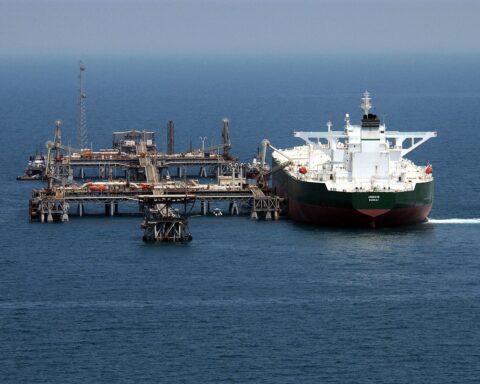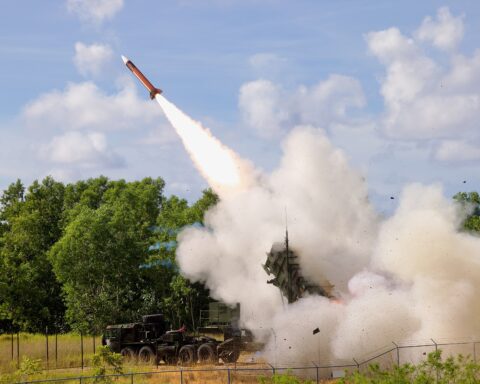

WASHINGTON — The world’s most powerful navy cannot yet clear a 21-mile-wide waterway that carries a fifth of the planet’s oil. Two weeks into the Iran war, the United States has destroyed more than 30 Iranian minelaying vessels, sunk nine IRGC warships, and established air superiority over the Persian Gulf. None of that matters if the Strait of Hormuz remains too dangerous for a single commercial tanker to transit. On March 12, U.S. Energy Secretary Chris Wright conceded what naval planners have understood for weeks: “We’re simply not ready. All of our military assets right now are focused on destroying Iran’s offensive capabilities.” The admission laid bare a strategic paradox that defines this conflict — winning the air war and winning the sea lanes are two entirely different operations, and the second is proving far harder than the first.
The Strait of Hormuz has been effectively closed to commercial traffic since March 1, 2026, removing approximately 20 million barrels per day of crude oil and roughly 20 percent of global liquefied natural gas from international markets. Brent crude has climbed 38 percent since the war began. Yet while the Pentagon celebrates precision strikes on Iranian missile batteries and air defense radars, the real threat sits silently on the seafloor: an estimated 5,000 to 6,000 naval mines that Iran has spent decades stockpiling for precisely this moment. Reopening the strait will require a mine countermeasures campaign of a scale not attempted since 1991 — and the West dismantled much of the capability needed to execute it just months before the war began.
Table of Contents
- Why Can’t the World’s Largest Navy Reopen the Strait of Hormuz?
- Iran’s 5,000-Mine Arsenal and the Underwater War Nobody Prepared For
- The Mine Countermeasures Gap the West Created
- What Operation Earnest Will Teaches About the Road Ahead
- How One Mine Nearly Sank a Frigate and Changed Naval Doctrine
- The Five Layers That Make Hormuz the Hardest Chokepoint on Earth
- The Strait Reopening Readiness Index
- What Is Operation Epic Escort and Can It Work?
- Saudi Arabia’s Pipeline Bypass and Its Limits
- Why Insurance May Keep Hormuz Closed Longer Than Mines
- How Long Will the Strait of Hormuz Stay Closed?
- The Real Crisis Is Not the War — It Is What Comes After
- Frequently Asked Questions
Why Can’t the World’s Largest Navy Reopen the Strait of Hormuz?
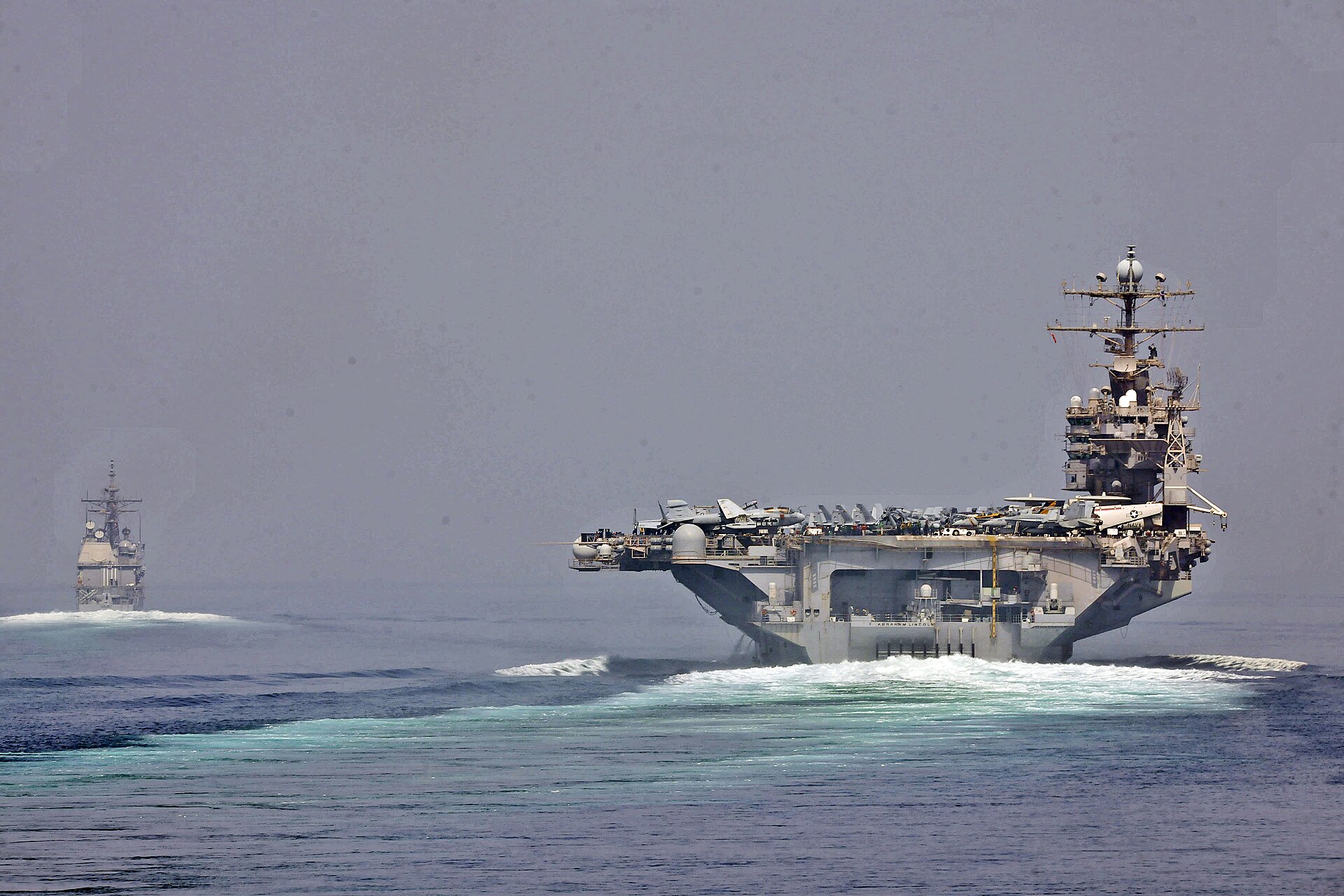
The question sounds absurd on its face. The United States maintains three carrier strike groups in the region, has established air superiority from the Strait of Hormuz to central Iran, and has destroyed a significant portion of Iran’s conventional military infrastructure. The U.S. Fifth Fleet, headquartered at Naval Support Activity Bahrain, commands more firepower than most nations’ entire armed forces. And yet, on March 12, Energy Secretary Chris Wright told CNBC that “it’ll happen relatively soon but it can’t happen now” — an acknowledgment that air superiority over a waterway and safe passage through it are fundamentally different things.
The disconnect exposes a structural problem in modern Western naval doctrine. For three decades after the Cold War, the United States and its allies invested overwhelmingly in power projection — aircraft carriers, guided-missile destroyers, nuclear submarines, and precision strike capabilities. Mine countermeasures, the slow, unglamorous work of clearing explosive devices from shipping lanes, received a fraction of that attention. The result is a navy optimized to destroy an enemy fleet but poorly equipped to make the water safe for the commercial vessels that carry the global economy.
Admiral James Stavridis, former NATO Supreme Allied Commander, captured the dilemma in stark terms: Iran can turn the Strait of Hormuz into “hell in a matter of days,” he warned in a March 9 interview. The geography alone makes this possible. The strait is just 21 nautical miles wide at its narrowest point. Commercial shipping funnels through two 2-mile-wide lanes separated by a 2-mile median. Iran’s coastline dominates the northern shore, placing the shipping lanes within easy range of Tehran’s arsenal of anti-ship cruise missiles, coastal batteries, drone boats, and fast attack craft. A mine laid at night by an unmarked dhow can close a lane that took decades of international cooperation to establish.
Iran’s 5,000-Mine Arsenal and the Underwater War Nobody Prepared For
Iran has maintained one of the world’s largest naval mine inventories for decades. A 2025 U.S. Congressional Research Service report estimated the stockpile at 5,000 to 6,000 mines — a mix of moored contact mines, bottom-influence mines, and more sophisticated non-magnetic variants designed to defeat Western minesweeping equipment. The arsenal includes Chinese-supplied EM-52 rising mines, Russian-pattern MDM series bottom mines, and indigenously produced variants that Iran has been manufacturing since the 1980s.
On March 10, CNN reported that U.S. intelligence had detected Iran beginning to lay mines in the Strait of Hormuz, using small craft capable of carrying two to three mines each. The covert nature of the operation is itself a weapon. Iran does not need to deploy all 5,000 mines to close the strait. It needs to deploy enough to create doubt — and doubt alone is sufficient to halt commercial shipping. A single mine strike on a supertanker would send insurance premiums into the stratosphere and ground every vessel within 500 miles.
The mine threat operates on a fundamentally different timeline than the air war. A cruise missile can be destroyed in flight by a ship-based interceptor. A drone swarm can be jammed or shot down. But a mine, once laid, sits on the seafloor or floats just below the surface indefinitely, waiting. It does not need fuel, communication, or a command structure. It is the ultimate autonomous weapon — patient, cheap, and lethal.
| Mine Type | Origin | Deployment | Detection Difficulty | Charge Size |
|---|---|---|---|---|
| EM-52 Rising Mine | Chinese-supplied | Bottom-laid, rocket-propelled | Very High | ~350 kg |
| SADAF-02 Moored | Indigenous | Moored contact | Medium | ~200 kg |
| MDM Series Bottom | Russian pattern | Bottom influence | High | ~500 kg |
| Non-magnetic variants | Indigenous | Acoustic/pressure trigger | Very High | ~300 kg |
| Limpet mines | Indigenous/IRGC | Diver-attached | Moderate | ~10 kg |
The U.S. Navy has destroyed more than 30 Iranian minelaying vessels since the war began, according to U.S. Central Command. But as defense analysts have noted, Iran retains 80 to 90 percent of its small boat fleet — hundreds of fast craft that can lay mines under cover of darkness using commercial fishing vessels, civilian dhows, and purpose-built minelayers that are nearly impossible to distinguish from legitimate maritime traffic. Even a partial mining of the strait could take weeks to detect and months to clear.
The Mine Countermeasures Gap the West Created
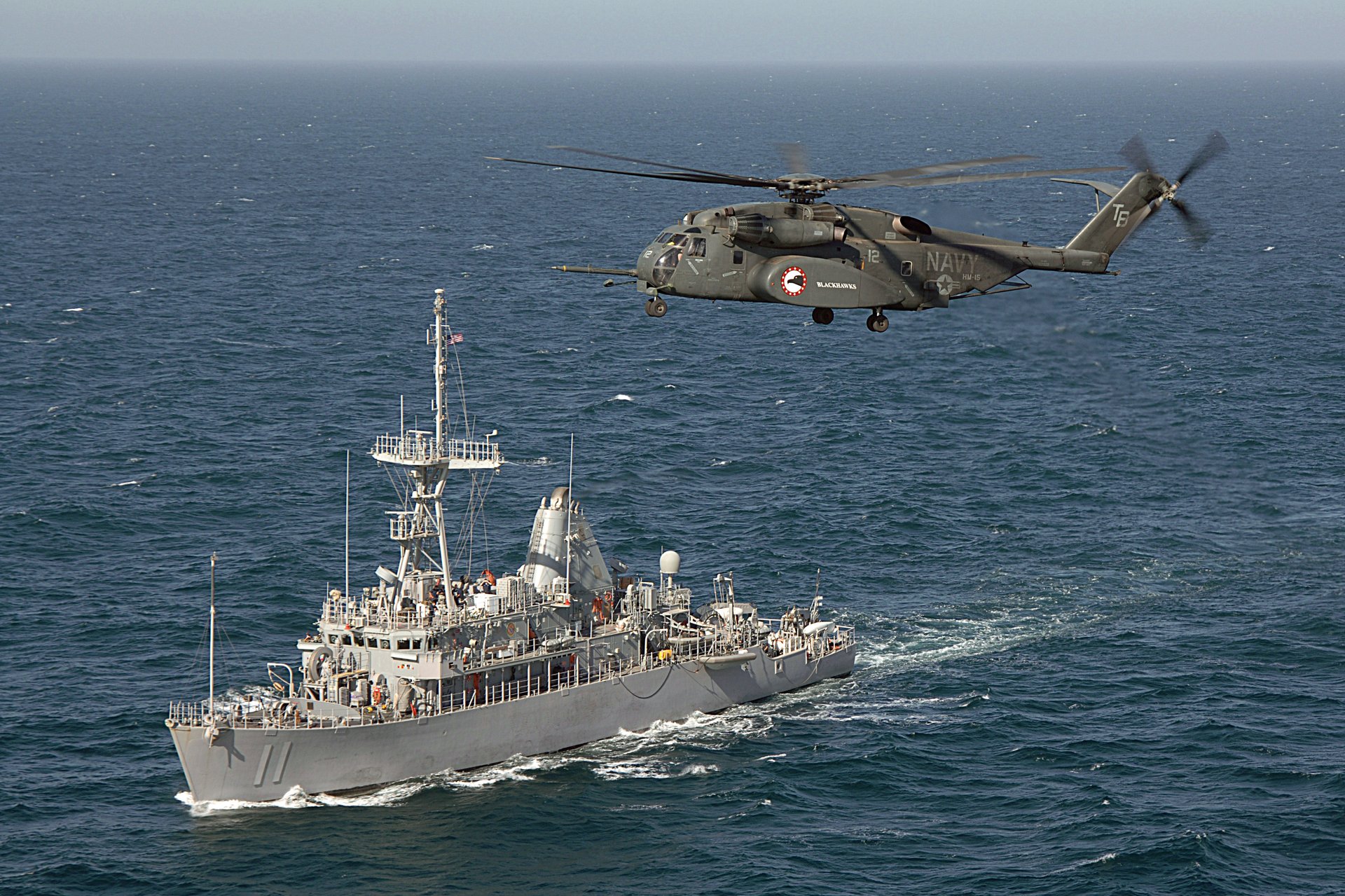
The most damning aspect of the current crisis is that it was entirely predictable — and the nations most dependent on the strait did the least to prepare for it. In September 2025, just five months before Iran began mining the Hormuz shipping lanes, the U.S. Navy decommissioned its last four dedicated minesweepers from the Persian Gulf. The USS Devastator, USS Dextrous, USS Gladiator, and USS Sentry — all Avenger-class mine countermeasures ships stationed at Naval Support Activity Bahrain — were retired as part of the Navy’s transition to a new mine countermeasures concept based on unmanned systems.
The timing was catastrophic. The Navy’s replacement capability — the Mine Countermeasures Mission Package deployed aboard Independence-class littoral combat ships — had achieved initial operational capability only in 2023 and had never been tested in combat conditions. Three LCS vessels with MCM modules are now in the Gulf, relying on unmanned underwater vehicles and sonar systems that have not yet proven they can match the detection rates of the wooden-hulled Avenger-class ships they replaced.
The United Kingdom made an even more striking withdrawal. The Royal Navy maintained a continuous mine countermeasures presence in the Gulf from 2003 to early 2026, operating Hunt-class and Sandown-class minehunters from the UK Maritime Component Command in Bahrain. Under the Labour government’s “NATO first” policy, the Royal Navy withdrew its last MCM vessel, HMS Middleton, from the Gulf in early 2026 — transported home on a heavy-lift ship because it could not make the voyage under its own power. No replacement was sent. Britain has since reversed course, with the Royal Navy now preparing to lead a multinational mine-clearing coalition through the Strait of Hormuz using autonomous systems that entered service in 2025.
The withdrawal left the world’s most important energy chokepoint with fewer dedicated mine countermeasures assets than at any point since the 1980s. According to Columbia University’s Center on Global Energy Policy, the best minesweepers in Europe are “months away from showing up at the Strait of Hormuz,” while America’s more limited resources in the region could clear the strait only “over significant numbers of weeks.”
| Nation | MCM Vessels | Type | Status |
|---|---|---|---|
| United States | 3 | LCS with MCM module | Operational, untested in combat |
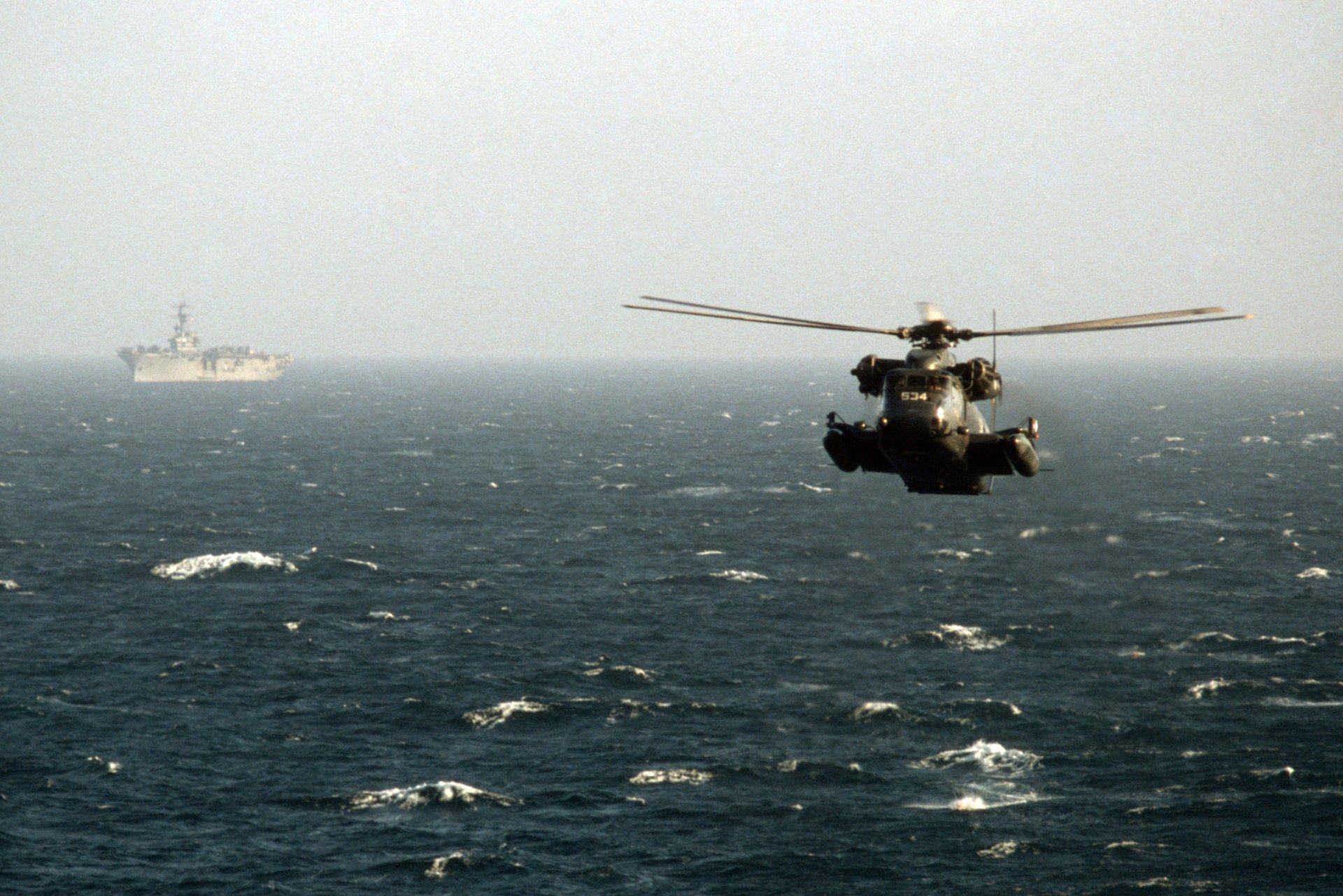
| United States | ~6 | MH-53E Sea Dragon helicopters | Aging, retiring 2027 |
| United Kingdom | 0 | Withdrawn early 2026 | HMS Middleton returned to UK |
| Saudi Arabia | 3-4 | Al Jawf-class MCM | Limited capability |
| France | 0 (in theater) | Tripartite-class available | Weeks to deploy |
| Japan | 0 (in theater) | Awaji-class available | Months to deploy |
UK Defence Secretary John Healey acknowledged the scale of the challenge on March 11, stating that mine clearance is “near impossible during active conflict” and that de-escalation remains the most realistic path to reopening the strait. The admission was a tacit acknowledgment that military force alone cannot solve the mine problem — a truth that naval commanders have understood since mines first entered warfare in the nineteenth century.
What Operation Earnest Will Teaches About the Road Ahead
The last time the United States attempted to keep the Strait of Hormuz open under hostile conditions was Operation Earnest Will, the 14-month tanker escort operation that ran from July 1987 to September 1988 during the Iran-Iraq War. The parallels to 2026 are striking — and the differences are alarming.
Operation Earnest Will was the largest naval convoy operation since World War II. The United States reflagged 11 Kuwaiti tankers under the American flag and provided continuous naval escorts through the Persian Gulf. At its peak, more than 30 U.S. warships operated in the Gulf simultaneously, supported by AWACS surveillance aircraft and Army special operations helicopters hunting for Iranian attackers. The operation was supplemented by Operation Prime Chance, a classified mission that used Navy SEALs and armed helicopters to intercept Iranian minelaying boats at night.
Despite this massive commitment, Iran’s mine warfare proved devastatingly effective. On July 24, 1987 — the very first day of Earnest Will — the reflagged tanker Bridgeton struck an Iranian mine in the central Persian Gulf. The 401,000-deadweight-ton vessel survived the blast, but the incident exposed a humiliating gap: the U.S. Navy had no minesweepers deployed in the Gulf at the time. American warships were forced to follow behind the damaged tanker, using its massive hull as an improvised minesweeper.
The mine that struck the Bridgeton had been laid by the Iran Ajr, a small Iranian vessel disguised as a civilian landing craft. When U.S. forces later captured the Iran Ajr in September 1987, they found it carrying additional mines whose serial numbers matched those recovered from the Bridgeton strike zone. The incident demonstrated a principle that remains operative in 2026: covert minelaying by small, disposable vessels is nearly impossible to prevent, even with overwhelming naval superiority.
How One Mine Nearly Sank a Frigate and Changed Naval Doctrine
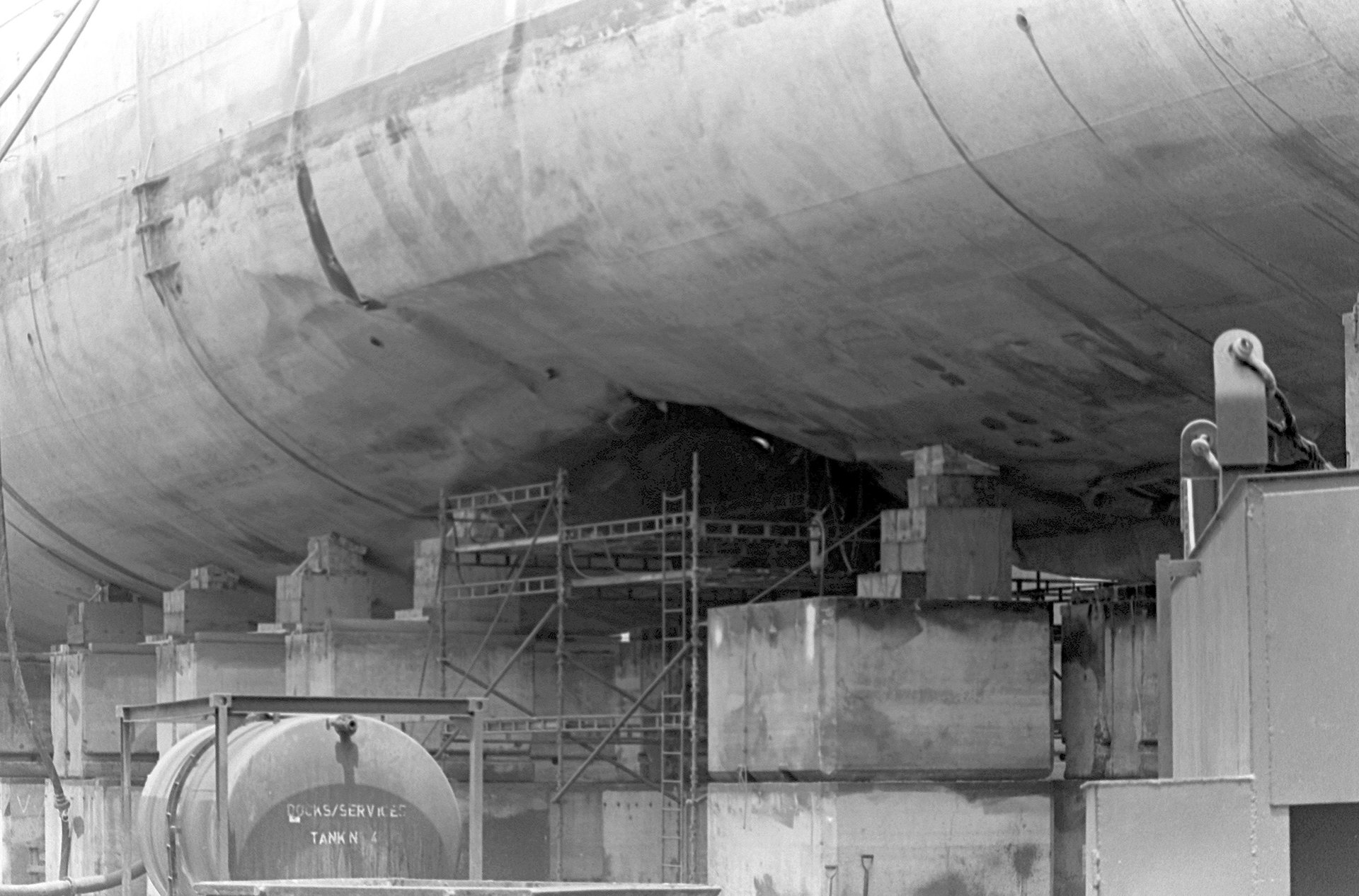
On April 14, 1988, the guided-missile frigate USS Samuel B. Roberts struck an Iranian M-08 mine while on patrol in the central Persian Gulf. The explosion tore a 15-foot hole in the hull, flooded the engine room, knocked both gas turbines from their mounts, and nearly broke the ship’s keel — structural damage that is almost always fatal to a warship. The crew fought fire and flooding for five hours and saved the vessel, but the Roberts required transport home on a heavy-lift ship and two years of repairs.
The mine that struck the Roberts cost Iran perhaps $1,500. The frigate it nearly destroyed cost $200 million. That cost asymmetry — ratios exceeding 100,000 to 1 — is the fundamental reason mines remain the weapon of choice for weaker naval powers. In the current conflict, Iran faces the same calculus that has made its drone campaign against Saudi air defenses so effective: the attacker’s cost of deployment is trivial compared to the defender’s cost of neutralization.
The Roberts incident triggered Operation Praying Mantis four days later — the largest U.S. naval surface engagement since World War II. American forces destroyed two Iranian oil platforms used as military outposts, sank the frigate Sahand and the missile boat Joshan, and severely damaged the frigate Sabalan. It remains the only time the U.S. Navy has exchanged surface-to-surface missile fire with an enemy. The operation demonstrated that the United States could punish Iran severely for mine warfare — but it did not solve the mine problem. Iran continued laying mines until the ceasefire in August 1988.
The lesson is directly applicable to 2026. The Pentagon has already destroyed more than 30 Iranian minelaying vessels and nine warships. These are significant tactical victories. But destroying the vessels that lay mines does not remove the mines already on the seafloor. And Iran’s inventory of 5,000 to 6,000 mines dwarfs the few dozen that created such havoc in 1987-88.
The Five Layers That Make Hormuz the Hardest Chokepoint on Earth
Reopening the Strait of Hormuz is not a single military problem. It is five interlocking problems, each of which must be solved before commercial shipping can resume. No previous conflict has required all five to be addressed simultaneously.
The first layer is air superiority. Coalition forces must ensure that Iranian aircraft, missiles, and drones cannot target vessels transiting the strait. This layer is largely in place — U.S. and allied air forces have degraded Iran’s air defense network and established persistent combat air patrols over the Gulf. But “largely” is not “entirely.” Iran retains mobile anti-ship missile launchers along its coastline that can be repositioned and fired from concealed positions with minimal warning.
The second layer is surface threat suppression. The IRGC Navy operates hundreds of small fast attack craft armed with rockets, torpedoes, and explosive charges — including the unmanned drone boats that opened a new front in the naval war. These vessels can be launched from numerous small ports and inlets along Iran’s Gulf coastline. Suppressing this threat requires continuous surveillance and rapid response capability across hundreds of miles of coastline.
The third layer is mine clearance — the bottleneck that currently prevents reopening. Clearing a minefield in the confined waters of the strait, under potential fire from Iranian coastal positions, with aging equipment and insufficient assets, is a task measured in weeks to months rather than days. The 1991 Gulf War mine clearance in Kuwait required more than a dozen allied MCM vessels and took over two months, in permissive post-ceasefire conditions. The current operation would be conducted under active threat.
The fourth layer is subsurface defense. Iran operates at least three Kilo-class diesel-electric submarines and an unknown number of midget submarines capable of operating in the shallow waters near the strait. Kilo-class boats running on battery power are exceptionally quiet and difficult to detect. A submarine lying in wait near the shipping lanes poses a threat that no surface escort can fully eliminate.
The fifth layer is the insurance and commercial confidence barrier. Even after the military threats are neutralized, commercial shipping will not resume until Lloyd’s of London and the major war-risk insurers certify the strait as navigable. Gulf shipping insurance premiums have already reached levels described as “insane” by industry participants. Restoring underwriter confidence after a mining campaign will require demonstrated safe passage over days or weeks — a chicken-and-egg problem when no commercial vessel is willing to be the first to transit.
| Layer | Threat | Current Status (March 13) | Estimated Timeline |
|---|---|---|---|
| Air Superiority | Iranian missiles, drones, aircraft | Largely achieved | Days to consolidate |
| Surface Suppression | IRGC fast boats, drone boats | Partially degraded | 1-2 weeks |
| Mine Clearance | 5,000+ mine inventory | Not yet begun | 4-8 weeks minimum |
| Subsurface Defense | Kilo-class, midget subs | Contested | 2-4 weeks |
| Insurance Restoration | War-risk premiums | Prohibitive | Weeks after military clearance |
The Strait Reopening Readiness Index
Assessing when the Strait of Hormuz will reopen requires measuring progress across all five layers simultaneously. A single unresolved layer is sufficient to keep the strait closed. The Strait Reopening Readiness Index scores each prerequisite on a 0-to-10 scale based on publicly available intelligence, with 10 representing full readiness for commercial transit.
| Prerequisite | Score (0-10) | Weight | Weighted Score | Key Bottleneck |
|---|---|---|---|---|
| Air superiority over strait | 8 | 15% | 1.20 | Mobile ASCM launchers on Iranian coast |
| Surface threat suppression | 5 | 20% | 1.00 | Hundreds of IRGC fast boats remain operational |
| Mine clearance | 1 | 30% | 0.30 | Clearance operations not yet begun; insufficient MCM assets |
| Subsurface defense | 4 | 15% | 0.60 | Kilo-class submarines unaccounted for |
| Insurance and commercial confidence | 1 | 20% | 0.20 | No insurer willing to cover Hormuz transit |
| Composite Readiness Score | 3.30 / 10.00 | Transit NOT viable |
The composite score of 3.30 out of 10 reflects a strait that is far from reopening. Mine clearance, weighted at 30 percent as the single most critical bottleneck, scores just 1 out of 10 — reflecting the fact that clearance operations have not formally begun and the MCM force is inadequate for the task. Insurance, weighted at 20 percent, also scores 1, reflecting the complete withdrawal of war-risk coverage for Hormuz transits.
Reaching a score of 7.0 — the minimum threshold for limited, escorted commercial transit — would require mine clearance to reach at least 5 (indicating a verified safe corridor through the strait) and insurance to reach at least 4 (indicating availability of war-risk coverage, even at elevated premiums). Based on current MCM capabilities and the estimated scale of Iran’s mining campaign, reaching that threshold will take four to eight weeks under optimistic assumptions.
What Is Operation Epic Escort and Can It Work?
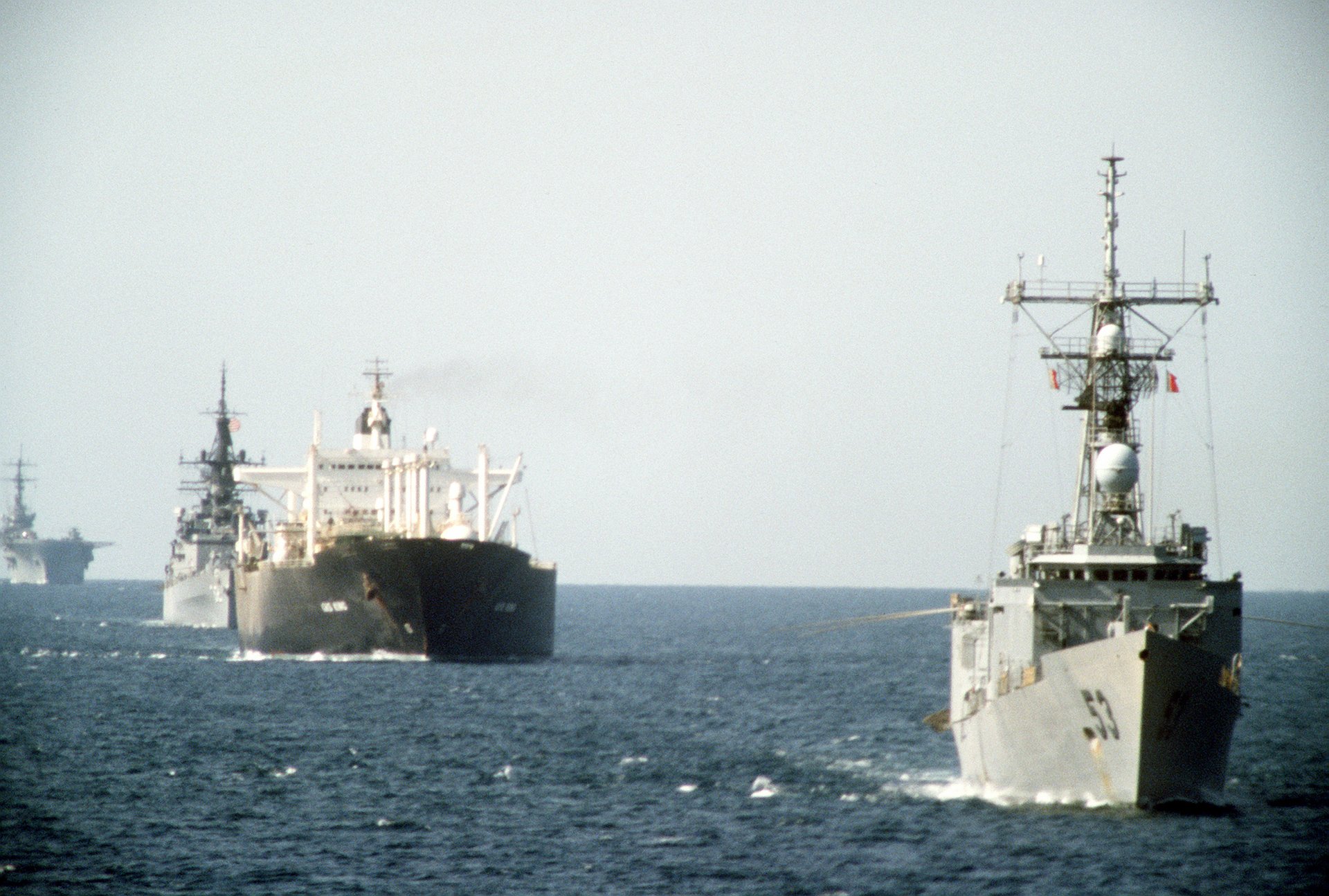
The Pentagon is developing plans for a tanker escort operation through the Strait of Hormuz, reportedly designated Operation Epic Escort. According to USNI News, the operation would involve military escorts for commercial tanker convoys — a direct parallel to Operation Earnest Will, updated for 2026’s threat environment. Chairman of the Joint Chiefs General Dan Caine stated on March 10 that the military would “look at the range of options to set the military conditions” for resuming commercial traffic.
President Donald Trump promised on March 3 that “the United States Navy will begin escorting tankers through the Strait of Hormuz, as soon as possible.” He subsequently offered federal war-risk insurance to shipowners willing to transit the strait under military protection — an echo of the reflagging policy that preceded Earnest Will in 1987. But the gap between presidential promise and operational reality has proved wider than anticipated.
Columbia University’s Center on Global Energy Policy estimates that “in the short term it is possible to escort 3 to 4 commercial ships a day with 7 to 8 destroyers providing air cover.” That would represent a fraction of the 80 to 130 daily transits the strait handled before the war. Even at maximum escort capacity, the operation would restore only a small percentage of pre-war energy flows — insufficient to meaningfully reduce oil prices or alleviate the global supply shock that has removed 8 million barrels per day from the market.
The escort model also assumes that Iran would not escalate in response. During Earnest Will, Iran initially avoided directly attacking U.S.-flagged vessels but continued targeting neutral shipping and laying mines in international waters. The current Iranian leadership — led by newly installed Supreme Leader Mojtaba Khamenei, who vowed on March 12 to keep the strait closed — has shown no inclination toward restraint. An escorted convoy that strikes a mine would represent an even greater escalation than the current standoff. The G7 has since formalized this escort concept as Operation Maritime Shield, but the plan faces the same mine warfare constraints and insurance barriers that made Earnest Will a qualified success at best.
Saudi Arabia’s Pipeline Bypass and Its Limits
Saudi Arabia has moved aggressively to reroute oil exports around the Hormuz blockade. Aramco’s East-West Pipeline, a 746-mile conduit running from the Abqaiq oil field in the Eastern Province to the Red Sea port of Yanbu, is being ramped to its full capacity of 7 million barrels per day. Aramco CEO Amin Nasser has stated the pipeline should reach full daily capacity within days.
The pipeline represents Saudi Arabia’s most significant strategic insurance against a Hormuz closure — built precisely for this scenario after the 1980s tanker war demonstrated the strait’s vulnerability. But even at maximum capacity, the bypass has hard limits. The kingdom exported roughly 6 million barrels per day through Hormuz before the war. Yanbu’s port facilities have rarely loaded more than 2.5 million barrels per day, with a theoretical maximum of 4.5 million. The bottleneck is not the pipeline but the terminal infrastructure at the Red Sea end.
The UAE’s Habshan-Fujairah pipeline (ADCOP) provides an additional 1.5 million barrels per day of bypass capacity, routing Abu Dhabi crude to the Gulf of Oman port of Fujairah, outside the strait. Combined, the Saudi and Emirati bypasses could theoretically move 5.5 to 6 million barrels per day — significant but still less than a third of the 20 million barrels that flowed through Hormuz daily before the war.
There is another vulnerability. Oil leaving Yanbu bound for Asian markets must transit the Bab el-Mandeb strait at the southern end of the Red Sea — another chokepoint that Iran’s Houthi allies in Yemen have demonstrated the capacity to threaten. Rerouting Saudi oil from one contested waterway to another does not eliminate the strategic risk; it disperses it.
| Route | Capacity (mb/d) | Current Throughput | Terminal Bottleneck |
|---|---|---|---|
| Saudi East-West Pipeline (Yanbu) | 7.0 | ~4.5 (max terminal) | Yanbu port infrastructure |
| UAE ADCOP Pipeline (Fujairah) | 1.5 | ~1.5 | Fujairah storage capacity |
| Total bypass capacity | ~6.0 | ~6.0 | |
| Pre-war Hormuz flow | 20.0 | ||
| Shortfall | ~14.0 | No bypass available |
The 14-million-barrel daily shortfall — representing the production of Iraq, Kuwait, Qatar, and a portion of Iran that transited the strait — cannot be bypassed by pipeline. It can only be restored by reopening the strait itself. For Saudi Arabia, the pipeline provides breathing room but not a solution. The kingdom’s long-term oil revenue, its sovereign wealth fund’s investment capacity, and its leverage within OPEC+ all depend on the eventual restoration of full Hormuz transit.
Why Insurance May Keep Hormuz Closed Longer Than Mines
Even if the military clears a corridor through the strait, commercial shipping will not resume until the insurance market agrees. War-risk insurance for vessels transiting the Persian Gulf has become, in the words of one Lloyd’s underwriter quoted by the Financial Times, “essentially unavailable at any price.” The few policies still being written carry premiums that add $5 to $10 per barrel to the cost of oil — a surcharge that fundamentally alters the economics of Gulf crude.
The insurance barrier creates a secondary blockade that operates independently of military conditions. In the 1980s tanker war, shipping continued through the strait even under active Iranian attack because insurers continued to provide coverage, albeit at elevated rates. The current situation is different. Major container lines — Maersk, CMA CGM, and Hapag-Lloyd — have all suspended Hormuz transits. Their underwriters have withdrawn coverage entirely rather than price the risk of mines, anti-ship missiles, and drone boats simultaneously.
President Trump’s offer of federal war-risk insurance mirrors a provision of the 1950 Federal Ship Financing Act, which allows the government to step in when commercial coverage is unavailable. But the program has never been used at anything approaching the scale required. Insuring even a fraction of pre-war Hormuz traffic would expose the U.S. Treasury to tens of billions of dollars in potential claims — a commitment that would face immediate Congressional scrutiny and legal challenge.
Historical precedent suggests that insurance markets lag military conditions by weeks to months. After the 1991 Gulf War, shipping insurers maintained elevated Gulf premiums for more than six months after mine clearance was completed. The war-risk premium for the Suez Canal remained elevated for over a year after the Houthi Red Sea campaign of 2024 subsided. If the same pattern holds for Hormuz, full commercial recovery could trail the military reopening by a quarter or more.
How Long Will the Strait of Hormuz Stay Closed?
The timeline for reopening the strait depends on which of three scenarios materializes. Each carries fundamentally different implications for global energy markets and for Saudi Arabia’s economic position.
Under the first scenario — a ceasefire followed by cooperative mine clearance — the strait could see limited escorted transits within three to four weeks and full commercial restoration within eight to twelve weeks. This scenario requires a negotiated end to hostilities, Iranian cooperation in identifying mined areas (unlikely but not unprecedented — Iraq provided partial mine maps after 1991), and rapid deployment of European and Asian MCM assets to supplement the limited American capability in theater. Energy Secretary Wright hinted at elements of this timeline when he suggested the Navy could begin escort operations “by the end of this month.”
Under the second scenario — military clearance without Iranian cooperation — the timeline extends significantly. Sweeping a 21-mile-wide strait without knowing where mines were laid requires systematic coverage of the entire navigable area. At the pace achievable with current MCM assets — perhaps 2 to 3 square miles per day under favorable conditions — clearing just the shipping lanes and approaches could take six to ten weeks. Adding the time needed for insurance markets to follow, full commercial restoration could take four to six months.
Under the third scenario — continued Iranian mining and harassment during clearance operations — the strait could remain effectively closed for six months or more. If Iran continues to deploy mines at night using small craft while coalition forces attempt to clear them by day, the operation becomes a contest of attrition that favors the miner. Iran’s ability to produce new mines domestically means the arsenal is not fixed — each mine cleared could potentially be replaced.
| Scenario | Prerequisites | Limited Transit | Full Restoration | Probability |
|---|---|---|---|---|
| Ceasefire + cooperation | Negotiated settlement, Iranian mine data | 3-4 weeks | 8-12 weeks | Low (15-20%) |
| Military clearance, no cooperation | Iranian offensive capacity degraded | 6-10 weeks | 4-6 months | Moderate (45-50%) |
| Contested clearance | Mining continues during clearance | 3-6 months | 6-12 months | Significant (30-35%) |
The most probable scenario — military clearance without cooperation, assigned a 45 to 50 percent probability — implies that Saudi Arabia and the Gulf states face a minimum of four to six months of severely constrained export capacity. At current oil prices above $90 per barrel, the revenue loss from reduced exports is partially offset by higher prices per barrel. But the strategic damage — to buyer relationships, market share, and the credibility of Gulf supply commitments — compounds with every week the strait remains closed.
The Real Crisis Is Not the War — It Is What Comes After
The conventional analysis of the Hormuz closure focuses on the immediate economic damage: $90-plus oil, supply shortfalls, inflationary pressure on the global economy. These are real and severe. But they may not be the most consequential outcome of the crisis. The deeper threat is structural: the Hormuz closure of 2026 may permanently alter how the world thinks about Gulf energy dependence — and that shift in perception could do more lasting damage to Saudi Arabia’s strategic position than any number of Iranian missiles.
For decades, the theoretical possibility of a Hormuz closure was dismissed by markets as a tail risk — something that could happen but probably would not, because the consequences for all parties would be too severe. That assumption has now been falsified. Iran closed the strait. The world’s most powerful navy could not immediately reopen it. Every energy-importing nation on Earth is now recalculating its dependence on Gulf crude with the demonstrated reality of closure factored in, rather than the theoretical risk.
Japan and South Korea, which together import more than 5 million barrels per day through the strait, have already begun emergency consultations on strategic reserves and alternative supply arrangements. European nations that pivoted to Qatari LNG after the Russia-Ukraine gas crisis now find their new supply source equally vulnerable. China, Iran’s largest oil customer, is continuing to purchase Iranian crude through shadow fleet channels but has intensified its investment in overland pipelines from Russia and Central Asia as a hedge.
For Saudi Arabia, the implications are profound. Mohammed bin Salman’s economic strategy depends on oil revenue funding the diversification that eventually reduces the kingdom’s dependence on oil. If major buyers permanently diversify away from Gulf crude — not because of climate policy or electric vehicles, but because the supply route proved unreliable — the timeline for that transition compresses dramatically. The Hormuz closure may accelerate demand destruction in ways that no OPEC production cut can reverse.
The mines are the easy part. The hard part is convincing the world that the Strait of Hormuz will never close again. And after 2026, nobody will believe that.
Senior energy analyst, Columbia University Center on Global Energy Policy, March 2026
The most dangerous outcome for Saudi Arabia is not a strait that stays closed for six months. It is a strait that reopens on schedule but is never again trusted by the market to remain open. If Hormuz becomes a permanent risk premium in the price of Gulf crude — a 10 to 15 percent discount relative to non-Gulf barrels that do not transit contested waterways — the economic foundations of Saudi Arabia’s wartime strategy and its post-war recovery will be fundamentally weakened.
Frequently Asked Questions
Is the Strait of Hormuz currently open to shipping?
The Strait of Hormuz has been effectively closed to commercial shipping since March 1, 2026. Tanker traffic has dropped by approximately 70 percent, with over 150 vessels anchoring outside the strait to avoid Iranian mines, missiles, and drone boats. Only Iranian-flagged vessels and a handful of sanctioned shadow fleet tankers have been recorded transiting the waterway. Major shipping companies including Maersk, CMA CGM, and Hapag-Lloyd have suspended all Hormuz transits indefinitely.
Why did the US decommission its minesweepers before the Iran war?
The U.S. Navy retired its four Avenger-class minesweepers from the Persian Gulf in September 2025 as part of a planned transition to unmanned mine countermeasures systems deployed aboard littoral combat ships. The retirement followed a broader trend of reducing legacy platforms in favor of newer technology. The timing proved catastrophic, leaving the Gulf with fewer dedicated mine countermeasures assets than at any point since the 1980s, just five months before Iran began mining the strait.
How many mines has Iran laid in the Strait of Hormuz?
The precise number is classified, but CNN reported on March 10 that U.S. intelligence had confirmed Iran had begun laying mines, with “a few dozen” deployed in the initial phase. Iran retains 80 to 90 percent of its small boat fleet capable of covert minelaying, and its total mine inventory is estimated at 5,000 to 6,000 weapons. Even a partial deployment of several hundred mines would require weeks of clearance operations before safe passage could be established.
When will the US Navy begin escorting tankers through Hormuz?
U.S. Energy Secretary Chris Wright stated on March 12 that escort operations could begin “by the end of this month” but acknowledged the Navy is “simply not ready” at present. The Pentagon is developing plans under the reported designation Operation Epic Escort. Columbia University’s Center on Global Energy Policy estimates that initial escorts could protect 3 to 4 ships per day using 7 to 8 destroyers — a fraction of the 80 to 130 daily transits the strait handled before the war.
Can Saudi Arabia export oil without using the Strait of Hormuz?
Saudi Arabia’s East-West Pipeline can move up to 7 million barrels per day to the Red Sea port of Yanbu, bypassing Hormuz entirely. However, Yanbu’s port facilities can handle a maximum of approximately 4.5 million barrels per day — less than the kingdom’s pre-war Hormuz exports. The UAE’s Habshan-Fujairah pipeline adds 1.5 million barrels per day of bypass capacity. Combined, these alternatives cover roughly 6 million of the 20 million barrels that transited Hormuz daily before the closure.
What was Operation Earnest Will and how does it compare to 2026?
Operation Earnest Will (1987-1988) was the largest U.S. naval convoy operation since World War II, providing military escorts for Kuwaiti oil tankers through the Persian Gulf during the Iran-Iraq War. The 14-month operation deployed more than 30 warships but could not prevent Iranian mines from striking the tanker Bridgeton on the very first day or the frigate USS Samuel B. Roberts seven months later. The 2026 situation is more severe: Iran’s mine inventory is larger, its coastal missile capabilities are more advanced, and Western mine countermeasures assets in the region are fewer than in 1987.