
JEDDAH — Iran announced on Wednesday that it is finalizing a joint protocol with Oman to “monitor and coordinate” all tanker traffic through the Strait of Hormuz, requiring every vessel to obtain advance permits from both countries — converting Tehran’s five-week-old wartime blockade into a permanent bilateral governance arrangement over the world’s most important oil chokepoint. If signed before a ceasefire, the protocol would embed Iranian authority over the 21-nautical-mile strait through which one-fifth of global petroleum supply once moved into a standing institutional framework that any post-war settlement would need to explicitly dismantle.
Deputy Foreign Minister Kazem Gharibabadi told Iranian state media the draft is “in the final stages of preparation,” with all vessels required to “coordinate in advance with Iranian and Omani authorities and obtain the necessary permits and licenses.” The announcement came four days before President Trump’s April 6 deadline on strikes against Iranian energy infrastructure, and on the same day the UK convened 40 nations to discuss reopening the strait. Every previous Hormuz crisis has produced mediation offers and naval escorts. This one has produced a governance document.
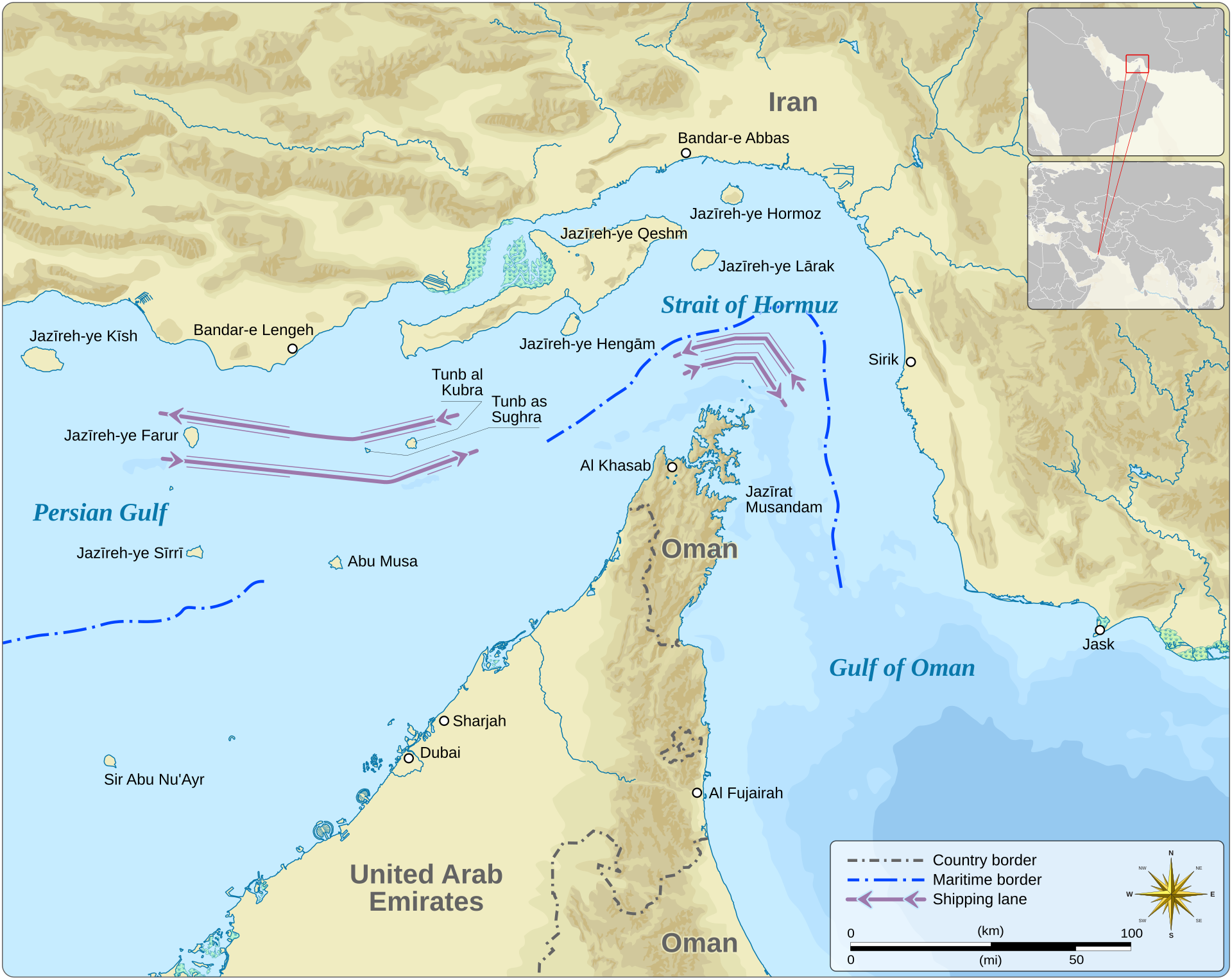
Table of Contents
- What the Iran-Oman Protocol Actually Demands
- Why Oman? A Relationship That Predates the Revolution
- How Does Iran’s Hormuz Toll System Work?
- Can Two Countries Privatize an International Strait?
- What Does This Mean for Saudi Oil Exports?
- The April 6 Deadline and the Institutional Fait Accompli
- Can Starmer’s 40-Nation Coalition Reopen Hormuz?
- Where Is Oman’s Voice?
- Frequently Asked Questions
What the Iran-Oman Protocol Actually Demands
Gharibabadi’s language was precise and deliberate. He told IRNA on April 2 that all vessels passing through the Strait of Hormuz “must have all the necessary agreements with the coastal states — Iran and Oman, obtaining the necessary permits and licenses in advance.” The protocol would establish that tanker movements require prior authorization from both countries, turning what has been a right of transit passage under international law into something that requires a permit from Tehran and Muscat.
The groundwork was laid one day earlier. On April 1, Foreign Minister Abbas Araghchi appeared on Qatari television and stated: “What arrangements are made regarding the Strait of Hormuz after the war is a matter for Iran and Oman.” He described the strait as lying within “our territorial waters” and added that “ensuring maritime security and environmental protection would require a joint mechanism between the coastal states.” Araghchi was not describing an emergency wartime measure — he was describing a post-war governance model, one designed to outlast whatever ceasefire eventually emerges.
Iran’s five-point peace proposal, rejected by the United States in late March, includes “international recognition of Iranian sovereignty over the Strait of Hormuz” as an explicit ceasefire condition. The protocol is the institutional vehicle for that demand. Where the peace proposal asks the world to recognize Iranian sovereignty in principle, the bilateral protocol creates it in practice — a signed agreement between the two countries whose territorial waters the strait passes through, establishing a joint governance mechanism that operates whether or not anyone else endorses it.
We cannot let our enemies use our territorial waters for commerce… What arrangements are made regarding the Strait of Hormuz after the war is a matter for Iran and Oman.
Abbas Araghchi, Iranian Foreign Minister, April 1, 2026
The framing is civilian safety: Gharibabadi stated the requirements aim at “facilitating traffic and ensuring the safe passage of ships,” with Iran and Oman bearing “greater responsibility” for strait security. But Araghchi’s televised statement stripped away the veneer when he added that Iran “cannot let our enemies use our territorial waters for commerce.” That is not a safety protocol. That is a sovereignty claim wrapped in the language of maritime coordination, and the protocol is the instrument designed to make it stick.
Why Oman? A Relationship That Predates the Revolution
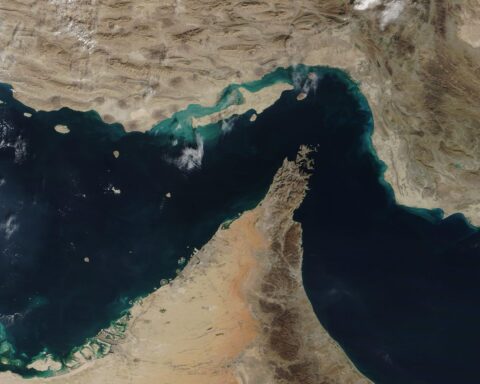
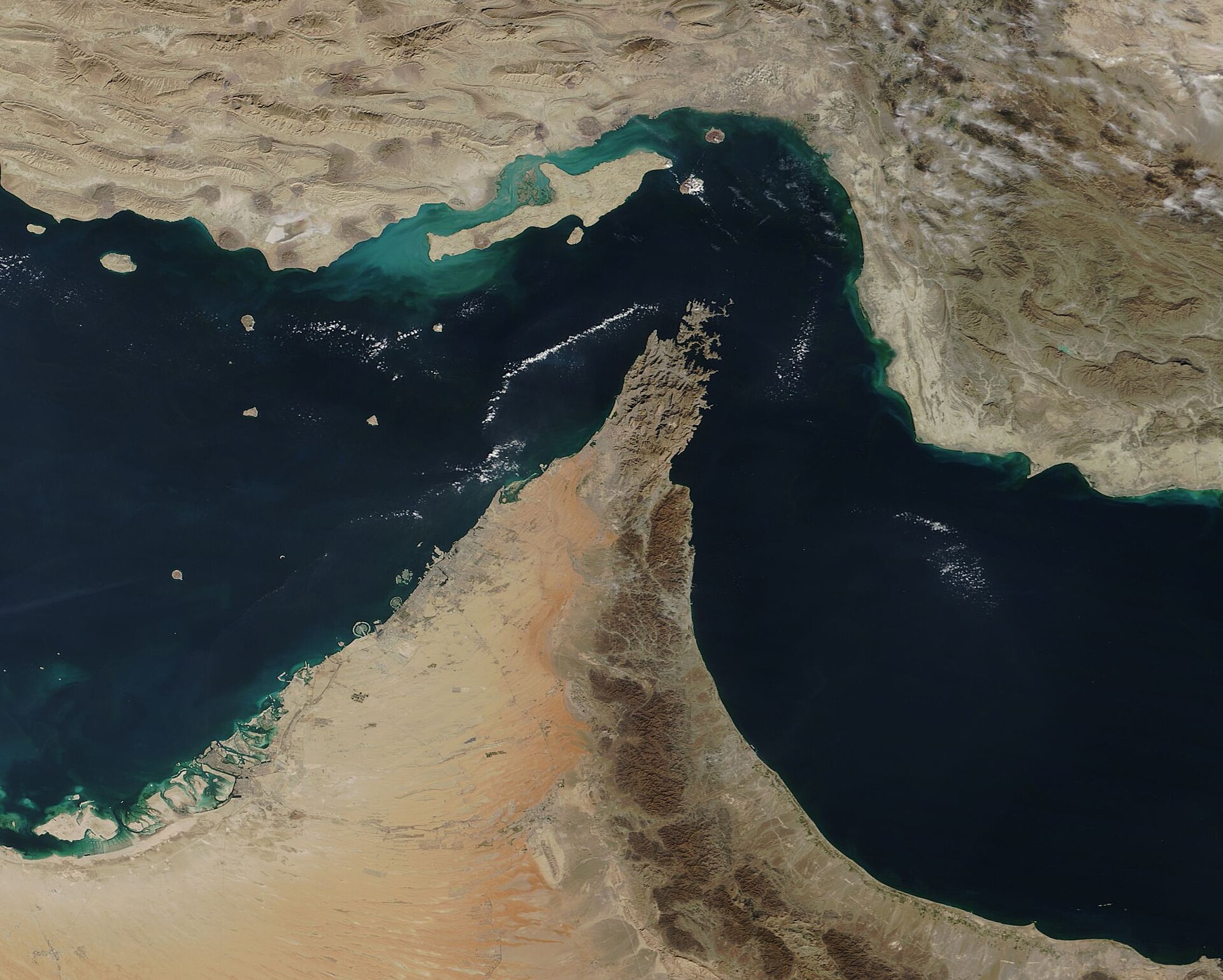
Geography provides the obvious answer: at its narrowest point, the Strait of Hormuz is 21 nautical miles wide, and all shipping must pass through Iranian or Omani territorial waters. Both countries claim 12-nautical-mile territorial seas, and there is no corridor of international water through the middle. Any ship transiting Hormuz enters the territorial claims of at least one of these two states, usually both. If you want to argue that the strait is subject to coastal state governance rather than international transit rights, Iran and Oman are the only two signatures you need.
The relationship between them runs deeper than cartography. Iran sent troops to Oman in 1973 to help Sultan Qaboos crush the Dhofar rebellion, a Marxist insurgency backed by South Yemen that threatened the Omani monarchy. That intervention predates the Islamic Revolution by six years, and the relationship survived 1979 — one of very few Iranian bilateral ties in the Arab world to do so. Oman served as the backchannel for every major US-Iran diplomatic opening since the 1990s, including the secret negotiations that produced the 2015 JCPOA nuclear deal.
Sultan Haitham, who succeeded Qaboos in 2020, has continued this mediating role with notable consistency. His most telling recent signal came when he congratulated Mojtaba Khamenei on his appointment as Iran’s new Supreme Leader — making Haitham, by all published accounts, the only Arab head of state to extend that recognition. That was not a routine diplomatic courtesy; it was a public statement about which relationships Oman considers non-negotiable, delivered at a moment when every other Arab government maintained conspicuous silence.
The economic dimension is hardening into dependency. An Iran-Oman gas pipeline, first agreed in 2003 and repeatedly delayed by US sanctions, is now approaching operational status. The terms — 10 billion cubic meters of Iranian natural gas per year delivered to Oman for 25 years from Iran’s Hormozgan province — would create structural energy interdependency that makes Oman’s alignment with Iran functionally irreversible for a generation. Once Omani power plants and desalination facilities run on Iranian gas, the prospect of Muscat defying Tehran on a strait governance protocol becomes correspondingly remote. The pipeline is not a separate issue from the protocol — it is the economic foundation on which the protocol’s viability rests.
How Does Iran’s Hormuz Toll System Work?
Iran’s parliament passed legislation in late March codifying a toll system that the IRGC had already been operating since the early weeks of the blockade. The law imposes transit fees of up to $2 million per voyage, bans all US- and Israel-linked vessels outright, and requires payment in Chinese yuan through accounts at Kunlun Bank — a Chinese state-owned financial institution with extensive experience facilitating transactions outside the Western sanctions architecture. The currency requirement is itself a geopolitical statement, routing the revenues of the world’s most important maritime chokepoint through Beijing’s financial system.
This is not a proposed framework sitting in a committee. Iranian lawmaker Alaeddin Boroujerdi confirmed that Iran has already been charging vessels $2 million to pass through the strait. According to Tasnim, Iran’s semi-official news agency, restoring pre-war traffic levels under the toll regime — 138 vessels per day at $2 million each — would generate approximately $100 billion in annual revenue. That figure would make the Hormuz toll Iran’s single largest source of foreign exchange income, eclipsing its peak pre-sanctions oil export revenue and transforming its fiscal position without requiring the lifting of a single Western sanction.
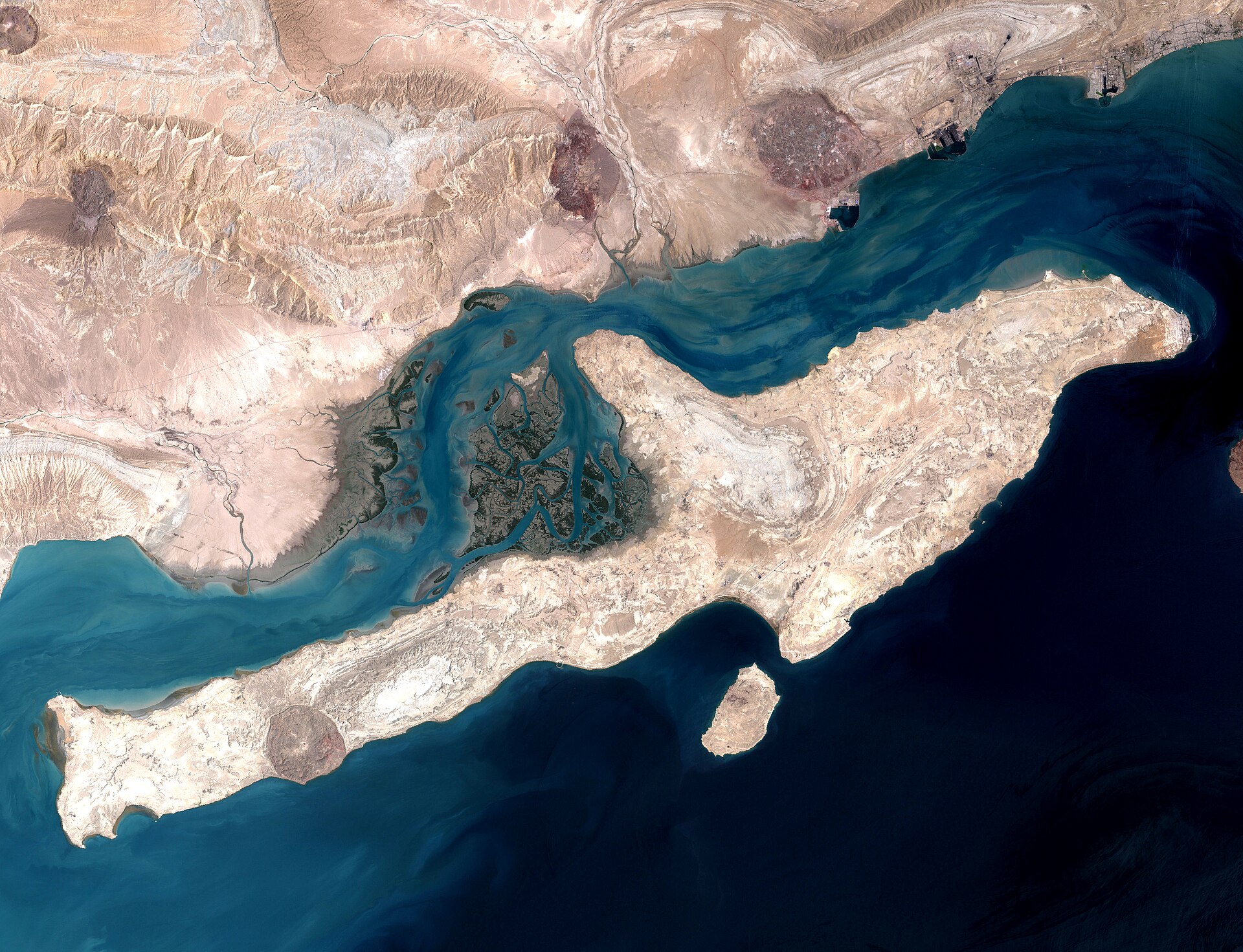
The operational infrastructure centres on Larak Island. The IRGC has diverted approved vessels from the internationally recognized Traffic Separation Scheme and rerouted them north around Larak, through a corridor between Qeshm Island and Larak Island that hugs the Iranian coastline. IRGC naval command issues clearance codes and dispatches escort boats for each transit. China, Russia, India, Iraq, and Pakistan receive free or preferential passage according to shipping intelligence monitoring the corridor — a pricing structure that converts a maritime chokepoint into a patronage system, rewarding diplomatic alignment with commercial access and punishing dissent with commercial exclusion.
The toll system sits within a broader legal architecture that Tehran has constructed in deliberate layers. Iran’s 1993 domestic maritime legislation provides the statutory basis for requiring prior authorization — a law that predates the current crisis by 33 years and represents Iran’s consistent legal position, not a wartime improvisation. The parliamentary toll law codifies the IRGC’s fees into formal statute. The Larak Island corridor provides operational enforcement on the water. And the Iran-Oman bilateral protocol, if signed, adds the final layer: the appearance of multilateral legitimacy. Each component exists independently, but together they form something far harder to dismantle than any single element — a structure where removing one layer leaves the others intact.
Can Two Countries Privatize an International Strait?
Under the United Nations Convention on the Law of the Sea, the answer is unambiguous. The Strait of Hormuz qualifies as an international strait under UNCLOS Article 37. Article 38 guarantees that transit passage through such straits “shall not be impeded.” Article 44 bars coastal states from suspending transit passage for any reason, and Article 26 prohibits charging fees for the privilege of transit. The treaty framework could hardly be more explicit about what Iran is doing and why it is prohibited.
But Iran has never ratified UNCLOS. It signed the convention in 1982, then stopped — maintaining instead its own 1993 domestic maritime law, which requires prior authorization for vessels entering Iranian waters. The core legal question is whether the transit passage regime binds Iran as customary international law even without ratification. The Institute for National Security Studies (INSS) concluded that “there is little doubt that this rule of the UNCLOS represents customary law accepted as such by the overwhelming majority of the world’s states.” Iran has disputed that characterization consistently for three decades, and the current war has given it the physical means to enforce its own interpretation.
A bilateral Iran-Oman protocol does not resolve this legal dispute — it sidesteps it entirely. Bilateral agreements between coastal states can govern matters between those two governments, but they cannot create new obligations for third-party shipping nations. The protocol carries none of the multilateral standing of the Turkish Straits Convention (Montreux, 1936) or the Magellan Strait arrangements, both established through international treaties with broad participation rather than bilateral coastal-state deals. As Mark Nevitt, a retired Navy Judge Advocate General and associate professor at Emory University School of Law, has written: “Iran does not own the Strait of Hormuz, but it can effectively control maritime movement through the Strait based on its physical proximity.” The gap between legal ownership and physical control is exactly the space the protocol is designed to occupy.
Maritime law professor Jason Chuah has argued that stopping commercial traffic or imposing transit fees exceeds any claim of self-defence and constitutes potential “illegal economic warfare.” US Secretary of State Marco Rubio called the toll system “not only illegal” but “dangerous to the world.” The GCC Secretary-General characterized the fees as a violation of UNCLOS. None of these legal objections have stopped the IRGC from operating its toll corridor for five consecutive weeks, and none of them will stop Iran from signing a bilateral document with Oman. The protocol’s power does not depend on recognition from London, Washington, or Riyadh — it depends on the fact that ships must comply with the IRGC’s requirements or risk interdiction in waters where Tehran has demonstrated effective physical control for 34 consecutive days of war.
What Does This Mean for Saudi Oil Exports?
Before the war, Saudi Arabia routed approximately 15 million barrels per day of crude and petroleum products through the Strait of Hormuz. In March 2026, Saudi oil exports fell by 50 percent — the most severe export disruption in the Kingdom’s history, compounding a global supply crisis that has already pushed strategic petroleum reserves toward depletion timelines. The numbers are not abstract: they represent a halving of revenue for a state whose entire economic transformation programme depends on oil income.
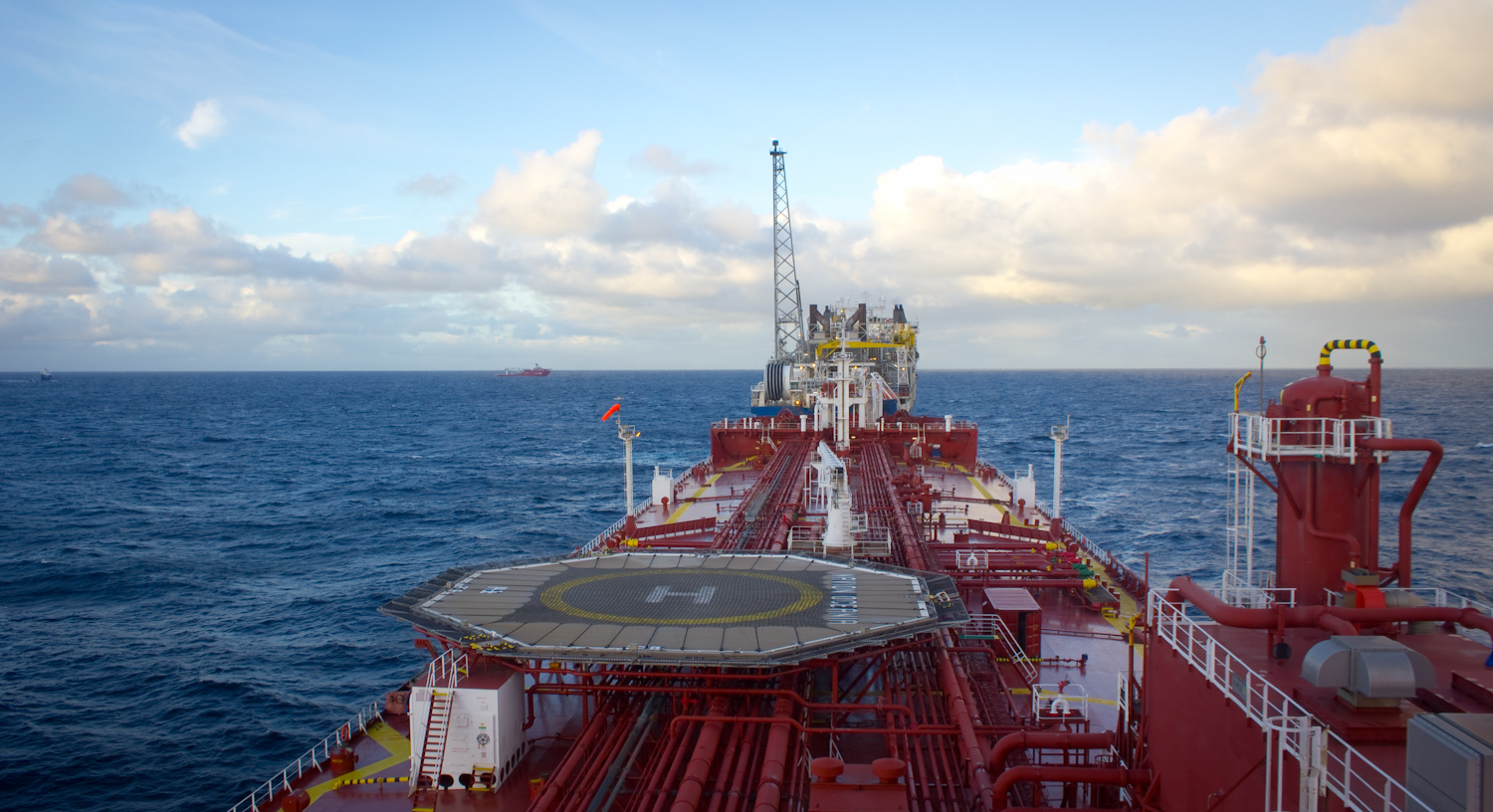
Saudi Arabia has one fallback route, and it is already maxed out. The East-West Pipeline — also known as the Petroline, built in the 1980s during the Iran-Iraq tanker war for precisely this scenario — runs from Abqaiq in the Eastern Province to Yanbu on the Red Sea coast. The pipeline has been operating at its maximum capacity of 7 million barrels per day since the blockade began. But the binding constraint is not the pipe — it is the port. Yanbu’s terminal can load approximately 4.5 million barrels per day of crude onto tankers — the binding bottleneck — with supplementary loading capacity handling an additional 700,000 to 900,000 barrels of refined products.
| Metric | Figure | Source |
|---|---|---|
| Pre-war daily Hormuz transits | 138 vessels | UANI |
| March 31, 2026 Hormuz transits | 5 vessels (1 carrying crude) | UANI |
| Pre-war petroleum flow through Hormuz | 20 million barrels/day | EIA, 2025 |
| Saudi oil routed through Hormuz (pre-war) | ~15 million barrels/day | Bloomberg |
| Saudi export decline, March 2026 | 50% | Bloomberg, April 1 |
| East-West Pipeline max capacity | 7 million barrels/day | Bloomberg |
| Yanbu port loading capacity (binding constraint) | ~4.5 million barrels/day | ENR |
| IRGC transit toll per voyage | Up to $2 million (in Chinese yuan) | Al Jazeera |
| Estimated annual toll revenue at pre-war volume | ~$100 billion | Tasnim |
| Strait width at narrowest point | 21 nautical miles | EIA |
The gap between pre-war throughput and current export capacity is not a problem that money or urgency can solve in weeks or months. Expanding Yanbu’s port terminal to handle full Saudi export capacity would take years of construction. Building an entirely new pipeline to alternative Red Sea or Mediterranean coastline — options Saudi planners have discussed intermittently for decades — would take longer still. This is a physical infrastructure deficit measured in years and tens of billions of dollars, and every day the blockade continues, the Kingdom bleeds revenue that cannot be recovered.
If the Iran-Oman protocol survives into any post-war arrangement, the structural problem becomes permanent rather than temporary. Saudi Arabia’s primary oil export route would pass through a chokepoint where Iran holds an institutionalized governance role, and every barrel routed through Hormuz would require Tehran’s acquiescence in practice, whatever international law says in principle. Prince Faisal bin Farhan Al Saud, the Saudi foreign minister, told the Christian Science Monitor on April 1 that trust in Iran has been “shattered,” adding that the Kingdom has “very significant capacities and capabilities that they could bring to bear should they choose to do so.” A Saudi insider quoted in the same report was blunter: “Saudi Arabia will not be held hostage by anyone — not Iran, not any other regional actor, now or in the future.”
That defiance confronts a physical reality. Saudi Arabia cannot bypass Hormuz at current infrastructure levels, and the protocol — if it stands — would make the strait not merely a contested waterway but one with a standing Iranian governance claim that becomes harder to reverse with each passing month. The Kingdom’s post-war energy infrastructure strategy, whether that means massively expanding Yanbu, building new pipeline routes, or negotiating Hormuz access terms through a permanently administered chokepoint, may become the defining economic challenge of the next decade.
The April 6 Deadline and the Institutional Fait Accompli
The timing of the protocol announcement is inseparable from the broader war calendar. President Trump’s April 6 deadline — originally set as a pause on strikes against Iranian energy infrastructure — expires in four days. Pakistan’s mediation effort has collapsed. Iran’s five-point peace proposal was rejected. And on Day 34 of the war, with the UK convening 40 nations to discuss reopening Hormuz, Tehran chose this moment to announce that a bilateral governance protocol with Oman is nearly complete.
Iran is building institutional structures faster than the international community can respond to them. A domestic maritime law enacted in 1993 provides the legal foundation. A parliamentary toll statute passed during the war codifies enforcement. An IRGC-controlled corridor around Larak Island provides daily operational enforcement on the water. And now a bilateral governance protocol with the only other country whose territorial waters the strait passes through provides what none of the previous layers could: the appearance of multilateral agreement. Each layer reinforces the others, and each would need to be dismantled separately in any post-war settlement.
The comparison to the 1980-1988 Iran-Iraq tanker war is instructive precisely because of what did not happen afterward. That conflict produced roughly 451 attacks on commercial shipping by the most widely cited count — 283 by Iraq, 168 by Iran — and was resolved through US military convoy operations under Operation Earnest Will. When the shooting stopped, no governance institution was created. The strait reverted to its pre-war regime of open transit passage, and within months oil flows returned to normal as though eight years of warfare had left no institutional trace. Iran appears to have drawn a specific lesson from that outcome, and the protocol represents the correction: build the governance structure while the shooting continues, before the momentum for a ceasefire can be used to prevent it.
Saudi Arabia will not be held hostage by anyone — not Iran, not any other regional actor, now or in the future.
Saudi insider, via the Christian Science Monitor, April 1, 2026
If the protocol is signed before hostilities end, the negotiating dynamics shift in ways that are difficult to undo. Any peace deal that does not explicitly void the protocol leaves it standing — a signed agreement between two sovereign states establishing joint governance over the strait, which would require its own separate diplomatic process to dissolve. Iran would enter ceasefire negotiations not as a country claiming sovereignty over Hormuz, but as a country already exercising governance through an implemented bilateral agreement. The burden shifts from Tehran proving its right to the strait to everyone else explaining why a signed arrangement between two neighbours should be torn up — and that is a much harder argument to win, particularly when the country being asked to tear it up holds the physical chokepoint.
Can Starmer’s 40-Nation Coalition Reopen Hormuz?
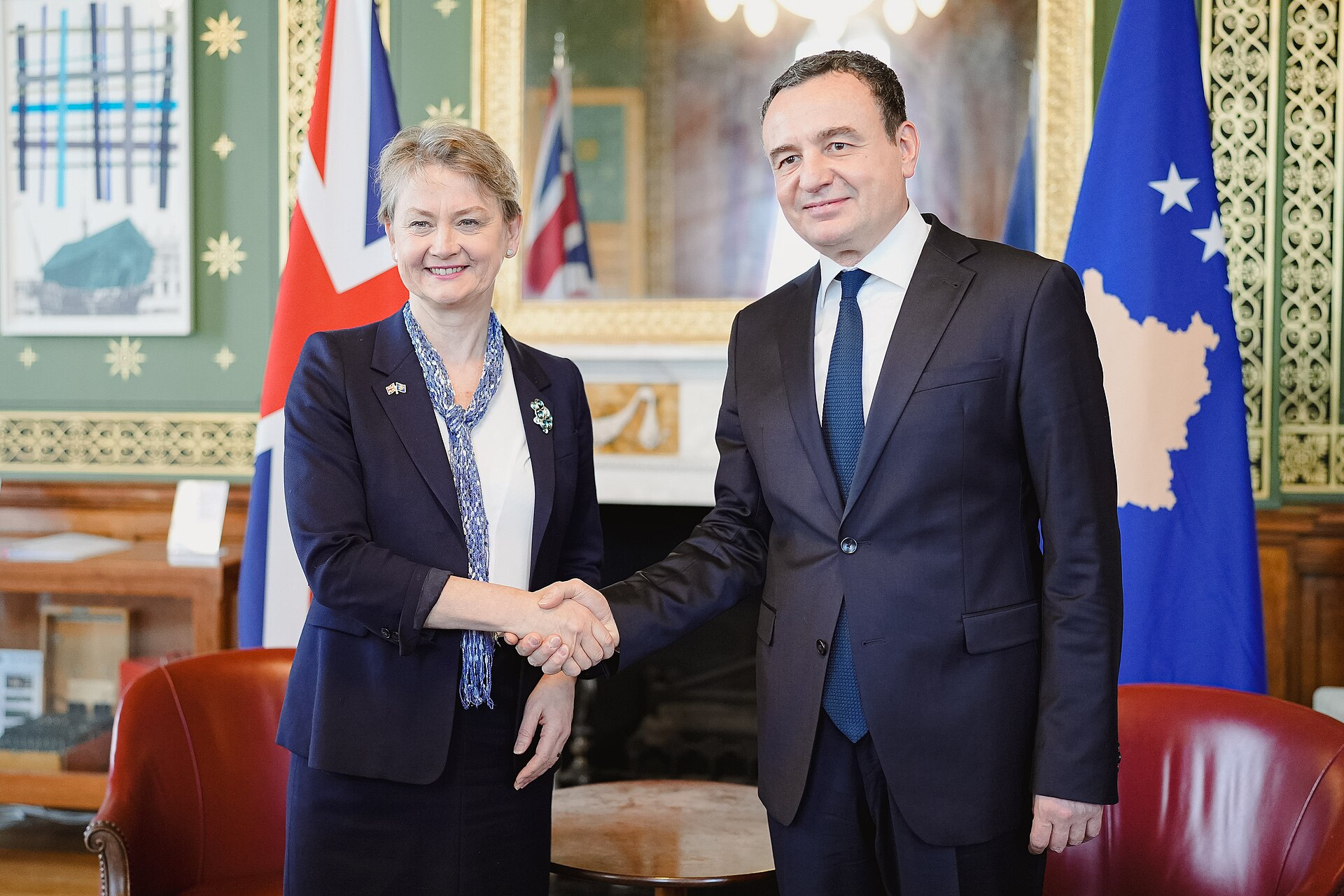
The United Kingdom hosted a 40-nation virtual summit on April 2 — the same day Iran announced its protocol — dedicated to reopening the Strait of Hormuz. Foreign Secretary Yvette Cooper chaired the session, and Prime Minister Keir Starmer acknowledged that reopening “will not be easy” and requires “a united front of military strength and diplomatic activity.” The United States was not among the 40 participants. On the same day, Trump posted to Truth Social telling those allies to “just TAKE” the strait themselves — formalizing Washington’s abdication of the Strait of Hormuz and leaving the coalition without the only navy capable of clearing Iranian mines at scale.
The coalition faces a structural problem, not merely a military one. Ian Lesser of the German Marshall Fund told Al Jazeera that Starmer’s effort faces “doubtful” prospects unless “some sort of arrangement for access to the strait is negotiated with Iran.” He added that while the coalition could theoretically provide security after active hostilities end, member states have shown little enthusiasm for “sending navies.” The assessment aligns with what is actually happening on the water: on March 31, only five vessels transited the strait, and four of them were running empty.
The 40-nation figure looks formidable on paper, but it masks a capacity problem. The countries with navies capable of forcing Hormuz open — the United States, the United Kingdom, France — have either declined to participate (the US), or committed to diplomatic coordination rather than military deployment. A coalition without American carrier strike groups is a diplomatic pressure group, however broadly subscribed, and Iran has shown across five weeks of multi-front war that it does not yield to pressure alone.
The protocol, if signed, changes the nature of what the coalition would be contesting. Reopening a strait blockaded by a wartime belligerent is one kind of operation — legally straightforward under international law, with clear precedent in the 1987-88 Earnest Will convoys. Overriding a signed bilateral governance agreement between two sovereign states is something quite different — legally more tangled, diplomatically more fraught, and harder to justify to European publics who have shown limited appetite for Middle Eastern military entanglements. The protocol converts a military problem into a diplomatic one, and that conversion works in Tehran’s favour at a moment when the diplomatic machinery available to contest it is conspicuously weak.
Where Is Oman’s Voice?
Every public statement about the protocol — Gharibabadi’s IRNA interview, Araghchi’s Qatari television appearance, the characterization of the draft as being “in final stages” — has come from Iranian officials. Oman has said nothing: no confirmation, no denial, no clarification, no background briefing. For a country that has built its regional identity on careful, deliberate diplomacy, the silence is its own form of communication.
Two readings of that silence lead to very different conclusions about what the protocol actually means. In the first, Oman is allowing Iran to invoke its name for domestic and diplomatic consumption without formally endorsing the protocol’s terms — strategic ambiguity that preserves Muscat’s mediator role while giving Tehran something to present to its own public and to ceasefire negotiators. In the second reading, the silence indicates the protocol is further along than any external observer realizes, and Oman has calculated that its relationship with Iran — anchored by the gas pipeline, by fifty years of backchannel diplomacy, and by the physical reality of sharing a 21-nautical-mile strait — outweighs the GCC and Western relationships it would strain by signing.
Oman’s dilemma is genuinely acute, and it does not resolve cleanly in either direction. If Muscat co-signs the protocol, it risks fracturing its relationships with Saudi Arabia, the UAE, and every Western trading partner that depends on free Hormuz transit. If it refuses, it loses the neutral mediator status it has cultivated since the 1970s and potentially the gas pipeline deal — 25 years of Iranian gas that forms the backbone of its energy security planning. Physical neutrality has already proven insufficient as a shield: an Iranian drone struck Oman’s Duqm port facility during the current conflict, a reminder that staying out of the politics does not mean staying out of the blast radius.
The answer probably lies between the two readings, at least for now. Oman may allow the protocol to exist in draft form — enough for Iran to cite in negotiations, not enough for the international community to treat as a binding instrument. But that middle ground narrows every time an Iranian official describes the document as nearly complete, and it vanishes entirely once signatures land on paper. Gharibabadi said “final stages.” In the language of Iranian diplomacy, that is not a forecast — it is a statement of intent, and the four days between now and April 6 may determine whether Muscat’s silence gets converted into Muscat’s signature.
Frequently Asked Questions
Does Iran have legal sovereignty over the Strait of Hormuz?
Not under the prevailing international legal framework. The Strait of Hormuz is classified as an international strait under UNCLOS, and the transit passage regime — which prohibits coastal states from impeding, suspending, or taxing passage — is widely regarded as customary international law binding on all states, including non-ratifiers. Iran counters with its 1993 domestic maritime law requiring prior authorization, a position it has maintained consistently for 33 years. The International Court of Justice has never ruled on Hormuz specifically, though the Corfu Channel case (1949) established that coastal states cannot block passage through international straits even absent a specific treaty. The practical reality is that Iran exercises effective physical control through IRGC forces operating from Larak and Qeshm Islands, creating a gap between legal status and operational fact that the proposed protocol is designed to institutionalize.
What is the Iran-Oman gas pipeline, and why does it matter for the protocol?
The pipeline, originally agreed in 2003, would deliver 10 billion cubic meters of Iranian natural gas per year to Oman for 25 years from Iran’s Hormozgan province — the same coastal region where the IRGC operates its Hormuz control infrastructure. US sanctions delayed construction for over two decades, but the project is now approaching operational status. The pipeline matters because it creates structural energy dependency: once Oman relies on Iranian gas for a meaningful share of its domestic energy supply, its capacity to refuse Iranian diplomatic requests — including co-signing governance protocols — diminishes proportionally. The pipeline terminus sits within IRGC-controlled coastal territory, meaning Oman’s energy import infrastructure would be physically located in the same zone where Iran enforces its Hormuz toll regime, creating an additional layer of dependency beyond the commercial relationship.
How much oil was transiting the Strait of Hormuz before the war, and how much moves now?
Pre-war, approximately 20 million barrels per day of petroleum liquids passed through Hormuz — roughly one-fifth of global petroleum consumption and more than one-quarter of total seaborne oil trade. On March 31, 2026, five vessels transited the strait, compared to a pre-war average of 138 per day, and only one carried crude. The disruption extends beyond crude oil: one-fifth of global liquefied natural gas trade also transits Hormuz, including 93 percent of Qatar’s LNG exports. Before the war, 84 percent of crude flowing through the strait was destined for Asian markets, with China, India, Japan, and South Korea collectively receiving 69 percent of the total — meaning the blockade has disproportionately affected the energy security of the four largest economies in Asia.
What is Trump’s April 6 deadline, and how does the protocol relate to it?
President Trump set April 6 as the expiry date for a pause on US strikes against Iranian energy infrastructure. Iran announced the bilateral protocol was in “final stages of preparation” on April 2 — four days before that deadline. The timing suggests Iran is racing to lock in institutional arrangements before any potential escalation or ceasefire shift around April 6. If the protocol is signed before a ceasefire materializes, it becomes part of the post-war status quo rather than a wartime measure: a standing bilateral agreement that any subsequent peace deal must explicitly address and void, rather than something that naturally expires when hostilities end. Iran’s previous experience — the 1988 end of the tanker war, which produced no lasting governance structure — appears to have informed a deliberate strategy of institution-building under fire.
Could Saudi Arabia permanently bypass the Strait of Hormuz for its oil exports?
Not at current infrastructure capacity, and not quickly. The East-West Pipeline has a maximum throughput of 7 million barrels per day, but Yanbu’s port loading capacity of approximately 4.5 million barrels per day is the binding bottleneck. Pre-war Saudi petroleum exports through Hormuz totalled roughly 15 million barrels per day. Closing that gap would require massive port expansion at Yanbu — measured in years of construction — or entirely new pipeline routes to alternative Red Sea or Mediterranean coastline, projects that would cost tens of billions of dollars and take the better part of a decade. Saudi Arabia is not the only Gulf state with this vulnerability: the UAE’s Habshan-Fujairah pipeline can move approximately 1.5 million barrels per day to a port on the Gulf of Oman, but that still exits onto the Indian Ocean shipping lanes where IRGC-allied forces have demonstrated interdiction capability during the current conflict.