
TEHRAN — Iran told the United Nations Security Council and the International Maritime Organization on Tuesday that “non-hostile” vessels may transit the Strait of Hormuz, provided they coordinate with Iranian authorities and comply with Tehran’s security regulations. The announcement, circulated to IMO members on March 25, marks the first formal framework Iran has offered for resuming commercial shipping through the waterway since the conflict began on February 28, according to multiple diplomatic sources and the text of the Iranian communication reviewed by Reuters and the Financial Times.
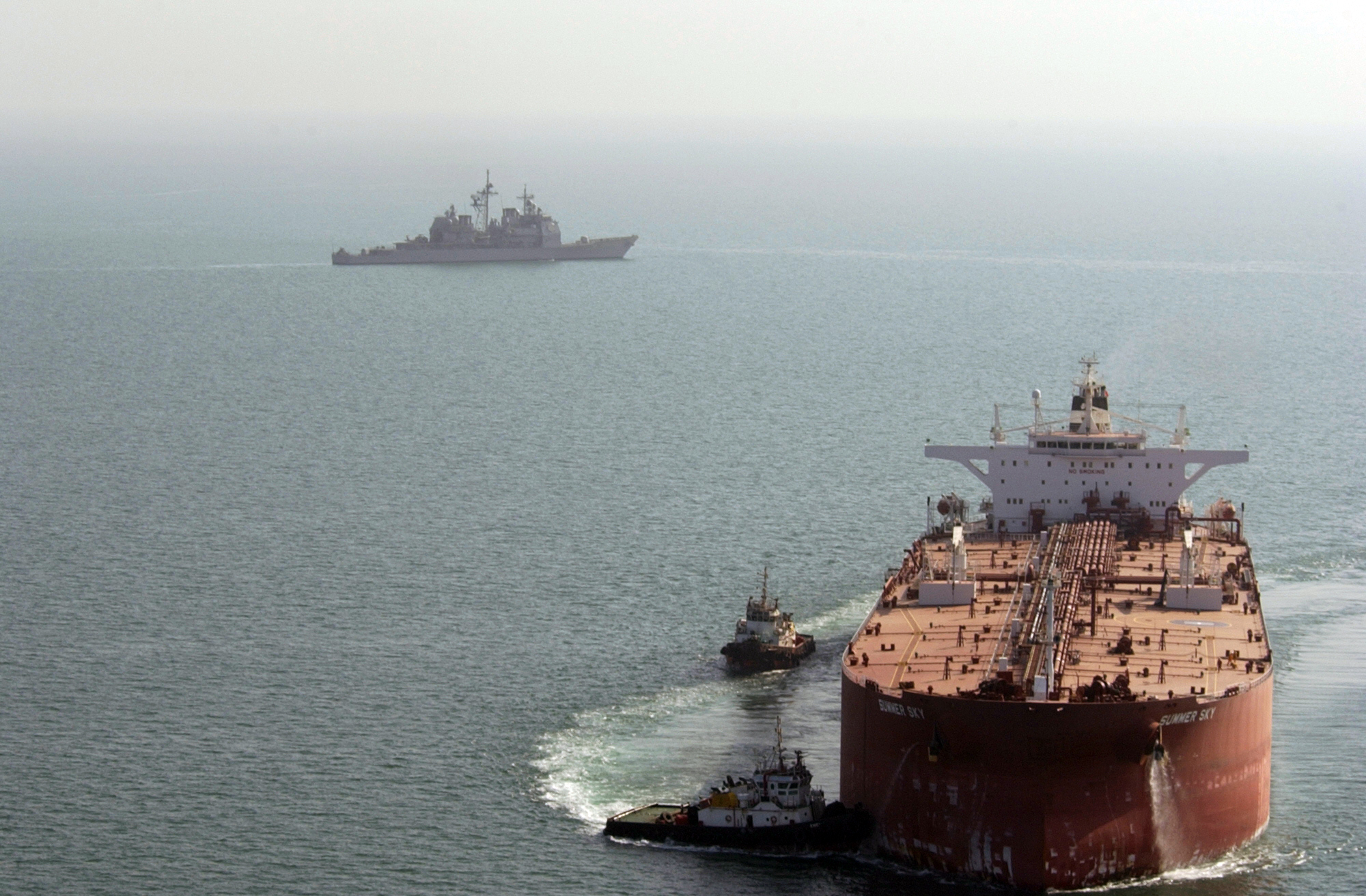
The conditional offer arrives as maritime traffic through the strait has collapsed by more than 96 percent, from an average of 120 daily transits before the war to just five vessels tracked via automatic identification systems on Monday, according to data from maritime intelligence firm Windward. More than 1,000 ships, mostly oil tankers, remain idled near the strait’s approaches, and the disruption has triggered what the International Energy Agency has called the worst global energy crisis since the 1970s oil shocks.
Table of Contents
What Did Iran Tell the United Nations About Hormuz?
Iran’s mission to the United Nations issued a formal communication on Tuesday stating that vessels may avail of “safe passage” through the Strait of Hormuz “provided that they neither participate in nor support acts of aggression against Iran and fully comply with the declared safety and security regulations.” Ships will be permitted to transit the strait “in coordination with the competent Iranian authorities,” the statement read, according to the text obtained by Reuters.
The letter, originally dated March 22 and circulated to IMO members on March 25, was also sent to UN Secretary-General Antonio Guterres, according to Al Jazeera. Iran described its measures as “necessary and proportionate” to prevent what Tehran characterized as hostile actors from exploiting the waterway during the ongoing conflict.
Vessels, equipment, and assets linked to the United States and Israel, along with other parties Iran identifies as involved in military aggression, are explicitly excluded from what the communication termed “innocent or non-hostile passage.” The Iranian foreign ministry stated that responsibility for the disruption to maritime traffic “rests squarely with the United States and the Israeli regime” and tied the restoration of full navigational freedom to “the cessation of military aggression,” according to the Financial Times.
The statement represents a significant shift in Iran’s public posture. Since the conflict erupted on February 28, Tehran has oscillated between claiming the strait remained open and threatening its complete closure. The new framework establishes an explicit permission-based system in which Tehran serves as gatekeeper to a waterway that carries roughly one-fifth of the world’s daily oil supply and significant volumes of liquefied natural gas, according to the US Energy Information Administration.

How Many Ships Are Actually Crossing the Strait of Hormuz?
The scale of the shipping collapse is staggering. Before the conflict, approximately 138 commercial vessels passed through the strait’s two shipping lanes daily, carrying around 21 million barrels of crude oil and roughly one-third of the world’s seaborne liquefied natural gas, according to the EIA and S&P Global Market Intelligence.
Since February 28, that traffic has plummeted:
| Period | Daily Vessel Transits | Decline From Pre-War |
|---|---|---|
| Pre-conflict average | 138 | — |
| First week (Mar 1-7) | ~20 | -86% |
| Week of Mar 8-14 | ~8 | -94% |
| Week of Mar 15-21 | 4-5 | -96% |
| Monday, Mar 24 | 5 | -96% |
Just 21 tankers transited the route in the first three weeks of the conflict, according to S&P Global Market Intelligence, compared with more than 100 ships daily before the war. Windward, the maritime intelligence firm, recorded only 16 AIS-visible crossings over a seven-day period ending March 22. Most vessels that have crossed are either Iranian-flagged or operating under arrangements with Tehran, CNBC reported.
The backlog is immense. More than 1,000 ships, predominantly oil tankers, are idled near the strait’s approaches, unable to transit, according to shipping industry data compiled by Lloyd’s List Intelligence. The insurance industry effectively shut the strait before Iran’s navy could, with war-risk premiums soaring to levels that made transit commercially unviable for most operators.
NPR reported on March 23 that some ships have found ways to navigate through, often by turning off their transponders, switching flags, or negotiating directly with Iranian authorities. A containership was tracked by AIS data reversing course near the strait entrance after departing the UAE, with the Islamic Revolutionary Guard Corps confirming the vessel “failed to obtain permission to transit,” according to gCaptain, underscoring that the permission system is being actively enforced.
The IRGC Enforcement Regime
Iran’s announcement formalizes what has been an ad hoc enforcement regime operated by the Islamic Revolutionary Guard Corps Navy since the first week of the conflict. IRGC fast attack boats, submarines, and shore-based anti-ship missile batteries control access to the narrow 21-nautical-mile-wide shipping channel, according to US Naval Institute proceedings and multiple shipping industry sources.
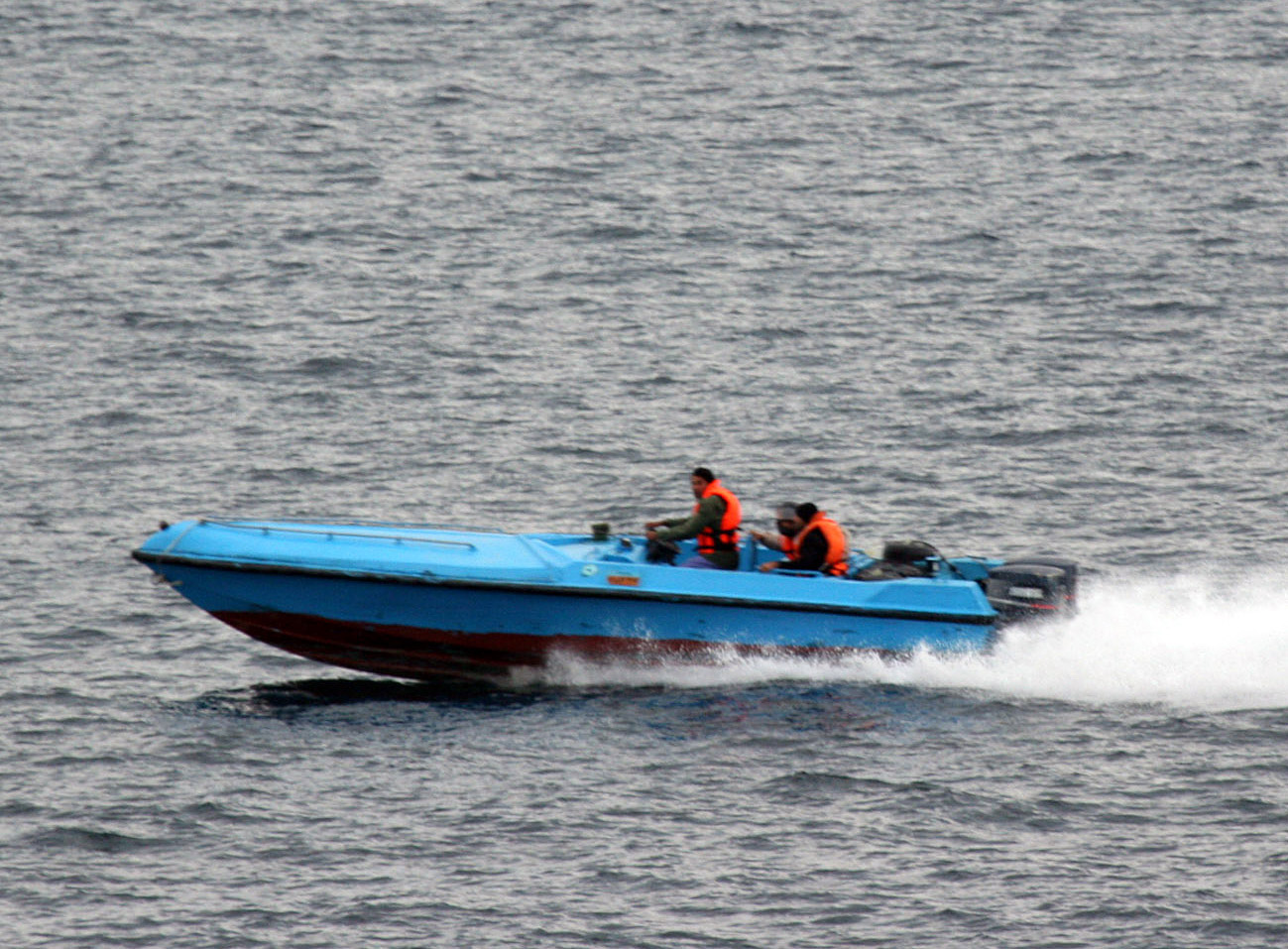
The enforcement has evolved in stages. In the first days of the conflict, Iran announced a blanket closure to US and Israeli-linked vessels, according to IRGC statements reported by Reuters on March 5. By the second week, a selective system emerged, with reports of Iran charging approximately $2 million per voyage as an informal transit fee, according to Bloomberg and gCaptain.
Iran granted Japan safe passage through the strait on March 21 in a bilateral arrangement, a signal that Tokyo’s neutral stance on the conflict had earned it preferential treatment, according to Japanese government sources cited by NHK. Two Indian-flagged gas carriers and a Saudi oil tanker carrying one million barrels destined for India were also permitted passage in early March, Reuters reported, suggesting that non-aligned nations with economic leverage over Tehran can negotiate individual deals.
The new UN communication transforms these ad hoc arrangements into a declared policy framework. Shipping industry analysts contacted by Lloyd’s List described the move as Tehran attempting to gain diplomatic legitimacy for what amounts to a chokepoint toll system — a model that has no precedent in modern maritime law under the United Nations Convention on the Law of the Sea, which guarantees innocent passage through international straits.
The practical mechanics of the system remain opaque. Ship operators contacted by gCaptain described a process in which vessels must submit requests through Iranian port authorities at Bandar Abbas, providing cargo manifests, ownership documentation, and flag-state details. Approval or denial typically arrives within 24 to 48 hours, though the criteria for rejection are not transparent. Several operators reported that vessels with any history of calling at Israeli ports were automatically denied, regardless of current cargo or destination.
The IRGC Navy, which controls the operational enforcement distinct from the regular Iranian Navy (IRIN), has deployed an estimated 200 fast attack craft and several Ghadir-class midget submarines to patrol the strait, according to US Naval Forces Central Command assessments cited by the Wall Street Journal. Shore-based Noor and Qader anti-ship cruise missiles cover the full width of the shipping channel from launch sites on Qeshm Island and the Iranian mainland, making unauthorized transit extremely hazardous.
What Does This Mean for Saudi Oil Exports?
The implications for Saudi Arabia are substantial but nuanced. The Kingdom has already rerouted a significant share of its oil exports through the 1,200-kilometre East-West Pipeline to the Red Sea port of Yanbu, bypassing the Strait of Hormuz entirely. Ship-tracking data cited by Bloomberg shows crude exports from Yanbu surged to a five-day rolling average of 3.66 million barrels per day as of mid-March, representing roughly half of Saudi Arabia’s pre-crisis export levels.
The question of whether Saudi-flagged or Saudi-destined vessels qualify as “non-hostile” under Iran’s framework remains deliberately ambiguous. Saudi Arabia has not directly attacked Iran during the conflict, and Crown Prince Mohammed bin Salman, the Kingdom’s de facto ruler, has publicly stated a preference for diplomatic resolution while simultaneously allowing US forces to operate from Saudi bases. Iran considers this cooperation grounds for considering Saudi Arabia a party to the aggression, according to statements from Iranian Foreign Minister Abbas Araghchi reported by Al Jazeera.
| Route | Pre-War Volume (bpd) | Current Volume (bpd) | Status |
|---|---|---|---|
| Ras Tanura (via Hormuz) | ~4.5 million | Near zero | Effectively blocked |
| Yanbu (via East-West Pipeline) | ~2 million | ~3.66 million | Operating above capacity |
| Total Saudi exports | ~7.5 million | ~3.7 million | Down ~51% |
Saudi Arabia expelled Iranian defense officials from the Kingdom on March 21, giving them 24 hours to leave, a move that further strained bilateral relations, according to Reuters. Whether Riyadh could negotiate a separate safe-passage arrangement similar to Japan’s deal depends on whether Tehran views the Kingdom’s hosting of US military operations at King Fahd Air Base as participation in the war, analysts at the International Institute for Strategic Studies told Reuters.
The Yanbu pipeline route is not without vulnerabilities. Iran-backed Houthi forces have previously targeted Red Sea shipping, and the Samref refinery at Yanbu, a joint venture between Aramco and ExxonMobil, has already faced attacks during the conflict, Bloomberg reported on March 18. Aramco has described the situation as the largest operational crisis in the company’s history, with roughly half its export capacity rendered inaccessible.
The United Arab Emirates faces an even starker predicament. Abu Dhabi’s ADNOC has no equivalent pipeline bypass, meaning virtually all UAE oil exports depend on Hormuz access. Qatar’s liquefied natural gas shipments, which supplied approximately 22 percent of global LNG trade before the conflict, remain almost entirely shut in, according to data from the International Group of Liquefied Natural Gas Importers. For smaller Gulf producers, Iran’s “non-hostile” framework offers a theoretical path to resuming some exports, but the political cost of coordinating with Tehran while hosting US military assets makes compliance functionally impossible.
The Diplomatic Context
Iran’s Hormuz announcement arrived on the same day President Donald Trump said the United States had sent a 15-point ceasefire plan to Tehran, delivered through Pakistani intermediaries. Trump told reporters the US and Iran were “in negotiations right now,” naming special envoy Steve Witkoff, son-in-law Jared Kushner, Secretary of State Marco Rubio, and Vice President JD Vance as participants, according to CNBC.
Tehran immediately contradicted those claims. An Iranian military spokesperson mocked US ceasefire efforts, insisting that “the Americans are only negotiating with themselves,” according to Al Jazeera. Iran’s Foreign Minister Araghchi stated that Iran “never asked for a ceasefire, and we have never asked even for negotiation,” adding, “We are ready to defend ourselves as long as it takes,” NPR reported.
Pakistan has positioned itself as a potential mediator, with Prime Minister Shehbaz Sharif offering to host face-to-face talks in Islamabad. Pakistan’s army chief held calls with Trump to discuss a path to resolution, Bloomberg reported on March 24. An Israeli official told NPR that planning was underway for talks in Pakistan later this week, though neither side has formally confirmed attendance.
The 15-point plan reportedly addresses Iran’s ballistic missile and nuclear programs alongside the Hormuz issue. Under the proposal, Iran would surrender its enriched uranium and accept a permanent enrichment ban in exchange for the lifting of all sanctions, according to CNBC and the Jerusalem Post. The inclusion of the nuclear file alongside the maritime dispute suggests Washington views the Hormuz crisis as leverage for a broader settlement, analysts at the Carnegie Endowment for International Peace told Reuters.
An Axios report published on March 25 cited an Iranian diplomatic source as confirming that talks were expected this week but said that from Tehran’s perspective there was “zero trust” in Washington. Iran suspects that Trump’s peace overtures are a tactical manoeuvre to buy time for additional military deployments to the region, the source said, noting that the US is simultaneously moving more troops to the Middle East.
Oil Market Reaction
Oil markets registered a cautious reaction. Brent crude was trading at approximately $102.47 per barrel on Tuesday morning, $1.03 above Monday’s level and $29.44 higher than a year ago, according to market data compiled by Fortune. The benchmark had fallen more than 9 percent last week following initial reports of the ceasefire plan and Trump’s five-day pause on strikes against Iranian power plants, CNBC reported.
The conditional reopening announcement did not produce the dramatic price drop that a full restoration of Hormuz traffic would. Analysts attributed the muted response to scepticism that Iran’s “non-hostile” framework will meaningfully increase transit volumes.
“This is not a reopening. This is Iran formalizing a toll booth at the world’s most critical chokepoint. Until vessels can transit without Tehran’s permission, the supply disruption remains near-total.”Vandana Hari, founder of Vanda Insights, speaking to Bloomberg, March 25, 2026
Goldman Sachs analysts warned in a note on March 17 that the Gulf faces its worst recession in a generation if the strait remains functionally closed. The bank’s models project Brent could reach $150-200 per barrel if the crisis extends through the second quarter, according to the note cited by Reuters.
Kuwait, OPEC’s fifth-largest producer, announced precautionary cuts to its oil production and refinery output due to what it described as “Iranian threats against safe passage of ships through the Strait of Hormuz,” according to CNBC. Iraq, OPEC’s second-largest producer, has seen output from its three main southern oilfields collapse by 70 percent to 1.3 million barrels per day from a pre-war level of 4.3 million barrels per day, after declaring force majeure on all foreign-operated oil fields, Reuters and Bloomberg reported.
The fractures within OPEC are deepening. Member states with Hormuz-dependent export routes face existential revenue crises, while Saudi Arabia’s pipeline alternative gives Riyadh a comparative advantage that smaller Gulf producers like Kuwait, Qatar, and Bahrain cannot replicate.
What Happens Next for Hormuz Shipping?
Iran’s formal UN communication creates a framework that could either accelerate a diplomatic resolution or entrench the crisis. Several outcomes are plausible in the coming days and weeks.
If the ceasefire talks Trump has promoted gain traction, the Hormuz permission system could serve as an interim arrangement during negotiations. Iran has an economic incentive to allow some traffic through: the $2 million per voyage transit fees and the diplomatic leverage of controlling access both benefit Tehran more than a total blockade that has already devastated Iran’s own ability to export oil, according to analysis by the Dallas Federal Reserve published March 20.
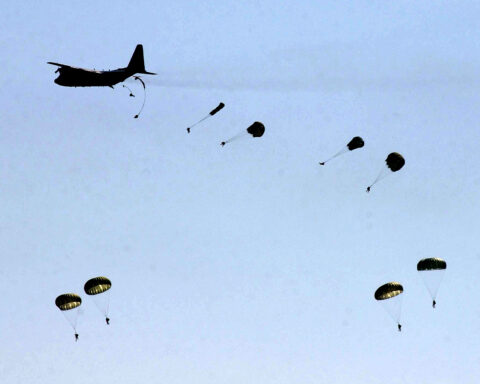
Alternatively, the framework could become a permanent feature of the new normal. Britain has already announced it will lead a mine-clearing coalition through the strait, but clearing the physical hazards does nothing to resolve the political gatekeeping Iran has established. The United States has sent two thousand additional paratroopers to the Gulf, raising the total US military footprint in the region, but a forcible reopening of the strait risks full-scale naval war with Iran, according to Pentagon officials cited by the Associated Press.
Maritime law experts contacted by the Financial Times noted that Iran’s conditions violate Article 38 of the UN Convention on the Law of the Sea, which guarantees all ships the right of transit passage through international straits. Enforcement of that right, however, requires either Iranian cooperation or military force — neither of which appears imminent.
For Saudi Arabia, the calculation is straightforward. The East-West Pipeline to Yanbu currently provides a partial workaround, but it cannot replace the full volume of Hormuz-dependent exports. Riyadh’s expulsion of Iranian defense officials on March 21 further narrows the diplomatic space for any Saudi-Iranian bilateral arrangement on Hormuz transit. Until the strait is either genuinely reopened or the conflict ends, the war’s economic cost to the Kingdom continues to mount.
The Dallas Federal Reserve published an analysis on March 20 estimating that a prolonged Hormuz closure would cost Gulf Cooperation Council states a combined $12.8 billion per month in lost export revenue. Iraq alone is losing approximately $280 million per day since southern shipments ceased, according to Iraqi state media. The cumulative economic damage across the Gulf now exceeds $80 billion since the war began, according to estimates from the Institute of International Finance.
Frequently Asked Questions
What are Iran’s conditions for ships to transit the Strait of Hormuz?
Iran told the United Nations on March 25 that vessels may transit the Strait of Hormuz provided they do not participate in or support acts of aggression against Iran, comply with Iranian safety and security regulations, and coordinate their passage with Iranian authorities. Ships linked to the United States, Israel, or nations Iran considers hostile are excluded from the arrangement.
How much has shipping traffic through the Strait of Hormuz declined since the war?
Daily vessel transits through the Strait of Hormuz have fallen approximately 96 percent since the conflict began on February 28, 2026. Only five ships were tracked crossing the strait on Monday, March 24, compared with a pre-war average of approximately 138 daily transits, according to maritime intelligence firm Windward and S&P Global Market Intelligence.
Can Saudi Arabia export oil without using the Strait of Hormuz?
Saudi Arabia has partially bypassed the strait by routing crude through the 1,200-kilometre East-West Pipeline to the Red Sea port of Yanbu. Bloomberg data shows Yanbu exports reached 3.66 million barrels per day in mid-March, roughly half of Saudi Arabia’s pre-crisis total exports of approximately 7.5 million barrels per day. The pipeline has limited capacity, and the Yanbu route faces its own security threats from Houthi forces in the Red Sea region.
Does Iran’s announcement violate international maritime law?
Maritime law experts say Iran’s conditions conflict with Article 38 of the United Nations Convention on the Law of the Sea, which guarantees all ships the right of transit passage through international straits. Iran has not signed UNCLOS but has historically permitted transit passage through Hormuz. Enforcing the international right of transit requires either Iranian consent or military action, neither of which is currently forthcoming.
What is the US 15-point ceasefire plan for Iran?
The Trump administration sent a 15-point ceasefire proposal to Iran through Pakistani intermediaries on March 24. The plan reportedly addresses Iran’s ballistic missile and nuclear programs alongside the Strait of Hormuz crisis, proposing a one-month ceasefire during which Iran would surrender enriched uranium and accept a permanent enrichment ban in exchange for the lifting of all sanctions. Iran has publicly rejected the plan while privately indicating some willingness to engage, according to diplomatic sources cited by Axios.