
DUBAI — Iran’s Islamic Revolutionary Guard Corps claimed on April 2 that it struck “the data center and computing infrastructure of the American company Oracle, based in the Emirates,” marking the first time Tehran has publicly claimed a precision attack on a named Western multinational’s commercial facility in the Gulf — a strike the IRGC said was direct retaliation for the April 1 assassination of Dr. Kamal Kharrazi and his wife in a US-Israeli strike on their Tehran home. The same 48-hour window saw Iran hit Abu Dhabi’s Habshan gas processing complex — the UAE’s largest — forcing ADNOC to halt operations after two fires killed an Egyptian national and injured four others, according to Bloomberg and Al Jazeera.
The Oracle and Habshan strikes together represent a convergence that has no precedent in the five-week-old conflict. Iran has struck military bases, airports, oil terminals, aluminium smelters, and desalination plants. But the deliberate targeting — or, in the UAE’s preferred framing, the interception debris striking — of a named American technology company’s commercial building in Dubai Internet City opens a different category of risk. The 540 multinational companies that have moved regional headquarters to Riyadh, the $132 billion Saudi digital economy, and the entire post-oil diversification architecture of the GCC now sit inside Iran’s declared target envelope.
Table of Contents
- Three Versions of What Happened to Oracle’s Building
- Habshan Shutdown and the Energy-Commercial Convergence
- The 29-Facility Target List and the IRGC’s Doctrine of Commercial Retaliation
- Is the UAE Suppressing Strike Damage Reporting?
- What Does This Mean for Saudi Arabia’s Digital Infrastructure?
- Iran Is Fighting the Global Economy
- Background: Five Weeks of Escalation
- Frequently Asked Questions
Three Versions of What Happened to Oracle’s Building
The factual record of the Oracle incident exists in three mutually contradictory layers. The IRGC announced on April 2 via PressTV that its forces had struck Oracle’s data infrastructure in the UAE, framing the attack as retaliation for the assassination of Kharrazi the previous day. The IRGC statement was specific: “Just as we had warned, in response to the assassination of Iranian individuals, we will target intelligence, information technology, and artificial intelligence spy companies that are pillars of the enemy’s terrorist operations.”
The Dubai Government Media Office responded on April 3 by calling the IRGC’s claims “fabricated and incorrect,” according to Gulf Business and MarketScreener. A flat denial — no strike, no impact, no event.
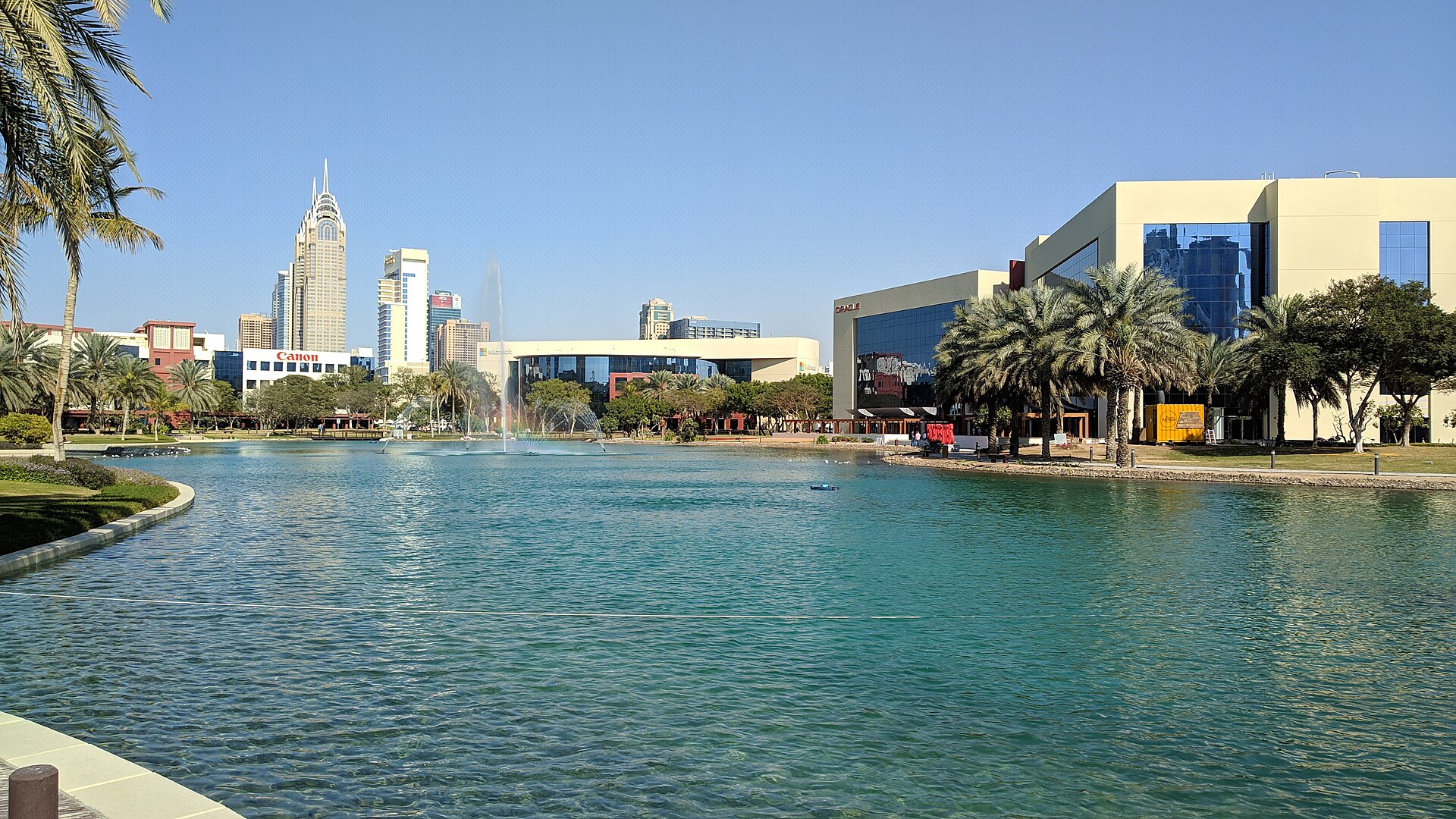
Then CNBC reported on April 4 that the UAE itself had acknowledged a different version: debris from the interception of an incoming Iranian projectile struck the Oracle building’s facade in Dubai Internet City. No casualties. No direct data center hit. A facade strike from falling interception fragments.
The three accounts cannot all be true. Either Iran executed a precision strike on Oracle’s building, nothing happened at all, or interceptor debris hit the building incidentally. For the commercial risk calculus, the distinction matters less than the convergence: the IRGC is publicly claiming attacks on named Western companies, those companies’ physical buildings are sustaining damage — whether from inbound warheads or outbound interceptors — and the UAE’s own narrative shifted from denial to acknowledgment within 48 hours.
Oracle operates two active Oracle Cloud Infrastructure regions in the UAE: UAE East in Dubai, live since September 2020, and UAE Central in Abu Dhabi, operational since November 2021. UAE telecom operator Du runs a sovereign cloud platform built on Oracle Alloy, providing cloud and AI services to UAE government bodies. The physical proximity of Oracle’s commercial cloud operations to the confirmed debris impact site has not been publicly clarified by either Oracle or UAE authorities.
Habshan Shutdown and the Energy-Commercial Convergence
The Oracle building damage occurred in the same 48-hour period as Iran’s strikes on Habshan, the gas gathering and processing hub that feeds ADNOC’s operations across Abu Dhabi. Bloomberg and Al Jazeera reported on April 3 that Habshan halted operations after Iranian strikes caused two fires. One person — an Egyptian national — was killed and four others injured, according to The National.
Habshan was not a new target. Iran had already forced the facility offline once in the previous two weeks. But the April 3 shutdown paired with the Oracle claim established something new in the IRGC’s operational pattern: energy infrastructure and commercial technology assets struck in the same operational window, under the same retaliatory justification, as part of a single escalation sequence.
The UAE Ministry of Defence reported intercepting 23 ballistic missiles and 56 drones on April 4 alone, according to The National — part of what this publication reported as a record 79-projectile barrage testing Gulf air defense saturation thresholds. As of April 1, Iran had fired a cumulative 438 ballistic missiles, 2,012 drones, and 19 cruise missiles at UAE targets, per UAE Ministry of Defence data. At that volume, the question of whether a given building is struck by a warhead or by interception debris becomes, for the building’s occupants and insurers, a distinction without operational difference.

The 29-Facility Target List and the IRGC’s Doctrine of Commercial Retaliation
The Oracle claim did not emerge from improvisation. On March 31, the IRGC published a list of 18 US companies designated as “legitimate targets,” warning employees to evacuate their workplaces and residents to clear a one-kilometer radius, according to CNBC, HR Grapevine, and The Next Web. The list included Apple, Microsoft, Google, Meta, Oracle, Nvidia, Intel, IBM, Cisco, Palantir, JP Morgan, Tesla, Boeing, Dell, HP, GE, Spire Solutions, and UAE-based AI company G42. The IRGC accused all 18 of “acting as spies for the US and helping in carrying out strikes.”
CSIS subsequently documented a more granular IRGC target list: 29 specific technology facilities across Bahrain, Israel, Qatar, and the UAE. The breakdown, per CSIS: five Amazon Web Services sites, five Microsoft facilities, six IBM locations, three Palantir offices, four Google facilities, three Nvidia sites, and three Oracle locations. Iran’s target list was not rhetorical. Within 48 hours of the March 31 announcement, the IRGC claimed strikes on two of the listed companies.
The first was Amazon. Iran confirmed striking an AWS data center in Bahrain in retaliation for the assassination of a figure it identified as “Commander Fathalizadeh,” according to China Daily Asia and ISNA. Bahrain’s Ministry of Interior confirmed “a facility of a company” was set on fire, without naming Amazon — a formulation that tracked the earlier strike on Amazon’s Bahrain facility reported by this publication. The second was Oracle in Dubai.
The IRGC’s stated logic follows a sequential retaliatory formula: “For every assassination, an American company will be destroyed.” Each claimed tech strike corresponds to a named assassination target — Amazon for Fathalizadeh, Oracle for Kharrazi. The doctrine treats commercial enterprises not as collateral but as designated retaliation surfaces, equating corporate presence in the Gulf with participation in the US military campaign.
Is the UAE Suppressing Strike Damage Reporting?
The Oracle narrative sequence — IRGC claim, UAE denial, then partial UAE acknowledgment — fits a pattern that Bellingcat documented on April 2 across multiple incidents during the conflict. According to Bellingcat’s investigation, UAE authorities have either denied strikes outright or reclassified direct impacts as “falling debris from interceptions” in cases including the Fujairah oil port, Jebel Ali fires, the Burj Al Arab area, Dubai Airport, and the Warda Complex residential building.
The enforcement mechanism is legal. The UAE attorney general declared publication of strike imagery illegal, and Dubai Police announced a minimum penalty of two years’ imprisonment and fines of 200,000 dirhams — approximately $55,000 — for sharing content that contradicts official announcements, according to Bellingcat. The combination of narrative control and criminal penalties for counter-evidence creates a structural information gap. Independent verification of the Oracle strike’s actual severity — facade debris or data center penetration — is, under current UAE law, a prosecutable act.
This matters for the commercial targeting question because the UAE’s own damage reporting cannot be taken at face value by the multinational companies making stay-or-evacuate decisions. A “facade strike from debris” and a “direct precision hit on a data center” produce identical insurance claims and identical business continuity disruptions if the affected company cannot independently assess the damage. The chilling effect extends beyond journalism: it reaches the actuarial tables of every insurer covering Gulf commercial real estate and the risk models of every multinational with regional cloud infrastructure.
What Does This Mean for Saudi Arabia’s Digital Infrastructure?
The Oracle strike — whatever its precise mechanism — has direct implications for Riyadh. Oracle committed $1.5 billion to Saudi cloud infrastructure, part of a broader wave of hyperscaler investment that includes Microsoft’s $15 billion pledge to expand UAE operations by 2029. Saudi Arabia’s $132 billion digital economy, as quantified by The Middle East Insider in March 2026, has expanded the Kingdom’s attack surface faster than its defensive architecture has matured.
The King Abdullah Financial District houses 140 corporate headquarters as of January 2026. By end of 2025, 540 multinational companies had established regional headquarters in Riyadh — a centerpiece of Vision 2030’s economic diversification strategy. Each of those companies now operates under the demonstrated reality that the IRGC considers Western commercial presence in the Gulf a legitimate military target. Iran’s parallel cyber campaign against Saudi digital systems compounds the physical threat with a digital one.
The value concentration is staggering in hardware terms alone. Tom’s Hardware reported in April 2026 that a large GPU cluster hosting 50,000 Blackwell processors represents $4.16 billion to $6.24 billion in hardware. Saudi Arabia’s AI ambitions — including the PIF’s Humain initiative — depend on precisely this kind of concentrated, immovable computing infrastructure. A single ballistic missile, or a single interceptor’s debris field, can destroy hardware worth more than many countries’ annual defense budgets.
The IRGC’s 29-facility target list did not include Saudi locations. Saudi Arabia’s deepening technology investments and the Kingdom’s role in hosting US military bases that Iran considers command infrastructure for the war sit within the same doctrinal framework the IRGC applied to Dubai Internet City.
Tech companies are no longer in the back room; they are on the front lines. The lines are more than blurred: There are no front lines anymore.
Emily Harding, Director, Intelligence, National Security, and Technology Program; Vice President, Defense and Security, CSIS
Iran Is Fighting the Global Economy
CSIS published two analyses in 2026 that framed the commercial targeting pattern in structural terms. Navin Girishankar, president of CSIS’s Economic Security and Technology Department, wrote that Iran is “fighting the global economy” while the United States focuses on military superiority. The mismatch, in Girishankar’s framing, is strategic: the US measures the war in sortie rates and interceptor stocks while Iran measures it in capital flight and insurance premiums.
CSIS’s institutional analysis described Iran’s attacks as “systematically targeting sectors central to their 2030 economic diversification plans: logistics, energy generation, data centers, water, tourism, and finance.” The targeting sequence — military bases on Day 1, civilian infrastructure on Day 2, energy on Day 3, industrial facilities by Week 4, commercial tech by Week 5, as documented by TRENDS Research and Advisory — maps an escalation ladder designed to erode the economic foundations of the post-oil Gulf rather than defeat its militaries.
The economic damage is already measurable. Oxford Economics downgraded GCC real GDP growth for 2026 by 4.6 percentage points, to negative 0.2 percent. Oil prices have swung between $77 and $119 per barrel in a single week, per CSIS. The UAE data center market — valued at $1.74 billion in 2026 by Arizton and MarkNtel — and the broader UAE cloud computing market, estimated at $7.34 billion by Vynz Research with projections to $61.34 billion by 2035, now carry risk premiums that no pre-war actuarial model anticipated.
The Middle East Insider described Saudi Arabia’s $840 billion Vision 2030 investment portfolio as facing “the most serious challenge in its history.” Saudi Arabia’s growing economic isolation from the conflict compounds the direct targeting threat with the indirect costs of regional instability — supply chain disruption, talent flight, and the repricing of Gulf sovereign risk across global capital markets.
Background: Five Weeks of Escalation
The war began on March 1, 2026, when Iranian strikes hit Dubai and Abu Dhabi, damaging airport terminals and the Burj Al Arab hotel area, according to Euronews. The IRGC’s escalation followed the three-day sequence documented by TRENDS Research and Advisory: military bases first, civilian infrastructure second, energy third.
By March 29, the IRGC had expanded to industrial targets, claiming hits on UAE and Bahrain aluminium facilities linked to what it called “US war” support, per Al Jazeera. The March 31 announcement of 18 named US companies as targets — with a stated 8 PM Tehran time deadline on April 1 — marked the formal declaration of commercial warfare as doctrine. Within 48 hours, Amazon in Bahrain and Oracle in Dubai had been claimed as strikes.
The Kharrazi assassination on April 1 provided the specific retaliation trigger for the Oracle claim, but the targeting infrastructure — the 29-facility list, the 18-company designation, the stated doctrine linking assassinations to corporate destruction — had been assembled and published days earlier. The debris doctrine that Iran has exploited against air defense sites applies with equal force to commercial districts: even intercepted missiles distribute damage across the defended area.
Frequently Asked Questions
Was Oracle’s actual cloud data center damaged or just the office building?
The UAE’s April 4 acknowledgment to CNBC specified that debris from an interception struck the Oracle building’s facade in Dubai Internet City, with no casualties. Neither Oracle nor UAE authorities have clarified whether the affected building housed cloud computing infrastructure or office space. Oracle’s UAE East cloud region operates from Dubai, but the company has not disclosed whether its data center hardware is co-located in the Dubai Internet City campus or in a separate facility. The distinction between “building” and “data center” has not been resolved in any public statement.
Have any multinational tech companies announced plans to evacuate the Gulf since the target list was published?
No major US technology company on the IRGC’s 18-company list has publicly announced evacuation of Gulf operations as of April 4. HR Grapevine reported that the IRGC’s March 31 warning prompted internal security reviews at multiple firms, but corporate statements have been limited to employee safety advisories rather than operational withdrawals. The legal and contractual obligations of cloud service providers to Gulf governments — particularly Oracle’s Alloy sovereign cloud contract with Du for UAE government services — create exit barriers that pure commercial logic might otherwise overcome.
How does the IRGC’s commercial targeting compare to precedents in other conflicts?
State-directed strikes on named foreign commercial companies during an active conflict have limited modern precedent. Russia’s strikes in Ukraine have hit commercial infrastructure — shopping centres, logistics hubs, power plants — but Russia has not published target lists naming specific Western corporations by brand and warned their employees to evacuate. The IRGC’s approach — public company-by-company designation, stated retaliatory calculus linking assassinations to corporate destruction, and published facility-level target coordinates — constitutes a distinct doctrinal innovation in which commercial entities are treated as sovereign military assets of their home country.
What insurance and financial mechanisms cover war damage to commercial data centers in the Gulf?
Standard commercial property insurance excludes war and terrorism damage. Lloyd’s of London and specialist war-risk underwriters provide standalone policies, but pricing models for Gulf commercial real estate war risk have been recalculated since March 1. The UAE’s information suppression — criminalizing publication of strike imagery and controlling the narrative around “debris” versus “direct hits” — complicates claims adjudication. An insurer cannot independently assess whether Oracle’s building sustained facade debris or penetrating strike damage when the documentation of that damage carries a two-year prison sentence. The reinsurance market’s Gulf exposure is now a systemic concern for global underwriters.
Could Iran reach Saudi data centers and tech facilities with current missile capabilities?
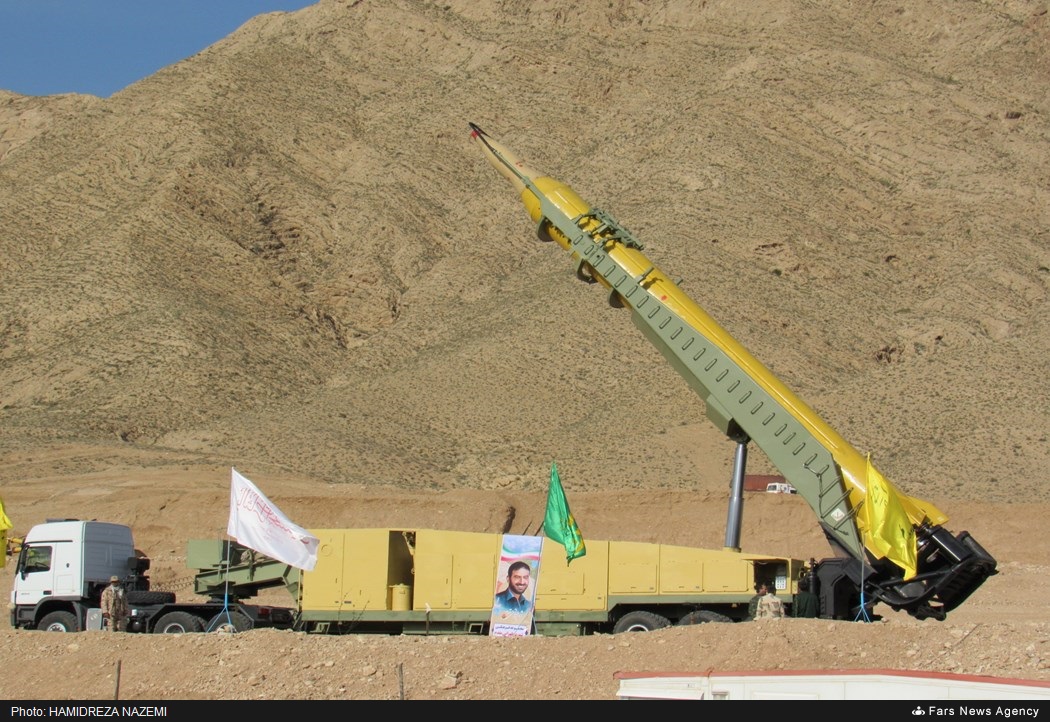
Iran has already demonstrated the ability to strike targets across Saudi Arabia, including Prince Sultan Air Base at Al-Kharj, roughly 80 kilometres south of Riyadh. KAFD, the new financial district housing 140 corporate headquarters, sits within Riyadh proper. Iran’s Kheibar Shekan and Fattah-2 ballistic missiles have ranges exceeding 1,400 kilometres, placing every Saudi commercial district within demonstrated strike range. The IRGC’s current 29-facility target list does not include Saudi locations, but the doctrinal logic — Western commercial presence equals military complicity — applies to Riyadh’s 540 multinational headquarters with the same force it applies to Dubai Internet City.