
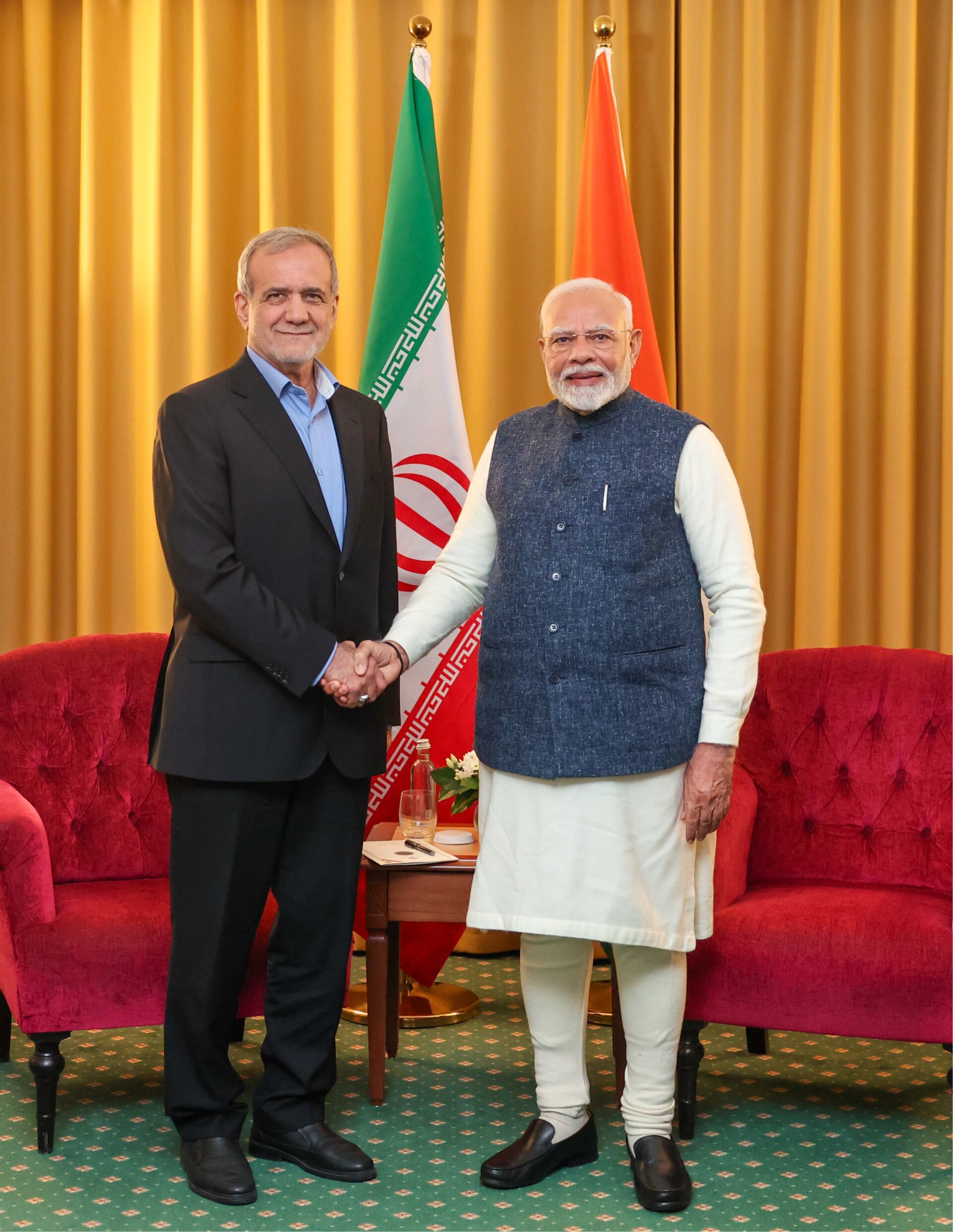
NEW DELHI — Iran’s President Masoud Pezeshkian called Indian Prime Minister Narendra Modi on March 21, 2026, urging India to use its chairmanship of the BRICS bloc to broker an end to the Gulf war that has killed more than 1,500 Iranians and shut down the Strait of Hormuz for over three weeks. The call, confirmed by both governments, marked the second conversation between the two leaders in ten days and represented the most concrete diplomatic ask Iran has made of any non-Western power since the United States and Israel began sustained military operations against Iranian nuclear and military infrastructure on February 27.
The outreach matters because it constitutes the first serious attempt to open a non-Western diplomatic track in a conflict that has so far defied mediation. With the Gulf war entering its fourth week, Western diplomacy stalled, and the United Nations Security Council deadlocked by American vetoes, Tehran is gambling that a bloc representing 45 percent of the world’s population and 37 percent of global GDP can succeed where twelve mediators and not a single ceasefire have failed. For India, the stakes are existential: the country imports more than a million barrels per day from Saudi Arabia, has nine million citizens in the Gulf, and has already deployed warships to escort tankers through one of the world’s most dangerous waterways.
Table of Contents
What Did Pezeshkian Propose to Modi?
The March 21 phone call between Pezeshkian and Modi lasted approximately 40 minutes, according to a readout from Iran’s presidential office. It was their second direct conversation since March 11-12, when Pezeshkian first called Modi to discuss the escalating crisis following the initial wave of American and Israeli strikes on Iranian targets. The frequency of the calls — two in ten days — underscored the urgency Tehran attaches to the Indian channel at a moment when most of its other diplomatic avenues have been severed.
Pezeshkian proposed what he described as a “West Asian security framework” comprising regional countries, according to the Iranian readout. The framework, as outlined by Tehran, would explicitly exclude what Pezeshkian called “foreign interference” — a formulation widely interpreted as referring to the United States and Israel. The Iranian president asked India, in its capacity as the 2026 BRICS chair, to play what he termed an “independent role” in halting what he called US-Israeli hostilities against Iran.
We demand the immediate cessation of aggressions against the people and infrastructure of Iran, and credible guarantees against future military actions. The nations of BRICS must not stand silent while the sovereignty of a member state is violated.Masoud Pezeshkian, President of Iran, according to the Iranian presidential office readout, March 21, 2026
Modi’s response, as characterized by India’s Ministry of External Affairs, was measured. The Indian prime minister “condemned attacks on critical infrastructure” and called for the maintenance of “open shipping lanes” — language that addressed India’s core interests without directly assigning blame to either side. Modi also “expressed concern about the humanitarian situation in Iran,” according to the MEA statement, and reiterated India’s position that “differences should be resolved through dialogue and diplomacy.”
The Indian readout notably did not use the word “mediation,” nor did it commit New Delhi to any specific role within the BRICS framework. Modi’s language about shipping lanes was as close as India came to criticizing Iran’s closure of the Strait of Hormuz, while the condemnation of infrastructure attacks was as close as India came to criticizing the US-Israeli campaign.
Why Is Iran Turning to BRICS?
Iran’s appeal to BRICS did not emerge from diplomatic preference but from the systematic closure of every other channel. Western diplomacy has effectively stalled since the conflict began. President Donald Trump told reporters at the White House on March 14 that he was “not seeking deals with Iran,” according to Reuters, a statement that foreclosed the possibility of direct US-Iranian negotiations for the foreseeable future. European efforts have produced statements but no mechanism for talks.
More critically for Tehran, its channels to the Gulf states — the countries most directly affected by the war besides Iran itself — have been cut one by one. On March 21, the same day Pezeshkian called Modi, Riyadh expelled Iran’s military attache, severing the last direct diplomatic link between Saudi Arabia and Iran at the defense level. Qatar had already expelled Iranian diplomatic attaches in the days following the March 15 strike on the Ras Laffan liquefied natural gas facility, which Doha attributed to an Iranian-supplied Houthi missile.
Iran’s Foreign Minister Abbas Araghchi, speaking alongside Pezeshkian’s outreach, urged India specifically to “take the lead” in condemning the attacks, according to IRNA, the Iranian state news agency. Araghchi framed the request in terms of the post-colonial solidarity that has historically characterized India-Iran relations, arguing that BRICS was created precisely to offer an alternative to what he called “the US-led order that enables such aggression.”
The institutional logic of the appeal is straightforward. Iran formally joined BRICS in January 2024 as part of the bloc’s first expansion since its founding. As a member, Tehran can claim a right to the bloc’s collective attention in a way it cannot at the United Nations, where the American veto has blocked three ceasefire resolutions since the conflict began. BRICS, unlike the Security Council, operates by consensus rather than veto — a structure that Iran calculates may work in its favor given the sympathies of several member states.
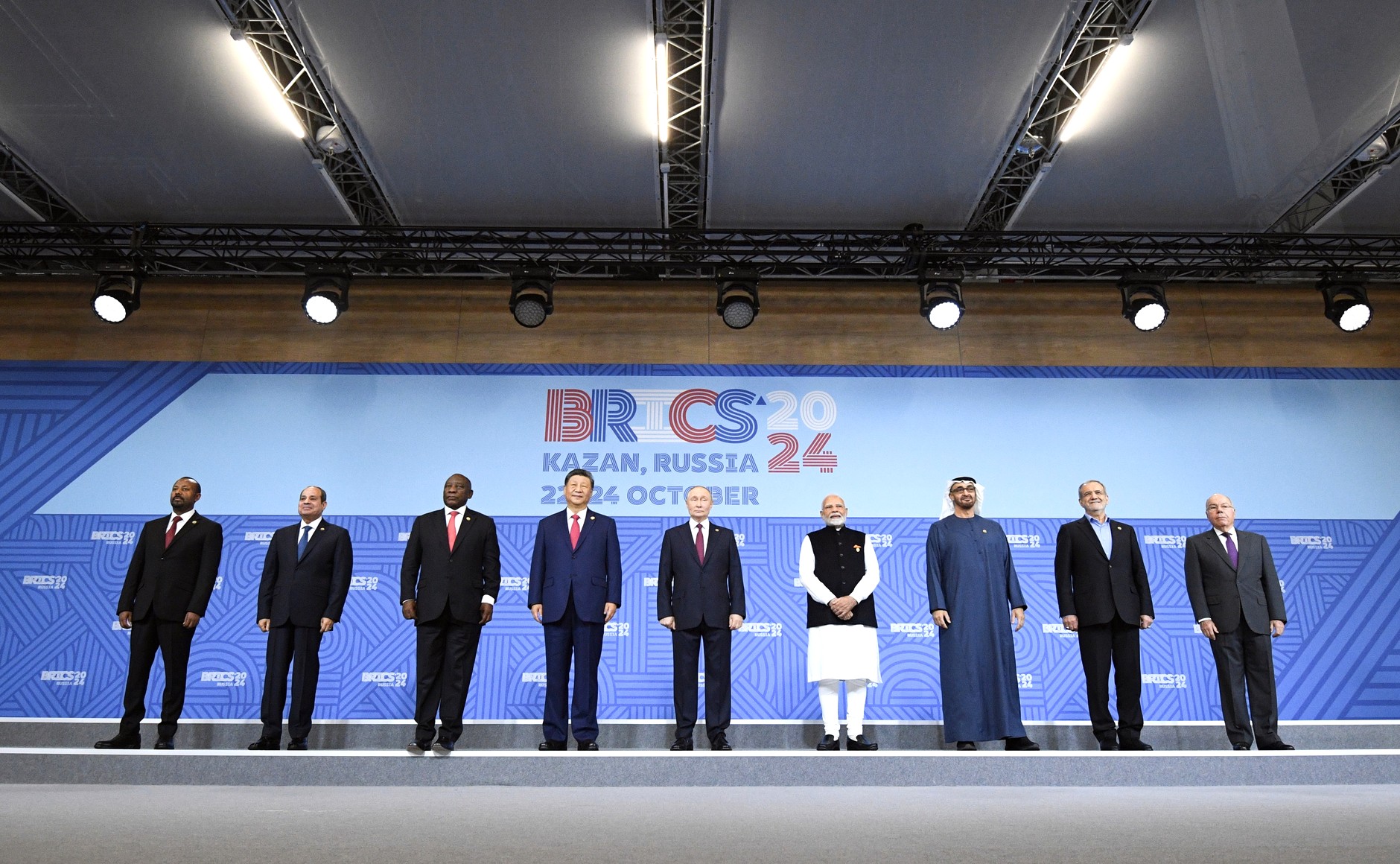
The appeal also reflects a broader strategic calculation. With its nuclear facilities damaged and its conventional military degraded by weeks of sustained strikes, Iran is seeking to reframe the conflict from a military contest into a diplomatic one where numbers favor it. BRICS member states collectively represent approximately 45 percent of the world’s population and 37 percent of global GDP, according to the bloc’s own figures. Tehran reasons that even a fraction of that weight, brought to bear diplomatically, might alter the cost-benefit calculus in Washington.
BRICS Divisions on the Iran War
The problem with Iran’s strategy is that BRICS is deeply divided on the Gulf war, and the divisions run along precisely the fault lines that any mediation effort would need to bridge. Russia and China have issued strong condemnations of the US-Israeli military campaign. Moscow called it “an act of unprovoked aggression” in a statement from the Russian Foreign Ministry on February 28. Beijing described the attacks as “a serious violation of international law and the UN Charter,” according to Xinhua.
India, by contrast, has maintained what its own officials privately describe as a posture of “calculated ambiguity.” New Delhi has not condemned the strikes, has not called for a ceasefire in the terms demanded by Iran, and has limited its public statements to expressions of concern about civilian casualties and shipping disruptions. A senior Indian diplomat, speaking on condition of anonymity to the Press Trust of India, explained the rationale: “Some members of BRICS are directly involved in this conflict. Consensus is impossible when the parties are at the table.”
Brazil and South Africa have taken stronger positions against the attacks, though neither has offered to play a mediating role. Brazilian President Luiz Inacio Lula da Silva called the strikes “disproportionate” in remarks to reporters in Brasilia on March 5, according to Agencia Brasil. South African President Cyril Ramaphosa went further, describing them as “reminiscent of the colonial interventions that BRICS was created to resist,” in a statement released by the South African presidency on March 3.
| BRICS Member | Position on US-Israel Strikes | Position on Iran’s Hormuz Blockade | Mediation Role |
|---|---|---|---|
| Brazil | Condemned as “disproportionate” | Called for freedom of navigation | None offered |
| Russia | Condemned as “unprovoked aggression” | Silent | Offered bilateral channel to Tehran |
| India (BRICS Chair) | No condemnation; “concern” expressed | Deployed warships; called for open lanes | Declined formal role |
| China | Condemned as violation of international law | Called for “restraint by all parties” | Offered to host talks |
| South Africa | Condemned as “colonial intervention” | Called for freedom of navigation | None offered |
| Iran | Victim state; demands cessation | Maintains blockade as defensive measure | Seeking BRICS-led mediation |
| Egypt | Called for de-escalation | Concerned about Suez Canal traffic | None offered |
| Ethiopia | Called for peaceful resolution | No public position | None offered |
| UAE | Called for de-escalation; hosting US assets | Opposed; economic damage severe | None offered |
The table illustrates the fundamental obstacle to BRICS-led mediation: the bloc’s members cannot agree on who is responsible for the war, let alone on terms to end it. India’s refusal to condemn the strikes places it at odds with Russia, China, and South Africa. Iran’s maintenance of the Hormuz blockade — which Tehran describes as a defensive measure but which is devastating India’s energy supply — creates a tension between Iran’s request for solidarity and India’s core national interest in keeping the strait open.
What Is India’s Stake in the Gulf War?
India’s interests in the Gulf war are vast, overlapping, and in several cases contradictory, which explains why New Delhi has resisted choosing a side. The country’s energy dependence on the region is perhaps the most immediate concern. India imported between 1.0 and 1.1 million barrels per day from Saudi Arabia in early 2026, according to Bloomberg and Discovery Alert, a figure representing a six-year high. Saudi Arabia supplies approximately 16 to 18 percent of India’s total crude oil imports, according to data compiled by TradingEconomics.
The economic ties extend well beyond oil. India-Saudi bilateral trade reached $30.64 billion in 2024, according to India’s Ministry of Commerce. In April 2025, Saudi Arabia committed to investing $100 billion in India across sectors including energy, infrastructure, and technology, according to the India Brand Equity Foundation (IBEF). That investment pipeline, one of the largest single-country commitments India has received, is now at risk as Saudi Arabia redirects resources to its own war-related needs.
India’s human exposure to the Gulf is equally significant. Approximately nine million Indian citizens live and work in Gulf countries, according to India’s Ministry of External Affairs, making the Indian diaspora the largest foreign population in the region. Their safety in a war zone represents both a humanitarian and a political concern for the Modi government.
On the military front, India and Pakistan deployed warships independently to escort oil tankers through the conflict zone around the Strait of Hormuz. The Indian Navy’s deployment was conducted outside any US-led coalition framework, a deliberate choice by New Delhi to maintain its non-aligned posture.
In a development that underscored the complexity of India-Iran relations during wartime, Iran allowed an Indian-flagged gas carrier and a Saudi tanker carrying oil destined for India to pass through the Strait of Hormuz, according to shipping data tracked by S&P Global Market Intelligence. The selective enforcement suggested Tehran was willing to use energy access as a diplomatic lever — rewarding countries it hoped to keep neutral.
Saudi Arabia’s Unanswered BRICS Question
Iran’s appeal to BRICS has exposed one of the most consequential unresolved questions in Saudi foreign policy: Riyadh’s relationship with the bloc itself. Saudi Arabia was invited to join BRICS in August 2023 at the Johannesburg summit, alongside Iran, the UAE, Egypt, and Ethiopia. But while the other invitees formalized their membership by January 2024, Saudi Arabia deferred, opting instead for a vague “partner country” status that left the door open without committing Riyadh to full participation.
The deferral was widely understood as an effort to avoid antagonizing Washington. Crown Prince Mohammed bin Salman ordered all references to Saudi BRICS membership scrubbed from Saudi state media after Russian President Vladimir Putin publicly announced the kingdom’s inclusion, according to reporting by the Wall Street Journal at the time. The move reflected MBS’s calculation that the US-Saudi relationship — and specifically the security guarantee that underpins it — was too valuable to jeopardize by joining a bloc that Washington viewed as a geopolitical rival.
The war has made that calculation dramatically more complex. If BRICS does emerge as a mediation forum for the Gulf conflict, Saudi Arabia — one of the war’s most significant victims, having suffered the largest single-day drone strike on its territory and seen its oil exports disrupted by the Hormuz blockade — would find itself outside the room. The kingdom would be neither a BRICS member with a seat at the table nor a participant in any Western-led diplomatic process, since no such process currently exists.
Saudi officials have not publicly commented on Iran’s BRICS mediation proposal. Privately, according to a Saudi diplomatic source who spoke to Reuters on condition of anonymity, Riyadh views the initiative with skepticism, arguing that a bloc that includes Iran as a member cannot credibly claim to mediate Iran’s war. The source noted that Saudi Arabia’s expulsion of Iran’s military attache on the same day as the Pezeshkian-Modi call was intended to signal that Riyadh would pursue its security interests bilaterally and through Washington, not through multilateral frameworks that include Tehran.
Yet the BRICS question will not go away. As the war drags on and no Western-led diplomatic framework materializes, the pressure on Saudi Arabia to engage with whatever forum presents itself will grow. “Saudi Arabia is the only major Gulf state that is neither fully inside BRICS nor fully aligned with a Western mediation effort, because no Western mediation effort exists,” Abdulaziz Alghashian, a Saudi foreign policy researcher at Lancaster University, told Al Jazeera on March 20. “They are in a diplomatic no-man’s land at the worst possible time.”
The Shipping Lane That Connects Tehran to New Delhi
The Strait of Hormuz, the 21-mile-wide passage between Iran and Oman through which one-fifth of the world’s daily oil consumption flowed before the war, has become the chokepoint linking Iran’s diplomatic appeals to India’s economic survival. Before Iran declared the strait closed on February 28, approximately 4.5 million barrels per day of Indian-bound crude transited the waterway, according to the International Energy Agency.
Since the blockade began, only 21 tankers have transited the Strait of Hormuz, according to S&P Global Market Intelligence data cited by CNBC — compared with more than 100 daily transits before the conflict. The near-total shutdown of one of the world’s most critical shipping lanes has sent oil prices to $114 per barrel, according to CNBC, a level that Indian officials have described as “unsustainable” for an economy that imports approximately 85 percent of its crude oil needs.
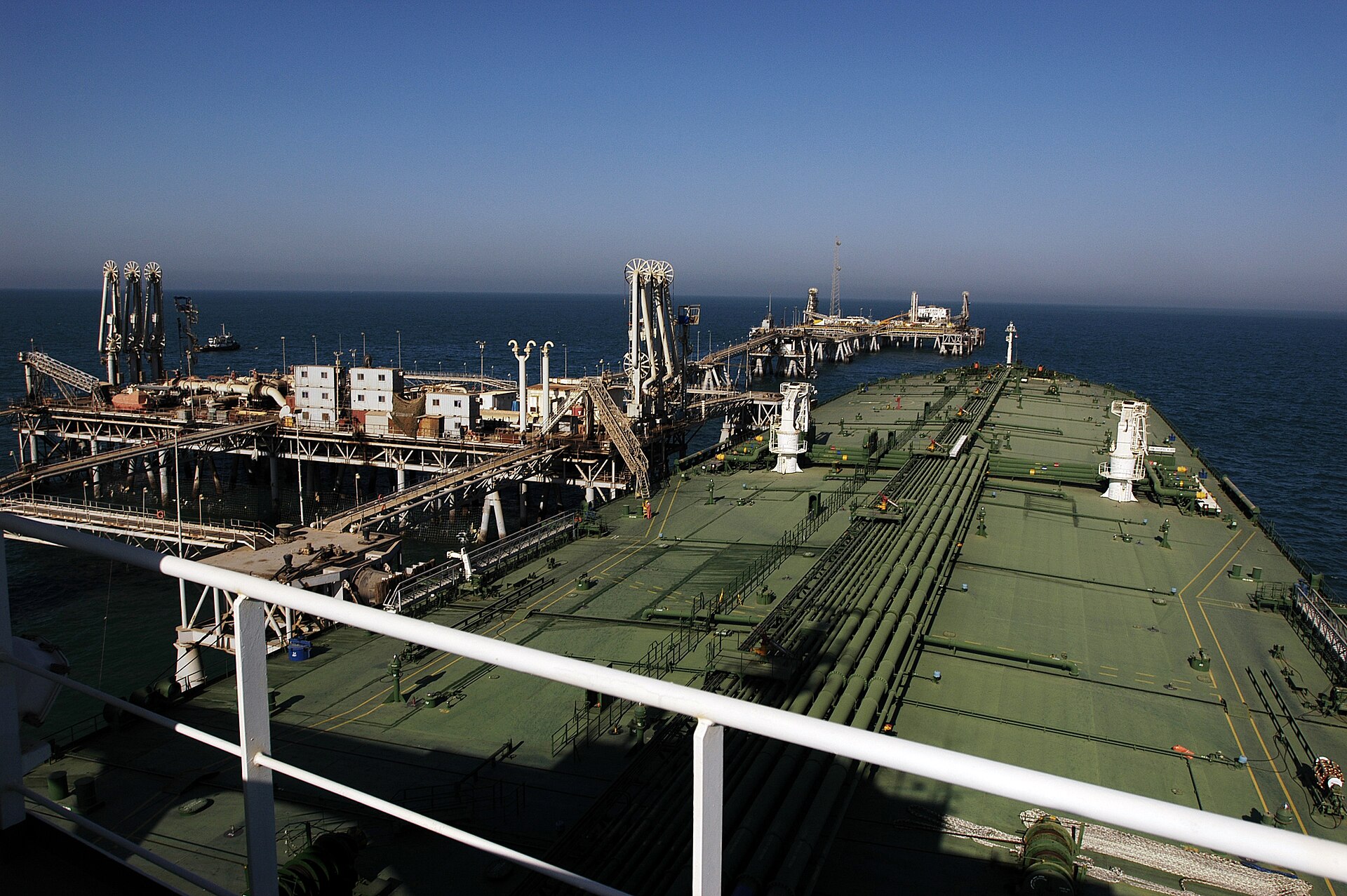
India and Pakistan both deployed warships independently to escort tankers through the strait and the broader Arabian Sea, a rare instance of parallel military action by the two rivals. Crucially, neither country placed its naval assets under US Central Command authority, a decision that reflected the desire of both New Delhi and Islamabad to maintain operational independence and avoid being perceived as participants in the US-Israeli military campaign.
Iran’s selective enforcement of the blockade has created a two-tier transit system. Vessels flagged to or carrying cargo for countries that Tehran considers neutral have been permitted passage on a case-by-case basis, while vessels associated with the United States, the United Kingdom, and Israel remain subject to interdiction.
The International Energy Agency responded to the crisis by coordinating the release of 400 million barrels from member states’ strategic petroleum reserves, according to the IEA’s March 18 announcement. India contributed to the release from its own strategic reserves. Indian Petroleum Minister Hardeep Singh Puri told the Lok Sabha on March 19 that the government was “exploring all options to ensure energy security,” including increased purchases from non-Gulf sources, according to PTI.
The energy crisis has given India a powerful incentive to support any diplomatic initiative that might reopen the strait — but also a reason to avoid actions that might provoke Iran into tightening the blockade further. New Delhi wants the strait open, but it is not certain that pressuring Iran through BRICS will achieve that, and it fears that a failed mediation attempt could harden positions on all sides.
Can BRICS Deliver What the UN Cannot?
Whether BRICS can serve as an effective mediation platform is a question of institutional capacity and political will. On institutional capacity, the answer is sobering. BRICS has no standing secretariat, no dispute resolution mechanism, no peacekeeping force, and no enforcement tools. Its primary institutional achievement — the New Development Bank — is a lending institution, not a diplomatic one.
The UN Security Council, which does have enforcement mechanisms under Chapter VII, has been rendered inoperative by the American veto. The United States has blocked three draft resolutions calling for a ceasefire since February 27, according to UN records. Washington’s position, as articulated by US Ambassador Linda Thomas-Greenfield, is that a ceasefire would “reward Iranian nuclear proliferation and leave in place the threats that necessitated military action,” according to her remarks on March 12, as reported by Reuters.
BRICS was founded on the principle that the voices of the Global South must be heard in matters of international peace and security. If we cannot act when a member state is under attack, what is the purpose of this grouping?Abbas Araghchi, Iran’s Foreign Minister, speaking to IRNA, March 21, 2026
What BRICS does possess is a unique configuration of interested parties. The bloc includes Iran itself, the belligerent state seeking mediation. It includes China and Russia, Iran’s most important strategic partners, both of which have leverage over Tehran. It includes India, the largest energy-importing economy with a direct stake in reopening the Strait of Hormuz. And its network includes Saudi Arabia as a partner country and the UAE and Egypt as members — all Gulf states directly affected by the conflict.
This configuration is more representative of the conflict’s actual stakeholders than any alternative forum. The ceasefire mediator landscape has included at least twelve distinct mediation efforts — from Oman and Switzerland to the Vatican and Turkey — and none have produced results. A BRICS framework, whatever its institutional weaknesses, would at least place several of the most relevant actors in the same room.
The obstacles remain formidable. Israel’s destruction of Litani River bridges and preparation for a ground invasion of Lebanon has added a fourth active front to the conflict, making any comprehensive ceasefire exponentially harder to negotiate. India, as BRICS chair, would need to convene an emergency session or ministerial meeting, and it has shown no inclination to do so. China has offered to host talks but has not committed to a BRICS-branded process. Russia’s credibility as a neutral party is compromised by its close military relationship with Iran. And Saudi Arabia, the war’s most prominent Gulf victim, remains outside the bloc’s formal membership.
The war’s casualty toll continues to mount as diplomatic efforts stall. According to Al Jazeera, citing Iranian health ministry figures, more than 1,500 people have been killed in Iran and at least 20,984 have been injured since the strikes began on February 27. Infrastructure damage has been extensive, with Iranian officials claiming that water treatment plants, power stations, and transportation networks have been hit alongside military targets.
For the moment, Pezeshkian’s call to Modi remains what it was when the phone was set down on March 21: an ask, not an agreement. India has heard it, acknowledged it, and filed it alongside its other considerations — the tankers waiting outside the strait, the warships patrolling the Arabian Sea, the nine million citizens in the Gulf, and the $100 billion in Saudi investment that may or may not survive a prolonged war. Whether BRICS can convert that ask into action will depend on whether its members decide the costs of inaction exceed the costs of choosing a side.
Frequently Asked Questions
What did Iran propose to India about the Gulf war?
Iranian President Masoud Pezeshkian called Indian Prime Minister Narendra Modi on March 21, 2026, asking India to use its BRICS chairmanship to mediate the conflict. Pezeshkian proposed a “West Asian security framework” of regional countries and demanded an “immediate cessation of aggressions” by the United States and Israel. He also asked BRICS to play an “independent role” in halting hostilities, according to the Iranian presidential office.
Is India a mediator in the Iran war?
India has not accepted a formal mediation role. While Prime Minister Modi took Pezeshkian’s call and expressed concern about civilian casualties and shipping disruptions, India’s Ministry of External Affairs has not committed New Delhi to any mediation framework. Indian officials have privately cited the impossibility of BRICS consensus when “some members are directly involved” in the conflict, according to diplomatic sources cited by the Press Trust of India.
Why did Iran call on BRICS?
Iran turned to BRICS after its other diplomatic channels were systematically closed. The US rejected negotiations, Saudi Arabia expelled Iran’s military attache, and Qatar expelled Iranian diplomatic staff. The UN Security Council is blocked by American vetoes. BRICS, where Iran has been a member since January 2024, represents an alternative forum where Tehran’s strategic partners Russia and China have influence and where no single country holds veto power.
What is Saudi Arabia’s position on BRICS mediation?
Saudi Arabia has not publicly commented on Iran’s proposal for BRICS mediation. The kingdom deferred formal BRICS membership in 2023-2024, maintaining only “partner country” status to avoid antagonizing Washington. This means Saudi Arabia — one of the Gulf war’s most significant victims — would be outside the room if BRICS convened mediation talks. Saudi diplomatic sources told Reuters the kingdom views the initiative skeptically, arguing that a bloc including Iran cannot credibly mediate Iran’s war.
How does the Iran war affect India’s economy?
The war’s impact on India is severe. India imports 1.0 to 1.1 million barrels per day from Saudi Arabia, and the Strait of Hormuz blockade has reduced tanker transits from over 100 daily to just 21 since February 28, according to S&P Global Market Intelligence. Oil prices have reached $114 per barrel, straining India’s import bill. India-Saudi bilateral trade was $30.64 billion in 2024, and a $100 billion Saudi investment commitment is at risk. India has also had to deploy warships to escort tankers and ensure the safety of nine million citizens living in Gulf countries.