
RIYADH — Iran’s Foreign Minister Abbas Araghchi declared on March 8 that Tehran will not accept a ceasefire or negotiate with the United States, closing the door on diplomatic efforts to end the 10-day-old war even as Iranian missiles and drones continue to strike Saudi Arabia and six other Gulf states. “We are not asking for a ceasefire, and we don’t see any reason why we should negotiate,” Araghchi told NBC News from Tehran, rejecting what he called dishonest overtures from Washington while the IRGC vowed to deploy warheads weighing more than one tonne against targets across the region.
The rejection came hours after Iran’s Assembly of Experts confirmed Mojtaba Khamenei as the country’s new supreme leader, replacing his father Ali Khamenei who was killed in the US-Israeli strikes that launched the war on February 28. For Saudi Arabia, which has intercepted more than 30 drones and multiple ballistic missiles in the past week alone, Iran’s refusal to negotiate means the Kingdom’s air defenses face weeks more of sustained bombardment with no diplomatic off-ramp in sight.
Table of Contents
- What Did Iran’s Foreign Minister Say About a Ceasefire?
- Why Did Iran Reject Negotiations With the United States?
- The Secret CIA Backchannel Iran Opened and Trump Dismissed
- Trump’s Demand for Unconditional Surrender
- What Does Iran’s Ceasefire Rejection Mean for Saudi Arabia?
- Saudi Arabia’s Own Diplomatic Push
- How Has the International Community Responded?
- The War’s Toll After Ten Days
- Frequently Asked Questions
What Did Iran’s Foreign Minister Say About a Ceasefire?
Iranian Foreign Minister Abbas Araghchi gave a series of interviews to NBC News and other international outlets between March 5 and March 8, 2026, delivering Tehran’s most comprehensive public rejection of ceasefire proposals since the war began. His statements left no ambiguity about Iran’s position: the Islamic Republic will continue fighting.
Speaking to NBC’s “Meet the Press” on March 8, Araghchi stated that Iran has “not asked for a ceasefire” and dismissed the idea that Tehran was seeking any diplomatic off-ramp. “We need to continue fighting for the sake of our people,” he told the programme’s moderator, according to NBC News.
We are not asking for a ceasefire, and we don’t see any reason why we should negotiate. They have to explain why they started this aggression before we come to the point to even consider a ceasefire.
Abbas Araghchi, Iranian Foreign Minister, NBC News interview, March 8, 2026
Araghchi’s rejection was not limited to ceasefire talks. He explicitly refused direct negotiations with Washington, citing what he described as a pattern of American bad faith. “We negotiated twice last year and this year, and then in the middle of negotiations, they attacked us,” he said, according to NBC News. “So we see no reason why we should engage once again with those who are not honest in negotiation.”
The foreign minister also insisted that any path toward ending the conflict must begin with the United States and Israel providing a justification for starting it. “They have to explain why they started this aggression before we come to the point to even consider a ceasefire,” he said, according to a report by The National.
Tehran has since gone further, articulating specific preconditions that would need to be met before any ceasefire could take effect. As detailed in a subsequent analysis, Iran is demanding reparations for war damage and long-term security guarantees as non-negotiable conditions, a posture that has effectively closed the door on the incremental de-escalation diplomats had hoped for.
Iran’s Parliament Speaker Mohammad Bagher Ghalibaf reinforced Araghchi’s position on the same day. “We are definitely not looking for a ceasefire; we believe that the aggressor should be punched in the mouth so that he learns a lesson so that he will never think of attacking our beloved Iran again,” Ghalibaf said, according to the Times of Israel. He added that Israel relied on a cycle of “war, negotiations and ceasefire and then war again” and that Iran intended to break that pattern.
Why Did Iran Reject Negotiations With the United States?
Araghchi grounded his refusal to negotiate in recent diplomatic history. Iran participated in two rounds of negotiations with the United States in 2025 and early 2026, both aimed at reviving the nuclear deal and easing regional tensions. According to Araghchi’s account to NBC News, the February 28 strikes came while diplomatic channels were still ostensibly open, shattering whatever trust remained between the two governments.
“We don’t have any positive experience of negotiating with the United States,” he told NBC. The reference was unmistakable: the Trump administration’s withdrawal from the 2015 nuclear deal in 2018, followed by the reimposition of sanctions, had already poisoned Iran’s view of American diplomatic commitments. The February 28 strikes, launched while backchannels were active, confirmed in Tehran’s view that negotiation was merely a tactic Washington employed to buy time before military action.
Iran’s foreign ministry spokesperson Esmaeil Baghaei went further, declaring that “there is no point to talks about anything but defense and crushing retaliations against enemies,” according to the Jerusalem Post. The statement reflected a hardening consensus across Iran’s political establishment, from the foreign ministry to parliament to the IRGC, that diplomacy had been exhausted.
Araghchi also signalled military confidence, telling NBC in a separate interview that Iran was prepared for a potential US ground invasion. “No, we are waiting for them,” he said when asked whether he feared American troops entering Iran, according to NBC. “We are ready for this war.” A US ground invasion would be “a big disaster for them,” he added, according to CNBC. While military analysts regard such claims with scepticism given the disparity in conventional forces, the statement reflected Tehran’s determination to project resolve at a moment when its leadership was under existential pressure.
The Secret CIA Backchannel Iran Opened and Trump Dismissed
Even as Araghchi publicly refused to negotiate, a separate and quieter diplomatic drama was unfolding through intelligence channels. According to reporting by the New York Times and CNN, operatives from Iran’s Ministry of Intelligence quietly reached out to the CIA through a third country’s intelligence service in early March to discuss terms for ending the conflict.
The outreach came as Iran’s leadership structure was in disarray following the killing of Supreme Leader Ali Khamenei, the destruction of multiple command and control facilities, and sustained bombardment of military infrastructure across the country. The contact suggested that at least some elements within Iran’s security establishment recognised the costs of continued conflict, even if the public posture remained defiant.
President Trump disclosed the contact on March 5, dismissing it. “They’re calling. They’re saying, how do we make a deal?” Trump said, according to the Jerusalem Post. “I said, you’re being a little bit late, and we want to fight now more than they do.”
Trump offered a grim assessment of the diplomatic landscape. “Most of the people we had in mind are dead,” he said, referring to the decimation of Iran’s leadership. “Pretty soon we are not going to know anybody.” Defense Secretary Pete Hegseth reinforced the message, saying the United States was “just getting started,” according to media reports.
The contradiction between Iran’s secret outreach and its public rejection of talks illustrates a fractured decision-making structure in Tehran. The appointment of Mojtaba Khamenei as supreme leader on March 8 may have resolved some of that ambiguity in favour of continued resistance, given his close ties to the IRGC. But the intelligence backchannel suggested that not all power centres in Iran shared the IRGC’s appetite for prolonged war.
Trump’s Demand for Unconditional Surrender
Iran’s rejection of ceasefire talks did not occur in a vacuum. On March 6, President Trump escalated his own demands, posting on Truth Social that there would be “no deal with Iran except UNCONDITIONAL SURRENDER,” according to the Washington Post. The demand, echoing the language used against Japan in 1945, represented the most maximalist US war aim stated publicly since the conflict began.
White House press secretary Karoline Leavitt clarified on March 6 that “unconditional surrender” meant Trump determining “that Iran can no longer pose a threat to the U.S. and our troops in the Middle East,” according to Axios. She listed four specific objectives: destroying Iran’s navy, eliminating its ballistic missile threat, ensuring it cannot obtain a nuclear weapon, and weakening its regional proxies.
Trump added that after surrender, “GREAT & ACCEPTABLE Leader(s)” must be selected and pledged that the US would help rebuild Iran, adding “MAKE IRAN GREAT AGAIN (MIGA!),” according to multiple reports. The demand for regime change, combined with Trump’s earlier dismissal of the CIA backchannel, suggested that neither side was prepared to offer the other a viable exit from the conflict.
Leavitt estimated the war would continue for approximately four to six more weeks, according to CNBC. For Gulf states already absorbing daily drone and missile attacks, that timeline translated into potentially another 30 to 40 days of sustained bombardment before any prospect of cessation. The Pentagon’s subsequent Day 11 briefing offered a more granular picture: coalition forces had destroyed more than 5,000 targets and driven Iranian missile launches down by 90 percent, though the IRGC’s drone fleet remained a persistent threat.
What Does Iran’s Ceasefire Rejection Mean for Saudi Arabia?
Iran’s refusal to negotiate has direct and immediate consequences for Saudi Arabia. The Kingdom has been struck repeatedly since the war began, with the Saudi Defence Ministry reporting daily interceptions of Iranian drones and ballistic missiles across multiple provinces. On March 8 alone, the ministry reported intercepting and destroying six drones east of Riyadh, according to the ministry’s official statements carried by GlobalSecurity.org.
The most significant attack on Saudi soil came on March 8, when a projectile struck a residential building in Al-Kharj, killing two foreign nationals — one Indian and one Bangladeshi — and injuring 12 others, according to Al Jazeera. The strike on a civilian area, approximately 77 kilometres south of Riyadh, marked the first confirmed fatalities in Saudi Arabia from the Iran war and represented a significant escalation.
| Date | Type | Target Area | Outcome |
|---|---|---|---|
| March 1 | Ballistic missiles | Riyadh airport, military base | Intercepted (Gulf source, AFP) |
| March 5 | Cruise missiles (2) | East of Al-Jouf | Intercepted and destroyed (Saudi MoD) |
| March 5 | Drone (1) | East of Al-Jouf | Intercepted and destroyed (Saudi MoD) |
| March 6 | Ballistic missiles (3) | Prince Sultan Air Base | Intercepted and destroyed (Saudi MoD) |
| March 7 | Drones (4) | Shaybah field, Empty Quarter | Intercepted and destroyed (Saudi MoD) |
| March 7 | Drone (1) | East of Riyadh | Intercepted and destroyed (Saudi MoD) |
| March 8 | Projectile | Al-Kharj residential area | Impact — 2 killed, 12 injured |
| March 8 | Drones (6) | East of Riyadh | Intercepted and destroyed (Saudi MoD) |
| March 8 | Drones (3) | Riyadh diplomatic quarter | Intercepted (Saudi MoD) |
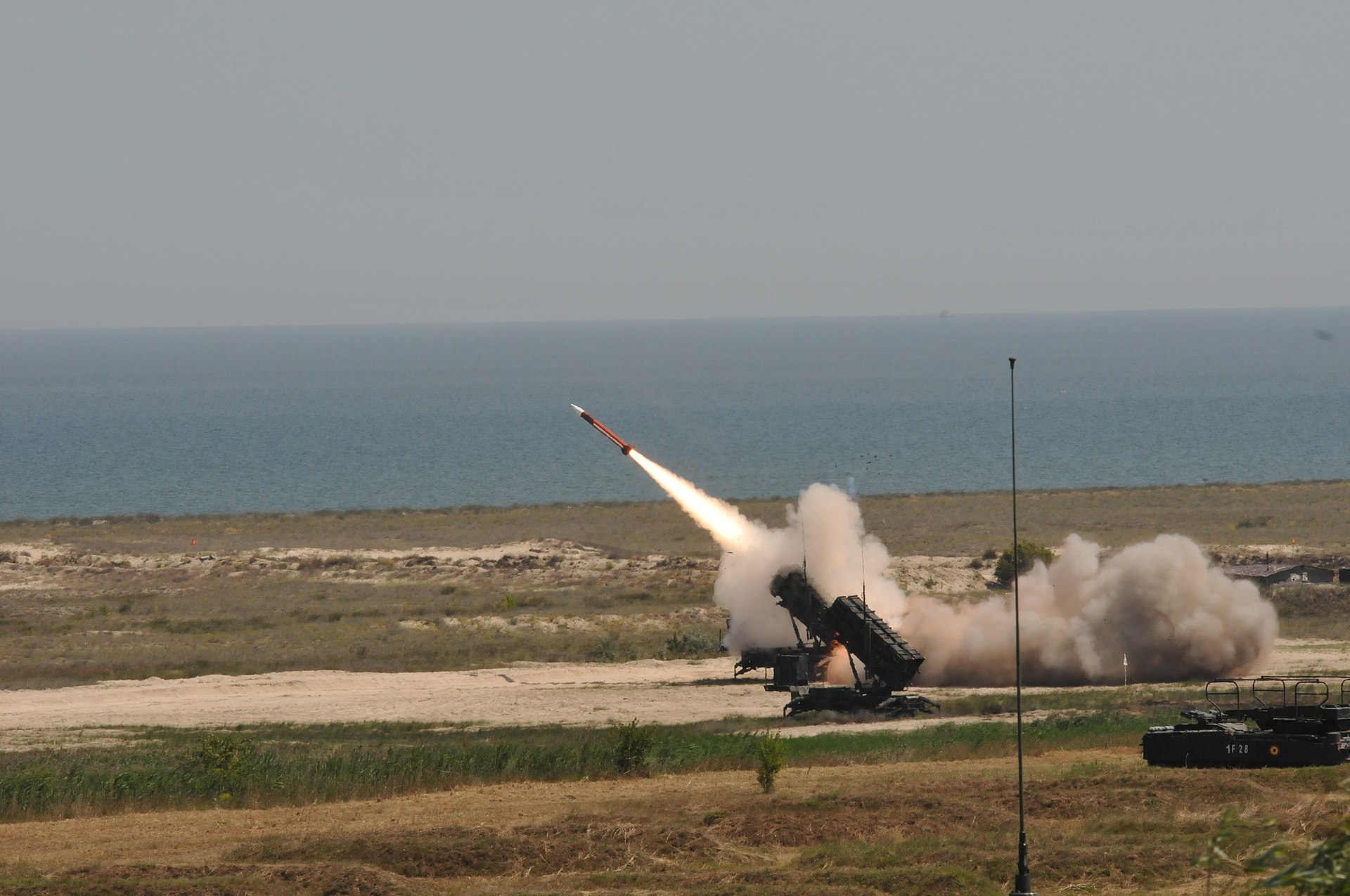
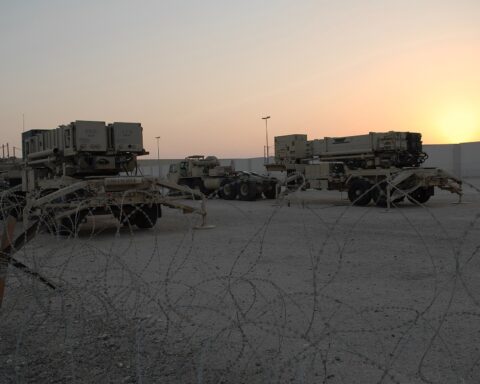
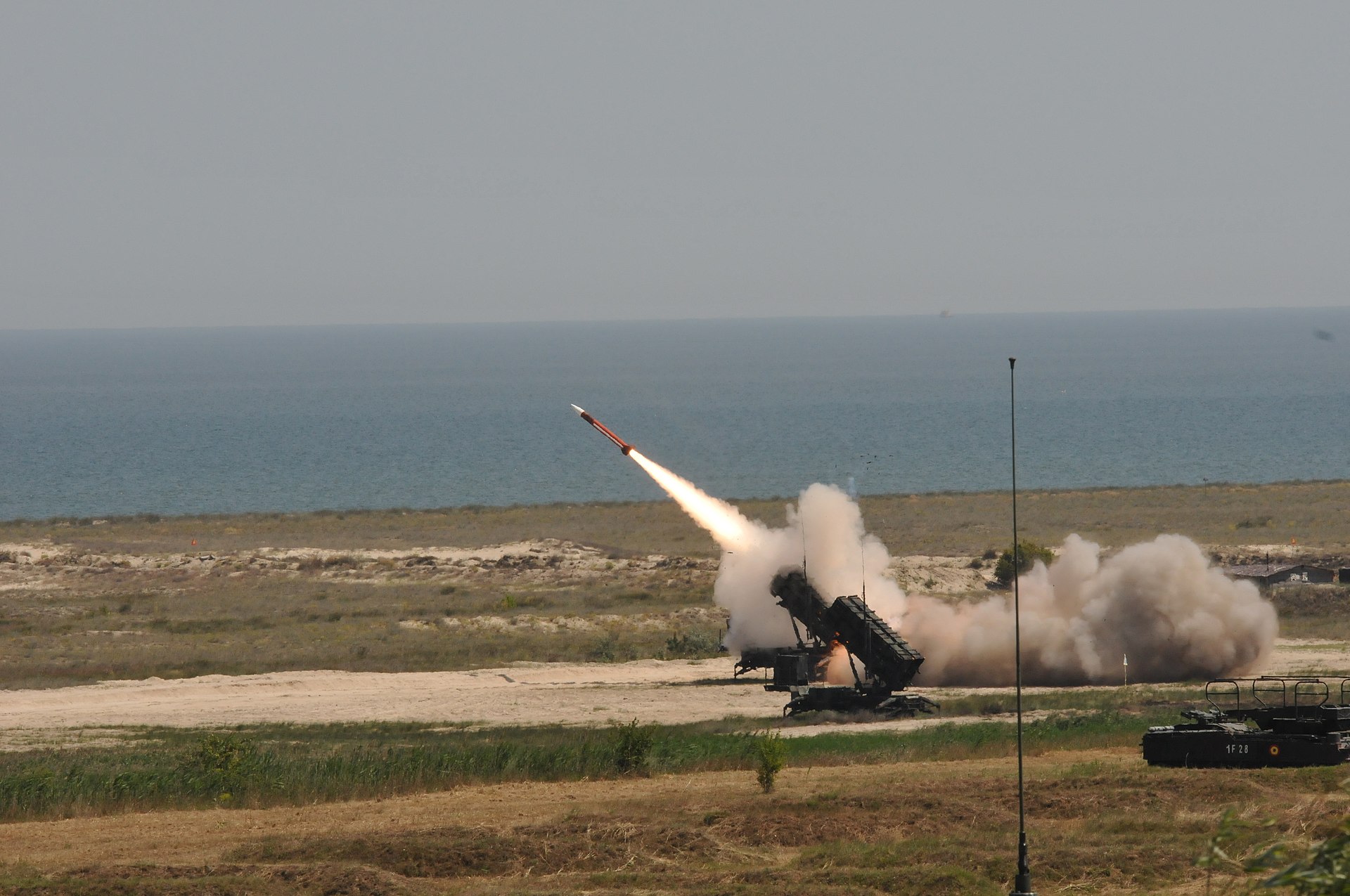
With the White House estimating four to six more weeks of conflict, Saudi Arabia’s air defense network faces an endurance test of unprecedented scale. The Kingdom’s Patriot and THAAD batteries have performed effectively so far, but interceptor stocks are finite and each engagement consumes missiles costing between $2 million and $4 million, according to defence analysts. Iran’s drone fleet, by contrast, deploys weapons that cost as little as $35,000 per unit, creating a cost asymmetry that favours the attacker.
The US State Department’s decision on March 8 to order non-emergency staff to leave Saudi Arabia underscored the severity of the threat. The ordered departure was subsequently expanded to eight embassies across the region, including Bahrain, Iraq, Jordan, Kuwait, Lebanon, Qatar, and the UAE, as well as consulates in Karachi and Adana, according to the State Department.
Saudi Arabia’s Own Diplomatic Push
Saudi Arabia has pursued its own diplomatic track, distinct from and sometimes at odds with Washington’s maximalist demands. According to Bloomberg, Riyadh intensified direct engagement with Iran in early March through existing backchannels, deploying what Bloomberg described as “greater urgency” to prevent the conflict from escalating further.
Foreign Minister Prince Faisal bin Farhan has been at the centre of these efforts, working both the Iranian channel and coordinating with Gulf partners. Saudi Arabia told Tehran through diplomatic channels that continued attacks on the Kingdom could force Riyadh to permit US forces to use Saudi bases for offensive operations and to respond directly in kind, according to CNBC and the Times of Israel.
At the same time, Saudi Arabia counselled restraint among its own allies. According to Middle East Eye, Riyadh told Gulf allies to “avoid any steps that could inflame tensions with Iran,” reflecting a preference for de-escalation even as its own territory came under fire. The Saudi position — condemning Iranian attacks as based on “flimsy pretexts” while simultaneously seeking a diplomatic resolution — placed Riyadh in the uncomfortable position of mediating a war it did not start but was increasingly absorbing.
Beijing’s dispatch of a peace envoy to Riyadh added another dimension to the diplomatic landscape, with China proposing a five-point ceasefire plan. But Iran’s explicit rejection of ceasefire proposals, combined with Trump’s demand for unconditional surrender, left Saudi mediation efforts with vanishingly little space to operate.
How Has the International Community Responded?
The international response to Iran’s ceasefire rejection has been divided along predictable lines. UN Secretary-General António Guterres warned the Security Council that “everything must be done to prevent escalation,” cautioning that “the alternative is a potential wider conflict with grave consequences for civilians and regional stability,” according to UN press releases.
China’s foreign minister called for an immediate ceasefire and the resumption of talks during an emergency Security Council session, while Russia demanded that the United States and Israel “immediately cease aggressive actions,” according to Democracy Now and Reuters. Both Beijing and Moscow condemned the initial US-Israeli strikes while stopping short of providing military assistance to Iran.
Western powers struck a different tone. The UK, France, and Germany condemned Iran’s retaliatory strikes on Gulf states and called for Tehran to end its nuclear programme and ballistic missile development. The UK House of Commons Library published a research briefing on the strikes that noted the conflict’s implications for British nationals in the Gulf and UK energy security.
The Arab foreign ministers’ emergency meeting on March 10 invoked the concept of collective defense after Iranian strikes hit eight states, representing the most unified Arab diplomatic response since the war began. The statement stopped short of authorising military retaliation but signalled that continued Iranian attacks on Arab soil would be treated as an attack on the collective.
Pakistan and Saudi Arabia invoked their mutual defense pact in the first week of the conflict, adding another layer of complexity. Pakistan’s Deputy Prime Minister Ishaq Dar launched what he described as “shuttle communication” between Tehran and Riyadh, but the effort produced no breakthrough. Pakistan’s 900-kilometre border with Iran and its millions of workers in Gulf states left Islamabad straddling two close partners with competing demands.
The War’s Toll After Ten Days
As the conflict entered its second week with no ceasefire in prospect, the human and economic costs continued to mount. At least 1,332 people have been killed in Iran, according to Al Jazeera’s live tracker, including 175 schoolgirls and staff killed when a missile struck a primary school in Minab on the first day of the war. Eight American service members have died in attacks on US bases across the region, according to NPR.
In Lebanon, the death toll reached 217 as Israeli strikes continued alongside the Iran campaign, according to the Lebanese Ministry of Public Health. At least 15 people were reported killed in Iraq, and the two fatalities in Saudi Arabia’s Al-Kharj brought the Gulf civilian death toll into sharper focus.
| Country | Killed | Notes |
|---|---|---|
| Iran | 1,332+ | Includes 175 schoolchildren in Minab (Al Jazeera tracker) |
| Lebanon | 217 | Israeli strikes concurrent with Iran campaign (Lebanese MoPH) |
| Iraq | 15+ | Local police and health officials |
| Israel | 13 | Including 9 in Beit Shemesh missile strike (March 1) |
| United States (military) | 8 | Service members at Gulf bases (NPR) |
| Saudi Arabia | 2 | Indian and Bangladeshi nationals, Al-Kharj (Al Jazeera) |
| Gulf states (other) | 14+ | Across Bahrain, Kuwait, Qatar, UAE |
The economic impact has been equally severe. Brent crude surged to $119.50 per barrel before easing to $112.98, according to CNBC. Some 21,300 flights have been cancelled across seven major Gulf airports since February 28, the largest aviation shutdown since the COVID-19 pandemic, according to Al Jazeera. Flights to Abu Dhabi, Amman, Bahrain, Doha, and Kuwait from Saudi Arabia remained suspended through March 10, according to Saudi aviation authorities.
Global markets have shed approximately $6 trillion since the conflict began, and the IRGC’s pledge to deploy one-tonne warheads has prompted further volatility. With both sides rejecting negotiation — Iran refusing ceasefire, the United States demanding unconditional surrender — the economic dislocation shows no sign of abating.
The structural barriers to a ceasefire that analysts identified before Iran’s formal rejection remain firmly in place. Neither side has articulated what a post-war settlement would look like. Iran’s new supreme leader has pledged continuity with his father’s hardline policies. And the Saudi-Iranian backchannel, while still reportedly active, has produced no framework for de-escalation that both Washington and Tehran would accept.
Iran’s refusal to negotiate was underscored on March 11 when the IRGC issued an ultimatum threatening to block all Gulf oil exports until U.S. and Israeli strikes ceased, even as the Pentagon launched its heaviest day of bombing since the war began.
Frequently Asked Questions
Has Iran agreed to a ceasefire in the 2026 war?
No. Iranian Foreign Minister Abbas Araghchi explicitly rejected ceasefire calls on March 8, 2026, telling NBC News that Iran is “not asking for a ceasefire” and sees “no reason” to negotiate with the United States. Parliament Speaker Ghalibaf reinforced the position, saying Iran is “definitely not looking for a ceasefire.”
Did Iran reach out to the CIA for negotiations?
Yes. According to the New York Times and CNN, Iran’s Ministry of Intelligence contacted the CIA through a third country’s intelligence service in early March. President Trump publicly dismissed the outreach, saying “you’re being a little bit late” and that the US “want to fight now more than they do.”
What has Trump demanded from Iran to end the war?
Trump demanded “unconditional surrender” on March 6, specifying the destruction of Iran’s navy, elimination of its ballistic missile threat, prevention of nuclear weapons capability, and the weakening of its regional proxies. The White House estimated the war would last another four to six weeks.
How is Saudi Arabia affected by Iran’s refusal to negotiate?
Saudi Arabia faces continued daily drone and missile attacks with no diplomatic endpoint. The Kingdom has intercepted more than 30 projectiles since the war began, but the Al-Kharj strike on March 8 killed two people. The US State Department ordered staff to leave Saudi Arabia, and flights across the Gulf remain disrupted.
Who is mediating between Iran and the United States?
Multiple actors are attempting mediation. Saudi Arabia has an active backchannel with Iran. China sent a peace envoy to Riyadh with a five-point plan. Pakistan’s deputy prime minister launched “shuttle communication” between Tehran and Riyadh. None have produced a breakthrough, and Iran’s formal rejection of ceasefire talks has narrowed the space for mediation further. In parallel, Gulf states have submitted a draft UN Security Council resolution condemning Iran’s attacks on seven sovereign nations and demanding an immediate halt to all strikes.