
DHAHRAN — Iran is shipping approximately 1.3 million barrels of crude oil per day to China through the Strait of Hormuz — the same waterway its Islamic Revolutionary Guard Corps declared closed to commercial traffic on 1 March 2026. The contradiction is not accidental. Twelve days into a blockade that has halted 90 percent of tanker traffic, stranded more than 400 vessels, and cost Saudi Arabia an estimated $500 million per day in lost export revenue, Tehran has constructed an asymmetric chokepoint that punishes its enemies while preserving its own income stream. The selective enforcement doctrine transforming the world’s most important shipping lane reveals far more about the future of Gulf energy than any missile strike or diplomatic communiqué — and Riyadh, which moves more crude through Hormuz than any other nation, is absorbing the heaviest blow.
The evidence is accumulating faster than governments can explain it away. Windward maritime intelligence satellite data shows vessel presence inside the Strait exceeding AIS-visible traffic, suggesting tankers are completing dark transits with transponders disabled. United Against Nuclear Iran (UANI) tracked 46.9 million barrels of physical exports out of Iran in January 2026 alone, averaging 1.51 million barrels per day. The shadow fleet that evaded American sanctions for years has become, in wartime, a parallel shipping infrastructure operating under Iranian naval protection. Meanwhile, Aramco’s East-West pipeline is scrambling to compensate for blocked eastern exports, and the Kingdom’s storage tanks are filling to capacity.
Table of Contents
- What Does Iran’s Selective Hormuz Blockade Mean for Saudi Arabia?
- How Many Barrels Is Iran Still Moving Through the Strait?
- The Shadow Fleet That Never Stopped Sailing
- Why Can Saudi Arabia Not Ship Oil Through the Same Strait?
- The Blockade Arbitrage Matrix
- Where Is Saudi Oil Going Instead?
- How Does Beijing Benefit From the Selective Blockade?
- The Revenue Gap Nobody in Riyadh Will Quantify
- What the Maritime Intelligence Data Actually Shows
- Iran’s Blockade Is Working Exactly as Designed
- What Happens if the Dark Transit Corridor Closes?
- Frequently Asked Questions
What Does Iran’s Selective Hormuz Blockade Mean for Saudi Arabia?
Iran’s selective enforcement of the Strait of Hormuz blockade represents the most sophisticated weaponisation of a maritime chokepoint since the 1980s Tanker War — and Saudi Arabia is bearing a disproportionate share of the economic damage. Before the war, the Kingdom moved approximately 5.5 million barrels per day through Hormuz, accounting for 38 percent of all crude flows through the strait, according to the U.S. Energy Information Administration. Those flows have collapsed to a fraction of pre-war levels.
The mechanism is straightforward but unprecedented. The IRGC Navy, which has positioned anti-ship missile batteries along Iran’s Hormuz coastline, is not enforcing a uniform closure. Instead, it has created a two-tier transit system: vessels linked to Iran and its commercial partners — overwhelmingly Chinese-owned or Chinese-chartered tankers — continue to move through the strait under conditions that remain opaque to Western maritime tracking. Meanwhile, tankers carrying Saudi, Emirati, Kuwaiti, and Iraqi crude face active interdiction threats that have made commercial insurance effectively unavailable and driven mainstream shipping companies to suspend Gulf operations entirely.
For Riyadh, the consequences extend beyond immediate revenue loss. The blockade is rewriting the commercial geography of global oil in ways that will persist long after any ceasefire. Buyers that historically relied on Saudi crude delivered through Hormuz are sourcing alternatives. Contracts are shifting. Price premiums that favoured Arab Light grades are eroding. And every day the selective blockade persists, Iran demonstrates that it can impose massive costs on its regional rivals while maintaining its own economic lifeline — an asymmetry that Mohammed bin Salman has limited tools to counter without joining the war directly.
How Many Barrels Is Iran Still Moving Through the Strait?
Iran is exporting between 1.2 million and 1.5 million barrels per day of crude oil and condensate through the Strait of Hormuz, according to tanker-tracking data compiled by UANI, Vortexa, and Kpler. The volume represents a decline from pre-war levels of approximately 2.16 million barrels per day in February 2026 but remains substantial — equivalent to roughly 1.3 percent of global oil supply flowing through a waterway that everyone else has abandoned.
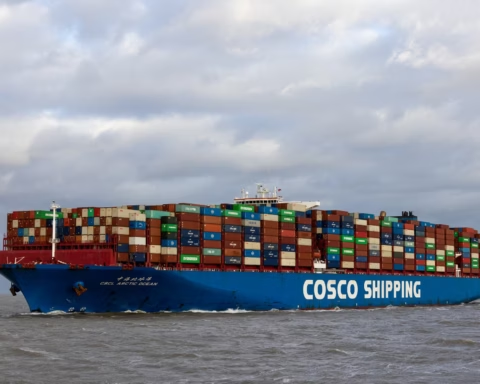
The shipments are overwhelmingly destined for China. Chinese refineries, particularly independent “teapot” refiners in Shandong Province, have been the primary buyers of sanctioned Iranian crude for years, and the war has not disrupted the commercial relationship. What has changed is the method of delivery. Before the conflict, Iranian tankers conducted ship-to-ship transfers in open water to obscure the origin of cargoes. Now, with the strait functionally controlled by the IRGC Navy, Iranian-linked vessels are transiting directly — a brazen display of sovereignty over the waterway that contradicts Tehran’s official position of a complete closure.
UANI’s tanker tracker recorded 46.9 million barrels of physical Iranian crude exports in January 2026, averaging 1.51 million barrels per day. Vortexa data indicates that Iran’s shadow fleet has matured to sustain 1.3 to 1.6 million barrels per day in exports despite both UN snapback sanctions and the wartime blockade. The Windward maritime intelligence platform has detected at least one confirmed dark transit — a tanker that disappeared from Automatic Identification System tracking inside the strait and reappeared days later on the other side, its transponder reactivated only after clearing the chokepoint.
The Shadow Fleet That Never Stopped Sailing
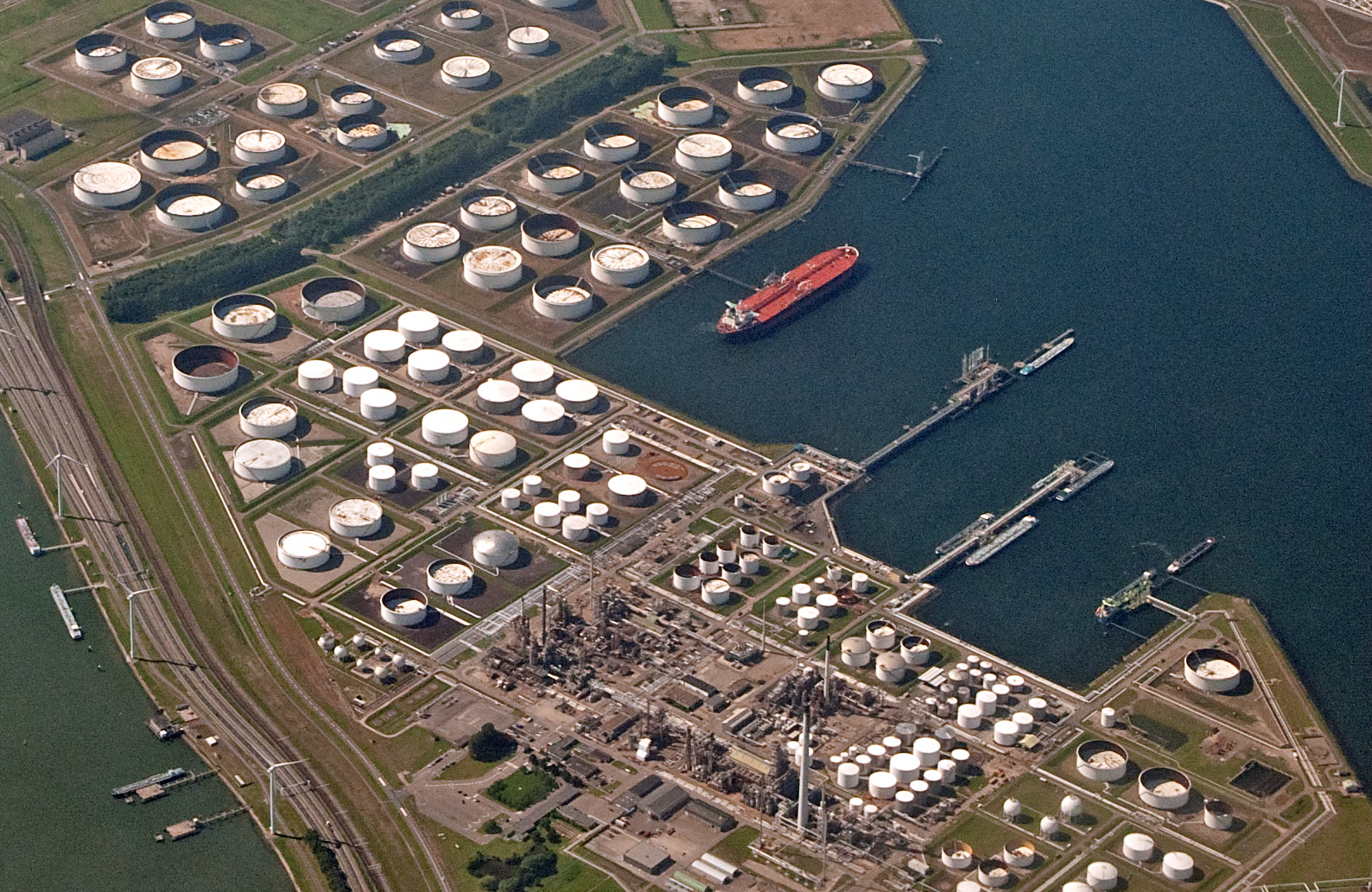
The infrastructure enabling Iran’s continued exports predates the war by years. A shadow fleet of approximately 1,100 tankers — representing 17 to 18 percent of all vessels carrying liquid cargo globally — has been built up through the systematic purchase of aging tankers, the use of shell companies, and registration under flags of convenience, according to research by Charles Edward Gehrke, Deputy Division Director of Wargame Design and Adjudication at the U.S. Naval War College.
These vessels exploit regulatory gaps at every level of the maritime system. Ships registered under flags of convenience — Cameroon, Palau, Liberia, Mongolia — face minimal inspection requirements. Many registries offer online registration with no physical verification, enabling fraudulent documentation that renders vessels effectively stateless. The Skipper, a sanctioned tanker seized by the United States, was flying Guyana’s flag despite never having been registered there. The Arcusat had changed its International Maritime Organization identification number — what Gehrke described as “the maritime equivalent of scraping the VIN off a car.”
Insurance arrangements are equally opaque. Two-thirds of Russian oil tankers reportedly carry coverage from unknown providers, according to industry data, and Iranian shadow fleet vessels operate under similar arrangements. By opting out of mainstream London-based insurers that enforce safety and sanctions compliance, these ships bypass the regulatory infrastructure that would otherwise make dark transits commercially unviable.
The operational methods are well-documented: transponder disabling in sensitive waters, ship-to-ship transfers at sea, vessel name changes, and serial reregistration under different flags when detected. What the war has changed is the scale of protection. The IRGC Navy, which normally harasses international shipping, appears to be providing de facto escort services for friendly vessels while threatening everyone else. The shadow fleet has gone from operating in spite of state power to operating under its protection.
Why Can Saudi Arabia Not Ship Oil Through the Same Strait?
Saudi Arabia’s inability to exploit the same transit corridor that Iran uses comes down to three factors: commercial insurance, flag-state exposure, and the IRGC Navy’s targeting doctrine. Each creates a barrier that mainstream shipping cannot overcome, regardless of demand or price premium.
The insurance barrier is the most effective. War risk premiums for Hormuz transit have become effectively infinite — not merely expensive but unavailable at any price. Lloyd’s of London and major marine insurers have excluded the Strait of Hormuz from coverage since the first Iranian missile strikes on commercial vessels. Without insurance, tankers cannot enter ports, cannot receive cargo, and cannot be financed. The system is binary: insured ships can trade, uninsured ships cannot. Iran’s shadow fleet circumvents this by carrying non-mainstream coverage or operating entirely uninsured — a commercial impossibility for Saudi Arabia, whose exports flow through Aramco contracts with major oil traders and refiners that require full insurance documentation.
Flag-state exposure compounds the problem. Saudi-flagged and Western-flagged tankers are identifiable through AIS transponders, satellite tracking, and port-state reporting requirements. Disabling transponders — the method used by shadow fleet vessels — would violate International Convention for Safety of Life at Sea requirements and trigger port-state investigations at destination. Saudi Arabia cannot adopt shadow fleet methods without destroying the commercial credibility of its entire export apparatus.
The IRGC’s targeting doctrine completes the trap. Iran has explicitly threatened vessels serving U.S. military interests and Gulf states that host American bases. Saudi Arabia, which hosts the U.S. military at Prince Sultan Air Base and other facilities, falls squarely within this targeting framework. The IRGC Navy’s demand that all vessels seek permission to transit creates a gatekeeping mechanism that Iran can enforce selectively — granting passage to friendly ships while denying it to adversaries. The result is a de facto toll system where geopolitical alignment, not commercial contracts, determines access.
The Blockade Arbitrage Matrix
The selective Hormuz blockade has created measurable asymmetries across five dimensions that together define a new form of economic warfare — one in which access to a shared waterway becomes a weapon rather than a right. Mapping these asymmetries reveals why the blockade is more damaging to Saudi Arabia than any direct military strike on its oil infrastructure.
| Dimension | Iran | Saudi Arabia | Asymmetry Ratio |
|---|---|---|---|
| Daily export volume through Hormuz | ~1.3M bpd | ~0 bpd | Infinite |
| Revenue maintained (% of pre-war) | ~60% | ~35% | 1.7:1 |
| Shipping insurance status | Shadow coverage, operational | Mainstream coverage, suspended | Binary |
| AIS compliance requirement | Transponders disabled (tolerated) | Transponders required (enforced) | Binary |
| Alternative export route capacity | None needed | ~5M bpd max (East-West pipeline) | Deficit of ~2.5M bpd |
The matrix exposes a structural truth: Iran has fewer total exports to protect but maintains near-full access to its primary route. Saudi Arabia has far greater export volumes but has lost access to its dominant corridor. The Kingdom’s alternative — the East-West crude oil pipeline to Yanbu — has a theoretical maximum capacity of 5 million barrels per day but was operating at just 1.1 million barrels per day before the war, according to the International Energy Agency. Even at full capacity, the pipeline cannot replace the 5.5 million barrels per day that flowed through Hormuz.
The revenue dimension is equally stark. At $110 per barrel — the approximate Brent crude price during the second week of the conflict — every million barrels of blocked daily exports costs Saudi Arabia $110 million per day, or $3.3 billion per month. Iran, exporting 1.3 million barrels per day at discounted prices to Chinese refiners (typically $8 to $12 below Brent), generates approximately $130 million per day. The blockade simultaneously costs its primary victim more than it earns its enforcer — a ratio that makes prolonged enforcement economically rational for Tehran.
The insurance asymmetry deserves particular attention. Iran’s shadow fleet has spent years building commercial infrastructure that operates entirely outside Western regulatory frameworks. Saudi Arabia’s oil industry, by contrast, is deeply embedded in those frameworks — Aramco contracts, Western bank financing, Lloyd’s insurance, international shipping law. This integration, which normally provides stability and credibility, has become a vulnerability. The rules-based system that Saudi Arabia helped build is now the mechanism preventing it from accessing its own export route.
Where Is Saudi Oil Going Instead?
Aramco has activated the most significant oil rerouting operation since Saddam Hussein’s invasion of Kuwait in 1990. The East-West crude oil pipeline, a 1,200-kilometre line built in 1981 specifically to bypass Hormuz during the Iran-Iraq War, is being pushed toward its maximum capacity. Pre-war throughput of 1.1 million barrels per day is being ramped toward 5 million barrels per day, though industry analysts caution that sustained operation at maximum capacity has never been tested under current conditions.
The pipeline carries Arab Light and Arab Extra Light crude grades to Yanbu, Saudi Arabia’s Red Sea port, where tankers can load without entering the Persian Gulf. According to Middle East Eye, Aramco expects to reach 7 million barrels per day through the pipeline system within days by converting accompanying liquefied natural gas pipelines to carry crude — though the IEA has used a more conservative estimate of 5 million barrels per day as the realistic sustained capacity.
The rerouting has transformed Red Sea shipping. Saudi Arabia has tripled crude export volumes from its western coast since the blockade began, according to the Daily News Egypt, creating a tanker armada heading south through the Bab el-Mandeb strait. The irony is not lost on energy analysts: the Red Sea, which was itself a contested shipping lane during the Houthi campaign, is now the lifeline for Saudi oil exports displaced from Hormuz.

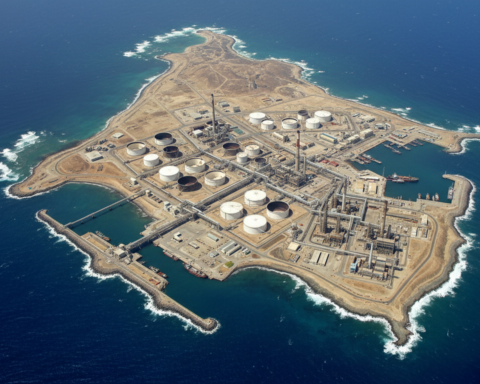
But the pipeline has limits. Saudi Arabia was producing approximately 10.882 million barrels per day in February 2026, according to OPEC data published on 11 March — an 8 percent increase from January as the Kingdom ramped output ahead of the conflict. Bloomberg reported that Saudi Arabia has already cut production by 2 to 2.5 million barrels per day because storage tanks connected to eastern export terminals at Ras Tanura, Ju’aymah, and Ras al-Khair are filling to capacity with nowhere to send the crude. The Kingdom is producing less, exporting less, and earning less — while Iran, with smaller but uninterrupted flows, maintains its revenue stream.
The destruction of Oman’s Salalah port by Iranian drones on 12 March eliminated what had been the Gulf’s last functioning bypass option outside Saudi-controlled infrastructure. Oman had been receiving diverted cargoes from several Gulf producers; that route is now closed. The Red Sea corridor through Yanbu is effectively the only remaining export pathway for Saudi crude — a single point of failure that concentrates geopolitical risk in a region that already faces Houthi threats from Yemen. The International Crisis Group warned in a 10 March assessment that the Hormuz closure represents “the most significant disruption to global energy markets in modern history,” eclipsing both the 1973 Arab oil embargo and the 1990 Gulf War in terms of volumes affected.
How Does Beijing Benefit From the Selective Blockade?
China’s position in the Hormuz crisis is simultaneously the most consequential and the least discussed. Beijing is the exclusive destination for Iranian crude oil exports, absorbing every barrel that moves through the shadow fleet corridor. The relationship predates the war — Chinese refineries imported approximately 1.38 million barrels per day of Iranian oil throughout 2025, according to Vortexa — but the conflict has transformed a sanctions-evasion arrangement into something closer to a strategic alliance.
The benefits for Beijing are substantial. Iranian crude arrives at Chinese ports at discounts of $8 to $12 per barrel below Brent crude, according to industry pricing data. At 1.3 million barrels per day and a $10 average discount, China saves approximately $13 million per day — nearly $400 million per month — compared to market-rate purchases. The war has made this discount even more valuable as Brent prices have surged above $110, meaning Chinese refiners are paying approximately $100 per barrel for Iranian crude that global spot markets price at $110 or higher.
Strategically, the selective blockade accelerates a trend that Chinese energy planners have pursued for two decades: diversifying supply away from dependence on the Strait of Hormuz. Before the war, China imported approximately 2.8 million barrels per day through Hormuz from multiple Gulf producers, according to the EIA. The blockade has effectively reduced that dependency to a single-source channel — Iranian oil through Iranian-controlled waters — while simultaneously disrupting Chinese access to Saudi, Emirati, and Iraqi crude that also transited Hormuz.
Beijing’s response has been to accelerate strategic reserve accumulation. The Global Times, citing Chinese energy analysts, noted that China had been building crude stockpiles through February 2026 in anticipation of supply disruption — a pattern that in retrospect suggests Chinese intelligence assessments of the conflict were more accurate than those of most Western governments. The fact that Chinese-linked vessels appear to be receiving different treatment in the strait — Windward data shows certain non-Western-linked vessels continuing to move while broader commercial traffic remains frozen — suggests at minimum a tacit arrangement between Tehran and Beijing over transit access.
The geopolitical implications extend beyond the immediate oil trade. Iran’s ability to maintain exports to China despite the combined military and economic pressure of the United States, Israel, and Saudi Arabia demonstrates the limits of Western sanctions architecture when a major economy — in this case, the world’s second-largest — chooses to circumvent it. The selective blockade has created, in effect, a bifurcated global oil market: one governed by Western financial and regulatory rules that Saudi Arabia operates within, and another governed by bilateral arrangements between sanctioned states and willing buyers that exists outside those rules entirely. Saudi Arabia sits on one side of this divide. Iran, with Chinese support, operates on the other. The divide was already emerging before the war. The war has made it permanent.
The Revenue Gap Nobody in Riyadh Will Quantify
Saudi Arabia’s official communications have studiously avoided putting a dollar figure on the blockade’s cost to the Kingdom. The numbers, however, can be estimated with reasonable precision using publicly available production, export, and pricing data.
| Metric | Saudi Arabia | Iran |
|---|---|---|
| Pre-war daily output | 10.882M bpd | ~3.2M bpd |
| Current daily output | ~8.4M bpd | ~2.8M bpd |
| Output reduction | ~2.5M bpd (23%) | ~0.4M bpd (13%) |
| Exports through Hormuz | ~0 bpd | ~1.3M bpd |
| Exports via alternative routes | ~3.5M bpd (Red Sea) | N/A |
| Total exports | ~3.5M bpd | ~1.3M bpd |
| Effective price per barrel | ~$112 (Brent premium) | ~$100 ($12 discount) |
| Estimated daily revenue | ~$392M | ~$130M |
| Pre-war daily revenue (est.) | ~$880M | ~$200M |
| Daily revenue loss | ~$488M | ~$70M |
The revenue asymmetry is staggering. Saudi Arabia is losing an estimated $488 million per day in oil revenue — approximately $14.6 billion over a 30-day blockade period. Iran, despite being the target of a comprehensive military campaign, is losing roughly $70 million per day. The blockade costs Saudi Arabia seven times more per day than it costs Iran. Over a 90-day conflict scenario, the cumulative Saudi revenue loss approaches $44 billion — roughly equivalent to the entire annual budget of the war effort itself.
The pressure on Saudi Arabia’s currency peg compounds the fiscal strain. The Saudi Arabian Monetary Authority (SAMA) maintains the riyal’s peg to the U.S. dollar through foreign reserves that totalled approximately $430 billion before the conflict. If the revenue gap persists, reserve drawdowns to maintain fiscal spending could begin within months — a timeline that explains the urgency behind Saudi diplomatic efforts to end the war.
The IEA’s record release of 400 million barrels from global emergency stockpiles, announced on 11 March 2026, was explicitly designed to offset the supply gap created by the Hormuz closure. But strategic reserves are finite. At current rates of drawdown, the IEA’s coordinated release covers approximately 20 days of global supply disruption. After that, market forces — meaning even higher prices — become the sole balancing mechanism.
What the Maritime Intelligence Data Actually Shows
The most granular evidence of the selective blockade comes from Windward, an AI-powered maritime intelligence platform that tracks vessel movements using AIS data, satellite imagery, and remote sensing. Windward’s daily intelligence reports throughout March 2026 have documented a pattern that is difficult to reconcile with Iran’s declared position of total closure.
Over the nine days ending 10 March, Windward recorded only 66 commercial vessel transits through the Strait of Hormuz. Normal traffic levels exceed 60 transits per day. The 90 percent reduction confirms the blockade’s effectiveness against mainstream shipping. But the data also shows something else: remote sensing intelligence — satellite-based observation that does not depend on vessels broadcasting their positions — shows vessel presence inside the strait exceeding AIS-visible traffic.
The implication is clear. Ships are transiting with transponders disabled, rendering themselves invisible to commercial tracking platforms while remaining visible to military-grade satellite surveillance. At least one tanker has been confirmed to have completed a dark transit, disappearing from AIS tracking inside the strait and reappearing days later with its transponder reactivated. The vessel’s identity, flag state, and cargo remain undisclosed in public reporting.
The Windward analysis of 10 March noted that “selective transit behavior may be emerging, with certain non-Western-linked vessels continuing to move while broader commercial traffic remains frozen.” This diplomatic phrasing masks a stark reality: Iran is operating a toll system on the world’s most important shipping lane, where geopolitical alignment determines passage. U.S. and British vessels have been explicitly blocked. Chinese-linked vessels appear to face different conditions.
The dark fleet’s operational methods are well-suited to this environment. These vessels routinely disable transponders, conduct ship-to-ship transfers at sea, and operate under flags of convenience that face minimal regulatory scrutiny. The IRGC Navy, which controls the Iranian coastline along the strait, can distinguish between friendly and hostile vessels through direct communication, visual identification, and naval intelligence — capabilities that render AIS tracking irrelevant for enforcement purposes.
Iran’s Blockade Is Working Exactly as Designed
The prevailing Western analysis frames Iran’s Hormuz blockade as a blunt instrument of desperation — the last card of a regime under existential military pressure from a combined U.S.-Israeli military campaign that has destroyed much of its nuclear infrastructure and killed its supreme leader. The evidence supports a different interpretation. The selective enforcement pattern is not a failure of implementation but a feature of design. Iran never intended to close the strait completely. It intended to weaponise access — and by that measure, the blockade is achieving precisely what Tehran planned.
Consider the strategic logic from Tehran’s perspective. A total closure of Hormuz would trigger a unified international response, including likely Chinese opposition — since China imports 2.8 million barrels per day through the strait from various Gulf producers. It would also eliminate Iran’s own export revenue at the moment it needs it most. A selective blockade, by contrast, achieves three objectives simultaneously: it punishes the Gulf states that host American military forces, it maintains Iran’s revenue stream, and it creates a dependency relationship with China that insulates Tehran from Beijing’s criticism.
The financial incentives reinforce the pattern. Iran earns approximately $130 million per day from continued exports to China. The alternative — a complete closure that blocks its own exports — earns zero. The blockade arbitrage is not a bug in Iran’s strategy; it is the strategy. Tehran has calculated, correctly, that the international community will respond to a 90 percent closure almost identically to a 100 percent closure in terms of economic damage to its enemies — while the remaining 10 percent of traffic generates the revenue that funds its war effort.
The precedent is the 1980s Tanker War, when Iran targeted Iraqi-linked and Kuwaiti-flagged tankers while largely sparing vessels serving its own commercial interests. The same logic applies in 2026 with one critical difference: the shadow fleet provides a commercial infrastructure for selective transit that did not exist four decades ago. Iran is not innovating; it is updating a proven doctrine with modern logistics.
For Saudi Arabia, this analysis carries an uncomfortable implication. The blockade cannot be broken through military force alone — the strait is too narrow, the Iranian coastline too close, and the underwater mine threat too persistent. The IRGC has spent decades preparing for exactly this scenario, fortifying its Hormuz coast with anti-ship cruise missiles, fast attack boats, and a network of hardened tunnels that survived the initial American air campaign. Nor can the blockade be broken through diplomatic pressure, since Iran’s selective enforcement gives China an economic incentive to oppose aggressive action. Beijing, which is saving $400 million per month on discounted Iranian crude, has no rational reason to support a resolution that would restore Saudi access to the strait and eliminate its own pricing advantage. The only scenarios that break the blockade are a comprehensive ceasefire or an escalation that risks the very Chinese tankers currently sustaining Iranian revenue — neither of which is under Saudi control.
The deeper lesson is structural. Saudi Arabia built its oil export infrastructure around the assumption that Hormuz would remain a neutral international waterway — an assumption underwritten by American naval power and international maritime law. Iran has demonstrated that neither guarantee holds when a determined adversary controls one side of a 33-kilometre-wide channel and possesses the weaponry to enforce selective access. The rules-based maritime order that benefited Saudi Arabia for half a century has been replaced, in practice, by a system where military control determines commercial access. Rebuilding Saudi energy security requires more than pipeline expansions and Red Sea rerouting. It requires accepting that the geographic vulnerability of Gulf oil exports — a vulnerability that has defined Middle Eastern geopolitics since the 1950s — can no longer be managed through deterrence alone.
What Happens if the Dark Transit Corridor Closes?
The shadow fleet corridor is not guaranteed to remain open. Three scenarios could disrupt Iran’s selective enforcement, each carrying distinct implications for Saudi Arabia and global oil markets.
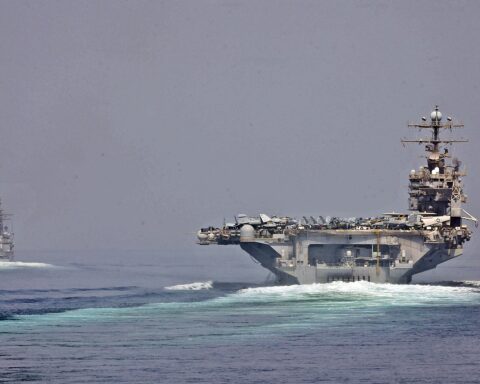
The first is American naval interdiction. The U.S. Navy has already destroyed 16 Iranian minelaying vessels in the strait and has three carrier strike groups in the region. If Washington decides to enforce freedom of navigation for all vessels — including those carrying Iranian crude — the shadow fleet corridor collapses. However, interdicting Chinese-flagged or Chinese-owned tankers risks a direct confrontation with Beijing that the Biden-era doctrine explicitly avoided and that the Trump administration has shown no appetite for.
The second scenario is Iranian miscalculation. If the IRGC Navy fires on a Chinese-linked vessel — whether through misidentification, communication failure, or factional conflict within the Iranian military — the protective arrangement unravels. China has no obligation to Iran beyond commercial convenience, and an attack on Chinese shipping would transform Beijing from a passive beneficiary into an active opponent of the blockade. This scenario is low-probability but high-impact.
The third is diplomatic resolution. A ceasefire that includes specific provisions on Hormuz transit — possibly modelled on the 1988 UN Security Council Resolution 598 that ended the Iran-Iraq War — would restore commercial shipping. But the appointment of Mojtaba Khamenei as supreme leader, described by former CIA officials as an “unfortunate” hardline choice, reduces the likelihood of near-term diplomatic breakthrough. The younger Khamenei has close ties to the IRGC and has shown no inclination toward the kind of pragmatic compromise that a Hormuz agreement would require.
| Scenario | Probability | Impact on Saudi Revenue | Timeline |
|---|---|---|---|
| US naval interdiction of shadow fleet | Low (15-20%) | Positive — opens strait to all | Immediate if executed |
| IRGC fires on Chinese-linked vessel | Very low (5-10%) | Positive — collapses selective system | Immediate |
| Ceasefire with Hormuz provisions | Moderate (30-40%) | Positive — restores normal transit | Weeks to months |
| Status quo persists (selective blockade) | High (40-50%) | Negative — continued revenue drain | Indefinite |
The probability-weighted outcome favours the status quo — a prolonged selective blockade that continues to drain Saudi revenue while sustaining Iranian exports. This is the scenario that Crown Prince Mohammed bin Salman must plan for, and it explains the urgency behind Saudi Arabia’s direct diplomatic engagement with Tehran, reported by Bloomberg on 6 March, even as missiles continue to fly.
The economic calculus is unforgiving. Every additional week of selective blockade costs Saudi Arabia roughly $3.4 billion in lost revenue. Iran, by contrast, earns approximately $910 million per week from its China-bound exports. The blockade is not a zero-sum game — it is a game in which one player bleeds seven times faster than the other, yet has fewer options to stop the bleeding.
Frequently Asked Questions
Is the Strait of Hormuz fully closed in March 2026?
The Strait of Hormuz is not fully closed. Oil tanker traffic has dropped by approximately 90 percent since the IRGC Navy declared restrictions on 1 March 2026, and over 400 vessels remain stranded outside the strait. However, Iranian-linked tankers and certain Chinese-owned vessels continue to transit under opaque conditions, moving an estimated 1.3 million barrels per day of Iranian crude to Chinese refineries. The blockade is selective rather than absolute, functioning as a two-tier access system where geopolitical alignment determines passage.
How much oil revenue is Saudi Arabia losing from the Hormuz blockade?
Saudi Arabia is losing an estimated $488 million per day in oil revenue compared to pre-war levels, according to calculations based on OPEC production data and current Brent crude pricing. The Kingdom has cut output by approximately 2 to 2.5 million barrels per day as eastern storage facilities reach capacity, and total exports have fallen from roughly 7.5 million barrels per day to approximately 3.5 million barrels per day. Over a 30-day period, the cumulative loss approaches $14.6 billion — roughly seven times Iran’s equivalent revenue loss over the same period.
What is the shadow fleet and how does it operate?
The shadow fleet consists of approximately 1,100 tanker vessels — roughly 17 to 18 percent of the global liquid cargo fleet — that operate outside international regulatory frameworks, according to research from the U.S. Naval War College. These ships use flags of convenience, disable AIS transponders in sensitive waters, conduct ship-to-ship transfers at sea, and carry opaque insurance arrangements from non-mainstream providers. The fleet was originally built to evade Western sanctions on Iranian and Russian oil exports but now serves as the logistical backbone of Iran’s wartime export programme.
Can the East-West pipeline fully replace Saudi Arabia’s Hormuz exports?
The East-West crude oil pipeline from Saudi Arabia’s eastern oil fields to the Red Sea port of Yanbu has a maximum capacity of 5 to 7 million barrels per day, depending on whether accompanying LNG pipelines are converted to carry crude. Before the blockade, it was carrying approximately 1.1 million barrels per day and is being rapidly ramped toward full capacity. However, even at maximum throughput, the pipeline cannot fully replace the approximately 5.5 million barrels per day that Saudi Arabia exported through Hormuz before the war, leaving a structural deficit that forces production cuts.
Why does China continue to buy Iranian oil during the war?
China purchases Iranian crude at discounts of $8 to $12 per barrel below Brent crude, saving approximately $13 million per day compared to market-rate purchases from alternative suppliers. The commercial relationship predates the war and has survived years of escalating Western sanctions. Beijing views discounted Iranian oil as a strategic asset that reduces energy import costs and diversifies supply sources away from dependence on Gulf Arab producers. The selective Hormuz blockade has paradoxically strengthened this arrangement by demonstrating that Iran can guarantee transit access for Chinese-linked vessels while blocking competitors.
What role does Windward maritime intelligence play in tracking the blockade?
Windward, an AI-powered maritime intelligence platform, publishes daily intelligence reports tracking vessel movements through the Strait of Hormuz using AIS data, satellite imagery, and remote sensing. Its analysis has documented the 90 percent reduction in commercial traffic, identified evidence of dark transits by shadow fleet vessels operating with transponders disabled, and detected vessel presence inside the strait that exceeds AIS-visible traffic. Windward’s data provides the most granular public evidence that the blockade is selectively enforced rather than uniformly applied.